
Art
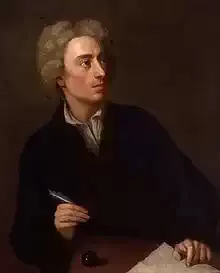
Alexander Pope
On the Countess of Burlington Cutting Paper
Pallas grew vapourish once, and odd,
She would not do the least right thing,
Either for goddess, or for god,
Nor work, nor play, nor paint, nor sing.
Jove frown'd, and, 'Use,' he cried, 'those eyes
So skilful, and those hands so taper;
Do something exquisite and wise -'
She bow'd, obey'd him, - and cut paper.
This vexing him who gave her birth,
Thought by all heaven a burning shame;
What does she next, but bids, on earth,
Her Burlington do just the same.
Pallas, you give yourself strange airs;
But sure you'll find it hard to spoil
The sense and taste of one that bears
The name of Saville and of Boyle.
Alas! one bad example shown;
How quickly all the sex pursue!
See, madam, see the arts o'erthrown,
Between John Overton and you!
342

Carl Sandburg
Fire Pages
I will read ashes for you, if you ask me.
I will look on the fire and tell you from the gray lashes
And out of the red and black tongues and stripes,
I will tell how fire comes
And how fire runs far as the sea.
I will look on the fire and tell you from the gray lashes
And out of the red and black tongues and stripes,
I will tell how fire comes
And how fire runs far as the sea.
342
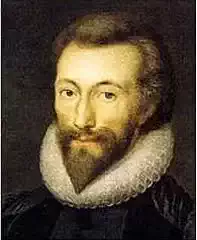
John Donne
Satire II
Sir; though (I thanke God for it) I do hate
Perfectly all this towne, yet there's one state
In all ill things so excellently best,
That hate, towards them, breeds pitty towards the rest.
Though Poetry indeed be such a sinne
As I thinke that brings dearths, and Spaniards in,
Though like the Pestilence and old fashion'd love,
Ridlingly it catch men; and doth remove
Never, till it be sterv'd out; yet their state
Is poore, disarm'd, like Papists, not worth hate.
One,(like a wretch, which at Barre judg'd as dead,
Yet prompts him which stands next, and cannot reade,
And saves his life)gives ideot actors meanes
(Starving himselfe)to live by'his labor'd sceanes;
As in some Organ, Puppits dance above
And bellows pant below, which them do move.
One would move Love by rimes; but witchcrafts charms
Bring not now their old feares, nor their old harmes:
Rammes, and slings now are seely battery,
Pistolets are the best Artillerie.
And they who write to Lords, rewards to get,
Are they not like singers at doores for meat?
And they who write, because all write, have still
That excuse for writing, and for writing ill.
But hee is worst, who (beggarly) doth chaw
Others wits fruits, and in his ravenous maw
Rankly digested, doth those things out-spue,
As his owne things; 'and they are his owne, 'tis true,
For if one eate my meate, though it be knowne
The meate was mine, th'excrement is his owne.
But these do mee no harme, nor they which use
To out-doe Dildoes, and out-usure Jewes;
To'out-drinke the sea, to'out-sweare the Letanie;
Who with sinnes all kindes as familiar bee
As Confessors; and for whose sinfull sake
Schoolemen new tenements in hell must make:
Whose strange sinnes, Canonists could hardly tell
In which Commandements large receit they dwell.
But these punish themselves; the insolence
Of Coscus onely breeds my just offence,
Whom time (which rots all, and makes botches poxe,
And plodding on, must make a calfe an oxe)
Hath made a Lawyer, which was (alas) of late
But a scarce Poet; jollier of this state,
Then are new benefic'd ministers, he throwes
Like nets, or lime-twigs, wheresoere he goes,
His title'of Barrister, on every wench,
And wooes in language of the Pleas, and Bench:
'A motion, Lady.' 'Speake Coscus.' 'I'have beene
In love, ever since tricesimo' of the Queene,
Continuall claimes I'have made, injunctions got
To stay my rivals suit, that hee should not
Proceed.' 'Spare mee.' 'In Hillary terme I went,
You said, If I returne next size in Lent,
I should be in remitter of your grace;
In th'interim my letters should take place
Of affidavits--': words, words, which would teare
The tender labyrinth of a soft maids eare,
More, more, then ten Sclavonians scolding, more
Then when winds in our ruin'd Abbeyes rore.
When sicke with Poetrie,'and possest with muse
Thou wast, and mad, I hop'd; but men which chuse
Law practise for meere gaine, bold soule, repute
Worse then imbrothel'd strumpets prostitute.
Now like an owlelike watchman, hee must walke
His hand still at a bill, now he must talke
Idly, like prisoners, which whole months will sweare
That onely suretiship hath brought them there,
And to'every suitor lye in every thing,
Like a Kings favorite, yea like a King;
Like a wedge in a blocke, wring to the barre,
Bearing like Asses, and more shameless farre
Then carted whores, lye, to the grave Judge; for
Bastardy'abounds not in Kings titles, nor
Symonie'and Sodomy in Churchmens lives,
As these things do in him; by these he thrives.
Shortly ('as the sea) hee'will compasse all our land;
From Scots, to Wight; from Mount, to Dover strand.
And spying heires melting with luxurie,
Satan will not joy at their sinnes, as hee.
For as a thrifty wench scrapes kitching-stuffe,
And barrelling the droppings, and the snuffe,
Of wasting candles, which in thirty yeare
(Relique-like kept) perchance buyes wedding geare;
Peecemeale he gets lands, and spends as much time
Wringing each Acre, as men pulling prime.
In parchments then, large as his fields, hee drawes
Assurances, bigge, as gloss'd civill lawes,
So huge, that men (in our times forwardnesse)
Are Fathers of the Church for writing lesse.
These hee writes not; nor for these written payes,
Therefore spares no length; as in those first dayes
When Luther was profest, he did desire
Short Pater nosters, saying as a Fryer
Each day his beads, but having left those lawes,
Addes to Christs prayer, the Power and glory clause.
But when he sells or changes land, he'impaires
His writings, and (unwatch'd) leaves out, ses heires,
As slily'as any Commenter goes by
Hard words, or sense; or in Divinity
As controverters, in vouch'd texts, leave out
Shrewd words, which might against them cleare the doubt.
Where are those spred woods which cloth'd heretofore
Those bought lands? not built, not burnt within dore.
Where's th'old landlords troops, and almes? In great hals
Carthusian fasts, and fulsome Bachanalls
Equally'I hate; meanes blesse; in rich mens homes
I bid kill some beasts, but no Hecatombs,
None starve, none surfet so; But (Oh) we'allow
Good workes as good, but out of fashion now,
Like old rich wardrops; but my words none drawes
Within the vast reach of th'huge statute lawes.
338

Walter de la Mare
The Scribe
What lovely things
Thy hand hath made:
The smooth-plumed bird
In its emerald shade,
The seed of the grass,
The speck of the stone
Which the wayfaring ant
Stirs -- and hastes on!
Though I should sit
By some tarn in thy hills,
Using its ink
As the spirit wills
To write of Earth's wonders,
Its live, willed things,
Flit would the ages
On soundless wings
Ere unto Z
My pen drew nigh
Leviathan told,
And the honey-fly:
And still would remain
My wit to try --
My worn reeds broken,
The dark tarn dry,
All words forgotten --
Thou, Lord, and I.
339

Henry Wadsworth Longfellow
Carillon
In the ancient town of Bruges,
In the quaint old Flemish city,
As the evening shades descended,
Low and loud and sweetly blended,
Low at times and loud at times,
And changing like a poet's rhymes,
Rang the beautiful wild chimes
From the Belfry in the market
Of the ancient town of Bruges.
Then, with deep sonorous clangor
Calmly answering their sweet anger,
When the wrangling bells had ended,
Slowly struck the clock eleven,
And, from out the silent heaven,
Silence on the town descended.
Silence, silence everywhere,
On the earth and in the air,
Save that footsteps here and there
Of some burgher home returning,
By the street lamps faintly burning,
For a moment woke the echoes
Of the ancient town of Bruges.
But amid my broken slumbers
Still I heard those magic numbers,
As they loud proclaimed the flight
And stolen marches of the night;
Till their chimes in sweet collision
Mingled with each wandering vision,
Mingled with the fortune-telling
Gypsy-bands of dreams and fancies,
Which amid the waste expanses
Of the silent land of trances
Have their solitary dwelling;
All else seemed asleep in Bruges,
In the quaint old Flemish city.
And I thought how like these chimes
Are the poet's airy rhymes,
All his rhymes and roundelays,
His conceits, and songs, and ditties,
From the belfry of his brain,
Scattered downward, though in vain,
On the roofs and stones of cities!
For by night the drowsy ear
Under its curtains cannot hear,
And by day men go their ways,
Hearing the music as they pass,
But deeming it no more, alas!
Than the hollow sound of brass.
Yet perchance a sleepless wight,
Lodging at some humble inn
In the narrow lanes of life,
When the dusk and hush of night
Shut out the incessant din
Of daylight and its toil and strife,
May listen with a calm delight
To the poet's melodies,
Till he hears, or dreams he hears,
Intermingled with the song,
Thoughts that he has cherished long;
Hears amid the chime and singing
The bells of his own village ringing,
And wakes, and finds his slumberous eyes
Wet with most delicious tears.
Thus dreamed I, as by night I lay
In Bruges, at the Fleur-de-Ble,
Listening with a wild delight
To the chimes that, through the night
Bang their changes from the Belfry
Of that quaint old Flemish city.
335

Walt Whitman
Other May Praise What They Like
OTHERS may praise what they like;
But I, from the banks of the running Missouri, praise nothing, in
art, or aught else,
Till it has well inhaled the atmosphere of this river--also the
western prairie-scent,
And fully exudes it again.
But I, from the banks of the running Missouri, praise nothing, in
art, or aught else,
Till it has well inhaled the atmosphere of this river--also the
western prairie-scent,
And fully exudes it again.
338
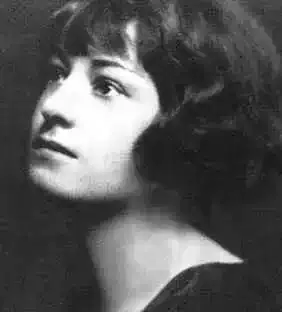
Dorothy Parker
Portrait of the Artist
Oh, lead me to a quiet cell
Where never footfall rankles,
And bar the window passing well,
And gyve my wrists and ankles.
Oh, wrap my eyes with linen fair,
With hempen cord go bind me,
And, of your mercy, leave me there,
Nor tell them where to find me.
Oh, lock the portal as you go,
And see its bolts be double....
Come back in half an hour or so,
And I will be in trouble.
336

Claude Mckay
To a Poet
There is a lovely noise about your name,
Above the shoutings of the city clear,
More than a moment's merriment, whose claim
Will greater grow with every mellowed year.
The people will not bear you down the street,
Dancing to the strong rhythm of your words,
The modern kings will throttle you to greet
The piping voice of artificial birds.
But the rare lonely spirits, even mine,
Who love the immortal music of all days,
Will see the glory of your trailing line,
The bedded beauty of your haunting lays.
335

Emily Dickinson
Drama's Vitallest Expression is the Common Day
Drama's Vitallest Expression is the Common Day
That arise and set about Us-
Other Tragedy
Perish in the RecitationThis-
the best enact
When the Audience is scattered
And the Boxes shut
"Hamlet" to Himself were Hamlet-
Had not Shakespeare wrote-
Though the "Romeo" left no Record
Of his Juliet,
It were infinite enacted
In the Human Heart-
Only Theatre recorded
Owner cannot shut-
332
Carl Sandburg
Style
Style--go ahead talking about style.
You can tell where a man gets his style just
as you can tell where Pavlowa got her legs
or Ty Cobb his batting eye.
Go on talking.
Only don't take my style away.
It's my face.
Maybe no good
but anyway, my face.
I talk with it, I sing with it, I see, taste and feel with it,
I know why I want to keep it.
Kill my style
and you break Pavlowa's legs,
and you blind Ty Cobb's batting eye.
332

William Butler Yeats
Veronica's Napkin
THE Heavenly Circuit; Berenice's Hair;
Tent-pole of Eden; the tent's drapery;
Symbolical glory of thc earth and air!
The Father and His angelic hierarchy
That made the magnitude and glory there
Stood in the circuit of a needle's eye.
Some found a different pole, and where it stood
A pattern on a napkin dipped in blood.
Tent-pole of Eden; the tent's drapery;
Symbolical glory of thc earth and air!
The Father and His angelic hierarchy
That made the magnitude and glory there
Stood in the circuit of a needle's eye.
Some found a different pole, and where it stood
A pattern on a napkin dipped in blood.
331
William Butler Yeats
Symbols
A STORM BEATEN old watch-tower,
A blind hermit rings the hour.
All-destroying sword-blade still
Carried by the wandering fool.
Gold-sewn silk on the sword-blade,
Beauty and fool together laid.
A blind hermit rings the hour.
All-destroying sword-blade still
Carried by the wandering fool.
Gold-sewn silk on the sword-blade,
Beauty and fool together laid.
330

Robert Louis Stevenson
For Richmond's Garden Wall
WHEN Thomas set this tablet here,
Time laughed at the vain chanticleer;
And ere the moss had dimmed the stone,
Time had defaced that garrison.
Now I in turn keep watch and ward
In my red house, in my walled yard
Of sunflowers, sitting here at ease
With friends and my bright canvases.
But hark, and you may hear quite plain
Time's chuckled laughter in the lane.
330
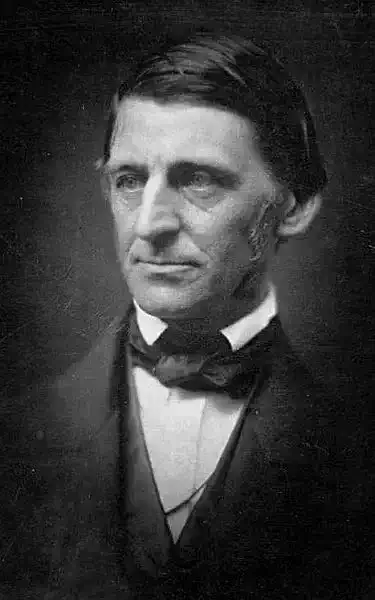
Ralph Waldo Emerson
The Snow-Storm
Announced by all the trumpets of the sky,
Arrives the snow, and, driving o'er the fields,
Seems nowhere to alight: the whited air
Hides hill and woods, the river, and the heaven,
And veils the farmhouse at the garden's end.
The sled and traveller stopped, the courier's feet
Delated, all friends shut out, the housemates sit
Around the radiant fireplace, enclosed
In a tumultuous privacy of storm.
Come see the north wind's masonry.
Out of an unseen quarry evermore
Furnished with tile, the fierce artificer
Curves his white bastions with projected roof
Round every windward stake, or tree, or door.
Speeding, the myriad-handed, his wild work
So fanciful, so savage, nought cares he
For number or proportion. Mockingly,
On coop or kennel he hangs Parian wreaths;
A swan-like form invests the hiddden thorn;
Fills up the famer's lane from wall to wall,
Maugre the farmer's sighs; and at the gate
A tapering turret overtops the work.
And when his hours are numbered, and the world
Is all his own, retiring, as he were not,
Leaves, when the sun appears, astonished Art
To mimic in slow structures, stone by stone,
Built in an age, the mad wind's night-work,
The frolic architecture of the snow.
328
Horácio
BkI:I The Dedication: To Maecenas
Maecenas, descendant of royal ancestors,
O my protector, and my sweet glory,
some are delighted by showers of dust,
Olympic dust, over their chariots, they
are raised to the gods, as Earth’s masters, by posts
clipping the red-hot wheels, by noble palms:
this man, if the fickle crowd of Citizens
compete to lift him to triple honours:
that one, if he’s stored away in his granary
whatever he gleaned from the Libyan threshing.
The peasant who loves to break clods in his native
fields, won’t be tempted, by living like Attalus,
to sail the seas, in fear, in a Cyprian boat.
The merchant afraid of the African winds as
they fight the Icarian waves, loves the peace
and the soil near his town, but quickly rebuilds
his shattered ships, unsuited to poverty.
There’s one who won’t scorn cups of old Massic,
nor to lose the best part of a whole day lying
under the greenwood tree, or softly
close to the head of sacred waters.
Many love camp, and the sound of trumpets
mixed with the horns, and the warfare hated
by mothers. The hunter, sweet wife forgotten,
stays out under frozen skies, if his faithful
hounds catch sight of a deer, or a Marsian
wild boar rampages, through his close meshes.
But the ivy, the glory of learned brows,
joins me to the gods on high: cool groves,
and the gathering of light nymphs and satyrs,
draw me from the throng, if Euterpe the Muse
won’t deny me her flute, and Polyhymnia
won’t refuse to exert herself on her Lesbian lyre.
And if you enter me among all the lyric poets,
my head too will be raised to touch the stars.
330

Johann Wolfgang von Goethe
Love As A Landscape Painter
ON a rocky peak once sat I early,
Gazing on the mist with eyes unmoving;
Stretch'd out like a pall of greyish texture,
All things round, and all above it cover'd.
Suddenly a boy appear'd beside me,
Saying "Friend, what meanest thou by gazing
On the vacant pall with such composure?
Hast thou lost for evermore all pleasure
Both in painting cunningly, and forming?"
On the child I gazed, and thought in secret:
"Would the boy pretend to be a master?"
"Wouldst thou be for ever dull and idle,"
Said the boy, "no wisdom thou'lt attain to;
See, I'll straightway paint for thee a figure,--
How to paint a beauteous figure, show thee."
And he then extended his fore-finger,-(
Ruddy was it as a youthful rosebud)
Tow'rd the broad and far outstretching carpet,
And began to draw there with his finger.
First on high a radiant sun he painted,
Which upon mine eyes with splendour glisten'd,
And he made the clouds with golden border,
Through the clouds he let the sunbeams enter;
Painted then the soft and feathery summits
Of the fresh and quicken'd trees, behind them
One by one with freedom drew the mountains;
Underneath he left no lack of water,
But the river painted so like Nature,
That it seem'd to glitter in the sunbeams,
That it seem'd against its banks to murmur.
Ah, there blossom'd flowers beside the river,
And bright colours gleam'd upon the meadow,
Gold, and green, and purple, and enamell'd,
All like carbuncles and emeralds seeming!
Bright and clear he added then the heavens,
And the blue-tinged mountains far and farther,
So that I, as though newborn, enraptured
Gazed on, now the painter, now the picture.
Then spake he: "Although I have convinced thee
That this art I understand full surely,
Yet the hardest still is left to show thee."
Thereupon he traced, with pointed finger,
And with anxious care, upon the forest,
At the utmost verge, where the strong sunbeams
From the shining ground appear'd reflected,
Traced the figure of a lovely maiden,
Fair in form, and clad in graceful fashion,
Fresh the cheeks beneath her brown locks' ambush,
And the cheeks possess'd the selfsame colour
As the finger that had served to paint them.
"Oh thou boy!" exclaim'd I then, "what master
In his school received thee as his pupil,
Teaching thee so truthfully and quickly
Wisely to begin, and well to finish?"
Whilst I still was speaking, lo, a zephyr
Softly rose, and set the tree-tops moving,
Curling all the wavelets on the river,
And the perfect maiden's veil, too, fill'd it,
And to make my wonderment still greater,
Soon the maiden set her foot in motion.
On she came, approaching tow'rd the station
Where still sat I with my arch instructor.
As now all, yes, all thus moved together,--
Flowers, river, trees, the veil,--all moving,--
And the gentle foot of that most fair one,
Can ye think that on my rock I linger'd,
Like a rock, as though fast-chain'd and silent?
328

James Whitcomb Riley
Art And Love
He faced his canvas (as a seer whose ken
Pierces the crust of this existence through)
And smiled beyond on that his genius knew
Ere mated with his being. Conscious then
Of his high theme alone, he smiled again
Straight back upon himself in many a hue
And tint, and light and shade, which slowly grew
Enfeatured of a fair girl's face, as when
First time she smiles for love's sake with no fear.
So wrought he, witless that behind him leant
A woman, with old features, dim and sear,
And glamoured eyes that felt the brimming tear,
And with a voice, like some sad instrument,
That sighing said, 'I'm dead there; love me here!'
328
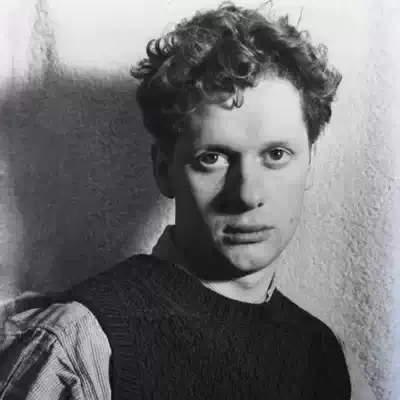
Dylan Thomas
In My Craft or Sullen Art
In my craft or sullen art
Exercised in the still night
When only the moon rages
And the lovers lie abed
With all their griefs in their arms
I labour by singing light
Not for ambition or bread
Or the strut and trade of charms
On the ivory stages
But for the common wages
Of their most secret heart.
Not for the proud man apart
From the raging moon I write
On these spindrift pages
Nor for the towering dead
With their nightingales and psalms
But for the lovers, their arms
Round the griefs of the ages,
Who pay no praise or wages
Nor heed my craft or art
328
William Butler Yeats
After Long Silence
Speech after long silence; it is right,
All other lovers being estranged or dead,
Unfriendly lamplight hid under its shade,
The curtains drawn upon unfriendly night,
That we descant and yet again descant
Upon the supreme theme of Art and Song:
Bodily decrepitude is wisdom; young
We loved each other and were ignorant.
All other lovers being estranged or dead,
Unfriendly lamplight hid under its shade,
The curtains drawn upon unfriendly night,
That we descant and yet again descant
Upon the supreme theme of Art and Song:
Bodily decrepitude is wisdom; young
We loved each other and were ignorant.
329
Henry Van Dyke
Master of Music
Glory of architect, glory of painter, and sculptor, and bard,
Living forever in temple and picture and statue and song, --
Look how the world with the lights that they lit is illumined and starred,
Brief was the flame of their life, but the lamps of their art burn long!
Where is the Master of Music, and how has he vanished away?
Where is the work that he wrought with his wonderful art in the air?
Gone, -- it is gone like the glow on the cloud at the close of the day!
The Master has finished his work, and the glory of music is -- where?
Once, at the wave of his wand, all the billows of musical sound
Followed his will, as the sea was ruled by the prophet of old:
Now that his hand is relaxed, and his rod has dropped to the ground,
Silent and dark are the shores where the marvellous harmonies rolled!
Nay, but not silent the hearts that were filled by that life-giving sea;
Deeper and purer forever the tides of their being will roll,
Grateful and joyful, O Master, because they have listened to thee, --
The glory of music endures in the depths of the human soul.
325
Wallace Stevens
Of Modern Poetry
The poem of the mind in the act of finding
What will suffice. It has not always had
To find: the scene was set; it repeated what
Was in the script.
Then the theatre was changed
To something else. Its past was a souvenir.
It has to be living, to learn the speech of the place.
It has to face the men of the time and to meet
The women of the time. It has to think about war
And it has to find what will suffice. It has
To construct a new stage. It has to be on that stage,
And, like an insatiable actor, slowly and
With meditation, speak words that in the ear,
In the delicatest ear of the mind, repeat,
Exactly, that which it wants to hear, at the sound
Of which, an invisible audience listens,
Not to the play, but to itself, expressed
In an emotion as of two people, as of two
Emotions becoming one. The actor is
A metaphysician in the dark, twanging
An instrument, twanging a wiry string that gives
Sounds passing through sudden rightnesses, wholly
Containing the mind, below which it cannot descend,
Beyond which it has no will to rise.
It must
Be the finding of a satisfaction, and may
Be of a man skating, a woman dancing, a woman
Combing. The poem of the act of the mind.
326
Alexander Pope
Epistles to Several Persons: Epistle IV, To Richard Boyle
Est brevitate opus, ut currat sententia, neu se
Impediat verbis lassas onerantibus aures:
Et sermone opus est modo tristi, saepe jocoso,
Defendente vicem modo Rhetoris atque Poetae,
Interdum urbani, parcentis viribus, atque
Extenuantis eas consulto.
(Horace, Satires, I, x, 17-22)
'Tis strange, the miser should his cares employ
To gain those riches he can ne'er enjoy:
Is it less strange, the prodigal should waste
His wealth to purchase what he ne'er can taste?
Not for himself he sees, or hears, or eats;
Artists must choose his pictures, music, meats:
He buys for Topham, drawings and designs,
For Pembroke, statues, dirty gods, and coins;
Rare monkish manuscripts for Hearne alone,
And books for Mead, and butterflies for Sloane.
Think we all these are for himself? no more
Than his fine wife, alas! or finer whore.
For what his Virro painted, built, and planted?
Only to show, how many tastes he wanted.
What brought Sir Visto's ill got wealth to waste?
Some daemon whisper'd, "Visto! have a taste."
Heav'n visits with a taste the wealthy fool,
And needs no rod but Ripley with a rule.
See! sportive fate, to punish awkward pride,
Bids Bubo build, and sends him such a guide:
A standing sermon, at each year's expense,
That never coxcomb reach'd magnificence!
You show us, Rome was glorious, not profuse,
And pompous buildings once were things of use.
Yet shall (my Lord) your just, your noble rules
Fill half the land with imitating fools;
Who random drawings from your sheets shall take,
And of one beauty many blunders make;
Load some vain church with old theatric state,
Turn arcs of triumph to a garden gate;
Reverse your ornaments, and hang them all
On some patch'd dog-hole ek'd with ends of wall;
Then clap four slices of pilaster on't,
That lac'd with bits of rustic, makes a front.
Or call the winds through long arcades to roar,
Proud to catch cold at a Venetian door;
Conscious they act a true Palladian part,
And, if they starve, they starve by rules of art.
Oft have you hinted to your brother peer,
A certain truth, which many buy too dear:
Something there is more needful than expense,
And something previous ev'n to taste--'tis sense:
Good sense, which only is the gift of Heav'n,
And though no science, fairly worth the sev'n:
A light, which in yourself you must perceive;
Jones and Le Notre have it not to give.
To build, to plant, whatever you intend,
To rear the column, or the arch to bend,
To swell the terrace, or to sink the grot;
In all, let Nature never be forgot.
But treat the goddess like a modest fair,
Nor overdress, nor leave her wholly bare;
Let not each beauty ev'rywhere be spied,
Where half the skill is decently to hide.
He gains all points, who pleasingly confounds,
Surprises, varies, and conceals the bounds.
Consult the genius of the place in all;
That tells the waters or to rise, or fall;
Or helps th' ambitious hill the heav'ns to scale,
Or scoops in circling theatres the vale;
Calls in the country, catches opening glades,
Joins willing woods, and varies shades from shades,
Now breaks, or now directs, th' intending lines;
Paints as you plant, and, as you work, designs.
Still follow sense, of ev'ry art the soul,
Parts answ'ring parts shall slide into a whole,
Spontaneous beauties all around advance,
Start ev'n from difficulty, strike from chance;
Nature shall join you; time shall make it grow
A work to wonder at--perhaps a Stowe.
Without it, proud Versailles! thy glory falls;
And Nero's terraces desert their walls:
The vast parterres a thousand hands shall make,
Lo! Cobham comes, and floats them with a lake:
Or cut wide views through mountains to the plain,
You'll wish your hill or shelter'd seat again.
Ev'n in an ornament its place remark,
Nor in an hermitage set Dr. Clarke.
Behold Villario's ten years' toil complete;
His quincunx darkens, his espaliers meet;
The wood supports the plain, the parts unite,
And strength of shade contends with strength of light;
A waving glow his bloomy beds display,
Blushing in bright diversities of day,
With silver-quiv'ring rills meander'd o'er-Enjoy
them, you! Villario can no more;
Tir'd of the scene parterres and fountains yield,
He finds at last he better likes a field.
Through his young woods how pleas'd Sabinus stray'd,
Or sat delighted in the thick'ning shade,
With annual joy the redd'ning shoots to greet,
Or see the stretching branches long to meet!
His son's fine taste an op'ner vista loves,
Foe to the dryads of his father's groves;
One boundless green, or flourish'd carpet views,
With all the mournful family of yews;
The thriving plants ignoble broomsticks made,
Now sweep those alleys they were born to shade.
At Timon's villa let us pass a day,
Where all cry out, "What sums are thrown away!"
So proud, so grand of that stupendous air,
Soft and agreeable come never there.
Greatness, with Timon, dwells in such a draught
As brings all Brobdingnag before your thought.
To compass this, his building is a town,
His pond an ocean, his parterre a down:
Who but must laugh, the master when he sees,
A puny insect, shiv'ring at a breeze!
Lo, what huge heaps of littleness around!
The whole, a labour'd quarry above ground.
Two cupids squirt before: a lake behind
Improves the keenness of the Northern wind.
His gardens next your admiration call,
On ev'ry side you look, behold the wall!
No pleasing intricacies intervene,
No artful wildness to perplex the scene;
Grove nods at grove, each alley has a brother,
And half the platform just reflects the other.
The suff'ring eye inverted Nature sees,
Trees cut to statues, statues thick as trees;
With here a fountain, never to be play'd;
And there a summerhouse, that knows no shade;
Here Amphitrite sails through myrtle bow'rs;
There gladiators fight, or die in flow'rs;
Unwater'd see the drooping sea horse mourn,
And swallows roost in Nilus' dusty urn.
My Lord advances with majestic mien,
Smit with the mighty pleasure, to be seen:
But soft--by regular approach--not yet-First
through the length of yon hot terrace sweat;
And when up ten steep slopes you've dragg'd your thighs,
Just at his study door he'll bless your eyes.
His study! with what authors is it stor'd?
In books, not authors, curious is my Lord;
To all their dated backs he turns you round:
These Aldus printed, those Du Sueil has bound.
Lo, some are vellum, and the rest as good
For all his Lordship knows, but they are wood.
For Locke or Milton 'tis in vain to look,
These shelves admit not any modern book.
And now the chapel's silver bell you hear,
That summons you to all the pride of pray'r:
Light quirks of music, broken and uneven,
Make the soul dance upon a jig to heaven.
On painted ceilings you devoutly stare,
Where sprawl the saints of Verrio or Laguerre,
On gilded clouds in fair expansion lie,
And bring all paradise before your eye.
To rest, the cushion and soft dean invite,
Who never mentions Hell to ears polite.
But hark! the chiming clocks to dinner call;
A hundred footsteps scrape the marble hall:
The rich buffet well-colour'd serpents grace,
And gaping Tritons spew to wash your face.
Is this a dinner? this a genial room?
No, 'tis a temple, and a hecatomb.
A solemn sacrifice, perform'd in state,
You drink by measure, and to minutes eat.
So quick retires each flying course, you'd swear
Sancho's dread doctor and his wand were there.
Between each act the trembling salvers ring,
From soup to sweet wine, and God bless the King.
In plenty starving, tantaliz'd in state,
And complaisantly help'd to all I hate,
Treated, caress'd, and tir'd, I take my leave,
Sick of his civil pride from morn to eve;
I curse such lavish cost, and little skill,
And swear no day was ever pass'd so ill.
Yet hence the poor are cloth'd, the hungry fed;
Health to himself, and to his infants bread
The lab'rer bears: What his hard heart denies,
His charitable vanity supplies.
Another age shall see the golden ear
Embrown the slope, and nod on the parterre,
Deep harvests bury all his pride has plann'd,
And laughing Ceres reassume the land.
Who then shall grace, or who improve the soil?
Who plants like Bathurst, or who builds like Boyle.
'Tis use alone that sanctifies expense,
And splendour borrows all her rays from sense.
His father's acres who enjoys in peace,
Or makes his neighbours glad, if he increase:
Whose cheerful tenants bless their yearly toil,
Yet to their Lord owe more than to the soil;
Whose ample lawns are not asham'd to feed
The milky heifer and deserving steed;
Whose rising forests, not for pride or show,
But future buildings, future navies, grow:
Let his plantations stretch from down to down,
First shade a country, and then raise a town.
You too proceed! make falling arts your care,
Erect new wonders, and the old repair;
Jones and Palladio to themselves restore,
And be whate'er Vitruvius was before:
Till kings call forth th' ideas of your mind,
Proud to accomplish what such hands design'd,
Bid harbours open, public ways extend,
Bid temples, worthier of the God, ascend;
Bid the broad arch the dang'rous flood contain,
The mole projected break the roaring main;
Back to his bounds their subject sea command,
And roll obedient rivers through the land;
These honours, peace to happy Britain brings,
These are imperial works, and worthy kings.
326
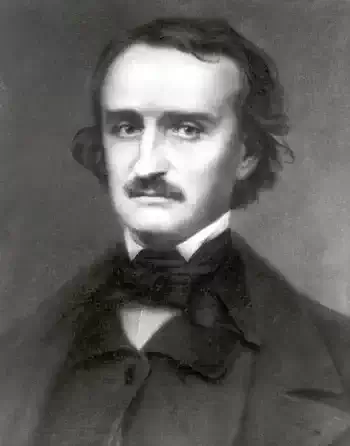
Edgar Allan Poe
Elizabeth
Elizabeth, it surely is most fit
[Logic and common usage so commanding]
In thy own book that first thy name be writ,
Zeno and other sages notwithstanding;
And I have other reasons for so doing
Besides my innate love of contradiction;
Each poet - if a poet - in pursuing
The muses thro' their bowers of Truth or Fiction,
Has studied very little of his part,
Read nothing, written less - in short's a fool
Endued with neither soul, nor sense, nor art,
Being ignorant of one important rule,
Employed in even the theses of the school
Called
- I forget the heathenish Greek name
[Called anything, its meaning is the same]
"Always write first things uppermost in the heart."
324