
Art
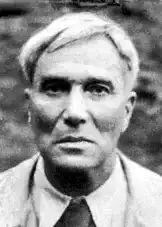
Boris Pasternak
A Walts With a Tear in It
Ah, how I love it in these first few days,
Fresh from the forest and out of the snow,
Awkwardness obvious still in every bough,
When every silver thread lazily sways
And every cone begins slowly to glow
In candlelight—and the white sheet below
Hides its sore stump from our eyes.
It will not bat an eye if you heap gold
And jewels on it-this shyest of fays
In blue enamel and tinfoil enfolded
Creeps in your heart of hearts—and there it stays.
Ah, how I love it all in these first days,
All golden finery and silver shades!
All in the making-stars, flags, lanterns, flares,
There are no chocolates yet in bonbonnieres.
Even the candles are no candles—they
Look more like dull sticks of makeup by day.
This is an actress still lighting stage fright
In the tumult of her benefit night.
Ah, how I love her on this opening day,
Flushed in the coulisses before the play!
Apples to appletrees, and kicks to firtrees.
Only not this one—no kicks for the beauty.
She has a different purpose and duty.
She's the select one, receiver of favours.
Her evening party will go on forever.
Others may fear proverb s-this one does not.
Her fate is only a few firtrees' lot.
Golden and fiery, she will soar high,
Like an old prophet ascending the sky.
Ah, how I love it all in these first days,
When all the world chats and fusses and plays!
504

John Keats
Ode To Apollo
1.
In thy western halls of gold
When thou sittest in thy state,
Bards, that erst sublimely told
Heroic deeds, and sang of fate,
With fervour seize their adamantine lyres,
Whose chords are solid rays, and twinkle radiant fires.
2.
Here Homer with his nervous arms
Strikes the twanging harp of war,
And even the western splendour warms,
While the trumpets sound afar:
But, what creates the most intense surprise,
His soul looks out through renovated eyes.
3.
Then, through thy Temple wide, melodious swells
The sweet majestic tone of Maro's lyre:
The soul delighted on each accent dwells,-Enraptur'd
dwells,--not daring to respire,
The while he tells of grief around a funeral pyre.
4.
'Tis awful silence then again;
Expectant stand the spheres;
Breathless the laurell'd peers,
Nor move, till ends the lofty strain,
Nor move till Milton's tuneful thunders cease,
And leave once more the ravish'd heavens in peace.
5.
Thou biddest Shakespeare wave his hand,
And quickly forward spring
The Passions--a terrific band--
And each vibrates the string
That with its tyrant temper best accords,
While from their Master's lips pour forth the inspiring words.
6.
A silver trumpet Spenser blows,
And, as its martial notes to silence flee,
From a virgin chorus flows
A hymn in praise of spotless Chastity.
'Tis still! Wild warblings from the Aeolian lyre
Enchantment softly breathe, and tremblingly expire.
7.
Next thy Tasso's ardent numbers
Float along the pleased air,
Calling youth from idle slumbers,
Rousing them from Pleasure's lair:-
Then o'er the strings his fingers gently move,
And melt the soul to pity and to love.
8.
But when Thou joinest with the Nine,
And all the powers of song combine,
We listen here on earth:
Thy dying tones that fill the air,
And charm the ear of evening fair,
From thee, great God of Bards, receive their heavenly birth.
504
John Keats
On Receiving A Laurel Crown From Leigh Hunt
MINUTES are flying swiftly, and as yet
Nothing unearthly has enticed my brain
Into a delphic Labyrinth I would fain
Catch an unmortal thought to pay the debt
I owe to the kind Poet who has set
Upon my ambitious head a glorious gain.
Two bending laurel Sprigs 'tis nearly pain
To be conscious of such a Coronet.
Still time is fleeting, and no dream arises
Gorgeous as I would have it only I see
A Trampling down of what the world most prizes
Turbans and Crowns, and blank regality;
And then I run into most wild surmises
Of all the many glories that may be.
495

Johann Wolfgang von Goethe
Authors
OVER the meadows, and down the stream,
And through the garden-walks straying,
He plucks the flowers that fairest seem;
His throbbing heart brooks no delaying.
His maiden then comes--oh, what ecstasy!
Thy flowers thou giv'st for one glance of her eye!
The gard'ner next door o'er the hedge sees the youth:
"I'm not such a fool as that, in good truth;
My pleasure is ever to cherish each flower,
And see that no birds my fruit e'er devour.
But when 'tis ripe, your money, good neighbour!
'Twas not for nothing I took all this labour!"
And such, methinks, are the author-tribe.
The one his pleasures around him strews,
That his friends, the public, may reap, if they choose;
The other would fain make them all subscribe.
494

Ezra Pound
Fan-Piece, For Her Imperial Lord
O fan of white silk,
clear as frost on the grass-blade,
You also are laid aside.
clear as frost on the grass-blade,
You also are laid aside.
490

William Blake
An Imitation of Spenser
Golden Apollo, that thro' heaven wide
Scatter'st the rays of light, and truth's beams,
In lucent words my darkling verses dight,
And wash my earthy mind in thy clear streams,
That wisdom may descend in fairy dreams,
All while the jocund hours in thy train
Scatter their fancies at thy poet's feet;
And when thou yields to night thy wide domain,
Let rays of truth enlight his sleeping brain.
For brutish Pan in vain might thee assay
With tinkling sounds to dash thy nervous verse,
Sound without sense; yet in his rude affray,
(For ignorance is Folly's leasing nurse
And love of Folly needs none other's curse)
Midas the praise hath gain'd of lengthen'd ears,
For which himself might deem him ne'er the worse
To sit in council with his modern peers,
And judge of tinkling rimes and elegances terse.
And thou, Mercurius, that with wingèd brow
Dost mount aloft into the yielding sky,
And thro' Heav'n's halls thy airy flight dost throw,
Entering with holy feet to where on high
Jove weighs the counsel of futurity;
Then, laden with eternal fate, dost go
Down, like a falling star, from autumn sky,
And o'er the surface of the silent deep dost fly:
If thou arrivest at the sandy shore
Where nought but envious hissing adders dwell,
Thy golden rod, thrown on t he dusty floor,
Can charm to harmony with potent spell.
Such is sweet Eloquence, that does dispel
Envy and Hate that thirst for human gore;
And cause in sweet society to dwell
Vile savage minds that lurk in lonely cell
O Mercury, assist my lab'ring sense
That round the circle of the world would fly,
As the wing'd eagle scorns the tow'ry fence
Of Alpine hills round his high aëry,
And searches thro' the corners of the sky,
Sports in the clouds to hear the thunder's sound,
And see the wingèd lightnings as they fly;
Then, bosom'd in an amber cloud, around
Plumes his wide wings, and seeks Sol's palace high.
And thou, O warrior maid invincible,
Arm'd with the terrors of Almighty Jove,
Pallas, Minerva, maiden terrible,
Lov'st thou to walk the peaceful solemn grove,
In solemn gloom of branches interwove?
Or bear'st thy AEgis o'er the burning field,
Where, like the sea, the waves of battle move?
Or have thy soft piteous eyes beheld
The weary wanderer thro' the desert rove?
Or does th' afflicted man thy heav'nly bosom move?
490

Lord Byron
Dear Doctor, I have Read your Play
Dear Doctor, I have read your play,
Which is a good one in its way,
Purges the eyes, and moves the bowels,
And drenches handkerchiefs like towels
With tears that, in a flux of grief,
Afford hysterical relief
To shatter'd nerves and quicken'd pulses,
Which your catastrophe convulses.
I like your moral and machinery;
Your plot, too, has such scope for scenery!
Your dialogue is apt and smart;
The play's concoction full of art;
Your hero raves, your heroine cries,
All stab, and everybody dies;
In short, your tragedy would be
The very thing to hear and see;
And for a piece of publication,
If I decline on this occasion,
It is not that I am not sensible
To merits in themselves ostensible,
Butand
I grieve to speak itplays
Are drugsmere
drugs, Sir, nowadays.
I had a heavy loss by Manuel Too
lucky if it prove not annual
And
Sotheby, with his damn'd Orestes
(Which, by the way, the old bore's best is),
Has lain so very long on hand
That I despair of all demand;
I've advertis'dbut
see my books,
Or only watch my shopman's looks;
Still Ivan , Ina and such lumber
My backshop
glut, my shelves encumber.
There's Byron too, who once did better,
Has sent mefolded
in a letter
A
sort ofit's
no more a drama
Than Darnley , Ivan or Kehama :
So alter'd since last year his pen is,
I think he's lost his wits at Venice,
Or drain'd his brains away as stallion
To some darkeyed
and warm Italian;
In short, Sir, what with one and t'other,
I dare not venture on another.
I write in haste; excuse each blunder;
The coaches through the street so thunder!
My room's so full; we've Gifford here
Reading MSS with Hookham Frere,
Pronouncing on the nouns and particles
Of some of our forthcoming articles,
The Quarterly ah,
Sir, if you
Had but the genius to review!
A smart critique upon St. Helena,
Or if you only would but tell in a
Short compass whatbut,
to resume;
As I was saying, Sir, the room
The
room's so full of wits and bards,
Crabbes, Campbells, Crokers, Freres and Wards,
And others, neither bards nor wits
My
humble tenement admits
All persons in the dress of Gent.,
From Mr. Hammond to Dog Dent.
A party dines with me today,
All clever men who make their way:
Crabbe, Malcolm, Hamilton and Chantrey
Are all partakers of my pantry.
They're at this moment in discussion
On poor De Sta{:e}l's late dissolution.
Her book, they say, was in advance
Pray
Heaven she tell the truth of France!
'Tis said she certainly was married
To Rocca, and had twice miscarried,
Nonot
miscarried, I opine
But
brought to bed at forty nine.
Some say she died a Papist; some
Are of opinion that's a hum;
I don't know thatthe
fellow, Schlegel,
Was very likely to inveigle
A dying person in compunction
To try the extremity of unction.
But peace be with her! for a woman
Her talents surely were uncommon.
Her publisher (and public too)
The hour of her demise may rue,
For never more within his shop he
Praywas
she not interr'd at Coppet?
Thus run our time and tongues away;
But, to return, Sir, to your play;
Sorry, Sir, but I cannot deal,
Unless 'twere acted by O'Neill.
My hands are fullmy
head so busy,
I'm almost deadand
always dizzy;
And so, with endless truth and hurry,
Dear Doctor, I am yours,
JOHN MURRAY
488
Ezra Pound
The Logical Conclusion
When earth's last thesis is copied
From the theses that went before,
When idea from fact has departed
And bare-boned factlets shall bore,
When all joy shall have fled from study
And scholarship reign supreme;
When truth shall 'baaa' on the hill crests
And no one shall dare to dream;
When all the good poems have been buried
With comment annoted in full
And art shall bow down in homage
To scholarship's zinc-plated bull,
When there shall be nothing to research
But the notes of annoted notes,
And Baalam's ass shall inquire
The price of imported oats;
Then no one shall tell him the answer
For each shall know the one fact
That lies in the special ass-ignment
From which he is making his tract.
So the ass shall sigh uninstructed
While each in his separate book
Shall grind for the love of grinding
And only the devil shall look.
Against the 'germanic' system of graduate study and insane specialization in the
Inanities.
488
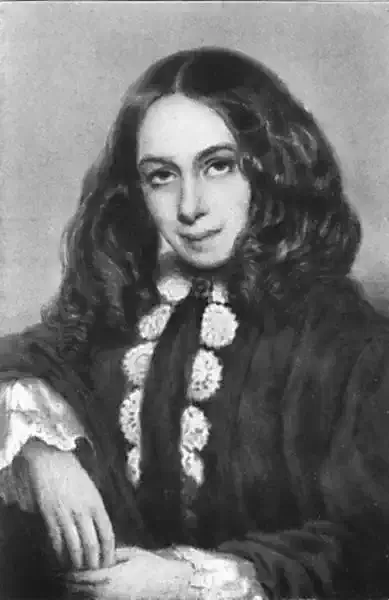
Elizabeth Barrett Browning
Minstrelsy
For ever, since my childish looks
Could rest on Nature's pictured books;
For ever, since my childish tongue
Could name the themes our bards have sung;
So long, the sweetness of their singing
Hath been to me a rapture bringing!
Yet ask me not the reason why
I have delight in minstrelsy.
I know that much whereof I sing,
Is shapen but for vanishing;
I know that summer's flower and leaf
And shine and shade are very brief,
And that the heart they brighten, may,
Before them all, be sheathed in clay! --
I do not know the reason why
I have delight in minstrelsy.
A few there are, whose smile and praise
My minstrel hope, would kindly raise:
But, of those few -- Death may impress
The lips of some with silentness;
While some may friendship's faith resign,
And heed no more a song of mine. --
Ask not, ask not the reason why
I have delight in minstrelsy.
The sweetest song that minstrels sing,
Will charm not Joy to tarrying;
The greenest bay that earth can grow,
Will shelter not in burning woe;
A thousand voices will not cheer,
When one is mute that aye is dear! --
Is there, alas! no reason why
I have delight in minstrelsy.
I do not know! The turf is green
Beneath the rain's fast-dropping sheen,
Yet asks not why that deeper hue
Doth all its tender leaves renew; --
And I, like-minded, am content,
While music to my soul is sent,
To question not the reason why
I have delight in minstrelsy.
Years pass -- my life with them shall pass:
And soon, the cricket in the grass
And summer bird, shall louder sing
Than she who owns a minstrel's string.
Oh then may some, the dear and few,
Recall her love, whose truth they knew;
When all forget to question why
She had delight in minstrelsy!
489
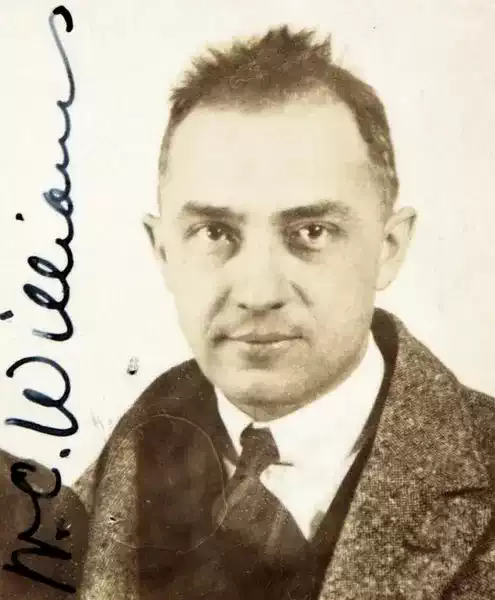
William Carlos Williams
The Artist
Mr T.
bareheaded
in a soiled undershirt
his hair standing out
on all sides
stood on his toes
heels together
arms gracefully
for the moment
curled above his head.
Then he whirled about
bounded
into the air
and with an entrechat
perfectly achieved
completed the figure.
My mother
taken by surprise
where she sat
in her invalid's chair
was left speechless.
Bravo! she cried at last
and clapped her hands.
The man's wife
came from the kitchen:
What goes on here? she said.
But the show was over.
490
Boris Pasternak
Wet Paint
'Look out! Wet paint.' My soul was blind,
I have to pay the price,
All marked with stains of calves and cheeks
And hands and lips and eyes.
I loved you more than luck or grief
Because with you in sight
The old and yellowed world became
As white as painters' white.
I swear my friend, my gloom-it will
One day still whiter gleam,
Than lampshades, than a bandaged brow,
Than a delirious dream.
~~~~~~~~~~~
Не трогать
'Не трогать,
свежевыкрk
2;шен', &#
1044;уша не
береглась,
И память - в
пятнах икр
и щек,
И рук, и губ, и
глаз.
Я больше
всех удач и
бед
За то тебя
любил,
Что
пожелтелыl
1; белый свет
С тобой &#
1073;елей
белил.
И мгла моя,
мой друг,
божусь,
Он станет
как-нибудь
Белей, чем
бред, чем
абажур,
Чем белый
бинт на лбу!
488
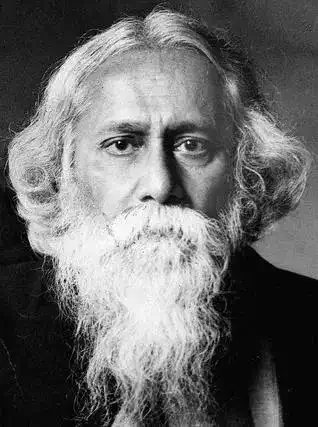
Rabindranath Tagore
Lover's Gifts LVIII: Things Throng and Laugh
Things throng and laugh loud in the sky; the sands and dust dance
and whirl like children. Man's mind is aroused by their shouts; his
thoughts long to be the playmates of things.
Our dreams, drifting in the stream of the vague, stretch their
arms to clutch the earth, -their efforts stiffen into bricks and
stones, and thus the city of man is built.
Voices come swarming from the past,-seeking answers from the
living moments. Beats of their wings fill the air with tremulous
shadows, and sleepless thoughts in our minds leave their nests to
take flight across the desert of dimness, in the passionate thirst
for forms. They are lampless pilgrims, seeking the shore of light,
to find themselves in things. They will be lured into poets's
rhymes, they will be housed in the towers of the town not yet
planned, they have their call to arms from the battle fields of the
future, they are bidden to join hands in the strife of peace yet
to come.
485
Ezra Pound
‘Phasellus Ille’
1 his papier-mâché, which you see, my friends,
Saith 'twas the worthiest of editors.
Its mind was made up in 'the seventies',
Nor hath it ever since changed that concoction.
It works to represent that school of thought
Which brought the hair-cloth chair to such perfection,
Nor will the horrid threats of Bernard Shaw
Shake up the stagnant pool of its convictions;
Nay, should the deathless voice of all the world
Speak once again for its sole stimulation,
Twould not move it one jot from left to right.
Come Beauty barefoot from the Cyclades,
She'd find a model for St. Anthony
In this thing's sure decorum and behaviour.
484
Ezra Pound
Homage To Sextus Propertius - II
I had been seen in the shade, recumbent on cushioned Helicon,
The water dripping from Bellerophon's horse,
Alba, your kings, and the realm your folk
have constructed with such industry
Shall be yawned out on my lyre with such industry.
My little mouth shall gobble in such great fountains,
'Wherefrom father Ennius, sitting before I came, hath drunk.'
I had rehearsed the Curian brothers, and made remarks
on the Horatian javelin
(Near Q. H. Flaccus' book-stall).
'Of’ royal Aemilia, drawn on the memorial raft,
'Of’ the victorious delay of Fabius, and the left-handed
battle at Cannae,
Of lares fleeing the 'Roman seat' . . .
I had sung of all these
And of Hannibal,
and of Jove protected by geese.
And Phoebus looking upon me from the Castalian tree,
Said then 'You idiot! What are you doing with that water:
‘Who has ordered a book about heroes?
'You need, Propertius, not think
'About acquiring that sort of a reputation.
'Soft fields must be worn by small wheels,
'Your pamphlets will be thrown, thrown often into a chair
'Where a girl waits alone for her lover;
'Why wrench your page out of its course?
'No keel will sink with your genius
'Let another oar churn the water,
'Another wheel, the arena; mid-crowd is as bad as mid-sea.'
He had spoken, and pointed me a place with his plectrum:
Orgies of vintages, an earthern image of Silenus
Strengthened with rushes, Tegaean Pan,
The small birds of the Cytharean mother,
their Punic faces dyed in the Gorgon's lake;
Nine girls, from as many countrysides
bearing her offerings in their unhardened hands,
Such my cohort and setting. And she bound ivy to his thyrsos;
Fitted song to the strings;
Roses twined in her hands.
And one among them looked at me with face offended,
Calliope:
'Content ever to move with white swans!
'Nor will the noise of high horses lead you ever to battle;
Nor will the public criers ever have your name;
in their classic horns,
'Nor Mars shout you in the wood at Aeonium,
Nor where Rome ruins German riches,
'Nor where the Rhine flows with barbarous blood,
and flood carries wounded Suevi.
'Obviously crowned lovers at unknown doors,
'Night dogs, the marks of a drunken scurry,
'These are your images, and from you the sorcerizing of
shut-in young ladies,
'The wounding of austere men by chicane.'
Thus Mistress Calliope,
Dabbling her hands in the fount, thus she
Stiffened our face with the backwash of Philetas the Coan.
485
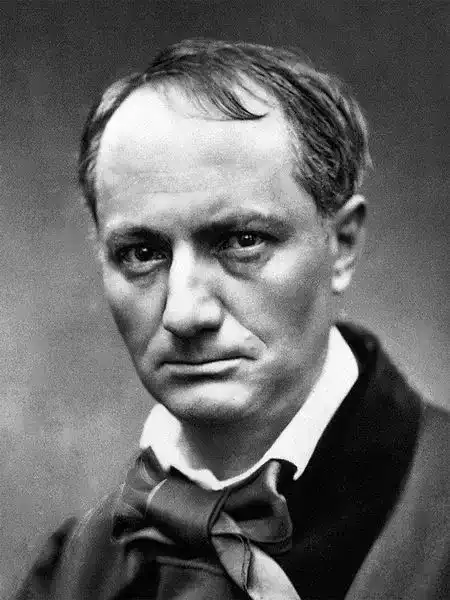
Charles Baudelaire
Ill-Starred
To bear a weight that cannot be borne,
Sisyphus, even you aren't that strong,
Although your heart cannot be torn
Time is short and Art is long.
Far from celebrated sepulchers
Toward a solitary graveyard
My heart, like a drum muffled hard
Beats a funeral march for the ill-starred.
—Many jewels are buried or shrouded
In darkness and oblivion's clouds,
Far from any pick or drill bit,
Many a flower unburdens with regret
Its perfume sweet like a secret;
In profoundly empty solitude to sit.
Translated by William A. Sigler
481
William Carlos Williams
Tract
I will teach you my townspeople
how to perform a funeral
for you have it over a troop
of artistsunless
one should scour the worldyou
have the ground sense necessary.
See! the hearse leads.
I begin with a design for a hearse.
For Christ's sake not blacknor
white either - and not polished!
Let it be whethered - like a farm wagon -
with gilt wheels (this could be
applied fresh at small expense)
or no wheels at all:
a rough dray to drag over the ground.
Knock the glass out!
My God - glass, my townspeople!
For what purpose? Is it for the dead
to look out or for us to see
the flowers or the lack of them -
or what?
To keep the rain and snow from him?
He will have a heavier rain soon:
pebbles and dirt and what not.
Let there be no glass -
and no upholstery, phew!
and no little brass rollers
and small easy wheels on the bottom -
my townspeople, what are you thinking of?
A rough plain hearse then
with gilt wheels and no top at all.
On this the coffin lies
by its own weight.
No wreathes pleaseespecially
no hot house flowers.
Some common memento is better,
something he prized and is known by:
his old clothes - a few books perhaps -
God knows what! You realize
how we are about these things
my townspeople -
something will be found - anything
even flowers if he had come to that.
So much for the hearse.
For heaven's sake though see to the driver!
Take off the silk hat! In fact
that's no place at all for him -
up there unceremoniously
dragging our friend out to his own dignity!
Bring him down - bring him down!
Low and inconspicuous! I'd not have him ride
on the wagon at all - damn him! -
the undertaker's understrapper!
Let him hold the reins
and walk at the side
and inconspicuously too!
Then briefly as to yourselves:
Walk behind - as they do in France,
seventh class, or if you ride
Hell take curtains! Go with some show
of inconvenience; sit openly -
to the weather as to grief.
Or do you think you can shut grief in?
What - from us? We who have perhaps
nothing to lose? Share with us
share with us - it will be money
in your pockets.
Go now
I think you are ready.
483

Alfred Lord Tennyson
To Virgil, Written at the Request of the Mantuans for the N
Roman Virgil, thou that singest
Ilion's lofty temples robed in fire,
Ilion falling, Rome arising,
wars, and filial faith, and Dido's pyre;
Landscape-lover, lord of language
more than he that sang the "Works and Days,"
All the chosen coin of fancy
flashing out from many a golden phrase;
Thou that singest wheat and woodland,
tilth and vineyard, hive and horse and herd;
All the charm of all the Muses
often flowering in a lonely word;
Poet of the happy Tityrus
piping underneath his beechen bowers;
Poet of the poet-satyr
whom the laughing shepherd bound with flowers;
Chanter of the Pollio, glorying
in the blissful years again to be,
Summers of the snakeless meadow,
unlaborious earth and oarless sea;
Thou that seëst Universal
Nature moved by Universal Mind;
Thou majestic in thy sadness
at the doubtful doom of human kind;
Light among the vanish'd ages;
star that gildest yet this phantom shore;
Golden branch amid the shadows,
kings and realms that pass to rise no more;
Now thy Forum roars no longer,
fallen every purple Cæsar's dome-Tho'
thine ocean-roll of rhythm
sound forever of Imperial Rome-
Now the Rome of slaves hath perish'd,
and the Rome of freemen holds her place,
I, from out the Northern Island
sunder'd once from all the human race,
I salute thee, Mantovano,
I that loved thee since my day began,
Wielder of the stateliest measure
ever moulded by the lips of man.
483
Ezra Pound
The Study In Aesthetics
The very small children in patched clothing,
Being smitten with an unusual wisdom,
Stopped in their play as she passed them
And cried up from their cobbles:
Guarda! Ahi, guarda! Ch’ è be’ a!
But three years after this
I heard the young Dante, whose last name I do not
know--
For there are, in Sirmione, twenty-eight young Dantes
and thirty-four Catulli;
And there had been a great catch of sardines,
And his elders
Were packing them in the great wooden boxes
For the market in Brescia, and he
Leapt about, snatching at the bright fish
And getting in both of their ways;
And in vain they commanded him to stafermo!
And when they would not let him arrange
The fish in the boxes
He stroked those which were already arranged,
Murmuring for his own satisfaction
This identical phrase:
Ch’ è be’ a
And at this I was mildly abashed.
480
William Blake
To the Muses
Whether on Ida's shady brow,
Or in the chambers of the East,
The chambers of the sun, that now
From ancient melody have ceas'd;
Whether in Heav'n ye wander fair,
Or the green corners of the earth,
Or the blue regions of the air,
Where the melodious winds have birth;
Whether on crystal rocks ye rove,
Beneath the bosom of the sea
Wand'ring in many a coral grove,
Fair Nine, forsaking Poetry!
How have you left the ancient love
That bards of old enjoy'd in you!
The languid strings do scarcely move!
The sound is forc'd, the notes are few!
480
Ezra Pound
And Thus In Nineveh
Aye! I am a poet and upon my tomb
Shall maidens scatter rose leaves
And men myrtles, ere the night
Slays day with her dark sword.
'Lo ! this thing is not mine
Nor thine to hinder,
For the custom is full old,
And here in Nineveh have I beheld
Many a singer pass and take his place
In those dim halls where no man troubleth
His sleep or song.
And many a one hath sung his songs
More craftily, more subtle-souled than I;
And many a one now doth surpass
My wave-worn beauty with his wind of flowers,
Yet am I poet, and upon my tomb
Shall all men scatter rose leaves
Ere the night slay light
With her blue sword.
‘It is not, Raana, that my song rings highest
Or more sweet in tone than any, but that I
Am here a Poet, that doth drink of life
As lesser men drink wine.’
477
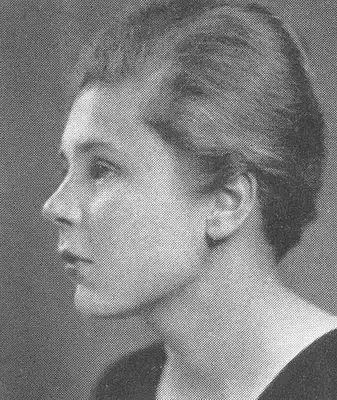
Elizabeth Bishop
Lines Written In The Fannie Farmer Cookbook
[Given to Frank Bidart]
You won't become a gourmet* cook
By studying our Fannie's book--
Her thoughts on Food & Keeping House
Are scarcely those of Lévi-Strauss.
Nevertheless, you'll find, Frank dear,
The basic elements** are here.
And if a problem should arise:
The Soufflé fall before your eyes,
Or strange things happen to the Rice
--You know I love to give advice.
Elizabeth
Christmas, 1971
* Forbidden word
** Forbidden phrase
P.S. Fannie should not be underrated;
She has become sophisticated.
She's picked up many gourmet* tricks
Since the edition of '96.
476
Boris Pasternak
Oh terrible, beloved! A poet's loving
Oh terrible, beloved! A poet's loving
Is a restless god's passionate rage,
And chaos out into the world comes creeping,
As in the ancient fossil age.
His eyes weep him mist by the ton,
Enveloped in tears he is mammoth-like,
Out of fashion. He knows it must not be done.
Ages have passed-he does not know why.
He sees wedding parties all around,
Drunken unions celebrated unaware,
Common frogspawn found in every pond
Ritually adorned as precious caviare.
Like some Watteau pearl, how cleverly
A snuffbox embraces all life's matter,
And vengeance is wreaked on him, probably
Because, where they distort and flatter,
Where simpering comfort lies and fawns,
Where they rub idle shoulders, crawl like drones,
He will raise your sister from the ground,
Use her like a bacchante from the Grecian urns,
And pour into his kiss the Andes' melting,
And morning in the steppe, under the sway
Of dusted stars, as night's pallid bleating
Bustles about the village on its way.
And the botanical vestry's dense blackness,
And all the ravine's age-old breath,
Waft over the ennui of the stuffed mattress,
And the forest's ancient chaos spurts forth
472
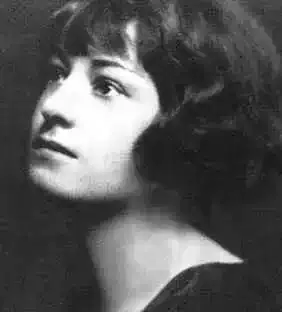
Dorothy Parker
D.G. Rossetti
Dante Gabriel Rossetti
Buried all of his libretti,
Thought the matter over - then
Went and dug them up again.
Buried all of his libretti,
Thought the matter over - then
Went and dug them up again.
471
William Blake
The Caverns of the Grave I've Seen
The Caverns of the Grave I've seen,
And these I show'd to England's Queen.
But now the Caves of Hell I view,
Who shall I dare to show them to?
What mighty soul i n Beauty's form
Shall dauntless view the infernal storm?
Egremont's Countess can control
The flames of Hell that round me roll;
If she refuse, I still go on
Till the Heavens and Earth are gone,
Still admir'd by noble minds,
Follow'd by Envy on the winds,
Re-engrav'd time after time,
Ever in their youthful prime,
My designs unchang'd remain.
Time may rage, but rage in vain.
For above Time's troubled fountains,
On the great Atlantic Mountains,
In my Golden House on high,
There they shine eternally.
472