
Art
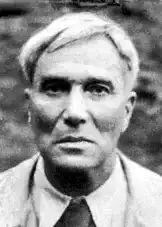
Boris Pasternak
Oh terrible, beloved! A poet's loving
Oh terrible, beloved! A poet's loving
Is a restless god's passionate rage,
And chaos out into the world comes creeping,
As in the ancient fossil age.
His eyes weep him mist by the ton,
Enveloped in tears he is mammoth-like,
Out of fashion. He knows it must not be done.
Ages have passed-he does not know why.
He sees wedding parties all around,
Drunken unions celebrated unaware,
Common frogspawn found in every pond
Ritually adorned as precious caviare.
Like some Watteau pearl, how cleverly
A snuffbox embraces all life's matter,
And vengeance is wreaked on him, probably
Because, where they distort and flatter,
Where simpering comfort lies and fawns,
Where they rub idle shoulders, crawl like drones,
He will raise your sister from the ground,
Use her like a bacchante from the Grecian urns,
And pour into his kiss the Andes' melting,
And morning in the steppe, under the sway
Of dusted stars, as night's pallid bleating
Bustles about the village on its way.
And the botanical vestry's dense blackness,
And all the ravine's age-old breath,
Waft over the ennui of the stuffed mattress,
And the forest's ancient chaos spurts forth
472

William Blake
The Caverns of the Grave I've Seen
The Caverns of the Grave I've seen,
And these I show'd to England's Queen.
But now the Caves of Hell I view,
Who shall I dare to show them to?
What mighty soul i n Beauty's form
Shall dauntless view the infernal storm?
Egremont's Countess can control
The flames of Hell that round me roll;
If she refuse, I still go on
Till the Heavens and Earth are gone,
Still admir'd by noble minds,
Follow'd by Envy on the winds,
Re-engrav'd time after time,
Ever in their youthful prime,
My designs unchang'd remain.
Time may rage, but rage in vain.
For above Time's troubled fountains,
On the great Atlantic Mountains,
In my Golden House on high,
There they shine eternally.
472

William Butler Yeats
Wisdom
THE true faith discovered was
When painted panel, statuary.
Glass-mosaic, window-glass,
Amended what was told awry
By some peasant gospeller;
Swept the Sawdust from the floor
Of that working-carpenter.
Miracle had its playtime where
In damask clothed and on a seat
Chryselephantine, cedar-boarded,
His majestic Mother sat
Stitching at a purple hoarded
That He might be nobly breeched
In starry towers of Babylon
Noah's freshet never reached.
King Abundance got Him on
Innocence; and Wisdom He.
That cognomen sounded best
Considering what wild infancy
Drove horror from His Mother's breast.
466

Walt Whitman
Song Of The Exposition
AFTER all, not to create only, or found only,
But to bring, perhaps from afar, what is already founded,
To give it our own identity, average, limitless, free;
To fill the gross, the torpid bulk with vital religious fire;
Not to repel or destroy, so much as accept, fuse, rehabilitate;
To obey, as well as command--to follow, more than to lead;
These also are the lessons of our New World;
--While how little the New, after all--how much the Old, Old World!
Long, long, long, has the grass been growing,
Long and long has the rain been falling,
Long has the globe been rolling round.
Come, Muse, migrate from Greece and Ionia;
Cross out, please, those immensely overpaid accounts,
That matter of Troy, and Achilles' wrath, and Eneas', Odysseus'
wanderings;
Placard "Removed" and "To Let" on the rocks of your snowy Parnassus;
Repeat at Jerusalem--place the notice high on Jaffa's gate, and on
Mount Moriah;
The same on the walls of your Gothic European Cathedrals, and German,
French and Spanish Castles;
For know a better, fresher, busier sphere--a wide, untried domain
awaits, demands you.
Responsive to our summons,
Or rather to her long-nurs'd inclination,
Join'd with an irresistible, natural gravitation,
She comes! this famous Female--as was indeed to be expected;
(For who, so-ever youthful, 'cute and handsome, would wish to stay in
mansions such as those,
When offer'd quarters with all the modern improvements,
With all the fun that 's going--and all the best society?)
She comes! I hear the rustling of her gown;
I scent the odor of her breath's delicious fragrance;
I mark her step divine--her curious eyes a-turning, rolling,
Upon this very scene.
The Dame of Dames! can I believe, then,
Those ancient temples classic, and castles strong and feudalistic,
could none of them restrain her?
Nor shades of Virgil and Dante--nor myriad memories, poems, old
associations, magnetize and hold on to her?
But that she 's left them all--and here?
Yes, if you will allow me to say so,
I, my friends, if you do not, can plainly see Her,
The same Undying Soul of Earth's, activity's, beauty's, heroism's
Expression,
Out from her evolutions hither come--submerged the strata of her
former themes,
Hidden and cover'd by to-day's--foundation of to-day's;
Ended, deceas'd, through time, her voice by Castaly's fountain;
Silent through time the broken-lipp'd Sphynx in Egypt--silent those
century-baffling tombs;
Closed for aye the epics of Asia's, Europe's helmeted warriors;
Calliope's call for ever closed--Clio, Melpomene, Thalia closed and
dead;
Seal'd the stately rhythmus of Una and Oriana--ended the quest of the
Holy Graal;
Jerusalem a handful of ashes blown by the wind--extinct;
The Crusaders' streams of shadowy, midnight troops, sped with the
sunrise;
Amadis, Tancred, utterly gone--Charlemagne, Roland, Oliver gone,
Palmerin, ogre, departed--vanish'd the turrets that Usk reflected,
Arthur vanish'd with all his knights--Merlin and Lancelot and
Galahad--all gone--dissolv'd utterly, like an exhalation;
Pass'd! pass'd! for us, for ever pass'd! that once so mighty World-now
void, inanimate, phantom World!
Embroider'd, dazzling World! with all its gorgeous legends, myths,
Its kings and barons proud--its priests, and warlike lords, and
courtly dames;
Pass'd to its charnel vault--laid on the shelf--coffin'd, with Crown
and Armor on,
Blazon'd with Shakspeare's purple page,
And dirged by Tennyson's sweet sad rhyme.
I say I see, my friends, if you do not, the Animus of all that World,
Escaped, bequeath'd, vital, fugacious as ever, leaving those dead
remains, and now this spot approaching, filling;
--And I can hear what maybe you do not--a terrible aesthetical
commotion,
With howling, desperate gulp of "flower" and "bower,"
With "Sonnet to Matilda's Eyebrow" quite, quite frantic;
With gushing, sentimental reading circles turn'd to ice or stone;
With many a squeak, (in metre choice,) from Boston, New York,
Philadelphia, London;
As she, the illustrious Emigré, (having, it is true, in her day,
although the same, changed, journey'd considerable,)
Making directly for this rendezvous--vigorously clearing a path for
herself--striding through the confusion,
By thud of machinery and shrill steam-whistle undismay'd,
Bluff'd not a bit by drain-pipe, gasometers, artificial fertilizers,
Smiling and pleased, with palpable intent to stay,
She 's here, install'd amid the kitchen ware!
But hold--don't I forget my manners?
To introduce the Stranger (what else indeed have I come for?) to
thee, Columbia:
In Liberty's name, welcome, Immortal! clasp hands,
And ever henceforth Sisters dear be both.
Fear not, O Muse! truly new ways and days receive, surround you,
(I candidly confess, a queer, queer race, of novel fashion,)
And yet the same old human race--the same within, without,
Faces and hearts the same--feelings the same--yearnings the same,
The same old love--beauty and use the same.
We do not blame thee, Elder World--nor separate ourselves from thee:
(Would the Son separate himself from the Father?)
Looking back on thee--seeing thee to thy duties, grandeurs, through
past ages bending, building,
We build to ours to-day.
Mightier than Egypt's tombs,
Fairer than Grecia's, Roma's temples,
Prouder than Milan's statued, spired Cathedral,
More picturesque than Rhenish castle-keeps,
We plan, even now, to raise, beyond them all,
Thy great Cathedral, sacred Industry--no tomb,
A Keep for life for practical Invention.
As in a waking vision,
E'en while I chant, I see it rise--I scan and prophesy outside and
in,
Its manifold ensemble.
Around a Palace,
Loftier, fairer, ampler than any yet,
Earth's modern Wonder, History's Seven outstripping,
High rising tier on tier, with glass and iron façades.
Gladdening the sun and sky--enhued in cheerfulest hues,
Bronze, lilac, robin's-egg, marine and crimson,
Over whose golden roof shall flaunt, beneath thy banner, Freedom,
The banners of The States, the flags of every land,
A brood of lofty, fair, but lesser Palaces shall cluster.
Somewhere within the walls of all,
Shall all that forwards perfect human life be started,
Tried, taught, advanced, visibly exhibited.
Here shall you trace in flowing operation,
In every state of practical, busy movement,
The rills of Civilization.
Materials here, under your eye, shall change their shape, as if by
magic;
The cotton shall be pick'd almost in the very field,
Shall be dried, clean'd, ginn'd, baled, spun into thread and cloth,
before you:
You shall see hands at work at all the old processes, and all the new
ones;
You shall see the various grains, and how flour is made, and then
bread baked by the bakers;
You shall see the crude ores of California and Nevada passing on and
on till they become bullion;
You shall watch how the printer sets type, and learn what a composing
stick is;
You shall mark, in amazement, the Hoe press whirling its cylinders,
shedding the printed leaves steady and fast:
The photograph, model, watch, pin, nail, shall be created before you.
In large calm halls, a stately Museum shall teach you the infinite,
solemn lessons of Minerals;
In another, woods, plants, Vegetation shall be illustrated--in
another Animals, animal life and development.
One stately house shall be the Music House;
Others for other Arts--Learning, the Sciences, shall all be here;
None shall be slighted--none but shall here be honor'd, help'd,
exampled.
This, this and these, America, shall be your Pyramids and
Obelisks,
Your Alexandrian Pharos, gardens of Babylon,
Your temple at Olympia.
The male and female many laboring not,
Shall ever here confront the laboring many,
With precious benefits to both--glory to all,
To thee, America--and thee, Eternal Muse.
And here shall ye inhabit, Powerful Matrons!
In your vast state, vaster than all the old;
Echoed through long, long centuries to come,
To sound of different, prouder songs, with stronger themes,
Practical, peaceful life--the people's life--the People themselves,
Lifted, illumin'd, bathed in peace--elate, secure in peace.
Away with themes of war! away with War itself!
Hence from my shuddering sight, to never more return, that show of
blacken'd, mutilated corpses!
That hell unpent, and raid of blood--fit for wild tigers, or for lop
tongued wolves--not reasoning men!
And in its stead speed Industry's campaigns!
With thy undaunted armies, Engineering!
Thy pennants, Labor, loosen'd to the breeze!
Thy bugles sounding loud and clear!
Away with old romance!
Away with novels, plots, and plays of foreign courts!
Away with love-verses, sugar'd in rhyme--the intrigues, amours of
idlers,
Fitted for only banquets of the night, where dancers to late music
slide;
The unhealthy pleasures, extravagant dissipations of the few,
With perfumes, heat and wine, beneath the dazzling chandeliers.
To you, ye Reverent, sane Sisters,
To this resplendent day, the present scene,
These eyes and ears that like some broad parterre bloom up around,
before me,
I raise a voice for far superber themes for poets and for Art,
To exalt the present and the real,
To teach the average man the glory of his daily walk and trade,
To sing, in songs, how exercise and chemical life are never to be
baffled;
Boldly to thee, America, to-day! and thee, Immortal Muse!
To practical, manual work, for each and all--to plough, hoe, dig,
To plant and tend the tree, the berry, the vegetables, flowers,
For every man to see to it that he really do something--for every
woman too;
To use the hammer, and the saw, (rip or cross-cut,)
To cultivate a turn for carpentering, plastering, painting,
To work as tailor, tailoress, nurse, hostler, porter,
To invent a little--something ingenious--to aid the washing, cooking,
cleaning,
And hold it no disgrace to take a hand at them themselves.
I say I bring thee, Muse, to-day and here,
All occupations, duties broad and close,
Toil, healthy toil and sweat, endless, without cessation,
The old, old general burdens, interests, joys,
The family, parentage, childhood, husband and wife,
The house-comforts--the house itself, and all its belongings,
Food and its preservations--chemistry applied to it;
Whatever forms the average, strong, complete, sweet-blooded Man or
Woman--the perfect, longeve Personality,
And helps its present life to health and happiness--and shapes its
Soul,
For the eternal Real Life to come.
With latest materials, works,
Steam-power, the great Express lines, gas, petroleum,
These triumphs of our time, the Atlantic's delicate cable,
The Pacific Railroad, the Suez canal, the Mont Cenis tunnel;
Science advanced, in grandeur and reality, analyzing every thing,
This world all spann'd with iron rails--with lines of steamships
threading every sea,
Our own Rondure, the current globe I bring.
And thou, high-towering One--America!
Thy swarm of offspring towering high--yet higher thee, above all
towering,
With Victory on thy left, and at thy right hand Law;
Thou Union, holding all--fusing, absorbing, tolerating all,
Thee, ever thee, I bring.
Thou--also thou, a world!
With all thy wide geographies, manifold, different, distant,
Rounding by thee in One--one common orbic language,
One common indivisible destiny and Union.
And by the spells which ye vouchsafe,
To those, your ministers in earnest,
I here personify and call my themes,
To make them pass before ye.
Behold, America! (And thou, ineffable Guest and Sister!)
For thee come trooping up thy waters and thy lands:
Behold! thy fields and farms, thy far-off woods and mountains,
As in procession coming.
Behold! the sea itself!
And on its limitless, heaving breast, thy ships:
See! where their white sails, bellying in the wind, speckle the green
and blue!
See! thy steamers coming and going, steaming in or out of port!
See! dusky and undulating, their long pennants of smoke!
Behold, in Oregon, far in the north and west,
Or in Maine, far in the north and east, thy cheerful axemen,
Wielding all day their axes!
Behold, on the lakes, thy pilots at their wheels--thy oarsmen!
Behold how the ash writhes under those muscular arms!
There by the furnace, and there by the anvil,
Behold thy sturdy blacksmiths, swinging their sledges;
Overhand so steady--overhand they turn and fall, with joyous clank,
Like a tumult of laughter.
Behold! (for still the procession moves,)
Behold, Mother of All, thy countless sailors, boatmen, coasters!
The myriads of thy young and old mechanics!
Mark--mark the spirit of invention everywhere--thy rapid patents,
Thy continual workshops, foundries, risen or rising;
See, from their chimneys, how the tall flame-fires stream!
Mark, thy interminable farms, North, South,
Thy wealthy Daughter-States, Eastern, and Western,
The varied products of Ohio, Pennsylvania, Missouri, Georgia, Texas,
and the rest;
Thy limitless crops--grass, wheat, sugar, corn, rice, hemp, hops,
Thy barns all fill'd--thy endless freight-trains, and thy bulging
store-houses,
The grapes that ripen on thy vines--the apples in thy orchards,
Thy incalculable lumber, beef, pork, potatoes--thy coal--thy gold and
silver,
The inexhaustible iron in thy mines.
All thine, O sacred Union!
Ship, farm, shop, barns, factories, mines,
City and State--North, South, item and aggregate,
We dedicate, dread Mother, all to thee!
Protectress absolute, thou! Bulwark of all!
For well we know that while thou givest each and all, (generous as
God,)
Without thee, neither all nor each, nor land, home,
Ship, nor mine--nor any here, this day, secure,
Nor aught, nor any day secure.
And thou, thy Emblem, waving over all!
Delicate beauty! a word to thee, (it may be salutary;)
Remember, thou hast not always been, as here to-day, so comfortably
ensovereign'd;
In other scenes than these have I observ'd thee, flag;
Not quite so trim and whole, and freshly blooming, in folds of
stainless silk;
But I have seen thee, bunting, to tatters torn, upon thy splinter'd
staff,
Or clutch'd to some young color-bearer's breast, with desperate
hands,
Savagely struggled for, for life or death--fought over long,
'Mid cannon's thunder-crash, and many a curse, and groan and yell-and
rifle-volleys cracking sharp,
And moving masses, as wild demons surging--and lives as nothing
risk'd,
For thy mere remnant, grimed with dirt and smoke, and sopp'd in
blood;
For sake of that, my beauty--and that thou might'st dally, as now,
secure up there,
Many a good man have I seen go under.
Now here, and these, and hence, in peace all thine, O Flag!
And here, and hence, for thee, O universal Muse! and thou for them!
And here and hence, O Union, all the work and workmen thine!
The poets, women, sailors, soldiers, farmers, miners, students thine!
None separate from Thee--henceforth one only, we and Thou;
(For the blood of the children--what is it only the blood Maternal?
And lives and works--what are they all at last except the roads to
Faith and Death?)
While we rehearse our measureless wealth, it is for thee, dear
Mother!
We own it all and several to-day indissoluble in Thee;
--Think not our chant, our show, merely for products gross, or
lucre--it is for Thee, the Soul, electric, spiritual!
Our farms, inventions, crops, we own in Thee! Cities and States in
Thee!
Our freedom all in Thee! our very lives in Thee!
468

Rudyard Kipling
Untimely
Nothing in life has been made by man for man's using
But it was shown long since to man in ages
Lost as the name of the maker of it,
Who received oppression and shame for his wages--
Hate, avoidance, and scorn in his daily dealings--
Until he perished, wholly confounded
More to be pitied than he are the wise
Souls which foresaw the evil of loosing
Knowledge or Art before time, and aborted
Noble devices and deep-wrought healings,
Lest offense should arise.
Heaven delivers on earth the Hour that cannot be
thwarted,
Neither advanced, at the price of a world nor a soul,
and its Prophet
Comes through the blood of the vanguards who
dreamed--too soon--it had sounded.
466
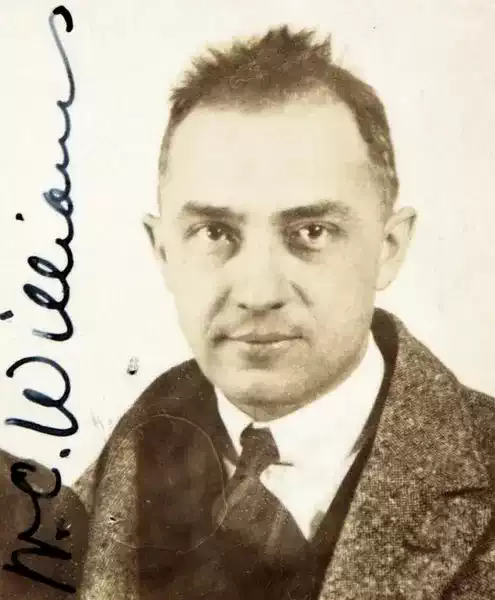
William Carlos Williams
The Uses of Poetry
I've fond anticipation of a day
O'erfilled with pure diversion presently,
For I must read a lady poesy
The while we glide by many a leafy bay,
Hid deep in rushes, where at random play
The glossy black winged May-flies, or whence flee
Hush-throated nestlings in alarm,
Whom we have idly frighted with our boat's long sway.
For, lest o'ersaddened by such woes as spring
To rural peace from our meek onward trend,
What else more fit? We'll draw the latch-string
And close the door of sense; then satiate wend,
On poesy's transforming giant wing,
To worlds afar whose fruits all anguish mend.
468

John Keats
A Draught Of Sunshine
Hence Burgundy, Claret, and Port,
Away with old Hock and madeira,
Too earthly ye are for my sport;
There's a beverage brighter and clearer.
Instead of a piriful rummer,
My wine overbrims a whole summer;
My bowl is the sky,
And I drink at my eye,
Till I feel in the brain
A Delphian pain -
Then follow, my Caius! then follow:
On the green of the hill
We will drink our fill
Of golden sunshine,
Till our brains intertwine
With the glory and grace of Apollo!
God of the Meridian,
And of the East and West,
To thee my soul is flown,
And my body is earthward press'd. -
It is an awful mission,
A terrible division;
And leaves a gulph austere
To be fill'd with worldly fear.
Aye, when the soul is fled
To high above our head,
Affrighted do we gaze
After its airy maze,
As doth a mother wild,
When her young infant child
Is in an eagle's claws -
And is not this the cause
Of madness? - God of Song,
Thou bearest me along
Through sights I scarce can bear:
O let me, let me share
With the hot lyre and thee,
The staid Philosophy.
Temper my lonely hours,
And let me see thy bowers
More unalarm'd!
464

Johann Wolfgang von Goethe
Songs
SONGS are like painted window-panes!
In darkness wrapp'd the church remains,
If from the market-place we view it;
Thus sees the ignoramus through it.
No wonder that he deems it tame,--
And all his life 'twill be the same.
But let us now inside repair,
And greet the holy Chapel there!
At once the whole seems clear and bright,
Each ornament is bathed in light,
And fraught with meaning to the sight.
God's children! thus your fortune prize,
Be edified, and feast your eyes!
465
Rudyard Kipling
The Birthright
The miracle of our land's speech--so known
And long received, none marvel when 'tis shown!
We have such wealth as Rome at her most pride
Had not or (having) scattered not so wide;
Nor with such arrant prodigality,
Beneath her any pagan's foot let lie...
Lo! Diamond that cost some half their days
To find and t'other half to bring to blaze:
Rubies of every heat, wherethrough we scan
The fiercer and more fiery heart of man:
Emerald that with the uplifted billow vies,
And Sapphires evening remembered skies:
Pearl perfect, as immortal tears must show,
Bred, in deep waters, of a piercing woe;
And tender Turkis, so with charms y-writ,
Of woven gold, Time dares not bite on it.
Thereafter, in all manners worked and set,
Jade, coral, amber, crystal ivories, jet,--
Showing no more than various fancies, yet
Each a Life's token or Love's amulet
Which things, through timeless arrogance of use,
We neither guard nor garner, but abuse;
So that our scholars--nay, our children-fling
In sport or jest treasure to arm a King;
And the gross crowd, at feast or market, hold
Traffic perforce with dust of gems and gold!
464
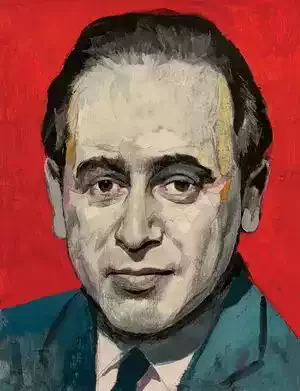
Paul Celan
Afternoon Of Circus And Citadel
In Brest, before the Fire-Hoops burning,
In the Tent, where Tigers sprang,
there I heard you, Finite, singing,
there I saw you, Mandelstam.
The Sky hung over the Roadstead,
the Gull, hung over the Crane.
The Finite sang there, the Constant –
you, the Gunboat, Baobab.
I hailed the Tricolor
with a Russian Word –
the Lost was Un-Lost,
the Heart Anchored there.
465
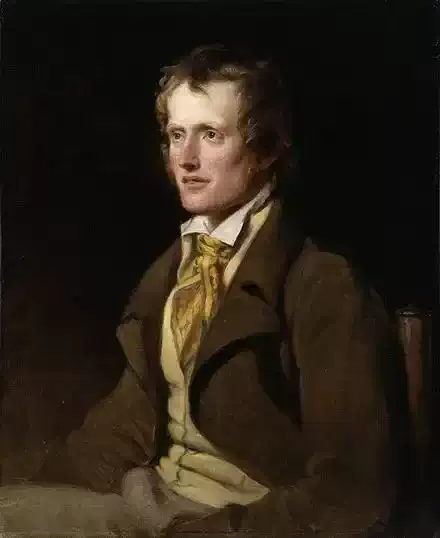
John Clare
Decay
O Poesy is on the wane,
For Fancy's visions all unfitting;
I hardly know her face again,
Nature herself seems on the flitting.
The fields grow old and common things,
The grass, the sky, the winds a-blowing;
And spots, where still a beauty clings,
Are sighing 'going! all a-going!'
O Poesy is on the wane,
I hardly know her face again.
The bank with brambles overspread,
And little molehills round about it,
Was more to me than laurel shades,
With paths of gravel finely clouted;
And streaking here and streaking there,
Through shaven grass and many a border,
With rutty lanes had no compare,
And heaths were in a richer order.
But Poesy is on the wane,
I hardly know her face again.
I sat beside the pasture stream,
When Beauty's self was sitting by,
The fields did more than Eden seem
Nor could I tell the reason why.
I often drank when not adry
To pledge her health in draughts divine;
Smiles made it nectar from the sky,
Love turned een water into wine.
O Poesy is on the wane,
I cannot find her face again.
The sun those mornings used to find,
Its clouds were other-country mountains,
And heaven looked downward on the mind,
Like groves, and rocks, and mottled fountains.
Those heavens are gone, the mountains grey
Turned mist--the sun, a homeless ranger,
Pursues alone his naked way,
Unnoticed like a very stranger.
O Poesy is on the wane,
Nor love nor joy is mine again.
Love's sun went down without a frown,
For very joy it used to grieve us;
I often think the West is gone,
Ah, cruel Time, to undeceive us.
The stream it is a common stream,
Where we on Sundays used to ramble,
The sky hangs oer a broken dream,
The bramble's dwindled to a bramble!
O Poesy is on the wane,
I cannot find her haunts again.
Mere withered stalks and fading trees,
And pastures spread with hills and rushes,
Are all my fading vision sees;
Gone, gone are rapture's flooding gushes!
When mushrooms they were fairy bowers,
Their marble pillars overswelling,
And Danger paused to pluck the flowers
That in their swarthy rings were dwelling.
Yes, Poesy is on the wane,
Nor joy nor fear is mine again.
Aye, Poesy hath passed away,
And Fancy's visions undeceive us;
The night hath ta'en the place of day,
And why should passing shadows grieve us?
I thought the flowers upon the hills
Were flowers from Adam's open gardens;
But I have had my summer thrills,
And I have had my heart's rewardings.
So Poesy is on the wane,
I hardly know her face again.
And Friendship it hath burned away,
Like to a very ember cooling,
A make-believe on April day
That sent the simple heart a-fooling;
Mere jesting in an earnest way,
Deceiving on and still deceiving;
And Hope is but a fancy-play,
And Joy the art of true believing;
For Poesy is on the wane,
O could I feel her faith again!
461

Ezra Pound
L'Art
Green arsenic smeared on an egg-white cloth,
Crushed strawberries! Come, let us feast our eyes.
Crushed strawberries! Come, let us feast our eyes.
459

Lord Byron
To Mr. Murray (Strahan, Tonson Lintot Of The Times)
Strahan, Tonson Lintot of the times,
Patron and publisher of rhymes,
For thee the bard up Pindus climbs,
My Murray.
To thee, with hope and terror dumb,
The unedged MS. authors come;
Thou printest all and
sellest some
My
Murray.
Upon thy table's baize so green
The last new Quarterly is seen,
But
where is thy new Magazine,
My Murray?
Along thy sprucest bookshelves shine
The works thou deemest most divine
The
'Art of Cookery,' and mine,
My Murray.
Tours, Travels, Essays, too, I wist,
And Sermons, to thy mill bring grist;
And then thou hast the 'Navy List,'
My Murray.
And Heaven forbid I should conclude
Without 'the Board of Longitude,'
Although this narrow paper would,
My Murray.
Venice, March 25, 1818.
461

Elizabeth Barrett Browning
On A Portrait Of Wordsworth
WORDSWORTH upon Helvellyn ! Let the cloud
Ebb audibly along the mountain-wind,
Then break against the rock, and show behind
The lowland valleys floating up to crowd
The sense with beauty. He with forehead bowed
And humble-lidded eyes, as one inclined
Before the sovran thought of his own mind,
And very meek with inspirations proud,
Takes here his rightful place as poet-priest
By the high altar, singing prayer and prayer
To the higher Heavens. A noble vision free
Our Haydon's hand has flung out from the mist:
No portrait this, with Academic air !
This is the poet and his poetry.
459
John Keats
Staffa
Not Aladdin magian
Ever such a work began;
Not the wizard of the Dee
Ever such a dream could see;
Not St. John, in Patmos' Isle,
In the passion of his toil,
When he saw the churches seven,
Golden aisl'd, built up in heaven,
Gaz'd at such a rugged wonder.
As I stood its roofing under
Lo! I saw one sleeping there,
On the marble cold and bare.
While the surges wash'd his feet,
And his garments white did beat.
Drench'd about the sombre rocks,
On his neck his well-grown locks,
Lifted dry above the main,
Were upon the curl again.
'What is this? and what art thou?'
Whisper'd I, and touch'd his brow;
'What art thou? and what is this?'
Whisper'd I, and strove to kiss
The spirit's hand, to wake his eyes;
Up he started in a trice:
'I am Lycidas,' said he,
'Fam'd in funeral minstrely!
This was architectur'd thus
By the great Oceanus!--
Here his mighty waters play
Hollow organs all the day;
Here by turns his dolphins all,
Finny palmers great and small,
Come to pay devotion due--
Each a mouth of pearls must strew.
Many a mortal of these days,
Dares to pass our sacred ways,
Dares to touch audaciously
This Cathedral of the Sea!
I have been the pontiff-priest
Where the waters never rest,
Where a fledgy sea-bird choir
Soars for ever; holy fire
I have hid from mortal man;
Proteus is my Sacristan.
But the dulled eye of mortal
Hath pass'd beyond the rocky portal;
So for ever will I leave
Such a taint, and soon unweave
All the magic of the place.'
* * * * * *
So saying, with a Spirit's glance
He dived!
455
John Keats
Fragment Of 'The Castle Builder.'
To-night I'll have my friar -- let me think
About my room, -- I'll have it in the pink;
It should be rich and sombre, and the moon,
Just in its mid-life in the midst of June,
Should look thro' four large windows and display
Clear, but for gold-fish vases in the way,
Their glassy diamonding on Turkish floor;
The tapers keep aside, an hour and more,
To see what else the moon alone can show;
While the night-breeze doth softly let us know
My terrace is well bower'd with oranges.
Upon the floor the dullest spirit sees
A guitar-ribband and a lady's glove
Beside a crumple-leaved tale of love;
A tambour-frame, with Venus sleeping there,
All finish'd but some ringlets of her hair;
A viol, bow-strings torn, cross-wise upon
A glorious folio of Anacreon;
A skull upon a mat of roses lying,
Ink'd purple with a song concerning dying;
An hour-glass on the turn, amid the trails
Of passion-flower; -- just in time there sails
A cloud across the moon, -- the lights bring in!
And see what more my phantasy can win.
It is a gorgeous room, but somewhat sad;
The draperies are so, as tho' they had
Been made for Cleopatra's winding-sheet;
And opposite the stedfast eye doth meet
A spacious looking-glass, upon whose face,
In letters raven-sombre, you may trace
Old 'Mene, Mene, Tekel Upharsin.'
Greek busts and statuary have ever been
Held, by the finest spirits, fitter far
Than vase grotesque and Siamesian jar;
Therefore 'tis sure a want of Attic taste
That I should rather love a Gothic waste
Of eyesight on cinque-coloured potter's clay,
Than on the marble fairness of old Greece.
My table-coverlits of Jason's fleece
And black Numidian sheep-wool should be wrought,
Gold, black, and heavy, from the Lama brought.
My ebon sofas should delicious be
With down from Leda's cygnet progeny.
My pictures all Salvator's, save a few
Of Titian's portraiture, and one, though new,
Of Haydon's in its fresh magnificence.
My wine -- O good! 'tis here at my desire,
And I must sit to supper with my friar.
454
William Butler Yeats
An Acre Of Grass
PICTURE and book remain,
An acre of green grass
For air and exercise,
Now strength of body goes;
Midnight, an old house
Where nothing stirs but a mouse.
My temptation is quiet.
Here at life's end
Neither loose imagination,
Nor the mill of the mind
Consuming its rag and bonc,
Can make the truth known.
Grant me an old man's frenzy,
Myself must I remake
Till I am Timon and Lear
Or that William Blake
Who beat upon the wall
Till Truth obeyed his call;
A mind Michael Angelo knew
That can pierce the clouds,
Or inspired by frenzy
Shake the dead in their shrouds;
Forgotten else by mankind,
An old man's eagle mind.
454
John Keats
Two Sonnets. To Haydon, With A Sonnet Written On Seeing The Elgin Marbles
I.
Haydon! forgive me that I cannot speak
Definitively of these mighty things;
Forgive me, that I have not eagle's wings,
That what I want I know not where to seek,
And think that I would not be over-meek,
In rolling out upfollowed thunderings,
Even to the steep of Heliconian springs,
Were I of ample strength for such a freak.
Think, too, that all these numbers should be thine;
Whose else? In this who touch thy vesture's hem?
For, when men stared at what was most divine
With brainless idiotism and o'erwise phlegm,
Thou hadst beheld the full Hesperian shine
Of their star in the east, and gone to worship them.
II. On Seeing The Elgin Marbles.
My spirit is too weak - mortality
Weighs heavily upon me like unwilling sleep,
And each imagined pinnacle and steep
Of godlike hardship tells me I must die
Like a sick eagle looking at the sky.
Yet 'tis a gentle luxury to weep
That I have not the cloudy winds to keep,
Fresh for the opening of the morning's eye.
Such dim-conceived glories of the brain
Bring round the heart an undescribable feud;
So do these wonders a most dizzy pain,
That mingles Grecian grandeur with the rude
Wasting of old Time -- with a billowy main --
A sun -- a shadow of a magnitude.
454
William Blake
If It Is True What the Prophets Write
If it is true, what the Prophets write,
That the heathen gods are all stocks and stones,
Shall we, for the sake of being polite,
Feed them with the juice of our marrow-bones?
And if Bezaleel and Aholiab drew
What the finger of God pointed to their view,
Shall we suffer the Roman and Grecian rods
To compel us to worship them as gods?
They stole them from the temple of the Lord
And worshipp'd them that they might make inspirèd art abhorr'd;
The wood and stone were call'd the holy things,
And their sublime intent given to their kings.
All the atonements of Jehovah spurn'd,
And criminals to sacrifices turn'd.
452

Ella Wheeler Wilcox
Clara Morris (Written for a Benefit Given Mrs. Morris)
The Radiant Ruler of Mystic Regions
Where souls of artists are fitted for birth,
Gathered together their lovely legions
And fashioned a woman to shine on earth.
They bathed her in splendor
They made her tender:
They gave her a nature both sweet and wild.
They gave her emotions
Like storm stirred oceans,
And they gave her the heart of a little child.
These Radiant Rulers (who are not human
Nor yet divine like the gods above)
Poured all their gifts in the soul of a woman
That fragile vessel meant only for love.
Still more they taught her,
Still more they brought her-
Till they gave her the world for a harp one day,
And they bade her string it-
They bade her ring it,
While the stars all wondered to hear her play.
She touched the strings in a master fashion,
She uttered the cry of a world's despair.
Its long-hid secret, its pent-up passion,
She gave to the winds in a vibrant air.
For ah! the heart of her,
That was the art of her,
Great with the feeling that makes men kin.
Art unapproachable,
Art all uncoachable,
Fragrance and flame from the spirit within.
The earth turns ever an ear unheeding
To the sorrows of art, as it cries for more:
And she played on the harp till her hands were bleeding
And her brow was bruised by the laurels she wore.
She knew the trend of it,
She knew the end of it.
Men heard the music and men felt the thrill.
Bound to the altar
Of art, could she falter?
Then came a silence-the music was still.
And yet in the echoes we seem to hear it
In waves unbroken it circles the earth:
And we catch in the light of her dauntless spirit
A gleam from the center that gave her birth.
Still is the fame of her
Felt in the name of her.
But low lies the harp that once thrilled to her strain.
No hand has taken it,
No hand can waken it-
For the soul of her art was her secret of pain.
452
Ezra Pound
To Whistler, American
On the loan exhibit of his paintings at the Tate Gallery.
You also, our first great,
Had tried all ways;
Tested and pried and worked in many fashions,
And this much gives me heart to play the game.
Here is part that's slight, and part gone wrong,
And much of little moment, and some few
Perfect as Diirer!
'In the Studio' and these two portraits, if I had my choice!
And then these sketches in the mood of Greece?
You had your searches, your uncertainties,
And this is good to know for us, I mean,
Who bear the brunt of our America
And try to wrench her impulse into art.
You were not always sure, not always set
To hiding night or tuning ^symphonies';
Had not one style from birth, but tried and pried
And stretched and tampered with the media.
You and Abe Lincoln from that mass of dolts
Show us there's chance at least of winning through.
454
Elizabeth Barrett Browning
Sonnet IV
Thou hast thy calling to some palace-floor,
Most gracious singer of high poems ! where
The dancers will break footing, from the care
Of watching up thy pregnant lips for more.
And dost thou lift this house's latch too poor
For hand of thine ? and canst thou think and bear
To let thy music drop here unaware
In folds of golden fulness at my door ?
Look up and see the casement broken in,
The bats and owlets builders in the roof !
My cricket chirps against thy mandolin.
Hush, call no echo up in further proof
Of desolation ! there 's a voice within
That weeps . . . as thou must sing . . . alone, aloof
448

Robert Louis Stevenson
To Sydney
NOT thine where marble-still and white
Old statues share the tempered light
And mock the uneven modern flight,
But in the stream
Of daily sorrow and delight
To seek a theme.
I too, O friend, have steeled my heart
Boldly to choose the better part,
To leave the beaten ways of art,
And wholly free
To dare, beyond the scanty chart,
The deeper sea.
All vain restrictions left behind,
Frail bark! I loose my anchored mind
And large, before the prosperous wind
Desert the strand -
A new Columbus sworn to find
The morning land.
Nor too ambitious, friend. To thee
I own my weakness. Not for me
To sing the enfranchised nations' glee,
Or count the cost
Of warships foundered far at sea
And battles lost.
High on the far-seen, sunny hills,
Morning-content my bosom fills;
Well-pleased, I trace the wandering rills
And learn their birth.
Far off, the clash of sovereign wills
May shake the earth.
The nimble circuit of the wheel,
The uncertain poise of merchant weal,
Heaven of famine, fire and steel
When nations fall;
These, heedful, from afar I feel -
I mark them all.
But not, my friend, not these I sing,
My voice shall fill a narrower ring.
Tired souls, that flag upon the wing,
I seek to cheer:
Brave wines to strengthen hope I bring,
Life's cantineer!
Some song that shall be suppling oil
To weary muscles strained with toil,
Shall hearten for the daily moil,
Or widely read
Make sweet for him that tills the soil
His daily bread.
Such songs in my flushed hours I dream
(High thought) instead of armour gleam
Or warrior cantos ream by ream
To load the shelves -
Songs with a lilt of words, that seem
To sing themselves.
448
Ezra Pound
Les Millwin
The little Millwins attend the Russian Ballet.
The mauve and greenish souls of the little Millwins
Were seen lying along the upper seats
Like so many unused boas.
The turbulent and undisciplined host of art students-
The rigorous deputation from ‘Slade’-
Was before them.
With arms exalted, with fore-arms
Crossed in great futuristic X's, the art students
Exulted, they beheld the splendours of Cleopatra
And the little Millwins beheld these things;
With their large and anaemic eyes they looked out upon
this configuration.
Let us therefore mention the fact,
For it seems to us worthy of record.
448