
Trees, Forests and Mountains

Emily Dickinson
All these my banners be
All these my banners be.
I sow my pageantry
In May-
It rises train by train-
Then sleeps in state again-
My chancel-all the plain
Today.
To lose-if one can find again-
To miss-if one shall meet-
The Burglar cannot rob-then-
The Broker cannot cheat.
So build the hillocks gaily
Thou little spade of mine
Leaving nooks for Daisy
And for Columbine-
You and I the secret
Of the Crocus know-
Let us chant it softly"
There is no more snow!"
To him who keeps an Orchis' heart-
The swamps are pink with June.
362

Mao Tsé-Tung
Three Short Poems
Mountains!
I whip my swift horse, glued to my saddle.
I turn my head startled,
The sky is three foot three above me!
Mountains!
Like great waves surging in a crashing sea,
Like a thousand stallions
In full gallop in the heat of battle.
Mountains!
Piercing the blue of heaven, your barbs unblunted!
The skies would fall
But for your strength supporting.
358

Robert Browning
De Gustibus---
I.
Your ghost will walk, you lover of trees,
(If our loves remain)
In an English lane,
By a cornfield-side a-flutter with poppies.
Hark, those two in the hazel coppice---
A boy and a girl, if the good fates please,
Making love, say,---
The happier they!
Draw yourself up from the light of the moon,
And let them pass, as they will too soon,
With the bean-flowers' boon,
And the blackbird's tune,
And May, and June!
II.
What I love best in all the world
Is a castle, precipice-encurled,
In a gash of the wind-grieved Apennine
Or look for me, old fellow of mine,
(If I get my head from out the mouth
O' the grave, and loose my spirit's bands,
And come again to the land of lands)---
In a sea-side house to the farther South,
Where the baked cicala dies of drouth,
And one sharp tree---'tis a cypress---stands,
By the many hundred years red-rusted,
Rough iron-spiked, ripe fruit-o'ercrusted,
My sentinel to guard the sands
To the water's edge. For, what expands
Before the house, but the great opaque
Blue breadth of sea without a break?
While, in the house, for ever crumbles
Some fragment of the frescoed walls,
From blisters where a scorpion sprawls.
A girl bare-footed brings, and tumbles
Down on the pavement, green-flesh melons,
And says there's news to-day---the king
Was shot at, touched in the liver-wing,
Goes with his Bourbon arm in a sling:
---She hopes they have not caught the felons.
Italy, my Italy!
Queen Mary's saying serves for me---
(When fortune's malice
Lost her---Calais)---
Open my heart and you will see
Graved inside of it, ``Italy.''
Such lovers old are I and she:
So it always was, so shall ever be!
353

Henry Van Dyke
Light Between the Trees
Long, long, long the trail
Through the brooding forest-gloom,
Down the shadowy, lonely vale
Into silence, like a room
Where the light of life has fled,
And the jealous curtains close
Round the passionless repose
Of the silent dead.
Plod, plod, plod away,
Step by step in mouldering moss;
Thick branches bar the day
Over languid streams that cross
Softly, slowly, with a sound
In their aimless creeping
Like a smothered weeping,
Through the enchanted ground.
"Yield, yield, yield thy quest,"
Whispers through the woodland deep;
"Come to me and be at rest;
"I am slumber, I am sleep."
Then the weary feet would fail,
But the never-daunted will
Urges "Forward, forward still!
"Press along the trail!"
Breast, breast, breast the slope!
See, the path is growing steep.
Hark! a little song of hope
When the stream begins to leap.
Though the forest, far and wide,
Still shuts out the bending blue,
We shall finally win through,
Cross the long divide.
On, on, onward tramp!
Will the journey never end?
Over yonder lies the camp;
Welcome waits us there, my friend.
Can we reach it ere the night?
Upward, upward, never fear!
Look, the summit must be near;
See the line of light!
Red, red, red the shine
Of the splendour in the west,
Glowing through the ranks of pine,
Clear along the mountain-crest!
Long, long, long the trail
Out of sorrow's lonely vale;
But at last the traveller sees
Light between the trees!
338

Henry Wadsworth Longfellow
Voices Of The Night : Prelude
Pleasant it was, when woods were green,
And winds were soft and low,
To lie amid some sylvan scene,
Where, the long drooping boughs between
Shadows dark and sunlight sheen
Alternate come and go;
Or where the denser grove receives
No sunlight from above
But the dark foliage interweaves
In one unbroken roof of leaves,
Underneath whose sloping eaves
The shadows hardly move.
Beneath some patriarchal tree
I lay upon the ground;
His hoary arms uplifted he,
And all the broad leaves over me
Clapped their little hands in glee,
With one continuous sound;--
A slumberous sound,--a sound that brings
The feelings of a dream,--
As of innumerable wings,
As, when a bell no longer swings,
Faint the hollow murmur rings
O'er meadow, lake, and stream.
And dreams of that which cannot die,
Bright visins, came to me,
As lapped in thought I used to lie,
And gaze into the summer sky,
Where the sailing clouds went by,
Like ships upon the sea;
Dreams that the soul of youth engage
Ere Fancy has been quelled;
Old legends of the monkish page.
Traditions of the saint and sage,
Tales that have the rime of age,
And chronicles of Eld.
And, loving still these quaint old themes,
Even in the city's throng
I feel the freshness of the streams,
That, crossed by shades and sunny gleams,
Water the green land of dreams,
The holy land of song.
Therefore, at Pentecost, which brings
The Spring, clothed like a bride,
When nestling buds unfold their wings,
And bishop's-caps have golden rings,
Musing upon many things,
I sought the woodlands wide.
The green trees whispered low and mild,
It was a sound of joy!
They were my playmates when a child
And rocked me in their arms so wild!
Still they looked at me and smiled
As if I were a boy;
And ever whispered, mild and low,
'Come, be a child once more!'
And waved their long arms to and fro,
And beckoned solemnly and slow;
O, I could not choose but go
Into the woodlands hoar;
Into the blithe and breathing air,
Into the solemn wood.
Solemn and silent everywhere!
Nature with folded hands seemed there,
Kneeling at her evening prayer!
Like one in prayer I stood.
Before me rose an avenue
Of tall and sombrous pines;
Abroad their fan-like branches grew,
And, where the sunshine darted throught
Spread a vapor soft and blue,
In long and sloping lines.
And, falling on my weary brain,
Like a fast-falling shower,
The dreams of youth came back again,
Low lispings of the summer rain,
Dropping on the ripened grain,
As once upon the flower.
Visions of childhood! Stay, O stay!
Ye were so sweet and wild!
And distant voices seemed to say,
'It cannot be! They pass away!
Other themes demand thy lay;
Thou art no more a child!
'The land of Song within thee lies,
Watered by living springs;
The lids of Fancy's sleepless eyes
Are gates unto that Paradise;
Holy thoughts, like stars, arise,
Its clouds are angels' wings.
'Learn, that henceforth thy song shall be
Not mountains capped with snow,
Nor forests sounding like the sea,
Nor rivers flowing ceaselessly,
Where the woodlands bend to see
The bending heavens below.
'There is a forest where the din
Of iron branches sounds!
A mighty river roara between,
And whosoever looks therein,
Sees the heavens all black with sin,--
Sees not ita depths, nor bounds.
'Athwart the swinging branches cast,
Soft rays of sunshine pour;
Then comes the fearful wintry blast;
Our hopes, like withered leaves, fall fast;
Pallid lips say, 'It is past!
We can return no more!'
'Look, then, into thine heart, and write!
Yes, into Life's deep stream!
All forms of sorrow and delight,
All solemn Voices of the Night,
That can soothe thee, or affright,--
Be these henceforth thy theme.'
338
Henry Wadsworth Longfellow
The Song Of Hiawatha VII: Hiawatha's Sailing
'Give me of your bark, O Birch-tree!
Of your yellow bark, O Birch-tree!
Growing by the rushing river,
Tall and stately in the valley!
I a light canoe will build me,
Build a swift Cheemaun for sailing,
That shall float on the river,
Like a yellow leaf in Autumn,
Like a yellow water-lily!
'Lay aside your cloak, O Birch-tree!
Lay aside your white-skin wrapper,
For the Summer-time is coming,
And the sun is warm in heaven,
And you need no white-skin wrapper!'
Thus aloud cried Hiawatha
In the solitary forest,
By the rushing Taquamenaw,
When the birds were singing gayly,
In the Moon of Leaves were singing,
And the sun, from sleep awaking,
Started up and said, 'Behold me!
Gheezis, the great Sun, behold me!'
And the tree with all its branches
Rustled in the breeze of morning,
Saying, with a sigh of patience,
'Take my cloak, O Hiawatha!'
With his knife the tree he girdled;
Just beneath its lowest branches,
Just above the roots, he cut it,
Till the sap came oozing outward;
Down the trunk, from top to bottom,
Sheer he cleft the bark asunder,
With a wooden wedge he raised it,
Stripped it from the trunk unbroken.
'Give me of your boughs, O Cedar!
Of your strong and pliant branches,
My canoe to make more steady,
Make more strong and firm beneath me!'
Through the summit of the Cedar
Went a sound, a cry of horror,
Went a murmur of resistance;
But it whispered, bending downward,
'Take my boughs, O Hiawatha!'
Down he hewed the boughs of cedar,
Shaped them straightway to a frame-work,
Like two bows he formed and shaped them,
Like two bended bows together.
'Give me of your roots, O Tamarack!
Of your fibrous roots, O Larch-tree!
My canoe to bind together,
So to bind the ends together
That the water may not enter,
That the river may not wet me!'
And the Larch, with all its fibres,
Shivered in the air of morning,
Touched his forehead with its tassels,
Slid, with one long sigh of sorrow.
'Take them all, O Hiawatha!'
From the earth he tore the fibres,
Tore the tough roots of the Larch-tree,
Closely sewed the hark together,
Bound it closely to the frame-work.
'Give me of your balm, O Fir-tree!
Of your balsam and your resin,
So to close the seams together
That the water may not enter,
That the river may not wet me!'
And the Fir-tree, tall and sombre,
Sobbed through all its robes of darkness,
Rattled like a shore with pebbles,
Answered wailing, answered weeping,
'Take my balm, O Hiawatha!'
And he took the tears of balsam,
Took the resin of the Fir-tree,
Smeared therewith each seam and fissure,
Made each crevice safe from water.
'Give me of your quills, O Hedgehog!
All your quills, O Kagh, the Hedgehog!
I will make a necklace of them,
Make a girdle for my beauty,
And two stars to deck her bosom!'
From a hollow tree the Hedgehog
With his sleepy eyes looked at him,
Shot his shining quills, like arrows,
Saying with a drowsy murmur,
Through the tangle of his whiskers,
'Take my quills, O Hiawatha!'
From the ground the quills he gathered,
All the little shining arrows,
Stained them red and blue and yellow,
With the juice of roots and berries;
Into his canoe he wrought them,
Round its waist a shining girdle,
Round its bows a gleaming necklace,
On its breast two stars resplendent.
Thus the Birch Canoe was builded
In the valley, by the river,
In the bosom of the forest;
And the forest's life was in it,
All its mystery and its magic,
All the lightness of the birch-tree,
All the toughness of the cedar,
All the larch's supple sinews;
And it floated on the river
Like a yellow leaf in Autumn,
Like a yellow water-lily.
Paddles none had Hiawatha,
Paddles none he had or needed,
For his thoughts as paddles served him,
And his wishes served to guide him;
Swift or slow at will he glided,
Veered to right or left at pleasure.
Then he called aloud to Kwasind,
To his friend, the strong man, Kwasind,
Saying, 'Help me clear this river
Of its sunken logs and sand-bars.'
Straight into the river Kwasind
Plunged as if he were an otter,
Dived as if he were a beaver,
Stood up to his waist in water,
To his arm-pits in the river,
Swam and scouted in the river,
Tugged at sunken logs and branches,
With his hands he scooped the sand-bars,
With his feet the ooze and tangle.
And thus sailed my Hiawatha
Down the rushing Taquamenaw,
Sailed through all its bends and windings,
Sailed through all its deeps and shallows,
While his friend, the strong man, Kwasind,
Swam the deeps, the shallows waded.
Up and down the river went they,
In and out among its islands,
Cleared its bed of root and sand-bar,
Dragged the dead trees from its channel,
Made its passage safe and certain,
Made a pathway for the people,
From its springs among the mountains,
To the waters of Pauwating,
To the bay of Taquamenaw.
335

John Greenleaf Whittier
Mogg Megone - Part II.
'Tis morning over Norridgewock, On
tree and wigwam, wave and rock.
Bathed in the autumnal sunshine, stirred
At intervals by breeze and bird,
And wearing all the hues which glow
In heaven's own pure and perfect bow,
That glorious picture of the air,
Which summer's light-robed angel forms
On the dark ground of fading storms,
With pencil dipped in sunbeams there, And,
stretching out, on either hand,
O'er all that wide and unshorn land,
Till, weary of its gorgeousness,
The aching and the dazzled eye
Rests, gladdened, on the calm blue sky, Slumbers
the mighty wilderness!
The oak, upon the windy hill,
Its dark green burthen upward heaves The
hemlock broods above its rill,
Its cone-like foliage darker still,
Against the birch's graceful stem,
And the rough walnut-bough receives
The sun upon its crowded leaves,
Each colored like a topaz gem;
And the tall maple wears with them
The coronal, which autumn gives,
The brief, bright sign of ruin near,
The hectic of a dying year!
The hermit priest, who lingers now
On the Bald Mountain's shrubless brow,
The gray and thunder-smitten pile
Which marks afar the Desert Isle,
While gazing on the scene below,
May half forget the dreams of home,
That nightly with his slumbers come, The
tranquil skies of sunny France,
The peasant's harvest song and dance,
The vines around the hillsides wreathing
The soft airs midst their clusters breathing,
The wings which dipped, the stars which shone
Within thy bosom, blue Garonne!
And round the Abbey's shadowed wall,
At morning spring and even-fall,
Sweet voices in the still air singing, The
chant of many a holy hymn, The
solemn bell of vespers ringing, And
hallowed torchlight falling dim
On pictured saint and seraphim!
For here beneath him lies unrolled,
Bathed deep in morning's flood of gold,
A vision gorgeous as the dream
Of the beautified may seem,
When, as his Church's legends say,
Borne upward in ecstatic bliss,
The rapt enthusiast soars away
Unto a brighter world than this:
A mortal's glimpse beyond the pale, A
moment's lifting of the veil!
Far eastward o'er the lovely bay,
Penobscot's clustered wigwams lay;
And gently from that Indian town
The verdant hillside slopes adown,
To where the sparkling waters play
Upon the yellow sands below;
And shooting round the winding shores
Of narrow capes, and isles which lie
Slumbering to ocean's lullaby, With
birchen boat and glancing oars,
The red men to their fishing go;
While from their planting ground is borne
The treasure of the golden corn,
By laughing girls, whose dark eyes glow
Wild through the locks which o'er them flow.
The wrinkled squaw, whose toil is done,
Sits on her bear-skin in the sun,
Watching the huskers, with a smile
For each full ear which swells the pile;
And the old chief, who nevermore
May bend the bow or pull the oar,
Smokes gravely in his wigwam door,
Or slowly shapes, with axe of stone,
The arrow-head from flint and bone.
Beneath the westward turning eye
A thousand wooded islands lie, Gems
of the waters! - with each hue
Of brightness set in ocean's blue.
Each bears aloft its tuft of trees
Touched by the pencil of the frost,
And, with the motion of each breeze,
A moment seen, - a moment lost, Changing
and blent, confused and tossed,
The brighter with the darker crossed,
Their thousand tints of beauty glow
Down in the restless waves below,
And tremble in the sunny skies,
As if, from waving bough to bough,
Flitted the birds of paradise.
There sleep Placentia's group, - and there
Pere Breteaux marks the hour of prayer;
And there, beneath the sea-worn cliff,
On which the Father's hut is seen,
The Indian stays his rocking skiff,
And peers the hemlock-boughs between,
Half trembling, as he seeks to look
Upon the Jesuit's Cross and Book.
There, gloomily against the sky
The Dark Isles rear their summits high;
And Desert Rock, abrupt and bare,
Lifts its gray turrets in the air, Seen
from afar, like some stronghold
Built by the ocean kings of old;
And, faint as smoke-wreath white and thin,
Swells in the north vast Katahdin:
And, wandering from its marshy feet,
The broad Penobscot comes to meet
And mingle with his own bright bay.
Slow sweep his dark and gathering floods,
Arched over by the ancient woods,
Which Time, in those dim solitudes,
Wielding the dull axe of Decay,
Alone hath ever shorn away.
Not thus, within the woods which hide
The beauty of thy azure tide,
And with their falling timbers block
Thy broken currents, Kennebec!
Gazes the white man on the wreck
Of the down-trodden Norridgewock, In
one lone village hemmed at length,
In battle shorn of half their strength,
Turned, like the panther in his lair,
With his fast-flowing life-blood wet,
For one last struggle of despair,
Wounded and faint, but tameless yet,
Unreaped, upon the planting lands,
The scant, neglected harvest stands:
No shout is there, - no dance, - no song:
The aspect of the very child
Scowls with a meaning sad and wild
Of bitterness and wrong.
The almost infant Norridgewock
Essays to lift the tomahawk;
And plucks his father's knife away,
To mimic, in his frightful play,
The scalping of an English foe:
Wreathes on his lip a horrid smile,
Burns, like a snake's, his small eye, while
Some bough or sapling meets his blow.
The fisher, as he drops his line,
Starts, when he sees the hazels quiver
Along the margin of the river,
Looks up and down the rippling tide,
And grasps the firelock at his side.
For Bomazeen from Tacconock
Has sent his runners to Norridgewock,
With tidings that Moulton and Harmon of York
Far up the river have come:
They have left their boats, - they have entered the wood,
And filled the depths of the solitude
With the sound of the ranger's drum.
On the brow of a hill, which slopes to meet
The flowing river, and bathe its feet, The
bare-washed rock, and the drooping grass,
And the creeping vine, as the waters pass, A
rude and unshapely chapel stands,
Built up in that wild by unskilled hands,
Yet the traveller knows it a place of prayer,
For the holy sign of the cross is there:
And should he chance at that place to be,
Of a Sabbath morn, or some hallowed day,
When prayers are made and masses are said,
Some for the living and some for the dead,
Well might that traveller start to see
The tall dark forms, that take their way
From the birch canoe, on the river-shore,
And the forest paths, to that chapel door;
And marvel to mark the naked knees
And the dusky foreheads bending there,
While, in coarse white vesture, over these
In blessing or in prayer,
Stretching abroad his thin pale hands,
Like a shrouded ghost, the Jesuit stands.
Two forms are now in that chapel dim,
The Jesuit, silent and sad and pale,
Anxiously heeding some fearful tale,
Which a stranger is telling him.
That stranger's garb is soiled and torn,
And wet with dew and loosely worn;
Her fair neglected hair falls down
O'er cheeks with wind and sunshine brown;
Yet still, in that disordered face,
The Jesuit's cautious eye can trace
Those elements of former grace
Which, half effaced, seem scarcely less,
Even now, than perfect loveliness.
With drooping head, and voice so low
That scarce it meets the Jesuit's ears, While
through her clasped fingers flow,
From the heart's fountain, hot and slow,
Her penitential tears, She
tells the story of the woe
And evil of her years.
'O father, bear with me; my heart
Is sick and death-like, and my brain
Seems girdled with a fiery chain,
Whose scorching links will never part,
And never cool again.
Bear with me while I speak, - but turn
Away that gentle eye, the while, The
fires of guilt more fiercely burn
Beneath its holy smile;
For half I fancy I can see
My mother's sainted look in thee.
'My dear lost mother! sad and pale,
Mournfully sinking day by day,
And with a hold on life as frail
As frosted leaves, that, thin and gray,
Hang feebly on their parent spray,
And tremble in the gale;
Yet watching o'er my childishness
With patient fondness, - not the less
For all the agony which kept
Her blue eye wakeful, while I slept;
And checking every tear and groan
That haply might have waked my own,
And bearing still, without offence,
My idle words, and petulance;
Reproving with a tear, - and, while
The tooth of pain was keenly preying
Upon her very heart, repaying
My brief repentance with a smile.
'O, in her meek, forgiving eye
There was a brightness not of mirth,
A light whose clear intensity
Was borrowed not of earth.
Along her cheek a deepening red
Told where the feverish hectic fed;
And yet, each fatal token gave
To the mild beauty of her face
A newer and a dearer grace,
Unwarning of the grave.
'Twas like the hue which Autumn gives
To yonder changed and dying leaves,
Breathed over by his frosty breath;
Scarce can the gazer feel that this
Is but the spoiler's treacherous kiss,
The mocking-smile of Death!
'Sweet were the tales she used to tell
When summer's eve was dear to us,
And, fading from the darkening dell,
The glory of the sunset fell
On wooded Agamenticus, When,
sitting by our cottage wall,
The murmur of the Saco's fall,
And the south-wind's expiring sighs,
Came, softly blending, on my ear,
With the low tones I loved to hear:
Tales of the pure, - the good, - the wise, The
holy men and maids of old,
In the all-sacred pages told; Of
Rachel, stooped at Haran's fountains,
Amid her father's thirsty flock,
Beautiful to her kinsman seeming
As the bright angels of his dreaming,
On Padan-aran's holy rock;
Of gentle Ruth, - and her who kept
Her awful vigil on the mountains,
By Israel's virgin daughters wept;
Of Miriam, with her maidens, singing
The song for grateful Israel meet,
While every crimson wave was bringing
The spoils of Egypt at her feet;
Of her, - Samaria's humble daughter,
Who paused to hear, beside her well,
Lessons of love and truth, which fell
Softly as Shiloh's flowing water;
And saw, beneath his pilgrim guise,
The Promised One, so long foretold
By holy seer and bard of old,
Revealed before her wondering eyes!
'Slowly she faded. Day by day
Her step grew weaker in our hall,
And fainter, at each even-fall,
He sad voice died away.
Yet on her thin, pale, lip, the while,
Sat Resignation's holy smile:
And even my father checked his tread,
And hushed his voice, beside her bed:
Beneath the calm and sad rebuke
Of her meek eye's imploring look,
The scowl of hate his brow forsook,
And in his stern and gloomy eye,
At times, a few unwonted tears
Wet the dark lashes, which for years
Hatred and pride had kept so dry.
'Calm as a child to slumber soothed,
As if an angel's hand had smoothed
The still, white features into rest,
Silent and cold, without a breath
To stir the drapery on her breast,
Pain, with its keen and poisoned fang,
The horror of the mortal pang,
The suffering look her brow had worn,
The fear, the strife, the anguish gone, She
slept at last in death!
'O, tell me, father,
can
the dead
Walk on the earth, and look on us,
And lay upon the living's head
Their blessing or their curse?
For, O, last night she stood by me,
As I lay beneath the woodland tree!'
The Jesuit crosses himself in awe, '
Jesu! what was it my daughter saw?'
'
She
came to me last night.
The dried leaves did not feel her tread;
She stood by me in the wan moonlight,
In the white robes of the dead!
Pale, and very mournfully
She bent her light form over me.
I heard no sound, I felt no breath
Breathe o'er me from that face of death:
Its blue eyes rested on my own,
Rayless and cold as eyes of stone;
Yet, in their fixed, unchanging gaze,
Something, which spoke of early days, A
sadness in their quiet glare,
As if love's smile were frozen there, Came
o'er me with an icy thrill;
O God! I feel its presence still!'
The Jesuit makes the holy sign, '
How passed the vision, daughter mine?'
'All dimly in the wan moonshine,
As a wreath of mist will twist and twine
And scatter, and melt into the light, So
scattering, - melting on my sight,
The pale, cold vision passed;
But those sad eyes were fixed on mine
Mournfully to the last.'
'God help thee, daughter, tell me why
That spirit passed before thine eye!'
'Father, I know not, save it be
That deeds of mine have summoned her
From the unbreathing sepulchre,
To leave her last rebuke with me.
Ah, woe for me! my mother died
Just at the moment when I stood
Close on the verge of womanhood,
A child in everything beside;
And when my wild heart needed most
Her gentle counsels, they were lost.
'My father lived a stormy life,
Of frequent change and daily strife;
And - God forgive him! - left his child
To feel, like him, a freedom wild;
To love the red man's dwelling-place.
The birch boat on his shaded floods,
The wild excitement of the chase
Sweeping the ancient woods,
The camp-fire, blazing on the shore
Of the still lakes, the clear stream where
The idle fisher sets his wear,
Or angles in the shade, far more
Than that restraining awe I felt
Beneath my gentle mother's care,
When nightly at her knee I knelt,
With childhood's simple prayer.
'There came a change. The wild, glad mood
Of unchecked freedom passed.
Amid the ancient solitude
Of unshorn grass and waving wood,
And waters glancing bright and fast,
A softened voice was in my ear,
Sweet as those lulling sounds and fine
The hunter lifts his head to hear,
Now far and faint, now full and near The
mumur of the wind-swept pine.
A manly form was ever nigh,
A bold, free hunter, with an eye
Whose dark, keen glance had power to wake
Both fear and love, - to awe and charm
'Twas as the wizard rattlesnake,
Whose evil glances lure to harm Whose
cold and small and glittering eye,
And brilliant coil, and changing dye,
Draw, step by step, the gazer near,
With drooping wing and cry of fear,
Yet powerless all to turn away,
A conscious, but a willing prey!
'Fear, doubt, thought, life itself, erelong
Merged in one feeling deep and strong.
Faded the world which I had known,
A poor vain shadow, cold and waste;
In the warm present bliss alone
Seemed I of actual life to taste.
Fond longings dimly understood,
The glow of passion's quickening blood,
And cherished fantasies which press
The young lip with a dream's caress, The
heart's forecast and prophecy
Took form and life before my eye,
Seen in the glance which met my own,
Heard in the soft and pleading tone,
Felt in the arms around me cast,
And warm heart-pulses beating fast.
Ah! scarcely yet to God above
With deeper trust, with stronger love,
Has prayerful saint his meek heart lent,
Or cloistered nun at twilight bent,
Than I, before a human shrine,
With heart, and soul, and mind, and form,
Knelt madly to a fellow-worm.
'Full soon, upon that dream of sin,
An awful light came bursting in.
The shrine was cold at which I knelt,
The idol of that shrine was gone;
A humbled thing of shame and guilt,
Outcast, and spurned and lone,
Wrapt in the shadows of my crime,
With withering heart and burning brain,
And tears that fell like fiery rain,
I passed a fearful time.
'There came a voice - it checked the tear In
heart and soul it wrought a change; My
father's voice was in my ear;
It whispered of revenge!
A new and fiercer feeling swept
All lingering tenderness away;
And tiger passions, which had slept
In childhood's better day,
Unknown, unfelt, arose at length
In all their own demoniac strength.
'A youthful warrior of the wild,
By words deceived, by smiles beguiled,
Of crime the cheated instrument,
Upon our fatal errands went.
Through camp and town and wilderness
He tracked his victim; and, at last,
Just when the tide of hate had passed,
And milder thoughts came warm and fast,
Exulting, at my feet he cast
The bloody token of success.
'O God! with what an awful power
I saw the buried past uprise,
And gather, in a single hour,
Its ghost-like memories!
And then I felt - alas! too late That
underneath the mask of hate,
That shame and guilt and wrong had thrown
O'er feelings which they might not own,
The heart's wild love had known no change;
And still that deep and hidden love,
With its first fondness, wept above
The victim of its own revenge!
There lay the fearful scalp, and there
The blood was on its pale brown hair!
I thought not of the victim's scorn,
I thought not of his baleful guile,
My deadly wrong, my outcast name,
The characters of sin and shame
On heart and forehead drawn;
I only saw that victim's smile, The
still, green places where we met, The
moonlit branches, dewy wet;
I only felt, I only heard
The greeting and the parting word, The
smile, - the embrace, - the tone which made
An Eden of the forest shade.
'And oh, with what a loathing eye,
With what a deadly hate, and deep,
I saw that Indian murderer lie
Before me, in his drunken sleep!
What though for me the deed was done
And words of mine had sped him on!
Yet when he murmured, as he slept,
The horrors of that deed of blood,
The tide of utter madness swept
O'er brain and bosom, like a flood.
And, father, with this hand of mine -'
'Ha! what didst thou?' the Jesuit cries,
Shuddering, as smitten with sudden pain,
And shading, with one thin hand, his eyes,
With the other he makes the holy sign.
'- I smote him as I would a worm; With
heart as steeled, with nerves as firm:
He never woke again!'
'Woman of sin and blood and shame,
Speak, - I would know that victim's name.'
'Father,' she gasped, 'a chieftain, known
As Saco's Sachem, - Mogg Megone!'
Pale priest! What proud and lofty dreams,
What keen desires, what cherished schemes,
What hopes, that time may not recall,
Are darkened by that chieftain's fall!
Was he not pledged, by cross and vow,
To lift the hatchet of his sire,
And, round his own, the Church's foe,
To light the avenging fire?
Who now the Tarrantine shall wake.
For thine and for the Church's sake?
Who summon to the scene
Of conquest and unsparing strife,
And vengeance dearer than his life,
The fiery-souled Castine?
Three backward steps the Jesuit takes, His
long, thin frame as ague shakes;
And loathing hate is in his eye,
As from his lips these words of fear
Fall hoarsely on the maiden's ear, '
The soul that sinneth shall surely die!'
She stands, as stands the stricken deer,
Checked midway in the fearful chase,
When bursts, upon his eye and ear,
The gaunt, gray robber, baying near,
Between him and his hiding-place;
While still behind, with yell and blow,
Sweeps, like a storm, the coming foe.
'Save me, O holy man!' - her cry
Fills all the void, as if a tongue,
Unseen, from rib and rafter hung,
Thrilling with mortal agony;
Her hands are clasping the Jesuit's knee,
And her eye looks fearfully into his own; '
Off, woman of sin! - nay, touch not me
With those fingers of blood; - begone!'
With a gesture of horror, he spurns the form
That writhes at his feet like a trodden worm.
Ever thus the spirit must,
Guilty in the sight of Heaven,
With a keener woe be riven,
For its weak and sinful trust
In the strength of human dust
And its anguish thrill afresh
For each vain reliance given
To the failing arm of flesh.
332

Alexander Pope
In Imitation of Cowley : The Garden
Fain would my Muse the flow'ry Treasures sing,
And humble glories of the youthful Spring;
Where opening Roses breathing sweets diffuse,
And soft Carnations show'r their balmy dews;
Where Lilies smile in virgin robes of white,
The thin Undress of superficial Light,
And vary'd Tulips show so dazzling gay,
Blushing in bright diversities of day.
Each painted flow'ret in the lake below
Surveys its beauties, whence its beauties grow;
And pale Narcissus on the bank, in vain
Transformed, gazes on himself again.
Here aged trees Cathedral Walks compose,
And mount the Hill in venerable rows:
There the green Infants in their beds are laid,
The Garden's Hope, and its expected shade.
Here Orange-trees with blooms and pendantis shine,
And vernal honours to their autumn join;
Exceed their promise in the ripen'd store,
Yet in the rising blossom promise more.
There in bright drops the crystal Fountains play,
By Laurels shielded from the piercing day;
Where Daphne, now a tree as once a maid,
Still from Apollo vindicates her shade,
Still turns her Beauties from th' invading beam,
Nor seeks in vain for succour to the Stream.
The stream at once preserves her virgin leaves,
At once a shelter from her boughs receives,
Where Summer's beauty midst of Winter stays,
And Winter's Coolness spite of Summer's rays.
331
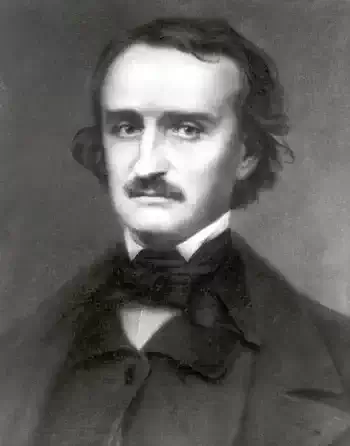
Edgar Allan Poe
The Forest Reverie
'Tis said that when
The hands of men
Tamed this primeval wood,
And hoary trees with groans of woe,
Like warriors by an unknown foe,
Were in their strength subdued,
The virgin Earth Gave instant birth
To springs that ne'er did flow
That in the sun Did rivulets run,
And all around rare flowers did blow
The wild rose pale Perfumed the gale
And the queenly lily adown the dale
(Whom the sun and the dew
And the winds did woo),
With the gourd and the grape luxuriant grew.
So when in tears
The love of years
Is wasted like the snow,
And the fine fibrils of its life
By the rude wrong of instant strife
Are broken at a blow
Within the heart
Do springs upstart
Of which it doth now know,
And strange, sweet dreams,
Like silent streams
That from new fountains overflow,
With the earlier tide
Of rivers glide
Deep in the heart whose hope has died--
Quenching the fires its ashes hide,--
Its ashes, whence will spring and grow
Sweet flowers, ere long,
The rare and radiant flowers of song!
322
Henry Wadsworth Longfellow
The Terrestrial Paradise. (From Dante. Purgatorio, XXVIII.)
Longing already to search in and round
The heavenly forest, dense and living-green,
Which tempered to the eyes the newborn day,
Withouten more delay I left the bank,
Crossing the level country slowly, slowly,
Over the soil, that everywhere breathed fragrance.
A gently-breathing air, that no mutation
Had in itself, smote me upon the forehead,
No heavier blow, than of a pleasant breeze,
Whereat the tremulous branches readily
Did all of them bow downward towards that side
Where its first shadow casts the Holy Mountain;
Yet not from their upright direction bent
So that the little birds upon their tops
Should cease the practice of their tuneful art;
But with full-throated joy, the hours of prime
Singing received they in the midst of foliage
That made monotonous burden to their rhymes,
Even as from branch to branch it gathering swells,
Through the pine forests on the shore of Chiassi,
When Aeolus unlooses the Sirocco.
Already my slow steps had led me on
Into the ancient wood so far, that I
Could see no more the place where I had entered.
And lo! my further course cut off a river,
Which, tow'rds the left hand, with its little waves,
Bent down the grass, that on its margin sprang.
All waters that on earth most limpid are,
Would seem to have within themselves some mixture,
Compared with that, which nothing doth conceal,
Although it moves on with a brown, brown current,
Under the shade perpetual, that never
Ray of the sun lets in, nor of the moon.
322
Henry Wadsworth Longfellow
Elliot's Oak
Thou ancient oak! whose myriad leaves are loud
With sounds of unintelligible speech,
Sounds as of surges on a shingly beach,
Or multitudinous murmurs of a crowd;
With some mysterious gift of tongues endowed,
Thou speakest a different dialect to each;
To me a language that no man can teach,
Of a lost race, long vanished like a cloud.
For underneath thy shade, in days remote,
Seated like Abraham at eventide
Beneath the oaks of Mamre, the unknown
Apostle of the Indians, Eliot, wrote
His Bible in a language that hath died
And is forgotten, save by thee alone.
321
John Greenleaf Whittier
A Summer Pilgrimage
To kneel before some saintly shrine,
To breathe the health of airs divine,
Or bathe where sacred rivers flow,
The cowled and turbaned pilgrims go.
I too, a palmer, take, as they
With staff and scallop-shell, my way
To feel, from burdening cares and ills,
The strong uplifting of the hills.
The years are many since, at first,
For dreamed-of wonders all athirst,
I saw on Winnipesaukee fall
The shadow of the mountain wall.
Ah! where are they who sailed with me
The beautiful island-studded sea?
And am I he whose keen surprise
Flashed out from such unclouded eyes?
Still, when the sun of summer burns,
My longing for the hills returns;
And northward, leaving at my back
The warm vale of the Merrimac,
I go to meet the winds of morn,
Blown down the hill-gaps, mountain-born,
Breathe scent of pines, and satisfy
The hunger of a lowland eye.
Again I see the day decline
Along a ridged horizon line;
Touching the hill-tops, as a nun
Her beaded rosary, sinks the sun.
One lake lies golden, which shall soon
Be silver in the rising moon;
And one, the crimson of the skies
And mountain purple multiplies.
With the untroubled quiet blends
The distance-softened voice of friends;
The girl's light laugh no discord brings
To the low song the pine-tree sings;
And, not unwelcome, comes the hail
Of boyhood from his nearing sail.
The human presence breaks no spell,
And sunset still is miracle!
Calm as the hour, methinks I feel
A sense of worship o'er me steal;
Not that of satyr-charming Pan,
No cult of Nature shaming man,
Not Beauty's self, but that which lives
And shines through all the veils it weaves,-Soul
of the mountain, lake, and wood,
Their witness to the Eternal Good!
And if, by fond illusion, here
The earth to heaven seems drawing near,
And yon outlying range invites
To other and serener heights,
Scarce hid behind its topmost swell,
The shining Mounts Delectable
A dream may hint of truth no less
Than the sharp light of wakefulness.
As through her vale of incense smoke.
Of old the spell-rapt priestess spoke,
More than her heathen oracle,
May not this trance of sunset tell
That Nature's forms of loveliness
Their heavenly archetypes confess,
Fashioned like Israel's ark alone
From patterns in the Mount made known?
A holier beauty overbroods
These fair and faint similitudes;
Yet not unblest is he who sees
Shadows of God's realities,
And knows beyond this masquerade
Of shape and color, light and shade,
And dawn and set, and wax and wane,
Eternal verities remain.
O gems of sapphire, granite set!
O hills that charmed horizons fret
I know how fair your morns can break,
In rosy light on isle and lake;
How over wooded slopes can run
The noonday play of cloud and sun,
And evening droop her oriflamme
Of gold and red in still Asquam.
The summer moons may round again,
And careless feet these hills profane;
These sunsets waste on vacant eyes
The lavish splendor of the skies;
Fashion and folly, misplaced here,
Sigh for their natural atmosphere,
And travelled pride the outlook scorn
Of lesser heights than Matterhorn.
But let me dream that hill and sky
Of unseen beauty prophesy;
And in these tinted lakes behold
The trailing of the raiment fold
Of that which, still eluding gaze,
Allures to upward-tending ways,
Whose footprints make, wherever found,
Our common earth a holy ground.
313
John Greenleaf Whittier
The Wood Giant
From Alton Bay to Sandwich Dome,
From Mad to Saco river,
For patriarchs of the primal wood
We sought with vain endeavor.
And then we said: 'The giants old
Are lost beyond retrieval;
This pygmy growth the axe has spared
Is not the wood primeval.
'Look where we will o'er vale and hill,
How idle are our searches
For broad-girthed maples, wide-limbed oaks,
Centennial pines and birches.
'Their tortured limbs the axe and saw
Have changed to beams and trestles;
They rest in walls, they float on seas,
They rot in sunken vessels.
'This shorn and wasted mountain land
Of underbrush and boulder,-Who
thinks to see its full-grown tree
Must live a century older.'
At last to us a woodland path,
To open sunset leading,
Revealed the Anakim of pines
Our wildest wish exceeding.
Alone, the level sun before;
Below, the lake's green islands;
Beyond, in misty distance dim,
The rugged Northern Highlands.
Dark Titan on his Sunset Hill
Of time and change defiant
How dwarfed the common woodland seemed,
Before the old-time giant!
What marvel that, in simpler days
Of the world's early childhood,
Men crowned with garlands, gifts, and praise
Such monarchs of the wild-wood?
That Tyrian maids with flower and song
Danced through the hill grove's spaces,
And hoary-bearded Druids found
In woods their holy places?
With somewhat of that Pagan awe
With Christian reverence blending,
We saw our pine-tree's mighty arms
Above our heads extending.
We heard his needles' mystic rune,
Now rising, and now dying,
As erst Dodona's priestess heard
The oak leaves prophesying.
Was it the half-unconscious moan
Of one apart and mateless,
The weariness of unshared power,
The loneliness of greatness?
O dawns and sunsets, lend to him
Your beauty and your wonder!
Blithe sparrow, sing thy summer song
His solemn shadow under!
Play lightly on his slender keys,
O wind of summer, waking
For hills like these the sound of seas
On far-off beaches breaking,
And let the eagle and the crow
Find shelter in his branches,
When winds shake down his winter snow
In silver avalanches.
The brave are braver for their cheer,
The strongest need assurance,
The sigh of longing makes not less
The lesson of endurance.
311
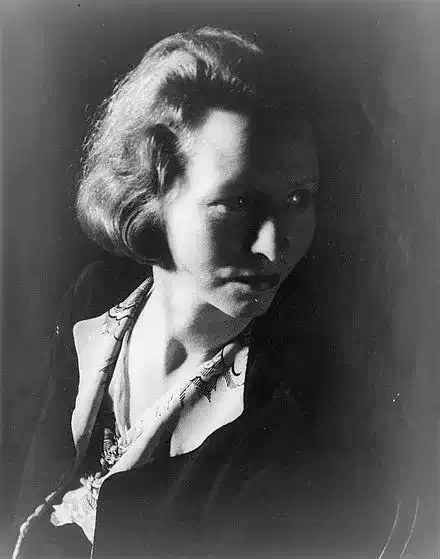
Edna St. Vincent Millay
Doubt No More That Oberon
Doubt no more that Oberon—
Never doubt that Pan
Lived, and played a reed, and ran
After nymphs in a dark forest,
In the merry, credulous days,—
Lived, and led a fairy band
Over the indulgent land!
Ah, for in this dourest, sorest
Age man's eye has looked upon,
Death to fauns and death to fays,
Still the dog-wood dares to raise—
Healthy tree, with trunk and root—
Ivory bowls that bear no fruit,
And the starlings and the jays—
Birds that cannot even sing—
Dare to come again in spring!
307
Emily Dickinson
The Mountain sat upon the Plain
The Mountain sat upon the Plain
In his tremendous Chair-
His observation omnifold,
His inquest, everywhere-
The Seasons played around his knees
Like Children round a sire-
Grandfather of the Days is He
Of Dawn, the Ancestor-
In his tremendous Chair-
His observation omnifold,
His inquest, everywhere-
The Seasons played around his knees
Like Children round a sire-
Grandfather of the Days is He
Of Dawn, the Ancestor-
301

Christina Rossetti
A Toadstool Comes Up In A Night
A toadstool comes up in a night, -
Learn the lesson, little folk: -
An oak grows on a hundred years,
But then it is an oak.
Learn the lesson, little folk: -
An oak grows on a hundred years,
But then it is an oak.
297

Henry Lawson
The Stringy-Bark Tree
There's the whitebox and pine on the ridges afar,
Where the iron-bark, blue-gum, and peppermint are;
There is many another, but dearest to me,
And the king of them all was the stringy-bark tree.
Then of stringy-bark slabs were the walls of the hut,
And from stringy-bark saplings the rafters were cut;
And the roof that long sheltered my brothers and me
Was of broad sheets of bark from the stringy-bark tree.
And when sawn-timber homes were built out in the West,
Then for walls and for ceilings its wood was the best;
And for shingles and palings to last while men be,
There was nothing on earth like the stringy-bark tree.
Far up the long gullies the timber-trucks went,
Over tracks that seemed hopeless, by bark hut and tent;
And the gaunt timber-finder, who rode at his ease,
Led them on to a gully of stringy-bark trees.
Now still from the ridges, by ways that are dark,
Come the shingles and palings they call stringy-bark;
Though you ride through long gullies a twelve months you’ll see
But the old whitened stumps of the stringy-bark tree.
286

D.H. Lawrence
Trees in the Garden
Ah in the thunder air
how still the trees are!
And the lime-tree, lovely and tall, every leaf silent
hardly looses even a last breath of perfume.
And the ghostly, creamy coloured little tree of leaves
white, ivory white among the rambling greens
how evanescent, variegated elder, she hesitates on the green grass
as if, in another moment, she would disappear
with all her grace of foam!
And the larch that is only a column, it goes up too tall to see:
and the balsam-pines that are blue with the grey-blue blueness of
things from the sea,
and the young copper beech, its leaves red-rosy at the ends
how still they are together, they stand so still
in the thunder air, all strangers to one another
as the green grass glows upwards, strangers in the silent garden.
279
Wallace Stevens
Anecdote of the Jar
I placed a jar in Tennessee,
And round it was, upon a hill.
It made the slovenly wilderness
Surround that hill.
The wilderness rose up to it,
And sprawled around, no longer wild.
The jar was round upon the ground
And tall and of a port in air.
It took dominion everywhere.
The jar was gray and bare.
It did not give of bird or bush,
Like nothing else in Tennessee.
272
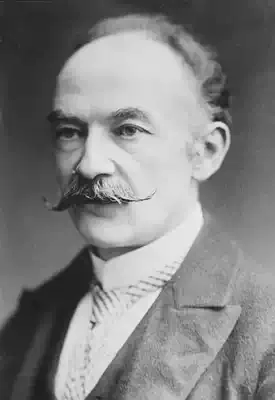
Thomas Hardy
Transformations
Portion of this yew
Is a man my grandsire knew,
Bosomed here at its foot:
This branch may be his wife,
A ruddy human life
Now turned to a green shoot.
These grasses must be made
Of her who often prayed,
Last century, for repose;
And the fair girl long ago
Whom I often tried to know
May be entering this rose.
So, they are not underground,
But as nerves and veins abound
In the growths of upper air,
And they feel the sun and rain,
And the energy again
That made them what they were!
268
Emily Dickinson
Frequently the wood are pink
Frequently the wood are pink-
Frequently are brown.
Frequently the hills undress
Behind my native town.
Oft a head is crested
I was wont to see-
And as oft a cranny
Where it used to be-
And the Earth- they tell me-
On its Axis turned!
Wonderful Rotation!
By but twelve performed!
Frequently are brown.
Frequently the hills undress
Behind my native town.
Oft a head is crested
I was wont to see-
And as oft a cranny
Where it used to be-
And the Earth- they tell me-
On its Axis turned!
Wonderful Rotation!
By but twelve performed!
266

Horácio
BkIII:XXII To Diana
Virgin protectress of the mountain and the grove,
who, called on three times, hears young girls, labouring
through childbirth, and rescues them from dying, O
triple formed goddess,
may it be yours, this pine-tree above my farm,
so that I may, happily, through passing years,
offer it the blood of a boar, that’s trying
its first sidelong thrusts.
who, called on three times, hears young girls, labouring
through childbirth, and rescues them from dying, O
triple formed goddess,
may it be yours, this pine-tree above my farm,
so that I may, happily, through passing years,
offer it the blood of a boar, that’s trying
its first sidelong thrusts.
249

William Wordsworth
Oak and The Broom, The: A Pastoral Poem
I
His simple truths did Andrew glean
Beside the babbling rills;
A careful student he had been
Among the woods and hills.
One winter's night, when through the trees
The wind was roaring, on his knees
His youngest born did Andrew hold:
And while the rest, a ruddy quire,
Were seated round their blazing fire,
This Tale the Shepherd told.
II
"I saw a crag, a lofty stone
As ever tempest beat!
Out of its head an Oak had grown,
A Broom out of its feet.
The time was March, a cheerful noon--
The thaw-wind, with the breath of June,
Breathed gently from the warm south-west:
When, in a voice sedate with age,
This Oak, a giant and a sage,
His neighbour thus addressed:--
III
"'Eight weary weeks, through rock and clay,
Along this mountain's edge,
The Frost hath wrought both night and day,
Wedge driving after wedge.
Look up! and think, above your head
What trouble, surely, will be bred;
Last night I heard a crash--'tis true,
The splinters took another road--
I see them yonder--what a load
For such a Thing as you!
IV
"'You are preparing as before,
To deck your slender shape;
And yet, just three years back--no more--
You had a strange escape:
Down from yon cliff a fragment broke;
It thundered down, with fire and smoke,
And hitherward pursued its way;
This ponderous block was caught by me,
And o'er your head, as you may see,
'Tis hanging to this day!
V
"'If breeze or bird to this rough steep
Your kind's first seed did bear;
The breeze had better been asleep,
The bird caught in a snare:
For you and your green twigs decoy
The little witless shepherd-boy
To come and slumber in your bower;
And, trust me, on some sultry noon,
Both you and he, Heaven knows how soon!
Will perish in one hour.
VI
"'From me this friendly warning take'--
The Broom began to doze,
And thus, to keep herself awake,
Did gently interpose:
'My thanks for your discourse are due;
That more than what you say is true,
I know, and I have known it long;
Frail is the bond by which we hold
Our being, whether young or old,
Wise, foolish, weak, or strong.
VII
"'Disasters, do the best we can,
Will reach both great and small;
And he is oft the wisest man,
Who is not wise at all.
For me, why should I wish to roam?
This spot is my paternal home,
It is my pleasant heritage;
My father many a happy year,
Spread here his careless blossoms, here
Attained a good old age.
VIII
"'Even such as his may be my lot.
What cause have I to haunt
My heart with terrors? Am I not
In truth a favoured plant!
On me such bounty Summer pours,
That I am covered o'er with flowers;
And, when the Frost is in the sky,
My branches are so fresh and gay
That you might look at me and say,
This Plant can never die.
IX
"'The butterfly, all green and gold,
To me hath often flown,
Here in my blossoms to behold
Wings lovely as his own.
When grass is chill with rain or dew,
Beneath my shade, the mother-ewe
Lies with her infant lamb; I see
The love they to each other make,
And the sweet joy which they partake,
It is a joy to me.'
X
"Her voice was blithe, her heart was light;
The Broom might have pursued
Her speech, until the stars of night
Their journey had renewed;
But in the branches of the oak
Two ravens now began to croak
Their nuptial song, a gladsome air;
And to her own green bower the breeze
That instant brought two stripling bees
To rest, or murmur there.
XI
"One night, my Children! from the north
There came a furious blast;
At break of day I ventured forth,
And near the cliff I passed.
The storm had fallen upon the Oak,
And struck him with a mighty stroke,
And whirled, and whirled him far away;
And, in one hospitable cleft,
The little careless Broom was left
To live for many a day."
244
Mao Tsé-Tung
Ascent of Lushan
Perching as after flight, the mountain towers over the Yangtze;
I have overleapt four hundred twists to its green crest.
Cold-eyed I survey the world beyond the seas;
A hot wind spatters raindrops on the sky-brooded waters.
Clouds cluster over the nine streams, the yellow crane floating,
And billows roll on to the eastern coast, white foam flying.
Who knows whither Prefect Tao Yuan-ming is gone
Now that he can till fields in the Land of Peach Blossoms?
242