
Trees, Forests and Mountains
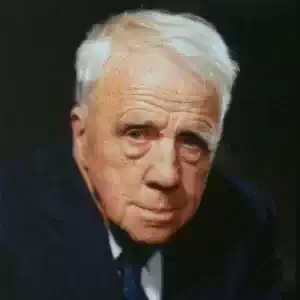
Robert Frost
The Vantage Point
If tires of trees I seek again mankind, Well I know where to hie me--in the dawn, To a
slope where the cattle keep the lawn. There amid loggin juniper reclined, Myself
unseen, I see in white defined Far off the homes of men, and farther still, The graves
of men on an opposing hill, Living or dead, whichever are to mind. And if by noon I
have too much of these, I have but to turn on my arm, and lo, The sun-burned hillside
sets my face aglow, My breathing shakes the bluet like a breeze, I smell the earth, I
smell the bruisèd plant, I look into the crater of the ant.
521

Ella Wheeler Wilcox
Go Plant a Tree
God, what a joy it is to plant a tree,
And from the sallow earth to watch it rise,
Lifting its emerald branches to the skies
In silent adoration; and to see
Its strength and glory waxing with each spring.
Yes, 'tis a goodly, and a gladsome thing
To plant a tree.
Nature has many marvels; but a tree
Seems more than marvellous. It is divine.
So generous, so tender, so benign.
Not garrulous like the rivers; and yet free
In pleasant converse with the winds and birds;
Oh! privilege beyond explaining words,
To plant a tree.
Rocks are majestic; but, unlike a tree,
They stand aloof, and silent. In the roar
Of ocean billows breaking on the shore
There sounds the voice of turmoil. But a tree
Speaks ever of companionship and rest.
Yea, of all righteous acts, this, this is best,
To plant a tree.
There is an oak (oh! how I love that tree)
Which has been thriving for a hundred years;
Each day I send my blessing through the spheres
To one who gave this triple boon to me,
Of growing beauty, singing birds, and shade.
Wouldst thou win laurels that shall never fade?
512
Robert Frost
Good-bye, and Keep Cold
This saying good-bye on the edge of the dark
And cold to an orchard so young in the bark
Reminds me of all that can happen to harm
An orchard away at the end of the farm
All winter, cut off by a hill from the house.
I don't want it girdled by rabbit and mouse,
I don't want it dreamily nibbled for browse
By deer, and I don't want it budded by grouse.
(If certain it wouldn't be idle to call
I'd summon grouse, rabbit, and deer to the wall
And warn them away with a stick for a gun.)
I don't want it stirred by the heat of the sun.
(We made it secure against being, I hope,
By setting it out on a northerly slope.)
No orchard's the worse for the wintriest storm;
But one thing about it, it mustn't get warm.
"How often already you've had to be told,
Keep cold, young orchard. Good-bye and keep cold.
Dread fifty above more than fifty below."
I have to be gone for a season or so.
My business awhile is with different trees,
Less carefully nourished, less fruitful than these,
And such as is done to their wood with an axe--
Maples and birches and tamaracks.
I wish I could promise to lie in the night
And think of an orchard's arboreal plight
When slowly (and nobody comes with a light)
Its heart sinks lower under the sod.
But something has to be left to God.
498
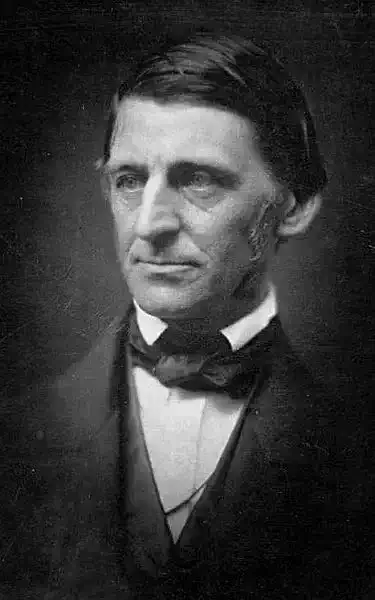
Ralph Waldo Emerson
Monadnoc
Thousand minstrels woke within me,
"Our music's in the hills; "—
Gayest pictures rose to win me,
Leopard-colored rills.
Up!—If thou knew'st who calls
To twilight parks of beech and pine,
High over the river intervals,
Above the ploughman's highest line,
Over the owner's farthest walls;—
Up!—where the airy citadel
O'erlooks the purging landscape's swell.
Let not unto the stones the day
Her lily and rose, her sea and land display;
Read the celestial sign!
Lo! the South answers to the North;
Bookworm, break this sloth urbane;
A greater Spirit bids thee forth,
Than the gray dreams which thee detain.
Mark how the climbing Oreads
Beckon thee to their arcades;
Youth, for a moment free as they,
Teach thy feet to feel the ground,
Ere yet arrive the wintry day
When Time thy feet has bound.
Accept the bounty of thy birth;
Taste the lordship of the earth.
I heard and I obeyed,
Assured that he who pressed the claim,
Well-known, but loving not a name,
Was not to be gainsaid.
Ere yet the summoning voice was still,
I turned to Cheshire's haughty hill.
From the fixed cone the cloud-rack flowed
Like ample banner flung abroad
Round about, a hundred miles,
With invitation to the sea, and to the bordering isles.
In his own loom's garment drest,
By his own bounty blest,
Fast abides this constant giver,
Pouring many a cheerful river;
To far eyes, an aërial isle,
Unploughed, which finer spirits pile,
Which morn and crimson evening paint
For bard, for lover, and for saint;
The country's core,
Inspirer, prophet evermore,
Pillar which God aloft had set
So that men might it not forget,
It should be their life's ornament,
And mix itself with each event;
Their calendar and dial,
Barometer, and chemic phial,
Garden of berries, perch of birds,
Pasture of pool-haunting herds,
Graced by each change of sum untold,
Earth-baking heat, stone-cleaving cold.
The Titan minds his sky-affairs,
Rich rents and wide alliance shares;
Mysteries of color daily laid
By the great sun in light and shade,
And, sweet varieties of chance,
And the mystic seasons' dance,
And thief-like step of liberal hours
Which thawed the snow-drift into flowers.
O wondrous craft of plant and stone
By eldest science done and shown!
Happy, I said, whose home is here,
Fair fortunes to the mountaineer!
Boon nature to his poorest shed
Has royal pleasure-grounds outspread.
Intent I searched the region round,
And in low hut my monarch found.
He was no eagle and no earl,
Alas! my foundling was a churl,
With heart of cat, and eyes of bug,
Dull victim of his pipe and mug;
Woe is me for my hopes' downfall!
Lord! is yon squalid peasant all
That this proud nursery could breed
For God's vicegerency and stead?
Time out of mind this forge of ores,
Quarry of spars in mountain pores,
Old cradle, hunting ground, and bier
Of wolf and otter, bear, and deer;
Well-built abode of many a race;
Tower of observance searching space;
Factory of river, and of rain;
Link in the alps' globe-girding chain;
By million changes skilled to tell
What in the Eternal standeth well,
And what obedient nature can,—
Is this colossal talisman
Kindly to creature, blood, and kind,
And speechless to the master's mind?
I thought to find the patriots
In whom the stock of freedom roots.
To myself I oft recount
Tales of many a famous mount.—
Wales, Scotland, Uri, Hungary's dells,
Roys, and Scanderbegs, and Tells.
Here now shall nature crowd her powers,
Her music, and her meteors,
And, lifting man to the blue deep
Where stars their perfect courses keep,
Like wise preceptor lure his eye
To sound the science of the sky,
And carry learning to its height
Of untried power and sane delight;
The Indian cheer, the frosty skies
Breed purer wits, inventive eyes,
Eyes that frame cities where none be,
And hands that stablish what these see:
And, by the moral of his place,
Hint summits of heroic grace;
Man in these crags a fastness find
To fight pollution of the mind;
In the wide thaw and ooze of wrong,
Adhere like this foundation strong,
The insanity of towns to stem
With simpleness for stratagem.
But if the brave old mould is broke,
And end in clowns the mountain-folk,
In tavern cheer and tavern joke,—
Sink, O mountain! in the swamp,
Hide in thy skies, O sovereign lap!
Perish like leaves the highland breed!
No sire survive, no son succeed!
Soft! let not the offended muse
Toil's hard hap with scorn accuse.
Many hamlets sought I then,
Many farms of mountain men;—
Found I not a minstrel seed,
But men of bone, and good at need.
Rallying round a parish steeple
Nestle warm the highland people,
Coarse and boisterous, yet mild,
Strong as giant, slow as child,
Smoking in a squalid room,
Where yet the westland breezes come.
Close hid in those rough guises lurk
Western magians, here they work;
Sweat and season are their arts,
Their talismans are ploughs and carts;
And well the youngest can command
Honey from the frozen land,
With sweet hay the swamp adorn,
Change the running sand to corn,
For wolves and foxes, lowing herds,
And for cold mosses, cream and curds;
Weave wood to canisters and mats,
Drain sweet maple-juice in vats.
No bird is safe that cuts the air,
From their rifle or their snare;
No fish in river or in lake,
But their long hands it thence will take;
And the country's iron face
Like wax their fashioning skill betrays,
To fill the hollows, sink the hills,
Bridge gulfs, drain swamps, build dams and mills,
And fit the bleak and howling place
For gardens of a finer race,
The world-soul knows his own affair,
Fore-looking when his hands prepare
For the next ages men of mould,
Well embodied, well ensouled,
He cools the present's fiery glow,
Sets the life pulse strong, but slow.
Bitter winds and fasts austere.
His quarantines and grottos, where
He slowly cures decrepit flesh,
And brings it infantile and fresh.
These exercises are the toys
And games with which he breathes his boys.
They bide their time, and well can prove,
If need were, their line from Jove,
Of the same stuff, and so allayed,
As that whereof the sun is made;
And of that fibre quick and strong
Whose throbs are love, whose thrills are song.
Now in sordid weeds they sleep,
Their secret now in dulness keep.
Yet, will you learn our ancient speech,
These the masters who can teach,
Fourscore or a hundred words
All their vocal muse affords,
These they turn in other fashion
Than the writer or the parson.
I can spare the college-bell,
And the learned lecture well.
Spare the clergy and libraries,
Institutes and dictionaries,
For the hardy English root
Thrives here unvalued underfoot.
Rude poets of the tavern hearth,
Squandering your unquoted mirth,
Which keeps the ground and never soars,
While Jake retorts and Reuben roars,
Tough and screaming as birch-bark,
Goes like bullet to its mark,
While the solid curse and jeer
Never balk the waiting ear:
To student ears keen-relished jokes
On truck, and stock, and farming-folks,—
Nought the mountain yields thereof
But savage health and sinews tough.
On the summit as I stood,
O'er the wide floor of plain and flood,
Seemed to me the towering hill
Was not altogether still,
But a quiet sense conveyed;
If I err not, thus it said:
Many feet in summer seek
Betimes my far-appearing peak;
In the dreaded winter-time,
None save dappling shadows climb
Under clouds my lonely head,
Old as the sun, old almost as the shade.
And comest thou
To see strange forests and new snow,
And tread uplifted land?
And leavest thou thy lowland race,
Here amid clouds to stand,
And would'st be my companion,
Where I gaze
And shall gaze
When forests fall, and man is gone,
Over tribes and over times
As the burning Lyre
Nearing me,
With its stars of northern fire,
In many a thousand years.
Ah! welcome, if thou bring
My secret in thy brain;
To mountain-top may muse's wing
With good allowance strain.
Gentle pilgrim, if thou know
The gamut old of Pan,
And how the hills began,
The frank blessings of the hill
Fall on thee, as fall they will.
'Tis the law of bush and stone—
Each can only take his own.
Let him heed who can and will,—
Enchantment fixed me here
To stand the hurts of time, until
In mightier chant I disappear.
If thou trowest
How the chemic eddies play
Pole to pole, and what they say,
And that these gray crags
Not on crags are hung,
But beads are of a rosary
On prayer and music strung;
And, credulous, through the granite seeming
Seest the smile of Reason beaming;
Can thy style-discerning eye
The hidden-working Builder spy,
Who builds, yet makes no chips, no din,
With hammer soft as snow-flake's flight;
Knowest thou this?
O pilgrim, wandering not amiss!
Already my rocks lie light,
And soon my cone will spin.
For the world was built in order,
And the atoms march in tune,
Rhyme the pipe, and time the warder,
Cannot forget the sun, the moon.
Orb and atom forth they prance,
When they hear from far the rune,
None so backward in the troop,
When the music and the dance
Reach his place and circumstance,
But knows the sun-creating sound,
And, though a pyramid, will bound.
Monadnoc is a mountain strong,
Tall and good my kind among,
But well I know, no mountain can
Measure with a perfect man;
For it is on Zodiack's writ,
Adamant is soft to wit;
And when the greater comes again,
With my music in his brain,
I shall pass as glides my shadow
Daily over hill and meadow.
Through all time
I hear the approaching feet
Along the flinty pathway beat
Of him that cometh, and shall come,—
Of him who shall as lightly bear
My daily load of woods and streams,
As now the round sky-cleaving boat
Which never strains its rocky beams,
Whose timbers, as they silent float,
Alps and Caucasus uprear,
And the long Alleghanies here,
And all town-sprinkled lands that be,
Sailing through stars with all their history.
Every morn I lift my head,
Gaze o'er New England underspread
South from Saint Lawrence to the Sound,
From Katshill east to the sea-bound.
Anchored fast for many an age,
I await the bard and sage,
Who in large thoughts, like fair pearl-seed,
Shall string Monadnoc like a bead.
Comes that cheerful troubadour,
This mound shall throb his face before,
As when with inward fires and pain
It rose a bubble from the plain.
When he cometh, I shall shed
From this well-spring in my head
Fountain drop of spicier worth
Than all vintage of the earth.
There's fruit upon my barren soil
Costlier far than wine or oil;
There's a berry blue and gold,—
Autumn-ripe its juices hold,
Sparta's stoutness, Bethlehem's heart,
Asia's rancor, Athens' art,
Slowsure Britain's secular might,
And the German's inward sight;
I will give my son to eat
Best of Pan's immortal meat,
Bread to eat and juice to drink,
So the thoughts that he shall think
Shall not be forms of stars, but stars,
Nor pictures pale, but Jove and Mars.
He comes, but not of that race bred
Who daily climb my specular head.
Oft as morning wreathes my scarf,
Fled the last plumule of the dark,
Pants up hither the spruce clerk
From South-Cove and City-wharf;
I take him up my rugged sides,
Half-repentant, scant of breath,—
Bead-eyes my granite chaos show,
And my midsummer snow;
Open the daunting map beneath,—
All his county, sea and land,
Dwarfed to measure of his hand;
His day's ride is a furlong space,
His city tops a glimmering haze:
I plant his eyes on the sky-hoop bounding;—
See there the grim gray rounding
Of the bullet of the earth
Whereon ye sail,
Tumbling steep
In the uncontinented deep;—
He looks on that, and he turns pale:
'Tis even so, this treacherous kite,
Farm-furrowed, town-incrusted sphere,
Thoughtless of its anxious freight,
Plunges eyeless on for ever,
And he, poor parasite,—
Cooped in a ship he cannot steer,
Who is the captain he knows not,
Port or pilot trows not,—
Risk or ruin he must share.
I scowl on him with my cloud,
With my north wind chill his blood,
I lame him clattering down the rocks,
And to live he is in fear.
Then, at last, I let him down
Once more into his dapper town,
To chatter frightened to his clan,
And forget me, if he can.
As in the old poetic fame
The gods are blind and lame,
And the simular despite
Betrays the more abounding might,
So call not waste that barren cone
Above the floral zone,
Where forests starve:
It is pure use;
What sheaves like those which here we glean and bind,
Of a celestial Ceres, and the Muse?
Ages are thy days,
Thou grand expressor of the present tense,
And type of permanence,
Firm ensign of the fatal Being,
Amid these coward shapes of joy and grief
That will not bide the seeing.
Hither we bring
Our insect miseries to the rocks,
And the whole flight with pestering wing
Vanish and end their murmuring,
Vanish beside these dedicated blocks,
Which, who can tell what mason laid?
Spoils of a front none need restore,
Replacing frieze and architrave;
Yet flowers each stone rosette and metope brave,
Still is the haughty pile erect
Of the old building Intellect.
Complement of human kind,
Having us at vantage still,
Our sumptuous indigence,
O barren mound! thy plenties fill.
We fool and prate,—
Thou art silent and sedate.
To million kinds and times one sense
The constant mountain doth dispense,
Shedding on all its snows and leaves,
One joy it joys, one grief it grieves.
Thou seest, O watchman tall!
Our towns and races grow and fall,
And imagest the stable Good
For which we all our lifetime grope,
In shifting form the formless mind;
And though the substance us elude,
We in thee the shadow find.
Thou in our astronomy
An opaker star,
Seen, haply, from afar,
Above the horizon's hoop.
A moment by the railway troop,
As o'er some bolder height they speed,—
By circumspect ambition,
By errant Gain,
By feasters, and the frivolous,—
Recallest us,
And makest sane.
Mute orator! well-skilled to plead,
And send conviction without phrase,
Thou dost supply
The shortness of our days,
And promise, on thy Founder's truth,
Long morrow to this mortal youth.
484

Walt Whitman
For Him I Sing
FOR him I sing,
I raise the Present on the Past,
(As some perennial tree, out of its roots, the present on the past:)
With time and space I him dilate--and fuse the immortal laws,
To make himself, by them, the law unto himself.
I raise the Present on the Past,
(As some perennial tree, out of its roots, the present on the past:)
With time and space I him dilate--and fuse the immortal laws,
To make himself, by them, the law unto himself.
474
Boris Pasternak
Here will be echoes in the mountains...
Here will be echoes in the mountains,
The distant landslides' rumbling boom,
The rocks, the dwellings in the village,
The sorry little inn, the gloom
Of something black beyond the Terek,
Clouds moving heavily. Up there
The day was breaking very slowly;
It dawned, but light was nowhere near.
One sensed the heaviness of darkness
For miles ahead around Kazbek
Wound on the heights: though some were trying
To throw the halter from their neck.
As if cemented in an oven,
In the strange substance of a dream,
A pot of poisoned food, the region
Of Daghestan there slowly steamed.
Its towering peaks towards us rolling,
All black from top to foot, it strained
To meet our car, if not with clashing
Of daggers, then with pouring rain.
The mountains were preparing trouble.
The handsome giants, fierce and black,
Each one more evil than the other
Were closing down upon our track.
475

Johann Wolfgang von Goethe
The Metamorphosis Of Plants
THOU art confused, my beloved, at, seeing the thousandfold union
Shown in this flowery troop, over the garden dispers'd;
any a name dost thou hear assign'd; one after another
Falls on thy list'ning ear, with a barbarian sound.
None resembleth another, yet all their forms have a likeness;
Therefore, a mystical law is by the chorus proclaim'd;
Yes, a sacred enigma! Oh, dearest friend, could I only
Happily teach thee the word, which may the mystery solve!
Closely observe how the plant, by little and little progressing,
Step by step guided on, changeth to blossom and fruit!
First from the seed it unravels itself, as soon as the silent
Fruit-bearing womb of the earth kindly allows Its escape,
And to the charms of the light, the holy, the ever-in-motion,
Trusteth the delicate leaves, feebly beginning to shoot.
Simply slumber'd the force in the seed; a germ of the future,
Peacefully lock'd in itself, 'neath the integument lay,
Leaf and root, and bud, still void of colour, and shapeless;
Thus doth the kernel, while dry, cover that motionless life.
Upward then strives it to swell, in gentle moisture confiding,
And, from the night where it dwelt, straightway ascendeth to light.
Yet still simple remaineth its figure, when first it appeareth;
And 'tis a token like this, points out the child 'mid the plants.
Soon a shoot, succeeding it, riseth on high, and reneweth,
Piling-up node upon node, ever the primitive form;
Yet not ever alike: for the following leaf, as thou seest,
Ever produceth itself, fashioned in manifold ways.
Longer, more indented, in points and in parts more divided,
Which. all-deform'd until now, slept in the organ below,
So at length it attaineth the noble and destined perfection,
Which, in full many a tribe, fills thee with wondering awe.
Many ribb'd and tooth'd, on a surface juicy and swelling,
Free and unending the shoot seemeth in fullness to be;
Yet here Nature restraineth, with powerful hands, the formation,
And to a perfecter end, guideth with softness its growth,
Less abundantly yielding the sap, contracting the vessels,
So that the figure ere long gentler effects doth disclose.
Soon and in silence is check'd the growth of the vigorous branches,
And the rib of the stalk fuller becometh in form.
Leafless, however, and quick the tenderer stem then up-springeth,
And a miraculous sight doth the observer enchant.
Ranged in a circle, in numbers that now are small, and now countless,
Gather the smaller-sized leaves, close by the side of their like.
Round the axis compress'd the sheltering calyx unfoldeth,
And, as the perfectest type, brilliant-hued coronals forms.
Thus doth Nature bloom, in glory still nobler and fuller,
Showing, in order arranged, member on member uprear'd.
Wonderment fresh dost thou feel, as soon as the stem rears the flower
Over the scaffolding frail of the alternating leaves.
But this glory is only the new creation's foreteller,
Yes, the leaf with its hues feeleth the hand all divine,
And on a sudden contracteth itself; the tenderest figures
Twofold as yet, hasten on, destined to blend into one.
Lovingly now the beauteous pairs are standing together,
Gather'd in countless array, there where the altar is raised.
Hymen hovereth o'er them, and scents delicious and mighty
Stream forth their fragrance so sweet, all things enliv'ning around.
Presently, parcell'd out, unnumber'd germs are seen swelling,
Sweetly conceald in the womb, where is made perfect the fruit.
Here doth Nature close the ring of her forces eternal;
Yet doth a new one, at once, cling to the one gone before,
So that the chain be prolonged for ever through all generations,
And that the whole may have life, e'en as enjoy'd by each part.
Now, my beloved one, turn thy gaze on the many-hued thousands
Which, confusing no more, gladden the mind as they wave.
Every plant unto thee proclaimeth the laws everlasting,
Every flowered speaks louder and louder to thee;
But if thou here canst decipher the mystic words of the goddess,
Everywhere will they be seen, e'en though the features are changed.
Creeping insects may linger, the eager butterfly hasten,-
Plastic and forming, may man change e'en the figure decreed!
Oh, then, bethink thee, as well, how out of the germ of acquaintance,
Kindly intercourse sprang, slowly unfolding its leaves;
Soon how friendship with might unveil'd itself in our bosoms,
And how Amor, at length, brought forth blossom and fruit
Think of the manifold ways wherein Nature hath lent to our feelings,
Silently giving them birth, either the first or the last!
Yes, and rejoice in the present day! For love that is holy
Seeketh the noblest of fruits,--that where the thoughts are the same,
Where the opinions agree,--that the pair may, in rapt contemplation,
Lovingly blend into one,--find the more excellent world.
457
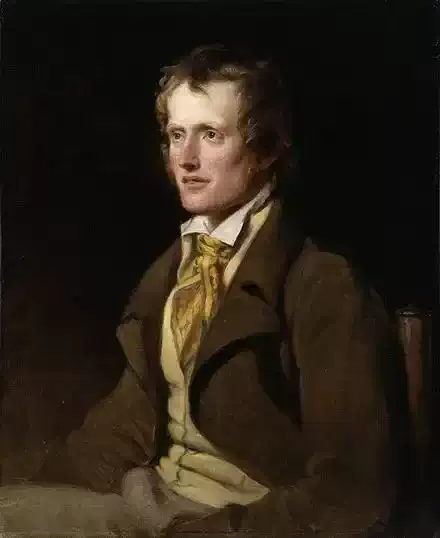
John Clare
Stonepit
The passing traveller with wonder sees
A deep and ancient stonepit full of trees;
So deep and very deep the place has been,
The church might stand within and not be seen.
The passing stranger oft with wonder stops
And thinks he een could walk upon their tops,
And often stoops to see the busy crow,
And stands above and sees the eggs below;
And while the wild horse gives its head a toss,
The squirrel dances up and runs across.
The boy that stands and kills the black nosed bee
Dares down as soon as magpies' nests are found,
And wonders when he climbs the highest tree
To find it reaches scarce above the ground.
451
William Carlos Williams
Willow Poem
It is a willow when summer is over,
a willow by the river
from which no leaf has fallen nor
bitten by the sun
turned orange or crimson.
The leaves cling and grow paler,
swing and grow paler
over the swirling waters of the river
as if loth to let go,
they are so cool, so drunk with
the swirl of the wind and of the river --
oblivious to winter,
the last to let go and fall
into the water and on the ground.
451
Robert Frost
Leaves Compared with Flowers
A tree's leaves may be ever so good,
So may its bar, so may its wood;
But unless you put the right thing to its root
It never will show much flower or fruit.
But I may be one who does not care
Ever to have tree bloom or bear.
Leaves for smooth and bark for rough,
Leaves and bark may be tree enough.
Some giant trees have bloom so small
They might as well have none at all.
Late in life I have come on fern.
Now lichens are due to have their turn.
I bade men tell me which in brief,
Which is fairer, flower or leaf.
They did not have the wit to say,
Leaves by night and flowers by day.
Leaves and bar, leaves and bark,
To lean against and hear in the dark.
Petals I may have once pursued.
Leaves are all my darker mood.
447

Alfred Lord Tennyson
In Memoriam A. H. H.: 2. Old Yew, which graspest at the sto
Old Yew, which graspest at the stones
That name the under-lying dead,
Thy fibres net the dreamless head,
Thy roots are wrapt about the bones.
The seasons bring the flower again,
And bring the firstling to the flock;
And in the dusk of thee, the clock
Beats out the little lives of men.
O not for thee the glow, the bloom,
Who changest not in any gale,
Nor branding summer suns avail
To touch thy thousand years of gloom:
And gazing on thee, sullen tree,
Sick for thy stubborn hardihood,
I seem to fail from out my blood
And grow incorporate into thee.
434
John Clare
The Fallen Elm
Old elm that murmured in our chimney top
The sweetest anthem autumn ever made
And into mellow whispering calms would drop
When showers fell on thy many coloured shade
And when dark tempests mimic thunder made -
While darkness came as it would strangle light
With the black tempest of a winter night
That rocked thee like a cradle in thy root -
How did I love to hear the winds upbraid
Thy strength without - while all within was mute.
It seasoned comfort to our hearts' desire,
We felt that kind protection like a friend
And edged our chairs up closer to the fire,
Enjoying comfort that was never penned.
Old favourite tree, thou'st seen time's changes lower,
Though change till now did never injure thee;
For time beheld thee as her sacred dower
And nature claimed thee her domestic tree.
Storms came and shook thee many a weary hour,
Yet stedfast to thy home thy roots have been;
Summers of thirst parched round thy homely bower
Till earth grew iron - still thy leaves were green.
The children sought thee in thy summer shade
And made their playhouse rings of stick and stone;
The mavis sang and felt himself alone
While in thy leaves his early nest was made,
And I did feel his happiness mine own,
Nought heeding that our friendship was betrayed,
Friend not inanimate - though stocks and stones
There are, and many formed of flesh and bones.
Thou owned a language by which hearts are stirred
Deeper than by a feeling clothed in word,
And speakest now what's known of every tongue,
Language of pity and the force of wrong.
What cant assumes, what hypocrites will dare,
Speaks home to truth and shows it what they are.
I see a picture which thy fate displays
And learn a lesson from thy destiny;
Self-interest saw thee stand in freedom's ways -
So thy old shadow must a tyrant be.
Thou'st heard the knave, abusing those in power,
Bawl freedom loud and then oppress the free;
Thou'st sheltered hypocrites in many a shower,
That when in power would never shelter thee.
Thou'st heard the knave supply his canting powers
With wrong's illusions when he wanted friends;
That bawled for shelter when he lived in showers
And when clouds vanished made thy shade amends -
With axe at root he felled thee to the ground
And barked of freedom - O I hate the sound
Time hears its visions speak, - and age sublime
Hath made thee a disciple unto time.
-It grows the cant term of enslaving tools
To wrong another by the name of right;
Thus came enclosure - ruin was its guide,
But freedom's cottage soon was thrust aside
And workhouse prisons raised upon the site.
Een nature's dwellings far away from men,
The common heath, became the spoiler's prey;
The rabbit had not where to make his den
And labour's only cow was drove away.
No matter - wrong was right and right was wrong,
And freedom's bawl was sanction to the song.
-Such was thy ruin, music-making elm;
The right of freedom was to injure thine:
As thou wert served, so would they overwhelm
In freedom's name the little that is mine.
And there are knaves that brawl for better laws
And cant of tyranny in stronger power
Who glut their vile unsatiated maws
And freedom's birthright from the weak devour.
426
John Clare
Wood Rides
Who hath not felt the influence that so calms
The weary mind in summers sultry hours
When wandering thickest woods beneath the arms
Of ancient oaks and brushing nameless flowers
That verge the little ride who hath not made
A minutes waste of time and sat him down
Upon a pleasant swell to gaze awhile
On crowding ferns bluebells and hazel leaves
And showers of lady smocks so called by toil
When boys sprote gathering sit on stulps and weave
Garlands while barkmen pill the fallen tree
-Then mid the green variety to start
Who hath (not) met that mood from turmoil free
And felt a placid joy refreshed at heart
412

Emily Dickinson
I robbed the Woods
I robbed the Woods-
The trusting Woods.
The unsuspecting Trees
Brought out their Burs and mosses
My fantasy to please.
I scanned their trinkets curious-I grasped-I bore away-
What will the solemn Hemlock-
What will the Oak tree say?
The trusting Woods.
The unsuspecting Trees
Brought out their Burs and mosses
My fantasy to please.
I scanned their trinkets curious-I grasped-I bore away-
What will the solemn Hemlock-
What will the Oak tree say?
410

Claude Mckay
I Shall Return
I shall return again; I shall return
To laugh and love and watch with wonder-eyes
At golden noon the forest fires burn,
Wafting their blue-black smoke to sapphire skies.
I shall return to loiter by the streams
That bathe the brown blades of the bending grasses,
And realize once more my thousand dreams
Of waters rushing down the mountain passes.
I shall return to hear the fiddle and fife
Of village dances, dear delicious tunes
That stir the hidden depths of native life,
Stray melodies of dim remembered runes.
I shall return, I shall return again,
To ease my mind of long, long years of pain.
406
Edna St. Vincent Millay
Scrub
If I grow bitterly,
Like a gnarled and stunted tree,
Bearing harshly of my youth
Puckered fruit that sears the mouth;
If I make of my drawn boughs
An Inshospitable House,
Out of which I nevery pry
Towards the water and the sky,
Under which I stand and hide
And hear the day go by outside;
It is that a wind to strong
Bent my back when I was young,
It is that I fear the rain
Lest it blister me again.
406
Ralph Waldo Emerson
My Garden
If I could put my woods in song
And tell what's there enjoyed,
All men would to my gardens throng,
And leave the cities void.
In my plot no tulips blow,--
Snow-loving pines and oaks instead;
And rank the savage maples grow
From Spring's faint flush to Autumn red.
My garden is a forest ledge
Which older forests bound;
The banks slope down to the blue lake-edge,
Then plunge to depths profound.
Here once the Deluge ploughed,
Laid the terraces, one by one;
Ebbing later whence it flowed,
They bleach and dry in the sun.
The sowers made haste to depart,--
The wind and the birds which sowed it;
Not for fame, nor by rules of art,
Planted these, and tempests flowed it.
Waters that wash my garden-side
Play not in Nature's lawful web,
They heed not moon or solar tide,--
Five years elapse from flood to ebb.
Hither hasted, in old time, Jove,
And every god,--none did refuse;
And be sure at last came Love,
And after Love, the Muse.
Keen ears can catch a syllable,
As if one spake to another,
In the hemlocks tall, untamable,
And what the whispering grasses smother.
Æolian harps in the pine
Ring with the song of the Fates;
Infant Bacchus in the vine,--
Far distant yet his chorus waits.
Canst thou copy in verse one chime
Of the wood-bell's peal and cry,
Write in a book the morning's prime,
Or match with words that tender sky?
Wonderful verse of the gods,
Of one import, of varied tone;
They chant the bliss of their abodes
To man imprisoned in his own.
Ever the words of the gods resound;
But the porches of man's ear
Seldom in this low life's round
Are unsealed, that he may hear.
Wandering voices in the air
And murmurs in the wold
Speak what I cannot declare,
Yet cannot all withhold.
When the shadow fell on the lake,
The whirlwind in ripples wrote
Air-bells of fortune that shine and break,
And omens above thought.
But the meanings cleave to the lake,
Cannot be carried in book or urn;
Go thy ways now, come later back,
On waves and hedges still they burn.
These the fates of men forecast,
Of better men than live to-day;
If who can read them comes at last
He will spell in the sculpture,'Stay.'
400

Jack Kerouac
Trees
But a tree has
a long suffering shape
Is
spread in half
by 2 limbed fate
Rises from gray rain
pavements
To traffic in the bleak
brown air
Of cities radar television
nameless dumb &numb mis connicumb
Throwing twigs the
color of ink To white souled
heaven, with
A reality of its own uses
a long suffering shape
Is
spread in half
by 2 limbed fate
Rises from gray rain
pavements
To traffic in the bleak
brown air
Of cities radar television
nameless dumb &numb mis connicumb
Throwing twigs the
color of ink To white souled
heaven, with
A reality of its own uses
396
John Clare
In Hilly-Wood
How sweet to be thus nestling deep in boughs,
Upon an ashen stoven pillowing me;
Faintly are heard the ploughmen at their ploughs,
But not an eye can find its way to see.
The sunbeams scarce molest me with a smile,
So thick the leafy armies gather round;
And where they do, the breeze blows cool the while,
Their leafy shadows dancing on the ground.
Full many a flower, too, wishing to be seen,
Perks up its head the hiding grass between.-
In mid-wood silence, thus, how sweet to be;
Where all the noises, that on peace intrude,
Come from the chittering cricket, bird, and bee,
Whose songs have charms to sweeten solitude.
394

Rudyard Kipling
The Run of the Downs
The Weald is good, the Downs are best---
I'll give you the run of 'em, East to West.
Beachy Head and Winddoor Hill,
They were once and they are still.
Firle Mount Caburn and Mount Harry
Go back as far as sums 'l carry.
Ditchling Beacon and Chanctonbury Ring
They have looked on many a thing,
And what those two have missed between 'em
I reckon Truleigh Hill has seen 'em.
Highden, Bignor and Duncton Down
Knew Old England before the Crown.
Linch Down, Treyford and Sunwood
Knew Old England before the Flood;
And when you end on the Hampshire side--
Butser's old as Time and Tide.
The Downs are sheep, the Weald is corn,
You be glad you are Sussex born!
394
John Clare
The Shepherds Calendar - July
Daughter of pastoral smells and sights
And sultry days and dewy nights
July resumes her yearly place
Wi her milking maiden face
Ruddy and tand yet sweet to view
When everywhere's a vale of dew
And raps it round her looks that smiles
A lovly rest to daily toils
Wi last months closing scenes and dins
Her sultry beaming birth begins
Hay makers still in grounds appear
And some are thinning nearly clear
Save oddly lingering shocks about
Which the tithman counteth out
Sticking their green boughs where they go
The parsons yearly claims to know
Which farmers view wi grudging eye
And grumbling drive their waggons bye
In hedge bound close and meadow plains
Stript groups of busy bustling swains
From all her hants wi noises rude
Drives to the wood lands solitude
That seeks a spot unmarkd wi paths
Far from the close and meadow swaths
Wi smutty song and story gay
They cart the witherd smelling hay
Boys loading on the waggon stand
And men below wi sturdy hand
Heave up the shocks on lathy prong
While horse boys lead the team along
And maidens drag the rake behind
Wi light dress shaping to the wind
And trembling locks of curly hair
And snow white bosoms nearly bare
That charms ones sight amid the hay
Like lingering blossoms of the may
From clowns rude jokes they often turn
And oft their cheeks wi blushes burn
From talk which to escape a sneer
They oft affect as not to hear
Some in the nooks about the ground
Pile up the stacks swelld bellying round
The milking cattles winter fare
That in the snow are fodderd there
Warm spots wi black thorn thickets lind
And trees to brake the northern wind
While masters oft the sultry hours
Will urge their speed and talk of showers
When boy from home trotts to the stack
Wi dinner upon dobbins back
And bottles to the saddle tyd
Or ballancd upon either side
A horse thats past his toiling day
Yet still a favorite in his way
That trotts on errands up and down
The fields and too and fro from town
Long ere his presence comes in sight
Boys listen wi heart felt delight
And know his footsteps down the road
Hastening wi the dinner load
Then they seek in close or meadows
High hedgerows wi grey willow shadows
To hide beneath from sultry noon
And rest them at their dinner boon
Where helping shepherd for the lass
Will seek a hillock on the grass
The thickset hedge or stack beside
Where teazing pismires ne'er abide
And when tis found down drops the maid
Proud wi the kind attention paid
And still the swain wi notice due
Waits on her all the dinner through
And fills her horn which she tho dry
In shoyness often pushes bye
While he will urge wi many a smile
It as a strength to help her toil
And in her hand will oft contrive
From out his pocket pulld to slive
Stole fruit when no one turns his eve
To wet her mouth when shes adry
Offerd when she refuses ale
Noons sultry labour to regale
Teazd wi the countless multitude
Of flyes that every where intrude
While boys wi boughs will often try
To beat them from them as they lye
Who find their labour all in vain
And soon as scard they swarm again
Thus while each swain and boy and lass
Sit at their dinner on the grass
The teams wi gears thrown on their backs
Stand pulling at the shocks or racks
Switching their tails and turning round
To knap the gadflys teazing wound
While dob that brought the dinners load
Too tricky to be turnd abroad
Needing the scuttle shook wi grain
To coax him to be caught again
Is to a tree at tether tyd
Ready for boy to mount and ride
Nipping the grass about his pound
And stamping battering hooves around
Soon as each ground is clear of hay
The shepherd whoops his flocks away
From fallow fields to plentys scenes
Shining as smooth as bowling greens
But scard wi clipping tides alarms
They bleat about the close in swarms
And hide neath hedges in the cool
Still panting tho wi out their whool
Markd wi the tard brands lasting dye
And make a restless hue and cry
Answering the lambs that call again
And for their old dams seek in vain
Running mid the stranger throng
And ever meeting wi the wrong
Fiegn wi some old yoe to abide
Who smells and tosses them aside
And some as if they know its face
Will meet a lamb wi mended pace
But proving hopes indulgd in vain
They turn around and blair again
Till weand from memory half forgot
They spread and feed and notice not
Save now and then to lambs shrill crys
Odd yoes in hoarser tone replys
Still may be seen the mowing swain
On balks between the fields of grain
Who often stops his thirst to ease
To pick the juicy pods of pease
And oft as chances bring to pass
Stoops oer his scythe stuck in the grass
To seek the brimming honey comb
Which bees so long were toiling home
And rifld from so many flowers
And carried thro so many hours
He tears their small hives mossy ball
Where the brown labourers hurded all
Who gather homward one by one
And see their nest and honey gone
Humming around his rushing toil
Their mellancholly wrongs awhile
Then oer the sweltering swaths they stray
And hum disconsolate away
And oft neath hedges cooler screen
Where meadow sorrel lingers green
Calld 'sour grass' by the knowing clown
The mower gladly chews it down
And slakes his thirst the best he may
When singing brooks are far away
And his hoopd bottle woeful tale
Is emptied of its cheering ale
That lulld him in unconsious sleep
At dinners hour beneath a heap
Of grass or bush or edding shock
Till startld by the country clock
That told the hours his toil had lost
Who coud but spare an hour at most
And wearing past the setting sun
He stays to get his labour done
The gipsey down the meadow brook
Wi long pole and reaping hook
Tyd at its end amid the streams
That glitters wi the hot sunbeams
Reachs and cuts the bulrush down
And hawks them round each neighboring town
Packd at his back or tyd in loads
On asses down the dusty roads
He jogs and shouts from door to door
His well known note of calling oer
Offering to huswives cheap repairs
Mending their broken bottomd chairs
Wi step half walk half dance, and eye
Ready to smile on passers bye
Wi load well suiting weather warm
Tuckd carlessly beneath his arm
Or peeping coat and side between
In woolen bag of faded green
Half conseald and half displayd
A purpose tell tale to his trade
The gipsey fiddler jogs away
To village feast and holiday
Scraping in public house to trye
What beer his music will supply
From clowns who happy wi the din
Dance their hand naild hilos thin
Along the roads in passing crowds
Followd by dust like smoaking clouds
Scotch droves of beast a little breed
In swelterd weary mood proceed
A patient race from scottish hills
To fatten by our pasture rills
Lean wi the wants of mountain soil
But short and stout for travels toil
Wi cockd up horns and curling crown
And dewlap bosom hanging down
Followd by slowly pacing swains
Wild to our rushy flats and plains
At whom the shepherds dog will rise
And shake himself and in supprise
Draw back and waffle in affright
Barking the traveller out of sight
And mowers oer their scythes will bear
Upon their uncooth dress to stare
And shepherds as they trample bye
Leaves oer their hooks a wondering eye
To witness men so oddly clad
In petticoats of banded plad
Wi blankets oer their shoulders slung
To camp at night the fields among
When they for rest on commons stop
And blue cap like a stocking top
Cockt oer their faces summer brown
Wi scarlet tazzeles on the crown
Rude patterns of the thistle flower
Untrickd and open to the shower
And honest faces fresh and free
That breath of mountain liberty
The pindar on the sabbath day
Soon as the darkness waxes grey
Before one sun beam oer the ground
Spindles its light and shadow round
Goes round the fields at early morn
To see what stock are in the corn
To see what chances sheep may win
Thro gaps the gipsey pilfers thin
Or if theyve forcd a restless way
By rubbing at a loosend tray
Or nuzling colt that trys to catch
A gate at night left off the latch
By traveller seeking home in haste
Or the clown by fareys chas'd
That listning while he makes a stand
Opens each gate wi fearful hand
And dreads a minute to remain
To put it on the latch again
And cows who often wi their horns
Toss from the gaps the stuffing thorns
These like a fox upon the watch
He in the morning trycs to catch
And drives them to the pound for pay
Carless about the sabbath day
Soon as the morning wakens red
The shepherd startles from his bed
And rocks afield his moving pace
While folded sheep will know his face
Rising as he appears in sight
To shake their coats as in delight
His shadow stalking stride for stride
Stretches a jiant by his side
Long as a tree without a top
And oft it urges him to stop
Both in his journey and his song
And wonders why it seems so long
And bye and bye as morning dies
Shrinks to an unbrichd boy in size
Then as the evening gathers blue
Grows to a jiants length anew
Puzzld the more he stops to pause
His wisdom vainly seeks the cause
Again his journey he pursues
Lengthening his track along the dews
And his dog that turnd to pick
From his sides the sucking tick
Insects that on cattle creep
And bites the labourer laid asleep
Pricks up his ears to see twas gone
Ana shakes his hide and hastens on
And the while the shepherd stayd
Trailing a track the hare had made
Bolts thro the creeping hedge again
And hurring follows wi the swain
The singing shouting herding boys
Follows again their wild employs
And ere the sun puts half his head
From out his crimson pillowd bed
And bawls behind his cows again
That one by one lobs down the lane
Wi wild weeds in his hat anew
The summer sorts of every hue
And twigs of leaves that please his eye
To his old haunts he hallows bye
Wi dog that loiters bv his side
Or trotts before wi nimble stridc
That waits till bid to bark and run
And panteth from the dreaded sun
And oft amid the sunny day
Will join a partner in his play
And in his antic tricks and glee
Will prove as fond of sport as he
And by the flag pool summer warm
He'll watch the motions of his arm
That holds a stick or stone to throw
In the sun gilded flood below
And head oer ears he danses in
Nor fears to wet his curly skin
The boys field cudgel to restore
And brings it in his mouth ashore
And eager as for crust or bone
He'll run to catch the pelted stone
Till wearied out he shakes his hide
And drops his tail and sneaks aside
Unheeding whistles shouts and calls
To take a rest where thickly falls
The rush clumps shadows there he lyes
Licking his skin and catching flyes
Or picking tween his stretching feet
The bone he had not time to eat
Before when wi the teazing boy
He was so throngd wi plays employ
Noon gathers wi its blistering breath
Around and day dyes still as death
The breeze is stopt the lazy bough
Hath not a leaf that dances now
The totter grass upon the hill
And spiders threads is hanging still
The feathers dropt from morehens wings
Upon the waters surface clings
As stedfast and as heavy seem
As stones beneath them in the stream
Hawkweed and groundsels fairey downs
Unruffld keep their seeding crowns
And in the oven heated air
Not one light thing is floating there
Save that to the earnest eye
The restless heat swims twittering bye
The swine run restless down the street
Anxious some pond or ditch to meet
From days hot swoonings to retire
Wallowing in the weeds and mire
The linnets seek the twiggs that lye
Close to the brook and brig stones drye
At top and sit and dip their bills
Till they have drunk their little fills
Then flurt their wings and wet their feathers
To cool them in the blazing weathers
Dashing the water oer their heads
Then high them to some cooling sheds
Where dark wood glooms about the plain
To pick their feathers smooth again
The young quick's branches seem as dead
And scorch from yellow into red
Ere autumn hath its pencil taen
Their shades in different hues to stain
Following behind the crawling ploughs
Whiping oft their sweating brows
The boys lead horses yokd in pairs
To jumping harrows linkd that tears
And teazes the hard clods to dust
Placing for showers in hopes their trust
The farmer follows sprinkling round
Wi turnip seed the panting ground
Providing food for beast and sheep
When winters snows are falling deep
Oft proving hopes and wishes vain
While clouds disperse that promisd rain
When soon as ere the turnip creeps
From out the crust burnt soil and peeps
Upon the farmers watching eye
Tis eaten by the jumping flye
And eager neath the midday sun
Soon as each plough teams toil is done
Scarse waiting till the gears are taen
From off their backs by boy and swain
From hayfilld racks they turn away
Nor in the stable care to stay
Hurr[y]ing to the trough to drink
Or from the yard ponds muddy brink
Rush in and wi long winded soak
Drink till theyre almost fit to choak
And from the horsbees teazing din
Thrust deep their burning noses in
Almost above their greedy eyes
To cool their mouths and shun the flyes
Deaf to the noise the geese will make
That grudge the worthy share they take
Boys now neath green lanes meeting bough
Each noons half holiday from plough
Take out their hungry teams till night
That nipp the grass wi eager bite
Wi long tails switching never still
They lounge neath trees when eat their fill
And stamp and switch till closing day
Brushing the teazing flyes away
Endless labour all in vain
That start in crowds to turn again
When the sun is sinking down
And dyes more deep the shadows brown
And gradual into slumber glooms
How sweet the village evening comes
To weary hinds from toil releasd
And panting sheep and torturd beast
The shepherd long wi heat opprest
Betakes him to his cottage rest
And his tird dog that plods along
Wi panting breath and lolling tongue
Runs eager as the brook appears
And dashes in head over ears
Startling reed sparrow broods to fiye
That in the reed woods slumberd nigh
And water rotts in haste to hide
Nibbling the sedges close beside
Lapping while he floats about
To quench his thirst then drabbles out
And shakes his coat and like the swain
Is happy night is come again
The beast that to the pond did creep
And rushd in water belly deep
The gad flyes threatning hums to shun
And horse bee darting in the sun
Lashing their tails the while they stood
And sprinkling thick their sides wi mud
Snuff the cool air now day is gone
And linger slow and idly on
To the pebbly fore to drink
And drop and rest upon its brink
Ruminating on their beds
Calm as the sky above their heads
The horse whose mouth is seldom still
Is up and cropping at his will
The moisting grass unteazd and free
In summer eves serenity
Uncheckt by flyes he grazes on
Right happy that the day is gone
Ne'er leaving off to turn around
His stooping head to knap the wound
And tail that switchd his sides all day
Is quiet now the suns away
The cowboys as their herd plod on
Before them homward one by one
Grows happy as their toil grows short
And full of fancys restless sport
Oft starts along wi sinking day
Acting proud their soldier play
Wi peeld bark sash around each waist
And rush caps oer each beaver placd
Stuck wi a headaches red cockade
And wooden swords and sticks displayd
For flags-thus march the evening troop
While soon one strikes a whistle up
And others wi their dinner tins
The evenings falling quiet dins
Patting wi hollow sounding tums
And imitating pipes and drums
Calling their cows that plod before
Their army marching from the moor
And thus they act till met the town
Carless of laughs from passing clown
Even their dogs too tird for play
Loiter on their evening way
Oft rolling on the damping grass
Or stopping wi the milking lass
Waiting a chance the ways conseal
A mouth full from her pails to steal
Dropping down to pick a bone
The hedger from his wallets thrown
Or found upon some greensward platt
Where hayfolks at their dinner sat
Sweet the cows breath down the lane
Steaming the fragrance of the plain
As home they rock and bawling wait
Till boys run to unloose the gate
And from their milksheds all adry
Turn to the pump wi anxious eye
Where shoud the maids wi boys repair
To fill the dashing bucket there
They hurry spite of threatning clown
And kick the milkers bucket down
And horses oft wi eager stoop
Will bend adown to steal a sup
Watching a moments chance to win
And dip their eager noses in
As by they pass or set it down
To rest or chatter to a clown
And knats wi their small slender noise
Bother too the troubld boys
And teaze the cows that while she chides
Will kick and turn to lick their sides
And like so many hanting sprites
Will bite and weal the maid anights
Who dreams of love and sleeps so sound
As ne'er to feel each little wound
Till waken by the morning sun
She wonders at the injury done
Thinking in fears simplicity
That faireys dreaded mistery
On her white bosom in the dark
Had been and left each blisterd mark
The fox begins his stunt odd bark
Down in its dew bed drops the lark
And on the heath amid the gorse
The night hawk stints the feeding horse
That pricks his ear wi startling eye
And snorts to hear its trembling crye
The owlet leaves his ivy tree
Into its hive slow sails the bee
The mower seeks his cloaths and hides
His scythe home bent wi weary strides
And oer his shoulder swings his bag
Bearing in hand his empty cag
Hay makers on their homward way
Into the fields will often stray
Among the grain when no one sees
Nestle and fill their laps wi peas
Sheep scard wi tweenlight doubting eye
Leap the path and canter bye
Nipping wi moment stoops the plain
And turning quick to gaze again
Till silence upon eve awaits
And milkmaids cease to clap the gates
And homward to the town are gone
Wi whispering sweethearts chatting on
And shepherds homward tracks are past
And dogs rude barks are still at last
Then down they drop as suits their wills
Or nips the thyme on pismire hills
Where nought is seen but timid hares
That nights sweet welcome gladly shares
And shadows stooping as they stoop
Beside them when the moon gets up
Reviving wi the ruddy moon
The nightingale resumes his tune
What time the horsboy drives away
His loose teams from the toils of day
To crop the closes dewy blade
Where the hay stacks fencd and made
Or on the commons bushy plain
To rest till the sun comes again
Whistling and bawling loud and long
The burthen of some drawling song
That grows more loud as eve grows late
Yet when he opes the clapping gate
He cant help turning in his joys
To look if his fear damping noise
Has raisd a mischief in the wind
And wakd a ghost to stalk behind
And when hes turnd them safe aground
And hookd the chain the gate around
Wi quicker speed he homward sings
And leaves them in the mushroom rings
Wi the dewdrunk dancing elves
To eat or rest as suits themselves
And as he hastes from labour done
An owlets whoop een makes him run
And bats shill flickerings bobbing near
Turns his heart blood cold wi fear
And when at home wi partner ralph
He hugs himself to think hes safe
And tells his tale while others smile
Of all he thought and feard the while
The black house bee hath ceasd to sing
And white nosd one wi out a sting
That boys will catch devoid of dread
Are in their little holes abed
And martins neath the mossey eves
Oft startld at the sparrow thieves
That in their house will often peep
Breaking their little weary sleep
And oft succeed when left alone
In making their clay huts their own
Where the cock sparrow on the scout
Watches and keeps the owner out
The geese have left the home close moats
And at the yard gate clean their coats
Or neath their feathers tuck their heads
Asleep till driven to their sheds
The pigeon droves in whisking flight
Hurrying to their coats ere night
In coveys round the village meet
And in the dove coat holes retreat
Nor more about the wheaten grounds
The bird boys bell and clapper sounds
Retiring wi the setting sun
His toil and shout and song is done
The shrill bat wi its flitting mate
Starts thro the church vaults iron grate
Deaths daily visitors and all
He meets save slanting suns that fall
At eve as if they lovd to shed
Their daily memory oer the dead
Hodge neath the climbing elms that drop
Their branches oer a dove coat top
Hath milkd his cows and taken in
On yokes the reeking pales or tin
And been across the straw to chain
The hen roost wicket safe again
And done his yard rounds hunting eggs
And taen his hat from off the peggs
To scamper to the circling cross
To have a game at pitch and toss
And day boy hath his supper got
Of milk before twas hardly hot
Eager from toil to get away
And join the boys at taw to play
Neath black smiths cinder litterd shed
Till the hour to go to bed
Old gossips on the greensward bench
Sit where the hombound milking wench
Will set her buckets down to rest
And be awhile their evening guest
To whom their box is held while she
Takes the smallest nips that be
That soon as snift begins to teaze
And makes her turn away to sneeze
While old dames say the sign is plain
That she will dream about her swain
And toss the cloaths from off her bed
And cautions her of roguish ned
Holding their hands agen their hips
To laugh as up she starts and trip
In quickend speed along the town
Bidding good night to passing clown
From the black smiths shop the swain
Jogs wi ploughshares laid again
And drops them by the stable shed
Where gears on pegs hang over head
Ready for driving boys to take
On fore horse when their toils awake
The kitchen wench wi face red hot
As blazing fire neath supper pot
Hath cleand her pails and pansions all
And set them leaning by the wall
And twirld her whool mop clean again
And hung it on the pales to drain
Now by the maids requesting smile
The shepherd mounts the wood stack pile
Reard high against the orchard pales
And cause of thorns she oft bewails
Prickd hands and holes in sunday gown
He throws the smoothest faggot down
And hawls it in at her desire
Ready for the kitching fire
Beneath the elderns village shade
Oer her well curb leans the maid
To draw the brimming bucket up
While passing boy to beg a sup
Will stop his roll or rocking cart
And the maidens gentle heart
Gives ready leave-the eager clown
Throws off his hat and stoops adown
Soaking his fill then hastens on
To catch his team already gone
Eager from toil to get release
And in the hay field feed at peace
The weary thresher leaves his barn
And emptys from his shoes the corn
That gatherd in them thro the day
And homward bends his weary way
The gardener he is sprinkling showers
From watering pans on drooping flowers
And set away his hoe and spade
While goody neath the cottage shade
Sits wi a baskett tween her knees
Ready for supper shelling peas
And cobler chatting in the town
Hath put his window shutter down
And the knowing parish clerk
Feign to do his jobs ere dark
ilath timd the church clock to the sun
And wound it up for night and done
And turud the hugh kev in the door
Chatting his evening story oer
Up the street the servant maid
Runs wi her errands long delayd
And ere the door she enters in
She stops to right a loosend pin
And smooth wi hasty fingers down
The crumpling creases in her gown
Which Rogers oggles rudly made
For may games forfeit never paid
And seizd a kiss against her will
While playing quoits upon the hill
Wi other shepherds laughing nigh
That made her shoy and hurry bye
The blacksmiths gangling toil is oer
And shut his hot shops branded door
Folding up his arms to start
And take at ease his evening quart
And farmer giles his business done
Wi face a very setting sun
Jogging home on dobbins back
From helping at the clover stack
The horse knows well nor trys to pass
The door where for his custom glass
He nightly from the saddle jumps
To slake his thirst or cheer the dumps
Leaving old dob his breath to catch
Wi bridle hanging at the latch
The shepherd too will often spare
A sixpence to be merry there
While the dog that trackd his feet
Adown the dusty printed street
Lies as one weary loath to roam
Agen the door to wait him home
While the taylors long day thirst
Is still unquenchd tho fit to burst
Whose been at truants merry play
From sheers and bodkin all the day
Still soaks the tankard reeling ripe
And scarce can stoop to light his pipe
The labourer sitting by his door
Happy that the day is oer
Is stooping downwards to unloose
His leathern baffles or his shoes
Making ready for his rest
Quickly to be the pillows guest
While on mothers lap wi in
The childern each their prayers begin
That taen from play are loath to go
And looking round repeating slow
Each prayer they stammer in delay
To gain from bed a longer stay
Goody hath set her spinning bye
Deafend by her chattering pye
That calls her up wi hungry rage
To put his supper in the cage
That done she sought a neighbours door
A minutes time to gossip oer
And neath her apron now tis night
Huddles for home, her candle light
Hid from the wind-to burn an hour
As clouds wi threatend thunder lower
The mastiff from his kennel free
Is now unchaind at liberty
In readiness to put to rout
The thieves that night may bring about
Thus evening deepning to a close
Leaves toil and nature to repose
384
John Clare
The Shepherd's Tree
Huge elm, with rifted trunk all notched and scarred,
Like to a warrior's destiny! I love
To stretch me often on thy shadowed sward,
And hear the laugh of summer leaves above;
Or on thy buttressed roots to sit, and lean
In careless attitude, and there reflect
On times and deeds and darings that have been -
Old castaways, now swallowed in neglect, -
While thou art towering in thy strength of heart,
Stirring the soul to vain imaginings
In which life's sordid being hath no part.
The wind of that eternal ditty sings,
Humming of future things, that burn the mind
To leave some fragment of itself behind.
380
Edna St. Vincent Millay
The Wood Road
If I were to walk this way
Hand in hand with Grief,
I should mark that maple-spray
Coming into leaf.
I should note how the old burrs
Rot upon the ground.
Yes, though Grief should know me hers
While the world goes round,
It could not if truth be said
This was lost on me:
A rock-maple showing red,
Burrs beneath a tree.
Hand in hand with Grief,
I should mark that maple-spray
Coming into leaf.
I should note how the old burrs
Rot upon the ground.
Yes, though Grief should know me hers
While the world goes round,
It could not if truth be said
This was lost on me:
A rock-maple showing red,
Burrs beneath a tree.
369

Henry Wadsworth Longfellow
Evangeline: A Tale of Acadie
This is the forest primeval. The murmuring pines and the hemlocks,
Bearded with moss, and in garments green, indistinct in the twilight,
Stand like Druids of eld, with voices sad and prophetic,
Stand like harpers hoar, with beards that rest on their bosoms.
Loud from its rocky caverns, the deep-voiced neighboring ocean
Speaks, and in accents disconsolate answers the wail of the forest.
This is the forest primeval; but where are the hearts that beneath it
Leaped like the roe, when he hears in the woodland the voice of the huntsman
Where is the thatch-roofed village, the home of Acadian farmers,--
Men whose lives glided on like rivers that water the woodlands,
Darkened by shadows of earth, but reflecting an image of heaven?
Waste are those pleasant farms, and the farmers forever departed!
Scattered like dust and leaves, when the mighty blasts of October
Seize them, and whirl them aloft, and sprinkle them far o'er the ocean
Naught but tradition remains of the beautiful village of Grand-Pre.
Ye who believe in affection that hopes, and endures, and is patient,
Ye who believe in the beauty and strength of woman's devotion,
List to the mournful tradition still sung by the pines of the forest;
List to a Tale of Love in Acadie, home of the happy.
PART THE FIRST
I
In the Acadian land, on the shores of the Basin of Minas,
Distant, secluded, still, the little village of Grand-Pre
Lay in the fruitful valley. Vast meadows stretched to the eastward,
Giving the village its name, and pasture to flocks without number.
Dikes, that the hands of the farmers had raised with labor incessant,
Shut out the turbulent tides; but at stated seasons the flood-gates
Opened, and welcomed the sea to wander at will o'er the meadows.
West and south there were fields of flax, and orchards and cornfields
Spreading afar and unfenced o'er the plain; and away to the northward
Blomidon rose, and the forests old, and aloft on the mountains
Sea-fogs pitched their tents, and mists from the mighty Atlantic
Looked on the happy valley, but ne'er from their station descended
There, in the midst of its farms, reposed the Acadian village.
Strongly built were the houses, with frames of oak and of hemlock,
Such as the peasants of Normandy built in the reign of the Henries.
Thatched were the roofs, with dormer-windows; and gables projecting
Over the basement below protected and shaded the doorway.
There in the tranquil evenings of summer, when brightly the sunset
Lighted the village street and gilded the vanes on the chimneys,
Matrons and maidens sat in snow-white caps and in kirtles
Scarlet and blue and green, with distaffs spinning the golden
Flax for the gossiping looms, whose noisy shuttles within doors
Mingled their sound with the whir of the wheels and the songs of the maidens,
Solemnly down the street came the parish priest, and the children
Paused in their play to kiss the hand he extended to bless them.
Reverend walked he among them; and up rose matrons and maidens,
Hailing his slow approach with words of affectionate welcome.
Then came the laborers home from the field, and serenely the sun sank
Down to his rest, and twilight prevailed. Anon from the belfry
Softly the Angelus sounded, and over the roofs of the village
Columns of pale blue smoke, like clouds of incense ascending,
Rose from a hundred hearths, the homes of peace and contentment.
Thus dwelt together in love these simple Acadian farmers,--
Dwelt in the love of God and of man. Alike were they free from
Fear, that reigns with the tyrant, and envy, the vice of republics.
Neither locks had they to their doors, nor bars to their windows;
But their dwellings were open as day and the hearts of their owners;
There the richest was poor, and the poorest lived in abundance.
Somewhat apart from the village, and nearer the Basin of Minas,
Benedict Bellefontaine, the wealthiest farmer of Grand-Pre,
Dwelt on his goodly acres: and with him, directing his household,
Gentle Evangeline lived, his child, and the pride of the village.
Stalworth and stately in form was the man of seventy winters;
Hearty and hale was he, an oak that is covered with snow-flakes;
White as the snow were his locks, and his cheeks as brown as the oak-leaves.
Fair was she to behold, that maiden of seventeen summers.
Black were her eyes as the berry that grows on the thorn by the wayside,
Black, yet how softly they gleamed beneath the brown shade of her tresses!
Sweet was her breath as the breath of kine that feed in the meadows.
When in the harvest heat she bore to the reapers at noontide
Flagons of home-brewed ale, ah! fair in sooth was the maiden,
Fairer was she when, on Sunday morn, while the bell from its turret
Sprinkled with holy sounds the air, as the priest with his hyssop
Sprinkles the congregation, and scatters blessings upon them,
Down the long street she passed, with her chaplet of beads and her missal,
Wearing her Norman cap and her kirtle of blue, and the ear-rings,
Brought in the olden time from France, and since, as an heirloom,
Handed down from mother to child, through long generations.
But a celestial brightness--a more ethereal beauty--
Shone on her face and encircled her form, when, after confession,
Homeward serenely she walked with God's benediction upon her.
When she had passed, it seemed like the ceasing of exquisite music.
Firmly builded with rafters of oak, the house of the farmer
Stood on the side of a hill commanding the sea; and a shady
Sycamore grew by the door, with a woodbine wreathing around it.
Rudely carved was the porch, with seats beneath; and a footpath
Led through an orchard wide, and disappeared in the meadow.
Under the sycamore-tree were hives overhung by a penthouse,
Such as the traveller sees in regions remote by the roadside,
Built o'er a box for the poor, or the blessed image of Mary.
Farther down, on the slope of the hill, was the well with its moss-grown
Bucket, fastened with iron, and near it a trough for the horses.
Shielding the house from storms, on the north, were the barns and the farm-yard,
There stood the broad-wheeled wains and the antique ploughs and the harrows;
There were the folds for the sheep; and there, in his feathered seraglio,
Strutted the lordly turkey, and crowed the cock, with the selfsame
Voice that in ages of old had startled the penitent Peter.
Bursting with hay were the barns, themselves a village. In each one
Far o'er the gable projected a roof of thatch; and a staircase,
Under the sheltering eaves, led up to the odorous corn-loft.
There too the dove-cot stood, with its meek and innocent inmates
Murmuring ever of love; while above in the variant breezes
Numberless noisy weathercocks rattled and sang of mutation.
Thus, at peace with God and the world, the farmer of Grand-Pre
Lived on his sunny farm, and Evangeline governed his household.
Many a youth, as he knelt in the church and opened his missal,
Fixed his eyes upon her as the saint of his deepest devotion;
Happy was he who might touch her hand or the hem of her garment!
Many a suitor came to her door, by the darkness befriended,
And, as he knocked and waited to hear the sound of her footsteps,
Knew not which beat the louder, his heart or the knocker of iron;
Or at the joyous feast of the Patron Saint of the village,
Bolder grew, and pressed her hand in the dance as he whispered
Hurried words of love, that seemed a part of the music.
But, among all who came, young Gabriel only was welcome;
Gabriel Lajeunesse, the son of Basil the blacksmith,
Who was a mighty man in the village, and honored of all men;
For, since the birth of time, throughout all ages and nations,
Has the craft of the smith been held in repute by the people.
Basil was Benedict's friend. Their children from earliest childhood
Grew up together as brother and sister; and Father Felician,
Priest and pedagogue both in the village, had taught them their letters
Out of the selfsame book, with the hymns of the church and the plain-song.
But when the hymn was sung, and the daily lesson completed,
Swiftly they hurried away to the forge of Basil the blacksmith.
There at the door they stood, with wondering eyes to behold him
Take in his leathern lap the hoof of the horse as a plaything,
Nailing the shoe in its place; while near him the tire of the cart-wheel
Lay like a fiery snake, coiled round in a circle of cinders.
Oft on autumnal eves, when without in the gathering darkness
Bursting with light seemed the smithy, through every cranny and crevice,
Warm by the forge within they watched the laboring bellows,
And as its panting ceased, and the sparks expired in the ashes,
Merrily laughed, and said they were nuns going into the chapel.
Oft on sledges in winter, as swift as the swoop of the eagle,
Down the hillside hounding, they glided away o'er the meadow.
Oft in the barns they climbed to the populous nests on the rafters,
Seeking with eager eyes that wondrous stone, which the swallow
Brings from the shore of the sea to restore the sight of its fledglings;
Lucky was he who found that stone in the nest of the swallow!
Thus passed a few swift years, and they no longer were children.
He was a valiant youth, and his face, like the face of the morning,
Gladdened the earth with its light, and ripened thought into action.
She was a woman now, with the heart and hopes of a woman.
"Sunshine of Saint Eulalie" was she called; for that was the sunshine
Which, as the farmers believed, would load their orchards with apples
She, too, would bring to her husband's house delight and abundance,
Filling it full of love and the ruddy faces of children.
II
Now had the season returned, when the nights grow colder and longer,
And the retreating sun the sign of the Scorpion enters.
Birds of passage sailed through the leaden air, from the ice-bound,
Desolate northern bays to the shores of tropical islands,
Harvests were gathered in; and wild with the winds of September
Wrestled the trees of the forest, as Jacob of old with the angel.
All the signs foretold a winter long and inclement.
Bees, with prophetic instinct of want, had hoarded their honey
Till the hives overflowed; and the Indian bunters asserted
Cold would the winter be, for thick was the fur of the foxes.
Such was the advent of autumn. Then followed that beautiful season,
Called by the pious Acadian peasants the Summer of All-Saints!
Filled was the air with a dreamy and magical light; and the landscape
Lay as if new-created in all the freshness of childhood.
Peace seemed to reign upon earth, and the restless heart of the ocean
Was for a moment consoled. All sounds were in harmony blended.
Voices of children at play, the crowing of cocks in the farm-yards,
Whir of wings in the drowsy air, and the cooing of pigeons,
All were subdued and low as the murmurs of love, and the great sun
Looked with the eye of love through the golden vapors around him;
While arrayed in its robes of russet and scarlet and yellow,
Bright with the sheen of the dew, each glittering tree of the forest
Flashed like the plane-tree the Persian adorned with mantles and jewels.
Now recommenced the reign of rest and affection and stillness.
Day with its burden and heat had departed, and twilight descending
Brought back the evening star to the sky, and the herds to the homestead.
Pawing the ground they came, and resting their necks on each other,
And with their nostrils distended inhaling the freshness of evening.
Foremost, bearing the bell, Evangeline's beautiful heifer,
Proud of her snow-white hide, and the ribbon that waved from her collar,
Quietly paced and slow, as if conscious of human affection.
Then came the shepherd back with his bleating flocks from the seaside,
Where was their favorite pasture. Behind them followed the watch-dog,
Patient, full of importance, and grand in the pride of his instinct,
Walking from side to side with a lordly air, and superbly
Waving his bushy tail, and urging forward the stragglers;
Regent of flocks was he when the shepherd slept; their protector,
When from the forest at night, through the starry silence, the wolves howled.
Late, with the rising moon, returned the wains from the marshes,
Laden with briny hay, that filled the air with its odor.
Cheerily neighed the steeds, with dew on their manes and their fetlocks,
While aloft on their shoulders the wooden and ponderous saddles,
Painted with brilliant dyes, and adorned with tassels of crimson,
Nodded in bright array, like hollyhocks heavy with blossoms.
Patiently stood the cows meanwhile, and yielded their udders
Unto the milkmaid's hand; whilst loud and in regular cadence
Into the sounding pails the foaming streamlets descended.
Lowing of cattle and peals of laughter were heard in the farm-yard,
Echoed back by the barns. Anon they sank into stillness;
Heavily closed, with a jarring sound, the valves of the barn-doors,
Rattled the wooden bars, and all for a season was silent.
In-doors, warm by the wide-mouthed fireplace, idly the farmer
Sat in his elbow-chair, and watched how the flames and the smoke-wreaths
Struggled together like foes in a burning city. Behind him,
Nodding and mocking along the wall, with gestures fantastic,
Darted his own huge shadow, and vanished away into darkness.
Faces, clumsily carved in oak, on the back of his arm-chair
Laughed in the flickering light, and the pewter plates on the dresser
Caught and reflected the flame, as shields of armies the sunshine.
Fragments of song the old man sang, and carols of Christmas,
Such as at home, in the olden time, his fathers before him
Sang in their Norman orchards and bright Burgundian vineyards.
Close at her father's side was the gentle Evangeline seated,
Spinning flax for the loom, that stood in the corner behind her.
Silent awhile were its treadles, at rest was its diligent shuttle,
While the monotonous drone of the wheel, like the drone of a bagpipe,
Followed the old man's songs and united the fragments together.
As in a church, when the chant of the choir at intervals ceases,
Footfalls are heard in the aisles, or words of the priest at the altar,
So, in each pause of the song, with measured motion the clock clicked.
Thus as they sat, there were footsteps heard, and, suddenly lifted,
Sounded the wooden latch, and the door swung back on its hinges.
Benedict knew by the hob-nailed shoes it was Basil the blacksmith,
And by her beating heart Evangeline knew who was with him.
"Welcome!" the farmer exclaimed, as their footsteps paused of the threshold.
"Welcome, Basil, my friend! Come, take thy place on the settle
Close by the chimney-side, which is always empty without thee;
Take from the shelf overhead thy pipe and the box of tobacco;
Never so much thyself art thou as when through the curling
Smoke of the pipe or the forge thy friendly and jovial face gleams
Round and red as the harvest moon through the mist of the marshes."
Then, with a smile of content, thus answered Basil the blacksmith,
Taking with easy air the accustomed seat by the fireside:-"
Benedict Bellefontaine, thou hast ever thy jest and thy ballad!
Ever in cheerfullest mood art thou, when others are filled with
Gloomy forebodings of ill, and see only ruin before them.
Happy art thou, as if every day thou hadst picked up a horseshoe."
Pausing a moment, to take the pipe that Evangeline brought him,
And with a coal from the embers had lighted, he slowly continued:-"
Four days now are passed since the English ships at their anchors
Ride in the Gaspereau's mouth, with their cannon pointed against us.
What their design may be is unknown; but all are commanded
On the morrow to meet in the church, where his Majesty's mandate
Will be proclaimed as law in the land. Alas! in the mean time
Many surmises of evil alarm the hearts of the people."
Then made answer the farmer:--"Perhaps some friendlier purpose
Brings these ships to our shores. Perhaps the harvests in England
By untimely rains or untimelier heat have been blighted,
And from our bursting barns they would feed their cattle and children."
"Not so thinketh the folk in the village," said, warmly, the blacksmith,
Shaking his head, as in doubt; then, heaving a sigh, he continued:-"
Louisburg is not forgotten, nor Beau Sejour, nor Port Royal.
Many already have fled to the forest, and lurk on its outskirts,
Waiting with anxious hearts the dubious fate of to-morrow.
Arms have been taken from us, and warlike weapons of all kinds;
Nothing is left but the blacksmith's sledge and the scythe of the mower."
Then with a pleasant smile made answer the jovial farmer:-"
Safer are we unarmed, in the midst of our flocks and our cornfields,
Safer within these peaceful dikes, besieged by the ocean,
Than our fathers in forts, besieged by the enemy's cannon.
Fear no evil, my friend, and to-night may no shadow of sorrow
Fall on this house and hearth; for this is the night of the contract.
Built are the house and the barn. The merry lads of the village
Strongly have built them and well; and, breaking the glebe round about them,
Filled the barn with hay, and the house with food for a twelvemonth.
Rene Leblanc will be here anon, with his papers and inkhorn.
Shall we not then be glad, and rejoice in the joy of our children?"
As apart by the window she stood, with her hand in her lover's,
Blushing Evangeline heard the words that her father had spoken,
And, as they died on his lips, the worthy notary entered.
III
Bent like a laboring oar, that toils in the surf of the ocean,
Bent, but not broken, by age was the form of the notary public;
Shocks of yellow hair, like the silken floss of the maize, hung
Over his shoulders; his forehead was high; and glasses with horn bows
Sat astride on his nose, with a look of wisdom supernal.
Father of twenty children was he, and more than a hundred
Children's children rode on his knee, and heard his great watch tick.
Four long years in the times of the war had he languished a captive,
Suffering much in an old French fort as the friend of the English.
Now, though warier grown, without all guile or suspicion,
Ripe in wisdom was he, but patient, and simple, and childlike.
He was beloved by all, and most of all by the children;
For he told them tales of the Loup-garou in the forest,
And of the goblin that came in the night to water the horses,
And of the white Letiche, the ghost of a child who unchristened
Died, and was doomed to haunt unseen the chambers of children;
And how on Christmas eve the oxen talked in the stable,
And how the fever was cured by a spider shut up in a nutshell,
And of the marvellous powers of four-leaved clover and horseshoes,
With whatsoever else was writ in the lore of the village.
Then up rose from his seat by the fireside Basil the blacksmith,
Knocked from his pipe the ashes, and slowly extending his right hand,
"Father Leblanc," he exclaimed, "thou hast heard the talk in the village,
And, perchance, canst tell us some news of these ships and their errand."
Then with modest demeanor made answer the notary public,-"
Gossip enough have I heard, in sooth, yet am never the wiser;
And what their errand may be I know not better than others.
Yet am I not of those who imagine some evil intention
Brings them here, for we are at peace; and why then molest us?"
"God's name!" shouted the hasty and somewhat irascible blacksmith;
"Must we in all things look for the how, and the why, and the wherefore?
Daily injustice is done, and might is the right of the strongest!"
But, without heeding his warmth, continued the notary public,-"
Man is unjust, but God is just; and finally justice
Triumphs; and well I remember a story, that often consoled me,
When as a captive I lay in the old French fort at Port Royal."
This was the old man's favorite tale, and he loved to repeat it
When his neighbors complained that any injustice was done them.
"Once in an ancient city, whose name I no longer remember,
Raised aloft on a column, a brazen statue of Justice
Stood in the public square, upholding the scales in its left hand,
And in its right a sword, as an emblem that justice presided
Over the laws of the land, and the hearts and homes of the people.
Even the birds had built their nests in the scales of the balance,
Having no fear of the sword that flashed in the sunshine above them.
But in the course of time the laws of the land were corrupted;
Might took the place of right, and the weak were oppressed, and the mighty
Ruled with an iron rod. Then it chanced in a nobleman's palace
That a necklace of pearls was lost, and erelong a suspicion
Fell on an orphan girl who lived as maid in the household.
She, after form of trial condemned to die on the scaffold,
Patiently met her doom at the foot of the statue of Justice.
As to her Father in heaven her innocent spirit ascended,
Lo! o'er the city a tempest rose; and the bolts of the thunder
Smote the statue of bronze, and hurled in wrath from its left hand
Down on the pavement below the clattering scales of the balance,
And in the hollow thereof was found the nest of a magpie,
Into whose clay-built walls the necklace of pearls was inwoven."
Silenced, but not convinced, when the story was ended, the blacksmith
Stood like a man who fain would speak, but findeth no language;
All his thoughts were congealed into lines on his face, as the vapors
Freeze in fantastic shapes on the window-panes in the winter.
Then Evangeline lighted the brazen lamp on the table,
Filled, till it overflowed, the pewter tankard with home-brewed
Nut-brown ale, that was famed for its strength in the village of Grand-Pre;
While from his pocket the notary drew his papers and inkhorn,
Wrote with a steady hand the date and the age of the parties,
Naming the dower of the bride in flocks of sheep and in cattle.
Orderly all things proceeded, and duly and well were completed,
And the great seal of the law was set like a sun on the margin.
Then from his leathern pouch the farmer threw on the table
Three times the old man's fee in solid pieces of silver;
And the notary rising, and blessing the bride and the bridegroom,
Lifted aloft the tankard of ale and drank to their welfare.
Wiping the foam from his lip, he solemnly bowed and departed,
While in silence the others sat and mused by the fireside,
Till Evangeline brought the draught-board out of its corner.
Soon was the game begun. In friendly contention the old men
Laughed at each lucky hit, or unsuccessful manoeuver,
Laughed when a man was crowned, or a breach was made in the king-row
Meanwhile apart, in the twilight gloom of a window's embrasure,
Sat the lovers, and whispered together, beholding the moon rise
Over the pallid sea and the silvery mist of the meadows.
Silently one by one, in the infinite meadows of heaven,
Blossomed the lovely stars, the forget-me-nots of the angels.
Thus was the evening passed. Anon the bell from the belfry
Rang out the hour of nine, the village curfew, and straightway
Rose the guests and departed; and silence reigned in the household.
Many a farewell word and sweet good-night on the door-step
Lingered long in Evangeline's heart, and filled it with gladness.
Carefully then were covered the embers that glowed on the hearth-stone,
And on the oaken stairs resounded the tread of the farmer.
Soon with a soundless step the foot of Evangeline followed.
Up the staircase moved a luminous space in the darkness,
Lighted less by the lamp than the shining face of the maiden.
Silent she passed the hall, and entered the door of her chamber.
Simple that chamber was, with its curtains of white, and its clothes-press
Ample and high, on whose spacious shelves were carefully folded
Linen and woollen stuffs, by the hand of Evangeline woven.
This was the precious dower she would bring to her husband in marriage,
Better than flocks and herds, being proofs of her skill as a housewife.
Soon she extinguished her lamp, for the mellow and radiant moonlight
Streamed through the windows, and lighted the room, till the heart of the maiden
Swelled and obeyed its power, like the tremulous tides of the ocean.
Ah! she was fair, exceeding fair to behold, as she stood with
Naked snow-white feet on the gleaming floor of her chamber!
Little she dreamed that below, among the trees of the orchard,
Waited her lover and watched for the gleam of her lamp and her shadow.
Yet were her thoughts of him, and at times a feeling of sadness
Passed o'er her soul, as the sailing shade of clouds in the moonlight
Flitted across the floor and darkened the room for a moment.
And, as she gazed from the window, she saw serenely the moon pass
Forth from the folds of a cloud, and one star follow her footsteps,
As out of Abraham's tent young Ishmael wandered with Hagar!
IV
Pleasantly rose next morn the sun on the village of Grand-Pre.
Pleasantly gleamed in the soft, sweet air the Basin of Minas,
Where the ships, with their wavering shadows, were riding at anchor.
Life had long been astir in the village, and clamorous labor
Knocked with its hundred hands at the golden gates of the morning.
Now from the country around, from the farms and neighboring hamlets,
Came in their holiday dresses the blithe Acadian peasants.
Many a glad good-morrow and jocund laugh from the young folk
Made the bright air brighter, as up from the numerous meadows,
Where no path could be seen but the track of wheels in the greensward,
Group after group appeared, and joined, or passed on the highway.
Long ere noon, in the village all sounds of labor were silenced.
Thronged were the streets with people; and noisy groups at the house-doors
Sat in the cheerful sun, and rejoiced and gossiped together.
Every house was an inn, where all were welcomed and feasted;
For with this simple people, who lived like brothers together,
All things were held in common, and what one had was another's.
Yet under Benedict's roof hospitality seemed more abundant:
For Evangeline stood among the guests of her father;
Bright was her face with smiles, and words of welcome and gladness
Fell from her beautiful lips, and blessed the cup as she gave it.
Under the open sky, in the odorous air of the orchard,
Stript of its golden fruit, was spread the feast of betrothal.
There in the shade of the porch were the priest and the notary seated;
There good Benedict sat, and sturdy Basil the blacksmith.
Not far withdrawn from these, by the cider-press and the beehives,
Michael the fiddler was placed, with the gayest of hearts and of waistcoats.
Shadow and light from the leaves alternately played on his snow-white
Hair, as it waved in the wind; and the jolly face of the fiddler
Glowed like a living coal when the ashes are blown from the embers.
Gayly the old man sang to the vibrant sound of his fiddle,
Tous les Bourgeois de Chartres, and Le Carillon de Dunkerque,
And anon with his wooden shoes beat time to the music.
Merrily, merrily whirled the wheels of the dizzying dances
Under the orchard-trees and down the path to the meadows;
Old folk and young together, and children mingled among them.
Fairest of all the maids was Evangeline, Benedict's daughter!
Noblest of all the youths was Gabriel, son of the blacksmith!
So passed the morning away. And lo! with a summons sonorous
Sounded the bell from its tower, and over the meadows a drum beat.
Thronged erelong was the church with men. Without, in the churchyard,
Waited the women. They stood by the graves, and hung on the headstones
Garlands of autumn-leaves and evergreens fresh from the forest.
Then came the guard from the ships, and marching proudly among them
Entered the sacred portal. With loud and dissonant clangor
Echoed the sound of their brazen drums from ceiling and casement,--
Echoed a moment only, and slowly the ponderous portal
Closed, and in silence the crowd awaited the will of the soldiers.
Then uprose their commander, and spoke from the steps of the altar,
Holding aloft in his hands, with its seals, the royal commission.
"You are convened this day," he said, "by his Majesty's orders.
Clement and kind has he been; but how you have answered his kindness,
Let your own hearts reply! To my natural make and my temper
Painful the task is I do, which to you I know must be grievous.
Yet must I bow and obey, and deliver the will of our monarch;
Namely, that all your lands, and dwellings, and cattle of all kinds
Forfeited be to the crown; and that you yourselves from this province
Be transported to other lands. God grant you may dwell there
Ever as faithful subjects, a happy and peaceable people!
Prisoners now I declare you; for such is his Majesty's pleasure!"
As, when the air is serene in the sultry solstice of summer,
Suddenly gathers a storm, and the deadly sling of the hailstones
Beats down the farmer's corn in the field and shatters his windows,
Hiding the sun, and strewing the ground with thatch from the house-roofs,
Bellowing fly the herds, and seek to break their enclosures;
So on the hearts of the people descended the words of the speaker.
Silent a moment they stood in speechless wonder, and then rose
Louder and ever louder a wail of sorrow and anger,
And, by one impulse moved, they madly rushed to the door-way.
Vain was the hope of escape; and cries and fierce imprecations
Rang through the house of prayer; and high o'er the heads of the others
Rose, with his arms uplifted, the figure of Basil the blacksmith,
As, on a stormy sea, a spar is tossed by the billows.
Flushed was his face and distorted with passion; and wildly he shouted,-"
Down with the tyrants of England! we never have sworn them allegiance!
Death to these foreign soldiers, who seize on our homes and our harvests!"
More he fain would have said, but the merciless hand of a soldier
Smote him upon the mouth, and dragged him down to the pavement.
In the midst of the strife and tumult of angry contention,
Lo! the door of the chancel opened, and Father Felician
Entered, with serious mien, and ascended the steps of the altar.
Raising his reverend hand, with a gesture he awed into silence
All that clamorous throng; and thus he spake to his people;
Deep were his tones and solemn; in accents measured and mournful
Spake he, as, after the tocsin's alarum, distinctly the clock strikes.
"What is this that ye do, my children? what madness has seized you?
Forty years of my life have I labored among you, and taught you,
Not in word alone, but in deed, to love one another!
Is this the fruit of my toils, of my vigils and prayers and privations?
Have you so soon forgotten all lessons of love and forgiveness?
This is the house of the Prince of Peace, and would you profane
it
Thus with violent deeds and hearts overflowing with hatred?
Lo! where the crucified Christ from his cross is gazing upon you!
See! in those sorrowful eyes what meekness and holy compassion!
Hark! how those lips still repeat the prayer, 'O Father, forgive them!'
Let us repeat that prayer in the hour when the wicked assail us,
Let us repeat it now, and say, 'O Father, forgive them!'"
Few were his words of rebuke, but deep in the hearts of his people
Sank they, and sobs of contrition succeeded the passionate outbreak,
While they repeated his prayer, and said, "O Father, forgive them!"
Then came the evening service. The tapers gleamed from the altar.
Fervent and deep was the voice of the priest and the people responded,
Not with their lips alone, but their hearts; and the Ave Maria
Sang they, and fell on their knees, and their souls, with devotion translated,
Rose on the ardor of prayer, like Elijah ascending to heaven.
Meanwhile had spread in the village the tidings of ill, and on all sides
Wandered, wailing, from house to house the women and children.
Long at her father's door Evangeline stood, with her right hand
Shielding her eyes from the level rays of the sun, that, descending,
Lighted the village street with mysterious splendor, and roofed each
Peasant's cottage with golden thatch, and emblazoned its windows.
Long within had been spread the snow-white cloth on the table;
There stood the wheaten loaf, and the honey fragrant with wild-flowers;
There stood the tankard of ale, and the cheese fresh brought from the dairy;
And, at the head of the board, the great arm-chair of the farmer.
Thus did Evangeline wait at her father's door, as the sunset
Threw the long shadows of trees o'er the broad ambrosial meadows.
Ah! on her spirit within a deeper shadow had fallen,
And from the fields of her soul a fragrance celestial ascended,--
Charity, meekness, love, and hope, and forgiveness, and patience!
Then, all-forgetful of self, she wandered into the village,
Cheering with looks and words the mournful hearts of the women,
As o'er the darkening fields with lingering steps they departed,
Urged by their household cares, and the weary feet of their children.
Down sank the great red sun, and in golden, glimmering vapors
Veiled the light of his face, like the Prophet descending from Sinai.
Sweetly over the village the bell of the Angelus sounded.
Meanwhile, amid the gloom, by the church Evangeline lingered.
All was silent within; and in vain at the door and the windows
Stood she, and listened and looked, till, overcome by emotion,
"Gabriel!" cried she aloud with tremulous voice; but no answer
Came from the graves of the dead, nor the gloomier grave of the living.
Slowly at length she returned to the tenantless house of her father.
Smouldered the fire on the hearth, on the board was the supper untasted,
Empty and drear was each room, and haunted with phantoms of terror.
Sadly echoed her step on the stair and the floor of her chamber.
In the dead of the night she heard the disconsolate rain fall
Loud on the withered leaves of the sycamore-tree by the window.
Keenly the lightning flashed; and the voice of the echoing thunder
Told her that God was in heaven, and governed the world he created!
Then she remembered the tale she had heard of the justice of Heaven;
Soothed was her troubled soul, and she peacefully slumbered till
morning.
V
Four times the sun had risen and set; and now on the fifth day
Cheerily called the cock to the sleeping maids of the farm-house.
Soon o'er the yellow fields, in silent and mournful procession,
Came from the neighboring hamlets and farms the Acadian women,
Driving in ponderous wains their household goods to the sea-shore,
Pausing and looking back to gaze once more on their dwellings,
Ere they were shut from sight by the winding road and the woodland.
Close at their sides their children ran, and urged on the oxen,
While in their little hands they clasped some fragments of playthings.
Thus to the Gaspereau's mouth they hurried; and there on the sea-beach
Piled in confusion lay the household goods of the peasants.
All day long between the shore and the ships did the boats ply;
All day long the wains came laboring down from the village.
Late in the afternoon, when the sun was near to his setting,
Echoed far o'er the fields came the roll of drums from the churchyard.
Thither the women and children thronged. On a sudden the church-doors
Opened, and forth came the guard, and marching in gloomy procession
Followed the long-imprisoned, but patient, Acadian farmers.
Even as pilgrims, who journey afar from their homes and their country,
Sing as they go, and in singing forget they are weary and wayworn,
So with songs on their lips the Acadian peasants descended
Down from the church to the shore, amid their wives and their daughters.
Foremost the young men came; and, raising together their voices,
Sang with tremulous lips a chant of the Catholic Missions:-"
Sacred heart of the Saviour! O inexhaustible fountain!
Fill our hearts this day with strength and submission and patience!"
Then the old men, as they marched, and the women that stood by the wayside
Joined in the sacred psalm, and the birds in the sunshine above them
Mingled their notes therewith, like voices of spirits departed.
Half-way down to the shore Evangeline waited in silence,
Not overcome with grief, but strong in the hour of affliction,--
Calmly and sadly she waited, until the procession approached her,
And she beheld the face of Gabriel pale with emotion.
Team then filled her eyes, and, eagerly running to meet him,
Clasped she his hands, and laid her head on his shoulder, and whispered,-"
Gabriel! be of good cheer! for if we love one another
Nothing, in truth, can harm us, whatever mischances may happen!"
Smiling she spake these words; then suddenly paused, for her father
Saw she slowly advancing. Alas! how changed was his aspect!
Gone was the glow from his cheek, and the fire from his eye, and his footstep
Heavier seemed with the weight of the heavy heart in his bosom.
But with a smile and a sigh, she clasped his neck and embraced him,
Speaking words of endearment where words of comfort availed not.
Thus to the Gaspereau's mouth moved on that mournful procession.
There disorder prevailed, and the tumult and stir of embarking.
Busily plied the freighted boats; and in the confusion
Wives were torn from their husbands, and mothers, too late, saw their children
Left on the land, extending their arms, with wildest entreaties.
So unto separate ships were Basil and Gabriel carried,
While in despair on the shore Evangeline stood with her father.
Half the task was not done when the sun went down, and the twilight
Deepened and darkened around; and in haste the refluent ocean
Fled away from the shore, and left the line of the sand-beach
Covered with waifs of the tide, with kelp and the slippery sea-weed.
Farther back in the midst of the household goods and the wagons,
Like to a gypsy camp, or a leaguer after a battle,
All escape cut off by the sea, and the sentinels near them,
Lay encamped for the night the houseless Acadian farmers.
Back to its nethermost caves retreated the bellowing ocean,
Dragging adown the beach the rattling pebbles, and leaving
Inland and far up the shore the stranded boats of the sailors.
Then, as the night descended, the herds returned from their pastures;
Sweet was the moist still air with the odor of milk from their udders;
Lowing they waited, and long, at the well-known bars of the farm-yard,--
Waited and looked in vain for the voice and the hand of the milkmaid.
Silence reigned in the streets; from the church no Angelus sounded,
Rose no smoke from the roofs, and gleamed no lights from the windows.
But on the shores meanwhile the evening fires had been kindled,
Built of the drift-wood thrown on the sands from wrecks in the tempest.
Round them shapes of gloom and sorrowful faces were gathered,
Voices of women were heard, and of men, and the crying of children.
Onward from fire to fire, as from hearth to hearth in his parish,
Wandered the faithful priest, consoling and blessing and cheering,
Like unto shipwrecked Paul on Melita's desolate sea-shore.
Thus he approached the place where Evangeline sat with her father,
And in the flickering light beheld the face of the old man,
Haggard and hollow and wan, and without either thought or emotion,
E'en as the face of a clock from which the hands have been taken.
Vainly Evangeline strove with words and caresses to cheer him,
Vainly offered him food; yet he moved not, he looked not, he spake not
But, with a vacant stare, ever gazed at the flickering fire-light.
"Benedicite!" murmured the priest, in tones of compassion.
More he fain would have said, but his heart was full, and his accents
Faltered and paused on his lips, as the feet of a child on a threshold,
Hushed by the scene he beholds, and the awful presence of sorrow.
Silently, therefore, he laid his hand on the head of the maiden,
Raising his tearful eyes to the silent stars that above them
Moved on their way, unperturbed by the wrongs and sorrows of mortals.
Then sat he down at her side, and they wept together in silence.
Suddenly rose from the south a light, as in autumn the blood-red
Moon climbs the crystal walls of heaven, and o'er the horizon
Titan-like stretches its hundred hands upon mountain and meadow,
Seizing the rocks and the rivers, and piling huge shadows together.
Broader and ever broader it gleamed on the roofs of the village,
Gleamed on the sky and the sea, and the ships that lay in the roadstead.
Columns of shining smoke uprose, and flashes of flame were
Thrust through their folds and withdrawn, like the quivering hands of a martyr.
Then as the wind seized the gleeds and the burning thatch, and, uplifting,
Whirled them aloft through the air, at once from a hundred house-tops
Started the sheeted smoke with flashes of flame intermingled.
These things beheld in dismay the crowd on the shore and on shipboard.
Speechless at first they stood, then cried aloud in their anguish,
"We shall behold no more our homes in the village of Grand-Pre!"
Loud on a sudden the cocks began to crow in the farm-yards,
Thinking the day had dawned; and anon the lowing of cattle
Came on the evening breeze, by the barking of dogs interrupted.
Then rose a sound of dread, such as startles the sleeping encampments
Far in the western prairies or forests that skirt the Nebraska,
When the wild horses affrighted sweep by with the speed of the whirlwind,
Or the loud bellowing herds of buffaloes rush to the river.
Such was the sound that arose on the night, as the herds and the horses
Broke through their folds and fences, and madly rushed o'er the meadows.
Overwhelmed with the sight, yet speechless, the priest and the maiden
Gazed on the scene of terror that reddened and widened before them;
And as they turned at length to speak to their silent companion,
Lo! from his seat he had fallen, and stretched abroad on the sea-shore
Motionless lay his form, from which the soul had departed.
Slowly the priest uplifted the lifeless head, and the maiden
Knelt at her father's side, and wailed aloud in her terror.
Then in a swoon she sank, and lay with her head on his bosom.
Through the long night she lay in deep, oblivious slumber;
And when she woke from the trance, she beheld a multitude near her.
Faces of friends she beheld, that were mournfully gazing upon her,
Pallid, with tearful eyes, and looks of saddest compassion.
Still the blaze of the burning village illumined the landscape,
Reddened the sky overhead, and gleamed on the faces around her,
And like the day of doom it seemed to her wavering senses.
Then a familiar voice she heard, as it said to the people,-"
Let us bury him here by the sea. When a happier season
Brings us again to our homes from the unknown land of our exile,
Then shall his sacred dust be piously laid in the churchyard."
Such were the words of the priest. And there in haste by the sea-side,
Having the glare of the burning village for funeral torches,
But without bell or book, they buried the farmer of Grand-Pre.
And as the voice of the priest repeated the service of sorrow,
Lo! with a mournful sound, like the voice of a vast congregation,
Solemnly answered the sea, and mingled its roar with the dirges.
'T was the returning tide, that afar from the waste of the ocean,
With the first dawn of the day, came heaving and hurrying landward.
Then recommenced once more the stir and noise of embarking;
And with the ebb of the tide the ships sailed out of the harbor,
Leaving behind them the dead on the shore, and the village in
ruins.
PART THE SECOND
I
Many a weary year had passed since the burning of Grand-Pre,
When on the falling tide the freighted vessels departed,
Bearing a nation, with all its household gods, into exile.
Exile without an end, and without an example in story.
Far asunder, on separate coasts, the Acadians landed;
Scattered were they, like flakes of snow, when the wind from the northeast
Strikes aslant through the fogs that darken the Banks of Newfoundland.
Friendless, homeless, hopeless, they wandered from city to city,
From the cold lakes of the North to sultry Southern savannas,--
From the bleak shores of the sea to the lands where the Father of Waters
Seizes the hills in his hands, and drags them down to the ocean,
Deep in their sands to bury the scattered bones of the mammoth.
Friends they sought and homes; and many, despairing, heart-broken,
Asked of the earth but a grave, and no longer a friend nor a fireside.
Written their history stands on tablets of stone in the churchyards.
Long among them was seen a maiden who waited and wandered,
Lowly and meek in spirit, and patiently suffering all things.
Fair was she and young; but, alas! before her extended,
Dreary and vast and silent, the desert of life, with its pathway
Marked by the graves of those who had sorrowed and suffered before her,
Passions long extinguished, and hopes long dead and abandoned,
As the emigrant's way o'er the Western desert is marked by
Camp-fires long consumed, and bones that bleach in the sunshine.
Something there was in her life incomplete, imperfect, unfinished;
As if a morning of June, with all its music and sunshine,
Suddenly paused in the sky, and, fading, slowly descended
Into the east again, from whence it late had arisen.
Sometimes she lingered in towns, till, urged by the fever within her,
Urged by a restless longing, the hunger and thirst of the spirit,
She would commence again her endless search and endeavor;
Sometimes in churchyards strayed, and gazed on the crosses and tombstones,
Sat by some nameless grave, and thought that perhaps in its bosom
He was already at rest, and she longed to slumber beside him.
Sometimes a rumor, a hearsay, an inarticulate whisper,
Came with its airy hand to point and beckon her forward.
Sometimes she spake with those who had seen her beloved and known him,
But it was long ago, in some far-off place or forgotten.
"Gabriel Lajeunesse!" they said; yes! we have seen him.
He was with Basil the blacksmith, and both have gone to the prairies;
Coureurs-des-Bois are they, and famous hunters and trappers."
"Gabriel Lajeunesse!" said others; "O yes! we have seen him.
He is a Voyageur in the lowlands of Louisiana."
Then would they say, "Dear child! why dream and wait for him longer?
Are there not other youths as fair as Gabriel? others
Who have hearts as tender and true, and spirits as loyal?
Here is Baptiste Leblanc, the notary's son, who has loved thee
Many a tedious year; come, give him thy hand and be happy!
Thou art too fair to be left to braid St. Catherine's tresses."
Then would Evangeline answer, serenely but sadly, "I cannot!
Whither my heart has gone, there follows my hand, and not elsewhere.
For when the heart goes before, like a lamp, and illumines the pathway,
Many things are made clear, that else lie hidden in darkness."
Thereupon the priest, her friend and father-confessor,
Said, with a smile, "O daughter! thy God thus speaketh within thee!
Talk not of wasted affection, affection never was wasted;
If it enrich not the heart of another, its waters, returning
Back to their springs, like the rain, shall fill them full of refreshment;
That which the fountain sends forth returns again to the fountain.
Patience; accomplish thy labor; accomplish thy work of affection!
Sorrow and silence are strong, and patient endurance is godlike.
Therefore accomplish thy labor of love, till the heart is made godlike,
Purified, strengthened, perfected, and rendered more worthy of heaven!"
Cheered by the good man's words, Evangeline labored and waited.
Still in her heart she heard the funeral dirge of the ocean,
But with its sound there was mingled a voice that whispered, "Despair not?"
Thus did that poor soul wander in want and cheerless discomfort
Bleeding, barefooted, over the shards and thorns of existence.
Let me essay, O Muse! to follow the wanderer's footsteps;--
Not through each devious path, each changeful year of existence;
But as a traveller follows a streamlet's course through the valley:
Far from its margin at times, and seeing the gleam of its water
Here and there, in some open space, and at intervals only;
Then drawing nearer its banks, through sylvan glooms that conceal it,
Though he behold it not, he can hear its continuous murmur;
Happy, at length, if he find the spot where it reaches an outlet.
II
It was the month of May. Far down the Beautiful River,
Past the Ohio shore and past the mouth of the Wabash,
Into the golden stream of the broad and swift Mississippi,
Floated a cumbrous boat, that was rowed by Acadian boatmen.
It was a band of exiles: a raft, as it were, from the shipwrecked
Nation, scattered along the coast, now floating together,
Bound by the bonds of a common belief and a common misfortune;
Men and women and children, who, guided by hope or by hearsay,
Sought for their kith and their kin among the few-acred farmers
On the Acadian coast, and the prairies of fair Opelousas.
With them Evangeline went, and her guide, the Father Felician.
Onward o'er sunken sands, through a wilderness sombre with forests,
Day after day they glided adown the turbulent river;
Night after night, by their blazing fires, encamped on its borders.
Now through rushing chutes, among green islands, where plumelike
Cotton-trees nodded their shadowy crests, they swept with the current,
Then emerged into broad lagoons, where silvery sand-bars
Lay in the stream, and along the wimpling waves of their margin,
Shining with snow-white plumes, large flocks of pelicans waded.
Level the landscape grew, and along the shores of the river,
Shaded by china-trees, in the midst of luxuriant gardens,
Stood the houses of planters, with negro-cabins and dove-cots.
They were approaching the region where reigns perpetual summer,
Where through the Golden Coast, and groves of orange and citron,
Sweeps with majestic curve the river away to the eastward.
They, too, swerved from their course; and, entering the Bayou of Plaquemine,
Soon were lost in a maze of sluggish and devious waters,
Which, like a network of steel, extended in every direction.
Over their heads the towering and tenebrous boughs of the cypress
Met in a dusky arch, and trailing mosses in mid-air
Waved like banners that hang on the walls of ancient cathedrals.
Deathlike the silence seemed, and unbroken, save by the herons
Home to their roasts in the cedar-trees returning at sunset,
Or by the owl, as he greeted the moon with demoniac laughter.
Lovely the moonlight was as it glanced and gleamed on the water,
Gleamed on the columns of cypress and cedar sustaining the arches,
Down through whose broken vaults it fell as through chinks in a ruin.
Dreamlike, and indistinct, and strange were all things around them;
And o'er their spirits there came a feeling of wonder and sadness,--
Strange forebodings of ill, unseen and that cannot be compassed.
As, at the tramp of a horse's hoof on the turf of the prairies,
Far in advance are closed the leaves of the shrinking mimosa,
So, at the hoof-beats of fate, with sad forebodings of evil,
Shrinks and closes the heart, ere the stroke of doom has attained it.
But Evangeline's heart was sustained by a vision, that faintly
Floated before her eyes, and beckoned her on through the moonlight.
It was the thought of her brain that assumed the shape of a phantom.
Through those shadowy aisles had Gabriel wandered before her,
And every stroke of the oar now brought him nearer and nearer.
Then in his place, at the prow of the boat, rose one of the oarsmen,
And, as a signal sound, if others like them peradventure
Sailed on those gloomy and midnight streams, blew a blast on his bugle.
Wild through the dark colonnades and corridors leafy the blast rang,
Breaking the seal of silence, and giving tongues to the forest.
Soundless above them the banners of moss just stirred to the music.
Multitudinous echoes awoke and died in the distance,
Over the watery floor, and beneath the reverberant branches;
But not a voice replied; no answer came from the darkness;
And, when the echoes had ceased, like a sense of pain was the silence.
Then Evangeline slept; but the boatmen rowed through the midnight,
Silent at times, then singing familiar Canadian boat-songs,
Such as they sang of old on their own Acadian rivers,
While through the night were heard the mysterious sounds of the desert,
Far off,--indistinct,--as of wave or wind in the forest,
Mixed with the whoop of the crane and the roar of the grim alligator.
Thus ere another noon they emerged from the shades; and before them
Lay, in the golden sun, the lakes of the Atchafalaya.
Water-lilies in myriads rocked on the slight undulations
Made by the passing oars, and, resplendent in beauty, the lotus
Lifted her golden crown above the heads of the boatmen.
Faint was the air with the odorous breath of magnolia blossoms,
And with the heat of noon; and numberless sylvan islands,
Fragrant and thickly embowered with blossoming hedges of roses,
Near to whose shores they glided along, invited to slumber.
Soon by the fairest of these their weary oars were suspended.
Under the boughs of Wachita willows, that grew by the margin,
Safely their boat was moored; and scattered about on the greensward,
Tired with their midnight toil, the weary travellers slumbered.
Over them vast and high extended the cope of a cedar.
Swinging from its great arms, the trumpet-flower and the grapevine
Hung their ladder of ropes aloft like the ladder of Jacob,
On whose pendulous stairs the angels ascending, descending,
Were the swift humming-birds, that flitted from blossom to blossom.
Such was the vision Evangeline saw as she slumbered beneath it.
Filled was her heart with love, and the dawn of an opening heaven
Lighted her soul in sleep with the glory of regions celestial.
Nearer, ever nearer, among the numberless islands,
Darted a light, swift boat, that sped away o'er the water,
Urged on its course by the sinewy arms of hunters and trappers.
Northward its prow was turned, to the land of the bison and beaver.
At the helm sat a youth, with countenance thoughtful and careworn.
Dark and neglected locks overshadowed his brow, and a sadness
Somewhat beyond his years on his face was legibly written.
Gabriel was it, who, weary with waiting, unhappy and restless,
Sought in the Western wilds oblivion of self and of sorrow.
Swiftly they glided along, close under the lee of the island,
But by the opposite bank, and behind a screen of palmettos,
So that they saw not the boat, where it lay concealed in the willows,
All undisturbed by the dash of their oars, and unseen, were the sleepers,
Angel of God was there none to awaken the slumbering maiden.
Swiftly they glided away, like the shade of a cloud on the prairie.
After the sound of their oars on the tholes had died in the distance,
As from a magic trance the sleepers awoke, and the maiden
Said with a sigh to the friendly priest, "O Father Felician!
Something says in my heart that near me Gabriel wanders.
Is it a foolish dream, an idle and vague superstition?
Or has an angel passed, and revealed the truth to my spirit?"
Then, with a blush, she added, "Alas for my credulous fancy!
Unto ears like thine such words as these have no meaning."
But made answer the reverend man, and he smiled as he answered,-"
Daughter, thy words are not idle; nor are they to me without meaning.
Feeling is deep and still; and the word that floats on the surface
Is as the tossing buoy, that betrays where the anchor is hidden.
Therefore trust to thy heart, and to what the world calls illusions.
Gabriel truly is near thee; for not far away to the southward,
On the banks of the Teche, are the towns of St. Maur and St. Martin.
There the long-wandering bride shall be given again to her bridegroom,
There the long-absent pastor regain his flock and his sheepfold.
Beautiful is the land, with its prairies and forests of fruit-trees;
Under the feet a garden of flowers, and the bluest of heavens
Bending above, and resting its dome on the walls of the forest.
They who dwell there have named it the Eden of Louisiana."
With these words of cheer they arose and continued their journey.
Softly the evening came. The sun from the western horizon
Like a magician extended his golden wand o'er the landscape;
Twinkling vapors arose; and sky and water and forest
Seemed all on fire at the touch, and melted and mingled together.
Hanging between two skies, a cloud with edges of silver,
Floated the boat, with its dripping oars, on the motionless water.
Filled was Evangeline's heart with inexpressible sweetness.
Touched by the magic spell, the sacred fountains of feeling
Glowed with the light of love, as the skies and waters around her.
Then from a neighboring thicket the mocking-bird, wildest of singers,
Swinging aloft on a willow spray that hung o'er the water,
Shook from his little throat such floods of delirious music,
That the whole air and the woods and the waves seemed silent to listen.
Plaintive at first were the tones and sad; then soaring to madness
Seemed they to follow or guide the revel of frenzied Bacchantes.
Single notes were then heard, in sorrowful, low lamentation;
Till, having gathered them all, he flung them abroad in derision,
As when, after a storm, a gust of wind through the tree-tops
Shakes down the rattling rain in a crystal shower on the branches.
With such a prelude as this, and hearts that throbbed with emotion,
Slowly they entered the Teche, where it flows through the green Opelousas,
And, through the amber air, above the crest of the woodland,
Saw the column of smoke that arose from a neighboring dwelling;--
Sounds of a horn they heard, and the distant lowing of cattle.
III
Near to the bank of the river, o'ershadowed by oaks, from whose branches
Garlands of Spanish moss and of mystic mistletoe flaunted,
Such as the Druids cut down with golden hatchets at Yule-tide,
Stood, secluded and still, the house of the herdsman. A garden
Girded it round about with a belt of luxuriant blossoms,
Filling the air with fragrance. The house itself was of timbers
Hewn from the cypress-tree, and carefully fitted together.
Large and low was the roof; and on slender columns supported,
Rose-wreathed, vine-encircled, a broad and spacious veranda,
Haunt of the humming-bird and the bee, extended around it.
At each end of the house, amid the flowers of the garden,
Stationed the dove-cots were, as love's perpetual symbol,
Scenes of endless wooing, and endless contentions of rivals.
Silence reigned o'er the place. The line of shadow and sunshine
Ran near the tops of the trees; but the house itself was in shadow,
And from its chimney-top, ascending and slowly expanding
Into the evening air, a thin blue column of smoke rose.
In the rear of the house, from the garden gate, ran a pathway
Through the great groves of oak to the skirts of the limitless prairie,
Into whose sea of flowers the sun was slowly descending.
Full in his track of light, like ships with shadowy canvas
Hanging loose from their spars in a motionless calm in the tropics,
Stood a cluster of trees, with tangled cordage of grapevines.
Just where the woodlands met the flowery surf of the prairie,
Mounted upon his horse, with Spanish saddle and stirrups,
Sat a herdsman, arrayed in gaiters and doublet of deerskin.
Broad and brown was the face that from under the Spanish sombrero
Gazed on the peaceful scene, with the lordly look of its master.
Round about him were numberless herds of kine, that were grazing
Quietly in the meadows, and breathing the vapory freshness
That uprose from the river, and spread itself over the landscape.
Slowly lifting the horn that hung at his side, and expanding
Fully his broad, deep chest, he blew a blast, that resounded
Wildly and sweet and far, through the still damp air of the evening.
Suddenly out of the grass the long white horns of the cattle
Rose like flakes of foam on the adverse currents of ocean.
Silent a moment they gazed, then bellowing rushed o'er the prairie,
And the whole mass became a cloud, a shade in the distance.
Then, as the herdsman turned to the house, through the gate of the garden
Saw he the forms of the priest and the maiden advancing to meet him.
Suddenly down from his horse he sprang in amazement, and forward
Rushed with extended arms and exclamations of wonder;
When they beheld his face, they recognized Basil the blacksmith.
Hearty his welcome was, as he led his guests to the garden.
There in an arbor of roses with endless question and answer
Gave they vent to their hearts, and renewed their friendly embraces,
Laughing and weeping by turns, or sitting silent and thoughtful.
Thoughtful, for Gabriel came not; and now dark doubts and misgivings
Stole o'er the maiden's heart; and Basil, somewhat embarrassed,
Broke the silence and said, "If you came by the Atchafalaya,
How have you nowhere encountered my Gabriel's boat on the bayous?"
Over Evangeline's face at the words of Basil a shade passed.
Tears came into her eyes, and she said, with a tremulous accent,
"Gone? is Gabriel gone?" and, concealing her face on his shoulder,
All her o'erburdened heart gave way, and she wept and lamented.
Then the good Basil said,--and his voice grew blithe as he said it,-"
Be of good cheer, my child; it is only to-day he departed.
Foolish boy! he has left me alone with my herds and my horses.
Moody and restless grown, and tried and troubled, his spirit
Could no longer endure the calm of this quiet existence.
Thinking ever of thee, uncertain and sorrowful ever,
Ever silent, or speaking only of thee and his troubles,
He at length had become so tedious to men and to maidens,
Tedious even to me, that at length I bethought me, and sent him
Unto the town of Adayes to trade for mules with the Spaniards.
Thence he will follow the Indian trails to the Ozark Mountains,
Hunting for furs in the forests, on rivers trapping the beaver.
Therefore be of good cheer; we will follow the fugitive lover;
He is not far on his way, and the Fates and the streams are against him.
Up and away to-morrow, and through the red dew of the morning
We will follow him fast, and bring him back to his prison."
Then glad voices were heard, and up from the banks of the river,
Borne aloft on his comrades' arms, came Michael the fiddler.
Long under Basil's roof had he lived like a god on Olympus,
Having no other care than dispensing music to mortals.
Far renowned was he for his silver locks and his fiddle.
"Long live Michael," they cried, "our brave Acadian minstrel!"
As they bore him aloft in triumphal procession; and straightway
Father Felician advanced with Evangeline, greeting the old man
Kindly and oft, and recalling the past, while Basil, enraptured,
Hailed with hilarious joy his old companions and gossips,
Laughing loud and long, and embracing mothers and daughters.
Much they marvelled to see the wealth of the cidevant blacksmith,
All his domains and his herds, and his patriarchal demeanor;
Much they marvelled to hear his tales of the soil and the climate,
And of the prairie; whose numberless herds were his who would take them;
Each one thought in his heart, that he, too, would go and do likewise.
Thus they ascended the steps, and, crossing the breezy veranda,
Entered the hall of the house, where already the supper of Basil
Waited his late return; and they rested and feasted together.
Over the joyous feast the sudden darkness descended.
All was silent without, and, illuming the landscape with silver,
Fair rose the dewy moon and the myriad stars; but within doors,
Brighter than these, shone the faces of friends in the glimmering lamplight.
Then from his station aloft, at the head of the table, the herdsman
Poured forth his heart and his wine together in endless profusion.
Lighting his pipe, that was filled with sweet Natchitoches tobacco,
Thus he spake to his guests, who listened, and smiled as they listened:-
"Welcome once more, my friends, who long have been friendless and homeless,
Welcome once more to a home, that is better perchance than the old one!
Here no hungry winter congeals our blood like the rivers;
Here no stony ground provokes the wrath of the farmer.
Smoothly the ploughshare runs through the soil, as a keel through the water.
All the year round the orange-groves are in blossom; and grass grows
More in a single night than a whole Canadian summer.
Here, too, numberless herds run wild and unclaimed in the prairies;
Here, too, lands may be had for the asking, and forests of timber
With a few blows of the axe are hewn and framed into houses.
After your houses are built, and your fields are yellow with harvests,
No King George of England shall drive you away from your homesteads,
Burning your dwellings and barns, and stealing your farms and your cattle."
Speaking these words, he blew a wrathful cloud from his nostrils,
While his huge, brown hand came thundering down on the table,
So that the guests all started; and Father Felician, astounded,
Suddenly paused, with a pinch of snuff half-way to his nostrils.
But the brave Basil resumed, and his words were milder and gayer:-
"Only beware of the fever, my friends, beware of the fever!
For it is not like that of our cold Acadian climate,
Cured by wearing a spider hung round one's neck in a nutshell!"
Then there were voices heard at the door, and footsteps approaching
Sounded upon the stairs and the floor of the breezy veranda.
It was the neighboring Creoles and small Acadian planters,
Who had been summoned all to the house of Basil the Herdsman.
Merry the meeting was of ancient comrades and neighbors:
Friend clasped friend in his arms; and they who before were as strangers,
Meeting in exile, became straightway as friends to each other,
Drawn by the gentle bond of a common country together.
But in the neighboring hall a strain of music, proceeding
From the accordant strings of Michael's melodious fiddle,
Broke up all further speech. Away, like children delighted,
All things forgotten beside, they gave themselves to the maddening
Whirl of the dizzy dance, as it swept and swayed to the music,
Dreamlike, with beaming eyes and the rush of fluttering garments.
Meanwhile, apart, at the head of the hall, the priest and the herdsman
Sat, conversing together of past and present and future;
While Evangeline stood like one entranced, for within her
Olden memories rose, and loud in the midst of the music
Heard she the sound of the sea, and an irrepressible sadness
Came o'er her heart, and unseen she stole forth into the garden.
Beautiful was the night. Behind the black wall of the forest,
Tipping its summit with silver, arose the moon. On the river
Fell here and there through the branches a tremulous gleam of the moonlight,
Like the sweet thoughts of love on a darkened and devious spirit.
Nearer and round about her, the manifold flowers of the garden
Poured out their souls in odors, that were their prayers and confessions
Unto the night, as it went its way, like a silent Carthusian.
Fuller of fragrance than they, and as heavy with shadows and night-dews,
Hung the heart of the maiden. The calm and the magical moonlight
Seemed to inundate her soul with indefinable longing;
As, through the garden gate, and beneath the shade of the oak-trees,
Passed she along the path to the edge of the measureless prairie.
Silent it lay, with a silvery haze upon it, and fire-flies
Gleaming and floating away in mingled and infinite numbers.
Over her head the stars, the thoughts of God in the heavens,
Shone on the eyes of man who had ceased to marvel and worship,
Save when a blazing comet was seen on the walls of that temple,
As if a hand had appeared and written upon them, "Upharsin."
And the soul of the maiden, between the stars and the fire-flies,
Wandered alone, and she cried, "O Gabriel! O my beloved!
Art thou so near unto me, and yet I cannot behold thee?
Art thou so near unto me, and yet thy voice does not reach me?
Ah! how often thy feet have trod this path to the prairie!
Ah! how often thine eyes have looked on the woodlands around me!
Ah! how often beneath this oak, returning from labor,
Thou hast lain down to rest and to dream of me in thy slumbers!
When shall these eyes behold, these arms be folded about thee?"
Loud and sudden and near the note of a whippoorwill sounded
Like a flute in the woods; and anon, through the neighboring thickets,
Farther and farther away it floated and dropped into silence.
"Patience!" whispered the oaks from oracular caverns of darkness:
And, from the moonlit meadow, a sigh responded, "To-morrow!"
Bright rose the sun next day; and all the flowers of the garden
Bathed his shining feet with their tears, and anointed his tresses
With the delicious balm that they bore in their vases of crystal.
"Farewell!" said the priest, as he stood at the shadowy threshold;
"See that you bring us the Prodigal Son from his fasting and famine,
And, too, the Foolish Virgin, who slept when the bridegroom was coming."
"Farewell!" answered the maiden, and, smiling, with Basil descended
Down to the river's brink, where the boatmen already were waiting.
Thus beginning their journey with morning, and sunshine, and gladness,
Swiftly they followed the flight of him who was speeding before them,
Blown by the blast of fate like a dead leaf over the desert.
Not that day, nor the next, nor yet the day that succeeded,
Found they trace of his course, in lake or forest or river,
Nor, after many days, had they found him; but vague and uncertain
Rumors alone were their guides through a wild and desolate Country;
Till, at the little inn of the Spanish town of Adayes,
Weary and worn, they alighted, and learned from the garrulous landlord,
That on the day before, with horses and guides and companions,
Gabriel left the village, and took the road of the prairies.
IV
Far in the West there lies a desert land, where the mountains
Lift, through perpetual snows, their lofty and luminous summits.
Down from their jagged, deep ravines, where the gorge, like a gateway,
Opens a passage rude to the wheels of the emigrant's wagon,
Westward the Oregon flows and the Walleway and Owyhee.
Eastward, with devious course, among the Wind-river Mountains,
Through the Sweet-water Valley precipitate leaps the Nebraska;
And to the south, from Fontaine-qui-bout and the Spanish sierras,
Fretted with sands and rocks, and swept by the wind of the desert,
Numberless torrents, with ceaseless sound, descend to the ocean,
Like the great chords of a harp, in loud and solemn vibrations.
Spreading between these streams are the wondrous, beautiful prairies,
Billowy bays of grass ever rolling in shadow and sunshine,
Bright with luxuriant clusters of roses and purple amorphas.
Over them wandered the buffalo herds, and the elk and the roebuck;
Over them wandered the wolves, and herds of riderless horses;
Fires that blast and blight, and winds that are weary with travel;
Over them wander the scattered tribes of Ishmael's children,
Staining the desert with blood; and above their terrible war-trails
Circles and sails aloft, on pinions majestic, the vulture,
Like the implacable soul of a chieftain slaughtered in battle,
By invisible stairs ascending and scaling the heavens.
Here and there rise smokes from the camps of these savage marauders;
Here and there rise groves from the margins of swift-running rivers;
And the grim, taciturn bear, the anchorite monk of the desert,
Climbs down their dark ravines to dig for roots by the brook-side,
And over all is the sky, the clear and crystalline heaven,
Like the protecting hand of God inverted above them.
Into this wonderful land, at the base of the Ozark Mountains,
Gabriel far had entered, with hunters and trappers behind him.
Day after day, with their Indian guides, the maiden and Basil
Followed his flying steps, and thought each day to o'ertake him.
Sometimes they saw, or thought they saw, the smoke of his camp-fire
Rise in the morning air from the distant plain; but at nightfall,
When they had reached the place, they found only embers and ashes.
And, though their hearts were sad at times and their bodies were weary,
Hope still guided them on, as the magic Fata Morgana
Showed them her lakes of light, that retreated and vanished before them.
Once, as they sat by their evening fire, there silently entered
Into the little camp an Indian woman, whose features
Wore deep traces of sorrow, and patience as great as her sorrow.
She was a Shawnee woman returning home to her people,
From the far-off hunting-grounds of the cruel Camanches,
Where her Canadian husband, a Coureur-des-Bois, had been murdered.
Touched were their hearts at her story, and warmest and friendliest welcome
Gave they, with words of cheer, and she sat and feasted among them
On the buffalo-meat and the venison cooked on the embers.
But when their meal was done, and Basil and all his companions,
Worn with the long day's march and the chase of the deer and the bison,
Stretched themselves on the ground, and slept where the quivering fire-light
Flashed on their swarthy cheeks, and their forms wrapped up in their blankets
Then at the door of Evangeline's tent she sat and repeated
Slowly, with soft, low voice, and the charm of her Indian accent,
All the tale of her love, with its pleasures, and pains, and reverses.
Much Evangeline wept at the tale, and to know that another
Hapless heart like her own had loved and had been disappointed.
Moved to the depths of her soul by pity and woman's compassion,
Yet in her sorrow pleased that one who had suffered was near her,
She in turn related her love and all its disasters.
Mute with wonder the Shawnee sat, and when she had ended
Still was mute; but at length, as if a mysterious horror
Passed through her brain, she spake, and repeated the tale of the Mowis;
Mowis, the bridegroom of snow, who won and wedded a maiden,
But, when the morning came, arose and passed from the wigwam,
Fading and melting away and dissolving into the sunshine,
Till she beheld him no more, though she followed far into the forest.
Then, in those sweet, low tones, that seemed like a weird incantation,
Told she the tale of the fair Lilinau, who was wooed by a phantom,
That, through the pines o'er her father's lodge, in the hush of the twilight,
Breathed like the evening wind, and whispered love to the maiden,
Till she followed his green and waving plume through the forest,
And nevermore returned, nor was seen again by her people.
Silent with wonder and strange surprise, Evangeline listened
To the soft flow of her magical words, till the region around her
Seemed like enchanted ground, and her swarthy guest the enchantress.
Slowly over the tops of the Ozark Mountains the moon rose,
Lighting the little tent, and with a mysterious splendor
Touching the sombre leaves, and embracing and filling the woodland.
With a delicious sound the brook rushed by, and the branches
Swayed and sighed overhead in scarcely audible whispers.
Filled with the thoughts of love was Evangeline's heart, but a secret,
Subtile sense crept in of pain and indefinite terror,
As the cold, poisonous snake creeps into the nest of the swallow.
It was no earthly fear. A breath from the region of spirits
Seemed to float in the air of night; and she felt for a moment
That, like the Indian maid, she, too, was pursuing a phantom.
With this thought she slept, and the fear and the phantom had vanished.
Early upon the morrow the march was resumed; and the Shawnee
Said, as they journeyed along, "On the western slope of these mountains
Dwells in his little village the Black Robe chief of the Mission.
Much he teaches the people, and tells them of Mary and Jesus;
Loud laugh their hearts with joy, and weep with pain, as they hear him."
Then, with a sudden and secret emotion, Evangeline answered,
"Let us go to the Mission, for there good tidings await us!"
Thither they turned their steeds; and behind a spur of the mountains,
Just as the sun went down, they heard a murmur of voices,
And in a meadow green and broad, by the bank of a river,
Saw the tents of the Christians, the tents of the Jesuit Mission.
Under a towering oak, that stood in the midst of the village,
Knelt the Black Robe chief with his children. A crucifix fastened
High on the trunk of the tree, and overshadowed by grapevines,
Looked with its agonized face on the multitude kneeling beneath it.
This was their rural chapel. Aloft, through the intricate arches
Of its aerial roof, arose the chant of their vespers,
Mingling its notes with the soft susurrus and sighs of the branches.
Silent, with heads uncovered, the travellers, nearer approaching,
Knelt on the swarded floor, and joined in the evening devotions.
But when the service was done, and the benediction had fallen
Forth from the hands of the priest, like seed from the hands of the sower,
Slowly the reverend man advanced to the strangers, and bade them
Welcome; and when they replied, he smiled with benignant expression,
Hearing the homelike sounds of his mother-tongue in the forest,
And, with words of kindness, conducted them into his wigwam.
There upon mats and skins they reposed, and on cakes of the maize-ear
Feasted, and slaked their thirst from the water-gourd of the teacher.
Soon was their story told; and the priest with solemnity answered:-"
Not six suns have risen and set since Gabriel, seated
On this mat by my side, where now the maiden reposes,
Told me this same sad tale then arose and continued his journey!"
Soft was the voice of the priest, and he spake with an accent of kindness;
But on Evangeline's heart fell his words as in winter the snow-flakes
Fall into some lone nest from which the birds have departed.
"Far to the north he has gone," continued the priest; "but in autumn,
When the chase is done, will return again to the Mission."
Then Evangeline said, and her voice was meek and submissive,
"Let me remain with thee, for my soul is sad and afflicted."
So seemed it wise and well unto all; and betimes on the morrow,
Mounting his Mexican steed, with his Indian guides and companions.
Homeward Basil returned, and Evangeline stayed at the Mission.
Slowly, slowly, slowly the days succeeded each other,--
Days and weeks and months; and the fields of maize that were springing
Green from the ground when a stranger she came, now waving above her,
Lifted their slender shafts, with leaves interlacing, and forming
Cloisters for mendicant crows and granaries pillaged by squirrels.
Then in the golden weather the maize was husked, and the maidens
Blushed at each blood-red ear, for that betokened a lover,
But at the crooked laughed, and called it a thief in the corn-field.
Even the blood-red ear to Evangeline brought not her lover.
"Patience!" the priest would say; "have faith, and thy prayer will be answered!
Look at this vigorous plant that lifts its head from the meadow,
See how its leaves are turned to the north, as true as the magnet;
This is the compass-flower, that the finger of God has planted
Here in the houseless wild, to direct the traveller's journey
Over the sea-like, pathless, limitless waste of the desert.
Such in the soul of man is faith. The blossoms of passion,
Gay and luxuriant flowers, are brighter and fuller of fragrance,
But they beguile us, and lead us astray, and their odor is deadly.
Only this humble plant can guide us here, and hereafter
Crown us with asphodel flowers, that are wet with the dews of nepenthe."
So came the autumn, and passed, and the winter,--yet Gabriel came not;
Blossomed the opening spring, and the notes of the robin and bluebird
Sounded sweet upon wold and in wood, yet Gabriel came not.
But on the breath of the summer winds a rumor was wafted
Sweeter than song of bird, or hue or odor of blossom.
Far to the north and east, it said, in the Michigan forests,
Gabriel had his lodge by the banks of the Saginaw River,
And, with returning guides, that sought the lakes of St. Lawrence,
Saying a sad farewell, Evangeline went from the Mission.
When over weary ways, by long and perilous marches,
She had attained at length the depths of the Michigan forests,
Found she the hunter's lodge deserted and fallen to ruin!
Thus did the long sad years glide on, and in seasons and places
Divers and distant far was seen the wandering maiden;--
Now in the Tents of Grace of the meek Moravian Missions,
Now in the noisy camps and the battle-fields of the army,
Now in secluded hamlets, in towns and populous cities.
Like a phantom she came, and passed away unremembered.
Fair was she and young, when in hope began the long journey;
Faded was she and old, when in disappointment it ended.
Each succeeding year stole something away from her beauty,
Leaving behind it, broader and deeper, the gloom and the shadow.
Then there appeared and spread faint streaks of gray o'er her forehead,
Dawn of another life, that broke o'er her earthy horizon,
As in the eastern sky the first faint streaks of the morning.
V
In that delightful land which is washed by the Delaware's waters,
Guarding in sylvan shades the name of Penn the apostle,
Stands on the banks of its beautiful stream the city he founded.
There all the air is balm, and the peach is the emblem of beauty,
And the streets still re-echo the names of the trees of the forest,
As if they fain would appease the Dryads whose haunts they molested.
There from the troubled sea had Evangeline landed, an exile,
Finding among the children of Penn a home and a country.
There old Rene Leblanc had died; and when he departed,
Saw at his side only one of all his hundred descendants.
Something at least there was in the friendly streets of the city,
Something that spake to her heart, and made her no longer a stranger;
And her ear was pleased with the Thee and Thou of the Quakers,
For it recalled the past, the old Acadian country,
Where all men were equal, and all were brothers and sisters.
So, when the fruitless search, the disappointed endeavor,
Ended, to recommence no more upon earth, uncomplaining,
Thither, as leaves to the light, were turned her thoughts and her footsteps.
As from a mountain's top the rainy mists of the morning
Roll away, and afar we behold the landscape below us,
Sun-illumined, with shining rivers and cities and hamlets,
So fell the mists from her mind, and she saw the world far below her,
Dark no longer, but all illumined with love; and the pathway
Which she had climbed so far, lying smooth and fair in the distance.
Gabriel was not forgotten. Within her heart was his image,
Clothed in the beauty of love and youth, as last she beheld him,
Only more beautiful made by his deathlike silence and absence.
Into her thoughts of him time entered not, for it was not.
Over him years had no power; he was not changed, but transfigured;
He had become to her heart as one who is dead, and not absent;
Patience and abnegation of self, and devotion to others,
This was the lesson a life of trial and sorrow had taught her.
So was her love diffused, but, like to some odorous spices,
Suffered no waste nor loss, though filling the air with aroma.
Other hope had she none, nor wish in life, but to follow
Meekly, with reverent steps, the sacred feet of her Saviour.
Thus many years she lived as a Sister of Mercy; frequenting
Lonely and wretched roofs in the crowded lanes of the city,
Where distress and want concealed themselves from the sunlight,
Where disease and sorrow in garrets languished neglected.
Night after night, when the world was asleep, as the watchman repeated
Loud, through the gusty streets, that all was well in the city,
High at some lonely window he saw the light of her taper.
Day after day, in the gray of the dawn, as slow through the suburbs
Plodded the German farmer, with flowers and fruits for the market,
Met he that meek, pale face, returning home from its watchings.
Then it came to pass that a pestilence fell on the city,
Presaged by wondrous signs, and mostly by flocks of wild pigeons,
Darkening the sun in their flight, with naught in their craws but an acorn.
And, as the tides of the sea arise in the month of September,
Flooding some silver stream, till it spreads to a lake in the meadow,
So death flooded life, and, o'erflowing its natural margin,
Spread to a brackish lake, the silver stream of existence.
Wealth had no power to bribe, nor beauty to charm, the oppressor;
But all perished alike beneath the scourge of his anger;--
Only, alas! the poor, who had neither friends nor attendants,
Crept away to die in the almshouse, home of the homeless.
Then in the suburbs it stood, in the midst of meadows and woodlands;
Now the city surrounds it; but still, with its gateway and wicket
Meek, in the midst of splendor, its humble walls seem to echo
Softly the words of the Lord:--"The poor ye always have with you."
Thither, by night and by day, came the Sister of Mercy. The dying
Looked up into her face, and thought, indeed, to behold there
Gleams of celestial light encircle her forehead with splendor,
Such as the artist paints o'er the brows of saints and apostles,
Or such as hangs by night o'er a city seen at a distance.
Unto their eyes it seemed the lamps of the city celestial,
Into whose shining gates erelong their spirits would enter.
Thus, on a Sabbath morn, through the streets, deserted and silent,
Wending her quiet way, she entered the door of the almshouse.
Sweet on the summer air was the odor of flowers in the garden;
And she paused on her way to gather the fairest among them,
That the dying once more might rejoice in their fragrance and beauty.
Then, as she mounted the stairs to the corridors, cooled by the east-wind,
Distant and soft on her ear fell the chimes from the belfry of Christ Church,
While, intermingled with these, across the meadows were wafted
Sounds of psalms, that were sung by the Swedes in their church at Wicaco.
Soft as descending wings fell the calm of the hour on her spirit;
Something within her said, "At length thy trials are ended";
And, with light in her looks, she entered the chambers of sickness.
Noiselessly moved about the assiduous, careful attendants,
Moistening the feverish lip, and the aching brow, and in silence
Closing the sightless eyes of the dead, and concealing their faces,
Where on their pallets they lay, like drifts of snow by the roadside.
Many a languid head, upraised as Evangeline entered,
Turned on its pillow of pain to gaze while she passed, for her presence
Fell on their hearts like a ray of the sun on the walls of a prison.
And, as she looked around, she saw how Death, the consoler,
Laying his hand upon many a heart, had healed it forever.
Many familiar forms had disappeared in the night time;
Vacant their places were, or filled already by strangers.
Suddenly, as if arrested by fear or a feeling of wonder,
Still she stood, with her colorless lips apart, while a shudder
Ran through her frame, and, forgotten, the flowerets dropped from her fingers,
And from her eyes and cheeks the light and bloom of the morning.
Then there escaped from her lips a cry of such terrible anguish,
That the dying heard it, and started up from their pillows.
On the pallet before her was stretched the form of an old man.
Long, and thin, and gray were the locks that shaded his temples;
But, as he lay in the in morning light, his face for a moment
Seemed to assume once more the forms of its earlier manhood;
So are wont to be changed the faces of those who are dying.
Hot and red on his lips still burned the flush of the fever,
As if life, like the Hebrew, with blood had besprinkled its portals,
That the Angel of Death might see the sign, and pass over.
Motionless, senseless, dying, he lay, and his spirit exhausted
Seemed to be sinking down through infinite depths in the darkness,
Darkness of slumber and death, forever sinking and sinking.
Then through those realms of shade, in multiplied reverberations,
Heard he that cry of pain, and through the hush that succeeded
Whispered a gentle voice, in accents tender and saint-like,
"Gabriel! O my beloved!" and died away into silence.
Then he beheld, in a dream, once more the home of his childhood;
Green Acadian meadows, with sylvan rivers among them,
Village, and mountain, and woodlands; and, walking under their shadow,
As in the days of her youth, Evangeline rose in his vision.
Tears came into his eyes; and as slowly he lifted his eyelids,
Vanished the vision away, but Evangeline knelt by his bedside.
Vainly he strove to whisper her name, for the accents unuttered
Died on his lips, and their motion revealed what his tongue would have spoken.
Vainly he strove to rise; and Evangeline, kneeling beside him,
Kissed his dying lips, and laid his head on her bosom.
Sweet was the light of his eyes; but it suddenly sank into darkness,
As when a lamp is blown out by a gust of wind at a casement.
All was ended now, the hope, and the fear, and the sorrow,
All the aching of heart, the restless, unsatisfied longing,
All the dull, deep pain, and constant anguish of patience!
And, as she pressed once more the lifeless head to her bosom,
Meekly she bowed her own, and murmured, "Father, I thank thee!"
-------------
Still stands the forest primeval; but far away from its shadow,
Side by side, in their nameless graves, the lovers are sleeping.
Under the humble walls of the little Catholic churchyard,
In the heart of the city, they lie, unknown and unnoticed.
Daily the tides of life go ebbing and flowing beside them,
Thousands of throbbing hearts, where theirs are at rest and forever,
Thousands of aching brains, where theirs no longer are busy,
Thousands of toiling hands, where theirs have ceased from their labors,
Thousands of weary feet, where theirs have completed their journey!
Still stands the forest primeval; but under the shade of its branches
Dwells another race, with other customs and language.
Only along the shore of the mournful and misty Atlantic
Linger a few Acadian peasants, whose fathers from exile
Wandered back to their native land to die in its bosom.
In the fisherman's cot the wheel and the loom are still busy;
Maidens still wear their Norman caps and their kirtles of homespun,
And by the evening fire repeat Evangeline's story,
While from its rocky caverns the deep-voiced, neighboring ocean
Speaks, and in accents disconsolate answers the wail of the forest.
365