
Trees, Forests and Mountains
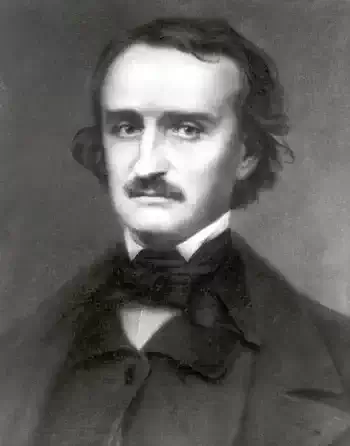
Edgar Allan Poe
Eldorado
Gaily bedight,
A gallant knight,
In sunshine and in shadow,
Had journeyed long,
Singing a song,
In search of Eldorado.
But he grew old—
This knight so bold—
And o'er his heart a shadow
Fell as he found
No spot of ground
That looked like Eldorado.
And, as his strength
Failed him at length,
He met a pilgrim shadow—
"Shadow," said he,
"Where can it be—
This land of Eldorado?"
"Over the Mountains
Of the Moon,
Down the Valley of the Shadow,
Ride, boldly ride,"
The shade replied—
"If you seek for Eldorado!"
1849
2,197
Edgar Allan Poe
The Lake
In youth's spring, it was my lot
To haunt of the wide earth a spot
The which I could not love the less;
So lovely was the loneliness
Of a wild lake, with black rock bound.
And the tall pines that tower'd around.
But when the night had thrown her pall
Upon that spot — as upon all,
And the wind would pass me by
In its stilly melody,
My infant spirit would awake
To the terror of the lone lake.
Yet that terror was not fright —
But a tremulous delight,
And a feeling undefin'd,
Springing from a darken'd mind.
Death was in that poison'd wave
And in its gulf a fitting grave
For him who thence could solace bring
To his dark imagining;
Whose wild'ring thought could even make
An Eden of that dim lake.
1827
1,659
Edgar Allan Poe
Fairy-Land
Dim vales— and shadowy floods—
And cloudy—looking woods,
Whose forms we can't discover
For the tears that drip all over!
Huge moons there wax and wane—
Again— again— again—
Every moment of the night—
Forever changing places—
And they put out the star—light
With the breath from their pale faces.
About twelve by the moon—dial,
One more filmy than the rest
(A kind which, upon trial,
They have found to be the best)
Comes down— still down— and down,
With its centre on the crown
Of a mountain's eminence,
While its wide circumference
In easy drapery falls
Over hamlets, over halls,
Wherever they may be—
O'er the strange woods— o'er the sea—
Over spirits on the wing—
Over every drowsy thing—
And buries them up quite
In a labyrinth of light—
And then, how deep!— O, deep!
Is the passion of their sleep.
In the morning they arise,
And their moony covering
Is soaring in the skies,
With the tempests as they toss,
Like— almost anything—
Or a yellow Albatross.
They use that moon no more
For the same end as before—
Videlicet, a tent—
Which I think extravagant:
Its atomies, however,
Into a shower dissever,
Of which those butterflies
Of Earth, who seek the skies,
And so come down again,
(Never—contented things!)
Have brought a specimen
Upon their quivering wings.
1829
1,379
Edgar Allan Poe
To One in Paradise
Thou wast all that to me, love,
For which my soul did pine-
A green isle in the sea, love,
A fountain and a shrine,
All wreathed with fairy fruits and flowers,
And all the flowers were mine.
Ah, dream too bright to last!
Ah, starry Hope! that didst arise
But to be overcast!
A voice from out the Future cries,
"Onward!"- but o'er the Past
(Dim gulf!) my spirit hovering lies
Mute, motionless, aghast!
For, alas! alas! with me
The light of life is o'er!
"No more-- no more-- no more,"
(Such language holds the solemn sea
To the sands upon the shore)
Shall bloom the thunder-blasted tree
Or the stricken eagle soar!
And all my hours are trances,
And all my nightly dreams
Are where thy dark eye glances,
And where thy footstep gleams-
In what ethereal dances,
By what Italian streams.
Alas! for that accursed time
They bore thee o'er the billow,
From Love to titled age and crime,
And an unholy pillow!--
From me, and from our misty clime,
Where weeps the silver willow!
1834
1,367
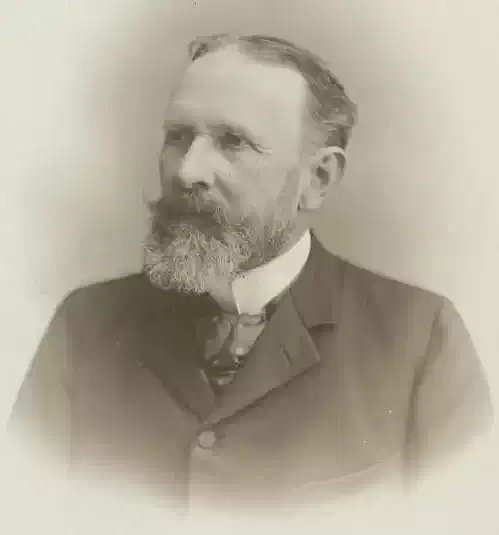
Carl Spitteler
The Hiker
Downy flakes whisper softly from the sky.
A hiker climbs over firn and ice.
The snow woman follows him with treacherous steps:
"Hold still, my dear, and take me with you!
The evening is near and the summit is far away.
I'd be happy to play you a little song just to keep you entertained."
She puts the green shawm on her lip,
She rejoiced at flowers and Lenz and Mai.
He listened, cheeks wet with tears,
Then he ticked the box and drew for bass.
And darker clouds the twilight snow.
She crept to his side on a cunning toe:
"Stop! let me shine for you, you are wandering astray!
I'll tell you a friendly fairy tale."
A traffic light she drew from her robe:
The homeland shines before his eyes,
The hill, the garden, being a parent
In the blissful golden glow of youth.
He swayed. Already he shortens the measure of his steps,
Then he ticked the box and drew for bass.
And it storms and it rummages with storm power,
White night yawns from the howling rock.
His will failed, his knee sank.
There she sat on a stone bench.
"It's comfortable here; come, sit down!
I really know how to caress.
And slumber lures you and a dream laughs at you:
There is room on my warm bosom."
She looked so lovely, she nodded so sweetly,
as if the sky wanted to open up to him.
He staggers towards her in a staggering run
and fell at her feet - never got up again.
1,104
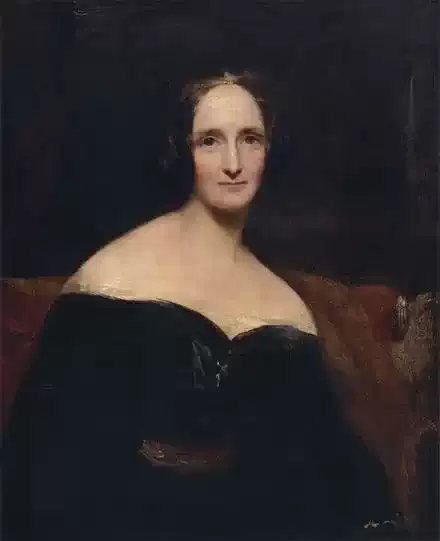
Percy Bysshe Shelley
Mont Blanc
(Lines written in the Vale of Chamouni)
The everlasting universe of things
Flows through the mind, and rolls its rapid waves,
Now dark - now glittering - now reflecting gloom -
Now lending splendor, where from secret springs
The source of human thought its tribute brings
Of waters, - with a sound but half its own,
Such as a feeble brook will oft assume
In the wild woods, amon the mountains lone,
Where waterfalls around it leap for ever,
Where woods and winds contend, and a vast river
Over its rocks ceaselessly bursts and raves.
Thus thou, Ravine of Arve - dark, deep Ravine-
Thou many-colored, many voiced vale,
Over whose pines, and crags, and caverns sail
Fast cloud-shadows and sunbeams: awful scene,
Where Power in likeness of the Arve comes down
From the ice-gulfs that gird his secret throne,
Bursting through these dark mountains like the flame
Of lightning through the tempest; -thou dost lie,
Thy giant brood of pines around thee clinging,
Children of elder time, in whose devotion
The chainless winds still come and ever came
To drink their odors, and their mighty swinging
To hear - an old and solemn harmony;
Thine earthly rainbows stretched across the sweep
Of the ethereal waterfall, whose veil
Robes some unsculptured image; the strange sleep
Which when the voices of the desert fail
Wraps all in its own deep eternity;-
Thy caverns echoing to the Arve's commotion,
A loud, lone sound no other sound can tame;
Thou art pervaded with that ceaseless motion,
Thou art the path of that unresting sound-
Dizzy Ravine! and when I gaze on thee
I seem as in a trance sublime and strange
To muse on my own separate fantasy,
My own, my human mind, which passively
Now renders and receives fast influencings,
Holding an unremitting interchange
With the clear universe of things around;
One legion of wild thoughts, whose wandering wings
Now float above thy darkness, and now rest
Where that or thou art no unbidden guest,
In the still cave of the witch Poesy,
Seeking among the shadows that pass by
Ghosts of all things that are, some shade of thee,
Some phantom, some faint image; till the breast
From which they fled recalls them, thou art there!
Some say that gleams of a remoter world
Visit the soul in sleep,-that death is slumber,
And that its shapes the busy thoughts outnumber
Of those who wake and live. -I look on high;
Has some unknown omnipotence unfurled
The veil of life and death? or do I lie
In dream, and does the mightier world of sleep
Spread far and round and inaccessibly
Its circles? For the very spirit fails,
Driven like a homeless cloud from steep to steep
That vanishes amon the viewless gales!
Far, far above, piercing the infinite sky,
Mont Blanc appears,-still snowy and serene-
Its subject mountains their unearthly forms
Pile around it, ice and rock; broad vales between
Of frozen floods, unfathomable deeps,
Blue as the overhanging heaven, that spread
And wind among the accumulated steeps;
A desert peopled by the storms alone,
Save when the eagle brings some hunter's bone,
And the wolf tracks her there - how hideously
Its shapes are heaped around! rude, bare, and high,
Ghastly, and scarred, and riven. -Is this the scene
Where the old Earthquake-demon taught her young
Ruin? Were these their toys? or did a sea
Of fire envelop once this silent snow?
None can reply - all seems eternal now.
The wilderness has a mysterious tongue
Which teaches awful doubt, or faith so mild,
So solemn, so serene, that man may be,
But for such faith, with nature reconciled;
Thou hast a voice, great Mountain, to repeal
Large codes of fraud and woe; not understood
By all, but which the wise, and great, and good
Interpret, or make felt, or deeply feel.
The fields, the lakes, the forests, and the streams,
Ocean, and all the living things that dwell
Within the daedal earth; lightning, and rain,
Earthquake, and fiery flood, and hurricane,
The torpor of the year when feeble dreams
Visit the hidden buds, or dreamless sleep
Holds every future leaf and flower; -the bound
With which from that detested trance they leap;
The works and ways of man, their death and birth,
And that of him, and all that his may be;
All things that move and breathe with toil and sound
Are born and die; revolve, subside, and swell.
Power dwells apart in its tranquility,
Remote, serene, and inaccessible:
And this, the naked countenance of earth,
On which I gaze, even these primeval mountains
Teach the adverting mind. The glaciers creep
Like snakes that watch their prey, from their far fountains,
Slow rolling on; there, many a precipice,
Frost and the Sun in scorn of mortal power
Have piled: dome, pyramid, and pinnacle,
A city of death, distinct with many a tower
And wall impregnable of beaming ice.
Yet not a city, but a flood of ruin
Is there, that from the boundaries of the sky
Rolls its perpetual stream; vast pines are strewing
Its destined path, or in the mangled soil
Branchless and shattered stand; the rocks, drawn down
From yon remotest waste, have overthrown
The limits of the dead and living world,
Never to be reclaimed. The dwelling-place
Of insects, beasts, and birds, becomes its spoil
Their food and their retreat for ever gone,
So much of life and joy is lost. The race
Of man flies far in dread; his work and dwelling
Vanish, like smoke before the tempest's stream,
And their place is not known. Below, vast caves
Shine in the rushing torrents' restless gleam,
Which from those secret chasms in tumult welling
Meet in the vale, and one majestic River,
The breath and blood of distant lands , for ever
Rolls its loud waters to the ocean-waves,
Breathes its swift vapors to the circling air.
Mont Blanc yet gleams on high:-the power is there,
The still and solemn power of many sights,
And many sounds, and much of life and death.
In the calm darkness of the moonless nights,
In the lone glare of day, the snows descend
Upon that mountain; none beholds them there,
Nor when the flakes burn in the sinking sun,
Or the star-beams dart through them:-Winds contend
Silently there, and heap the snow with breath
Rapid and strong, but silently! Its home
The voiceless lightning in these solitudes
Keeps innocently, and like vapor broods
Over the snow. The secret Strength of things
Which governs thought, and to the infinite dome
Of Heaven is as a law, inhabits thee!
And what were thou, and earth, and stars, and sea,
If to the human mind's imaginings
Silence and solitude were vacancy?
658

John Keats
Endymion: A Poetic Romance (Excerpt)
BOOK I
A thing of beauty is a joy for ever:
Its loveliness increases; it will never
Pass into nothingness; but still will keep
A bower quiet for us, and a sleep
Full of sweet dreams, and health, and quiet breathing.
Therefore, on every morrow, are we wreathing
A flowery band to bind us to the earth,
Spite of despondence, of the inhuman dearth
Of noble natures, of the gloomy days,
Of all the unhealthy and o'er-darkened ways
Made for our searching: yes, in spite of all,
Some shape of beauty moves away the pall
From our dark spirits. Such the sun, the moon,
Trees old and young, sprouting a shady boon
For simple sheep; and such are daffodils
With the green world they live in; and clear rills
That for themselves a cooling covert make
'Gainst the hot season; the mid forest brake,
Rich with a sprinkling of fair musk-rose blooms:
And such too is the grandeur of the dooms
We have imagined for the mighty dead;
All lovely tales that we have heard or read:
An endless fountain of immortal drink,
Pouring unto us from the heaven's brink.
Nor do we merely feel these essences
For one short hour; no, even as the trees
That whisper round a temple become soon
Dear as the temple's self, so does the moon,
The passion poesy, glories infinite,
Haunt us till they become a cheering light
Unto our souls, and bound to us so fast,
That, whether there be shine, or gloom o'ercast;
They always must be with us, or we die.
Therefore, 'tis with full happiness that I
Will trace the story of Endymion.
The very music of the name has gone
Into my being, and each pleasant scene
Is growing fresh before me as the green
Of our own valleys: so I will begin
Now while I cannot hear the city's din;
Now while the early budders are just new,
And run in mazes of the youngest hue
About old forests; while the willow trails
Its delicate amber; and the dairy pails
Bring home increase of milk. And, as the year
Grows lush in juicy stalks, I'll smoothly steer
My little boat, for many quiet hours,
With streams that deepen freshly into bowers.
Many and many a verse I hope to write,
Before the daisies, vermeil rimm'd and white,
Hide in deep herbage; and ere yet the bees
Hum about globes of clover and sweet peas,
I must be near the middle of my story.
O may no wintry season, bare and hoary,
See it half finish'd: but let Autumn bold,
With universal tinge of sober gold,
Be all about me when I make an end.
And now, at once adventuresome, I send
My herald thought into a wilderness:
There let its trumpet blow, and quickly dress
My uncertain path with green, that I may speed
Easily onward, thorough flowers and weed....
627

William Blake
Love and Harmony
Love and harmony combine,
And round our souls entwine
While thy branches mix with mine,
And our roots together join.
Joys upon our branches sit,
Chirping loud and singing sweet;
Like gentle streams beneath our feet
Innocence and virtue meet.
Thou the golden fruit dost bear,
I am clad in flowers fair;
Thy sweet boughs perfume the air,
And the turtle buildeth there.
There she sits and feeds her young,
Sweet I hear her mournful song;
And thy lovely leaves among,
There is love, I hear his tongue.
There his charming nest doth lay,
There he sleeps the night away;
There he sports along the day,
And doth among our branches play.
634
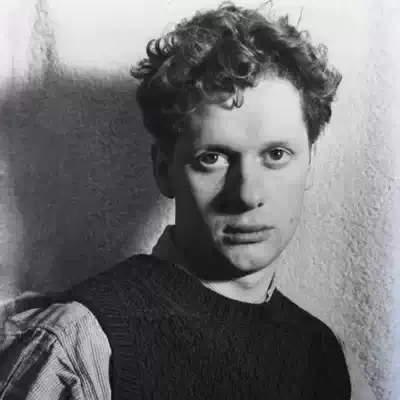
Dylan Thomas
Being But Men
Being but men, we walked into the trees
Afraid, letting our syllables be soft
For fear of waking the rooks,
For fear of coming
Noiselessly into a world of wings and cries.
If we were children we might climb,
Catch the rooks sleeping, and break no twig,
And, after the soft ascent,
Thrust out our heads above the branches
To wonder at the unfailing stars.
Out of confusion, as the way is,
And the wonder, that man knows,
Out of the chaos would come bliss.
That, then, is loveliness, we said,
Children in wonder watching the stars,
Is the aim and the end.
Being but men, we walked into the trees.
617

Rudyard Kipling
The Sea and the Hills
Who hath desired the Sea? -- the sight of salt water unbounded --
The heave and the halt and the hurl and the crash of the comber wind-hounded?
The sleek-barrelled swell before storm, grey, foamless, enormous, and growing --
Stark calm on the lap of the Line or the crazy-eyed hurricane blowing --
His Sea in no showing the same his Sea and the same 'neath each showing:
His Sea as she slackens or thrills?
So and no otherwise -- so and no otherwise -- hillmen desire their Hills!
Who hath desired the Sea? -- the immense and contemptuous surges?
The shudder, the stumble, the swerve, as the star-stabbing bow-sprit emerges?
The orderly clouds of the Trades, the ridged, roaring sapphire thereunder --
Unheralded cliff-haunting flaws and the headsail's low-volleying thunder --
His Sea in no wonder the same his Sea and the same through each wonder:
His Sea as she rages or stills?
So and no otherwise -- so and no otherwise -- hillmen desire their Hills.
Who hath desired the Sea? Her menaces swift as her mercies?
The in-rolling walls of the fog and the silver-winged breeze that disperses?
The unstable mined berg going South and the calvings and groans that declare it --
White water half-guessed overside and the moon breaking timely to bare it --
His Sea as his fathers have dared -- his Sea as his children shall dare it:
His Sea as she serves him or kills?
So and no otherwise -- so and no otherwise -- hillmen desire their Hills.
Who hath desired the Sea? Her excellent loneliness rather
Than forecourts of kings, and her outermost pits than the streets where men gather
Inland, among dust, under trees -- inland where the slayer may slay him --
Inland, out of reach of her arms, and the bosom whereon he must lay him
His Sea from the first that betrayed -- at the last that shall never betray him:
His Sea that his being fulfils?
So and no otherwise -- so and no otherwise -- hillmen desire their Hills.
592

Walt Whitman
Song Of The Redwood-Tree
A CALIFORNIA song!
A prophecy and indirection--a thought impalpable, to breathe, as air;
A chorus of dryads, fading, departing--or hamadryads departing;
A murmuring, fateful, giant voice, out of the earth and sky,
Voice of a mighty dying tree in the Redwood forest dense.
Farewell, my brethren,
Farewell, O earth and sky--farewell, ye neighboring waters;
My time has ended, my term has come.
Along the northern coast,
Just back from the rock-bound shore, and the caves,
In the saline air from the sea, in the Mendocino country,
With the surge for bass and accompaniment low and hoarse,
With crackling blows of axes, sounding musically, driven by strong
arms,
Riven deep by the sharp tongues of the axes--there in the Redwood
forest dense,
I heard the mighty tree its death-chant chanting.
The choppers heard not--the camp shanties echoed not;
The quick-ear'd teamsters, and chain and jack-screw men, heard not,
As the wood-spirits came from their haunts of a thousand years, to
join the refrain;
But in my soul I plainly heard.
Murmuring out of its myriad leaves,
Down from its lofty top, rising two hundred feet high,
Out of its stalwart trunk and limbs--out of its foot-thick bark,
That chant of the seasons and time--chant, not of the past only, but
the future.
You untold life of me,
And all you venerable and innocent joys,
Perennial, hardy life of me, with joys, 'mid rain, and many a summer
sun,
And the white snows, and night, and the wild winds;
O the great patient, rugged joys! my soul's strong joys, unreck'd by
man;
(For know I bear the soul befitting me--I too have consciousness,
identity,
And all the rocks and mountains have--and all the earth;)
Joys of the life befitting me and brothers mine,
Our time, our term has come.
Nor yield we mournfully, majestic brothers,
We who have grandly fill'd our time;
With Nature's calm content, and tacit, huge delight,
We welcome what we wrought for through the past,
And leave the field for them.
For them predicted long,
For a superber Race--they too to grandly fill their time,
For them we abdicate--in them ourselves, ye forest kings!
In them these skies and airs--these mountain peaks--Shasta--Nevadas,
These huge, precipitous cliffs--this amplitude--these valleys grand-Yosemite,
To be in them absorb'd, assimilated.
Then to a loftier strain,
Still prouder, more ecstatic, rose the chant,
As if the heirs, the Deities of the West,
Joining, with master-tongue, bore part.
Not wan from Asia's fetishes,
Nor red from Europe's old dynastic slaughter-house,
(Area of murder-plots of thrones, with scent left yet of wars and
scaffolds every where,)
But come from Nature's long and harmless throes--peacefully builded
thence,
These virgin lands--Lands of the Western Shore,
To the new Culminating Man--to you, the Empire New,
You, promis'd long, we pledge, we dedicate.
You occult, deep volitions,
You average Spiritual Manhood, purpose of all, pois'd on yourself-giving,
not taking law,
You Womanhood divine, mistress and source of all, whence life and
love, and aught that comes from life and love,
You unseen Moral Essence of all the vast materials of America, (age
upon age, working in Death the same as Life,)
You that, sometimes known, oftener unknown, really shape and mould
the New World, adjusting it to Time and Space,
You hidden National Will, lying in your abysms, conceal'd, but ever
alert,
You past and present purposes, tenaciously pursued, may-be
unconscious of yourselves,
Unswerv'd by all the passing errors, perturbations of the surface;
You vital, universal, deathless germs, beneath all creeds, arts,
statutes, literatures,
Here build your homes for good--establish here--These areas entire,
Lands of the Western Shore,
We pledge, we dedicate to you.
For man of you--your characteristic Race,
Here may be hardy, sweet, gigantic grow--here tower, proportionate to
Nature,
Here climb the vast, pure spaces, unconfined, uncheck'd by wall or
roof,
Here laugh with storm or sun--here joy--here patiently inure,
Here heed himself, unfold himself (not others' formulas heed)--here
fill his time,
To duly fall, to aid, unreck'd at last,
To disappear, to serve.
Thus, on the northern coast,
In the echo of teamsters' calls, and the clinking chains, and the
music of choppers' axes,
The falling trunk and limbs, the crash, the muffled shriek, the
groan,
Such words combined from the Redwood-tree--as of wood-spirits' voices
ecstatic, ancient and rustling,
The century-lasting, unseen dryads, singing, withdrawing,
All their recesses of forests and mountains leaving,
From the Cascade range to the Wasatch--or Idaho far, or Utah,
To the deities of the Modern henceforth yielding,
The chorus and indications, the vistas of coming humanity--the
settlements, features all,
In the Mendocino woods I caught.
The flashing and golden pageant of California!
The sudden and gorgeous drama--the sunny and ample lands;
The long and varied stretch from Puget Sound to Colorado south;
Lands bathed in sweeter, rarer, healthier air--valleys and mountain
cliffs;
The fields of Nature long prepared and fallow--the silent, cyclic
chemistry;
The slow and steady ages plodding--the unoccupied surface ripening-
the rich ores forming beneath;
At last the New arriving, assuming, taking possession,
A swarming and busy race settling and organizing every where;
Ships coming in from the whole round world, and going out to the
whole world,
To India and China and Australia, and the thousand island paradises
of the Pacific;
Populous cities--the latest inventions--the steamers on the rivers-the
railroads--with many a thrifty farm, with machinery,
And wool, and wheat, and the grape--and diggings of yellow gold.
But more in you than these, Lands of the Western Shore!
(These but the means, the implements, the standing-ground,)
I see in you, certain to come, the promise of thousands of years,
till now deferr'd,
Promis'd, to be fulfill'd, our common kind, the Race.
The New Society at last, proportionate to Nature,
In Man of you, more than your mountain peaks, or stalwart trees
imperial,
In Woman more, far more, than all your gold, or vines, or even vital
air.
Fresh come, to a New World indeed, yet long prepared,
I see the Genius of the Modern, child of the Real and Ideal,
Clearing the ground for broad humanity, the true America, heir of the
past so grand,
To build a grander future.
570
Pablo Neruda
The Tree Is Here, Still, In Pure Stone
The tree is here, still, in pure stone,
in deep evidence, in solid beauty,
layered, through a hundred million years.
Agate, cornelian, gemstone
transmuted the timber and sap
until damp corruptions
fissured the giant's trunk
fusing a parallel being:
the living leaves
unmade themselves
and when the pillar was overthrown
fire in the forest, blaze of the dust-cloud,
celestial ashes mantled it round,
until time, and the lava, created
this gift, of translucent stone.
563

Lord Byron
To An Oak At Newstead
Young Oak! when I planted thee deep in the ground,
I hoped that thy days would be longer than mine;
That thy dark‑waving branches would flourish around,
And ivy thy trunk with its mantle entwine.
Such, such was my hope, when in infancy's
On the land of my fathers I rear'd thee with pride;
They are past, and I water thy stem with my tears,
Thy decay not the weeds that surround thee can hide.
I left thee, my Oak, and, since that fatal hour,
A stranger has dwelt in the hall of my sire;
Till manhood shall crown me, not mine is the power,
But his, whose neglect may have bade thee expire.
Oh! hardy thou wenteven
now little care
Might revive thy young head, and thy wounds gently heal:
But thou went not fated affection to share
For
who could suppose that a stranger would feel!
Ah, droop not, my Oak! lift thy head for a while;
Ere twice round yon Glory this planet shall run,
The hand of thy Master will teach thee to smile,
When Infancy's years of probation are done.
Oh, live then, my Oak! tow'r aloft from the weeds,
That clog thy young growth, and assist thy decay,
For still in thy bosom are life's early seeds,
And still may thy branches their beauty display.
Oh! yet, if maturity's years may be thine,
Though I shall lie low in the cavern of death,
On thy leaves yet the day‑beam of ages may shine,
Uninjured by time, or the rude winter's breath.
For centuries still may thy boughs lightly wave
O'er the Gorse of thy lord in thy canopy laid;
While the branches thus gratefully shelter his grave,
The chief who survives may recline in thy shade.
And as he, with his boys, shall revisit this spot,
He will tell them is whispers more softly to tread.
Oh! surely, by these I shall ne'er be forgot;
Remembrance still hallows the dust of the dead.
And here, will they say, when in life's glowing prime,
Perhaps he has pour'd forth his young simple lay,
And here must he sleep, till the moments of time
Are lost in the hours of Eternity's day.
556

Boris Pasternak
Ploughing Time
What is the matter with the landscape?
Familiar landmarks are not there.
Ploughed fields, like squares upon a chessboard,
Today are scattered everywhere.
The newly-harrowed vast expanses
So evenly are spread about,
As though the valley had been spring-cleaned
Or else the mountains flattened out.
And that same day, in one endeavour,
Outside the furrows every tree
Bursts into leaf, light-green and downy,
And stretches skyward, tall and free.
No speck of dust on the new maples,
And colours nowhere are as clean
As is the light-grey of the ploughland
And as the silver-birch's green.
547
Arthur Rimbaud
Blackcurrant River
Blackcurrant river rolls unknown in strange valleys;
the voices of a hundred rooks go with it,
the true benevolent voice of angles:
with the wide movements of the fir woods
when several winds sweep down.
Everything flows with [the] horrible mysteries of ancient landscapes;
of strongholds visited, of large estates:
it is along these banks that you can hear
the dead passions of errant knights:
but how the wind is wholesome!
Let the traveler look through these clerestories:
he will journey on more bravely.
Forest soldiers whom the Lord sends,
dear delightful rooks! Drive away from here the crafty peasant,
clinking glasses with his old stump of an arm.
551

William Wordsworth
The Simplon Pass
-Brook and road
Were fellow-travellers in this gloomy Pass,
And with them did we journey several hours
At a slow step. The immeasurable height
Of woods decaying, never to be decayed,
The stationary blasts of waterfalls,
And in the narrow rent, at every turn,
Winds thwarting winds bewildered and forlorn,
The torrents shooting from the clear blue sky,
The rocks that muttered close upon our ears,
Black drizzling crags that spake by the wayside
As if a voice were in them, the sick sight
And giddy prospect of the raving stream,
The unfettered clouds and region of the heavens,
Tumult and peace, the darkness and the light--
Were all like workings of one mind, the features
Of the same face, blossoms upon one tree,
Characters of the great Apocalypse,
The types and symbols of Eternity,
Of first and last, and midst, and without end.
552

John Greenleaf Whittier
Funeral Tree of the Sokokis
Around Sebago's lonely lake
There lingers not a breeze to break
The mirror which its waters make.
The solemn pines along its shore,
The firs which hang its gray rocks o'er,
Are painted on its glassy floor.
The sun looks o'er, with hazy eye,
The snowy mountain-tops which lie
Piled coldly up against the sky.
Dazzling and white! save where the bleak,
Wild winds have bared some splintering peak,
Or snow-slide left its dusky streak.
Yet green are Saco's banks below,
And belts of spruce and cedar show,
Dark fringing round those cones of snow.
The earth hath felt the breath of spring,
Though yet on her deliverer's wing
The lingering frosts of winter cling.
Fresh grasses fringe the meadow-brooks,
And mildly from its sunny nooks
The blue eye of the violet looks.
And odors from the springing grass,
The sweet birch and the sassafras,
Upon the scarce-felt breezes pass.
Her tokens of renewing care
Hath Nature scattered everywhere,
In bud and flower, and warmer air.
But in their hour of bitterness,
What reek the broken Sokokis,
Beside their slaughtered chief, of this?
The turf's red stain is yet undried,
Scarce have the death-shot echoes died
Along Sebago's wooded side;
And silent now the hunters stand,
Grouped darkly, where a swell of land
Slopes upward from the lake's white sand.
Fire and the axe have swept it bare,
Save one lone beech, unclosing there
Its light leaves in the vernal air.
With grave, cold looks, all sternly mute,
They break the damp turf at its foot,
And bare its coiled and twisted root.
They heave the stubborn trunk aside,
The firm roots from the earth divide,-The
rent beneath yawns dark and wide.
And there the fallen chief is laid,
In tasselled garb of skins arrayed,
And girded with his wampum-braid.
The silver cross he loved is pressed
Beneath the heavy arms, which rest
Upon his scarred and naked breast.
'T is done: the roots are backward sent,
The beechen-tree stands up unbent,
The Indian's fitting monument!
When of that sleeper's broken race
Their green and pleasant dwelling-place,
Which knew them once, retains no trace;
Oh, long may sunset's light be shed
As now upon that beech's head,
A green memorial of the dead!
There shall his fitting requiem be,
In northern winds, that, cold and free,
Howl nightly in that funeral tree.
To their wild wail the waves which break
Forever round that lonely lake
A solemn undertone shall make!
And who shall deem the spot unblest,
Where Nature's younger children rest,
Lulled on their sorrowing mother's breast?
Deem ye that mother loveth less
These bronzed forms of the wilderness
She foldeth in her long caress?
As sweet o'er them her wild-flowers blow,
As if with fairer hair and brow
The blue-eyed Saxon slept below.
What though the places of their rest
No priestly knee hath ever pressed,-No
funeral rite nor prayer hath blessed?
What though the bigot's ban be there,
And thoughts of wailing and despair,
And cursing in the place of prayer.
Yet Heaven hath angels watching round
The Indian's lowliest forest-mound,-And
they have made it holy ground.
There ceases man's frail judgment; all
His powerless bolts of cursing fall
Unheeded on that grassy pall.
O peeled and hunted and reviled,
Sleep on, dark tenant of the wild!
Great Nature owns her simple child!
And Nature's God, to whom alone
The secret of the heart is known,-The
hidden language traced thereon;
Who from its many cumberings
Of form and creed, and outward things,
To light the naked spirit brings;
Not with our partial eye shall scan,
Not with our pride and scorn shall ban,
The spirit of our brother man!
548

Ezra Pound
The Tree
I stood still and was a tree amid the wood,
Knowing the truth of things unseen before;
Of Daphne and the laurel bow
And that god-feasting couple old
that grew elm-oak amid the wold.
'Twas not until the gods had been
Kindly entreated, and been brought within
Unto the hearth of their heart's home
That they might do this wonder thing;
Nathless I have been a tree amid the wood
And many a new thing understood
That was rank folly to my head before.
544
Boris Pasternak
The Linden Avenue
A house of unimagined beauty
Is set in parkland, cool and dark;
Gates with an arch; then meadows, hillocks,
And oats and woods beyond the park.
Here, with their crowns each other hiding,
Enormous linden trees engage
In dusky, quiet celebration
Of their two hundred years of age.
And underneath their vaulted branches,
Across the regularly drawn
Symmetric avenues, grow flowers
In flower-beds upon a lawn.
Beneath the trees, on sandy pathways,
Not one bright spot relieves the dark,
Save-like an opening in a tunnel-
The distant entrance of the park.
But now the blossom-time is starting,
The walled-in linden trees reveal
And spread about within their shadow
Their irresistible appeal.
The visitors, in summer clothing,
While walking on the crunchy sand,
Breathe in unfathomable fragrance
Which only bees can understand.
This gripping scent is theme and subject,
Whereas-however well they look-
The flower-beds, the lawn, the garden,
Are but the cover of a book.
The clustered, wax-bespattered flowers
On massive trees, sedate and old,
Lit up by raindrops, burn and sparkle
Above the mansion they enfold.
536
William Carlos Williams
Epitaph
An old willow with hollow branches
slowly swayed his few high gright tendrils
and sang:
Love is a young green willow
shimmering at the bare wood's edge.
slowly swayed his few high gright tendrils
and sang:
Love is a young green willow
shimmering at the bare wood's edge.
529
Lord Byron
Lachin Y Gair
Away, ye gay landscapes, ye garden of roses!
In you let the minions of luxury rove;
Restore me to the rocks, where the snowflake reposes,
Though still they are sacred to freedom and love:
Yet, Caledonia, beloved are thy mountains,
Round their white summits though elements war;
Though cataracts foam 'stead of smoothflowing
fountains,
I sigh for the valley of dark Loch na Garr.
Ah! there my young footsteps in infancy wandered;
My cap was teh bonnet, my cloak was the plaid;
On chieftains long perished my memory pondered,
As daily I strode through the pinecovered
glade;
I sought not my home till the day's dying glory
Gave place to the rays of the bright polar star;
For fancy was cheered by traditional story,
Disclosed by the natives of dark Loch na Garr.
"Shades of the dead! have I not heard your voices
Rise on the nightrolling
breath of the gale?"
Surely the soul of the hero rejoices,
And rides on the wind, o'er his own Highland vale.
Rouch Loch na Garr while the stormy mist gathers,
Winter presides in his cold icy car:
Clouds there encircle the forms of my fathers;
They dwell in the tempests of dark Loch na Garr.
"Illstarred,
though brave, did no visions foreboding
Tell you that fate had forsaken your cause?"
Ah! were you destined to die at Culloden,
Victory crowned not your fall with applause:
Still were you happy in death's earthy slumber,
You rest with your clan in the caves of Braemar;
The pibroch resounds, to the piper's loud number,
Your deeds on the echoes of dark Loch na Garr.
Years have rolled on, Loch na Garr, since I left you,
Years must elapse ere I tread you again:
Nature of verdure and flowers has bereft you,
Yet still are you dearer than Albion's plain.
England! thy beauties are tame and domestic
To one who has roved o'er the mountains afar:
Oh for the crags that are wild and majestic!
The steep frowning glories of the dark Loch na Garr.
521

Alfred Lord Tennyson
The Oak
Live thy Life,
Young and old,
Like yon oak,
Bright in spring,
Living gold;
Summer-rich
Then; and then
Autumn-changed
Soberer-hued
Gold again.
All his leaves
Fall'n at length,
Look, he stands,
Trunk and bough
Naked strength.
Young and old,
Like yon oak,
Bright in spring,
Living gold;
Summer-rich
Then; and then
Autumn-changed
Soberer-hued
Gold again.
All his leaves
Fall'n at length,
Look, he stands,
Trunk and bough
Naked strength.
524

Elizabeth Barrett Browning
Patience Taught By Nature
'O DREARY life,' we cry, ' O dreary life ! '
And still the generations of the birds
Sing through our sighing, and the flocks and herds
Serenely live while we are keeping strife
With Heaven's true purpose in us, as a knife
Against which we may struggle ! Ocean girds
Unslackened the dry land, savannah-swards
Unweary sweep, hills watch unworn, and rife
Meek leaves drop year]y from the forest-trees
To show, above, the unwasted stars that pass
In their old glory: O thou God of old,
Grant me some smaller grace than comes to these !--
But so much patience as a blade of grass
Grows by, contented through the heat and cold.
525
Rudyard Kipling
The Land
When Julius Fabricius, Sub-Prefect of the Weald,
In the days of Diocletian owned our Lower River-field,
He called to him Hobdenius-a Briton of the Clay,
Saying: "What about that River-piece for layin' in to hay?"
And the aged Hobden answered: "I remember as a lad
My father told your father that she wanted dreenin' bad.
An' the more that you neeglect her the less you'll get her clean.
Have it jest as you've a mind to, but, if I was you, I'd dreen."
So they drained it long and crossways in the lavish Roman style--
Still we find among the river-drift their flakes of ancient tile,
And in drouthy middle August, when the bones of meadows show,
We can trace the lines they followed sixteen hundred years ago.
Then Julius Fabricius died as even Prefects do,
And after certain centuries, Imperial Rome died too.
Then did robbers enter Britain from across the Northern main
And our Lower River-field was won by Ogier the Dane.
Well could Ogier work his war-boat --well could Ogier wield his brand--
Much he knew of foaming waters--not so much of farming land.
So he called to him a Hobden of the old unaltered blood,
Saying: "What about that River-piece; she doesn't look no good?"
And that aged Hobden answered "'Tain't for me not interfere.
But I've known that bit o' meadow now for five and fifty year.
Have it jest as you've a mind to, but I've proved it time on ' time,
If you want to change her nature you have got to give her lime!"
Ogier sent his wains to Lewes, twenty hours' solemn walk,
And drew back great abundance of the cool, grey, healing chalk.
And old Hobden spread it broadcast, never heeding what was in't.--
Which is why in cleaning ditches, now and then we find a flint.
Ogier died. His sons grew English -- Anglo-Saxon was their name--
Till out of blossomed Normandy another pirate came;
For Duke William conquered England and divided with his men,
And our Lower River-field he gave to William of Warenne.
But the Brook (you know her habit) rose one rainy autumn night
And tore down sodden flitches of the bank to left and right.
So, said William to his Bailiff as they rode their dripping rounds:
"Hob, what about that River-bit--the Brook's got up no bounds? "
And that aged Hobden answered: "'Tain't my business to advise,
But ye might ha' known 'twould happen from the way the valley lies.
Where ye can't hold back the water you must try and save the sile.
Hev it jest as you've a mind to, but, if I was you, I'd spile!"
They spiled along the water-course with trunks of willow-trees,
And planks of elms behind 'em and immortal oaken knees.
And when the spates of Autumn whirl the gravel-beds away
You can see their faithful fragments, iron-hard in iron clay.
. . . . . . . . . .
Georgii Quinti Anno Sexto, I, who own the River-field,
Am fortified with title-deeds, attested, signed and sealed,
Guaranteeing me, my assigns, my executors and heirs
All sorts of powers and profits which-are neither mine nor theirs,
I have rights of chase and warren, as my dignity requires.
I can fish-but Hobden tickles--I can shoot--but Hobden wires.
I repair, but he reopens, certain gaps which, men allege,
Have been used by every Hobden since a Hobden swapped a hedge.
Shall I dog his morning progress o'er the track-betraying dew?
Demand his dinner-basket into which my pheasant flew?
Confiscate his evening faggot under which my conies ran,
And summons him to judgment? I would sooner summons Pan.
His dead are in the churchyard--thirty generations laid.
Their names were old in history when Domesday Book was made;
And the passion and the piety and prowess of his line
Have seeded, rooted, fruited in some land the Law calls mine.
Not for any beast that burrows, not for any bird that flies,
Would I lose his large sound council, miss his keen amending eyes.
He is bailiff, woodman, wheelwright, field-surveyor, engineer,
And if flagrantly a poacher--'tain't for me to interfere.
"Hob, what about that River-bit?" I turn to him again,
With Fabricius and Ogier and William of Warenne.
"Hev it jest as you've a mind to, but"-and here he takes command.
For whoever pays the taxes old Mus' Hobden owns the land.
517
Page 1
Next