
Grandparents and Ancestors

Rudyard Kipling
Our Fathers Also
Thrones, Powers, Dominions, Peoples, Kings,
Are changing 'neath our hand.
Our fathers also see these things
But they do not understand.
By--they are by with mirth and tears,
Wit or the works of Desire-
Cushioned about on the kindly years
Between the wall and the fire.
The grapes are pressed, the corn is shocked--
Standeth no more to glean;
For the Gates of Love and Learning locked
When they went out between.
All lore our Lady Venus bares,
Signalled it was or told
By the dear lips long given to theirs
And longer to the mould.
All Profit, all Device, all Truth,
Written it was or said
By the mighty men of their mighty youth,
Which is mighty being dead.
The film that floats before their eyes
The Temple's Veil they call;
And the dust that on the Shewbread lies
Is holy over all.
Warn them of seas that slip our yoke,
Of slow-conspiring stars-
The ancient Front of Things unbroke
But heavy with new wars?
By--they are by with mirth and tears,
Wit or the waste of Desire-
Cushioned about on the kindly years
Between the wall and the fire!
919

Alfred Lord Tennyson
Lancelot And Elaine
Elaine the fair, Elaine the loveable,
Elaine, the lily maid of Astolat,
High in her chamber up a tower to the east
Guarded the sacred shield of Lancelot;
Which first she placed where the morning's earliest ray
Might strike it, and awake her with the gleam;
Then fearing rust or soilure fashioned for it
A case of silk, and braided thereupon
All the devices blazoned on the shield
In their own tinct, and added, of her wit,
A border fantasy of branch and flower,
And yellow-throated nestling in the nest.
Nor rested thus content, but day by day,
Leaving her household and good father, climbed
That eastern tower, and entering barred her door,
Stript off the case, and read the naked shield,
Now guessed a hidden meaning in his arms,
Now made a pretty history to herself
Of every dint a sword had beaten in it,
And every scratch a lance had made upon it,
Conjecturing when and where: this cut is fresh;
That ten years back; this dealt him at Caerlyle;
That at Caerleon; this at Camelot:
And ah God's mercy, what a stroke was there!
And here a thrust that might have killed, but God
Broke the strong lance, and rolled his enemy down,
And saved him: so she lived in fantasy.
How came the lily maid by that good shield
Of Lancelot, she that knew not even his name?
He left it with her, when he rode to tilt
For the great diamond in the diamond jousts,
Which Arthur had ordained, and by that name
Had named them, since a diamond was the prize.
For Arthur, long before they crowned him King,
Roving the trackless realms of Lyonnesse,
Had found a glen, gray boulder and black tarn.
A horror lived about the tarn, and clave
Like its own mists to all the mountain side:
For here two brothers, one a king, had met
And fought together; but their names were lost;
And each had slain his brother at a blow;
And down they fell and made the glen abhorred:
And there they lay till all their bones were bleached,
And lichened into colour with the crags:
And he, that once was king, had on a crown
Of diamonds, one in front, and four aside.
And Arthur came, and labouring up the pass,
All in a misty moonshine, unawares
Had trodden that crowned skeleton, and the skull
Brake from the nape, and from the skull the crown
Rolled into light, and turning on its rims
Fled like a glittering rivulet to the tarn:
And down the shingly scaur he plunged, and caught,
And set it on his head, and in his heart
Heard murmurs, 'Lo, thou likewise shalt be King.'
Thereafter, when a King, he had the gems
Plucked from the crown, and showed them to his knights,
Saying, 'These jewels, whereupon I chanced
Divinely, are the kingdom's, not the King's--
For public use: henceforward let there be,
Once every year, a joust for one of these:
For so by nine years' proof we needs must learn
Which is our mightiest, and ourselves shall grow
In use of arms and manhood, till we drive
The heathen, who, some say, shall rule the land
Hereafter, which God hinder.' Thus he spoke:
And eight years past, eight jousts had been, and still
Had Lancelot won the diamond of the year,
With purpose to present them to the Queen,
When all were won; but meaning all at once
To snare her royal fancy with a boon
Worth half her realm, had never spoken word.
Now for the central diamond and the last
And largest, Arthur, holding then his court
Hard on the river nigh the place which now
Is this world's hugest, let proclaim a joust
At Camelot, and when the time drew nigh
Spake (for she had been sick) to Guinevere,
'Are you so sick, my Queen, you cannot move
To these fair jousts?' 'Yea, lord,' she said, 'ye know it.'
'Then will ye miss,' he answered, 'the great deeds
Of Lancelot, and his prowess in the lists,
A sight ye love to look on.' And the Queen
Lifted her eyes, and they dwelt languidly
On Lancelot, where he stood beside the King.
He thinking that he read her meaning there,
'Stay with me, I am sick; my love is more
Than many diamonds,' yielded; and a heart
Love-loyal to the least wish of the Queen
(However much he yearned to make complete
The tale of diamonds for his destined boon)
Urged him to speak against the truth, and say,
'Sir King, mine ancient wound is hardly whole,
And lets me from the saddle;' and the King
Glanced first at him, then her, and went his way.
No sooner gone than suddenly she began:
'To blame, my lord Sir Lancelot, much to blame!
Why go ye not to these fair jousts? the knights
Are half of them our enemies, and the crowd
Will murmur, "Lo the shameless ones, who take
Their pastime now the trustful King is gone!"'
Then Lancelot vext at having lied in vain:
'Are ye so wise? ye were not once so wise,
My Queen, that summer, when ye loved me first.
Then of the crowd ye took no more account
Than of the myriad cricket of the mead,
When its own voice clings to each blade of grass,
And every voice is nothing. As to knights,
Them surely can I silence with all ease.
But now my loyal worship is allowed
Of all men: many a bard, without offence,
Has linked our names together in his lay,
Lancelot, the flower of bravery, Guinevere,
The pearl of beauty: and our knights at feast
Have pledged us in this union, while the King
Would listen smiling. How then? is there more?
Has Arthur spoken aught? or would yourself,
Now weary of my service and devoir,
Henceforth be truer to your faultless lord?'
She broke into a little scornful laugh:
'Arthur, my lord, Arthur, the faultless King,
That passionate perfection, my good lord--
But who can gaze upon the Sun in heaven?
He never spake word of reproach to me,
He never had a glimpse of mine untruth,
He cares not for me: only here today
There gleamed a vague suspicion in his eyes:
Some meddling rogue has tampered with him--else
Rapt in this fancy of his Table Round,
And swearing men to vows impossible,
To make them like himself: but, friend, to me
He is all fault who hath no fault at all:
For who loves me must have a touch of earth;
The low sun makes the colour: I am yours,
Not Arthur's, as ye know, save by the bond.
And therefore hear my words: go to the jousts:
The tiny-trumpeting gnat can break our dream
When sweetest; and the vermin voices here
May buzz so loud--we scorn them, but they sting.'
Then answered Lancelot, the chief of knights:
'And with what face, after my pretext made,
Shall I appear, O Queen, at Camelot, I
Before a King who honours his own word,
As if it were his God's?'
'Yea,' said the Queen,
'A moral child without the craft to rule,
Else had he not lost me: but listen to me,
If I must find you wit: we hear it said
That men go down before your spear at a touch,
But knowing you are Lancelot; your great name,
This conquers: hide it therefore; go unknown:
Win! by this kiss you will: and our true King
Will then allow your pretext, O my knight,
As all for glory; for to speak him true,
Ye know right well, how meek soe'er he seem,
No keener hunter after glory breathes.
He loves it in his knights more than himself:
They prove to him his work: win and return.'
Then got Sir Lancelot suddenly to horse,
Wroth at himself. Not willing to be known,
He left the barren-beaten thoroughfare,
Chose the green path that showed the rarer foot,
And there among the solitary downs,
Full often lost in fancy, lost his way;
Till as he traced a faintly-shadowed track,
That all in loops and links among the dales
Ran to the Castle of Astolat, he saw
Fired from the west, far on a hill, the towers.
Thither he made, and blew the gateway horn.
Then came an old, dumb, myriad-wrinkled man,
Who let him into lodging and disarmed.
And Lancelot marvelled at the wordless man;
And issuing found the Lord of Astolat
With two strong sons, Sir Torre and Sir Lavaine,
Moving to meet him in the castle court;
And close behind them stept the lily maid
Elaine, his daughter: mother of the house
There was not: some light jest among them rose
With laughter dying down as the great knight
Approached them: then the Lord of Astolat:
'Whence comes thou, my guest, and by what name
Livest thou between the lips? for by thy state
And presence I might guess thee chief of those,
After the King, who eat in Arthur's halls.
Him have I seen: the rest, his Table Round,
Known as they are, to me they are unknown.'
Then answered Sir Lancelot, the chief of knights:
'Known am I, and of Arthur's hall, and known,
What I by mere mischance have brought, my shield.
But since I go to joust as one unknown
At Camelot for the diamond, ask me not,
Hereafter ye shall know me--and the shield--
I pray you lend me one, if such you have,
Blank, or at least with some device not mine.'
Then said the Lord of Astolat, 'Here is Torre's:
Hurt in his first tilt was my son, Sir Torre.
And so, God wot, his shield is blank enough.
His ye can have.' Then added plain Sir Torre,
'Yea, since I cannot use it, ye may have it.'
Here laughed the father saying, 'Fie, Sir Churl,
Is that answer for a noble knight?
Allow him! but Lavaine, my younger here,
He is so full of lustihood, he will ride,
Joust for it, and win, and bring it in an hour,
And set it in this damsel's golden hair,
To make her thrice as wilful as before.'
'Nay, father, nay good father, shame me not
Before this noble knight,' said young Lavaine,
'For nothing. Surely I but played on Torre:
He seemed so sullen, vext he could not go:
A jest, no more! for, knight, the maiden dreamt
That some one put this diamond in her hand,
And that it was too slippery to be held,
And slipt and fell into some pool or stream,
The castle-well, belike; and then I said
That IF I went and IF I fought and won it
(But all was jest and joke among ourselves)
Then must she keep it safelier. All was jest.
But, father, give me leave, an if he will,
To ride to Camelot with this noble knight:
Win shall I not, but do my best to win:
Young as I am, yet would I do my best.'
'So will ye grace me,' answered Lancelot,
Smiling a moment, 'with your fellowship
O'er these waste downs whereon I lost myself,
Then were I glad of you as guide and friend:
And you shall win this diamond,--as I hear
It is a fair large diamond,--if ye may,
And yield it to this maiden, if ye will.'
'A fair large diamond,' added plain Sir Torre,
'Such be for queens, and not for simple maids.'
Then she, who held her eyes upon the ground,
Elaine, and heard her name so tost about,
Flushed slightly at the slight disparagement
Before the stranger knight, who, looking at her,
Full courtly, yet not falsely, thus returned:
'If what is fair be but for what is fair,
And only queens are to be counted so,
Rash were my judgment then, who deem this maid
Might wear as fair a jewel as is on earth,
Not violating the bond of like to like.'
He spoke and ceased: the lily maid Elaine,
Won by the mellow voice before she looked,
Lifted her eyes, and read his lineaments.
The great and guilty love he bare the Queen,
In battle with the love he bare his lord,
Had marred his face, and marked it ere his time.
Another sinning on such heights with one,
The flower of all the west and all the world,
Had been the sleeker for it: but in him
His mood was often like a fiend, and rose
And drove him into wastes and solitudes
For agony, who was yet a living soul.
Marred as he was, he seemed the goodliest man
That ever among ladies ate in hall,
And noblest, when she lifted up her eyes.
However marred, of more than twice her years,
Seamed with an ancient swordcut on the cheek,
And bruised and bronzed, she lifted up her eyes
And loved him, with that love which was her doom.
Then the great knight, the darling of the court,
Loved of the loveliest, into that rude hall
Stept with all grace, and not with half disdain
Hid under grace, as in a smaller time,
But kindly man moving among his kind:
Whom they with meats and vintage of their best
And talk and minstrel melody entertained.
And much they asked of court and Table Round,
And ever well and readily answered he:
But Lancelot, when they glanced at Guinevere,
Suddenly speaking of the wordless man,
Heard from the Baron that, ten years before,
The heathen caught and reft him of his tongue.
'He learnt and warned me of their fierce design
Against my house, and him they caught and maimed;
But I, my sons, and little daughter fled
From bonds or death, and dwelt among the woods
By the great river in a boatman's hut.
Dull days were those, till our good Arthur broke
The Pagan yet once more on Badon hill.'
'O there, great lord, doubtless,' Lavaine said, rapt
By all the sweet and sudden passion of youth
Toward greatness in its elder, 'you have fought.
O tell us--for we live apart--you know
Of Arthur's glorious wars.' And Lancelot spoke
And answered him at full, as having been
With Arthur in the fight which all day long
Rang by the white mouth of the violent Glem;
And in the four loud battles by the shore
Of Duglas; that on Bassa; then the war
That thundered in and out the gloomy skirts
Of Celidon the forest; and again
By castle Gurnion, where the glorious King
Had on his cuirass worn our Lady's Head,
Carved of one emerald centered in a sun
Of silver rays, that lightened as he breathed;
And at Caerleon had he helped his lord,
When the strong neighings of the wild white Horse
Set every gilded parapet shuddering;
And up in Agned-Cathregonion too,
And down the waste sand-shores of Trath Treroit,
Where many a heathen fell; 'and on the mount
Of Badon I myself beheld the King
Charge at the head of all his Table Round,
And all his legions crying Christ and him,
And break them; and I saw him, after, stand
High on a heap of slain, from spur to plume
Red as the rising sun with heathen blood,
And seeing me, with a great voice he cried,
"They are broken, they are broken!" for the King,
However mild he seems at home, nor cares
For triumph in our mimic wars, the jousts--
For if his own knight cast him down, he laughs
Saying, his knights are better men than he--
Yet in this heathen war the fire of God
Fills him: I never saw his like: there lives
No greater leader.'
While he uttered this,
Low to her own heart said the lily maid,
'Save your own great self, fair lord;' and when he fell
From talk of war to traits of pleasantry--
Being mirthful he, but in a stately kind--
She still took note that when the living smile
Died from his lips, across him came a cloud
Of melancholy severe, from which again,
Whenever in her hovering to and fro
The lily maid had striven to make him cheer,
There brake a sudden-beaming tenderness
Of manners and of nature: and she thought
That all was nature, all, perchance, for her.
And all night long his face before her lived,
As when a painter, poring on a face,
Divinely through all hindrance finds the man
Behind it, and so paints him that his face,
The shape and colour of a mind and life,
Lives for his children, ever at its best
And fullest; so the face before her lived,
Dark-splendid, speaking in the silence, full
Of noble things, and held her from her sleep.
Till rathe she rose, half-cheated in the thought
She needs must bid farewell to sweet Lavaine.
First in fear, step after step, she stole
Down the long tower-stairs, hesitating:
Anon, she heard Sir Lancelot cry in the court,
'This shield, my friend, where is it?' and Lavaine
Past inward, as she came from out the tower.
There to his proud horse Lancelot turned, and smoothed
The glossy shoulder, humming to himself.
Half-envious of the flattering hand, she drew
Nearer and stood. He looked, and more amazed
Than if seven men had set upon him, saw
The maiden standing in the dewy light.
He had not dreamed she was so beautiful.
Then came on him a sort of sacred fear,
For silent, though he greeted her, she stood
Rapt on his face as if it were a God's.
Suddenly flashed on her a wild desire,
That he should wear her favour at the tilt.
She braved a riotous heart in asking for it.
'Fair lord, whose name I know not--noble it is,
I well believe, the noblest--will you wear
My favour at this tourney?' 'Nay,' said he,
'Fair lady, since I never yet have worn
Favour of any lady in the lists.
Such is my wont, as those, who know me, know.'
'Yea, so,' she answered; 'then in wearing mine
Needs must be lesser likelihood, noble lord,
That those who know should know you.' And he turned
Her counsel up and down within his mind,
And found it true, and answered, 'True, my child.
Well, I will wear it: fetch it out to me:
What is it?' and she told him 'A red sleeve
Broidered with pearls,' and brought it: then he bound
Her token on his helmet, with a smile
Saying, 'I never yet have done so much
For any maiden living,' and the blood
Sprang to her face and filled her with delight;
But left her all the paler, when Lavaine
Returning brought the yet-unblazoned shield,
His brother's; which he gave to Lancelot,
Who parted with his own to fair Elaine:
'Do me this grace, my child, to have my shield
In keeping till I come.' 'A grace to me,'
She answered, 'twice today. I am your squire!'
Whereat Lavaine said, laughing, 'Lily maid,
For fear our people call you lily maid
In earnest, let me bring your colour back;
Once, twice, and thrice: now get you hence to bed:'
So kissed her, and Sir Lancelot his own hand,
And thus they moved away: she stayed a minute,
Then made a sudden step to the gate, and there--
Her bright hair blown about the serious face
Yet rosy-kindled with her brother's kiss--
Paused by the gateway, standing near the shield
In silence, while she watched their arms far-off
Sparkle, until they dipt below the downs.
Then to her tower she climbed, and took the shield,
There kept it, and so lived in fantasy.
Meanwhile the new companions past away
Far o'er the long backs of the bushless downs,
To where Sir Lancelot knew there lived a knight
Not far from Camelot, now for forty years
A hermit, who had prayed, laboured and prayed,
And ever labouring had scooped himself
In the white rock a chapel and a hall
On massive columns, like a shorecliff cave,
And cells and chambers: all were fair and dry;
The green light from the meadows underneath
Struck up and lived along the milky roofs;
And in the meadows tremulous aspen-trees
And poplars made a noise of falling showers.
And thither wending there that night they bode.
But when the next day broke from underground,
And shot red fire and shadows through the cave,
They rose, heard mass, broke fast, and rode away:
Then Lancelot saying, 'Hear, but hold my name
Hidden, you ride with Lancelot of the Lake,'
Abashed young Lavaine, whose instant reverence,
Dearer to true young hearts than their own praise,
But left him leave to stammer, 'Is it indeed?'
And after muttering 'The great Lancelot,
At last he got his breath and answered, 'One,
One have I seen--that other, our liege lord,
The dread Pendragon, Britain's King of kings,
Of whom the people talk mysteriously,
He will be there--then were I stricken blind
That minute, I might say that I had seen.'
So spake Lavaine, and when they reached the lists
By Camelot in the meadow, let his eyes
Run through the peopled gallery which half round
Lay like a rainbow fallen upon the grass,
Until they found the clear-faced King, who sat
Robed in red samite, easily to be known,
Since to his crown the golden dragon clung,
And down his robe the dragon writhed in gold,
And from the carven-work behind him crept
Two dragons gilded, sloping down to make
Arms for his chair, while all the rest of them
Through knots and loops and folds innumerable
Fled ever through the woodwork, till they found
The new design wherein they lost themselves,
Yet with all ease, so tender was the work:
And, in the costly canopy o'er him set,
Blazed the last diamond of the nameless king.
Then Lancelot answered young Lavaine and said,
'Me you call great: mine is the firmer seat,
The truer lance: but there is many a youth
Now crescent, who will come to all I am
And overcome it; and in me there dwells
No greatness, save it be some far-off touch
Of greatness to know well I am not great:
There is the man.' And Lavaine gaped upon him
As on a thing miraculous, and anon
The trumpets blew; and then did either side,
They that assailed, and they that held the lists,
Set lance in rest, strike spur, suddenly move,
Meet in the midst, and there so furiously
Shock, that a man far-off might well perceive,
If any man that day were left afield,
The hard earth shake, and a low thunder of arms.
And Lancelot bode a little, till he saw
Which were the weaker; then he hurled into it
Against the stronger: little need to speak
Of Lancelot in his glory! King, duke, earl,
Count, baron--whom he smote, he overthrew.
But in the field were Lancelot's kith and kin,
Ranged with the Table Round that held the lists,
Strong men, and wrathful that a stranger knight
Should do and almost overdo the deeds
Of Lancelot; and one said to the other, 'Lo!
What is he? I do not mean the force alone--
The grace and versatility of the man!
Is it not Lancelot?' 'When has Lancelot worn
Favour of any lady in the lists?
Not such his wont, as we, that know him, know.'
'How then? who then?' a fury seized them all,
A fiery family passion for the name
Of Lancelot, and a glory one with theirs.
They couched their spears and pricked their steeds, and thus,
Their plumes driven backward by the wind they made
In moving, all together down upon him
Bare, as a wild wave in the wide North-sea,
Green-glimmering toward the summit, bears, with all
Its stormy crests that smoke against the skies,
Down on a bark, and overbears the bark,
And him that helms it, so they overbore
Sir Lancelot and his charger, and a spear
Down-glancing lamed the charger, and a spear
Pricked sharply his own cuirass, and the head
Pierced through his side, and there snapt, and remained.
Then Sir Lavaine did well and worshipfully;
He bore a knight of old repute to the earth,
And brought his horse to Lancelot where he lay.
He up the side, sweating with agony, got,
But thought to do while he might yet endure,
And being lustily holpen by the rest,
His party,--though it seemed half-miracle
To those he fought with,--drave his kith and kin,
And all the Table Round that held the lists,
Back to the barrier; then the trumpets blew
Proclaiming his the prize, who wore the sleeve
Of scarlet, and the pearls; and all the knights,
His party, cried 'Advance and take thy prize
The diamond;' but he answered, 'Diamond me
No diamonds! for God's love, a little air!
Prize me no prizes, for my prize is death!
Hence will I, and I charge you, follow me not.'
He spoke, and vanished suddenly from the field
With young Lavaine into the poplar grove.
There from his charger down he slid, and sat,
Gasping to Sir Lavaine, 'Draw the lance-head:'
'Ah my sweet lord Sir Lancelot,' said Lavaine,
'I dread me, if I draw it, you will die.'
But he, 'I die already with it: draw-Draw,'--
and Lavaine drew, and Sir Lancelot gave
A marvellous great shriek and ghastly groan,
And half his blood burst forth, and down he sank
For the pure pain, and wholly swooned away.
Then came the hermit out and bare him in,
There stanched his wound; and there, in daily doubt
Whether to live or die, for many a week
Hid from the wide world's rumour by the grove
Of poplars with their noise of falling showers,
And ever-tremulous aspen-trees, he lay.
But on that day when Lancelot fled the lists,
His party, knights of utmost North and West,
Lords of waste marches, kings of desolate isles,
Came round their great Pendragon, saying to him,
'Lo, Sire, our knight, through whom we won the day,
Hath gone sore wounded, and hath left his prize
Untaken, crying that his prize is death.'
'Heaven hinder,' said the King, 'that such an one,
So great a knight as we have seen today--
He seemed to me another Lancelot--
Yea, twenty times I thought him Lancelot--
He must not pass uncared for. Wherefore, rise,
O Gawain, and ride forth and find the knight.
Wounded and wearied needs must he be near.
I charge you that you get at once to horse.
And, knights and kings, there breathes not one of you
Will deem this prize of ours is rashly given:
His prowess was too wondrous. We will do him
No customary honour: since the knight
Came not to us, of us to claim the prize,
Ourselves will send it after. Rise and take
This diamond, and deliver it, and return,
And bring us where he is, and how he fares,
And cease not from your quest until ye find.'
So saying, from the carven flower above,
To which it made a restless heart, he took,
And gave, the diamond: then from where he sat
At Arthur's right, with smiling face arose,
With smiling face and frowning heart, a Prince
In the mid might and flourish of his May,
Gawain, surnamed The Courteous, fair and strong,
And after Lancelot, Tristram, and Geraint
And Gareth, a good knight, but therewithal
Sir Modred's brother, and the child of Lot,
Nor often loyal to his word, and now
Wroth that the King's command to sally forth
In quest of whom he knew not, made him leave
The banquet, and concourse of knights and kings.
So all in wrath he got to horse and went;
While Arthur to the banquet, dark in mood,
Past, thinking 'Is it Lancelot who hath come
Despite the wound he spake of, all for gain
Of glory, and hath added wound to wound,
And ridden away to die?' So feared the King,
And, after two days' tarriance there, returned.
Then when he saw the Queen, embracing asked,
'Love, are you yet so sick?' 'Nay, lord,' she said.
'And where is Lancelot?' Then the Queen amazed,
'Was he not with you? won he not your prize?'
'Nay, but one like him.' 'Why that like was he.'
And when the King demanded how she knew,
Said, 'Lord, no sooner had ye parted from us,
Than Lancelot told me of a common talk
That men went down before his spear at a touch,
But knowing he was Lancelot; his great name
Conquered; and therefore would he hide his name
From all men, even the King, and to this end
Had made a pretext of a hindering wound,
That he might joust unknown of all, and learn
If his old prowess were in aught decayed;
And added, "Our true Arthur, when he learns,
Will well allow me pretext, as for gain
Of purer glory."'
Then replied the King:
'Far lovelier in our Lancelot had it been,
In lieu of idly dallying with the truth,
To have trusted me as he hath trusted thee.
Surely his King and most familiar friend
Might well have kept his secret. True, indeed,
Albeit I know my knights fantastical,
So fine a fear in our large Lancelot
Must needs have moved my laughter: now remains
But little cause for laughter: his own kin--
Ill news, my Queen, for all who love him, this!--
His kith and kin, not knowing, set upon him;
So that he went sore wounded from the field:
Yet good news too: for goodly hopes are mine
That Lancelot is no more a lonely heart.
He wore, against his wont, upon his helm
A sleeve of scarlet, broidered with great pearls,
Some gentle maiden's gift.'
'Yea, lord,' she said,
'Thy hopes are mine,' and saying that, she choked,
And sharply turned about to hide her face,
Past to her chamber, and there flung herself
Down on the great King's couch, and writhed upon it,
And clenched her fingers till they bit the palm,
And shrieked out 'Traitor' to the unhearing wall,
Then flashed into wild tears, and rose again,
And moved about her palace, proud and pale.
Gawain the while through all the region round
Rode with his diamond, wearied of the quest,
Touched at all points, except the poplar grove,
And came at last, though late, to Astolat:
Whom glittering in enamelled arms the maid
Glanced at, and cried, 'What news from Camelot, lord?
What of the knight with the red sleeve?' 'He won.'
'I knew it,' she said. 'But parted from the jousts
Hurt in the side,' whereat she caught her breath;
Through her own side she felt the sharp lance go;
Thereon she smote her hand: wellnigh she swooned:
And, while he gazed wonderingly at her, came
The Lord of Astolat out, to whom the Prince
Reported who he was, and on what quest
Sent, that he bore the prize and could not find
The victor, but had ridden a random round
To seek him, and had wearied of the search.
To whom the Lord of Astolat, 'Bide with us,
And ride no more at random, noble Prince!
Here was the knight, and here he left a shield;
This will he send or come for: furthermore
Our son is with him; we shall hear anon,
Needs must hear.' To this the courteous Prince
Accorded with his wonted courtesy,
Courtesy with a touch of traitor in it,
And stayed; and cast his eyes on fair Elaine:
Where could be found face daintier? then her shape
From forehead down to foot, perfect--again
From foot to forehead exquisitely turned:
'Well--if I bide, lo! this wild flower for me!'
And oft they met among the garden yews,
And there he set himself to play upon her
With sallying wit, free flashes from a height
Above her, graces of the court, and songs,
Sighs, and slow smiles, and golden eloquence
And amorous adulation, till the maid
Rebelled against it, saying to him, 'Prince,
O loyal nephew of our noble King,
Why ask you not to see the shield he left,
Whence you might learn his name? Why slight your King,
And lose the quest he sent you on, and prove
No surer than our falcon yesterday,
Who lost the hern we slipt her at, and went
To all the winds?' 'Nay, by mine head,' said he,
'I lose it, as we lose the lark in heaven,
O damsel, in the light of your blue eyes;
But an ye will it let me see the shield.'
And when the shield was brought, and Gawain saw
Sir Lancelot's azure lions, crowned with gold,
Ramp in the field, he smote his thigh, and mocked:
'Right was the King! our Lancelot! that true man!'
'And right was I,' she answered merrily, 'I,
Who dreamed my knight the greatest knight of all.'
'And if I dreamed,' said Gawain, 'that you love
This greatest knight, your pardon! lo, ye know it!
Speak therefore: shall I waste myself in vain?'
Full simple was her answer, 'What know I?
My brethren have been all my fellowship;
And I, when often they have talked of love,
Wished it had been my mother, for they talked,
Meseemed, of what they knew not; so myself--
I know not if I know what true love is,
But if I know, then, if I love not him,
I know there is none other I can love.'
'Yea, by God's death,' said he, 'ye love him well,
But would not, knew ye what all others know,
And whom he loves.' 'So be it,' cried Elaine,
And lifted her fair face and moved away:
But he pursued her, calling, 'Stay a little!
One golden minute's grace! he wore your sleeve:
Would he break faith with one I may not name?
Must our true man change like a leaf at last?
Nay--like enow: why then, far be it from me
To cross our mighty Lancelot in his loves!
And, damsel, for I deem you know full well
Where your great knight is hidden, let me leave
My quest with you; the diamond also: here!
For if you love, it will be sweet to give it;
And if he love, it will be sweet to have it
From your own hand; and whether he love or not,
A diamond is a diamond. Fare you well
A thousand times!--a thousand times farewell!
Yet, if he love, and his love hold, we two
May meet at court hereafter: there, I think,
So ye will learn the courtesies of the court,
We two shall know each other.'
Then he gave,
And slightly kissed the hand to which he gave,
The diamond, and all wearied of the quest
Leapt on his horse, and carolling as he went
A true-love ballad, lightly rode away.
Thence to the court he past; there told the King
What the King knew, 'Sir Lancelot is the knight.'
And added, 'Sire, my liege, so much I learnt;
But failed to find him, though I rode all round
The region: but I lighted on the maid
Whose sleeve he wore; she loves him; and to her,
Deeming our courtesy is the truest law,
I gave the diamond: she will render it;
For by mine head she knows his hiding-place.'
The seldom-frowning King frowned, and replied,
'Too courteous truly! ye shall go no more
On quest of mine, seeing that ye forget
Obedience is the courtesy due to kings.'
He spake and parted. Wroth, but all in awe,
For twenty strokes of the blood, without a word,
Lingered that other, staring after him;
Then shook his hair, strode off, and buzzed abroad
About the maid of Astolat, and her love.
All ears were pricked at once, all tongues were loosed:
'The maid of Astolat loves Sir Lancelot,
Sir Lancelot loves the maid of Astolat.'
Some read the King's face, some the Queen's, and all
Had marvel what the maid might be, but most
Predoomed her as unworthy. One old dame
Came suddenly on the Queen with the sharp news.
She, that had heard the noise of it before,
But sorrowing Lancelot should have stooped so low,
Marred her friend's aim with pale tranquillity.
So ran the tale like fire about the court,
Fire in dry stubble a nine-days' wonder flared:
Till even the knights at banquet twice or thrice
Forgot to drink to Lancelot and the Queen,
And pledging Lancelot and the lily maid
Smiled at each other, while the Queen, who sat
With lips severely placid, felt the knot
Climb in her throat, and with her feet unseen
Crushed the wild passion out against the floor
Beneath the banquet, where all the meats became
As wormwood, and she hated all who pledged.
But far away the maid in Astolat,
Her guiltless rival, she that ever kept
The one-day-seen Sir Lancelot in her heart,
Crept to her father, while he mused alone,
Sat on his knee, stroked his gray face and said,
'Father, you call me wilful, and the fault
Is yours who let me have my will, and now,
Sweet father, will you let me lose my wits?'
'Nay,' said he, 'surely.' 'Wherefore, let me hence,'
She answered, 'and find out our dear Lavaine.'
'Ye will not lose your wits for dear Lavaine:
Bide,' answered he: 'we needs must hear anon
Of him, and of that other.' 'Ay,' she said,
'And of that other, for I needs must hence
And find that other, wheresoe'er he be,
And with mine own hand give his diamond to him,
Lest I be found as faithless in the quest
As yon proud Prince who left the quest to me.
Sweet father, I behold him in my dreams
Gaunt as it were the skeleton of himself,
Death-pale, for lack of gentle maiden's aid.
The gentler-born the maiden, the more bound,
My father, to be sweet and serviceable
To noble knights in sickness, as ye know
When these have worn their tokens: let me hence
I pray you.' Then her father nodding said,
'Ay, ay, the diamond: wit ye well, my child,
Right fain were I to learn this knight were whole,
Being our greatest: yea, and you must give it--
And sure I think this fruit is hung too high
For any mouth to gape for save a queen's--
Nay, I mean nothing: so then, get you gone,
Being so very wilful you must go.'
Lightly, her suit allowed, she slipt away,
And while she made her ready for her ride,
Her father's latest word hummed in her ear,
'Being so very wilful you must go,'
And changed itself and echoed in her heart,
'Being so very wilful you must die.'
But she was happy enough and shook it off,
As we shake off the bee that buzzes at us;
And in her heart she answered it and said,
'What matter, so I help him back to life?'
Then far away with good Sir Torre for guide
Rode o'er the long backs of the bushless downs
To Camelot, and before the city-gates
Came on her brother with a happy face
Making a roan horse caper and curvet
For pleasure all about a field of flowers:
Whom when she saw, 'Lavaine,' she cried, 'Lavaine,
How fares my lord Sir Lancelot?' He amazed,
'Torre and Elaine! why here? Sir Lancelot!
How know ye my lord's name is Lancelot?'
But when the maid had told him all her tale,
Then turned Sir Torre, and being in his moods
Left them, and under the strange-statued gate,
Where Arthur's wars were rendered mystically,
Past up the still rich city to his kin,
His own far blood, which dwelt at Camelot;
And her, Lavaine across the poplar grove
Led to the caves: there first she saw the casque
Of Lancelot on the wall: her scarlet sleeve,
Though carved and cut, and half the pearls away,
Streamed from it still; and in her heart she laughed,
Because he had not loosed it from his helm,
But meant once more perchance to tourney in it.
And when they gained the cell wherein he slept,
His battle-writhen arms and mighty hands
Lay naked on the wolfskin, and a dream
Of dragging down his enemy made them move.
Then she that saw him lying unsleek, unshorn,
Gaunt as it were the skeleton of himself,
Uttered a little tender dolorous cry.
The sound not wonted in a place so still
Woke the sick knight, and while he rolled his eyes
Yet blank from sleep, she started to him, saying,
'Your prize the diamond sent you by the King:'
His eyes glistened: she fancied 'Is it for me?'
And when the maid had told him all the tale
Of King and Prince, the diamond sent, the quest
Assigned to her not worthy of it, she knelt
Full lowly by the corners of his bed,
And laid the diamond in his open hand.
Her face was near, and as we kiss the child
That does the task assigned, he kissed her face.
At once she slipt like water to the floor.
'Alas,' he said, 'your ride hath wearied you.
Rest must you have.' 'No rest for me,' she said;
'Nay, for near you, fair lord, I am at rest.'
What might she mean by that? his large black eyes,
Yet larger through his leanness, dwelt upon her,
Till all her heart's sad secret blazed itself
In the heart's colours on her simple face;
And Lancelot looked and was perplext in mind,
And being weak in body said no more;
But did not love the colour; woman's love,
Save one, he not regarded, and so turned
Sighing, and feigned a sleep until he slept.
Then rose Elaine and glided through the fields,
And past beneath the weirdly-sculptured gates
Far up the dim rich city to her kin;
There bode the night: but woke with dawn, and past
Down through the dim rich city to the fields,
Thence to the cave: so day by day she past
In either twilight ghost-like to and fro
Gliding, and every day she tended him,
And likewise many a night: and Lancelot
Would, though he called his wound a little hurt
Whereof he should be quickly whole, at times
Brain-feverous in his heat and agony, seem
Uncourteous, even he: but the meek maid
Sweetly forbore him ever, being to him
Meeker than any child to a rough nurse,
Milder than any mother to a sick child,
And never woman yet, since man's first fall,
Did kindlier unto man, but her deep love
Upbore her; till the hermit, skilled in all
The simples and the science of that time,
Told him that her fine care had saved his life.
And the sick man forgot her simple blush,
Would call her friend and sister, sweet Elaine,
Would listen for her coming and regret
Her parting step, and held her tenderly,
And loved her with all love except the love
Of man and woman when they love their best,
Closest and sweetest, and had died the death
In any knightly fashion for her sake.
And peradventure had he seen her first
She might have made this and that other world
Another world for the sick man; but now
The shackles of an old love straitened him,
His honour rooted in dishonour stood,
And faith unfaithful kept him falsely true.
Yet the great knight in his mid-sickness made
Full many a holy vow and pure resolve.
These, as but born of sickness, could not live:
For when the blood ran lustier in him again,
Full often the bright image of one face,
Making a treacherous quiet in his heart,
Dispersed his resolution like a cloud.
Then if the maiden, while that ghostly grace
Beamed on his fancy, spoke, he answered not,
Or short and coldly, and she knew right well
What the rough sickness meant, but what this meant
She knew not, and the sorrow dimmed her sight,
And drave her ere her time across the fields
Far into the rich city, where alone
She murmured, 'Vain, in vain: it cannot be.
He will not love me: how then? must I die?'
Then as a little helpless innocent bird,
That has but one plain passage of few notes,
Will sing the simple passage o'er and o'er
For all an April morning, till the ear
Wearies to hear it, so the simple maid
Went half the night repeating, 'Must I die?'
And now to right she turned, and now to left,
And found no ease in turning or in rest;
And 'Him or death,' she muttered, 'death or him,'
Again and like a burthen, 'Him or death.'
But when Sir Lancelot's deadly hurt was whole,
To Astolat returning rode the three.
There morn by morn, arraying her sweet self
In that wherein she deemed she looked her best,
She came before Sir Lancelot, for she thought
'If I be loved, these are my festal robes,
If not, the victim's flowers before he fall.'
And Lancelot ever prest upon the maid
That she should ask some goodly gift of him
For her own self or hers; 'and do not shun
To speak the wish most near to your true heart;
Such service have ye done me, that I make
My will of yours, and Prince and Lord am I
In mine own land, and what I will I can.'
Then like a ghost she lifted up her face,
But like a ghost without the power to speak.
And Lancelot saw that she withheld her wish,
And bode among them yet a little space
Till he should learn it; and one morn it chanced
He found her in among the garden yews,
And said, 'Delay no longer, speak your wish,
Seeing I go today:' then out she brake:
'Going? and we shall never see you more.
And I must die for want of one bold word.'
'Speak: that I live to hear,' he said, 'is yours.'
Then suddenly and passionately she spoke:
'I have gone mad. I love you: let me die.'
'Ah, sister,' answered Lancelot, 'what is this?'
And innocently extending her white arms,
'Your love,' she said, 'your love--to be your wife.'
And Lancelot answered, 'Had I chosen to wed,
I had been wedded earlier, sweet Elaine:
But now there never will be wife of mine.'
'No, no,' she cried, 'I care not to be wife,
But to be with you still, to see your face,
To serve you, and to follow you through the world.'
And Lancelot answered, 'Nay, the world, the world,
All ear and eye, with such a stupid heart
To interpret ear and eye, and such a tongue
To blare its own interpretation--nay,
Full ill then should I quit your brother's love,
And your good father's kindness.' And she said,
'Not to be with you, not to see your face--
Alas for me then, my good days are done.'
'Nay, noble maid,' he answered, 'ten times nay!
This is not love: but love's first flash in youth,
Most common: yea, I know it of mine own self:
And you yourself will smile at your own self
Hereafter, when you yield your flower of life
To one more fitly yours, not thrice your age:
And then will I, for true you are and sweet
Beyond mine old belief in womanhood,
More specially should your good knight be poor,
Endow you with broad land and territory
Even to the half my realm beyond the seas,
So that would make you happy: furthermore,
Even to the death, as though ye were my blood,
In all your quarrels will I be your knight.
This I will do, dear damsel, for your sake,
And more than this I cannot.'
While he spoke
She neither blushed nor shook, but deathly-pale
Stood grasping what was nearest, then replied:
'Of all this will I nothing;' and so fell,
And thus they bore her swooning to her tower.
Then spake, to whom through those black walls of yew
Their talk had pierced, her father: 'Ay, a flash,
I fear me, that will strike my blossom dead.
Too courteous are ye, fair Lord Lancelot.
I pray you, use some rough discourtesy
To blunt or break her passion.'
Lancelot said,
'That were against me: what I can I will;'
And there that day remained, and toward even
Sent for his shield: full meekly rose the maid,
Stript off the case, and gave the naked shield;
Then, when she heard his horse upon the stones,
Unclasping flung the casement back, and looked
Down on his helm, from which her sleeve had gone.
And Lancelot knew the little clinking sound;
And she by tact of love was well aware
That Lancelot knew that she was looking at him.
And yet he glanced not up, nor waved his hand,
Nor bad farewell, but sadly rode away.
This was the one discourtesy that he used.
So in her tower alone the maiden sat:
His very shield was gone; only the case,
Her own poor work, her empty labour, left.
But still she heard him, still his picture formed
And grew between her and the pictured wall.
Then came her father, saying in low tones,
'Have comfort,' whom she greeted quietly.
Then came her brethren saying, 'Peace to thee,
Sweet sister,' whom she answered with all calm.
But when they left her to herself again,
Death, like a friend's voice from a distant field
Approaching through the darkness, called; the owls
Wailing had power upon her, and she mixt
Her fancies with the sallow-rifted glooms
Of evening, and the moanings of the wind.
And in those days she made a little song,
And called her song 'The Song of Love and Death,'
And sang it: sweetly could she make and sing.
'Sweet is true love though given in vain, in vain;
And sweet is death who puts an end to pain:
I know not which is sweeter, no, not I.
'Love, art thou sweet? then bitter death must be:
Love, thou art bitter; sweet is death to me.
O Love, if death be sweeter, let me die.
'Sweet love, that seems not made to fade away,
Sweet death, that seems to make us loveless clay,
I know not which is sweeter, no, not I.
'I fain would follow love, if that could be;
I needs must follow death, who calls for me;
Call and I follow, I follow! let me die.'
High with the last line scaled her voice, and this,
All in a fiery dawning wild with wind
That shook her tower, the brothers heard, and thought
With shuddering, 'Hark the Phantom of the house
That ever shrieks before a death,' and called
The father, and all three in hurry and fear
Ran to her, and lo! the blood-red light of dawn
Flared on her face, she shrilling, 'Let me die!'
As when we dwell upon a word we know,
Repeating, till the word we know so well
Becomes a wonder, and we know not why,
So dwelt the father on her face, and thought
'Is this Elaine?' till back the maiden fell,
Then gave a languid hand to each, and lay,
Speaking a still good-morrow with her eyes.
At last she said, 'Sweet brothers, yesternight
I seemed a curious little maid again,
As happy as when we dwelt among the woods,
And when ye used to take me with the flood
Up the great river in the boatman's boat.
Only ye would not pass beyond the cape
That has the poplar on it: there ye fixt
Your limit, oft returning with the tide.
And yet I cried because ye would not pass
Beyond it, and far up the shining flood
Until we found the palace of the King.
And yet ye would not; but this night I dreamed
That I was all alone upon the flood,
And then I said, "Now shall I have my will:"
And there I woke, but still the wish remained.
So let me hence that I may pass at last
Beyond the poplar and far up the flood,
Until I find the palace of the King.
There will I enter in among them all,
And no man there will dare to mock at me;
But there the fine Gawain will wonder at me,
And there the great Sir Lancelot muse at me;
Gawain, who bad a thousand farewells to me,
Lancelot, who coldly went, nor bad me one:
And there the King will know me and my love,
And there the Queen herself will pity me,
And all the gentle court will welcome me,
And after my long voyage I shall rest!'
'Peace,' said her father, 'O my child, ye seem
Light-headed, for what force is yours to go
So far, being sick? and wherefore would ye look
On this proud fellow again, who scorns us all?'
Then the rough Torre began to heave and move,
And bluster into stormy sobs and say,
'I never loved him: an I meet with him,
I care not howsoever great he be,
Then will I strike at him and strike him down,
Give me good fortune, I will strike him dead,
For this discomfort he hath done the house.'
To whom the gentle sister made reply,
'Fret not yourself, dear brother, nor be wroth,
Seeing it is no more Sir Lancelot's fault
Not to love me, than it is mine to love
Him of all men who seems to me the highest.'
'Highest?' the father answered, echoing 'highest?'
(He meant to break the passion in her) 'nay,
Daughter, I know not what you call the highest;
But this I know, for all the people know it,
He loves the Queen, and in an open shame:
And she returns his love in open shame;
If this be high, what is it to be low?'
Then spake the lily maid of Astolat:
'Sweet father, all too faint and sick am I
For anger: these are slanders: never yet
Was noble man but made ignoble talk.
He makes no friend who never made a foe.
But now it is my glory to have loved
One peerless, without stain: so let me pass,
My father, howsoe'er I seem to you,
Not all unhappy, having loved God's best
And greatest, though my love had no return:
Yet, seeing you desire your child to live,
Thanks, but you work against your own desire;
For if I could believe the things you say
I should but die the sooner; wherefore cease,
Sweet father, and bid call the ghostly man
Hither, and let me shrive me clean, and die.'
So when the ghostly man had come and gone,
She with a face, bright as for sin forgiven,
Besought Lavaine to write as she devised
A letter, word for word; and when he asked
'Is it for Lancelot, is it for my dear lord?
Then will I bear it gladly;' she replied,
'For Lancelot and the Queen and all the world,
But I myself must bear it.' Then he wrote
The letter she devised; which being writ
And folded, 'O sweet father, tender and true,
Deny me not,' she said--'ye never yet
Denied my fancies--this, however strange,
My latest: lay the letter in my hand
A little ere I die, and close the hand
Upon it; I shall guard it even in death.
And when the heat is gone from out my heart,
Then take the little bed on which I died
For Lancelot's love, and deck it like the Queen's
For richness, and me also like the Queen
In all I have of rich, and lay me on it.
And let there be prepared a chariot-bier
To take me to the river, and a barge
Be ready on the river, clothed in black.
I go in state to court, to meet the Queen.
There surely I shall speak for mine own self,
And none of you can speak for me so well.
And therefore let our dumb old man alone
Go with me, he can steer and row, and he
Will guide me to that palace, to the doors.'
She ceased: her father promised; whereupon
She grew so cheerful that they deemed her death
Was rather in the fantasy than the blood.
But ten slow mornings past, and on the eleventh
Her father laid the letter in her hand,
And closed the hand upon it, and she died.
So that day there was dole in Astolat.
But when the next sun brake from underground,
Then, those two brethren slowly with bent brows
Accompanying, the sad chariot-bier
Past like a shadow through the field, that shone
Full-summer, to that stream whereon the barge,
Palled all its length in blackest samite, lay.
There sat the lifelong creature of the house,
Loyal, the dumb old servitor, on deck,
Winking his eyes, and twisted all his face.
So those two brethren from the chariot took
And on the black decks laid her in her bed,
Set in her hand a lily, o'er her hung
The silken case with braided blazonings,
And kissed her quiet brows, and saying to her
'Sister, farewell for ever,' and again
'Farewell, sweet sister,' parted all in tears.
Then rose the dumb old servitor, and the dead,
Oared by the dumb, went upward with the flood--
In her right hand the lily, in her left
The letter--all her bright hair streaming down--
And all the coverlid was cloth of gold
Drawn to her waist, and she herself in white
All but her face, and that clear-featured face
Was lovely, for she did not seem as dead,
But fast asleep, and lay as though she smiled.
That day Sir Lancelot at the palace craved
Audience of Guinevere, to give at last,
The price of half a realm, his costly gift,
Hard-won and hardly won with bruise and blow,
With deaths of others, and almost his own,
The nine-years-fought-for diamonds: for he saw
One of her house, and sent him to the Queen
Bearing his wish, whereto the Queen agreed
With such and so unmoved a majesty
She might have seemed her statue, but that he,
Low-drooping till he wellnigh kissed her feet
For loyal awe, saw with a sidelong eye
The shadow of some piece of pointed lace,
In the Queen's shadow, vibrate on the walls,
And parted, laughing in his courtly heart.
All in an oriel on the summer side,
Vine-clad, of Arthur's palace toward the stream,
They met, and Lancelot kneeling uttered, 'Queen,
Lady, my liege, in whom I have my joy,
Take, what I had not won except for you,
These jewels, and make me happy, making them
An armlet for the roundest arm on earth,
Or necklace for a neck to which the swan's
Is tawnier than her cygnet's: these are words:
Your beauty is your beauty, and I sin
In speaking, yet O grant my worship of it
Words, as we grant grief tears. Such sin in words
Perchance, we both can pardon: but, my Queen,
I hear of rumours flying through your court.
Our bond, as not the bond of man and wife,
Should have in it an absoluter trust
To make up that defect: let rumours be:
When did not rumours fly? these, as I trust
That you trust me in your own nobleness,
I may not well believe that you believe.'
While thus he spoke, half turned away, the Queen
Brake from the vast oriel-embowering vine
Leaf after leaf, and tore, and cast them off,
Till all the place whereon she stood was green;
Then, when he ceased, in one cold passive hand
Received at once and laid aside the gems
There on a table near her, and replied:
'It may be, I am quicker of belief
Than you believe me, Lancelot of the Lake.
Our bond is not the bond of man and wife.
This good is in it, whatsoe'er of ill,
It can be broken easier. I for you
This many a year have done despite and wrong
To one whom ever in my heart of hearts
I did acknowledge nobler. What are these?
Diamonds for me! they had been thrice their worth
Being your gift, had you not lost your own.
To loyal hearts the value of all gifts
Must vary as the giver's. Not for me!
For her! for your new fancy. Only this
Grant me, I pray you: have your joys apart.
I doubt not that however changed, you keep
So much of what is graceful: and myself
Would shun to break those bounds of courtesy
In which as Arthur's Queen I move and rule:
So cannot speak my mind. An end to this!
A strange one! yet I take it with Amen.
So pray you, add my diamonds to her pearls;
Deck her with these; tell her, she shines me down:
An armlet for an arm to which the Queen's
Is haggard, or a necklace for a neck
O as much fairer--as a faith once fair
Was richer than these diamonds--hers not mine--
Nay, by the mother of our Lord himself,
Or hers or mine, mine now to work my will--
She shall not have them.' Saying which
she seized,
And, through the casement standing wide for heat,
Flung them, and down they flashed, and smote the stream.
Then from the smitten surface flashed, as it were,
Diamonds to meet them, and they past away.
Then while Sir Lancelot leant, in half disdain
At love, life, all things, on the window ledge,
Close underneath his eyes, and right across
Where these had fallen, slowly past the barge.
Whereon the lily maid of Astolat
Lay smiling, like a star in blackest night.
But the wild Queen, who saw not, burst away
To weep and wail in secret; and the barge,
On to the palace-doorway sliding, paused.
There two stood armed, and kept the door; to whom,
All up the marble stair, tier over tier,
Were added mouths that gaped, and eyes that asked
'What is it?' but that oarsman's haggard face,
As hard and still as is the face that men
Shape to their fancy's eye from broken rocks
On some cliff-side, appalled them, and they said
'He is enchanted, cannot speak--and she,
Look how she sleeps--the Fairy Queen, so fair!
Yea, but how pale! what are they? flesh and blood?
Or come to take the King to Fairyland?
For some do hold our Arthur cannot die,
But that he passes into Fairyland.'
While thus they babbled of the King, the King
Came girt with knights: then turned the tongueless man
From the half-face to the full eye, and rose
And pointed to the damsel, and the doors.
So Arthur bad the meek Sir Percivale
And pure Sir Galahad to uplift the maid;
And reverently they bore her into hall.
Then came the fine Gawain and wondered at her,
And Lancelot later came and mused at her,
And last the Queen herself, and pitied her:
But Arthur spied the letter in her hand,
Stoopt, took, brake seal, and read it; this was all:
'Most noble lord, Sir Lancelot of the Lake,
I, sometime called the maid of Astolat,
Come, for you left me taking no farewell,
Hither, to take my last farewell of you.
I loved you, and my love had no return,
And therefore my true love has been my death.
And therefore to our Lady Guinevere,
And to all other ladies, I make moan:
Pray for my soul, and yield me burial.
Pray for my soul thou too, Sir Lancelot,
As thou art a knight peerless.'
Thus he read;
And ever in the reading, lords and dames
Wept, looking often from his face who read
To hers which lay so silent, and at times,
So touched were they, half-thinking that her lips,
Who had devised the letter, moved again.
Then freely spoke Sir Lancelot to them all:
'My lord liege Arthur, and all ye that hear,
Know that for this most gentle maiden's death
Right heavy am I; for good she was and true,
But loved me with a love beyond all love
In women, whomsoever I have known.
Yet to be loved makes not to love again;
Not at my years, however it hold in youth.
I swear by truth and knighthood that I gave
No cause, not willingly, for such a love:
To this I call my friends in testimony,
Her brethren, and her father, who himself
Besought me to be plain and blunt, and use,
To break her passion, some discourtesy
Against my nature: what I could, I did.
I left her and I bad her no farewell;
Though, had I dreamt the damsel would have died,
I might have put my wits to some rough use,
And helped her from herself.'
Then said the Queen
(Sea was her wrath, yet working after storm)
'Ye might at least have done her so much grace,
Fair lord, as would have helped her from her death.'
He raised his head, their eyes met and hers fell,
He adding,
'Queen, she would not be content
Save that I wedded her, which could not be.
Then might she follow me through the world, she asked;
It could not be. I told her that her love
Was but the flash of youth, would darken down
To rise hereafter in a stiller flame
Toward one more worthy of her--then would I,
More specially were he, she wedded, poor,
Estate them with large land and territory
In mine own realm beyond the narrow seas,
To keep them in all joyance: more than this
I could not; this she would not, and she died.'
He pausing, Arthur answered, 'O my knight,
It will be to thy worship, as my knight,
And mine, as head of all our Table Round,
To see that she be buried worshipfully.'
So toward that shrine which then in all the realm
Was richest, Arthur leading, slowly went
The marshalled Order of their Table Round,
And Lancelot sad beyond his wont, to see
The maiden buried, not as one unknown,
Nor meanly, but with gorgeous obsequies,
And mass, and rolling music, like a queen.
And when the knights had laid her comely head
Low in the dust of half-forgotten kings,
Then Arthur spake among them, 'Let her tomb
Be costly, and her image thereupon,
And let the shield of Lancelot at her feet
Be carven, and her lily in her hand.
And let the story of her dolorous voyage
For all true hearts be blazoned on her tomb
In letters gold and azure!' which was wrought
Thereafter; but when now the lords and dames
And people, from the high door streaming, brake
Disorderly, as homeward each, the Queen,
Who marked Sir Lancelot where he moved apart,
Drew near, and sighed in passing, 'Lancelot,
Forgive me; mine was jealousy in love.'
He answered with his eyes upon the ground,
'That is love's curse; pass on, my Queen, forgiven.'
But Arthur, who beheld his cloudy brows,
Approached him, and with full affection said,
'Lancelot, my Lancelot, thou in whom I have
Most joy and most affiance, for I know
What thou hast been in battle by my side,
And many a time have watched thee at the tilt
Strike down the lusty and long practised knight,
And let the younger and unskilled go by
To win his honour and to make his name,
And loved thy courtesies and thee, a man
Made to be loved; but now I would to God,
Seeing the homeless trouble in thine eyes,
Thou couldst have loved this maiden, shaped, it seems,
By God for thee alone, and from her face,
If one may judge the living by the dead,
Delicately pure and marvellously fair,
Who might have brought thee, now a lonely man
Wifeless and heirless, noble issue, sons
Born to the glory of thine name and fame,
My knight, the great Sir Lancelot of the Lake.'
Then answered Lancelot, 'Fair she was, my King,
Pure, as you ever wish your knights to be.
To doubt her fairness were to want an eye,
To doubt her pureness were to want a heart--
Yea, to be loved, if what is worthy love
Could bind him, but free love will not be bound.'
'Free love, so bound, were fre st,' said the King.
'Let love be free; free love is for the best:
And, after heaven, on our dull side of death,
What should be best, if not so pure a love
Clothed in so pure a loveliness? yet thee
She failed to bind, though being, as I think,
Unbound as yet, and gentle, as I know.'
And Lancelot answered nothing, but he went,
And at the inrunning of a little brook
Sat by the river in a cove, and watched
The high reed wave, and lifted up his eyes
And saw the barge that brought her moving down,
Far-off, a blot upon the stream, and said
Low in himself, 'Ah simple heart and sweet,
Ye loved me, damsel, surely with a love
Far tenderer than my Queen's. Pray for thy soul?
Ay, that will I. Farewell too--now at last--
Farewell, fair lily. "Jealousy in love?"
Not rather dead love's harsh heir, jealous pride?
Queen, if I grant the jealousy as of love,
May not your crescent fear for name and fame
Speak, as it waxes, of a love that wanes?
Why did the King dwell on my name to me?
Mine own name shames me, seeming a reproach,
Lancelot, whom the Lady of the Lake
Caught from his mother's arms--the wondrous one
Who passes through the vision of the night--
She chanted snatches of mysterious hymns
Heard on the winding waters, eve and morn
She kissed me saying, "Thou art fair, my child,
As a king's son," and often in her arms
She bare me, pacing on the dusky mere.
Would she had drowned me in it, where'er it be!
For what am I? what profits me my name
Of greatest knight? I fought for it, and have it:
Pleasure to have it, none; to lose it, pain;
Now grown a part of me: but what use in it?
To make men worse by making my sin known?
Or sin seem less, the sinner seeming great?
Alas for Arthur's greatest knight, a man
Not after Arthur's heart! I needs must break
These bonds that so defame me: not without
She wills it: would I, if she willed it? nay,
Who knows? but if I would not, then may God,
I pray him, send a sudden Angel down
To seize me by the hair and bear me far,
And fling me deep in that forgotten mere,
Among the tumbled fragments of the hills.'
So groaned Sir Lancelot in remorseful pain,
Not knowing he should die a holy man.
758
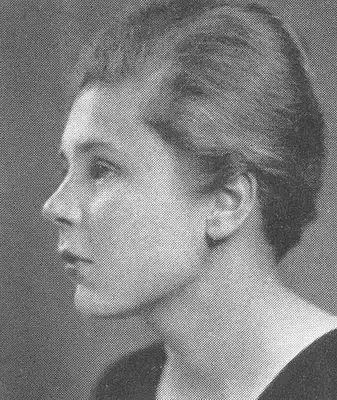
Elizabeth Bishop
Manners
For a Child of 1918
My grandfather said to me
as we sat on the wagon seat,
"Be sure to remember to always
speak to everyone you meet."
We met a stranger on foot.
My grandfather's whip tapped his hat.
"Good day, sir. Good day. A fine day."
And I said it and bowed where I sat.
Then we overtook a boy we knew
with his big pet crow on his shoulder.
"Always offer everyone a ride;
don't forget that when you get older,"
my grandfather said. So Willy
climbed up with us, but the crow
gave a "Caw!" and flew off. I was worried.
How would he know where to go?
But he flew a little way at a time
from fence post to fence post, ahead;
and when Willy whistled he answered.
"A fine bird," my grandfather said,
"and he's well brought up. See, he answers
nicely when he's spoken to.
Man or beast, that's good manners.
Be sure that you both always do."
When automobiles went by,
the dust hid the people's faces,
but we shouted "Good day! Good day!
Fine day!" at the top of our voices.
When we came to Hustler Hill,
he said that the mare was tired,
so we all got down and walked,
as our good manners required.
763
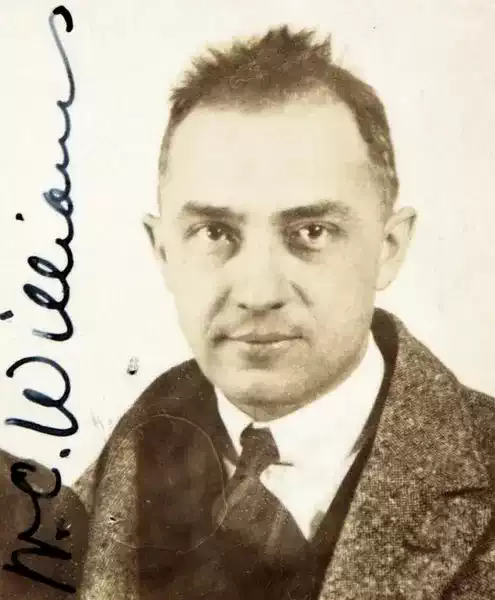
William Carlos Williams
The Last Words of My English Grandmother
There were some dirty plates
and a glass of milk
beside her on a small table
near the rank, disheveled bed--
Wrinkled and nearly blind
she lay and snored
rousing with anger in her tones
to cry for food,
Gimme something to eat--
They're starving me--
I'm all right--I won't go
to the hospital.
No, no, no
Give me something to eat!
Let me take you
to the hospital, I said
and after you are well
you can do as you please.
She smiled, Yes
you do what you please first
then I can do what I please--
Oh, oh, oh! she cried
as the ambulance men lifted
her to the stretcher--
Is this what you call
making me comfortable?
By now her mind was clear--
Oh you think you're smart
you young people,
she said, but I'll tell you
you don't know anything.
Then we started.
On the way
we passed a long row
of elms. She looked at them
awhile out of
the ambulance window and said,
What are all those
fuzzy looking things out there?
Trees?Well, I'm tired
of them and rolled her head away.
723

Henry Wadsworth Longfellow
The Song Of Hiawatha XIV: Picture-Writing
In those days said Hiawatha,
'Lo! how all things fade and perish!
From the memory of the old men
Pass away the great traditions,
The achievements of the warriors,
The adventures of the hunters,
All the wisdom of the Medas,
All the craft of the Wabenos,
All the marvellous dreams and visions
Of the Jossakeeds, the Prophets!
'Great men die and are forgotten,
Wise men speak; their words of wisdom
Perish in the ears that hear them,
Do not reach the generations
That, as yet unborn, are waiting
In the great, mysterious darkness
Of the speechless days that shall be!
'On the grave-posts of our fathers
Are no signs, no figures painted;
Who are in those graves we know not,
Only know they are our fathers.
Of what kith they are and kindred,
From what old, ancestral Totem,
Be it Eagle, Bear, or Beaver,
They descended, this we know not,
Only know they are our fathers.
'Face to face we speak together,
But we cannot speak when absent,
Cannot send our voices from us
To the friends that dwell afar off;
Cannot send a secret message,
But the bearer learns our secret,
May pervert it, may betray it,
May reveal it unto others.'
Thus said Hiawatha, walking
In the solitary forest,
Pondering, musing in the forest,
On the welfare of his people.
From his pouch he took his colors,
Took his paints of different colors,
On the smooth bark of a birch-tree
Painted many shapes and figures,
Wonderful and mystic figures,
And each figure had a meaning,
Each some word or thought suggested.
Gitche Manito the Mighty,
He, the Master of Life, was painted
As an egg, with points projecting
To the four winds of the heavens.
Everywhere is the Great Spirit,
Was the meaning of this symbol.
Gitche Manito the Mighty,
He the dreadful Spirit of Evil,
As a serpent was depicted,
As Kenabeek, the great serpent.
Very crafty, very cunning,
Is the creeping Spirit of Evil,
Was the meaning of this symbol.
Life and Death he drew as circles,
Life was white, but Death was darkened;
Sun and moon and stars he painted,
Man and beast, and fish and reptile,
Forests, mountains, lakes, and rivers.
For the earth he drew a straight line,
For the sky a bow above it;
White the space between for daytime,
Filled with little stars for night-time;
On the left a point for sunrise,
On the right a point for sunset,
On the top a point for noontide,
And for rain and cloudy weather
Waving lines descending from it.
Footprints pointing towards a wigwam
Were a sign of invitation,
Were a sign of guests assembling;
Bloody hands with palms uplifted
Were a symbol of destruction,
Were a hostile sign and symbol.
All these things did Hiawatha
Show unto his wondering people,
And interpreted their meaning,
And he said: 'Behold, your grave-posts
Have no mark, no sign, nor symbol,
Go and paint them all with figures;
Each one with its household symbol,
With its own ancestral Totem;
So that those who follow after
May distinguish them and know them.'
And they painted on the grave-posts
On the graves yet unforgotten,
Each his own ancestral Totem,
Each the symbol of his household;
Figures of the Bear and Reindeer,
Of the Turtle, Crane, and Beaver,
Each inverted as a token
That the owner was departed,
That the chief who bore the symbol
Lay beneath in dust and ashes.
And the Jossakeeds, the Prophets,
The Wabenos, the Magicians,
And the Medicine-men, the Medas,
Painted upon bark and deer-skin
Figures for the songs they chanted,
For each song a separate symbol,
Figures mystical and awful,
Figures strange and brightly colored;
And each figure had its meaning,
Each some magic song suggested.
The Great Spirit, the Creator,
Flashing light through all the heaven;
The Great Serpent, the Kenabeek,
With his bloody crest erected,
Creeping, looking into heaven;
In the sky the sun, that listens,
And the moon eclipsed and dying;
Owl and eagle, crane and hen-hawk,
And the cormorant, bird of magic;
Headless men, that walk the heavens,
Bodies lying pierced with arrows,
Bloody hands of death uplifted,
Flags on graves, and great war-captains
Grasping both the earth and heaven!
Such as these the shapes they painted
On the birch-bark and the deer-skin;
Songs of war and songs of hunting,
Songs of medicine and of magic,
All were written in these figures,
For each figure had its meaning,
Each its separate song recorded.
Nor forgotten was the Love-Song,
The most subtle of all medicines,
The most potent spell of magic,
Dangerous more than war or hunting!
Thus the Love-Song was recorded,
Symbol and interpretation.
First a human figure standing,
Painted in the brightest scarlet;
`T Is the lover, the musician,
And the meaning is, 'My painting
Makes me powerful over others.'
Then the figure seated, singing,
Playing on a drum of magic,
And the interpretation, 'Listen!
`T Is my voice you hear, my singing!'
Then the same red figure seated
In the shelter of a wigwam,
And the meaning of the symbol,
'I will come and sit beside you
In the mystery of my passion!'
Then two figures, man and woman,
Standing hand in hand together
With their hands so clasped together
That they seemed in one united,
And the words thus represented
Are, 'I see your heart within you,
And your cheeks are red with blushes!'
Next the maiden on an island,
In the centre of an Island;
And the song this shape suggested
Was, 'Though you were at a distance,
Were upon some far-off island,
Such the spell I cast upon you,
Such the magic power of passion,
I could straightway draw you to me!'
Then the figure of the maiden
Sleeping, and the lover near her,
Whispering to her in her slumbers,
Saying, 'Though you were far from me
In the land of Sleep and Silence,
Still the voice of love would reach you!'
And the last of all the figures
Was a heart within a circle,
Drawn within a magic circle;
And the image had this meaning:
'Naked lies your heart before me,
To your naked heart I whisper!'
Thus it was that Hiawatha,
In his wisdom, taught the people
All the mysteries of painting,
All the art of Picture-Writing,
On the smooth bark of the birch-tree,
On the white skin of the reindeer,
On the grave-posts of the village.
634

Lord Byron
Oscar Of Alva: A Tale
How sweetly shines through azure skies,
The lamp of heaven on Lora's shore;
Where Alva's hoary turrets rise,
And hear the din of arms no more!
But often has yon rolling moon
On Alva's casques of silver play'd;
And view'd at midnight's silent noon,
Her chief's in gleaming mail array'd:
And on the crimson'd rocks beneath,
Which scowl o'er ocean's sullen flow,
Pale in the scatter'd runks of death,
She saw the gasping warrior low;
While many an eye which ne'er again
Could mark the rising orb of day,
T'urn'd feebly from the gory plain,
Beheld in death her fading ray.
Once to those eyes the lamp of Love,
They blest her dear propitious light;
But now she glimmer'd from above,
A sad, funereal torch of night.
Faded is Alva's noble race,
And gray her towers are seen afar;
No more her heroes urge the chase,
Or roll the crimson tide of war.
But who was last of Alva's clan?
Why grows the moss on Alva's stone?
Her towers resound no steps of man,
They echo to the gale alone.
And when that gale is fierce and high,
A sound is heard in yonder hall;
It rises hoarsely through the sky,
And vibrates o'er the mould'ring wall.
Yes, when the eddying tempest sighs,
It shakes the shield of Oscar brave;
But there no more his banners rise,
No more his plumes of sable wave.
Fair shone the sun on Oscar's birth,
When Angus hail'd his eldest born
The vassals round their chieftain's hearth
Crowd to applaud the happy morn.
They feast upon the mountain deer,
The pibroch raised its piercing note;
To gladden more their highland cheer,
The strains in martial numbers float:
And they who heard the warnotes
wild
Hoped that one day the pibroch's strain
Should play belore the hero's child
While he should lead the tartan train.
Another year is qulckly past,
And Angus hails another son;
His natal day is like the last,
Nor soon the jocund feast was done.
Taught by their sire to bend the bow,
On Alva's dusky hills of wind,
The boys in childhood chased the roe,
And left their hounds in speed behind.
But ere their years of youth are o'er,
They mingle in the ranks of war;
They lightly wheel the bright claymore
And send the whistling arrow far.
Dark was the flow of Oscar's hair,
Wildly it stream'd along the gale;
But Allan's locks were bright and fair,
And pensive seem'd his cheek, and pale.
But Oscar own'd a hero's soul,
His dark eye shone through beams of truth;
Allan had early learn'd control,
And smooth his words had been from youth.
Both, both were brave; the Saxon spear
Was shiver'd oft beneath their steel;
And Oscar's bosom scorn'd to fear,
But Oscar's bosom knew to feel;
While Allan's soul belied his form,
Unworthy with such charms to dwell:
Keen as the lightning of the storm,
On foe, his deadly vengeance fell.
From high Southannon's distant tower
Arrived a young and noble dame;
With Kenneth's lands to form her dower,
Glenalvon's blueeyed
daughter came;
And Oscar claim'd the beauteous bride,
And Angus on his Oscar srniled:
It soothed the father's feudal pride
Thus to obtain Glenalvon's child.
Hark to the pibroch's pleasing note!
Hark to the swelling nuptial song!
In joyous strains the voices float,
And still the choral peal prolong.
See how the heroes' bloodred
plumes
Assembled wave in Alva's hall;
Each youth his varied plaid assumes,
Attending on thir chieftain's call.
It is not war their aid demands,
The pibroch plays the song of peace;
To Oscar's nuptials throng the bands,
Nor yet the sounds of pleasure cease.
But where is Oscar? sure 'tis late:
Is this a bridegroom's ardent flame?
While thronging guests and ladies wait,
Nor Oscar nor his brother came.
At length young Allan join'd the bride;
'Why comes not Oscar?' Angus said:
Is he not here?' the youth replied;
'With me he roved not o'er the glade:
'Perchance, forgetful of the day,
'Tis his to chase the bounding roe;
Or ocean's waves prolong his stay;
Yet Oscar's bark is seldom slow.'
'Oh, no!' the anguish'd Sire rejoin'd,
'Nor chase nor wave, my boy delay;
Would he to Mora seem unkind?
Would aught to her impede his way?
'Oh, search, ye chiefs! oh, search around!
Allan, with these through Alva fly;
Till Oscar, till my son is found,
Haste, haste, nor dare attempt reply.'
All is confusion — through the vale
The name of Oscar hoarsely rings,
It rises on the murmuring gale,
Till night expands her dusky wings;
It breaks the stillness of the night,
But echoes through her shades in vain;
It sounds through morning's misty light,
But Oscar comes not o'er the plain.
Three days,three sleepless nights, the Chief
For Oscar search'd each mountaln cave:
Then hope is lost; in boundless grief,
His locks in graytorn
ringlets wave.
'Oscar! my son! thou God of heaven,
Restore the prop of sinking age!
Or if that hope no more is given,
Yield his assassin to my rage.
'Yes, on some desert rocky shore
My Oscar's whiten'd bones must lie;
Then grant, thou God! I ask no more,
With him his frantic sire may die!
'Yet he may live, — away, despalr!
Be calm, my soul! he yet may live;
T'arraign my fate, my voice forbear!
O God! my impious prayer forgive.
'What, if he live for me no more,
I sink forgotten in the dust,
The hope of Alva's age is o'er:
Alas! can pangs like these be just?'
Thus did the hapless parent mourn,
Till Time, which soothes severest woe,
Had bade serenity return
And made the teardrop
cease to flow.
For still some latent hope survived
That Oscar might once more appear;
His hope now droop'd and now revived,
Till Time had told a tedious year.
Days roll'd along, the orb of light
Again had run his destined race;
No Oscar bless'd his father's sight,
And sorrow left a fainter trace.
For youthful Allan still remain'd,
And now his father's only joy:
And Mora's heart was quickly gain'd,
For beauty crown'd the fairhair'd
boy.
She thought that Oscar low was laid,
And Allan's face was wondrous fair;
If Oscar lived, some other maid
Had clairn'd his faithless bosom's care.
And Angus said, if one year more
In fruitless hope was pass'd away,
His fondest scruples should be o'er,
And he would name their nuptial day.
Slow roll'd the moons, but blest at last
Arrived the dearly destined morn
The year of anxious trembling past,
What smiles the lovers' cheeks adorn!
Hark to the pibroch's pleasing note!
Hark to the swelling nuptial song!
In joyous strains the voices float,
And still the choral peal prolong.
Again the clan, in festive crowd,
Throng through the gate of Alva's hall;
The sounds of mirth reecho
loud,
And all their former joy recall.
But who is he, whose darken'd brow
Glooms in the midst of general mirth?
Before his eyes' far fiercer glow
The blue flames curdle o'er the hearth.
Dark is the robe which wraps his form,
And tall his plume of gory red;
His voice is like the rising storm,
But light and trackless is his tread.
'Tis noon of night, the pledge goes round,
The bridegroom's health is deeply quaff'd;
With shouts the vaulted roofs resound,
And all combine to hail the draught.
Sudden the strangerchief
arose,
And all the clamorous crowd are hush'd;
And Angus' cheek with wonder glows,
And Mora's tender bosom blush'd
'Old rnan!'he cried,'this pledge is done;
Thou saw'st 'twas duly drank by me;
It hail'd the nuptials of thy son:
Now will I claim a pledge from thee.
'While all around is mirth and joy,
To bless thy Allan's happy lot,
Say, hadst thou ne'er another boy?
Say, why should Oscar be forgot?'
'Alas!' the hapless sire replied,
The big tear starting as he spoke
'When Oscar left my hail, or died,
This aged heart was almost broke,
'Thrice has the earth revolved her course
Since Oscar's form has bless'd my sight;
And Allan is my last resource,
Since martial Oscar's death or flight.'
'Tis well,' replied the stranger stern,
And fiercely flash'd his rolling eye;
'Thy Oscar's fate I fain would learn;
Perhaps the hero did not die.
'Perhaps, if those whom most he loved
Would call, thy Oscar might return;
Perchance the chief has only roved;
For him thy beltane yet may burn.
'Fill high the bowl the table round,
We will not climb the pledge by stealth;
With wine let every cup be crown'd
Pledge me departed Oscar's health.'
'With all my soul,' old Angus said,
And fill'd his goblet to the brim:
'Here's to my boy! alive or dead'
I ne'er shall find a son like him'
'Bravely. old man this health has sped;
But why does Allan trembling stand?
Come, drink remembrance of the dead,
And raise thy cup with firmer hand.'
The crimson glow of Allan's face
Was turn'd at once to ghastly hue;
The drops of death each other chase
Adown in agonizing dew.
Thrice did he raise the goblet high,
And thrice his lips refused to taste;
For thrice he caught the stranger's eye
On his with deadly fury placed.
'And is it thus a brother's hails
A brother's fond remembrance here?
If thus affection's strength prevails'
What might we not expect from fear?'
Roused by the sneer, he raised the bowl,
'Would Oscar now could share our mirth!'
Internal fear appall'd his soul;
He said and dash'd the cap to earth,
'Tis he! I hear my murderer's voice!'
Loud shrieks a darkly gleaming form.
'A murderer's voice!' the roof replies,
And deeply swells the bursting storm,
The tapers wink, the chieftains shrink,
The stranger's gone, — amidst the crew,
A form was seen in tartan green,
And tall the shade terrific grew.
His waist was bound with a broad belt round,
His plume of sable stream'd on high;
But his breast was bare, with the red wounds there,
And fix'd was the glare of his glassy eye.
And thrice he smiled, with his eyes so wild,
On Angus bending low the knee;
And thrice he frown'd on a chief on the ground
Whom shivering crowds with horror see
The bolts loud roll from pole to pole
The thunders through the welkin ring,
And the gleaming form, through the mist of the storm,
Was borne on high by the whirlwind's wing
Cold was the feast, the revel ceased.
Who lies upon the stony floor?
Oblivion press'd old Angus' breast,
At length his lifepulse
throbs once more.
'Away, away! let the leech essay
To pour the light on Allan's eyes;'
His sand is done, – his race is run –
Oh! never more shall Allan rise!
But Oscar's breast is cold as clay,
His locks are lifted by the gale;
And Allan's barbed arrow lay
With him In dark Glentanar's vale.
And whence the dreadful stranger came,
Or who, no mortal wight can tell;
But no one doubts the form of flame,
For Alva's sons knew Oscar well.
Ambition nerved young Allan's hand,
Exulting demons wing'd his dart;
While Envy waved her burnng brand,
And pour'd her venom round his heart.
Swift is the shaft from Allan's bow;
Whose streaming lifeblood
stains his side?
Dark Oscar's sable crest is low,
The dart has drunk his vital tide.
And Mora's eyes could Allan move,
She bade his wounded pride rebel:
Alas! that eyes which beam'd with love
Should urge the soul to deeds of hell.
Lo! seest thou not a lonely tomb
Which rises o'er a warrior dead?
It glimmers through the twilight gloom;
Oh! that is Allan's nuptial bed.
Far distant far, the noble grave
Which held his clan's great ashes stood;
And o'er his corse no banners wave,
For they were stain'd with kindred blood.
What minstrel gray, what hoary bard,
Shall Allan's deeds on harpstrings
raise?
The song is glory's chief reward,
But who can strike a murderer's praise?
Unstrung, untouch'd, th harp must stand,
No minstrel dare the theme awake;
Guilt would benumb his palsied hand,
His harp in shuddering chords would break.
No lyre of fame, no hallow'd verse,
Shall sound his glories high in air:
A dying father's bitter curse,
A brother's deathgroan
echoes there.
617
Alfred Lord Tennyson
The Princess (part 1)
A prince I was, blue-eyed, and fair in face,
Of temper amorous, as the first of May,
With lengths of yellow ringlet, like a girl,
For on my cradle shone the Northern star.
There lived an ancient legend in our house.
Some sorcerer, whom a far-off grandsire burnt
Because he cast no shadow, had foretold,
Dying, that none of all our blood should know
The shadow from the substance, and that one
Should come to fight with shadows and to fall.
For so, my mother said, the story ran.
And, truly, waking dreams were, more or less,
An old and strange affection of the house.
Myself too had weird seizures, Heaven knows what:
On a sudden in the midst of men and day,
And while I walked and talked as heretofore,
I seemed to move among a world of ghosts,
And feel myself the shadow of a dream.
Our great court-Galen poised his gilt-head cane,
And pawed his beard, and muttered 'catalepsy'.
My mother pitying made a thousand prayers;
My mother was as mild as any saint,
Half-canonized by all that looked on her,
So gracious was her tact and tenderness:
But my good father thought a king a king;
He cared not for the affection of the house;
He held his sceptre like a pedant's wand
To lash offence, and with long arms and hands
Reached out, and picked offenders from the mass
For judgment.
Now it chanced that I had been,
While life was yet in bud and blade, bethrothed
To one, a neighbouring Princess: she to me
Was proxy-wedded with a bootless calf
At eight years old; and still from time to time
Came murmurs of her beauty from the South,
And of her brethren, youths of puissance;
And still I wore her picture by my heart,
And one dark tress; and all around them both
Sweet thoughts would swarm as bees about their queen.
But when the days drew nigh that I should wed,
My father sent ambassadors with furs
And jewels, gifts, to fetch her: these brought back
A present, a great labour of the loom;
And therewithal an answer vague as wind:
Besides, they saw the king; he took the gifts;
He said there was a compact; that was true:
But then she had a will; was he to blame?
And maiden fancies; loved to live alone
Among her women; certain, would not wed.
That morning in the presence room I stood
With Cyril and with Florian, my two friends:
The first, a gentleman of broken means
(His father's fault) but given to starts and bursts
Of revel; and the last, my other heart,
And almost my half-self, for still we moved
Together, twinned as horse's ear and eye.
Now, while they spake, I saw my father's face
Grow long and troubled like a rising moon,
Inflamed with wrath: he started on his feet,
Tore the king's letter, snowed it down, and rent
The wonder of the loom through warp and woof
From skirt to skirt; and at the last he sware
That he would send a hundred thousand men,
And bring her in a whirlwind: then he chewed
The thrice-turned cud of wrath, and cooked his spleen,
Communing with his captains of the war.
At last I spoke. 'My father, let me go.
It cannot be but some gross error lies
In this report, this answer of a king,
Whom all men rate as kind and hospitable:
Or, maybe, I myself, my bride once seen,
Whate'er my grief to find her less than fame,
May rue the bargain made.' And Florian said:
'I have a sister at the foreign court,
Who moves about the Princess; she, you know,
Who wedded with a nobleman from thence:
He, dying lately, left her, as I hear,
The lady of three castles in that land:
Through her this matter might be sifted clean.'
And Cyril whispered: 'Take me with you too.'
Then laughing 'what, if these weird seizures come
Upon you in those lands, and no one near
To point you out the shadow from the truth!
Take me: I'll serve you better in a strait;
I grate on rusty hinges here:' but 'No!'
Roared the rough king, 'you shall not; we ourself
Will crush her pretty maiden fancies dead
In iron gauntlets: break the council up.'
But when the council broke, I rose and past
Through the wild woods that hung about the town;
Found a still place, and plucked her likeness out;
Laid it on flowers, and watched it lying bathed
In the green gleam of dewy-tasselled trees:
What were those fancies? wherefore break her troth?
Proud looked the lips: but while I meditated
A wind arose and rushed upon the South,
And shook the songs, the whispers, and the shrieks
Of the wild woods together; and a Voice
Went with it, 'Follow, follow, thou shalt win.'
Then, ere the silver sickle of that month
Became her golden shield, I stole from court
With Cyril and with Florian, unperceived,
Cat-footed through the town and half in dread
To hear my father's clamour at our backs
With Ho! from some bay-window shake the night;
But all was quiet: from the bastioned walls
Like threaded spiders, one by one, we dropt,
And flying reached the frontier: then we crost
To a livelier land; and so by tilth and grange,
And vines, and blowing bosks of wilderness,
We gained the mother city thick with towers,
And in the imperial palace found the king.
His name was Gama; cracked and small his voice,
But bland the smile that like a wrinkling wind
On glassy water drove his cheek in lines;
A little dry old man, without a star,
Not like a king: three days he feasted us,
And on the fourth I spake of why we came,
And my bethrothed. 'You do us, Prince,' he said,
Airing a snowy hand and signet gem,
'All honour. We remember love ourselves
In our sweet youth: there did a compact pass
Long summers back, a kind of ceremony--
I think the year in which our olives failed.
I would you had her, Prince, with all my heart,
With my full heart: but there were widows here,
Two widows, Lady Psyche, Lady Blanche;
They fed her theories, in and out of place
Maintaining that with equal husbandry
The woman were an equal to the man.
They harped on this; with this our banquets rang;
Our dances broke and buzzed in knots of talk;
Nothing but this; my very ears were hot
To hear them: knowledge, so my daughter held,
Was all in all: they had but been, she thought,
As children; they must lose the child, assume
The woman: then, Sir, awful odes she wrote,
Too awful, sure, for what they treated of,
But all she is and does is awful; odes
About this losing of the child; and rhymes
And dismal lyrics, prophesying change
Beyond all reason: these the women sang;
And they that know such things--I sought but peace;
No critic I--would call them masterpieces:
They mastered me. At last she begged a boon,
A certain summer-palace which I have
Hard by your father's frontier: I said no,
Yet being an easy man, gave it: and there,
All wild to found an University
For maidens, on the spur she fled; and more
We know not,--only this: they see no men,
Not even her brother Arac, nor the twins
Her brethren, though they love her, look upon her
As on a kind of paragon; and I
(Pardon me saying it) were much loth to breed
Dispute betwixt myself and mine: but since
(And I confess with right) you think me bound
In some sort, I can give you letters to her;
And yet, to speak the truth, I rate your chance
Almost at naked nothing.'
Thus the king;
And I, though nettled that he seemed to slur
With garrulous ease and oily courtesies
Our formal compact, yet, not less (all frets
But chafing me on fire to find my bride)
Went forth again with both my friends. We rode
Many a long league back to the North. At last
From hills, that looked across a land of hope,
We dropt with evening on a rustic town
Set in a gleaming river's crescent-curve,
Close at the boundary of the liberties;
There, entered an old hostel, called mine host
To council, plied him with his richest wines,
And showed the late-writ letters of the king.
He with a long low sibilation, stared
As blank as death in marble; then exclaimed
Averring it was clear against all rules
For any man to go: but as his brain
Began to mellow, 'If the king,' he said,
'Had given us letters, was he bound to speak?
The king would bear him out;' and at the last--
The summer of the vine in all his veins-'
No doubt that we might make it worth his while.
She once had past that way; he heard her speak;
She scared him; life! he never saw the like;
She looked as grand as doomsday and as grave:
And he, he reverenced his liege-lady there;
He always made a point to post with mares;
His daughter and his housemaid were the boys:
The land, he understood, for miles about
Was tilled by women; all the swine were sows,
And all the dogs'-
But while he jested thus,
A thought flashed through me which I clothed in act,
Remembering how we three presented Maid
Or Nymph, or Goddess, at high tide of feast,
In masque or pageant at my father's court.
We sent mine host to purchase female gear;
He brought it, and himself, a sight to shake
The midriff of despair with laughter, holp
To lace us up, till, each, in maiden plumes
We rustled: him we gave a costly bribe
To guerdon silence, mounted our good steeds,
And boldly ventured on the liberties.
We followed up the river as we rode,
And rode till midnight when the college lights
Began to glitter firefly-like in copse
And linden alley: then we past an arch,
Whereon a woman-statue rose with wings
From four winged horses dark against the stars;
And some inscription ran along the front,
But deep in shadow: further on we gained
A little street half garden and half house;
But scarce could hear each other speak for noise
Of clocks and chimes, like silver hammers falling
On silver anvils, and the splash and stir
Of fountains spouted up and showering down
In meshes of the jasmine and the rose:
And all about us pealed the nightingale,
Rapt in her song, and careless of the snare.
There stood a bust of Pallas for a sign,
By two sphere lamps blazoned like Heaven and Earth
With constellation and with continent,
Above an entry: riding in, we called;
A plump-armed Ostleress and a stable wench
Came running at the call, and helped us down.
Then stept a buxom hostess forth, and sailed,
Full-blown, before us into rooms which gave
Upon a pillared porch, the bases lost
In laurel: her we asked of that and this,
And who were tutors. 'Lady Blanche' she said,
'And Lady Psyche.' 'Which was prettiest,
Best-natured?' 'Lady Psyche.' 'Hers are we,'
One voice, we cried; and I sat down and wrote,
In such a hand as when a field of corn
Bows all its ears before the roaring East;
'Three ladies of the Northern empire pray
Your Highness would enroll them with your own,
As Lady Psyche's pupils.'
This I sealed:
The seal was Cupid bent above a scroll,
And o'er his head Uranian Venus hung,
And raised the blinding bandage from his eyes:
I gave the letter to be sent with dawn;
And then to bed, where half in doze I seemed
To float about a glimmering night, and watch
A full sea glazed with muffled moonlight, swell
On some dark shore just seen that it was rich.
As through the land at eve we went,
And plucked the ripened ears,
We fell out, my wife and I,
O we fell out I know not why,
And kissed again with tears.
And blessings on the falling out
That all the more endears,
When we fall out with those we love
And kiss again with tears!
For when we came where lies the child
We lost in other years,
There above the little grave,
O there above the little grave,
We kissed again with tears.
576
Rudyard Kipling
Song of the Fifth River
Where first by Eden Tree
The Four Great Rivers ran,
To each was appointed a Man
Her Prince and Ruler to be.
But after this was ordained
(The ancient legends' tell),
There came dark Israel,
For whom no River remained.
Then He Whom the Rivers obey
Said to him: "Fling on the ground
A handful of yellow clay,
And a Fifth Great River shall run,
Mightier than these Four,
In secret the Earth around;
And Her secret evermore,
Shall be shown to thee and thy Race."
So it was said and done.
And, deep in the veins of Earth,
And, fed by a thousand springs
That comfort the market-place,
Or sap the power of King,
The Fifth Great River had birth,
Even as it was foretold--
The Secret River of Gold!
And Israel laid down
His sceptre and his crown,
To brood on that River bank
Where the waters flashed and sank
And burrowed in earth and fell
And bided a season below,
For reason that none might know,
Save only Israel
He is Lord of the Last--
The Fifth, most wonderful, Flood.
He hears Her thunder past
And Her Song is in his blood.
He can foresay: "She will fall,"
For he knows which fountain dries
Behind which desert-belt
A thousand leagues to the South.
He can foresay: "She will rise."
He knows what far snows melt
Along what mountain-wall
A thousand leagues to the North,
He snuffs the coming drouth
As he snuffs the coming rain,
He knows what each will bring forth,
And turns it to his gain.
A Ruler without a Throne,
A Prince without a Sword,
Israel follows his quest.
In every land a guest,
Of many lands a lord,
In no land King is he.
But the Fifth Great River keeps
The secret of Her deeps
For Israel alone,
As it was ordered to be.
567

Ella Wheeler Wilcox
The Little Bird
The father sits in his lonely room,
Outside sings a little bird.
But the shadows are laden with death and gloom,
And the song is all unheard.
The father's heart is the home of sorrow;
His breast is the seat of grief!
Who will hunt the paper for him on the morrow
Who will bring him sweet relief
From wearing his thoughts with innocent chat?
Who will find his slippers and bring his hat?
Still the little bird sings
And flutters her wings;
The refrain of her song is, 'Gos knows best!
He giveth His little children rest.'
What can she know of these sorrowful things?
The mother sits by the desolate hearth,
And weeps o'er a vacant chair.
Sorrow has taken the place of mirth Joy
has resigned to despair.
Bitter the cup the mother is drinking,
So bitter the tear-drops start.
Sad are the thoughts the mother is thinking
Oh, they will break her heart.
Who will on errands, and romp and play,
And mimic the robins the livelong day?
Still the little bird sings
And flutters her wings;
'God reigns in heaven, and He will keep
The dear little children that fall asleep.'
What can she know of these sorrowful things?
Grandmother sits by the open door,
And her tears fall down like rain.
Was there ever a household so sad before,
Will it ever be glad agaiin?
Many unwelcome thoughts come flitting
Into the granddame's mind.
Who will take up the stitches she drops in knitting?
Who will her snuff-box find?
Who'll bring her glasses, and wheel her chair,
And tie her kerchief, and comb her hair?
Still the little bird sings
And flutters her wings;
'God above doeth all things well,
I sang it the same when my nestlings fell.'
Ah! this knows the bird of these sorrowful things.
547
John Milton
Sonnet 18
XVIII
Cyriack, whose Grandsire on the Royal Bench
Of Brittish Themis, with no mean applause
Pronounc't and in his volumes taught our Lawes,
Which others at their Barr so often wrench:
To day deep thoughts resolve with me to drench
In mirth, that after no repenting drawes;
Let Euclid rest and Archimedes pause,
And what the Swede intend, and what the French.
To measure life, learn thou betimes, and know
Toward solid good what leads the nearest way;
For other things mild Heav'n a time ordains,
And disapproves that care, though wise in show,
That with superfluous burden loads the day,
And when God sends a cheerful hour, refrains.
542
John Milton
Sonnet X: Daughter to that good Earl
To the Lady Margaret Ley
Daughter to that good Earl, once President
Of England's Council, and her Treasury,
Who lived in both, unstained with gold or fee,
And left them both, more in himself content,
Till sad the breaking of that Parliament
Broke him, as that dishonest victory
At Chaeronea, fatal to liberty,
Killed with report that old man eloquent.
Though later born than to have known the days
Wherein your father flourished, yet by you,
Madam, methinks I see him living yet;
So well your words his noble virtues praise,
That all both judge you to relate them true,
And to possess them, honoured Margaret.
518
John Milton
Sonnet 10
X
Daughter to that good Earl, once President
Of Englands Counsel, and her Treasury,
Who liv'd in both, unstain'd with gold or fee,
And left them both, more in himself content,
Till the sad breaking of that Parlament
Broke him, as that dishonest victory
At Chaeronea, fatal to liberty
Kil'd with report that Old man eloquent,
Though later born, then to have known the dayes
Wherin your Father flourisht, yet by you
Madam, me thinks I see him living yet;
So well your words his noble vertues praise,
That all both judge you to relate them true,
And to possess them, Honour'd Margaret.
Note: Camb. autograph supplies title, To the Lady Margaret
Ley.
519
Arthur Rimbaud
The Sideboard
It is a high, carved sideboard made of oak.
The dark old wood, like old folks, seems kind;
Its drawers are open, and its odours soak
The darkness with the scent of strong old wine.
Its drawers are full, a final resting place
For scented, yellowed linens, scraps of clothes
Foe wives or children, worn and faded bows,
Grandmothers' collars made of figured lace;
There you will find old medals, locks of grey
Or yellow hair, and portraits, and a dried bouquet
Whose perfume mingles with the smell of fruit.
-O sideboard of old, you know a great deal more
And could tell us your tales, yet you stand mute
As we slowly open your old dark door.
496
Alfred Lord Tennyson
The Grandmother
I.
And Willy, my eldest-born, is gone, you say, little Anne?
Ruddy and white, and strong on his legs, he looks like a man.
And Willy's wife has written: she never was over-wise,
Never the wife for Willy: he would n't take my advice.
II.
For, Annie, you see, her father was not the man to save,
Had n't a head to manage, and drank himself into his grave.
Pretty enough, very pretty! but I was against it for one.
Eh!--but he would n't hear me--and Willy, you say, is gone.
III.
Willy, my beauty, my eldest-born, the flower of the flock;
Never a man could fling him: for Willy stood like a rock.
`Here's a leg for a babe of a week!' says doctor; and he would be bound,
There was not his like that year in twenty parishes round.
IV.
Strong of his hands, and strong on his legs, but still of his tongue!
I ought to have gone before him: I wonder he went so young.
I cannot cry for him, Annie: I have not long to stay;
Perhaps I shall see him the sooner, for he lived far away.
V.
Why do you look at me, Annie? you think I am hard and cold;
But all my children have gone before me, I am so old:
I cannot weep for Willy, nor can I weep for the rest;
Only at your age, Annie, I could have wept with the best.
VI.
For I remember a quarrel I had with your father, my dear,
All for a slanderous story, that cost me many a tear.
I mean your grandfather, Annie: it cost me a world of woe,
Seventy years ago, my darling, seventy years ago.
VII.
For Jenny, my cousin, had come to the place, and I knew right well
That Jenny had tript in her time: I knew, but I would not tell.
And she to be coming and slandering me, the base little liar!
But the tongue is a fire as you know, my dear, the tongue is a fire.
VIII.
And the parson made it his text that week, and he said likewise,
That a lie which is half a truth is ever the blackest of lies,
That a lie which is all a lie may be met and fought with outright,
But a lie which is part a truth is a harder matter to fight.
IX.
And Willy had not been down to the farm for a week and a day;
And all things look'd half-dead, tho' it was the middle of May.
Jenny, to slander me, who knew what Jenny had been!
But soiling another, Annie, will never make oneself clean.
X.
And I cried myself well-nigh blind, and all of an evening late
I climb'd to the top of the garth, and stood by the road at the gate.
The moon like a rick on fire was rising over the dale,
And whit, whit, whit, in the bush beside me chirrupt the nightingale.
XI.
All of a sudden he stopt: there past by the gate of the farm,
Willy,--he did n't see me,--and Jenny hung on his arm.
Out into the road I started, and spoke I scarce knew how;
Ah, there's no fool like the old one -- it makes me angry now.
XII.
Willy stood up like a man, and look'd the thing that he meant;
Jenny, the viper, made me a mocking courtesy and went.
And I said, `Let us part: in a hundred years it'll all be the same,
You cannot love me at all, if you love not my good name.'
XIII.
And he turn'd, and I saw his eyes all wet, in the sweet moonshine:
Sweetheart, I love you so well that your good name is mine.
And what do I care for Jane, let her speak of you well of ill;
But marry me out of hand: we two shall be happy still.'
XIV.
`Marry you, Willy!' said I, `but I needs must speak my mind,
And I fear you'll listen to tales, be jealous and hard and unkind.'
But he turn'd and claspt me in his arms, and answer'd, `No, love, no;'
Seventy years ago, my darling, seventy years ago.
XV.
So Willy and I were wedded: I wore a lilac gown;
And the ringers rang with a will, and he gave the ringers a crown.
But the first that ever I bare was dead before he was born,
Shadow and shine is life, little Annie, flower and thorn.
XVI.
That was the first time, too, that ever I thought of death.
There lay the sweet little body that never had drawn a breath.
I had not wept, little Anne, not since I had been a wife;
But I wept like a child that day, for the babe had fought for his life.
XVII.
His dear little face was troubled, as if with anger or pain:
I look'd at the still little body--his trouble had all been in vain.
For Willy I cannot weep, I shall see him another morn:
But I wept like a child for the child that was dead before he was born.
XVIII.
But he cheer'd me, my good man, for he seldom said me nay:
Kind, like a man, was he; like a man, too, would have his way:
Never jealous--not he: we had many a happy year;
And he died, and I could not weep--my own time seem'd so near.
XIX.
But I wish'd it had been God's will that I, too, then could have died:
I began to be tired a little, and fain had slept at his side.
And that was ten years back, or more, if I don't forget:
But as to the children, Annie, they're all about me yet.
XX.
Pattering over the boards, my Annie who left me at two,
Patter she goes, my own little Annie, an Annie like you:
Pattering over the boards, she comes and goes at her will,
While Harry is in the five-acre and Charlie ploughing the hill.
XXI.
And Harry and Charlie, I hear them too--they sing to their team:
Often they come to the door in a pleasant kind of a dream.
They come and sit by my chair, they hover about my bed--
I am not always certain if they be alive or dead.
XXII.
And yet I know for a truth, there's none of them left alive;
For Harry went at sixty, your father at sixty- five:
And Willy, my eldest born, at nigh threescore and ten;
I knew them all as babies, and now they're elderly men.
XXIII.
For mine is a time of peace, it is not often I grieve;
I am oftener sitting at home in my father's farm at eve:
And the neighbors come and laugh and gossip, and so do I;
I find myself often laughing at things that have long gone by.
XXIV.
To be sure the preacher says, our sins should make us sad:
But mine is a time of peace, and there is Grace to be had;
And God, not man, is the Judge of us all when life shall cease;
And in this Book, little Annie, the message is one of Peace.
XXV.
And age is a time of peace, so it be free from pain,
And happy has been my life; but I would not live it again.
I seem to be tired a little, that's all, and long for rest;
Only at your age, Annie, I could have wept with the best.
XXVI.
So Willy has gone, my beauty, my eldest-born, my flower;
But how can I weep for Willy, he has but gone for an hour,--
Gone for a minute, my son, from this room into the next;
I, too, shall go in a minute. What time have I to be vext?
XXVII.
And Willy's wife has written, she never was over-wise.
Get me my glasses, Annie: thank God that I keep my eyes.
There is but a trifle left you, when I shall have past away.
But stay with the old woman now: you cannot have long to stay.
482

William Butler Yeats
The Ballad Of Father O'Hart
GOOD Father John O'Hart
In penal days rode out
To a Shoneen who had free lands
And his own snipe and trout.
In trust took he John's lands;
Sleiveens were all his race;
And he gave them as dowers to his daughters.
And they married beyond their place.
But Father John went up,
And Father John went down;
And he wore small holes in his Shoes,
And he wore large holes in his gown.
All loved him, only the shoneen,
Whom the devils have by the hair,
From the wives, and the cats, and the children,
To the birds in the white of the air.
The birds, for he opened their cages
As he went up and down;
And he said with a smile, 'Have peace now';
And he went his way with a frown.
But if when anyone died
Came keeners hoarser than rooks,
He bade them give over their keening;
For he was a man of books.
And these were the works of John,
When, weeping score by score,
People came into Colooney;
For he'd died at ninety-four.
There was no human keening;
The birds from Knocknarea
And the world round Knocknashee
Came keening in that day.
The young birds and old birds
Came flying, heavy and sad;
Keening in from Tiraragh,
Keening from Ballinafad;
Keening from Inishmurray.
Nor stayed for bite or sup;
This way were all reproved
Who dig old customs up.
443
Rudyard Kipling
The Heritage
Our Fathers in a wondrous age,
Ere yet the Earth was small,
Ensured to us a heritage,
And doubted not at all
That we the children of their heart,
Which then did beat so high,
In later rime should play like part
For our posterity.
A thousand years they steadfast built,
To 'vantage us and ours,
The Walls that were a world's despair,
The sea-constraining Towers:
Yet in their midmost pride they knew,
And unto Kings made known,
Not all from these their strength they drew,
Their faith from brass or stone.
Youth's passion, manhood's fierce intent,
With age's judgment wise,
They spent, and counted not they spent,
At daily sacrifice.
Not lambs alone nor purchased doves .
Or tithe of trader's gold--
Their lives most dear, their dearer loves,
They offered up of old.
Refraining e'en from lawful things,
They bowed the neck to bear
The unadorned yoke that brings
Stark toil and sternest care.
Wherefore through them is Freedom sure;
Wherefore through them we stand,
From all but sloth and pride secure,
In a delightsome land.
Then, fretful, murmur not they gave
So great a charge to keep,
Nor dream that awestruck Time shall save
Their labour while we sleep.
Dear-bought and clear, a thousand year,
Our fathers' title runs.
Make we likewise their sacrifice,
Defrauding not our sons.
438
Lord Byron
A Fragment: When, To Their Airy Hall
When, to their airy hall, my father's voice
Shall call my spirit, joyful in their choice;
When, poised upon the gale, my form shall ride,
Or, dark in mist, descend the mountains side;
Oh! may my shade behold no sculptured urns,
To mark the spot where earth to earth returns!
No lengthen'd scroll, no praiseencumber'd
stone;
My epitaph shall be my name alone:
If that with honour fail to crown my clay,
Oh! may no other fame my deeds repay!
That, only that, shall single out the spot;
By that remember'd, or with that forgot.
410

Johann Wolfgang von Goethe
Ballad Of The Banished And Returning Count
OH, enter old minstrel, thou time-honour'd one!
We children are here in the hall all alone,
The portals we straightway will bar.
Our mother is praying, our father is gone
To the forest, on wolves to make war.
Oh sing us a ballad, the tale then repeat,
'Till brother and I learn it right;
We long have been hoping a minstrel to meet,
For children hear tales with delight.
"At midnight, when darkness its fearful veil weaves,
His lofty and stately old castle he leaves,
But first he has buried his wealth.
What figure is that in his arms one perceives,
As the Count quits the gateway by stealth?
O'er what is his mantle so hastily thrown?
What bears he along in his flight?
A daughter it is, and she gently sleeps on"--
The children they hear with delight.
"The morning soon glimmers. the world is so wide,
In valleys and forests a home is supplied,
The bard in each village is cheer'd.
Thus lives he and wanders, while years onward glide,
And longer still waxes his beard;
But the maiden so fair in his arms grows amain,
'Neath her star all-protecting and bright,
Secured in the mantle from wind and from rain--"
The children they hear with delight.
"And year upon year with swift footstep now steals,
The mantle it fades, many rents it reveals,
The maiden no more it can hold.
The father he sees her, what rapture he feels!
His joy cannot now be controll'd.
How worthy she seems of the race whence she springs,
How noble and fair to the sight!
What wealth to her dearly-loved father she brings!"--
The children they hear with delight.
"Then comes there a princely knight galloping by,
She stretches her hand out, as soon as he's nigh,
But alms he refuses to give.
He seizes her hand, with a smile in his eye:
'Thou art mine!' he exclaims, 'while I live!'
'When thou know'st,' cries the old man, 'the treasure that's
there,
A princess thou'lt make her of right;
Betroth'd be she now, on this spot green and fair--'"
The children they hear with delight.
"So she's bless'd by the priest on the hallowed place,
And she goes with a smiling but sorrowful face,
From her father she fain would not part.
The old man still wanders with ne'er-changing pace,
He covers with joy his sad heart.
So I think of my daughter, as years pass away,
And my grandchildren far from my sight;
I bless them by night, and I bless them by day"--
The children they hear with delight.
He blesses the children: a knocking they hear,
The father it is! They spring forward in fear,
The old man they cannot conceal-"
Thou beggar, wouldst lure, then, my children so dear?
Straight seize him, ye vassals of steel!
To the dungeon most deep, with the fool-hardy knave!"
The mother from far hears the fight;
She hastens with flatt'ring entreaty to crave--
The children they hear with delight.
The vassals they suffer the Bard to stand there,
And mother and children implore him to spare,
The proud prince would stifle his ire,
'Till driven to fury at hearing their prayer,
His smouldering anger takes fire:
"Thou pitiful race! Oh, thou beggarly crew!
Eclipsing my star, once so bright!
Ye'll bring me destruction, ye sorely shall rue!"
The children they hear with affright.
The old man still stands there with dignified mien,
The vassals of steel quake before him, I ween,
The Count's fury increases in power;
"My wedded existence a curse long has been,
And these are the fruits from that flower!
'Tis ever denied, and the saying is true,
That to wed with the base-born is right;
The beggar has borne me a beggarly crew,--"
The children they hear with affright.
"If the husband, the father, thus treats you with scorn,
If the holiest bonds by him rashly are torn,
Then come to your father--to me!
The beggar may gladden life's pathway forlorn,
Though aged and weak he may be.
This castle is mine! thou hast made it thy prey,
Thy people 'twas put me to flight;
The tokens I bear will confirm what I say"--
The children they hear with delight.
"The king who erst govern'd returneth again,
And restores to the Faithful the goods that were ta'en,
I'll unseal all my treasures the while;
The laws shall be gentle, and peaceful the reign"--
The old man thus cries with a smile-
"Take courage, my son! all hath turned out for good,
And each hath a star that is bright,
Those the princess hath borne thee are princely in blood,"--
The children thy hear with delight.
398
Rudyard Kipling
The Veterans
To-day, across our fathers' graves,
The astonished years reveal
The remnant of that desperate host
Which cleansed our East with steel.
Hail and farewell! We greet you here,
With tears that none will scorn--
O Keepers of the House of old,
Or ever we were born!
One service more we dare to ask--
Pray for us, heroes, pray,
That when Fate lays on us our task
We do not shame the Day!
386

Walt Whitman
This Dust Was Once The Man
THIS dust was once the Man,
Gentle, plain, just and resolute--under whose cautious hand,
Against the foulest crime in history known in any land or age,
Was saved the Union of These States.
Gentle, plain, just and resolute--under whose cautious hand,
Against the foulest crime in history known in any land or age,
Was saved the Union of These States.
372
William Butler Yeats
Are You Content?
I CALL on those that call me son,
Grandson, or great-grandson,
On uncles, aunts, great-uncles or great-aunts,
To judge what I have done.
Have I, that put it into words,
Spoilt what old loins have sent?
Eyes spiritualised by death can judge,
I cannot, but I am not content.
He that in Sligo at Drumcliff
Set up the old stone Cross,
That red-headed rector in County Down,
A good man on a horse,
Sandymount Corbets, that notable man
Old William pollexfen,
The smuggler Middleton, Butlers far back,
Half legendary men.
Infirm and aged I might stay
In some good company,
I who have always hated work,
Smiling at the sea,
Or demonstrate in my own life
What Robert Browning meant
By an old hunter talking with Gods;
But I am not content.
355
William Butler Yeats
Responsibilities - Introduction
Pardon, old fathers, if you still remain
Somewhere in ear-shot for the story's end,
Old Dublin merchant "free of the ten and four"
Or trading out of Galway into Spain;
Old country scholar, Robert Emmet's friend,
A hundred-year-old memory to the poor;
Merchant and scholar who have left me blood
That has not passed through any huckster's loin,
Soldiers that gave, whatever die was cast:
A Butler or an Armstrong that withstood
Beside the brackish waters of the Boyne
James and his Irish when the Dutchman crossed;
Old merchant skipper that leaped overboard
After a ragged hat in Biscay Bay;
You most of all, silent and fierce old man,
Because the daily spectacle that stirred
My fancy, and set my boyish lips to say,
"Only the wasteful virtues earn the sun";
Pardon that for a barren passion's sake,
Although I have come close on forty-nine,
I have no child, I have nothing but a book,
Nothing but that to prove your blood and mine.
348

James Whitcomb Riley
How Did You Rest, Last Night?
'How did you rest, last night?'-I've
heard my gran'pap say
Them words a thousand times--that's right--
Jes them words thataway!
As punctchul-like as morning dast
To ever heave in sight
Gran'pap 'ud allus haf to ast-'
How did you rest, last night?'
Us young-uns used to grin,
At breakfast, on the sly,
And mock the wobble of his chin
And eyebrows belt so high
And kind: _'How did you rest, last night?'_
We'd mumble and let on
Our voices trimbled, and our sight
Was dim, and hearin' gone.
* * * * *
Bad as I used to be,
All I'm a-wantin' is
As puore and ca'm a sleep fer me
And sweet a sleep as his!
And so I pray, on Jedgment Day
To wake, and with its light
See _his_ face dawn, and hear him say-'
How did you rest, last night?'
329
James Whitcomb Riley
Grandfather Squeers
'My grandfather Squeers,' said The Raggedy Man,
As he solemnly lighted his pipe and began-
'The most indestructible man, for his years,
And the grandest on earth, was my grandfather Squeers!
'He said, when he rounded his three-score-and-ten,
'I've the hang of it now and can do it again!'
'He had frozen his heels so repeatedly, he
Could tell by them just what the weather would be;
'And would laugh and declare, 'while the _Almanac_ would
Most falsely prognosticate, _he_ never could!'
'Such a hale constitution had grandfather Squeers
That, 'though he'd used '_navy_' for sixty odd years,
'He still chewed a dime's-worth six days of the week,
While the seventh he passed with a chew in each cheek:
'Then my grandfather Squeers had a singular knack
Of sitting around on the small of his back,
'With his legs like a letter Y stretched o'er the grate
Wherein 'twas his custom to ex-pec-tor-ate.
'He was fond of tobacco in _manifold_ ways,
And would sit on the door-step, of sunshiny days,
'And smoke leaf-tobacco he'd raised strictly for
The pipe he'd used all through The Mexican War.'
And The Raggedy Man said, refilling the bowl
Of his own pipe and leisurely picking a coal
From the stove with his finger and thumb, 'You can see
What a tee-nacious habit he's fastened on me!
'And my grandfather Squeers took a special delight
In pruning his corns every Saturday night
'With a horn-handled razor, whose edge he excused
By saying 'twas one that his grandfather used;
'And, though deeply etched in the haft of the same
Was the ever-euphonious Wostenholm's name,
''Twas my grandfather's custom to boast of the blade
As 'A Seth Thomas razor--the best ever made!'
'No Old Settlers' Meeting, or Pioneers' Fair,
Was complete without grandfather Squeers in the chair
'To lead off the programme by telling folks how
'He used to shoot deer where the Court-House stands now'-
'How 'he felt, of a truth, to live over the past,
When the country was wild and unbroken and vast,
''That the little log cabin was just plenty fine
For himself, his companion, and fambly of nine!-
''When they didn't have even a pump, or a tin,
But drunk surface-water, year out and year in,
''From the old-fashioned gourd that was sweeter, by odds,
Than the goblets of gold at the lips of the gods!''
Then The Raggedy Man paused to plaintively say
It was clockin' along to'rds the close of the day--
And he'd _ought_ to get back to his work on the lawn,--
Then dreamily blubbered his pipe and went on:
'His teeth were imperfect--my grandfather owned
That he couldn't eat oysters unless they were 'boned';
'And his eyes were so weak, and so feeble of sight,
He couldn't sleep with them unless, every night,
'He put on his spectacles--all he possessed,--
Three pairs--with his goggles on top of the rest.
'And my grandfather always, retiring at night,
Blew down the lamp-chimney to put out the light;
'Then he'd curl up on edge like a shaving, in bed,
And puff and smoke pipes in his sleep, it is said:
'And would snore oftentimes as the legends relate,
Till his folks were wrought up to a terrible state,-
'Then he'd snort, and rear up, and roll over; and there,
In the subsequent hush they could hear him chew air.
'And so glaringly bald was the top of his head
That many's the time he has musingly said,
'As his eyes journeyed o'er its reflex in the glass,-'
I must set out a few signs of _Keep Off the Grass!_'
'So remarkably deaf was my grandfather Squeers
That he had to wear lightning-rods over his ears
'To even hear thunder--and oftentimes then
He was forced to request it to thunder again.'
326
Page 1
Next