
Beauty

Rabindranath Tagore
The Gardener XVI: Hands Cling to Eyes
Hands cling to hands and eyes linger
on eyes: thus begins the record of our
hearts.
It is the moonlit night of March;
the sweet smell of henna is in the air;
my flute lies on the earth neglected
and your garland of flowers is
unfinished.
This love between you and me is
simple as a song.
Your veil of the saffron colour
makes my eyes drunk.
The jasmine wreath that you wove
me thrills to my heart like praise.
It is a game of giving and withholding,
revealing and screening again;
some smiles and some little shyness,
and some sweet useless struggles.
This love between you and me is
simple as a song.
No mystery beyond the present;
no striving for the impossible; no
shadow behind the charm; no groping
in the depth of the dark.
This love between you and me is
simple as a song.
We do not stray out of all words
into the ever silent; we do not raise
our hands to the void for things
beyond hope.
It is enough what we give and we
get.
We have not crushed the joy to
the utmost to wring from it the wine
of pain.
This love between you and me is
simple as a song.
463

Walt Whitman
Song of Myself, XI
Twenty-eight young men bathe by the shore,
Twenty-eight young men and all so friendly;
Twenty-eight years of womanly life and all so lonesome.
She owns the fine house by the rise of the bank,
She hides handsome and richly drest aft the blinds of the window.
Which of the young men does she like the best?
Ah the homeliest of them is beautiful to her.
Where are you off to, lady? for I see you,
You splash in the water there, yet stay stock still in your room.
Dancing and laughing along the beach came the twenty-ninth bather,
The rest did not see her, but she saw them and loved them.
The beards of the young men glisten'd with wet, it ran from their long
hair,
Little streams pass'd over their bodies.
An unseen hand also pass'd over their bodies,
It descended trembling from their temples and ribs.
The young men float on their backs, their white bellies bulge to the sun,
they do not ask who seizes fast to them,
They do not know who puffs and declines with the pendant and bending
arch,
They do not think whom they souse with spray.
462

Rudyard Kipling
The Birthright
The miracle of our land's speech--so known
And long received, none marvel when 'tis shown!
We have such wealth as Rome at her most pride
Had not or (having) scattered not so wide;
Nor with such arrant prodigality,
Beneath her any pagan's foot let lie...
Lo! Diamond that cost some half their days
To find and t'other half to bring to blaze:
Rubies of every heat, wherethrough we scan
The fiercer and more fiery heart of man:
Emerald that with the uplifted billow vies,
And Sapphires evening remembered skies:
Pearl perfect, as immortal tears must show,
Bred, in deep waters, of a piercing woe;
And tender Turkis, so with charms y-writ,
Of woven gold, Time dares not bite on it.
Thereafter, in all manners worked and set,
Jade, coral, amber, crystal ivories, jet,--
Showing no more than various fancies, yet
Each a Life's token or Love's amulet
Which things, through timeless arrogance of use,
We neither guard nor garner, but abuse;
So that our scholars--nay, our children-fling
In sport or jest treasure to arm a King;
And the gross crowd, at feast or market, hold
Traffic perforce with dust of gems and gold!
464
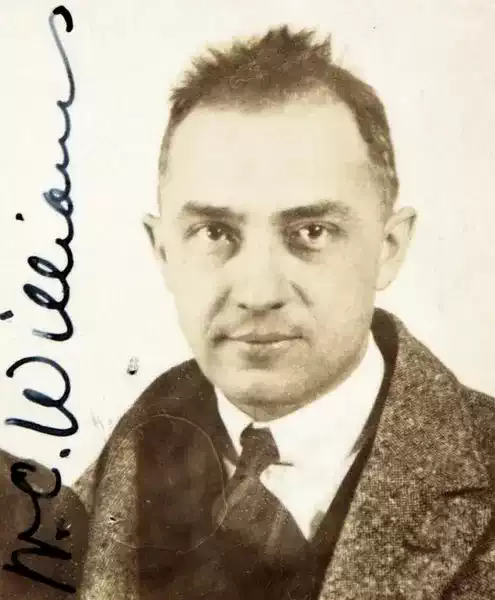
William Carlos Williams
To Elsie
The pure products of America
go crazy--
mountain folk from Kentucky
or the ribbed north end of
Jersey
with its isolate lakes and
valleys, its deaf-mutes, thieves
old names
and promiscuity between
devil-may-care men who have taken
to railroading
out of sheer lust of adventure--
and young slatterns, bathed
in filth
from Monday to Saturday
to be tricked out that night
with gauds
from imaginations which have no
peasant traditions to give them
character
but flutter and flaunt
sheer rags-succumbing without
emotion
save numbed terror
under some hedge of choke-cherry
or viburnumwhich
they cannot express--
Unless it be that marriage
perhaps
with a dash of Indian blood
will throw up a girl so desolate
so hemmed round
with disease or murder
that she'll be rescued by an
agent--
reared by the state and
sent out at fifteen to work in
some hard-pressed
house in the suburbs--
some doctor's family, some Elsie--
voluptuous water
expressing with broken
brain the truth about us--
her great
ungainly hips and flopping breasts
addressed to cheap
jewelry
and rich young men with fine eyes
as if the earth under our feet
were
an excrement of some sky
and we degraded prisoners
destined
to hunger until we eat filth
while the imagination strains
after deer
going by fields of goldenrod in
the stifling heat of September
Somehow
it seems to destroy us
It is only in isolate flecks that
something
is given off
No one
to witness
and adjust, no one to drive the car
461

Dorothy Parker
Epitaph for a Darling Lady
All her hours were yellow sands,
Blown in foolish whorls and tassels;
Slipping warmly through her hands;
Patted into little castles.
Shiny day on shiny day
Tumble in a rainbow clutter,
As she flipped them all away,
Sent them spinning down the gutter.
Leave for her a red young rose,
Go your way, and save your pity;
She is happy, for she knows
That her dust is very pretty.
458

Ezra Pound
L'Art
Green arsenic smeared on an egg-white cloth,
Crushed strawberries! Come, let us feast our eyes.
Crushed strawberries! Come, let us feast our eyes.
459

John Clare
Decay
O Poesy is on the wane,
For Fancy's visions all unfitting;
I hardly know her face again,
Nature herself seems on the flitting.
The fields grow old and common things,
The grass, the sky, the winds a-blowing;
And spots, where still a beauty clings,
Are sighing 'going! all a-going!'
O Poesy is on the wane,
I hardly know her face again.
The bank with brambles overspread,
And little molehills round about it,
Was more to me than laurel shades,
With paths of gravel finely clouted;
And streaking here and streaking there,
Through shaven grass and many a border,
With rutty lanes had no compare,
And heaths were in a richer order.
But Poesy is on the wane,
I hardly know her face again.
I sat beside the pasture stream,
When Beauty's self was sitting by,
The fields did more than Eden seem
Nor could I tell the reason why.
I often drank when not adry
To pledge her health in draughts divine;
Smiles made it nectar from the sky,
Love turned een water into wine.
O Poesy is on the wane,
I cannot find her face again.
The sun those mornings used to find,
Its clouds were other-country mountains,
And heaven looked downward on the mind,
Like groves, and rocks, and mottled fountains.
Those heavens are gone, the mountains grey
Turned mist--the sun, a homeless ranger,
Pursues alone his naked way,
Unnoticed like a very stranger.
O Poesy is on the wane,
Nor love nor joy is mine again.
Love's sun went down without a frown,
For very joy it used to grieve us;
I often think the West is gone,
Ah, cruel Time, to undeceive us.
The stream it is a common stream,
Where we on Sundays used to ramble,
The sky hangs oer a broken dream,
The bramble's dwindled to a bramble!
O Poesy is on the wane,
I cannot find her haunts again.
Mere withered stalks and fading trees,
And pastures spread with hills and rushes,
Are all my fading vision sees;
Gone, gone are rapture's flooding gushes!
When mushrooms they were fairy bowers,
Their marble pillars overswelling,
And Danger paused to pluck the flowers
That in their swarthy rings were dwelling.
Yes, Poesy is on the wane,
Nor joy nor fear is mine again.
Aye, Poesy hath passed away,
And Fancy's visions undeceive us;
The night hath ta'en the place of day,
And why should passing shadows grieve us?
I thought the flowers upon the hills
Were flowers from Adam's open gardens;
But I have had my summer thrills,
And I have had my heart's rewardings.
So Poesy is on the wane,
I hardly know her face again.
And Friendship it hath burned away,
Like to a very ember cooling,
A make-believe on April day
That sent the simple heart a-fooling;
Mere jesting in an earnest way,
Deceiving on and still deceiving;
And Hope is but a fancy-play,
And Joy the art of true believing;
For Poesy is on the wane,
O could I feel her faith again!
461

Elizabeth Barrett Browning
On A Portrait Of Wordsworth
WORDSWORTH upon Helvellyn ! Let the cloud
Ebb audibly along the mountain-wind,
Then break against the rock, and show behind
The lowland valleys floating up to crowd
The sense with beauty. He with forehead bowed
And humble-lidded eyes, as one inclined
Before the sovran thought of his own mind,
And very meek with inspirations proud,
Takes here his rightful place as poet-priest
By the high altar, singing prayer and prayer
To the higher Heavens. A noble vision free
Our Haydon's hand has flung out from the mist:
No portrait this, with Academic air !
This is the poet and his poetry.
459
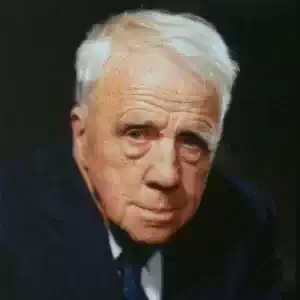
Robert Frost
Two Look at Two
Love and forgetting might have carried them
A little further up the mountain side
With night so near, but not much further up.
They must have halted soon in any case
With thoughts of a path back, how rough it was
With rock and washout, and unsafe in darkness;
When they were halted by a tumbled wall
With barbed-wire binding. They stood facing this,
Spending what onward impulse they still had
In One last look the way they must not go,
On up the failing path, where, if a stone
Or earthslide moved at night, it moved itself;
No footstep moved it. 'This is all,' they sighed,
Good-night to woods.' But not so; there was more.
A doe from round a spruce stood looking at them
Across the wall, as near the wall as they.
She saw them in their field, they her in hers.
The difficulty of seeing what stood still,
Like some up-ended boulder split in two,
Was in her clouded eyes; they saw no fear there.
She seemed to think that two thus they were safe.
Then, as if they were something that, though strange,
She could not trouble her mind with too long,
She sighed and passed unscared along the wall.
'This, then, is all. What more is there to ask?'
But no, not yet. A snort to bid them wait.
A buck from round the spruce stood looking at them
Across the wall as near the wall as they.
This was an antlered buck of lusty nostril,
Not the same doe come back into her place.
He viewed them quizzically with jerks of head,
As if to ask, 'Why don't you make some motion?
Or give some sign of life? Because you can't.
I doubt if you're as living as you look."
Thus till he had them almost feeling dared
To stretch a proffering hand -- and a spell-breaking.
Then he too passed unscared along the wall.
Two had seen two, whichever side you spoke from.
'This must be all.' It was all. Still they stood,
A great wave from it going over them,
As if the earth in one unlooked-for favour
Had made them certain earth returned their love.
458

Alfred Lord Tennyson
Sir Launcelot and Queen Guinevere
LIKE souls that balance joy and pain,
With tears and smiles from heaven again
The maiden Spring upon the plain
Came in a sun-lit fall of rain.
In crystal vapour everywhere
Blue isles of heaven laugh'd between,
And far, in forest-deeps unseen,
The topmost elm-tree gather'd green
From draughts of balmy air.
Sometimes the linnet piped his song:
Sometimes the throstle whistled strong:
Sometimes the sparhawk, wheel'd along,
Hush'd all the groves from fear of wrong:
By grassy capes with fuller sound
In curves the yellowing river ran,
And drooping chestnut-buds began
To spread into the perfect fan,
Above the teeming ground.
Then, in the boyhood of the year,
Sir Launcelot and Queen Guinevere
Rode thro' the coverts of the deer,
With blissful treble ringing clear.
She seem'd a part of joyous Spring:
A gown of grass-green silk she wore,
Buckled with golden clasps before;
A light-green tuft of plumes she bore
Closed in a golden ring.
Now on some twisted ivy-net,
Now by some tinkling rivulet,
In mosses mixt with violet
Her cream-white mule his pastern set:
And fleeter now she skimm'd the plains
Than she whose elfin prancer springs
By night to eery warblings,
When all the glimmering moorland rings
With jingling bridle-reins.
As she fled fast thro' sun and shade,
The happy winds upon her play'd,
Blowing the ringlet from the braid:
She look'd so lovely, as she sway'd
The rein with dainty finger-tips,
A man had given all other bliss,
And all his worldly worth for this,
To waste his whole heart in one kiss
Upon her perfect lips.
451

Lord Byron
There Be None of Beauty's Daughters
There be none of Beauty's daughters
With a magic like Thee;
And like music on the waters
Is thy sweet voice to me:
When, as if its sound were causing
The charméd ocean's pausing,
The waves lie still and gleaming,
And the lull'd winds seem dreaming:
And the midnight moon is weaving
Her bright chain o'er the deep,
Whose breast is gently heaving
As an infant's asleep:
So the spirit bows before thee
To listen and adore thee;
With a full but soft emotion,
Like the swell of Summer's ocean.
453

Ella Wheeler Wilcox
Clara Morris (Written for a Benefit Given Mrs. Morris)
The Radiant Ruler of Mystic Regions
Where souls of artists are fitted for birth,
Gathered together their lovely legions
And fashioned a woman to shine on earth.
They bathed her in splendor
They made her tender:
They gave her a nature both sweet and wild.
They gave her emotions
Like storm stirred oceans,
And they gave her the heart of a little child.
These Radiant Rulers (who are not human
Nor yet divine like the gods above)
Poured all their gifts in the soul of a woman
That fragile vessel meant only for love.
Still more they taught her,
Still more they brought her-
Till they gave her the world for a harp one day,
And they bade her string it-
They bade her ring it,
While the stars all wondered to hear her play.
She touched the strings in a master fashion,
She uttered the cry of a world's despair.
Its long-hid secret, its pent-up passion,
She gave to the winds in a vibrant air.
For ah! the heart of her,
That was the art of her,
Great with the feeling that makes men kin.
Art unapproachable,
Art all uncoachable,
Fragrance and flame from the spirit within.
The earth turns ever an ear unheeding
To the sorrows of art, as it cries for more:
And she played on the harp till her hands were bleeding
And her brow was bruised by the laurels she wore.
She knew the trend of it,
She knew the end of it.
Men heard the music and men felt the thrill.
Bound to the altar
Of art, could she falter?
Then came a silence-the music was still.
And yet in the echoes we seem to hear it
In waves unbroken it circles the earth:
And we catch in the light of her dauntless spirit
A gleam from the center that gave her birth.
Still is the fame of her
Felt in the name of her.
But low lies the harp that once thrilled to her strain.
No hand has taken it,
No hand can waken it-
For the soul of her art was her secret of pain.
452

Henry Wadsworth Longfellow
A Gleam of Sunshine
This is the place. Stand still, my steed,
Let me review the scene,
And summon from the shadowy Past
The forms that once have been.
The Past and Present here unite
Beneath Time's flowing tide,
Like footprints hidden by a brook,
But seen on either side.
Here runs the highway to the town;
There the green lane descends,
Through which I walked to church with thee,
O gentlest of my friends!
The shadow of the linden-trees
Lay moving on the grass;
Between them and the moving boughs,
A shadow, thou didst pass.
Thy dress was like the lilies,
And thy heart as pure as they:
One of God's holy messengers
Did walk with me that day.
I saw the branches of the trees
Bend down thy touch to meet,
The clover-blossoms in the grass
Rise up to kiss thy feet,
"Sleep, sleep to-day, tormenting cares,
Of earth and folly born!"
Solemnly sang the village choir
On that sweet Sabbath morn.
Through the closed blinds the golden sun
Poured in a dusty beam,
Like the celestial ladder seen
By Jacob in his dream.
And ever and anon, the wind,
Sweet-scented with the hay,
Turned o'er the hymn-book's fluttering leaves
That on the window lay.
Long was the good man's sermon,
Yet it seemed not so to me;
For he spake of Ruth the beautiful,
And still I thought of thee.
Long was the prayer he uttered,
Yet it seemed not so to me;
For in my heart I prayed with him,
And still I thought of thee.
But now, alas! the place seems changed;
Thou art no longer here:
Part of the sunshine of the scene
With thee did disappear.
Though thoughts, deep-rooted in my heart,
Like pine-trees dark and high,
Subdue the light of noon, and breathe
A low and ceaseless sigh;
This memory brightens o'er the past,
As when the sun, concealed
Behind some cloud that near us hangs
Shines on a distant field.
451
Ella Wheeler Wilcox
A Maiden To Her Mirror
He said he loved me! Then he called my hair
Silk threads wherewith sly Cupid strings his bow,
My cheek a rose leaf fallen on new snow;
And swore my round, full throat would bring despair
To Venus or to Psyche.
Time and care
Will fade these locks; the merry god, I know,
Uses no grizzled cords upon his bow.
How will it be when I, no longer fair,
Plead for his kiss with cheeks, whence long ago
The early snowflakes melted quite away,
The rose leaf died – and in whose sallow clay
Lie the deep sunken tracks of life’s gaunt crow?
When this full throat shall wattle fold on fold,
Like some ripe peach left drying on a wall,
Or like a spent accordion, when all
Its music has exhaled – will love grow cold?
451

Sara Teasdale
Moonlight
It will not hurt me when I am old,
A running tide where moonlight burned
Will not sting me like silver snakes;
The years will make me sad and cold,
It is the happy heart that breaks.
The heart asks more than life can give,
When that is learned, then all is learned;
The waves break fold on jewelled fold,
But beauty itself is fugitive,
It will not hurt me when I am old.
452

John Keats
Fragment Of 'The Castle Builder.'
To-night I'll have my friar -- let me think
About my room, -- I'll have it in the pink;
It should be rich and sombre, and the moon,
Just in its mid-life in the midst of June,
Should look thro' four large windows and display
Clear, but for gold-fish vases in the way,
Their glassy diamonding on Turkish floor;
The tapers keep aside, an hour and more,
To see what else the moon alone can show;
While the night-breeze doth softly let us know
My terrace is well bower'd with oranges.
Upon the floor the dullest spirit sees
A guitar-ribband and a lady's glove
Beside a crumple-leaved tale of love;
A tambour-frame, with Venus sleeping there,
All finish'd but some ringlets of her hair;
A viol, bow-strings torn, cross-wise upon
A glorious folio of Anacreon;
A skull upon a mat of roses lying,
Ink'd purple with a song concerning dying;
An hour-glass on the turn, amid the trails
Of passion-flower; -- just in time there sails
A cloud across the moon, -- the lights bring in!
And see what more my phantasy can win.
It is a gorgeous room, but somewhat sad;
The draperies are so, as tho' they had
Been made for Cleopatra's winding-sheet;
And opposite the stedfast eye doth meet
A spacious looking-glass, upon whose face,
In letters raven-sombre, you may trace
Old 'Mene, Mene, Tekel Upharsin.'
Greek busts and statuary have ever been
Held, by the finest spirits, fitter far
Than vase grotesque and Siamesian jar;
Therefore 'tis sure a want of Attic taste
That I should rather love a Gothic waste
Of eyesight on cinque-coloured potter's clay,
Than on the marble fairness of old Greece.
My table-coverlits of Jason's fleece
And black Numidian sheep-wool should be wrought,
Gold, black, and heavy, from the Lama brought.
My ebon sofas should delicious be
With down from Leda's cygnet progeny.
My pictures all Salvator's, save a few
Of Titian's portraiture, and one, though new,
Of Haydon's in its fresh magnificence.
My wine -- O good! 'tis here at my desire,
And I must sit to supper with my friar.
454
Lord Byron
To Marion
Marion! why that pensive brow?
What disgust to life hast thou?
Change that discontented air;
Frowns become not one so fair.
'Tis not love disturbs thy rest,
Love's a stranger to thy breast;
He in dimpling smiles appears,
Or mourns in weedy timid tears'
Or bends the languid eyelid down,
But shuns the cold forbidding frown.
Then resume thy former fire
Some will love, and all admire;
While that icy aspect chills us,
Nought but cool indifference thrills us.
Wou'dst thou wandering hearts beguile,
Smile at least, or seem to smile.
Eyes like thine were never meant
To hide their orbs in dark restraint.
Spite of all thou fain wouldst say,
Still in truant beams they play.
Thy lips – but here my modest Muse
Her impulse chaste must needs refuse:
She blushes, curt'sies, frowns,– in short she
Dreads lest the subject should transport me;
And flying off in search of reason,
Brings prudence back in proper season.
All I shall therefore say (whate'er
I think, is neither here nor there)
Is, that such lips of looks endearing,
Were form'd for better things than sneering:
Of soothing compliments divested,
Advice at least's disinterested;
Such is my artless song to thee,
From all the flow of flattery free;
Counsel like mine is as a brother's,
My heart is given to some others;
That is to say, unskill'd to cozen
It shares itself among a dozen.
Marion, adieu! oh, pr'ythee slight not
This warning, though it may delight not;
And, lest my precepts be displeasing
To those who think remonstrance teasing:
At once I'll tell thee our opinion
Concerning woman's soft dominion:
Howe'er we gaze with admiration
On eyes of blue or lips carnation,
Howe'er the flowing locks attract us,
Howe'er those beauties may distract us,
Still fickle, we are prone to rove,
These cannot fix our souls to love;
It is not too severe a stricture
To say they form a pretty picture;
But wouldst thou see the secret chain
Which binds us in your humble train,
To hail you queens of all creation,
Know, in a word, 'tis ANIMATION.
452
John Keats
To ****
Hadst thou liv'd in days of old,
O what wonders had been told
Of thy lively countenance,
And thy humid eyes that dance
In the midst of their own brightness;
In the very fane of lightness.
Over which thine eyebrows, leaning,
Picture out each lovely meaning:
In a dainty bend they lie,
Like to streaks across the sky,
Or the feathers from a crow,
Fallen on a bed of snow.
Of thy dark hair that extends
Into many graceful bends:
As the leaves of Hellebore
Turn to whence they sprung before.
And behind each ample curl
Peeps the richness of a pearl.
Downward too flows many a tress
With a glossy waviness;
Full, and round like globes that rise
From the censer to the skies
Through sunny air. Add too, the sweetness
Of thy honied voice; the neatness
Of thine ankle lightly turn'd:
With those beauties, scarce discern'd,
Kept with such sweet privacy,
That they seldom meet the eye
Of the little loves that fly
Round about with eager pry.
Saving when, with freshening lave,
Thou dipp'st them in the taintless wave;
Like twin water lillies, born
In the coolness of the morn.
O, if thou hadst breathed then,
Now the Muses had been ten.
Couldst thou wish for lineage higher
Than twin sister of Thalia?
At least for ever, evermore,
Will I call the Graces four.
Hadst thou liv'd when chivalry
Lifted up her lance on high,
Tell me what thou wouldst have been?
Ah! I see the silver sheen
Of thy broidered, floating vest
Cov’ring half thine ivory breast;
Which, O heavens! I should see,
But that cruel destiny
Has placed a golden cuirass there;
Keeping secret what is fair.
Like sunbeams in a cloudlet nested
Thy locks in knightly casque are rested:
O’er which bend four milky plumes
Like the gentle lilly’s blooms
Springing from a costly vase.
See with what a stately pace
Comes thine alabaster steed;
Servant of heroic deed!
O'er his loins, his trappings glow
Like the northern lights on snow.
Mount his back! thy sword unsheath!
Sign of the enchanter's death;
Bane of every wicked spell;
Silencer of dragon's yell.
Alas! thou this wilt never do:
Thou art an enchantress too,
And wilt surely never spill
Blood of those whose eyes can kill.
454
John Keats
Two Sonnets. To Haydon, With A Sonnet Written On Seeing The Elgin Marbles
I.
Haydon! forgive me that I cannot speak
Definitively of these mighty things;
Forgive me, that I have not eagle's wings,
That what I want I know not where to seek,
And think that I would not be over-meek,
In rolling out upfollowed thunderings,
Even to the steep of Heliconian springs,
Were I of ample strength for such a freak.
Think, too, that all these numbers should be thine;
Whose else? In this who touch thy vesture's hem?
For, when men stared at what was most divine
With brainless idiotism and o'erwise phlegm,
Thou hadst beheld the full Hesperian shine
Of their star in the east, and gone to worship them.
II. On Seeing The Elgin Marbles.
My spirit is too weak - mortality
Weighs heavily upon me like unwilling sleep,
And each imagined pinnacle and steep
Of godlike hardship tells me I must die
Like a sick eagle looking at the sky.
Yet 'tis a gentle luxury to weep
That I have not the cloudy winds to keep,
Fresh for the opening of the morning's eye.
Such dim-conceived glories of the brain
Bring round the heart an undescribable feud;
So do these wonders a most dizzy pain,
That mingles Grecian grandeur with the rude
Wasting of old Time -- with a billowy main --
A sun -- a shadow of a magnitude.
454

William Butler Yeats
His Phoenix
THERE is a queen in China, or maybe it's in Spain,
And birthdays and holidays such praises can be heard
Of her unblemished lineaments, a whiteness with no stain,
That she might be that sprightly girl trodden by a bird;
And there's a score of duchesses, surpassing woma-kind,
Or who have found a painter to make them so for pay
And smooth out stain and blemish with the elegance of his mind:
I knew a phoenix in my youth, so let them have their day.
The young men every night applaud their Gaby's laughing eye,
And Ruth St. Denis had more charm although she had poor luck;
From nineteen hundred nine or ten, Pavlova's had the cry
And there's a player in the States who gathers up her cloak
And flings herself out of the room when Juliet would be bride
With all a woman's passion, a child's imperious way,
And there are -- but no matter if there are scores beside:
I knew a phoenix in my youth, so let them have their day.
There's Margaret and Marjorie and Dorothy and Nan,
A Daphne and a Mary who live in privacy;
One's had her fill of lovers, another's had but one,
Another boasts, 'I pick and choose and have but two or three.'
If head and limb have beauty and the instep's high and light
They can spread out what sail they please for all I have to say,
Be but the breakers of men's hearts or engines of delight:
I knew a phoenix in my youth, so let them have their day.
There'll be that crowd, that barbarous crowd, through all the centuries,
And who can say but some young belle may walk and talk men wild
Who is my beauty's equal, though that my heart denies,
But not the exact likeness, the simplicity of a child,
And that proud look as though she had gazed into the burning sun,
And all the shapely body no tittle gone astray.
I mourn for that most lonely thing; and yet God's will be done:
I knew a phoenix in my youth, so let them have their day.
449
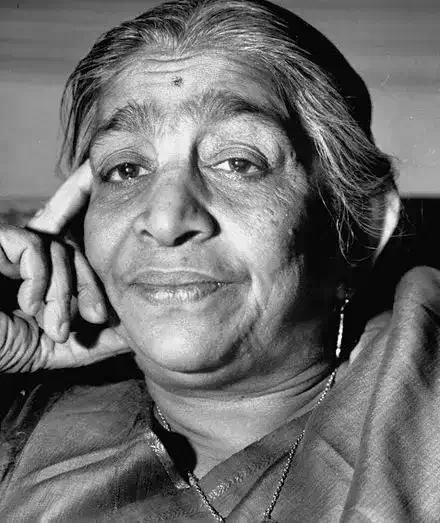
Sarojini Naidu
The Bangle Sellers
Bangle sellers are we who bear
Our shining loads to the temple fair...
Who will buy these delicate, bright
Rainbow-tinted circles of light?
Lustrous tokens of radiant lives,
For happy daughters and happy wives.
Some are meet for a maiden's wrist,
Silver and blue as the mountain mist,
Some are flushed like the buds that dream
On the tranquil brow of a woodland stream,
Some are aglow wth the bloom that cleaves
To the limpid glory of new born leaves
Some are like fields of sunlit corn,
Meet for a bride on her bridal morn,
Some, like the flame of her marriage fire,
Or, rich with the hue of her heart's desire,
Tinkling, luminous, tender, and clear,
Like her bridal laughter and bridal tear.
Some are purple and gold flecked grey
For she who has journeyed through life midway,
Whose hands have cherished, whose love has blest,
And cradled fair sons on her faithful breast,
And serves her household in fruitful pride,
And worships the gods at her husband's side.
450

Carl Sandburg
Who Am I?
My head knocks against the stars.
My feet are on the hilltops.
My finger-tips are in the valleys and shores of
universal life.
Down in the sounding foam of primal things I
reach my hands and play with pebbles of
destiny.
I have been to hell and back many times.
I know all about heaven, for I have talked with God.
I dabble in the blood and guts of the terrible.
I know the passionate seizure of beauty
And the marvelous rebellion of man at all signs
reading "Keep Off."
My name is Truth and I am the most elusive captive
in the universe.
449
Ezra Pound
Les Millwin
The little Millwins attend the Russian Ballet.
The mauve and greenish souls of the little Millwins
Were seen lying along the upper seats
Like so many unused boas.
The turbulent and undisciplined host of art students-
The rigorous deputation from ‘Slade’-
Was before them.
With arms exalted, with fore-arms
Crossed in great futuristic X's, the art students
Exulted, they beheld the splendours of Cleopatra
And the little Millwins beheld these things;
With their large and anaemic eyes they looked out upon
this configuration.
Let us therefore mention the fact,
For it seems to us worthy of record.
448
Sara Teasdale
I Thought of You
I thought of you and how you love this beauty,
And walking up the long beach all alone
I heard the waves breaking in measured thunder
As you and I once heard their monotone.
Around me were the echoing dunes, beyond me
The cold and sparkling silver of the sea --
We two will pass through death and ages lengthen
Before you hear that sound again with me.
445