

Poems in this topic
Beauty
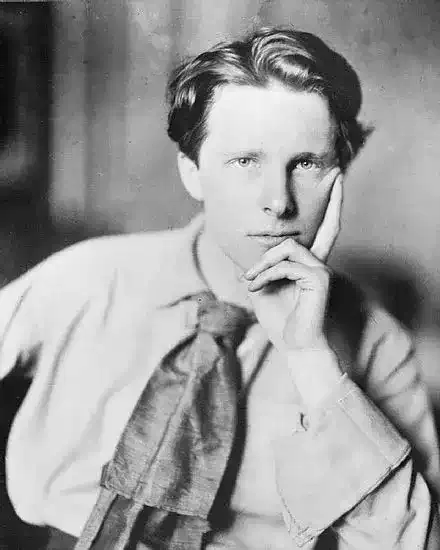
Rupert Brooke
Dining-Room Tea
Dining-Room Tea
When you were there, and you, and you,
Happiness crowned the night; I too,
Laughing and looking, one of all,
I watched the quivering lamplight fall
On plate and flowers and pouring tea
And cup and cloth; and they and we
Flung all the dancing moments by
With jest and glitter. Lip and eye
Flashed on the glory, shone and cried,
Improvident, unmemoried;
And fitfully and like a flame
The light of laughter went and came.
Proud in their careless transience moved
The changing faces that I loved.
Till suddenly, and otherwhence,
I looked upon your innocence.
For lifted clear and still and strange
From the dark woven flow of change
Under a vast and starless sky
I saw the immortal moment lie.
One Instant I, an instant, knew
As God knows all. And it and you
I, above Time, oh, blind! could see
In witless immortality.
I saw the marble cup; the tea,
Hung on the air, an amber stream;
I saw the fire’s unglittering gleam,
The painted flame, the frozen smoke.
No more the flooding lamplight broke
On flying eyes and lips and hair;
But lay, but slept unbroken there,
On stiller flesh, and body breathless,
And lips and laughter stayed and deathless,
And words on which no silence grew.
Light was more alive than you.
For suddenly, and otherwhence,
I looked on your magnificence.
I saw the stillness and the light,
And you, august, immortal, white,
Holy and strange; and every glint
Posture and jest and thought and tint
Freed from the mask of transiency,
Triumphant in eternity,
Immote, immortal.
Dazed at length
Human eyes grew, mortal strength
Wearied; and Time began to creep.
Change closed about me like a sleep.
Light glinted on the eyes I loved.
The cup was filled. The bodies moved.
The drifting petal came to ground.
The laughter chimed its perfect round.
The broken syllable was ended.
And I, so certain and so friended,
How could I cloud, or how distress,
The heaven of your unconsciousness?
Or shake at Time’s sufficient spell,
Stammering of lights unutterable?
The eternal holiness of you,
The timeless end, you never knew,
The peace that lay, the light that shone.
You never knew that I had gone
A million miles away, and stayed
A million years. The laughter played
Unbroken round me; and the jest
Flashed on. And we that knew the best
Down wonderful hours grew happier yet.
I sang at heart, and talked, and eat,
And lived from laugh to laugh, I too,
When you were there, and you, and you.
When you were there, and you, and you,
Happiness crowned the night; I too,
Laughing and looking, one of all,
I watched the quivering lamplight fall
On plate and flowers and pouring tea
And cup and cloth; and they and we
Flung all the dancing moments by
With jest and glitter. Lip and eye
Flashed on the glory, shone and cried,
Improvident, unmemoried;
And fitfully and like a flame
The light of laughter went and came.
Proud in their careless transience moved
The changing faces that I loved.
Till suddenly, and otherwhence,
I looked upon your innocence.
For lifted clear and still and strange
From the dark woven flow of change
Under a vast and starless sky
I saw the immortal moment lie.
One Instant I, an instant, knew
As God knows all. And it and you
I, above Time, oh, blind! could see
In witless immortality.
I saw the marble cup; the tea,
Hung on the air, an amber stream;
I saw the fire’s unglittering gleam,
The painted flame, the frozen smoke.
No more the flooding lamplight broke
On flying eyes and lips and hair;
But lay, but slept unbroken there,
On stiller flesh, and body breathless,
And lips and laughter stayed and deathless,
And words on which no silence grew.
Light was more alive than you.
For suddenly, and otherwhence,
I looked on your magnificence.
I saw the stillness and the light,
And you, august, immortal, white,
Holy and strange; and every glint
Posture and jest and thought and tint
Freed from the mask of transiency,
Triumphant in eternity,
Immote, immortal.
Dazed at length
Human eyes grew, mortal strength
Wearied; and Time began to creep.
Change closed about me like a sleep.
Light glinted on the eyes I loved.
The cup was filled. The bodies moved.
The drifting petal came to ground.
The laughter chimed its perfect round.
The broken syllable was ended.
And I, so certain and so friended,
How could I cloud, or how distress,
The heaven of your unconsciousness?
Or shake at Time’s sufficient spell,
Stammering of lights unutterable?
The eternal holiness of you,
The timeless end, you never knew,
The peace that lay, the light that shone.
You never knew that I had gone
A million miles away, and stayed
A million years. The laughter played
Unbroken round me; and the jest
Flashed on. And we that knew the best
Down wonderful hours grew happier yet.
I sang at heart, and talked, and eat,
And lived from laugh to laugh, I too,
When you were there, and you, and you.
186
Rupert Brooke
Blue Evening
Blue Evening
My restless blood now lies a-quiver,
Knowing that always, exquisitely,
This April twilight on the river
Stirs anguish in the heart of me.
For the fast world in that rare glimmer
Puts on the witchery of a dream,
The straight grey buildings, richly dimmer,
The fiery windows, and the stream
With willows leaning quietly over,
The still ecstatic fading skies . . .
And all these, like a waiting lover,
Murmur and gleam, lift lustrous eyes,
Drift close to me, and sideways bending
Whisper delicious words.
But I
Stretch terrible hands, uncomprehending,
Shaken with love; and laugh; and cry.
My agony made the willows quiver;
I heard the knocking of my heart
Die loudly down the windless river,
I heard the pale skies fall apart,
And the shrill stars' unmeaning laughter,
And my voice with the vocal trees
Weeping. And Hatred followed after,
Shrilling madly down the breeze.
In peace from the wild heart of clamour,
A flower in moonlight, she was there,
Was rippling down white ways of glamour
Quietly laid on wave and air.
Her passing left no leaf a-quiver.
Pale flowers wreathed her white, white brows.
Her feet were silence on the river;
And 'Hush!' she said, between the boughs.
My restless blood now lies a-quiver,
Knowing that always, exquisitely,
This April twilight on the river
Stirs anguish in the heart of me.
For the fast world in that rare glimmer
Puts on the witchery of a dream,
The straight grey buildings, richly dimmer,
The fiery windows, and the stream
With willows leaning quietly over,
The still ecstatic fading skies . . .
And all these, like a waiting lover,
Murmur and gleam, lift lustrous eyes,
Drift close to me, and sideways bending
Whisper delicious words.
But I
Stretch terrible hands, uncomprehending,
Shaken with love; and laugh; and cry.
My agony made the willows quiver;
I heard the knocking of my heart
Die loudly down the windless river,
I heard the pale skies fall apart,
And the shrill stars' unmeaning laughter,
And my voice with the vocal trees
Weeping. And Hatred followed after,
Shrilling madly down the breeze.
In peace from the wild heart of clamour,
A flower in moonlight, she was there,
Was rippling down white ways of glamour
Quietly laid on wave and air.
Her passing left no leaf a-quiver.
Pale flowers wreathed her white, white brows.
Her feet were silence on the river;
And 'Hush!' she said, between the boughs.
220
Rupert Brooke
Beauty and Beauty
Beauty and Beauty
When Beauty and Beauty meet
All naked, fair to fair,
The earth is crying-sweet,
And scattering-bright the air,
Eddying, dizzying, closing round,
With soft and drunken laughter;
Veiling all that may befall
After -- after --
Where Beauty and Beauty met,
Earth's still a-tremble there,
And winds are scented yet,
And memory-soft the air,
Bosoming, folding glints of light,
And shreds of shadowy laughter;
Not the tears that fill the years
After -- after --
When Beauty and Beauty meet
All naked, fair to fair,
The earth is crying-sweet,
And scattering-bright the air,
Eddying, dizzying, closing round,
With soft and drunken laughter;
Veiling all that may befall
After -- after --
Where Beauty and Beauty met,
Earth's still a-tremble there,
And winds are scented yet,
And memory-soft the air,
Bosoming, folding glints of light,
And shreds of shadowy laughter;
Not the tears that fill the years
After -- after --
201
Rupert Brooke
IV: The Dead
IV: The Dead
These hearts were woven of human joys and cares,
Washed marvellously with sorrow, swift to mirth.
The years had given them kindness. Dawn was theirs,
And sunset, and the colours of the earth.
These had seen movement, and heard music; known
Slumber and waking; loved; gone proudly friended;
Felt the quick stir of wonder; sat alone;
Touched flowers and furs and cheeks. All this is ended.
There are waters blown by changing winds to laughter
And lit by the rich skies, all day. And after,
Frost, with a gesture, stays the waves that dance
And wandering loveliness. He leaves a white
Unbroken glory, a gathered radiance,
A width, a shining peace, under the night.
These hearts were woven of human joys and cares,
Washed marvellously with sorrow, swift to mirth.
The years had given them kindness. Dawn was theirs,
And sunset, and the colours of the earth.
These had seen movement, and heard music; known
Slumber and waking; loved; gone proudly friended;
Felt the quick stir of wonder; sat alone;
Touched flowers and furs and cheeks. All this is ended.
There are waters blown by changing winds to laughter
And lit by the rich skies, all day. And after,
Frost, with a gesture, stays the waves that dance
And wandering loveliness. He leaves a white
Unbroken glory, a gathered radiance,
A width, a shining peace, under the night.
164
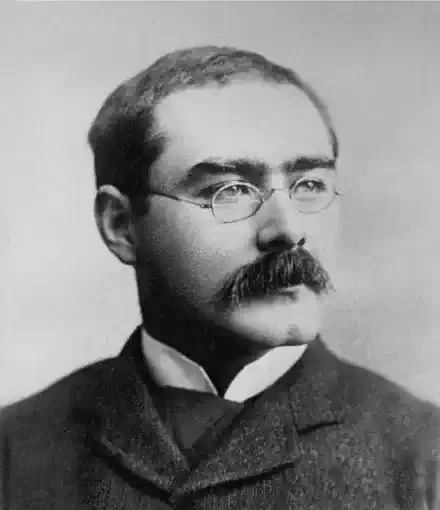
Rudyard Kipling
The Birthright
The Birthright
The miracle of our land's speech--so known
And long received, none marvel when 'tis shown!
We have such wealth as Rome at her most pride
Had not or (having) scattered not so wide;
Nor with such arrant prodigality,
Beneath her any pagan's foot let lie...
Lo! Diamond that cost some half their days
To find and t'other half to bring to blaze:
Rubies of every heat, wherethrough we scan
The fiercer and more fiery heart of man:
Emerald that with the uplifted billow vies,
And Sapphires evening remembered skies:
Pearl perfect, as immortal tears must show,
Bred, in deep waters, of a piercing woe;
And tender Turkis, so with charms y-writ,
Of woven gold, Time dares not bite on it.
Thereafter, in all manners worked and set,
Jade, coral, amber, crystal ivories, jet,--
Showing no more than various fancies, yet
Each a Life's token or Love's amulet
Which things, through timeless arrogance of use,
We neither guard nor garner, but abuse;
So that our scholars--nay, our children-fling
In sport or jest treasure to arm a King;
And the gross crowd, at feast or market, hold
Traffic perforce with dust of gems and gold!
The miracle of our land's speech--so known
And long received, none marvel when 'tis shown!
We have such wealth as Rome at her most pride
Had not or (having) scattered not so wide;
Nor with such arrant prodigality,
Beneath her any pagan's foot let lie...
Lo! Diamond that cost some half their days
To find and t'other half to bring to blaze:
Rubies of every heat, wherethrough we scan
The fiercer and more fiery heart of man:
Emerald that with the uplifted billow vies,
And Sapphires evening remembered skies:
Pearl perfect, as immortal tears must show,
Bred, in deep waters, of a piercing woe;
And tender Turkis, so with charms y-writ,
Of woven gold, Time dares not bite on it.
Thereafter, in all manners worked and set,
Jade, coral, amber, crystal ivories, jet,--
Showing no more than various fancies, yet
Each a Life's token or Love's amulet
Which things, through timeless arrogance of use,
We neither guard nor garner, but abuse;
So that our scholars--nay, our children-fling
In sport or jest treasure to arm a King;
And the gross crowd, at feast or market, hold
Traffic perforce with dust of gems and gold!
459
Rudyard Kipling
Buddha at Kamakura
Buddha at Kamakura
Oye who treated the Narrow Way
By Tophet-flare to Judgment Day,
Be gentle when "the heathen" pray
To Buddha at Kamakura!
To him the Way, the Law, apart,
Whom Maya held beneath her heart,
Ananda's Lord, the Bodhisat,
The Buddha of Kamakura.
For though he neither burns nor sees,
Nor hears ye thank your Deities,
Ye have not sinned with such as these,
His children at Kamakura,
Yet spare us still the Western joke
When joss-sticks turn to scented smoke
The little sins of little folk
That worship at Kamakura --
The grey-robed, gay-sashed butterflies
That flit beneath the Master's eyes.
He is beyond the Mysteries
But loves them at Kamakura.
And whoso will, from Pride released,
Contemning neither creed nor priest,
May feel the Soul of all the East
About him at Kamakura.
Yea, every tale Ananda heard,
Of birth as fish or beast or bird,
While yet in lives the Master stirred,
The warm wind brings Kamakura.
Till drowsy eyelids seem to see
A-flower 'neath her golden htee
The Shwe-Dagon flare easterly
From Burmah to Kamakura,
And down the loaded air there comes
The thunder of Thibetan drums,
And droned -- "Om mane padme hums" --
A world's-width from Kamakura.
Yet Brahmans rule Benares still,
Buddh-Gaya's ruins pit the hill,
And beef-fed zealots threaten ill
To Buddha and Kamakura.
A tourist-show, a legend told,
A rusting bulk of bronze and gold,
So much, and scarce so much, ye hold
The meaning of Kamakura?
But when the morning prayer is prayed,
Think, ere ye pass to strife and trade,
Is God in human image made
No nearer than Kamakura?
Oye who treated the Narrow Way
By Tophet-flare to Judgment Day,
Be gentle when "the heathen" pray
To Buddha at Kamakura!
To him the Way, the Law, apart,
Whom Maya held beneath her heart,
Ananda's Lord, the Bodhisat,
The Buddha of Kamakura.
For though he neither burns nor sees,
Nor hears ye thank your Deities,
Ye have not sinned with such as these,
His children at Kamakura,
Yet spare us still the Western joke
When joss-sticks turn to scented smoke
The little sins of little folk
That worship at Kamakura --
The grey-robed, gay-sashed butterflies
That flit beneath the Master's eyes.
He is beyond the Mysteries
But loves them at Kamakura.
And whoso will, from Pride released,
Contemning neither creed nor priest,
May feel the Soul of all the East
About him at Kamakura.
Yea, every tale Ananda heard,
Of birth as fish or beast or bird,
While yet in lives the Master stirred,
The warm wind brings Kamakura.
Till drowsy eyelids seem to see
A-flower 'neath her golden htee
The Shwe-Dagon flare easterly
From Burmah to Kamakura,
And down the loaded air there comes
The thunder of Thibetan drums,
And droned -- "Om mane padme hums" --
A world's-width from Kamakura.
Yet Brahmans rule Benares still,
Buddh-Gaya's ruins pit the hill,
And beef-fed zealots threaten ill
To Buddha and Kamakura.
A tourist-show, a legend told,
A rusting bulk of bronze and gold,
So much, and scarce so much, ye hold
The meaning of Kamakura?
But when the morning prayer is prayed,
Think, ere ye pass to strife and trade,
Is God in human image made
No nearer than Kamakura?
494

Robert W. Service
Why Do Birds Sing?
Why Do Birds Sing?
Let poets piece prismatic words,
Give me the jewelled joy of birds!
What ecstasy moves them to sing?
Is it the lyric glee of Spring,
The dewy rapture of the rose?
Is it the worship born in those
Who are of Nature's self a part,
The adoration of the heart?
Is it the mating mood in them
That makes each crystal note a gem?
Oh mocking bird and nightingale,
Oh mavis, lark and robin - hail!
Tell me what perfect passion glows
In your inspired arpeggios?
A thrush is thrilling as I write
Its obligato of delight;
And in its fervour, as in mine,
I fathom tenderness divine,
And pity those of earthy ear
Who cannot hear . . . who cannot hear.
Let poets pattern pretty words:
For lovely largesse - bless you, Birds!
Let poets piece prismatic words,
Give me the jewelled joy of birds!
What ecstasy moves them to sing?
Is it the lyric glee of Spring,
The dewy rapture of the rose?
Is it the worship born in those
Who are of Nature's self a part,
The adoration of the heart?
Is it the mating mood in them
That makes each crystal note a gem?
Oh mocking bird and nightingale,
Oh mavis, lark and robin - hail!
Tell me what perfect passion glows
In your inspired arpeggios?
A thrush is thrilling as I write
Its obligato of delight;
And in its fervour, as in mine,
I fathom tenderness divine,
And pity those of earthy ear
Who cannot hear . . . who cannot hear.
Let poets pattern pretty words:
For lovely largesse - bless you, Birds!
197
Robert W. Service
Visibility
Visibility
Because my eyes were none to bright
Strong spectacles I bought,
And lo! there sprang into my sight
A life beyond my thought:
A world of wonder and delight
My magic lenses brought.
Aye, sudden leaping in my sight
The far became the near;
Life unbelievably was bright,
And vividly was clear.
My heart was lifted with delight,
Then--then I shrank in fear.
For faces I had thought were gay
I saw were lined with care,
While strange corruption and decay
Surprised me everywhere:
Dismayed I put my specs away,-Such
truth I could not bear.
And now I do not want to see
With clarity of view;
For while there's heaven hell may be
More tragically true:
Though dim may be Reality,
Sheer love shines through.
Because my eyes were none to bright
Strong spectacles I bought,
And lo! there sprang into my sight
A life beyond my thought:
A world of wonder and delight
My magic lenses brought.
Aye, sudden leaping in my sight
The far became the near;
Life unbelievably was bright,
And vividly was clear.
My heart was lifted with delight,
Then--then I shrank in fear.
For faces I had thought were gay
I saw were lined with care,
While strange corruption and decay
Surprised me everywhere:
Dismayed I put my specs away,-Such
truth I could not bear.
And now I do not want to see
With clarity of view;
For while there's heaven hell may be
More tragically true:
Though dim may be Reality,
Sheer love shines through.
283
Robert W. Service
The Visionary
The Visionary
If fortune had not granted me
To suck the Muse's teats,
I think I would have liked to be
A sweeper of the streets;
And city gutters glad to groom,
Have heft a bonny broom.
There--as amid the crass and crush
The limousines swished by,
I would have leaned upon my brush
With visionary eye:
Deeming despite their loud allure
That I was rich, they poor.
Aye, though in garb terrestrial,
To Heaven I would pray,
And dream with broom celestial
I swept the Milky Way;
And golden chariots would ring,
And harps of Heaven sing.
And all the strumpets passing me,
And heelers of the Ward
Would glorified Madonnas be,
And angels of the Lord;
And all the brats in gutters grim
Be rosy cherubim.
If fortune had not granted me
To suck the Muse's teats,
I think I would have liked to be
A sweeper of the streets;
And city gutters glad to groom,
Have heft a bonny broom.
There--as amid the crass and crush
The limousines swished by,
I would have leaned upon my brush
With visionary eye:
Deeming despite their loud allure
That I was rich, they poor.
Aye, though in garb terrestrial,
To Heaven I would pray,
And dream with broom celestial
I swept the Milky Way;
And golden chariots would ring,
And harps of Heaven sing.
And all the strumpets passing me,
And heelers of the Ward
Would glorified Madonnas be,
And angels of the Lord;
And all the brats in gutters grim
Be rosy cherubim.
228
Robert W. Service
Reverence
Reverence
I saw the Greatest Man on Earth,
Aye, saw him with my proper eyes.
A loin-cloth spanned his proper girth,
But he was naked otherwise,
Excepting for his grey sombrero;
And when his domelike head he bared,
With reverence I stared and stared,
As mummified as any Pharaoh.
He leaned upon a little cane,
A big cigar was in his mouth;
Through spectacles of yellow stain
He gazed and gazed toward the South;
And then he dived into the sea,
As if to Corsica to swim;
His side stroke was so strong and free
I could not help but envy him.
A fitter man than I, I said,
Although his age is more than mine;
And I was strangely comforted
To see him battle in the brine.
Thought I: We have no cause for sorrow;
For one so dynamic to-day
Will gird him for the future fray
And lead us lion-like to-morrow.
The Greatest Man in all the world
Lay lazing like you or me,
Within a flimsy bathrobe curled
Upon a mattress by the sea:
He reached to pat a tou-tou's nose,
And scratched his torso now and then,
And scribbled with a fountain pen
What I assumed was jewelled prose.
And then methought he looked at me,
And hailed me with a gesture grand;
His fingers made the letter "V,"
So I, too, went to raise my hand; -
When nigh to me the barman glided
With liquid gold, and then I knew
He merely called for cock-tails two,
And so abjectly I subsided.
Yet I have had my moment's glory,
A-squatting nigh that Mighty Tory,
Proud Hero of our Island Story.
I saw the Greatest Man on Earth,
Aye, saw him with my proper eyes.
A loin-cloth spanned his proper girth,
But he was naked otherwise,
Excepting for his grey sombrero;
And when his domelike head he bared,
With reverence I stared and stared,
As mummified as any Pharaoh.
He leaned upon a little cane,
A big cigar was in his mouth;
Through spectacles of yellow stain
He gazed and gazed toward the South;
And then he dived into the sea,
As if to Corsica to swim;
His side stroke was so strong and free
I could not help but envy him.
A fitter man than I, I said,
Although his age is more than mine;
And I was strangely comforted
To see him battle in the brine.
Thought I: We have no cause for sorrow;
For one so dynamic to-day
Will gird him for the future fray
And lead us lion-like to-morrow.
The Greatest Man in all the world
Lay lazing like you or me,
Within a flimsy bathrobe curled
Upon a mattress by the sea:
He reached to pat a tou-tou's nose,
And scratched his torso now and then,
And scribbled with a fountain pen
What I assumed was jewelled prose.
And then methought he looked at me,
And hailed me with a gesture grand;
His fingers made the letter "V,"
So I, too, went to raise my hand; -
When nigh to me the barman glided
With liquid gold, and then I knew
He merely called for cock-tails two,
And so abjectly I subsided.
Yet I have had my moment's glory,
A-squatting nigh that Mighty Tory,
Proud Hero of our Island Story.
174
Robert W. Service
Pantheist
Pantheist
Lolling on a bank of thyme
Drunk with Spring I made this rhyme. . . .
Though peoples perish in defeat,
And races suffer to survive,
The sunshine never was so sweet,
So vast he joy to be alive;
The laughing leaves, the glowing grass
Proclaim how good it is to be;
The pines are lyric as I pass,
The hills hosannas sing to me.
Pink roses ring yon placid palm,
Soft shines the blossom of the peach;
The sapphire sea is satin calm,
With bell-like tinkle on the beach;
A lizard lazes in the sun,
A bee is bumbling to my hand;
Shy breezes whisper: "You are one
With us because you understand."
Yea, I am one with all I see,
With wind and wave, with pine and palm;
Their very elements in me
Are fused to make me what I am.
Through me their common life-stream flows,
And when I yield this human breath,
In leaf and blossom, bud and rose,
Live on I will . . . There is no Death.
Oh, let me flee from woeful things,
And listen to the linnet's song;
To solitude my spirit clings,
To sunny woodlands I belong.
O foolish men! Yourselves destroy.
But I from pain would win surcease. . . .
O Earth, grant me eternal joy!
O Nature - everlasting peace!
Amen.
Lolling on a bank of thyme
Drunk with Spring I made this rhyme. . . .
Though peoples perish in defeat,
And races suffer to survive,
The sunshine never was so sweet,
So vast he joy to be alive;
The laughing leaves, the glowing grass
Proclaim how good it is to be;
The pines are lyric as I pass,
The hills hosannas sing to me.
Pink roses ring yon placid palm,
Soft shines the blossom of the peach;
The sapphire sea is satin calm,
With bell-like tinkle on the beach;
A lizard lazes in the sun,
A bee is bumbling to my hand;
Shy breezes whisper: "You are one
With us because you understand."
Yea, I am one with all I see,
With wind and wave, with pine and palm;
Their very elements in me
Are fused to make me what I am.
Through me their common life-stream flows,
And when I yield this human breath,
In leaf and blossom, bud and rose,
Live on I will . . . There is no Death.
Oh, let me flee from woeful things,
And listen to the linnet's song;
To solitude my spirit clings,
To sunny woodlands I belong.
O foolish men! Yourselves destroy.
But I from pain would win surcease. . . .
O Earth, grant me eternal joy!
O Nature - everlasting peace!
Amen.
235
Robert W. Service
My Cross
My Cross
I wrote a poem to the moon
But no one noticed it;
Although I hoped that late or soon
Someone would praise a bit
Its purity and grace forlone,
Its beauty tulip-cool...
But as my poem died still-born,
I felt a fool.
I wrote a verse of vulgar trend
Spiced with an oath or two;
I tacked a snapper at the end
And called it Dan McGrew.
I spouted it to bar-room boys,
Full fifty years away;
Yet still with rude and ribald noise
It lives today.
'Tis bitter truth, but there you areThat's
how a name is made;
Write of a rose, a lark, a star,
You'll never make the grade.
But write of gutter and of grime,
Of pimp and prostitute,
The multitude will read your rhyme,
And pay to boot.
So what's the use to burn and bleed
And strive for beauty's sake?
No one your poetry will read,
Your heart will only break.
But set your song in vulgar pitch,
If rhyme you will not rue,
And make your heroine a bitch...
Like Lady Lou.
I wrote a poem to the moon
But no one noticed it;
Although I hoped that late or soon
Someone would praise a bit
Its purity and grace forlone,
Its beauty tulip-cool...
But as my poem died still-born,
I felt a fool.
I wrote a verse of vulgar trend
Spiced with an oath or two;
I tacked a snapper at the end
And called it Dan McGrew.
I spouted it to bar-room boys,
Full fifty years away;
Yet still with rude and ribald noise
It lives today.
'Tis bitter truth, but there you areThat's
how a name is made;
Write of a rose, a lark, a star,
You'll never make the grade.
But write of gutter and of grime,
Of pimp and prostitute,
The multitude will read your rhyme,
And pay to boot.
So what's the use to burn and bleed
And strive for beauty's sake?
No one your poetry will read,
Your heart will only break.
But set your song in vulgar pitch,
If rhyme you will not rue,
And make your heroine a bitch...
Like Lady Lou.
213
Robert W. Service
Miracles
Miracles
Each time that I switch on the light
A Miracle it seems to me
That I should rediscover sight
And banish dark so utterly.
One moment I am bleakly blind,
The next--exultant life I find.
Below the sable of the sky
My eyelids double darkness make.
Sleep is divine, yet oh how I
Am glad with wonder to awake!
To welcome, glimmery and wan
The mighty Miracle of Dawn.
For I've mad moments when I seem,
With all the marvel of a child,
To dwell within a world of dream,
To sober fact unreconciled.
Each simple act has struck me thus--
Incredibly miraculous.
When everything I see and do
So magical can seem to me,
How vain it is to seek the True,
The riddle of Reality . . .
So let me with joy lyrical
Proclaim all Life a Miracle!
Each time that I switch on the light
A Miracle it seems to me
That I should rediscover sight
And banish dark so utterly.
One moment I am bleakly blind,
The next--exultant life I find.
Below the sable of the sky
My eyelids double darkness make.
Sleep is divine, yet oh how I
Am glad with wonder to awake!
To welcome, glimmery and wan
The mighty Miracle of Dawn.
For I've mad moments when I seem,
With all the marvel of a child,
To dwell within a world of dream,
To sober fact unreconciled.
Each simple act has struck me thus--
Incredibly miraculous.
When everything I see and do
So magical can seem to me,
How vain it is to seek the True,
The riddle of Reality . . .
So let me with joy lyrical
Proclaim all Life a Miracle!
249
Robert W. Service
L'Envoi
L'Envoi
We've finished up the filthy war;
We've won what we were fighting for . . .
(Or have we? I don't know).
But anyway I have my wish:
I'm back upon the old Boul' Mich',
And how my heart's aglow!
Though in my coat's an empty sleeve,
Ah! do not think I ever grieve
(The pension for it, I believe,
Will keep me on the go).
So I'll be free to write and write,
And give my soul to sheer delight,
Till joy is almost pain;
To stand aloof and watch the throng,
And worship youth and sing my song
Of faith and hope again;
To seek for beauty everywhere,
To make each day a living prayer
That life may not be vain.
To sing of things that comfort me,
The joy in mother-eyes, the glee
Of little ones at play;
The blessed gentleness of trees,
Of old men dreaming at their ease
Soft afternoons away;
Of violets and swallows' wings,
Of wondrous, ordinary things
In words of every day.
To rhyme of rich and rainy nights,
When like a legion leap the lights
And take the town with gold;
Of taverns quaint where poets dream,
Of cafes gaudily agleam,
And vice that's overbold;
Of crystal shimmer, silver sheen,
Of soft and soothing nicotine,
Of wine that's rich and old,
Of gutters, chimney-tops and stars,
Of apple-carts and motor-cars,
The sordid and sublime;
Of wealth and misery that meet
In every great and little street,
Of glory and of grime;
Of all the living tide that flows --
From princes down to puppet shows -I'll
make my humble rhyme.
So if you like the sort of thing
Of which I also like to sing,
Just give my stuff a look;
And if you don't, no harm is done --
In writing it I've had my fun;
Good luck to you and every one --
And so
Here ends my book.
We've finished up the filthy war;
We've won what we were fighting for . . .
(Or have we? I don't know).
But anyway I have my wish:
I'm back upon the old Boul' Mich',
And how my heart's aglow!
Though in my coat's an empty sleeve,
Ah! do not think I ever grieve
(The pension for it, I believe,
Will keep me on the go).
So I'll be free to write and write,
And give my soul to sheer delight,
Till joy is almost pain;
To stand aloof and watch the throng,
And worship youth and sing my song
Of faith and hope again;
To seek for beauty everywhere,
To make each day a living prayer
That life may not be vain.
To sing of things that comfort me,
The joy in mother-eyes, the glee
Of little ones at play;
The blessed gentleness of trees,
Of old men dreaming at their ease
Soft afternoons away;
Of violets and swallows' wings,
Of wondrous, ordinary things
In words of every day.
To rhyme of rich and rainy nights,
When like a legion leap the lights
And take the town with gold;
Of taverns quaint where poets dream,
Of cafes gaudily agleam,
And vice that's overbold;
Of crystal shimmer, silver sheen,
Of soft and soothing nicotine,
Of wine that's rich and old,
Of gutters, chimney-tops and stars,
Of apple-carts and motor-cars,
The sordid and sublime;
Of wealth and misery that meet
In every great and little street,
Of glory and of grime;
Of all the living tide that flows --
From princes down to puppet shows -I'll
make my humble rhyme.
So if you like the sort of thing
Of which I also like to sing,
Just give my stuff a look;
And if you don't, no harm is done --
In writing it I've had my fun;
Good luck to you and every one --
And so
Here ends my book.
172
Robert W. Service
Bird Sanctuary
Bird Sanctuary
Between the cliff-rise and the beach
A slip of emerald I own;
With fig and olive, almond, peach,
cherry and plum-tree overgrown;
Glad-watered by a crystal spring
That carols through the silver night,
And populous with birds who sing
Gay madrigals for my delight.
Some merchants fain would buy my land
To build a stately pleasure dome.
Poor fools! they cannot understand
how pricelessly it is my home!
So luminous with living wings,
So musical with feathered joy . . .
Not for all pleasure fortune brings,
Would I such ecstasy destroy.
A thousand birds are in my grove,
Melodious from morn to night;
My fruit trees are their treasure trove,
Their happiness is my delight.
And through the sweet and shining days
They know their lover and their friend;
So I will shield in peace and praise
My innocents unto the end.
Between the cliff-rise and the beach
A slip of emerald I own;
With fig and olive, almond, peach,
cherry and plum-tree overgrown;
Glad-watered by a crystal spring
That carols through the silver night,
And populous with birds who sing
Gay madrigals for my delight.
Some merchants fain would buy my land
To build a stately pleasure dome.
Poor fools! they cannot understand
how pricelessly it is my home!
So luminous with living wings,
So musical with feathered joy . . .
Not for all pleasure fortune brings,
Would I such ecstasy destroy.
A thousand birds are in my grove,
Melodious from morn to night;
My fruit trees are their treasure trove,
Their happiness is my delight.
And through the sweet and shining days
They know their lover and their friend;
So I will shield in peace and praise
My innocents unto the end.
287
Robert W. Service
Atoll
Atoll
The woes of men beyond my ken
Mean nothing more to me.
Behold my world, and Eden hurled
From Heaven to the Sea;
A jeweled home, in fending foam
Tempestuously tossed;
A virgin isle none dare defile,
Far-flung, forgotten, lost.
And here I dwell, where none may tell
Me tales of mortal strife;
Let millions die, immune am I,
And radiant with life.
No echo comes of evil drums,
To vex my dawns divine;
Aloof, alone I hold my throne,
And Majesty is mine.
Ghost ships pass by, and glad am I
They make no sign to me.
The green corn springs, the gilt vine clings,
The net is in the sea.
My paradise around me lies,
Remote from wrath and wrong;
My isle is clean, unsought, unseen,
And innocent with song.
Here let me dwell in beauty's spell,
As tranquil as a tree;
Here let me bide, where wind and tide
Bourdon that I am free;
Here let me know from human woe
The rapture of release:
The rich caress of Loveliness,
The plenitude of Peace.
The woes of men beyond my ken
Mean nothing more to me.
Behold my world, and Eden hurled
From Heaven to the Sea;
A jeweled home, in fending foam
Tempestuously tossed;
A virgin isle none dare defile,
Far-flung, forgotten, lost.
And here I dwell, where none may tell
Me tales of mortal strife;
Let millions die, immune am I,
And radiant with life.
No echo comes of evil drums,
To vex my dawns divine;
Aloof, alone I hold my throne,
And Majesty is mine.
Ghost ships pass by, and glad am I
They make no sign to me.
The green corn springs, the gilt vine clings,
The net is in the sea.
My paradise around me lies,
Remote from wrath and wrong;
My isle is clean, unsought, unseen,
And innocent with song.
Here let me dwell in beauty's spell,
As tranquil as a tree;
Here let me bide, where wind and tide
Bourdon that I am free;
Here let me know from human woe
The rapture of release:
The rich caress of Loveliness,
The plenitude of Peace.
334
Robert W. Service
Apollo Belvedere
Apollo Belvedere
A-sitttin' on a cracker box an' spittin' in the stove,
I took a sudden notion that I'd kindo' like to rove;
An' so I bought a ticket, jest as easy as could be,
From Pumpkinville in Idaho to Rome in Italy;
An' found myself in seven days of mostly atmosphere
A-starin' at a statoo called Appoller Belvydeer.
Now I'm a rum-soaked sinner, an' religion ain't my plan,
Yet, I was flabbergasted by that gol-darned Vattyican;
An' when I seed Saint Peter's dome, all I could do was swear,
The which I reckon after all may be a form o' prayer;
Abut as I sought amid them sights bewildered to steer,
The king-pin was the one they called Appoller Belvydeer.
Say, I ain't got no culture an' I don't know any art,
But that there statoo got me, standin' in its room apart,
In an alcove draped wi' velvet, lookin' everlastin' bright,
Like the vision o' a poet, full o' beauty, grace an' light;
An' though I know them kind o' words sound sissy in the ear,
It's jest how I was struck by that Appoller Belvydeer.
I've gazed at them depictions in the glossy magazines,
Uv modern Art an' darned if I can make out what it means:
Will any jerk to-day outstand a thousand years of test?
Why, them old Pagans make us look like pikers at the best.
An' maybe, too, their minds was jest as luminous and clear
As that immortal statoo o' Appoller Belvydeer.
An' all yer march o' progress an' machinery as' such,
I wonder if, when all is said, they add up to so much?
An' were not these old fellers in their sweet an' simple way
Serener souled an' happier than we poor mugs to-day?
They have us licked, I thought, an' stood wi' mingled gloom an' cheer
Before that starry statoo o' Appoller Belvydeer.
So I'll go back to Pumpkinville an' to my humble home,
An' dream o' all the sights I saw in everlastin' Rome;
But I will never speak a word o' that enchanted land
That taks you bang into the Past - folks wouldn't understand;
An' midmost in my memories I'll cherish close an' dear
That bit o' frozen music, that Appoller Belvydeer.
A-sitttin' on a cracker box an' spittin' in the stove,
I took a sudden notion that I'd kindo' like to rove;
An' so I bought a ticket, jest as easy as could be,
From Pumpkinville in Idaho to Rome in Italy;
An' found myself in seven days of mostly atmosphere
A-starin' at a statoo called Appoller Belvydeer.
Now I'm a rum-soaked sinner, an' religion ain't my plan,
Yet, I was flabbergasted by that gol-darned Vattyican;
An' when I seed Saint Peter's dome, all I could do was swear,
The which I reckon after all may be a form o' prayer;
Abut as I sought amid them sights bewildered to steer,
The king-pin was the one they called Appoller Belvydeer.
Say, I ain't got no culture an' I don't know any art,
But that there statoo got me, standin' in its room apart,
In an alcove draped wi' velvet, lookin' everlastin' bright,
Like the vision o' a poet, full o' beauty, grace an' light;
An' though I know them kind o' words sound sissy in the ear,
It's jest how I was struck by that Appoller Belvydeer.
I've gazed at them depictions in the glossy magazines,
Uv modern Art an' darned if I can make out what it means:
Will any jerk to-day outstand a thousand years of test?
Why, them old Pagans make us look like pikers at the best.
An' maybe, too, their minds was jest as luminous and clear
As that immortal statoo o' Appoller Belvydeer.
An' all yer march o' progress an' machinery as' such,
I wonder if, when all is said, they add up to so much?
An' were not these old fellers in their sweet an' simple way
Serener souled an' happier than we poor mugs to-day?
They have us licked, I thought, an' stood wi' mingled gloom an' cheer
Before that starry statoo o' Appoller Belvydeer.
So I'll go back to Pumpkinville an' to my humble home,
An' dream o' all the sights I saw in everlastin' Rome;
But I will never speak a word o' that enchanted land
That taks you bang into the Past - folks wouldn't understand;
An' midmost in my memories I'll cherish close an' dear
That bit o' frozen music, that Appoller Belvydeer.
247
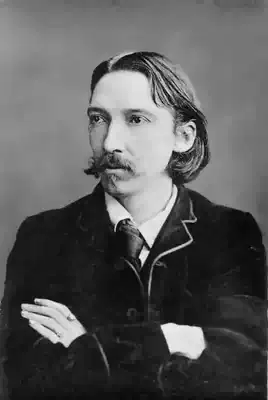
Robert Louis Stevenson
To Madame Garschine
To Madame Garschine
WHAT is the face, the fairest face, till Care,
Till Care the graver - Care with cunning hand,
Etches content thereon and makes it fair,
Or constancy, and love, and makes it grand?
WHAT is the face, the fairest face, till Care,
Till Care the graver - Care with cunning hand,
Etches content thereon and makes it fair,
Or constancy, and love, and makes it grand?
381
Robert Louis Stevenson
Thou Strainest Through The Mountain Fern
Thou Strainest Through The Mountain Fern
THOU strainest through the mountain fern,
A most exiguously thin Burn.
For all thy foam, for all thy din,
Thee shall the pallid lake inurn,
With well-a-day for Mr. Swin-Burne!
Take then this quarto in thy fin
And, O thou stoker huge and stern,
The whole affair, outside and in,
Burn!
But save the true poetic kin,
The works of Mr. Robert Burn'
And William Wordsworth upon Tin-Tern!
THOU strainest through the mountain fern,
A most exiguously thin Burn.
For all thy foam, for all thy din,
Thee shall the pallid lake inurn,
With well-a-day for Mr. Swin-Burne!
Take then this quarto in thy fin
And, O thou stoker huge and stern,
The whole affair, outside and in,
Burn!
But save the true poetic kin,
The works of Mr. Robert Burn'
And William Wordsworth upon Tin-Tern!
227
Robert Louis Stevenson
Romance
Romance
I WILL make you brooches and toys for your delight
Of bird-song at morning and star-shine at night.
I will make a palace fit for you and me,
Of green days in forests and blue days at sea.
I will make my kitchen, and you shall keep your room,
Where white flows the river and bright blows the broom,
And you shall wash your linen and keep your body white
In rainfall at morning and dewfall at night.
And this shall be for music when no one else is near,
The fine song for singing, the rare song to hear!
That only I remember, that only you admire,
Of the broad road that stretches and the roadside fire.
I WILL make you brooches and toys for your delight
Of bird-song at morning and star-shine at night.
I will make a palace fit for you and me,
Of green days in forests and blue days at sea.
I will make my kitchen, and you shall keep your room,
Where white flows the river and bright blows the broom,
And you shall wash your linen and keep your body white
In rainfall at morning and dewfall at night.
And this shall be for music when no one else is near,
The fine song for singing, the rare song to hear!
That only I remember, that only you admire,
Of the broad road that stretches and the roadside fire.
407
Robert Louis Stevenson
Long Time I Lay In Little Ease
Long Time I Lay In Little Ease
LONG TIME I LAY IN LITTLE EASE
LONG time I lay in little ease
Where, placed by the Turanian,
Marseilles, the many-masted, sees
The blue Mediterranean.
Now songful in the hour of sport,
Now riotous for wages,
She camps around her ancient port,
As ancient of the ages.
Algerian airs through all the place
Unconquerably sally;
Incomparable women pace
The shadows of the alley.
And high o'er dark and graving yard
And where the sky is paler,
The golden virgin of the guard
Shines, beckoning the sailor.
She hears the city roar on high,
Thief, prostitute, and banker;
She sees the masted vessels lie
Immovably at anchor.
She sees the snowy islets dot
The sea's immortal azure,
And If, that castellated spot,
Tower, turret, and embrasure.
LONG TIME I LAY IN LITTLE EASE
LONG time I lay in little ease
Where, placed by the Turanian,
Marseilles, the many-masted, sees
The blue Mediterranean.
Now songful in the hour of sport,
Now riotous for wages,
She camps around her ancient port,
As ancient of the ages.
Algerian airs through all the place
Unconquerably sally;
Incomparable women pace
The shadows of the alley.
And high o'er dark and graving yard
And where the sky is paler,
The golden virgin of the guard
Shines, beckoning the sailor.
She hears the city roar on high,
Thief, prostitute, and banker;
She sees the masted vessels lie
Immovably at anchor.
She sees the snowy islets dot
The sea's immortal azure,
And If, that castellated spot,
Tower, turret, and embrasure.
260
Robert Louis Stevenson
Katherine
Katherine
We see you as we see a face
That trembles in a forest place
Upon the mirror of a pool
Forever quiet, clear and cool;
And in the wayward glass, appears
To hover between smiles and tears,
Elfin and human, airy and true,
And backed by the reflected blue.
We see you as we see a face
That trembles in a forest place
Upon the mirror of a pool
Forever quiet, clear and cool;
And in the wayward glass, appears
To hover between smiles and tears,
Elfin and human, airy and true,
And backed by the reflected blue.
314
Robert Louis Stevenson
In Lupum
In Lupum
BEYOND the gates thou gav'st a field to till;
I have a larger on my window-sill.
A farm, d'ye say? Is this a farm to you,
Where for all woods I spay one tuft of rue,
And that so rusty, and so small a thing,
One shrill cicada hides it with a wing;
Where one cucumber covers all the plain;
And where one serpent rings himself in vain
To enter wholly; and a single snail
Eats all and exit fasting to the pool?
Here shall my gardener be the dusty mole.
My only ploughman the . . . mole.
Here shall I wait in vain till figs be set,
And till the spring disclose the violet.
Through all my wilds a tameless mouse careers,
And in that narrow boundary appears,
Huge as the stalking lion of Algiers,
Huge as the fabled boar of Calydon.
And all my hay is at one swoop impresst
By one low-flying swallow for her nest,
Strip god Priapus of each attribute
Here finds he scarce a pedestal to foot.
The gathered harvest scarcely brims a spoon;
And all my vintage drips in a cocoon.
Generous are you, but I more generous still:
Take back your farm and stand me half a gill!
BEYOND the gates thou gav'st a field to till;
I have a larger on my window-sill.
A farm, d'ye say? Is this a farm to you,
Where for all woods I spay one tuft of rue,
And that so rusty, and so small a thing,
One shrill cicada hides it with a wing;
Where one cucumber covers all the plain;
And where one serpent rings himself in vain
To enter wholly; and a single snail
Eats all and exit fasting to the pool?
Here shall my gardener be the dusty mole.
My only ploughman the . . . mole.
Here shall I wait in vain till figs be set,
And till the spring disclose the violet.
Through all my wilds a tameless mouse careers,
And in that narrow boundary appears,
Huge as the stalking lion of Algiers,
Huge as the fabled boar of Calydon.
And all my hay is at one swoop impresst
By one low-flying swallow for her nest,
Strip god Priapus of each attribute
Here finds he scarce a pedestal to foot.
The gathered harvest scarcely brims a spoon;
And all my vintage drips in a cocoon.
Generous are you, but I more generous still:
Take back your farm and stand me half a gill!
405
Robert Frost
Two Look at Two
Two Look at Two
Love and forgetting might have carried them
A little further up the mountain side
With night so near, but not much further up.
They must have halted soon in any case
With thoughts of a path back, how rough it was
With rock and washout, and unsafe in darkness;
When they were halted by a tumbled wall
With barbed-wire binding. They stood facing this,
Spending what onward impulse they still had
In One last look the way they must not go,
On up the failing path, where, if a stone
Or earthslide moved at night, it moved itself;
No footstep moved it. 'This is all,' they sighed,
Good-night to woods.' But not so; there was more.
A doe from round a spruce stood looking at them
Across the wall, as near the wall as they.
She saw them in their field, they her in hers.
The difficulty of seeing what stood still,
Like some up-ended boulder split in two,
Was in her clouded eyes; they saw no fear there.
She seemed to think that two thus they were safe.
Then, as if they were something that, though strange,
She could not trouble her mind with too long,
She sighed and passed unscared along the wall.
'This, then, is all. What more is there to ask?'
But no, not yet. A snort to bid them wait.
A buck from round the spruce stood looking at them
Across the wall as near the wall as they.
This was an antlered buck of lusty nostril,
Not the same doe come back into her place.
He viewed them quizzically with jerks of head,
As if to ask, 'Why don't you make some motion?
Or give some sign of life? Because you can't.
I doubt if you're as living as you look."
Thus till he had them almost feeling dared
To stretch a proffering hand -- and a spell-breaking.
Then he too passed unscared along the wall.
Two had seen two, whichever side you spoke from.
'This must be all.' It was all. Still they stood,
A great wave from it going over them,
As if the earth in one unlooked-for favour
Had made them certain earth returned their love.
Love and forgetting might have carried them
A little further up the mountain side
With night so near, but not much further up.
They must have halted soon in any case
With thoughts of a path back, how rough it was
With rock and washout, and unsafe in darkness;
When they were halted by a tumbled wall
With barbed-wire binding. They stood facing this,
Spending what onward impulse they still had
In One last look the way they must not go,
On up the failing path, where, if a stone
Or earthslide moved at night, it moved itself;
No footstep moved it. 'This is all,' they sighed,
Good-night to woods.' But not so; there was more.
A doe from round a spruce stood looking at them
Across the wall, as near the wall as they.
She saw them in their field, they her in hers.
The difficulty of seeing what stood still,
Like some up-ended boulder split in two,
Was in her clouded eyes; they saw no fear there.
She seemed to think that two thus they were safe.
Then, as if they were something that, though strange,
She could not trouble her mind with too long,
She sighed and passed unscared along the wall.
'This, then, is all. What more is there to ask?'
But no, not yet. A snort to bid them wait.
A buck from round the spruce stood looking at them
Across the wall as near the wall as they.
This was an antlered buck of lusty nostril,
Not the same doe come back into her place.
He viewed them quizzically with jerks of head,
As if to ask, 'Why don't you make some motion?
Or give some sign of life? Because you can't.
I doubt if you're as living as you look."
Thus till he had them almost feeling dared
To stretch a proffering hand -- and a spell-breaking.
Then he too passed unscared along the wall.
Two had seen two, whichever side you spoke from.
'This must be all.' It was all. Still they stood,
A great wave from it going over them,
As if the earth in one unlooked-for favour
Had made them certain earth returned their love.
455