
Beauty
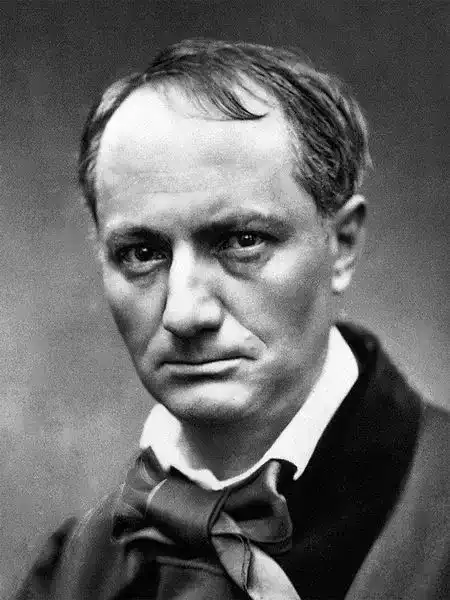
Charles Baudelaire
My Earlier Life
I've been home a long time among the vast porticos,
Which the mariner sun has tinged with a million fires,
Whose grandest pillars, upright, majestic and cold
Render them the same, this evening, as caves with basalt spires.
The swells' overwhelming accords of rich music,
Heaving images of heaven to the skies,
Mingle in a way solemn and mystic
With the colors of the horizon reflected by my eyes.
It was here I was true to the voluptuous calm,
The milieu of azure, the waves, the splendors,
And the nude slaves, all impregnated with odors,
Who refreshed my brow with waving palms
My only care to bring to meaning from anguish
The sad secret in which I languish.
Translated by William A. Sigler
559
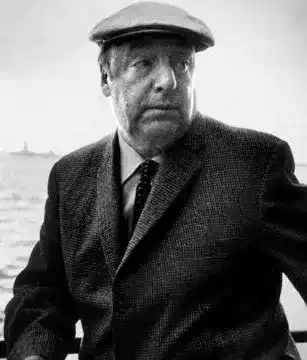
Pablo Neruda
Sonnet XIII:The light that rises from your feet to your hair
The light that rises from your feet to your hair,
the strength enfolding your delicate form,
are not mother of pearl, not chilly silver:
you are made of bread, a bread the fire adores.
The grain grew high in its harvest of you,
in good time the flour swelled;
as the dough rose, doubling your breasts,
my love was the coal waiting ready in the earth.
Oh, bread your forehead, your legs, your mouth,
bread I devour, born with the morning light,
my love, beacon-flag of the bakeries:
fire taugh you a lesson of the blood;
you learned your holiness from flour,
from bread your language and aroma.
558

John Milton
On The Death Of A Fair Infant Dying Of A Cough
I
O fairest flower no sooner blown but blasted,
Soft silken Primrose fading timelesslie,
Summers chief honour if thou hadst outlasted
Bleak winters force that made thy blossome drie;
For he being amorous on that lovely die
That did thy cheek envermeil, thought to kiss
But kill'd alas, and then bewayl'd his fatal bliss.
II
For since grim Aquilo his charioter
By boistrous rape th' Athenian damsel got,
He thought it toucht his Deitie full neer,
If likewise he some fair one wedded not,
Thereby to wipe away th' infamous blot,
Of long-uncoupled bed, and childless eld,
Which 'mongst the wanton gods a foul reproach was held.
III
So mounting up in ycie-pearled carr,
Through middle empire of the freezing aire
He wanderd long, till thee he spy'd from farr,
There ended was his quest, there ceast his care
Down he descended from his Snow-soft chaire,
But all unwares with his cold-kind embrace
Unhous'd thy Virgin Soul from her fair hiding place.
IV
Yet art thou not inglorious in thy fate;
For so Apollo, with unweeting hand
Whilome did slay his dearly-loved mate
Young Hyacinth born on Eurotas' strand,
Young Hyacinth the pride of Spartan land;
But then transform'd him to a purple flower
Alack that so to change thee winter had no power.
V
Yet can I not perswade me thou art dead
Or that thy coarse corrupts in earths dark wombe,
Or that thy beauties lie in wormie bed,
Hid from the world in a low delved tombe;
Could Heav'n for pittie thee so strictly doom?
O no! for something in thy face did shine
Above mortalitie that shew'd thou wast divine.
VI
Resolve me then oh Soul most surely blest
(If so it be that thou these plaints dost hear)
Tell me bright Spirit where e're thou hoverest
Whether above that high first-moving Spheare
Or in the Elisian fields (if such there were.)
Oh say me true if thou wert mortal wight
And why from us so quickly thou didst take thy flight.
VII
Wert thou some Starr which from the ruin'd roofe
Of shak't Olympus by mischance didst fall;
Which carefull Jove in natures true behoofe
Took up, and in fit place did reinstall?
Or did of late earths Sonnes besiege the wall
Of sheenie Heav'n, and thou some goddess fled
Amongst us here below to hide thy nectar'd head
VIII
Or wert thou that just Maid who once before
Forsook the hated earth, O tell me sooth
And cam'st again to visit us once more?
Or wert thou that sweet smiling Youth!
Or that c[r]own'd Matron sage white-robed Truth?
Or any other of that heav'nly brood
Let down in clowdie throne to do the world some good.
Note: 53 Or wert thou] Or wert thou Mercy -- conjectured by
John Heskin Ch. Ch. Oxon. from Ode on Nativity, st. 15.
IX
Or wert thou of the golden-winged boast,
Who having clad thy self in humane weed,
To earth from thy praefixed seat didst poast,
And after short abode flie back with speed,
As if to shew what creatures Heav'n doth breed,
Thereby to set the hearts of men on fire
To scorn the sordid world, and unto Heav'n aspire.
X
But oh why didst thou not stay here below
To bless us with thy heav'n-lov'd innocence,
To slake his wrath whom sin hath made our foe
To turn Swift-rushing black perdition hence,
Or drive away the slaughtering pestilence,
To stand 'twixt us and our deserved smart
But thou canst best perform that office where thou art.
XI
Then thou the mother of so sweet a child
Her false imagin'd loss cease to lament,
And wisely learn to curb thy sorrows wild;
Think what a present thou to God hast sent,
And render him with patience what he lent;
This if thou do he will an off-spring give,
That till the worlds last-end shall make thy name to live.
561

Ezra Pound
Na Audiart
Though thou well dost wish me ill
Audiart, Audiart,
Where thy bodice laces start
As ivy fingers clutching through
Its crevices,
Audiart, Audiart,
Stately, tall and lovely tender
Who shall render
Audiart, Audiart,
Praises meet unto thy fashion?
Here a word kiss !
Pass I on
Unto Lady ‘Miels-de-Ben’,
Having praised thy girdle's scope
How the stays ply back from it;
I breath no hope
That thou shouldst . . .
Nay no whit
Bespeak thyself for anything.
Just a word in thy praise, girl,
Just for the swirl
Thy satins make upon the stair,
'Cause never a flaw was there
Where thy torse and limbs are met
Though thou hate me, read it set
In rose and gold.
Or when the minstrel, tale half told,
Shall burst to lilting at the praise
'Audiart, Audiart' . .
Bertrans, master of his lays,
Bertrans of Aultaforte thy praise
Sets forth, and though thou hate me well,
Yea though thou wish me ill,
Audiart, Audiart.
Thy loveliness is here writ till,
Audiart,
Oh, till thou come again.
And being bent and wrinkled, in a form
That hath no perfect limning, when the warm
Youth dew is cold
Upon thy hands, and thy old soul
Scorning a new, wry'd casement,
Churlish at seemed misplacement,
Finds the earth as bitter
As now seems it sweet,
Being so young and fair
As then only in dreams,
Being then young and wry'd,
Broken of ancient pride,
Thou shalt then soften,
Knowing, I know not how,
Thou wert once she
Audiart, Audiart
For whose fairness one forgave
Audiart,
Audiart
Que be-m vols mal.
Audiart, Audiart,
Where thy bodice laces start
As ivy fingers clutching through
Its crevices,
Audiart, Audiart,
Stately, tall and lovely tender
Who shall render
Audiart, Audiart,
Praises meet unto thy fashion?
Here a word kiss !
Pass I on
Unto Lady ‘Miels-de-Ben’,
Having praised thy girdle's scope
How the stays ply back from it;
I breath no hope
That thou shouldst . . .
Nay no whit
Bespeak thyself for anything.
Just a word in thy praise, girl,
Just for the swirl
Thy satins make upon the stair,
'Cause never a flaw was there
Where thy torse and limbs are met
Though thou hate me, read it set
In rose and gold.
Or when the minstrel, tale half told,
Shall burst to lilting at the praise
'Audiart, Audiart' . .
Bertrans, master of his lays,
Bertrans of Aultaforte thy praise
Sets forth, and though thou hate me well,
Yea though thou wish me ill,
Audiart, Audiart.
Thy loveliness is here writ till,
Audiart,
Oh, till thou come again.
And being bent and wrinkled, in a form
That hath no perfect limning, when the warm
Youth dew is cold
Upon thy hands, and thy old soul
Scorning a new, wry'd casement,
Churlish at seemed misplacement,
Finds the earth as bitter
As now seems it sweet,
Being so young and fair
As then only in dreams,
Being then young and wry'd,
Broken of ancient pride,
Thou shalt then soften,
Knowing, I know not how,
Thou wert once she
Audiart, Audiart
For whose fairness one forgave
Audiart,
Audiart
Que be-m vols mal.
550

Robert Browning
Love Among The Ruins
I.
Where the quiet-coloured end of evening smiles,
Miles and miles
On the solitary pastures where our sheep
Half-asleep
Tinkle homeward thro' the twilight, stray or stop
As they crop---
Was the site once of a city great and gay,
(So they say)
Of our country's very capital, its prince
Ages since
Held his court in, gathered councils, wielding far
Peace or war.
II.
Now,---the country does not even boast a tree,
As you see,
To distinguish slopes of verdure, certain rills
From the hills
Intersect and give a name to, (else they run
Into one)
Where the domed and daring palace shot its spires
Up like fires
O'er the hundred-gated circuit of a wall
Bounding all,
Made of marble, men might march on nor be pressed,
Twelve abreast.
III.
And such plenty and perfection, see, of grass
Never was!
Such a carpet as, this summer-time, o'erspreads
And embeds
Every vestige of the city, guessed alone,
Stock or stone---
Where a multitude of men breathed joy and woe
Long ago;
Lust of glory pricked their hearts up, dread of shame
Struck them tame;
And that glory and that shame alike, the gold
Bought and sold.
IV.
Now,---the single little turret that remains
On the plains,
By the caper overrooted, by the gourd
Overscored,
While the patching houseleek's head of blossom winks
Through the chinks---
Marks the basement whence a tower in ancient time
Sprang sublime,
And a burning ring, all round, the chariots traced
As they raced,
And the monarch and his minions and his dames
Viewed the games.
V.
And I know, while thus the quiet-coloured eve
Smiles to leave
To their folding, all our many-tinkling fleece
In such peace,
And the slopes and rills in undistinguished grey
Melt away---
That a girl with eager eyes and yellow hair
Waits me there
In the turret whence the charioteers caught soul
For the goal,
When the king looked, where she looks now, breathless, dumb
Till I come.
VI.
But he looked upon the city, every side,
Far and wide,
All the mountains topped with temples, all the glades'
Colonnades,
All the causeys, bridges, aqueducts,---and then,
All the men!
When I do come, she will speak not, she will stand,
Either hand
On my shoulder, give her eyes the first embrace
Of my face,
Ere we rush, ere we extinguish sight and speech
Each on each.
VII.
In one year they sent a million fighters forth
South and North,
And they built their gods a brazen pillar high
As the sky,
Yet reserved a thousand chariots in full force---
Gold, of course.
Oh heart! oh blood that freezes, blood that burns!
Earth's returns
For whole centuries of folly, noise and sin!
Shut them in,
With their triumphs and their glories and the rest!
Love is best.
550
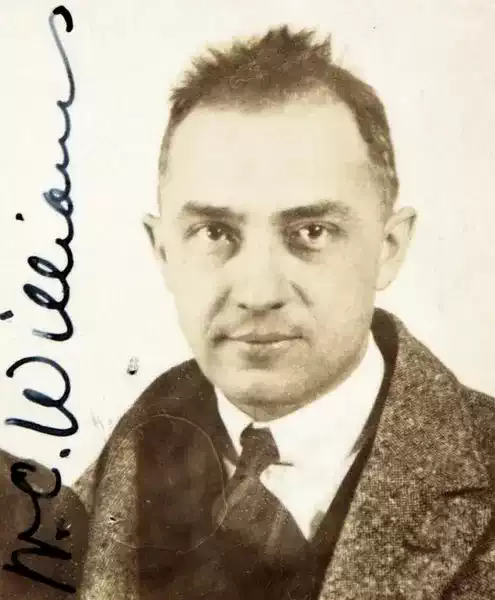
William Carlos Williams
A Celebration
A middle-northern March, now as always--
gusts from the South broken against cold winds--
but from under, as if a slow hand lifted a tide,
it moves--not into April--into a second March,
the old skin of wind-clear scales dropping
upon the mold: this is the shadow projects the tree
upward causing the sun to shine in his sphere.
So we will put on our pink felt hat--new last year!
--newer this by virtue of brown eyes turning back
the seasons--and let us walk to the orchid-house,
see the flowers will take the prize tomorrow
at the Palace.
Stop here, these are our oleanders.
When they are in bloom--
You would waste words
It is clearer to me than if the pink
were on the branch. It would be a searching in
a colored cloud to reveal that which now, huskless,
shows the very reason for their being.
And these the orange-trees, in blossom--no need
to tell with this weight of perfume in the air.
If it were not so dark in this shed one could better
see the white.
It is that very perfume
has drawn the darkness down among the leaves.
Do I speak clearly enough?
It is this darkness reveals that which darkness alone
loosens and sets spinning on waxen wings--
not the touch of a finger-tip, not the motion
of a sigh. A too heavy sweetness proves
its own caretaker.
And here are the orchids!
Never having seen
such gaiety I will read these flowers for you:
This is an odd January, died--in Villon's time.
Snow, this is and this the stain of a violet
grew in that place the spring that foresaw its own doom.
And this, a certain July from Iceland:
a young woman of that place
breathed it toward the South. It took root there.
The color ran true but the plant is small.
This falling spray of snow-flakes is
a handful of dead Februaries
prayed into flower by Rafael Arevalo Martinez
of Guatemala.
Here's that old friend who
went by my side so many years: this full, fragile
head of veined lavender. Oh that April
that we first went with our stiff lusts
leaving the city behind, out to the green hill--
May, they said she was. A hand for all of us:
this branch of blue butterflies tied to this stem.
June is a yellow cup I'll not name; August
the over-heavy one. And here are--
russet and shiny, all but March. And March?
Ah, March--
Flowers are a tiresome pastime.
One has a wish to shake them from their pots
root and stem, for the sun to gnaw.
Walk out again into the cold and saunter home
to the fire. This day has blossomed long enough.
I have wiped out the red night and lit a blaze
instead which will at least warm our hands
and stir up the talk.
I think we have kept fair time.
Time is a green orchard.
553

Kazi Nazrul Islam
In the Desert's Sandy Vastness
In the desert's sandy vastness blossomed a bright flower
whose fragrance enamoured the universe.
The moon and tile sun,
the planets and the stars,
all wanted to possess it
The limitless sky bent low
in order to kiss it.
The brightness of that flower
Lit up God's throne.
Wrapping around her its many splendoured hue
the earth grew radiant.
Into the garden of that flower
flew a million birds a
and to clasp it in their breasts
yearned the leaves and the branches
of a thousand trees.
Men, angels, fairies - all craved it.
Saints, emperors and the penniless poor
all wanted to weave a garland
and wear it around their neck.
The nightingale and the bee knew
where to find that flower.
Some called it Hazrat Mohammad,
some simply 'Kamliwallah'!
[Original: Saharate Futlo Re; Translation: Kabir Chowdhury]
550
John Milton
Arcades
Part of an entertainment presented to the Countess Dowager of
Darby at Harefield, by som Noble persons of her Family, who
appear on the Scene in pastoral habit, moving toward the seat
of State with this Song.
I. SONG.
Look Nymphs, and Shepherds look,
What sudden blaze of majesty
Is that which we from hence descry
Too divine to be mistook:
This this is she
To whom our vows and wishes bend,
Heer our solemn search hath end.
Fame that her high worth to raise,
Seem'd erst so lavish and profuse,
We may justly now accuse
Of detraction from her praise,
Less then half we find exprest,
Envy bid conceal the rest.
Mark what radiant state she spreds,
In circle round her shining throne,
Shooting her beams like silver threds,
This this is she alone,
Sitting like a Goddes bright,
In the center of her light.
Might she the wise Latona be,
Or the towred Cybele,
Mother of a hunderd gods;
Juno dare's not give her odds;
Who had thought this clime had held
A deity so unparalel'd?
As they com forward, the genius of the Wood appears, and
turning toward them, speaks.
GEN. Stay gentle Swains, for though in this disguise,
I see bright honour sparkle through your eyes,
Of famous Arcady ye are, and sprung
Of that renowned flood, so often sung,
Divine Alpheus, who by secret sluse,
Stole under Seas to meet his Arethuse;
And ye the breathing Roses of the Wood,
Fair silver-buskind Nymphs as great and good,
I know this quest of yours, and free intent
Was all in honour and devotion ment
To the great Mistres of yon princely shrine,
Whom with low reverence I adore as mine,
And with all helpful service will comply
To further this nights glad solemnity;
And lead ye where ye may more neer behold
What shallow-searching Fame hath left untold;
Which I full oft amidst these shades alone
Have sate to wonder at, and gaze upon:
For know by lot from Jove I am the powr
Of this fair wood, and live in Oak'n bowr,
To nurse the Saplings tall, and curl the grove
With Ringlets quaint, and wanton windings wove.
And all my Plants I save from nightly ill,
Of noisom winds, and blasting vapours chill.
And from the Boughs brush off the evil dew,
And heal the harms of thwarting thunder blew,
Or what the cross dire-looking Planet smites,
Or hurtfull Worm with canker'd venom bites.
When Eev'ning gray doth rise, I fetch my round
Over the mount, and all this hallow'd ground,
And early ere the odorous breath of morn
Awakes the slumbring leaves, or tasseld horn
Shakes the high thicket, haste I all about,
Number my ranks, and visit every sprout
With puissant words, and murmurs made to bless,
But els in deep of night when drowsines
Hath lockt up mortal sense, then listen I
To the celestial Sirens harmony,
That sit upon the nine enfolded Sphears,
And sing to those that hold the vital shears,
And turn the Adamantine spindle round,
On which the fate of gods and men is wound.
Such sweet compulsion doth in musick ly,
To lull the daughters of Necessity,
And keep unsteddy Nature to her law,
And the low world in measur'd motion draw
After the heavenly tune, which none can hear
Of human mould with grosse unpurged ear;
And yet such musick worthiest were to blaze
The peerles height of her immortal praise,
Whose lustre leads us, and for her most fit,
If my inferior hand or voice could hit
Inimitable sounds, yet as we go,
What ere the skill of lesser gods can show,
I will assay, her worth to celebrate,
And so attend ye toward her glittering state;
Where ye may all that are of noble stemm
Approach, and kiss her sacred vestures hemm.
2. SONG.
O're the smooth enameld green
Where no print of step hath been,
Follow me as I sing,
And touch the warbled string.
Under the shady roof
Of branching Elm Star-proof,
Follow me,
I will bring you where she sits
Clad in splendor as befits
Her deity.
Such a rural Queen
All Arcadia hath not seen.
3. SONG.
Nymphs and Shepherds dance no more
By sandy Ladons Lillied banks.
On old Lycaeus or Cyllene hoar,
Trip no more in twilight ranks,
Though Erynanth your loss deplore,
A better soyl shall give ye thanks.
From the stony Maenalus,
Bring your Flocks, and live with us,
Here ye shall have greater grace,
To serve the Lady of this place.
Though Syrinx your Pans Mistres were,
Yet Syrinx well might wait on her.
Such a rural Queen
All Arcadia hath not seen.
Note: 22 hunderd] Milton's own spelling here is hundred. But in
the Errata to Paradise Lost (i. 760) he corrects hundred to hunderd.
549
Ezra Pound
Apparuit
Golden rose the house, in the portal I saw
thee, a marvel, carven in subtle stuff, a
portent. Life died down in the lamp and flickered,
caught at the wonder.
Crimson, frosty with dew, the roses bend where
thou afar, moving in the glamorous sun,
drinkst in life of earth, of the air, the tissue
golden about thee.
Green the ways, the breath of the fields is thine there,
open lies the land, yet the steely going
darkly hast thou dared and the dreaded aether
parted before thee.
Swift at courage thou in the shell of gold, casting
a-loose the cloak of the body, earnest
straight, then shone thine oriel and the stunned light
faded about thee.
Half the graven shoulder, the throat aflash with
strands of light inwoven about it, loveliest
of all things, frail alabaster, ah me!
swift in departing.
Clothed in goldish weft, delicately perfect,
gone as wind ! The cloth of the magical hands!
Thou a slight thing, thou in access of cunning
dar'dst to assume this?
553
Pablo Neruda
Ode to a Large Tuna in the Market
Among the market greens,
a bullet
from the ocean
depths,
a swimming
projectile,
I saw you,
dead.
All around you
were lettuces,
sea foam
of the earth,
carrots,
grapes,
but
of the ocean
truth,
of the unknown,
of the
unfathomable
shadow, the
depths
of the sea,
the abyss,
only you had survived,
a pitch-black, varnished
witness
to deepest night.
Only you, well-aimed
dark bullet
from the abyss,
mangled
at one tip,
but constantly
reborn,
at anchor in the current,
winged fins
windmilling
in the swift
flight
of
the
marine
shadow,
a mourning arrow,
dart of the sea,
olive, oily fish.
I saw you dead,
a deceased king
of my own ocean,
green
assault, silver
submarine fir,
seed
of seaquakes,
now
only dead remains,
yet
in all the market
yours
was the only
purposeful form
amid
the bewildering rout
of nature;
amid the fragile greens
you were
a solitary ship,
armed
among the vegetables
fin and prow black and oiled,
as if you were still
the vessel of the wind,
the one and only
pure
ocean
machine:
unflawed, navigating
the waters of death.
550
Kazi Nazrul Islam
Ting-A-Ling, Ting-A-Ling, Ting-A-Ling
Ting-a-ling, ting-a-ling, ting-a-ling,
Who goes there stepping over the date leaves
Raising a melodious jingling?
Her scarf flutters in the dancing wind,
Her steps scatter flowers on the rocky road.
As she trips gaily on
Her arched eyebrows sparkle like a sword,
And her feet kick tiny stones
Scattering them like a jewelled necklace.
She is pretty as the peach blossoms,
And even the young Eid-moon is in love with her.
It pines for her rosy cheeks.
She is a, mirage and a vision rare
Many a prince riding an Arab mare
Sought her in vain in Sahara's desert sands.
For her many a young traveller
Lost their lives in strange, far-off lands.
And, lured by her haunting charm,
Died, many a forest deer.
[Original: Rum jhum jhum jhum; Translation: Kabir Chowdhury]
542
Ezra Pound
The New Cake Of Soap
Lo, how it gleams and glistens in the sun
Like the cheek of a Chesterton.
Like the cheek of a Chesterton.
546
Kazi Nazrul Islam
By the Wood
Who walks by the woods,
methink, he is known to me.
Beating night's silence in rhythmic patterns
his jingles ring onmidnight
wakes up in curly hair
setting a fountain in my stony bosom.
[Original: Bono pothe ke jay; Translation: Mohammad Nurul Huda]
methink, he is known to me.
Beating night's silence in rhythmic patterns
his jingles ring onmidnight
wakes up in curly hair
setting a fountain in my stony bosom.
[Original: Bono pothe ke jay; Translation: Mohammad Nurul Huda]
547
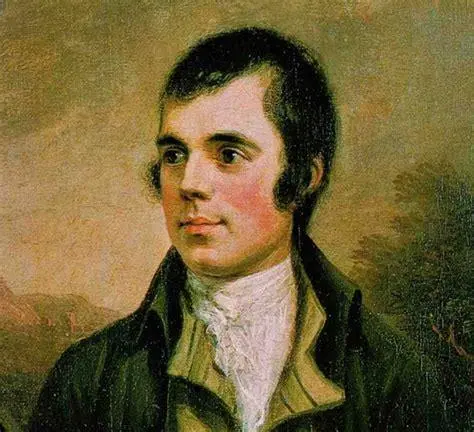
Robert Burns
The Lass That Made the Bed to Me
When Januar' wind was blawing cauld,
As to the north I took my way,
The mirksome night did me enfauld,
I knew na whare to lodge till day:
By my gude luck a maid I met,
Just in the middle o' my care,
And Kindly she did me invite
To walk into a chamber fair.
I bow'd fu' low unto this maid,
And thank'd her for her courtesie;
I bow'd fu' low unto this maid,
An bade her make a bed to me;
She made the bed baith large and wide,
Wi' twa white hands she spread it doun;
She put the cup to her rosy lips,
And drank - "Young man, now sleep ye soun'."
Chorus - The bonie lass made the bed to me,
The braw lass made the bed to me,
I'll ne'er forget till the day I die,
The lass that made the bed to me.
She snatch'd the candle in her hand,
And frae my chamber went wi' speed;
But I call'd her quickly back again,
To lay some mair below my head:
A cod she laid below my head,
And served me with due respect,
And, to salute her wi' a kis,
I put my arms about her neck.
Chorus: -...
"Haud aff your hands, young man! she said,
"And dinna sae uncivil be;
Gif ye hae ony luve for me,
O wrang ma my virginitie."
Her hair was like the links o' gowd,
Her teeth were like the ivorie,
Her cheeks like lilies dipt in wine,
The lass that made the bed to me.
Chorus: -...
Her bosom was the driven snaw,
Twa drifted heaps sae fair to see;
Her limbs the polish'd marble stane,
The lass that made the bed to me.
I kiss'd her o'er and o'er again,
And aye she wist na what to say:
I laid her 'tween me and the wa';
The lassie thocht na lang till day.
Chorus: -...
Upon the morrow when we raise,
I thank'd her for her courtesie;
But aye she blush'd and aye she sigh'd,
And said, "Alas, ye've ruin'd me."
I clasp'd her waist, and kiss'd her syne,
While the tear stood twinklin' in her e'e;
I said, "My lassie, dinna cry,
For ye aye shall make the bed to me."
Chorus: - ...
She took her mither's holland sheets,
An' made them a' in sarks to me;
Blythe and merry may she be,
The lass that made the bed to me.
Chorus: -...
545
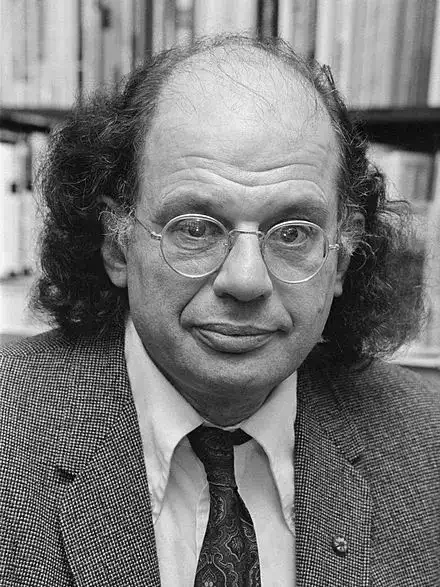
Allen Ginsberg
An Asphodel
O dear sweet rosy
unattainable desire
...how sad, no way
to change the mad
cultivated asphodel, the
visible reality...
and skin's appalling
petals--how inspired
to be so Iying in the living
room drunk naked
and dreaming, in the absence
of electricity...
over and over eating the low root
of the asphodel,
gray fate...
rolling in generation
on the flowery couch
as on a bank in Arden-my
only rose tonite's the treat
of my own nudity.
544
Pablo Neruda
Lovely One
Lovely one,
Just as on the cool stone
Of the spring, the water
Opens a wide flash of foam,
So is the smile of your face,
Lovely one.
Lovely one,
With delicate hands and slender feet
Like a silver pony,
Walking, flower of the world,
Thus I see you,
Lovely one.
Lovely one,
With a nest of copper entangled
On your head, a nest
The colo
Ur of dark honey
Where my heart burns and rests,
Lovely one.
Lovely one,
Your eyes are too big for your face,
Your eyes are too big for the earth.
There are countries, there are rivers,
In your eyes,
My country is your eyes,
I walk through them,
They light the world
Through which I walk,
Lovely one.
Lovely one,
Your breasts are like two loaves made
Of grainy earth and golden moon,
Lovely one.
Lovely one,
Your waist,
My arm shaped it like a river when
It flowed a thousand years through your sweet body,
Lovely one.
Lovely one,
There is nothing like your hips,
Perhaps earth has
In some hidden place
The curve and the fragrance of your body,
Perhaps in some place,
Lovely one.
Lovely one, my lovely one,
Your voice, your skin, your nails,
Lovely one, my lovely one,
Your being, your light, your shadow,
Lovely one,
All that is mine, lovely one,
All that is mine, my dear,
When you walk or rest,
When you sing or sleep,
When you suffer or dream,
Always,
When you are near or far,
Always,
You are mine, my lovely one,
Always.
543
Pablo Neruda
The Queen
I have named you queen.
There are taller than you, taller.
There are purer than you, purer.
There are lovelier than you, lovelier.
But you are the queen.
When you go through the streets
No one recognizes you.
No one sees your crystal crown, no one looks
At the carpet of red gold
That you tread as you pass,
The nonexistent carpet.
And when you appear
All the rivers sound
In my body, bells
Shake the sky,
And a hymn fills the world.
Only you and I,
Only you and I, my love,
Listen to me.
LA REINA
Yo te he nombrado reina.
Hay más altas que tú, más altas.
Hay más puras que tú, más puras.
Hay más bellas que tú, hay más bellas.
Pero tú eres la reina.
Cuando vas por las calles
nadie te reconoce.
Nadie ve tu corona de cristal, nadie mira
la alfombra de oro rojo
que pisas donde pasas,
la alfombra que no existe.
Y cuando asomas
suenan todos los ríos
en mi cuerpo, sacuden
el cielo las campanas,
y un himno llena el mundo.
Sólo tú y yo,
sólo tú y yo, amor mío,
lo escuchamos.
539
Charles Baudelaire
Correspondences
Nature is a temple whose living colonnades
Breathe forth a mystic speech in fitful sighs;
Man wanders among symbols in those glades
Where all things watch him with familiar eyes.
Like dwindling echoes gathered far away
Into a deep and thronging unison
Huge as the night or as the light of day,
All scents and sounds and colors meet as one.
Perfumes there are as sweet as the oboe's sound,
Green as the prairies, fresh as a child's caress,
- And there are others, rich, corrupt, profound
And of an infinite pervasiveness,
Like myrrh, or musk, or amber, the excite
The ecstasies of sense, the soul's delight.
533

Paul Laurence Dunbar
Common Things
I like to hear of wealth and gold,
And El Doradoes in their glory;
I like for silks and satins bold
To sweep and rustle through a story.
The nightingale is sweet of song;
The rare exotic smells divinely;
And knightly men who stride along,
The role heroic carry finely.
But then, upon the other hand,
Our minds have got a way of running
To things that aren't quite so grand,
Which, maybe, we are best in shunning.
For some of us still like to see
The poor man in his dwelling narrow,
The hollyhock, the bumblebee,
The meadow lark, and chirping sparrow.
We like the man who soars and sings
With high and lofty inspiration;
But he who sings of common things
Shall always share our admiration.
536
Ezra Pound
Night Litany
O Dieu, purifiez nos cceurs!
Purifiez nos coeurs !
Yea the lines hast thou laid unto me
in pleasant places,
And the beauty of this thy Venice
hast thou shown unto me
Until is its loveliness become unto me
a thing of tears.
O God, what great kindness
have we done in times past
and forgotten it,
That thou givest this wonder unto us,
O God of waters?
O God of the night,
What great sorrow
Cometh unto us,
That thou thus repayest us
Before the time of its coming?
O God of silence,
Purifiez nos coeurs,
Purifiez nos coeurs,
For we have seen
The glory of the shadow of the
likeness of thine handmaid,
Yea, the glory of the shadow
of thy Beauty hath walked
Upon the shadow of the waters
In this thy Venice.
And before the holiness
Of the shadow of thy handmaid
Have I hidden mine eyes,
O God of waters.
O God of silence,
Purifiez nos coeurs,
Purifiez nos coeurs,
O God of waters,
make clean our hearts within us,
For I have seen the
Shadow of this thy Venice
Floating upon the waters,
And thy stars
Have seen this thing, out of their far courses
Have they seen this thing,
O God of waters,
Even as are thy stars
Silent unto us in their far-coursing,
Even so is mine heart
become silent within me.
Purifiez nos coeurs,
O God of the silence,
Purifiez nos coeurs,
O God of waters.
534

William Wordsworth
Ode, Composed On A May Morning
While from the purpling east departs
The star that led the dawn,
Blithe Flora from her couch upstarts,
For May is on the lawn.
A quickening hope, a freshening glee,
Foreran the expected Power,
Whose first-drawn breath, from bush and tree,
Shakes off that pearly shower.
All Nature welcomes Her whose sway
Tempers the year's extremes;
Who scattereth lustres o'er noon-day,
Like morning's dewy gleams;
While mellow warble, sprightly trill,
The tremulous heart excite;
And hums the balmy air to still
The balance of delight.
Time was, blest Power! when youth and maids
At peep of dawn would rise,
And wander forth, in forest glades
Thy birth to solemnize.
Though mute the song---to grace the rite
Untouched the hawthorn bough,
Thy Spirit triumphs o'er the slight;
Man changes, but not Thou!
Thy feathered Lieges bill and wings
In love's disport employ;
Warmed by thy influence, creeping things
Awake to silent joy:
Queen art thou still for each gay plant
Where the slim wild deer roves;
And served in depths where fishes haunt
Their own mysterious groves.
Cloud-piercing peak, and trackless heath,
Instinctive homage pay;
Nor wants the dim-lit cave a wreath
To honor thee, sweet May!
Where cities fanned by thy brisk airs
Behold a smokeless sky,
Their puniest flower-pot-nursling dares
To open a bright eye.
And if, on this thy natal morn,
The pole, from which thy name
Hath not departed, stands forlorn
Of song and dance and game;
Still from the village-green a vow
Aspires to thee addrest,
Wherever peace is on the brow,
Or love within the breast.
Yes! where Love nestles thou canst teach
The soul to love the more;
Hearts also shall thy lessons reach
That never loved before.
Stript is the haughty one of pride,
The bashful freed from fear,
While rising, like the ocean-tide,
In flow the joyous year.
Hush, feeble lyre! weak words refuse
The service to prolong!
To yon exulting thrush the Muse
Entrusts the imperfect song;
His voice shall chant, in accents clear,
Throughout the live-long day,
Till the first silver star appear,
The sovereignty of May.
531

Rabindranath Tagore
Lover's Gifts LIV: In the Beginning of Time
In the beginning of time, there rose from the churning of God's
dream two women. One is the dancer at the court of paradise, the
desired of men, she who laughs and plucks the minds of the wise
from their cold meditations and of fools from their emptiness; and
scatters them like seeds with careless hands in the extravagant
winds of March, in the flowering frenzy of May.
The other is the crowned queen of heaven, the mother, throned
on the fullness of golden autumn; she who in the harvest-time
brings straying hearts to the smile sweet as tears, the beauty deep
as the sea of silence, -brings them to the temple of the Unknown,
at the holy confluence of Life and Death.
529

Claude Mckay
Summer Morn in New Hampshire
All yesterday it poured, and all night long
I could not sleep; the rain unceasing beat
Upon the shingled roof like a weird song,
Upon the grass like running children's feet.
And down the mountains by the dark cloud kissed,
Like a strange shape in filmy veiling dressed,
Slid slowly, silently, the wraith-like mist,
And nestled soft against the earth's wet breast.
But lo, there was a miracle at dawn!
The still air stirred at touch of the faint breeze,
The sun a sheet of gold bequeathed the lawn,
The songsters twittered in the rustling trees.
And all things were transfigured in the day,
But me whom radiant beauty could not move;
For you, more wonderful, were far away,
And I was blind with hunger for your love.
529
