
Friendship
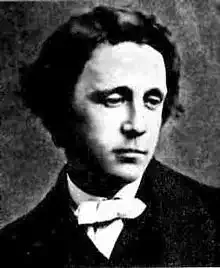
Lewis Carroll
Another Acrostic ( In the style of Father William )
"Are you deaf, Father William!" the young man said,
"Did you hear what I told you just now?
"Excuse me for shouting! Don't waggle your head
"Like a blundering, sleepy old cow!
"A little maid dwelling in Wallington Town,
"Is my friend, so I beg to remark:
"Do you think she'd be pleased if a book were sent down
"Entitled 'The Hunt of the Snark?'"
"Pack it up in brown paper!" the old man cried,
"And seal it with oliveanddove.
"I command you to do it!" he added with pride,
"Nor forget, my good fellow to send her beside
"Easter Greetings, and give her my love."
468

Walt Whitman
Among The Multitude
AMONG the men and women, the multitude,
I perceive one picking me out by secret and divine signs,
Acknowledging none else--not parent, wife, husband, brother, child,
any nearer than I am;
Some are baffled--But that one is not--that one knows me.
Ah, lover and perfect equal!
I meant that you should discover me so, by my faint indirections;
And I, when I meet you, mean to discover you by the like in you.
470

Johann Wolfgang von Goethe
To The Moon
BUSH and vale thou fill'st again
With thy misty ray,
And my spirit's heavy chain
Castest far away.
Thou dost o'er my fields extend
Thy sweet soothing eye,
Watching like a gentle friend,
O'er my destiny.
Vanish'd days of bliss and woe
Haunt me with their tone,
Joy and grief in turns I know,
As I stray alone.
Stream beloved, flow on! flow on!
Ne'er can I be gay!
Thus have sport and kisses gone,
Truth thus pass'd away.
Once I seem'd the lord to be
Of that prize so fair!
Now, to our deep sorrow, we
Can forget it ne'er.
Murmur, stream, the vale along,
Never cease thy sighs;
Murmur, whisper to my song
Answering melodies!
When thou in the winter's night
Overflow'st in wrath,
Or in spring-time sparklest bright,
As the buds shoot forth.
He who from the world retires,
Void of hate, is blest;
Who a friend's true love inspires,
Leaning on his breast!
That which heedless man ne'er knew,
Or ne'er thought aright,
Roams the bosom's labyrinth through,
Boldly into night.
466

Edward Lear
The Duck and the Kangaroo
Said the Duck to the Kangaroo,
'Good gracious! how you hop!
Over the fields and the water too,
As if you never would stop!
My life is a bore in this nasty pond,
And I long to go out in the world beyond!
I wish I could hop like you!'
Said the Duck to the Kangaroo.
'Please give me a ride on your back!'
Said the Duck to the Kangaroo.
'I would sit quite still, and say nothing but 'Quack',
The whole of the long day through!
And we'd go to the Dee, and the Jelly Bo Lee,
Over the land, and over the sea;
Please take me a ride! O do!'
Said the Duck to the Kangaroo.
Said the Kangaroo to the Duck,
'This requires some little reflection;
Perhaps on the whole it might bring me luck,
And there seems but one objection,
Which is, if you'll let me speak so bold,
Your feet are unpleasantly wet and cold,
And would probably give me the roo-
Matiz!' said the Kangaroo.
Said the Duck, 'As I sat on the rocks,
I have thought over that completely,
And I bought four pairs of worsted socks
Which fit my web-feet neatly.
And to keep out the cold I've bought a cloak,
And every day a cigar I'll smoke,
All to follow my own dear true
Love of a Kangaroo!'
Said the Kangaroo, 'I'm ready!
'All in the moonlight pale;
'But to balance me well, dear Duck, sit steady!
'And quite at the end of my tail!'
So away they went with a hop and a bound,
And they hopped the whole world three times round;
And who so happy - O who,
As the Duck and the Kangaroo?
469
Walt Whitman
Song of Myself, XI
Twenty-eight young men bathe by the shore,
Twenty-eight young men and all so friendly;
Twenty-eight years of womanly life and all so lonesome.
She owns the fine house by the rise of the bank,
She hides handsome and richly drest aft the blinds of the window.
Which of the young men does she like the best?
Ah the homeliest of them is beautiful to her.
Where are you off to, lady? for I see you,
You splash in the water there, yet stay stock still in your room.
Dancing and laughing along the beach came the twenty-ninth bather,
The rest did not see her, but she saw them and loved them.
The beards of the young men glisten'd with wet, it ran from their long
hair,
Little streams pass'd over their bodies.
An unseen hand also pass'd over their bodies,
It descended trembling from their temples and ribs.
The young men float on their backs, their white bellies bulge to the sun,
they do not ask who seizes fast to them,
They do not know who puffs and declines with the pendant and bending
arch,
They do not think whom they souse with spray.
462

Ella Wheeler Wilcox
Worthy The Name of Sir Knight
I
Sir Knight of the world's oldest order,
Sir Knight of the Army of God,
You have crossed the strange mystical border,
The ground floor of truth you have trod;
You have entered the sanctum sanctorum,
Which leads to the temple above,
Where you come as a stone, and a Christ-chosen one,
In the kingdom of Friendship and Love.
II
As you stand in this new realm of beauty,
Where each man you meet is your friend,
Think not that your promise of duty
In hall, or asylum, shall end;
Outside, in the great world of pleasure,
Beyond, in the clamor of trade,
In the battle of life and its coarse daily strife
Remember the vows you have made.
III
Your service, majestic and solemn,
Your symbols, suggestive and sweet,
Your uniformed phalanx in column
On gala days marching the street;
Your sword and your plume and your helmet,
Your 'secrets' hid from the world's sight;
These things are the small, lesser parts of the all
Which are needed to form the true Knight.
IV
The martyrs who perished rejoicing
In Templary's glorious laws,
Who died 'midst the fagots while voicing
The glory and worth of their cause-
They honored the title of 'Templar'
No more than the Knight of to-day
Who mars not the name with one blemish of shame,
But carries it clean through life's fray.
V
To live for a cause, to endeavor
To make your deeds grace it, to try
And uphold its precepts forever,
Is harder by far than to die.
For the battle of life is unending,
The enemy, Self, never tires,
And the true Knight must slay that sly foe every day
Ere he reaches the heights he desires.
VI
Sir Knight, have you pondered the meaning
Of all you have heard and been told?
Have you strengthened your heart for its weaning
From vices and faults loved of old?
Will you honor, in hours of temptation,
Your promises noble and grand?
Will your spirit be strong to do battle with wrong,
'And having done all, to stand?'
VII
Will you ever be true to a brother
In actions as well as in creed?
Will you stand by his side as no other
Could stand in the hour of his need?
Will you boldly defend him from peril,
And lift him from poverty's curse-
Will the promise of aid which you willingly made,
Reach down from your lips to your purse?
VIII
The world's battle field is before you!
Let Wisdom walk close by your side,
Let Faith spread her snowy wings o'er you,
Let Truth be your comrade and guide;
Let Fortitude, Justice and Mercy
Direct all your conduct aright,
And let each word and act tell to men the proud fact,
You are worthy the name of 'Sir Knight'.
463

John Keats
To George Felton Mathew
Sweet are the pleasures that to verse belong,
And doubly sweet a brotherhood in song;
Nor can remembrance, Mathew! bring to view
A fate more pleasing, a delight more true
Than that in which the brother Poets joy'd,
Who with combined powers, their wit employ'd
To raise a trophy to the drama's muses.
The thought of this great partnership diffuses
Over the genius loving heart, a feeling
Of all that's high, and great, and good, and healing.
Too partial friend! fain would I follow thee
Past each horizon of fine poesy;
Fain would I echo back each pleasant note
As o'er Sicilian seas, clear anthems float
'Mong the light skimming gondolas far parted,
Just when the sun his farewell beam has darted:
But 'tis impossible, far different cares
Beckon me sternly from soft 'Lydian airs,'
And hold my faculties so long in thrall,
That I am oft in doubt whether at all
I shall again see Phoebus in the morning:
Or flush'd Aurora in the roseate dawning!
Or a white Naiad in a rippling stream;
Or a rapt seraph in a moonlight beam;
Or again witness what with thee I've seen,
The dew by fairy feet swept from the green,
After a night of some quaint jubilee
Which every elf and fay had come to see:
When bright processions took their airy march
Beneath the curved moon's triumphal arch.
But might I now each passing moment give
To the coy muse, with me she would not live
In this dark city, nor would condescend
'Mid contradictions her delights to lend.
Should e'er the fine-eyed maid to me be kind,
Ah! surely it must be whene'er I find
Some flowery spot, sequester'd, wild, romantic,
That often must have seen a poet frantic;
Where oaks, that erst the Druid knew, are growing,
And flowers, the glory of one day, are blowing;
Where the dark-leav'd laburnum's drooping clusters
Reflect athwart the stream their yellow lustres,
And intertwined the cassia's arms unite,
With its own drooping buds, but very white.
Where on one side are covert branches hung,
'Mong which the nightingales have always sung
In leafy quiet; where to pry, aloof,
Atween the pillars of the sylvan roof,
Would be to find where violet beds were nestling,
And where the bee with cowslip bells was wrestling.
There must be too a ruin dark, and gloomy,
To say 'joy not too much in all that's bloomy.'
Yet this is vain--O Mathew lend thy aid
To find a place where I may greet the maid--
Where we may soft humanity put on,
And sit, and rhyme and think on Chatterton;
And that warm-hearted Shakspeare sent to meet him
Four laurell'd spirits, heaven-ward to intreat him.
With reverence would we speak of all the sages
Who have left streaks of light athwart their ages:
And thou shouldst moralize on Milton's blindness,
And mourn the fearful dearth of human kindness
To those who strove with the bright golden wing
Of genius, to flap away each sting
Thrown by the pitiless world. We next could tell
Of those who in the cause of freedom fell;
Of our own Alfred, of Helvetian Tell;
Of him whose name to ev'ry heart's a solace,
High-minded and unbending William Wallace.
While to the rugged north our musing turns
We well might drop a tear for him, and Burns.
Felton! without incitements such as these,
How vain for me the niggard Muse to tease;
For thee, she will thy every dwelling grace,
And make 'a sunshine in a shady place:'
For thou wast once a flowret blooming wild,
Close to the source, bright, pure, and undefil'd,
Whence gush the streams of song: in happy hour
Came chaste Diana from her shady bower,
Just as the sun was from the east uprising;
And, as for him some gift she was devising,
Beheld thee, pluck'd thee, cast thee in the stream
To meet her glorious brother’s greeting beam.
I marvel much that thou hast never told
How, from a flower, into a fish of gold
Apollo chang'd thee; how thou next didst seem
A black-eyed swan upon the widening stream;
And when thou first didst in that mirror trace
The placid features of a human face:
That thou hast never told thy travels strange,
And all the wonders of the mazy range
O’er pebbly crystal, and o'er golden sands;
Kissing thy daily food from Naiad’s pearly hands.
462
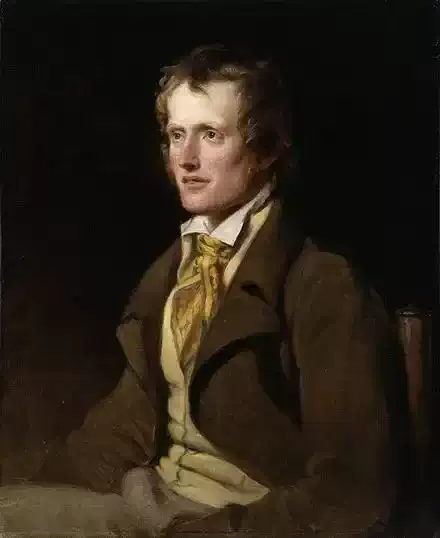
John Clare
Decay
O Poesy is on the wane,
For Fancy's visions all unfitting;
I hardly know her face again,
Nature herself seems on the flitting.
The fields grow old and common things,
The grass, the sky, the winds a-blowing;
And spots, where still a beauty clings,
Are sighing 'going! all a-going!'
O Poesy is on the wane,
I hardly know her face again.
The bank with brambles overspread,
And little molehills round about it,
Was more to me than laurel shades,
With paths of gravel finely clouted;
And streaking here and streaking there,
Through shaven grass and many a border,
With rutty lanes had no compare,
And heaths were in a richer order.
But Poesy is on the wane,
I hardly know her face again.
I sat beside the pasture stream,
When Beauty's self was sitting by,
The fields did more than Eden seem
Nor could I tell the reason why.
I often drank when not adry
To pledge her health in draughts divine;
Smiles made it nectar from the sky,
Love turned een water into wine.
O Poesy is on the wane,
I cannot find her face again.
The sun those mornings used to find,
Its clouds were other-country mountains,
And heaven looked downward on the mind,
Like groves, and rocks, and mottled fountains.
Those heavens are gone, the mountains grey
Turned mist--the sun, a homeless ranger,
Pursues alone his naked way,
Unnoticed like a very stranger.
O Poesy is on the wane,
Nor love nor joy is mine again.
Love's sun went down without a frown,
For very joy it used to grieve us;
I often think the West is gone,
Ah, cruel Time, to undeceive us.
The stream it is a common stream,
Where we on Sundays used to ramble,
The sky hangs oer a broken dream,
The bramble's dwindled to a bramble!
O Poesy is on the wane,
I cannot find her haunts again.
Mere withered stalks and fading trees,
And pastures spread with hills and rushes,
Are all my fading vision sees;
Gone, gone are rapture's flooding gushes!
When mushrooms they were fairy bowers,
Their marble pillars overswelling,
And Danger paused to pluck the flowers
That in their swarthy rings were dwelling.
Yes, Poesy is on the wane,
Nor joy nor fear is mine again.
Aye, Poesy hath passed away,
And Fancy's visions undeceive us;
The night hath ta'en the place of day,
And why should passing shadows grieve us?
I thought the flowers upon the hills
Were flowers from Adam's open gardens;
But I have had my summer thrills,
And I have had my heart's rewardings.
So Poesy is on the wane,
I hardly know her face again.
And Friendship it hath burned away,
Like to a very ember cooling,
A make-believe on April day
That sent the simple heart a-fooling;
Mere jesting in an earnest way,
Deceiving on and still deceiving;
And Hope is but a fancy-play,
And Joy the art of true believing;
For Poesy is on the wane,
O could I feel her faith again!
461
Walt Whitman
When I Heard At The Close Of The Day
WHEN I heard at the close of the day how my name had been receiv'd
with plaudits in the capitol, still it was not a happy night
for me that follow'd;
And else, when I carous'd, or when my plans were accomplish'd, still
I was not happy;
But the day when I rose at dawn from the bed of perfect health,
refresh'd, singing, inhaling the ripe breath of autumn,
When I saw the full moon in the west grow pale and disappear in the
morning light,
When I wander'd alone over the beach, and undressing, bathed,
laughing with the cool waters, and saw the sun rise,
And when I thought how my dear friend, my lover, was on his way
coming, O then I was happy;
O then each breath tasted sweeter--and all that day my food nourish'd
me more--and the beautiful day pass'd well,
And the next came with equal joy--and with the next, at evening, came
my friend;
And that night, while all was still, I heard the waters roll slowly
continually up the shores,
I heard the hissing rustle of the liquid and sands, as directed to
me, whispering, to congratulate me,
For the one I love most lay sleeping by me under the same cover in
the cool night,
In the stillness, in the autumn moonbeams, his face was inclined
toward me,
And his arm lay lightly around my breast--and that night I was happy.
461

William Butler Yeats
In Memory of Major Robert Gregory
Now that we're almost settled in our house
I'll name the friends that cannot sup with us
Beside a fire of turf in th' ancient tower,
And having talked to some late hour
Climb up the narrow winding stairs to bed:
Discoverers of forgotten truth
Or mere companions of my youth,
All, all are in my thoughts to-night being dead.
Always we'd have the new friend meet the old
And we are hurt if either friend seem cold,
And there is salt to lengthen out the smart
In the affections of our heart,
And quarrels are blown up upon that head;
But not a friend that I would bring
This night can set us quarrelling,
For all that come into my mind are dead.
Lionel Johnson comes the first to mind,
That loved his learning better than mankind.
Though courteous to the worst; much falling he
Brooded upon sanctity
Till all his Greek and Latin learning seemed
A long blast upon the horn that brought
A little nearer to his thought
A measureless consummation that he dreamed.
And that enquiring man John Synge comes next,
That dying chose the living world for text
And never could have rested in the tomb
But that, long travelling, he had come
Towards nightfall upon certain set apart
In a most desolate stony place,
Towards nightfall upon a race
Passionate and simple like his heart.
And then I think of old George Pollexfen,
In muscular youth well known to Mayo men
For horsemanship at meets or at racecourses,
That could have shown how pure-bred horses
And solid men, for all their passion, live
But as the outrageous stars incline
By opposition, square and trine;
Having grown sluggish and contemplative.
They were my close companions many a year.
A portion of my mind and life, as it were,
And now their breathless faces seem to look
Out of some old picture-book;
I am accustomed to their lack of breath,
But not that my dear friend's dear son,
Our Sidney and our perfect man,
Could share in that discourtesy of death.
For all things the delighted eye now sees
Were loved by him: the old storm-broken trees
That cast their shadows upon road and bridge;
The tower set on the stream's edge;
The ford where drinking cattle make a stir
Nightly, and startled by that sound
The water-hen must change her ground;
He might have been your heartiest welcomer.
When with the Galway foxhounds he would ride
From Castle Taylor to the Roxborough side
Or Esserkelly plain, few kept his pace;
At Mooneen he had leaped a place
So perilous that half the astonished meet
Had shut their eyes; and where was it
He rode a race without a bit?
And yet his mind outran the horses' feet.
We dreamed that a great painter had been born
To cold Clare rock and Galway rock and thorn,
To that stern colour and that delicate line
That are our secret discipline
Wherein the gazing heart doubles her might.
Soldier, scholar, horseman, he,
And yet he had the intensity
To have published all to be a world's delight.
What other could so well have counselled us
In all lovely intricacies of a house
As he that practised or that understood
All work in metal or in wood,
In moulded plaster or in carven stone?
Soldier, scholar, horseman, he,
And all he did done perfectly
As though he had but that one trade alone.
Some burn damp faggots, others may consume
The entire combustible world in one small room
As though dried straw, and if we turn about
The bare chimney is gone black out
Because the work had finished in that flare.
Soldier, scholar, horseman, he,
As 'twere all life's epitome.
What made us dream that he could comb grey hair?
I had thought, seeing how bitter is that wind
That shakes the shutter, to have brought to mind
All those that manhood tried, or childhood loved
Or boyish intellect approved,
With some appropriatc commentary on each;
Until imagination brought
A fitter welcome; but a thought
Of that late death took all my heart for speech.
457

Robert Louis Stevenson
Hail! Childish Slave Of Social Rules
HAIL! Childish slaves of social rules
You had yourselves a hand in making!
How I could shake your faith, ye fools,
If but I thought it worth the shaking.
I see, and pity you; and then
Go, casting off the idle pity,
In search of better, braver men,
My own way freely through the city.
My own way freely, and not yours;
And, careless of a town's abusing,
Seek real friendship that endures
Among the friends of my own choosing.
I'll choose my friends myself, do you hear?
And won't let Mrs. Grundy do it,
Tho' all I honour and hold dear
And all I hope should move me to it.
I take my old coat from the shelf -
I am a man of little breeding.
And only dress to please myself -
I own, a very strange proceeding.
I smoke a pipe abroad, because
To all cigars I much prefer it,
And as I scorn your social laws
My choice has nothing to deter it.
Gladly I trudge the footpath way,
While you and yours roll by in coaches
In all the pride of fine array,
Through all the city's thronged approaches.
O fine religious, decent folk,
In Virtue's flaunting gold and scarlet,
I sneer between two puffs of smoke, -
Give me the publican and harlot.
Ye dainty-spoken, stiff, severe
Seed of the migrated Philistian,
One whispered question in your ear -
Pray, what was Christ, if you be Christian?
If Christ were only here just now,
Among the city's wynds and gables
Teaching the life he taught us, how
Would he be welcome to your tables?
I go and leave your logic-straws,
Your former-friends with face averted,
Your petty ways and narrow laws,
Your Grundy and your God, deserted.
From your frail ark of lies, I flee
I know not where, like Noah's raven.
Full to the broad, unsounded sea
I swim from your dishonest haven.
Alone on that unsounded deep,
Poor waif, it may be I shall perish,
Far from the course I thought to keep,
Far from the friends I hoped to cherish.
It may be that I shall sink, and yet
Hear, thro' all taunt and scornful laughter,
Through all defeat and all regret,
The stronger swimmers coming after.
458

Lord Byron
To Thomas Moore : Written The Evening Before His Visit To Mr. Leigh Hunt
Oh you, who in all names can tickle the town,
Anacreon, Tom Little, Tom Moore, or Tom Brown,
For hang me if I know of which you may most brag,
Your Quarto twopounds,
or your Twopenny
Post Bag;
But now to my letterto
yours 'tis an answer
Tomorrow
be with me, as soon as you can, sir,
All ready and dress'd for proceeding to spunge on
(According to compact) the wit in the dungeon
Pray
Phobus at length our political malice
May not get us lodgings within the same palace!
I suppose that tonight
you're engaged with some codgers,
And for Sotheby's Blues have deserted Sam Rogers;
And I, though with cold I have nearly my death got,
Must put on my breeches, and wait on the Heathcote;
But tomorrow,
at four, we will both play the Scurra,
And you'll be Catullus, the Regent Mamurra.
458
Walt Whitman
As Toilsome I Wander'd
AS TOILSOME I wander'd Virginia's woods,
To the music of rustling leaves, kick'd by my feet, (for 'twas
autumn,)
I mark'd at the foot of a tree the grave of a soldier,
Mortally wounded he, and buried on the retreat, (easily all could I
understand;)
The halt of a mid-day hour, when up! no time to lose--yet this sign
left,
On a tablet scrawl'd and nail'd on the tree by the grave,
Bold, cautious, true, and my loving comrade.
Long, long I muse, then on my way go wandering;
Many a changeful season to follow, and many a scene of life;
Yet at times through changeful season and scene, abrupt, alone, or in
the crowded street,
Comes before me the unknown soldier's grave--comes the inscription
rude in Virginia's woods,
Bold, cautious, true, and my loving comrade.
452
Ella Wheeler Wilcox
Friendship
Dear friend, I pray thee, if thou wouldst be proving
Thy strong regard for me,
Make me no vows. Lip-service is not loving;
Let thy faith speak for thee.
Swear not to me that nothing can divide us-
So little such oaths mean.
But when distrust and envy creep beside us
Let them not come between.
Say not to me the depths of thy devotion
Are deeper than the sea;
But watch, lest doubt or some unkind emotion
Embitter them for me.
Vow not to love me ever and for ever,
Words are such idle things;
But when we differ in opinions, never
Hurt me by little stings.
I'm sick of words: they are so lightly spoken,
And spoken, are but air.
I'd rather feel thy trust in me unbroken
Than list thy words so fair.
If all the little proofs of trust are heeded,
It thou are always kind,
No sacrifice, no promise will be needed
To satisfy my mind.
452
Ella Wheeler Wilcox
If I Should Die
If I should die, how kind you all would grow!
In that strange hour I would not have one foe.
There are no words too beautiful to say
Of one who goes forevermore away
Across that ebbing tide which has no flow.
With what new lustre my good deeds would glow!
If faults were mine, no one would call them so,
Or speak of me in aught but praise that day,
If I should die.
Ah, friends! before my listening ear lies low,
While I can hear and understand, bestow
That gentle treatment and fond love, I pray,
The lustre of whose late though radiant way
Would gild my grave with mocking light, I know,
If I should die.
454

William Wordsworth
Stanzas
WITHIN our happy castle there dwelt One
Whom without blame I may not overlook;
For never sun on living creature shone
Who more devout enjoyment with us took:
Here on his hours he hung as on a book,
On his own time here would he float away,
As doth a fly upon a summer brook;
But go tomorrow, or belike today,
Seek for him,---he is fled; and whither none can say.
Thus often would he leave our peaceful home,
And find elsewhere his business or delight;
Out of our Valley's limit did he roam:
Full many a time, upon a stormy night,
His voice came to us from the neighbouring height:
Oft could we see him driving full in view
At mid-day when the sun was shining bright;
What ill was on him, what he had to do,
A mighty wonder bred among our quiet crew.
Ah! piteous sight it was to see this Man
When he came back to us, a withered flower,---
Or like a sinful creature, pale and wan.
Down would he sit; and without strength or power
Look at the common grass from hour to hour:
And oftentimes, how long I fear to say,
Where apple-trees in blossom made a bower,
Retired in that sunshiny shade he lay;
And, like a naked Indian, slept himself away.
Great wonder to our gentle tribe it was
Whenever from our Valley he withdrew;
For happier soul no living creature has
Than he had, beiug here the long day through.
Some thought he was a lover, and did woo:
Some thought far worse of him, and judged him wrong;
But verse was what he had been wedded to;
And his own mind did like a tempest strong
Come to him thus, and drove the weary Wight along.
With him there often walked in friendly guise,
Or lay upon the moss by brook or tree,
A noticeable Man with large grey eyes,
And a pale face that seemed undoubtedly
As if a blooming face it ought to be;
Heavy his low-hung lip did oft appear,
Deprest by weight of musing Phantasy;
Profound his forehead was, though not severe;
Yet some did think that he had little business here:
Sweet heaven forfend! his was a lawful right;
Noisy he was, and gamesome as a boy;
His limbs would toss about him with delight
Like branches when strong winds the trees annoy.
Nor lacked his calmer hours device or toy
To banish listlessness and irksome care;
He would have taught you how you might employ
Yourself; and many did to him repair,---
And certes not in vain; he had inventions rare.
Expedients, too, of simplest sort he tried:
Long blades of grass, plucked round him as he lay,
Made, to his ear attentively applied,
A pipe on which the wind would deftly play;
Glasses he had, that little things display,
The beetle panoplied in gems and gold,
A mailed angel on a battle-day;
The mysteries that cups of flowers enfold,
And all the gorgeous sights which fairies do behold.
He would entice that other Man to hear
His music, and to view his imagery:
And, sooth, these two were each to the other dear:
No livelier love in such a place could be:
There did they dwellÑfrom earthly labour free,
As happy spirits as were ever seen;
If but a bird, to keep them company,
Or butterfly sate down, they were, I ween,
As pleased as if the same had been a Maiden-queen.
446

Ezra Pound
The Altar
Let us build here an exquisite friendship,
The flame, the autumn, and the green rose of love
Fought out their strife here, 'tis a place of wonder;
Where these have been, meet 'tis, the ground is holy.
The flame, the autumn, and the green rose of love
Fought out their strife here, 'tis a place of wonder;
Where these have been, meet 'tis, the ground is holy.
444
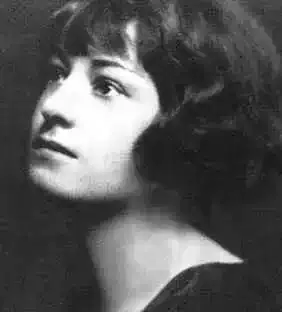
Dorothy Parker
Verse For a Certain Dog
Such glorious faith as fills your limpid eyes,
Dear little friend of mine, I never knew.
All-innocent are you, and yet all-wise.
(For Heaven's sake, stop worrying that shoe!)
You look about, and all you see is fair;
This mighty globe was made for you alone.
Of all the thunderous ages, you're the heir.
(Get off the pillow with that dirty bone!)
A skeptic world you face with steady gaze;
High in young pride you hold your noble head,
Gayly you meet the rush of roaring days.
(Must you eat puppy biscuit on the bed?)
Lancelike your courage, gleaming swift and strong,
Yours the white rapture of a winged soul,
Yours is a spirit like a Mayday song.
(God help you, if you break the goldfish bowl!)
"Whatever is, is good" - your gracious creed.
You wear your joy of living like a crown.
Love lights your simplest act, your every deed.
(Drop it, I tell you- put that kitten down!)
You are God's kindliest gift of all - a friend.
Your shining loyalty unflecked by doubt,
You ask but leave to follow to the end.
(Couldn't you wait until I took you out?)
443
John Keats
Dedication To Leigh Hunt, Esq.
Glory and loveliness have pass'd away;
For if we wander out in early morn,
No wreathed incense do we see upborne
Into the east, to meet the smiling day:
No crowd of nymphs soft voic'd and young, and gay,
In woven baskets bringing ears of corn,
Roses, and pinks, and violets, to adorn
The shrine of Flora in her early May.
But there are left delights as high as these,
And I shall ever bless my destiny,
That in a time, when under pleasant trees
Pan is no longer sought, I feel a free,
A leafy luxury, seeing I could please
With these poor offerings, a man like thee.
441
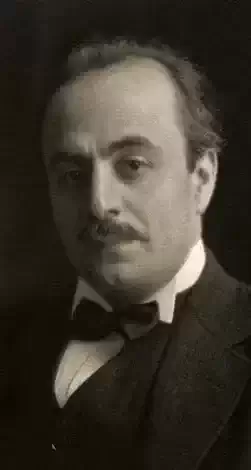
Khalil Gibran
Talking XX
And then a scholar said, "Speak of Talking."
And he answered, saying:
You talk when you cease to be at peace with your thoughts;
And when you can no longer dwell in the solitude of your heart you live in your lips,
and sound is a diversion and a pastime.
And in much of your talking, thinking is half murdered.
For thought is a bird of space, that in a cage of words many indeed unfold its wings but
cannot fly.
There are those among you who seek the talkative through fear of being alone.
The silence of aloneness reveals to their eyes their naked selves and they would
escape.
And there are those who talk, and without knowledge or forethought reveal a truth
which they themselves do not understand.
And there are those who have the truth within them, but they tell it not in words.
In the bosom of such as these the spirit dwells in rhythmic silence.
When you meet your friend on the roadside or in the market place, let the spirit in you
move your lips and direct your tongue.
Let the voice within your voice speak to the ear of his ear;
For his soul will keep the truth of your heart as the taste of the wine is remembered
When the color is forgotten and the vessel is no more.
440
Walt Whitman
To The East And To The West
TO the East and to the West;
To the man of the Seaside State, and of Pennsylvania,
To the Kanadian of the North--to the Southerner I love;
These, with perfect trust, to depict you as myself--the germs are in
all men;
I believe the main purport of These States is to found a superb
friendship, exalté, previously unknown,
Because I perceive it waits, and has been always waiting, latent in
all men.
440
Percy Bysshe Shelley
Rosalind and Helen: a Modern Eclogue
ROSALIND, HELEN, and her Child.
SCENE. The Shore of the Lake of Como.
HELEN
Come hither, my sweet Rosalind.
'T is long since thou and I have met;
And yet methinks it were unkind
Those moments to forget.
Come, sit by me. I see thee stand
By this lone lake, in this far land,
Thy loose hair in the light wind flying,
Thy sweet voice to each tone of even
United, and thine eyes replying
To the hues of yon fair heaven.
Come, gentle friend! wilt sit by me?
And be as thou wert wont to be
Ere we were disunited?
None doth behold us now; the power
That led us forth at this lone hour
Will be but ill requited
If thou depart in scorn. Oh, come,
And talk of our abandoned home!
Remember, this is Italy,
And we are exiles. Talk with me
Of that our land, whose wilds and floods,
Barren and dark although they be,
Were dearer than these chestnut woods;
Those heathy paths, that inland stream,
And the blue mountains, shapes which seem
Like wrecks of childhood's sunny dream;
Which that we have abandoned now,
Weighs on the heart like that remorse
Which altered friendship leaves. I seek
No more our youthful intercourse.
That cannot be! Rosalind, speak,
Speak to me! Leave me not! When morn did come,
When evening fell upon our common home,
When for one hour we parted,--do not frown;
I would not chide thee, though thy faith is broken;
But turn to me. Oh! by this cherished token
Of woven hair, which thou wilt not disown,
Turn, as 't were but the memory of me,
And not my scornèd self who prayed to thee!
ROSALIND
Is it a dream, or do I see
And hear frail Helen? I would flee
Thy tainting touch; but former years
Arise, and bring forbidden tears;
And my o'erburdened memory
Seeks yet its lost repose in thee.
I share thy crime. I cannot choose
But weep for thee; mine own strange grief
But seldom stoops to such relief;
Nor ever did I love thee less,
Though mourning o'er thy wickedness
Even with a sister's woe. I knew
What to the evil world is due,
And therefore sternly did refuse
To link me with the infamy
Of one so lost as Helen. Now,
Bewildered by my dire despair,
Wondering I blush, and weep that thou
Shouldst love me still--thou only!--There,
Let us sit on that gray stone
Till our mournful talk be done.
HELEN
Alas! not there; I cannot bear
The murmur of this lake to hear.
A sound from there, Rosalind dear,
Which never yet I heard elsewhere
But in our native land, recurs,
Even here where now we meet. It stirs
Too much of suffocating sorrow!
In the dell of yon dark chestnut wood
Is a stone seat, a solitude
Less like our own. The ghost of peace
Will not desert this spot. To-morrow,
If thy kind feelings should not cease,
We may sit here.
ROSALIND
Thou lead, my sweet,
And I will follow.
HENRY
'T is Fenici's seat
Where you are going? This is not the way,
Mamma; it leads behind those trees that grow
Close to the little river.
HELEN
Yes, I know;
I was bewildered. Kiss me and be gay,
Dear boy; why do you sob?
HENRY
I do not know;
But it might break any one's heart to see
You and the lady cry so bitterly.
HELEN
It is a gentle child, my friend. Go home,
Henry, and play with Lilla till I come.
We only cried with joy to see each other;
We are quite merry now. Good night.
The boy
Lifted a sudden look upon his mother,
And, in the gleam of forced and hollow joy
Which lightened o'er her face, laughed with the glee
Of light and unsuspecting infancy,
And whispered in her ear, 'Bring home with you
That sweet strange lady-friend.' Then off he flew,
But stopped, and beckoned with a meaning smile,
Where the road turned. Pale Rosalind the while,
Hiding her face, stood weeping silently.
In silence then they took the way
Beneath the forest's solitude.
It was a vast and antique wood,
Through which they took their way;
And the gray shades of evening
O'er that green wilderness did fling
Still deeper solitude.
Pursuing still the path that wound
The vast and knotted trees around,
Through which slow shades were wandering,
To a deep lawny dell they came,
To a stone seat beside a spring,
O'er which the columned wood did frame
A roofless temple, like the fane
Where, ere new creeds could faith obtain,
Man's early race once knelt beneath
The overhanging deity.
O'er this fair fountain hung the sky,
Now spangled with rare stars. The snake,
The pale snake, that with eager breath
Creeps here his noontide thirst to slake,
Is beaming with many a mingled hue,
Shed from yon dome's eternal blue,
When he floats on that dark and lucid flood
In the light of his own loveliness;
And the birds, that in the fountain dip
Their plumes, with fearless fellowship
Above and round him wheel and hover.
The fitful wind is heard to stir
One solitary leaf on high;
The chirping of the grasshopper
Fills every pause. There is emotion
In all that dwells at noontide here;
Then through the intricate wild wood
A maze of life and light and motion
Is woven. But there is stillness now--
Gloom, and the trance of Nature now.
The snake is in his cave asleep;
The birds are on the branches dreaming;
Only the shadows creep;
Only the glow-worm is gleaming;
Only the owls and the nightingales
Wake in this dell when daylight fails,
And gray shades gather in the woods;
And the owls have all fled far away
In a merrier glen to hoot and play,
For the moon is veiled and sleeping now.
The accustomed nightingale still broods
On her accustomed bough,
But she is mute; for her false mate
Has fled and left her desolate.
This silent spot tradition old
Had peopled with the spectral dead.
For the roots of the speaker's hair felt cold
And stiff, as with tremulous lips he told
That a hellish shape at midnight led
The ghost of a youth with hoary hair,
And sate on the seat beside him there,
Till a naked child came wandering by,
When the fiend would change to a lady fair!
A fearful tale! the truth was worse;
For here a sister and a brother
Had solemnized a monstrous curse,
Meeting in this fair solitude;
For beneath yon very sky,
Had they resigned to one another
Body and soul. The multitude,
Tracking them to the secret wood,
Tore limb from limb their innocent child,
And stabbed and trampled on its mother;
But the youth, for God's most holy grace,
A priest saved to burn in the market-place.
Duly at evening Helen came
To this lone silent spot,
From the wrecks of a tale of wilder sorrow
So much of sympathy to borrow
As soothed her own dark lot.
Duly each evening from her home,
With her fair child would Helen come
To sit upon that antique seat,
While the hues of day were pale;
And the bright boy beside her feet
Now lay, lifting at intervals
His broad blue eyes on her;
Now, where some sudden impulse calls,
Following. He was a gentle boy
And in all gentle sorts took joy.
Oft in a dry leaf for a boat,
With a small feather for a sail,
His fancy on that spring would float,
If some invisible breeze might stir
Its marble calm; and Helen smiled
Through tears of awe on the gay child,
To think that a boy as fair as he,
In years which never more may be,
By that same fount, in that same wood,
The like sweet fancies had pursued;
And that a mother, lost like her,
Had mournfully sate watching him.
Then all the scene was wont to swim
Through the mist of a burning tear.
For many months had Helen known
This scene; and now she thither turned
Her footsteps, not alone.
The friend whose falsehood she had mourned
Sate with her on that seat of stone.
Silent they sate; for evening,
And the power its glimpses bring,
Had with one awful shadow quelled
The passion of their grief. They sate
With linkèd hands, for unrepelled
Had Helen taken Rosalind's.
Like the autumn wind, when it unbinds
The tangled locks of the nightshade's hair
Which is twined in the sultry summer air
Round the walls of an outworn sepulchre,
Did the voice of Helen, sad and sweet,
And the sound of her heart that ever beat
As with sighs and words she breathed on her,
Unbind the knots of her friend's despair,
Till her thoughts were free to float and flow;
And from her laboring bosom now,
Like the bursting of a prisoned flame,
The voice of a long-pent sorrow came.
ROSALIND
I saw the dark earth fall upon
The coffin; and I saw the stone
Laid over him whom this cold breast
Had pillowed to his nightly rest!
Thou knowest not, thou canst not know
My agony. Oh! I could not weep.
The sources whence such blessings flow
Were not to be approached by me!
But I could smile, and I could sleep,
Though with a self-accusing heart.
In morning's light, in evening's gloom,
I watched--and would not thence depart--
My husband's unlamented tomb.
My children knew their sire was gone;
But when I told them, 'He is dead,'
They laughed aloud in frantic glee,
They clapped their hands and leaped about,
Answering each other's ecstasy
With many a prank and merry shout.
But I sate silent and alone,
Wrapped in the mock of mourning weed.
They laughed, for he was dead; but I
Sate with a hard and tearless eye,
And with a heart which would deny
The secret joy it could not quell,
Low muttering o'er his loathèd name;
Till from that self-contention came
Remorse where sin was none; a hell
Which in pure spirits should not dwell.
I 'll tell thee truth. He was a man
Hard, selfish, loving only gold,
Yet full of guile; his pale eyes ran
With tears which each some falsehood told,
And oft his smooth and bridled tongue
Would give the lie to his flushing cheek;
He was a coward to the strong;
He was a tyrant to the weak,
On whom his vengeance he would wreak;
For scorn, whose arrows search the heart,
From many a stranger's eye would dart,
And on his memory cling, and follow
His soul to its home so cold and hollow.
He was a tyrant to the weak,
And we were such, alas the day!
Oft, when my little ones at play
Were in youth's natural lightness gay,
Or if they listened to some tale
Of travellers, or of fairyland,
When the light from the wood-fire's dying brand
Flashed on their faces,--if they heard
Or thought they heard upon the stair
His footstep, the suspended word
Died on my lips; we all grew pale;
The babe at my bosom was hushed with fear
If it thought it heard its father near;
And my two wild boys would near my knee
Cling, cowed and cowering fearfully.
I 'll tell thee truth: I loved another.
His name in my ear was ever ringing,
His form to my brain was ever clinging;
Yet, if some stranger breathed that name,
My lips turned white, and my heart beat fast.
My nights were once haunted by dreams of flame,
My days were dim in the shadow cast
By the memory of the same!
Day and night, day and night,
He was my breath and life and light,
For three short years, which soon were passed.
On the fourth, my gentle mother
Led me to the shrine, to be
His sworn bride eternally.
And now we stood on the altar stair,
When my father came from a distant land,
And with a loud and fearful cry
Rushed between us suddenly.
I saw the stream of his thin gray hair,
I saw his lean and lifted hand,
And heard his words--and live! O God!
Wherefore do I live?--'Hold, hold!'
He cried, 'I tell thee 't is her brother!
Thy mother, boy, beneath the sod
Of yon churchyard rests in her shroud so cold;
I am now weak, and pale, and old;
We were once dear to one another,
I and that corpse! Thou art our child!'
Then with a laugh both long and wild
The youth upon the pavement fell.
They found him dead! All looked on me,
The spasms of my despair to see;
But I was calm. I went away;
I was clammy-cold like clay.
I did not weep; I did not speak;
But day by day, week after week,
I walked about like a corpse alive.
Alas! sweet friend, you must believe
This heart is stone--it did not break.
My father lived a little while,
But all might see that he was dying,
He smiled with such a woful smile.
When he was in the churchyard lying
Among the worms, we grew quite poor,
So that no one would give us bread;
My mother looked at me, and said
Faint words of cheer, which only meant
That she could die and be content;
So I went forth from the same church door
To another husband's bed.
And this was he who died at last,
When weeks and months and years had passed,
Through which I firmly did fulfil
My duties, a devoted wife,
With the stern step of vanquished will
Walking beneath the night of life,
Whose hours extinguished, like slow rain
Falling forever, pain by pain,
The very hope of death's dear rest;
Which, since the heart within my breast
Of natural life was dispossessed,
Its strange sustainer there had been.
When flowers were dead, and grass was green
Upon my mother's grave--that mother
Whom to outlive, and cheer, and make
My wan eyes glitter for her sake,
Was my vowed task, the single care
Which once gave life to my despair--
When she was a thing that did not stir,
And the crawling worms were cradling her
To a sleep more deep and so more sweet
Than a baby's rocked on its nurse's knee,
I lived; a living pulse then beat
Beneath my heart that awakened me.
What was this pulse so warm and free?
Alas! I knew it could not be
My own dull blood. 'T was like a thought
Of liquid love, that spread and wrought
Under my bosom and in my brain,
And crept with the blood through every vein,
And hour by hour, day after day,
The wonder could not charm away
But laid in sleep my wakeful pain,
Until I knew it was a child,
And then I wept. For long, long years
These frozen eyes had shed no tears;
But now--'t was the season fair and mild
When April has wept itself to May;
I sate through the sweet sunny day
By my window bowered round with leaves,
And down my cheeks the quick tears ran
Like twinkling rain-drops from the eaves,
When warm spring showers are passing o'er.
O Helen, none can ever tell
The joy it was to weep once more!
I wept to think how hard it were
To kill my babe, and take from it
The sense of light, and the warm air,
And my own fond and tender care,
And love and smiles; ere I knew yet
That these for it might, as for me,
Be the masks of a grinning mockery.
And haply, I would dream, 't were sweet
To feed it from my faded breast,
Or mark my own heart's restless beat
And watch the growing soul beneath
Dawn in faint smiles; and hear its breath,
Half interrupted by calm sighs,
And search the depth of its fair eyes
For long departed memories!
And so I lived till that sweet load
Was lightened. Darkly forward flowed
The stream of years, and on it bore
Two shapes of gladness to my sight;
Two other babes, delightful more,
In my lost soul's abandoned night,
Than their own country ships may be
Sailing towards wrecked mariners
Who cling to the rock of a wintry sea.
For each, as it came, brought soothing tears;
And a loosening warmth, as each one lay
Sucking the sullen milk away,
About my frozen heart did play,
And weaned it, oh, how painfully--
As they themselves were weaned each one
From that sweet food--even from the thirst
Of death, and nothingness, and rest,
Strange inmate of a living breast,
Which all that I had undergone
Of grief and shame, since she who first
The gates of that dark refuge closed
Came to my sight, and almost burst
The seal of that Lethean spring--
But these fair shadows interposed.
For all delights are shadows now!
And from my brain to my dull brow
The heavy tears gather and flow.
I cannot speak--oh, let me weep!
The tears which fell from her wan eyes
Glimmered among the moonlight dew.
Her deep hard sobs and heavy sighs
Their echoes in the darkness threw.
When she grew calm, she thus did keep
The tenor of her tale:--
He died;
I know not how; he was not old,
If age be numbered by its years;
But he was bowed and bent with fears,
Pale with the quenchless thirst of gold,
Which, like fierce fever, left him weak;
And his strait lip and bloated cheek
Were warped in spasms by hollow sneers;
And selfish cares with barren plough,
Not age, had lined his narrow brow,
And foul and cruel thoughts, which feed
Upon the withering life within,
Like vipers on some poisonous weed.
Whether his ill were death or sin
None knew, until he died indeed,
And then men owned they were the same.
Seven days within my chamber lay
That corse, and my babes made holiday.
At last, I told them what is death.
The eldest, with a kind of shame,
Came to my knees with silent breath,
And sate awe-stricken at my feet;
And soon the others left their play,
And sate there too. It is unmeet
To shed on the brief flower of youth
The withering knowledge of the grave.
From me remorse then wrung that truth.
I could not bear the joy which gave
Too just a response to mine own.
In vain. I dared not feign a groan;
And in their artless looks I saw,
Between the mists of fear and awe,
That my own thought was theirs; and they
Expressed it not in words, but said,
Each in its heart, how every day
Will pass in happy work and play,
Now he is dead and gone away!
After the funeral all our kin
Assembled, and the will was read.
My friend, I tell thee, even the dead
Have strength, their putrid shrouds within,
To blast and torture. Those who live
Still fear the living, but a corse
Is merciless, and Power doth give
To such pale tyrants half the spoil
He rends from those who groan and toil,
Because they blush not with remorse
Among their crawling worms. Behold,
I have no child! my tale grows old
With grief, and staggers; let it reach
The limits of my feeble speech,
And languidly at length recline
On the brink of its own grave and mine.
Thou knowest what a thing is Poverty
Among the fallen on evil days.
'T is Crime, and Fear, and Infamy,
And houseless Want in frozen ways
Wandering ungarmented, and Pain,
And, worse than all, that inward stain,
Foul Self-contempt, which drowns in sneers
Youth's starlight smile, and makes its tears
First like hot gall, then dry forever!
And well thou knowest a mother never
Could doom her children to this ill,
And well he knew the same. The will
Imported that, if e'er again
I sought my children to behold,
Or in my birthplace did remain
Beyond three days, whose hours were told,
They should inherit nought; and he,
To whom next came their patrimony,
A sallow lawyer, cruel and cold,
Aye watched me, as the will was read,
With eyes askance, which sought to see
The secrets of my agony;
And with close lips and anxious brow
Stood canvassing still to and fro
The chance of my resolve, and all
The dead man's caution just did call;
For in that killing lie 't was said--
'She is adulterous, and doth hold
In secret that the Christian creed
Is false, and therefore is much need
That I should have a care to save
My children from eternal fire.'
Friend, he was sheltered by the grave,
And therefore dared to be a liar!
In truth, the Indian on the pyre
Of her dead husband, half consumed,
As well might there be false as I
To those abhorred embraces doomed,
Far worse than fire's brief agony.
As to the Christian creed, if true
Or false, I never questioned it;
I took it as the vulgar do;
Nor my vexed soul had leisure yet
To doubt the things men say, or deem
That they are other than they seem.
All present who those crimes did hear,
In feigned or actual scorn and fear,
Men, women, children, slunk away,
Whispering with self-contented pride
Which half suspects its own base lie.
I spoke to none, nor did abide,
But silently I went my way,
Nor noticed I where joyously
Sate my two younger babes at play
In the courtyard through which I passed;
But went with footsteps firm and fast
Till I came to the brink of the ocean green,
And there, a woman with gray hairs,
Who had my mother's servant been,
Kneeling, with many tears and prayers,
Made me accept a purse of gold,
Half of the earnings she had kept
To refuge her when weak and old.
With woe, which never sleeps or slept,
I wander now. 'T is a vain thought--
But on yon Alp, whose snowy head
'Mid the azure air is islanded,
(We see it--o'er the flood of cloud,
Which sunrise from its eastern caves
Drives, wrinkling into golden waves,
Hung with its precipices proud--
From that gray stone where first we met)
There--now who knows the dead feel nought?--
Should be my grave; for he who yet
Is my soul's soul once said: ''T were sweet
'Mid stars and lightnings to abide,
And winds, and lulling snows that beat
With their soft flakes the mountain wide,
Where weary meteor lamps repose,
And languid storms their pinions close,
And all things strong and bright and pure,
And ever during, aye endure.
Who knows, if one were buried there,
But these things might our spirits make,
Amid the all-surrounding air,
Their own eternity partake?'
Then 't was a wild and playful saying
At which I laughed or seemed to laugh.
They were his words--now heed my praying,
And let them be my epitaph.
Thy memory for a term may be
My monument. Wilt remember me?
I know thou wilt; and canst forgive,
Whilst in this erring world to live
My soul disdained not, that I thought
Its lying forms were worthy aught,
And much less thee.
HELEN
Oh, speak not so!
But come to me and pour thy woe
Into this heart, full though it be,
Aye overflowing with its own.
I thought that grief had severed me
From all beside who weep and groan,
Its likeness upon earth to be--
Its express image; but thou art
More wretched. Sweet, we will not part
Henceforth, if death be not division;
If so, the dead feel no contrition.
But wilt thou hear, since last we parted,
All that has left me broken-hearted?
ROSALIND
Yes, speak. The faintest stars are scarcely shorn
Of their thin beams by that delusive morn
Which sinks again in darkness, like the light
Of early love, soon lost in total night.
HELEN
Alas! Italian winds are mild,
But my bosom is cold--wintry cold;
When the warm air weaves, among the fresh leaves,
Soft music, my poor brain is wild,
And I am weak like a nursling child,
Though my soul with grief is gray and old.
ROSALIND
Weep not at thine own words, though they must make
Me weep. What is thy tale?
HELEN
I fear 't will shake
Thy gentle heart with tears. Thou well
Rememberest when we met no more;
And, though I dwelt with Lionel,
That friendless caution pierced me sore
With grief; a wound my spirit bore
Indignantly--but when he died,
With him lay dead both hope and pride.
Alas! all hope is buried now.
But then men dreamed the aged earth
Was laboring in that mighty birth
Which many a poet and a sage
Has aye foreseen--the happy age
When truth and love shall dwell below
Among the works and ways of men;
Which on this world not power but will
Even now is wanting to fulfil.
Among mankind what thence befell
Of strife, how vain, is known too well;
When Liberty's dear pæan fell
'Mid murderous howls. To Lionel,
Though of great wealth and lineage high,
Yet through those dungeon walls there came
Thy thrilling light, O Liberty!
And as the meteor's midnight flame
Startles the dreamer, sun-like truth
Flashed on his visionary youth,
And filled him, not with love, but faith,
And hope, and courage mute in death;
For love and life in him were twins,
Born at one birth. In every other
First life, then love, its course begins,
Though they be children of one mother;
And so through this dark world they fleet
Divided, till in death they meet;
But he loved all things ever. Then
He passed amid the strife of men,
And stood at the throne of armèd power
Pleading for a world of woe.
Secure as one on a rock-built tower
O'er the wrecks which the surge trails to and fro,
'Mid the passions wild of humankind
He stood, like a spirit calming them;
For, it was said, his words could bind
Like music the lulled crowd, and stem
That torrent of unquiet dream
Which mortals truth and reason deem,
But is revenge and fear and pride.
Joyous he was; and hope and peace
On all who heard him did abide,
Raining like dew from his sweet talk,
As where the evening star may walk
Along the brink of the gloomy seas,
Liquid mists of splendor quiver.
His very gestures touched to tears
The unpersuaded tyrant, never
So moved before; his presence stung
The torturers with their victim's pain,
And none knew how; and through their ears
The subtle witchcraft of his tongue
Unlocked the hearts of those who keep
Gold, the world's bond of slavery.
Men wondered, and some sneered to see
One sow what he could never reap;
For he is rich, they said, and young,
And might drink from the depths of luxury.
If he seeks fame, fame never crowned
The champion of a trampled creed;
If he seeks power, power is enthroned
'Mid ancient rights and wrongs, to feed
Which hungry wolves with praise and spoil
Those who would sit near power must toil;
And such, there sitting, all may see.
What seeks he? All that others seek
He casts away, like a vile weed
Which the sea casts unreturningly.
That poor and hungry men should break
The laws which wreak them toil and scorn
We understand; but Lionel,
We know, is rich and nobly born.
So wondered they; yet all men loved
Young Lionel, though few approved;
All but the priests, whose hatred fell
Like the unseen blight of a smiling day,
The withering honey-dew which clings
Under the bright green buds of May
Whilst they unfold their emerald wings;
For he made verses wild and queer
On the strange creeds priests hold so dear
Because they bring them land and gold.
Of devils and saints and all such gear
He made tales which whoso heard or read
Would laugh till he were almost dead.
So this grew a proverb: 'Don't get old
Till Lionel's Banquet in Hell you hear,
And then you will laugh yourself young again.'
So the priests hated him, and he
Repaid their hate with cheerful glee.
Ah, smiles and joyance quickly died,
For public hope grew pale and dim
In an altered time and tide,
And in its wasting withered him,
As a summer flower that blows too soon
Droops in the smile of the waning moon,
When it scatters through an April night
The frozen dews of wrinkling blight.
None now hoped more. Gray Power was seated
Safely on her ancestral throne;
And Faith, the Python, undefeated
Even to its blood-stained steps dragged on
Her foul and wounded train; and men
Were trampled and deceived again,
And words and shows again could bind
The wailing tribes of humankind
In scorn and famine. Fire and blood
Raged round the raging multitude,
To fields remote by tyrants sent
To be the scornèd instrument
With which they drag from mines of gore
The chains their slaves yet ever wore;
And in the streets men met each other,
And by old altars and in halls,
And smiled again at festivals.
But each man found in his heart's brother
Cold cheer; for all, though half deceived,
The outworn creeds again believed,
And the same round anew began
Which the weary world yet ever ran.
Many then wept, not tears, but gall,
Within their hearts, like drops which fall
Wasting the fountain-stone away.
And in that dark and evil day
Did all desires and thoughts that claim
Men's care--ambition, friendship, fame,
Love, hope, though hope was now despair--
Indue the colors of this change,
As from the all-surrounding air
The earth takes hues obscure and strange,
When storm and earthquake linger there.
And so, my friend, it then befell
To many,--most to Lionel,
Whose hope was like the life of youth
Within him, and when dead became
A spirit of unresting flame,
Which goaded him in his distress
Over the world's vast wilderness.
Three years he left his native land,
And on the fourth, when he returned,
None knew him; he was stricken deep
With some disease of mind, and turned
Into aught unlike Lionel.
On him--on whom, did he pause in sleep,
Serenest smiles were wont to keep,
And, did he wake, a wingèd band
Of bright Persuasions, which had fed
On his sweet lips and liquid eyes,
Kept their swift pinions half outspread
To do on men his least command--
On him, whom once 't was paradise
Even to behold, now misery lay.
In his own heart 't was merciless--
To all things else none may express
Its innocence and tenderness.
'T was said that he had refuge sought
In love from his unquiet thought
In distant lands, and been deceived
By some strange show; for there were found,
Blotted with tears--as those relieved
By their own words are wont to do--
These mournful verses on the ground,
By all who read them blotted too.
'How am I changed! my hopes were once like fire;
I loved, and I believed that life was love.
How am I lost! on wings of swift desire
Among Heaven's winds my spirit once did move.
I slept, and silver dreams did aye inspire
My liquid sleep; I woke, and did approve
All Nature to my heart, and thought to make
A paradise of earth for one sweet sake.
'I love, but I believe in love no more.
I feel desire, but hope not. Oh, from sleep
Most vainly must my weary brain implore
Its long lost flattery now! I wake to weep,
And sit through the long day gnawing the core
Of my bitter heart, and, like a miser, keep--
Since none in what I feel take pain or pleasure--
To my own soul its self-consuming treasure.'
He dwelt beside me near the sea;
And oft in evening did we meet,
When the waves, beneath the starlight, flee
O'er the yellow sands with silver feet,
And talked. Our talk was sad and sweet,
Till slowly from his mien there passed
The desolation which it spoke;
And smiles--as when the lightning's blast
Has parched some heaven-delighting oak,
The next spring shows leaves pale and rare,
But like flowers delicate and fair,
On its rent boughs--again arrayed
His countenance in tender light;
His words grew subtle fire, which made
The air his hearers breathed delight;
His motions, like the winds, were free,
Which bend the bright grass gracefully,
Then fade away in circlets faint;
And wingèd Hope--on which upborne
His soul seemed hovering in his eyes,
Like some bright spirit newly born
Floating amid the sunny skies--
Sprang forth from his rent heart anew.
Yet o'er his talk, and looks, and mien,
Tempering their loveliness too keen,
Past woe its shadow backward threw;
Till, like an exhalation spread
From flowers half drunk with evening dew,
They did become infectious--sweet
And subtle mists of sense and thought,
Which wrapped us soon, when we might meet,
Almost from our own looks and aught
The wild world holds. And so his mind
Was healed, while mine grew sick with fear;
For ever now his health declined,
Like some frail bark which cannot bear
The impulse of an altered wind,
Though prosperous; and my heart grew full,
'Mid its new joy, of a new care;
For his cheek became, not pale, but fair,
As rose-o'ershadowed lilies are;
And soon his deep and sunny hair,
In this alone less beautiful,
Like grass in tombs grew wild and rare.
The blood in his translucent veins
Beat, not like animal life, but love
Seemed now its sullen springs to move,
When life had failed, and all its pains;
And sudden sleep would seize him oft
Like death, so calm,--but that a tear,
His pointed eye-lashes between,
Would gather in the light serene
Of smiles whose lustre bright and soft
Beneath lay undulating there.
His breath was like inconstant flame
As eagerly it went and came;
And I hung o'er him in his sleep,
Till, like an image in the lake
Which rains disturb, my tears would break
The shadow of that slumber deep.
Then he would bid me not to weep,
And say, with flattery false yet sweet,
That death and he could never meet,
If I would never part with him.
And so we loved, and did unite
All that in us was yet divided;
For when he said, that many a rite,
By men to bind but once provided,
Could not be shared by him and me,
Or they would kill him in their glee,
I shuddered, and then laughing said--
'We will have rites our faith to bind,
But our church shall be the starry night,
Our altar the grassy earth outspread,
And our priest the muttering wind.'
'T was sunset as I spoke. One star
Had scarce burst forth, when from afar
The ministers of misrule sent
Seized upon Lionel, and bore
His chained limbs to a dreary tower,
In the midst of a city vast and wide.
For he, they said, from his mind had bent
Against their gods keen blasphemy,
For which, though his soul must roasted be
In hell's red lakes immortally,
Yet even on earth must he abide
The vengeance of their slaves: a trial,
I think, men call it. What avail
Are prayers and tears, which chase denial
From the fierce savage nursed in hate?
What the knit soul that pleading and pale
Makes wan the quivering cheek which late
It painted with its own delight?
We were divided. As I could,
I stilled the tingling of my blood,
And followed him in their despite,
As a widow follows, pale and wild,
The murderers and corse of her only child;
And when we came to the prison door,
And I prayed to share his dungeon floor
With prayers which rarely have been spurned,
And when men drove me forth, and I
Stared with blank frenzy on the sky,--
A farewell look of love he turned,
Half calming me; then gazed awhile,
As if through that black and massy pile,
And through the crowd around him there,
And through the dense and murky air,
And the thronged streets, he did espy
What poets know and prophesy;
And said, with voice that made them shiver
And clung like music in my brain,
And which the mute walls spoke again
Prolonging it with deepened strain--
'Fear not the tyrants shall rule forever,
Or the priests of the bloody faith;
They stand on the brink of that mighty river,
Whose waves they have tainted with death;
It is fed from the depths of a thousand dells,
Around them it foams, and rages, and swells,
And their swords and their sceptres I floating see,
Like wrecks, in the surge of eternity.'
I dwelt beside the prison gate;
And the strange crowd that out and in
Passed, some, no doubt, with mine own fate,
Might have fretted me with its ceaseless din,
But the fever of care was louder within.
Soon but too late, in penitence
Or fear, his foes released him thence.
I saw his thin and languid form,
As leaning on the jailor's arm,
Whose hardened eyes grew moist the while
To meet his mute and faded smile
And hear his words of kind farewell,
He tottered forth from his damp cell.
Many had never wept before,
From whom fast tears then gushed and fell;
Many will relent no more,
Who sobbed like infants then; ay, all
Who thronged the prison's stony hall,
The rulers or the slaves of law,
Felt with a new surprise and awe
That they were human, till strong shame
Made them again become the same.
The prison bloodhounds, huge and grim,
From human looks the infection caught,
And fondly crouched and fawned on him;
And men have heard the prisoners say,
Who in their rotting dungeons lay,
That from that hour, throughout one day,
The fierce despair and hate which kept
Their trampled bosoms almost slept,
Where, like twin vultures, they hung feeding
On each heart's wound, wide torn and bleeding,--
Because their jailors' rule, they thought,
Grew merciful, like a parent's sway.
I know not how, but we were free;
And Lionel sate alone with me,
As the carriage drove through the streets apace;
And we looked upon each other's face;
And the blood in our fingers intertwined
Ran like the thoughts of a single mind,
As the swift emotions went and came
Through the veins of each united frame.
So through the long, long streets we passed
Of the million-peopled City vast;
Which is that desert, where each one
Seeks his mate yet is alone,
Beloved and sought and mourned of none;
Until the clear blue sky was seen,
And the grassy meadows bright and green.
And then I sunk in his embrace
Enclosing there a mighty space
Of love; and so we travelled on
By woods, and fields of yellow flowers,
And towns, and villages, and towers,
Day after day of happy hours.
It was the azure time of June,
When the skies are deep in the stainless noon,
And the warm and fitful breezes shake
The fresh green leaves of the hedge-row briar;
And there were odors then to make
The very breath we did respire
A liquid element, whereon
Our spirits, like delighted things
That walk the air on subtle wings,
Floated and mingled far away
'Mid the warm winds of the sunny day.
And when the evening star came forth
Above the curve of the new bent moon,
And light and sound ebbed from the earth,
Like the tide of the full and the weary sea
To the depths of its own tranquillity,
Our natures to its own repose
Did the earth's breathless sleep attune;
Like flowers, which on each other close
Their languid leaves when daylight's gone,
We lay, till new emotions came,
Which seemed to make each mortal frame
One soul of interwoven flame,
A life in life, a second birth
In worlds diviner far than earth;--
Which, like two strains of harmony
That mingle in the silent sky,
Then slowly disunite, passed by
And left the tenderness of tears,
A soft oblivion of all fears,
A sweet sleep:--so we travelled on
Till we came to the home of Lionel,
Among the mountains wild and lone,
Beside the hoary western sea,
Which near the verge of the echoing shore
The massy forest shadowed o'er.
The ancient steward with hair all hoar,
As we alighted, wept to see
His master changed so fearfully;
And the old man's sobs did waken me
From my dream of unremaining gladness;
The truth flashed o'er me like quick madness
When I looked, and saw that there was death
On Lionel. Yet day by day
He lived, till fear grew hope and faith,
And in my soul I dared to say,
Nothing so bright can pass away;
Death is dark, and foul, and dull,
But he is--oh, how beautiful!
Yet day by day he grew more weak,
And his sweet voice, when he might speak,
Which ne'er was loud, became more low;
And the light which flashed through his waxen cheek
Grew faint, as the rose-like hues which flow
From sunset o'er the Alpine snow;
And death seemed not like death in him,
For the spirit of life o'er every limb
Lingered, a mist of sense and thought.
When the summer wind faint odors brought
From mountain flowers, even as it passed,
His cheek would change, as the noonday sea
Which the dying breeze sweeps fitfully.
If but a cloud the sky o'ercast,
You might see his color come and go,
And the softest strain of music made
Sweet smiles, yet sad, arise and fade
Amid the dew of his tender eyes;
And the breath, with intermitting flow,
Made his pale lips quiver and part.
You might hear the beatings of his heart,
Quick but not strong; and with my tresses
When oft he playfully would bind
In the bowers of mossy lonelinesses
His neck, and win me so to mingle
In the sweet depth of woven caresses,
And our faint limbs were intertwined,--
Alas! the unquiet life did tingle
From mine own heart through every vein,
Like a captive in dreams of liberty,
Who beats the walls of his stony cell.
But his, it seemed already free,
Like the shadow of fire surrounding me!
On my faint eyes and limbs did dwell
That spirit as it passed, till soon--
As a frail cloud wandering o'er the moon,
Beneath its light invisible,
Is seen when it folds its gray wings again
To alight on midnight's dusky plain--
I lived and saw, and the gathering soul
Passed from beneath that strong control,
And I fell on a life which was sick with fear
Of all the woe that now I bear.
Amid a bloomless myrtle wood,
On a green and sea-girt promontory
Not far from where we dwelt, there stood,
In record of a sweet sad story,
An altar and a temple bright
Circled by steps, and o'er the gate
Was sculptured, 'To Fidelity;'
And in the shrine an image sate
All veiled; but there was seen the light
Of smiles which faintly could express
A mingled pain and tenderness
Through that ethereal drapery.
The left hand held the head, the right--
Beyond the veil, beneath the skin,
You might see the nerves quivering within--
Was forcing the point of a barbèd dart
Into its side-convulsing heart.
An unskilled hand, yet one informed
With genius, had the marble warmed
With that pathetic life. This tale
It told: A dog had from the sea,
When the tide was raging fearfully,
Dragged Lionel's mother, weak and pale,
Then died beside her on the sand,
And she that temple thence had planned;
But it was Lionel's own hand
Had wrought the image. Each new moon
That lady did, in this lone fane,
The rites of a religion sweet
Whose god was in her heart and brain.
The seasons' loveliest flowers were strewn
On the marble floor beneath her feet,
And she brought crowns of sea-buds white
Whose odor is so sweet and faint,
And weeds, like branching chrysolite,
Woven in devices fine and quaint;
And tears from her brown eyes did stain
The altar; need but look upon
That dying statue, fair and wan,
If tears should cease, to weep again;
And rare Arabian odors came,
Through the myrtle copses, steaming thence
From the hissing frankincense,
Whose smoke, wool-white as ocean foam,
Hung in dense flocks beneath the dome--
That ivory dome, whose azure night
With golden stars, like heaven, was bright
O'er the split cedar's pointed flame;
And the lady's harp would kindle there
The melody of an old air,
Softer than sleep; the villagers
Mixed their religion up with hers,
And, as they listened round, shed tears.
One eve he led me to this fane.
Daylight on its last purple cloud
Was lingering gray, and soon her strain
The nightingale began; now loud,
Climbing in circles the windless sky,
Now dying music; suddenly
'T is scattered in a thousand notes;
And now to the hushed ear it floats
Like field-smells known in infancy,
Then, failing, soothes the air again.
We sate within that temple lone,
Pavilioned round with Parian stone;
His mother's harp stood near, and oft
I had awakened music soft
Amid its wires; the nightingale
Was pausing in her heaven-taught tale.
'Now drain the cup,' said Lionel,
'Which the poet-bird has crowned so well
With the wine of her bright and liquid song!
Heard'st thou not sweet words among
That heaven-resounding minstrelsy?
Heard'st thou not that those who die
Awake in a world of ecstasy?
That love, when limbs are interwoven,
And sleep, when the night of life is cloven,
And thought, to the world's dim boundaries clinging,
And music, when one beloved is singing,
Is death? Let us drain right joyously
The cup which the sweet bird fills for me.'
He paused, and to my lips he bent
His own; like spirit his words went
Through all my limbs with the speed of fire;
And his keen eyes, glittering through mine,
Filled me with the flame divine
Which in their orbs was burning far,
Like the light of an unmeasured star
In the sky of midnight dark and deep;
Yes, 't was his soul that did inspire
Sounds which my skill could ne'er awaken;
And first, I felt my fingers sweep
The harp, and a long quivering cry
Burst from my lips in symphony;
The dusk and solid air was shaken,
As swift and swifter the notes came
From my touch, that wandered like quick flame,
And from my bosom, laboring
With some unutterable thing.
The awful sound of my own voice made
My faint lips tremble; in some mood
Of wordless thought Lionel stood
So pale, that even beside his cheek
The snowy column from its shade
Caught whiteness; yet his countenance,
Raised upward, burned with radiance
Of spirit-piercing joy whose light,
Like the moon struggling through the night
Of whirlwind-rifted clouds, did break
With beams that might not be confined.
I paused, but soon his gestures kindled
New power, as by the moving wind
The waves are lifted; and my song
To low soft notes now changed and dwindled,
And, from the twinkling wires among,
My languid fingers drew and flung
Circles of life-dissolving sound,
Yet faint; in aëry rings they bound
My Lionel, who, as every strain
Grew fainter but more sweet, his mien
Sunk with the sound relaxedly;
And slowly now he turned to me,
As slowly faded from his face
That awful joy; with look serene
He was soon drawn to my embrace,
And my wild song then died away
In murmurs; words I dare not say
We mixed, and on his lips mine fed
Till they methought felt still and cold.
'What is it with thee, love?' I said;
No word, no look, no motion! yes,
There was a change, but spare to guess,
Nor let that moment's hope be told.
I looked,--and knew that he was dead;
And fell, as the eagle on the plain
Falls when life deserts her brain,
And the mortal lightning is veiled again.
Oh, that I were now dead! but such--
Did they not, love, demand too much,
Those dying murmurs?--he forbade.
Oh, that I once again were mad!
And yet, dear Rosalind, not so,
For I would live to share thy woe.
Sweet boy! did I forget thee too?
Alas, we know not what we do
When we speak words.
No memory more
Is in my mind of that sea-shore.
Madness came on me, and a troop
Of misty shapes did seem to sit
Beside me, on a vessel's poop,
And the clear north wind was driving it.
Then I heard strange tongues, and saw strange flowers,
And the stars methought grew unlike ours,
And the azure sky and the stormless sea
Made me believe that I had died
And waked in a world which was to me
Drear hell, though heaven to all beside.
Then a dead sleep fell on my mind,
Whilst animal life many long years
Had rescued from a chasm of tears;
And, when I woke, I wept to find
That the same lady, bright and wise,
With silver locks and quick brown eyes,
The mother of my Lionel,
Had tended me in my distress,
And died some months before. Nor less
Wonder, but far more peace and joy,
Brought in that hour my lovely boy.
For through that trance my soul had well
The impress of thy being kept;
And if I waked or if I slept,
No doubt, though memory faithless be,
Thy image ever dwelt on me;
And thus, O Lionel, like thee
Is our sweet child. 'T is sure most strange
I knew not of so great a change
As that which gave him birth, who now
Is all the solace of my woe.
That Lionel great wealth had left
By will to me, and that of all
The ready lies of law bereft
My child and me,--might well befall.
But let me think not of the scorn
Which from the meanest I have borne,
When, for my child's belovèd sake,
I mixed with slaves, to vindicate
The very laws themselves do make;
Let me not say scorn is my fate,
Lest I be proud, suffering the same
With those who live in deathless fame.
She ceased.--'Lo, where red morning through the woods
Is burning o'er the dew!' said Rosalind.
And with these words they rose, and towards the flood
Of the blue lake, beneath the leaves, now wind
With equal steps and fingers intertwined.
Thence to a lonely dwelling, where the shore
Is shadowed with steep rocks, and cypresses
Cleave with their dark green cones the silent skies
And with their shadows the clear depths below,
And where a little terrace from its bowers
Of blooming myrtle and faint lemon flowers
Scatters its sense-dissolving fragrance o'er
The liquid marble of the windless lake;
And where the aged forest's limbs look hoar
Under the leaves which their green garments make,
They come. 'T is Helen's home, and clean and white,
Like one which tyrants spare on our own land
In some such solitude; its casements bright
Shone through their vine-leaves in the morning sun,
And even within 't was scarce like Italy.
And when she saw how all things there were planned
As in an English home, dim memory
Disturbed poor Rosalind; she stood as one
Whose mind is where his body cannot be,
Till Helen led her where her child yet slept,
And said, 'Observe, that brow was Lionel's,
Those lips were his, and so he ever kept
One arm in sleep, pillowing his head with it.
You cannot see his eyes--they are two wells
Of liquid love. Let us not wake him yet.'
But Rosalind could bear no more, and wept
A shower of burning tears which fell upon
His face, and so his opening lashes shone
With tears unlike his own, as he did leap
In sudden wonder from his innocent sleep.
So Rosalind and Helen lived together
Thenceforth--changed in all else, yet friends again,
Such as they were, when o'er the mountain heather
They wandered in their youth through sun and rain.
And after many years, for human things
Change even like the ocean and the wind,
Her daughter was restored to Rosalind,
And in their circle thence some visitings
Of joy 'mid their new calm would intervene.
A lovely child she was, of looks serene,
And motions which o'er things indifferent shed
The grace and gentleness from whence they came.
And Helen's boy grew with her, and they fed
From the same flowers of thought, until each mind
Like springs which mingle in one flood became;
And in their union soon their parents saw
The shadow of the peace denied to them.
And Rosalind--for when the living stem
Is cankered in its heart, the tree must fall--
Died ere her time; and with deep grief and awe
The pale survivors followed her remains
Beyond the region of dissolving rains,
Up the cold mountain she was wont to call
Her tomb; and on Chiavenna's precipice
They raised a pyramid of lasting ice,
Whose polished sides, ere day had yet begun,
Caught the first glow of the unrisen sun,
The last, when it had sunk; and through the night
The charioteers of Arctos wheelèd round
Its glittering point, as seen from Helen's home,
Whose sad inhabitants each year would come,
With willing steps climbing that rugged height,
And hang long locks of hair, and garlands bound
With amaranth flowers, which, in the clime's despite,
Filled the frore air with unaccustomed light;
Such flowers as in the wintry memory bloom
Of one friend left adorned that frozen tomb.
Helen, whose spirit was of softer mould,
Whose sufferings too were less, death slowlier led
Into the peace of his dominion cold.
She died among her kindred, being old.
And know, that if love die not in the dead
As in the living, none of mortal kind
Are blessed as now Helen and Rosalind.
438

Robert Browning
The Flight Of The Duchess
I.
You're my friend:
I was the man the Duke spoke to;
I helped the Duchess to cast off his yoke, too;
So here's the tale from beginning to end,
My friend!
II.
Ours is a great wild country:
If you climb to our castle's top,
I don't see where your eye can stop;
For when you've passed the cornfield country,
Where vineyards leave off, flocks are packed,
And sheep-range leads to cattle-tract,
And cattle-tract to open-chase,
And open-chase to the very base
Of the mountain where, at a funeral pace,
Round about, solemn and slow,
One by one, row after row,
Up and up the pine-trees go,
So, like black priests up, and so
Down the other side again
To another greater, wilder country,
That's one vast red drear burnt-up plain,
Branched through and through with many a vein
Whence iron's dug, and copper's dealt;
Look right, look left, look straight before,---
Beneath they mine, above they smelt,
Copper-ore and iron-ore,
And forge and furnace mould and melt,
And so on, more and ever more,
Till at the last, for a bounding belt,
Comes the salt sand hoar of the great sea-shore,
---And the whole is our Duke's country.
III.
I was born the day this present Duke was---
(And O, says the song, ere I was old!)
In the castle where the other Duke was---
(When I was happy and young, not old!)
I in the kennel, he in the bower:
We are of like age to an hour.
My father was huntsman in that day;
Who has not heard my father say
That, when a boar was brought to bay,
Three times, four times out of five,
With his huntspear he'd contrive
To get the killing-place transfixed,
And pin him true, both eyes betwixt?
And that's why the old Duke would rather
He lost a salt-pit than my father,
And loved to have him ever in call;
That's why my father stood in the hall
When the old Duke brought his infant out
To show the people, and while they passed
The wondrous bantling round about,
Was first to start at the outside blast
As the Kaiser's courier blew his horn
Just a month after the babe was born.
``And,'' quoth the Kaiser's courier, ``since
``The Duke has got an heir, our Prince
``Needs the Duke's self at his side: ''
The Duke looked down and seemed to wince,
But he thought of wars o'er the world wide,
Castles a-fire, men on their march,
The toppling tower, the crashing arch;
And up he looked, and awhile he eyed
The row of crests and shields and banners
Of all achievements after all manners,
And ``ay,'' said the Duke with a surly pride.
The more was his comfort when he died
At next year's end, in a velvet suit,
With a gilt glove on his hand, his foot
In a silken shoe for a leather boot,
Petticoated like a herald,
In a chamher next to an ante-room,
Where he breathed the breath of page and groom,
What he called stink, and they, perfume:
---They should have set him on red Berold
Mad with pride, like fire to manage!
They should have got his cheek fresh tannage
Such a day as to-day in the merry sunshine!
Had they stuck on his fist a rough-foot merlin!
(Hark, the wind's on the heath at its game!
Oh for a noble falcon-lanner
To flap each broad wing like a banner,
And turn in the wind, and dance like flame!)
Had they broached a white-beer cask from Berlin
---Or if you incline to prescribe mere wine
Put to his lips, when they saw him pine,
A cup of our own Moldavia fine,
Cotnar for instance, green as May sorrel
And ropy with sweet,---we shall not quarrel.
IV.
So, at home, the sick tall yellow Duchess
Was left with the infant in her clutches,
She being the daughter of God knows who:
And now was the time to revisit her tribe.
Abroad and afar they went, the two,
And let our people rail and gibe
At the empty hall and extinguished fire,
As loud as we liked, but ever in vain,
Till after long years we had our desire,
And back came the Duke and his mother again.
V.
And he came back the pertest little ape
That ever affronted human shape;
Full of his travel, struck at himself.
You'd say, he despised our bluff old ways?
---Not he! For in Paris they told the elf
Our rough North land was the Land of Lays,
The one good thing left in evil days;
Since the Mid-Age was the Heroic Time,
And only in wild nooks like ours
Could you taste of it yet as in its prime,
And see true castles, with proper towers,
Young-hearted women, old-minded men,
And manners now as manners were then.
So, all that the old Dukes had been, without knowing it,
This Duke would fain know he was, without being it;
'Twas not for the joy's self, but the joy of his showing it,
Nor for the pride's self, but the pride of our seeing it,
He revived all usages thoroughly worn-out,
The souls of them fumed-forth, the hearts of them torn-out:
And chief in the chase his neck he perilled
On a lathy horse, all legs and length,
With blood for bone, all speed, no strength;
---They should have set him on red Berold
With the red eye slow consuming in fire,
And the thin stiff ear like an abbey-spire!
VI.
Well, such as he was, he must marry, we heard:
And out of a convent, at the word,
Came the lady, in time of spring.
---Oh, old thoughts they cling, they cling!
That day, I know, with a dozen oaths
I clad myself in thick hunting-clothes
Fit for the chase of urochs or buffle
In winter-time when you need to muffle.
But the Duke had a mind we should cut a figure,
And so we saw the lady arrive:
My friend, I have seen a white crane bigger!
She was the smallest lady alive,
Made in a piece of nature's madness,
Too small, almost, for the life and gladness
That over-filled her, as some hive
Out of the bears' reach on the high trees
Is crowded with its safe merry bees:
In truth, she was not hard to please!
Up she looked, down she looked, round at the mead,
Straight at the castle, that's best indeed
To look at from outside the walls:
As for us, styled the ``serfs and thralls,''
She as much thanked me as if she had said it,
(With her eyes, do you understand?)
Because I patted her horse while I led it;
And Max, who rode on her other hand,
Said, no bird flew past but she inquired
What its true name was, nor ever seemed tired---
If that was an eagle she saw hover,
And the green and grey bird on the field was the plover.
When suddenly appeared the Duke:
And as down she sprung, the small foot pointed
On to my hand,---as with a rebuke,
And as if his backbone were not jointed,
The Duke stepped rather aside than forward,
And welcomed her with his grandest smile;
And, mind you, his mother all the while
Chilled in the rear, like a wind to Nor'ward;
And up, like a weary yawn, with its pullies
Went, in a shriek, the rusty portcullis;
And, like a glad sky the north-wind sullies,
The lady's face stopped its play,
As if her first hair had grown grey;
For such things must begin some one day.
VII.
In a day or two she was well again;
As who should say, ``You labour in vain!
``This is all a jest against God, who meant
``I should ever be, as I am, content
`` And glad in his sight; therefore, glad I will be.''
So, smiling as at first went she.
VIII.
She was active, stirring, all fire---
Could not rest, could not tire---
To a stone she might have given life!
(I myself loved once, in my day)
---For a shepherd's, miner's, huntsman's wife,
(I had a wife, I know what I say)
Never in all the world such an one!
And here was plenty to be done,
And she that could do it, great or small,
She was to do nothing at all.
There was already this man in his post,
This in his station, and that in his office,
And the Duke's plan admitted a wife, at most,
To meet his eye, with the other trophies,
Now outside the hall, now in it,
To sit thus, stand thus, see and be seen,
At the proper place in the proper minute,
And die away the life between.
And it was amusing enough, each infraction
Of rule---(but for after-sadness that came)
To hear the consummate self-satisfaction
With which the young Duke and the old dame
Would let her advise, and criticise,
And, being a fool, instruct the wise,
And, child-like, parcel out praise or blame:
They bore it all in complacent guise,
As though an artificer, after contriving
A wheel-work image as if it were living,
Should find with delight it could motion to strike him!
So found the Duke, and his mother like him:
The lady hardly got a rebuff---
That had not been contemptuous enough,
With his cursed smirk, as he nodded applause,
And kept off the old mother-cat's claws.
IX.
So, the little lady grew silent and thin,
Paling and ever paling,
As the way is with a hid chagrin;
And the Duke perceived that she was ailing,
And said in his heart, ``'Tis done to spite me,
``But I shall find in my power to right me!''
Don't swear, friend! The old one, many a year,
Is in hell, and the Duke's self . . . you shall hear.
X.
Well, early in autumn, at first winter-warning,
When the stag had to break with his foot, of a morning,
A drinking-hole out of the fresh tender ice
That covered the pond till the sun, in a trice,
Loosening it, let out a ripple of gold,
And another and another, and faster and faster,
Till, dimpling to blindness, the wide water rolled:
Then it so chanced that the Duke our master
Asked himself what were the pleasures in season,
And found, since the calendar bade him be hearty,
He should do the Middle Age no treason
In resolving on a hunting-party.
Always provided, old books showed the way of it!
What meant old poets by their strictures?
And when old poets had said their say of it,
How taught old painters in their pictures?
We must revert to the proper channels,
Workings in tapestry, paintings on panels,
And gather up woodcraft's authentic traditions:
Here was food for our various ambitions,
As on each case, exactly stated---
To encourage your dog, now, the properest chirrup,
Or best prayer to Saint Hubert on mounting your stirrup---
We of the house hold took thought and debated.
Blessed was he whose back ached with the jerkin
His sire was wont to do forest-work in;
Blesseder he who nobly sunk ``ohs''
And ``ahs'' while he tugged on his grand-sire's trunk-hose;
What signified hats if they had no rims on,
Each slouching before and behind like the scallop,
And able to serve at sea for a shallop,
Loaded with lacquer and looped with crimson?
So that the deer now, to make a short rhyme on't,
What with our Venerers, Prickers and Yerderers,
Might hope for real hunters at length and not murderers,
And oh the Duke's tailor, he had a hot time on't!
XI.
Now you must know that when the first dizziness
Of flap-hats and buff-coats and jack-boots subsided,
The Duke put this question, ``The Duke's part provided,
``Had not the Duchess some share in the business?''
For out of the mouth of two or three witnesses
Did he establish all fit-or-unfitnesses:
And, after much laying of heads together,
Somebody's cap got a notable feather
By the announcement with proper unction
That he had discovered the lady's function;
Since ancient authors gave this tenet,
``When horns wind a mort and the deer is at siege,
``Let the dame of the castle prick forth on her jennet,
``And, with water to wash the hands of her liege
``In a clean ewer with a fair toweling,
`` Let her preside at the disemboweling.''
Now, my friend, if you had so little religion
As to catch a hawk, some falcon-lanner,
And thrust her broad wings like a banner
Into a coop for a vulgar pigeon;
And if day by day and week by week
You cut her claws, and sealed her eyes,
And clipped her wings, and tied her beak,
Would it cause you any great surprise
If, when you decided to give her an airing,
You found she needed a little preparing?
---I say, should you be such a curmudgeon,
If she clung to the perch, as to take it in dudgeon?
Yet when the Duke to his lady signified,
Just a day before, as he judged most dignified,
In what a pleasure she was to participate,---
And, instead of leaping wide in flashes,
Her eyes just lifted their long lashes,
As if pressed by fatigue even he could not dissipate,
And duly acknowledged the Duke's forethought,
But spoke of her health, if her health were worth aught,
Of the weight by day and the watch by night,
And much wrong now that used to be right,
So, thanking him, declined the hunting,---
Was conduct ever more affronting?
With all the ceremony settled---
With the towel ready, and the sewer
Polishing up his oldest ewer,
And the jennet pitched upon, a piebald,
Black-barred, cream-coated and pink eye-balled,---
No wonder if the Duke was nettled
And when she persisted nevertheless,---
Well, I suppose here's the time to confess
That there ran half round our lady's chamber
A balcony none of the hardest to clamber;
And that Jacynth the tire-woman, ready in waiting,
Stayed in call outside, what need of relating?
And since Jacynth was like a June rose, why, a fervent
Adorer of Jacynth of course was your servant;
And if she had the habit to peep through the casement,
How could I keep at any vast distance?
And so, as I say, on the lady's persistence,
The Duke, dumb-stricken with amazement,
Stood for a while in a sultry smother,
And then, with a smile that partook of the awful,
Turned her over to his yellow mother
To learn what was held decorous and lawful;
And the mother smelt blood with a cat-like instinct,
As her cheek quick whitened thro' all its quince-tinct.
Oh, but the lady heard the whole truth at once!
What meant she?--Who was she?---Her duty and station,
The wisdom of age and the folly of youth, at once,
Its decent regard and its fitting relation---
In brief, my friend, set all the devils in hell free
And turn them out to carouse in a belfry
And treat the priests to a fifty-part canon,
And then you may guess how that tongue of hers ran on!
Well, somehow or other it ended at last
And, licking her whiskers, out she passed;
And after her,---making (he hoped) a face
Like Emperor Nero or Sultan Saladin,
Stalked the Duke's self with the austere grace
Of ancient hero or modern paladin,
From door to staircase---oh such a solemn
Unbending of the vertebral column!
XII.
However, at sunrise our company mustered;
And here was the huntsman bidding unkennel,
And there 'neath his bonnet the pricker blustered,
With feather dank as a bough of wet fennel;
For the court-yard walls were filled with fog
You might have cut as an axe chops a log---
Like so much wool for colour and bulkiness;
And out rode the Duke in a perfect sulkiness,
Since, before breakfast, a man feels but queasily,
And a sinking at the lower abdomen
Begins the day with indifferent omen.
And lo, as he looked around uneasily,
The sun ploughed the fog up and drove it asunder
This way and that from the valley under;
And, looking through the court-yard arch,
Down in the valley, what should meet him
But a troop of Gipsies on their march?
No doubt with the annual gifts to greet him.
XIII.
Now, in your land, Gipsies reach you, only
After reaching all lands beside;
North they go, South they go, trooping or lonely,
And still, as they travel far and wide,
Catch they and keep now a trace here, trace there,
That puts you in mind of a place here, a place there.
But with us, I believe they rise out of the ground,
And nowhere else, I take it, are found
With the earth-tint yet so freshly embrowned:
Born, no doubt, like insects which breed on
The very fruit they are meant to feed on.
For the earth---not a use to which they don't turn it,
The ore that grows in the mountain's womb,
Or the sand in the pits like a honeycomb,
They sift and soften it, bake it and burn it---
Whether they weld you, for instance, a snaffle
With side-bars never a brute can baffle;
Or a lock that's a puzzle of wards within wards;
Or, if your colt's fore-foot inclines to curve inwards,
Horseshoes they hammer which turn on a swivel
And won't allow the hoof to shrivel.
Then they cast bells like the shell of the winkle
That keep a stout heart in the ram with their tinkle;
But the sand---they pinch and pound it like otters;
Commend me to Gipsy glass-makers and potters!
Glasses they'll blow you, crystal-clear,
Where just a faint cloud of rose shall appear,
As if in pure water you dropped and let die
A bruised black-blooded mulberry;
And that other sort, their crowning pride,
With long white threads distinct inside,
Like the lake-flower's fibrous roots which dangle
Loose such a length and never tangle,
Where the bold sword-lily cuts the clear waters,
And the cup-lily couches with all the white daughters:
Such are the works they put their hand to,
The uses they turn and twist iron and sand to.
And these made the troop, which our Duke saw sally
Toward his castle from out of the valley,
Men and women, like new-hatched spiders,
Come out with the morning to greet our riders.
And up they wound till they reached the ditch,
Whereat all stopped save one, a witch
That I knew, as she hobbled from the group,
By her gait directly and her stoop,
I, whom Jacynth was used to importune
To let that same witch tell us our fortune.
The oldest Gipsy then above ground;
And, sure as the autumn season came round,
She paid us a visit for profit or pastime,
And every time, as she swore, for the last time.
And presently she was seen to sidle
Up to the Duke till she touched his bridle,
So that the horse of a sudden reared up
As under its nose the old witch peered up
With her worn-out eyes, or rather eye-holes
Of no use now but to gather brine,
And began a kind of level whine
Such as they used to sing to their viols
When their ditties they go grinding
Up and down with nobody minding:
And then, as of old, at the end of the humming
Her usual presents were forthcoming
---A dog-whistle blowing the fiercest of trebles,
(Just a sea-shore stone holding a dozen fine pebbles,)
Or a porcelain mouth-piece to screw on a pipe-end,---
And so she awaited her annual stipend.
But this time, the Duke would scarcely vouchsafe
A word in reply; and in vain she felt
With twitching fingers at her belt
For the purse of sleek pine-martin pelt,
Ready to ptlt what he gave in her pouch safe,---
Till, either to quicken his apprehension,
Or possibly with an after-intention,
She was come, she said, to pay her duty
To the new Duchess, the youthful beauty.
No sooner had she named his lady,
Than a shine lit up the face so shady,
And its smirk returned with a novel meaning---
For it struck him, the babe just wanted weaning;
If one gave her a taste of what life was and sorrow,
She, foolish to-day, would be wiser tomorrow;
And who so fit a teacher of trouble
As this sordid crone bent well-nigh double?
So, glancing at her wolf-skin vesture,
(If such it was, for they grow so hirsute
That their own fleece serves for natural fur-suit)
He was contrasting, 'twas plain from his gesture,
The life of the lady so flower-like and delicate
With the loathsome squalor of this helicat.
I, in brief, was the man the Duke beckoned
From out of the throng, and while I drew near
He told the crone---as I since have reckoned
By the way he bent and spoke into her ear
With circumspection and mystery---
The main of the lady's history,
Her frowardness and ingratitude:
And for all the crone's submissive attitude
I could see round her mouth the loose plaits tightening,
And her brow with assenting intelligence brightening,
As though she engaged with hearty good-will
Whatever he now might enjoin to fulfil,
And promised the lady a thorough frightening.
And so, just giving her a glimpse
Of a purse, with the air of a man who imps
The wing of the hawk that shall fetch the hernshaw,
He bade me take the Gipsy mother
And set her telling some story or other
Of hill or dale, oak-wood or fernshaw,
To wile away a weary hour
For the lady left alone in her bower,
Whose mind and body craved exertion
And yet shrank from all better diversion.
XIV.
Then clapping heel to his horse, the mere curveter,
Out rode the Duke, and after his hollo
Horses and hounds swept, huntsman and servitor,
And back I turned and bade the crone follow.
And what makes me confident what's to be told you
Had all along been of this crone's devising,
Is, that, on looking round sharply, behold you,
There was a novelty quick as surprising:
For first, she had shot up a full head in stature,
And her step kept pace with mine nor faltered,
As if age had foregone its usurpature,
And the ignoble mien was wholly altered,
And the face looked quite of another nature,
And the change reached too, whatever the change meant,
Her shaggy wolf-skin cloak's arrangement:
For where its tatters hung loose like sedges,
Gold coins were glittering on the edges,
Like the band-roll strung with tomans
Which proves the veil a Persian woman's.
And under her brow, like a snail's horns newly
Come out as after the rain he paces,
Two unmistakeable eye-points duly
Live and aware looked out of their places.
So, we went and found Jacynth at the entry
Of the lady's chamber standing sentry;
I told the command and produced my companion,
And Jacynth rejoiced to admit any one,
For since last night, by the same token,
Not a single word had the lady spoken:
They went in both to the presence together,
While I in the balcony watched the weather.
XV.
And now, what took place at the very first of all,
I cannot tell, as I never could learn it:
Jacynth constantly wished a curse to fall
On that little head of hers and burn it
If she knew how she came to drop so soundly
Asleep of a sudden and there continue
The whole time sleeping as profoundly
As one of the boars my father would pin you
'Twixt the eyes where life holds garrison,
---Jacynth forgive me the comparison!
But where I begin asy own narration
Is a little after I took my station
To breathe the fresh air from the balcony,
And, having in those days a falcon eye,
To follow the hunt thro' the open country,
From where the bushes thinlier crested
The hillocks, to a plain where's not one tree.
When, in a moment, my ear was arrested
By---was it singing, or was it saying,
Or a strange musical instrument playing
In the chamber?---and to be certain
I pushed the lattice, pulled the curtain,
And there lay Jacynth asleep,
Yet as if a watch she tried to keep,
In a rosy sleep along the floor
With her head against the door;
While in the midst, on the seat of state,
Was a queen---the Gipsy woman late,
With head and face downbent
On the lady's head and face intent:
For, coiled at her feet like a child at ease,
The lady sat between her knees
And o'er them the lady's clasped hands met,
And on those hands her chin was set,
And her upturned face met the face of the crone
Wherein the eyes had grown and grown
As if she could double and quadruple
At pleasure the play of either pupil
---Very like, by her hands' slow fanning,
As up and down like a gor-crow's flappers
They moved to measure, or bell-clappers.
I said ``Is it blessing, is it banning,
``Do they applaud you or burlesque you---
``Those hands and fingers with no flesh on?''
But, just as I thought to spring in to the rescue,
At once I was stopped by the lady's expression:
For it was life her eyes were drinking
From the crone's wide pair above unwinking,
---Life's pure fire received without shrinking,
Into the heart and breast whose heaving
Told you no single drop they were leaving,
---Life, that filling her, passed redundant
Into her very hair, back swerving
Over each shoulder, loose and abundant,
As her head thrown back showed the white throat curving;
And the very tresses shared in the pleasure,
Moving to the mystic measure,
Bounding as the bosom bounded.
I stopped short, more and more confounded,
As still her cheeks burned and eyes glistened,
As she listened and she listened:
When all at once a hand detained me,
The selfsame contagion gained me,
And I kept time to the wondrous chime,
Making out words and prose and rhyme,
Till it seemed that the music furled
Its wings like a task fulfilled, and dropped
From under the words it first had propped,
And left them midway in the world:
Word took word as hand takes hand,
I could hear at last, and understand,
And when I held the unbroken thread,
The Gipsy said:---
``And so at last we find my tribe.
``And so I set thee in the midst,
``And to one and all of them describe
``What thou saidst and what thou didst,
``Our long and terrible journey through,
``And all thou art ready to say and do
``In the trials that remain:
``I trace them the vein and the other vein
``That meet on thy brow and part again,
``Making our rapid mystic mark;
``And I bid my people prove and probe
``Each eye's profound and glorious globe
``Till they detect the kindred spark
``In those depths so dear and dark,
``Like the spots that snap and burst and flee,
``Circling over the midnight sea.
``And on that round young cheek of thine
``I make them recognize the tinge,
``As when of the costly scarlet wine
``They drip so much as will impinge
``And spread in a thinnest scale afloat
``One thick gold drop from the olive's coat
``Over a silver plate whose sheen
``Still thro' the mixture shall be seen.
``For so I prove thee, to one and all,
``Fit, when my people ope their breast,
``To see the sign, and hear the call,
``And take the vow, and stand the test
``Which adds one more child to the rest---
``When the breast is bare and the arms are wide,
``And the world is left outside.
``For there is probation to decree,
``And many and long must the trials be
``Thou shalt victoriously endure,
``If that brow is true and those eyes are sure;
``Like a jewel-finder's fierce assay
``Of the prize he dug from its mountain-tomb---
``Let once the vindicating ray
``Leap out amid the anxious gloom,
``And steel and fire have done their part
``And the prize falls on its finder's heart;
`'So, trial after trial past,
``Wilt thou fall at the very last
``Breathless, half in trance
``With the thrill of the great deliverance,
``Into our arms for evermore;
``And thou shalt know, those arms once curled
``About thee, what we knew before,
``How love is the only good in the world.
``Henceforth be loved as heart can love,
``Or brain devise, or hand approve!
``Stand up, look below,
``It is our life at thy feet we throw
``To step with into light and joy;
``Not a power of life but we employ
``To satisfy thy nature's want;
``Art thou the tree that props the plant,
``Or the climbing plant that seeks the tree---
``Canst thou help us, must we help thee?
``If any two creatures grew into one,
``They would do more than the world has done.
``Though each apart were never so weak,
``Ye vainly through the world should seek
``For the knowledge and the might
``Which in such union grew their right:
``So, to approach at least that end,
``And blend,---as much as may be, blend
``Thee with us or us with thee,---
``As climbing plant or propping tree,
``Shall some one deck thee, over and down,
``Up and about, with blossoms and leaves?
``Fix his heart's fruit for thy garland crown,
``Cling with his soul as the gourd-vine cleaves,
``Die on thy boughs and disappear
``While not a leaf of thine is sere?
``Or is the other fate in store,
``And art thou fitted to adore,
``To give thy wondrous self away,
``And take a stronger nature's sway?
``I foresee and could foretell
``Thy future portion, sure and well:
``But those passionate eyes speak true, speak true,
``Let them say what thou shalt do!
``Only be sure thy daily life,
``In its peace or in its strife,
``Never shall be unobserved:
``We pursue thy whole career,
``And hope for it, or doubt, or fear,---
``Lo, hast thou kept thy path or swerved,
``We are beside thee in all thy ways,
``With our blame, with our praise,
``Our shame to feel, our pride to show,
``Glad, angry---but indifferent, no!
``Whether it be thy lot to go,
``For the good of us all, where the haters meet
``In the crowded city's horrible street;
``Or thou step alone through the morass
``Where never sound yet was
``Save the dry quick clap of the stork's bill,
``For the air is still, and the water still,
``When the blue breast of the dipping coot
``Dives under, and all is mute.
``So, at the last shall come old age,
``Decrepit as befits that stage;
``How else wouldst thou retire apart
``With the hoarded memories of thy heart,
``And gather all to the very least
``Of the fragments of life's earlier feast,
``Let fall through eagerness to find
``The crowning dainties yet behind?
``Ponder on the entire past
``Laid together thus at last,
``When the twilight helps to fuse
``The first fresh with the faded hues,
``And the outline of the whole,
``As round eve's shades their framework roll,
``Grandly fronts for once thy soul.
``And then as, 'mid the dark, a glean
``Of yet another morning breaks,
``And like the hand which ends a dream,
``Death, with the might of his sunbeam,
``Touches the flesh and the soul awakes,
``Then------''
Ay, then indeed something would happen!
But what? For here her voice changed like a bird's;
There grew more of the music and less of the words;
Had Jacynth only been by me to clap pen
To paper and put you down every syllable
With those clever clerkly fingers,
All I've forgotten as well as what lingers
In this old brain of mine that's but ill able
To give you even this poor version
Of the speech I spoil, as it were, with stammering
---More fault of those who had the hammering
Of prosody into me and syntax,
And did it, not with hobnails but tintacks!
But to return from this excursion,---
Just, do you mark, when the song was sweetest,
The peace most deep and the charm completest,
There came, shall I say, a snap---
And the charm vanished!
And my sense returned, so strangely banished,
And, starting as from a nap,
I knew the crone was bewitching my lady,
With Jacynth asleep; and but one spring made I
Down from the casement, round to the portal,
Another minute and I had entered,---
When the door opened, and more than mortal
Stood, with a face where to my mind centred
All beauties I ever saw or shall see,
The Duchess: I stopped as if struck by palsy.
She was so different, happy and beautiful,
I felt at once that all was best,
And that I had nothing to do, for the rest,
But wait her commands, obey and be dutiful.
Not that, in fact, there was any commanding;
I saw the glory of her eye,
And the brow's height and the breast's expanding,
And I was hers to live or to die.
As for finding what she wanted,
You know God Almighty granted
Such little signs should serve wild creatures
To tell one another all their desires,
So that each knows what his friend requires,
And does its bidding without teachers.
I preceded her; the crone
Followed silent and alone;
I spoke to her, but she merely jabbered
In the old style; both her eyes had slunk
Back to their pits; her stature shrunk;
In short, the soul in its body sunk
Like a blade sent home to its scabbard.
We descended, I preceding;
Crossed the court with nobody heeding,
All the world was at the chase,
The courtyard like a desert-place,
The stable emptied of its small fry;
I saddled myself the very palfrey
I remember patting while it carried her,
The day she arrived and the Duke married her.
And, do you know, though it's easy deceiving
Oneself in such matters, I can't help believing
The lady had not forgotten it either,
And knew the poor devil so much beneath her
Would have been only too glad for her service
To dance on hot ploughshares like a Turk dervise,
But, unable to pay proper duty where owing it,
Was reduced to that pitiful method of showing it:
For though the moment I began setting
His saddle on my own nag of Berold's begetting,
(Not that I meant to be obtrusive)
She stopped me, while his rug was shifting,
By a single rapid finger's lifting,
And, with a gesture kind but conclusive,
And a little shake of the head, refused me,---
I say, although she never used me,
Yet when she was mounted, the Gipsy behind her,
And I ventured to remind her,
I suppose with a voice of less steadiness
Than usual, for my feeling exceeded me,
---Something to the effect that I was in readiness
Whenever God should please she needed me,---
Then, do you know, her face looked down on me
With a look that placed a crown on me,
And she felt in her bosom,---mark, her bosom---
And, as a flower-tree drops its blossom,
Dropped me . . . ah, had it been a purse
Of silver, my friend, or gold that's worse,
Why, you see, as soon as I found myself
So understood,---that a true heart so may gain
Such a reward,---I should have gone home again,
Kissed Jacynth, and soberly drowned myself!
It was a little plait of hair
Such as friends in a convent make
To wear, each for the other's sake,---
This, see, which at my breast I wear,
Ever did (rather to Jacynth's grudgment),
And ever shall, till the Day of Judgment.
And then,---and then,---to cut short,---this is idle,
These are feelings it is not good to foster,---
I pushed the gate wide, she shook the bridle,
And the palfrey bounded,---and so we lost her.
XVI.
When the liquor's out why clink the cannikin?
I did think to describe you the panic in
The redoubtable breast of our master the mannikin,
And what was the pitch of his mother's yellowness,
How she turned as a shark to snap the spare-rib
Clean off, sailors say, from a pearl-diving Carib,
When she heard, what she called the flight of the feloness
---But it seems such child's play,
What they said and did with the lady away!
And to dance on, when we've lost the music,
Always made me---and no doubt makes you---sick.
Nay, to my mind, the world's face looked so stern
As that sweet form disappeared through the postern,
She that kept it in constant good humour,
It ought to have stopped; there seemed nothing to do more.
But the world thought otherwise and went on,
And my head's one that its spite was spent on:
Thirty years are fled since that morning,
And with them all my head's adorning.
Nor did the old Duchess die outright,
As you expect, of suppressed spite,
The natural end of every adder
Not suffered to empty its poison-bladder:
But she and her son agreed, I take it,
That no one should touch on the story to wake it,
For the wound in the Duke's pride rankled fiery,
So, they made no search and small inquiry---
And when fresh Gipsies have paid us a visit, I've
Noticed the couple were never inquisitive,
But told them they're folks the Duke don't want here,
And bade them make haste and cross the frontier.
Brief, the Duchess was gone and the Duke was glad of it,
And the old one was in the young one's stead,
And took, in her place, the household's head,
And a blessed time the household had of it!
And were I not, as a man may say, cautious
How I trench, more than needs, on the nauseous,
I could favour you with sundry touches
Of the paint-smutches with which the Duchess
Heightened the mellowness of her cheek's yellowness
(To get on faster) until at last her
Cheek grew to be one master-plaster
Of mucus and focus from mere use of ceruse:
In short, she grew from scalp to udder
Just the object to make you shudder.
XVII.
You're my friend---
What a thing friendship is, world without end!
How it gives the heart and soul a stir-up
As if somebody broached you a glorious runlet,
And poured out, all lovelily, sparklingly, sunlit,
Our green Moldavia, the streaky syrup,
Cotnar as old as the time of the Druids---
Friendship may match with that monarch of fluids;
Each supples a dry brain, fills you its ins-and-outs,
Gives your life's hour-glass a shake when the thin sand doubts
Whether to run on or stop short, and guarantees
Age is not all made of stark sloth and arrant ease.
I have seen my little lady once more,
Jacynth, the Gipsy, Berold, and the rest of it,
For to me spoke the Duke, as I told you before;
I always wanted to make a clean breast of it:
And now it is made---why, my heart's blood, that went trickle,
Trickle, but anon, in such muddy driblets,
Is pumped up brisk now, through the main ventricle,
And genially floats me about the giblets.
I'll tell you what I intend to do:
I must see this fellow his sad life through---
He is our Duke, after all,
And I, as he says, but a serf and thrall.
My father was born here, and I inherit
His fame, a chain he bound his son with;
Could I pay in a lump I should prefer it,
But there's no mine to blow up and get done with:
So, I must stay till the end of the chapter.
For, as to our middle-age-manners-adapter,
Be it a thing to be glad on or sorry on,
Some day or other, his head in a morion
And breast in a hauberk, his heels he'll kick up,
Slain by an onslaught fierce of hiccup.
And then, when red doth the sword of our Duke rust,
And its leathern sheath lie o'ergrown with a blue crust,
Then I shall scrape together my earnings;
For, you see, in the churchyard Jacynth reposes,
And our children all went the way of the roses:
It's a long lane that knows no turnings.
One needs but little tackle to travel in;
So, just one stout cloak shall I indue:
And for a stall, what beats the javelin
With which his boars my father pinned you?
And then, for a purpose you shall hear presently,
Taking some Cotnar, a tight plump skinful,
I shall go journeying, who but I, pleasantly!
Sorrow is vain and despondency sinful.
What's a man's age? He must hurry more, that's all;
Cram in a day, what his youth took a year to hold.
When we mind labour, then only, we're too old---
What age had Methusalem when he begat Saul?
And at last, as its haven some buffeted ship sees,
(Come all the way from the north-parts with sperm oil)
I hope to get safely out of the turmoil
And arrive one day at the land of the Gipsies,
And find my lady, or hear the last news of her
From some old thief and son of Lucifer,
His forehead chapleted green with wreathy hop,
Sunburned all over like an thiop.
And when my Cotnar begins to operate
And the tongue of the rogue to run at a proper rate,
And our wine-skin, tight once, shows each flaccid dent,
I shall drop in with---as if by accident---
``You never knew, then, how it all ended,
``What fortune good or bad attended
``The little lady your Queen befriended?''
---And when that's told me, what's remaining?
This world's too hard for my explaining.
The same wise judge of matters equine
Who still preferred some slim four-year-old
To the big-boned stock of mighty Berold,
And, fur strong Cotnar, drank French weak wine,
He also umst be such a lady's scorner!
Smooth Jacob still rubs homely Esau:
Now up, now down, the world's one see-saw.
---So, I shall find out some snug corner
Under a hedge, like Orson the wood-knight,
Turn myself round and bid the world good night;
And sleep a sound sleep till the trumpet's blowing
Wakes me (unless priests cheat us laymen)
To a world where will be no furtiner throwing
Pearls befare swine that Can't value them. Amen!
437
Ella Wheeler Wilcox
Refuted
‘Anticipation is sweeter than realisation.’
It may be, yet I have not found it so.
In those first golden dreams of future fame
I did not find such happiness as came
When toil was crowned with triumph. Now I know
My words have recognition, and will go
Straight to some listening heart, my early aim,
To win the idle glory of a name,
Pales like a candle in the noonday’s glow.
So with the deeper joys of which I dreamed:
Life yields more rapture than did childhood’s fancies,
And each year brings more pleasure than I waited.
Friendship proves truer than of old it seemed,
And, all beyond youth’s passion-hued romances,
Love is more perfect than anticipated.
434