
Friendship

Walt Whitman
To The Reader At Parting
NOW, dearest comrade, lift me to your face,
We must separate awhile--Here! take from my lips this kiss.
Whoever you are, I give it especially to you;
So long!--And I hope we shall meet again.
We must separate awhile--Here! take from my lips this kiss.
Whoever you are, I give it especially to you;
So long!--And I hope we shall meet again.
434

William Shakespeare
Sonnet 31: Thy bosom is endeared with all hearts
Thy bosom is endeared with all hearts,
Which I by lacking have supposed dead,
And there reigns love and all love's loving parts,
And all those friends which I thought buried.
How many a holy and obsequious tear
Hath dear religious love stol'n from mine eye
As interest of the dead, which now appear
But things removed that hidden in thee lie!
Thou art the grave where buried love doth live,
Hung with the trophies of my lovers gone,
Who all their parts of me to thee did give;
That due of many now is thine alone:
Their images I loved I view in thee,
And thou, all they, hast all the all of me.
428

Ella Wheeler Wilcox
My Friend
When first I looked upon the face of Pain
I shrank repelled, as one shrinks from a foe
Who stands with dagger poised, as for a blow.
I was in search of Pleasure and of Gain;
I turned aside to let him pass: in vain;
He looked straight in my eyes and would not go.
'Shake hands,' he said; 'our paths are one, and so
We must be comrades on the way, 'tis plain.'
I felt the firm clasp of his hand on mine;
Through all my veins it sent a strengthening glow.
I straightway linked my arm in his, and lo!
He led me forth to joys almost divine;
With God's great truths enriched me in the end:
And now I hold him as my dearest friend.
429
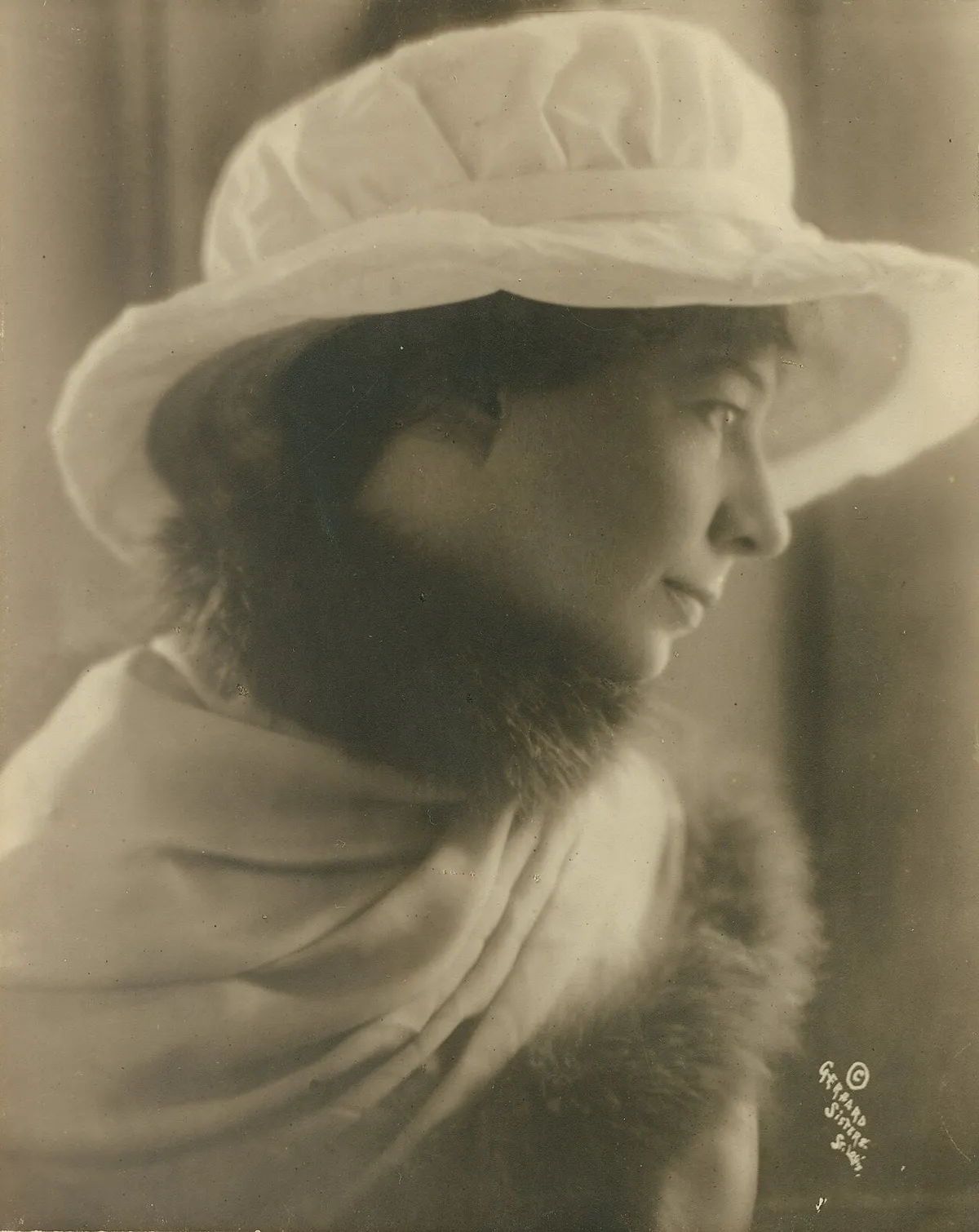
Sara Teasdale
The Song For Colin
I sang a song at dusking time
Beneath the evening star,
And Terence left his latest rhyme
To answer from afar.
Pierrot laid down his lute to weep,
And sighed, "She sings for me."
But Colin slept a careless sleep
Beneath an apple tree.
Beneath the evening star,
And Terence left his latest rhyme
To answer from afar.
Pierrot laid down his lute to weep,
And sighed, "She sings for me."
But Colin slept a careless sleep
Beneath an apple tree.
431

John Greenleaf Whittier
Trust
The same old baffling questions! O my friend,
I cannot answer them. In vain I send
My soul into the dark, where never burn
The lamps of science, nor the natural light
Of Reason's sun and stars! I cannot learn
Their great and solemn meanings, nor discern
The awful secrets of the eyes which turn
Evermore on us through the day and night
With silent challenge and a dumb demand,
Proffering the riddles of the dread unknown,
Like the calm Sphinxes, with their eyes of stone,
Questioning the centuries from their veils of sand!
I have no answer for myself or thee,
Save that I learned beside my mother's knee;
'All is of God that is, and is to be;
And God is good.' Let this suffice us still,
Resting in childlike trust upon His will
Who moves to His great ends unthwarted by the ill.
419

Johann Wolfgang von Goethe
To Charlotte
'MIDST the noise of merriment and glee,
'Midst full many a sorrow, many a care,
Charlotte, I remember, we remember thee,
How, at evening's hour so fair,
Thou a kindly hand didst reach us,
When thou, in some happy place
Where more fair is Nature s face,
Many a lightly-hidden trace
Of a spirit loved didst teach us.
Well 'tis that thy worth I rightly knew,--
That I, in the hour when first we met,
While the first impression fill'd me yet,
Call'd thee then a girl both good and true.
Rear'd in silence, calmly, knowing nought,
On the world we suddenly are thrown;
Hundred thousand billows round us sport;
All things charm us--many please alone,
Many grieve us, and as hour on hour is stealing,
To and fro our restless natures sway;
First we feel, and then we find each feeling
By the changeful world-stream borne away.
Well I know, we oft within us find
Many a hope and many a smart.
Charlotte, who can know our mind?
Charlotte, who can know our heart?
Ah! 'twould fain be understood, 'twould fain o'erflow
In some creature's fellow-feelings blest,
And, with trust, in twofold measure know
All the grief and joy in Nature's breast.
Then thine eye is oft around thee cast,
But in vain, for all seems closed for ever.
Thus the fairest part of life is madly pass'd
Free from storm, but resting never:
To thy sorrow thou'rt to-day repell'd
By what yesterday obey'd thee.
Can that world by thee be worthy held
Which so oft betray'd thee?
Which, 'mid all thy pleasures and thy pains,
Lived in selfish, unconcern'd repose?
See, the soul its secret cells regains,
And the heart--makes haste to close.
Thus found I thee, and gladly went to meet thee;
"She's worthy of all love!" I cried,
And pray'd that Heaven with purest bliss might greet thee,
Which in thy friend it richly hath supplied.
419

William Butler Yeats
On Woman
MAY God be praised for woman
That gives up all her mind,
A man may find in no man
A friendship of her kind
That covers all he has brought
As with her flesh and bone,
Nor quarrels with a thought
Because it is not her own.
Though pedantry denies,
It's plain the Bible means
That Solomon grew wise
While talking with his queens.
Yet never could, although
They say he counted grass,
Count all the praises due
When Sheba was his lass,
When she the iron wrought, or
When from the smithy fire
It shuddered in the water:
Harshness of their desire
That made them stretch and yawn,
pleasure that comes with sleep,
Shudder that made them one.
What else He give or keep
God grant me -- no, not here,
For I am not so bold
To hope a thing so dear
Now I am growing old,
But when, if the tale's true,
The Pestle of the moon
That pounds up all anew
Brings me to birth again --
To find what once I had
And know what once I have known,
Until I am driven mad,
Sleep driven from my bed.
By tenderness and care.
pity, an aching head,
Gnashing of teeth, despair;
And all because of some one
perverse creature of chance,
And live like Solomon
That Sheba led a dance.
420
Ella Wheeler Wilcox
Leudeman's-on-the-River
Toward even when the day leans down,
To kiss the upturned face of night,
Out just beyond the loud-voiced town
I know a spot of calm delight.
Like crimson arrows from a quiver
The red rays pierce the water flowing,
While we go dreaming, singing, rowing,
To Leudeman's-on-the-River.
The hills, like some glad mocking-bird,
Send back our laughter and our singing,
While faint--and yet more faint is heard
The steeple bells all sweetly ringing.
Some message did the winds deliver
To each glad heart that August night,
All heard, but all heard not aright;
By Leudeman's-on-the-River.
Night falls as in some foreign clime,
Between the hills that slope and rise.
So dusk the shades at landing time,
We could not see each other's eyes.
We only saw the moonbeams quiver
Far down upon the stream! that night
The new moon gave but little light
By Leudeman's-on-the-River.
How dusky were those paths that led
Up from the river to the hall.
The tall trees branching overhead
Invite the early shades that fall.
In all the glad blithe world, oh, never
Were hearts more free from care than when
We wandered through those walks, we ten,
By Leudeman's-on-the-River.
So soon, so soon, the changes came.
This August day we two alone,
On that same river, not the same,
Dream of a night forever flown.
Strange distances have come to sever
The hearts that gayly beat in pleasure,
Long miles we cannot cross or measure--
From Leudeman's-on-the-River.
We'll pluck two leaves, dear friend, to-day.
The green, the russet! seems it strange
So soon, so soon, the leaves can change!
Ah, me! so runs all night away
This night wind chills me, and I shiver;
The summer time is almost past.
One more good-bye--perhaps the last
To Leudeman's-on-the-River.
416
Walt Whitman
The Prairie-Grass Dividing
THE prairie-grass dividing--its special odor breathing,
I demand of it the spiritual corresponding,
Demand the most copious and close companionship of men,
Demand the blades to rise of words, acts, beings,
Those of the open atmosphere, coarse, sunlit, fresh, nutritious,
Those that go their own gait, erect, stepping with freedom and
command--leading, not following,
Those with a never-quell'd audacity--those with sweet and lusty
flesh, clear of taint,
Those that look carelessly in the faces of Presidents and Governors,
as to say, Who are you?
Those of earth-born passion, simple, never-constrain'd, never
obedient,
Those of inland America.
415
Ella Wheeler Wilcox
The Land Of The Gone-Away Souls
Oh! that is a beautiful land, I wis,
The land of the Gone-away Souls.
Yes, a lovelier region by far than this
(Though this is a world most fair).
The goodliest goal of all good goals,
Else why do our friends stay there?
I walk in a world that is sweet with friends,
And earth I have ever held dear;
Yes, love with duty and beauty blends
To render the earth-place bright.
But faster and faster, year on year,
My comrades hurry from sight.
They hurry away to the Over-There,
And few of them say farewell;
Yes, they go away with a secret air
As if on a secret quest.
And they come not back to earth to tell
Why that land seems the best.
Messages come from the mystic sphere,
But few know the code of that land,
Yes, many the message but few who hear,
In the din of the world below,
Or hearing the message, can understand
Those truths which we long to know.
But it must be the goal of all good goals,
And I think of it more and more.
Yes, think of that land of the Gone-Away Souls
And its growing hosts of friends
Who will hail my bark when it touches shore
Where the last brief journey ends.
414
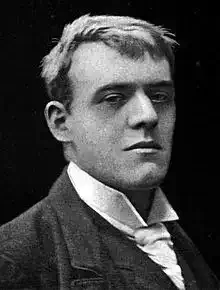
Hilaire Belloc
Her Final Role
This man's desire; that other's hopeless end;
A third's capricious tyrant: and my friend.
A third's capricious tyrant: and my friend.
411

Rudyard Kipling
Neighbours
The man that is open of heart to his neighbour,
And stops to consider his likes and dislikes,
His blood shall be wholesome whatever his labour,
His luck shall be with him whatever he strikes.
The Splendour of Morning shall duly possess him,
That he may not be sad at the falling of eve.
And, when he has done with mere living--God bless him!--
A many shall sigh, and one Woman shall grieve!
But he that is costive of soul toward his fellow,
Through the ways, and the works, and the woes of this life,
Him food shall not fatten, him drink shall not mellow;
And his innards shall brew him perpetual strife.
His eye shall be blind to God's Glory above him;
His ear shall be deaf to Earth's Laughter around;
His Friends and his Club and his Dog shall not love him;
And his Widow shall skip when he goes underground!
411

Kazi Nazrul Islam
Lonely in My Floral chariot
O my friend,
you walked on your thorny path smiling,
seeing me lonely in my floral chariot, crying.
O the friend passer-by,
if you took me to your path,
I would have covered all the thorns under my breast.
Now I cry in my gay chariot
longing to become your friend in distress.
[Original: Tumi heshe chole gele; Translation: Mohammad Nurul Huda]
412
Rudyard Kipling
To T. A.
I have made for you a song,
And it may be right or wrong,
But only you can tell me if it's true;
I have tried for to explain
Both your pleasure and your pain,
And, Thomas, here's my best respects to you!
O there'll surely come a day
When they'll give you all your pay,
And treat you as a Christian ought to do;
So, until that day comes round,
Heaven keep you safe and sound,
And, Thomas, here's my best respects to you!
409
William Butler Yeats
The Municipal Gallery Revisited
AROUND me the images of thirty years:
An ambush; pilgrims at the water-side;
Casement upon trial, half hidden by the bars,
Guarded; Griffith staring in hysterical pride;
Kevin O'Higgins' countenance that wears
A gentle questioning look that cannot hide
A soul incapable of remorse or rest;
A revolutionary soldier kneeling to be blessed;
An Abbot or Archbishop with an upraised hand
Blessing the Tricolour. 'This is not,' I say,
'The dead Ireland of my youth, but an Ireland
The poets have imagined, terrible and gay.'
Before a woman's portrait suddenly I stand,
Beautiful and gentle in her Venetian way.
I met her all but fifty years ago
For twenty minutes in some studio.
III
Heart-smitten with emotion I Sink down,
My heart recovering with covered eyes;
Wherever I had looked I had looked upon
My permanent or impermanent images:
Augusta Gregory's son; her sister's son,
Hugh Lane, 'onlie begetter' of all these;
Hazel Lavery living and dying, that tale
As though some ballad-singer had sung it all;
Mancini's portrait of Augusta Gregory,
'Greatest since Rembrandt,' according to John Synge;
A great ebullient portrait certainly;
But where is the brush that could show anything
Of all that pride and that humility?
And I am in despair that time may bring
Approved patterns of women or of men
But not that selfsame excellence again.
My mediaeval knees lack health until they bend,
But in that woman, in that household where
Honour had lived so long, all lacking found.
Childless I thought, 'My children may find here
Deep-rooted things,' but never foresaw its end,
And now that end has come I have not wept;
No fox can foul the lair the badger swept --
VI
(An image out of Spenser and the common tongue).
John Synge, I and Augusta Gregory, thought
All that we did, all that we said or sang
Must come from contact with the soil, from that
Contact everything Antaeus-like grew strong.
We three alone in modern times had brought
Everything down to that sole test again,
Dream of the noble and the beggar-man.
VII
And here's John Synge himself, that rooted man,
'Forgetting human words,' a grave deep face.
You that would judge me, do not judge alone
This book or that, come to this hallowed place
Where my friends' portraits hang and look thereon;
Ireland's history in their lineaments trace;
Think where man's glory most begins and ends,
And say my glory was I had such friends.
407

Ezra Pound
Villanelle: The Psychological Hour
I had over prepared the event,
that much was ominous.
With middle-ageing care
I had laid out just the right books.
I had almost turned down the pages.
Beauty is so rare a thing.
So few drink of my fountain.
So much barren regret,
So many hours wasted!
And now I watch, from the window,
the rain, the wandering busses.
"Their little cosmos is shaken" the
air is alive with that fact.
In their parts of the city
they are played on by diverse forces.
How do I know?
Oh, I know well enough.
For them there is something afoot.
As for me;
I had over-prepared the event -
Beauty is so rare a thing.
So few drink of my fountain.
Two friends: a breath of the forest. . .
Friends? Are people less friends
because one has just, at last, found them?
Twice they promised to come.
"Between the night and the morning?"
Beauty would drink of my mind.
Youth would awhile forget
my youth is gone from me.
(Speak up! You have danced so stiffly?
Someone admired your works,
And said so frankly.
"Did you talk like a fool,
The first night?
The second evening?"
"But they promised again:
'To-morrow at tea-time'.")
Now the third day is here no
word from either;
No word from her nor him,
Only another man's note:
"Dear Pound, I am leaving England."
408
Walt Whitman
What Think You I Take My Pen In Hand?
WHAT think you I take my pen in hand to record?
The battle-ship, perfect-model'd, majestic, that I saw pass the
offing to-day under full sail?
The splendors of the past day? Or the splendor of the night that
envelopes me?
Or the vaunted glory and growth of the great city spread around me?-No;
But I record of two simple men I saw to-day, on the pier, in the
midst of the crowd, parting the parting of dear friends;
The one to remain hung on the other's neck, and passionately kiss'd
him,
While the one to depart, tightly prest the one to remain in his arms.
409
Johann Wolfgang von Goethe
The Chosen Cliff
HERE in silence the lover fondly mused on his loved one;
Gladly he spake to me thus: "Be thou my witness, thou stone!
Yet thou must not be vainglorious, thou hast many companions;
Unto each rock on the plain, where I, the happy one, dwell,
Unto each tree of the wood that I cling to, as onward I ramble,
'Be thou a sign of my bliss!' shout I, and then 'tis ordain'd.
Yet to thee only I lend a voice, as a Muse from the people
Chooseth one for herself, kissing his lips as a friend."
405
Rudyard Kipling
Follow Me 'Ome
There was no one like 'im, 'Orse or Foot,
Nor any o' the Guns I knew;
An' because it was so, why, o' course 'e went an' died,
Which is just what the best men do.
So it's knock out your pipes an' follow me!
An' it's finish up your swipes an' follow me!
Oh, 'ark to the big drum callin',
Follow me -- follow me 'ome!
'Is mare she neighs the 'ole day long,
She paws the 'ole night through,
An' she won't take 'er feed 'cause o' waitin' for 'is step,
Which is just what a beast would do.
'Is girl she goes with a bombardier
Before 'er month is through;
An' the banns are up in church, for she's got the beggar hooked,
Which is just what a girl would do.
We fought 'bout a dog -- last week it were --
No more than a round or two;
But I strook 'im cruel 'ard, an' I wish I 'adn't now,
Which is just what a man can't do.
'E was all that I 'ad in the way of a friend,
An' I've 'ad to find one new;
But I'd give my pay an' stripe for to get the beggar back,
Which it's just too late to do.
So it's knock out your pipes an' follow me!
An' it's finish off your swipes an' follow me!
Oh, 'ark to the fifes a-crawlin'!
Follow me -- follow me 'ome!
Take 'im away! 'E's gone where the best men go.
Take 'im away! An' the gun-wheels turnin' slow.
Take 'im away! There's more from the place 'e come.
Take 'im away, with the limber an' the drum.
For it's "Three rounds blank" an' follow me,
An' it's "Thirteen rank" an' follow me;
Oh, passin' the love o' women,
Follow me -- follow me 'ome!
404

Henry Lawson
Never, Never Land
By hut, homestead and shearing shed,
By railroad, coach and track-
By lonely graves where rest the dead,
Up-Country and Out-Back:
To where beneath the clustered stars
The dreamy plains expand-
My home lies wide a thousand miles
In Never-Never Land.
It lies beyond the farming belt,
Wide wastes of scrub and plain,
A blazing desert in the drought,
A lake-land after rain;
To the skyline sweeps the waving grass,
Or whirls the scorching sand-
A phantom land, a mystic realm!
The Never-Never Land.
Where lone Mount Desolation lies
Mounts Dreadful and Despair'
Tis lost beneath the rainless skies
In hopeless deserts there;
It spreads nor-west by No-Man's Land
Where clouds are seldom seen
To where the cattle stations lie
Three hundred miles between.
The drovers of the Great Stock Routes
The strange Gulf country Know
Where, travelling from the southern droughts,
The big lean bullocks go;
And camped by night where plains lie wide,
Like some old ocean's bed,
The watchmen in the starlight ride
Round fifteen hundred head.
Lest in the city I forget
True mateship after all,
My water-bag and billy yet
Are hanging on the wall;
And I, to save my soul again,
Would tramp to sunsets grand
With sad-eyed mates across the plain
In Never-Never Land.
401

Emily Dickinson
If anybody's friend be dead
If anybody's friend be dead
It's sharpest of the theme
The thinking how they walked alive-
At such and such a time-
Their costume, of a Sunday,
Some manner of the Hair-
A prank nobody knew but them
Lost, in the Sepulchre-
How warm, they were, on such a day,
You almost feel the date-
So short way off it seems-
And now-they're Centuries from that-
How pleased they were, at what you said-
You try to touch the smile
And dip your fingers in the frost-
When was it-Can you tell-
You asked the Company to tea
Acquaintance-
just a few-
And chatted close with this Grand Thing
That don't remember you-
Past Bows, and Invitations-
Past Interview, and Vow-
Past what Ourself can estimate
That-
makes the Quick of Woe!
396
John Greenleaf Whittier
The Laurels
FROM these wild rocks I look to-day
O'er leagues of dancing waves, and see
The far, low coast-line stretch away
To where our river meets the sea.
The light wind blowing off the land
Is burdened with old voices; through
Shut eyes I see how lip and hand
The greeting of old days renew.
O friends whose hearts still keep their prime,
Whose bright example warms and cheers,
Ye teach us how to smile at Time,
And set to music all his years!
I thank you for sweet summer days,
For pleasant memories lingering long,
For joyful meetings, fond delays,
And ties of friendship woven strong.
As for the last time, side by side,
You tread the paths familiar grown,
I reach across the severing tide,
And blend my farewells with your own.
Make room, O river of our home!
For other feet in place of ours,
And in the summers yet to come,
Make glad another Feast of Flowers!
Hold in thy mirror, calm and deep,
The pleasant pictures thou hast seen;
Forget thy lovers not, but keep
Our memory like thy laurels green.
397
Walt Whitman
Of The Terrible Doubt Of Apperarances
OF the terrible doubt of appearances,
Of the uncertainty after all--that we may be deluded,
That may-be reliance and hope are but speculations after all,
That may-be identity beyond the grave is a beautiful fable only,
May-be the things I perceive--the animals, plants, men, hills,
shining and flowing waters,
The skies of day and night--colors, densities, forms--May-be these
are, (as doubtless they are,) only apparitions, and the real
something has yet to be known;
(How often they dart out of themselves, as if to confound me and mock
me!
How often I think neither I know, nor any man knows, aught of them;)
May-be seeming to me what they are, (as doubtless they indeed but
seem,) as from my present point of view--And might prove, (as
of course they would,) naught of what they appear, or naught
any how, from entirely changed points of view;
--To me, these, and the like of these, are curiously answer'd by my
lovers, my dear friends;
When he whom I love travels with me, or sits a long while holding me
by the hand,
When the subtle air, the impalpable, the sense that words and reason
hold not, surround us and pervade us,
Then I am charged with untold and untellable wisdom--I am silent--I
require nothing further,
I cannot answer the question of appearances, or that of identity
beyond the grave;
But I walk or sit indifferent--I am satisfied,
He ahold of my hand has completely satisfied me.
399
Walt Whitman
When I Peruse The Conquer'd Fame
WHEN I peruse the conquer'd fame of heroes, and the victories of
mighty generals, I do not envy the generals,
Nor the President in his Presidency, nor the rich in his great house;
But when I hear of the brotherhood of lovers, how it was with them,
How through life, through dangers, odium, unchanging, long and long,
Through youth, and through middle and old age, how unfaltering, how
affectionate and faithful they were,
Then I am pensive--I hastily walk away, fill'd with the bitterest
envy.
393