
Friendship
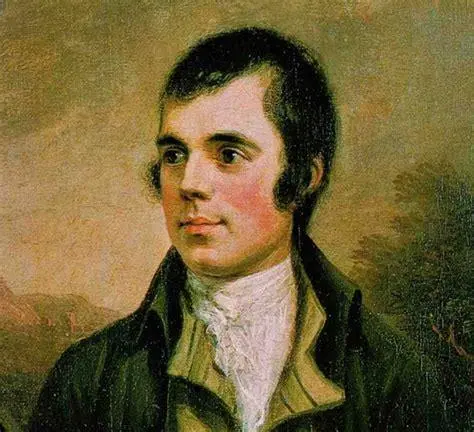
Robert Burns
Love in the Guise of Frindship
Talk not of love, it gives me pain,
For love has been my foe;
He bound me in an iron chain,
And plung'd me deep in woe.
But friendship's pure and lasting joys,
My heart was form'd to prove;
There, welcome win and wear the prize,
But never talk of love.
Your friendship much can make me blest,
O why that bliss destroy?
Why urge the only, one request
You know I will deny?
Your thought, if Love must harbour there,
Conceal it in that thought;
Nor cause it in that thought;
Nor cause me from my bosom tear
The very friend I sought.
391

Johann Wolfgang von Goethe
To My Friend - Ode II
THOU go'st! I murmur--
Go! let me murmur.
Oh, worthy man,
Fly from this land!
Deadly marshes,
Steaming mists of October
Here interweave their currents,
Blending for ever.
Noisome insects
Here are engender'd;
Fatal darkness
Veils their malice.
The fiery-tongued serpent,
Hard by the sedgy bank,
Stretches his pamper'd body,
Caress'd by the sun's bright beams.
Tempt no gentle night-rambles
Under the moon's cold twilight!
Loathsome toads hold their meetings
Yonder at every crossway.
Injuring not,
Fear will they cause thee.
Oh, worthy man,
Fly from this land!
390
Johann Wolfgang von Goethe
Valediction
I ONCE was fond of fools,
And bid them come each day;
Then each one brought his tools
The carpenter to play;
The roof to strip first choosing,
Another to supply,
The wood as trestles using,
To move it by-and-by,
While here and there they ran,
And knock'd against each other;
To fret I soon began,
My anger could not smother,
So cried, "Get out, ye fools!"
At this they were offended
Then each one took his tools,
And so our friendship ended.
Since that, I've wiser been,
And sit beside my door;
When one of them is seen,
I cry, "Appear no more!"
"Hence, stupid knave!" I bellow:
At this he's angry too:
"You impudent old fellow!
And pray, sir, who are you?
Along the streets we riot,
And revel at the fair;
But yet we're pretty quiet,
And folks revile us ne'er.
Don't call us names, then, please!"--
At length I meet with ease,
For now they leave my door-
'Tis better than before!
388

William Butler Yeats
Friends
NOW must I these three praise --
Three women that have wrought
What joy is in my days:
One because no thought,
Nor those unpassing cares,
No, not in these fifteen
Many-times-troubled years,
Could ever come between
Mind and delighted mind;
And one because her hand
Had strength that could unbind
What none can understand,
What none can have and thrive,
Youth's dreamy load, till she
So changed me that I live
Labouring in ecstasy.
And what of her that took
All till my youth was gone
With scarce a pitying look?
How could I praise that one?
When day begins to break
I count my good and bad,
Being wakeful for her sake,
Remembering what she had,
What eagle look still shows,
While up from my heart's root
So great a sweetness flows
I shake from head to foot.
388

John Keats
On Leaving Some Friends At An Early Hour
Give me a golden pen, and let me lean
On heaped-up flowers, in regions clear, and far;
Bring me a tablet whiter than a star,
Or hand of hymning angel, when 'tis seen
The silver strings of heavenly harp atween:
And let there glide by many a pearly car
Pink robes, and wavy hair, and diamond jar,
And half-discovered wings, and glances keen.
The while let music wander round my ears,
And as it reaches each delicious ending,
Let me write down a line of glorious tone,
And full of many wonders of the spheres:
For what a height my spirit is contending!
'Tis not content so soon to be alone.
385
William Butler Yeats
At Galway Races
THERE where the course is,
Delight makes all of the one mind,
The riders upon the galloping horses,
The crowd that closes in behind:
We, too, had good attendance once,
Hearers and hearteners of the work;
Aye, horsemen for companions,
Before the merchant and the clerk
Breathed on the world with timid breath.
Sing on: somewhere at some new moon,
We'll learn that sleeping is not death,
Hearing the whole earth change its tune,
Its flesh being wild, and it again
Crying aloud as the racecourse is,
And we find hearteners among men
That ride upon horses.
385
William Butler Yeats
The Apparitions
BECAUSE there is safety in derision
I talked about an apparition,
I took no trouble to convince,
Or seem plausible to a man of sense.
Distrustful of thar popular eye
Whether it be bold or sly.
Fifteen apparitions have I seen;
The worst a coat upon a coat-hanger.
I have found nothing half so good
As my long-planned half solitude,
Where I can sit up half the night
With some friend that has the wit
Not to allow his looks to tell
When I am unintelligible.
Fifteen apparitions have I seen;
The worst a coat upon a coat-hanger.
When a man grows old his joy
Grows more deep day after day,
His empty heart is full at length,
But he has need of all that strength
Because of the increasing Night
That opens her mystery and fright.
Fifteen apparitions have I seen;
The worst a coat upon a coat-hanger.
383

Henry Wadsworth Longfellow
To the River Charles
River! that in silence windest
Through the meadows, bright and free,
Till at length thy rest thou findest
In the bosom of the sea!
Four long years of mingled feeling,
Half in rest, and half in strife,
I have seen thy waters stealing
Onward, like the stream of life.
Thou hast taught me, Silent River!
Many a lesson, deep and long;
Thou hast been a generous giver;
I can give thee but a song.
Oft in sadness and in illness,
I have watched thy current glide,
Till the beauty of its stillness
Overflowed me, like a tide.
And in better hours and brighter,
When I saw thy waters gleam,
I have felt my heart beat lighter,
And leap onward with thy stream.
Not for this alone I love thee,
Nor because thy waves of blue
From celestial seas above thee
Take their own celestial hue.
Where yon shadowy woodlands hide thee,
And thy waters disappear,
Friends I love have dwelt beside thee,
And have made thy margin dear.
More than this;--thy name reminds me
Of three friends, all true and tried;
And that name, like magic, binds me
Closer, closer to thy side.
Friends my soul with joy remembers!
How like quivering flames they start,
When I fan the living embers
On the hearth-stone of my heart!
'T is for this, thou Silent River!
That my spirit leans to thee;
Thou hast been a generous giver,
Take this idle song from me.
380

Ella Wheeler Wilcox
In England
In England, there are wrongs no doubt,
Which should be righted; so men say,
Who seek to weed earth's garden out,
And give the roses right of way;
Yes, right of way, to fruit and rose,
Where now but poison ivy grows.
In England, there is wide unrest,
They tell me who should know; and yet
I saw but hedges, gayly dressed,
And eyes where love and kindness met;
Yes, love and kindness, met and made
Soft sunshine even in the shade.
In England, there are haunting things
Which follow one to other lands;
Like some pervading scent that clings
To laces touched by vanished hands;
Yes, touched by vanished hands, which made
A fragrance that defies the grave.
In England, centuries of art
Give common things a mellow tone;
And wake old memories in the heart
Of other lives the soul has known;
Yes, other lives in some past age
Start forth from canvas, and from page.
In England, there are simple joys,
The modern world has left all sweet;
In London's heart, are nooks where noise
Has entered but with slippered feet;
Yes, entered softly. Friend, believe,
To part from England is to grieve.
377

Robert Browning
Waring
Mr. Alfred Domett, C.M.G., author of
Ranolf and Amohia, ``full of descriptions of
New Zealand scenery.]
I.
I.
What's become of Waring
Since he gave us all the slip,
Chose land-travel or seafaring,
Boots and chest or staff and scrip,
Rather than pace up and down
Any longer London town?
II.
Who'd have guessed it from his lip
Or his brow's accustomed bearing,
On the night he thus took ship
Or started landward?---little caring
For us, it seems, who supped together
(Friends of his too, I remember)
And walked home thro' the merry weather,
The snowiest in all December.
I left his arm that night myself
For what's-his-name's, the new prose-poet
Who wrote the book there, on the shelf---
How, forsooth, was I to know it
If Waring meant to glide away
Like a ghost at break of day?
Never looked he half so gay!
III.
He was prouder than the devil:
How he must have cursed our revel!
Ay and many other meetings,
Indoor visits, outdoor greetings,
As up and down he paced this London,
With no work done, but great works undone,
Where scarce twenty knew his name.
Why not, then, have earlier spoken,
Written, bustled? Who's to blame
If your silence kept unbroken?
``True, but there were sundry jottings,
``Stray-leaves, fragments, blurts and blottings,
``Certain fixst steps were achieved
``Already which''---(is that your meaning?)
``Had well borne out whoe'er believed
``In more to come!'' But who goes gleaning
Hedgeside chance-glades, while full-sheaved
Stand cornfields by him? Pride, o'erweening
Pride alone, puts forth such claims
O'er the day's distinguished names.
IV.
Meantime, how much I loved him,
I find out now I've lost him.
I who cared not if I moved him,
Who could so carelessly accost him,
Henceforth never shall get free
Of his ghostly company,
His eyes that just a little wink
As deep I go into the merit
Of this and that distinguished spirit---
His cheeks' raised colour, soon to sink,
As long I dwell on some stupendous
And tremendous (Heaven defend us!)
Monstr'-inform'-ingens-horrend-ous
Demoniaco-seraphic
Penman's latest piece of graphic.
Nay, my very wrist grows warm
With his dragging weight of arm.
E'en so, swimmingly appears,
Through one's after-supper musings,
Some lost lady of old years
With her beauteous vain endeavour
And goodness unrepaid as ever;
The face, accustomed to refusings,
We, puppies that we were ... Oh never
Surely, nice of conscience, scrupled
Being aught like false, forsooth, to?
Telling aught but honest truth to?
What a sin, had we centupled
Its possessor's grace and sweetness
No! she heard in its completeness
Truth, for truth's a weighty matter,
And truth, at issue, we can't flatter!
Well, 'tis done with; she's exempt
From damning us thro' such a sally;
And so she glides, as down a valley,
Taking up with her contempt,
Past our reach; and in, the flowers
Shut her unregarded hours.
V.
Oh, could I have him back once more,
This Waring, but one half-day more!
Back, with the quiet face of yore,
So hungry for acknowledgment
Like mine! I'd fool him to his bent.
Feed, should not he, to heart's content?
I'd say, ``to only have conceived,
``Planned your great works, apart from progress,
``Surpasses little works achieved!''
I'd lie so, I should be believed.
I'd make such havoc of the claims
Of the day's distinguished names
To feast him with, as feasts an ogress
Her feverish sharp-toothed gold-crowned child!
Or as one feasts a creature rarely
Captured here, unreconciled
To capture; and completely gives
its pettish humours license, barely
Requiring that it lives.
VI.
Ichabod, Ichabod,
The glory is departed!
Travels Waring East away?
Who, of knowledge, by hearsay,
Reports a man upstarted
Somewhere as a god,
Hordes grown European-hearted,
Millions of the wild made tame
On a sudden at his fame?
In Vishnu-land what Avatar?
Or who in Moscow, toward the Czar,
With the demurest of footfalls
Over the Kremlin's pavement bright
With serpentine and syenite,*
Steps, with five other Generals
That simultaneously take snuff,
For each to have pretext enough
And kerchiefwise unfold his sash
Which, softness' self, is yet the stuff
To hold fast where a steel chain snaps,
And leave the grand white neck no gash?
Waring in Moscow, to those rough
Cold northern natures born perhaps,
Like the lambwhite maiden dear
From the circle of mute kings
Unable to repress the tear,
Each as his sceptre down he flings,
To Dian's fane at Taurica,
Where now a captive priestess, she alway
Mingles her tender grave Hellenic speech
With theirs, tuned to the hailstone-beaten beach
As pours some pigeon, from the myrrhy lands
Rapt by the whirlblast to fierce Scythian strands
Where breed the swallows, her melodious cry
Amid their barbarous twitter!
In Russia? Never! Spain were fitter!
Ay, most likely 'tis in Spain
That we and Waring meet again
Now, while he turns down that cool narrow lane
Into the blackness, out of grave Madrid
All fire and shine, abrupt as when there's slid
Its stiff gold blazing pall
From some black coffin-lid.
Or, best of all,
I love to think
The leaving us was just a feint;
Back here to London did he slink,
And now works on without a wink
Of sleep, and we are on the brink
Of something great in fresco-pain:
Some garret's ceiling, walls and floor,
Up and down and o'er and o'er
He splashes, as none splashed before
Since great Caldera Polidore.*
Or Music means this land of ours
Some favour yet, to pity won
By Purcell from his Rosy Bowers,---
``Give me my so-long promised son,
``Let Waring end what I begun!''
Then down he creeps and out he steals
Only when the night conceals
His face; in Kent 'tis cherry-time,
Or hops are picking: or at prime
Of March he wanders as, too happy,
Years ago when he was young,
Some mild eve when woods grew sappy
And the early moths had sprung
To life from many a trembling sheath
Woven the warm boughs beneath;
While small birds said to themselves
What should soon be actual song,
And young gnats, by tens and twelves,
Made as if they were the throng
That crowd around and carry aloft
The sound they have nursed, so sweet and pure,
Out of a myriad noises soft,
Into a tone that can endure
Amid the noise of a July noon
When all God's creatures crave their boon,
All at once and all in tune,
And get it, happy as Waring then,
Having first within his ken
What a man might do with men:
And far too glad, in the even-glow,
To mix with the world he meant to take
Into his hand, he told you, so---
And out of it his world to make,
To contract and to expand
As he shut or oped his hand.
Oh Waring, what's to really be?
A clear stage and a crowd to see!
Some Garrick, say, out shall not he
The heart of Hamlet's mystery pluck?
Or, where most unclean beasts are rife,
Some Junius---am I right?---shall tuck
His sleeve, and forth with flaying-knife!
Some Chatterton shall have the luck
Of calling Rowley into life!
Some one shall somehow run a muck
With this old world for want of strife
Sound asleep. Contrive, contrive
To rouse us, Waring! Who's alive?
Our men scarce seem in earnest now.
Distinguished names!---but 'tis, somehow,
As if they played at being names
Still more distinguished, like the games
Of children. Turn our sport to earnest
With a visage of the sternest!
Bring the real times back, confessed
Still better than our very best!
II.
I.
``When I last saw Waring ...''
(How all turned to him who spoke!
You saw Waring? Truth or joke?
In land-travel or sea-faring?)
II.
``We were sailing by Triest
``Where a day or two we harboured:
``A sunset was in the West,
``When, looking over the vessel's side,
``One of our company espied
``A sudden speck to larboard.
``And as a sea-duck flies and swims
``At once, so came the light craft up,
``With its sole lateen sail that trims
``And turns (the water round its rims
``Dancing, as round a sinking cup)
``And by us like a fish it curled,
``And drew itself up close beside,
``Its great sail on the instant furled,
``And o'er its thwarts a shrill voice cried,
``(A neck as bronzed as a Lascar's)
`` `Buy wine of us, you English Brig?
`` `Or fruit, tobacco and cigars?
`` `A pilot for you to Triest?
`` `Without one, look you ne'er so big,
`` `They'll never let you up the bay!
`` `We natives should know best.'
``I turned, and `just those fellows' way,'
``Our captain said, `The 'long-shore thieves
`` `Are laughing at us in their sleeves.'
III.
``In truth, the boy leaned laughing back;
``And one, half-hidden by his side
``Under the furled sail, soon I spied,
``With great grass hat and kerchief black,
``Who looked up with his kingly throat,
``Said somewhat, while the other shook
``His hair back from his eyes to look
``Their longest at us; then the boat,
``I know not how, turned sharply round,
``Laying her whole side on the sea
``As a leaping fish does; from the lee
``Into the weather, cut somehow
``Her sparkling path beneath our bow
``And so went off, as with a bound,
``Into the rosy and golden half
``O' the sky, to overtake the sun
``And reach the shore, like the sea-calf
``Its singing cave; yet I caught one
``Glance ere away the boat quite passed,
``And neither time nor toil could mar
``Those features: so I saw the last
``Of Waring!''---You? Oh, never star
Was lost here but it rose afar!
Look East, where whole new thousands are!
In Vishnu-land what Avatar?
* Egyptian granite.
* Surnamed da Caravaggio. A pupil of Raphael.
378
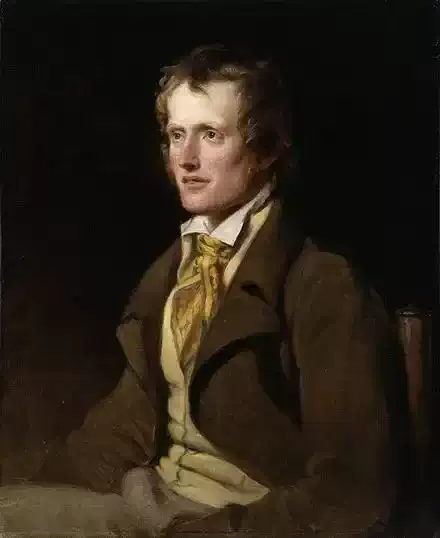
John Clare
Country Letter
Dear brother robin this comes from us all
With our kind love and could Gip write and all
Though but a dog he'd have his love to spare
For still he knows and by your corner chair
The moment he comes in he lyes him down
and seems to fancy you are in the town.
This leaves us well in health thank God for that
For old acquaintance Sue has kept your hat
Which mother brushes ere she lays it bye
and every sunday goes upstairs to cry
Jane still is yours till you come back agen
and neer so much as dances with the men
and ned the woodman every week comes in
and asks about you kindly as our kin
and he with this and goody Thompson sends
Remembrances with those of all our friends
Father with us sends love untill he hears
and mother she has nothing but her tears
Yet wishes you like us in health the same
and longs to see a letter with your name
So loving brother don't forget to write
Old Gip lies on the hearth stone every night
Mother can't bear to turn him out of doors
and never noises now of dirty floors
Father will laugh but lets her have her way
and Gip for kindness get a double pay
So Robin write and let us quickly see
You don't forget old friends no more than we
Nor let my mother have so much to blame
To go three journeys ere your letter came.
379
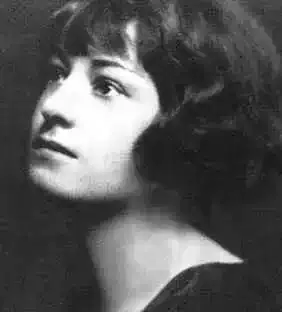
Dorothy Parker
Inventory
Four be the things I am wiser to know:
Idleness, sorrow, a friend, and a foe.
Four be the things I’d been better without:
Love, curiosity, freckles, and doubt.
Three be the things I shall never attain:
Envy, content, and sufficient champagne.
Three be the things I shall have till I die:
Laughter and hope and a sock in the eye.
Idleness, sorrow, a friend, and a foe.
Four be the things I’d been better without:
Love, curiosity, freckles, and doubt.
Three be the things I shall never attain:
Envy, content, and sufficient champagne.
Three be the things I shall have till I die:
Laughter and hope and a sock in the eye.
376

Walt Whitman
Offerings
A THOUSAND perfect men and women appear,
Around each gathers a cluster of friends, and gay children and
youths, with offerings.
Around each gathers a cluster of friends, and gay children and
youths, with offerings.
374
Ella Wheeler Wilcox
Woman To Man
You do but jest, sir, and you jest not well,
How could the hand be enemy of the arm,
Or seed and sod be rivals! How could light
Feel jealousy of heat, plant of the leaf
Or competition dwell 'twixt lip and smile?
Are we not part and parcel of yourselves?
Like strands in one great braid we intertwine
And make the perfect whole. You could not be,
Unless we gave you birth; we are the soil
From which you sprang, yet sterile were that soil
Save as you planted. (Though in the Book we read
One woman bore a child with no man's aid
We find no record of a man-child born
Without the aid of woman! Fatherhood
Is but a small achievement at the best
While motherhood comprises heaven and hell.)
This ever-growing argument of sex
Is most unseemly, and devoid of sense.
Why waste more time in controversy, when
There is not time enough for all of love,
Our rightful occupation in this life.
Why prate of our defects, of where we fail
When just the story of our worth would need
Eternity for telling, and our best
Development comes ever thro' your praise,
As through our praise you reach your highest self.
Oh! had you not been miser of your praise
And let our virtues be their own reward
The old established, order of the world
Would never have been changed. Small blame is ours
For this unsexing of ourselves, and worse
Effeminizing of the male. We were
Content, sir, till you starved us, heart and brain.
All we have done, or wise, or otherwise
Traced to the root, was done for love of you.
Let us taboo all vain comparisons,
And go forth as God meant us, hand in hand,
Companions, mates and comrades evermore;
Two parts of one divinely ordained whole.
373

William Shakespeare
St. Crispin’s Day Speech: from Henry V
WESTMORELAND. O that we now had here
But one ten thousand of those men in England
That do no work to-day!
KING. What’s he that wishes so?
My cousin Westmoreland? No, my fair cousin;
If we are mark’d to die, we are enow
To do our country loss; and if to live,
The fewer men, the greater share of honour.
God’s will! I pray thee, wish not one man more.
By Jove, I am not covetous for gold,
Nor care I who doth feed upon my cost;
It yearns me not if men my garments wear;
Such outward things dwell not in my desires.
But if it be a sin to covet honour,
I am the most offending soul alive.
No, faith, my coz, wish not a man from England.
God’s peace! I would not lose so great an honour
As one man more methinks would share from me
For the best hope I have. O, do not wish one more!
Rather proclaim it, Westmoreland, through my host,
That he which hath no stomach to this fight,
Let him depart; his passport shall be made,
And crowns for convoy put into his purse;
We would not die in that man’s company
That fears his fellowship to die with us.
This day is call’d the feast of Crispian.
He that outlives this day, and comes safe home,
Will stand a tip-toe when this day is nam’d,
And rouse him at the name of Crispian.
He that shall live this day, and see old age,
Will yearly on the vigil feast his neighbours,
And say “To-morrow is Saint Crispian.”
Then will he strip his sleeve and show his scars,
And say “These wounds I had on Crispian’s day.”
Old men forget; yet all shall be forgot,
But he’ll remember, with advantages,
What feats he did that day. Then shall our names,
Familiar in his mouth as household words-
Harry the King, Bedford and Exeter,
Warwick and Talbot, Salisbury and Gloucester-
Be in their flowing cups freshly rememb’red.
This story shall the good man teach his son;
And Crispin Crispian shall ne’er go by,
From this day to the ending of the world,
But we in it shall be remembered-
We few, we happy few, we band of brothers;
For he to-day that sheds his blood with me
Shall be my brother; be he ne’er so vile,
This day shall gentle his condition;
And gentlemen in England now-a-bed
Shall think themselves accurs’d they were not here,
And hold their manhoods cheap whiles any speaks
That fought with us upon Saint Crispin’s day.
370
Johann Wolfgang von Goethe
Table Song
O'ER me--how I cannot say,-
Heav'nly rapture's growing.
Will it help to guide my way
To yon stars all-glowing?
Yet that here I'd sooner be,
To assert I'm able,
Where, with wine and harmony,
I may thump the table.
Wonder not, my dearest friends,
What 'tis gives me pleasure;
For of all that earth e'er lends,
'Tis the sweetest treasure.
Therefore solemnly I swear,
With no reservation,
That maliciously I'll ne'er
Leave my present station.
Now that here we're gather'd round,
Chasing cares and slumbers,
Let, methought, the goblet sound
To the bard's glad numbers!
Many a hundred mile away,
Go those we love dearly;
Therefore let us here to-day
Make the glass ring clearly!
Here's His health, through Whom we live!
I that faith inherit.
To our king the next toast give,
Honour is his merit,
'Gainst each in-- and outward foe
He's our rock and tower.
Of his maintenance thinks he though,
More that grows his power.
Next to her good health I drink,
Who has stirr'd my passion;
Of his mistress let each think,
Think in knightly fashion.
If the beauteous maid but see
Whom 'tis I now call so,
Let her smiling nod to me:
"Here's my love's health also!"
To those friends,--the two or three,--
Be our next toast given,
In whose presence revel we,
In the silent even,--
Who the gloomy mist so cold
Scatter gently, lightly;
To those friends, then, new or old,
Let the toast ring brightly.
Broader now the stream rolls on,
With its waves more swelling,
While in higher, nobler tone,
Comrades, we are dwelling,--
We who with collected might,
Bravely cling together,
Both in fortune's sunshine bright,
And in stormy weather.
Just as we are gather'd thus,
Others are collected;
On them, therefore, as on us,
Be Fate's smile directed!
From the springhead to the sea,
Many a mill's revolving,
And the world's prosperity
Is the task I'm solving.
371

Kabir
Oh friend, I love you, think this over
Oh friend, I love you, think this over
carefully! If you are in love,
then why are you asleep?
If you have found him,
give yourself to him, take him.
Why do you lose track of him again and again?
If you are about to fall into heavy sleep anyway,
why waste time smoothing the bed
and arranging the pillows?
Kabir will tell you the truth: this is what love is like:
suppose you had to cut your head off
and give it to someone else,
what difference would that make?
369

Alexander Pope
On Mr. Gay
Of Manners gentle, of Affections mild;
In Wit, a Man; Simplicity, a Child:
With native Humour temp'ring virtuous Rage,
Form'd to delight at once and lash the age:
Above Temptation, in a low Estate, 5
And uncorrupted, ev'n among the Great:
A safe Companion, and an easy Friend,
Unblam'd thro' Life, lamented in thy End.
These are Thy Honours! not that here thy Bust
Is mix'd with Heroes, or with Kings thy dust; 10
But that the Worthy and the Good shall say,
Striking their pensive bosoms-
Here
lies GAY.
366

Emily Dickinson
I would distil a cup
I would distil a cup,
And bear to all my friends,
Drinking to her no more astir,
By beck, or burn, or moor!
And bear to all my friends,
Drinking to her no more astir,
By beck, or burn, or moor!
364
Henry Wadsworth Longfellow
The Dwarves
Loke sat and thought, till his dark eyes gleam
With joy at the deed he'd done;
When Sif looked into the crystal stream,
Her courage was wellnigh gone.
For never again her soft amber hair
Shall she braid with her hands of snow;
From the hateful image she turned in despair,
And hot tears began to flow.
In a cavern's mouth, like a crafty fox,
Loke sat 'neath the tall pine's shade,
When sudden a thundering was heard in the rocks,
And fearfully trembled the glade.
Then he knew that the noise good boded him naught,
He knew that 't was Thor who was coming;
He changed himself straight to a salmon trout,
And leaped in a fright in the Glommen.
But Thor changed too, to a huge seagull,
And the salmon trout seized in his beak;
He cried: Thou, traitor, I know thee well,
And dear shalt thou pay thy freak!
Thy caitiff's bones to a meal I'll pound,
As a millstone crusheth the grain.
When Loke that naught booted his magic found,
He took straight his own form again.
And what if thou scatter'st my limbs in air?
He spake, will it mend thy case?
Will it gain back for Sif a single hair?
Thou 'lt still a bald spouse embrace.
But if now thou 'lt pardon my heedless joke,--
For malice sure meant I none,--
I swear to thee here, by root, billow and rock,
By the moss on the Beata-stone,
By Mimer's well, and by Odin's eye,
And by Mjolmer, greatest of all,
That straight to the secret caves I'll hie,
To the dwarfs, my kinsmen small;
And thence for Sif new tresses I'll bring
Of gold ere the daylight's gone,
So that she will liken a field in spring,
With its yellow-flowered garment on.
* * * * * * * * * * *
Loke promised so well with his glozing tongue
That the Asas at length let him go,
And he sank in the earth, the dark rocks among,
Near the cold-fountain, far below.
He crept on his belly, as supple as eel,
The cracks in the hard granite through,
Till he came where the dwarfs stood hammering steel,
By the light of a furnace blue.
I trow 't was a goodly sight to see
The dwarfs, with their aprons on,
A-hammering and smelting so busily
Pure gold from the rough brown stone.
Rock crystals from sand and hard flint they made,
Which, tinged with the rosebud's dye,
They cast into rubies and carbuncles red,
And hid them in cracks hard by.
They took them fresh violets all dripping with dew,
Dwarf women had plucked them, the morn,--
And stained with their juice the clear sapphires blue,
King Dan in his crown since hath worn.
Then for emeralds they searched out the brightest green
Which the young spring meadow wears,
And dropped round pearls, without flaw or stain,
From widows' and maidens' tears.
* * * * * * * * * * *
When Loke to the dwarfs had his errand made known,
In a trice for the work they were ready;
Quoth Dvalin: O Lopter, it now shall be shown
That dwarfs in their friendship are steady.
We both trace our line from the selfsame stock;
What you ask shall be furnished with speed,
For it ne'er shall be said that the sons of the rock
Turned their backs on a kinsman in need.
They took them the skin of a large wild-boar,
The largest that they could find,
And the bellows they blew till the furnace 'gan roar,
And the fire flamed on high for the wind.
And they struck with their sledge-hammers stroke on stroke,
That the sparks from the skin flew on high,
But never a word good or bad spoke Loke,
Though foul malice lurked in his eye.
The thunderer far distant, with sorrow he thought
On all he'd engaged to obtain,
And, as summer-breeze fickle, now anxiously sought
To render the dwarf's labour vain.
Whilst the bellows plied Brok, and Sindre the hammer,
And Thor, that the sparks flew on high,
And the slides of the vaulted cave rang with the clamour,
Loke changed to a huge forest-fly.
And he sat him all swelling with venom and spite,
On Brok, the wrist just below;
But the dwarf's skin was thick, and he recked not the bite,
Nor once ceased the bellows to blow.
And now, strange to say, from the roaring fire
Came the golden-haired Gullinburste,
To serve as a charger the sun-god Frey,
Sure, of all wild-boars this the first.
They took them pure gold from their secret store.
The piece 't was but small in size,
But ere 't had been long n the furnace roar,
'T was a jewel beyond all prize.
A broad red ring all of wroughten gold,
As a snake with its tail in its head,
And a garland of gems did the rim enfold,
Together with rare art laid.
'T was solid and heavy, and wrought with care,
Thrice it passed through the white flames' glow;
A ring to produce, fit for Odin to wear,
No labour they spared, I trow.
They worked it and turned it with wondrous skill,
Till they gave it the virtue rare,
That each thrice third night from its rim there fell
Eight rings, as their parent fair.
* * * * * * * * * * *
Next they laid on the anvil a steel-bar cold,
They needed nor fire nor file;
But their sledge-hammers, following, like thunder rolled,
And Sindre sang runes the while.
When Loke now marked how the steel gat power,
And how warily out 't was beat
--'T was to make a new hammer for Ake-Thor,-He'd
recourse once more to deceit.
In a trice, of a hornet the semblance he took,
Whilst in cadence fell blow on blow,
In the leading dwarf's forehead his barbed sting he stuck,
That the blood in a stream down did flow.
Then the dwarf raised his hand to his brow for the smart,
Ere the iron well out was beat,
And they found that the haft by an inch was too short,
But to alter it then 't was too late.
* * * * * * * * * * *
His object attained, Loke no longer remained
'Neath the earth, but straight hied him to Thor,
Who owned than the hair ne'er, sure, aught more fair
His eyes had e'er looked on before.
The boar Frey bestrode, and away proudly rode,
And Thor took the ringlets and hammer;
To Valhal they hied, where the Asas reside,
'Mid of tilting and wassail the clamour.
At a full solemn ting, Thor gave Odin the ring,
And Loke his foul treachery pardoned;
But the pardon was vain, for his crimes soon again
Must do penance the arch-sinner hardened.
365
Henry Wadsworth Longfellow
The Seaside And The Fireside : Dedication
As one who, walking in the twilight gloom,
Hears round about him voices as it darkens,
And seeing not the forms from which they come,
Pauses from time to time, and turns and hearkens;
So walking here in twilight, O my friends!
I hear your voices, softened by the distance,
And pause, and turn to listen, as each sends
His words of friendship, comfort, and assistance.
If any thought of mine, or sung or told,
Has ever given delight or consolation,
Ye have repaid me back a thousand-fold,
By every friendly sign and salutation.
Thanks for the sympathies that ye have shown!
Thanks for each kindly word, each silent token,
That teaches me, when seeming most alone,
Friends are around us, though no word be spoken.
Kind messages, that pass from land to land;
Kind letters, that betray the heart's deep history,
In which we feel the pressure of a hand,--
One touch of fire,--and all the rest is mystery!
The pleasant books, that silently among
Our household treasures take familiar places,
And are to us as if a living tongue
Spice from the printed leaves or pictured faces!
Perhaps on earth I never shall behold,
With eye of sense, your outward form and semblance;
Therefore to me ye never will grow old,
But live forever young in my remembrance!
Never grow old, nor change, nor pass away!
Your gentle voices will flow on forever,
When life grows bare and tarnished with decay,
As through a leafless landscape flows a river.
Not chance of birth or place has made us friends,
Being oftentimes of different tongues and nations,
But the endeavor for the selfsame ends,
With the same hopes, and fears, and aspirations.
Therefore I hope to join your seaside walk,
Saddened, and mostly silent, with emotion;
Not interrupting with intrusive talk
The grand, majestic symphonies of ocean.
Therefore I hope, as no unwelcome guest,
At your warm fireside, when the lamps are lighted,
To have my place reserved among the rest,
Nor stand as one unsought and uninvited!
364
Henry Wadsworth Longfellow
The Four Princesses At Wilna. A Photograph
Sweet faces, that from pictured casements lean
As from a castle window, looking down
On some gay pageant passing through a town,
Yourselves the fairest figures in the scene;
With what a gentle grace, with what serene
Unconsciousness ye wear the triple crown
Of youth and beauty and the fair renown
Of a great name, that ne'er hath tarnished been!
From your soft eyes, so innocent and sweet,
Four spirits, sweet and innocent as they,
Gaze on the world below, the sky above;
Hark! there is some one singing in the street;
'Faith, Hope, and Love! these three,' he seems to say;
'These three; and greatest of the three is Love.'
362
Henry Van Dyke
New Year's Eve
I
The other night I had a dream, most clear
And comforting, complete
In every line, a crystal sphere,
And full of intimate and secret cheer.
Therefore I will repeat
That vision, dearest heart, to you,
As of a thing not feigned, but very true,
Yes, true as ever in my life befell;
And you, perhaps, can tell
Whether my dream was really sad or sweet.
II
The shadows flecked the elm-embowered street
I knew so well, long, long ago;
And on the pillared porch where Marguerite
Had sat with me, the moonlight lay like snow.
But she, my comrade and my friend of youth,
Most gaily wise,
Most innocently loved, --
She of the blue-grey eyes
That ever smiled and ever spoke the truth, --
From that familiar dwelling, where she moved
Like mirth incarnate in the years before,
Had gone into the hidden house of Death.
I thought the garden wore
White mourning for her blessed innocence,
And the syringa's breath
Came from the corner by the fence,
Where she had made her rustic seat,
With fragrance passionate, intense,
As if it breathed a sigh for Marguerite.
My heart was heavy with a sense
Of something good forever gone. I sought
Vainly for some consoling thought,
Some comfortable word that I could say
To the sad father, whom I visited again
For the first time since she had gone away.
The bell rang shrill and lonely, -- then
The door was opened, and I sent my name
To him, -- but ah! 't was Marguerite who came!
There in the dear old dusky room she stood
Beneath the lamp, just as she used to stand,
In tender mocking mood.
"You did not ask for me," she said,
"And so I will not let you take my hand;
"But I must hear what secret talk you planned
"With father. Come, my friend, be good,
"And tell me your affairs of state:
"Why you have stayed away and made me wait
"So long. Sit down beside me here, -"
And, do you know, it seemed a year
"Since we have talked together, -- why so late?"
Amazed, incredulous, confused with joy
I hardly dared to show,
And stammering like a boy,
I took the place she showed me at her side;
And then the talk flowed on with brimming tide
Through the still night,
While she with influence light
Controlled it, as the moon the flood.
She knew where I had been, what I had done,
What work was planned, and what begun;
My troubles, failures, fears she understood,
And touched them with a heart so kind,
That every care was melted from my mind,
And every hope grew bright,
And life seemed moving on to happy ends.
(Ah, what self-beggared fool was he
That said a woman cannot be
The very best of friends?)
Then there were memories of old times,
Recalled with many a gentle jest;
And at the last she brought the book of rhymes
We made together, trying to translate
The Songs of Heine (hers were always best).
"Now come," she said,
"To-night we will collaborate
"Again; I'll put you to the test.
"Here's one I never found the way to do, -"
The simplest are the hardest ones, you know, -"
I give this song to you."
And then she read:
Mein kind, wir waren Kinder,
Zei Kinder, jung und froh.
* * * * * * * * * *
But all the while a silent question stirred
Within me, though I dared not speak the word:
"Is it herself, and is she truly here,
"And was I dreaming when I heard
"That she was dead last year?
"Or was it true, and is she but a shade
"Who brings a fleeting joy to eye and ear,
"Cold though so kind, and will she gently fade
"When her sweet ghostly part is played
"And the light-curtain falls at dawn of day?"
But while my heart was troubled by this fear
So deeply that I could not speak it out,
Lest all my happiness should disappear,
I thought me of a cunning way
To hide the question and dissolve the doubt.
"Will you not give me now your hand,
"Dear Marguerite," I asked, "to touch and hold,
"That by this token I may understand
"You are the same true friend you were of old?"
She answered with a smile so bright and calm
It seemed as if I saw new stars arise
In the deep heaven of her eyes;
And smiling so, she laid her palm
In mine. Dear God, it was not cold
But warm with vital heat!
"You live!" I cried, "you live, dear Marguerite!"
Then I awoke; but strangely comforted,
Although I knew again that she was dead.
III
Yes, there's the dream! And was it sweet or sad?
Dear mistress of my waking and my sleep,
Present reward of all my heart's desire,
Watching with me beside the winter fire,
Interpret now this vision that I had.
But while you read the meaning, let me keep
The touch of you: for the Old Year with storm
Is passing through the midnight, and doth shake
The corners of the house, -- man oh! my heart would break
Unless both dreaming and awake
My hand could feel your hand was warm, warm, warm!
360
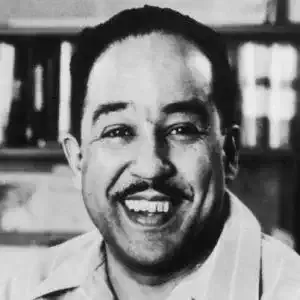
Langston Hughes
Bound No’th Blues
Goin’ down the road, Lawd,
Goin’ down the road.
Down the road, Lawd,
Way,way down the road.
Got to find somebody
To help me carry this load.
Road’s in front o’ me,
Nothin’ to do but walk.
Road’s in front of me,
Walk…an’ walk…an’ walk.
I’d like to meet a good friend
To come along an’ talk.
Hates to be lonely,
Lawd, I hates to be sad.
Says I hates to be lonely,
Hates to be lonely an’ sad,
But ever friend you finds seems
Like they try to do you bad.
Road, road, road, O!
Road, road…road…road, road!
Road, road, road, O!
On the no’thern road.
These Mississippi towns ain’t
Fit fer a hoppin’ toad.
359