
Friendship

Robert Louis Stevenson
Since Thou Hast Given Me This Good Hope, O God
SINCE thou hast given me this good hope, O God,
That while my footsteps tread the flowery sod
And the great woods embower me, and white dawn
And purple even sweetly lead me on
From day to day, and night to night, O God,
My life shall no wise miss the light of love;
But ever climbing, climb above
Man's one poor star, man's supine lands,
Into the azure steadfastness of death,
My life shall no wise lack the light of love,
My hands not lack the loving touch of hands;
But day by day, while yet I draw my breath,
And day by day, unto my last of years,
I shall be one that has a perfect friend.
Her heart shall taste my laughter and my tears,
And her kind eyes shall lead me to the end.
357
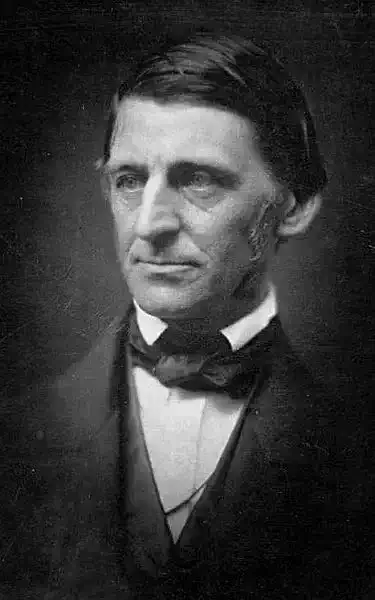
Ralph Waldo Emerson
Rubies
They brought me rubies from the mine,
And held them to the sun;
I said, they are drops of frozen wine
From Eden's vats that run.
I looked again,--I thought them hearts
Of friends to friends unknown;
Tides that should warm each neighboring life
Are locked in sparkling stone.
But fire to thaw that ruddy snow,
To break enchanted ice,
And give love's scarlet tides to flow,--
When shall that sun arise?
358

Phillis Wheatley
An Hymn to Humanity
I.
Lo! for this dark terrestrial ball
Forsakes his azure-paved hall
A prince of heav'nly birth!
Divine Humanity behold,
What wonders rise, what charms unfold
At his descent to earth!
II.
The bosoms of the great and good
With wonder and delight he view'd,
And fix'd his empire there:
Him, close compressing to his breast,
The sire of gods and men address'd,
"My son, my heav'nly fair!
III.
"Descend to earth, there place thy throne;
"To succour man's afflicted son
"Each human heart inspire:
"To act in bounties unconfin'd
"Enlarge the close contracted mind,
"And fill it with thy fire."
IV.
Quick as the word, with swift career
He wings his course from star to star,
And leaves the bright abode.
The Virtue did his charms impart;
Their G-----! then thy raptur'd heart
Perceiv'd the rushing God:
V.
For when thy pitying eye did see
The languid muse in low degree,
Then, then at thy desire
Descended the celestial nine;
O'er me methought they deign'd to shine,
And deign'd to string my lyre.
VI.
Can Afric's muse forgetful prove?
Or can such friendship fail to move
A tender human heart?
Immortal Friendship laurel-crown'd
The smiling Graces all surround
With ev'ry heav'nly Art.
359

Carl Sandburg
Neighbors
On Forty-first Street
near Eighth Avenue
a frame house wobbles.
If houses went on crutches
this house would be
one of the cripples.
A sign on the house:
Church of the Living God
And Rescue Home for Orphan Children.
From a Greek coffee house
Across the street
A cabalistic jargon
Jabbers back.
And men at tables
Spill Peloponnesian syllables
And speak of shovels for street work.
And the new embankments of the Erie Railroad
At Painted Post, Horse's Head, Salamanca.
356

William Shakespeare
Blow, Blow, Thou Winter Wind
Blow, blow, thou winter wind
Thou art not so unkind
As man's ingratitude;
Thy tooth is not so keen,
Because thou art not seen,
Although thy breath be rude.
Heigh-ho! sing, heigh-ho! unto the green holly:
Most freindship if feigning, most loving mere folly:
Then heigh-ho, the holly!
This life is most jolly.
Freeze, freeze thou bitter sky,
That does not bite so nigh
As benefits forgot:
Though thou the waters warp,
Thy sting is not so sharp
As a friend remembered not.
Heigh-ho! sing, heigh-ho! unto the green holly:
Most friendship is feigning, most loving mere folly:
Then heigh-ho, the holly!
This life is most jolly.
355

James Whitcomb Riley
Reach Your Hand To Me
Reach your hand to me, my friend,
With its heartiest caress--
Sometime there will come an end
To its present faithfulness--
Sometime I may ask in vain
For the touch of it again,
When between us land or sea
Holds it ever back from me.
Sometime I may need it so,
Groping somewhere in the night,
It will seem to me as though
Just a touch, however light,
Would make all the darkness day,
And along some sunny way
Lead me through an April-shower
Of my tears to this fair hour.
O the present is too sweet
To go on forever thus!
Round the corner of the street
Who can say what waits for us?-Meeting--
greeting, night and day,
Faring each the self-same way--
Still somewhere the path must end.--
Reach your hand to me, my friend!
354

Henry Wadsworth Longfellow
Ultima Thule: Robert Burns
I see amid the fields of Ayr
A ploughman, who, in foul and fair,
Sings at his task
So clear, we know not if it is
The laverock's song we hear, or his,
Nor care to ask.
For him the ploughing of those fields
A more ethereal harvest yields
Than sheaves of grain;
Songs flush with purple bloom the rye,
The plover's call, the curlew's cry,
Sing in his brain.
Touched by his hand, the wayside weed
Becomes a flower; the lowliest reed
Beside the stream
Is clothed with beauty; gorse and grass
And heather, where his footsteps pass,
The brighter seem.
He sings of love, whose flame illumes
The darkness of lone cottage rooms;
He feels the force,
The treacherous undertow and stress
Of wayward passions, and no less
The keen remorse.
At moments, wrestling with his fate,
His voice is harsh, but not with hate;
The brushwood, hung
Above the tavern door, lets fall
Its bitter leaf, its drop of gall
Upon his tongue.
But still the music of his song
Rises o'er all, elate and strong;
Its master-chords
Are Manhood, Freedom, Brotherhood,
Its discords but an interlude
Between the words.
And then to die so young and leave
Unfinished what he might achieve!
Yet better sure
Is this, than wandering up and down
An old man in a country town,
Infirm and poor.
For now he haunts his native land
As an immortal youth; his hand
Guides every plough;
He sits beside each ingle-nook,
His voice is in each rushing brook,
Each rustling bough.
His presence haunts this room to-night,
A form of mingled mist and light
From that far coast.
Welcome beneath this roof of mine!
Welcome! this vacant chair is thine,
Dear guest and ghost!
354

Alexander Pope
The Challenge: A Court Ballad
I.
To one fair lady out of Court,
And two fair ladies in,
Who think the Turk and Pope a sport,
And wit and love no sin!
Come, these soft lines, with nothing stiff in,
To Bellenden, Lepell, and Griffin.
With a fa, la, la.
II.
What passes in the dark third row,
And what behind the scene,
Couches and crippled chairs I know,
And garrets hung with green;
I know the swing of sinful hack,
Where many damsels cry alack.
With a fa, la, la.
III.
Then why to Courts should I repair,
Where's such ado with Townsend?
To hear each mortal stamp and swear,
And every speech with 'Zounds' end;
To hear them rail at honest Sunderland,
And rashly blame the realm of Blunderland.
With a fa, la, la.
IV.
Alas! like Schutz I cannot pun,
Like Grafton court the Germans;
Tell Pickenbourg how slim she's grown,
Like Meadows run to sermons;
To court ambitious men may roam,
But I and Marlbro' stay at home.
With a fa, la, la.
V.
In truth, by what I can discern,
Of courtiers, 'twixt you three,
Some wit you have, and more may learn
From Court, than Gay or Me:
Perhaps, in time, you'll leave high diet,
To sup with us on milk and quiet.
With a fa, la, la.
VI.
At Leicester Fields, a house full nigh,
With door all painted green,
(A Milliner, I mean);
There may you meet us three to three,
For Gay can well make two of Me.
With a fa, la, la.
VII.
But should you catch the prudish itch,
And each become a coward,
Bring sometimes with you lady Rich,
And sometimes mistress Howard;
For virgins, to keep chaste, must go
Abroad with such as are not so.
With a fa, la, la.
VIII.
And thus, fair maids, my ballad ends;
God send the king safe landing;
And make all honest ladies friends
To armies that are standing;
Preserve the limits of those nations,
And take off ladies' limitations.
With a fa, la, la.
351
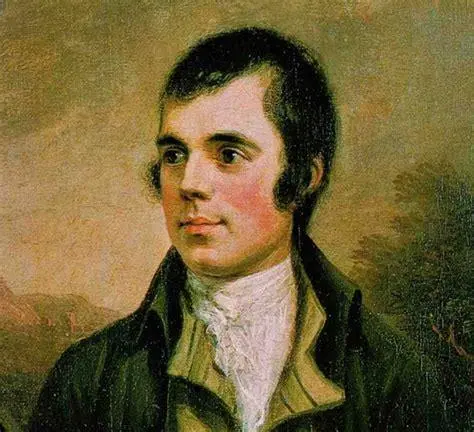
Robert Burns
To A Louse
On Seeing One on a Lady's Bonnet at Church
Ha! whare ye gaun' ye crowlin ferlie?
Your impudence protects you sairly;
I canna say but ye strunt rarely
Owre gauze and lace,
Tho faith! I fear ye dine but sparely
On sic a place.
Ye ugly, creepin, blastit wonner,
Detested, shunn'd by saunt an sinner,
How daur ye set your fit upon her---
Sae fine a lady!
Gae somewhere else and seek your dinner
On some poor body.
Swith! in some beggar's hauffet squattle;
There ye may creep, and sprawl, and sprattle;
Wi' ither kindred, jumping cattle;
In shoals and nations;
Whare horn nor bane ne'er daur unsettle
Your thick plantations.
Now haud you there! ye're out o' sight,
Below the fatt'rils, snug an tight,
Na, faith ye yet! ye'll no be right,
Till ye've got on it---
The vera tapmost, tow'rin height
O' Miss's bonnet.
My sooth! right bauld ye set your nose out,
As plump an grey as onie grozet:
O for some rank, mercurial rozet,
Or fell, red smeddum,
I'd gie you sic a hearty dose o't,
Wad dress your droddum!
I wad na been surpris'd to spy
You on an auld wife's flainen toy
Or aiblins some bit duddie boy,
On's wyliecoat;
But Miss's fine Lunardi! fye!
How daur ye do't?
O Jeany, dinna toss your head,
An set your beauties a' abread!
Ye little ken what cursed speed
The blastie's makin!
Thae winks an finger-ends, I dread,
Are notice takin!
O wad some Power the giftie gie us
To see oursels as ithers see us!
It wad frae monie a blunder free us
An foolish notion:
What airs in dress an gait wad lea'es us,
An ev'n devotion!
352
Robert Louis Stevenson
To Miss Cornish
THEY tell me, lady, that to-day
On that unknown Australian strand -
Some time ago, so far away -
Another lady joined the band.
She joined the company of those
Lovelily dowered, nobly planned,
Who, smiling, still forgive their foes
And keep their friends in close command.
She, lady, as I learn, was one
Among the many rarely good;
And destined still to be a sun
Through every dark and rainy mood:-
She, as they told me, far had come,
By sea and land, o'er many a rood:-
Admired by all, beloved by some,
She was yourself, I understood.
But, compliment apart and free
From all constraint of verses, may
Goodness and honour, grace and glee,
Attend you ever on your way -
Up to the measure of your will,
Beyond all power of mine to say -
As she and I desire you still,
Miss Cornish, on your natal day.
350
Henry Wadsworth Longfellow
In The Harbour: At La Chaudeau. (From The French Of Charles Coran)
At La Chaudeau,--'tis long since then:
I was young,--my years twice ten;
All things smiled on the happy boy,
Dreams of love and songs of joy,
Azure of heaven and wave below,
At La Chaudeau.
At La Chaudeau I come back old:
My head is gray, my blood is cold;
Seeking along the meadow ooze,
Seeking beside the river Seymouse,
The days of my spring-time of long ago
At La Chaudeau.
At La Chaudeau nor heart nor brain
Ever grows old with grief and pain;
A sweet remembrance keeps off age;
A tender friendship doth still assuage
The burden of sorrow that one may know
At La Chaudeau.
At La Chaudeau, had fate decreed
To limit the wandering life I lead,
Peradventure I still, forsooth,
Should have preserved my fresh green youth,
Under the shadows the hill-tops throw
At La Chaudeau.
At La Chaudeau, live on, my friends,
Happy to be where God intends;
And sometimes, by the evening fire,
Think of him whose sole desire
Is again to sit in the old chateau
At La Chaudeau.
350
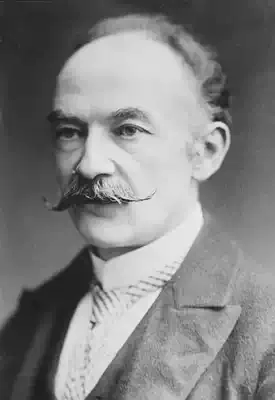
Thomas Hardy
Ah, Are You Digging on My Grave?
"Ah, are you digging on my grave,
My loved one? -- planting rue?"
-- "No: yesterday he went to wed
One of the brightest wealth has bred.
'It cannot hurt her now,' he said,
'That I should not be true.'"
"Then who is digging on my grave,
My nearest dearest kin?"
-- "Ah, no: they sit and think, 'What use!
What good will planting flowers produce?
No tendance of her mound can loose
Her spirit from Death's gin.'"
"But someone digs upon my grave?
My enemy? -- prodding sly?"
-- "Nay: when she heard you had passed the Gate
That shuts on all flesh soon or late,
She thought you no more worth her hate,
And cares not where you lie.
"Then, who is digging on my grave?
Say -- since I have not guessed!"
-- "O it is I, my mistress dear,
Your little dog , who still lives near,
And much I hope my movements here
Have not disturbed your rest?"
"Ah yes! You dig upon my grave...
Why flashed it not to me
That one true heart was left behind!
What feeling do we ever find
To equal among human kind
A dog's fidelity!"
"Mistress, I dug upon your grave
To bury a bone, in case
I should be hungry near this spot
When passing on my daily trot.
I am sorry, but I quite forgot
It was your resting place."
347

John Greenleaf Whittier
To E. C. S.
Poet and friend of poets, if thy glass
Detects no flower in winter's tuft of grass,
Let this slight token of the debt I owe
Outlive for thee December's frozen day,
And, like the arbutus budding under snow,
Take bloom and fragrance from some morn of May
When he who gives it shall have gone the way
Where faith shall see and reverent trust shall know.
348

John Donne
To Sir Henry Wotton At His Going Ambassador To Venice
AFTER those reverend papers, whose soul is
Our good and great king's loved hand and fear'd name ;
By which to you he derives much of his,
And, how he may, makes you almost the same,
A taper of his torch, a copy writ
From his oiginal, and a fair beam
Of the same warm and dazzling sun, though it
Must in another sphere his virtue stream ;
After those learned papers which your hand
Hath stored with notes of use and pleasures too,
From which rich treasury you may command
Fit matter whether you will write or do ;
After those loving papers where friends send,
With glad grief to your sea-ward steps, farewell,
Which thicken on you now, as prayers ascend
To heaven in troops, at a good man's passing-bell ;
Admit this honest paper, and allow
It such an audience as yourself would ask ;
What you must say at Venice, this means now,
And hath for nature, what you have for task.
To swear much love, not to be changed before
Honour, alone will to your fortune fit ;
Nor shall I then honour your fortune, more
Than I have done your honour, wanting it.
But 'tis an easier load, though both oppress,
To want, than govern greatness, for we are
In that, our own and only business,
In this, we must for others' vices care.
'Tis therefore well your spirits now are placed
In their last furnace, in activity ;
Which fits them—schools and courts and wars o'erpast—
To touch and test in any best degree.
For me—if there be such a thing as I—
Fortune—if there be such a thing as she—
Spies that I bear so well her tyranny,
That she thinks nothing else so fit for me.
But, though she part us, to hear my oft prayers
For your increase, God is as near me here ;
And to send you what I shall beg, His stairs
In length and ease are alike everywhere.
345
Ralph Waldo Emerson
Dæmonic Love
Man was made of social earth,
Child and brother from his birth;
Tethered by a liquid cord
Of blood through veins of kindred poured,
Next his heart the fireside band
Of mother, father, sister, stand;
Names from awful childhood heard,
Throbs of a wild religion stirred,
Their good was heaven, their harm was vice,
Till Beauty came to snap all ties,
The maid, abolishing the past,
With lotus-wine obliterates
Dear memory's stone-incarved traits,
And by herself supplants alone
Friends year by year more inly known.
When her calm eyes opened bright,
All were foreign in their light.
It was ever the self-same tale,
The old experience will not fail,—
Only two in the garden walked,
And with snake and seraph talked.
But God said;
I will have a purer gift,
There is smoke in the flame;
New flowerets bring, new prayers uplift,
And love without a name.
Fond children, ye desire
To please each other well;
Another round, a higher,
Ye shall climb on the heavenly stair,
And selfish preference forbear;
And in right deserving,
And without a swerving
Each from your proper state,
Weave roses for your mate.
Deep, deep are loving eyes,
Flowed with naphtha fiery sweet,
And the point is Paradise
Where their glances meet:
Their reach shall yet be more profound,
And a vision without bound:
The axis of those eyes sun-clear
Be the axis of the sphere;
Then shall the lights ye pour amain
Go without check or intervals,
Through from the empyrean walls,
Unto the same again.
Close, close to men,
Like undulating layer of air,
Right above their heads,
The potent plain of Dæmons spreads.
Stands to each human soul its own,
For watch, and ward, and furtherance
In the snares of nature's dance;
And the lustre and the grace
Which fascinate each human heart,
Beaming from another part,
Translucent through the mortal covers,
Is the Dæmon's form and face.
To and fro the Genius hies,
A gleam which plays and hovers
Over the maiden's head,
And dips sometimes as low as to her eyes.
Unknown, — albeit lying near, —
To men the path to the Dæmon sphere,
And they that swiftly come and go,
Leave no track on the heavenly snow.
Sometimes the airy synod bends,
And the mighty choir descends,
And the brains of men thenceforth,
In crowded and in still resorts,
Teem with unwonted thoughts.
As when a shower of meteors
Cross the orbit of the earth,
And, lit by fringent air,
Blaze near and far.
Mortals deem the planets bright
Have slipped their sacred bars,
And the lone seaman all the night
Sails astonished amid stars.
Beauty of a richer vein,
Graces of a subtler strain,
Unto men these moon-men lend,
And our shrinking sky extend.
So is man's narrow path
By strength and terror skirted,
Also (from the song the wrath
Of the Genii be averted!
The Muse the truth uncolored speaking),
The Dæmons are self-seeking;
Their fierce and limitary will
Draws men to their likeness still.
The erring painter made Love blind,
Highest Love who shines on all;
Him radiant, sharpest-sighted god
None can bewilder;
Whose eyes pierce
The Universe,
Path-finder, road-builder,
Mediator, royal giver,
Rightly-seeing, rightly-seen,
Of joyful and transparent mien.
'Tis a sparkle passing
From each to each, from me to thee,
Perpetually,
Sharing all, daring all,
Levelling, misplacing
Each obstruction, it unites
Equals remote, and seeming opposites.
And ever and forever Love
Delights to build a road;
Unheeded Danger near him strides,
Love laughs, and on a lion rides.
But Cupid wears another face
Born into Dæmons less divine,
His roses bleach apace,
His nectar smacks of wine.
The Dæmon ever builds a wall,
Himself incloses and includes,
Solitude in solitudes:
In like sort his love doth fall.
He is an oligarch,
He prizes wonder, fame, and mark,
He loveth crowns,
He scorneth drones;
He doth elect
The beautiful and fortunate,
And the sons of intellect,
And the souls of ample fate,
Who the Future's gates unbar,
Minions of the Morning Star.
In his prowess he exults,
And the multitude insults.
His impatient looks devour
Oft the humble and the poor,
And, seeing his eye glare,
They drop their few pale flowers
Gathered with hope to please
Along the mountain towers,
Lose courage, and despair.
He will never be gainsaid,
Pitiless, will not be stayed.
His hot tyranny
Burns up every other tie;
Therefore comes an hour from Jove
Which his ruthless will defies,
And the dogs of Fate unties.
Shiver the palaces of glass,
Shrivel the rainbow-colored walls
Where in bright art each god and sibyl dwelt
Secure as in the Zodiack's belt;
And the galleries and halls
Wherein every Siren sung,
Like a meteor pass.
For this fortune wanted root
In the core of God's abysm,
Was a weed of self and schism:
And ever the Dæmonic Love
Is the ancestor of wars,
And the parent of remorse.
341
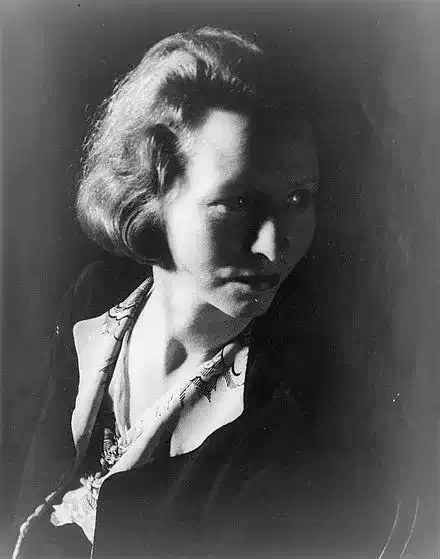
Edna St. Vincent Millay
We Talk of Taxes...
We talk of taxes, and I call you friend;
Well, such you are, -- but well enough we know
How thick about us root, how rankly grow
Those subtle weeds no man has need to tend,
That flourish through neglect, and soon must send
Perfume too sweet upon us and overthrow
Our steady senses; how such matters go
We are aware, and how such matters end.
Yet shall be told no meagre passion here;
With lovers such as we forevermore
Isolde drinks the draught, and Guinevere
Receives the Table's ruin through her door,
Francesca, with the loud surf at her ear,
Lets fall the coloured book upon the floor.
343
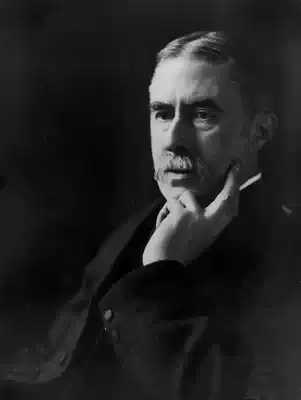
Alfred Edward Housman
You Smile Upon Your Friend To-Day
You smile upon your friend to-day,
To-day his ills are over;
You hearken to the lover's say,
And happy is the lover.
'Tis late to hearken, late to smile,
But better late than never;
I shall have lived a little while
Before I die for ever.
To-day his ills are over;
You hearken to the lover's say,
And happy is the lover.
'Tis late to hearken, late to smile,
But better late than never;
I shall have lived a little while
Before I die for ever.
343
Henry Van Dyke
Inscriptions for a Friend's House
THE HOUSE
The cornerstone in Truth is laid,
The guardian walls of Honour made,
The roof of Faith is built above,
The fire upon the hearth is Love:
Though rains descend and loud winds call,
This happy house shall never fall.
THE DOORSTEAD
The lintel low enough to keep out pomp and pride:
The threshold high enough to turn deceit aside:
The doorband strong enough from robbers to defend:
This door will open at a touch to welcome every friend.
THE HEARTHSTONE
When the logs are burning free,
Then the fire is full of glee:
When each heart gives out its best,
Then the talk is full of zest:
Light your fire and never fear,
Life was made for love and cheer.
THE SUN-DIAL
Time can never take
What Time did not give;
When my shadows have all passed,
You shall live.
339
James Whitcomb Riley
The Boys
Where are they?--the friends of my childhood enchanted--
The clear, laughing eyes looking back in my own,
And the warm, chubby fingers my palms have so wanted,
As when we raced over
Pink pastures of clover,
And mocked the quail's whir and the bumblebee's drone?
Have the breezes of time blown their blossomy faces
Forever adrift down the years that are flown?
Am I never to see them romp back to their places,
Where over the meadow,
In sunshine and shadow,
The meadow-larks trill, and the bumblebees drone?
Where are they? Ah! dim in the dust lies the clover;
The whippoorwill's call has a sorrowful tone,
And the dove's--I have wept at it over and over;--
I want the glad luster
Of youth, and the cluster
Of faces asleep where the bumblebees drone!
338
John Greenleaf Whittier
To Charles Sumner
If I have seemed more prompt to censure wrong
Than praise the right; if seldom to thine ear
My voice hath mingled with the exultant cheer
Borne upon all our Northern winds along;
If I have failed to join the fickle throng
In wide-eyed wonder, that thou standest strong
In victory, surprised in thee to find
Brougham's scathing power with Canning's grace combined;
That he, for whom the ninefold Muses sang,
From their twined arms a giant athlete sprang,
Barbing the arrows of his native tongue
With the spent shafts Latona's archer flung,
To smite the Python of our land and time,
Fell as the monster born of Crissa's slime,
Like the blind bard who in Castalian springs
Tempered the steel that clove the crest of kings,
And on the shrine of England's freedom laid
The gifts of Cumve and of Delphi's' shade,-Small
need hast thou of words of praise from me.
Thou knowest my heart, dear friend, and well canst guess
That, even though silent, I have not the less
Rejoiced to see thy actual life agree
With the large future which I shaped for thee,
When, years ago, beside the summer sea,
White in the moon, we saw the long waves fall
Baffled and broken from the rocky wall,
That, to the menace of the brawling flood,
Opposed alone its massive quietude,
Calm as a fate; with not a leaf nor vine
Nor birch-spray trembling in the still moonshine,
Crowning it like God's peace. I sometimes think
That night-scene by the sea prophetical,
(For Nature speaks in symbols and in signs,
And through her pictures human fate divines),
That rock, wherefrom we saw the billows sink
In murmuring rout, uprising clear and tall
In the white light of heaven, the type of one
Who, momently by Error's host assailed,
Stands strong as Truth, in greaves of granite mailed;
And, tranquil-fronted, listening over all
The tumult, hears the angels say, Well done!
336
Henry Wadsworth Longfellow
To an Old Danish Song-Book
Welcome, my old friend,
Welcome to a foreign fireside,
While the sullen gales of autumn
Shake the windows.
The ungrateful world
Has, it seems, dealt harshly with thee,
Since, beneath the skies of Denmark,
First I met thee.
There are marks of age,
There are thumb-marks on thy margin,
Made by hands that clasped thee rudely,
At the alehouse.
Soiled and dull thou art;
Yellow are thy time-worn pages,
As the russet, rain-molested
Leaves of autumn.
Thou art stained with wine
Scattered from hilarious goblets,
As the leaves with the libations
Of Olympus.
Yet dost thou recall
Days departed, half-forgotten,
When in dreamy youth I wandered
By the Baltic,--
When I paused to hear
The old ballad of King Christian
Shouted from suburban taverns
In the twilight.
Thou recallest bards,
Who in solitary chambers,
And with hearts by passion wasted,
Wrote thy pages.
Thou recallest homes
Where thy songs of love and friendship
Made the gloomy Northern winter
Bright as summer.
Once some ancient Scald,
In his bleak, ancestral Iceland,
Chanted staves of these old ballads
To the Vikings.
Once in Elsinore,
At the court of old King Hamlet
Yorick and his boon companions
Sang these ditties.
Once Prince Frederick's Guard
Sang them in their smoky barracks;--
Suddenly the English cannon
Joined the chorus!
Peasants in the field,
Sailors on the roaring ocean,
Students, tradesmen, pale mechanics,
All have sung them.
Thou hast been their friend;
They, alas! have left thee friendless!
Yet at least by one warm fireside
Art thou welcome.
And, as swallows build
In these wide, old-fashioned chimneys,
So thy twittering songs shall nestle
In my bosom,--
Quiet, close, and warm,
Sheltered from all molestation,
And recalling by their voices
Youth and travel.
333
John Greenleaf Whittier
The Meeting
The elder folks shook hands at last,
Down seat by seat the signal passed.
To simple ways like ours unused,
Half solemnized and half amused,
With long-drawn breath and shrug, my guest
His sense of glad relief expressed.
Outside, the hills lay warm in sun;
The cattle in the meadow-run
Stood half-leg deep; a single bird
The green repose above us stirred.
'What part or lot have you,' he said,
'In these dull rites of drowsy-head?
Is silence worship? Seek it where
It soothes with dreams the summer air,
Not in this close and rude-benched hall,
But where soft lights and shadows fall,
And all the slow, sleep-walking hours
Glide soundless over grass and flowers!
From time and place and form apart,
Its holy ground the human heart,
Nor ritual-bound nor templeward
Walks the free spirit of the Lord!
Our common Master did not pen
His followers up from other men;
His service liberty indeed,
He built no church, He framed no creed;
But while the saintly Pharisee
Made broader his phylactery,
As from the synagogue was seen
The dusty-sandalled Nazarene
Through ripening cornfields lead the way
Upon the awful Sabbath day,
His sermons were the healthful talk
That shorter made the mountain-walk,
His wayside texts were flowers and birds,
Where mingled with His gracious words
The rustle of the tamarisk-tree
And ripple-wash of Galilee.'
'Thy words are well, O friend,' I said;
'Unmeasured and unlimited,
With noiseless slide of stone to stone,
The mystic Church of God has grown.
Invisible and silent stands
The temple never made with hands,
Unheard the voices still and small
Of its unseen confessional.
He needs no special place of prayer
Whose hearing ear is everywhere;
He brings not back the childish days
That ringed the earth with stones of praise,
Roofed Karnak's hall of gods, and laid
The plinths of Phil e's colonnade.
Still less He owns the selfish good
And sickly growth of solitude,-The
worthless grace that, out of sight,
Flowers in the desert anchorite;
Dissevered from the suffering whole,
Love hath no power to save a soul.
Not out of Self, the origin
And native air and soil of sin,
The living waters spring and flow,
The trees with leaves of healing grow.
'Dream not, O friend, because I seek
This quiet shelter twice a week,
I better deem its pine-laid floor
Than breezy hill or sea-sung shore;
But nature is not solitude
She crowds us with her thronging wood;
Her many hands reach out to us,
Her many tongues are garrulous;
Perpetual riddles of surprise
She offers to our ears and eyes;
She will not leave our senses still,
But drags them captive at her will
And, making earth too great for heaven,
She hides the Giver in the given.
'And so, I find it well to come
For deeper rest to this still room,
For here the habit of the soul
Feels less the outer world's control;
The strength of mutual purpose pleads
More earnestly our common needs;
And from the silence multiplied
By these still forms on either side,
The world that time and sense have known
Falls off and leaves us God alone.
'Yet rarely through the charmed repose
Unmixed the stream of motive flows,
A flavor of its many springs,
The tints of earth and sky it brings;
In the still waters needs must be
Some shade of human sympathy;
And here, in its accustomed place,
I look on memory's dearest face;
The blind by-sitter guesseth not
What shadow haunts that vacant spot;
No eyes save mine alone can see
The love wherewith it welcomes me!
And still, with those alone my kin,
In doubt and weakness, want and sin,
I bow my head, my heart I bare
As when that face was living there,
And strive (too oft, alas! in vain)
The peace of simple trust to gain,
Fold fancy's restless wings, and lay
The idols of my heart away.
'Welcome the silence all unbroken,
Nor less the words of fitness spoken,-Such
golden words as hers for whom
Our autumn flowers have just made room;
Whose hopeful utterance through and through
The freshness of the morning blew;
Who loved not less the earth that light
Fell on it from the heavens in sight,
But saw in all fair forms more fair
The Eternal beauty mirrored there.
Whose eighty years but added grace
And saintlier meaning to her face,-The
look of one who bore away
Glad tidings from the hills of day,
While all our hearts went forth to meet
The coming of her beautiful feet!
Or haply hers, whose pilgrim tread
Is in the paths where Jesus led;
Who dreams her childhood's Sabbath dream
By Jordan's willow-shaded stream,
And, of the hymns of hope and faith,
Sung by the monks of Nazareth,
Hears pious echoes, in the call
To prayer, from Moslem minarets fall,
Repeating where His works were wrought
The lesson that her Master taught,
Of whom an elder Sibyl gave,
The prophecies of Cuma 's cave.
'I ask no organ's soulless breath
To drone the themes of life and death,
No altar candle-lit by day,
No ornate wordsman's rhetoric-play,
No cool philosophy to teach
Its bland audacities of speech
To double-tasked idolaters
Themselves their gods and worshippers,
No pulpit hammered by the fist
Of loud-asserting dogmatist,
Who borrows for the Hand of love
The smoking thunderbolts of Jove.
I know how well the fathers taught,
What work the later schoolmen wrought;
I reverence old-time faith and men,
But God is near us now as then;
His force of love is still unspent,
His hate of sin as imminent;
And still the measure of our needs
Outgrows the cramping bounds of creeds;
The manna gathered yesterday
Already savors of decay;
Doubts to the world's child-heart unknown
Question us now from star and stone;
Too little or too much we know,
And sight is swift and faith is slow;
The power is lost to self-deceive
With shallow forms of make-believe.
W e walk at high noon, and the bells
Call to a thousand oracles,
But the sound deafens, and the light
Is stronger than our dazzled sight;
The letters of the sacred Book
Glimmer and swim beneath our look;
Still struggles in the Age's breast
With deepening agony of quest
The old entreaty: 'Art thou He,
Or look we for the Christ to be?'
'God should be most where man is least
So, where is neither church nor priest,
And never rag of form or creed
To clothe the nakedness of need,-Where
farmer-folk in silence meet,-I
turn my bell-unsummoned feet;'
I lay the critic's glass aside,
I tread upon my lettered pride,
And, lowest-seated, testify
To the oneness of humanity;
Confess the universal want,
And share whatever Heaven may grant.
He findeth not who seeks his own,
The soul is lost that's saved alone.
Not on one favored forehead fell
Of old the fire-tongued miracle,
But flamed o'er all the thronging host
The baptism of the Holy Ghost;
Heart answers heart: in one desire
The blending lines of prayer aspire;
'Where, in my name, meet two or three,'
Our Lord hath said, 'I there will be!'
'So sometimes comes to soul and sense
The feeling which is evidence
That very near about us lies
The realm of spiritual mysteries.
The sphere of the supernal powers
Impinges on this world of ours.
The low and dark horizon lifts,
To light the scenic terror shifts;
The breath of a diviner air
Blows down the answer of a prayer
That all our sorrow, pain, and doubt
A great compassion clasps about,
And law and goodness, love and force,
Are wedded fast beyond divorce.
Then duty leaves to love its task,
The beggar Self forgets to ask;
With smile of trust and folded hands,
The passive soul in waiting stands
To feel, as flowers the sun and dew,
The One true Life its own renew.
'So, to the calmly gathered thought
The innermost of truth is taught,
The mystery dimly understood,
That love of God is love of good,
And, chiefly, its divinest trace
In Him of Nazareth's holy face;
That to be saved is only this,-Salvation
from our selfishness,
From more than elemental fire,
The soul's unsanetified desire,
From sin itself, and not the pain
That warns us of its chafing chain;
That worship's deeper meaning lies
In mercy, and not sacrifice,
Not proud humilities of sense
And posturing of penitence,
But love's unforced obedience;
That Book and Church and Day are given
For man, not God,--for earth, not heaven,-The
blessed means to holiest ends,
Not masters, but benignant friends;
That the dear Christ dwells not afar,
The king of some remoter star,
Listening, at times, with flattered ear
To homage wrung from selfish fear,
But here, amidst the poor and blind,
The bound and suffering of our kind,
In works we do, in prayers we pray,
Life of our life, He lives to-day.'
333

Lord Byron
Lines Written On A Blank Leaf Of 'The Pleasures Of Memory'
Absent or present, still to thee,
My friend, what magic spells belong!
As all can tell, who share, like me,
In turn thy converse and thy song.
But when the dreaded hour shall come
By Friendship ever deem'd too nigh,
And `MEMORY' o'er her Druid's tomb
Shall weep that aught of thee can die,
How fondly will she then repay
Thy homage offer'd at her shrine, to
And blend, while ages roll away,
Her name immortally with thine!
April 19, 1812
334
John Greenleaf Whittier
Benedicite
God's love and peace be with thee, where
Soe'er this soft autumnal air
Lifts the dark tresses of thy hair.
Whether through city casements comes
Its kiss to thee, in crowded rooms,
Or, out among the woodland blooms,
It freshens o'er thy thoughtful face,
Imparting, in its glad embrace,
Beauty to beauty, grace to grace!
Fair Nature's book together read,
The old wood-paths that knew our tread,
The maple shadows overhead,-
The hills we climbed, the river seen
By gleams along its deep ravine,-All
keep thy memory fresh and green.
Where'er I look, where'er I stray,
Thy thought goes with me on my way,
And hence the prayer I breathe to-day;
O'er lapse of time and change of scene,
The weary waste which lies between
Thyself and me, my heart I lean.
Thou lack'st not Friendship's spell-word, nor
The half-unconscious power to draw
All hearts to thine by Love's sweet law.
With these good gifts of God is cast
Thy lot, and many a charm thou hast
To hold the blessed angels fast.
If, then, a fervent wish for thee
The gracious heavens will heed from me,
What should, dear heart, its burden be?
The sighing of a shaken reed,-What
can I more than meekly plead
The greatness of our common need?
God's love,--unchanging, pure, and true,-The
Paraclete white-shining through
His peace,--the fall of Hermon's dew!
With such a prayer, on this sweet day,
As thou mayst hear and I may say,
I greet thee, dearest, far away!
331