
Friendship

James Whitcomb Riley
To The Judge
_A Voice From the Interior of Old Hoop-Pole Township_
Friend of my earliest youth,
Can't you arrange to come down
And visit a fellow out here in the woods--
Out of the dust of the town?
Can't you forget you're a Judge
And put by your dolorous frown
And tan your wan face in the smile of a friend-Can't
you arrange to come down?
Can't you forget for a while
The arguments prosy and drear,--
To lean at full-length in indefinite rest
In the lap of the greenery here?
Can't you kick over 'the Bench,'
And 'husk' yourself out of your gown
To dangle your legs where the fishing is good-Can't
you arrange to come down?
Bah! for your office of State!
And bah! for its technical lore!
What does our President, high in his chair,
But wish himself low as before!
Pick between peasant and king,--
Poke your bald head through a crown
Or shadow it here with the laurels of Spring!-Can't
you arrange to come down?
'Judge it' out _here_, if you will,--
The birds are in session by dawn;
You can draw, not _complaints_, but a sketch of the hill
And a breath that your betters have drawn;
You can open your heart, like a case,
To a jury of kine, white and brown,
And their verdict of 'Moo' will just satisfy you!-Can't
you arrange to come down?
Can't you arrange it, old Pard?--
Pigeonhole Blackstone and Kent!--
Here we have 'Breitmann,' and Ward,
Twain, Burdette, Nye, and content!
Can't you forget you're a Judge
And put by your dolorous frown
And tan your wan face in the smile of a friend-Can't
you arrange to come down?
328
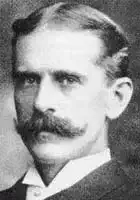
Henry Van Dyke
Edmund Clarence Stedman
Oh, quick to feel the lightest touch
Of beauty or of truth,
Rich in the thoughtfulness of age,
The hopefulness of youth,
The courage of the gentle heart,
The wisdom of the pure,
The strength of finely tempered souls
To labour and endure!
The blue of springtime in your eyes
Was never quenched by pain;
And winter brought your head the crown
Of snow without a stain.
The poet's mind, the prince's heart,
You kept until the end,
Nor ever faltered in your work,
Nor ever failed a friend.
325
James Whitcomb Riley
Jim
He was jes a plain ever'-day, all-round kind of a jour.,
Consumpted-Iookin'-- but la!
The jokeiest, wittiest, story-tellin', song-singin', laughin'est, jolliest
Feller you ever saw!
Worked at jes coarse work, but you kin bet he was fine enough in his talk,
And his feelin's too!
Lordy! Ef he was on'y back on his bench ag'in to-day, a- carryin' on
Like he ust to do!
Any shopmate'll tell you there never was, on top o' dirt,
A better feller'n Jim!
You want a favor, and couldn't git it anywheres else--
You could git it o' him!
Most free-heartedest man thataway in the world, I guess!
Give up ever' nickel he's worth--
And ef you'd a-wanted it, and named it to him, and it was his,
He'd a-give you the earth!
Allus a reachin' out, Jim was, and a-he'ppin' some
Pore feller onto his feet-He'd
a-never a-keered how hungry he was hisse'f,
So's the feller got somepin' to eat!
Didn't make no differ'nce at all to him how he was dressed,
He ust to say to me--,
'You togg out a tramp purty comfortable in winter-time, a huntin' a job,
And he'll git along!' says he.
Jim didn't have, ner never could git ahead, so overly much
O' this world's goods at a time--.
'Fore now I've saw him, more'n onc't, lend a dollar, and haf to, more'n
likely,
Turn round and borry a dime!
Mebby laugh and joke about it hisse'f fer awhile-- then jerk his coat,
And kindo' square his chin,
Tie on his apern, and squat hisse'f on his old shoe-bench,
And go to peggin' ag'in!
Patientest feller too, I reckon, 'at ever jes natchurly
Coughed hisse'f to death!
Long enough after his voice was lost he'd laugh in a whisper and say
He could git ever'thing but his breath-'
You fellers,' he'd sorto' twinkle his eyes and say,
'Is a-pilin' onto me
A mighty big debt fer that-air little weak-chested ghost o' mine to pack
Through all Eternity!'
Now there was a man 'at jes 'peared-like, to me,
'At ortn't a-never a-died!
'But death hain't a-showin' no favors,' the old boss said-'
On'y to Jim!' and cried:
And Wigger, who puts up the best sewed-work in the shop--
Er the whole blame neighborhood--,
He says, 'When God made Jim, I bet you He didn't do anything else that day
But jes set around and feel good!'
326

Jonathan Swift
Verses on the Death of Dr. Swift, D.S.P.D.
As Rochefoucauld his maxims drew
From Nature, I believe 'em true:
They argue no corrupted mind
In him; the fault is in mankind.
This maxim more than all the rest
Is thought too base for human breast:
'In all distresses of our friends,
We first consult our private ends;
While Nature, kindly bent to ease us,
Points out some circumstance to please us.'
If this perhaps your patience move,
Let reason and experience prove.
We all behold with envious eyes
Our equal rais'd above our size.
Who would not at a crowded show
Stand high himself, keep others low?
I love my friend as well as you
But would not have him stop my view.
Then let him have the higher post:
I ask but for an inch at most.
If in a battle you should find
One, whom you love of all mankind,
Had some heroic action done,
A champion kill'd, or trophy won;
Rather than thus be overtopt,
Would you not wish his laurels cropt?
Dear honest Ned is in the gout,
Lies rack'd with pain, and you without:
How patiently you hear him groan!
How glad the case is not your own!
What poet would not grieve to see
His brethren write as well as he?
But rather than they should excel,
He'd wish his rivals all in hell.
Her end when emulation misses,
She turns to envy, stings and hisses:
The strongest friendship yields to pride,
Unless the odds be on our side.
Vain human kind! fantastic race!
Thy various follies who can trace?
Self-love, ambition, envy, pride,
Their empire in our hearts divide.
Give others riches, power, and station,
'Tis all on me a usurpation.
I have no title to aspire;
Yet, when you sink, I seem the higher.
In Pope I cannot read a line,
But with a sigh I wish it mine;
When he can in one couplet fix
More sense than I can do in six;
It gives me such a jealous fit,
I cry, 'Pox take him and his wit!'
Why must I be outdone by Gay
In my own hum'rous biting way?
Arbuthnot is no more my friend,
Who dares to irony pretend,
Which I was born to introduce,
Refin'd it first, and show'd its use.
St. John, as well as Pultney, knows
That I had some repute for prose;
And, till they drove me out of date,
Could maul a minister of state.
If they have mortify'd my pride,
And made me throw my pen aside;
If with such talents Heav'n has blest 'em,
Have I not reason to detest 'em?
To all my foes, dear Fortune, send
Thy gifts; but never to my friend:
I tamely can endure the first,
But this with envy makes me burst.
Thus much may serve by way of proem:
Proceed we therefore to our poem.
The time is not remote, when I
Must by the course of nature die;
When I foresee my special friends
Will try to find their private ends:
Tho' it is hardly understood
Which way my death can do them good,
Yet thus, methinks, I hear 'em speak:
'See, how the Dean begins to break!
Poor gentleman, he droops apace!
You plainly find it in his face.
That old vertigo in his head
Will never leave him till he's dead.
Besides, his memory decays:
He recollects not what he says;
He cannot call his friends to mind:
Forgets the place where last he din'd;
Plies you with stories o'er and o'er;
He told them fifty times before.
How does he fancy we can sit
To hear his out-of-fashion'd wit?
But he takes up with younger folks,
Who for his wine will bear his jokes.
Faith, he must make his stories shorter,
Or change his comrades once a quarter:
In half the time he talks them round,
There must another set be found.
'For poetry he's past his prime:
He takes an hour to find a rhyme;
His fire is out, his wit decay'd,
His fancy sunk, his Muse a jade.
I'd have him throw away his pen;-
But there's no talking to some men!'
And then their tenderness appears,
By adding largely to my years:
'He's older than he would be reckon'd
And well remembers Charles the Second.
'He hardly drinks a pint of wine;
And that, I doubt, is no good sign.
His stomach too begins to fail:
Last year we thought him strong and hale;
But now he's quite another thing:
I wish he may hold out till spring.'
Then hug themselves, and reason thus:
'It is not yet so bad with us.'
In such a case, they talk in tropes,
And by their fears express their hopes:
Some great misfortune to portend,
No enemy can match a friend.
With all the kindness they profess,
The merit of a lucky guess
(When daily 'How d'ye's' come of course,
And servants answer, 'Worse and worse!')
Would please 'em better, than to tell,
That, 'God be prais'd, the Dean is well.'
Then he who prophecy'd the best
Approves his foresight to the rest:
'You know I always fear'd the worst,
And often told you so at first.'
He'd rather choose that I should die,
Than his prediction prove a lie.
Not one foretells I shall recover;
But all agree to give me over.
Yet, should some neighbour feel a pain
Just in the parts where I complain,
How many a message would he send?
What hearty prayers that I should mend?
Inquire what regimen I kept,
What gave me ease, and how I slept?
And more lament when I was dead,
Than all the sniv'llers round my bed.
My good companions, never fear;
For though you may mistake a year,
Though your prognostics run too fast,
They must be verify'd at last.
Behold the fatal day arrive!
'How is the Dean?'-'He's just alive.'
Now the departing prayer is read;
'He hardly breathes.'-'The Dean is dead.'
Before the passing-bell begun,
The news thro' half the town has run.
'O, may we all for death prepare!
What has he left? and who's his heir?''
I know no more than what the news is;
'Tis all bequeath'd to public uses.''
To public use! a perfect whim!
What had the public done for him?
Mere envy, avarice, and pride:
He gave it all-but first he died.
And had the Dean, in all the nation,
No worthy friend, no poor relation?
So ready to do strangers good,
Forgetting his own flesh and blood?'
Now Grub-Street wits are all employ'd;
With elegies the town is cloy'd:
Some paragraph in ev'ry paper
To curse the Dean or bless the Drapier.
The doctors, tender of their fame,
Wisely on me lay all the blame:
'We must confess his case was nice;
But he would never take advice.
Had he been rul'd, for aught appears,
He might have liv'd these twenty years;
For, when we open'd him, we found
That all his vital parts were sound.'
From Dublin soon to London spread,
'Tis told at Court, the Dean is dead.
Kind Lady Suffolk in the spleen
Runs laughing up to tell the Queen.
The Queen, so gracious, mild, and good,
Cries, 'Is he gone! 'tis time he should.
He's dead, you say; why, let him rot:
I'm glad the medals were forgot.
I promis'd them, I own; but when?
I only was the Princess then;
But now, as consort of a king,
You know, 'tis quite a different thing.'
Now Chartres, at Sir Robert's levee,
Tells with a sneer the tidings heavy:
'Why, is he dead without his shoes?'
Cries Bob, 'I'm sorry for the news:
O, were the wretch but living still,
And in his place my good friend Will!
Or had a mitre on his head,
Provided Bolingbroke were dead!'
Now Curll his shop from rubbish drains:
Three genuine tomes of Swift's remains!
And then, to make them pass the glibber,
Revis'd by Tibbalds, Moore, and Cibber.
He'll treat me as he does my betters,
Publish my will, my life, my letters:
Revive the libels born to die;
Which Pope must bear, as well as I.
Here shift the scene, to represent
How those I love my death lament.
Poor Pope will grieve a month, and Gay
A week, and Arbuthnot a day.
St. John himself will scarce forbear
To bite his pen, and drop a tear.
The rest will give a shrug, and cry,
'I'm sorry-but we all must die!'
Indifference, clad in Wisdom's guise,
All fortitude of mind supplies:
For how can stony bowels melt
In those who never pity felt?
When we are lash'd, they kiss the rod,
Resigning to the will of God.
The fools, my juniors by a year,
Are tortur'd with suspense and fear;
Who wisely thought my age a screen,
When death approach'd, to stand between:
The screen remov'd, their hearts are trembling;
They mourn for me without dissembling.
My female friends, whose tender hearts
Have better learn'd to act their parts,
Receive the news in doleful dumps:
'The Dean is dead: (and what is trumps?)
Then, Lord have mercy on his soul!
(Ladies, I'll venture for the vole.)
Six deans, they say, must bear the pall:
(I wish I knew what king to call.)
Madam, your husband will attend
The funeral of so good a friend.
No, madam, 'tis a shocking sight:
And he's engag'd to-morrow night:
My Lady Club would take it ill,
If he should fail her at quadrille.
He lov'd the Dean-(I lead a heart)
But dearest friends, they say, must part.
His time was come: he ran his race;
We hope he's in a better place.'
Why do we grieve that friends should die?
No loss more easy to supply.
One year is past; a different scene!
No further mention of the Dean;
Who now, alas! no more is miss'd,
Than if he never did exist.
Where's now this fav'rite of Apollo!
Departed:-and his works must follow;
Must undergo the common fate;
His kind of wit is out of date.
Some country squire to Lintot goes,
Inquires for 'Swift in Verse and Prose.'
Says Lintot, 'I have heard the name;
He died a year ago.'-'The same.'
He searcheth all his shop in vain.
'Sir, you may find them in Duck-lane;
I sent them with a load of books,
Last Monday to the pastry-cook's.
To fancy they could live a year!
I find you're but a stranger here.
The Dean was famous in his time,
And had a kind of knack at rhyme.
His way of writing now is past;
The town hath got a better taste;
I keep no antiquated stuff,
But spick and span I have enough.
Pray do but give me leave to show 'em;
Here's Colley Cibber's birth-day poem.
This ode you never yet have seen,
By Stephen Duck, upon the Queen.
Then here's a letter finely penn'd
Against the Craftsman and his friend:
It clearly shows that all reflection
On ministers is disaffection.
Next, here's Sir Robert's vindication,
And Mr. Henley's last oration.
The hawkers have not got 'em yet:
Your honour please to buy a set?
'Here's Woolston's tracts, the twelfth edition;
'Tis read by every politician:
The country members, when in town,
To all their boroughs send them down;
You never met a thing so smart;
The courtiers have them all by heart:
Those maids of honour who can read
Are taught to use them for their creed.
The rev'rend author's good intention
Hath been rewarded with a pension.
He doth an honour to his gown,
By bravely running priestcraft down:
He shows, as sure as God's in Gloucester,
That Jesus was a grand imposter;
That all his miracles were cheats,
Perform'd as jugglers do their feats:
The church had never such a writer;
A shame he hath not got a mitre!'
Suppose me dead; and then suppose
A club assembled at the Rose ;
Where, from discourse of this and that,
I grow the subject of their chat.
And while they toss my name about,
With favour some, and some without,
One, quite indiff'rent in the cause,
My character impartial draws:
'The Dean, if we believe report,
Was never ill receiv'd at Court.
As for his works in verse and prose
I own myself no judge of those;
Nor can I tell what critics thought 'em:
But this I know, all people bought 'em.
As with a moral view design'd
To cure the vices of mankind:
His vein, ironically grave,
Expos'd the fool, and lash'd the knave.
To steal a hint was never known,
But what he writ was all his own.
'He never thought an honour done him,
Because a duke was proud to own him,
Would rather slip aside and choose
To talk with wits in dirty shoes;
Despis'd the fools with stars and garters,
So often seen caressing Chartres.
He never courted men in station,
Nor persons held in admiration;
Of no man's greatness was afraid,
Because he sought for no man's aid.
Though trusted long in great affairs
He gave himself no haughty airs:
Without regarding private ends,
Spent all his credit for his friends;
And only chose the wise and good;
No flatt'rers; no allies in blood:
But succour'd virtue in distress,
And seldom fail'd of good success;
As numbers in their hearts must own,
Who, but for him, had been unknown.
'With princes kept a due decorum,
But never stood in awe before 'em.
He follow'd David's lesson just:
'In princes never put thy trust';
And, would you make him truly sour,
Provoke him with a slave in pow'r.
The Irish senate if you nam'd,
With what impatience he declaim'd!
Fair Liberty was all his cry,
For her he stood prepar'd to die;
For her he boldly stood alone;
For her he oft expos'd his own.
Two kingdoms, just as faction led,
Had set a price upon his head;
But not a traitor could be found
To sell him for six hundred pound.
'Had he but spar'd his tongue and pen
He might have rose like other men:
But pow'r was never in his thought,
And wealth he valu'd not a groat:
Ingratitude he often found,
And pity'd those who meant the wound:
But kept the tenor of his mind,
To merit well of human kind:
Nor made a sacrifice of those
Who still were true, to please his foes.
He labour'd many a fruitless hour
To reconcile his friends in pow'r;
Saw mischief by a faction brewing,
While they pursu'd each other's ruin.
But, finding vain was all his care,
He left the Court in mere despair.
'And, oh! how short are human schemes!
Here ended all our golden dreams.
What St. John's skill in state affairs,
What Ormond's valour, Oxford's cares,
To save their sinking country lent,
Was all destroy'd by one event.
Too soon that precious life was ended,
On which alone our weal depended.
When up a dangerous faction starts,
With wrath and vengeance in their hearts;
By solemn League and Cov'nant bound,
To ruin, slaughter, and confound;
To turn religion to a fable,
And make the government a Babel;
Pervert the law, disgrace the gown,
Corrupt the senate, rob the crown;
To sacrifice old England's glory,
And make her infamous in story:
When such a tempest shook the land,
How could unguarded Virtue stand?
'With horror, grief, despair, the Dean
Beheld the dire destructive scene:
His friends in exile, or the tower,
Himself within the frown of power,
Pursu'd by base envenom'd pens,
Far to the land of slaves and fens;
A servile race in folly nurs'd,
Who truckle most when treated worst.
'By innocence and resolution,
He bore continual persecution,
While numbers to preferment rose,
Whose merits were, to be his foes;
When ev'n his own familiar friends,
Intent upon their private ends,
Like renegadoes now he feels,
Against him lifting up their heels.
'The Dean did by his pen defeat
An infamous destructive cheat;
Taught fools their int'rest how to know,
And gave them arms to ward the blow.
Envy hath own'd it was his doing,
To save that helpless land from ruin;
While they who at the steerage stood,
And reap'd the profit, sought his blood.
'To save them from their evil fate,
In him was held a crime of state.
A wicked monster on the bench,
Whose fury blood could never quench,
As vile and profligate a villain,
As modern Scroggs, or old Tresilian,
Who long all justice had discarded,
Nor fear'd he God, nor man regarded,
Vow'd on the Dean his rage to vent,
And make him of his zeal repent;
But Heav'n his innocence defends,
The grateful people stand his friends.
Not strains of law, nor judge's frown,
Nor topics brought to please the crown,
Nor witness hir'd, nor jury pick'd,
Prevail to bring him in convict.
'In exile, with a steady heart,
He spent his life's declining part;
Where folly, pride, and faction sway,
Remote from St. John, Pope, and Gay.
'His friendships there, to few confin'd,
Were always of the middling kind;
No fools of rank, a mongrel breed,
Who fain would pass for lords indeed:
Where titles gave no right or power
And peerage is a wither'd flower;
He would have held it a disgrace,
If such a wretch had known his face.
On rural squires, that kingdom's bane,
He vented oft his wrath in vain;
Biennial squires to market brought;
Who sell their souls and votes for nought;
The nation stripp'd, go joyful back,
To rob the church, their tenants rack,
Go snacks with thieves and rapparees,
And keep the peace to pick up fees;
In ev'ry job to have a share,
A jail or barrack to repair;
And turn the tax for public roads,
Commodious to their own abodes.
'Perhaps I may allow, the Dean
Had too much satire in his vein;
And seem'd determin'd not to starve it,
Because no age could more deserve it.
Yet malice never was his aim;
He lash'd the vice, but spar'd the name;
No individual could resent,
Where thousands equally were meant.
His satire points at no defect,
But what all mortals may correct;
For he abhorr'd that senseless tribe
Who call it humour when they gibe.
He spar'd a hump, or crooked nose,
Whose owners set not up for beaux.
True genuine dulness mov'd his pity,
Unless it offer'd to be witty.
Those who their ignorance confess'd
He ne'er offended with a jest;
But laugh'd to hear an idiot quote
A verse from Horace, learn'd by rote.
'He knew a hundred pleasant stories
With all the turns of Whigs and Tories:
Was cheerful to his dying day;
And friends would let him have his way.
'He gave the little wealth he had
To build a house for fools and mad;
And show'd by one satiric touch,
No nation wanted it so much.
That kingdom he hath left his debtor,
I wish it soon may have a better.'
327
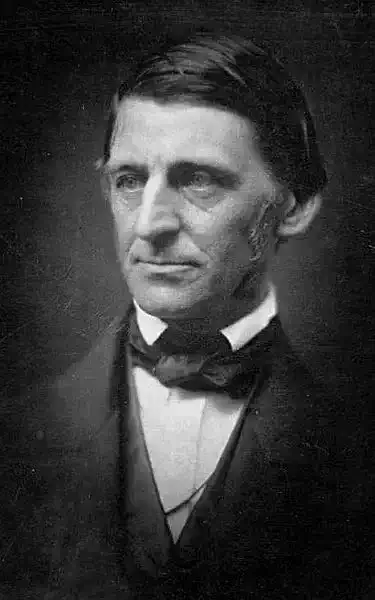
Ralph Waldo Emerson
Dirge
Knows he who tills this lonely field
To reap its scanty corn,
What mystic fruit his acres yield
At midnight and at morn?
In the long sunny afternoon,
The plain was full of ghosts,
I wandered up, I wandered down,
Beset by pensive hosts.
The winding Concord gleamed below,
Pouring as wide a flood
As when my brothers long ago,
Came with me to the wood.
But they are gone,— the holy ones,
Who trod with me this lonely vale,
The strong, star-bright companions
Are silent, low, and pale.
My good, my noble, in their prime,
Who made this world the feast it was,
Who learned with me the lore of time,
Who loved this dwelling-place.
They took this valley for their toy,
They played with it in every mood,
A cell for prayer, a hall for joy,
They treated nature as they would.
They colored the horizon round,
Stars flamed and faded as they bade,
All echoes hearkened for their sound,
They made the woodlands glad or mad.
I touch this flower of silken leaf
Which once our childhood knew
Its soft leaves wound me with a grief
Whose balsam never grew.
Hearken to yon pine warbler
Singing aloft in the tree;
Hearest thou, O traveller!
What he singeth to me?
Not unless God made sharp thine ear
With sorrow such as mine,
Out of that delicate lay couldst thou
The heavy dirge divine.
Go, lonely man, it saith,
They loved thee from their birth,
Their hands were pure, and pure their faith,
There are no such hearts on earth.
Ye drew one mother's milk,
One chamber held ye all;
A very tender history
Did in your childhood fall.
Ye cannot unlock your heart,
The key is gone with them;
The silent organ loudest chants
The master's requiem.
326

John Greenleaf Whittier
To Fredrika Bremer
Seeress of the misty Norland,
Daughter of the Vikings bold,
Welcome to the sunny Vineland,
Which thy fathers sought of old!
Soft as flow of Siija's waters,
When the moon of summer shines,
Strong as Winter from his mountains
Roaring through the sleeted pines.
Heart and ear, we long have listened
To thy saga, rune, and song;
As a household joy and presence
We have known and loved thee long.
By the mansion's marble mantel,
Round the log-walled cabin's hearth,
Thy sweet thoughts and northern fancies
Meet and mingle with our mirth.
And o'er weary spirits keeping
Sorrow's night-watch, long and chill,
Shine they like thy sun of summer
Over midnight vale and hill.
We alone to thee are strangers,
Thou our friend and teacher art;
Come, and know us as we know thee;
Let us meet thee heart to heart!
To our homes and household altars
We, in turn, thy steps would lead,
As thy loving hand has led us
O'er the threshold of the Swede.
326

Emily Dickinson
Conscious am I in my Chamber
Conscious am I in my Chamber,
Of a shapeless friend-
He doth not attest by Posture-
Nor Confirm-by Word-
Neither Place-need I present Him-
Fitter Courtesy
Hospitable intuition
Of His Company
Presence-is His furthest license-
Neither He to Me
Nor Myself to Him-by Accent-
Forfeit Probity-
Weariness of Him, were quainter
Than Monotony
Knew a Particle-of Space's
Vast Society
Neither if He visit Other-
Do He dwell-or Nay-know I-
But Instinct esteem Him
Immortality-
323

Johann Wolfgang von Goethe
For Ever
THE happiness that man, whilst prison'd here,
Is wont with heavenly rapture to compare,--
The harmony of Truth, from wavering clear,--
Of Friendship that is free from doubting care,--
The light which in stray thoughts alone can cheer
The wise,--the bard alone in visions fair,--
In my best hours I found in her all this,
And made mine own, to mine exceeding bliss.
324
James Whitcomb Riley
My Jolly Friend's Secret
Ah, friend of mine, how goes it,
Since you've taken you a mate?--
Your smile, though, plainly shows it
Is a very happy state!
Dan Cupid's necromancy!
You must sit you down and dine,
And lubricate your fancy
With a glass or two of wine.
And as you have 'deserted,'
As my other chums have done,
While I laugh alone diverted,
As you drop off one by one--
And I've remained unwedded,
Till--you see--look here--that I'm,
In a manner, 'snatched bald-headed'
By the sportive hand of Time!
I'm an 'old 'un!' yes, but wrinkles
Are not so plenty, quite,
As to cover up the twinkles
Of the BOY--ain't I right?
Yet, there are ghosts of kisses
Under this mustache of mine
My mem'ry only misses
When I drown 'em out with wine.
From acknowledgment so ample,
You would hardly take me for
What I am--a perfect sample
Of a 'jolly bachelor';
Not a bachelor has being
When he laughs at married life
But his heart and soul's agreeing
That he ought to have a wife!
Ah, ha I old chum, this claret,
Like Fatima, holds the key
Of the old Blue-Beardish garret
Of my hidden mystery!
Did you say you'd like to listen?
Ah, my boy! the 'SAD NO MORE!'
And the tear-drops that will glisten--
TURN THE CATCH UPON THE DOOR,
And sit you down beside me,
And put yourself at ease-I'll
trouble you to slide me
That wine decanter, please;
The path is kind o' mazy
Where my fancies have to go,
And my heart gets sort o' lazy
On the journey--don't you know?
Let me see--when I was twenty-It's
a lordly age, my boy,
When a fellow's money's plenty,
And the leisure to enjoy--
And a girl--with hair as golden
As--THAT; and lips--well--quite
As red as THIS I'm holdin'
Between you and the light.
And eyes and a complexion--
Ah, heavens!--le'-me-see-Well,--
just in this connection,--
DID YOU LOCK THAT DOOR FOR ME?
Did I start in recitation
My past life to recall?
Well, THAT'S an indication
I am purty tight--that's all!
324
John Greenleaf Whittier
In Peace
A track of moonlight on a quiet lake,
Whose small waves on a silver-sanded shore
Whisper of peace, and with the low winds make
Such harmonies as keep the woods awake,
And listening all night long for their sweet sake
A green-waved slope of meadow, hovered o'er
By angel-troops of lilies, swaying light
On viewless stems, with folded wings of white;
A slumberous stretch of mountain-land, far seen
Where the low westering day, with gold and green,
Purple and amber, softly blended, fills
The wooded vales, and melts among the hills;
A vine-fringed river, winding to its rest
On the calm bosom of a stormless sea,
Bearing alike upon its placid breast,
With earthly flowers and heavenly' stars impressed,
The hues of time and of eternity
Such are the pictures which the thought of thee,
O friend, awakeneth,--charming the keen pain
Of thy departure, and our sense of loss
Requiting with the fullness of thy gain.
Lo! on the quiet grave thy life-borne cross,
Dropped only at its side, methinks doth shine,
Of thy beatitude the radiant sign!
No sob of grief, no wild lament be there,
To break the Sabbath of the holy air;
But, in their stead, the silent-breathing prayer
Of hearts still waiting for a rest like thine.
O spirit redeemed! Forgive us, if henceforth,
With sweet and pure similitudes of earth,
We keep thy pleasant memory freshly green,
Of love's inheritance a priceless part,
Which Fancy's self, in reverent awe, is seen
To paint, forgetful of the tricks of art,
With pencil dipped alone in colors of the heart.
320
James Whitcomb Riley
He And I
Just drifting on together--
He and I--
As through the balmy weather
Of July
Drift two thistle-tufts imbedded
Each in each--by zephyrs wedded--
Touring upward, giddy-headed,
For the sky.
And, veering up and onward,
Do we seem
Forever drifting dawnward
In a dream,
Where we meet song-birds that know us,
And the winds their kisses blow us,
While the years flow far below us
Like a stream.
And we are happy--very--
He and I--
Aye, even glad and merry
Though on high
The heavens are sometimes shrouded
By the midnight storm, and clouded
Till the pallid moon is crowded
From the sky.
My spirit ne'er expresses
Any choice
But to clothe him with caresses
And rejoice;
And as he laughs, it is in
Such a tone the moonbeams glisten
And the stars come out to listen
To his voice.
And so, whate'er the weather,
He and I,--
With our lives linked thus together,
Float and fly
As two thistle-tufts imbedded
Each in each--by zephyrs wedded--
Touring upward, giddy-headed,
For the sky.
He and I--
As through the balmy weather
Of July
Drift two thistle-tufts imbedded
Each in each--by zephyrs wedded--
Touring upward, giddy-headed,
For the sky.
And, veering up and onward,
Do we seem
Forever drifting dawnward
In a dream,
Where we meet song-birds that know us,
And the winds their kisses blow us,
While the years flow far below us
Like a stream.
And we are happy--very--
He and I--
Aye, even glad and merry
Though on high
The heavens are sometimes shrouded
By the midnight storm, and clouded
Till the pallid moon is crowded
From the sky.
My spirit ne'er expresses
Any choice
But to clothe him with caresses
And rejoice;
And as he laughs, it is in
Such a tone the moonbeams glisten
And the stars come out to listen
To his voice.
And so, whate'er the weather,
He and I,--
With our lives linked thus together,
Float and fly
As two thistle-tufts imbedded
Each in each--by zephyrs wedded--
Touring upward, giddy-headed,
For the sky.
322
Johann Wolfgang von Goethe
The Way To Behave
THOUGH tempers are bad and peevish folks swear,
Remember to ruffle thy brows, friend, ne'er;
And let not the fancies of women so fair
E'er serve thy pleasure in life to impair.
Remember to ruffle thy brows, friend, ne'er;
And let not the fancies of women so fair
E'er serve thy pleasure in life to impair.
321
John Greenleaf Whittier
A Memory
Here, while the loom of Winter weaves
The shroud of flowers and fountains,
I think of thee and summer eves
Among the Northern mountains.
When thunder tolled the twilight's close,
And winds the lake were rude on,
And thou wert singing, _Ca' the Yowes_,
The bonny yowes of Cluden!
When, close and closer, hushing breath,
Our circle narrowed round thee,
And smiles and tears made up the wreath
Wherewith our silence crowned thee;
And, strangers all, we felt the ties
Of sisters and of brothers;
Ah! whose of all those kindly eyes
Now smile upon another's?
The sport of Time, who still apart
The waifs of life is flinging;
Oh, nevermore shall heart to heart
Draw nearer for that singing!
Yet when the panes are frosty-starred,
And twilight's fire is gleaming,
I hear the songs of Scotland's bard
Sound softly through my dreaming!
A song that lends to winter snows
The glow of summer weather,-Again
I hear thee ca' the yowes
To Cluden's hills of heather
319
John Greenleaf Whittier
Godspeed
Outbound, your bark awaits you. Were I one
Whose prayer availeth much, my wish should be
Your favoring trad-wind and consenting sea.
By sail or steed was never love outrun,
And, here or there, love follows her in whom
All graces and sweet charities unite,
The old Greek beauty set in holier light;
And her for whom New England's byways bloom,
Who walks among us welcome as the Spring,
Calling up blossoms where her light feet stray.
God keep you both, make beautiful your way,
Comfort, console, and bless; and safely bring,
Ere yet I make upon a vaster sea
The unreturning voyage, my friends to me.
316
James Whitcomb Riley
Three Dead Friends
Always suddenly they are gone--
The friends we trusted and held secure--
Suddenly we are gazing on,
Not a _smiling_ face, but the marble-pure
Dead mask of a face that nevermore
To a smile of ours will make reply--
The lips close-locked as the eyelids are-Gone--
swift as the flash of the molten ore
A meteor pours through a midnight sky,
Leaving it blind of a single star.
Tell us, O Death, Remorseless Might!
What is this old, unescapable ire
You wreak on us?--from the birth of light
Till the world be charred to a core of fire!
We do no evil thing to you--
We seek to evade you--that is all--
That is your will--you will not be known
Of men. What, then, would you have us do?--
Cringe, and wait till your vengeance fall,
And your graves be fed, and the trumpet blown?
You desire no friends; but _we_--O we
Need them so, as we falter here,
Fumbling through each new vacancy,
As each is stricken that we hold dear.
One you struck but a year ago;
And one not a month ago; and one-(
God's vast pity!)--and one lies now
Where the widow wails, in her nameless woe,
And the soldiers pace, with the sword and gun,
Where the comrade sleeps, with the laureled brow.
And what did the first?--that wayward soul,
Clothed of sorrow, yet nude of sin,
And with all hearts bowed in the strange control
Of the heavenly voice of his violin.
Why, it was music the way he _stood_,
So grand was the poise of the head and so
Full was the figure of majesty!--
One heard with the eyes, as a deaf man would,
And with all sense brimmed to the overflow
With tears of anguish and ecstasy.
And what did the girl, with the great warm light
Of genius sunning her eyes of blue,
With her heart so pure, and her soul so white--
What, O Death, did she do to you?
Through field and wood as a child she strayed,
As Nature, the dear sweet mother led;
While from her canvas, mirrored back,
Glimmered the stream through the everglade
Where the grapevine trailed from the trees to wed
Its likeness of emerald, blue and black.
And what did he, who, the last of these,
Faced you, with never a fear, O Death?
Did you hate _him_ that he loved the breeze,
And the morning dews, and the rose's breath?
Did you hate him that he answered not
Your hate again--but turned, instead,
His only hate on his country's wrongs?
Well--you possess him, dead!--but what
Of the good he wrought? With laureled head
He bides with us in his deeds and songs.
Laureled, first, that he bravely fought,
And forged a way to our flag's release;
Laureled, next--for the harp he taught
To wake glad songs in the days of peace--
Songs of the woodland haunts he held
As close in his love as they held their bloom
In their inmost bosoms of leaf and vine--
Songs that echoed, and pulsed and welled
Through the town's pent streets, and the sick child's room,
Pure as a shower in soft sunshine.
Claim them, Death; yet their fame endures,
What friend next will you rend from us
In that cold, pitiless way of yours,
And leave us a grief more dolorous?
Speak to us!--tell us, O Dreadful Power!--
Are we to have not a lone friend left?--
Since, frozen, sodden, or green the sod,--
In every second of every hour,
_Some one_, Death, you have left thus bereft,
Half inaudibly shrieks to God.
315

Dorothy Parker
Landscape
Now this must be the sweetest place
From here to heaven's end;
The field is white and flowering lace,
The birches leap and bend,
The hills, beneath the roving sun,
From green to purple pass,
And little, trifling breezes run
Their fingers through the grass.
So good it is, so gay it is,
So calm it is, and pure.
A one whose eyes may look on this
Must be the happier, sure.
But me- I see it flat and gray
And blurred with misery,
Because a lad a mile away
Has little need of me.
315
James Whitcomb Riley
To My Good Master
In fancy, always, at thy desk, thrown wide,
Thy most betreasured books ranged neighborly--
The rarest rhymes of every land and sea
And curious tongue--thine old face glorified,--
Thou haltest thy glib quill, and, laughing-eyed,
Givest hale welcome even unto me,
Profaning thus thine attic's sanctity,
To briefly visit, yet to still abide
Enthralled there of thy sorcery of wit,
And thy songs' most exceeding dear conceits.
O lips, cleft to the ripe core of all sweets,
With poems, like nectar, issuing therefrom,
Thy gentle utterances do overcome
My listening heart and all the love of it!
316
Dorothy Parker
Fable
Oh, there once was a lady, and so I've been told,
Whose lover grew weary, whose lover grew cold.
"My child," he remarked, "though our episode ends,
In the manner of men, I suggest we be friends."
And the truest of friends ever after they were-
Oh, they lied in their teeth when they told me of her!
Whose lover grew weary, whose lover grew cold.
"My child," he remarked, "though our episode ends,
In the manner of men, I suggest we be friends."
And the truest of friends ever after they were-
Oh, they lied in their teeth when they told me of her!
313

William Shakespeare
Sonnet 25: Let those who are in favour with their stars
Let those who are in favour with their stars
Of public honour and proud titles boast,
Whilst I, whom fortune of such triumph bars,
Unlooked for joy in that I honour most.
Great princes' favourites their fair leaves spread,
But as the marigold at the sun's eye,
And in themselves their pride lies burièd,
For at a frown they in their glory die.
The painful warrior famousèd for fight,
After a thousand victories once foiled,
Is from the book of honour razèd quite,
And all the rest forgot for which he toiled.
Then happy I that love and am beloved
Where I may not remove nor be removed.
311
Jonathan Swift
To Stella, Who Collected and Transcribed His Poems
As, when a lofty pile is raised,
We never hear the workmen praised,
Who bring the lime, or place the stones;
But all admire Inigo Jones:
So, if this pile of scattered rhymes
Should be approved in aftertimes;
If it both pleases and endures,
The merit and the praise are yours.
Thou, Stella, wert no longer young,
When first for thee my harp was strung,
Without one word of Cupid's darts,
Of killing eyes, or bleeding hearts;
With friendship and esteem possest,
I ne'er admitted Love a guest.
In all the habitudes of life,
The friend, the mistress, and the wife,
Variety we still pursue,
In pleasure seek for something new;
Or else, comparing with the rest,
Take comfort that our own is best;
The best we value by the worst,
As tradesmen show their trash at first;
But his pursuits are at an end,
Whom Stella chooses for a friend.
A poet starving in a garret,
Invokes his mistress and his Muse,
And stays at home for want of shoes:
Should but his Muse descending drop
A slice of bread and mutton-chop;
Or kindly, when his credit's out,
Surprise him with a pint of stout;
Or patch his broken stocking soles;
Or send him in a peck of coals;
Exalted in his mighty mind,
He flies and leaves the stars behind;
Counts all his labours amply paid,
Adores her for the timely aid.
Or, should a porter make inquiries
For Chloe, Sylvia, Phillis, Iris;
Be told the lodging, lane, and sign,
The bowers that hold those nymphs divine;
Fair Chloe would perhaps be found
With footmen tippling under ground;
The charming Sylvia beating flax,
Her shoulders marked with bloody tracks;
Bright Phyllis mending ragged smocks:
And radiant Iris in the pox.
These are the goddesses enrolled
In Curll's collection, new and old,
Whose scoundrel fathers would not know 'em,
If they should meet them in a poem.
True poets can depress and raise,
Are lords of infamy and praise;
They are not scurrilous in satire,
Nor will in panegyric flatter.
Unjustly poets we asperse;
Truth shines the brighter clad in verse,
And all the fictions they pursue
Do but insinuate what is true.
Now, should my praises owe their truth
To beauty, dress, or paint, or youth,
What stoics call without our power,
They could not be ensured an hour;
'Twere grafting on an annual stock,
That must our expectation mock,
And, making one luxuriant shoot,
Die the next year for want of root:
Before I could my verses bring,
Perhaps you're quite another thing.
So Maevius, when he drained his skull
To celebrate some suburb trull,
His similes in order set,
And every crambo he could get;
Had gone through all the common-places
Worn out by wits, who rhyme on faces;
Before he could his poem close,
The lovely nymph had lost her nose.
Your virtues safely I commend;
They on no accidents depend:
Let malice look with all her eyes,
She dare not say the poet lies.
Stella, when you these lines transcribe,
Lest you should take them for a bribe,
Resolved to mortify your pride,
I'll here expose your weaker side.
Your spirits kindle to a flame,
Moved by the lightest touch of blame;
And when a friend in kindness tries
To show you where your error lies,
Conviction does but more incense;
Perverseness is your whole defence;
Truth, judgment, wit, give place to spite,
Regardless both of wrong and right;
Your virtues all suspended wait,
Till time has opened reason's gate;
And, what is worse, your passion bends
Its force against your nearest friends,
Which manners, decency, and pride,
Have taught from you the world to hide;
In vain; for see, your friend has brought
To public light your only fault;
And yet a fault we often find
Mixed in a noble, generous mind:
And may compare to Etna's fire,
Which, though with trembling, all admire;
The heat that makes the summit glow,
Enriching all the vales below.
Those who, in warmer climes, complain
From Phoebus' rays they suffer pain,
Must own that pain is largely paid
By generous wines beneath a shade.
Yet, when I find your passions rise,
And anger sparkling in your eyes,
I grieve those spirits should be spent,
For nobler ends by nature meant.
One passion, with a different turn,
Makes wit inflame, or anger burn:
So the sun's heat, with different powers,
Ripens the grape, the liquor sours:
Thus Ajax, when with rage possest,
By Pallas breathed into his breast,
His valour would no more employ,
Which might alone have conquered Troy;
But, blinded be resentment, seeks
For vengeance on his friends the Greeks.
You think this turbulence of blood
From stagnating preserves the flood,
Which, thus fermenting by degrees,
Exalts the spirits, sinks the lees.
Stella, for once your reason wrong;
For, should this ferment last too long,
By time subsiding, you may find
Nothing but acid left behind;
From passion you may then be freed,
When peevishness and spleen succeed.
Say, Stella, when you copy next,
Will you keep strictly to the text?
Dare you let these reproaches stand,
And to your failing set your hand?
Or, if these lines your anger fire,
Shall they in baser flames expire?
Whene'er they burn, if burn they must,
They'll prove my accusation just.
311

Henry Lawson
The Ghost
Down the street as I was drifting with the city's human tide,
Came a ghost, and for a moment walked in silence by my side --
Now my heart was hard and bitter, and a bitter spirit he,
So I felt no great aversion to his ghostly company.
Said the Shade: `At finer feelings let your lip in scorn be curled,
`Self and Pelf', my friend, has ever been the motto for the world.'
And he said: `If you'd be happy, you must clip your fancy's wings,
Stretch your conscience at the edges to the size of earthly things;
Never fight another's battle, for a friend can never know
When he'll gladly fly for succour to the bosom of the foe.
At the power of truth and friendship let your lip in scorn be curled -`
Self and Pelf', my friend, remember, is the motto of the world.
`Where Society is mighty, always truckle to her rule;
Never send an `i' undotted to the teacher of a school;
Only fight a wrong or falsehood when the crowd is at your back,
And, till Charity repay you, shut the purse, and let her pack;
At the fools who would do other let your lip in scorn be curled,
`Self and Pelf', my friend, remember, that's the motto of the world.
`Ne'er assail the shaky ladders Fame has from her niches hung,
Lest unfriendly heels above you grind your fingers from the rung;
Or the fools who idle under, envious of your fair renown,
Heedless of the pain you suffer, do their worst to shake you down.
At the praise of men, or censure, let your lip in scorn be curled,
`Self and Pelf', my friend, remember, is the motto of the world.
`Flowing founts of inspiration leave their sources parched and dry,
Scalding tears of indignation sear the hearts that beat too high;
Chilly waters thrown upon it drown the fire that's in the bard;
And the banter of the critic hurts his heart till it grows hard.
At the fame your muse may offer let your lip in scorn be curled,
`Self and Pelf', my friend, remember, that's the motto of the world.
`Shun the fields of love, where lightly, to a low and mocking tune,
Strong and useful lives are ruined, and the broken hearts are strewn.
Not a farthing is the value of the honest love you hold;
Call it lust, and make it serve you! Set your heart on nought but gold.
At the bliss of purer passions let your lip in scorn be curled -`
Self and Pelf', my friend, shall ever be the motto of the world.'
Then he ceased and looked intently in my face, and nearer drew;
But a sudden deep repugnance to his presence thrilled me through;
Then I saw his face was cruel, by the look that o'er it stole,
Then I felt his breath was poison, by the shuddering of my soul,
Then I guessed his purpose evil, by his lip in sneering curled,
And I knew he slandered mankind, by my knowledge of the world.
But he vanished as a purer brighter presence gained my side -`
Heed him not! there's truth and friendship
in this wondrous world,' she cried,
And of those who cleave to virtue in their climbing for renown,
Only they who faint or falter from the height are shaken down.
At a cynic's baneful teaching let your lip in scorn be curled!
`Brotherhood and Love and Honour!' is the motto for the world.'
311
John Greenleaf Whittier
Memories
A beautiful and happy girl,
With step as light as summer air,
Eyes glad with smiles, and brow of pearl,
Shadowed by many a careless curl
Of unconfined and flowing hair;
A seeming child in everything,
Save thoughtful brow and ripening charms,
As Nature wears the smile of Spring
When sinking into Summer's arms.
A mind rejoicing in the light
Which melted through its graceful bower,
Leaf after leaf, dew-moist and bright,
And stainless in its holy white,
Unfolding like a morning flower
A heart, which, like a fine-toned lute,
With every breath of feeling woke,
And, even when the tongue was mute,
From eye and lip in music spoke.
How thrills once more the lengthening chain
Of memory, at the thought of thee!
Old hopes which long in dust have lain
Old dreams, come thronging back again,
And boyhood lives again in me;
I feel its glow upon my cheek,
Its fulness of the heart is mine,
As when I leaned to hear thee speak,
Or raised my doubtful eye to thine.
I hear again thy low replies,
I feel thy arm within my own,
And timidly again uprise
The fringed lids of hazel eyes,
With soft brown tresses overblown.
Ah! memories of sweet summer eves,
Of moonlit wave and willowy way,
Of stars and flowers, and dewy leaves,
And smiles and tones more dear than they!
Ere this, thy quiet eye hath smiled
My picture of thy youth to see,
When, half a woman, half a child,
Thy very artlessness beguiled,
And folly's self seemed wise in thee;
I too can smile, when o'er that hour
The lights of memory backward stream,
Yet feel the while that manhood's power
Is vainer than my boyhood's dream.
Years have passed on, and left their trace,
Of graver care and deeper thought;
And unto me the calm, cold face
Of manhood, and to thee the grace
Of woman's pensive beauty brought.
More wide, perchance, for blame than praise,
The school-boy's humble name has flown;
Thine, in the green and quiet ways
Of unobtrusive goodness known.
And wider yet in thought and deed
Diverge our pathways, one in youth;
Thine the Genevan's sternest creed,
While answers to my spirit's need
The Derby dalesman's simple truth.
For thee, the priestly rite and prayer,
And holy day, and solemn psalm;
For me, the silent reverence where
My brethren gather, slow and calm.
Yet hath thy spirit left on me
An impress Time has worn not out,
And something of myself in thee,
A shadow from the past, I see,
Lingering, even yet, thy way about;
Not wholly can the heart unlearn
That lesson of its better hours,
Not yet has Time's dull footstep worn
To common dust that path of flowers.
Thus, while at times before our eyes
The shadows melt, and fall apart,
And, smiling through them, round us lies
The warm light of our morning skies,-The
Indian Summer of the heart!
In secret sympathies of mind,
In founts of feeling which retain
Their pure, fresh flow, we yet may find
Our early dreams not wholly vain
310
Henry Van Dyke
Thomas Bailey Aldrich
I
BIRTHDAY VERSES
Dear Aldrich, now November's mellow days
Have brought another Festa round to you,
You can't refuse a loving-cup of praise
From friends the fleeting years have bound to you.
Here come your Marjorie Daw, your dear Bad Boy,
Prudence, and Judith the Bethulian,
And many more, to wish you birthday joy,
And sunny hours, and sky caerulean!
Your children all, they hurry to your den,
With wreaths of honour they have won for you,
To merry-make your threescore years and ten.
You, old? Why, life has just begun for you!
There's many a reader whom your silver songs
And crystal stories cheer in loneliness.
What though the newer writers come in throngs?
You're sure to keep your charm of only-ness.
You do your work with careful, loving touch, --
An artist to the very core of you, --
You know the magic spell of "not-too-much ":
We read, -- and wish that there was more of you.
And more there is: for while we love your books
Because their subtle skill is part of you;
We love you better, for our friendship looks
Behind them to the human heart of you.
November 24, 1906.
II
MEMORIAL SONNET
THIS is the house where little Aldrich read
The early pages of Life's wonder-book:
With boyish pleasure, in this ingle-nook
He watched the drift-wood fire of Fancy spread
Bright colours on the pictures, blue and red:
Boy-like he skipped the longer words, and took
His happy way, with searching, dreamful look
Among the deeper things more simply said.
Then, came his turn to write: and still the flame
Of Fancy played through all the tales he told,
And still he won the laurelled poet's fame
With simple words wrought into rhymes of gold.
Look, here's the face to which this house is frame, --
A man too wise to let his heart grow old!
306
Ralph Waldo Emerson
Forebearance
Hast thou named all the birds without a gun;
Loved the wood-rose, and left it on its stalk;
At rich men's tables eaten bread and pulse;
Unarmed, faced danger with a heart of trust;
And loved so well a high behavior
In man or maid, that thou from speech refrained,
Nobility more nobly to repay?—
O be my friend, and teach me to be thine!
Loved the wood-rose, and left it on its stalk;
At rich men's tables eaten bread and pulse;
Unarmed, faced danger with a heart of trust;
And loved so well a high behavior
In man or maid, that thou from speech refrained,
Nobility more nobly to repay?—
O be my friend, and teach me to be thine!
306