
Friendship

Ezra Pound
In Durance
(1907)
1 am homesick after mine own kind,
Oh I know that there are folk about me, friendly faces,
But I am homesick after mine own kind.
'These sell our pictures'! Oh well,
They reach me not, touch me some edge or that,
But reach me not and all my life's become
One flame, that reaches not beyond
My heart's own hearth,
Or hides among the ashes there for thee.
Thee'? Oh, 'Thee' is who cometh first
Out of mine own soul-kin,
For I am homesick after mine own kind
And ordinary people touch me not.
And I am homesick
After mine own kind that know, and feel
And have some breath for beauty and the arts.
Aye, I am wistful for my kin of the spirit
And have none about me save in the shadows
When come they, surging of power, 'DAEMON,'
'Quasi KALOUN.' S.T. says Beauty is most that, a
'calling to the soul'.
Well then, so call they, the swirlers out of the mist of my soul,
They that come mewards, bearing old magic.
But for all that, I am homesick after mine own kind
And would meet kindred even as I am,
Flesh-shrouded bearing the secret.
'All they that with strange sadness'
Have the earth in mockery, and are kind to all,
My fellows, aye I know the glory
Of th' unbounded ones, but ye, that hide
As I hide most the while
And burst forth to the windows only whiles or whiles
For love, or hope or beauty or for power,
Then smoulder, with the lids half closed
And are untouched by echoes of the world.
Oh ye, my fellows: with the seas between us some be,
Purple and sapphire for the silver shafts
Of sun and spray all shattered at the bows;
And some the hills hold off,
The little hills to east of us, though here we
Have damp and plain to be our shutting in.
And yet my soul sings ‘Up!' and we are one.
Yea thou, and Thou, and THOU, and all my kin
To whom my breast and arms are ever warm,
For that I love ye as the wind the trees
That holds their blossoms and their leaves in cure
And calls the utmost singing from the boughs
That Hhout him, save the aspen, were as dumb
Still shade, and bade no whisper speak the birds of how
'Beyond, beyond, beyond, there lies . . .'
503

Walt Whitman
Pioneers! O Pioneers!
COME, my tan-faced children,
Follow well in order, get your weapons ready;
Have you your pistols? have you your sharp edged axes?
Pioneers! O pioneers!
For we cannot tarry here,
We must march my darlings, we must bear the brunt of danger,
We, the youthful sinewy races, all the rest on us depend,
Pioneers! O pioneers!
O you youths, western youths,
So impatient, full of action, full of manly pride and friendship,
Plain I see you, western youths, see you tramping with the foremost,
Pioneers! O pioneers!
Have the elder races halted?
Do they droop and end their lesson, wearied, over there beyond the
seas?
We take up the task eternal, and the burden, and the lesson,
Pioneers! O pioneers!
All the past we leave behind;
We debouch upon a newer, mightier world, varied world,
Fresh and strong the world we seize, world of labor and the march,
Pioneers! O pioneers!
We detachments steady throwing,
Down the edges, through the passes, up the mountains steep,
Conquering, holding, daring, venturing, as we go, the unknown ways,
Pioneers! O pioneers!
We primeval forests felling,
We the rivers stemming, vexing we, and piercing deep the mines
within;
We the surface broad surveying, we the virgin soil upheaving,
Pioneers! O pioneers!
Colorado men are we,
From the peaks gigantic, from the great sierras and the high
plateaus,
From the mine and from the gully, from the hunting trail we come,
Pioneers! O pioneers!
From Nebraska, from Arkansas,
Central inland race are we, from Missouri, with the continental blood
intervein'd;
All the hands of comrades clasping, all the Southern, all the
Northern,
Pioneers! O pioneers!
O resistless, restless race!
O beloved race in all! O my breast aches with tender love for all!
O I mourn and yet exult--I am rapt with love for all,
Pioneers! O pioneers!
Raise the mighty mother mistress,
Waving high the delicate mistress, over all the starry mistress,
(bend your heads all,)
Raise the fang'd and warlike mistress, stern, impassive, weapon'd
mistress,
Pioneers! O pioneers!
See, my children, resolute children,
By those swarms upon our rear, we must never yield or falter,
Ages back in ghostly millions, frowning there behind us urging,
Pioneers! O pioneers!
On and on, the compact ranks,
With accessions ever waiting, with the places of the dead quickly
fill'd,
Through the battle, through defeat, moving yet and never stopping,
Pioneers! O pioneers!
O to die advancing on!
Are there some of us to droop and die? has the hour come?
Then upon the march we fittest die, soon and sure the gap is fill'd,
Pioneers! O pioneers!
All the pulses of the world,
Falling in, they beat for us, with the western movement beat;
Holding single or together, steady moving, to the front, all for us,
Pioneers! O pioneers!
Life's involv'd and varied pageants,
All the forms and shows, all the workmen at their work,
All the seamen and the landsmen, all the masters with their slaves,
Pioneers! O pioneers!
All the hapless silent lovers,
All the prisoners in the prisons, all the righteous and the wicked,
All the joyous, all the sorrowing, all the living, all the dying,
Pioneers! O pioneers!
I too with my soul and body,
We, a curious trio, picking, wandering on our way,
Through these shores, amid the shadows, with the apparitions
pressing,
Pioneers! O pioneers!
Lo! the darting bowling orb!
Lo! the brother orbs around! all the clustering suns and planets,
All the dazzling days, all the mystic nights with dreams,
Pioneers! O pioneers!
These are of us, they are with us,
All for primal needed work, while the followers there in embryo wait
behind,
We to-day's procession heading, we the route for travel clearing,
Pioneers! O pioneers!
O you daughters of the west!
O you young and elder daughters! O you mothers and you wives!
Never must you be divided, in our ranks you move united,
Pioneers! O pioneers!
Minstrels latent on the prairies!
(Shrouded bards of other lands! you may sleep--you have done your
work;)
Soon I hear you coming warbling, soon you rise and tramp amid us,
Pioneers! O pioneers!
Not for delectations sweet;
Not the cushion and the slipper, not the peaceful and the
studious;
Not the riches safe and palling, not for us the tame enjoyment,
Pioneers! O pioneers!
Do the feasters gluttonous feast?
Do the corpulent sleepers sleep? have they lock'd and bolted doors?
Still be ours the diet hard, and the blanket on the ground,
Pioneers! O pioneers!
Has the night descended?
Was the road of late so toilsome? did we stop discouraged, nodding on
our way?
Yet a passing hour I yield you, in your tracks to pause oblivious,
Pioneers! O pioneers!
Till with sound of trumpet,
Far, far off the day-break call--hark! how loud and clear I hear it
wind;
Swift! to the head of the army!--swift! spring to your places, Pioneers! O
pioneers.
493

Rudyard Kipling
The Cat That Walked by Himself
Pussy can sit by the fire and sing,
Pussy can climb a tree,
Or play with a silly old cork and string
To 'muse herself, not me.
But I like Binkie my dog, because
He knows how to behave;
So, Binkie's the same as the First Friend was,
And I am the Man in Cave!
Pussy will play Man Friday till
It's time to wet her paw
And make her walk on the window-sill
(For the footprint Crusoe saw)
Then she fluffles her tail and mews,
And scratches and won't attend.
But Binkie will play whatever I choose,
And he is my true First Friend!
Pussy will rub my knees with her head
Pretending she loves me hard;
But the very minute I go to my bed
Pussy runs out in the yard,
And there she stays till the morning-light;
So I know it is only pretend;
But Binkie, he snores at my feet all night,
And he is my Firstest Friend!
493
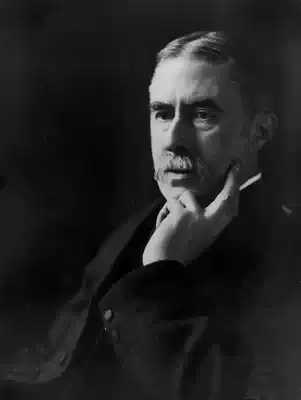
Alfred Edward Housman
The Winds Out of the West Land Blow
The winds out of the west land blow,
My friends have breathed them there;
Warm with the blood of lads I know
Comes east the sighing air.
It fanned their temples, filled their lungs,
Scattered their forelocks free;
My friends made words of it with tongues
That talk no more to me.
Their voices, dying as they fly,
Thick on the wind are sown;
The names of men blow soundless by,
My fellows' and my own.
Oh lads, at home I heard you plain,
But here your speech is still,
And down the sighing wind in vain
You hollo from the hill.
The wind and I, we both were there,
But neither long abode;
Now through the friendless world we fare
And sigh upon the road.
495

William Butler Yeats
All Souls' Night
Epilogue to 'A Vision'
MIDNIGHT has come, and the great Christ Church Bell
And may a lesser bell sound through the room;
And it is All Souls' Night,
And two long glasses brimmed with muscatel
Bubble upon the table. A ghost may come;
For it is a ghost's right,
His element is so fine
Being sharpened by his death,
To drink from the wine-breath
While our gross palates drink from the whole wine.
I need some mind that, if the cannon sound
From every quarter of the world, can stay
Wound in mind's pondering
As mummies in the mummy-cloth are wound;
Because I have a marvellous thing to say,
A certain marvellous thing
None but the living mock,
Though not for sober ear;
It may be all that hear
Should laugh and weep an hour upon the clock.
Horton's the first I call. He loved strange thought
And knew that sweet extremity of pride
That's called platonic love,
And that to such a pitch of passion wrought
Nothing could bring him, when his lady died,
Anodyne for his love.
Words were but wasted breath;
One dear hope had he:
The inclemency
Of that or the next winter would be death.
Two thoughts were so mixed up I could not tell
Whether of her or God he thought the most,
But think that his mind's eye,
When upward turned, on one sole image fell;
And that a slight companionable ghost,
Wild with divinity,
Had so lit up the whole
Immense miraculous house
The Bible promised us,
It seemed a gold-fish swimming in a bowl.
On Florence Emery I call the next,
Who finding the first wrinkles on a face
Admired and beautiful,
And knowing that the future would be vexed
With 'minished beauty, multiplied commonplace,
preferred to teach a school
Away from neighbour or friend,
Among dark skins, and there
permit foul years to wear
Hidden from eyesight to the unnoticed end.
Before that end much had she ravelled out
From a discourse in figurative speech
By some learned Indian
On the soul's journey. How it is whirled about,
Wherever the orbit of the moon can reach,
Until it plunge into the sun;
And there, free and yet fast,
Being both Chance and Choice,
Forget its broken toys
And sink into its own delight at last.
And I call up MacGregor from the grave,
For in my first hard springtime we were friends.
Although of late estranged.
I thought him half a lunatic, half knave,
And told him so, but friendship never ends;
And what if mind seem changed,
And it seem changed with the mind,
When thoughts rise up unbid
On generous things that he did
And I grow half contented to be blind!
He had much industry at setting out,
Much boisterous courage, before loneliness
Had driven him crazed;
For meditations upon unknown thought
Make human intercourse grow less and less;
They are neither paid nor praised.
but he d object to the host,
The glass because my glass;
A ghost-lover he was
And may have grown more arrogant being a ghost.
But names are nothing. What matter who it be,
So that his elements have grown so fine
The fume of muscatel
Can give his sharpened palate ecstasy
No living man can drink from the whole wine.
I have mummy truths to tell
Whereat the living mock,
Though not for sober ear,
For maybe all that hear
Should laugh and weep an hour upon the clock.
Such thought -- such thought have I that hold it tight
Till meditation master all its parts,
Nothing can stay my glance
Until that glance run in the world's despite
To where the damned have howled away their hearts,
And where the blessed dance;
Such thought, that in it bound
I need no other thing,
Wound in mind's wandering
As mummies in the mummy-cloth are wound.
493

John Keats
Give Me Women, Wine, and Snuff
GIVE me women, wine, and snuff
Untill I cry out "hold, enough!"
You may do so sans objection
Till the day of resurrection:
For, bless my beard, they aye shall be
My beloved Trinity.
Untill I cry out "hold, enough!"
You may do so sans objection
Till the day of resurrection:
For, bless my beard, they aye shall be
My beloved Trinity.
491
William Butler Yeats
The Statesman's Holiday
I LIVED among great houses,
Riches drove out rank,
Base drove out the better blood,
And mind and body shrank.
No Oscar ruled the table,
But I'd a troop of friends
That knowing better talk had gone
Talked of odds and ends.
Some knew what ailed the world
But never said a thing,
So I have picked a better trade
And night and morning sing:
Tall dames go walking in grass-green Avalon.
Am I a great Lord Chancellor
That slept upon the Sack?
Commanding officer that tore
The khaki from his back?
Or am I de Valera,
Or the King of Greece,
Or the man that made the motors?
Ach, call me what you please!
Here's a Montenegrin lute,
And its old sole string
Makes me sweet music
And I delight to sing:
Tall dames go walking in grass-green Avalon.
With boys and girls about him.
With any sort of clothes,
With a hat out of fashion,
With Old patched shoes,
With a ragged bandit cloak,
With an eye like a hawk,
With a stiff straight back,
With a strutting turkey walk.
With a bag full of pennies,
With a monkey on a chain,
With a great cock's feather,
With an old foul tune.
Tall dames go walking in grass-green Avalon.
494
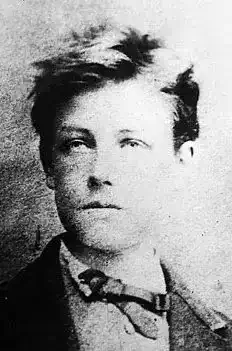
Arthur Rimbaud
Friends
Come, the Wines are off to the seaside,
and the waves by the million!
Look at wild Bitter rolling from the mountain tops!
Let us reach, like good pilgrims, green-pillared Absinthe…
Myself: No more of these landscapes.
What is drunkenness, friends?
I had soon - rather, even - rot in the pond,
beneath the horrible scum, near the floating driftwood.
488
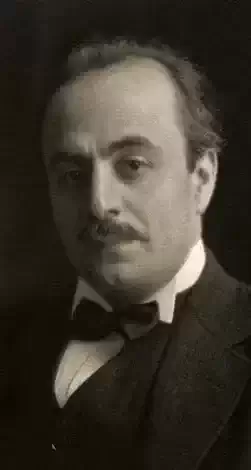
Khalil Gibran
Friendship IXX
And a youth said, "Speak to us of Friendship."
Your friend is your needs answered.
He is your field which you sow with love and reap with thanksgiving.
And he is your board and your fireside.
For you come to him with your hunger, and you seek him for peace.
When your friend speaks his mind you fear not the "nay" in your own mind, nor do you
withhold the "ay."
And when he is silent your heart ceases not to listen to his heart;
For without words, in friendship, all thoughts, all desires, all expectations are born and
shared, with joy that is unacclaimed.
When you part from your friend, you grieve not;
For that which you love most in him may be clearer in his absence, as the mountain to
the climber is clearer from the plain.
And let there be no purpose in friendship save the deepening of the spirit.
For love that seeks aught but the disclosure of its own mystery is not love but a net
cast forth: and only the unprofitable is caught.
And let your best be for your friend.
If he must know the ebb of your tide, let him know its flood also.
For what is your friend that you should seek him with hours to kill?
Seek him always with hours to live.
For it is his to fill your need, but not your emptiness.
And in the sweetness of friendship let there be laughter, and sharing of pleasures.
For in the dew of little things the heart finds its morning and is refreshed.
487
Walt Whitman
Recorders Ages Hence
RECORDERS ages hence!
Come, I will take you down underneath this impassive exterior--I will
tell you what to say of me;
Publish my name and hang up my picture as that of the tenderest
lover,
The friend, the lover's portrait, of whom his friend, his lover, was
fondest,
Who was not proud of his songs, but of the measureless ocean of love
within him--and freely pour'd it forth,
Who often walk'd lonesome walks, thinking of his dear friends, his
lovers,
Who pensive, away from one he lov'd, often lay sleepless and
dissatisfied at night,
Who knew too well the sick, sick dread lest the one he lov'd might
secretly be indifferent to him,
Whose happiest days were far away, through fields, in woods, on
hills, he and another, wandering hand in hand, they twain,
apart from other men,
Who oft as he saunter'd the streets, curv'd with his arm the shoulder
of his friend--while the arm of his friend rested upon him
also.
487

William Wordsworth
Fountain, The: A Conversation
We talked with open heart, and tongue
Affectionate and true,
A pair of friends, though I was young,
And Matthew seventy-two.
We lay beneath a spreading oak,
Beside a mossy seat;
And from the turf a fountain broke,
And gurgled at our feet.
"Now, Matthew!" said I, "let us match
This water's pleasant tune
With some old border-song, or catch
That suits a summer's noon;
"Or of the church-clock and the chimes
Sing here beneath the shade,
That half-mad thing of witty rhymes
Which you last April made!"
In silence Matthew lay, and eyed
The spring beneath the tree;
And thus the dear old Man replied,
The grey-haired man of glee:
"No check, no stay, this Streamlet fears;
How merrily it goes!
'Twill murmur on a thousand years,
And flow as now it flows.
"And here, on this delightful day,
I cannot choose but think
How oft, a vigorous man, I lay
Beside this fountain's brink.
"My eyes are dim with childish tears,
My heart is idly stirred,
For the same sound is in my ears
Which in those days I heard.
"Thus fares it still in our decay:
And yet the wiser mind
Mourns less for what age takes away
Than what it leaves behind.
"The blackbird amid leafy trees,
The lark above the hill,
Let loose their carols when they please
Are quiet when they will.
"With Nature never do 'they' wage
A foolish strife; they see
A happy youth, and their old age
Is beautiful and free:
"But we are pressed by heavy laws;
And often, glad no more,
We wear a face of joy, because
We have been glad of yore.
"If there be one who need bemoan
His kindred laid in earth,
The household hearts that were his own;
It is the man of mirth.
"My days, my Friend, are almost gone,
My life has been approved,
And many love me; but by none
Am I enough beloved."
"Now both himself and me he wrongs,
The man who thus complains;
I live and sing my idle songs
Upon these happy plains;
"And, Matthew, for thy children dead
I'll be a son to thee!"
At this he grasped my hand, and said,
"Alas! that cannot be."
We rose up from the fountain-side;
And down the smooth descent
Of the green sheep-track did we glide;
And through the wood we went;
And, ere we came to Leonard's rock,
He sang those witty rhymes
About the crazy old church-clock,
And the bewildered chimes.
484

Ella Wheeler Wilcox
American Boys, Hello!
Oh! we love all the French, and we speak in French
As along through France we go.
But the moments to us that are keen and sweet
Are the ones when our khaki boys we meet,
Stalwart and handsome and trim and neat;
And we call to them-'Boys, hello!'
'Hello, American boys,
Luck to you, and life's best joys!
American boys, hello!'
We couldn't do that if we were at home-
It never would do you know!
For there you must wait till you're told who's who,
And to meet in the way that nice folks do.
Though you knew his name, and your name he knew-
You never would say 'Hello, hello, American boy!'
But here it's just a joy,
As we pass along in the stranger throng,
To call out, 'Boys, hello!'
For each is a brother away from home;
And this we are sure is so,
There's a lonesome spot in his heart somewhere,
And we want him to feel there are friends
right there
In this foreign land, and so we dare
To call out 'Boys, hello!'
'Hello, American boys,
Luck to you, and life's best joys!
American boys, hello!'
485

Kazi Nazrul Islam
Who walked out
O friend passer-by
I wake up forlorn,
longing to meet my friend from other land.
On flower-bed
I go out of my hearts
longing to meet him who walked out.
[Original: Pathik-bodhu; Translation: Mohammad Nurul Huda]
I wake up forlorn,
longing to meet my friend from other land.
On flower-bed
I go out of my hearts
longing to meet him who walked out.
[Original: Pathik-bodhu; Translation: Mohammad Nurul Huda]
485
John Keats
Acrostic : Georgiana Augusta Keats
Give me your patience, sister, while I frame
Exact in capitals your golden name;
Or sue the fair Apollo and he will
Rouse from his heavy slumber and instill
Great love in me for thee and Poesy.
Imagine not that greatest mastery
And kingdom over all the Realms of verse,
Nears more to heaven in aught, than when we nurse
And surety give to love and Brotherhood.
Anthropophagi in Othello's mood;
Ulysses storm'd and his enchanted belt
Glow with the Muse, but they are never felt
Unbosom'd so and so eternal made,
Such tender incense in their laurel shade
To all the regent sisters of the Nine
As this poor offering to you, sister mine.
Kind sister! aye, this third name says you are;
Enchanted has it been the Lord knows where;
And may it taste to you like good old wine,
Take you to real happiness and give
Sons, daughters and a home like honied hive.
485
Rudyard Kipling
Three Friends
There were three friends that buried the fourth,
The mould in his mouth and the dust in his eyes,
And they went south and east and north—
The strong man fights but the sick man dies.
There were three friends that spoke of the dead—
The strong man fights but the sick man dies—
"And would he were here with us now," they said,
"The sun in our face and the wind in our eyes."
482
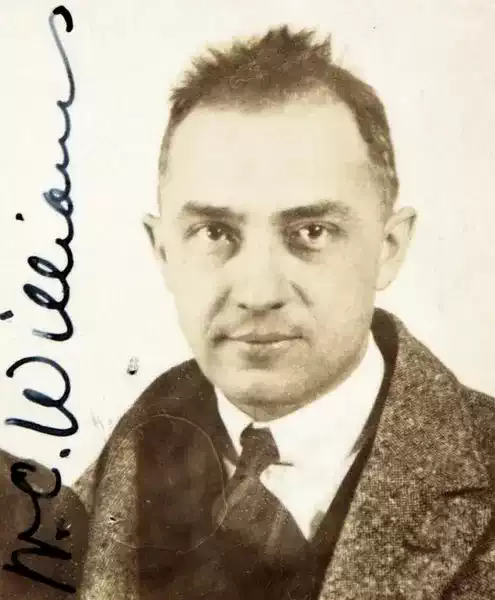
William Carlos Williams
The Poor
By constantly tormenting them
with reminders of the lice in
their children's hair, the
School Physician first
brought their hatred down on him.
But by this familiarity
they grew used to him, and so,
at last,
took him for their friend and adviser.
with reminders of the lice in
their children's hair, the
School Physician first
brought their hatred down on him.
But by this familiarity
they grew used to him, and so,
at last,
took him for their friend and adviser.
479
Walt Whitman
Behold This Swarthy Face
BEHOLD this swarthy face--these gray eyes,
This beard--the white wool, unclipt upon my neck,
My brown hands, and the silent manner of me, without charm;
Yet comes one, a Manhattanese, and ever at parting, kisses me lightly
on the lips with robust love,
And I, on the crossing of the street, or on the ship's deck, give a
kiss in return;
We observe that salute of American comrades, land and sea,
We are those two natural and nonchalant persons.
480

Lord Byron
Fill The Goblet Again: A Song
Fill the goblet again! for I never before
Felt the glow which now gladdens my heart to its core;
Let us drink!who
would not?since,
through life's varied round,
In the goblet alone no deception is found.
I have tried in its turn all that life can supply;
I have bask'd in the beam of a dark rolling eye;
I have loved!who
has not?but
what heart can declare
That pleasure existed while passion was there?
In the days of my youth, when the heart's in its spring,
And dreams that affection can never take wing,
I had friends!who
has not?but
what tongue will avow,
That friends, rosy wine! are so faithful as thou?
The heart of a mistress some boy may estrange,
Friendship shifts with the sunbeamthou
never canst change;
Thou grow'st oldwho
does not?but
on earth what appears,
Whose virtues, like thine, still increase with its years?
Yet if blest to the utmost that love can bestow,
Should a rival bow down to our idol below,
We aree jealous!who
is not?thou
hast no such alloy;
For the more that enjoy thee, the more we enjoy.
Then the season of youth and its vanities past,
For refuge we fly to the goblet at last;
There we finddo
we not?in
the flow of the soul,
That truth, as of yore, is confined to the bowl.
When the box of Pandora was opened on earth,
And Misery's triumph commenced over Mirth,
Hope was left,was
she not?but
the goblet we kiss,
And care not for Hope, who are certain of bliss.
Long life to the grape! for when summer is flown,
The age of our nectar shall gladden our own:
We must diewho
shall not?
May
our sins be forgiven,
And Hebe shall never be idle in heaven.
481
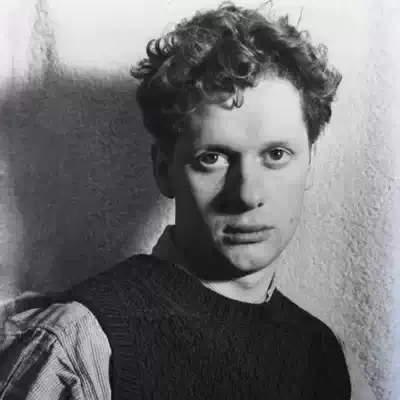
Dylan Thomas
To Others Than You
Friend by enemy I call you out.
You with a bad coin in your socket,
You my friend there with a winning air
Who palmed the lie on me when you looked
Brassily at my shyest secret,
Enticed with twinkling bits of the eye
Till the sweet tooth of my love bit dry,
Rasped at last, and I stumbled and sucked,
Whom now I conjure to stand as thief
In the memory worked by mirrors,
With unforgettably smiling act,
Quickness of hand in the velvet glove
And my whole heart under your hammer,
Were once such a creature, so gay and frank
A desireless familiar
I never thought to utter or think
While you displaced a truth in the air,
That though I loved them for their faults
As much as for their good,
My friends were enemies on stilts
With their heads in a cunning cloud.
474
Lord Byron
To The Earl Of Clare
'Tu semper amoris
Sisd memor, etcari comitis ne abscedat imago' — Val Flac
Friend of my youth! when young we roved,
Like striplings mutually beloved,
With friendship's purest glow,
The bliss which wing'd those rosy hours
Was such as pleasure seldom showers
On mortals here below.
The recollectlon seems alone
Dearer than all the joys I've known,
When distant far from you:
Though pain, 'tis still a pleasing pain,
To trace those days and hours again,
And sigh again, adieu!
My pensive memory lingers o'er
Those scenes to be enjoy'd no more,
Those scenes regretted ever
The measure of our youth is full,
Life's evening dream is dark and dull,
And we rnay meet ah!
never!
As when one parent spring supplies
Two strearns which from one fountain rise
Together join'd in 'vain;
How soon' diverging from their source,
Each murmuring, seeks another course,
Till mingled in the main!
Our vital streams of weal or woe,
Though near, alas! distinctly flow,
Nor mingle as before:
Now swift or slow, now black or clear,
Till death's unfathom'd gulf appear,
And both shall quit the shore.
Our souls, my friend! which once supplied
One wish, nor breathed a thought beside,
Now flow in different channels:
Disdaining humbler rural sports,
'Tis yours to mix in polish'd courts,
And shine in fashion's annals
;'Tis mine to waste on love my time,
Or vent my reveries in rhyme,
Without the aid of reason;
For sense and reason (critics know it)
Have quitted every amorous poet,
Nor left a thought to seize on.
Poor LITTLE! sweet, melodlous bard!
Of late esteem'd it monstrous hard
That he, who sang before all,
He
who the lore of love expanded,
By
dire reviewers should be branded
As void of wit and moral.
And yet, while Beauty's praise is thine,
Harmonious favourite of the nine,
Repine not at thy lot.
Thy soothing lays may still be read,
When Persecution's arm is dead,
And critics are forgot.
Still I must yield those worthies merit,
Who chasten, with unsparing spirit,
Bad rhymes, and those who write them;
And though myself may be the next
By criticism to be vext,
I really will not fight them.
Perhaps they wouid do quite as well
To break the rudely sounding shell
Of such a young beginner:
He who offends at pert nineteen,
Ere thirty may become, I ween,
A very harden'd sinner.
Now, Clare, I must return to you;
And, sure, apologies are due:
Accept, then, my concession
In truth dear Clare, in fancy's flight
I soar along from left to right;
My muse admires digression
I think I said 'twould he your fate
To add one star to royal state;
May
regal smiles attend you!
And should a noble monarch reign,
You will not seek his smiles in vain,
If worth can recommend you.
Yet since in danger courts abound,
Where specious rivals glitter round,
From snares may saints preserve you;
And grant your love or friendship ne'er
From any claim a kindred care,
But those who best deserve you!
Not for a moment may you stray
From truth's secure, unerring way!
May no delights decoy!
O'er roses may your footsteps move,
Your smiles be ever smiles of love,
Your tears be tears of joy!
Oh! if you wish that happiness
Your coming days and years may bless,
And virtues crown your brow;
Be still as you were wont to be,
Spotless as you've been known to me,
Be
still as you are now.
And though some trifling share of praise,
To cheer my last declining days,
To me were doubly dear;
Whilst blessing your beloved name
I'd waive at once a poet's fame,
To prove a prophet here.
476
Ella Wheeler Wilcox
Sorrow's Uses
The uses of sorrow I comprehend
Better and better at each year’s end.
Deeper and deeper I seem to see
Why and wherefore it has to be
Only after the dark, wet days
Do we fully rejoice in the sun’s bright rays.
Sweeter the crust tastes after the fast
Than the sated gourmand’s finest repast.
The faintest cheer sounds never amiss
To the actor who once has heard a hiss.
To one who the sadness of freedom knows,
Light seem the fetters love may impose.
And he who has dwelt with his heart alone,
Hears all the music in friendship’s tone.
So better and better I comprehend,
How sorrow ever would be our friend.
475
John Keats
To Solitude
O Solitude! if I must with thee dwell,
Let it not be among the jumbled heap
Of murky buildings; climb with me the steep, -
Nature's observatory -- whence the dell,
Its flowery slopes, its river's crystal swell,
May seem a span; let me thy vigils keep
'Mongst boughs pavilion'd, where the deer's swift leap
Startles the wild bee from the foxglove bell.
But though I'll gladly trace these scenes with thee,
Yet the sweet converse of an innocent mind,
Whose words are images of thoughts refin'd,
Is my soul's pleasure; and it sure must be
Almost the highest bliss of human-kind,
When to thy haunts two kindred spirits flee.
474
Walt Whitman
Among The Multitude
AMONG the men and women, the multitude,
I perceive one picking me out by secret and divine signs,
Acknowledging none else--not parent, wife, husband, brother, child,
any nearer than I am;
Some are baffled--But that one is not--that one knows me.
Ah, lover and perfect equal!
I meant that you should discover me so, by my faint indirections;
And I, when I meet you, mean to discover you by the like in you.
470
John Keats
To A Friend Who Sent Me Some Roses
As late I rambled in the happy fields,
What time the skylark shakes the tremulous dew
From his lush clover covert;-when anew
Adventurous knights take up their dinted shields;
I saw the sweetest flower wild nature yields,
A fresh-blown musk-rose; 'twas the first that threw
Its sweets upon the summer: graceful it grew
As is the wand that Queen Titania wields.
And, as I feasted on its fragrancy,
I thought the garden-rose it far excelled;
But when, O Wells! thy roses came to me,
My sense with their deliciousness was spelled:
Soft voices had they, that with tender plea
Whispered of peace, and truth, and friendliness unquelled.
472