
Courage and Strength

Henry Lawson
A Mixed Battle Song
Lo! the Boar’s tail is salted, and the Kangaroo’s exalted,
And his right eye is extinguished by a man-o’-warsman’s cap;
He is flying round the fences where the Southern Sea commences,
And he’s very much excited for a quiet sort of chap.
For his ships have had a scrap and they’ve marked it on the map
Where the H.M.A.S. Sydney dropped across a German trap.
So the Kangaroo’s a-chasing of his Blessed Self, and racing
From Cape York right round to Leeuwin, from the coast to Nevertire;
And of him need be no more said, save that to the tail aforesaid
Is the Blue Australian Ensign firmly fixed with copper wire.
(When he’s filled the map with white men there’ll be little to desire.)
I was sulky, I was moody (I’m inclined to being broody)
When the news appeared in Sydney, bringing joy and bringing tears,
(There’s an undertone of sorrow that you’ll understand to-morrow)
And I felt a something in me that had not been there for years.
Though I lean in the direction of most absolute Protection
(And of wheat on the selection)
And, considering Congestion and the hopeless unemployed,
I’d a notion (but I hid it) that, the way the Emden did it,
’Twould be better for Australia if her “commerce” was destroyed.
You may say that war’s a curse, but the peace curse may be worse,
When it’s lasted till it’s rotten—rotten from the inmost core,
To the mouldy skin which we are, in the land we call the freer—
And I almost feel inclined to call for “Three Cheers for the War!”
For I think, when all is over, from Magellan’s Straits to Dover,
Things will be a great deal better than they ever were before.
But, since “Peace” and “Right” are squalling, I’ll content myself with calling
For three rousers—like the ringing cheers we used to give of yore—
For the Emden!
For the Sydney!
And their gallant crews and captains—both of whom we’ve met before!
And, for Kaiser William’s nevvy, we shall venture three cheers more!
Cheers that go to end a war.
272

Anonymous
Episode
THEN the baleful fiend its fire belched out,
and bright homes burned. The blaze stood high
all landsfolk frighting. No living thing
would that loathly one leave as aloft it flew.
Wide was the dragon's warring seen,
its fiendish fury far and near,
as the grim destroyer those Geatish people
hated and hounded. To hidden lair,
to its hoard it hastened at hint of dawn.
Folk of the land it had lapped in flame,
with bale and brand. In its barrow it trusted,
its battling and bulwarks: that boast was vain!
To Beowulf then the bale was told
quickly and truly: the king's own home,
of buildings the best, in brand-waves melted,
that gift-throne of Geats. To the good old man
sad in heart, 'twas heaviest sorrow.
The sage assumed that his sovran God
he had angered, breaking ancient law,
and embittered the Lord. His breast within
with black thoughts welled, as his wont was never.
The folk's own fastness that fiery dragon
with flame had destroyed, and the stronghold all
washed by waves; but the warlike king,
prince of the Weders, plotted vengeance.
Warriors'-bulwark, he bade them work
all of iron -- the earl's commander --
a war-shield wondrous: well he knew
that forest-wood against fire were worthless,
linden could aid not. -- Atheling brave,
he was fated to finish this fleeting life,
his days on earth, and the dragon with him,
though long it had watched o'er the wealth of thehoard! --
Shame he reckoned it, sharer-of-rings,
to follow the flyer-afar with a host,
a broad-flung band; nor the battle feared he,
nor deemed he dreadful the dragon's warring,
its vigor and valor: ventures desperate
he had passed a-plenty, and perils of war,
contest-crash, since, conqueror proud,
Hrothgar's hall he had wholly purged,
and in grapple had killed the kin of Grendel,
loathsome breed! Not least was that
of hand-to-hand fights where Hygelac fell,
when the ruler of Geats in rush of battle,
lord of his folk, in the Frisian land,
son of Hrethel, by sword-draughts died,
by brands down-beaten. Thence Beowulf fled
through strength of himself and his swimming power,
though alone, and his arms were laden with thirty
coats of mail, when he came to the sea!
Nor yet might Hetwaras haughtily boast
their craft of contest, who carried against him
shields to the fight: but few escaped
from strife with the hero to seek their homes!
Then swam over ocean Ecgtheow's son
lonely and sorrowful, seeking his land,
where Hygd made him offer of hoard and realm,
rings and royal-seat, reckoning naught
the strength of her son to save their kingdom
from hostile hordes, after Hygelac's death.
No sooner for this could the stricken ones
in any wise move that atheling's mind
over young Heardred's head as lord
and ruler of all the realm to be:
yet the hero upheld him with helpful words,
aided in honor, till, older grown,
he wielded the Weder-Geats. -- Wandering exiles
sought him o'er seas, the sons of Ohtere,
who had spurned the sway of the Scylfings'-helmet,
the bravest and best that broke the rings,
in Swedish land, of the sea-kings' line,
haughty hero. Hence Heardred's end.
For shelter he gave them, sword-death came,
the blade's fell blow, to bairn of Hygelac;
but the son of Ongentheow sought again
house and home when Heardred fell,
leaving Beowulf lord of Geats
and gift-seat's master. -- A good king he!
269

John Greenleaf Whittier
Barclay Of Ury
Up the streets of Aberdeen,
By the kirk and college green,
Rode the Laird of Ury;
Close behind him, close beside,
Foul of mouth and evil-eyed,
Pressed the mob in fury.
Flouted him the drunken churl,
Jeered at him the serving-girl,
Prompt to please her master;
And the begging carlin, late
Fed and clothed at Ury's gate,
Cursed him as he passed her.
Yet, with calm and stately mien,
Up the streets of Aberdeen
Came he slowly riding;
And, to all he saw and heard,
Answering not with bitter word,
Turning not for chiding.
Came a troop with broad swords swinging,
Bits and bridles sharply ringing,
Loose and free and forward;
Quoth the foremost, 'Ride him down!
Push him! prick him! through the town
Drive the Quaker coward!'
But from out the thickening crowd
Cried a sudden voice and loud:
'Barclay! Ho! a Barclay!
And the old man at his side
Saw a comrade, battle tried,
Scarred and sunburned darkly,
Who with ready weapon bare,
Fronting to the troopers there,
Cried aloud: 'God save us,
Call ye coward him who stood
Ankle deep in Lutzen's blood,
With the brave Gustavus?'
'Nay, I do not need thy sword,
Comrade mine,' said Ury's lord.
'Put it up, I pray thee:
Passive to His holy will,
Trust I in my Master still,
Even though He slay me.
'Pledges of thy love and faith,
Proved on many a field of death,
Not by me are needed.'
Marvelled much that henchman bold,
That his laird, so stout of old,
Now so meekly pleaded.
'Woe's the day!' he sadly said,
With a slowly shaking head,
And a look of pity;
'Ury's honest lord reviled,
Mock of knave and sport of child,
In his own good city!
'Speak the word, and, master mine,
As we charged on Tilly's line,
And his Walloon lancers,
Smiting through their midst we'll teach
Civil look and decent speech
To these boyish prancers!'
'Marvel not, mine ancient friend,
Like beginning, like the end,'
Quoth the Laird of Ury;
'Is the sinful servant more
Than his gracious Lord who bore
Bonds and stripes in Jewry?
'Give me joy that in his name
I can bear, with patient frame,
All these vain ones offer;
While for them He suffereth long,
Shall I answer wrong with wrong,
Scoffing with the scoffer?
'Happier I, with loss of all,
Hunted, outlawed, held in thrall,
With few friends to greet me,
Than when reeve and squire were seen,
Riding our from Aberdeen,
With bared heads to meet me.
'When each goodwife, o'er and o'er,
Blessed me as I passed her door;
And the snooded daughter,
Through her casement glancing down,
Smiled on him who bore renown
From red fields of slaughter.
'Hard to feel the stranger's scoff,
Hard the old friend's falling off,
Hard to learn forgiving;
But the Lord His own rewards,
And His love with theirs accords,
Warm and fresh and living.
'Through this dark and stormy night
Faith beholds a feeble light
Up the blackness streaking;
Knowing God's own time is best,
In a patient hope I rest
For the full day-breaking!'
So the Laird of Ury said,
Turning slow his horse's head
Towards the Tolbooth prison,
Where, through iron gates, he heard
Poor disciples of thee Word
Preach of Christ arisen!
Not in vain, Confessor old,
Unto us the tale is told
Of thy day of trial;
Every age on him who strays
From its broad and beaten ways
Pours its seven-fold vial.
Happy he whose inward ear
Angel comfortings can hear,
O'er the rabble's laughter;
And while Hatred's fagots burn,
Glimpses through the smoke discern
Of the good hereafter.
Knowing this, that never yet
Share of Truth was vainly set
In the world's wide fallow;
After hands shall sow the seed,
After hands from hill and mead
Reap the harvests yellow.
Thus, with somewhat of the Seer,
Must the moral pioneer
From the Future borrow;
Clothe the waste with dreams of grain,
And, on midnight's sky of rain,
Paint the golden morrow!
270
Henry Lawson
Black Bonnet
A day of seeming innocence,
A glorious sun and sky,
And, just above my picket fence,
Black Bonnet passing by.
In knitted gloves and quaint old dress,
Without a spot or smirch,
Her worn face lit with peacefulness,
Old Granny goes to church.
Her hair is richly white, like milk,
That long ago was fair --
And glossy still the old black silk
She keeps for "chapel wear";
Her bonnet, of a bygone style,
That long has passed away,
She must have kept a weary while
Just as it is to-day.
The parasol of days gone by --
Old days that seemed the best --
The hymn and prayer books carried high
Against her warm, thin breast;
As she had clasped -- come smiles come tears,
Come hardship, aye, and worse --
On market days, through faded years,
The slender household purse.
Although the road is rough and steep,
She takes it with a will,
For, since she hushed her first to sleep
Her way has been uphill.
Instinctively I bare my head
(A sinful one, alas!)
Whene'er I see, by church bells led,
Brave Old Black Bonnet pass.
For she has known the cold and heat
And dangers of the Track:
Has fought bush-fires to save the wheat
And little home Out Back.
By barren creeks the Bushman loves,
By stockyard, hut, and pen,
The withered hands in those old gloves
Have done the work of men.
.....
They called it "Service" long ago
When Granny yet was young,
And in the chapel, sweet and low,
As girls her daughters sung.
And when in church she bends her head
(But not as others do)
She sees her loved ones, and her dead
And hears their voices too.
Fair as the Saxons in her youth,
Not forward, and not shy;
And strong in healthy life and truth
As after years went by:
She often laughed with sinners vain,
Yet passed from faith to sight --
God gave her beauty back again
The more her hair grew white.
She came out in the Early Days,
(Green seas, and blue -- and grey) --
The village fair, and English ways,
Seemed worlds and worlds away.
She fought the haunting loneliness
Where brooding gum trees stood;
And won through sickness and distress
As Englishwomen could.
.....
By verdant swath and ivied wall
The congregation's seen --
White nothings where the shadows fall,
Black blots against the green.
The dull, suburban people meet
And buzz in little groups,
While down the white steps to the street
A quaint old figure stoops.
And then along my picket fence
Where staring wallflowers grow -World-
wise Old Age, and Common-sense! --
Black Bonnet, nodding slow.
But not alone; for on each side
A little dot attends
In snowy frock and sash of pride,
And these are Granny's friends.
To them her mind is clear and bright,
Her old ideas are new;
They know her "real talk" is right,
Her "fairy talk" is true.
And they converse as grown-ups may,
When all the news is told;
The one so wisely young to-day,
The two so wisely old.
At home, with dinner waiting there,
She smooths her hair and face,
And puts her bonnet by with care
And dons a cap of lace.
The table minds its p's and q's
Lest one perchance be hit
By some rare dart which is a part
Of her old-fashioned wit.
.....
Her son and son's wife are asleep,
She puts her apron on --
The quiet house is hers to keep,
With all the youngsters gone.
There's scarce a sound of dish on dish
Or cup slipped into cup,
When left alone, as is her wish,
Black Bonnet "washes up."
269
Anonymous
Episode
'TWAS now, men say, in his sovran's need
that the earl made known his noble strain,
craft and keenness and courage enduring.
Heedless of harm, though his hand was burned,
hardy-hearted, he helped his kinsman.
A little lower the loathsome beast
he smote with sword; his steel drove in
bright and burnished; that blaze began
to lose and lessen. At last the king
wielded his wits again, war-knife drew,
a biting blade by his breastplate hanging,
and the Weders'-helm smote that worm asunder,
felled the foe, flung forth its life.
So had they killed it, kinsmen both,
athelings twain: thus an earl should be
in danger's day! -- Of deeds of valor
this conqueror's-hour of the king was last,
of his work in the world. The wound began,
which that dragon-of-earth had erst inflicted,
to swell and smart; and soon he found
in his breast was boiling, baleful and deep,
pain of poison. The prince walked on,
wise in his thought, to the wall of rock;
then sat, and stared at the structure of giants,
where arch of stone and steadfast column
upheld forever that hall in earth.
Yet here must the hand of the henchman peerless
lave with water his winsome lord,
the king and conqueror covered with blood,
with struggle spent, and unspan his helmet.
Beowulf spake in spite of his hurt,
his mortal wound; full well he knew
his portion now was past and gone
of earthly bliss, and all had fled
of his file of days, and death was near:
"I would fain bestow on son of mine
this gear of war, were given me now
that any heir should after me come
of my proper blood. This people I ruled
fifty winters. No folk-king was there,
none at all, of the neighboring clans
who war would wage me with 'warriors'-friends'
and threat me with horrors. At home I bided
what fate might come, and I cared for mine own;
feuds I sought not, nor falsely swore
ever on oath. For all these things,
though fatally wounded, fain am I!
From the Ruler-of-Man no wrath shall seize me,
when life from my frame must flee away,
for killing of kinsmen! Now quickly go
and gaze on that hoard 'neath the hoary rock,
Wiglaf loved, now the worm lies low,
sleeps, heart-sore, of his spoil bereaved.
And fare in haste. I would fain behold
the gorgeous heirlooms, golden store,
have joy in the jewels and gems, lay down
softlier for sight of this splendid hoard
my life and the lordship I long have held."
265
John Greenleaf Whittier
Voice Of New England
UP the hillside, down the glen,
Rouse the sleeping citizen;
Summon out the might of men!
Like a lion growling low,
Like a night-storm rising slow,
Like the tread of unseen foe;
It is coming, it is nigh!
Stand your homes and altars by;
On your own free thresholds die.
Clang the bells in all your spires;
On the gray hills of your sires
Fling to heaven your signal-fires.
From Wachuset, lone and bleak,
Unto Berkshire's tallest peak,
Let the flame-tougued heralds speak.
Oh, for God and duty stand,
Heart to heart and hand to hand,
Round the old graves of the land.
Whoso shrinks or falters now,
Whoso to the yoke would bow,
Brand the craven on his brow!
Freedom's soil hath only place
For a free and fearless race,
None for traitors false and base.
Perish party, perish clan;
Strike together while ye can,
Like the arm of one strong man.
Like that angel's voice sublime,
Heard above a world of crime,
Crying of the end of time;
With one heart and with one mouth,
Let the North unto the South
Speak the word befitting both:
'What though Issachar be strong!
Ye may load his back with wrong
Overmuch and over long:
'Patience with her cup o'errun,
With her weary thread outspun,
Murmurs that her work is done.
'Make our Union-bond a chain,
Weak as tow in Freedom's strain
Link by link shall snap in twain.
'Vainly shall your sand-wrought rope
Bind the starry cluster up,
Shattered over heaven's blue cope!
'Give us bright though broken rays,
Rather than eternal haze,
Clouding o'er the full-orbed blaze.
'Take your land of sun and bloom;
Only leave to Freedom room
For her plough, and forge, and loom;
'Take your slavery-blackened vales;
Leave us but our own free gales,
Blowing on our thousand sails.
'Boldly, or with treacherous art,
Strike the blood-wrought chain apart;
Break the Union's mighty heart;
'Work the ruin, if ye will;
Pluck upon your heads an ill
Which shall grow and deepen still.
'With your bondman's right arm bare,
With his heart of black despair,
Stand alone, if stand ye dare!
'Onward with your fell design;
Dig the gulf and draw the line:
Fire beneath your feet the mine:
'Deeply, when the wide abyss
Yawns between your land and this,
Shall ye feel your helplessness.
'By the hearth, and in the bed,
Shaken by a look or tread,
Ye shall own a guilty dread.
'And the curse of unpaid toil,
Downward through your generous soil
Like a fire shall burn and spoil.
'Our bleak hills shall bud and blow,
VInes our rocks shall overgrow,
Plenty in our valleys flow; —
'And when vengeance clouds your skies,
Hither shall ye turn your eyes,
As the lost on Paradise!
'We but ask our rocky strand,
Freedom's true and brother band,
Freedom's strong and honest hand;
'Valleys by the slave untrod,
And the Pilgrim's mountain sod,
Blessed of our fathers' God!'
265
John Greenleaf Whittier
The Vow Of Washington
The sword was sheathed: in April's sun
Lay green the fields by Freedom won;
And severed sections, weary of debates,
Joined hands at last and were United States.
O City sitting by the Sea
How proud the day that dawned on thee,
When the new era, long desired, began,
And, in its need, the hour had found the man!
One thought the cannon salvos spoke,
The resonant bell-tower's vibrant stroke,
The voiceful streets, the plaudit-echoing halls,
And prayer and hymn borne heavenward from St. Paul's!
How felt the land in every part
The strong throb of a nation's heart,
As its great leader gave, with reverent awe,
His pledge to Union, Liberty, and Law.
That pledge the heavens above him heard,
That vow the sleep of centuries stirred;
In world-wide wonder listening peoples bent
Their gaze on Freedom's great experiment.
Could it succeed? Of honor sold
And hopes deceived all history told.
Above the wrecks that strewed the mournful past,
Was the long dream of ages true at last?
Thank God! the people's choice was just,
The one man equal to his trust,
Wise beyond lore, and without weakness good,
Calm in the strength of flawless rectitude.
His rule of justice, order, peace,
Made possible the world's release;
Taught prince and serf that power is but a trust,
And rule, alone, which serves the ruled, is just;
That Freedom generous is, but strong
In hate of fraud and selfish wrong,
Pretence that turns her holy truths to lies,
And lawless license masking in her guise.
Land of his love! with one glad voice
Let thy great sisterhood rejoice;
A century's suns o'er thee have risen and set,
And, God be praised, we are one nation yet.
And still we trust the years to be
Shall prove his hope was destiny,
Leaving our flag, with all its added stars,
Unrent by faction and unstained by wars.
Lo! where with patient toil he nursed
And trained the new-set plant at first,
The widening branches of a stately tree
Stretch from the sunrise to the sunset sea.
And in its broad and sheltering shade,
Sitting with none to make afraid,
Were we now silent, through each mighty limb,
The winds of heaven would sing the praise of him.
Our first and best!--his ashes lie
Beneath his own Virginian sky.
Forgive, forget, O true and just and brave,
The storm that swept above thy sacred grave.
For, ever in the awful strife
And dark hours of the nation's life,
Through the fierce tumult pierced his warning word,
Their father's voice his erring children heard.
The change for which he prayed and sought
In that sharp agony was wrought;
No partial interest draws its alien line
'Twixt North and South, the cypress and the pine!
One people now, all doubt beyond,
His name shall be our Union-bond;
We lift our hands to Heaven, and here and now.
Take on our lips the old Centennial vow.
For rule and trust must needs be ours;
Chooser and chosen both are powers
Equal in service as in rights; the claim
Of Duty rests on each and all the same.
Then let the sovereign millions, where
Our banner floats in sun and air,
From the warm palm-lands to Alaska's cold,
Repeat with us the pledge a century old?
267

Emily Dickinson
The Truth—is stirless
The Truth—is stirless—
Other force—may be presumed to move—
This—then—is best for confidence—
When oldest Cedars swerve—
And Oaks untwist their fists—
And Mountains—feeble—lean—
How excellent a Body, that
Stands without a Bone—
How vigorous a Force
That holds without a Prop—
Truth stays Herself—and every man
That trusts Her—boldly up—
266
Henry Lawson
The Bill of the Ages
He shall live to the end of this mad old world, he has lived since the world began,
He never has done any good for himself, but was good to every man.
He never has done any good for himself, and I’m sure that he never will,
He drinks and he swears and he fights at times, and his name is mostly Bill.
He carried a freezing mate to his cave, and nursed him, for all I know,
When Europe was mostly a sheet of ice, thousands of years ago.
He has stuck to many a mate since then, he is with us everywhere still
(He loves and gambles when he is young, and the girls stick up for Bill.)
He has rowed to a wreck, when the lifeboat failed, with Jim in a crazy boat;
He has given his lifebelt many a time, and sunk that another might float.
He has ‘stood ’em off’ while others escaped, when the niggers rushed from the hill,
And rescue parties who came too late have found what was left of Bill.
He has thirsted on deserts that others might drink, he has given lest others should
lack,
He has staggered half-blinded through fire or drought with a sick man on his back.
He is first to the rescue in tunnel or shaft, from Newcastle to Broken Hill,
When the water breaks in or the fire breaks out, Oh! a leader of men is Bill.
No humane societies’ medals he wears for the fearful deaths he braved;
He seems ashamed of the good he did, and ashamed of the lives he saved.
If you chance to know of a noble deed he has done, you had best keep still;
If you chance to know of a kindly act, you mustn’t let on to Bill.
He is fierce at a wrong, he is firm in right, he is kind to the weak and mild;
He will slave all day and sit up all night by the side of a neighbour’s child.
For a woman in trouble he’d lay down his life, nor think as another man will;
He’s a man all through, but no other man’s wife has ever been worse for Bill.
He is good for the noblest sacrifice, he can do what few other men can;
He can break his heart that the girl he loves may marry a better man.
There’s many a mother and wife to-night whose heart and whose eyes will fill
When she thinks of the days of the long ago when she well might have stuck to Bill.
Maybe he’s in trouble or hard up now, and travelling far for work,
Or fighting a dead past down to-night in a lone camp west of Bourke.
When he’s happy and flush, take your sorrow to him and borrow as much as you will;
But when he’s in trouble or stony-broke, you never will hear from Bill.
And when, because of its million sins, this earth is cracked like a shell,
He will stand by a mate at the Judgment Seat!—and comfort him down in—Well,
I haven’t much sentiment left, but let the cynic sneer as he will;
Perhaps God will fix up the world again for the sake of the likes of Bill.
264

Robert W. Service
The Fool
"But it isn't playing the game," he said,
And he slammed his books away;
"The Latin and Greek I've got in my head
Will do for a duller day."
"Rubbish!" I cried; "The bugle's call
Isn't for lads from school."
D'ye think he'd listen? Oh, not at all:
So I called him a fool, a fool.
Now there's his dog by his empty bed,
And the flute he used to play,
And his favourite bat . . . but Dick he's dead,
Somewhere in France, they say:
Dick with his rapture of song and sun,
Dick of the yellow hair,
Dicky whose life had but begun,
Carrion-cold out there.
Look at his prizes all in a row:
Surely a hint of fame.
Now he's finished with, -- nothing to show:
Doesn't it seem a shame?
Look from the window! All you see
Was to be his one day:
Forest and furrow, lawn and lea,
And he goes and chucks it away.
Chucks it away to die in the dark:
Somebody saw him fall,
Part of him mud, part of him blood,
The rest of him -- not at all.
And yet I'll bet he was never afraid,
And he went as the best of 'em go,
For his hand was clenched on his broken blade,
And his face was turned to the foe.
And I called him a fool . . . oh how blind was I!
And the cup of my grief's abrim.
Will Glory o' England ever die
So long as we've lads like him?
So long as we've fond and fearless fools,
Who, spurning fortune and fame,
Turn out with the rallying cry of their schools,
Just bent on playing the game.
A fool! Ah no! He was more than wise.
His was the proudest part.
He died with the glory of faith in his eyes,
And the glory of love in his heart.
And though there's never a grave to tell,
Nor a cross to mark his fall,
Thank God! we know that he "batted well"
In the last great Game of all.
263
Henry Lawson
The New Chum Jackeroo
Let bushmen think as bushmen will,
And say whate’er they choose,
I hate to hear the stupid sneer
At New Chum Jackaroos.
He may not ride as you can ride,
Or do what you can do;
But sometimes you’d seem small beside
The New Chum Jackaroo.
His share of work he never shirks,
And through the blazing drought,
He lives the old things down, and works
His own salvation out.
When older, wiser chums despond
He battles brave of heart—
’Twas he who sailed of old beyond
The margin of the chart.
’Twas he who proved the world was round—
In crazy square canoes;
The lands you’re living in were found
By New Chum Jackaroos.
He crossed the deserts hot and bare,
From barren, hungry shores—
The plains that you would scarcely dare
With all your tanks and bores.
He fought a way through stubborn hills
Towards the setting sun—
Your fathers all and Burke and Wills
Were New Chums, every one.
When England fought with all the world
In those brave days gone by,
And all its strength against her hurled,
He held her honour high.
By Southern palms and Northern pines—
Where’er was life to lose—
She held her own with thin red lines
Of New Chum Jackaroos.
Through shot and shell and solitudes,
Wherever feet have gone,
The New Chums fought while eye-glass dudes
And Johnnies led them on.
And though he wear a foppish coat,
And these old things forget,
In stormy times I’d give a vote
For Cuffs and Collars yet.
263
John Greenleaf Whittier
The Hero
'O for a knight like Bayard,
Without reproach or fear;
My light glove on his casque of steel,
My love-knot on his spear!
'O for the white plume floating
Sad Zutphen's field above,
The lion heart in battle,
The woman's heart in love!
'O that man once more were manly,
Woman's pride, and not her scorn
That once more the pale young mother
Dared to boast `a man is born'!
'But, now life's slumberous current
No sun-bowed cascade wakes;
No tall, heroic manhood
The level dulness breaks.
'O for a knight like Bayard,
Without reproach or fear!
My light glove on his casque of steel
My love-knot on his spear!'
Then I said, my own heart throbbing
To the time her proud pulse beat,
'Life hath its regal natures yet,
True,
tender, brave, and sweet!
'Smile not, fair unbeliever!
One man, at least, I know,
Who might wear the crest of Bayard
Or Sydney's plume of snow.
'Once, when over purple mountains
Died away the Grecian sun,
And the far Cyllenian ranges
Paled and darkened, one by one,
'Fell the Turk, a bolt of thunder,
Cleaving all the quiet sky,
And against his sharp steel lightnings
Stood the Suliote but to die.
'Woe for the weak and halting!
The crescent blazed behind
A curving line of sabres
Like fire before the wind!
'Last to fly, and first to rally,
Rode he of whom I speak,
When, groaning in his bridle path,
Sank down like a wounded Greek.
'With the rich Albanian costume
Wet with many a ghastly stain,
Gazing on earth and sky as one
Who might not gaze again!
'He looked forward to the mountains,
Back on foes that never spare,
Then flung him from his saddle,
And place the stranger there.
''Allah! hu!' Through flashing sabres,
Through a stormy hail of lead,
The good Thessalian charger
Up the slopes of olives sped.
'Hot spurred the turbaned riders;
He almost felt their breath,
Where a mountain stream rolled darkly down
Between the hills and death.
'One brave and manful struggle,
He
gained the solid land,
And the cover of the mountains,
And the carbines of his band!'
'It was very great and noble,'
Said the moist-eyed listener then,
'But one brave deed makes no hero;
Tell me what he since hath been!'
'Still a brave and generous manhood,
Still and honor without stain,
In the prison of the Kaiser,
By the barricades of Seine.
'But dream not helm and harness
The sign of valor true;
Peace bath higher tests of manhood
Than battle ever knew.
'Wouldst know him now? Behold him,
The Cadmus of the blind,
Giving the dumb lip language,
The idiot clay a mind.
'Walking his round of duty
Serenely day by day,
With the strong man's hand of labor
And childhood's heart of play.
'True as the knights of story,
Sir Lancelot and his peers,
Brave in his calm endurance
As they in tilt of spears.
'As waves in stillest waters,
As stars in noonday skies,
All that wakes to noble action
In his noon of calmness lies.
'Wherever outraged Nature
Asks word or action brave,
Wherever struggles labor,
Wherever groans a slave,
'Wherever rise the peoples,
Wherever sinks a throne,
The throbbing heart of Freedom finds
An answer in his own.
'Knight of a better era,
Without reproach or fear!
Said I not well that Bayards
And Sidneys still are here?
263
Emily Dickinson
'Tis so much joy! 'Tis so much joy!
'Tis so much joy! 'Tis so much joy!
If I should fail, what poverty!
And yet, as poor as I,
Have ventured all upon a throw!
Have gained! Yes! Hesitated so-
This side the Victory!
Life is but Life! And Death, but Death!
Bliss is, but Bliss, and Breath but Breath!
And if indeed I fail,
At least, to know the worst, is sweet!
Defeat means nothing but Defeat,
No drearier, can befall!
And if I gain! Oh Gun at Sea!
Oh Bells, that in the Steeples be!
At first, repeat it slow!
For Heaven is a different thing,
Conjectured, and waked sudden in-
And might extinguish me!
263
Anonymous
Beowulf (Episode )
HROTHGAR spake, -- to the hall he went,
stood by the steps, the steep roof saw,
garnished with gold, and Grendel's hand: --
"For the sight I see to the Sovran Ruler
be speedy thanks! A throng of sorrows
I have borne from Grendel; but God still works
wonder on wonder, the Warden-of-Glory.
It was but now that I never more
for woes that weighed on me waited help
long as I lived, when, laved in blood,
stood sword-gore-stained this stateliest house, --
widespread woe for wise men all,
who had no hope to hinder ever
foes infernal and fiendish sprites
from havoc in hall. This hero now,
by the Wielder's might, a work has done
that not all of us erst could ever do
by wile and wisdom. Lo, well can she say
whoso of women this warrior bore
among sons of men, if still she liveth,
that the God of the ages was good to her
in the birth of her bairn. Now, Beowulf, thee,
of heroes best, I shall heartily love
as mine own, my son; preserve thou ever
this kinship new: thou shalt never lack
wealth of the world that I wield as mine!
Full oft for less have I largess showered,
my precious hoard, on a punier man,
less stout in struggle. Thyself hast now
fulfilled such deeds, that thy fame shall endure
through all the ages. As ever he did,
well may the Wielder reward thee still!"
Beowulf spake, bairn of Ecgtheow: --
"This work of war most willingly
we have fought, this fight, and fearlessly dared
force of the foe. Fain, too, were I
hadst thou but seen himself, what time
the fiend in his trappings tottered to fall!
Swiftly, I thought, in strongest gripe
on his bed of death to bind him down,
that he in the hent of this hand of mine
should breathe his last: but he broke away.
Him I might not -- the Maker willed not --
hinder from flight, and firm enough hold
the life-destroyer: too sturdy was he,
the ruthless, in running! For rescue, however,
he left behind him his hand in pledge,
arm and shoulder; nor aught of help
could the cursed one thus procure at all.
None the longer liveth he, loathsome fiend,
sunk in his sins, but sorrow holds him
tightly grasped in gripe of anguish,
in baleful bonds, where bide he must,
evil outlaw, such awful doom
as the Mighty Maker shall mete him out."
More silent seemed the son of Ecglaf
in boastful speech of his battle-deeds,
since athelings all, through the earl's great prowess,
beheld that hand, on the high roof gazing,
foeman's fingers, -- the forepart of each
of the sturdy nails to steel was likest, --
heathen's "hand-spear," hostile warrior's
claw uncanny. 'Twas clear, they said,
that him no blade of the brave could touch,
how keen soever, or cut away
that battle-hand bloody from baneful foe.
264
Emily Dickinson
Bless God, he went as soldiers
Bless God, he went as soldiers,
His musket on his breast-
Grant God, he charge the bravest
Of all the martial blest!
Please God, might I behold him
In epauletted white-
I should not fear the foe then-
I should not fear the fight!
His musket on his breast-
Grant God, he charge the bravest
Of all the martial blest!
Please God, might I behold him
In epauletted white-
I should not fear the foe then-
I should not fear the fight!
263
Henry Lawson
The Men Who Sleep With Danger
The men who camp with Danger
Are mostly quiet men:
And one may use a rifle,
And one may use a pen,
And one may strap a camera
In deserts to his bike;
But men who sleep with Danger
Are pretty much alike.
To men in places pleasant
Or in the barren West
There’s Danger ever present –
A half unheeded guest.
But , thoughtful for the stranger,
The timid or the weak –
The men who camp with Danger
Keep watch but do not speak.
The men who go with Danger
Are mostly dreamy-eyed
Upon the swooping fo’c’sle.
Or by the camp-fire side,
And when they sit in darkness,
To show us where they are:
The glowing of a pipe-bowl
And often a cigar
The men who camp with Danger
Have quiet humour too,
And songs that you’ve forgotten,
And real good yarns for you.
There’s little you can tell them
Of yourself or your own
That men who’ve lived with Danger
Have never felt or known.
The men who sleep with Danger
Sleep soundly while they may,
But always wake at midnight
Or just before the day.
A something in the darkness
That shudders at the dawn –
A side-mate softly wakened,
A rifle swiftly drawn.
The men who sail with Danger
As actors are ideal:
They lightly laugh to fool you
When Danger’s very real.
The men who sail with Danger
A wondrous insight have:
They know if you are timid,
They know if you are brave.
The stewards set the tables
With careless, practised care,
And take accustomed comforts
To sea-sick cabins there.
They knock at doors of state-rooms
With broth and tea and toast,
While well they know, it’s touch and go,
And death sits on the coast.
The man who lives with Danger
Has knowledge all his own;
The instinct of a woman,
Of men who fight alone.
He learns from peace and comfort,
He learns from care and strife;
Unwittingly from all things
And from his native wife.
The men who live with Danger
See sermons in a log;
They have the nerves of horses,
The instincts of a dog,
When illness comes to loved ones
They know where’er they roam –
Have you seen, without for reason,
A farther start for home?
They know and feel our 'warnings'
As only Gipsies do;
They know the Norse Vardoger –
They hear and see it, too.
They know when death has passed them,
And the death watch is at end.
They know when he is coming –
The Unexpected Friend.
The men who live with Danger,
They take things as they go –
In seeming unpreparedness,
To those who do not know.
They sleep when they have toiled and laughed
And fought for someone’s sake;
But Danger whispers in their ear,
And they are wide awake !
264
Henry Lawson
For Australia
Now, with the wars of the world begun, they'll listen to you and me,
Now while the frightened nations run to the arms of democracy,
Now, when our blathering fools are scared, and the years have proved us right –
All unprovided and unprepared, the Outpost of the White!
"Get the people – no matter how," that is the way they rave,
Could a million paupers aid us now, or a tinpot squadron save?
The "loyal" drivel, the blatant boast are as shames that used to be –
Our fight shall be a fight for the coast, with the future for the sea!
We must turn our face to the only track that will take us through the worst –
Cable to charter that we lack, guns and cartridges first,
New machines that will make machines till our factories are complete –
Block the shoddy and Brummagem, pay them with wool and wheat.
Build to-morrow the foundry shed ['tis a task we dare not shirk],
Lay the runs and the engine-bed, and get the gear to work.
Have no fear when we raise the steam in the hurried factory –
We are not lacking in the brains that teem with originality.
Have no fear for the way is clear – we'll shackle the hands of greed –
Every lad is an engineer in his country's hour of need;
Many are brilliant, swift to learn, quick at invention too,
Born inventors whose young hearts burn to show what the South can do!
To show what the South can do, done well, and more than the North can do.
They'll make us the cartridge and make the shell, and the gun to carry true,
Give us the gear and the South is strong - and the docks shall yield us more;
The national arm like the national song comes with the first great war.
Books of science from every land, volumes on gunnery,
Practical teachers we have at hand, masters of chemistry.
Clear young heads that will sift and think in spite of authorities,
And brains that shall leap from invention's brink at the clash of factories.
Still be noble in peace or war, raise the national spirit high;
And this be our watchword for evermore: "For Australia – till we die!"
259
Henry Lawson
Years After the War In Australia
The Big rough boys from the runs out back were first where the balls flew free,
And yelled in the slang of the Outside Track: ‘By God, it’s a Christmas spree!’
‘It’s not too rusty’—and ‘Wool away!’—‘stand clear of the blazing shoots!’—
‘Sheep O! Sheep O!’—‘We’ll cut out to-day’—‘Look out for the boss’s boots!’
‘What price the tally in camp to-night!’—‘What price the boys Out Back!’
‘Go it, you tigers, for Right or Might and the pride of the Outside Track!’
‘Needle and thread!’—‘I have broke my comb!’—‘Now ride, you flour-bags, ride!’
‘Fight for your mates and the folk at home!’—‘Here’s for the Lachlan side!’
Those men of the West would sneer and scoff at the gates of hell ajar,
And oft the sight of a head cut off was hailed by a yell for ‘Tar!’
I heard the push in the Red Redoubt, irate at a luckless shot:
‘Look out for the blooming shell, look out!’—‘Gor’ bli’me, but that’s red-hot!’
‘It’s Bill the Slogger—poor bloke—he’s done. A chunk of the shell was his;
‘I wish the beggar that fired that gun could get within reach of Liz.’
‘Those foreign gunners will give us rats, but I wish it was Bill they missed.’
‘I’d like to get at their bleeding hats with a rock in my (something) fist.’
‘Hold up, Billy; I’ll stick to you; they’ve hit you under the belt;
‘If we get the waddle I’ll swag you through, if the blazing mountains melt;
‘You remember the night when the traps got me for stoushing a bleeding Chow,
‘And you went for ’em proper and laid out three, and I won’t forget it now.’
And, groaning and swearing, the pug replied: ‘I’m done . . . they’ve knocked me out!
‘I’d fight them all for a pound a-side, from the boss to the rouseabout.
‘My nut is cracked and my legs is broke, and it gives me worse than hell;
‘I trained for a scrap with a twelve-stone bloke, and not with a bursting shell.
‘You needn’t mag, for I knowed, old chum, I knowed, old pal, you’d stick;
‘But you can’t hold out till the reg’lars come, and you’d best be nowhere quick.
‘They’ve got a force and a gun ashore, both of our wings is broke;
‘They’ll storm the ridge in a minute more, and the best you can do is smoke.’
And Jim exclaimed: ‘You can smoke, you chaps, but me—Gor’ bli’me, no!
‘The push that ran from the George-street traps won’t run from a foreign foe.
‘I’ll stick to the gun while she makes them sick, and I’ll stick to what’s left of Bill.’
And they hiss through their blackened teeth: ‘We’ll stick! by the blazing flame, we will!’
And long years after the war was past, they told in the town and bush
How the ridge of death to the bloody last was held by a Sydney push;
How they fought to the end in a sheet of flame, how they fought with their rifle-stocks,
And earned, in a nobler sense, the name of their ancient weapons—‘rocks.’
In the western camps it was ever our boast, when ’twas bad for the kangaroo:
If the enemy’s forces take the coast, they must take the mountains, too;
‘They may force their way by the western line or round by a northern track,
But they won’t run short of a decent spree with the men who are left out back!’
When we burst the enemy’s ironclads and won by a run of luck,
We whooped as loudly as Nelson’s lads when a French three-decker struck—
And when the enemy’s troops prevailed the truth was never heard—
We lied like heroes who never failed explaining how that occurred.
You bushmen sneer in the old bush way at the new-chum jackeroo,
But ‘cuffs-’n’-collers’ were out that day, and they stuck to their posts like glue;
I never believed that a dude could fight till a Johnny led us then;
We buried his bits in the rear that night for the honour of George-street men.
And Jim the Ringer—he fought, he did. The regiment nicknamed Jim,
‘Old Heads a Caser’ and ‘Heads a Quid,’ but it never was ‘tails’ with him.
The way that he rode was a racing rhyme, and the way that he finished grand;
He backed the enemy every time, and died in a hand-to-hand!
I’ll never forget when the ringer and I were first in the Bush Brigade,
With Warrego Bill, from the Live-till-you-Die, in the last grand charge we made.
And Billy died—he was full of sand—he said, as I raised his head:
‘I’m full of love for my native land, but a lot too full of lead.
‘Tell ’em,’ said Billy, ‘and tell old dad, to look after the cattle pup;’
But his eyes grew bright, though his voice was sad, and he said, as I held him up:
‘I have been happy on western farms. And once, when I first went wrong,
‘Around my neck were the trembling arms of the girl I’d loved so long.
‘Far out on the southern seas I’ve sailed, and ridden where brumbies roam,
‘And oft, when all on the station failed, I’ve driven the outlaw home.
‘I’ve spent a cheque in a day and night, and I’ve made a cheque as quick;
‘I struck a nugget when times were tight, and the stores had stopped our tick.
‘I’ve led the field on the old bay mare, and I hear the cheering still,
‘When mother and sister and she were there, and the old man yelled for Bill;
‘But, save for her, could I live my while again in the old bush way,
‘I’d give it all for the last half-mile in the race we rode to-day!’
And he passed away as the stars came out—he died as old heroes die—
I heard the sound of the distant rout, and the Southern Cross was high.
260
Henry Lawson
Fall In, My Men, Fall In
The short hour's halt is ended,
The red gone from the west,
The broken wheel is mended,
And the dead men laid to rest.
Three days have we retreated
The brave old Curse-and-Grin –
Outnumbered and defeated –
Fall in, my men, fall in.
Poor weary, hungry sinners,
Past caring and past fear,
The camp-fires of the winners
Are gleaming in the rear.
Each day their front advances,
Each day the same old din,
But freedom holds the chances –
Fall in, my men, fall in.
Despair's cold fingers searches
The sky is black ahead,
We leave in barns and churches
Our wounded and our dead.
Through cold and rain and darkness
And mire that clogs like sin,
In failure in its starkness –
Fall in, my men, fall in.
We go and know not whither,
Nor see the tracks we go –
A horseman gaunt shall tell us,
A rain-veiled light shall show.
By wood and swamp and mountain,
The long dark hours begin –
Before our fresh wounds stiffen –
Fall in, my men, fall in.
With old wounds dully aching –
Fall in, my men, fall in –
See yonder starlight breaking
Through rifts where storm clouds thin!
See yonder clear sky arching
The distant range upon?
I'll plan while we are marching –
Move on, my men - march on!
259
Robert W. Service
My Prisoner
We was in a crump-'ole, 'im and me;
Fightin' wiv our bayonets was we;
Fightin' 'ard as 'ell we was,
Fightin' fierce as fire because
It was 'im or me as must be downed;
'E was twice as big as me;
I was 'arf the weight of 'e;
We was like a terryer and a 'ound.
'Struth! But 'e was sich a 'andsome bloke.
Me, I'm 'andsome as a chunk o' coke.
Did I give it 'im? Not 'arf!
Why, it fairly made me laugh,
'Cos 'is bloomin' bellows wasn't sound.
Couldn't fight for monkey nuts.
Soon I gets 'im in the guts,
There 'e lies a-floppin' on the ground.
In I goes to finish up the job.
Quick 'e throws 'is 'ands above 'is nob;
Speakin' English good as me:
"'Tain't no use to kill," says 'e;
"Can't yer tyke me prisoner instead?"
"Why, I'd like to, sir," says I;
"But -- yer knows the reason why:
If we pokes our noses out we're dead.
"Sorry, sir. Then on the other 'and
(As a gent like you must understand),
If I 'olds you longer 'ere,
Wiv yer pals so werry near,
It's me 'oo'll 'ave a free trip to Berlin;
If I lets yer go away,
Why, you'll fight another day:
See the sitooation I am in.
"Anyway I'll tell you wot I'll do,
Bein' kind and seein' as it's you,
Knowin' 'ow it's cold, the feel
Of a 'alf a yard o' steel,
I'll let yer 'ave a rifle ball instead;
Now, jist think yerself in luck. . . .
'Ere, ol' man! You keep 'em stuck,
Them saucy dooks o' yours, above yer 'ead."
'Ow 'is mits shot up it made me smile!
'Ow 'e seemed to ponder for a while!
Then 'e says: "It seems a shyme,
Me, a man wot's known ter Fyme:
Give me blocks of stone, I'll give yer gods.
Whereas, pardon me, I'm sure
You, my friend, are still obscure. . . ."
"In war," says I, "that makes no blurry odds."
Then says 'e: "I've painted picters too. . . .
Oh, dear God! The work I planned to do,
And to think this is the end!"
"'Ere," says I, "my hartist friend,
Don't you give yerself no friskin' airs.
Picters, statoos, is that why
You should be let off to die?
That the best ye done? Just say yer prayers."
Once again 'e seems ter think awhile.
Then 'e smiles a werry 'aughty smile:
"Why, no, sir, it's not the best;
There's a locket next me breast,
Picter of a gel 'oo's eyes are blue.
That's the best I've done," says 'e.
"That's me darter, aged three. . . ."
"Blimy!" says I, "I've a nipper, too."
Straight I chucks my rifle to one side;
Shows 'im wiv a lovin' farther's pride
Me own little Mary Jane.
Proud 'e shows me 'is Elaine,
And we talks as friendly as can be;
Then I 'elps 'im on 'is way,
'Opes 'e's sife at 'ome to-day,
Wonders -- 'ow would eE 'Aave treated me?
258
John Greenleaf Whittier
The Pipes At Lucknow
Pipes of the misty moorlands,
Voice of the glens and hills;
The droning of the torrents,
The treble of the rills!
Not the braes of bloom and heather,
Nor the mountains dark with rain,
Nor maiden bower, nor border tower,
Have heard your sweetest strain!
Dear to the Lowland reaper,
And plaided mountaineer, To
the cottage and the castle
The Scottish pipes are dear; Sweet
sounds the ancient pibroch
O'er mountain, loch, and glade;
But the sweetest of all music
The pipes at Lucknow played.
Day by day the Indian tiger
Louder yelled, and nearer crept;
Round and round the jungle-serpent
Near and nearer circles swept.
'Pray for rescue, wives and mothers, Pray
to-day!' the soldier said;
'To-morrow, death's between us
And the wrong and shame we dread.'
Oh, they listened, looked, and waited,
Till their hope became despair;
And the sobs of low bewailing
Filled the pauses of their prayer.
Then up spake a Scottish maiden.
With her ear unto the ground:
'Dinna ye hear it? - dinna ye hear it?
The pipes o' Havelock sound!'
Hushed the wounded man his groaning;
Hushed the wife her little ones;
Alone they heard the drum-roll
And the roar of Sepoy guns.
But to sounds of home and childhood
The Highland ear was true; As
her mother's cradle-crooning
The mountain pipes she knew.
Like the march of soundless music
Through the vision of the seer,
More of feeling than of hearing,
Of the heart than of the ear,
She knew the droning pibroch,
She knew the Campbell's call:
'Hark! hear ye no MacGregor's,
The grandest o' them all!'
Oh, they listened, dumb and breathless,
And they caught the sound at last;
Faint and far beyond the Goomtee
Rose and fell the piper's blast!
Then a burst of wild thanksgiving
Mingled woman's voice and man's;
'God be praised! - the march of Havelock!
The piping of the clans!'
Louder, nearer, fierce as vengeance,
Sharp and shrill as swords at strife,
Came the wild MacGregor's clan-call,
Stinging all the air to life.
But when the far-off dust-cloud
To plaided legions grew,
Full tenderly and blithesomely
The pipes of rescue blew!
Round the silver domes of Lucknow.
Moslem mosque and Pagan shrine,
Breathed the air to Britons dearest,
The air of Auld Lang Syne.
O'er the cruel roll of war-drums
Rose that sweet and homelike strain;
And the tartan clove the turban,
As the Goomtee cleaves the plain.
Dear to the corn-land reaper
And plaided mountaineer, To
the cottage and the castle
The piper's song is dear.
Sweet sounds the Gaelic pibroch
O'er mountain, glen, and glade;
But the sweetest of all music
The pipes at Lucknow played!
258
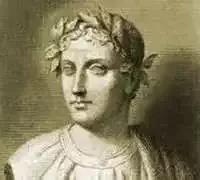
Horácio
BkIII:II Dulce Et Decorum Est
Let the boy toughened by military service
learn how to make bitterest hardship his friend,
and as a horseman, with fearful lance,
go to vex the insolent Parthians,
spending his life in the open, in the heart
of dangerous action. And seeing him, from
the enemy’s walls, let the warring
tyrant’s wife, and her grown-up daughter, sigh:
‘Ah, don’t let the inexperienced lover
provoke the lion that’s dangerous to touch,
whom a desire for blood sends raging
so swiftly through the core of destruction.’
It’s sweet and fitting to die for one’s country.
Yet death chases after the soldier who runs,
and it won’t spare the cowardly back
or the limbs, of peace-loving young men.
Virtue, that’s ignorant of sordid defeat,
shines out with its honour unstained, and never
takes up the axes or puts them down
at the request of a changeable mob.
Virtue, that opens the heavens for those who
did not deserve to die, takes a road denied
to others, and scorns the vulgar crowd
and the bloodied earth, on ascending wings.
And there’s a true reward for loyal silence:
I forbid the man who divulged those secret
rites of Ceres, to exist beneath
the same roof as I, or untie with me
the fragile boat: often careless Jupiter
included the innocent with the guilty,
but lame-footed Punishment rarely
forgets the wicked man, despite his start.
258
Horácio
BkIII:IV Temper Power With Wisdom
O royal Calliope, come from heaven,
and play a lengthy melody on the flute,
or, if you prefer, use your clear voice,
or pluck at the strings of Apollo’s lute.
Do you hear her, or does some lovely fancy
toy with me? I hear, and seem to wander, now,
through the sacred groves, where delightful
waters steal, where delightful breezes stray.
In my childhood, once, on pathless Vultur’s slopes,
beyond the bounds of nurturing Apulia,
exhausted with my play and weariness,
the fabled doves covered me with new leaves,
which was a wonder to everyone who holds
Acherontia’s high nest, and Bantia’s
woodland pastures, and the rich meadows
of low-lying Forentum, since I slept
safe from the bears and from the dark vipers,
the sacred laurel and the gathered myrtle
spread above me, a courageous child,
though it was thanks to the power of the gods.
Yours Muses, yours, I climb the high Sabine Hills,
or I’m carried off to my cool Praeneste,
to the slopes of Tibur, if I please,
or the cloudless loveliness of Baiae.
A friend of your sacred fountains and your
choirs, the rout of the army at Philippi
failed to kill me, and that accursed
tree, and Palinurus’ Sicilian Sea.
Whenever you are with me, as a sailor
I’ll attempt the raging Bosphorus, or be
a traveller in the burning sands
of the Syrian shore: as a stranger
I’ll see the fierce inhospitable Britons,
the Spaniards that love drinking horses’ blood,
I’ll see the quiver-bearing Thracians,
and, unharmed, visit the Scythian stream.
It’s you then who refresh our noble Caesar,
in your Pierian caves, when he’s settled
his weary troops in all the cities,
and he’s ready to complete his labours.
You give calm advice, and you delight in that
giving, kindly ones. We know how the evil
Titans, how their savage supporters
were struck down by the lightning from above,
by him who rules the silent earth, the stormy
sea, the cities, and the kingdoms of darkness,
alone, in imperial justice,
commanding the gods and the mortal crowd.
Great terror was visited on Jupiter
by all those bold warriors bristling with hands,
and by the brothers who tried to set
Pelion on shadowy Olympus.
But what power could Giant Typhoeus have,
or mighty Mimas, or that Porphyrion
with his menacing stance, Rhoetus,
or Enceladus, audacious hurler
of uprooted trees, against the bronze breastplate,
Minerva’s aegis? On one side stood eager
Vulcan, on the other maternal
Juno, and Apollo of Patera
and Delos, who is never without the bow
on his shoulder, who bathes his flowing hair
in Castalia’s pure dew, who holds
the forests, and thickets of Lycia.
Power without wisdom falls by its own weight:
The gods themselves advance temperate power:
and likewise hate force that, with its whole
consciousness, is intent on wickedness.
Let hundred-handed Gyas be the witness
to my statement: Orion too, well-known as
chaste Dian’s attacker, and tamed
by the arrows of the virgin goddess.
Earth, heaped above her monstrous children, laments
and grieves for her offspring, hurled down to murky
Orcus by the lightning bolt: The swift
fires have not yet eaten Aetna, set there,
nor the vultures ceased tearing at the liver
of intemperate Tityus, those guardians placed
over his sin: and three hundred chains
hold the amorous Pirithous fast.
257
Henry Lawson
When Your Pants Begin to Go
When you wear a cloudy collar and a shirt that isn't white,
And you cannot sleep for thinking how you'll reach to-morrow night,
You may be a man of sorrows, and on speaking terms with Care,
And as yet be unacquainted with the Demon of Despair;
For I rather think that nothing heaps the trouble on your mind
Like the knowledge that your trousers badly need a patch behind.
I have noticed when misfortune strikes the hero of the play,
That his clothes are worn and tattered in a most unlikely way;
And the gods applaud and cheer him while he whines and loafs around,
And they never seem to notice that his pants are mostly sound;
But, of course, he cannot help it, for our mirth would mock his care,
If the ceiling of his trousers showed the patches of repair.
You are none the less a hero if you elevate your chin
When you feel the pavement wearing through the leather, sock, and skin;
You are rather more heroic than are ordinary folk
If you scorn to fish for pity under cover of a joke;
You will face the doubtful glances of the people that you know;
But -- of course, you're bound to face them when your pants begin to go.
If, when flush, you took your pleasures -- failed to make a god of Pelf,
Some will say that for your troubles you can only thank yourself --
Some will swear you'll die a beggar, but you only laugh at that,
While your garments hand together and you wear a decent hat;
You may laugh at their predictions while your soles are wearing low,
But -- a man's an awful coward when his pants begin to go.
Though the present and the future may be anything but bright,
It is best to tell the fellows that you're getting on all right,
And a man prefers to say it -- 'tis a manly lie to tell,
For the folks may be persuaded that you're doing very well;
But it's hard to be a hero, and it's hard to wear a grin,
When your most important garment is in places very thin.
Get some sympathy and comfort from the chum who knows you best,
That your sorrows won't run over in the presence of the rest;
There's a chum that you can go to when you feel inclined to whine,
He'll declare your coat is tidy, and he'll say: `Just look at mine!'
Though you may be patched all over he will say it doesn't show,
And he'll swear it can't be noticed when your pants begin to go.
Brother mine, and of misfortune! times are hard, but do not fret,
Keep your courage up and struggle, and we'll laugh at these things yet,
Though there is no corn in Egypt, surely Africa has some --
Keep your smile in working order for the better days to come!
We shall often laugh together at the hard times that we know,
And get measured by the tailor when our pants begin to go.
......
Now the lady of refinement, in the lap of comfort rocked,
Chancing on these rugged verses, will pretend that she is shocked.
Leave her to her smelling-bottle; 'tis the wealthy who decide
That the world should hide its patches 'neath the cruel look of pride;
And I think there's something noble, and I swear there's nothing low,
In the pride of Human Nature when its pants begin to go.
257