
Courage and Strength

John Greenleaf Whittier
William Francis Bartlett
Oh, well may Essex sit forlorn
Beside her sea-blown shore;
Her well beloved, her noblest born,
Is hers in life no more!
No lapse of years can render less
Her memory's sacred claim;
No fountain of forgetfulness
Can wet the lips of Fame.
A grief alike to wound and heal,
A thought to soothe and pain,
The sad, sweet pride that mothers feel
To her must still remain.
Good men and true she has not lacked,
And brave men yet shall be;
The perfect flower, the crowning fact,
Of all her years was he!
As Galahad pure, as Merlin sage,
What worthier knight was found
To grace in Arthur's golden age
The fabled Table Round?
A voice, the battle's trumpet-note,
To welcome and restore;
A hand, that all unwilling smote,
To heal and build once more;
A soul of fire, a tender heart
Too warm for hate, he knew
The generous victor's graceful part
To sheathe the sword he drew.
When Earth, as if on evil dreams,
Looks back upon her wars,
And the white light of Christ outstreams
From the red disk of Mars,
His fame who led the stormy van
Of battle well may cease,
But never that which crowns the man
Whose victory was Peace.
Mourn, Essex, on thy sea-blown shore
Thy beautiful and brave,
Whose failing hand the olive bore,
Whose dying lips forgave!
Let age lament the youthful chief,
And tender eyes be dim;
The tears are more of joy than grief
That fall for one like him!
290

Henry Wadsworth Longfellow
The Saga of King Olaf: XIX. King Olaf's War-Horns
'Strike the sails!' King Olaf said;
'Never shall men of mine take flight;
Never away from battle I fled,
Never away from my foes!
Let God dispose
Of my life in the fight!'
'Sound the horns!' said Olaf the King;
And suddenly through the drifting brume
The blare of the horns began to ring,
Like the terrible trumpet shock
Of Regnarock,
On the Day of Doom!
Louder and louder the war-horns sang
Over the level floor of the flood;
All the sails came down with a clang,
And there in the mist overhead
The sun hung red
As a drop of blood.
Drifting down on the Danish fleet
Three together the ships were lashed,
So that neither should turn and retreat;
In the midst, but in front of the rest
The burnished crest
Of the Serpent flashed.
King Olaf stood on the quarter-deck,
With bow of ash and arrows of oak,
His gilded shield was without a fleck,
His helmet inlaid with gold,
And in many a fold
Hung his crimson cloak.
On the forecastle Ulf the Red
Watched the lashing of the ships;
'If the Serpent lie so far ahead,
We shall have hard work of it here,'
Said he with a sneer
On his bearded lips.
King Olaf laid an arrow on string,
'Have I a coward on board?' said he.
'Shoot it another way, O King!'
Sullenly answered Ulf,
The old sea-wolf;
'You have need of me!'
In front came Svend, the King of the Danes,
Sweeping down with his fifty rowers;
To the right, the Swedish king with his thanes;
And on board of the Iron Beard
Earl Eric steered
To the left with his oars.
'These soft Danes and Swedes,' said the King,
'At home with their wives had better stay,
Than come within reach of my Serpent's sting:
But where Eric the Norseman leads
Heroic deeds
Will be done to-day!'
Then as together the vessels crashed,
Eric severed the cables of hide,
With which King Olaf's ships were lashed,
And left them to drive and drift
With the currents swift
Of the outward tide.
Louder the war-horns growl and snarl,
Sharper the dragons bite and sting!
Eric the son of Hakon Jarl
A death-drink salt as the sea
Pledges to thee,
Olaf the King!
290

Alice Walker
Be Nobody's Darling
Be nobody's darling;
Be an outcast.
Take the contradictions
Of your life
And wrap around
You like a shawl,
To parry stones
To keep you warm.
Watch the people succumb
To madness
With ample cheer;
Let them look askance at you
And you askance reply.
Be an outcast;
Be pleased to walk alone
(Uncool)
Or line the crowded
River beds
With other impetuous
Fools.
Make a merry gathering
On the bank
Where thousands perished
For brave hurt words
They said.
But be nobody's darling;
Be an outcast.
Qualified to live
Among your dead.
Be an outcast.
Take the contradictions
Of your life
And wrap around
You like a shawl,
To parry stones
To keep you warm.
Watch the people succumb
To madness
With ample cheer;
Let them look askance at you
And you askance reply.
Be an outcast;
Be pleased to walk alone
(Uncool)
Or line the crowded
River beds
With other impetuous
Fools.
Make a merry gathering
On the bank
Where thousands perished
For brave hurt words
They said.
But be nobody's darling;
Be an outcast.
Qualified to live
Among your dead.
289

James Whitcomb Riley
A Song of the Road
O I will walk with you, my lad, whichever way you fare,
You'll have me, too, the side o' you, with heart as light as air;
No care for where the road you take's a-leadin' anywhere,--
It can but be a joyful ja'nt whilst you journey there.
The road you take's the path o' love, an' that's the bridth o' two--
An' I will walk with you, my lad -- O I will walk with you.
Ho! I will walk with you, my lad,
Be weather black or blue
Or roadsides frost or dew, my lad --
O I will walk with you.
Aye, glad, my lad, I'll walk with you, whatever winds may blow,
Or summer blossoms stay our steps, or blinding drifts of snow;
The way thay you set face an' foot 's the way that I will go,
An' brave I'll be, abreast o' ye, the Saints and Angels know!
With loyal hand in loyal hand, an' one heart made o' two,
Through summer's gold, or winter's cold, It's I will walk with you.
Sure, I will walk with you, my lad,
A love ordains me to,--
To Heaven's door, an' through, my lad.
O I will walk with you.
289
James Whitcomb Riley
The Drum
O the drum!
There is some
Intonation in thy grum
Monotony of utterance that strikes the spirit dumb,
As we hear
Through the clear
And unclouded atmosphere,
Thy palpitating syllables roll in upon the car!
There's a part
Of the art
Of thy music-throbbing heart
That thrills a something in us that awakens with a start,
And in rhyme
With the chime
And exactitude of time,
Goes marching on to glory to thy melody sublime.
And the guest
Of the breast
That thy rolling robs of rest
Is a patriotic spirit as a Continental dressed;
And he looms
From the glooms
Of a century of tombs,
And the blood he spilled at Lexington in living beauty blooms.
And his eyes
Wear the guise
Of a purpose pure and wise,
As the love of them is lifted to a something in the skies
That is bright
Red and white,
With a blur of starry light,
As it laughs in silken ripples to the breezes day and night.
There are deep
Hushes creep
O'er the pulses as they leap,
As thy tumult, fainter growing, on the silence falls asleep,
While the prayer
Rising there
Wills the sea and earth and air
As a heritage to Freedom's sons and daughters everywhere.
Then, with sound
As profound
As the thunderings resound,
Come thy wild reverberations in a throe that shakes the ground,
And a cry
Flung on high,
Like the flag it flutters by,
Wings rapturously upward till it nestles in the sky.
O the drum!
There is some
Intonation in thy grum
Monotony of utterance that strikes the spirit dumb,
As we hear
Through the clear
And unclouded atmosphere,
Thy palpitating syllables roll in upon the ear!
There is some
Intonation in thy grum
Monotony of utterance that strikes the spirit dumb,
As we hear
Through the clear
And unclouded atmosphere,
Thy palpitating syllables roll in upon the car!
There's a part
Of the art
Of thy music-throbbing heart
That thrills a something in us that awakens with a start,
And in rhyme
With the chime
And exactitude of time,
Goes marching on to glory to thy melody sublime.
And the guest
Of the breast
That thy rolling robs of rest
Is a patriotic spirit as a Continental dressed;
And he looms
From the glooms
Of a century of tombs,
And the blood he spilled at Lexington in living beauty blooms.
And his eyes
Wear the guise
Of a purpose pure and wise,
As the love of them is lifted to a something in the skies
That is bright
Red and white,
With a blur of starry light,
As it laughs in silken ripples to the breezes day and night.
There are deep
Hushes creep
O'er the pulses as they leap,
As thy tumult, fainter growing, on the silence falls asleep,
While the prayer
Rising there
Wills the sea and earth and air
As a heritage to Freedom's sons and daughters everywhere.
Then, with sound
As profound
As the thunderings resound,
Come thy wild reverberations in a throe that shakes the ground,
And a cry
Flung on high,
Like the flag it flutters by,
Wings rapturously upward till it nestles in the sky.
O the drum!
There is some
Intonation in thy grum
Monotony of utterance that strikes the spirit dumb,
As we hear
Through the clear
And unclouded atmosphere,
Thy palpitating syllables roll in upon the ear!
285

Emily Dickinson
I lived on dread; to those who know
I lived on dread; to those who know
The stimulus there is
In danger, other impetus
Is numb and vital-less.
As't were a spur upon the soul,
A fear will urge it where
To go without the spectre's aid
Were challenging despair.
The stimulus there is
In danger, other impetus
Is numb and vital-less.
As't were a spur upon the soul,
A fear will urge it where
To go without the spectre's aid
Were challenging despair.
283
Emily Dickinson
Life—is what we make of it
Life—is what we make of it—
Death—we do not know—
Christ's acquaintance with Him
Justify Him—though—
He—would trust no stranger—
Other—could betray—
Just His own endorsement—
That—sufficeth Me—
All the other Distance
He hath traversed first—
No New Mile remaineth—
Far as Paradise—
His sure foot preceding—
Tender Pioneer—
Base must be the Coward
Dare not venture—now—
282

Billy Collins
For Bartleby The Scrivener
"Every time we get a big gale around here
some people just refuse to batten down."
we estimate that
ice skating into a sixty
mile an hour wind, fully exerting
the legs and swinging arms
you will be pushed backward
an inch every twenty minutes.
in a few days, depending on
the size of the lake,
the backs of your skates
will touch land.
you will then fall on your ass
and be blown into the forest.
if you gather enough speed
by flapping your arms
and keeping your skates pointed
you will catch up to other
flying people who refused to batten down.
you will exchange knowing waves
as you ride the great wind north.
280
John Greenleaf Whittier
Help
Dream not, O Soul, that easy is the task
Thus set before thee. If it proves at length,
As well it may, beyond thy natural strength,
Faint not, despair not. As a child may ask
A father, pray the Everlasting Good
For light and guidance midst the subtle snares
Of sin thick planted in life's thoroughfares,
For spiritual strength and moral hardihood;
Still listening, through the noise of time and sense,
To the still whisper of the Inward Word;
Bitter in blame, sweet in approval heard,
Itself its own confirming evidence
To health of soul a voice to cheer and please,
To guilt the wrath of the Eumenides.
282
Emily Dickinson
The Court is far away
The Court is far away-
No Umpire-have I-
My Sovereign is offended-
To gain his grace-I'd die!
I'll seek his royal feet
I'll
say-Remember-King-
Thou shalt-thyself-one day-a Child-
Implore a larger-thing-
That Empire-is of Czars-
As small-they say-as I-
Grant me-that day-the royalty-
To intercede-for Thee-
No Umpire-have I-
My Sovereign is offended-
To gain his grace-I'd die!
I'll seek his royal feet
I'll
say-Remember-King-
Thou shalt-thyself-one day-a Child-
Implore a larger-thing-
That Empire-is of Czars-
As small-they say-as I-
Grant me-that day-the royalty-
To intercede-for Thee-
280
Emily Dickinson
Out of sight? What of that?
Out of sight? What of that?
See the Bird-reach it!
Curve by Curve-Sweep by Sweep-
Round the Steep Air-
Danger! What is that to Her?
Better 'tis to fail-there-
Than debate-here-
Blue is Blue-the World through
Amber-
Amber-Dew-DewSeek-
Friend-and see-
Heaven is shy of Earth-that's all-
Bashful Heaven-thy Lovers small
Hide-
too-from thee-
280

Henry Lawson
The Seabolt's Volunteers
They towed the Seabolt down the stream,
And through the harbour’s mouth;
She spread her wings and sailed away
To seek the sunny South.
But, ah! she met with storm on storm
Ere half her course had run;
And all her masts were torn away,
And all her boats save one.
The good old ship had settled far
Beneath her cargo line,
Her riven sides were drinking deep
The draughts of ocean brine.
There gathered round the only boat
The women pale with fear,
And trembling little ones, who clung
To those who held them dear.
Then spoke the captain, brave and true,
His voice rose o’er the roar;
“The boat will save us all but five,
She cannot float with more!”
And backward from the side he stepped—
(He had been born at sea)
“Now who will seek in ocean’s depths
A sailor’s grave with me?”
Then up there stepped a merchant stout,
His face was brown and tan:
“I’ll volunteer to stay on board,
For I’m an Englishman!”
Then spoke a gallant gentleman,
A lover of romance:
“Remain I for the ladies’ sake,
For I’m a son of France!”
And next there spoke a Highlander:
“Go search the wide world round,
You’ll find no spot where on the earth
A Scotsman is not found!”
And then there spoke a lad to whom
Killarney’s lakes were dear:
“It won’t be said that Ireland found
No place of honour here!”
The boat pushed from the vessel’s side
Amid the ringing cheers;
And now beneath Old Ocean sleep
The Seabolt’s volunteers.
279
James Whitcomb Riley
The Legend Glorified
'I deem that God is not disquieted'--
This in a mighty poet's rhymes I read;
And blazoned so forever doth abide
Within my soul the legend glorified.
Though awful tempests thunder overhead,
I deem that God is not disquieted,--
The faith that trembles somewhat yet is sure
Through storm and darkness of a way secure.
Bleak winters, when the naked spirit hears
The break of hearts, through stinging sleet of tears,
I deem that God is not disquieted;
Against all stresses am I clothed and fed.
Nay, even with fixed eyes and broken breath,
My feet dip down into the tides of death,
Nor any friend be left, nor prayer be said,
I deem that God is not disquieted.
279
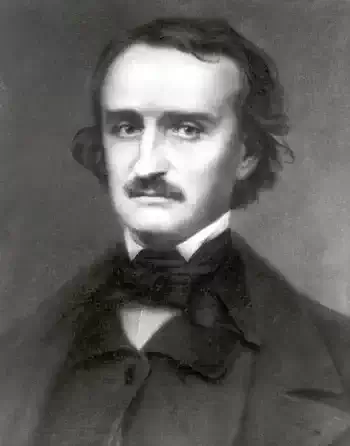
Edgar Allan Poe
Hymn to Aristogeiton and Harmodius
Wreathed in myrtle, my sword I'll conceal
Like those champions devoted and brave,
When they plunged in the tyrant their steel,
And to Athens deliverance gave.
Beloved heroes! your deathless souls roam
In the joy breathing isles of the blest;
Where the mighty of old have their home -
Where Achilles and Diomed rest.
In fresh myrtle my blade I'll entwine,
Like Harmodious, the gallant and good,
When he made at the tutelar shrine
A libation of Tyranny's blood.
Ye deliverers of Athens from shame!
Ye avengers of Liberty's wrongs!
Endless ages shall cherish your fame
Embalmed in their echoing songs!
277

Robert W. Service
Land Mine
A grey gull hovered overhead,
Then wisely flew away.
'In half a jiffy you'll be dead,'
I thought I heard it say;
As there upon the railway line,
Checking an urge to cough,
I laboured to de-fuse the mine
That had not yet gone off.
I tapped around the time-clock rim,
Then something worried me.
I heard the singing of a hymn:
Nearer my God to Thee.
That damned Salvation Army band!
I phoned back to the boys:
'Please tell them,--they will understand,-Cut
out the bloody noise!'
Silence . . . I went to work anew,
And then I heard a tick
That told me the blast was due,-I
never ran so quick.
I heard the fury-roar behind;
The earth erupted hell,
As hoisted high and stunned and blind
Into a ditch I fell.
Then when at last I crawled from cover,
My hands were bloody raw;
And I was blue and bruised all over,
And this is what I saw:
All pale, but panting with elation,
And very much unstuck,
There was the Army of Salvation
Emerging from the muck.
And then I heard the Captain saying:
''Twas Heaven heard our pleas;
For there anight we all were praying
Down on our bended knees.
'Twas little hope your comrades gave you,
Though we had faith divine . . .
The blessed Lord stooped down to save you,
But Gosh! He cut it fine.'
277
Henry Lawson
Success
Did you see that man riding past,
With shoulders bowed with care?
There’s failure in his eyes to last,
And in his heart despair.
He seldom looks to left or right,
He nods, but speaks to none,
And he’s a man who fought the fight—
God knows how hard!—and won.
No great “review” could rouse him now,
No printed lies could sting;
No kindness smooth his knitted brow,
Nor wrong one new line bring.
Through dull, dumb days and brooding nights,
From years of storm and stress,
He’s riding down from lonely heights—
The Mountains of Success.
He sees across the darkening land
The graveyards on the coasts;
He sees the broken columns stand
Like cold and bitter ghosts;
His world is dead while yet he lives,
Though known in continents;
His camp is where his country gives
Its pauper monuments.
277
John Greenleaf Whittier
New Hampshire
GOD bless New Hampshire! from her granite peaks
Once more the voice of Stark and Langdon speaks.
The long-bound vassal of the exulting South
For very shame her self-forged chain has broken;
Turn the black seal of slavery from her mouth,
And in the clear tones of her old time spoken!
Oh, all undreamed-of, all unhoped for changes!
The tyrants's ally proves his sternest foe;
To all his biddings, from her mountain ranges,
New Hampshire thunders an indignant No!
Who is it now despairs? Oh, faint of heart,
Look upward to those Northern mountain cold,
Flouted by Freedom's victor-flag unrolled
And gather strength to bear a manlier part!
All is not lost. The angel of God's blessing
Encamps with Freedom on the field of fight;
Still to her banner, day by day, are pressing,
Unlooked-for allies, striking for the right!
Courage, then, Northern hearts! Be firm, be true:
What one brave State hath done, can ye not also do?
278
Robert W. Service
To Sunnydale
There lies the trail to Sunnydale,
Amid the lure of laughter.
Oh, how can we unhappy be
Beneath its leafy rafter!
Each perfect hour is like a flower,
Each day is like a posy.
How can you say the skies are grey?
You're wrong, my friend, they're rosy.
With right good will let's climb the hill,
And leave behind all sorrow.
Oh, we'll be gay! a bright to-day
Will make a bright to-morrow.
Oh, we'll be strong! the way is long
That never has a turning;
The hill is high, but there's the sky,
And how the West is burning!
And if through chance of circumstance
We have to go bare-foot, sir,
We'll not repine -- a friend of mine
Has got no feet to boot, sir.
This Happiness a habit is,
And Life is what we make it:
See! there's the trail to Sunnydale!
Up, friend! and let us take it.
275
Emily Dickinson
Who never lost, are unprepared
Who never lost, are unprepared
A Coronet to find!
Who never thirsted
Flagons, and Cooling Tamarind!
Who never climbed the weary league-
Can such a foot explore
The purple territories
On Pizarro's shore?
How many Legions overcome-
The Emperor will say?
How many Colors taken
On Revolution Day?
How many Bullets bearest?
Hast Thou the Royal scar?
Angels! Write "Promoted"
On this Soldier's brow!
276
Henry Lawson
Cromwell
They took dead Cromwell from his grave,
And stuck his head on high;
The Merry Monarch and his men,
They laughed as they passed by
The common people cheered and jeered,
To England’s deep disgrace—
The crowds who’d ne’er have dared to look
Live Cromwell in the face.
He came in England’s direst need
With law and fire and sword,
He thrashed her enemies at home
And crushed her foes abroad;
He kept his word by sea and land,
His parliament he schooled,
He made the nations understand
A Man in England ruled!
Van Tromp, with twice the English ships,
And flushed by victory—
A great broom to his masthead bound—
Set sail to sweep the sea.
But England’s ruler was a man
Who needed lots of room—
So Blake soon lowered the Dutchman’s tone,
And smashed the Dutchman’s broom.
He sent a bill to Tuscany
For sixty thousand pounds,
For wrong done to his subjects there,
And merchants in her bounds.
He sent by Debt Collector Blake,
And—you need but be told
That, by the Duke of Tuscany
That bill was paid in gold.
To pirate ports in Africa
He sent a message grim
To have each captured Englishman
Delivered up to him;
And every ship and cargo’s worth,
And every boat and gun—
And this—all this, as Dickens says—
“Was gloriously done.”
They’d tortured English prisoners
Who’d sailed the Spanish Main;
So Cromwell sent a little bill
By Admiral Blake to Spain.
To keep his hand in, by the way.
He whipped the Portuguese;
And he made it safe for English ships
To sail the Spanish seas.
The Protestants in Southern lands
Had long been sore oppressed;
They sent their earnest prayers to Noll
To have their wrongs redressed.
He sent a message to the Powers,
In which he told them flat,
All men must praise God as they chose,
Or he would see to that.
And, when he’d hanged the fools at home
And settled foreign rows,
He found the time to potter round
Amongst his pigs and cows.
Of private rows he never spoke,
That grand old Ironsides.
They said a father’s strong heart broke
When Cromwell’s daughter died.
(They dragged his body from its grave,
His head stuck on a pole,
They threw his wife’s and daughter’s bones
Into a rubbish hole
To rot with those of two who’d lived
And fought for England’s sake,
And each one in his own brave way—
Great Pym, and Admiral Blake.)
From Charles to Charles, throughout the world
Old England’s name was high,
And that’s a thing no Royalist
Could ever yet deny.
Long shameful years have passed since then,
In spite of England’s boast—
But Englishmen were Englishmen,
While Cromwell carved the roast.
And, in my country’s hour of need—
For it shall surely come,
While run by fools who’ll never heed
The beating of the drum.
While baffled by the fools at home,
And threatened from the sea—
Lord! send a man like Oliver—
And let me live to see.
275
Henry Lawson
The Scamps
Of home, name and wealth and ambition bereft—
We are children of fortune and luck:
They deny there’s a shred of our characters left,
But they cannot deny us the pluck!
We are vagabond scamps, we are kings over all—
There is little on earth we desire—
We are devils who stand with our backs to the wall,
And who call on the cowards to fire!
There are some of us here who were noble and good,
And who learnt in ingratitude’s schools—
They were born of the selfish and misunderstood,
They were soft, they were ‘smoodgers’ or fools.
With their hands in their pockets to help every friend
In a fix—and they never asked how:
Beware of them you who have money to lend,
For it’s little you’d get from them now.
There are some of us here who were lovers of old—
In the days that were nearer to God;
The girl was more precious than honour or gold,
And they worshipped the ground where she trod;
But she trampled their hearts and they suffered and knew
How the soul of a woman to read—
They will never again to a woman be true;
Let the girls who may meet them take heed!
There are some of us here who were devils from birth,
Who would steal the eye out of a friend—
But we judge not or blame not the worst on the earth,
For it comes to the same in the end.
There are some of us here who were ruined by wrong—
To whom justice and love came too late—
And they threw them aside and go singing a song,
And they know that their mistress is fate.
We were some of us failures at suicide, too—
We are most of us back from the dead—
But we’ve all found the courage to battle it through,
Till the strength of our bodies is sped:
With a flag that is dyed with our hearts’-blood unfurled,
We are marching and marching afar—
We are comrades of all who are fighting the world,
For the world made us all what we are.
274
Emily Dickinson
Reverse cannot befall
Reverse cannot befall
That fine Prosperity
Whose Sources are interior-
As soon-Adversity
A Diamond-overtake
In far-Bolivian Ground-
Misfortune hath no implement
Could mar it-if it found-
That fine Prosperity
Whose Sources are interior-
As soon-Adversity
A Diamond-overtake
In far-Bolivian Ground-
Misfortune hath no implement
Could mar it-if it found-
274
Robert W. Service
The Bandit
Upon his way to rob a Bank
He paused to watch a fire;
Though crowds were pressing rank on rank
He pushed a passage nigher;
Then sudden heard, piercing and wild,
The screaming of a child.
A Public Enemy was he,
A hater of the law;
He looked around for bravery
But only fear he saw;
Then to the craven crowds amaze
He plunged into the blaze.
How anguished was the waiting spell
Of horror and of pain!
Then--then from out that fiery hell
He staggered forth again:
The babe was safe, in blankets wrapt,
The man flame lapt.
His record was an evil one,
Of violence and sin.
No good on earth he'd ever done,
Yet--may he Heaven win!
A gangster he . . . Is it not odd?
--With guts of God.
273
Henry Lawson
A Mixed Battle Song
Lo! the Boar’s tail is salted, and the Kangaroo’s exalted,
And his right eye is extinguished by a man-o’-warsman’s cap;
He is flying round the fences where the Southern Sea commences,
And he’s very much excited for a quiet sort of chap.
For his ships have had a scrap and they’ve marked it on the map
Where the H.M.A.S. Sydney dropped across a German trap.
So the Kangaroo’s a-chasing of his Blessed Self, and racing
From Cape York right round to Leeuwin, from the coast to Nevertire;
And of him need be no more said, save that to the tail aforesaid
Is the Blue Australian Ensign firmly fixed with copper wire.
(When he’s filled the map with white men there’ll be little to desire.)
I was sulky, I was moody (I’m inclined to being broody)
When the news appeared in Sydney, bringing joy and bringing tears,
(There’s an undertone of sorrow that you’ll understand to-morrow)
And I felt a something in me that had not been there for years.
Though I lean in the direction of most absolute Protection
(And of wheat on the selection)
And, considering Congestion and the hopeless unemployed,
I’d a notion (but I hid it) that, the way the Emden did it,
’Twould be better for Australia if her “commerce” was destroyed.
You may say that war’s a curse, but the peace curse may be worse,
When it’s lasted till it’s rotten—rotten from the inmost core,
To the mouldy skin which we are, in the land we call the freer—
And I almost feel inclined to call for “Three Cheers for the War!”
For I think, when all is over, from Magellan’s Straits to Dover,
Things will be a great deal better than they ever were before.
But, since “Peace” and “Right” are squalling, I’ll content myself with calling
For three rousers—like the ringing cheers we used to give of yore—
For the Emden!
For the Sydney!
And their gallant crews and captains—both of whom we’ve met before!
And, for Kaiser William’s nevvy, we shall venture three cheers more!
Cheers that go to end a war.
272