
Courage and Strength

Carl Sandburg
Prayers of Steel
Lay me on an anvil, O God.
Beat me and hammer me into a crowbar.
Let me pry loose old walls.
Let me lift and loosen old foundations.
Lay me on an anvil, O God.
Beat me and hammer me into a steel spike.
Drive me into the girders that hold a skyscraper together.
Take red-hot rivets and fasten me into the central girders.
Let me be the great nail holding a skyscraper through blue nights into white stars.
303

William Butler Yeats
Her Triumph
I did the dragon's will until you came
Because I had fancied love a casual
Improvisation, or a settled game
That followed if I let the kerchief fall:
Those deeds were best that gave the minute wings
And heavenly music if they gave it wit;
And then you stood among the dragon-rings.
I mocked, being crazy, but you mastered it
And broke the chain and set my ankles free,
Saint George or else a pagan Perseus;
And now we stare astonished at the sea,
And a miraculous strange bird shrieks at us.
305
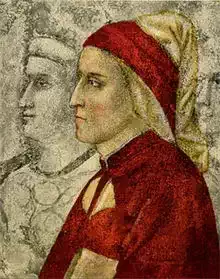
Dante Alighieri
Ulysses' Last Voyage
I launched her with my small remaining band
and, putting out to sea, we set the main
on that lone ship and said farewell to land.
Far to starboard rose the coast of Spain,
astern was Sardi, Islas at our bow,
and soon we saw Morocco port abeam.
Though I and comrades now were old and slow,
we hauled till nightfall for the narrow sound
where Hercules had shown what not to do,
by setting marks for men to stay behind.
At dawn the starboard lookout made Seville,
and at the straits stood Ceuta t'other hand.
'Brothers,' I shouted, 'who have had the will
to come through danger, and have reached the west!
our time awake is brief from now until
the senses die, and so I say we test
the sun's own motion and do not forego
the worlds beyond, unknown and peopleless.
Think of the roots from which you sprang, and show
that you are human: not unconscious brutes
but made to follow virtue and to know.'
303
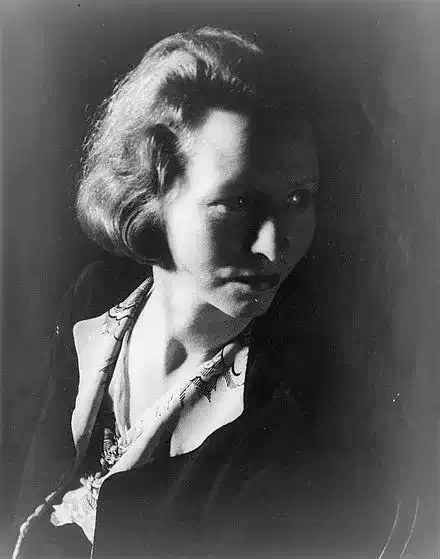
Edna St. Vincent Millay
Not Even My Pride Shall Suffer Much
Not even my pride shall suffer much;
Not even my pride at all, maybe,
If this ill-timed, intemperate clutch
Be loosed by you and not by me,
Will suffer; I have been so true
A vestal to that only pride
Wet wood cannot extinguish, nor
Sand, nor its embers scattered, for,
See all these years, it has not died.
And if indeed, as I dare think,
You cannot push this patient flame,
By any breath your lungs could store,
Even for a moment to the floor
To crawl there, even for a moment crawl,
What can you mix for me to drink
That shall deflect me? What you do
Is either malice, crude defense
Of ego, or indifference:
I know these things as well as you;
You do not dazzle me at all—
Some love, and some simplicity,
Might well have been the death of me—
303

John Greenleaf Whittier
The Cross
'The cross, if rightly borne, shall be
No burden, but support to thee;'
So, moved of old time for our sake,
The holy monk of Kempen spake.
Thou brave and true one! upon whom
Was laid the cross of martyrdom,
How didst thou, in thy generous youth,
Bear witness to this blessed truth!
Thy cross of suffering and of shame
A staff within thy hands became,
In paths where faith alone could see
The Master's steps supporting thee.
Thine was the seed-time; God alone
Beholds the end of what is sown;
Beyond our vision, weak and dim,
The harvest-time is hid with Him.
Yet, unforgotten where it lies,
That seed of generous sacrifice,
Though seeming on the desert cast,
Shall rise with bloom and fruit at last.
304

John Keats
Sonnet XIII. Addressed To Haydon
High-mindedness, a jealousy for good,
A loving-kindness for the great man's fame,
Dwells here and there with people of no name,
In noisome alley, and in pathless wood:
And where we think the truth least understood,
Oft may be found a 'singleness of aim,'
That ought to frighten into hooded shame
A money-mongering, pitiable brood.
How glorious this affection for the cause
Of steadfast genius, toiling gallantly!
What when a stout unbending champion awes
Envy and malice to their native sty?
Unnumbered souls breathe out a still applause,
Proud to behold him in his country's eye.
304

Emily Dickinson
This Merit hath the worst
This Merit hath the worst-
It cannot be again-
When Fate hath taunted last
And thrown Her furthest Stone-
The Maimed may pause, and breathe,
And glance securely round-
The Deer attracts no further
Than it resists-the Hound-
It cannot be again-
When Fate hath taunted last
And thrown Her furthest Stone-
The Maimed may pause, and breathe,
And glance securely round-
The Deer attracts no further
Than it resists-the Hound-
302
John Greenleaf Whittier
Daniel Neall
I.
FRIENDof the Slave, and yet the friend of all;
Lover of peace, yet ever foremost when
The need of battling Freedom called for men
To plant the banner on the outer wall;
Gentle and kindly, ever at distress
Melted to more than woman's tenderness,
Yet firm and steadfast, at his duty's post
Fronting the violence of a maddened host,
Like some-gray rock from which the waves are tossed!
Knowing his deeds of love, men questioned not
The faith of one whose walk and word were right;
Who tranquilly in Life's great task-field wrought,
And, side by side with evil, scarcely caught
A stain upon his pilgrim garb of white:
Prompt to redress another's wrong, his own
Leaving to Time and Truth and Penitence alone.
II.
Such was our friend. Formed on the good old plan,
A true and brave and downright honest man!
He blew no trumpet in the market-place,
Nor in the church with hypocritic face
Supplied with cant the lack of Christian grace;
Loathing pretence, he did with cheerful will
What others talked of while their hands were still;
And, while 'Lord, Lord!' the pious tyrants cried,
Who, in the poor, their Master crucified,
His daily prayer, far better understood.
In acts than words, was simply doing good.
So calm, so constant was his rectitude,
That by his loss alone we know its worth,
And feel how true a man has walked with us on earth.
301
John Greenleaf Whittier
The Fishermen
HURRAH! the seaward breezes
Sweep down the bay amain;
Heave up, my lads, the anchor!
Run up the sail again!
Leave to the lubber landsmen
The rail-car and the steed;
The stars of heaven shall guide us,
The breath of heaven shall speed.
From the hill-top looks the steeple,
And the lighthouse from the sand;
And the scattered pines are waving
Their farewell from the land.
One glance, my lads, behind us,
For the homes we leave one sigh,
Ere we take the change and chances
Of the ocean and the sky.
Now, brothers, for the icebergs
Of frozen Labrador,
Floating spectral in the moonshine,
Along the low, black shore!
Where like snow the gannet's feathers
On Brador's rocks are shed,
And the noisy murr are flying,
Like black scuds, overhead;
Where in mist the rock is hiding,
And the sharp reef lurks below,
And the white squall smites in summer,
And the autumn tempests blow;
Where, through gray and rolling vapor,
From evening unto morn,
A thousand, boats are hailing,
Horn answering unto horn.
Hurrah! for the Red Island,
With the white cross on its crown!
Hurrah! for Meccatina,
And its mountains bare and brown!
Where the Caribou's tall antlers
O'er the dwarf-wood freely toss,
And the footstep of the Mickmack
Has no sound upon the moss.
There we'll drop our lines, and gather
Old Ocean's treasures in,
Where'er the mottled mackerel
Turns up a steel-dark fin.
The sea's our field of harvest,
Its scaly tribes our grain;
We'll reap the teeming waters
As at home they reap the plain!
Our wet hands spread the carpet,
And light the hearth of home;
From our fish, as in the old time,
The silver coin shall come.
As the demon fled the chamber
Where the fish of Tobit lay,
So ours from all our dwellings
Shall frighten Want away.
Though the mist upon our jackets
In the bitter air congeals,
And our lines wind stiff and slowly
From off the frozen reels;
Though the fog be dark around us,
And the storm blow high and loud,
We will whistle down the wild wind,
And laugh beneath the cloud!
In the darkness as in daylight,
On the water as on land,
God's eye is looking on us,
And beneath us is His hand!
Death will find us soon or later,
On the deck or in the cot;
And we cannot meet him better
Than in working out our lot.
Hurrah! hurrah! the west-wind
Comes freshening down the bay,
The rising sails are filling;
Give way, my lads, give way!
Leave the coward landsman clinging
To the dull earth, like a weed;
The stars of heaven shall guide us,
The breath of heaven shall speed!
301

Walter de la Mare
How Sleep the Brave
Nay, nay, sweet England, do not grieve!
Not one of these poor men who died
But did within his soul believe
That death for thee was glorified.
Ever they watched it hovering near
That mystery 'yond thought to plumb,
Perchance sometimes in loathèd fear
They heard cold Danger whisper, Come! --
Heard and obeyed. O, if thou weep
Such courage and honour, beauty, care,
Be it for joy that those who sleep
Only thy joy could share.
302
Emily Dickinson
A Wounded Deer-leaps highest
A Wounded Deer-leaps highest
I've
heard the Hunter tell'
Tis but the Ecstasy of death-
And then the Brake is still!
The Smitten Rock that gushes!
The trampled Steel that springs!
A Cheek is always redder
Just where the Hectic stings!
Mirth is the Mail of Anguish
In which it Cautious Arm,
Lest anybody spy the blood
And "you're hurt" exclaim!
300
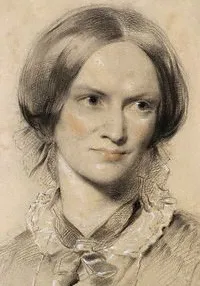
Charlotte Brontë
The Wood
BUT two miles more, and then we rest !
Well, there is still an hour of day,
And long the brightness of the West
Will light us on our devious way;
Sit then, awhile, here in this wood
So
total is the solitude,
We safely may delay.
These massive roots afford a seat,
Which seems for weary travellers made.
There rest. The air is soft and sweet
In this sequestered forest glade,
And there are scents of flowers around,
The evening dew draws from the ground;
How soothingly they spread !
Yes; I was tired, but not at heart;
Nothat
beats full of sweet content,
For now I have my natural part
Of action with adventure blent;
Cast forth on the wide vorld with thee,
And all my once waste energy
To weighty purpose bent.
Yetsay'st
thou, spies around us roam,
Our aims are termed conspiracy ?
Haply, no more our English home
An anchorage for us may be ?
That there is risk our mutual blood
May redden in some lonely wood
The knife of treachery ?
Say'st thouthat
where we lodge each night,
In each lone farm, or lonelier hall
Of Norman Peerere
morning light
Suspicion must as duly fall,
As day returnssuch
vigilance
Presides and watches over France,
Such rigour governs all ?
I fear not, William; dost thou fear ?
So that the knife does not divide,
It may be ever hovering near:
I could not tremble at thy side,
And strenuous lovelike
mine for thee
Is
buckler strong, 'gainst treachery,
And turns its stab aside.
I am resolved that thou shalt learn
To trust my strength as I trust thine;
I am resolved our souls shall burn,
With equal, steady, mingling shine;
Part of the field is conquered now,
Our lives in the same channel flow,
Along the selfsame
line;
And while no groaning storm is heard,
Thou seem'st content it should be so,
But soon as comes a warning word
Of dangerstraight
thine anxious brow
Bends over me a mournful shade,
As doubting if my powers are made
To ford the floods of woe.
Know, then it is my spirit swells,
And drinks, with eager joy, the air
Of freedomwhere
at last it dwells,
Chartered, a common task to share
With thee, and then it stirs alert,
And pants to learn what menaced hurt
Demands for thee its care.
Remember, I have crossed the deep,
And stood with thee on deck, to gaze
On waves that rose in threatening heap,
While stagnant lay a heavy haze,
Dimly confusing sea with sky,
And baffling, even, the pilot's eye,
Intent to thread the maze
Of rocks, on Bretagne's dangerous coast,
And find a way to steer our band
To the one point obscure, which lost,
Flung us, as victims, on the strand;
All,
elsewhere, gleamed the Gallic sword,
And not a wherry could be moored
Along the guarded land.
I feared not then
I
fear not now;
The interest of each stirring scene
Wakes a new sense, a welcome glow,
In every nerve and bounding vein;
Alike on turbid Channel sea,
Or in still wood of Normandy,
I feel as born again.
The rain descended that wild morn
When, anchoring in the cove at last,
Our band, all weary and forlorn,
Ashore, like waveworn
sailors, cast
Sought
for a sheltering roof in vain,
And scarce could scanty food obtain
To break their morning fast.
Thou didst thy crust with me divide,
Thou didst thy cloak around me fold;
And, sitting silent by thy side,
I ate the bread in peace untold:
Given kindly from thy hand, 'twas sweet
As costly fare or princely treat
On royal plate of gold.
Sharp blew the sleet upon my face,
And, rising wild, the gusty wind
Drove on those thundering waves apace,
Our crew so late had left behind;
But, spite of frozen shower and storm,
So close to thee, my heart beat warm,
And tranquil slept my mind.
So nownor
footsore
nor opprest
With walking all this August day,
I taste a heaven in this brief rest,
This gipsyhalt
beside the way.
England's wild flowers are fair to view,
Like balm is England's summer dew,
Like gold her sunset ray.
But the white violets, growing here,
Are sweeter than I yet have seen,
And ne'er did dew so pure and clear
Distil on forest mosses green,
As now, called forth by summer heat,
Perfumes our cool and fresh retreat
These fragrant limes between.
That sunset ! Look beneath the boughs,
Over the copsebeyond
the hills;
How soft, yet deep and warm it glows,
And heaven with rich suffusion fills;
With hues where still the opal's tint,
Its gleam of poisoned fire is blent,
Where flame through azure thrills !
Depart we nowfor
fast will fade
That solemn splendour of decline,
And deep must be the aftershade
As stars alone tonight
will shine;
No moon is destinedpaleto
gaze
On such a day's vast Phoenix blaze,
A day in fires decayed !
Therehandinhand
we tread again
The mazes of this varying wood,
And soon, amid a cultured plain,
Girt in with fertile solitude,
We shall our restingplace
descry,
Marked by one rooftree,
towering high
Above a farmstead
rude.
Refreshed, erelong, with rustic fare,
We'll seek a couch of dreamless ease;
Courage will guard thy heart from fear,
And Love give mine divinest peace:
Tomorrow
brings more dangerous toil,
And through its conflict and turmoil
We'll pass, as God shall please.
298

Horácio
BkII:X The Golden Mean
You’ll live more virtuously, my Murena,
by not setting out to sea, while you’re in dread
of the storm, or hugging fatal shores
too closely, either.
Whoever takes delight in the golden mean,
safely avoids the squalor of a shabby house,
and, soberly, avoids the regal palace
that incites envy.
The tall pine’s more often shaken by the wind,
and it’s a high tower that falls with a louder
crash, while the mountainous summits are places
where lightning strikes.
The heart that is well prepared for any fate
hopes in adversity, fears prosperity.
Though Jupiter brings us all the unlovely
winters: he also
takes them away again. If there’s trouble now
it won’t always be so: sometimes Apollo
rouses the sleeping Muse with his lyre, when he’s
not flexing his bow.
Appear brave and resolute in difficult
times: and yet be wise and take in all your sails
when they’re swollen by too powerful
a following wind.
298

Robert W. Service
Decorations
My only medals are the scars
I've won in weary, peacetime wars,
A-fighting for my little brood,
To win them shelter, shoon and food;
But most of all to give them faith
In God's good mercy unto death.
My sons have medals gleaming bright,
Proud trophies won in foreign fight;
But though their crosses bravely shine,
My boys can show no wounds like mine -
Grim gashes dolorously healed,
And inner ailings unrevealed.
Life-lasting has my battle been,
My enemy a fierce machine;
And I am marked by many a blow
In conflict with a tireless foe,
Till warped and bent beneath the beat
Of life's unruth I own defeat.
Yet strip me bare and you will see
A worthy warrior I be;
Although no uniform I've worn,
By wounds of labour I am torn;
Leave the their ribbands and their stars . . .
Behold! I proudly prize my scars.
296
Emily Dickinson
Don't put up my Thread and Needle
Don't put up my Thread and NeedleI'll
begin to Sew
When the Birds begin to whistle-
Better Stitches-so-
These were bent-my sight got crooked-
When my mind-is plain
I'll do seams-a Queen's endeavor
Would not blush to own
Hems-too fine for Lady's tracing
To the sightless KnotTucks-
of dainty interspersion-
Like a dotted Dot-
Leave my Needle in the furrow-
Where I put it down-
I can make the zigzag stitches
Straight-when I am strong-
Till then-dreaming I am sewing
Fetch the seam I missed
Closer-
so I-at my sleeping-
Still surmise I stitch-
298
John Greenleaf Whittier
The Golden Wedding Of Longwood
With fifty years between you and your well-kept wedding vow,
The Golden Age, old friends of mine, is not a fable now.
And, sweet as has life's vintage been through all your pleasant past,
Still, as at Cana's marriage-feast, the best wine is the last!
Again before me, with your names, fair Chester's landscape comes,
Its meadows, woods, and ample barns, and quaint, stone-builded homes.
The smooth-shorn vales, the wheaten slopes, the boscage green and soft,
Of which their poet sings so well from towered Cedarcroft.
And lo! from all the country-side come neighbors, kith and kin;
From city, hamlet, farm-house old, the wedding guests come in.
And they who, without scrip or purse, mob-hunted, travel-worn,
In Freedom's age of martyrs came, as victors now return.
Older and slower, yet the same, files in the long array,
And hearts are light and eyes are glad, though heads are badger-gray.
The fire-tried men of Thirty-eight who saw with me the fall,
Midst roaring flames and shouting mob, of Pennsylvania Hall;
And they of Lancaster who turned the cheeks of tyrants pale,
Singing of freedom through the grates of Moyamensing jail!
And haply with them, all unseen, old comrades, gone before,
Pass, silently as shadows pass, within your open door,-
The eagle face of Lindley Coates, brave Garrett's daring zeal,
Christian grace of Pennock, the steadfast heart of Neal.
Ah me! beyond all power to name, the worthies tried and true,
Grave men, fair women, youth and maid, pass by in hushed review.
Of varying faiths, a common cause fused all their hearts in one.
God give them now, whate'er their names, the peace of duty done!
How gladly would I tread again the old-remembered places,
Sit down beside your hearth once more and look in the dear old faces!
And thank you for the lessons your fifty years are teaching,
For honest lives that louder speak than half our noisy preaching;
For your steady faith and courage in that dark and evil time,
When the Golden Rule was treason, and to feed the hungry, crime;
For the poor slave's house of refuge when the hounds were on his track,
And saint and sinner, church and state, joined hands to send him back.
Blessings upon you!--What you did for each sad, suffering one,
So homeless, faint, and naked, unto our Lord was done!
Fair fall on Kennett's pleasant vales and Longwood's bowery ways
The mellow sunset of your lives, friends of my early days.
May many more of quiet years be added to your sum,
And, late at last, in tenderest love, the beckoning angel come.
Dear hearts are here, dear hearts are there, alike below, above;
Our friends are now in either world, and love is sure of love.
296

Henry Wadsworth Longfellow
Frithiof's Temptation. (From The Swedish)
Spring is coming, birds are twittering, forests leaf, and smiles the sun,
And the loosened torrents downward, singing, to the ocean run;
Glowing like the cheek of Freya, peeping rosebuds 'gin to ope,
And in human hearts awaken love of life, and joy, and hope.
Now will hunt the ancient monarch, and the queen shall join the sport:
Swarming in its gorgeous splendor, is assembled all the Court;
Bows ring loud, and quivers rattle, stallions paw the ground alway,
And, with hoods upon their eyelids, scream the falcons for their prey.
See, the Queen of the Chase advances! Frithiof, gaze not at the sight!
Like a star upon a spring-cloud sits she on her palfrey white.
Half of Freya, half of Rota, yet more beauteous than these two,
And from her light hat of purple wave aloft the feathers blue.
Gaze not at her eyes' blue heaven, gaze not at her golden hair!
Oh beware! her waist is slender, full her bosom is, beware!
Look not at the rose and lily on her cheek that shifting play,
List not to the voice beloved, whispering like the wind of May.
Now the huntsman's band is ready. Hurrah! over hill and dale!
Horns ring, and the hawks right upward to the hall of Odin sail.
All the dwellers in the forest seek in fear their cavern homes,
But, with spear outstretched before her, after them the Valkyr comes.
. . . . . . . . . .
Then threw Frithiof down his mantle, and upon the greensward spread,
And the ancient king so trustful laid on Frithiof's knee his head,
Slept as calmly as the hero sleepeth, after war's alarm,
On his shield, or as an infant sleeps upon its mother's arm.
As he slumbers, hark! there sings a coal-black bird upon the bough;
'Hasten, Frithiof, slay the old man, end your quarrel at a blow:
Take his queen, for she is thine, and once the bridal kiss she gave,
Now no human eye beholds thee, deep and silent is the grave,'
Frithiof listens; hark! there sings a snow-white bird upon the bough:
'Though no human eye beholds thee, Odin's eye beholds thee now.
Coward! wilt thou murder sleep, and a defenceless old man slay!
Whatsoe'er thou winn'st, thou canst not win a hero's fame this way.'
Thus the two wood-birds did warble: Frithiof took his war-sword good,
With a shudder hurled it from him, far into the gloomy wood.
Coal-black bird flies down to Nastrand, but on light, unfolded wings,
Like the tone of harps, the other, sounding towards the sun, upsprings.
Straight the ancient king awakens. 'Sweet has been my sleep,' he said;
'Pleasantly sleeps one in the shadow, guarded by a brave man's blade.
But where is thy sword, O stranger? Lightning's brother, where is he?
Who thus parts you, who should never from each other parted be?'
'It avails not,' Frithiof answered; 'in the North are other swords:
Sharp, O monarch! is the sword's tongue, and it speaks not peaceful words;
Murky spirits dwell in steel blades, spirits from the Niffelhem;
Slumber is not safe before them, silver locks but anger them.'
294
Robert W. Service
Afternoon Tea
As I was saying . . . (No, thank you; I never take cream with my tea;
Cows weren't allowed in the trenches -- got out of the habit, y'see.)
As I was saying, our Colonel leaped up like a youngster of ten:
"Come on, lads!" he shouts, "and we'll show 'em," and he sprang to the head of the
men.
Then some bally thing seemed to trip him, and he fell on his face with a slam. . . .
Oh, he died like a true British soldier, and the last word he uttered was "Damn!"
And hang it! I loved the old fellow, and something just burst in my brain,
And I cared no more for the bullets than I would for a shower of rain.
'Twas an awf'ly funny sensation (I say, this is jolly nice tea);
I felt as if something had broken; by gad! I was suddenly free.
Free for a glorified moment, beyond regulations and laws,
Free just to wallow in slaughter, as the chap of the Stone Age was.
So on I went joyously nursing a Berserker rage of my own,
And though all my chaps were behind me, feeling most frightf'ly alone;
With the bullets and shells ding-donging, and the "krock" and the swish of the shrap;
And I found myself humming "Ben Bolt" . . . (Will you pass me the sugar, old chap?
Two lumps, please). . . . What was I saying? Oh yes, the jolly old dash;
We simply ripped through the barrage, and on with a roar and a crash.
My fellows -- Old Nick couldn't stop 'em. On, on they went with a yell,
Till they tripped on the Boches' sand-bags, -- nothing much left to tell:
A trench so tattered and battered that even a rat couldn't live;
Some corpses tangled and mangled, wire you could pass through a sieve.
The jolly old guns had bilked us, cheated us out of our show,
And my fellows were simply yearning for a red mix-up with the foe.
So I shouted to them to follow, and on we went roaring again,
Battle-tuned and exultant, on in the leaden rain.
Then all at once a machine gun barks from a bit of a bank,
And our Major roars in a fury: "We've got to take it on flank."
He was running like fire to lead us, when down like a stone he comes,
As full of "typewriter" bullets as a pudding is full of plums.
So I took his job and we got 'em. . . . By gad! we got 'em like rats;
Down in a deep shell-crater we fought like Kilkenny cats.
'Twas pleasant just for a moment to be sheltered and out of range,
With someone you saw to go for -- it made an agreeable change.
And the Boches that missed my bullets, my chaps gave a bayonet jolt,
And all the time, I remember, I whistled and hummed "Ben Bolt".
Well, that little job was over, so hell for leather we ran,
On to the second line trenches, -- that's where the fun began.
For though we had strafed 'em like fury, there still were some Boches about,
And my fellows, teeth set and eyes glaring, like terriers routed 'em out.
Then I stumbled on one of their dug-outs, and I shouted: "Is anyone there?"
And a voice, "Yes, one; but I'm wounded," came faint up the narrow stair;
And my man was descending before me, when sudden a cry! a shot!
(I say, this cake is delicious. You make it yourself, do you not?)
My man? Oh, they killed the poor devil; for if there was one there was ten;
So after I'd bombed 'em sufficient I went down at the head of my men,
And four tried to sneak from a bunk-hole, but we cornered the rotters all right;
I'd rather not go into details, 'twas messy that bit of the fight.
But all of it's beastly messy; let's talk of pleasanter things:
The skirts that the girls are wearing, ridiculous fluffy things,
So short that they show. . . . Oh, hang it! Well, if I must, I must.
We cleaned out the second trench line, bomb and bayonet thrust;
And on we went to the third one, quite calloused to crumping by now;
And some of our fellows who'd passed us were making a deuce of a row;
And my chaps -- well, I just couldn't hold 'em; (It's strange how it is with gore;
In some ways it's just like whiskey: if you taste it you must have more.)
Their eyes were like beacons of battle; by gad, sir! they COULDN'T be calmed,
So I headed 'em bang for the bomb-belt, racing like billy-be-damned.
Oh, it didn't take long to arrive there, those who arrived at all;
The machine guns were certainly chronic, the shindy enough to appal.
Oh yes, I omitted to tell you, I'd wounds on the chest and the head,
And my shirt was torn to a gun-rag, and my face blood-gummy and red.
I'm thinking I looked like a madman; I fancy I felt one too,
Half naked and swinging a rifle. . . . God! what a glorious "do".
As I sit here in old Piccadilly, sipping my afternoon tea,
I see a blind, bullet-chipped devil, and it's hard to believe that it's me;
I see a wild, war-damaged demon, smashing out left and right,
And humming "Ben Bolt" rather loudly, and hugely enjoying the fight.
And as for my men, may God bless 'em! I've loved 'em ever since then:
They fought like the shining angels; they're the pick o' the land, my men.
And the trench was a reeking shambles, not a Boche to be seen alive --
So I thought; but on rounding a traverse I came on a covey of five;
And four of 'em threw up their flippers, but the fifth chap, a sergeant, was game,
And though I'd a bomb and revolver he came at me just the same.
A sporty thing that, I tell you; I just couldn't blow him to hell,
So I swung to the point of his jaw-bone, and down like a ninepin he fell.
And then when I'd brought him to reason, he wasn't half bad, that Hun;
He bandaged my head and my short-rib as well as the Doc could have done.
So back I went with my Boches, as gay as a two-year-old colt,
And it suddenly struck me as rummy, I still was a-humming "Ben Bolt".
And now, by Jove! how I've bored you. You've just let me babble away;
Let's talk of the things that matter -- your car or the newest play. . . .
294
Robert W. Service
Young Fellow My Lad
"Where are you going, Young Fellow My Lad,
On this glittering morn of May?"
"I'm going to join the Colours, Dad;
They're looking for men, they say."
"But you're only a boy, Young Fellow My Lad;
You aren't obliged to go."
"I'm seventeen and a quarter, Dad,
And ever so strong, you know."
* * * *
"So you're off to France, Young Fellow My Lad,
And you're looking so fit and bright."
"I'm terribly sorry to leave you, Dad,
But I feel that I'm doing right."
"God bless you and keep you, Young Fellow My Lad,
You're all of my life, you know."
"Don't worry. I'll soon be back, dear Dad,
And I'm awfully proud to go."
* * * *
"Why don't you write, Young Fellow My Lad?
I watch for the post each day;
And I miss you so, and I'm awfully sad,
And it's months since you went away.
And I've had the fire in the parlour lit,
And I'm keeping it burning bright
Till my boy comes home; and here I sit
Into the quiet night.
* * * *
"What is the matter, Young Fellow My Lad?
No letter again to-day.
Why did the postman look so sad,
And sigh as he turned away?
I hear them tell that we've gained new ground,
But a terrible price we've paid:
God grant, my boy, that you're safe and sound;
But oh I'm afraid, afraid."
* * * *
"They've told me the truth, Young Fellow My Lad:
You'll never come back again:
(Oh God! the dreams and the dreams I've had,
and the hopes I've nursed in vain!)
For you passed in the night, Young Fellow My Lad,
And you proved in the cruel test
Of the screaming shell and the battle hell
That my boy was one of the best.
"So you'll live, you'll live, Young Fellow My Lad,
In the gleam of the evening star,
In the wood-note wild and the laugh of the child,
In all sweet things that are.
And you'll never die, my wonderful boy,
While life is noble and true;
For all our beauty and hope and joy
We will owe to our lads like you."
294

Mao Tsé-Tung
Chingkangshan
Below the hills fly our flags and banners,
Above the hilltops sound our bugles and drums.
The foe encircles us thousands strong,
Steadfastly we stand our ground.
Already our defence is iron-clad,
Now our wills unite like a fortress.
From Huangyangchieh roars the thunder of guns,
Word comes the enemy has fled into the night.
Above the hilltops sound our bugles and drums.
The foe encircles us thousands strong,
Steadfastly we stand our ground.
Already our defence is iron-clad,
Now our wills unite like a fortress.
From Huangyangchieh roars the thunder of guns,
Word comes the enemy has fled into the night.
293

Henry Lawson
The Ships that Won't Go Down
We hear a great commotion
'Bout the ship that comes to grief,
That founders in mid-ocean,
Or is driven on a reef;
Because it's cheap and brittle
A score of sinners drown.
But we hear but mighty little
Of the ships that won't go down.
Here's honour to the builders –
The builders of the past;
Here's honour to the builders
That builded ships to last;
Here's honour to the captain,
And honour to the crew;
Here's double-column headlines
To the ships that battle through.
They make a great sensation
About famous men that fail,
That sink a world of chances
In the city morgue or gaol,
Who drink, or blow their brains out,
Because of "Fortune's frown".
But we hear far too little
Of the men who won't go down.
The world is full of trouble,
And the world is full of wrong,
But the heart of man is noble,
And the heart of man is strong!
They say the sea sings dirges,
But I would say to you
That the wild wave's song's a paean
For the men that battle through.
292
Henry Lawson
An Australian Advertisement
WE WANT the man who will lead the van,
The man who will pioneer.
We have no use for the gentleman,
Or the cheating Cheap-Jack here;
We have no room for the men who shirk
The sweat of the brow. Condemn
The men who are frightened to look for work
And funk when it looks for them.
We’ll honour the man who can’t afford
To wait for a job that suits,
But sticks a swag on his shoulders broad
And his feet in blucher boots,
And tramps away o’er the ridges far
And over the burning sand
To look for work where the stations are
In the lonely Western land.
He’ll brave the drouth and he’ll brave the rain,
And fight his sorrows down,
And help to garden the inland plain
And build the inland town;
And he’ll be found in the coming years
With a heart as firm and stout,
An honoured man with the pioneers
Who lead the people out.
292
Henry Lawson
Stand by the Engines
On the moonlighted decks there are children at play,
While smoothly the steamer is holding her way;
And the old folks are chatting on deck-seats and chairs,
And the lads and the lassies go strolling in pairs.
Some gaze half-entranced on the beautiful sea,
And wonder perhaps if a vision it be:
And surely their journeys no sorrow nor care,
For wealth, love, and beauty are passengers there.
But down underneath, ’mid the coal dust that smears
The face and the hands, work the ship’s engineers.
Whate’er be the duty of others, ’tis theirs
To stand by their engines whatever occurs.
The sailor may gaze on the sea and the sky;
The sailor may tell when the danger is nigh;
But when Death his black head o’er the waters uprears,
Unseen he is met by the ship’s engineers.
They are thrown from their feet by the force of a shock;
They know that their vessel has struck on a rock.
Now stand by your engines when danger appears,
For all may depend on the ship’s engineers!
No thought of their danger! No mad rush on deck!
They stand at their posts in the hull of a wreck,
Firm hands on the valves; and the white steam appears;
And down with their ship go the brave engineers!
292

Gwendolyn Brooks
The Ballad of Rudolph Reed
Rudolph Reed was oaken.
His wife was oaken too.
And his two good girls and his good little man
Oakened as they grew.
"I am not hungry for berries.
I am not hungry for bread.
But hungry hungry for a house
Where at night a man in bed
"May never hear the plaster
Stir as if in pain.
May never hear the roaches
Falling like fat rain.
"Where never wife and children need
Go blinking through the gloom.
Where every room of many rooms
Will be full of room.
"Oh my home may have its east or west
Or north or south behind it.
All I know is I shall know it,
And fight for it when I find it."
The agent's steep and steady stare
Corroded to a grin.
Why you black old, tough old hell of a man,
Move your family in!
Nary a grin grinned Rudolph Reed,
Nary a curse cursed he,
But moved in his House. With his dark little wife,
And his dark little children three.
A neighbor would look, with a yawning eye
That squeezed into a slit.
But the Rudolph Reeds and children three
Were too joyous to notice it.
For were they not firm in a home of their own
With windows everywhere
And a beautiful banistered stair
And a front yard for flowers and a back for grass?
The first night, a rock, big as two fists.
The second, a rock big as three.
But nary a curse cursed Rudolph Reed.
(Though oaken as man could be.)
The third night, a silvery ring of glass.
Patience arched to endure,
But he looked, and lo! small Mabel's blood
Was staining her gaze so pure.
Then up did rise our Roodoplh Reed
And pressed the hand of his wife,
And went to the door with a thirty-four
And a beastly butcher knife.
He ran like a mad thing into the night
And the words in his mouth were stinking.
By the time he had hurt his first white man
He was no longer thinking.
By the time he had hurt his fourth white man
Rudolph Reed was dead.
His neighbors gathered and kicked his corpse.
"Nigger--" his neighbors said.
Small Mabel whimpered all night long,
For calling herself the cause.
Her oak-eyed mother did no thing
But change the bloody gauze.
292