
Courage and Strength

Emily Dickinson
If your Nerve, deny you
If your Nerve, deny you-
Go above your Nerve-
He can lean against the Grave,
If he fear to swerve
That's a steady posture-
Never any bend
Held of those Brass arms-
Best Giant made-
If your Soul seesaw-
Lift the Flesh door-
The Poltroon wants Oxygen-
Nothing more-
Go above your Nerve-
He can lean against the Grave,
If he fear to swerve
That's a steady posture-
Never any bend
Held of those Brass arms-
Best Giant made-
If your Soul seesaw-
Lift the Flesh door-
The Poltroon wants Oxygen-
Nothing more-
331

James Whitcomb Riley
Grant At Rest-- August 8, 1885
Sir Launcelot rode overthwart and endlong in a wide forest, and held no
path but as wild adventure led him... And he returned and came again to his
horse, and took off his saddle and his bridle, and let him pasture; and
unlaced his helm, and ungirdled his sword, and laid him down to sleep upon
his shield before the cross. --Age of Chivalary
_Grant_
What shall we say of the soldier. Grant,
His sword put by and his great soul free?
How shall we cheer him now or chant
His requiem befittingly?
The fields of his conquest now are seen
Ranged no more with his armed men--
But the rank and file of the gold and green
Of the waving grain is there again.
Though his valiant life is a nation's pride,
And his death heroic and half divine,
And our grief as great as the world is wide,
There breaks in speech but a single line--:
We loved him living, revere him dead--!
A silence then on our lips is laid:
We can say no thing that has not been said,
Nor pray one prayer that has not been prayed.
But a spirit within us speaks: and lo,
We lean and listen to wondrous words
That have a sound as of winds that blow,
And the voice of waters and low of herds;
And we hear, as the song flows on serene,
The neigh of horses, and then the beat
Of hooves that skurry o'er pastures green,
And the patter and pad of a boy's bare feet.
A brave lad, wearing a manly brow,
Knit as with problems of grave dispute,
And a face, like the bloom of the orchard bough,
Pink and pallid, but resolute;
And flushed it grows as the clover-bloom,
And fresh it gleams as the morning dew,
As he reins his steed where the quick quails boom
Up from the grasses he races through.
And ho! As he rides what dreams are his?
And what have the breezes to suggest--?
Do they whisper to him of shells that whiz
O'er fields made ruddy with wrongs redressed?
Does the hawk above him an Eagle float?
Does he thrill and his boyish heart beat high,
Hearing the ribbon about his throat
Flap as a Flag as the winds go by?
And does he dream of the Warrior's fame--
This Western boy in his rustic dress?
For in miniature, this is the man that came
Riding out of the Wilderness--!
The selfsame figure-- the knitted brow--
The eyes full steady-- the lips full mute--
And the face, like the bloom of the orchard bough,
Pink and pallid, but resolute.
Ay, this is the man, with features grim
And stoical as the Sphinx's own,
That heard the harsh guns calling him,
As musical as the bugle blown,
When the sweet spring heavens were clouded o'er
With a tempest, glowering and wild,
And our country's flag bowed down before
Its bursting wrath as a stricken child.
Thus, ready mounted and booted and spurred,
He loosed his bridle and dashed away--!
Like a roll of drums were his hoof-beats heard,
Like the shriek of the fife his charger's neigh!
And over his shoulder and backward blown,
We heard his voice, and we saw the sod
Reel, as our wild steeds chased his own
As though hurled on by the hand of God!
And still, in fancy, we see him ride
In the blood-red front of a hundred frays,
His face set stolid, but glorified
As a knight's of the old Arthurian days:
And victor ever as courtly too,
Gently lifting the vanquished foe,
And staying him with a hand as true
As dealt the deadly avenging blow.
So brighter than all of the cluster of stars
Of the flag enshrouding his form to-day,
His face shines forth from the grime of wars
With a glory that shall not pass away:
He rests at last: he has borne his part
Of salutes and salvos and cheers on cheers--
But O the sobs of his country's heart,
And the driving rain of a nations tears!
330

Walt Whitman
Lo! Victress On The Peaks
LO! Victress on the peaks!
Where thou, with mighty brow, regarding the world,
(The world, O Libertad, that vainly conspired against thee;)
Out of its countless beleaguering toils, after thwarting them all;
Dominant, with the dazzling sun around thee,
Flauntest now unharm'd, in immortal soundness and bloom--lo! in these
hours supreme,
No poem proud, I, chanting, bring to thee--nor mastery's rapturous
verse;
But a book, containing night's darkness, and blood-dripping wounds,
And psalms of the dead.
330

Robert Browning
Through The Metidja To Abd-El-Kadr
Abd-el-Kadr was an Arab Chief of Algiers who resisted the French in .]
I.
As I ride, as I ride,
With a full heart for my guide,
So its tide rocks my side,
As I ride, as I ride,
That, as I were double-eyed,
He, in whom our Tribes confide,
Is descried, ways untried
As I ride, as I ride.
II.
As I ride, as I ride
To our Chief and his Allied,
Who dares chide my heart's pride
As I ride, as I ride?
Or are witnesses denied---
Through the desert waste and wide
Do I glide unespied
As I ride, as I ride?
III.
As I ride, as I ride,
When an inner voice has cried,
The sands slide, nor abide
(As I ride, as I ride)
O'er each visioned homicide
That came vaunting (has he lied?)
To reside---where he died,
As I ride, as I ride.
IV.
As I ride, as I ride,
Ne'er has spur my swift horse plied,
Yet his hide, streaked and pied,
As I ride, as I ride,
Shows where sweat has sprung and dried,
---Zebra-footed, ostrich-thighed---
How has vied stride with stride
As I ride, as I ride!
V.
As I ride, as I ride,
Could I loose what Fate has tied,
Ere I pried, she should hide
(As I ride, as I ride)
All that's meant me---satisfied
When the Prophet and the Bride
Stop veins I'd have subside
As I ride, as I ride!
332
Emily Dickinson
My life had stood
My life had stood--a Loaded Gun--
In Corners--till a Day
The Owner passed--identified--
And carried Me away--
And now We roam in Sovereign Woods--
And now We hunt the Doe--
And every time I speak for Him--
The Mountains straight reply--
And do I smile, such cordial light
Upon the Valley glow--
It is as a Vesuvian face
Had let its pleasure through--
And when at Night--Our good Day done--
I guard My Master's Head-'
Tis better than the Eider-Duck's
Deep Pillow--to have shared--
To foe of His--I'm deadly foe--
None stir the second time--
On whom I lay a Yellow Eye--
Or an emphatic Thumb--
Though I than He--may longer live
He longer must--than I--
For I have but the power to kill,
Without--the power to die--
329
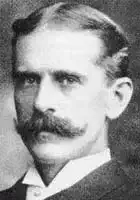
Henry Van Dyke
Francis Makemie
(Presbyter of Christ in Americas 1683-1708)
To thee, plain hero of a rugged race,
We bring the meed of praise too long delayed!
Thy fearless word and faithful work have made
For God's Republic firmer path and place
In this New World: thou hast proclaimed the grace
And power of Christ in many a forest glade,
Teaching the truth that leaves men unafraid
Of frowning tyranny or death's dark face.
Oh, who can tell how much we owe to thee,
Makemie, and to labour such as thine,
For all that makes America the shrine
Of faith untrammeled and of conscience free?
Stand here, grey stone, and consecrate the sod
Where rests this brave Scotch-Irish man of God!
326
Walt Whitman
Race Of Veterans
RACE of veterans! Race of victors!
Race of the soil, ready for conflict! race of the conquering march!
(No more credulity's race, abiding-temper'd race;)
Race henceforth owning no law but the law of itself;
Race of passion and the storm.
Race of the soil, ready for conflict! race of the conquering march!
(No more credulity's race, abiding-temper'd race;)
Race henceforth owning no law but the law of itself;
Race of passion and the storm.
327
Henry Van Dyke
Edmund Clarence Stedman
Oh, quick to feel the lightest touch
Of beauty or of truth,
Rich in the thoughtfulness of age,
The hopefulness of youth,
The courage of the gentle heart,
The wisdom of the pure,
The strength of finely tempered souls
To labour and endure!
The blue of springtime in your eyes
Was never quenched by pain;
And winter brought your head the crown
Of snow without a stain.
The poet's mind, the prince's heart,
You kept until the end,
Nor ever faltered in your work,
Nor ever failed a friend.
325
Henry Van Dyke
Liberty Enlightening the World
Thou warden of the western gate, above Manhatten Bay,
The fogs of doubt that hid thy face are driven clean away:
Thine eyes at last look far and clear, thou liftest high thy hand
To spread the light of liberty world-wide for every land.
No more thou dreamest of a peace reserved alone for thee,
While friends are fighting for thy cause beyond the guardian sea:
The battle that they wage is thine; thou fallest if they fall;
The swollen flood of Prussian pride will sweep unchecked o'er all.
O cruel is the conquer-lust in Hohenzollern brains;
The paths they plot to gain their goal are dark with shameful stains:
No faith they keep, no law revere, no god but naked Might; --
They are the foemen of mankind. Up, Liberty, and smite!
Britain, and France, and Italy, and Russia newly born,
Have waited for thee in the night. Oh, come as comes the morn.
Serene and strong and full of faith, America, arise,
With steady hope and mighty help to join th brave Allies.
O dearest country of my heart, home of the high desire,
Make clean thy soul for sacrifice on Freedom's altar-fire:
For thou must suffer, thou must fight, until the warlords cease,
And all the peoples lift their heads in liberty and peace.
324

William Wordsworth
The Russian Fugitive
I
ENOUGH of rose-bud lips, and eyes
Like harebells bathed in dew,
Of cheek that with carnation vies,
And veins of violet hue;
Earth wants not beauty that may scorn
A likening to frail flowers;
Yea, to the stars, if they were born
For seasons and for hours.
Through Moscow's gates, with gold unbarred,
Stepped One at dead of night,
Whom such high beauty could not guard
From meditated blight;
By stealth she passed, and fled as fast
As doth the hunted fawn,
Nor stopped, till in the dappling east
Appeared unwelcome dawn.
Seven days she lurked in brake and field,
Seven nights her course renewed,
Sustained by what her scrip might yield,
Or berries of the wood;
At length, in darkness travelling on,
When lowly doors were shut,
The haven of her hope she won,
Her foster-mother's hut.
'To put your love to dangerous proof
I come,' said she, 'from far;
For I have left my Father's roof,
In terror of the czar.'
No answer did the Matron give,
No second look she cast,
But hung upon the fugitive,
Embracing and embraced.
She led the Lady to a seat
Beside the glimmering fire,
Bathed duteously her wayworn feet,
Prevented each desire:---
The cricket chirped, the house-dog dozed,
And on that simple bed,
Where she in childhood had reposed,
Now rests her weary head.
When she, whose couch had been the sod,
Whose curtain, pine or thorn,
Had breathed a sigh of thanks to God,
Who comforts the forlorn;
While over her the Matron bent
Sleep sealed her eyes, and stole
Feeling from limbs with travel spent,
And trouble from the soul.
Refreshed, the Wanderer rose at morn,
And soon again was dight
In those unworthy vestments worn
Through long and perilous flight;
And 'O beloved Nurse,' she said,
'My thanks with silent tears
Have unto Heaven and You been paid:
Now listen to my fears !
'Have you forgot'---and here she smiled---
'The babbling flatteries
You lavished on me when a child
Disporting round your knees?
I was your lambkin, and your bird,
Your star, your gem, your flower;
Light words, that were more lightly heard
In many a cloudless hour!
'The blossom you so fondly praised
Is come to bitter fruit;
A mighty One upon me gazed;
I spurned his lawless suit,
And must be hidden from his wrath:
You, Foster-father dear,
Will guide me in my forward path;
I may not tarry here!
'I cannot bring to utter woe
Your proved fidelity.'---
'Dear Child, sweet Mistress, say not so!
For you we both would die.'
'Nay, nay, I come with semblance feigned
And cheek embrowned by art;
Yet, being inwardly unstained,
With courage will depart.'
'But whither would you, could you, flee?
A poor Man's counsel take;
The Holy Virgin gives to me
A thought for your dear sake;
Rest, shielded by our Lady's grace,
And soon shall you be led
Forth to a safe abiding-place,
Where never foot doth tread.'
II
THE dwelling of this faithful pair
In a straggling village stood,
For One who breathed unquiet air
A dangerous neighbourhood;
But wide around lay forest ground
With thickets rough and blind;
And pine-trees made a heavy shade
Impervious to the wind.
And there, sequestered from the eight,
Was spread a treacherous swamp,
On which the noonday sun shed light
As from a lonely lamp;
And midway in the unsafe morass,
A single Island rose
Of firm dry ground, with healthful grass
Adorned, and shady boughs.
The Woodman knew, for such the craft
This Russian vassal plied,
That never fowler's gun, nor shaft
Of archer, there was tried;
A sanctuary seemed the spot
From all intrusion free;
And there he planned an artful Cot
For perfect secrecy.
With earnest pains unchecked by dread
Of Power's far-stretching hand,
The bold good Man his labor sped
At nature's pure command;
Heart-soothed, and busy as a wren,
While, in a hollow nook,
She moulds her sight-eluding den
Above a murmuring brook.
His task accomplished to his mind,
The twain ere break of day
Creep forth, and through the forest wind
Their solitary way;
Few words they speak, nor dare to slack
Their pace from mile to mile,
Till they have crossed the quaking marsh,
And reached the lonely Isle.
The sun above the pine-trees showed
A bright and cheerful face;
And Ina looked for her abode,
The promised hiding-place;
She sought in vain, the Woodman smiled;
No threshold could be seen,
Nor roof, nor window;Ñall seemed wild
As it had ever been.
Advancing, you might guess an hour,
The front with such nice care
Is masked, 'if house it be or bower,'
But in they entered are;
As shaggy as were wall and roof
With branches intertwined,
So smooth was all within, air-proof,
And delicately lined:
And hearth was there, and maple dish,
And cups in seemly rows,
And couch---all ready to a wish
For nurture or repose;
And Heaven doth to her virtue grant
That here she may abide
In solitude, with every want
By cautious love supplied.
No queen, before a shouting crowd,
Led on in bridal state,
E'er struggled with a heart so proud,
Entering her palace gate:
Rejoiced to bid the world farewell,
No saintly anchoress
E'er took possession of her cell
With deeper thankfulness.
'Father of all, upon thy care
And mercy am I thrown;
Be thou my safeguard!'---such her prayer
When she was left alone,
Kneeling amid the wilderness
When joy had passed away,
And smiles, fond efforts of distress
To hide what they betray!
The prayer is heard, the Saints have seen,
Diffused through form and face,
Resolves devotedly serene;
That monumental grace
Of Faith, which doth all passions tame
That Reason should control;
And shows in the untrembling frame
A statue of the soul.
III
'TIS sung in ancient minstrelsy
That Phoebus wont to wear
The leaves of any pleasant tree
Around his golden hair;
Till Daphne, desperate with pursuit
Of his imperious love,
At her own prayer transformed, took root,
A laurel in the grove.
Then did the Penitent adorn
His brow with laurel green;
And 'mid his bright locks never shorn
No meaner leaf was seen;
And poets sage, through every age,
About their temples wound
The bay; and conquerors thanked the Gods,
With laurel chaplets crowned,
Into the mists of fabling Time
So far runs back the praise
Of Beauty, that disdains to climb
Along forbidden ways;
That scorns temptation; power defies
Where mutual love is not;
And to the tomb for rescue flies
When life would be a blot.
To this fair Votaress, a fate
More mild doth Heaven ordain
Upon her Island desolate;
And word, not breathed in vain,
Might tell what intercourse she found,
Her silence to endear;
What birds she tamed, what flowers the ground
Sent forth her peace to cheer.
To one mute Presence, above all,
Her soothed affections clung,
A picture on the cabin wall
By Russian usage hung---
The Mother-maid, whose countenance bright
With love abridged the day;
And, communed with by taper light,
Chased spectral fears away.
And oft as either Guardian came,
The joy in that retreat
Might any common friendship shame,
So high their heart would beat;
And to the lone Recluse, whate'er
They brought, each visiting
Was like the crowding of the year
With a new burst of spring.
But, when she of her Parents thought,
The pang was hard to bear;
And, if with all things not enwrought,
That trouble still is near.
Before her flight she had not dared
Their constancy to prove,
Too much the heroic Daughter feared
The weakness of their love.
Dark is the past to them, and dark
The future still must be,
Till pitying Saints conduct her bark
Into a safer sea---
Or gentle Nature close her eyes,
And set her Spirit free
From the altar of this sacrifice,
In vestal purity.
Yet, when above the forest-glooms
The white swans southward passed,
High as the pitch of their swift plume
Her fancy rode the blast;
And bore her toward the fields of France
Her Father's native land,
To mingle in the rustic dance,
The happiest of the band!
Of those beloved fields she oft
Had heard her Father tell
In phrase that now with echoes soft
Haunted her lonely cell;
She saw the hereditary bowers,
She heard the ancestral stream;
The Kremlin and its haughty towers
Forgotten like a dream !
IV
THE ever-changing Moon had traced
Twelve times her monthly round,
When through the unfrequented Waste
Was heard a startling sound;
A shout thrice sent from one who chased
At speed a wounded deer,
Bounding through branches interlaced,
And where the wood was clear.
The fainting creature took the marsh,
And toward the Island fled,
While plovers screamed with tumult harsh
Above his antlered head;
This, Ina saw; and, pale with fear,
Shrunk to her citadel;
The desperate deer rushed on, and near
The tangled covert fell.
Across the marsh, the game in view,
The Hunter followed fast,
Nor paused, till o'er the stag he blew
A death-proclaiming blast;
Then, resting on her upright mind,
Came forth the Maid---'In me
Behold,' she said, ' a stricken Hind
Pursued by destiny!
'From your deportment, Sir! I deem
That you have worn a sword,
And will not hold in light esteem
A suffering woman's word;
There is my covert, there perchance
I might have lain concealed,
My fortunes hid, my countenance
Not even to you revealed.
'Tears might be shed, and I might pray,
Crouching and terrified,
That what has been unveiled to day,
You would in mystery hide;
But I will not defile with dust
The knee that bend to adore
The God in heaven;---attend, be just;
This ask I, and no more!
'I speak not of the winter's cold,
For summer's heat exchanged,
While I have lodged in this rough hold,
From social life estranged;
Nor yet of trouble and alarms:
High Heaven is my defence;
And every season has soft arms
For injured Innocence.
'From Moscow to the Wilderness
It was my choice to come,
Lest virtue should be harborless,
And honor want a home;
And happy were I, if the Czar
Retain his lawless will,
To end life here like this poor deer,
Or a lamb on a green hill.'
'Are you the Maid,' the Stranger cried,
'From Gallic parents sprung,
Whose vanishing was rumored wide,
Sad theme for every tongue;
Who foiled an Emperor's eager quest?
You, Lady, forced to wear
These rude habiliments, and rest
Your head in this dark lair!'
But wonder, pity, soon were quelled;
And in her face and mien
The soul's pure brightness she beheld
Without a veil between:
He loved, he hoped,---a holy flame
Kindled 'mid rapturous tears;
The passion of a moment came
As on the wings of years.
'Such bounty is no gift of chance,'
Exclaimed he; 'righteous Heaven,
Preparing your deliverance,
To me the charge hath given.
The Czar full oft in words, and deeds
Is stormy and self-willed;
But, when the Lady Catherine pleads,
His violence is stilled.
'Leave open to my wish the course,
And I to her will go;
From that humane and heavenly source,
Good, only good, can flow.''
Faint sanction given, the Cavalier
Was eager to depart,
Though question followed question, dear
To the Maiden's filial heart.
Light was his step,---his hopes, more light,
Kept pace with his desires;
And the fifth morning gave him sight
Of Moscow's glittering spires.
He sued:---heart-smitten by the wrong,
To the lorn Fugitive
The Emperor sent a pledge as strong
As sovereign power could give.
O more than mighty change! If e'er
Amazement rose to pain,
And joy's excess produced a fear
Of something void and vain;
'Twas when the Parents, who had mourned
So long the lost as dead,
Beheld their only Child returned,
The household floor to tread.
Soon gratitude gave way to love
Within the Maiden's breast:
Delivered and Deliverer move
In bridal garments drest;
Meek Catherine had her own reward;
The Czar bestowed a dower;
And universal Moscow shared
The triumph of that hour.
Flowers strewed the ground; the nuptial feast
Was held with costly state;
And there, 'mid many a noble guest,
The foster-parent sate;
Encouraged by the imperial eye,
They shrank not into shade;
Great as their bliss, the honor high
To them and nature paid!
317
Robert Browning
Epilogue
At the midnight in the silence of the sleep-time,
When you set your fancies free,
Will they pass to where--by death, fools think, imprisoned--
Low he lies who once so loved you, whom you loved so,
--Pity me?
Oh to love so, be so loved, yet so mistaken!
What had I on earth to do
With the slothful, with the mawkish, the unmanly?
Like the aimless, helpless, hopeless, did I drivel
--Being--who?
One who never turned his back but marched breast forward,
Never doubted clouds would break,
Never dreamed, though right were worsted, wrong would triumph,
Held we fall to rise, are baffled to fight better,
Sleep to wake.
No, at noonday in the bustle of man's work-time
Greet the unseen with a cheer!
Bid him forward, breast and back as either should be,
"Strive and thrive!" cry "Speed,--fight on, fare ever
There as here!"
317

John Greenleaf Whittier
The Exiles. 1660
The goodman sat beside his door
One sultry afternoon,
With his young wife singing at his side
An old and goodly tune.
A glimmer of heat was in the air,
The
dark green woods were still;
And the skirts of a heavy thunder-cloud
Hung over the western hill.
Black, thick, and vast arose that cloud
Above the wilderness,
As some dark world from upper air
Were stooping over this.
At times the solemn thunder pealed,
And all was still again,
Save a low murmur in the air
Of coming wind and rain.
Just as the first big rain-drop fell,
A weary stranger came,
And stood before the farmer's door,
With travel soiled and lame.
Sad seemed he, yet sustaining hope
Was in his quiet glance,
And peace, like autumn's moonlight, clothed
His tranquil countenance,
A look, like that his Master wore
In Pilate's council-hall:
It told of wrongs, but of a love
Meekly forgiving all.
'Friend! wilt thou give me shelter here?'
The stranger meekly said;
And, leaning on his oaken staff,
The goodman's features read.
'My life is hunted,-evil men
Are following in my track;
The traces of the torturer's whip
Are on my aged back;
'And much, I fear, 't will peril thee
Within thy doors to take
A hunted seeker of the Truth,
Oppressed for conscience' sake.'
Oh, kindly spoke the goodman's wife,
'Come in, old man!' quoth she,
'We will not leave thee to the storm,
Whoever thou mayst be.'
Then came the aged wanderer in,
And silent sat him down;
While all within grew dark as night
Beneath the storm-cloud's frown.
But while the sudden lightning's blaze
Filled every cottage nook,
And with the jarring thunder-roll
The loosened casements shook,
A heavy tramp of horses' feet
Came sounding up the lane,
And half a score of horse, or more,
Came plunging through the rain.
'Now, Goodman Macy, ope thy door,
We
would not be house-breakers;
A rueful deed thou'st done this day,
In harboring banished Quakers.'
Out looked the cautious goodman then,
With much of fear and awe,
For there, with broad wig drenched with rain
The parish priest he saw.
Open thy door, thou wicked man,
And let thy pastor in,
And give God thanks, if forty stripes
Repay thy deadly sin.'
'What seek ye?' quoth the goodman;
'The stranger is my guest;
He is worn with toil and grievous wrong,
Pray
let the old man rest.'
'Now, out upon thee, canting knave!'
And strong hands shook the door.
'Believe me, Macy,' quoth the priest,
'Thou 'lt rue thy conduct sore.'
Then kindled Macy's eye of fire
'No priest who walks the earth,
Shall pluck away the stranger-guest
Made welcome to my hearth.'
Down from his cottage wall he caught
The matchlock, hotly tried
At Preston-pans and Marston-moor,
By fiery Ireton's side;
Where Puritan, and Cavalier,
With shout and psalm contended;
And Rupert's oath, and Cromwell's prayer,
With battle-thunder blended.
Up rose the ancient stranger then
'My spirit is not free
To bring the wrath and violence
Of evil men on thee;
'And for thyself, I pray forbear,
Bethink thee of thy Lord,
Who healed again the smitten ear,
And sheathed His follower's sword.
'I go, as to the slaughter led.
Friends of the poor, farewell!'
Beneath his hand the oaken door
Back on its hinges fell.
'Come forth, old graybeard, yea and nay,'
The reckless scoffers cried,
As to a horseman's saddle-bow
The old man's arms were tied.
And of his bondage hard and long
In Boston's crowded jail,
Where suffering woman's prayer was heard,
With sickening childhood's wail,
It suits not with our tale to tell;
Those scenes have passed away;
Let the dim shadows of the past
Brood o'er that evil day.
'Ho, sheriff!' quoth the ardent priest,
'Take Goodman Macy too;
The sin of this day's heresy
His back or purse shall rue.'
'Now, goodwife, haste thee!' Macy cried.
She caught his manly arm;
Behind, the parson urged pursuit,
With outcry and alarm.
Ho! speed the Macys, neck or naught,
The
river-course was near;
The plashing on its pebbled shore
Was music to their ear.
A gray rock, tasselled o'er with birch,
Above the waters hung,
And at its base, with every wave,
A small light wherry swung.
A leap-they gain the boat-and there
The goodman wields his oar;
'Ill luck betide them all,' he cried,
'The laggards on the shore.'
Down through the crashing underwood,
The burly sheriff came:'
Stand, Goodman Macy, yield thyself;
Yield in the King's own name.'
'Now out upon thy hangman's face!'
Bold Macy answered then,'
Whip women, on the village green,
But meddle not with men.'
The priest came panting to the shore,
His grave cocked hat was gone;
Behind him, like some owl's nest, hung
His wig upon a thorn.
'Come back,-come back!' the parson cried,
'The church's curse beware.'
'Curse, an' thou wilt,' said Macy, 'but
Thy blessing prithee spare.'
'Vile scoffer!' cried the baffled priest,
'Thou 'lt yet the gallows see.'
'Who's born to be hanged will not be drowned,'
Quoth Macy, merrily;
'And so, sir sheriff and priest, good-by!'
He bent him to his oar,
And the small boat glided quietly
From the twain upon the shore.
Now in the west, the heavy clouds
Scattered and fell asunder,
While feebler came the rush of rain,
And fainter growled the thunder.
And through the broken clouds, the sun
Looked out serene and warm,
Painting its holy symbol-light
Upon the passing storm.
Oh, beautiful! that rainbow span,
O'er dim Crane-neck was bended;
One bright foot touched the eastern hills,
And one with ocean blended.
By green Pentucket's southern'slope
The small boat glided fast;
The watchers of the Block-house saw
The strangers as they passed.
That night a stalwart garrison
Sat shaking in their shoes,
To hear the dip of Indian oars,
The glide of birch canoes.
The fisher-wives of SalisburyThe
men were all away
Looked
out to see the stranger oar
Upon their waters play.
Deer-Island's rocks and fir-trees threw
Their sunset-shadows o'er them,
And Newbury's spire and weathercock
Peered o'er the pines before them.
Around the Black Rocks, on their left,
The marsh lay broad and green;
And on their right, with dwarf shrubs crowned,
Plum Island's hills were seen.
With skilful hand and wary eye
The harbor-bar was crossed;
A plaything of the restless wave,
The boat on ocean tossed.
The glory of the sunset heaven
On land and water lay;
On the steep hills of Agawam,
On cape, and bluff, and bay.
They passed the gray rocks of Cape Ann,
And Gloucester's harbor-bar;
The watch-fire of the garrison
Shone like a setting star.
How brightly broke the morning
On Massachusetts Bay!
Blue wave, and bright green island,
Rejoicing in the day.
On passed the bark in safety
Round isle and headland steep;
No tempest broke above them,
No fog-cloud veiled the deep.
Far round the bleak and stormy Cape
The venturous Macy passed,
And on Nantucket's naked isle
Drew up his boat at last.
And how, in log-built cabin,
They braved the rough sea-weather;
And there, in peace and quietness,
Went down life's vale together;
How others drew around them,
And how their fishing sped,
Until to every wind of heaven
Nantucket's sails were spread;
How pale Want alternated
With Plenty's golden smile;
Behold, is it not written
In the annals of the isle?
And yet that isle remaineth
A refuge of the free,
As when true-hearted Macy
Beheld it from the sea.
Free as the winds that winnow
Her shrubless hills of sand,
Free as the waves that batter
Along her yielding land.
Than hers, at duty's summons,
No loftier spirit stirs,
Nor falls o'er human suffering
A readier tear then hers.
God bless the sea-beat island!
And grant forevermore,
That charity and freedom dwell
As now upon her shore!
316

Robert W. Service
Priscilla
Jerry MacMullen, the millionaire,
Driving a red-meat bus out there --
How did he win his Croix de Guerre?
Bless you, that's all old stuff:
Beast of a night on the Verdun road,
Jerry stuck with a woeful load,
Stalled in the mud where the red lights glowed,
Prospect devilish tough.
"Little Priscilla" he called his car,
Best of our battered bunch by far,
Branded with many a bullet scar,
Yet running so sweet and true.
Jerry he loved her, knew her tricks;
Swore: "She's the beat of the best big six,
And if ever I get in a deuce of a fix
Priscilla will pull me through."
"Looks pretty rotten right now," says he;
"Hanged if the devil himself could see.
Priscilla, it's up to you and me
To show 'em what we can do."
Seemed that Priscilla just took the word;
Up with a leap like a horse that's spurred,
On with the joy of a homing bird,
Swift as the wind she flew.
Shell-holes shoot at them out of the night;
A lurch to the left, a wrench to the right,
Hands grim-gripping and teeth clenched tight,
Eyes that glare through the dark.
"Priscilla, you're doing me proud this day;
Hospital's only a league away,
And, honey, I'm longing to hit the hay,
So hurry, old girl. . . . But hark!"
Howl of a shell, harsh, sudden, dread;
Another . . . another. . . . "Strike me dead
If the Huns ain't strafing the road ahead
So the convoy can't get through!
A barrage of shrap, and us alone;
Four rush-cases -- you hear 'em moan?
Fierce old messes of blood and bone. . . .
Priscilla, what shall we do?"
Again it seems that Priscilla hears.
With a rush and a roar her way she clears,
Straight at the hell of flame she steers,
Full at its heart of wrath.
Fury of death and dust and din!
Havoc and horror! She's in, she's in;
She's almost over, she'll win, she'll win!
Woof! Crump! right in the path.
Little Priscilla skids and stops,
Jerry MacMullen sways and flops;
Bang in his map the crash he cops;
Shriek from the car: "Mon Dieu!"
One of the blessés hears him say,
Just at the moment he faints away:
"Reckon this isn't my lucky day,
Priscilla, it's up to you."
Sergeant raps on the doctor's door;
"Car in the court with couchés four;
Driver dead on the dashboard floor;
Strange how the bunch got here."
"No," says the Doc, "this chap's alive;
But tell me, how could a man contrive
With both arms broken, a car to drive?
Thunder of God! it's queer."
Same little blessé makes a spiel;
Says he: "When I saw our driver reel,
A Strange Shape leapt to the driving wheel
And sped us safe through the night."
But Jerry, he says in his drawling tone:
"Rats! Why, Priscilla came in on her own.
Bless her, she did it alone, alone. . . ."
Hanged if I know who's right.
317
Henry Van Dyke
National Monuments
Count not the cost of honour to the dead!
The tribute that a mighty nation pays
To those who loved her well in former days
Means more than gratitude for glories fled;
For every noble man that she hath bred,
Lives in the bronze and marble that we raise,
Immortalized by art's immortal praise,
To lead our sons as he our fathers led.
These monuments of manhood strong and high
Do more than forts or battle-ships to keep
Our dear-bought liberty. They fortify
The heart of youth with valour wise and deep;
They build eternal bulwarks, and command
Eternal strength to guard our native land.
313
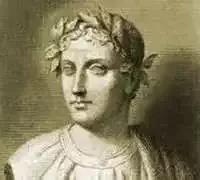
Horácio
BkIII:V No Surrender
We believe thunderous Jupiter rules the sky:
Augustus is considered a god on earth,
for adding the Britons, and likewise
the weight of the Persians to our empire.
Didn’t Crassus’ soldiers live in vile marriage
with barbarian wives, and (because of our
Senate and its perverse ways!) grow old,
in the service of their hostile fathers.
Marsians, Apulians ruled by a Mede,
forgetting their shields, Roman names, and togas,
and eternal Vesta, though Jove’s shrines
and the city of Rome remained unharmed?
Regulus’s far-seeing mind warned of this,
when he objected to shameful surrender,
and considered from its example
harm would come to the following age,
unless captured men were killed without pity.
‘I’ve seen standards and weapons,’ he said,
‘taken bloodlessly from our soldiers,
hung there in the Carthaginian shrines,
I’ve seen the arms of our freemen twisted
behind their backs, enemy gates wide open,
and the fields that our warfare ravaged
being freely cultivated again.
Do you think that our soldiers ransomed for gold,
will fight more fiercely next time! You’ll add
harm to shame: the wool that’s dyed purple
never regains the colour that vanished,
and true courage, when once departed, never
cares to return to an inferior heart.
When a doe that’s set free, from the thick
hunting nets, turns to fight, then he’ll be brave
who trusts himself to treacherous enemies
and he’ll crush Carthage, in a second battle,
who’s felt the chains on his fettered wrists,
without a struggle, afraid of dying.
He’s one who, not knowing how life should be lived,
confuses war with peace. O, shame! O mighty
Carthage, made mightier now because
of Italy’s disgraceful decadence.’
It’s said he set aside his wife’s chaste kisses,
and his little ones, as of less importance,
and, grimly, he set his manly face
to the soil, until he might be able
to strengthen the Senate’s wavering purpose,
by making of himself an example no
other man had made, and hurrying,
among grieving friends, to noble exile.
Yet he knew what the barbarous torturer
was preparing for him. Still he pushed aside
the kinsmen who were blocking his way,
and the people who delayed his going,
as if, with some case decided, and leaving
all that tedious business of his clients,
he headed for Venafrum’s meadows,
or Lacedaemonian Tarentum.
313
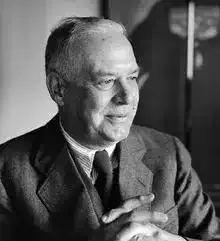
Wallace Stevens
The Plot Against the Giant
First Girl
When this yokel comes maundering,
Whetting his hacker,
I shall run before him,
Diffusing the civilest odors
Out of geraniums and unsmelled flowers.
It will check him.
Second Girl
I shall run before him,
Arching cloths besprinkled with colors
As small as fish-eggs.
The threads
Will abash him.
Third Girl
Oh, la...le pauvre!
I shall run before him,
With a curious puffing.
He will bend his ear then.
I shall whisper
Heavenly labials in a world of gutturals.
It will undo him.
314
Emily Dickinson
I gained it so
I gained it so-
By Climbing slow-
By Catching at the Twigs that grow
Between the Bliss-and me-
It hung so high
As well the Sky
Attempt by Strategy-
I said I gained it
This-
was all-
Look, how I clutch it
Lest it fall-
And I a Pauper go-
Unfitted by an instant's Grace
For the Contented-Beggar's face
I wore-an hour ago-
312
Robert Browning
Life in a Bottle
Escape me?
Never--
Beloved!
While I am I, and you are you,
So long as the world contains us both,
Me the loving and you the loth,
While the one eludes, must the other pursue.
My life is a fault at last, I fear:
It seems too much like a fate, indeed!
Though I do my best I shall scarce succeed.
But what if I fail of my purpose here?
It is but to keep the nerves at strain,
To dry one's eyes and laugh at a fall,
And, baffled, get up and begin again,--
So the chace takes up one's life, that's all.
While, look but once from your farthest bound
At me so deep in the dust and dark,
No sooner the old hope goes to ground
Than a new one, straight to the self-same mark,
I shape me--
Ever
Removed!
312

Robert Louis Stevenson
Let Love Go, If Go She Will
LET love go, if go she will.
Seek not, O fool, her wanton flight to stay.
Of all she gives and takes away
The best remains behind her still.
The best remains behind; in vain
Joy she may give and take again,
Joy she may take and leave us pain,
If yet she leave behind
The constant mind
To meet all fortunes nobly, to endure
All things with a good heart, and still be pure,
Still to be foremost in the foremost cause,
And still be worthy of the love that was.
Love coming is omnipotent indeed,
But not Love going. Let her go. The seed
Springs in the favouring Summer air, and grows,
And waxes strong; and when the Summer goes,
Remains, a perfect tree.
Joy she may give and take again,
Joy she may take and leave us pain.
O Love, and what care we?
For one thing thou hast given, O Love, one thing
Is ours that nothing can remove;
And as the King discrowned is still a King,
The unhappy lover still preserves his love.
310
Emily Dickinson
The Province of the Saved
The Province of the Saved
Should be the Art-To save-
Through Skill obtained in Themselves-
The Science of the Grave
No Man can understand
But He that hath endured
The Dissolution-in Himself-
That Man-be qualified
To qualify Despair
To Those who failing new-
Mistake Defeat for Death-Each time-
Till acclimated-to-
Should be the Art-To save-
Through Skill obtained in Themselves-
The Science of the Grave
No Man can understand
But He that hath endured
The Dissolution-in Himself-
That Man-be qualified
To qualify Despair
To Those who failing new-
Mistake Defeat for Death-Each time-
Till acclimated-to-
306
Emily Dickinson
A little bread-a crust-a crumb
A little bread-a crust-a crumb-
A little trust-a demijohn-
Can keep the soul alive-
Not portly, mind! but breathing-warm
Conscious-
as old Napoleon,
The night before the Crown!
A modest lot-A fame petite-
A brief Campaign of sting and sweet
Is plenty! Is enough!
A Sailor's business is the shore!
A Soldier's-balls! Who asketh more,
Must seek the neighboring life!
306

William Butler Yeats
To His Heart, Bidding It Have No Fear
BE you still, be you still, trembling heart;
Remember the wisdom out of the old days:
Him who trembles before the flame and the flood,
And the winds that blow through the starry ways,
Let the starry winds and the flame and the flood
Cover over and hide, for he has no part
With the lonely, majestical multitude.
Remember the wisdom out of the old days:
Him who trembles before the flame and the flood,
And the winds that blow through the starry ways,
Let the starry winds and the flame and the flood
Cover over and hide, for he has no part
With the lonely, majestical multitude.
306
Robert W. Service
Fleurette
(The Wounded Canadian Speaks)
My leg? It's off at the knee.
Do I miss it? Well, some. You see
I've had it since I was born;
And lately a devilish corn.
(I rather chuckle with glee
To think how I've fooled that corn.)
But I'll hobble around all right.
It isn't that, it's my face.
Oh I know I'm a hideous sight,
Hardly a thing in place;
Sort of gargoyle, you'd say.
Nurse won't give me a glass,
But I see the folks as they pass
Shudder and turn away;
Turn away in distress . . .
Mirror enough, I guess.
I'm gay! You bet I AM gay;
But I wasn't a while ago.
If you'd seen me even to-day,
The darndest picture of woe,
With this Caliban mug of mine,
So ravaged and raw and red,
Turned to the wall -- in fine,
Wishing that I was dead. . . .
What has happened since then,
Since I lay with my face to the wall,
The most despairing of men?
Listen! I'll tell you all.
That poilu across the way,
With the shrapnel wound in his head,
Has a sister: she came to-day
To sit awhile by his bed.
All morning I heard him fret:
"Oh, when will she come, Fleurette?"
Then sudden, a joyous cry;
The tripping of little feet,
The softest, tenderest sigh,
A voice so fresh and sweet;
Clear as a silver bell,
Fresh as the morning dews:
"C'est toi, c'est toi, Marcel!
Mon frère, comme je suis heureuse!"
So over the blanket's rim
I raised my terrible face,
And I saw -- how I envied him!
A girl of such delicate grace;
Sixteen, all laughter and love;
As gay as a linnet, and yet
As tenderly sweet as a dove;
Half woman, half child -- Fleurette.
Then I turned to the wall again.
(I was awfully blue, you see),
And I thought with a bitter pain:
"Such visions are not for me."
So there like a log I lay,
All hidden, I thought, from view,
When sudden I heard her say:
"Ah! Who is that malheureux?"
Then briefly I heard him tell
(However he came to know)
How I'd smothered a bomb that fell
Into the trench, and so
None of my men were hit,
Though it busted me up a bit.
Well, I didn't quiver an eye,
And he chattered and there she sat;
And I fancied I heard her sigh -But
I wouldn't just swear to that.
And maybe she wasn't so bright,
Though she talked in a merry strain,
And I closed my eyes ever so tight,
Yet I saw her ever so plain:
Her dear little tilted nose,
Her delicate, dimpled chin,
Her mouth like a budding rose,
And the glistening pearls within;
Her eyes like the violet:
Such a rare little queen -- Fleurette.
And at last when she rose to go,
The light was a little dim,
And I ventured to peep, and so
I saw her, graceful and slim,
And she kissed him and kissed him, and oh
How I envied and envied him!
So when she was gone I said
In rather a dreary voice
To him of the opposite bed:
"Ah, friend, how you must rejoice!
But me, I'm a thing of dread.
For me nevermore the bliss,
The thrill of a woman's kiss."
Then I stopped, for lo! she was there,
And a great light shone in her eyes;
And me! I could only stare,
I was taken so by surprise,
When gently she bent her head:
"May I kiss you, Sergeant?" she said.
Then she kissed my burning lips
With her mouth like a scented flower,
And I thrilled to the finger-tips,
And I hadn't even the power
To say: "God bless you, dear!"
And I felt such a precious tear
Fall on my withered cheek,
And darn it! I couldn't speak.
And so she went sadly away,
And I knew that my eyes were wet.
Ah, not to my dying day
Will I forget, forget!
Can you wonder now I am gay?
God bless her, that little Fleurette!
307

Henry Lawson
A Song of Brave Men
Man, is the Sea your master? Sea, and is man your slave? –
This is the song of brave men who never know they are brave:
Ceaselessly watching to save you, stranger from foreign lands,
Soundly asleep in your state room, full sail for the Goodwin Sands!
Life is a dream, they tell us, but life seems very real,
When the lifeboat puts out from Ramsgate, and the buggers put out from Deal!
A gun from the lightship! – a rocket! – a cry of, "Turn out, me lad!"
"Ship on the Sands!" they're shouting, and a rush of the oilskin-clad.
The lifeboat leaping and swooping, in the wake of the fighting tug,
And the luggers afloat in Hell's water – Oh, "tourist", with cushion and rug! –
Think of the freezing fury, without one minute's relief,
When they stood all night in the blackness by the wreck of the Indian Chief!
Lashed to their seats, and crouching, to the spray that froze as it flew,
Twenty-six hours in midwinter! That was the lifeboat's crew.
Twice she was swamped, and she righted, in the rush of the heavy seas,
And her tug was mostly buried; but these were common things, these.
And the luggers go out whenever there's a hope to get them afloat,
And these things they do for nothing, and those fishermen say, "Oh! it's nowt!"
(Enemy, Friend or Stranger! In every sea or land,
And across the lives of most men run stretches of Goodwin Sand;
And across the life of a nation, as across the track of a ship,
Lies the hidden rock, or the iceberg, within the horizon dip.
And wise men know them, and warn us, with lightship, or voice, or pen;
But we strike, and the fool survivors sail on to strike again.)
But this is a song of brave men, wherever is aught to save,
Christian or Jew or Wowser – and I knew one who was brave;
British or French or German, Dane or Latin or Dutch:
"Scandies" that ignorant British reckon with "Dagoes and such" –
(Where'er, on a wreck titanic, in a scene of wild despair,
The officers call for assistance, a Swede or a Norse is there.)
Tale of a wreck titanic, with the last boat over the side,
And a brave young husband fighting his clinging, hysterical bride;
He strikes her fair on the temple, while the decks are scarce afloat,
And he kisses her once on the forehead, and he drops her into the boat.
So he goes to his death to save her; and she lives to remember and lie –
Or be true to his love and courage. But that's how brave men die.
(I hate the slander: "Be British" – and I don't believe it, that's flat:
No British sailor and captain would stoop to such cant as that.
What – in the rush of cowards – of the help from before the mast –
Of the two big Swedes and the Norse, who stood by the mate to the last? –
In every mining disaster, in a New-World mining town,
In one of the rescue parties an Olsen or Hans goes down.)
Men who fought for their village, away on their country's edge:
The priest with his cross – and a musket, and the blacksmith with his sledge;
The butcher with cleaver and pistols, and the notary with his pike.
And the clerk with what he laid hands on; but all were ready to strike.
And – Tennyson notwithstanding – when the hour of danger was come,
The shopman has struck full often with his "cheating yard-wand" home!
This is a song of brave men, ever, the wide world o'er –
Starved and crippled and murdered by the land they are fighting for.
Left to freeze in the trenches, sent to drown by the Cape,
Throttled by army contractors, and strangled bv old red-tape.
Fighting for "Home" and "Country", or "Glory", or what you choose –
Sacrificed for the Syndicates, and a monarch "in" with the Jews.
Australia! your trial is coming! Down with the party strife:
Send Your cackling, lying women back to the old Home Life.
Brush trom your Parliament benches the legal chaff and dust:
Make Federation perfect, as sooner or later you must.
Scatter your crowded cities, cut up your States – and so
Give your brave sons of the future the ghost of a White Man's show.
304