Courage and Strength

Johann Wolfgang von Goethe
The Wanderer's Storm-Song
He whom thou ne'er leavest, Genius,
Feels no dread within his heart
At the tempest or the rain.
He whom thou ne'er leavest, Genius,
Will to the rain-clouds,
Will to the hailstorm,
Sing in reply
As the lark sings,
Oh thou on high!
Him whom thou ne'er leavest, Genius,
Thou wilt raise above the mud-track
With thy fiery pinions.
He will wander,
As, with flowery feet,
Over Deucalion's dark flood,
Python-slaying, light, glorious,
Pythius Apollo.
Him whom thou ne'er leavest, Genius,
Thou wilt place upon thy fleecy pinion
When he sleepeth on the rock,--
Thou wilt shelter with thy guardian wing
In the forest's midnight hour.
Him whom thou ne'er leavest, Genius,
Thou wilt wrap up warmly
In the snow-drift;
Tow'rd the warmth approach the Muses,
Tow'rd the warmth approach the Graces.
Ye Muses, hover round me!
Ye Graces also!
That is water, that is earth,
And the son of water and of earth
Over which I wander,
Like the gods.
Ye are pure, like the heart of the water,
Ye are pure like the marrow of earth,
Hov'ring round me, while I hover
Over water, o'er the earth
Like the gods.
Shall he, then, return,
The small, the dark, the fiery peasant?
Shall he, then, return, waiting
Only thy gifts, oh Father Bromius,
And brightly gleaming, warmth-spreading fire?
Return with joy?
And I, whom ye attended,
Ye Muses and ye Graces,
Whom all awaits that ye,
Ye Muses and ye Graces,
Of circling bliss in life
Have glorified--shall I
Return dejected?
Father Bromius!
Thourt the Genius,
Genius of ages,
Thou'rt what inward glow
To Pindar was,
What to the world
Phoebus Apollo.
Woe! Woe Inward warmth,
Spirit-warmth,
Central-point!
Glow, and vie with
Phoebus Apollo!
Coldly soon
His regal look
Over thee will swiftly glide,-
Envy-struck
Linger o'er the cedar's strength,
Which, to flourish,
Waits him not.
Why doth my lay name thee the last?
Thee, from whom it began,
Thee, in whom it endeth,
Thee, from whom it flows,
Jupiter Pluvius!
Tow'rd thee streams my song.
And a Castalian spring
Runs as a fellow-brook,
Runs to the idle ones,
Mortal, happy ones,
Apart from thee,
Who cov'rest me around,
Jupiter Pluvius!
Not by the elm-tree
Him didst thou visit,
With the pair of doves
Held in his gentle arm,--
With the beauteous garland of roses,--
Caressing him, so blest in his flowers,
Anacreon,
Storm-breathing godhead!
Not in the poplar grove,
Near the Sybaris' strand,
Not on the mountain's
Sun-illumined brow
Didst thou seize him,
The flower-singing,
Honey-breathing,
Sweetly nodding
Theocritus.
When the wheels were rattling,
Wheel on wheel tow'rd the goal,
High arose
The sound of the lash
Of youths with victory glowing,
In the dust rolling,
As from the mountain fall
Showers of stones in the vale--
Then thy soul was brightly glowing, Pindar--
Glowing? Poor heart!
There, on the hill,--
Heavenly might!
But enough glow
Thither to wend,
Where is my cot!
361

Henry Wadsworth Longfellow
The Saga of King Olaf: XIII. The Building Of The Long Serpent
Thorberg Skafting, master-builder,
In his ship-yard by the sea,
Whistling, said, 'It would bewilder
Any man but Thorberg Skafting,
Any man but me!'
Near him lay the Dragon stranded,
Built of old by Raud the Strong,
And King Olaf had commanded
He should build another Dragon,
Twice as large and long.
Therefore whistled Thorberg Skafting,
As he sat with half-closed eyes,
And his head turned sideways, drafting
That new vessel for King Olaf
Twice the Dragon's size.
Round him busily hewed and hammered
Mallet huge and heavy axe;
Workmen laughed and sang and clamored;
Whirred the wheels, that into rigging
Spun the shining flax!
All this tumult heard the master,--
It was music to his ear;
Fancy whispered all the faster,
'Men shall hear of Thorberg Skafting
For a hundred year!'
Workmen sweating at the forges
Fashioned iron bolt and bar,
Like a warlock's midnight orgies
Smoked and bubbled the black caldron
With the boiling tar.
Did the warlocks mingle in it,
Thorberg Skafting, any curse?
Could you not be gone a minute
But some mischief must be doing,
Turning bad to worse?
'T was an ill wind that came wafting,
From his homestead words of woe;
To his farm went Thorberg Skafting,
Oft repeating to his workmen,
Build ye thus and so.
After long delays returning
Came the master back by night;
To his ship-yard longing, yearning,
Hurried he, and did not leave it
Till the morning's light.
'Come and see my ship, my darling!?
On the morrow said the King;
'Finished now from keel to carling;
Never yet was seen in Norway
Such a wondrous thing!'
In the ship-yard, idly talking,
At the ship the workmen stared:
Some one, all their labor balking,
Down her sides had cut deep gashes,
Not a plank was spared!
'Death be to the evil-doer!'
With an oath King Olaf spoke;
'But rewards to his pursuer!?
And with wrath his face grew redder
Than his scarlet cloak.
Straight the master-builder, smiling,
Answered thus the angry King:
'Cease blaspheming and reviling,
Olaf, it was Thorberg Skafting
Who has done this thing!'
Then he chipped and smoothed the planking,
Till the King, delighted, swore,
With much lauding and much thanking,
'Handsomer is now my Dragon
Than she was before!'
Seventy ells and four extended
On the grass the vessel's keel;
High above it, gilt and splendid,
Rose the figure-head ferocious
With its crest of steel.
Then they launched her from the tressels,
In the ship-yard by the sea;
She was the grandest of all vessels,
Never ship was built in Norway
Half so fine as she!
The Long Serpent was she christened,
'Mid the roar of cheer on cheer!
They who to the Saga listened
Heard the name of Thorberg Skafting
For a hundred year!
361

Henry Van Dyke
Milton
I
Lover of beauty, walking on the height
Of pure philosophy and tranquil song;
Born to behold the visions that belong
To those who dwell in melody and light;
Milton, thou spirit delicate and bright!
What drew thee down to join the Roundhead throng
Of iron-sided warriors, rude and strong,
Fighting for freedom in a world half night?
Lover of Liberty at heart wast thou,
Above all beauty bright, all music clear:
To thee she bared her bosom and her brow,
Breathing her virgin promise in thine ear,
And bound thee to her with a double vow, --
Exquisite Puritan, grave Cavalier!
II
The cause, the cause for which thy soul resigned
Her singing robes to battle on the plain,
Was won, O poet, and was lost again;
And lost the labour of thy lonely mind
On weary tasks of prose. What wilt thou find
To comfort thee for all the toil and pain?
What solace, now thy sacrifice is vain
And thou art left forsaken, poor, and blind?
Like organ-music comes the deep reply:
"The cause of truth looks lost, but shall be won.
For God hath given to mine inward eye
Vision of England soaring to the sun.
And granted me great peace before I die,
In thoughts of lowly duty bravely done."
III
O bend again above thine organ-board,
Thou blind old poet longing for repose!
Thy Master claims thy service not with those
Who only stand and wait for his reward.
He pours the heavenly gift of song restored
Into thy breast, and bids thee nobly close
A noble life, with poetry that flows
In mighty music of the major chord.
Where hast thou learned this deep, majestic strain,
Surpassing all thy youthful lyric grace,
To sing of Paradise? Ah, not in vain
The griefs that won at Dante's side thy place,
And made thee, Milton, by thy years of pain,
The loftiest poet of the Saxon race!
356

Robert Browning
The Italian In England
That second time they hunted me
From hill to plain, from shore to sea,
And Austria, hounding far and wide
Her blood-hounds thro' the country-side,
Breathed hot and instant on my trace,---
I made six days a hiding-place
Of that dry green old aqueduct
Where I and Charles, when boys, have plucked
The fire-flies from the roof above,
Bright creeping thro' the moss they love:
---How long it seems since Charles was lost!
Six days the soldiers crossed and crossed
The country in my very sight;
And when that peril ceased at night,
The sky broke out in red dismay
With signal fires; well, there I lay
Close covered o'er in my recess,
Up to the neck in ferns and cress,
Thinking on Metternich our friend,
And Charles's miserable end,
And much beside, two days; the third,
Hunger o'ercame me when I heard
The peasants from the village go
To work among the maize; you know,
With us in Lombardy, they bring
Provisions packed on mules, a string
With little bells that cheer their task,
And casks, and boughs on every cask
To keep the sun's heat from the wine;
These I let pass in jingling line,
And, close on them, dear noisy crew,
The peasants from the village, too;
For at the very rear would troop
Their wives and sisters in a group
To help, I knew. When these had passed,
I threw my glove to strike the last,
Taking the chance: she did not start,
Much less cry out, but stooped apart,
One instant rapidly glanced round,
And saw me beckon from the ground.
A wild bush grows and hides my crypt;
She picked my glove up while she stripped
A branch off, then rejoined the rest
With that; my glove lay in her breast.
Then I drew breath; they disappeared:
It was for Italy I feared.
An hour, and she returned alone
Exactly where my glove was thrown.
Meanwhile came many thoughts: on me
Rested the hopes of Italy.
I had devised a certain tale
Which, when 'twas told her, could not fail
Persuade a peasant of its truth;
I meant to call a freak of youth
This hiding, and give hopes of pay,
And no temptation to betray.
But when I saw that woman's face,
Its calm simplicity of grace,
Our Italy's own attitude
In which she walked thus far, and stood,
Planting each naked foot so firm,
To crush the snake and spare the worm---
At first sight of her eyes, I said,
``I am that man upon whose head
``They fix the price, because I hate
``The Austrians over us: the State
``Will give you gold---oh, gold so much!---
``If you betray me to their clutch,
``And be your death, for aught I know,
``If once they find you saved their foe.
``Now, you must bring me food and drink,
``And also paper, pen and ink,
``And carry safe what I shall write
``To Padua, which you'll reach at night
``Before the duomo shuts; go in,
``And wait till Tenebr begin;
``Walk to the third confessional,
``Between the pillar and the wall,
``And kneeling whisper, _Whence comes peace?_
``Say it a second time, then cease;
``And if the voice inside returns,
``_From Christ and Freedom; what concerns
``The cause of Peace?_---for answer, slip
``My letter where you placed your lip;
``Then come back happy we have done
``Our mother service---I, the son,
``As you the daughter of our land!''
Three mornings more, she took her stand
In the same place, with the same eyes:
I was no surer of sun-rise
That of her coming. We conferred
Of her own prospects, and I heard
She had a lover---stout and tall,
She said---then let her eyelids fall,
``He could do much''---as if some doubt
Entered her heart,---then, passing out,
``She could not speak for others, who
``Had other thoughts; herself she knew:''
And so she brought me drink and food.
After four days, the scouts pursued
Another path; at last arrived
The help my Paduan friends contrived
To furnish me: she brought the news.
For the first time I could not choose
But kiss her hand, and lay my own
Upon her head---``This faith was shown
``To Italy, our mother; she
``Uses my hand and blesses thee.''
She followed down to the sea-shore;
I left and never saw her more.
How very long since I have thought
Concerning---much less wished for---aught
Beside the good of Italy,
For which I live and mean to die!
I never was in love; and since
Charles proved false, what shall now convince.
My inmost heart I have a friend?
However, if I pleased to spend
Real wishes on myself---say, three---
I know at least what one should be.
I would grasp Metternich until
I felt his red wet throat distil
In blood thro' these two hands. And next,
---Nor much for that am I perplexed---
Charles, perjured traitor, for his part,
Should die slow of a broken heart
Under his new employer. Last
---Ah, there, what should I wish? For fast
Do I grow old and out of strength.
If I resolved to seek at length
My father's house again, how scared
They all would look, and unprepared!
My brothers live in Austria's pay
---Disowned me long ago, men say;
And all my early mates who used
To praise me so---perhaps induced
More than one early step of mine---
Are turning wise: while some opine
``Freedom grows license,'' some suspect
``Haste breeds delay,'' and recollect
They always said, such premature
Beginnings never could endure!
So, with a sullen ``All's for best,''
The land seems settling to its rest.
I think then, I should wish to stand
This evening in that dear, lost land,
Over the sea the thousand miles,
And know if yet that woman smiles
With the calm smile; some little farm
She lives in there, no doubt: what harm
If I sat on the door-side bench,
And, while her spindle made a trench
Fantastically in the dust,
Inquired of all her fortunes---just
Her children's ages and their names,
And what may be the husband's aims
For each of them. I'd talk this out,
And sit there, for an hour about,
Then kiss her hand once more, and lay
Mine on her head, and go my way.
So much for idle wishing---how
It steals the time! To business now.
356

Walt Whitman
Long, Too Long, O Land!
LONG, too long, O land,
Traveling roads all even and peaceful, you learn'd from joys and
prosperity only;
But now, ah now, to learn from crises of anguish--advancing,
grappling with direst fate, and recoiling not;
And now to conceive, and show to the world, what your children
en-masse really are;
(For who except myself has yet conceiv'd what your children en-masse
really are?)
355
Henry Wadsworth Longfellow
In The Harbour: A Fragment
Awake! arise! the hour is late!
Angels are knocking at thy door!
They are in haste and cannot wait,
And once departed come no more.
Awake! arise! the athlete's arm
Loses its strength by too much rest;
The fallow land, the untilled farm
Produces only weeds at best.
Angels are knocking at thy door!
They are in haste and cannot wait,
And once departed come no more.
Awake! arise! the athlete's arm
Loses its strength by too much rest;
The fallow land, the untilled farm
Produces only weeds at best.
354

Mao Tsé-Tung
Militia Women Inscription on a Photograph
How bright and brave they look, shouldering five-foot rifles
On the parade ground lit up by the first gleams of day.
China's daughters have high-aspiring minds,
They love their battle array, not silks and satins.
On the parade ground lit up by the first gleams of day.
China's daughters have high-aspiring minds,
They love their battle array, not silks and satins.
350
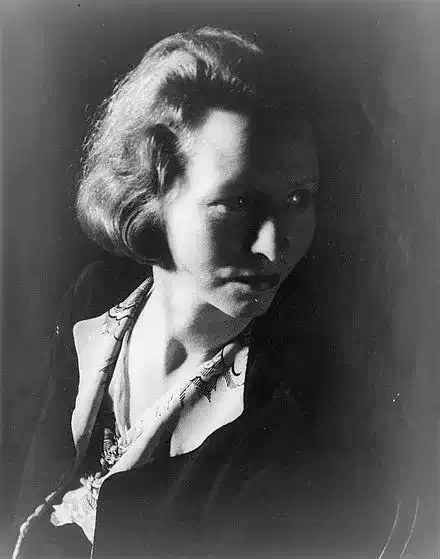
Edna St. Vincent Millay
Make Bright The Arrows
Make bright the arrows
Gather the shields:
Conquest narrows
The peaceful fields.
Stock well the quiver
With arrows bright:
The bowman feared
Need never fight.
Make bright the arrows,
O peaceful and wise!
Gather the shields
Against surprise.
Gather the shields:
Conquest narrows
The peaceful fields.
Stock well the quiver
With arrows bright:
The bowman feared
Need never fight.
Make bright the arrows,
O peaceful and wise!
Gather the shields
Against surprise.
350

Carl Sandburg
Ice Handler
I know an ice handler who wears a flannel shirt with pearl buttons the size of a dollar,
And he lugs a hundred-pound hunk into a saloon ice-box, helps himself to cold ham
and rye bread,
Tells the bartender it’s hotter than yesterday and will be hotter yet to-morrow, by
Jesus,
And is on his way with his head in the air and a hard pair of fists.
He spends a dollar or so every Saturday night on a two hundred pound woman who
washes dishes in the Hotel Morrison.
He remembers when the union was organized he broke the noses of two scabs and
loosened the nuts so the wheels came off six different wagons one morning, and he
came around and watched the ice melt in the street.
All he was sorry for was one of the scabs bit him on the knuckles of the right hand so
they bled when he came around to the saloon to tell the boys about it.
350

John Greenleaf Whittier
Abraham Davenport
In the old days (a custom laid aside
With breeches and cocked hats) the people sent
Their wisest men to make the public laws.
And so, from a brown homestead, where the Sound
Drinks the small tribute of the Mianas,
Waved over by the woods of Rippowams,
And hallowed by pure lives and tranquil deaths,
Stamford sent up to the councils of the State
Wisdom and grace in Abraham Davenport.
'T was on a May-day of the far old year
Seventeen hundred eighty, that there fell
Over the bloom and sweet life of the Spring,
Over the fresh earth and the heaven of noon,
A horror of great darkness, like the night
In day of which the Norland sagas tell,-
The Twilight of the Gods. The low-hung sky
Was black with ominous clouds, save where its rim
Was fringed with a dull glow, like that which climbs
The crater's sides from the red hell below.
Birds ceased to sing, and all the barn-yard fowls
Roosted; the cattle at the pasture bars
Lowed, and looked homeward; bats on leathern wings
Flitted abroad; the sounds of labor died;
Men prayed, and women wept; all ears grew sharp
To hear the doom-blast of the trumpet shatter
The black sky, that the dreadful face of Christ
Might look from the rent clouds, not as he looked
A loving guest at Bethany, but stern
As Justice and inexorable Law.
Meanwhile in the old State House, dim as ghosts,
Sat the lawgivers of Connecticut,
Trembling beneath their legislative robes.
'It is the Lord's Great Day! Let us adjourn,'
Some said; and then, as if with one accord,
All eyes were turned to Abraham Davenport.
He rose, slow cleaving with his steady voice
The intolerable hush. 'This well may be
The Day of Judgment which the world awaits;
But be it so or not, I only know
My present duty, and my Lord's command
To occupy till He come. So at the post
Where He hath set me in His providence,
I choose, for one, to meet Him face to face,-No
faithless servant frightened from my task,
But ready when the Lord of the harvest calls;
And therefore, with all reverence, I would say,
Let God do His work, we will see to ours.
Bring in the candles.' And they brought them in.
Then by the flaring lights the Speaker read,
Albeit with husky voice and shaking hands,
An act to amend an act to regulate
The shad and alewive fisheries. Whereupon
Wisely and well spake Abraham Davenport,
Straight to the question, with no figures of speech
Save the ten Arab signs, yet not without
The shrewd dry humor natural to the man
His awe-struck colleagues listening all the while,
Between the pauses of his argument,
To hear the thunder of the wrath of God
Break from the hollow trumpet of the cloud.
And there he stands in memory to this day,
Erect, self-poised, a rugged face, half seen
Against the background of unnatural dark,
A witness to the ages as they pass,
That simple duty hath no place for fear.
. . . . .
He ceased: just then the ocean seemed
To lift a half-faced moon in sight;
And, shore-ward, o'er the waters gleamed,
From crest to crest, a line of light,
Such as of old, with solemn awe,
The fishers by Gennesaret saw,
When dry-shod o'er it walked the Son of God,
Tracking the waves with light where'er his sandals trod.
Silently for a space each eye
Upon that sudden glory turned
Cool from the land the breeze blew by,
The tent-ropes flapped, the long beach churned
Its waves to foam; on either hand
Stretched, far as sight, the hills of sand;
With bays of marsh, and capes of bush and tree,
The wood's black shore-line loomed beyond the meadowy sea.
The lady rose to leave. 'One song,
Or hymn,' they urged, 'before we part.'
And she, with lips to which belong
Sweet intuitions of all art,
Gave to the winds of night a strain
Which they who heard would hear again;
And to her voice the solemn ocean lent,
Touching its harp of sand, a deep accompaniment.
347

George Herbert
Artillery
As I one ev'ning sat before my cell,
Me thoughts a star did shoot into my lap.
I rose, and shook my clothes, as knowing well,
That from small fires comes oft no small mishap.
When suddenly I heard one say,
-Do as thou usest, disobey,
Expell good motions from thy breast,
Which have the face of fire, but end in rest-.
I, who had heard of music in the spheres,
But not of speech in stars, began to muse:
But turning to my God, whose ministers
The stars and all things are; if I refuse,
Dread Lord, said I , so oft my good;
Then I refuse not ev'n with blood
To wash away my stubborn thought:
For I will do, or suffer what I ought.
But I have also stars and shooters too,
Born where thy servants both artilleries use.
My tears and prayers night and day do woo,
And work up to thee; yet thou dost refuse.
Not but that I am (I must say still)
Much more oblig'd to do thy will,
Than thou to grant mine: but because
Thy promise now hath ev'n set thee thy laws.
Then we are shooters both, and thou dost deign
To enter combat with us, and contest
With thine own clay. But I would parley fain:
Shun not my arrows, and behold my breast.
Yet if thou shunnest, I am thine:
I must be so, if I am mine.
There is no articling with thee:
I am but finite, yet thine infinitely.
344

Ezra Pound
Ité
Go, my songs, seek your praise from the young
and from the intolerant,
Move among the lovers of perfection alone.
Seek ever to stand in the hard Sophoclean light
And take you wounds from it gladly.
and from the intolerant,
Move among the lovers of perfection alone.
Seek ever to stand in the hard Sophoclean light
And take you wounds from it gladly.
346
Henry Van Dyke
Jeanne d'Arc Returns
1914-1916
What hast thou done, O womanhood of France,
Mother and daughter, sister, sweetheart, wife,
What hast thou done, amid this fateful strife,
To prove the pride of thine inheritance
In this fair land of freedom and romance?
I hear thy voice with tears and courage rife,--
Smiling against the swords that seek thy life,--
Make answer in a noble utterance:
"I give France all I have, and all she asks.
Would it were more! Ah, let her ask and take:
My hands to nurse her wounded, do her tasks,--
My feet to run her errands through the dark,--
My heart to bleed in triumph for her sake,--
And all my soul to follow thee, Jeanne d'Arc!"
346
Robert Browning
The Glove
(PETER RONSARD _loquitur_.)
``Heigho!'' yawned one day King Francis,
``Distance all value enhances!
``When a man's busy, why, leisure
``Strikes him as wonderful pleasure:
`` 'Faith, and at leisure once is he?
``Straightway he wants to be busy.
``Here we've got peace; and aghast I'm
``Caught thinking war the true pastime.
``Is there a reason in metre?
``Give us your speech, master Peter!''
I who, if mortal dare say so,
Ne'er am at loss with my Naso,
``Sire,'' I replied, ``joys prove cloudlets:
``Men are the merest Ixions''---
Here the King whistled aloud, ``Let's
``---Heigho---go look at our lions!''
Such are the sorrowful chances
If you talk fine to King Francis.
And so, to the courtyard proceeding,
Our company, Francis was leading,
Increased by new followers tenfold
Before be arrived at the penfold;
Lords, ladies, like clouds which bedizen
At sunset the western horizon.
And Sir De Lorge pressed 'mid the foremost
With the dame he professed to adore most.
Oh, what a face! One by fits eyed
Her, and the horrible pitside;
For the penfold surrounded a hollow
Which led where the eye scarce dared follow,
And shelved to the chamber secluded
Where Bluebeard, the great lion, brooded.
The King bailed his keeper, an Arab
As glossy and black as a scarab,*
And bade him make sport and at once stir
Up and out of his den the old monster.
They opened a hole in the wire-work
Across it, and dropped there a firework,
And fled: one's heart's beating redoubled;
A pause, while the pit's mouth was troubled,
The blackness and silence so utter,
By the firework's slow sparkling and sputter;
Then earth in a sudden contortion
Gave out to our gaze her abortion.
Such a brute! Were I friend Clement Marot
(Whose experience of nature's but narrow,
And whose faculties move in no small mist
When he versifies David the Psalmist)
I should study that brute to describe you
_Illim Juda Leonem de Tribu_.
One's whole blood grew curdling and creepy
To see the black mane, vast and heapy,
The tail in the air stiff and straining,
The wide eyes, nor waxing nor waning,
As over the barrier which bounded
His platform, and us who surrounded
The barrier, they reached and they rested
On space that might stand him in best stead:
For who knew, he thought, what the amazement,
The eruption of clatter and blaze meant,
And if, in this minute of wonder,
No outlet, 'mid lightning and thunder,
Lay broad, and, his shackles all shivered,
The lion at last was delivered?
Ay, that was the open sky o'erhead!
And you saw by the flash on his forehead,
By the hope in those eyes wide and steady,
He was leagues in the desert already,
Driving the flocks up the mountain,
Or catlike couched hard by the fountain
To waylay the date-gathering negress:
So guarded he entrance or egress.
``How he stands!'' quoth the King: ``we may well swear,
(``No novice, we've won our spurs elsewhere
``And so can afford the confession,)
``We exercise wholesome discretion
``In keeping aloof from his threshold;
``Once hold you, those jaws want no fresh hold,
``Their first would too pleasantly purloin
``The visitor's brisket or surloin:
``But who's he would prove so fool-hardy?
``Not the best man of Marignan, pardie!''
The sentence no sooner was uttered,
Than over the rails a glove flattered,
Fell close to the lion, and rested:
The dame 'twas, who flung it and jested
With life so, De Lorge had been wooing
For months past; he sat there pursuing
His suit, weighing out with nonchalance
Fine speeches like gold from a balance.
Sound the trumpet, no true knight's a tarrier!
De Lorge made one leap at the barrier,
Walked straight to the glove,---while the lion
Neer moved, kept his far-reaching eye on
The palm-tree-edged desert-spring's sapphire,
And the musky oiled skin of the Kaffir,---
Picked it up, and as calmly retreated,
Leaped back where the lady was seated,
And full in the face of its owner
Flung the glove.
``Your heart's queen, you dethrone her?
``So should I!''---cried the King---``'twas mere vanity,
``Not love, set that task to humanity!''
Lords and ladies alike turned with loathing
From such a proved wolf in sheep's clothing.
Not so, I; for I caught an expression
In her brow's undisturbed self-possession
Amid the Court's scoffing and merriment,---
As if from no pleasing experiment
She rose, yet of pain not much heedful
So long as the process was needful,---
As if she had tried in a crucible,
To what ``speeches like gold'' were reducible,
And, finding the finest prove copper,
Felt the smoke in her face was but proper;
To know what she had _not_ to trust to,
Was worth all the ashes and dust too.
She went out 'mid hooting and laughter;
Clement Marot stayed; I followed after,
And asked, as a grace, what it all meant?
If she wished not the rash deed's recalment?
``For I''---so I spoke---``am a poet:
``Human nature,---behoves that I know it!''
She told me, ``Too long had I heard
``Of the deed proved alone by the word:
``For my love---what De Lorge would not dare!
``With my scorn---what De Lorge could compare!
``And the endless descriptions of death
``He would brave when my lip formed a breath,
``I must reckon as braved, or, of course,
``Doubt his word---and moreover, perforce,
``For such gifts as no lady could spurn,
``Must offer my love in return.
``When I looked on your lion, it brought
``All the dangers at once to my thought,
``Encountered by all sorts of men,
``Before he was lodged in his den,---
``From the poor slave whose club or bare hands
``Dug the trap, set the snare on the sands,
``With no King and no Court to applaud,
``By no shame, should he shrink, overawed,
``Yet to capture the creature made shift,
``That his rude boys might laugh at the gift,
``---To the page who last leaped o'er the fence
``Of the pit, on no greater pretence
``Than to get back the bonnet he dropped,
``Lest his pay for a week should be stopped.
``So, wiser I judged it to make
``One trial what `death for my sake'
``Really meant, while the power was yet mine,
``Than to wait until time should define
``Such a phrase not so simply as I,
``Who took it to mean just `to die.'
``The blow a glove gives is but weak:
``Does the mark yet discolour my cheek?
``But when the heart suffers a blow,
``Will the pain pass so soon, do you know?''
I looked, as away she was sweeping,
And saw a youth eagerly keeping
As close as he dared to the doorway.
No doubt that a noble should more weigh
His life than befits a plebeian;
And yet, had our brute been Nemean---
(I judge by a certain calm fervour
The youth stepped with, forward to serve her)
---He'd have scarce thought you did him the worst turn
If you whispered ``Friend, what you'd get, first earn!''
And when, shortly after, she carried
Her shame from the Court, and they married,
To that marriage some happiness, maugre
The voice of the Court, I dared augur.
For De Lorge, he made women with men vie,
Those in wonder and praise, these in envy;
And in short stood so plain a head taller
That he wooed and won ... how do you call her?
The beauty, that rose in the sequel
To the King's love, who loved her a week well.
And 'twas noticed he never would honour
De Lorge (who looked daggers upon her)
With the easy commission of stretching
His legs in the service, and fetching
His wife, from her chamber, those straying
Sad gloves she was always mislaying,
While the King took the closet to chat in,---
But of course this adventure came pat in.
And never the King told the story,
How bringing a glove brought such glory,
But the wife smiled---``His nerves are grown firmer:
``Mine he brings now and utters no murmur.''
_Venienti occurrite morbo!_
With which moral I drop my theorbo.
* A beetle.
346
John Greenleaf Whittier
Thy Will Be Done
WE see not, know not; all our way
Is night, — with Thee alone is day:
From out the torrent's troubled drift,
Above the storm our prayers we lift,
Thy will be done!
The flesh may fail, the heart may faint,
But who are we to make complaint,
Or dare to plead, in times like these,
The weakness of our love of ease?
Thy will be done!
We take with solemn thankfulness
Our burden up, nor ask it less,
And count it joy that even we
May suffer, serve, or wait for Thee,
Whose will be done!
Though dim as yet in tint and line,
We trace Thy picture's wise design,
And thank Thee that our age supplies
Its dark relief of sacrifice.
Thy will be done!
And if, in our unworthiness,
Thy sacrificial wine we press;
If from Thy ordeal's heated bars
Our feet are seamed with crimson scars,
Thy will be done!
If, for the age to come, this hour
Of trial hath vicarious power,
And, blest by Thee, our present pain,
Be Liberty's eternal gain,
Thy will be done!
Strike, Thou the Master, we Thy keys,
The anthem of the destinies!
The minor of Thy loftier strain,
Our hearts shall breathe the old refrain,
Thy will be done!
345
Johann Wolfgang von Goethe
River Lilies
Saw a boy three lilies white,
Lilies in the river,
Half heart-open to the light,
Full of golden arrows bright,
Each a silver quiver.
Lilies, lilies, lilies white,
Lilies in the river.
Said the boy, “I’ll pluck you there,
Lilies in the river!”
Said the lilies, “If you dare
You shall drown, or homeward fare
Dripping and a-shiver!”
Lilies, lilies, lilies white,
Lilies in the river.
Wilful still the boy would clasp
Lilies in the river;
Tumbled in ere he could grasp,
Scrambled out with puff and gasp,
Plucked no lilies ever.
Lilies, lilies, lilies white,
Lilies in the river.
344

Robert W. Service
A Casualty
That boy I took in the car last night,
With the body that awfully sagged away,
And the lips blood-crisped, and the eyes flame-bright,
And the poor hands folded and cold as clay --
Oh, I've thought and I've thought of him all the day.
For the weary old doctor says to me:
"He'll only last for an hour or so.
Both of his legs below the knee
Blown off by a bomb. . . . So, lad, go slow,
And please remember, he doesn't know."
So I tried to drive with never a jar;
And there was I cursing the road like mad,
When I hears a ghost of a voice from the car:
"Tell me, old chap, have I `copped it' bad?"
So I answers "No," and he says, "I'm glad."
"Glad," says he, "for at twenty-two
Life's so splendid, I hate to go.
There's so much good that a chap might do,
And I've fought from the start and I've suffered so.
'Twould be hard to get knocked out now, you know."
"Forget it," says I; then I drove awhile,
And I passed him a cheery word or two;
But he didn't answer for many a mile,
So just as the hospital hove in view,
Says I: "Is there nothing that I can do?"
Then he opens his eyes and he smiles at me;
And he takes my hand in his trembling hold;
"Thank you -- you're far too kind," says he:
"I'm awfully comfy -- stay . . . let's see:
I fancy my blanket's come unrolled --
My feet, please wrap 'em -- they're cold . . . they're cold."
344

Ella Wheeler Wilcox
The Camp Fire
When night hung low and dew fell damp,
There fell athwart the shadows
The gleaming watchfires of the camp,
Like glow-worms on the meadows.
The sentinel his measured beat
With measured tread was keeping,
While like bronze statues at his feet
Lay tired soldiers, sleeping.
On some worn faces of the men
There crept a homesick yearning,
Which made it almost seem again,
The child-look was returning.
While on full many a youthful brow,
Till now to care a stranger,
The premature grave lines told how
They had grown old through danger.
One, in his slumber, laughed with joy,
The laughing echoes mocked him,
He thought beside his baby boy
He sat and gaily rocked him.
O pitying angels! Thou wert kind
To end this brief elysian,
He found what he no more could find
Save in a dreamer's vision.
The clear note of a mocking bird-
That star of sound-came falling
Down thro' the night; one, wakeful, heard
And answered to the calling,
And then upon the ear there broke
That sweet, pathetic measure,
That song that wakes-as then it woke,
Such mingled pain and pleasure.
One voice at first, and then the sound
Pulsed like a great bell's swinging,
'Tenting to-night on the old camp ground,'
The whole roused camp was singing.
The sense of warfare's discontent
Gave place to warfare's glory;
Right merrily the swift hours went
With song, and jest, and story.
They sang the song of Old John Brown,
Whose march goes on forever;
It made them thirsty for renown,
It fired them with endeavor.
So much of that great heart lives still,
So much of that great spirit-
His very name shoots like a thrill
Through all men when they hear it.
They found in tales of march and fight
New courage as they listened,
And while they watched the weird camp-light,
And while the still stars glistened,
Like some stern comrade's voice, there broke
And swept from hill to valley
'Til all the sleeping echoes woke,-
The bugle's call to rally!
'To arms! to arms! the foe is near!'
Ah, brave hearts were ye equal
To hearing through without one fear
The whole tale's bloody sequel?
The laurel wreath, the victor's cry,
These are not all of glory;
The gaping wound, the glazing eye,
They, too, are in the story.
And when again their tents were spread,
And by campfires they slumbered,
The missing faces of the dead
The living ones outnumbered.
And yet, their memories animate
The hearts that still survive them,
And holy seems the task, and great,
For one hour to revive them.
339
Edna St. Vincent Millay
Conscientious Objector
I shall die, but
that is all that I shall do for Death.
I hear him leading his horse out of the stall;
I hear the clatter on the barn-floor.
He is in haste; he has business in Cuba,
business in the Balkans, many calls to make this morning.
But I will not hold the bridle
while he clinches the girth.
And he may mount by himself:
I will not give him a leg up.
Though he flick my shoulders with his whip,
I will not tell him which way the fox ran.
With his hoof on my breast, I will not tell him where
the black boy hides in the swamp.
I shall die, but that is all that I shall do for Death;
I am not on his pay-roll.
I will not tell him the whereabout of my friends
nor of my enemies either.
Though he promise me much,
I will not map him the route to any man's door.
Am I a spy in the land of the living,
that I should deliver men to Death?
Brother, the password and the plans of our city
are safe with me; never through me Shall you be overcome.
338
Robert Browning
Boot and Saddle
Boot, saddle, to horse, and away!
Rescue my Castle, before the hot day
Brightens the blue from its silvery grey,
(Chorus) "Boot, saddle, to horse, and away!"
Ride past the suburbs, asleep as you'd say;
Many's the friend there, will listen and pray
"God's luck to gallants that strike up the lay,
(Chorus) "Boot, saddle, to horse, and away!"
Forty miles off, like a roebuck at bay,
Flouts Castle Brancepeth the Roundheads array:
Who laughs, Good fellows ere this, by my fay,
(Chorus) "Boot, saddle, to horse, and away!"
Who? My wife Gertrude; that, honest and gay,
Laughs when you talk of surrendering, "Nay!
I've better counsellors; what counsel they?"
(Chorus) "Boot, saddle, to horse, and away!"
337
John Greenleaf Whittier
The Disenthralled
HE had bowed down to drunkenness,
An abject worshipper:
The pride of manhood's pulse had grown
Too faint and cold to stir;
And he had given his spirit up
To the unblessëd thrall,
And bowing to the poison cup,
He gloried in his fall!
There came a change —the cloud rolled off,
And light fell on his brain —
And like the passing of a dream
That cometh not again,
The shadow of the spirit fled.
He saw the gulf before,
He shuddered at the waste behind,
And was a man once more.
He shook the serpent folds away,
That gathered round his heart,
As shakes the swaying forest-oak
Its poison vine apart;
He stood erect; returning pride
Grew terrible within,
And conscience sat in judgment, on
His most familiar sin.
The light of Intellect again
Along his pathway shone;
And Reason like a monarch sat
Upon his olden throne.
The honored and the wise once more
Within his presence came;
And lingered oft on lovely lips
His once forbidden name.
There may be glory in the might,
That treadeth nations down;
Wreaths for the crimson conqueror,
Pride for the kingly crown;
But nobler is that triumph hour,
The disenthralled shall find,
When evil passion boweth down,
Unto the Godlike mind!
337
John Greenleaf Whittier
To Charles Sumner
If I have seemed more prompt to censure wrong
Than praise the right; if seldom to thine ear
My voice hath mingled with the exultant cheer
Borne upon all our Northern winds along;
If I have failed to join the fickle throng
In wide-eyed wonder, that thou standest strong
In victory, surprised in thee to find
Brougham's scathing power with Canning's grace combined;
That he, for whom the ninefold Muses sang,
From their twined arms a giant athlete sprang,
Barbing the arrows of his native tongue
With the spent shafts Latona's archer flung,
To smite the Python of our land and time,
Fell as the monster born of Crissa's slime,
Like the blind bard who in Castalian springs
Tempered the steel that clove the crest of kings,
And on the shrine of England's freedom laid
The gifts of Cumve and of Delphi's' shade,-Small
need hast thou of words of praise from me.
Thou knowest my heart, dear friend, and well canst guess
That, even though silent, I have not the less
Rejoiced to see thy actual life agree
With the large future which I shaped for thee,
When, years ago, beside the summer sea,
White in the moon, we saw the long waves fall
Baffled and broken from the rocky wall,
That, to the menace of the brawling flood,
Opposed alone its massive quietude,
Calm as a fate; with not a leaf nor vine
Nor birch-spray trembling in the still moonshine,
Crowning it like God's peace. I sometimes think
That night-scene by the sea prophetical,
(For Nature speaks in symbols and in signs,
And through her pictures human fate divines),
That rock, wherefrom we saw the billows sink
In murmuring rout, uprising clear and tall
In the white light of heaven, the type of one
Who, momently by Error's host assailed,
Stands strong as Truth, in greaves of granite mailed;
And, tranquil-fronted, listening over all
The tumult, hears the angels say, Well done!
336
Henry Wadsworth Longfellow
The Cumberland
At anchor in Hampton Roads we lay,
On board of the Cumberland sloop-of-war;
And at times from the fortress across the bay
The alarum of drums swept past,
Or a bugle blast
From the camp on the shore.
Then far away to the south uprose
A little feather of snow-white smoke,
And we knew that the iron ship of our foes
Was steadily steering its course
To try the force
Of our ribs of oak.
Down upon us heavily runs,
Silent and sullen, the floating fort;
Then comes a puff of smoke from her guns,
And leaps the terrible death,
With fiery breath,
From each open port.
We are not idle, but send her straight
Defiance back in a full broadside!
As hail rebounds from a roof of slate,
Rebounds our heavier hail
From each iron scale
Of the monster's hide.
'Strike your flag!' the rebel cries,
In his arrogant old plantation strain.
'Never!' our gallant Morris replies:
'It is better to sink than to yield!'
And the whole air is pealed
With the cheers of our men.
Then like a kraken huge and black,
She crushed our ribs in her iron grasp!
Down went the Cumberland all awrack,
With a sudden shudder of death,
And the cannon's breath
For her dying gasp.
Next morn, as the sun rose over the bay,
Still floated our flag at the mainmast-head.
Lord, how beautiful was thy day!
Every waft of the air
Was a whisper of prayer,
Or a dirge for the dead.
Ho! brave hearts that went down in the seas!
Ye are at peace in the troubled stream.
Ho! brave land! with hearts like these,
Thy flag, that is rent in twain,
Shall be one again,
And without a seam.
336