
Courage and Strength

William Wordsworth
England ii
MILTON! thou shouldst be living at this hour:
England hath need of thee: she is a fen
Of stagnant waters: altar, sword, and pen,
Fireside, the heroic wealth of hall and bower,
Have forfeited their ancient English dower
Of inward happiness. We are selfish men;
O raise us up, return to us again,
And give us manners, virtue, freedom, power!
Thy soul was like a Star, and dwelt apart;
Thou hadst a voice whose sound was like the sea:
Pure as the naked heavens, majestic, free,
So didst thou travel on life's common way,
In cheerful godliness; and yet thy heart
The lowliest duties on herself did lay.
258

Anaïs Nin
Risk
And then the day came,
when the risk
to remain tight
in a bud
was more painful
than the risk
it took
to Blossom.
when the risk
to remain tight
in a bud
was more painful
than the risk
it took
to Blossom.
254

Robert W. Service
The Man From Athabaska
Oh the wife she tried to tell me that 'twas nothing but the thrumming
Of a wood-pecker a-rapping on the hollow of a tree;
And she thought that I was fooling when I said it was the drumming
Of the mustering of legions, and 'twas calling unto me;
'Twas calling me to pull my freight and hop across the sea.
And a-mending of my fish-nets sure I started up in wonder,
For I heard a savage roaring and 'twas coming from afar;
Oh the wife she tried to tell me that 'twas only summer thunder,
And she laughed a bit sarcastic when I told her it was War;
'Twas the chariots of battle where the mighty armies are.
Then down the lake came Half-breed Tom with russet sail a-flying,
And the word he said was "War" again, so what was I to do?
Oh the dogs they took to howling, and the missis took to crying,
As I flung my silver foxes in the little birch canoe:
Yes, the old girl stood a-blubbing till an island hid the view.
Says the factor: "Mike, you're crazy! They have soldier men a-plenty.
You're as grizzled as a badger, and you're sixty year or so."
"But I haven't missed a scrap," says I, "since I was one and twenty.
And shall I miss the biggest? You can bet your whiskers -- no!"
So I sold my furs and started . . . and that's eighteen months ago.
For I joined the Foreign Legion, and they put me for a starter
In the trenches of the Argonne with the Boche a step away;
And the partner on my right hand was an apache from Montmartre;
On my left there was a millionaire from Pittsburg, U. S. A.
(Poor fellow! They collected him in bits the other day.)
But I'm sprier than a chipmunk, save a touch of the lumbago,
And they calls me Old Methoosalah, and `blagues' me all the day.
I'm their exhibition sniper, and they work me like a Dago,
And laugh to see me plug a Boche a half a mile away.
Oh I hold the highest record in the regiment, they say.
And at night they gather round me, and I tell them of my roaming
In the Country of the Crepuscule beside the Frozen Sea,
Where the musk-ox runs unchallenged, and the cariboo goes homing;
And they sit like little children, just as quiet as can be:
Men of every crime and colour, how they harken unto me!
And I tell them of the Furland, of the tumpline and the paddle,
Of secret rivers loitering, that no one will explore;
And I tell them of the ranges, of the pack-strap and the saddle,
And they fill their pipes in silence, and their eyes beseech for more;
While above the star-shells fizzle and the high explosives roar.
And I tell of lakes fish-haunted, where the big bull moose are calling,
And forests still as sepulchres with never trail or track;
And valleys packed with purple gloom, and mountain peaks appalling,
And I tell them of my cabin on the shore at Fond du Lac;
And I find myself a-thinking: Sure I wish that I was back.
So I brag of bear and beaver while the batteries are roaring,
And the fellows on the firing steps are blazing at the foe;
And I yarn of fur and feather when the `marmites' are a-soaring,
And they listen to my stories, seven `poilus' in a row,
Seven lean and lousy poilus with their cigarettes aglow.
And I tell them when it's over how I'll hike for Athabaska;
And those seven greasy poilus they are crazy to go too.
And I'll give the wife the "pickle-tub" I promised, and I'll ask her
The price of mink and marten, and the run of cariboo,
And I'll get my traps in order, and I'll start to work anew.
For I've had my fill of fighting, and I've seen a nation scattered,
And an army swung to slaughter, and a river red with gore,
And a city all a-smoulder, and . . . as if it really mattered,
For the lake is yonder dreaming, and my cabin's on the shore;
And the dogs are leaping madly, and the wife is singing gladly,
And I'll rest in Athabaska, and I'll leave it nevermore.
256
Robert W. Service
The Lost Master
"And when I come to die," he said,
"Ye shall not lay me out in state,
Nor leave your laurels at my head,
Nor cause your men of speech orate;
No monument your gift shall be,
No column in the Hall of Fame;
But just this line ye grave for me:
`He played the game.'"
So when his glorious task was done,
It was not of his fame we thought;
It was not of his battles won,
But of the pride with which he fought;
But of his zest, his ringing laugh,
His trenchant scorn of praise or blame:
And so we graved his epitaph,
"He played the game."
And so we, too, in humbler ways
Went forth to fight the fight anew,
And heeding neither blame nor praise,
We held the course he set us true.
And we, too, find the fighting sweet;
And we, too, fight for fighting's sake;
And though we go down in defeat,
And though our stormy hearts may break,
We will not do our Master shame:
We'll play the game, please God,
We'll play the game.
256

Emily Dickinson
Read—Sweet—how others—strove
Read—Sweet—how others—strove—
Till we—are stouter—
What they—renounced—
Till we—are less afraid—
How many times they—bore the faithful witness—
Till we—are helped—
As if a Kingdom—cared!
Read then—of faith—
That shone above the fagot—
Clear strains of Hymn
The River could not drown—
Brave names of Men—
And Celestial Women—
Passed out—of Record
Into—Renown!
255
Robert W. Service
Drifter
God gave you guts: don't let Him down;
Brace up, be worthy of His giving.
The road's a rut, the sky's a frown;
I know you're plumb fed up with living.
Fate birches you, and wry the rod . . .
Snap out, you fool! Don't let down God.
Oh, yes, you're on misfortune's shift,
And weary is the row your hoeing;
You have no home, you drift and drift,
Seems folks don't care the way you're going . . .
Well, make them care - you're not afraid:
Step on the gas - you'll make the grade.
Believe that God has faith in you,
In you His loving light is shining;
All of you that is fine and true
Is part of Him, so quit your whining . . .
buck up, son, for your Maker's sake:
Don't let Him down - give God a break.
256
Robert W. Service
Fighting Mac
A Life Tragedy
A pistol shot rings round and round the world;
In pitiful defeat a warrior lies.
A last defiance to dark Death is hurled,
A last wild challenge shocks the sunlit skies.
Alone he falls, with wide, wan, woeful eyes:
Eyes that could smile at death -- could not face shame.
Alone, alone he paced his narrow room,
In the bright sunshine of that Paris day;
Saw in his thought the awful hand of doom;
Saw in his dream his glory pass away;
Tried in his heart, his weary heart, to pray:
"O God! who made me, give me strength to face
The spectre of this bitter, black disgrace."
* * * * *
The burn brawls darkly down the shaggy glen;
The bee-kissed heather blooms around the door;
He sees himself a barefoot boy again,
Bending o'er page of legendary lore.
He hears the pibroch, grips the red claymore,
Runs with the Fiery Cross, a clansman true,
Sworn kinsman of Rob Roy and Roderick Dhu.
Eating his heart out with a wild desire,
One day, behind his counter trim and neat,
He hears a sound that sets his brain afire -The
Highlanders are marching down the street.
Oh, how the pipes shrill out, the mad drums beat!
"On to the gates of Hell, my Gordons gay!"
He flings his hated yardstick away.
He sees the sullen pass, high-crowned with snow,
Where Afghans cower with eyes of gleaming hate.
He hurls himself against the hidden foe.
They try to rally -- ah, too late, too late!
Again, defenseless, with fierce eyes that wait
For death, he stands, like baited bull at bay,
And flouts the Boers, that mad Majuba day.
He sees again the murderous Soudan,
Blood-slaked and rapine-swept. He seems to stand
Upon the gory plain of Omdurman.
Then Magersfontein, and supreme command
Over his Highlanders. To shake his hand
A King is proud, and princes call him friend.
And glory crowns his life -- and now the end,
The awful end. His eyes are dark with doom;
He hears the shrapnel shrieking overhead;
He sees the ravaged ranks, the flame-stabbed gloom.
Oh, to have fallen! -- the battle-field his bed,
With Wauchope and his glorious brother-dead.
Why was he saved for this, for this? And now
He raises the revolver to his brow.
* * * * *
In many a Highland home, framed with rude art,
You'll find his portrait, rough-hewn, stern and square;
It's graven in the Fuyam fellah's heart;
The Ghurka reads it at his evening prayer;
The raw lands know it, where the fierce suns glare;
The Dervish fears it. Honor to his name
Who holds aloft the shield of England's fame.
Mourn for our hero, men of Northern race!
We do not know his sin; we only know
His sword was keen. He laughed death in the face,
And struck, for Empire's sake, a giant blow.
His arm was strong. Ah! well they learnt, the foe
The echo of his deeds is ringing yet --
Will ring for aye. All else . . . let us forget.
255

Henry Wadsworth Longfellow
Voices Of The Night : The Light Of Stars
The night is come, but not too soon;
And sinking silently,
All silently, the little moon
Drops down behind the sky.
There is no light in earth or heaven
But the cold light of stars;
And the first watch of night is given
To the red planet Mars.
Is it the tender star of love?
The star of love and dreams?
O no! from that blue tent above,
A hero's armor gleams.
And earnest thoughts within me rise,
When I behold afar,
Suspended in the evening skies,
The shield of that red star.
O star of strength! I see thee stand
And smile upon my pain;
Thou beckonest with thy mailed hand,
And I am strong again.
Within my breast there is no light
But the cold light of stars;
I give the first watch of the night
To the red planet Mars.
The star of the unconquered will,
He rises in my breast,
Serene, and resolute, and still,
And calm, and self-possessed.
And thou, too, whosoe'er thou art,
That readest this brief psalm,
As one by one thy hopes depart,
Be resolute and calm.
O fear not in a world like this,
And thou shalt know erelong,
Know how sublime a thing it is
To suffer and be strong.
253

Henry Lawson
The Lights of Cobb & Co.
Fire lighted; on the table a meal for sleepy men;
A lantern in the stable; a jingle now and then;
The mail-coach looming darkly by light on moon and star;
The growl of sleepy voices; a candle in the bar;
A stumble in the passage of folk with wits abroad;
A swear-word from a bedroom---the shout of "All aboard!"
"Tekh tehk! Git-up!" "Hold fast, there!" and down the range we go;
Five hundred miles of scattered camps will watch for Cobb and Co.
Old coaching towns already decaying for their sins;
Uncounted "Half-way Houses," and scores of "Ten-Mile Inns;"
The riders from the stations by lonely granite peaks;
The black-boy for the shepherds on sheep and cattle creeks;
The roaring camps of Gulgong, and many a Digger’s Rest;"
The diggers on the Lachlan; the huts of Farthest West;
Some twenty thousand exiles who sailed for weal or woe---
The bravest hearts of twenty lands will wait for Cobb and Co.
The morning star has vanished, the frost and fog are gone.
In one of those grand mornings which but on mountains dawn;
A flask of friendly whisky---each other’s hopes we share---
And throw our top-coats open to drink the mountain air.
The roads are rare to travel, and life seems all complete;
The grind of wheels on gravel, the trop of horses’ feet,
The trot, trot, trot and canter, as down the spur we go---
The green sweeps to horizons blue that call for Cobb and Co.
We take a bright girl actress through western dust and damps,
To bear the home-world message, and sing for sinful camps,
To stir our hearts and break them, wind hearts that hope and ache--(
Ah! When she thinks again of these her own must nearly break!)
Five miles this side of the gold-field, a loud, triumphant shout:
Five hundred cheering diggers have snatched the horses out:
With "Auld Lang Syne" in chorus, through roaring camp they go
That cheer for her, and cheer for Home, and cheer for Cobb and Co.
Three lamps above the ridges and gorges dark and deep,
A flash on sandstone cuttings where sheer the sidlings sweep,
A flash on shrouded wagons, on water ghastly white;
Weird brush and scattered remnants of "rushes in the night;"
Across the swollen river a flash beyond the ford:
Ride hard to warn the driver! He’s drunk or mad, good Lord!
But on the bank to westward a broad and cheerful glow---
New camps extend across the plains new routes for Cobb and Co.
Swift scramble up the sidling where teams climb inch by inch;
Pause, bird-like, on the summit--then breakneck down the pinch;
By clear, ridge-country rivers, and gaps where tracks run high,
Where waits the lonely horseman, cut clear against the sky;
Past haunted half-way houses--where convicts made the bricks--Scrub-
yards and new bark shanties, we dash with five and six;
Through stringy-bark and blue-gum, and box and pine we go---
A hundred miles shall see to-night the lights of Cobb and Co!
253
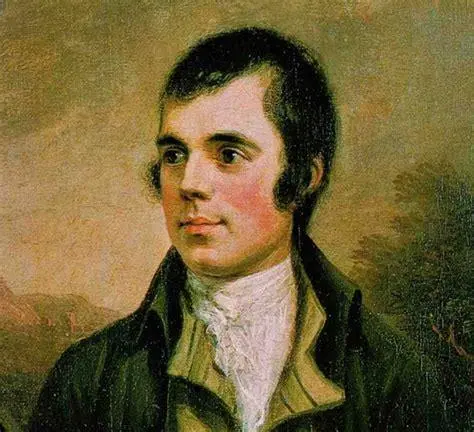
Robert Burns
Scots, Wha Hae Wi' Wallace Bled
Scots, wha hae wi' Wallace bled,
Scots, wham Bruce has aften led,
Welcome to your gory bed,
Or to victory!
Now's the day, and now's the hour;
See the front o' battle lour,
See approach proud Edward's power—
Chains and slavery!
Wha will be a traitor-knave?
Wha can fill a coward's grave?
Wha sae base as be a slave?
Let him turn and flee!
Wha for Scotland's king and law
Freedom's sword will strongly draw,
Freeman stand or freeman fa',
Let him follow me!
By oppression's woes and pains,
By your sons in servile chains,
We will drain our dearest veins,
But they shall be free!
Lay the proud usurpers low!
Tyrants fall in ev'ry foe!
Liberty's in ev'ry blow!
Let us do or die!
254
Henry Lawson
At The Beating Of A Drum
Fear ye not the stormy future, for the Battle Hymn is strong,
And the armies of Australia shall not march without a song;
The glorious words and music of Australia's song shall come
When her true hearts rush together at the beating of a drum.
We may not be there to hear it – 'twill be written in the night,
And Australia's foes shall fear it in the hour before the fight.
The glorious words and music from a lonely heart shall come
When our sons shall rush to danger at the beating of the drum.
He shall be unknown who writes it; he shall soon forgotten be,
But the song shall ring through ages as a song of liberty.
And I say the words and music of our battle hymn shall come,
When Australia wakes in anger at the beating of a drum.
254

Anonymous
Beowulf (Episode )
THEN Hrothgar went with his hero-train,
defence-of-Scyldings, forth from hall;
fain would the war-lord Wealhtheow seek,
couch of his queen. The King-of-Glory
against this Grendel a guard had set,
so heroes heard, a hall-defender,
who warded the monarch and watched for the monster.
In truth, the Geats' prince gladly trusted
his mettle, his might, the mercy of God!
Cast off then his corselet of iron,
helmet from head; to his henchman gave, --
choicest of weapons, -- the well-chased sword,
bidding him guard the gear of battle.
Spake then his Vaunt the valiant man,
Beowulf Geat, ere the bed be sought: --
"Of force in fight no feebler I count me,
in grim war-deeds, than Grendel deems him.
Not with the sword, then, to sleep of death
his life will I give, though it lie in my power.
No skill is his to strike against me,
my shield to hew though he hardy be,
bold in battle; we both, this night,
shall spurn the sword, if he seek me here,
unweaponed, for war. Let wisest God,
sacred Lord, on which side soever
doom decree as he deemeth right."
Reclined then the chieftain, and cheek-pillows held
the head of the earl, while all about him
seamen hardy on hall-beds sank.
None of them thought that thence their steps
to the folk and fastness that fostered them,
to the land they loved, would lead them back!
Full well they wist that on warriors many
battle-death seized, in the banquet-hall,
of Danish clan. But comfort and help,
war-weal weaving, to Weder folk
the Master gave, that, by might of one,
over their enemy all prevailed,
by single strength. In sooth 'tis told
that highest God o'er human kind
hath wielded ever! -- Thro' wan night striding,
came the walker-in-shadow. Warriors slept
whose hest was to guard the gabled hall, --
all save one. 'Twas widely known
that against God's will the ghostly ravager
him could not hurl to haunts of darkness;
wakeful, ready, with warrior's wrath,
bold he bided the battle's issue.
Beowulf, -- the "one."
253
Robert W. Service
Brave Coward
Elisabeth imagines I've
A yellow streak
She deems I have no dash and drive,
Jest dogoned weak.
'A man should be a man,' says Liz
'Trade blow for blow.'
Poor kid! What my position is
She jest don't know.
She jest don't know my old man killed,
Yea, slew and slew.
As steamy blood he sweetly spilled,
So could I too.
And though no wrath of heart I show
When I see red,
I fear no S. O. B. but oh
Myself I dread.
Though fellers reckon me a dope
And trigger-shy,
'Tain't nice to dangle on a rope,
And like Pa die.
So as I belly to the bar
Meek is my breath . . .
No guts! --Don't needle me too far,
Elizabeth!
253
Henry Lawson
John Cornstalk
Jack Cornstalk lives in the Southern Land—
What says Cornstalk John?
Jack Cornstalk says in a loud firm voice:
“Land of the South, lead on.”
CHORUS:
Land of the South, lead on, lead on,
Land of the South, lead on!
Land of the South, lead on, lead on,
Lead on, Land of the South!
John Bull lays claim to the Southern Land.
Jack, is the South Land thine?
John Cornstalk cries in a loud, firm voice:
“The Land of the South is mine!”
Land of the South, lead on, lead on,
Land of the South, lead on!
Land of the South, lead on, lead on,
Lead on, Land of the South!
“By the long, long years my father toiled
In the pioneering band;
By the hardships of those early days,
I claim the Southern Land!”
Land of the South, lead on, lead on,
Land of the South, lead on!
Land of the South, lead on, lead on,
Lead on, Land of the South!
But where shall the Land of the South lead to?
Where lead the nation’s van?
Jack Cornstalk cries from his strong young heart:
“To the Dynasty of Man.”
Land of the South, lead on, lead on,
Land of the South, lead on!
Land of the South, lead on, lead on,
Lead on, Land of the South!
251
Henry Lawson
To Show What a Man Can Do
There has been many a grander deed since man had life to give,
And thousands have gone to certain death, eyes open, that men might live;
And many have gone for their country’s sake, when their numbers were all too few,
And bravely died that their mates may die—to show what a man can do.
Now this is the song of La Bella wreck at the harbour of Warnambool,
And this is the song of a brave, brave man of the grand old simple school:
We all know the forces of circumstance, and we blame not the lifeboat crew—
But this is the song of a fisherman who showed what a man can do.
With a single scull in his strong young hands, and his brave young eyes aglow,
He shot his skill o’er the raging hell, where the lifeboat dared not go!
It was twice and thrice that he went again, and the lives they were only two—
But this is the song of The Man Who Knows, and can show what a man can do.
And we need such deeds in this world of ours, lest the hearts of men might fail—
Oh we need such deeds in this world of ours, and a man to tell the tale!
When the eloquent gestures come from the wreck, and never a word comes through—
Oh, we need such deeds in our land to-day to show what a man can do!
And this is the moral of all that is,
And it’s only known to two
Put out in your dinghy with confidence,
To show what a man can do.
251
Robert W. Service
The Song Of The Camp-Fire
Heed me, feed me, I am hungry, I am red-tongued with desire;
Boughs of balsam, slabs of cedar, gummy fagots of the pine,
Heap them on me, let me hug them to my eager heart of fire,
Roaring, soaring up to heaven as a symbol and a sign.
Bring me knots of sunny maple, silver birch and tamarack;
Leaping, sweeping, I will lap them with my ardent wings of flame;
I will kindle them to glory, I will beat the darkness back;
Streaming, gleaming, I will goad them to my glory and my fame.
Bring me gnarly limbs of live-oak, aid me in my frenzied fight;
Strips of iron-wood, scaly blue-gum, writhing redly in my hold;
With my lunge of lurid lances, with my whips that flail the night,
They will burgeon into beauty, they will foliate in gold.
Let me star the dim sierras, stab with light the inland seas;
Roaming wind and roaring darkness! seek no mercy at my hands;
I will mock the marly heavens, lamp the purple prairies,
I will flaunt my deathless banners down the far, unhouseled lands.
In the vast and vaulted pine-gloom where the pillared forests frown,
By the sullen, bestial rivers running where God only knows,
On the starlit coral beaches when the combers thunder down,
In the death-spell of the barrens, in the shudder of the snows;
In a blazing belt of triumph from the palm-leaf to the pine,
As a symbol of defiance lo! the wilderness I span;
And my beacons burn exultant as an everlasting sign
Of unending domination, of the mastery of Man;
I, the Life, the fierce Uplifter, I that weaned him from the mire;
I, the angel and the devil, I, the tyrant and the slave;
I, the Spirit of the Struggle; I, the mighty God of Fire;
I, the Maker and Destroyer; I, the Giver and the Grave.
II
Gather round me, boy and grey-beard, frontiersman of every kind.
Few are you, and far and lonely, yet an army forms behind:
By your camp-fires shall they know you, ashes scattered to the wind.
Peer into my heart of solace, break your bannock at my blaze;
Smoking, stretched in lazy shelter, build your castles as you gaze;
Or, it may be, deep in dreaming, think of dim, unhappy days.
Let my warmth and glow caress you, for your trails are grim and hard;
Let my arms of comfort press you, hunger-hewn and battle-scarred:
O my lovers! how I bless you with your lives so madly marred!
For you seek the silent spaces, and their secret lore you glean:
For you win the savage races, and the brutish Wild you wean;
And I gladden desert places, where camp-fire has never been.
From the Pole unto the Tropics is there trail ye have not dared?
And because you hold death lightly, so by death shall you be spared,
(As the sages of the ages in their pages have declared).
On the roaring Arkilinik in a leaky bark canoe;
Up the cloud of Mount McKinley, where the avalanche leaps through;
In the furnace of Death Valley, when the mirage glimmers blue.
Now a smudge of wiry willows on the weary Kuskoquim;
Now a flare of gummy pine-knots where Vancouver's scaur is grim;
Now a gleam of sunny ceiba, when the Cuban beaches dim.
Always, always God's Great Open: lo! I burn with keener light
In the corridors of silence, in the vestibules of night;
'Mid the ferns and grasses gleaming, was there ever gem so bright?
Not for weaklings, not for women, like my brother of the hearth;
Ring your songs of wrath around me, I was made for manful mirth,
In the lusty, gusty greatness, on the bald spots of the earth.
Men, my masters! men, my lovers! ye have fought and ye have bled;
Gather round my ruddy embers, softly glowing is my bed;
By my heart of solace dreaming, rest ye and be comforted!
III
I am dying, O my masters! by my fitful flame ye sleep;
My purple plumes of glory droop forlorn.
Grey ashes choke and cloak me, and above the pines there creep
The stealthy silver moccasins of morn.
There comes a countless army, it's the Legion of the Light;
It tramps in gleaming triumph round the world;
And before its jewelled lances all the shadows of the night
Back in to abysmal darknesses are hurled.
Leap to life again, my lovers! ye must toil and never tire;
The day of daring, doing, brightens clear,
When the bed of spicy cedar and the jovial camp-fire
Must only be a memory of cheer.
There is hope and golden promise in the vast portentous dawn;
There is glamour in the glad, effluent sky:
Go and leave me; I will dream of you and love you when you're gone;
I have served you, O my masters! let me die.
A little heap of ashes, grey and sodden by the rain,
Wind-scattered, blurred and blotted by the snow:
Let that be all to tell of me, and glorious again,
Ye things of greening gladness, leap and glow!
A black scar in the sunshine by the palm-leaf or the pine,
Blind to the night and dead to all desire;
Yet oh, of life and uplift what a symbol and a sign!
Yet oh, of power and conquest what a destiny is mine!
A little heap of ashes -- Yea! a miracle divine,
The foot-print of a god, all-radiant Fire.
253
Robert W. Service
Funk
When your marrer bone seems 'oller,
And you're glad you ain't no taller,
And you're all a-shakin' like you 'ad the chills;
When your skin creeps like a pullet's,
And you're duckin' all the bullets,
And you're green as gorgonzola round the gills;
When your legs seem made of jelly,
And you're squeamish in the belly,
And you want to turn about and do a bunk:
For Gawd's sake, kid, don't show it!
Don't let your mateys know it -
You're just sufferin' from funk, funk, funk.
Of course there's no denyin'
That it ain't so easy tryin'
To grin and grip your rifle by the butt,
When the 'ole world rips asunder,
And you sees yer pal go under,
As a bunch of shrapnel sprays 'im on the nut;
I admit it's 'ard contrivin'
When you 'ears the shells arrivin',
To discover you're a bloomin' bit o' spunk;
But, my lad, you've got to do it,
And your God will see you through it,
For wot 'E 'ates is funk, funk, funk.
So stand up, son; look gritty,
And just 'um a lively ditty,
And only be afraid to be afraid;
Just 'old yer rifle steady,
And 'ave yer bay'nit ready,
For that's the way good soldier-men is made.
And if you 'as to die,
As it sometimes 'appens, why,
Far better die a 'ero than a skunk;
A-doin' of yer bit,
And so -- to 'ell with it,
There ain't no bloomin' funk, funk, funk.
250
Henry Lawson
I'd Back Again the World
She's not like an empress,
And crowned with raven hair,
She is not “pert an’ bonny,”
Nor “winsome, wee, an’ fair.”
But when a man’s in trouble,
And darkest shadows fall,
She’s just a little woman
I’d back against them all.
I’d back against them all,
When friends on rocks are hurled—
Oh, she’s the little woman
I’d back against the world.
She has her little temper
(As all the world can know)
When things are running smoothly,
She sometimes lets it go;
But when the sea is stormy,
And clouds are like a pall,
Oh, she’s the little woman
I’d back against them all.
I’d back against the world,
When darkest shadows fall—
Oh, she’s the little woman
I’d back against them all.
She’s had to stand at business
Till she was fit to drop;
She has to count the pennies
When she goes to the shop.
She has no land or terrace,
Nor money in the bank,
And, save what’s in her ownself,
No influence nor rank.
No influence nor rank
While darker shadows fall—
Oh, she’s a little woman
I’d back against them all.
It will not last for ever,
As old time goes his rounds,
Where now she counts the pennies
She yet shall count the pounds.
And those who laugh to see her,
Or pass her unawares,
Shall stand beside her motor car,
And bow her up the stairs.
And bow her up the stairs,
When foes on rocks are hurled—
For she’s the little woman
I’ll back against the world.
Or may I slave in prisons,
In mental misery,
And no one write a letter,
And no one visit me!
And may I rot with paupers,
A ditch without a stone,
My work be never quoted,
And my grave be never known.
My work be never quoted,
When friends on rocks are hurled—
Ah! she’s a little woman
I’d back against the world.
249
Horácio
BkIV:XIV Drusus and Tiberius
What care the Citizens and the Senators
shall take in immortalising your virtues,
granting you full honours, Augustus,
with titles and memorial plaques, O,
greatest of princes, wherever the sun shines
over the countries where people can live, you,
whose power in war the Vindelici
free of our Roman laws, till now, have learnt.
For, with your army, brave Drusus, demolished
the Genauni, that implacable race, in more
direct retaliation, the swift
Breuni, and their defences, established
on the formidable Alpine heights: and soon
Tiberius, the elder Nero, entered
that fierce fight, with his favourable
omens, defeating the wild Rhaetians:
it was wonderful to see with what destruction,
in contesting the war, he exhausted those minds
intent on the deaths of our freemen,
as the south wind, almost, when it troubles
the ungovernable waves, while the Pleiades’
constellation pierces the clouds, he was eager
to attack the hostile ranks, and drive
his neighing horse through the midst of their fire.
As, bull-like, the Aufidus rolls on, flowing
by the domains of Apulian Daunus,
when it rages and threatens fearful
destruction to their cultivated fields,
so Tiberius overwhelmed the armoured
ranks of barbarians, his fierce impetus
covering the earth, mowing down front
and rear, and conquering them without loss,
yours the troops, the strategy and the friendly
gods. For on that date when Alexandria
opened all its harbour, and empty
palaces to you, in supplication,
good Fortune, fifteen years later, delivered
a favourable outcome to the campaign,
and awarded fame, and the glory
hoped-for, to your imperial action.
The Spaniards, never conquered before, the Medes,
the Indians, marvel at you, the roving
Scythians, O eager protector
of Italy and Imperial Rome.
The Nile, that conceals its origin, hears you,
the Danube hears, and the swift-flowing Tigris,
the Ocean, filled with monsters, roaring
around the distant island of Britain,
and the regions of Gaul, unafraid of death,
and the stubborn Iberian land, hear you:
Sygambri, delighting in slaughter,
stand, with grounded weapons, worshipping you.
246
Robert W. Service
The Duel
In Pat Mahoney's booze bazaar the fun was fast and free,
And Ragtime Billy spanked the baby grand;
While caroling a saucy song was Montreal Maree,
With sozzled sourdoughs giving her a hand.
When suddenly erupting in the gay and gilded hall,
A stranger draped himself upon the bar;
As in a voice like bedrock grit he hollered: "Drinks for all,"
And casually lit a long cigar.
He bore a battered stetson on the grizzle of his dome,
And a bunch of inky whiskers on his jaw;
The suddenly I knew the guy - 'twas Black Moran from Nome.
A guinney like greased lightening on the draw.
But no one got his number in that wild and wooly throng,
As they hailed his invitation with eclaw,
And they crowded round the stranger, but I knew something was wrong.
When in there stomped the Sheriff, Red McGraw.
Now Red McGraw from Arkansaw was noted for his spunk;
He had a dozen notches on his gun;
And whether he was sober or whether he was drunk,
He kept the lousy outlaws on the run.
So now he shouts: "Say, boys, there's been a hold-up Hunker Way,
And by this poke I'm throwin' on the bar,
I bet I'll get the bastard braced before another day,
Or send him where a dozen others are."
He banged the bag of gold-dust on the bar for all to see,
When in a lazy drawl the stranger spoke:
"As I'm the man you're lookin' for an feelin' mighty free,
I reckon, Sheriff, I'll jest take yer poke.
It's pleasant meetin' you like this, an' talkin' man to man,
For all the North had heard o' Ref McGraw.
I'm glad to make ye eat yer words, since I am Black Moran,
An' no man livin' beats me on the draw."
And as they boldly bellied, each man's hand was on his rod,
Yet at that dreaded name the Sheriff knew
A single fumbling movement and he'd go to meet his God,
The which he had no great desire to do.
So there they stood like carven wood and hushed was every breath,
We watched them glaring, staring eye to eye;
But neither drew, for either knew a second split meant death -
And so a minute . . . two . . . three three went by.
The sweat pricked on the Sheriff's brow as suddenly he broke
And limp and weak he wilted to the floor;
And then the stranger's hand shot out and grabbed the heavy poke
As jeeringly he backed up to the door.
"Say, folks," he cried, "I'm off downstream; no more of me you'll see,
But let me state the job was pretty raw. . . .
The guy that staged the robbery he thought to pin on me
Was your bastard Sheriff, Red McGraw."
246

James Whitcomb Riley
The Chant Of The Cross-Bearing Child
I bear dis cross dis many a mile.
O de cross-bearin' chile--
De cross-bearin' chile!
I bear dis cross 'long many a road
Wha' de pink ain't bloom' an' de grass done mowed.
O de cross-bearin' chile--
De cross-bearin' chile!
Hits on my conscience all dese days
Fo' ter bear de cross ut de good Lord lays
On my po' soul, an' ter lif my praise.
O de cross-bearin' chile--
De cross-bearin' chile!
I 's nigh-'bout weak ez I mos' kin be,
Yit de Marstah call an' He say,--'You 's free
Fo' ter 'cept dis cross, an' ter cringe yo' knee
To no n'er man in de worl' but me!'
O de cross-bearin' chile--
De cross-bearin' chile!
Says you guess wrong, ef I let you guess--
Says you 'spec' mo', an'-a you git less:--
Says you go eas', says you go wes',
An' whense you fine de road ut you like bes'
You betteh take ch'ice er any er de res'!
O de cross-bearin' chile--
De cross-bearin' chile!
He build my feet, an' He fix de signs
Dat de shoe hit pinch an' de shoe hit bines
Ef I on'y w'ah eights an-a wanter w'ah nines;
I hone fo' de rain, an' de sun hit shines,
An' whilse I hunt de sun, hits de rain I fines.-O-
a trim my lamp, an-a gyrd my lines!
O de cross-bearin' chile--
De cross-bearin' chile!
I wade de wet, an' I walk de dry:
I done tromp long, an' I done clim high;
An' I pilgrim on ter de jasper sky,
An' I taken de resk fo' ter cas' my eye
Wha' de Gate swing wide an' de Lord draw nigh,
An' de Trump hit blow, an' I hear de cry,-'
You lay dat cross down by an' by!--
O de Cross-bearin' Chile--
Do Cross-bearin' Chile!'
O de cross-bearin' chile--
De cross-bearin' chile!
I bear dis cross 'long many a road
Wha' de pink ain't bloom' an' de grass done mowed.
O de cross-bearin' chile--
De cross-bearin' chile!
Hits on my conscience all dese days
Fo' ter bear de cross ut de good Lord lays
On my po' soul, an' ter lif my praise.
O de cross-bearin' chile--
De cross-bearin' chile!
I 's nigh-'bout weak ez I mos' kin be,
Yit de Marstah call an' He say,--'You 's free
Fo' ter 'cept dis cross, an' ter cringe yo' knee
To no n'er man in de worl' but me!'
O de cross-bearin' chile--
De cross-bearin' chile!
Says you guess wrong, ef I let you guess--
Says you 'spec' mo', an'-a you git less:--
Says you go eas', says you go wes',
An' whense you fine de road ut you like bes'
You betteh take ch'ice er any er de res'!
O de cross-bearin' chile--
De cross-bearin' chile!
He build my feet, an' He fix de signs
Dat de shoe hit pinch an' de shoe hit bines
Ef I on'y w'ah eights an-a wanter w'ah nines;
I hone fo' de rain, an' de sun hit shines,
An' whilse I hunt de sun, hits de rain I fines.-O-
a trim my lamp, an-a gyrd my lines!
O de cross-bearin' chile--
De cross-bearin' chile!
I wade de wet, an' I walk de dry:
I done tromp long, an' I done clim high;
An' I pilgrim on ter de jasper sky,
An' I taken de resk fo' ter cas' my eye
Wha' de Gate swing wide an' de Lord draw nigh,
An' de Trump hit blow, an' I hear de cry,-'
You lay dat cross down by an' by!--
O de Cross-bearin' Chile--
Do Cross-bearin' Chile!'
247
Robert W. Service
My Favourite Fan
Being a writer I receive
Sweet screeds from folk of every land;
Some are so weird you'd scarce believe,
And some quite hard to understand:
But as a conscientious man
I type my thanks to all I can.
So when I got a foreign scrawl
That spider-webbed across the page,
Said I: "This is the worst of all;
No doubt a child of tender age
Has written it, so I'll be kind,
And send an answer to her mind.
Promptly I typed a nice reply
And thought that it would be the end,
But in due course confused was I
To get a letter signed: Your Friend;
And with it, full of girlish grace,
A snapshot of a winsome face.
"I am afraid," she wrote to me,
"That you must have bees sure surprised
At my poor penmanship . . . You see,
My arms and legs are paralyzed:
With pen held in a sort of sheath
I do my writing with my teeth."
Though sadness followed my amaze,
And pity too, I must confess
The look that lit her laughing gaze
Was one of sunny happiness. . . .
Oh spirit of a heroine!
Your smile so tender, so divine,
I pray, may never cease to shine.
246
Henry Lawson
The Man Who Raised Charlestown
They were hanging men in Buckland who would not cheer King George –
The parson from his pulpit and the blacksmith from his forge;
They were hanging men and brothers, and the stoutest heart was down,
When a quiet man from Buckland rode at dusk to raise Charlestown.
Not a young man in his glory filled with patriotic fire,
Not an orator or soldier, or a known man in his shire;
He was just the Unexpected – one of Danger's Volunteers,
At a time for which he'd waited, all unheard of, many years.
And Charlestown met in council, the quiet man to hear –
The town was large and wealthy, but the folks were filled with fear,
The fear of death and plunder; and none to lead had they,
And Self fought Patriotism as will always be the way.
The man turned to the people, and he spoke in anger then.
And crooked his finger here and there to those he marked as men.
And many gathered round him to see what they could do –
For men know men in danger, as they know the cowards too.
He chose his men and captains, and sent them here and there,
The arms and ammunition were gathered in the square;
While peaceful folk were praying or croaking, every one,
He was working with his blacksmiths at the carriage of a gun.
While the Council sat on Sunday, and the church bells rang their peal,
The quiet man was mending a broken waggon wheel;
While they passed their resolutions on his doings (and the likes),
From a pile his men brought to him he was choosing poles for pikes.
(They were hanging men in Buckland who would not cheer King George –
They were making pikes in Charlestown at every blacksmith's forge:
While the Council sat in session and the same old song they sang,
They heard the horsemen gallop out, and the blacksmiths' hammers clang.)
And a thrill went through the city ere the drums began to roll,
And the coward found his courage, and the drunkard found his soul.
So a thrill went through the city that would go through all the land,
For the quiet man from Buckland held men's hearts in his right hand.
And he caught a Charlestown poet (there are many tell the tale),
And he took him by the collar when he'd filled him up with ale;
"Now, then, write a song for Charlestown that shall lift her on her way,
For she's marching out to Buckland and to Death at break o' day."
And he set the silenced women tearing sheet and shift and shirt
To make bandages and roll them for the men that would get hurt.
And he called out his musicians and he told them what to play:
"For I want my men excited when they march at break o' day."
And he set the women cooking – with a wood-and-water crew –
"For I want no empty stomachs for the work we have to do."
Then he said to his new soldiers: "Eat your fill while yet you may;
'Tis a heavy road to Buckland that we'll march at break o' day."
And a shout went through the city when the drums began to roll
(And the coward was a brave man and the beggar had a soul),
And the drunken Charlestown poet cared no more if he should hang,
For his song of "Charlestown's Coming" was the song the soldiers sang.
And they cursed the King of England, and they shouted in their glee,
And they swore to drive the British and their friends into the sea;
But when they'd quite finished swearing, said their leader "Let us pray,
For we march to Death and Freedom, and it's nearly dawn of day."
There were marching feet at daybreak, and close upon their heels
Came the scuffling tread of horses and the heavy crunch of wheels;
So they took the road to Buckland, with their scout out to take heed,
And a quiet man of fifty on a grey horse in the lead.
There was silence in the city, there was silence as of night –
Women in the ghostly daylight, kneeling, praying, deathly white,
As their mothers knelt before them, as their daughters knelt since then,
And as ours shall, in the future, kneel and pray for fighting men.
For their men had gone to battle, as our sons and grandsons too
Must go out, for Life and Freedom, as all nations have to do.
And the Charlestown women waited for the sounds that came too soon –
Though they listened, almost breathless, till the early afternoon.
Then they heard the tones of danger for their husbands, sweethearts, sons,
And they stopped their ears in terror, crying, "Oh, my God! The guns!"
Then they strained their ears to listen through the church-bells' startled chime –
Far along the road to Buckland, Charlestown's guns were marking time.
"They advance!" "They halt!" "Retreating!" "They come back!" The guns are done!"
But the calmer spirits, listening, said: "Our guns are going on."
And the friend and foe in Buckland felt two different kinds of thrills
When they heard the Charlestown cannon talking on the Buckland hills.
And the quiet man of Buckland sent a message in that day,
And he gave the British soldiers just two hours to march away.
And they hang men there no longer, there is peace on land and wave;
On the sunny hills of Buckland there is many a quiet grave.
There is peace upon the land, and there is friendship on the waves –
On the sunny hills of Buckland there are rows of quiet graves.
And an ancient man in Buckland may be seen in sunny hours,
Pottering round about his garden, and his kitchen stuff and flowers.
247

Mao Tsé-Tung
Loushan Pass
Fierce the west wind,
Wild geese cry under the frosty morning moon.
Under the frosty morning moon
Horses' hooves clattering,
Bugles sobbing low.
Idle boast the strong pass is a wall of iron,
With firm strides we are crossing its summit.
We are crossing its summit,
The rolling hills sea-blue,
The dying sun blood-red.
Wild geese cry under the frosty morning moon.
Under the frosty morning moon
Horses' hooves clattering,
Bugles sobbing low.
Idle boast the strong pass is a wall of iron,
With firm strides we are crossing its summit.
We are crossing its summit,
The rolling hills sea-blue,
The dying sun blood-red.
245