
Courage and Strength

Henry Lawson
In The Day's When We Are Dead
Listen! The end draws nearer,
Nearer the morning—or night—
And I see with a vision clearer
That the beginning was right!
These shall be words to remember
When all has been done and said,
And my fame is a dying ember
In the days when I am dead.
Listen! We wrote in sorrow,
And we wrote by candle light;
We took no heed of the morrow,
And I think that we were right—
(To-morrow, but not the day after,
And I think that we were right).
We wrote of a world that was human
And we wrote of blood that was red,
For a child, or a man, or a woman—
Remember when we are dead.
Listen! We wrote not for money,
And listen! We wrote not for fame—
We wrote for the milk and the honey
Of Kindness, and not for a name.
We paused not, nor faltered for any,
Though many fell back where we led;
We wrote of the few for the many—
Remember when we are dead.
We suffered as few men suffer,
Yet laughed as few men laugh;
We grin as the road grows rougher,
And a bitterer cup we quaff.
We lived for Right and for Laughter,
And we fought for a Nation ahead—
Remember it, friends, hereafter,
In the years when I am dead—
For to-morrow and not the day after,
For ourselves, and a Nation ahead.
225

Robert W. Service
Men Of The High North
Men of the High North, the wild sky is blazing;
Islands of opal float on silver seas;
Swift splendors kindle, barbaric, amazing;
Pale ports of amber, golden argosies.
Ringed all around us the proud peaks are glowing;
Fierce chiefs in council, their wigwam the sky;
Far, far below us the big Yukon flowing,
Like threaded quicksilver, gleams to the eye.
Men of the High North, you who have known it;
You in whose hearts its splendors have abode;
Can you renounce it, can you disown it?
Can you forget it, its glory and its goad?
Where is the hardship, where is the pain of it?
Lost in the limbo of things you've forgot;
Only remain the guerdon and gain of it;
Zest of the foray, and God, how you fought!
You who have made good, you foreign faring;
You money magic to far lands has whirled;
Can you forget those days of vast daring,
There with your soul on the Top o' the World?
Nights when no peril could keep you awake on
Spruce boughs you spread for your couch in the snow;
Taste all your feasts like the beans and the bacon
Fried at the camp-fire at forty below?
Can you remember your huskies all going,
Barking with joy and their brushes in air;
You in your parka, glad-eyed and glowing,
Monarch, your subjects the wolf and the bear?
Monarch, your kingdom unravisht and gleaming;
Mountains your throne, and a river your car;
Crash of a bull moose to rouse you from dreaming;
Forest your couch, and your candle a star.
You who this faint day the High North is luring
Unto her vastness, taintlessly sweet;
You who are steel-braced, straight-lipped, enduring,
Dreadless in danger and dire in defeat:
Honor the High North ever and ever,
Whether she crown you, or whether she slay;
Suffer her fury, cherish and love her-He
who would rule he must learn to obey.
Men of the High North, fierce mountains love you;
Proud rivers leap when you ride on their breast.
See, the austere sky, pensive above you,
Dons all her jewels to smile on your rest.
Children of Freedom, scornful of frontiers,
We who are weaklings honor your worth.
Lords of the wilderness, Princes of Pioneers,
Let's have a rouse that will ring round the earth.
222
Henry Lawson
How the Land was Won
The future was dark and the past was dead
As they gazed on the sea once more –
But a nation was born when the immigrants said
"Good-bye!" as they stepped ashore!
In their loneliness they were parted thus
Because of the work to do,
A wild wide land to be won for us
By hearts and hands so few.
The darkest land 'neath a blue sky's dome,
And the widest waste on earth;
The strangest scenes and the least like home
In the lands of our fathers' birth;
The loneliest land in the wide world then,
And away on the furthest seas,
A land most barren of life for men –
And they won it by twos and threes!
With God, or a dog, to watch, they slept
By the camp-fires' ghastly glow,
Where the scrubs were dark as the blacks that crept
With "nulla" and spear held low;
Death was hidden amongst the trees,
And bare on the glaring sand
They fought and perished by twos and threes –
And that's how they won the land!
It was two that failed by the dry creek bed,
While one reeled on alone –
The dust of Australia's greatest dead
With the dust of the desert blown!
Gaunt cheek-bones cracking the parchment skin
That scorched in the blazing sun,
Black lips that broke in a ghastly grin –
And that's how the land was won!
Starvation and toil on the tracks they went,
And death by the lonely way;
The childbirth under the tilt or tent,
The childbirth under the dray!
The childbirth out in the desolate hut
With a half-wild gin for nurse –
That's how the first were born to bear
The brunt of the first man's curse!
They toiled and they fought through the shame of it –
Through wilderness, flood, and drought;
They worked, in the struggles of early days,
Their sons' salvation out.
The white girl-wife in the hut alone,
The men on the boundless run,
The miseries suffered, unvoiced, unknown –
And that's how the land was won.
No armchair rest for the old folk then –
But, ruined by blight and drought,
They blazed the tracks to the camps again
In the big scrubs further out.
The worn haft, wet with a father's sweat,
Gripped hard by the eldest son,
The boy's back formed to the hump of toil –
And that's how the land was won!
And beyond Up Country, beyond Out Back,
And the rainless belt, they ride,
The currency lad and the ne'er-do-well
And the black sheep, side by side;
In wheeling horizons of endless haze
That disk through the Great North-west,
They ride for ever by twos and by threes –
And that's how they win the rest.
221

Anonymous
Beowulf (excerpt): Have mind, thou honored offspring of Healfdene
BEOWULF spake, bairn of Ecgtheow: --
"Have mind, thou honored offspring of Healfdene
gold-friend of men, now I go on this quest,
sovran wise, what once was said:
if in thy cause it came that I
should lose my life, thou wouldst loyal bide
to me, though fallen, in father's place!
Be guardian, thou, to this group of my thanes,
my warrior-friends, if War should seize me;
and the goodly gifts thou gavest me,
Hrothgar beloved, to Hygelac send!
Geatland's king may ken by the gold,
Hrethel's son see, when he stares at the treasure,
that I got me a friend for goodness famed,
and joyed while I could in my jewel-bestower.
And let Unferth wield this wondrous sword,
earl far-honored, this heirloom precious,
hard of edge: with Hrunting I
seek doom of glory, or Death shall take me."
After these words the Weder-Geat lord
boldly hastened, biding never
answer at all: the ocean floods
closed o'er the hero. Long while of the day
fled ere he felt the floor of the sea.
Soon found the fiend who the flood-domain
sword-hungry held these hundred winters,
greedy and grim, that some guest from above,
some man, was raiding her monster-realm.
She grasped out for him with grisly claws,
and the warrior seized; yet scathed she not
his body hale; the breastplate hindered,
as she strove to shatter the sark of war,
the linked harness, with loathsome hand.
Then bore this brine-wolf, when bottom she touched,
the lord of rings to the lair she haunted
whiles vainly he strove, though his valor held,
weapon to wield against wondrous monsters
that sore beset him; sea-beasts many
tried with fierce tusks to tear his mail,
and swarmed on the stranger. But soon he marked
he was now in some hall, he knew not which,
where water never could work him harm,
nor through the roof could reach him ever
fangs of the flood. Firelight he saw,
beams of a blaze that brightly shone.
Then the warrior was ware of that wolf-of-the-deep,
mere-wife monstrous. For mighty stroke
he swung his blade, and the blow withheld not.
Then sang on her head that seemly blade
its war-song wild. But the warrior found
the light-of-battle was loath to bite,
to harm the heart: its hard edge failed
the noble at need, yet had known of old
strife hand to hand, and had helmets cloven,
doomed men's fighting-gear. First time, this,
for the gleaming blade that its glory fell.
Firm still stood, nor failed in valor,
heedful of high deeds, Hygelac's kinsman;
flung away fretted sword, featly jewelled,
the angry earl; on earth it lay
steel-edged and stiff. His strength he trusted,
hand-gripe of might. So man shall do
whenever in war he weens to earn him
lasting fame, nor fears for his life!
Seized then by shoulder, shrank not from combat,
the Geatish war-prince Grendel's mother.
Flung then the fierce one, filled with wrath,
his deadly foe, that she fell to ground.
Swift on her part she paid him back
with grisly grasp, and grappled with him.
Spent with struggle, stumbled the warrior,
fiercest of fighting-men, fell adown.
On the hall-guest she hurled herself, hent her short sword,
broad and brown-edged, the bairn to avenge,
the sole-born son. -- On his shoulder lay
braided breast-mail, barring death,
withstanding entrance of edge or blade.
Life would have ended for Ecgtheow's son,
under wide earth for that earl of Geats,
had his armor of war not aided him,
battle-net hard, and holy God
wielded the victory, wisest Maker.
The Lord of Heaven allowed his cause;
and easily rose the earl erect.
222
Robert W. Service
Wrestling Match
What guts he had, the Dago lad
Who fought that Frenchman grim with guile;
For nigh an hour they milled like mad,
And mauled the mat in rare old style.
Then up and launched like catapults,
And tangled, twisted, clinched and clung,
Then tossed in savage somersaults,
And hacked and hammered, ducked and swung;
And groaned and grunted, sighed and cried,
Now knotted tight, now springing free;
To bend each other's bones they tried,
Their faces crisped in agony. . . .
Then as a rage rose, with tiger-bound,
They clashed and smashed, and flailed and flung,
And tripped and slipped, with hammer-pound,
And streamin sweat and straining lung,
The mighty mob roared out their joy,
And wild I heard a wench near-by
Shriek to the Frenchman: "Atta Boy!
Go to it, Jo-jo - kill the guy."
The boy from Rome was straight and slim,
And swift and springy as a bow;
The man from Metz was gaunt and grim,
But all the tricks he seemed to know.
'Twixt knee and calf with scissors-lock,
He gripped the lad's arm like a vice;
The prisoned hand went white as chalk,
And limp as death and cold as ice.
And then he tried to break the wrist,
And kidney-pounded with his knee,
But with a cry and lightning twist
The Roman youth had wrested free. . . .
Then like mad bulls they hooked and mauled,
And blindly butted, bone on bone;
Spread-eagled on the mat they sprawled,
And writhed and rocked with bitter moan.
Then faltered to their feet and hung
Upon the ropes with eyes of woe;
And then the Frenchman stooped and flung
The wop among the mob below,
Who helped to hoist him back again,
With cheers and jeers and course cat-calls,
To where the Gaul with might and main
Hung poised to kick his genitals
And drop him senseless in the ring. . . .
And then an old man cried: "My son!"
The maddened mob began to fling
Their chairs about - the fight was done.
Soft silver sandals tapped the sea;
Palms listened to the lack of sound;
The lucioles were lilting free,
The peace was precious and profound.
Oh had it been an evil dream? . . .
A chapel of the Saints I sought,
And thee before the alter gleam
I clasped my hands and thought and thought. . . .
222
Robert W. Service
The Ballad Of Salvation Bill
'Twas in the bleary middle of the hard-boiled Arctic night,
I was lonesome as a loon, so if you can,
Imagine my emotions of amazement and delight
When I bumped into that Missionary Man.
He was lying lost and dying in the moon's unholy leer,
And frozen from his toes to finger-tips'
The famished wolf-pack ringed him; but he didn't seem to fear,
As he pressed his ice-bond Bible to his lips.
'Twas the limit of my trap-line, with the cabin miles away,
And every step was like a stab of pain;
But I packed him like a baby, and I nursed him night and day,
Till I got him back to health and strength again.
So there we were, benighted in the shadow of the Pole,
And he might have proved a priceless little pard,
If he hadn't got to worrying about my blessed soul,
And a-quotin' me his Bible by the yard.
Now there was I, a husky guy, whose god was Nicotine,
With a "coffin-nail" a fixture in my mug;
I rolled them in the pages of a pulpwood magazine,
And hacked them with my jack-knife from the plug.
For, Oh to know the bliss and glow that good tobacco means,
Just live among the everlasting ice . . .
So judge my horror when I found my stock of magazines
Was chewed into a chowder by the mice.
A woeful week went by and not a single pill I had,
Me that would smoke my forty in a day;
I sighed, I swore, I strode the floor; I felt I would go mad:
The gospel-plugger watched me with dismay.
My brow was wet, my teeth were set, my nerves were rasping raw;
And yet that preacher couldn't understand:
So with despair I wrestled there - when suddenly I saw
The volume he was holding in his hand.
Then something snapped inside my brain, and with an evil start
The wolf-man in me woke to rabid rage.
"I saved your lousy life," says I; "so show you have a heart,
And tear me out a solitary page."
He shrank and shrivelled at my words; his face went pewter white;
'Twas just as if I'd handed him a blow:
And then . . . and then he seemed to swell, and grow to Heaven's height,
And in a voice that rang he answered: "No!"
I grabbed my loaded rifle and I jabbed it to his chest:
"Come on, you shrimp, give me that Book," says I.
Well sir, he was a parson, but he stacked up with the best,
And for grit I got to hand it to the guy.
"If I should let you desecrate this Holy Word," he said,
"My soul would be eternally accurst;
So go on, Bill, I'm ready. You can pump me full of lead
And take it, but - you've got to kill me first."
Now I'm no foul assassin, though I'm full of sinful ways,
And I knew right there the fellow had me beat;
For I felt a yellow mongrel in the glory of his gaze,
And I flung my foolish firearm at his feet,
Then wearily I turned away, and dropped upon my bunk,
And there I lay and blubbered like a kid.
"Forgive me, pard," says I at last, "for acting like a skunk,
But hide the blasted rifle..." Which he did.
And he also hid his Bible, which was maybe just as well,
For the sight of all that paper gave me pain;
And there were crimson moments when I felt I'd o to hell
To have a single cigarette again.
And so I lay day after day, and brooded dark and deep,
Until one night I thought I'd end it all;
Then rough I roused the preacher, where he stretched pretending sleep,
With his map of horror turned towards the wall.
"See here, my pious pal," says I, "I've stood it long enough...
Behold! I've mixed some strychnine in a cup;
Enough to kill a dozen men - believe me it's no bluff;
Now watch me, for I'm gonna drink it up.
You've seen me bludgeoned by despair through bitter days and nights,
And now you'll see me squirming as I die.
You're not to blame, you've played the game according to your lights...
But how would Christ have played it? - Well, good-bye..."
With that I raised the deadly drink and laid it to my lips,
But he was on me with a tiger-bound;
And as we locked and reeled and rocked with wild and wicked grips,
The poison cup went crashing to the ground.
"Don't do it, Bill," he madly shrieked. "Maybe I acted wrong.
See, here's my Bible - use it as you will;
But promise me - you'll read a little as you go along...
You do! Then take it, Brother; smoke your fill."
And so I did. I smoked and smoked from Genesis to Job,
And as I smoked I read each blessed word;
While in the shadow of his bunk I heard him sigh and sob,
And then . . . a most peculiar thing occurred.
I got to reading more and more, and smoking less and less,
Till just about the day his heart was broke,
Says I: "Here, take it back, me lad. I've had enough I guess.
Your paper makes a mighty rotten smoke."
So then and there with plea and prayer he wrestled for my soul,
And I was racked and ravaged by regrets.
But God was good, for lo! next day there came the police patrol,
With paper for a thousand cigarettes. . .
So now I'm called Salvation Bill; I teach the Living Law,
And Bally-hoo the Bible with the best;
And if a guy won't listen - why, I sock him on the jaw,
And preach the Gospel sitting on his chest.
221
Robert W. Service
The Revelation
The same old sprint in the morning, boys, to the same old din and smut;
Chained all day to the same old desk, down in the same old rut;
Posting the same old greasy books, catching the same old train:
Oh, how will I manage to stick it all, if I ever get back again?
We've bidden good-bye to life in a cage, we're finished with pushing a pen;
They're pumping us full of bellicose rage, they're showing us how to be men.
We're only beginning to find ourselves; we're wonders of brawn and thew;
But when we go back to our Sissy jobs, -- oh, what are we going to do?
For shoulders curved with the counter stoop will be carried erect and square;
And faces white from the office light will be bronzed by the open air;
And we'll walk with the stride of a new-born pride, with a new-found joy in our eyes,
Scornful men who have diced with death under the naked skies.
And when we get back to the dreary grind, and the bald-headed boss's call,
Don't you think that the dingy window-blind, and the dingier office wall,
Will suddenly melt to a vision of space, of violent, flame-scarred night?
Then . . . oh, the joy of the danger-thrill, and oh, the roar of the fight!
Don't you think as we peddle a card of pins the counter will fade away,
And again we'll be seeing the sand-bag rims, and the barb-wire's misty grey?
As a flat voice asks for a pound of tea, don't you fancy we'll hear instead
The night-wind moan and the soothing drone of the packet that's overhead?
Don't you guess that the things we're seeing now will haunt us through all the years;
Heaven and hell rolled into one, glory and blood and tears;
Life's pattern picked with a scarlet thread, where once we wove with a grey
To remind us all how we played our part in the shock of an epic day?
Oh, we're booked for the Great Adventure now, we're pledged to the Real Romance;
We'll find ourselves or we'll lose ourselves somewhere in giddy old France;
We'll know the zest of the fighter's life; the best that we have we'll give;
We'll hunger and thirst; we'll die . . . but first -- we'll live; by the gods, we'll live!
We'll breathe free air and we'll bivouac under the starry sky;
We'll march with men and we'll fight with men, and we'll see men laugh and die;
We'll know such joy as we never dreamed; we'll fathom the deeps of pain:
But the hardest bit of it all will be -- when we come back home again.
For some of us smirk in a chiffon shop, and some of us teach in a school;
Some of us help with the seat of our pants to polish an office stool;
The merits of somebody's soap or jam some of us seek to explain,
But all of us wonder what we'll do when we have to go back again.
221
Robert W. Service
Death's Way
Old Man Death's a lousy heel who will not play the game:
Let Graveyard yawn and doom down crash, he'll sneer and turn away.
But when the sky with rapture rings and joy is like a flame,
Then Old Man Death grins evilly, and swings around to slay.
Jack Duval was my chosen pal in the ranks of the Reckless Men.
Thick as thieves they used to say, and it may be that we were:
Where the price of life is a naked knife and dammed are nine in ten,
It doesn't do to be curious in the Legion Etrangère.
So when it came to a hidden shame our mugs were zippered tight;
He never asked me what I'd done, and he would never tell;
But though like men we revelled, when it came to bloody fight
I knew that I could bank on him clear to the hubs of hell.
They still tell how we held the Fort back on the blasted bled,
And blazed from out the shambles till the fagged relief arrived.
"The garrison are slaughtered all," the Captain grimly said:
Piped Jack: "Give us a slug of hooch and say that TWO survived."
Then was that time we were lost, canteen and carcase dry,
As on we staggered with the thought: "Here's where our story ends."
Ten desert days delirious, when black against the sky,
We saw a line of camels, and the Arabs were our friends.
And last of all, the lurid night we crashed the gates of hell
And stemmed the Teuton torrent as it roared on every side;
And we were left in blood and mud to rot on the Moselle -
Two lacerated Legionaires, whom all supposed had died.
Three times death thought to take us and three times he stayed his hand;
But when we left the Legion what a happy pair we were,
Then reckless roving up and down the sunny land,
I found Jack eating bouillabaisse back on the Cannebière.
"Next week I wed," he gaily said, "the sweetest girl on earth.
I wonder why did Death pass by just then and turn to gloat?
"Oh I'm so happy! You must come and join us in our mirth."...
Death struck ... Jack gasped and choked and - died:
A fishbone in his throat.
215
Robert W. Service
Grand-Père
And so when he reached my bed
The General made a stand:
"My brave young fellow," he said,
"I would shake your hand."
So I lifted my arm, the right,
With never a hand at all;
Only a stump, a sight
Fit to appal.
"Well, well. Now that's too bad!
That's sorrowful luck," he said;
"But there! You give me, my lad,
The left instead."
So from under the blanket's rim
I raised and showed him the other,
A snag as ugly and grim
As its ugly brother.
He looked at each jagged wrist;
He looked, but he did not speak;
And then he bent down and kissed
Me on either cheek.
You wonder now I don't mind
I hadn't a hand to offer. . . .
They tell me (you know I'm blind)
'Twas Grand-Père Joffre.
215
Robert W. Service
The Whistle Of Sandy McGraw
You may talk o' your lutes and your dulcimers fine,
Your harps and your tabors and cymbals and a',
But here in the trenches jist gie me for mine
The wee penny whistle o' Sandy McGraw.
Oh, it's: "Sandy, ma lad, will you lilt us a tune?"
And Sandy is willin' and trillin' like mad;
Sae silvery sweet that we a' throng aroun',
And some o' it's gay, but the maist o' it's sad.
Jist the wee simple airs that sink intae your hert,
And grup ye wi' love and wi' longin' for hame;
And ye glour like an owl till you're feelin' the stert
O' a tear, and you blink wi' a feelin' o' shame.
For his song's o' the heather, and here in the dirt
You listen and dream o' a land that's sae braw,
And he mak's you forget a' the harm and the hurt,
For he pipes like a laverock, does Sandy McGraw.
* * * * *
At Eepers I mind me when rank upon rank
We rose from the trenches and swept like the gale,
Till the rapid-fire guns got us fell on the flank
And the murderin' bullets came swishin' like hail:
Till a' that were left o' us faltered and broke;
Till it seemed for a moment a panicky rout,
When shrill through the fume and the flash and the smoke
The wee valiant voice o' a whistle piped out.
`The Campbells are Comin'': Then into the fray
We bounded wi' bayonets reekin' and raw,
And oh we fair revelled in glory that day,
Jist thanks to the whistle o' Sandy McGraw.
* * * * *
At Loose, it wis after a sconnersome fecht,
On the field o' the slain I wis crawlin' aboot;
And the rockets were burnin' red holes in the nicht;
And the guns they were veciously thunderin' oot;
When sudden I heard a bit sound like a sigh,
And there in a crump-hole a kiltie I saw:
"Whit ails ye, ma lad? Are ye woundit?" says I.
"I've lost ma wee whustle," says Sandy McGraw.
"'Twas oot by yon bing where we pressed the attack,
It drapped frae ma pooch, and between noo and dawn
There isna much time so I'm jist crawlin' back. . . ."
"Ye're daft, man!" I telt him, but Sandy wis gone.
Weel, I waited a wee, then I crawled oot masel,
And the big stuff wis gorin' and roarin' around,
And I seemed tae be under the oxter o' hell,
And Creation wis crackin' tae bits by the sound.
And I says in ma mind: "Gang ye back, ye auld fule!"
When I thrilled tae a note that wis saucy and sma';
And there in a crater, collected and cool,
Wi' his wee penny whistle wis Sandy McGraw.
Ay, there he wis playin' as gleg as could be,
And listenin' hard wis a spectacled Boche;
Then Sandy turned roon' and he noddit tae me,
And he says: "Dinna blab on me, Sergeant McTosh.
The auld chap is deein'. He likes me tae play.
It's makin' him happy. Jist see his een shine!"
And thrillin' and sweet in the hert o' the fray
Wee Sandy wis playin' The Watch on the Rhine.
* * * * *
The last scene o' a' -- 'twas the day that we took
That bit o' black ruin they ca' Labbiesell.
It seemed the hale hillside jist shivered and shook,
And the red skies were roarin' and spewin' oot shell.
And the Sergeants were cursin' tae keep us in hand,
And hard on the leash we were strainin' like dugs,
When upward we shot at the word o' command,
And the bullets were dingin' their songs in oor lugs.
And onward we swept wi' a yell and a cheer,
And a' wis destruction, confusion and din,
And we knew that the trench o' the Boches wis near,
And it seemed jist the safest bit hole tae be in.
So we a' tumbled doon, and the Boches were there,
And they held up their hands, and they yelled: "Kamarad!"
And I merched aff wi' ten, wi' their palms in the air,
And my! I wis prood-like, and my! I wis glad.
And I thocht: if ma lassie could see me jist then. . . .
When sudden I sobered at somethin' I saw,
And I stopped and I stared, and I halted ma men,
For there on a stretcher wis Sandy McGraw.
Weel, he looks in ma face, jist as game as ye please:
"Ye ken hoo I hate tae be workin'," says he;
"But noo I can play in the street for bawbees,
Wi' baith o' ma legs taken aff at the knee."
And though I could see he wis rackit wi' pain,
He reached for his whistle and stertit tae play;
And quaverin' sweet wis the pensive refrain:
The floors o' the forest are a' wede away.
Then sudden he stoppit: "Man, wis it no grand
Hoo we took a' them trenches?" . . . He shakit his heid:
"I'll -- no -- play -- nae -- mair ----" feebly doon frae his hand
Slipped the wee penny whistle and -- Sandy wis deid.
* * * * *
And so you may talk o' your Steinways and Strads,
Your wonderful organs and brasses sae braw;
But oot in the trenches jist gie me, ma lads,
Yon wee penny whistle o' Sandy McGraw.
216
Anonymous
Edom o' Gordon
IT fell about the Martinmas,
When the wind blew shrill and cauld,
Said Edom o' Gordon to his men,
'We maun draw to a hauld.
'And what a hauld sall we draw to,
My merry men and me?
We will gae to the house o' the Rodes,
To see that fair ladye.'
The lady stood on her castle wa',
Beheld baith dale and down;
There she was ware of a host of men
Cam riding towards the town.
'O see ye not, my merry men a',
O see ye not what I see?
Methinks I see a host of men;
I marvel wha they be.'
She ween'd it had been her lovely lord,
As he cam riding hame;
It was the traitor, Edom o' Gordon,
Wha reck'd nae sin nor shame.
She had nae sooner buskit hersell,
And putten on her gown,
But Edom o' Gordon an' his men
Were round about the town.
They had nae sooner supper set,
Nae sooner said the grace,
But Edom o' Gordon an' his men
Were lighted about the place.
The lady ran up to her tower-head,
Sae fast as she could hie,
To see if by her fair speeches
She could wi' him agree.
'Come doun to me, ye lady gay,
Come doun, come doun to me;
This night sall ye lig within mine arms,
To-morrow my bride sall be.'
'I winna come down, ye fals Gordon,
I winna come down to thee;
I winna forsake my ain dear lord,
That is sae far frae me.'
'Gie owre your house, ye lady fair,
Gie owre your house to me;
Or I sall brenn yoursel therein,
But and your babies three.'
'I winna gie owre, ye fals Gordon,
To nae sic traitor as yee;
And if ye brenn my ain dear babes,
My lord sall mak ye dree.
'Now reach my pistol, Glaud, my man,
And charge ye weel my gun;
For, but an I pierce that bluidy butcher,
My babes, we been undone!'
She stood upon her castle wa',
And let twa bullets flee:
She miss'd that bluidy butcher's heart,
And only razed his knee.
'Set fire to the house!' quo' fals Gordon,
All wud wi' dule and ire:
'Fals lady, ye sall rue this deid
As ye brenn in the fire!'
Wae worth, wae worth ye, Jock, my man!
I paid ye weel your fee;
Why pu' ye out the grund-wa' stane,
Lets in the reek to me?
'And e'en wae worth ye, Jock, my man!
I paid ye weel your hire;
Why pu' ye out the grund-wa' stane,
To me lets in the fire?'
'Ye paid me weel my hire, ladye,
Ye paid me weel my fee:
But now I'm Edom o' Gordon's man--
Maun either do or die.'
O then bespake her little son,
Sat on the nurse's knee:
Says, 'Mither dear, gie owre this house,
For the reek it smithers me.'
'I wad gie a' my gowd, my bairn,
Sae wad I a' my fee,
For ae blast o' the western wind,
To blaw the reek frae thee.'
O then bespake her dochter dear--
She was baith jimp and sma':
'O row me in a pair o' sheets,
And tow me owre the wa'!'
They row'd her in a pair o' sheets,
And tow'd her owre the wa';
But on the point o' Gordon's spear
She gat a deadly fa'.
O bonnie, bonnie was her mouth,
And cherry were her cheiks,
And clear, clear was her yellow hair,
Whereon the red blood dreips.
Then wi' his spear he turn'd her owre;
O gin her face was wane!
He said, 'Ye are the first that e'er
I wish'd alive again.'
He turn'd her owre and owre again;
O gin her skin was white!
'I might hae spared that bonnie face
To hae been some man's delight.
'Busk and boun, my merry men a',
For ill dooms I do guess;
I canna look in that bonnie face
As it lies on the grass.'
'Wha looks to freits, my master dear,
It 's freits will follow them;
Let it ne'er be said that Edom o' Gordon
Was daunted by a dame.'
But when the lady saw the fire
Come flaming owre her head,
She wept, and kiss'd her children twain,
Says, 'Bairns, we been but dead.'
The Gordon then his bugle blew,
And said, 'Awa', awa'!
This house o' the Rodes is a' in a flame;
I hauld it time to ga'.'
And this way lookit her ain dear lord,
As he cam owre the lea;
He saw his castle a' in a lowe,
As far as he could see.
The sair, O sair, his mind misgave,
And all his heart was wae:
'Put on, put on, my wighty men,
Sae fast as ye can gae.
'Put on, put on, my wighty men,
Sae fast as ye can drie!
For he that 's hindmost o' the thrang
Sall ne'er get good o' me.'
Then some they rade, and some they ran,
Out-owre the grass and bent;
But ere the foremost could win up,
Baith lady and babes were brent.
And after the Gordon he is gane,
Sae fast as he might drie;
And soon i' the Gordon's foul heart's blude
He 's wroken his dear ladye.
214

Emily Dickinson
Had I not This, or This, I said
Had I not This, or This, I said,
Appealing to Myself,
In moment of prosperity
Inadequate-
were Life
"Thou hast not Me, nor Me"-it said,
In Moment of Reverse"
And yet Thou art industrious-
No need-hadst Thou-of us"?
My need-was all I had-I said-
The need did not reduce-
Because the food-exterminate-
The hunger-does not cease-
But diligence-is sharper-
Proportioned to the Chance-
To feed upon the RetrogradeEnfeebles-
the Advance-
215
Robert W. Service
Take It Easy
When I was boxing in the ring
In 'Frisco back in ninety-seven,
I used to make five bucks a fling
To give as good as I was given.
But when I felt too fighting gay,
And tried to be a dinger-donger,
My second, Mike Muldoon. would say:
"Go easy, kid; you'll stay the longer."
When I was on the Yukon trail
The boys would warn, when things were bleakest,
The weakest link's the one to fail -
Said I: "by Gosh! I won't be weakest."
So I would strain with might and main,
Striving to prove I was the stronger,
Till Sourdough Sam would snap: "Goddam!
Go easy, son; you'' last the longer."
So all you lads of eighty odd
Take my advice - you'll never rue it:
Be quite prepared to meet your God,
But don't stampede yourselves to do it.
Just cultivate a sober gait;
Don't emulate the lively conger;
No need to race, slow down the pace,
Go easy, Pals - you'll linger longer.
211

John Greenleaf Whittier
A Song Inscribed To The Fremont Clubs
BENEATH thy skies, November!
Thy skies of cloud and rain,
Around our blazing camp-fires
We close our ranks again.
Then sound again the bugles,
Call the muster-roll anew;
If months have well-nigh won the field,
What may not four years do?
For God be praised! New England
Takes once more her ancient place;
Again the Pilgrim's banner
Leads the vanguard of the race.
Then sound again the bugles, etc.
Along the lordly Hudson,
A shout of triumph breaks;
The Empire State is speaking,
From the ocean to the lakes.
Then sound again the bugles, etc.
The Northern hills are blazing,
The Northern skies are bright;
And the fair young West is turning
Her forehead to the light!
Then sound again the bugles,. etc.
Push every outpost nearer,
Press hard the hostile towers!
Another Balaklava,
And the Malakoff is ours!
Then sound again the bugles,
Call the muster-roll anew;
If months have well-nigh won the field,
What may not four years do?
212
Henry Lawson
They Can Only Drag You Down
Leader, poet, singer, artist, who have struggled long and won,
Though the climbing is behind you, now the battle has begun,
Shut your ears unto the empty parrot phrases of the town,
Shun the hand-grips of your rivals, they can only drag you down.
See the bush or quiet chamber, work – for you have work to do,
Though the city shall be lighted and the table spread for you –
Work through ease and pleasure call you, work when you have care to drown,
Shun the wine-cup like a serpent, it can only drag you down.
And the star eyes and the red lips, luring ever to a wreck,
And the beauty of the white arms clinging closely round your neck!
Golden head thrown back and white arms clinging closer when you frown,
Tear them from your neck if need be – they can only drag you down.
212
Robert W. Service
The Law Of The Yukon
This is the law of the Yukon, and ever she makes it plain:
"Send not your foolish and feeble; send me your strong and your sane --
Strong for the red rage of battle; sane for I harry them sore;
Send me men girt for the combat, men who are grit to the core;
Swift as the panther in triumph, fierce as the bear in defeat,
Sired of a bulldog parent, steeled in the furnace heat.
Send me the best of your breeding, lend me your chosen ones;
Them will I take to my bosom, them will I call my sons;
Them will I gild with my treasure, them will I glut with my meat;
But the others -- the misfits, the failures -- I trample under my feet.
Dissolute, damned and despairful, crippled and palsied and slain,
Ye would send me the spawn of your gutters -- Go! take back your spawn again.
"Wild and wide are my borders, stern as death is my sway;
From my ruthless throne I have ruled alone for a million years and a day;
Hugging my mighty treasure, waiting for man to come,
Till he swept like a turbid torrent, and after him swept -- the scum.
The pallid pimp of the dead-line, the enervate of the pen,
One by one I weeded them out, for all that I sought was -- Men.
One by one I dismayed them, frighting them sore with my glooms;
One by one I betrayed them unto my manifold dooms.
Drowned them like rats in my rivers, starved them like curs on my plains,
Rotted the flesh that was left them, poisoned the blood in their veins;
Burst with my winter upon them, searing forever their sight,
Lashed them with fungus-white faces, whimpering wild in the night;
"Staggering blind through the storm-whirl, stumbling mad through the snow,
Frozen stiff in the ice-pack, brittle and bent like a bow;
Featureless, formless, forsaken, scented by wolves in their flight,
Left for the wind to make music through ribs that are glittering white;
Gnawing the black crust of failure, searching the pit of despair,
Crooking the toe in the trigger, trying to patter a prayer;
Going outside with an escort, raving with lips all afoam,
Writing a cheque for a million, driveling feebly of home;
Lost like a louse in the burning . . . or else in the tented town
Seeking a drunkard's solace, sinking and sinking down;
Steeped in the slime at the bottom, dead to a decent world,
Lost 'mid the human flotsam, far on the frontier hurled;
In the camp at the bend of the river, with its dozen saloons aglare,
Its gambling dens ariot, its gramophones all ablare;
Crimped with the crimes of a city, sin-ridden and bridled with lies,
In the hush of my mountained vastness, in the flush of my midnight skies.
Plague-spots, yet tools of my purpose, so natheless I suffer them thrive,
Crushing my Weak in their clutches, that only my Strong may survive.
"But the others, the men of my mettle, the men who would 'stablish my fame
Unto its ultimate issue, winning me honor, not shame;
Searching my uttermost valleys, fighting each step as they go,
Shooting the wrath of my rapids, scaling my ramparts of snow;
Ripping the guts of my mountains, looting the beds of my creeks,
Them will I take to my bosom, and speak as a mother speaks.
I am the land that listens, I am the land that broods;
Steeped in eternal beauty, crystalline waters and woods.
Long have I waited lonely, shunned as a thing accurst,
Monstrous, moody, pathetic, the last of the lands and the first;
Visioning camp-fires at twilight, sad with a longing forlorn,
Feeling my womb o'er-pregnant with the seed of cities unborn.
Wild and wide are my borders, stern as death is my sway,
And I wait for the men who will win me -- and I will not be won in a day;
And I will not be won by weaklings, subtle, suave and mild,
But by men with the hearts of vikings, and the simple faith of a child;
Desperate, strong and resistless, unthrottled by fear or defeat,
Them will I gild with my treasure, them will I glut with my meat.
"Lofty I stand from each sister land, patient and wearily wise,
With the weight of a world of sadness in my quiet, passionless eyes;
Dreaming alone of a people, dreaming alone of a day,
When men shall not rape my riches, and curse me and go away;
Making a bawd of my bounty, fouling the hand that gave --
Till I rise in my wrath and I sweep on their path and I stamp them into a grave.
Dreaming of men who will bless me, of women esteeming me good,
Of children born in my borders of radiant motherhood,
Of cities leaping to stature, of fame like a flag unfurled,
As I pour the tide of my riches in the eager lap of the world."
This is the Law of the Yukon, that only the Strong shall thrive;
That surely the Weak shall perish, and only the Fit survive.
Dissolute, damned and despairful, crippled and palsied and slain,
This is the Will of the Yukon, -- Lo, how she makes it plain!
208
Robert W. Service
Sentimental Hangman
'Tis hard to hang a husky lad
When larks are in the sky;
It hurts when daffydills are glad
To wring a neck awry,
When joy o' Spring is in the sap
And cheery in the sun,
'Tis sad to string aloft a chap,
No matter what he done.
And sittin' in the pub o' night
I hears that prison bell,
And wonders if it's reely right
To haste a man to hell,
For doin' what he had to do,
Through greed, or lust, or hate . . .
Aye, them seem rightful words to you,
But me, I calls it - Fate.
Lots more would flout the gallows tree,
But that they are afraid;
And so to save society,
I ply my grisly trade.
Yet as I throttle eager breath
And plunge to his hell-home
Some cringin' cove, to me his death
Seems more like martyrdom.
For most o' us have held betime
Foul murder in the heart;
And them sad blokes I swung for crime
Were doomed right from the start.
Of wilful choosing they had none,
For freedom's most a fraud,
And maybe in the end the one
Responsible is - God.
209
John Greenleaf Whittier
The Branded Hand
WELCOME home again, brave seaman! with thy thoughtful brow and gray,
And the old heroic spirit of our earlier, better day;
With that front of calm endurance, on whose steady nerve in vain
Pressed the iron of the prison, smote the fiery shafts of pain!
Is the tyrant's brand upon thee? Did the brutal cravens aim
To make God's truth thy falsehood, His holiest work thy shame?
When, all blood-quenched, from the torture the iron was withdrawn,
How laughed their evil angel the baffled fools to scorn!
They change to wrong the duty which God hath written out
On the great heart of humanity, too legible for doubt!
They, the loathsome moral lepers, blotched from footsole up to crown,
Give to shame what God hath given unto honor and renown!
Why, that brand is highest honor! than its traces never yet
Upon old armorial hatchments was a prouder blazon set;
And thy unborn generations, as they tread our rocky strand,
Shall tell with pride the story of their father's branded hand!
As the Templar home was welcome, bearing back from Syrian wars
The scars of Arab lances and of Paynim scimitars,
The pallor of the prison, and the shackle's crimson span,
So we meet thee, so we greet thee, truest friend of God and man.
He suffered for the ransom of the dear Redeemer's grave,
Thou for His living presence in the bound and bleeding slave;
He for a soil no longer by the feet of angels trod,
Thou for the true Shechinah, the present home of God!
For, while the jurist, sitting with the slave-whip o'er him swung,
From the tortured truths of freedom the lie of slavery wrung,
And the solemn priest to Moloch, on each God-deserted shrine,
Broke the bondman's heart for bread, poured the bondman's blood for wine;
While the multitude in blindness to a far-off Saviour knelt
And spurned, the while, the temple where a present Saviour dwelt;
Thou beheld'st Him in the task-field, in the prison shadows dim,
And thy mercy to the bondman, it was mercy unto Him!
In thy lone and long night-watches, sky above and wave below,
Thou didst learn a higher wisdom than the babbling schoolmen know;
God's stars and silence taught thee, as His angels only can,
That the one sole sacred thing beneath the cope of heaven is Man!
That he who treads profanely on the scrolls of law and creed,
In the depth of God's great goodness may find mercy in his need;
But woe to him who crushes the soul with chain and rod,
And herds with lower natures the awful form of God!.
Then lift that manly right-hand, bold ploughman of the wave!
Its branded palm shall prophesy, 'Salvation to the Slave!'
Hold up its fire-wrought language, that whoso reads may feel
His heart swell strong within him, his sinews change to steel.
Hold it up before our sunshine, up against our Northern air;
Ho! men of Massachusetts, for the love of God, look there!
Take it henceforth for your standard, like the Bruce's heart of yore,
In the dark strife closing round ye, let that hand be seen before!
And the masters of the slave-land shall tremble at that sign,
When it points its finger Southward along the Puritan line
Can the craft of State avail them? Can a Christless church withstand,
In the van of Freedom's onset, the coming of that hand?
206

William Wordsworth
Rural Architecture
There's George Fisher, Charles Fleming, and Reginald Shore,
Three rosy-cheeked school-boys, the highest not more
Than the height of a counsellor's bag;
To the top of GREAT HOW did it please them to climb:
And there they built up, without mortar or lime,
A Man on the peak of the crag.
They built him of stones gathered up as they lay:
They built him and christened him all in one day,
An urchin both vigorous and hale;
And so without scruple they called him Ralph Jones.
Now Ralph is renowned for the length of his bones;
The Magog of Legberthwaite dale.
Just half a week after, the wind sallied forth,
And, in anger or merriment, out of the north,
Coming on with a terrible pother,
From the peak of the crag blew the giant away.
And what did these school-boys?--The very next day
They went and they built up another.
--Some little I've seen of blind boisterous works
By Christian disturbers more savage than Turks,
Spirits busy to do and undo:
At remembrance whereof my blood sometimes will flag;
Then, light-hearted Boys, to the top of the crag!
And I'll build up giant with you.
205
Robert W. Service
The Odyssey Of 'Erbert 'Iggins
Me and Ed and a stretcher
Out on the nootral ground.
(If there's one dead corpse, I'll betcher
There's a 'undred smellin' around.)
Me and Eddie O'Brian,
Both of the R. A. M. C.
"It'as a 'ell of a night
For a soul to take flight,"
As Eddie remarks to me.
Me and Ed crawlin' 'omeward,
Thinkin' our job is done,
When sudden and clear,
Wot do we 'ear:
'Owl of a wounded 'Un.
"Got to take 'im," snaps Eddy;
"Got to take all we can.
'E may be a Germ
Wiv the 'eart of a worm,
But, blarst 'im! ain't 'e a man?"
So 'e sloshes out fixin' a dressin'
('E'd always a medical knack),
When that wounded 'Un
'E rolls to 'is gun,
And 'e plugs me pal in the back.
Now what would you do? I arst you.
There was me slaughtered mate.
There was that 'Un
(I'd collered 'is gun),
A-snarlin' 'is 'ymn of 'ate.
Wot did I do? 'Ere, whisper . . .
'E'd a shiny bald top to 'is 'ead,
But when I got through,
Between me and you,
It was 'orrid and jaggy and red.
"'Ang on like a limpet, Eddy.
Thank Gord! you ain't dead after all."
It's slow and it's sure and it's steady
(Which is 'ard, for 'e's big and I'm small).
The rockets are shootin' and shinin',
It's rainin' a perishin' flood,
The bullets are buzzin' and whinin',
And I'm up to me stern in the mud.
There's all kinds of 'owlin' and 'ootin';
It's black as a bucket of tar;
Oh, I'm doin' my bit,
But I'm 'avin' a fit,
And I wish I was 'ome wiv Mar.
"Stick on like a plaster, Eddy.
Old sport, you're a-slackin' your grip."
Gord! But I'm crocky already;
My feet, 'ow they slither and slip!
There goes the biff of a bullet.
The Boches have got us for fair.
Another one -- WHUT!
The son of a slut!
'E managed to miss by a 'air.
'Ow! Wot was it jabbed at me shoulder?
Gave it a dooce of a wrench.
Is it Eddy or me
Wot's a-bleedin' so free?
Crust! but it's long to the trench.
I ain't just as strong as a Sandow,
And Ed ain't a flapper by far;
I'm blamed if I understand 'ow
We've managed to get where we are.
But 'ere's for a bit of a breather.
"Steady there, Ed, 'arf a mo'.
Old pal, it's all right;
It's a 'ell of a fight,
But are we down-'earted? No-o-o."
Now war is a funny thing, ain't it?
It's the rummiest sort of a go.
For when it's most real,
It's then that you feel
You're a-watchin' a cinema show.
'Ere's me wot's a barber's assistant.
Hey, presto! It's somewheres in France,
And I'm 'ere in a pit
Where a coal-box 'as 'it,
And it's all like a giddy romance.
The ruddy quick-firers are spittin',
The 'eavies are bellowin' 'ate,
And 'ere I am cashooly sittin',
And 'oldin' the 'ead of me mate.
Them gharstly green star-shells is beamin',
'Ot shrapnel is poppin' like rain,
And I'm sayin': "Bert 'Iggins, you're dreamin',
And you'll wake up in 'Ampstead again.
You'll wake up and 'ear yourself sayin':
`Would you like, sir, to 'ave a shampoo?'
'Stead of sheddin' yer blood
In the rain and the mud,
Which is some'ow the right thing to do;
Which is some'ow yer 'oary-eyed dooty,
Wot you're doin' the best wot you can,
For 'Ampstead and 'ome and beauty,
And you've been and you've slaughtered a man.
A feller wot punctured your partner;
Oh, you 'ammered 'im 'ard on the 'ead,
And you still see 'is eyes
Starin' bang at the skies,
And you ain't even sorry 'e's dead.
But you wish you was back in your diggin's
Asleep on your mouldy old stror.
Oh, you're doin' yer bit, 'Erbert 'Iggins,
But you ain't just enjoyin' the war."
"'Ang on like a hoctopus, Eddy.
It's us for the bomb-belt again.
Except for the shrap
Which 'as 'it me a tap,
I'm feelin' as right as the rain.
It's my silly old feet wot are slippin',
It's as dark as a 'ogs'ead o' sin,
But don't be oneasy, my pippin,
I'm goin' to pilot you in.
It's my silly old 'ead wot is reelin'.
The bullets is buzzin' like bees.
Me shoulder's red-'ot,
And I'm bleedin' a lot,
And me legs is on'inged at the knees.
But we're staggerin' nearer and nearer.
Just stick it, old sport, play the game.
I make 'em out clearer and clearer,
Our trenches a-snappin' with flame.
Oh, we're stumblin' closer and closer.
'Ang on there, lad! Just one more try.
Did you say: Put you down? Damn it, no, sir!
I'll carry you in if I die.
By cracky! old feller, they've seen us.
They're sendin' out stretchers for two.
Let's give 'em the hoorah between us
('Anged lucky we aren't booked through).
My flipper is mashed to a jelly.
A bullet 'as tickled your spleen.
We've shed lots of gore
And we're leakin' some more,
But -- wot a hoccasion it's been!
Ho! 'Ere comes the rescuin' party.
They're crawlin' out cautious and slow.
Come! Buck up and greet 'em, my 'earty,
Shoulder to shoulder -- so.
They mustn't think we was down-'earted.
Old pal, we was never down-'earted.
If they arsts us if we was down-'earted
We'll 'owl in their fyces: 'No-o-o!'"
204
Robert W. Service
My Hero
Of all the boys with whom I fought
In Africa and Sicily,
Bill was the bravest of the lot
In our dare-devil Company.
That lad would rather die than yield;
His gore he glorified to spill,
And so in every battlefield
A hero in my eyes was Bill.
Then when the bloody war was done,
He moseyed back to our home town,
And there, a loving mother's son,
Like other kids he settled down.
His old girl seemed a shade straight-laced,
For when I called my buddy "Bill,"
She looked at me with some distaste,
Suggesting that his name was "Will."
And then he had to get engaged,
And took unto himself a wife;
And so inevitably caged,
He settled down to wedded life.
He introduced me to his Missis,
But oh I thought her rather silly,
For in between their frequent kisses
She called my hard-boiled here: "Willie."
Now he has long forgot the War,
The which he did a lot to win,
And feeling full of ginger for
He's happy Pop of cherubs twin.
Yet with his air: "Don't care a damn,"
On Main Street he's my hero still . . .
As proud he wheels a double pram
What guy has got the guts of Bill!
202
John Greenleaf Whittier
To William H. Seward
STATESMAN, I thank thee! and, if yet dissent
Mingles, reluctant, with my large content,
I cannot censure what was nobly meant.
But, while constrained to hold even Union less
Than Liberty and Truth and Righteousness,
I thank thee in the sweet and holy name
Of peace, for wise calm words that put to shame
Passion and party. Courage may be shown
Not in defiance of the wrong alone;
He may be bravest who, unweaponed, bears
The olive branch, and, strong in justice, spares
The rash wrong-doer, giving widest scope
To Christian charity and generous hope.
If, without damage to the sacred cause
Of Freedom and the safeguard of its laws —
If, without yielding that for which alone
We prize the Union, thou canst save it now
From a baptism of blood, upon thy brow
A wreath whose flowers no earthly soil have known,
Woven of the beatitudes, shall rest,
And the peacemaker be forever blest!
204
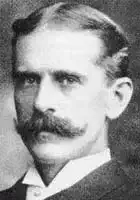
Henry Van Dyke
The Statue of Sherman by St. Gaudens
This is the soldier brave enough to tell
The glory-dazzled world that `war is hell':
Lover of peace, he looks beyond the strife,
And rides through hell to save his country's life.
The glory-dazzled world that `war is hell':
Lover of peace, he looks beyond the strife,
And rides through hell to save his country's life.
203

Wilfred Owen
Insensibility
I
Happy are men who yet before they are killed
Can let their veins run cold.
Whom no compassion fleers
Or makes their feet
Sore on the alleys cobbled with their brothers.
The front line withers,
But they are troops who fade, not flowers
For poets' tearful fooling:
Men, gaps for filling
Losses who might have fought
Longer; but no one bothers.
II
And some cease feeling
Even themselves or for themselves.
Dullness best solves
The tease and doubt of shelling,
And Chance's strange arithmetic
Comes simpler than the reckoning of their shilling.
They keep no check on Armies' decimation.
III
Happy are these who lose imagination:
They have enough to carry with ammunition.
Their spirit drags no pack.
Their old wounds save with cold can not more ache.
Having seen all things red,
Their eyes are rid
Of the hurt of the colour of blood for ever.
And terror's first constriction over,
Their hearts remain small drawn.
Their senses in some scorching cautery of battle
Now long since ironed,
Can laugh among the dying, unconcerned.
IV
Happy the soldier home, with not a notion
How somewhere, every dawn, some men attack,
And many sighs are drained.
Happy the lad whose mind was never trained:
His days are worth forgetting more than not.
He sings along the march
Which we march taciturn, because of dusk,
The long, forlorn, relentless trend
From larger day to huger night.
V
We wise, who with a thought besmirch
Blood over all our soul,
How should we see our task
But through his blunt and lashless eyes?
Alive, he is not vital overmuch;
Dying, not mortal overmuch;
Nor sad, nor proud,
Nor curious at all.
He cannot tell
Old men's placidity from his.
VI
But cursed are dullards whom no cannon stuns,
That they should be as stones.
Wretched are they, and mean
With paucity that never was simplicity.
By choice they made themselves immune
To pity and whatever mourns in man
Before the last sea and the hapless stars;
Whatever mourns when many leave these shores;
Whatever shares
The eternal reciprocity of tears.
203