
Courage and Strength

Robert W. Service
Lost
"Black is the sky, but the land is white-(
O the wind, the snow and the storm!)-Father,
where is our boy to-night?
Pray to God he is safe and warm."
"Mother, mother, why should you fear?
Safe is he, and the Arctic moon
Over his cabin shines so clear-Rest
and sleep, 'twill be morning soon."
"It's getting dark awful sudden. Say, this is mighty queer!
Where in the world have I got to? It's still and black as a tomb.
I reckoned the camp was yonder, I figured the trail was here-Nothing!
Just draw and valley packed with quiet and gloom;
Snow that comes down like feathers, thick and gobby and gray;
Night that looks spiteful ugly--seems that I've lost my way.
"The cold's got an edge like a jackknife--it must be forty below;
Leastways that's what it seems like--it cuts so fierce to the bone.
The wind's getting real ferocious; it's heaving and whirling the snow;
It shrieks with a howl of fury, it dies away to a moan;
Its arms sweep round like a banshee's, swift and icily white,
And buffet and blind and beat me. Lord! it's a hell of a night.
"I'm all tangled up in a blizzard. There's only one thing to do-Keep
on moving and moving; it's death, it's death if I rest.
Oh, God! if I see the morning, if only I struggle through,
I'll say the prayers I've forgotten since I lay on my mother's breast.
I seem going round in a circle; maybe the camp is near.
Say! did somebody holler? Was it a light I saw?
Or was it only a notion? I'll shout, and maybe they'll hear-No!
the wind only drowns me--shout till my throat is raw.
"The boys are all round the camp-fire wondering when I'll be back.
They'll soon be starting to seek me; they'll scarcely wait for the light.
What will they find, I wonder, when they come to the end of my track-A
hand stuck out of a snowdrift, frozen and stiff and white.
That's what they'll strike, I reckon; that's how they'll find their pard,
A pie-faced corpse in a snowbank--curse you, don't be a fool!
Play the game to the finish; bet on your very last card;
Nerve yourself for the struggle. Oh, you coward, keep cool!
I'm going to lick this blizzard; I'm going to live the night.
It can't down me with its bluster--I'm not the kind to be beat.
On hands and knees will I buck it; with every breath will I fight;
It's life, it's life that I fight for--never it seemed so sweet.
I know that my face is frozen; my hands are numblike and dead;
But oh, my feet keep a-moving, heavy and hard and slow;
They're trying to kill me, kill me, the night that's black overhead,
The wind that cuts like a razor, the whipcord lash of the snow.
Keep a-moving, a-moving; don't, don't stumble, you fool!
Curse this snow that's a-piling a-purpose to block my way.
It's heavy as gold in the rocker, it's white and fleecy as wool;
It's soft as a bed of feathers, it's warm as a stack of hay.
Curse on my feet that slip so, my poor tired, stumbling feet;
I guess they're a job for the surgeon, they feel so queerlike to lift-I'll
rest them just for a moment--oh, but to rest is sweet!
The awful wind cannot get me, deep, deep down in the drift."
"Father, a bitter cry I heard,
Out of the night so dark and wild.
Why is my heart so strangely stirred?
'Twas like the voice of our erring child."
"Mother, mother, you only heard
A waterfowl in the locked lagoon-Out
of the night a wounded bird-Rest
and sleep, 'twill be morning soon."
Who is it talks of sleeping? I'll swear that somebody shook
Me hard by the arm for a moment, but how on earth could it be?
See how my feet are moving--awfully funny they look-Moving
as if they belonged to a someone that wasn't me.
The wind down the night's long alley bowls me down like a pin;
I stagger and fall and stagger, crawl arm-deep in the snow.
Beaten back to my corner, how can I hope to win?
And there is the blizzard waiting to give me the knockout blow.
Oh, I'm so warm and sleepy! No more hunger and pain.
Just to rest for a moment; was ever rest such a joy?
Ha! what was that? I'll swear it, somebody shook me again;
Somebody seemed to whisper: "Fight to the last, my boy."
Fight! That's right, I must struggle. I know that to rest means death;
Death, but then what does death mean? --ease from a world of strife.
Life has been none too pleasant; yet with my failing breath
Still and still must I struggle, fight for the gift of life.
* * * * *
Seems that I must be dreaming! Here is the old home trail;
Yonder a light is gleaming; oh, I know it so well!
The air is scented with clover; the cattle wait by the rail;
Father is through with the milking; there goes the supper-bell.
* * * * *
Mother, your boy is crying, out in the night and cold;
Let me in and forgive me, I'll never be bad any more:
I'm, oh, so sick and so sorry: please, dear mother, don't scold-It's
just your boy, and he wants you. . . . Mother, open the door. . . .
"Father, father, I saw a face
Pressed just now to the window-pane!
Oh, it gazed for a moment's space,
Wild and wan, and was gone again!"
"Mother, mother, you saw the snow
Drifted down from the maple tree
(Oh, the wind that is sobbing so!
Weary and worn and old are we)-Only
the snow and a wounded loon-Rest
and sleep, 'twill be morning soon."
202
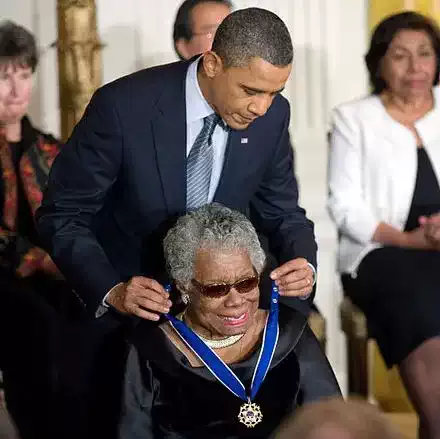
Maya Angelou
Still I Rise
You may write me down in history
With your bitter, twisted lies,
You may trod me in the very dirt
But still, like dust, I'll rise.
Does my sassiness upset you?
Why are you beset with gloom?
'Cause I walk like I've got oil wells
Pumping in my living room.
Just like moons and like suns,
With the certainty of tides,
Just like hopes springing high,
Still I'll rise.
Did you want to see me broken?
Bowed head and lowered eyes?
Shoulders falling down like teardrops.
Weakened by my soulful cries.
Does my haughtiness offend you?
Don't you take it awful hard
'Cause I laugh like I've got gold mines
Diggin' in my own back yard.
You may shoot me with your words,
You may cut me with your eyes,
You may kill me with your hatefulness,
But still, like air, I'll rise.
Does my sexiness upset you?
Does it come as a surprise
That I dance like I've got diamonds
At the meeting of my thighs?
Out of the huts of history's shame
I rise
Up from a past that's rooted in pain
I rise
I'm a black ocean, leaping and wide,
Welling and swelling I bear in the tide.
Leaving behind nights of terror and fear
I rise
Into a daybreak that's wondrously clear
I rise
Bringing the gifts that my ancestors gave,
I am the dream and the hope of the slave.
I rise
I rise
I rise.
199

Emily Dickinson
When we stand on the tops of Things
When we stand on the tops of Things-
And like the Trees, look down-
The smoke all cleared away from it-
And Mirrors on the scene-
Just laying light-no soul will wink
Except it have the flaw-
The Sound ones, like the Hills-shall stand-
No Lighting, scares away-
The Perfect, nowhere be afraid-
They bear their dauntless Heads,
Where others, dare not go at Noon,
Protected by their deeds-
The Stars dare shine occasionally
Upon a spotted World-
And Suns, go surer, for their Proof,
As if an Axle, held-
197
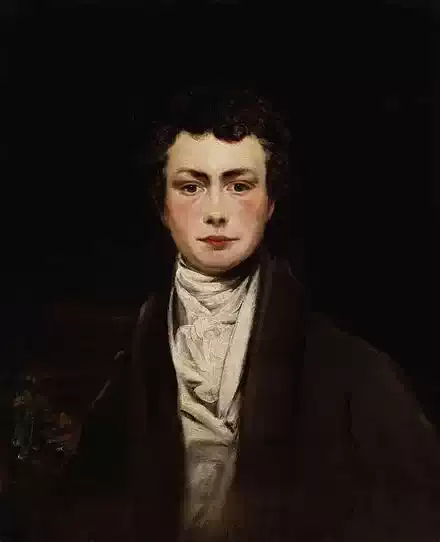
Thomas Moore
The Wine-Cup is Circling
The wine-cup is circling in Almhin's hall,
And its Chief, 'mid his heroes reclining,
Looks up, with a sigh to the trophied wall,
Where his sword hangs idly shining.
When, hark, that shout
From the vale without --
"Arm ye quick, the Dane, the Dane is nigh!"
Every Chief starts up
From his foaming cup,
And "To battle, to battle!" is the Finian's cry.
The minstrels have seized their harps of gold,
And they sing such thrilling numbers --
'Tis like the voice of the Brave, of old,
Breaking forth from their place of slumber!
Spear to buckler rang,
As the minstrels sang,
And the Sun-burst o'er them floated wide;
While remembering the yoke
Which their fathers broke,
"On for liberty, for liberty!" the Finians cried.
Like clouds of the night the Northmen came,
O'er the valley of Almhin lowering;
While onward moved, in the light of its fame,
That banner of Erin, towering.
With the mingling shock
Rung cliff and rock,
While, rank on rank, the invaders die:
And the shout, that last
O'er the dying pass'd,
Was "victory! victory!" -- the Finian's cry.
200
Thomas Moore
Song of the Battle Eve
(Time -- the Ninth Century)
To-morrow, comrade, we
On the battle-plain must be,
There to conquer, or both lie low!
The morning star is up --
But there's wine still in the cup,
And we'll take another quaff, ere we go, boy, go;
We'll take another quaff, ere we go.
'Tis true, in manliest eyes
A passing tear will rise,
When we think of the friends we leave lone;
But what can wailing do?
See, our goblet's weeping too!
With its tears we'll chase away our own, boy, our own;
With its tears we'll chase away our own.
But daylight's stealing on;
The last that o'er us shone
Saw our children around us play;
The next -- ah! where shall we
And those rosy urchins be?
But -- no matter -- grasp thy sword and away, boy, away;
No matter -- grasp thy sword and away!
Let those, who brook the chain
Of Saxon or of Dane,
Ignobly by their fire-sides stay;
One sigh to home be given,
One heartfelt prayer to heaven,
Then, for Erin and her cause, boy, hurra! hurra! hurra!
Then, for Erin and her cause, hurra!
200
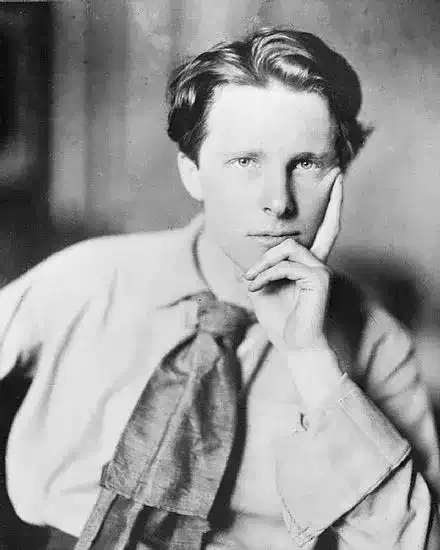
Rupert Brooke
II: Safety
Dear! of all happy in the hour, most blest
He who has found our hid security,
Assured in the dark tides of the world that rest,
And heard our word, 'Who is so safe as we?'
We have found safety with all things undying,
The winds, and morning, tears of men and mirth,
The deep night, and birds singing, and clouds flying,
And sleep, and freedom, and the autumnal earth.
We have built a house that is not for Time's throwing.
We have gained a peace unshaken by pain for ever.
War knows no power. Safe shall be my going,
Secretly armed against all death's endeavour;
Safe though all safety's lost; safe where men fall;
And if these poor limbs die, safest of all.
196

Wilfred Owen
S. I. W.
"I will to the King,
And offer him consolation in his trouble,
For that man there has set his teeth to die,
And being one that hates obedience,
Discipline, and orderliness of life,
I cannot mourn him."
W. B. Yeats.
Patting goodbye, doubtless they told the lad
He'd always show the Hun a brave man's face;
Father would sooner him dead than in disgrace, --
Was proud to see him going, aye, and glad.
Perhaps his Mother whimpered how she'd fret
Until he got a nice, safe wound to nurse.
Sisters would wish girls too could shoot, charge, curse, . . .
Brothers -- would send his favourite cigarette,
Each week, month after month, they wrote the same,
Thinking him sheltered in some Y.M. Hut,
Where once an hour a bullet missed its aim
And misses teased the hunger of his brain.
His eyes grew old with wincing, and his hand
Reckless with ague. Courage leaked, as sand
From the best sandbags after years of rain.
But never leave, wound, fever, trench-foot, shock,
Untrapped the wretch. And death seemed still withheld
For torture of lying machinally shelled,
At the pleasure of this world's Powers who'd run amok.
He'd seen men shoot their hands, on night patrol,
Their people never knew. Yet they were vile.
"Death sooner than dishonour, that's the style!"
So Father said.
One dawn, our wire patrol
Carried him. This time, Death had not missed.
We could do nothing, but wipe his bleeding cough.
Could it be accident? -- Rifles go off . . .
Not sniped? No. (Later they found the English ball.)
It was the reasoned crisis of his soul.
Against the fires that would not burn him whole
But kept him for death's perjury and scoff
And life's half-promising, and both their riling.
With him they buried the muzzle his teeth had kissed,
And truthfully wrote the Mother "Tim died smiling."
194

Henry Lawson
Riding Round the Lines
Dust and smoke against the sunrise out where grim disaster lurks
And a broken sky-line looming like unfinished railway works,
And a trot, trot, trot and canter down inside the belt of mines:
It is General Greybeard Shrapnel who is riding round his lines.
And the scarecrows from the trenches, haggard eyes and hollow cheeks,
War-stained uniforms and ragged that have not been off for weeks;
They salute him and they cheer him and they watch his face for signs;
Ah! they try to read old Greybeard while he’s riding round the lines.
There’s a crack, crack, crack and rattle; there’s a thud and there’s a crash;
In the battery over yonder there is something gone to smash,
Then a hush and sudden movement, and its meaning he divines,
And he patches up a blunder while he’s riding round his lines.
Pushing this position forward, bringing that position back,
While his officers, with orders, ride like hell down hell’s own track;
Making hay—and to what purpose?—while his sun of winter shines,
But his work is just beginning when he’s ridden round his lines.
There are fifty thousand rifles and a hundred batteries
All a-playing battle music, with his fingers on the keys,
And if for an hour, exhausted, on his camp bed he reclines,
In his mind he still is riding—he is riding round his lines.
He’s the brains of fifty thousand, blundering at their country’s call;
He’s the one hope of his nation, and the loneliest man of all;
He is flesh and blood and human, though he never shews the signs:
He is General Greybeard Shrapnel who is fixing up his lines.
It is thankless work and weary, and, for all his neighbour knows,
He may sometimes feel as if he doesn’t half care how it goes;
But for all that can be gathered from his eyes of steely blue
He might be a great contractor who has some big job to do.
There’s the son who died in action—it may be a week ago;
There’s the wife and other troubles that most men have got to know—
(And we’ll say the grey-haired mother underneath the porch of vines):
Does he ever think of these things while he’s riding round his lines?
He is bossed by bitter boobies who can never understand;
He is hampered by the asses and the robbers of the land,
And I feel inclined to wonder what his own opinions are
Of the Government, the country, of the war and of the Czar.
He’s the same when he’s advancing, he’s the same in grim retreat;
For he wears one mask in triumph and the same mask in defeat;
Of the brave he is the bravest, he is strongest of the strong:
General Greybeard Shrapnel never shows that anything is wrong.
But we each and all are lonely, and we have our work to do;
We must fight for wife and children or our country and our screw
In the everlasting struggle to the end that fate destines;
In the war that men call living we are riding round our lines.
I ride round my last defences, where the bitter jibes are flung,
I am patching up the blunders that I made when I was young,
And I may be digging pitfalls and I may be laying mines;
For I sometimes feel like Shrapnel while I’m riding round my lines.
192
Maya Angelou
Touched by an Angel
We, unaccustomed to courage
exiles from delight
live coiled in shells of loneliness
until love leaves its high holy temple
and comes into our sight
to liberate us into life.
Love arrives
and in its train come ecstasies
old memories of pleasure
ancient histories of pain.
Yet if we are bold,
love strikes away the chains of fear
from our souls.
We are weaned from our timidity
In the flush of love's light
we dare be brave
And suddenly we see
that love costs all we are
and will ever be.
Yet it is only love
which sets us free.
193
Wilfred Owen
At a Calvary Near the Ancre
One ever hangs where shelled roads part.
In this war He too lost a limb,
But His disciples hide apart;
And now the Soldiers bear with Him.
Near Golgotha strolls many a priest,
And in their faces there is pride
That they were flesh-marked by the Beast
By whom the gentle Christ's denied
The scribes on all the people shove
And bawl allegiance to the state,
But they who love the greater love
Lay down their life; they do not hate
186
Robert W. Service
Warsaw
I was in Warsaw when the first bomb fell;
I was in Warsaw when the Terror came -
Havoc and horror, famine, fear and flame,
Blasting from loveliness a living hell.
Barring the station towered a sentinel;
Trainward I battled, blind escape my aim.
ENGLAND! I cried. He kindled at the name:
With lion-leap he haled me. . . . All was well.
ENGLAND! they cried for aid, and cried in vain.
Vain was their valour, emptily they cried.
Bleeding, they saw their Cry crucified. . . .
O splendid soldier, by the last lone train,
To-day would you flame forth to fray me place?
Or - would you curse and spit into my face?
September, 1939
191
Thomas Moore
Forget Not the Field
Forget not the field where they perish'd,
The truest, the last of the brave,
All gone -- and the bright hope we cherish'd
Gone with them, and quench'd in their grave!
Oh! could we from death but recover
Those hearts as they bounded before,
In the face of high heaven to fight over
That combat for freedom once more; --
Could the chain for an instant be riven
Which Tyranny flung round us then,
No, 'tis not in Man, nor in Heaven,
To let Tyranny bind it again!
But 'tis past -- and, though blazon'd in story
The name of our Victor may be,
Accurst is the march of that glory
Which treads o'er the hearts of the free.
For dearer the grave or the prison,
Illumed by one patriot name,
Than the trophies of all who have risen
On Liberty's ruins to fame.
191
Wilfred Owen
Apologia Pro Poemate Meo
I, too, saw God through mud--
The mud that cracked on cheeks when wretches smiled.
War brought more glory to their eyes than blood,
And gave their laughs more glee than shakes a child.
Merry it was to laugh there--
Where death becomes absurd and life absurder.
For power was on us as we slashed bones bare
Not to feel sickness or remorse of murder.
I, too, have dropped off fear--
Behind the barrage, dead as my platoon,
And sailed my spirit surging, light and clear,
Past the entanglement where hopes lie strewn;
And witnessed exhultation--
Faces that used to curse me, scowl for scowl,
Shine and lift up with passion of oblation,
Seraphic for an hour, though they were foul.
I have made fellowships--
Untold of happy lovers in old song.
For love is not the binding of fair lips
With the soft silk of eyes that look and long.
By joy, whose ribbon slips,--
But wound with war's hard wire whose stakes are strong;
Bound with the bandage of the arm that drips;
Knit in the welding of the rifle-thong.
I have perceived much beauty
In the hoarse oaths that kept our courage straight;
Heard music in the silentness of duty;
Found peace where shell-storms spouted reddest spate.
Nevertheless, except you share
With them in hell the sorrowful dark of hell,
Whose world is but a trembling of a flare
And heaven but a highway for a shell,
You shall not hear their mirth:
You shall not come to think them well content
By any jest of mine. These men are worth
Your tears: You are not worth their merriment.
183

William Wordsworth
The Power of Armies Is a Visible Thing
The power of Armies is a visible thing,
Formal, and circumscribed in time and space;
But who the limits of that power shall trace
Which a brave People into light can bring
Or hide, at will,--for freedom combating
By just revenge inflamed? No foot may chase,
No eye can follow, to a fatal place
That power, that spirit, whether on the wing
Like the strong wind, or sleeping like the wind
Within its awful caves.--From year to year
Springs this indigenous produce far and near;
No craft this subtle element can bind,
Rising like water from the soil, to find
In every nook a lip that it may cheer.
186

Homero
The Iliad: Book 17
Brave Menelaus son of Atreus now came to know that Patroclus had
fallen, and made his way through the front ranks clad in full armour
to bestride him. As a cow stands lowing over her first calf, even so
did yellow-haired Menelaus bestride Patroclus. He held his round
shield and his spear in front of him, resolute to kill any who
should dare face him. But the son of Panthous had also noted the body,
and came up to Menelaus saying, "Menelaus, son of Atreus, draw back,
leave the body, and let the bloodstained spoils be. I was first of the
Trojans and their brave allies to drive my spear into Patroclus, let
me, therefore, have my full glory among the Trojans, or I will take
aim and kill you."
To this Menelaus answered in great anger "By father Jove, boasting
is an ill thing. The pard is not more bold, nor the lion nor savage
wild-boar, which is fiercest and most dauntless of all creatures, than
are the proud sons of Panthous. Yet Hyperenor did not see out the days
of his youth when he made light of me and withstood me, deeming me the
meanest soldier among the Danaans. His own feet never bore him back to
gladden his wife and parents. Even so shall I make an end of you
too, if you withstand me; get you back into the crowd and do not
face me, or it shall be worse for you. Even a fool may be wise after
the event."
Euphorbus would not listen, and said, "Now indeed, Menelaus, shall
you pay for the death of my brother over whom you vaunted, and whose
wife you widowed in her bridal chamber, while you brought grief
unspeakable on his parents. I shall comfort these poor people if I
bring your head and armour and place them in the hands of Panthous and
noble Phrontis. The time is come when this matter shall be fought
out and settled, for me or against me."
As he spoke he struck Menelaus full on the shield, but the spear did
not go through, for the shield turned its point. Menelaus then took
aim, praying to father Jove as he did so; Euphorbus was drawing
back, and Menelaus struck him about the roots of his throat, leaning
his whole weight on the spear, so as to drive it home. The point
went clean through his neck, and his armour rang rattling round him as
he fell heavily to the ground. His hair which was like that of the
Graces, and his locks so deftly bound in bands of silver and gold,
were all bedrabbled with blood. As one who has grown a fine young
olive tree in a clear space where there is abundance of water- the
plant is full of promise, and though the winds beat upon it from every
quarter it puts forth its white blossoms till the blasts of some
fierce hurricane sweep down upon it and level it with the ground- even
so did Menelaus strip the fair youth Euphorbus of his armour after
he had slain him. Or as some fierce lion upon the mountains in the
pride of his strength fastens on the finest heifer in a herd as it
is feeding- first he breaks her neck with his strong jaws, and then
gorges on her blood and entrails; dogs and shepherds raise a hue and
cry against him, but they stand aloof and will not come close to
him, for they are pale with fear- even so no one had the courage to
face valiant Menelaus. The son of Atreus would have then carried off
the armour of the son of Panthous with ease, had not Phoebus Apollo
been angry, and in the guise of Mentes chief of the Cicons incited
Hector to attack him. "Hector," said he, "you are now going after
the horses of the noble son of Aeacus, but you will not take them;
they cannot be kept in hand and driven by mortal man, save only by
Achilles, who is son to an immortal mother. Meanwhile Menelaus son
of Atreus has bestridden the body of Patroclus and killed the
noblest of the Trojans, Euphorbus son of Panthous, so that he can
fight no more."
The god then went back into the toil and turmoil, but the soul of
Hector was darkened with a cloud of grief; he looked along the ranks
and saw Euphorbus lying on the ground with the blood still flowing
from his wound, and Menelaus stripping him of his armour. On this he
made his way to the front like a flame of fire, clad in his gleaming
armour, and crying with a loud voice. When the son of Atreus heard
him, he said to himself in his dismay, "Alas! what shall I do? I may
not let the Trojans take the armour of Patroclus who has fallen
fighting on my behalf, lest some Danaan who sees me should cry shame
upon me. Still if for my honour's sake I fight Hector and the
Trojans single-handed, they will prove too many for me, for Hector
is bringing them up in force. Why, however, should I thus hesitate?
When a man fights in despite of heaven with one whom a god
befriends, he will soon rue it. Let no Danaan think ill of me if I
give place to Hector, for the hand of heaven is with him. Yet, if I
could find Ajax, the two of us would fight Hector and heaven too, if
we might only save the body of Patroclus for Achilles son of Peleus.
This, of many evils would be the least."
While he was thus in two minds, the Trojans came up to him with
Hector at their head; he therefore drew back and left the body,
turning about like some bearded lion who is being chased by dogs and
men from a stockyard with spears and hue and cry, whereon he is
daunted and slinks sulkily off- even so did Menelaus son of Atreus
turn and leave the body of Patroclus. When among the body of his
men, he looked around for mighty Ajax son of Telamon, and presently
saw him on the extreme left of the fight, cheering on his men and
exhorting them to keep on fighting, for Phoebus Apollo had spread a
great panic among them. He ran up to him and said, "Ajax, my good
friend, come with me at once to dead Patroclus, if so be that we may
take the body to Achilles- as for his armour, Hector already has it."
These words stirred the heart of Ajax, and he made his way among the
front ranks, Menelaus going with him. Hector had stripped Patroclus of
his armour, and was dragging him away to cut off his head and take the
body to fling before the dogs of Troy. But Ajax came up with his
shield like wall before him, on which Hector withdrew under shelter of
his men, and sprang on to his chariot, giving the armour over to the
Trojans to take to the city, as a great trophy for himself; Ajax,
therefore, covered the body of Patroclus with his broad shield and
bestrode him; as a lion stands over his whelps if hunters have come
upon him in a forest when he is with his little ones- in the pride and
fierceness of his strength he draws his knit brows down till they
cover his eyes- even so did Ajax bestride the body of Patroclus, and
by his side stood Menelaus son of Atreus, nursing great sorrow in
his heart.
Then Glaucus son of Hippolochus looked fiercely at Hector and
rebuked him sternly. "Hector," said he, "you make a brave show, but in
fight you are sadly wanting. A runaway like yourself has no claim to
so great a reputation. Think how you may now save your town and
citadel by the hands of your own people born in Ilius; for you will
get no Lycians to fight for you, seeing what thanks they have had
for their incessant hardships. Are you likely, sir, to do anything
to help a man of less note, after leaving Sarpedon, who was at once
your guest and comrade in arms, to be the spoil and prey of the
Danaans? So long as he lived he did good service both to your city and
yourself; yet you had no stomach to save his body from the dogs. If
the Lycians will listen to me, they will go home and leave Troy to its
fate. If the Trojans had any of that daring fearless spirit which lays
hold of men who are fighting for their country and harassing those who
would attack it, we should soon bear off Patroclus into Ilius. Could
we get this dead man away and bring him into the city of Priam, the
Argives would readily give up the armour of Sarpedon, and we should
get his body to boot. For he whose squire has been now killed is the
foremost man at the ships of the Achaeans- he and his close-fighting
followers. Nevertheless you dared not make a stand against Ajax, nor
face him, eye to eye, with battle all round you, for he is a braver
man than you are."
Hector scowled at him and answered, "Glaucus, you should know
better. I have held you so far as a man of more understanding than any
in all Lycia, but now I despise you for saying that I am afraid of
Ajax. I fear neither battle nor the din of chariots, but Jove's will
is stronger than ours; Jove at one time makes even a strong man draw
back and snatches victory from his grasp, while at another he will set
him on to fight. Come hither then, my friend, stand by me and see
indeed whether I shall play the coward the whole day through as you
say, or whether I shall not stay some even of the boldest Danaans from
fighting round the body of Patroclus."
As he spoke he called loudly on the Trojans saying, "Trojans,
Lycians, and Dardanians, fighters in close combat, be men, my friends,
and fight might and main, while I put on the goodly armour of
Achilles, which I took when I killed Patroclus."
With this Hector left the fight, and ran full speed after his men
who were taking the armour of Achilles to Troy, but had not yet got
far. Standing for a while apart from the woeful fight, he changed
his armour. His own he sent to the strong city of Ilius and to the
Trojans, while he put on the immortal armour of the son of Peleus,
which the gods had given to Peleus, who in his age gave it to his son;
but the son did not grow old in his father's armour.
When Jove, lord of the storm-cloud, saw Hector standing aloof and
arming himself in the armour of the son of Peleus, he wagged his
head and muttered to himself saying, "A! poor wretch, you arm in the
armour of a hero, before whom many another trembles, and you reck
nothing of the doom that is already close upon you. You have killed
his comrade so brave and strong, but it was not well that you should
strip the armour from his head and shoulders. I do indeed endow you
with great might now, but as against this you shall not return from
battle to lay the armour of the son of Peleus before Andromache."
The son of Saturn bowed his portentous brows, and Hector fitted
the armour to his body, while terrible Mars entered into him, and
filled his whole body with might and valour. With a shout he strode in
among the allies, and his armour flashed about him so that he seemed
to all of them like the great son of Peleus himself. He went about
among them and cheered them on- Mesthles, Glaucus, Medon,
Thersilochus, Asteropaeus, Deisenor and Hippothous, Phorcys,
Chromius and Ennomus the augur. All these did he exhort saying,
"Hear me, allies from other cities who are here in your thousands,
it was not in order to have a crowd about me that I called you
hither each from his several city, but that with heart and soul you
might defend the wives and little ones of the Trojans from the
fierce Achaeans. For this do I oppress my people with your food and
the presents that make you rich. Therefore turn, and charge at the
foe, to stand or fall as is the game of war; whoever shall bring
Patroclus, dead though he be, into the hands of the Trojans, and shall
make Ajax give way before him, I will give him one half of the
spoils while I keep the other. He will thus share like honour with
myself."
When he had thus spoken they charged full weight upon the Danaans
with their spears held out before them, and the hopes of each ran high
that he should force Ajax son of Telamon to yield up the body- fools
that they were, for he was about to take the lives of many. Then
Ajax said to Menelaus, "My good friend Menelaus, you and I shall
hardly come out of this fight alive. I am less concerned for the
body of Patroclus, who will shortly become meat for the dogs and
vultures of Troy, than for the safety of my own head and yours. Hector
has wrapped us round in a storm of battle from every quarter, and
our destruction seems now certain. Call then upon the princes of the
Danaans if there is any who can hear us."
Menelaus did as he said, and shouted to the Danaans for help at
the top of his voice. "My friends," he cried, "princes and counsellors
of the Argives, all you who with Agamemnon and Menelaus drink at the
public cost, and give orders each to his own people as Jove vouchsafes
him power and glory, the fight is so thick about me that I cannot
distinguish you severally; come on, therefore, every man unbidden, and
think it shame that Patroclus should become meat and morsel for Trojan
hounds."
Fleet Ajax son of Oileus heard him and was first to force his way
through the fight and run to help him. Next came Idomeneus and
Meriones his esquire, peer of murderous Mars. As for the others that
came into the fight after these, who of his own self could name them?
The Trojans with Hector at their head charged in a body. As a
great wave that comes thundering in at the mouth of some heaven-born
river, and the rocks that jut into the sea ring with the roar of the
breakers that beat and buffet them- even with such a roar did the
Trojans come on; but the Achaeans in singleness of heart stood firm
about the son of Menoetius, and fenced him with their bronze
shields. Jove, moreover, hid the brightness of their helmets in a
thick cloud, for he had borne no grudge against the son of Menoetius
while he was still alive and squire to the descendant of Aeacus;
therefore he was loth to let him fall a prey to the dogs of his foes
the Trojans, and urged his comrades on to defend him.
At first the Trojans drove the Achaeans back, and they withdrew from
the dead man daunted. The Trojans did not succeed in killing any
one, nevertheless they drew the body away. But the Achaeans did not
lose it long, for Ajax, foremost of all the Danaans after the son of
Peleus alike in stature and prowess, quickly rallied them and made
towards the front like a wild boar upon the mountains when he stands
at bay in the forest glades and routs the hounds and lusty youths that
have attacked him- even so did Ajax son of Telamon passing easily in
among the phalanxes of the Trojans, disperse those who had
bestridden Patroclus and were most bent on winning glory by dragging
him off to their city. At this moment Hippothous brave son of the
Pelasgian Lethus, in his zeal for Hector and the Trojans, was dragging
the body off by the foot through the press of the fight, having
bound a strap round the sinews near the ancle; but a mischief soon
befell him from which none of those could save him who would have
gladly done so, for the son of Telamon sprang forward and smote him on
his bronze-cheeked helmet. The plumed headpiece broke about the
point of the weapon, struck at once by the spear and by the strong
hand of Ajax, so that the bloody brain came oozing out through the
crest-socket. His strength then failed him and he let Patroclus'
foot drop from his hand, as he fell full length dead upon the body;
thus he died far from the fertile land of Larissa, and never repaid
his parents the cost of bringing him up, for his life was cut short
early by the spear of mighty Ajax. Hector then took aim at Ajax with a
spear, but he saw it coming and just managed to avoid it; the spear
passed on and struck Schedius son of noble Iphitus, captain of the
Phoceans, who dwelt in famed Panopeus and reigned over much people; it
struck him under the middle of the collar-bone the bronze point went
right through him, coming out at the bottom of his shoulder-blade, and
his armour rang rattling round him as he fell heavily to the ground.
Ajax in his turn struck noble Phorcys son of Phaenops in the middle of
the belly as he was bestriding Hippothous, and broke the plate of
his cuirass; whereon the spear tore out his entrails and he clutched
the ground in his palm as he fell to earth. Hector and those who
were in the front rank then gave ground, while the Argives raised a
loud cry of triumph, and drew off the bodies of Phorcys and Hippothous
which they stripped presently of their armour.
The Trojans would now have been worsted by the brave Achaeans and
driven back to Ilius through their own cowardice, while the Argives,
so great was their courage and endurance, would have achieved a
triumph even against the will of Jove, if Apollo had not roused
Aeneas, in the likeness of Periphas son of Epytus, an attendant who
had grown old in the service of Aeneas' aged father, and was at all
times devoted to him. In his likeness, then, Apollo said, "Aeneas, can
you not manage, even though heaven be against us, to save high
Ilius? I have known men, whose numbers, courage, and self-reliance
have saved their people in spite of Jove, whereas in this case he
would much rather give victory to us than to the Danaans, if you would
only fight instead of being so terribly afraid."
Aeneas knew Apollo when he looked straight at him, and shouted to
Hector saying, "Hector and all other Trojans and allies, shame on us
if we are beaten by the Achaeans and driven back to Ilius through
our own cowardice. A god has just come up to me and told me that
Jove the supreme disposer will be with us. Therefore let us make for
the Danaans, that it may go hard with them ere they bear away dead
Patroclus to the ships."
As he spoke he sprang out far in front of the others, who then
rallied and again faced the Achaeans. Aeneas speared Leiocritus son of
Arisbas, a valiant follower of Lycomedes, and Lycomedes was moved with
pity as he saw him fall; he therefore went close up, and speared
Apisaon son of Hippasus shepherd of his people in the liver under
the midriff, so that he died; he had come from fertile Paeonia and was
the best man of them all after Asteropaeus. Asteropaeus flew forward
to avenge him and attack the Danaans, but this might no longer be,
inasmuch as those about Patroclus were well covered by their
shields, and held their spears in front of them, for Ajax had given
them strict orders that no man was either to give ground, or to
stand out before the others, but all were to hold well together
about the body and fight hand to hand. Thus did huge Ajax bid them,
and the earth ran red with blood as the corpses fell thick on one
another alike on the side of the Trojans and allies, and on that of
the Danaans; for these last, too, fought no bloodless fight though
many fewer of them perished, through the care they took to defend
and stand by one another.
Thus did they fight as it were a flaming fire; it seemed as though
it had gone hard even with the sun and moon, for they were hidden over
all that part where the bravest heroes were fighting about the dead
son of Menoetius, whereas the other Danaans and Achaeans fought at
their ease in full daylight with brilliant sunshine all round them,
and there was not a cloud to be seen neither on plain nor mountain.
These last moreover would rest for a while and leave off fighting, for
they were some distance apart and beyond the range of one another's
weapons, whereas those who were in the thick of the fray suffered both
from battle and darkness. All the best of them were being worn out
by the great weight of their armour, but the two valiant heroes,
Thrasymedes and Antilochus, had not yet heard of the death of
Patroclus, and believed him to be still alive and leading the van
against the Trojans; they were keeping themselves in reserve against
the death or rout of their own comrades, for so Nestor had ordered
when he sent them from the ships into battle.
Thus through the livelong day did they wage fierce war, and the
sweat of their toil rained ever on their legs under them, and on their
hands and eyes, as they fought over the squire of the fleet son of
Peleus. It was as when a man gives a great ox-hide all drenched in fat
to his men, and bids them stretch it; whereon they stand round it in a
ring and tug till the moisture leaves it, and the fat soaks in for the
many that pull at it, and it is well stretched- even so did the two
sides tug the dead body hither and thither within the compass of but a
little space- the Trojans steadfastly set on drag ing it into Ilius,
while the Achaeans were no less so on taking it to their ships; and
fierce was the fight between them. Not Mars himself the lord of hosts,
nor yet Minerva, even in their fullest fury could make light of such a
battle.
Such fearful turmoil of men and horses did Jove on that day ordain
round the body of Patroclus. Meanwhile Achilles did not know that he
had fallen, for the fight was under the wall of Troy a long way off
the ships. He had no idea, therefore, that Patroclus was dead, and
deemed that he would return alive as soon as he had gone close up to
the gates. He knew that he was not to sack the city neither with nor
without himself, for his mother had often told him this when he had
sat alone with her, and she had informed him of the counsels of
great Jove. Now, however, she had not told him how great a disaster
had befallen him in the death of the one who was far dearest to him of
all his comrades.
The others still kept on charging one another round the body with
their pointed spears and killing each other. Then would one say, "My
friends, we can never again show our faces at the ships- better, and
greatly better, that earth should open and swallow us here in this
place, than that we should let the Trojans have the triumph of bearing
off Patroclus to their city."
The Trojans also on their part spoke to one another saying,
"Friends, though we fall to a man beside this body, let none shrink
from fighting." With such words did they exhort each other. They
fought and fought, and an iron clank rose through the void air to
the brazen vault of heaven. The horses of the descendant of Aeacus
stood out of the fight and wept when they heard that their driver
had been laid low by the hand of murderous Hector. Automedon,
valiant son of Diores, lashed them again and again; many a time did he
speak kindly to them, and many a time did he upbraid them, but they
would neither go back to the ships by the waters of the broad
Hellespont, nor yet into battle among the Achaeans; they stood with
their chariot stock still, as a pillar set over the tomb of some
dead man or woman, and bowed their heads to the ground. Hot tears fell
from their eyes as they mourned the loss of their charioteer, and
their noble manes drooped all wet from under the yokestraps on
either side the yoke.
The son of Saturn saw them and took pity upon their sorrow. He
wagged his head, and muttered to himself, saying, "Poor things, why
did we give you to King Peleus who is a mortal, while you are
yourselves ageless and immortal? Was it that you might share the
sorrows that befall mankind? for of all creatures that live and move
upon the earth there is none so pitiable as he is- still, Hector son
of Priam shall drive neither you nor your chariot. I will not have it.
It is enough that he should have the armour over which he vaunts so
vainly. Furthermore I will give you strength of heart and limb to bear
Automedon safely to the ships from battle, for I shall let the Trojans
triumph still further, and go on killing till they reach the ships;
whereon night shall fall and darkness overshadow the land."
As he spoke he breathed heart and strength into the horses so that
they shook the dust from out of their manes, and bore their chariot
swiftly into the fight that raged between Trojans and Achaeans. Behind
them fought Automedon full of sorrow for his comrade, as a vulture
amid a flock of geese. In and out, and here and there, full speed he
dashed amid the throng of the Trojans, but for all the fury of his
pursuit he killed no man, for he could not wield his spear and keep
his horses in hand when alone in the chariot; at last, however, a
comrade, Alcimedon, son of Laerces son of Haemon caught sight of him
and came up behind his chariot. "Automedon," said he, "what god has
put this folly into your heart and robbed you of your right mind, that
you fight the Trojans in the front rank single-handed? He who was your
comrade is slain, and Hector plumes himself on being armed in the
armour of the descendant of Aeacus."
Automedon son of Diores answered, "Alcimedon, there is no one else
who can control and guide the immortal steeds so well as you can, save
only Patroclus- while he was alive- peer of gods in counsel. Take then
the whip and reins, while I go down from the car and fight.
Alcimedon sprang on to the chariot, and caught up the whip and
reins, while Automedon leaped from off the car. When Hector saw him he
said to Aeneas who was near him, "Aeneas, counsellor of the
mail-clad Trojans, I see the steeds of the fleet son of Aeacus come
into battle with weak hands to drive them. I am sure, if you think
well, that we might take them; they will not dare face us if we both
attack them."
The valiant son of Anchises was of the same mind, and the pair
went right on, with their shoulders covered under shields of tough dry
ox-hide, overlaid with much bronze. Chromius and Aretus went also with
them, and their hearts beat high with hope that they might kill the
men and capture the horses- fools that they were, for they were not to
return scatheless from their meeting with Automedon, who prayed to
father Jove and was forthwith filled with courage and strength
abounding. He turned to his trusty comrade Alcimedon and said,
"Alcimedon, keep your horses so close up that I may feel their
breath upon my back; I doubt that we shall not stay Hector son of
Priam till he has killed us and mounted behind the horses; he will
then either spread panic among the ranks of the Achaeans, or himself
be killed among the foremost."
On this he cried out to the two Ajaxes and Menelaus, "Ajaxes
captains of the Argives, and Menelaus, give the dead body over to them
that are best able to defend it, and come to the rescue of us
living; for Hector and Aeneas who are the two best men among the
Trojans, are pressing us hard in the full tide of war. Nevertheless
the issue lies on the lap of heaven, I will therefore hurl my spear
and leave the rest to Jove."
He poised and hurled as he spoke, whereon the spear struck the round
shield of Aretus, and went right through it for the shield stayed it
not, so that it was driven through his belt into the lower part of his
belly. As when some sturdy youth, axe in hand, deals his blow behind
the horns of an ox and severs the tendons at the back of its neck so
that it springs forward and then drops, even so did Aretus give one
bound and then fall on his back the spear quivering in his body till
it made an end of him. Hector then aimed a spear at Automedon but he
saw it coming and stooped forward to avoid it, so that it flew past
him and the point stuck in the ground, while the butt-end went on
quivering till Mars robbed it of its force. They would then have
fought hand to hand with swords had not the two Ajaxes forced their
way through the crowd when they heard their comrade calling, and
parted them for all their fury- for Hector, Aeneas, and Chromius
were afraid and drew back, leaving Aretus to lie there struck to the
heart. Automedon, peer of fleet Mars, then stripped him of his
armour and vaunted over him saying, "I have done little to assuage
my sorrow for the son of Menoetius, for the man I have killed is not
so good as he was."
As he spoke he took the blood-stained spoils and laid them upon
his chariot; then he mounted the car with his hands and feet all
steeped in gore as a lion that has been gorging upon a bull.
And now the fierce groanful fight again raged about Patroclus, for
Minerva came down from heaven and roused its fury by the command of
far-seeing Jove, who had changed his mind and sent her to encourage
the Danaans. As when Jove bends his bright bow in heaven in token to
mankind either of war or of the chill storms that stay men from
their labour and plague the flocks- even so, wrapped in such radiant
raiment, did Minerva go in among the host and speak man by man to
each. First she took the form and voice of Phoenix and spoke to
Menelaus son of Atreus, who was standing near her. "Menelaus," said
she, "it will be shame and dishonour to you, if dogs tear the noble
comrade of Achilles under the walls of Troy. Therefore be staunch, and
urge your men to be so also."
Menelaus answered, "Phoenix, my good old friend, may Minerva
vouchsafe me strength and keep the darts from off me, for so shall I
stand by Patroclus and defend him; his death has gone to my heart, but
Hector is as a raging fire and deals his blows without ceasing, for
Jove is now granting him a time of triumph."
Minerva was pleased at his having named herself before any of the
other gods. Therefore she put strength into his knees and shoulders,
and made him as bold as a fly, which, though driven off will yet
come again and bite if it can, so dearly does it love man's bloodeven
so bold as this did she make him as he stood over Patroclus and
threw his spear. Now there was among the Trojans a man named Podes,
son of Eetion, who was both rich and valiant. Hector held him in the
highest honour for he was his comrade and boon companion; the spear of
Menelaus struck this man in the girdle just as he had turned in
flight, and went right through him. Whereon he fell heavily forward,
and Menelaus son of Atreus drew off his body from the Trojans into the
ranks of his own people.
Apollo then went up to Hector and spurred him on to fight, in the
likeness of Phaenops son of Asius who lived in Abydos and was the most
favoured of all Hector's guests. In his likeness Apollo said, "Hector,
who of the Achaeans will fear you henceforward now that you have
quailed before Menelaus who has ever been rated poorly as a soldier?
Yet he has now got a corpse away from the Trojans single-handed, and
has slain your own true comrade, a man brave among the foremost, Podes
son of Eetion.
A dark cloud of grief fell upon Hector as he heard, and he made
his way to the front clad in full armour. Thereon the son of Saturn
seized his bright tasselled aegis, and veiled Ida in cloud: he sent
forth his lightnings and his thunders, and as he shook his aegis he
gave victory to the Trojans and routed the Achaeans.
The panic was begun by Peneleos the Boeotian, for while keeping
his face turned ever towards the foe he had been hit with a spear on
the upper part of the shoulder; a spear thrown by Polydamas had grazed
the top of the bone, for Polydamas had come up to him and struck him
from close at hand. Then Hector in close combat struck Leitus son of
noble Alectryon in the hand by the wrist, and disabled him from
fighting further. He looked about him in dismay, knowing that never
again should he wield spear in battle with the Trojans. While Hector
was in pursuit of Leitus, Idomeneus struck him on the breastplate over
his chest near the nipple; but the spear broke in the shaft, and the
Trojans cheered aloud. Hector then aimed at Idomeneus son of Deucalion
as he was standing on his chariot, and very narrowly missed him, but
the spear hit Coiranus, a follower and charioteer of Meriones who
had come with him from Lyctus. Idomeneus had left the ships on foot
and would have afforded a great triumph to the Trojans if Coiranus had
not driven quickly up to him, he therefore brought life and rescue
to Idomeneus, but himself fell by the hand of murderous Hector. For
Hector hit him on the jaw under the ear; the end of the spear drove
out his teeth and cut his tongue in two pieces, so that he fell from
his chariot and let the reins fall to the ground. Meriones gathered
them up from the ground and took them into his own hands, then he said
to Idomeneus, "Lay on, till you get back to the ships, for you must
see that the day is no longer ours."
On this Idomeneus lashed the horses to the ships, for fear had taken
hold upon him.
Ajax and Menelaus noted how Jove had turned the scale in favour of
the Trojans, and Ajax was first to speak. "Alas," said he, "even a
fool may see that father Jove is helping the Trojans. All their
weapons strike home; no matter whether it be a brave man or a coward
that hurls them, Jove speeds all alike, whereas ours fall each one
of them without effect. What, then, will be best both as regards
rescuing the body, and our return to the joy of our friends who will
be grieving as they look hitherwards; for they will make sure that
nothing can now check the terrible hands of Hector, and that he will
fling himself upon our ships. I wish that some one would go and tell
the son of Peleus at once, for I do not think he can have yet heard
the sad news that the dearest of his friends has fallen. But I can see
not a man among the Achaeans to send, for they and their chariots
are alike hidden in darkness. O father Jove, lift this cloud from over
the sons of the Achaeans; make heaven serene, and let us see; if you
will that we perish, let us fall at any rate by daylight."
Father Jove heard him and had compassion upon his tears. Forthwith
he chased away the cloud of darkness, so that the sun shone out and
all the fighting was revealed. Ajax then said to Menelaus, "Look,
Menelaus, and if Antilochus son of Nestor be still living, send him at
once to tell Achilles that by far the dearest to him of all his
comrades has fallen."
Menelaus heeded his words and went his way as a lion from a
stockyard- the lion is tired of attacking the men and hounds, who keep
watch the whole night through and will not let him feast on the fat of
their herd. In his lust of meat he makes straight at them but in vain,
for darts from strong hands assail him, and burning brands which daunt
him for all his hunger, so in the morning he slinks sulkily away- even
so did Menelaus sorely against his will leave Patroclus, in great fear
lest the Achaeans should be driven back in rout and let him fall
into the hands of the foe. He charged Meriones and the two Ajaxes
straitly saying, "Ajaxes and Meriones, leaders of the Argives, now
indeed remember how good Patroclus was; he was ever courteous while
alive, bear it in mind now that he is dead."
With this Menelaus left them, looking round him as keenly as an
eagle, whose sight they say is keener than that of any other birdhowever
high he may be in the heavens, not a hare that runs can escape
him by crouching under bush or thicket, for he will swoop down upon it
and make an end of it- even so, O Menelaus, did your keen eyes range
round the mighty host of your followers to see if you could find the
son of Nestor still alive. Presently Menelaus saw him on the extreme
left of the battle cheering on his men and exhorting them to fight
boldly. Menelaus went up to him and said, "Antilochus, come here and
listen to sad news, which I would indeed were untrue. You must see
with your own eyes that heaven is heaping calamity upon the Danaans,
and giving victory to the Trojans. Patroclus has fallen, who was the
bravest of the Achaeans, and sorely will the Danaans miss him. Run
instantly to the ships and tell Achilles, that he may come to rescue
the body and bear it to the ships. As for the armour, Hector already
has it."
Antilochus was struck with horror. For a long time he was
speechless; his eyes filled with tears and he could find no utterance,
but he did as Menelaus had said, and set off running as soon as he had
given his armour to a comrade, Laodocus, who was wheeling his horses
round, close beside him.
Thus, then, did he run weeping from the field, to carry the bad news
to Achilles son of Peleus. Nor were you, O Menelaus, minded to succour
his harassed comrades, when Antilochus had left the Pylians- and
greatly did they miss him- but he sent them noble Thrasymedes, and
himself went back to Patroclus. He came running up to the two Ajaxes
and said, "I have sent Antilochus to the ships to tell Achilles, but
rage against Hector as he may, he cannot come, for he cannot fight
without armour. What then will be our best plan both as regards
rescuing the dead, and our own escape from death amid the battle-cries
of the Trojans?"
Ajax answered, "Menelaus, you have said well: do you, then, and
Meriones stoop down, raise the body, and bear it out of the fray,
while we two behind you keep off Hector and the Trojans, one in
heart as in name, and long used to fighting side by side with one
another."
On this Menelaus and Meriones took the dead man in their arms and
lifted him high aloft with a great effort. The Trojan host raised a
hue and cry behind them when they saw the Achaeans bearing the body
away, and flew after them like hounds attacking a wounded boar at
the loo of a band of young huntsmen. For a while the hounds fly at him
as though they would tear him in pieces, but now and again he turns on
them in a fury, scaring and scattering them in all directions- even so
did the Trojans for a while charge in a body, striking with sword
and with spears pointed ai both the ends, but when the two Ajaxes
faced them and stood at bay, they would turn pale and no man dared
press on to fight further about the dead.
In this wise did the two heroes strain every nerve to bear the
body to the ships out of the fight. The battle raged round them like
fierce flames that when once kindled spread like wildfire over a city,
and the houses fall in the glare of its burning- even such was the
roar and tramp of men and horses that pursued them as they bore
Patroclus from the field. Or as mules that put forth all their
strength to draw some beam or great piece of ship's timber down a
rough mountain-track, and they pant and sweat as they, go even so
did Menelaus and pant and sweat as they bore the body of Patroclus.
Behind them the two Ajaxes held stoutly out. As some wooded
mountain-spur that stretches across a plain will turn water and
check the flow even of a great river, nor is there any stream strong
enough to break through it- even so did the two Ajaxes face the
Trojans and stern the tide of their fighting though they kept
pouring on towards them and foremost among them all was Aeneas son
of Anchises with valiant Hector. As a flock of daws or starlings
fall to screaming and chattering when they see a falcon, foe to i'll
small birds, come soaring near them, even so did the Achaean youth
raise a babel of cries as they fled before Aeneas and Hector,
unmindful of their former prowess. In the rout of the Danaans much
goodly armour fell round about the trench, and of fighting there was
no end.
Translated by Samuel Butler
180
Robert W. Service
The Song Of The Pacifist
What do they matter, our headlong hates, when we take the toll of our Dead?
Think ye our glory and gain will pay for the torrent of blood we have shed?
By the cheers of our Victory will the heart of the mother be comforted?
If by the Victory all we mean is a broken and brooding foe;
Is the pomp and power of a glitt'ring hour, and a truce for an age or so:
By the clay-cold hand on the broken blade we have smitten a bootless blow!
If by the Triumph we only prove that the sword we sheathe is bright;
That justice and truth and love endure; that freedom's throned on the height;
That the feebler folks shall be unafraid; that Might shall never be Right;
If this be all: by the blood-drenched plains, by the havoc of fire and fear,
By the rending roar of the War of Wars, by the Dead so doubly dear. . . .
Then our Victory is a vast defeat, and it mocks us as we cheer.
Victory! there can be but one, hallowed in every land:
When by the graves of our common dead we who were foemen stand;
And in the hush of our common grief hand is tendered to hand.
Triumph! Yes, when out of the dust in the splendour of their release
The spirits of those who fell go forth and they hallow our hearts to peace,
And, brothers in pain, with world-wide voice, we clamour that War shall cease.
Glory! Ay, when from blackest loss shall be born most radiant gain;
When over the gory fields shall rise a star that never shall wane:
Then, and then only, our Dead shall know that they have not fall'n in vain.
When our children's children shall talk of War as a madness that may not be;
When we thank our God for our grief to-day, and blazon from sea to sea
In the name of the Dead the banner of Peace . . . that will be Victory.
181
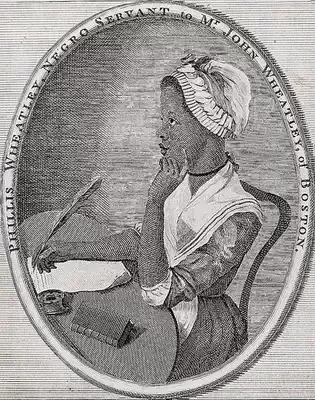
Phillis Wheatley
To Captain H-----d, of the th Regiment
Say, muse divine, can hostile scenes delight
The warrior's bosom in the fields of fight?
Lo! here the christian and the hero join
With mutual grace to form the man divine.
In H-----D see with pleasure and surprise,
Where valour kindles, and where virtue lies:
Go, hero brave, still grace the post of fame,
And add new glories to thine honour'd name,
Still to the field, and still to virtue true:
Britannia glories in no son like you.
183
Henry Lawson
The Stranded Ship: (The “Vincennes”)
’Twas the glowing log of a picnic fire where a red light should not be,
Or the curtained glow of a sick room light in a window that faced the sea.
But the Manly lights seemed the Sydney lights, and the bluffs as the “Heads” were
seen;
And the Manly beach was the channel then—and the captain steered between.
The croakers said with a shoulder shrug, and a careless, know-all glance:
“You might pull out her stem, or pull out her stern—but she’ll sail no more for France!”
Her stem was dry when the tide was out, and behind her banked the sand,
Where strong gales come from the Hurricane east and the sun sets on the land.
When the tide was high and the rollers struck she shuddered as if in pain,
She had no hope for the open sea and the fair full breeze again.
She turned her side to the pounding seas and the foam glared over the rails,
It seemed her fate to be sold and stripped, and broken by winter gales.
But they sent strong gear, and they sent the gangs, and they sent her a man who
knew,
And the tugs came nosing round from the Heads to see what a tug could do;
The four-ton anchors they laid to sea in the waves and the wind and rain,
And the great steel hawser they hove aboard made fast to her cable chain.
And then, while the gaping townsfolk stared from the shining beach in doubt,
The crew and the shore-gangs lowered her yards and they hove the ballast out.
(To lie like a strange sea-grave upheaved on the smooth sand by her side)
And they made all ready and clear for the tugs to come on the rising tide.
And so, in the night when the tide was in and a black sky hid the stars,
The shoremen worked at the jumping winch and the crew at the capstan bars.
To seaward the two tugs rose and fell in their own wild stormy glare
And her head came round for a fathom’s length! for a mighty heave was there.
So, tide by tide, and yard by yard, they hove her off the shore
To fit, and load for her ports of call, and to sail for France once more.
Till at last she came with the wild blind rush of a frightened thing set free,
And they towed her round to the Sydney Heads and in from the stormy sea.
And the croakers say, when a man is down, with a shrug and a know-all glance,
Oh, he’ll never get out of the gutter again, he has done with every chance;
But we’ll “haul and heave on the block and sheeve”, wave-beaten and black-rock
hemmed,
And we’ll sail with cargoes that they shall buy, when their ships are all condemned.
179
Robert W. Service
My Son
I must not let my boy Dick down,
Knight of the air.
With wings of light he won renown
Then crashed somewhere.
To fly to France from London town
I do not dare.
Oh he was such a simple lad
Who loved the sky;
A modern day Sir Galahad,
No need to die:
Earthbound he might have been so glad,
Yet chose to fly.
I ask from where his courage stemmed?
I've never flown;
Air-travel I have oft condemned,-Now
I'm alone,
Yet somehow hold the bright belief
God gave his brief.
So now I must live up to him
Who won on high
A lustre time will never dim;
Though coward I,
Let me revere till life be done
My hero son.
178
Maya Angelou
These are not the only wonders of the world
When we come to it
We, this people, on this minuscule and kithless globe
Who reach daily for the bomb, the blade and the dagger
Yet who petition in the dark for tokens of peace
We, this people on this mote of matter
In whose mouths abide cankerous words
Which challenge our very existence
Yet out of those same mouths
Come songs of such exquisite sweetness
That the heart falters in its labor
And the body is quieted into awe
We, this people, on this small and drifting planet
Whose hands can strike with such abandon
That in a twinkling, life is sapped from the living
Yet those same hands can touch with such healing, irresistible tenderness
That the haughty neck is happy to bow
And the proud back is glad to bend
Out of such chaos, of such contradiction
We learn that we are neither devils nor divines
When we come to it
We, this people, on this wayward, floating body
Created on this earth, of this earth
Have the power to fashion for this earth
A climate where every man and every woman
Can live freely without sanctimonious piety
Without crippling fear
When we come to it
We must confess that we are the possible
We are the miraculous, the true wonder of this world
That is when, and only when
We come to it.
177
Homero
The Iliad: Book 11
And now as Dawn rose from her couch beside Tithonus, harbinger of
light alike to mortals and immortals, Jove sent fierce Discord with
the ensign of war in her hands to the ships of the Achaeans. She
took her stand by the huge black hull of Ulysses' ship which was
middlemost of all, so that her voice might carry farthest on either
side, on the one hand towards the tents of Ajax son of Telamon, and on
the other towards those of Achilles- for these two heroes,
well-assured of their own strength, had valorously drawn up their
ships at the two ends of the line. There she took her stand, and
raised a cry both loud and shrill that filled the Achaeans with
courage, giving them heart to fight resolutely and with all their
might, so that they had rather stay there and do battle than go home
in their ships.
The son of Atreus shouted aloud and bade the Argives gird themselves
for battle while he put on his armour. First he girded his goodly
greaves about his legs, making them fast with ankle clasps of
silver; and about his chest he set the breastplate which Cinyras had
once given him as a guest-gift. It had been noised abroad as far as
Cyprus that the Achaeans were about to sail for Troy, and therefore he
gave it to the king. It had ten courses of dark cyanus, twelve of
gold, and ten of tin. There were serpents of cyanus that reared
themselves up towards the neck, three upon either side, like the
rainbows which the son of Saturn has set in heaven as a sign to mortal
men. About his shoulders he threw his sword, studded with bosses of
gold; and the scabbard was of silver with a chain of gold wherewith to
hang it. He took moreover the richly-dight shield that covered his
body when he was in battle- fair to see, with ten circles of bronze
running all round see, wit it. On the body of the shield there were
twenty bosses of white tin, with another of dark cyanus in the middle:
this last was made to show a Gorgon's head, fierce and grim, with Rout
and Panic on either side. The band for the arm to go through was of
silver, on which there was a writhing snake of cyanus with three heads
that sprang from a single neck, and went in and out among one another.
On his head Agamemnon set a helmet, with a peak before and behind, and
four plumes of horse-hair that nodded menacingly above it; then he
grasped two redoubtable bronze-shod spears, and the gleam of his
armour shot from him as a flame into the firmament, while Juno and
Minerva thundered in honour of the king of rich Mycene.
Every man now left his horses in charge of his charioteer to hold
them in readiness by the trench, while he went into battle on foot
clad in full armour, and a mighty uproar rose on high into the
dawning. The chiefs were armed and at the trench before the horses got
there, but these came up presently. The son of Saturn sent a portent
of evil sound about their host, and the dew fell red with blood, for
he was about to send many a brave man hurrying down to Hades.
The Trojans, on the other side upon the rising slope of the plain,
were gathered round great Hector, noble Polydamas, Aeneas who was
honoured by the Trojans like an immortal, and the three sons of
Antenor, Polybus, Agenor, and young Acamas beauteous as a god.
Hector's round shield showed in the front rank, and as some baneful
star that shines for a moment through a rent in the clouds and is
again hidden beneath them; even so was Hector now seen in the front
ranks and now again in the hindermost, and his bronze armour gleamed
like the lightning of aegis-bearing Jove.
And now as a band of reapers mow swathes of wheat or barley upon a
rich man's land, and the sheaves fall thick before them, even so did
the Trojans and Achaeans fall upon one another; they were in no mood
for yielding but fought like wolves, and neither side got the better
of the other. Discord was glad as she beheld them, for she was the
only god that went among them; the others were not there, but stayed
quietly each in his own home among the dells and valleys of Olympus.
All of them blamed the son of Saturn for wanting to Live victory to
the Trojans, but father Jove heeded them not: he held aloof from
all, and sat apart in his all-glorious majesty, looking down upon
the city of the Trojans, the ships of the Achaeans, the gleam of
bronze, and alike upon the slayers and on the slain.
Now so long as the day waxed and it was still morning, their darts
rained thick on one another and the people perished, but as the hour
drew nigh when a woodman working in some mountain forest will get
his midday meal- for he has felled till his hands are weary; he is
tired out, and must now have food- then the Danaans with a cry that
rang through all their ranks, broke the battalions of the enemy.
Agamemnon led them on, and slew first Bienor, a leader of his
people, and afterwards his comrade and charioteer Oileus, who sprang
from his chariot and was coming full towards him; but Agamemnon struck
him on the forehead with his spear; his bronze visor was of no avail
against the weapon, which pierced both bronze and bone, so that his
brains were battered in and he was killed in full fight.
Agamemnon stripped their shirts from off them and left them with
their breasts all bare to lie where they had fallen. He then went on
to kill Isus and Antiphus two sons of Priam, the one a bastard, the
other born in wedlock; they were in the same chariot- the bastard
driving, while noble Antiphus fought beside him. Achilles had once
taken both of them prisoners in the glades of Ida, and had bound
them with fresh withes as they were shepherding, but he had taken a
ransom for them; now, however, Agamemnon son of Atreus smote Isus in
the chest above the nipple with his spear, while he struck Antiphus
hard by the ear and threw him from his chariot. Forthwith he
stripped their goodly armour from off them and recognized them, for he
had already seen them at ships when Achilles brought them in from Ida.
As a lion fastens on the fawns of a hind and crushes them in his great
jaws, robbing them of their tender life while he on his way back to
his lair- the hind can do nothing for them even though she be close
by, for she is in an agony of fear, and flies through the thick
forest, sweating, and at her utmost speed before the mighty monsterso,
no man of the Trojans could help Isus and Antiphus, for they
were themselves flying panic before the Argives.
Then King Agamemnon took the two sons of Antimachus, Pisander and
brave Hippolochus. It was Antimachus who had been foremost in
preventing Helen's being restored to Menelaus, for he was largely
bribed by Alexandrus; and now Agamemnon took his two sons, both in the
same chariot, trying to bring their horses to a stand- for they had
lost hold of the reins and the horses were mad with fear. The son of
Atreus sprang upon them like a lion, and the pair besought him from
their chariot. "Take us alive," they cried, "son of Atreus, and you
shall receive a great ransom for us. Our father Antimachus has great
store of gold, bronze, and wrought iron, and from this he will satisfy
you with a very large ransom should he hear of our being alive at
the ships of the Achaeans."
With such piteous words and tears did they beseech the king, but
they heard no pitiful answer in return. "If," said Agamemnon, "you are
sons of Antimachus, who once at a council of Trojans proposed that
Menelaus and Ulysses, who had come to you as envoys, should be
killed and not suffered to return, you shall now pay for the foul
iniquity of your father."
As he spoke he felled Pisander from his chariot to the earth,
smiting him on the chest with his spear, so that he lay face uppermost
upon the ground. Hippolochus fled, but him too did Agamemnon smite; he
cut off his hands and his head- which he sent rolling in among the
crowd as though it were a ball. There he let them both lie, and
wherever the ranks were thickest thither he flew, while the other
Achaeans followed. Foot soldiers drove the foot soldiers of the foe in
rout before them, and slew them; horsemen did the like by horsemen,
and the thundering tramp of the horses raised a cloud of dust frim off
the plain. King Agamemnon followed after, ever slaying them and
cheering on the Achaeans. As when some mighty forest is all ablazethe
eddying gusts whirl fire in all directions till the thickets
shrivel and are consumed before the blast of the flame- even so fell
the heads of the flying Trojans before Agamemnon son of Atreus, and
many a noble pair of steeds drew an empty chariot along the highways
of war, for lack of drivers who were lying on the plain, more useful
now to vultures than to their wives.
Jove drew Hector away from the darts and dust, with the carnage
and din of battle; but the son of Atreus sped onwards, calling out
lustily to the Danaans. They flew on by the tomb of old Ilus, son of
Dardanus, in the middle of the plain, and past the place of the wild
fig-tree making always for the city- the son of Atreus still shouting,
and with hands all bedrabbled in gore; but when they had reached the
Scaean gates and the oak tree, there they halted and waited for the
others to come up. Meanwhile the Trojans kept on flying over the
middle of the plain like a herd cows maddened with fright when a
lion has attacked them in the dead of night- he springs on one of
them, seizes her neck in the grip of his strong teeth and then laps up
her blood and gorges himself upon her entrails- even so did King
Agamemnon son of Atreus pursue the foe, ever slaughtering the hindmost
as they fled pell-mell before him. Many a man was flung headlong
from his chariot by the hand of the son of Atreus, for he wielded
his spear with fury.
But when he was just about to reach the high wall and the city,
the father of gods and men came down from heaven and took his seat,
thunderbolt in hand, upon the crest of many-fountained Ida. He then
told Iris of the golden wings to carry a message for him. "Go," said
he, "fleet Iris, and speak thus to Hector-say that so long as he
sees Agamemnon heading his men and making havoc of the Trojan ranks,
he is to keep aloof and bid the others bear the brunt of the battle,
but when Agamemnon is wounded either by spear or arrow, and takes to
his chariot, then will I vouchsafe him strength to slay till he
reach the ships and night falls at the going down of the sun."
Iris hearkened and obeyed. Down she went to strong Ilius from the
crests of Ida, and found Hector son of Priam standing by his chariot
and horses. Then she said, "Hector son of Priam, peer of gods in
counsel, father Jove has sent me to bear you this message- so long
as you see Agamemnon heading his men and making havoc of the Trojan
ranks, you are to keep aloof and bid the others bear the brunt of
the battle, but when Agamemnon is wounded either by spear or arrow,
and takes to his chariot, then will Jove vouchsafe you strength to
slay till you reach the ships, and till night falls at the going
down of the sun."
When she had thus spoken Iris left him, and Hector sprang full armed
from his chariot to the ground, brandishing his spear as he went about
everywhere among the host, cheering his men on to fight, and
stirring the dread strife of battle. The Trojans then wheeled round,
and again met the Achaeans, while the Argives on their part
strengthened their battalions. The battle was now in array and they
stood face to face with one another, Agamemnon ever pressing forward
in his eagerness to be ahead of all others.
Tell me now ye Muses that dwell in the mansions of Olympus, who,
whether of the Trojans or of their allies, was first to face
Agamemnon? It was Iphidamas son of Antenor, a man both brave and of
great stature, who was brought up in fertile Thrace the mother of
sheep. Cisses, his mother's father, brought him up in his own house
when he was a child- Cisses, father to fair Theano. When he reached
manhood, Cisses would have kept him there, and was for giving him
his daughter in marriage, but as soon as he had married he set out
to fight the Achaeans with twelve ships that followed him: these he
had left at Percote and had come on by land to Ilius. He it was that
naw met Agamemnon son of Atreus. When they were close up with one
another, the son of Atreus missed his aim, and Iphidamas hit him on
the girdle below the cuirass and then flung himself upon him, trusting
to his strength of arm; the girdle, however, was not pierced, nor
nearly so, for the point of the spear struck against the silver and
was turned aside as though it had been lead: King Agamemnon caught
it from his hand, and drew it towards him with the fury of a lion;
he then drew his sword, and killed Iphidamas by striking him on the
neck. So there the poor fellow lay, sleeping a sleep as it were of
bronze, killed in the defence of his fellow-citizens, far from his
wedded wife, of whom he had had no joy though he had given much for
her: he had given a hundred-head of cattle down, and had promised
later on to give a thousand sheep and goats mixed, from the
countless flocks of which he was possessed. Agamemnon son of Atreus
then despoiled him, and carried off his armour into the host of the
Achaeans.
When noble Coon, Antenor's eldest son, saw this, sore indeed were
his eyes at the sight of his fallen brother. Unseen by Agamemnon he
got beside him, spear in hand, and wounded him in the middle of his
arm below the elbow, the point of the spear going right through the
arm. Agamemnon was convulsed with pain, but still not even for this
did he leave off struggling and fighting, but grasped his spear that
flew as fleet as the wind, and sprang upon Coon who was trying to drag
off the body of his brother- his father's son- by the foot, and was
crying for help to all the bravest of his comrades; but Agamemnon
struck him with a bronze-shod spear and killed him as he was
dragging the dead body through the press of men under cover of his
shield: he then cut off his head, standing over the body of Iphidamas.
Thus did the sons of Antenor meet their fate at the hands of the son
of Atreus, and go down into the house of Hades.
As long as the blood still welled warm from his wound Agamemnon went
about attacking the ranks of the enemy with spear and sword and with
great handfuls of stone, but when the blood had ceased to flow and the
wound grew dry, the pain became great. As the sharp pangs which the
Eilithuiae, goddesses of childbirth, daughters of Juno and
dispensers of cruel pain, send upon a woman when she is in laboureven
so sharp were the pangs of the son of Atreus. He sprang on to his
chariot, and bade his charioteer drive to the ships, for he was in
great agony. With a loud clear voice he shouted to the Danaans, "My
friends, princes and counsellors of the Argives, defend the ships
yourselves, for Jove has not suffered me to fight the whole day
through against the Trojans."
With this the charioteer turned his horses towards the ships, and
they flew forward nothing loth. Their chests were white with foam
and their bellies with dust, as they drew the wounded king out of
the battle.
When Hector saw Agamemnon quit the field, he shouted to the
Trojans and Lycians saying, "Trojans, Lycians, and Dardanian warriors,
be men, my friends, and acquit yourselves in battle bravely; their
best man has left them, and Jove has vouchsafed me a great triumph;
charge the foe with your chariots that. you may win still greater
glory."
With these words he put heart and soul into them all, and as a
huntsman hounds his dogs on against a lion or wild boar, even so did
Hector, peer of Mars, hound the proud Trojans on against the Achaeans.
Full of hope he plunged in among the foremost, and fell on the fight
like some fierce tempest that swoops down upon the sea, and lashes its
deep blue waters into fury.
What, then is the full tale of those whom Hector son of Priam killed
in the hour of triumph which Jove then vouchsafed him? First Asaeus,
Autonous, and Opites; Dolops son of Clytius, Opheltius and Agelaus;
Aesymnus, Orus and Hipponous steadfast in battle; these chieftains
of the Achaeans did Hector slay, and then he fell upon the rank and
file. As when the west wind hustles the clouds of the white south
and beats them down with the fierceness of its fury- the waves of
the sea roll high, and the spray is flung aloft in the rage of the
wandering wind- even so thick were the heads of them that fell by
the hand of Hector.
All had then been lost and no help for it, and the Achaeans would
have fled pell-mell to their ships, had not Ulysses cried out to
Diomed, "Son of Tydeus, what has happened to us that we thus forget
our prowess? Come, my good fellow, stand by my side and help me, we
shall be shamed for ever if Hector takes the ships."
And Diomed answered, "Come what may, I will stand firm; but we shall
have scant joy of it, for Jove is minded to give victory to the
Trojans rather than to us."
With these words he struck Thymbraeus from his chariot to the
ground, smiting him in the left breast with his spear, while Ulysses
killed Molion who was his squire. These they let lie, now that they
had stopped their fighting; the two heroes then went on playing
havoc with the foe, like two wild boars that turn in fury and rend the
hounds that hunt them. Thus did they turn upon the Trojans and slay
them, and the Achaeans were thankful to have breathing time in their
flight from Hector.
They then took two princes with their chariot, the two sons of
Merops of Percote, who excelled all others in the arts of
divination. He had forbidden his sons to go to the war, but they would
not obey him, for fate lured them to their fall. Diomed son of
Tydeus slew them both and stripped them of their armour, while Ulysses
killed Hippodamus and Hypeirochus.
And now the son of Saturn as he looked down from Ida ordained that
neither side should have the advantage, and they kept on killing one
another. The son of Tydeus speared Agastrophus son of Paeon in the
hip-joint with his spear. His chariot was not at hand for him to fly
with, so blindly confident had he been. His squire was in charge of it
at some distance and he was fighting on foot among the foremost
until he lost his life. Hector soon marked the havoc Diomed and
Ulysses were making, and bore down upon them with a loud cry, followed
by the Trojan ranks; brave Diomed was dismayed when he saw them, and
said to Ulysses who was beside him, "Great Hector is bearing down upon
us and we shall be undone; let us stand firm and wait his onset."
He poised his spear as he spoke and hurled it, nor did he miss his
mark. He had aimed at Hector's head near the top of his helmet, but
bronze was turned by bronze, and Hector was untouched, for the spear
was stayed by the visored helm made with three plates of metal,
which Phoebus Apollo had given him. Hector sprang back with a great
bound under cover of the ranks; he fell on his knees and propped
himself with his brawny hand leaning on the ground, for darkness had
fallen on his eyes. The son of Tydeus having thrown his spear dashed
in among the foremost fighters, to the place where he had seen it
strike the ground; meanwhile Hector recovered himself and springing
back into his chariot mingled with the crowd, by which means he
saved his life. But Diomed made at him with his spear and said,
"Dog, you have again got away though death was close on your heels.
Phoebus Apollo, to whom I ween you pray ere you go into battle, has
again saved you, nevertheless I will meet you and make and end of
you hereafter, if there is any god who will stand by me too and be
my helper. For the present I must pursue those I can lay hands on."
As he spoke he began stripping the spoils from the son of Paeon, but
Alexandrus husband of lovely Helen aimed an arrow at him, leaning
against a pillar of the monument which men had raised to Ilus son of
Dardanus, a ruler in days of old. Diomed had taken the cuirass from
off the breast of Agastrophus, his heavy helmet also, and the shield
from off his shoulders, when Paris drew his bow and let fly an arrow
that sped not from his hand in vain, but pierced the flat of
Diomed's right foot, going right through it and fixing itself in the
ground. Thereon Paris with a hearty laugh sprang forward from his
hiding-place, and taunted him saying, "You are wounded- my arrow has
not been shot in vain; would that it had hit you in the belly and
killed you, for thus the Trojans, who fear you as goats fear a lion,
would have had a truce from evil."
Diomed all undaunted answered, "Archer, you who without your bow are
nothing, slanderer and seducer, if you were to be tried in single
combat fighting in full armour, your bow and your arrows would serve
you in little stead. Vain is your boast in that you have scratched the
sole of my foot. I care no more than if a girl or some silly boy had
hit me. A worthless coward can inflict but a light wound; when I wound
a man though I but graze his skin it is another matter, for my
weapon will lay him low. His wife will tear her cheeks for grief and
his children will be fatherless: there will he rot, reddening the
earth with his blood, and vultures, not women, will gather round him."
Thus he spoke, but Ulysses came up and stood over him. Under this
cover he sat down to draw the arrow from his foot, and sharp was the
pain he suffered as he did so. Then he sprang on to his chariot and
bade the charioteer drive him to the ships, for he was sick at heart.
Ulysses was now alone; not one of the Argives stood by him, for they
were all panic-stricken. "Alas," said he to himself in his dismay,
"what will become of me? It is ill if I turn and fly before these
odds, but it will be worse if I am left alone and taken prisoner,
for the son of Saturn has struck the rest of the Danaans with panic.
But why talk to myself in this way? Well do I know that though cowards
quit the field, a hero, whether he wound or be wounded, must stand
firm and hold his own."
While he was thus in two minds, the ranks of the Trojans advanced
and hemmed him in, and bitterly did they come to me it. As hounds
and lusty youths set upon a wild boar that sallies from his lair
whetting his white tusks- they attack him from every side and can hear
the gnashing of his jaws, but for all his fierceness they still hold
their ground- even so furiously did the Trojans attack Ulysses.
First he sprang spear in hand upon Deiopites and wounded him on the
shoulder with a downward blow; then he killed Thoon and Ennomus. After
these he struck Chersidamas in the loins under his shield as he had
just sprung down from his chariot; so he fell in the dust and clutched
the earth in the hollow of his hand. These he let lie, and went on
to wound Charops son of Hippasus own brother to noble Socus. Socus,
hero that he was, made all speed to help him, and when he was close to
Ulysses he said, "Far-famed Ulysses, insatiable of craft and toil,
this day you shall either boast of having killed both the sons of
Hippasus and stripped them of their armour, or you shall fall before
my spear."
With these words he struck the shield of Ulysses. The spear went
through the shield and passed on through his richly wrought cuirass,
tearing the flesh from his side, but Pallas Minerva did not suffer
it to pierce the entrails of the hero. Ulysses knew that his hour
was not yet come, but he gave ground and said to Socus, "Wretch, you
shall now surely die. You have stayed me from fighting further with
the Trojans, but you shall now fall by my spear, yielding glory to
myself, and your soul to Hades of the noble steeds."
Socus had turned in flight, but as he did so, the spear struck him
in the back midway between the shoulders, and went right through his
chest. He fell heavily to the ground and Ulysses vaunted over him
saying, "O Socus, son of Hippasus tamer of horses, death has been
too quick for you and you have not escaped him: poor wretch, not
even in death shall your father and mother close your eyes, but the
ravening vultures shall enshroud you with the flapping of their dark
wings and devour you. Whereas even though I fall the Achaeans will
give me my due rites of burial."
So saying he drew Socus's heavy spear out of his flesh and from
his shield, and the blood welled forth when the spear was withdrawn so
that he was much dismayed. When the Trojans saw that Ulysses was
bleeding they raised a great shout and came on in a body towards
him; he therefore gave ground, and called his comrades to come and
help him. Thrice did he cry as loudly as man can cry, and thrice did
brave Menelaus hear him; he turned, therefore, to Ajax who was close
beside him and said, "Ajax, noble son of Telamon, captain of your
people, the cry of Ulysses rings in my ears, as though the Trojans had
cut him off and were worsting him while he is single-handed. Let us
make our way through the throng; it will be well that we defend him; I
fear he may come to harm for all his valour if he be left without
support, and the Danaans would miss him sorely."
He led the way and mighty Ajax went with him. The Trojans had
gathered round Ulysses like ravenous mountain jackals round the
carcase of some homed stag that has been hit with an arrow- the stag
has fled at full speed so long as his blood was warm and his
strength has lasted, but when the arrow has overcome him, the savage
jackals devour him in the shady glades of the forest. Then heaven
sends a fierce lion thither, whereon the jackals fly in terror and the
lion robs them of their prey- even so did Trojans many and brave
gather round crafty Ulysses, but the hero stood at bay and kept them
off with his spear. Ajax then came up with his shield before him
like a wall, and stood hard by, whereon the Trojans fled in all
directions. Menelaus took Ulysses by the hand, and led him out of
the press while his squire brought up his chariot, but Ajax rushed
furiously on the Trojans and killed Doryclus, a bastard son of
Priam; then he wounded Pandocus, Lysandrus, Pyrasus, and Pylartes;
as some swollen torrent comes rushing in full flood from the mountains
on to the plain, big with the rain of heaven- many a dry oak and
many a pine does it engulf, and much mud does it bring down and cast
into the sea- even so did brave Ajax chase the foe furiously over
the plain, slaying both men and horses.
Hector did not yet know what Ajax was doing, for he was fighting
on the extreme left of the battle by the banks of the river Scamander,
where the carnage was thickest and the war-cry loudest round Nestor
and brave Idomeneus. Among these Hector was making great slaughter
with his spear and furious driving, and was destroying the ranks
that were opposed to him; still the Achaeans would have given no
ground, had not Alexandrus husband of lovely Helen stayed the
prowess of Machaon shepherd of his people, by wounding him in the
right shoulder with a triple-barbed arrow. The Achaeans were in
great fear that as the fight had turned against them the Trojans might
take him prisoner, and Idomeneus said to Nestor, "Nestor son of
Neleus, honour to the Achaean name, mount your chariot at once; take
Machaon with you and drive your horses to the ships as fast as you
can. A physician is worth more than several other men put together,
for he can cut out arrows and spread healing herbs."
Nestor knight of Gerene did as Idomeneus had counselled; he at
once mounted his chariot, and Machaon son of the famed physician
Aesculapius went with him. He lashed his horses and they flew onward
nothing loth towards the ships, as though of their own free will.
Then Cebriones seeing the Trojans in confusion said to Hector from
his place beside him, "Hector, here are we two fighting on the extreme
wing of the battle, while the other Trojans are in pell-mell rout,
they and their horses. Ajax son of Telamon is driving them before him;
I know him by the breadth of his shield: let us turn our chariot and
horses thither, where horse and foot are fighting most desperately,
and where the cry of battle is loudest."
With this he lashed his goodly steeds, and when they felt the whip
they drew the chariot full speed among the Achaeans and Trojans,
over the bodies and shields of those that had fallen: the axle was
bespattered with blood, and the rail round the car was covered with
splashes both from the horses' hoofs and from the tyres of the wheels.
Hector tore his way through and flung himself into the thick of the
fight, and his presence threw the Danaans into confusion, for his
spear was not long idle; nevertheless though he went among the ranks
with sword and spear, and throwing great stones, he avoided Ajax son
of Telamon, for Jove would have been angry with him if he had fought a
better man than himself.
Then father Jove from his high throne struck fear into the heart
of Ajax, so that he stood there dazed and threw his shield behind himlooking
fearfully at the throng of his foes as though he were some
wild beast, and turning hither and thither but crouching slowly
backwards. As peasants with their hounds chase a lion from their
stockyard, and watch by night to prevent his carrying off the pick
of their herd- he makes his greedy spring, but in vain, for the
darts from many a strong hand fall thick around him, with burning
brands that scare him for all his fury, and when morning comes he
slinks foiled and angry away- even so did Ajax, sorely against his
will, retreat angrily before the Trojans, fearing for the ships of the
Achaeans. Or as some lazy ass that has had many a cudgel broken
about his back, when he into a field begins eating the corn- boys beat
him but he is too many for them, and though they lay about with
their sticks they cannot hurt him; still when he has had his fill they
at last drive him from the field- even so did the Trojans and their
allies pursue great Ajax, ever smiting the middle of his shield with
their darts. Now and again he would turn and show fight, keeping
back the battalions of the Trojans, and then he would again retreat;
but he prevented any of them from making his way to the ships.
Single-handed he stood midway between the Trojans and Achaeans: the
spears that sped from their hands stuck some of them in his mighty
shield, while many, though thirsting for his blood, fell to the ground
ere they could reach him to the wounding of his fair flesh.
Now when Eurypylus the brave son of Euaemon saw that Ajax was
being overpowered by the rain of arrows, he went up to him and
hurled his spear. He struck Apisaon son of Phausius in the liver below
the midriff, and laid him low. Eurypylus sprang upon him, and stripped
the armour from his shoulders; but when Alexandrus saw him, he aimed
an arrow at him which struck him in the right thigh; the arrow
broke, but the point that was left in the wound dragged on the
thigh; he drew back, therefore, under cover of his comrades to save
his life, shouting as he did so to the Danaans, "My friends, princes
and counsellors of the Argives, rally to the defence of Ajax who is
being overpowered, and I doubt whether he will come out of the fight
alive. Hither, then, to the rescue of great Ajax son of Telamon."
Even so did he cry when he was wounded; thereon the others came
near, and gathered round him, holding their shields upwards from their
shoulders so as to give him cover. Ajax then made towards them, and
turned round to stand at bay as soon as he had reached his men.
Thus then did they fight as it were a flaming fire. Meanwhile the
mares of Neleus, all in a lather with sweat, were bearing Nestor out
of the fight, and with him Machaon shepherd of his people. Achilles
saw and took note, for he was standing on the stern of his ship
watching the hard stress and struggle of the fight. He called from the
ship to his comrade Patroclus, who heard him in the tent and came
out looking like Mars himself- here indeed was the beginning of the
ill that presently befell him. "Why," said he, "Achilles do you call
me? what do you what do you want with me?" And Achilles answered,
"Noble son of Menoetius, man after my own heart, I take it that I
shall now have the Achaeans praying at my knees, for they are in great
straits; go, Patroclus, and ask Nestor who is that he is bearing
away wounded from the field; from his back I should say it was Machaon
son of Aesculapius, but I could not see his face for the horses went
by me at full speed."
Patroclus did as his dear comrade had bidden him, and set off
running by the ships and tents of the Achaeans.
When Nestor and Machaon had reached the tents of the son of
Neleus, they dismounted, and an esquire, Eurymedon, took the horses
from the chariot. The pair then stood in the breeze by the seaside
to dry the sweat from their shirts, and when they had so done they
came inside and took their seats. Fair Hecamede, whom Nestor had had
awarded to him from Tenedos when Achilles took it, mixed them a
mess; she was daughter of wise Arsinous, and the Achaeans had given
her to Nestor because he excelled all of them in counsel. First she
set for them a fair and well-made table that had feet of cyanus; on it
there was a vessel of bronze and an onion to give relish to the drink,
with honey and cakes of barley-meal. There was also a cup of rare
workmanship which the old man had brought with him from home,
studded with bosses of gold; it had four handles, on each of which
there were two golden doves feeding, and it had two feet to stand
on. Any one else would hardly have been able to lift it from the table
when it was full, but Nestor could do so quite easily. In this the
woman, as fair as a goddess, mixed them a mess with Pramnian wine; she
grated goat's milk cheese into it with a bronze grater, threw in a
handful of white barley-meal, and having thus prepared the mess she
bade them drink it. When they had done so and had thus quenched
their thirst, they fell talking with one another, and at this moment
Patroclus appeared at the door.
When the old man saw him he sprang from his seat, seized his hand,
led him into the tent, and bade him take his place among them; but
Patroclus stood where he was and said, "Noble sir, I may not stay, you
cannot persuade me to come in; he that sent me is not one to be
trifled with, and he bade me ask who the wounded man was whom you were
bearing away from the field. I can now see for myself that he is
Machaon shepherd of his people. I must go back and tell Achilles. You,
sir, know what a terrible man he is, and how ready to blame even where
no blame should lie."
And Nestor answered, "Why should Achilles care to know how many of
the Achaeans may be wounded? He recks not of the dismay that reigns in
our host; our most valiant chieftains lie disabled, brave Diomed son
of Tydeus is wounded; so are Ulysses and Agamemnon; Eurypylus has been
hit with an arrow in the thigh, and I have just been bringing this man
from the field- he too wounded- with an arrow; nevertheless
Achilles, so valiant though he be, cares not and knows no ruth. Will
he wait till the ships, do what we may, are in a blaze, and we
perish one upon the other? As for me, I have no strength nor stay in
me any longer; would that I Were still young and strong as in the days
when there was a fight between us and the men of Elis about some
cattle-raiding. I then killed Itymoneus the valiant son of Hypeirochus
a dweller in Elis, as I was driving in the spoil; he was hit by a dart
thrown my hand while fighting in the front rank in defence of his
cows, so he fell and the country people around him were in great fear.
We drove off a vast quantity of booty from the plain, fifty herds of
cattle and as many flocks of sheep; fifty droves also of pigs, and
as many wide-spreading flocks of goats. Of horses moreover we seized a
hundred and fifty, all of them mares, and many had foals running
with them. All these did we drive by night to Pylus the city of
Neleus, taking them within the city; and the heart of Neleus was
glad in that I had taken so much, though it was the first time I had
ever been in the field. At daybreak the heralds went round crying that
all in Elis to whom there was a debt owing should come; and the
leading Pylians assembled to divide the spoils. There were many to
whom the Epeans owed chattels, for we men of Pylus were few and had
been oppressed with wrong; in former years Hercules had come, and
had laid his hand heavy upon us, so that all our best men had
perished. Neleus had had twelve sons, but I alone was left; the others
had all been killed. The Epeans presuming upon all this had looked
down upon us and had done us much evil. My father chose a herd of
cattle and a great flock of sheep- three hundred in all- and he took
their shepherds with him, for there was a great debt due to him in
Elis, to wit four horses, winners of prizes. They and their chariots
with them had gone to the games and were to run for a tripod, but King
Augeas took them, and sent back their driver grieving for the loss
of his horses. Neleus was angered by what he had both said and done,
and took great value in return, but he divided the rest, that no man
might have less than his full share.
"Thus did we order all things, and offer sacrifices to the gods
throughout the city; but three days afterwards the Epeans came in a
body, many in number, they and their chariots, in full array, and with
them the two Moliones in their armour, though they were still lads and
unused to fighting. Now there is a certain town, Thryoessa, perched
upon a rock on the river Alpheus, the border city Pylus; this they
would destroy, and pitched their camp about it, but when they had
crossed their whole plain, Minerva darted down by night from Olympus
and bade us set ourselves in array; and she found willing soldiers
in Pylos, for the men meant fighting. Neleus would not let me arm, and
hid my horses, for he said that as yet I could know nothing about war;
nevertheless Minerva so ordered the fight that, all on foot as I
was, I fought among our mounted forces and vied with the foremost of
them. There is a river Minyeius that falls into the sea near Arene,
and there they that were mounted (and I with them) waited till
morning, when the companies of foot soldiers came up with us in force.
Thence in full panoply and equipment we came towards noon to the
sacred waters of the Alpheus, and there we offered victims to almighty
Jove, with a bull to Alpheus, another to Neptune, and a herd-heifer to
Minerva. After this we took supper in our companies, and laid us
down to rest each in his armour by the river.
"The Epeans were beleaguering the city and were determined to take
it, but ere this might be there was a desperate fight in store for
them. When the sun's rays began to fall upon the earth we joined
battle, praying to Jove and to Minerva, and when the fight had
begun, I was the first to kill my man and take his horses- to wit
the warrior Mulius. He was son-in-law to Augeas, having married his
eldest daughter, golden-haired Agamede, who knew the virtues of
every herb which grows upon the face of the earth. I speared him as he
was coming towards me, and when he fell headlong in the dust, I sprang
upon his chariot and took my place in the front ranks. The Epeans fled
in all directions when they saw the captain of their horsemen (the
best man they had) laid low, and I swept down on them like a
whirlwind, taking fifty chariots- and in each of them two men bit
the dust, slain by my spear. I should have even killed the two
Moliones sons of Actor, unless their real father, Neptune lord of
the earthquake, had hidden them in a thick mist and borne them out
of the fight. Thereon Jove vouchsafed the Pylians a great victory, for
we chased them far over the plain, killing the men and bringing in
their armour, till we had brought our horses to Buprasium rich in
wheat and to the Olenian rock, with the hill that is called Alision,
at which point Minerva turned the people back. There I slew the last
man and left him; then the Achaeans drove their horses back from
Buprasium to Pylos and gave thanks to Jove among the gods, and among
mortal men to Nestor.
"Such was I among my peers, as surely as ever was, but Achilles is
for keeping all his valour for himself; bitterly will he rue it
hereafter when the host is being cut to pieces. My good friend, did
not Menoetius charge you thus, on the day when he sent you from Phthia
to Agamemnon? Ulysses and I were in the house, inside, and heard all
that he said to you; for we came to the fair house of Peleus while
beating up recruits throughout all Achaea, and when we got there we
found Menoetius and yourself, and Achilles with you. The old knight
Peleus was in the outer court, roasting the fat thigh-bones of a
heifer to Jove the lord of thunder; and he held a gold chalice in
his hand from which he poured drink-offerings of wine over the burning
sacrifice. You two were busy cutting up the heifer, and at that moment
we stood at the gates, whereon Achilles sprang to his feet, led us
by the hand into the house, placed us at table, and set before us such
hospitable entertainment as guests expect. When we had satisfied
ourselves with meat and drink, I said my say and urged both of you
to join us. You were ready enough to do so, and the two old men
charged you much and straitly. Old Peleus bade his son Achilles
fight ever among the foremost and outvie his peers, while Menoetius
the son of Actor spoke thus to you: 'My son,' said he, 'Achilles is of
nobler birth than you are, but you are older than he, though he is far
the better man of the two. Counsel him wisely, guide him in the
right way, and he will follow you to his own profit.' Thus did your
father charge you, but you have forgotten; nevertheless, even now, say
all this to Achilles if he will listen to you. Who knows but with
heaven's help you may talk him over, for it is good to take a friend's
advice. If, however, he is fearful about some oracle, or if his mother
has told him something from Jove, then let him send you, and let the
rest of the Myrmidons follow with you, if perchance you may bring
light and saving to the Danaans. And let him send you into battle clad
in his own armour, that the Trojans may mistake you for him and
leave off fighting; the sons of the Achaeans may thus have time to get
their breath, for they are hard pressed and there is little
breathing time in battle. You, who are fresh, might easily drive a
tired enemy back to his walls and away from the tents and ships."
With these words he moved the heart of Patroclus, who set off
running by the line of the ships to Achilles, descendant of Aeacus.
When he had got as far as the ships of Ulysses, where was their
place of assembly and court of justice, with their altars dedicated to
the gods, Eurypylus son of Euaemon met him, wounded in the thigh
with an arrow, and limping out of the fight. Sweat rained from his
head and shoulders, and black blood welled from his cruel wound, but
his mind did not wander. The son of Menoetius when he saw him had
compassion upon him and spoke piteously saying, "O unhappy princes and
counsellors of the Danaans, are you then doomed to feed the hounds
of Troy with your fat, far from your friends and your native land?
say, noble Eurypylus, will the Achaeans be able to hold great Hector
in check, or will they fall now before his spear?"
Wounded Eurypylus made answer, "Noble Patroclus, there is no hope
left for the Achaeans but they will perish at their ships. All they
that were princes among us are lying struck down and wounded at the
hands of the Trojans, who are waxing stronger and stronger. But save
me and take me to your ship; cut out the arrow from my thigh; wash the
black blood from off it with warm water, and lay upon it those
gracious herbs which, so they say, have been shown you by Achilles,
who was himself shown them by Chiron, most righteous of all the
centaurs. For of the physicians Podalirius and Machaon, I hear that
the one is lying wounded in his tent and is himself in need of
healing, while the other is fighting the Trojans upon the plain."
"Hero Eurypylus," replied the brave son of Menoetius, "how may these
things be? What can I do? I am on my way to bear a message to noble
Achilles from Nestor of Gerene, bulwark of the Achaeans, but even so I
will not be unmindful your distress."
With this he clasped him round the middle and led him into the tent,
and a servant, when he saw him, spread bullock-skins on the ground for
him to lie on. He laid him at full length and cut out the sharp
arrow from his thigh; he washed the black blood from the wound with
warm water; he then crushed a bitter herb, rubbing it between his
hands, and spread it upon the wound; this was a virtuous herb which
killed all pain; so the wound presently dried and the blood left off
flowing.
Translated by Samuel Butler
171
Homero
The Iliad: Book 19
Now when Dawn in robe of saffron was hasting from the streams of
Oceanus, to bring light to mortals and immortals, Thetis reached the
ships with the armour that the god had given her. She found her son
fallen about the body of Patroclus and weeping bitterly. Many also
of his followers were weeping round him, but when the goddess came
among them she clasped his hand in her own, saying, "My son, grieve as
we may we must let this man lie, for it is by heaven's will that he
has fallen; now, therefore, accept from Vulcan this rich and goodly
armour, which no man has ever yet borne upon his shoulders."
As she spoke she set the armour before Achilles, and it rang out
bravely as she did so. The Myrmidons were struck with awe, and none
dared look full at it, for they were afraid; but Achilles was roused
to still greater fury, and his eyes gleamed with a fierce light, for
he was glad when he handled the splendid present which the god had
made him. Then, as soon as he had satisfied himself with looking at
it, he said to his mother, "Mother, the god has given me armour,
meet handiwork for an immortal and such as no living could have
fashioned; I will now arm, but I much fear that flies will settle upon
the son of Menoetius and breed worms about his wounds, so that his
body, now he is dead, will be disfigured and the flesh will rot."
Silver-footed Thetis answered, "My son, be not disquieted about this
matter. I will find means to protect him from the swarms of noisome
flies that prey on the bodies of men who have been killed in battle.
He may lie for a whole year, and his flesh shall still be as sound
as ever, or even sounder. Call, therefore, the Achaean heroes in
assembly; unsay your anger against Agamemnon; arm at once, and fight
with might and main."
As she spoke she put strength and courage into his heart, and she
then dropped ambrosia and red nectar into the wounds of Patroclus,
that his body might suffer no change.
Then Achilles went out upon the seashore, and with a loud cry called
on the Achaean heroes. On this even those who as yet had stayed always
at the ships, the pilots and helmsmen, and even the stewards who
were about the ships and served out rations, all came to the place
of assembly because Achilles had shown himself after having held aloof
so long from fighting. Two sons of Mars, Ulysses and the son of
Tydeus, came limping, for their wounds still pained them; nevertheless
they came, and took their seats in the front row of the assembly. Last
of all came Agamemnon, king of men, he too wounded, for Coon son of
Antenor had struck him with a spear in battle.
When the Achaeans were got together Achilles rose and said, "Son
of Atreus, surely it would have been better alike for both you and me,
when we two were in such high anger about Briseis, surely it would
have been better, had Diana's arrow slain her at the ships on the
day when I took her after having sacked Lyrnessus. For so, many an
Achaean the less would have bitten dust before the foe in the days
of my anger. It has been well for Hector and the Trojans, but the
Achaeans will long indeed remember our quarrel. Now, however, let it
be, for it is over. If we have been angry, necessity has schooled
our anger. I put it from me: I dare not nurse it for ever;
therefore, bid the Achaeans arm forthwith that I may go out against
the Trojans, and learn whether they will be in a mind to sleep by
the ships or no. Glad, I ween, will he be to rest his knees who may
fly my spear when I wield it."
Thus did he speak, and the Achaeans rejoiced in that he had put away
his anger.
Then Agamemnon spoke, rising in his place, and not going into the
middle of the assembly. "Danaan heroes," said he, "servants of Mars,
it is well to listen when a man stands up to speak, and it is not
seemly to interrupt him, or it will go hard even with a practised
speaker. Who can either hear or speak in an uproar? Even the finest
orator will be disconcerted by it. I will expound to the son of
Peleus, and do you other Achaeans heed me and mark me well. Often have
the Achaeans spoken to me of this matter and upbraided me, but it
was not I that did it: Jove, and Fate, and Erinys that walks in
darkness struck me mad when we were assembled on the day that I took
from Achilles the meed that had been awarded to him. What could I
do? All things are in the hand of heaven, and Folly, eldest of
Jove's daughters, shuts men's eyes to their destruction. She walks
delicately, not on the solid earth, but hovers over the heads of men
to make them stumble or to ensnare them.
"Time was when she fooled Jove himself, who they say is greatest
whether of gods or men; for Juno, woman though she was, beguiled him
on the day when Alcmena was to bring forth mighty Hercules in the fair
city of Thebes. He told it out among the gods saying, 'Hear me all
gods and goddesses, that I may speak even as I am minded; this day
shall an Ilithuia, helper of women who are in labour, bring a man
child into the world who shall be lord over all that dwell about him
who are of my blood and lineage.' Then said Juno all crafty and full
of guile, 'You will play false, and will not hold to your word.
Swear me, O Olympian, swear me a great oath, that he who shall this
day fall between the feet of a woman, shall be lord over all that
dwell about him who are of your blood and lineage.'
"Thus she spoke, and Jove suspected her not, but swore the great
oath, to his much ruing thereafter. For Juno darted down from the high
summit of Olympus, and went in haste to Achaean Argos where she knew
that the noble wife of Sthenelus son of Perseus then was. She being
with child and in her seventh month, Juno brought the child to birth
though there was a month still wanting, but she stayed the offspring
of Alcmena, and kept back the Ilithuiae. Then she went to tell Jove
the son of Saturn, and said, 'Father Jove, lord of the lightning- I
have a word for your ear. There is a fine child born this day,
Eurystheus, son to Sthenelus the son of Perseus; he is of your
lineage; it is well, therefore, that he should reign over the
Argives.'
"On this Jove was stung to the very quick, and in his rage he caught
Folly by the hair, and swore a great oath that never should she
again invade starry heaven and Olympus, for she was the bane of all.
Then he whirled her round with a twist of his hand, and flung her down
from heaven so that she fell on to the fields of mortal men; and he
was ever angry with her when he saw his son groaning under the cruel
labours that Eurystheus laid upon him. Even so did I grieve when
mighty Hector was killing the Argives at their ships, and all the time
I kept thinking of Folly who had so baned me. I was blind, and Jove
robbed me of my reason; I will now make atonement, and will add much
treasure by way of amends. Go, therefore, into battle, you and your
people with you. I will give you all that Ulysses offered you
yesterday in your tents: or if it so please you, wait, though you
would fain fight at once, and my squires shall bring the gifts from my
ship, that you may see whether what I give you is enough."
And Achilles answered, "Son of Atreus, king of men Agamemnon, you
can give such gifts as you think proper, or you can withhold them:
it is in your own hands. Let us now set battle in array; it is not
well to tarry talking about trifles, for there is a deed which is as
yet to do. Achilles shall again be seen fighting among the foremost,
and laying low the ranks of the Trojans: bear this in mind each one of
you when he is fighting."
Then Ulysses said, "Achilles, godlike and brave, send not the
Achaeans thus against Ilius to fight the Trojans fasting, for the
battle will be no brief one, when it is once begun, and heaven has
filled both sides with fury; bid them first take food both bread and
wine by the ships, for in this there is strength and stay. No man
can do battle the livelong day to the going down of the sun if he is
without food; however much he may want to fight his strength will fail
him before he knows it; hunger and thirst will find him out, and his
limbs will grow weary under him. But a man can fight all day if he
is full fed with meat and wine; his heart beats high, and his strength
will stay till he has routed all his foes; therefore, send the
people away and bid them prepare their meal; King Agamemnon will bring
out the gifts in presence of the assembly, that all may see them and
you may be satisfied. Moreover let him swear an oath before the
Argives that he has never gone up into the couch of Briseis, nor
been with her after the manner of men and women; and do you, too, show
yourself of a gracious mind; let Agamemnon entertain you in his
tents with a feast of reconciliation, that so you may have had your
dues in full. As for you, son of Atreus, treat people more righteously
in future; it is no disgrace even to a king that he should make amends
if he was wrong in the first instance."
And King Agamemnon answered, "Son of Laertes, your words please me
well, for throughout you have spoken wisely. I will swear as you would
have me do; I do so of my own free will, neither shall I take the name
of heaven in vain. Let, then, Achilles wait, though he would fain
fight at once, and do you others wait also, till the gifts come from
my tent and we ratify the oath with sacrifice. Thus, then, do I charge
you: take some noble young Achaeans with you, and bring from my
tents the gifts that I promised yesterday to Achilles, and bring the
women also; furthermore let Talthybius find me a boar from those
that are with the host, and make it ready for sacrifice to Jove and to
the sun."
Then said Achilles, "Son of Atreus, king of men Agamemnon, see to
these matters at some other season, when there is breathing time and
when I am calmer. Would you have men eat while the bodies of those
whom Hector son of Priam slew are still lying mangled upon the
plain? Let the sons of the Achaeans, say I, fight fasting and
without food, till we have avenged them; afterwards at the going
down of the sun let them eat their fill. As for me, Patroclus is lying
dead in my tent, all hacked and hewn, with his feet to the door, and
his comrades are mourning round him. Therefore I can take thought of
nothing save only slaughter and blood and the rattle in the throat
of the dying."
Ulysses answered, "Achilles, son of Peleus, mightiest of all the
Achaeans, in battle you are better than I, and that more than a
little, but in counsel I am much before you, for I am older and of
greater knowledge. Therefore be patient under my words. Fighting is
a thing of which men soon surfeit, and when Jove, who is wars steward,
weighs the upshot, it may well prove that the straw which our
sickles have reaped is far heavier than the grain. It may not be
that the Achaeans should mourn the dead with their bellies; day by day
men fall thick and threefold continually; when should we have
respite from our sorrow? Let us mourn our dead for a day and bury them
out of sight and mind, but let those of us who are left eat and
drink that we may arm and fight our foes more fiercely. In that hour
let no man hold back, waiting for a second summons; such summons shall
bode ill for him who is found lagging behind at our ships; let us
rather sally as one man and loose the fury of war upon the Trojans."
When he had thus spoken he took with him the sons of Nestor, with
Meges son of Phyleus, Thoas, Meriones, Lycomedes son of Creontes,
and Melanippus, and went to the tent of Agamemnon son of Atreus. The
word was not sooner said than the deed was done: they brought out
the seven tripods which Agamemnon had promised, with the twenty
metal cauldrons and the twelve horses; they also brought the women
skilled in useful arts, seven in number, with Briseis, which made
eight. Ulysses weighed out the ten talents of gold and then led the
way back, while the young Achaeans brought the rest of the gifts,
and laid them in the middle of the assembly.
Agamemnon then rose, and Talthybius whose voice was like that of a
god came to him with the boar. The son of Atreus drew the knife
which he wore by the scabbard of his mighty sword, and began by
cutting off some bristles from the boar, lifting up his hands in
prayer as he did so. The other Achaeans sat where they were all silent
and orderly to hear the king, and Agamemnon looked into the vault of
heaven and prayed saying, "I call Jove the first and mightiest of
all gods to witness, I call also Earth and Sun and the Erinyes who
dwell below and take vengeance on him who shall swear falsely, that
I have laid no hand upon the girl Briseis, neither to take her to my
bed nor otherwise, but that she has remained in my tents inviolate. If
I swear falsely may heaven visit me with all the penalties which it
metes out to those who perjure themselves."
He cut the boar's throat as he spoke, whereon Talthybius whirled
it round his head, and flung it into the wide sea to feed the
fishes. Then Achilles also rose and said to the Argives, "Father Jove,
of a truth you blind men's eyes and bane them. The son of Atreus had
not else stirred me to so fierce an anger, nor so stubbornly taken
Briseis from me against my will. Surely Jove must have counselled
the destruction of many an Argive. Go, now, and take your food that we
may begin fighting."
On this he broke up the assembly, and every man went back to his own
ship. The Myrmidons attended to the presents and took them away to the
ship of Achilles. They placed them in his tents, while the
stable-men drove the horses in among the others.
Briseis, fair as Venus, when she saw the mangled body of
Patroclus, flung herself upon it and cried aloud, tearing her
breast, her neck, and her lovely face with both her hands. Beautiful
as a goddess she wept and said, "Patroclus, dearest friend, when I
went hence I left you living; I return, O prince, to find you dead;
thus do fresh sorrows multiply upon me one after the other. I saw
him to whom my father and mother married me, cut down before our city,
and my three own dear brothers perished with him on the self-same day;
but you, Patroclus, even when Achilles slew my husband and sacked
the city of noble Mynes, told me that I was not to weep, for you
said you would make Achilles marry me, and take me back with him to
Phthia, we should have a wedding feast among the Myrmidons. You were
always kind to me and I shall never cease to grieve for you."
She wept as she spoke, and the women joined in her lament-making
as though their tears were for Patroclus, but in truth each was
weeping for her own sorrows. The elders of the Achaeans gathered round
Achilles and prayed him to take food, but he groaned and would not
do so. "I pray you," said he, "if any comrade will hear me, bid me
neither eat nor drink, for I am in great heaviness, and will stay
fasting even to the going down of the sun."
On this he sent the other princes away, save only the two sons of
Atreus and Ulysses, Nestor, Idomeneus, and the knight Phoenix, who
stayed behind and tried to comfort him in the bitterness of his
sorrow: but he would not be comforted till he should have flung
himself into the jaws of battle, and he fetched sigh on sigh, thinking
ever of Patroclus. Then he said
"Hapless and dearest comrade, you it was who would get a good dinner
ready for me at once and without delay when the Achaeans were
hasting to fight the Trojans; now, therefore, though I have meat and
drink in my tents, yet will I fast for sorrow. Grief greater than this
I could not know, not even though I were to hear of the death of my
father, who is now in Phthia weeping for the loss of me his son, who
am here fighting the Trojans in a strange land for the accursed sake
of Helen, nor yet though I should hear that my son is no more- he
who is being brought up in Scyros- if indeed Neoptolemus is still
living. Till now I made sure that I alone was to fall here at Troy
away from Argos, while you were to return to Phthia, bring back my son
with you in your own ship, and show him all my property, my
bondsmen, and the greatness of my house- for Peleus must surely be
either dead, or what little life remains to him is oppressed alike
with the infirmities of age and ever present fear lest he should
hear the sad tidings of my death."
He wept as he spoke, and the elders sighed in concert as each
thought on what he had left at home behind him. The son of Saturn
looked down with pity upon them, and said presently to Minerva, "My
child, you have quite deserted your hero; is he then gone so clean out
of your recollection? There he sits by the ships all desolate for
the loss of his dear comrade, and though the others are gone to
their dinner he will neither eat nor drink. Go then and drop nectar
and ambrosia into his breast, that he may know no hunger."
With these words he urged Minerva, who was already of the same mind.
She darted down from heaven into the air like some falcon sailing on
his broad wings and screaming. Meanwhile the Achaeans were arming
throughout the host, and when Minerva had dropped nectar and
ambrosia into Achilles so that no cruel hunger should cause his
limbs to fail him, she went back to the house of her mighty father.
Thick as the chill snow-flakes shed from the hand of Jove and borne on
the keen blasts of the north wind, even so thick did the gleaming
helmets, the bossed shields, the strongly plated breastplates, and the
ashen spears stream from the ships. The sheen pierced the sky, the
whole land was radiant with their flashing armour, and the sound of
the tramp of their treading rose from under their feet. In the midst
of them all Achilles put on his armour; he gnashed his teeth, his eyes
gleamed like fire, for his grief was greater than he could bear. Thus,
then, full of fury against the Trojans, did he don the gift of the
god, the armour that Vulcan had made him.
First he put on the goodly greaves fitted with ancle-clasps, and
next he did on the breastplate about his chest. He slung the
silver-studded sword of bronze about his shoulders, and then took up
the shield so great and strong that shone afar with a splendour as
of the moon. As the light seen by sailors from out at sea, when men
have lit a fire in their homestead high up among the mountains, but
the sailors are carried out to sea by wind and storm far from the
haven where they would be- even so did the gleam of Achilles' wondrous
shield strike up into the heavens. He lifted the redoubtable helmet,
and set it upon his head, from whence it shone like a star, and the
golden plumes which Vulcan had set thick about the ridge of the
helmet, waved all around it. Then Achilles made trial of himself in
his armour to see whether it fitted him, so that his limbs could
play freely under it, and it seemed to buoy him up as though it had
been wings.
He also drew his father's spear out of the spear-stand, a spear so
great and heavy and strong that none of the Achaeans save only
Achilles had strength to wield it; this was the spear of Pelian ash
from the topmost ridges of Mt. Pelion, which Chiron had once given
to Peleus, fraught with the death of heroes. Automedon and Alcimus
busied themselves with the harnessing of his horses; they made the
bands fast about them, and put the bit in their mouths, drawing the
reins back towards the chariot. Automedon, whip in hand, sprang up
behind the horses, and after him Achilles mounted in full armour,
resplendent as the sun-god Hyperion. Then with a loud voice he
chided with his father's horses saying, "Xanthus and Balius, famed
offspring of Podarge- this time when we have done fighting be sure and
bring your driver safely back to the host of the Achaeans, and do
not leave him dead on the plain as you did Patroclus."
Then fleet Xanthus answered under the yoke- for white-armed Juno had
endowed him with human speech- and he bowed his head till his mane
touched the ground as it hung down from under the yoke-band. "Dread
Achilles," said he, "we will indeed save you now, but the day of
your death is near, and the blame will not be ours, for it will be
heaven and stern fate that will destroy you. Neither was it through
any sloth or slackness on our part that the Trojans stripped Patroclus
of his armour; it was the mighty god whom lovely Leto bore that slew
him as he fought among the foremost, and vouchsafed a triumph to
Hector. We two can fly as swiftly as Zephyrus who they say is fleetest
of all winds; nevertheless it is your doom to fall by the hand of a
man and of a god."
When he had thus said the Erinyes stayed his speech, and Achilles
answered him in great sadness, saying, "Why, O Xanthus, do you thus
foretell my death? You need not do so, for I well know that I am to
fall here, far from my dear father and mother; none the more, however,
shall I stay my hand till I have given the Trojans their fill of
fighting."
So saying, with a loud cry he drove his horses to the front.
Translated by Samuel Butler
171
Henry Lawson
Take It Fightin’
When you’ve got no chance at all,
Take it fightin’.
When you’re driven to the wall,
Take it fightin’.
There are things that we delight in
For the wrongin’ or the rightin’,
But the fool you cannot frighten
(That you cannot bluff nor frighten)
He is King of all.
(Take it fightin’.)
When you’re down an’ out an’ utter,
Take it fightin’;
When they’ve put you in the gutter,
Take it fightin’.
There are things that we delight in
For the wrongin’ or the rightin’,
But the fool you cannot frighten
(That you cannot bluff nor frighten)
He is King of all.
(Take it fightin’.)
Take it fightin’.
When you’re driven to the wall,
Take it fightin’.
There are things that we delight in
For the wrongin’ or the rightin’,
But the fool you cannot frighten
(That you cannot bluff nor frighten)
He is King of all.
(Take it fightin’.)
When you’re down an’ out an’ utter,
Take it fightin’;
When they’ve put you in the gutter,
Take it fightin’.
There are things that we delight in
For the wrongin’ or the rightin’,
But the fool you cannot frighten
(That you cannot bluff nor frighten)
He is King of all.
(Take it fightin’.)
177
Emily Dickinson
Robbed by Death—but that was easy
Robbed by Death—but that was easy—
To the failing Eye
I could hold the latest Glowing—
Robbed by Liberty
For Her Jugular Defences—
This, too, I endured—
Hint of Glory—it afforded—
For the Brave Beloved—
Fraud of Distance—Fraud of Danger,
Fraud of Death—to bear—
It is Bounty—to Suspense's
Vague Calamity—
Stalking our entire Possession
On a Hair's result—
Then—seesawing—coolly—on it—
Trying if it split—
161