
Culture and Tradition
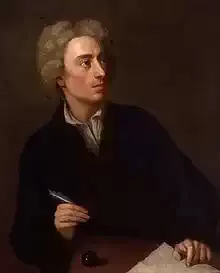
Alexander Pope
With sweeter notes each rising temple rung
A Raphael painted and a Vida sung;
Immortal Vida! on whose honour'd brow
The poet's bays and critics ivy grow:
Cremona now shall ever boast they name,
As next in place to Mantua, next in fame!
But soon by impious arms from Latium chased,
Their ancient bounds the banish'd Muses pass'd;
Thence arts o'er all the northern world advance,
But critic learning flourish'd most in France;
The rules a nation born to serve obeys,
And Boileau still in right of Horace sways.
But we, brave Britons, foreign laws despised,
And kept unconquer'd and uncivilized;
Fierce for the liberties of wit, and bold,
We still defied the Romans, as of old.
Yet some there were, among the sounder few
Of those who less presumed and better knew,
Who durst assert the juster ancient cause,
And here restor'd WIt's fundamental laws.
Such was the Muse whose rules and practice tell
``Nature's chief masterpiece is writing well.''
Such was Roscommon, not more learn'd than good,
With manners gen'rous as his noble blood;
To him the wit of Greece and Rome was known,
And every author's merit but his own.
Such late was Walsh--the Muse's judge and friend,
Who justly knew to blame or to commend;
To failings mild but zealous for desert,
The clearest head, and the sincerest heart.
This humble praise, lamented Shade! receive;
This praise at least a grateful Muse may give:
The Muse whose early voice you taught to sing,
Prescribed her heights, and pruned her tender wing,
(Her guide now lost), no more attempts to rise,
But in low numbers short excursions tries;
Content if hence th'unlearn'd their wants may view,
The learn'd reflect on what before they knew;
Careless of censure, nor too fond of fame;
Still pleas'd to praise, yet not afraid to blame;
Averse alike to flatter or offend;
Not free from faults, nor yet too vain to mend.
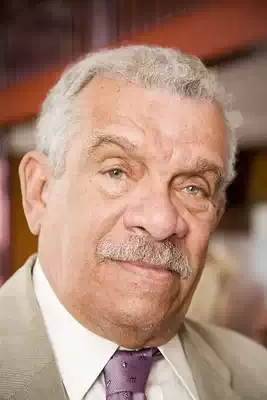
Derek Walcott
The Star-Apple Kingdom
in those shires of the island where the cattle drank
their pools of shadow from an older sky,
surviving from when the landscape copied such objects as
'Herefords at Sunset in the valley of the Wye.'
The mountain water that fell white from the mill wheel
sprinkling like petals from the star-apple trees,
and all of the windmills and sugar mills moved by mules
on the treadmill of Monday to Monday, would repeat
in tongues of water and wind and fire, in tongues
of Mission School pickaninnies, like rivers remembering
their source, Parish Trelawny, Parish St David, Parish
St Andrew, the names afflicting the pastures,
the lime groves and fences of marl stone and the cattle
with a docile longing, an epochal content.
And there were, like old wedding lace in an attic,
among the boas and parasols and the tea-colored
daguerreotypes, hints of an epochal happiness
as ordered and infinite to the child
as the great house road to the Great House
down a perspective of casuarinas plunging green manes
in time to the horses, an orderly life
reduced by lorgnettes day and night, one disc the sun,
the other the moon, reduced into a pier glass:
nannies diminished to dolls, mahogany stairways
no larger than those of an album in which
the flash of cutlery yellows, as gamboge as
the piled cakes of teatime on that latticed
bougainvillea verandah that looked down toward
a prospect of Cuyp-like Herefords under a sky
lurid as a porcelain souvenir with these words:
'Herefords at Sunset in the Valley of the Wye.'
Strange, that the rancor of hatred hid in that dream
of slow rivers and lily-like parasols, in snaps
of fine old colonial families, curled at the edge
not from age of from fire or the chemicals, no, not at all,
but because, off at its edges, innocently excluded
stood the groom, the cattle boy, the housemaid, the gardeners,
the tenants, the good Negroes down in the village,
their mouth in the locked jaw of a silent scream.
A scream which would open the doors to swing wildly
all night, that was bringing in heavier clouds,
more black smoke than cloud, frightening the cattle
in whose bulging eyes the Great House diminished;
a scorching wind of a scream
that began to extinguish the fireflies,
that dried the water mill creaking to a stop
as it was about to pronounce Parish Trelawny
all over, in the ancient pastoral voice,
a wind that blew all without bending anything,
neither the leaves of the album nor the lime groves;
blew Nanny floating back in white from a feather
to a chimerical, chemical pin speck that shrank
the drinking Herefords to brown porcelain cows
on a mantelpiece, Trelawny trembling with dusk,
the scorched pastures of the old benign Custos; blew
far the decent servants and the lifelong cook,
and shriveled to a shard that ancient pastoral
of dusk in a gilt-edged frame now catching the evening sun
in Jamaica, making both epochs one.
He looked out from the Great House windows on
clouds that still held the fragrance of fire,
he saw the Botanical Gardens officially drown
in a formal dusk, where governors had strolled
and black gardeners had smiled over glinting shears
at the lilies of parasols on the floating lawns,
the flame trees obeyed his will and lowered their wicks,
the flowers tightened their fists in the name of thrift,
the porcelain lamps of ripe cocoa, the magnolia's jet
dimmed on the one circuit with the ginger lilies
and left a lonely bulb on the verandah,
and, had his mandate extended to that ceiling
of star-apple candelabra, he would have ordered
the sky to sleep, saying, I'm tired,
save the starlight for victories, we can't afford it,
leave the moon on for one more hour,and that's it.
But though his power, the given mandate, extended
from tangerine daybreaks to star-apple dusks,
his hand could not dam that ceaseless torrent of dust
that carried the shacks of the poor, to their root-rock music,
down the gullies of Yallahs and August Town,
to lodge them on thorns of maca, with their rags
crucified by cactus, tins, old tires, cartons;
from the black Warieka Hills the sky glowed fierce as
the dials of a million radios,
a throbbing sunset that glowed like a grid
where the dread beat rose from the jukebox of Kingston.
He saw the fountains dried of quadrilles, the water-music
of the country dancers, the fiddlers like fifes
put aside. He had to heal
this malarial island in its bath of bay leaves,
its forests tossing with fever, the dry cattle
groaning like winches, the grass that kept shaking
its head to remember its name. No vowels left
in the mill wheel, the river. Rock stone. Rock stone.
The mountains rolled like whales through phosphorous stars,
as he swayed like a stone down fathoms into sleep,
drawn by that magnet which pulls down half the world
between a star and a star, by that black power
that has the assassin dreaming of snow,
that poleaxes the tyrant to a sleeping child.
The house is rocking at anchor, but as he falls
his mind is a mill wheel in moonlight,
and he hears, in the sleep of his moonlight, the drowned
bell of Port Royal's cathedral, sees the copper pennies
of bubbles rising from the empty eye-pockets
of green buccaneers, the parrot fish floating
from the frayed shoulders of pirates, sea horses
drawing gowned ladies in their liquid promenade
across the moss-green meadows of the sea;
he heard the drowned choirs under Palisadoes,
a hymn ascending to earth from a heaven inverted
by water, a crab climbing the steeple,
and he climbed from that submarine kingdom
as the evening lights came on in the institute,
the scholars lamplit in their own aquarium,
he saw them mouthing like parrot fish, as he passed
upward from that baptism, their history lessons,
the bubbles like ideas which he could not break:
Jamaica was captured by Penn and Venables,
Port Royal perished in a cataclysmic earthquake.
Before the coruscating façades of cathedrals
from Santiago to Caracas, where penitential archbishops
washed the feet of paupers (a parenthetical moment
that made the Caribbean a baptismal font,
turned butterflies to stone, and whitened like doves
the buzzards circling municipal garbage),
the Caribbean was borne like an elliptical basin
in the hands of acolytes, and a people were absolved
of a history which they did not commit;
the slave pardoned his whip, and the dispossessed
said the rosary of islands for three hundred years,
a hymn that resounded like the hum of the sea
inside a sea cave, as their knees turned to stone,
while the bodies of patriots were melting down walls
still crusted with mute outcries of La Revolucion!
'San Salvador, pray for us,
St. Thomas, San Domingo,
ora pro nobis, intercede for us, Sancta Lucia
of no eyes,' and when the circular chaplet
reached the last black bead of Sancta Trinidad
they began again, their knees drilled into stone,
where Colon had begun, with San Salvador's bead,
beads of black colonies round the necks of Indians.
And while they prayed for an economic miracle,
ulcers formed on the municipal portraits,
the hotels went up, and the casinos and brothels,
and the empires of tobacco, sugar, and bananas,
until a black woman, shawled like a buzzard,
climbed up the stairs and knocked at the door
of his dream, whispering in the ear of the keyhole:
'Let me in, I'm finished with praying, I'm the Revolution.
I am the darker, the older America.'
She was as beautiful as a stone in the sunrise,
her voice had the gutturals of machine guns
across khaki deserts where the cactus flower
detonates like grenades, her sex was the slit throat
of an Indian, her hair had the blue-black sheen of the crow.
She was a black umbrella blown inside out
by the wind of revolution, La Madre Dolorosa,
a black rose of sorrow, a black mine of silence,
raped wife, empty mother, Aztec virgin
transfixed by arrows from a thousand guitars,
a stone full of silence, which, if it gave tongue
to the tortures done in the name of the Father,
would curdle the blood of the marauding wolf,
the fountain of generals, poets, and cripples
who danced without moving over their graves
with each revolution; her Caesarean was stitched
by the teeth of machine guns,and every sunset
she carried the Caribbean's elliptical basin
as she had once carried the penitential napkins
to be the footbath of dictators, Trujillo, Machado,
and those whose faces had yellowed like posters
on municipal walls. Now she stroked his hair
until it turned white, but she would not understand
that he wanted no other power but peace,
that he wanted a revolution without any bloodshed,
he wanted a history without any memory,
streets without statues,
and a geography without myth. He wanted no armies
but those regiments of bananas, thick lances of cane,
and he sobbed,'I am powerless, except for love.'
She faded from him, because he could not kill;
she shrunk to a bat that hung day and night
in the back of his brain. He rose in his dream.
Derek Walcott
The Saddhu Of Couva
vibrate through Couva,
is then I see my soul, swiftly unsheathed,
like a white cattle bird growing more small
over the ocean of the evening canes,
and I sit quiet, waiting for it to return
like a hog-cattle blistered with mud,
because, for my spirit, India is too far.
And to that gong
sometimes bald clouds in saffron robes assemble
sacred to the evening,
sacred even to Ramlochan,
singing Indian hits from his jute hammock
while evening strokes the flanks
and silver horns of his maroon taxi,
as the mosquitoes whine their evening mantras,
my friend Anopheles, on the sitar,
and the fireflies making every dusk Divali.
I knot my head with a cloud,
my white mustache bristle like horns,
my hands are brittle as the pages of Ramayana.
Once the sacred monkeys multiplied like branches
in the ancient temples: I did not miss them,
because these fields sang of Bengal,
behind Ramlochan Repairs there was Uttar Pradesh;
but time roars in my ears like a river,
old age is a conflagration
as fierce as the cane fires of crop time.
I will pass through these people like a cloud,
they will see a white bird beating the evening sea
of the canes behind Couva,
and who will point it as my soul unsheathed?
Naither the bridegroom in beads,
nor the bride in her veils,
their sacred language on the cinema hoardings.
I talked too damn much on the Couva Village Council.
I talked too softly, I was always drowned
by the loudspeakers in front of the stores
or the loudspeakers with the greatest pictures.
I am best suited to stalk like a white cattle bird
on legs like sticks, with sticking to the Path
between the canes on a district road at dusk.
Playing the Elder. There are no more elders.
Is only old people.
My friends spit on the government.
I do not think is just the government.
Suppose all the gods too old,
Suppose they dead and they burning them,
supposing when some cane cutter
start chopping up snakes with a cutlass
he is severing the snake-armed god,
and suppose some hunter has caught
Hanuman in his mischief in a monkey cage.
Suppose all the gods were killed by electric light?
Sunset, a bonfire, roars in my ears;
embers of brown swallows dart and cry,
like women distracted,
around its cremation.
I ascend to my bed of sweet sandalwood.
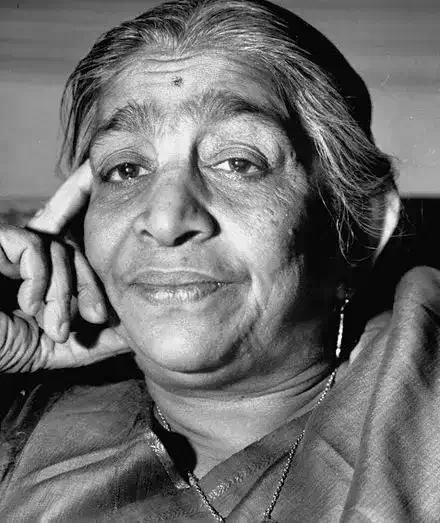
Sarojini Naidu
The Royal Tombs Of Golconda
Whose spacious darkness guards your dust;
Around me sleep the hoary plains
That hold your ancient wars in trust.
I pause, my dreaming spirit hears,
Across the wind's unquiet tides,
The glimmering music of your spears,
The laughter of your royal brides.
In vain, O Kings, doth time aspire
To make your names oblivion's sport,
While yonder hill wears like a tier
The ruined grandeur of your fort.
Though centuries falter and decline,
Your proven strongholds shall remain
Embodied memories of your line,
Incarnate legends of your reign.
O Queens, in vain old Fate decreed
Your flower-like bodies to the tomb;
Death is in truth the vital seed
Of your imperishable bloom
Each new-born year the bulbuls sing
Their songs of your renascent loves;
Your beauty wakens with the spring
To kindle these pomegranate groves.
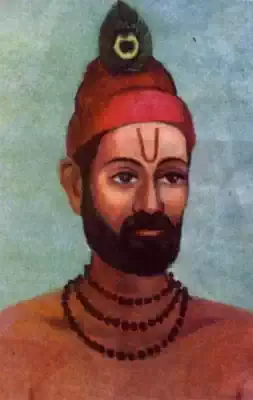
Kabir
It Is Needless To Ask Of A Saint
For the priest, the warrior. the tradesman, and all the
thirty-six castes, alike are seeking for God.
It is but folly to ask what the caste of a saint may be;
The barber has sought God, the washerwoman, and the carpenter-
Even Raidas was a seeker after God.
The Rishi Swapacha was a tanner by caste.
Hindus and Moslems alike have achieved that End, where remains no mark of
distinction.

Rudyard Kipling
The Last Shuttee
His wives, disregarding the orders of the English against Suttee,
would have broken out of the palace had not the gates been barred.
But one of them, disguised as the King's favourite dancing-girl,
passed through the line of guards and reached the pyre. There,
her courage failing, she prayed her cousin, a baron of the court,
to kill her. This he did, not knowing who she was.
Udai Chand lay sick to death
In his hold by Gungra hill.
All night we heard the death-gongs ring
For the soul of the dying Rajpoot King,
All night beat up from the women's wing
A cry that we could not still.
All night the barons came and went,
The lords of the outer guard:
All night the cressets glimmered pale
On Ulwar sabre and Tonk jezail,
Mewar headstall and Marwar mail,
That clinked in the palace yard.
In the Golden room on the palace roof
All night he fought for air:
And there was sobbing behind the screen,
Rustle and whisper of women unseen,
And the hungry eyes of the Boondi Queen
On the death she might not share.
He passed at dawn -- the death-fire leaped
From ridge to river-head,
From the Malwa plains to the Abu scars:
And wail upon wail went up to the stars
Behind the grim zenana-bars,
When they knew that the King was dead.
The dumb priest knelt to tie his mouth
And robe him for the pyre.
The Boondi Queen beneath us cried:
"See, now, that we die as our mothers died
In the bridal-bed by our master's side!
Out, women! -- to the fire!"
We drove the great gates home apace:
White hands were on the sill:
But ere the rush of the unseen feet
Had reached the turn to the open street,
The bars shot down, the guard-drum beat --
We held the dovecot still.
A face looked down in the gathering day,
And laughing spoke from the wall:
"Oh]/e, they mourn here: let me by --
Azizun, the Lucknow nautch-girl, I!
When the house is rotten, the rats must fly,
And I seek another thrall.
"For I ruled the King as ne'er did Queen, --
To-night the Queens rule me!
Guard them safely, but let me go,
Or ever they pay the debt they owe
In scourge and torture!" She leaped below,
And the grim guard watched her flee.
They knew that the King had spent his soul
On a North-bred dancing-girl:
That he prayed to a flat-nosed Lucknow god,
And kissed the ground where her feet had trod,
And doomed to death at her drunken nod,
And swore by her lightest curl.
We bore the King to his fathers' place,
Where the tombs of the Sun-born stand:
Where the gray apes swing, and the peacocks preen
On fretted pillar and jewelled screen,
And the wild boar couch in the house of the Queen
On the drift of the desert sand.
The herald read his titles forth,
We set the logs aglow:
"Friend of the English, free from fear,
Baron of Luni to Jeysulmeer,
Lord of the Desert of Bikaneer,
King of the Jungle, -- go!"
All night the red flame stabbed the sky
With wavering wind-tossed spears:
And out of a shattered temple crept
A woman who veiled her head and wept,
And called on the King -- but the great King slept,
And turned not for her tears.
Small thought had he to mark the strife --
Cold fear with hot desire --
When thrice she leaped from the leaping flame,
And thrice she beat her breast for shame,
And thrice like a wounded dove she came
And moaned about the fire.
One watched, a bow-shot from the blaze,
The silent streets between,
Who had stood by the King in sport and fray,
To blade in ambush or boar at bay,
And he was a baron old and gray,
And kin to the Boondi Queen.
He said: "O shameless, put aside
The veil upon thy brow!
Who held the King and all his land
To the wanton will of a harlot's hand!
Will the white ash rise from the blistered brand?
Stoop down, and call him now!"
Then she: "By the faith of my tarnished soul,
All things I did not well,
I had hoped to clear ere the fire died,
And lay me down by my master's side
To rule in Heaven his only bride,
While the others howl in Hell.
"But I have felt the fire's breath,
And hard it is to die!
Yet if I may pray a Rajpoot lord
To sully the steel of a Thakur's sword
With base-born blood of a trade abhorred," --
And the Thakur answered, "Ay."
He drew and struck: the straight blade drank
The life beneath the breast.
"I had looked for the Queen to face the flame,
But the harlot dies for the Rajpoot dame --
Sister of mine, pass, free from shame,
Pass with thy King to rest!"
The black log crashed above the white:
The little flames and lean,
Red as slaughter and blue as steel,
That whistled and fluttered from head to heel,
Leaped up anew, for they found their meal
On the heart of -- the Boondi Queen!

Kazi Nazrul Islam
My Prophet Mohammad
he is my prophet Mohammad.
The friend of God, full of kindness,
he is the dearly beloved of all.
Adam, Noah, Abraham, David,
Solomon, Moses and Jesus
all bear witness to his glory.
Over all their message
prevails the message revealed
to my prophet.
In him the world glimpsed
the hint of God's flaming light
It was he who brought to this sinful world
a foretaste of Heaven's delight.
In vain did Alexander seek
to find on this earth the nectar of Paradise.
My prophet freely distributed the same
in the assembly of mankind.
For nothing did Zuleikha lose her head
when she met the beautiful Yusuf.
Had she seen my prophet
gladly would she have renounced the world!
If David could hear
the honeyed words of my prophet
surely he would have prayed for his advice.
Noah's ark did not sink
only because it had my prophet's blessings.
Jonah, swallowed by the whale at sea,
continued to live,
and Nimrod's fire failed to kill Abraham,
only because my prophet showered on them both
his gracious blessings.
I for one have drunk deep the Quran's nectar
Hell I have made for ever harman for me!
[Original: Syed Makki Madni; Translation: Kabir Chowdhury]
Rudyard Kipling
The Law of the Jungle
that shall keep it may prosper, but the Wolf that shall break it must die. AAs the
creeper that girdles the tree-trunk the Law runneth forward and back --
For the strength of the Pack is the Wolf, and the strength of the Wolf is the Pack.
Wash daily from nose-tip to tail-tip; drink deeply, but never too deep;
And remember the night is for hunting, and forget not the day is for sleep.
The Jackal may follow the Tiger, but, Cub, when thy whiskers are grown,
Remember the Wolf is a Hunter -- go forth and get food of thine own.
Keep peace withe Lords of the Jungle -- the Tiger, the Panther, and Bear.
And trouble not Hathi the Silent, and mock not the Boar in his lair.
When Pack meets with Pack in the Jungle, and neither will go from the trail,
Lie down till the leaders have spoken -- it may be fair words shall prevail.
When ye fight with a Wolf of the Pack, ye must fight him alone and afar,
Lest others take part in the quarrel, and the Pack be diminished by war.
The Lair of the Wolf is his refuge, and where he has made him his home,
Not even the Head Wolf may enter, not even the Council may come.
The Lair of the Wolf is his refuge, but where he has digged it too plain,
The Council shall send him a message, and so he shall change it again.
If ye kill before midnight, be silent, and wake not the woods with your bay,
Lest ye frighten the deer from the crop, and your brothers go empty away.
Ye may kill for yourselves, and your mates, and your cubs as they need, and ye can;
But kill not for pleasure of killing, and seven times never kill Man!
If ye plunder his Kill from a weaker, devour not all in thy pride;
Pack-Right is the right of the meanest; so leave him the head and the hide.
The Kill of the Pack is the meat of the Pack. Ye must eat where it lies;
And no one may carry away of that meat to his lair, or he dies.
The Kill of the Wolf is the meat of the Wolf. He may do what he will;
But, till he has given permission, the Pack may not eat of that Kill.
Cub-Right is the right of the Yearling. From all of his Pack he may claim
Full-gorge when the killer has eaten; and none may refuse him the same.
Lair-Right is the right of the Mother. From all of her year she may claim
One haunch of each kill for her litter, and none may deny her the same.
Cave-Right is the right of the Father -- to hunt by himself for his own:
He is freed of all calls to the Pack; he is judged by the Council alone.
Because of his age and his cunning, because of his gripe and his paw,
In all that the Law leaveth open, the word of your Head Wolf is Law.
Now these are the Laws of the Jungle, and many and mighty are they;
But the head and the hoof of the Law and the haunch and the hump is -- Obey!
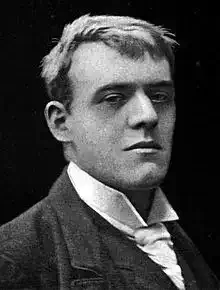
Hilaire Belloc
Heroic Poem in Praise of Wine
To welcome home mankind's mysterious friend
Wine, true begetter of all arts that be;
Wine, privilege of the completely free;
Wine the recorder; wine the sagely strong;
Wine, bright avenger of sly-dealing wrong,
Awake, Ausonian Muse, and sing the vineyard song!
Sing how the Charioteer from Asia came,
And on his front the little dancing flame
Which marked the God-head. Sing the Panther-team,
The gilded Thrysus twirling, and the gleam
Of cymbals through the darkness. Sing the drums.
He comes; the young renewer of Hellas comes!
The Seas await him. Those Aegean Seas
Roll from the dawning, ponderous, ill at ease,
In lifts of lead, whose cresting hardly breaks
To ghostly foam, when suddenly there awakes
A mountain glory inland. All the skies
Are luminous; and amid the sea bird cries
The mariner hears a morning breeze arise.
Then goes the Pageant forward. The sea-way
Silvers the feet of that august array
Trailing above the waters, through the airs;
And as they pass a wind before them bears
The quickening word, the influence magical.
The Islands have received it, marble-tall;
The long shores of the mainland. Something fills
The warm Euboean combes, the sacred hills
Of Aulis and of Argos. Still they move
Touching the City walls, the Temple grove,
Till, far upon the horizon-glint, a gleam
Of light, of trembling light, revealed they seem
Turned to a cloud, but to a cloud that shines,
And everywhere as they pass, the Vines! The Vines!
The Vines, the conquering Vines! And the Vine
breaths
Her savour through the upland, empty heaths
Of treeless wastes; the Vines have come to where
The dark Pelasgian steep defends the lair
Of the wolf's hiding; to the empty fields
By Aufidus, the dry campaign that yields
No harvest for the husbandman, but now
Shall bear a nobler foison than the plough;
To where, festooned along the tall elm trees,
Tendrils are mirrored in Tyrrhenian seas;
To where the South awaits them; even to where
Stark, African informed of burning air,
Upturned to Heaven the broad Hipponian plain
Extends luxurious and invites the main.
Guelma's a mother: barren Thaspsa breeds;
And northward in the valleys, next the meads
That sleep by misty river banks, the Vines
Have struck to spread below the solemn pines.
The Vines are on the roof-trees. All the Shrines
And Homes of men are consecrate with Vines.
And now the task of that triumphant day
Has reached to victory. In the reddening ray
With all his train, from hard Iberian lands
Fulfilled, apparent, that Creator stands
Halted on Atlas. Far Beneath him, far,
The strength of Ocean darkening and the star
Beyond all shores. There is a silence made.
It glorifies: and the gigantic shade
Of Hercules adores him from the West.
Dead Lucre: burnt Ambition: Wine is best.
But what are these that from the outer murk
Of dense mephitic vapours creeping lurk
To breathe foul airs from that corrupted well
Which oozes slime along the floor of Hell?
These are the stricken palsied brood of sin
In whose vile veins, poor, poisonous and thin,
Decoctions of embittered hatreds crawl:
These are the Water-Drinkers, cursed all!
On what gin-sodden Hags, what flaccid sires
Bred these White Slugs from what exhaust desires?
In what close prison's horror were their wiles
Watched by what tyrant power with evil smiles;
Or in what caverns, blocked from grace and air
Received they, then, the mandates of despair?
What! Must our race, our tragic race, that roam
All exiled from our first, and final, home:
That in one moment of temptation lost
Our heritage, and now wander, hunger-tost
Beyond the Gates (still speaking with our eyes
For ever of remembered Paradise),
Must we with every gift accepted, still,
With every joy, receive attendant ill?
Must some lewd evil follow all our good
And muttering dog our brief beatitude?
A primal doom, inexorable, wise,
Permitted, ordered, even these to rise.
Even in the shadow of so bright a Lord
Must swarm and propagate the filthy horde
Debased, accursed I say, abhorrent and abhorred.
Accursed and curse-bestowing. For whosoe'er
Shall suffer their contagion, everywhere
Falls from the estate of man and finds his end
To the mere beverage of the beast condemned.
For such as these in vain the Rhine has rolled
Imperial centuries by hills of gold;
For such as these the flashing Rhone shall rage
In vain its lightning through the Hermitage
Or level-browed divine Touraine receive
The tribute of her vintages at eve.
For such as these Burgundian heats in vain
Swell the rich slope or load the empurpled plain.
Bootless for such as these the mighty task
Of bottling God the Father in a flask
And leading all Creation down distilled
To one small ardent sphere immensely filled.
With memories empty, with experience null,
With vapid eye-balls meaningless and dull
They pass unblest through the unfruitful light;
And when we open the bronze doors of Night,
When we in high carousal, we reclined,
Spur up to Heaven the still ascending mind,
Pass with the all inspiring, to and fro,
The torch of genius and the Muse's glow,
They, lifeless, stare at vacancy alone
Or plan mean traffic, or repeat their moan.
We, when repose demands us, welcomed are
In young white arms, like our great Exemplar
Who, wearied with creation, takes his rest
And sinks to sleep on Ariadne's breast.
They through the darkness into darkness press
Despised, abandoned and companionless.
And when the course of either's sleep has run
We leap to life like heralds of the sun;
We from the couch in roseate mornings gay
Salute as equals the exultant day
While they, the unworthy, unrewarded, they
The dank despisers of the Vine, arise
To watch grey dawns and mourn indifferent skies.
Forget them! Form the Dionysian ring
And pulse the ground, and Io, Io, sing.
Father Lenaean, to whom our strength belongs,
Our loves, our wars, our laughter and our songs,
Remember our inheritance, who praise
Your glory in these last unhappy days
When beauty sickens and a muddied robe
Of baseness fouls the universal globe.
Though all the Gods indignant and their train
Abandon ruined man, do thou remain!
By thee the vesture of our life was made,
The Embattled Gate, the lordly Colonnade,
The woven fabric's gracious hues, the sound
Of trumpets, and the quivering fountain-round,
And, indestructible, the Arch, and, high,
The Shaft of Stone that stands against the sky,
And, last, the guardian-genius of them, Rhyme,
Come from beyond the world to conquer time:
All these are thine, Lenaean.
By thee do seers the inward light discern;
By thee the statue lives, the Gods return;
By thee the thunder and the falling foam
Of loud Acquoria's torrent call to Rome;
Alba rejoices in a thousand springs,
Gensano laughs, and Orvieto sings...
But, Ah! With Orvieto, with that name
Of dark, Eturian, subterranean flame
The years dissolve. I am standing in that hour
Of majesty Septembral, and the power
Which swells the clusters when the nights are still
With autumn stars on Orvieto hill.
Had these been mine, Ausonian Muse, to know
The large contented oxen heaving slow;
To count my sheaves at harvest; so to spend
Perfected days in peace until the end;
With every evening's dust of gold to hear
The bells upon the pasture height, the clear
Full horn of herdsmen gathering in the kine
To ancient byres in hamlets Appenine,
And crown abundant age with generous ease:
Had these, Ausonian Muse, had these, had these.....
But since I would not, since I could not stay,
Let me remember even in this my day
How, when the ephemeral vision's lure is past
All, all, must face their Passion at the last
Was there not one that did to Heaven complain
How, driving through the midnight and the rain,
He struck, the Atlantic seethe and surge before,
Wrecked in the North along a lonely shore
To make the lights of home and hear his name no
more.
Was there not one that from a desperate field
Rode with no guerdon but a rifted shield;
A name disherited; a broken sword;
Wounds unrenowned; battle beneath no Lord;
Strong blows, but on the void, and toil without
reward.
When from the waste of such long labour done
I too must leave the grape-ennobling sun
And like the vineyard worker take my way
Down the long shadows of declining day,
Bend on the sombre plain my clouded sight
And leave the mountain to the advancing night,
Come to the term of all that was mine own
With nothingness before me, and alone;
Then to what hope of answer shall I turn?
Comrade-Commander whom I dared not earn,
What said You then to trembling friends and
few?
"A moment, and I drink it with you new:
But in my Father's Kingdom." So, my Friend,
Let not Your cup desert me in the end.
But when the hour of mine adventure's near
Just and benignant, let my youth appear
Bearing a Chalice, open, golden, wide,
With benediction graven on its side.
So touch my dying lip: so bridge that deep:
So pledge my waking from the gift of sleep,
And, sacramental, raise me the Divine:
Strong brother in God and last companion, Wine.

Lord Byron
Beppo, A Venetian Story
I.
'Tis known, at least it should be, that throughout
All countries of the Catholic persuasion,
Some weeks before Shrove Tuesday comes about,
The People take their fill of recreation,
And buy repentance, ere they grow devout,
However high their rank, or low their station,
With fiddling, feasting, dancing, drinking, masking,
And other things which may be had for asking.
II.
The moment Night with dusky mantle covers
The skies (and the more duskily the better),
The Timeless
liked by husbands than by lovers
Begins,
and Prudery flings aside her fetter,
And Gaiety on restless tiptoe hovers,
Giggling with all the Gallants who beset her;
And there are Songs and quavers, roaring, humming,
Guitars, and every other sort of strumming.
III.
And there are dresses, splendid but fantastical,
Masks of all times and nations, Turks and Jews,
And Harlequins and Clowns, with feats gymnastical,
Greeks, Romans, Yankeedoodles,
and Hindoos;
All kinds of dress, except the ecclesiastical,
All people, as their fancies hit, may choose,
But no one in these parts may quiz the Clergy,Therefore
take heed, ye Freethinkers! I charge ye.
IV.
You'd better walk about begirt with briars,
Instead of Coat and smallclothes, than put on
A single stitch reflecting upon Friars,
Although you swore it only was in fun;
They'd haul you o'er the coals, and stir the fires
Of Phlegethon with every mother's son,
Nor say one Mass to cool the Caldron's bubble
That boil'd your bonesunless
you paid them double.
V.
But saving this, you may put on whate'er
You like by way of doublet, cape, or cloak,
Such as in Monmouth Street, or in Rag Fair,
Would rig you out in Seriousness or Joke;
And even in Italy such places are
With prettier name in softer accents spoke,
For, bating Covent Garden, I can hit on
No place that's called 'Piazza' in Great Britain.
VI.
This feast is named the Carnival, which being
Interpreted implies 'Farewell to Flesh':
So call'd, because the name and thing agreeing,
Through Lent they live on fish, both salt and fresh.
But why they usher Lent with so much glee in
Is more than I can tell, although I guess
'Tis as we take a glass with friends at parting
In the StageCoach
or Packet, just at starting.
VII.
And thus they bid farewell to Carnal dishes,
And solid meats, and highly spiced ragouts,
To live for forty days on illdress’d
fishes,
Because they have no sauces to their stews
A
thing which causes many 'poohs' and 'pishes,'
And several oaths (which would not suit the Muse)
From travellers accustom'd from a boy
To eat their Salmon, at the least, with Soy;
VIII.
And therefore humbly I would recommend
'The Curious in FishSauce,'
before they cross
The Sea, to bid their Cook, or wife, or friend,
Walk or ride to the Strand, and buy in gross
(Or if set out beforehand these may send
By any means least liable to loss)
Ketchup, Soy, ChiliVinegar,
and Harvey,
Or, by the Lord! a Lent will well nigh starve ye.
IX.
That is to say, if your Religion's Roman,
And you at Rome would do as Romans do,
According to the proverb,although
No man
If foreign is obliged to fast, and you
If
Protestant, or sicklyor
a woman
Would
rather dine in sin on a ragout
Dine
and be d____d! I don't mean to be coarse,
But that's the penalty, to say no worse.
X.
Of all the places where the Carnival
Was most facetious in the days of yore,
For dance, and song, and serenade, and ball,
And Masque, and Mime, and Mystery, and more
Than I have time to tell now, or at all,
Venice the bell from every city bore,
And at the moment when I fix my story,
That Seaborn
City was in all her Glory.
XI.
They've pretty faces yet, those same Venetians,
Black eyes, arch'd brows, and sweet expressions still,
Such as of old were copied from the Grecians,
In ancient Arts by Moderns mimick'd ill;
And like so many Venuses of Titian's
(The best's at Florencesee
it, if ye will),
They look when leaning over the Balcony;
Or stepp'd from out a picture by Giorgione,
XII.
Whose tints are Truth and Beauty at their best;
And when you to Manfrini's palace go,
That Picture (howsoever fine the rest)
Is loveliest to my mind of all the show;
It may perhaps be also to your Zest,
And that's the cause I rhyme upon it so:
'Tis but a portrait of his Son and Wife
And Self; but such a Woman! Love in life!
XIII.
Love in full life and length, not Love ideal,
No, nor ideal Beauty, that fine name,
But something better still, so very real,
That the sweet Model must have been the same;
A thing that you would purchase, beg, or steal,
Were't not impossible, besides a shame;
The face recalls some face, as 'twere with pain,
You once have seen, but ne'er will see again.
XIV.
One of those forms which flit by us, when we
Are young, and fix our eyes on every face;
And, oh! the Loveliness at times we see
In momentary gliding, the soft grace,
The Youth, the Bloom, the Beauty which agree
In many a nameless being we retrace,
Whose course and home we knew not, nor shall know,
Like the lost Pleiad seen no more below.
XV.
I said that like a picture by Giorgione
Venetian women were, and so they are,
Particularly seen from a balcony
(For Beauty's sometimes best set off afar)
And there, just like a heroine of Goldoni,
They peep from out the blind, or o'er the bar;
And truth to say they're mostly very pretty,
And rather like to show it, more's the Pity!
XVI.
For glances beget ogles, ogles sighs,
Sighs wishes, wishes words, and words a letter,
Which flies on wings of lightheel'd
Mercuries,
Who do such things because they know no better;
And then, God knows! what Mischief may arise,
When Love links two young people in one fetter:
Vile assignations, and adulterous beds,
Elopements, broken vows, and hearts, and heads.
XVII.
Shakespeare described the Sex in Desdemona
As very fair, but yet suspect in fame,
And to this day from Venice to Verona
Such matters may be probably the same,
Except that since those times was never known a
Husband whom mere Suspicion could inflame
To suffocate a wife no more than twenty,
Because she had a 'Cavalier Servente.'
XVIII.
Their jealousy (if they are ever jealous)
Is of a fair complexion altogether,
Not like that sooty devil of Othello's,
Which smothers women in a bed of feather,
But worthier of these much more jolly fellows,
When weary of the matrimonial tether
His head for such a wife no mortal bothers,
But takes at once another, or another's.
XIX.
Didst ever see a Gondola? For fear
You should not, I'll describe it you exactly:
'Tis a long cover'd boat that's common here,
Carved at the prow, built lightly, but compactly,
Row'd by two rowers, each call'd 'Gondolier,'
It glides along the water looking blackly,
Just like a Coffin clapt in a Canoe,
Where none can make out what you say or do.
XX.
And up and down the long Canals they go,
And under the Rialto shoot along
By night and day, all paces, swift or slow,
And round the theatres, a sable throng,
They wait in their dusk livery of woe,
But
not to them do woeful things belong,
For sometimes they contain a deal of fun,
Like Mourning Coaches when the funeral’s done.
XXI.
But to my story.'
Twas some years ago,
It may be thirty, forty, more or less,
The Carnival was at its height, and so
Were all kinds of Buffoonery and dress;
A Certain Lady went to see the show,
Her real name I know not, nor can guess,
And so we'll call her Laura, if you please,
Because it slips into my verse with ease.
XXII.
She was not old, nor young, nor at the years
Which certain people call a 'certain Age,'
Which yet the most uncertain age appears,
Because I never heard, nor could engage
A person yet by prayers, or bribes, or tears,
To name, define by speech, or write on page,
The period meant precisely by that word,
Which
surely is exceedingly absurd.
XXIII.
Laura was blooming still, had made the best
Of Time, and Time return'd the compliment,
And treated her genteelly, so that, 'drest,
She look'd extremely well where'er she went;
A pretty woman is a welcome guest,
And Laura's brow a frown had rarely bent;
Indeed, she shone all Smiles, and seem'd to flatter
Mankind with her black eyes for looking at her.
XXIV.
She was a married woman; 'tis convenient,
Because in Christian countries 'tis a rule
To view their little slips with eyes more lenient;
Whereas if single ladies play the fool
(Unless within the period intervenient
A welltimed
wedding makes the scandal cool),
I don't know how they ever can get over it,
Except they manage never to discover it.
XXV.
Her husband sail'd upon the Adriatic,
And made some voyages, too, in other seas,
And when he lay in Quarantine for Pratique
(A forty days' precaution 'gainst disease),
His wife would mount, at times, her highest attic,
For thence she could discern the ship with ease;
He was a Merchant trading to Aleppo,
His name Giuseppecall'd
more briefly, Beppo.
XXVI.
He was a man as dusky as a Spaniard,
Sunburnt with travel, yet a portly figure;
Though colour'd, as it were, within a tanyard,
He was a person both of sense and vigour
A
better Seaman never yet did man yard;
And She, although her manners show'd no rigour,
Was deem'd a woman of the strictest principle,
So much as to be thought almost invincible.
XXVII.
But several years elapsed since they had met;
Some people thought the ship was lost, and some
That he had somehow blunder'd into debt,
And did not like the thought of steering home;
And there were several offer'd any bet,
Or that he would, or that he would not come,
For Most Men (till by losing render'd sager)
Will back their own opinions with a wager.
XXVIII.
'Tis said that their last parting was pathetic,
As partings often are, or ought to be,
And their presentiment was quite prophetic,
That they should never more each other see,
(A sort of morbid feeling, half poetic,
Which I have known occur in two or three)
When kneeling on the shore upon her sad knee
He left this Adriatic Ariadne.
XXIX.
And Laura waited long, and wept a little,
And thought of wearing weeds, as well she might;
She almost lost all appetite for victual,
And could not sleep with ease along at night;
She deem'd the windowframes
and shutters brittle
Against a daring Housebreaker
or Sprite,
And so She thought it prudent to connect her.
With a Vicehusband,
chiefly to protect her.
XXX.
She chose, (and what is there they will not choose,
If only you will but oppose their choice?)
Till Beppo should return from his long cruise,
And bid once more her faithful heart rejoice,
A Man some women like, and yet abuse
A
Coxcomb was he by the public voice;
A Count of wealth, they said, as well as quality,
And (in his pleasures) of great liberality.
XXXI.
And then he was A Count, and then he knew
Music, and dancing, fiddling, French and Tuscan;
The last not easy, be it known to you.
For few Italians speak the right Etruscan.
He was a Critic upon Operas, too,
And knew all niceties of the sock and buskin;
And no Venetian audience could endure a
Song, scene, or air, when he cried 'Seccatura!'
XXXII.
His 'Bravo' was decisive—for that sound
Hush'd 'Academie' sigh'd in silent awe;
The fiddlers trembled as he look'd around,
For fear of some false note's detected flaw;
The 'Prima Donna's' tuneful heart would bound,
Dreading the deep damnation of his 'Bah!'
Soprano, Basso, even the ContraAlto,
Wish'd him five fathom under the Rialto.
XXXIII.
He patronised the Improvisatori,
Nay, could himself extemporise some stanzas;
Wrote rhymes, sang songs, could also tell a story,
Sold pictures, and was skilful in the dance as
Italians can bethough
in this their glory
Must surely yield the palm to that which France has;
In short, he was a perfect Cavaliero,
And to his very Valet seem'd a Hero.
XXXIV.
Then he was faithful too, as well as amorous;
So that no sort of female could complain
Although
they're now and then a little clamourous,
He never put the pretty souls in pain;
His heart was one of those which most enamour us,
Wax to receive, and Marble to retain:
He was a lover of the good old School,
Who still become more constant as they cool.
XXXV.
No wonder such accomplishments should turn
A female head, however sage and steady
With
scarce a hope that Beppo could return,
In law he was almost as good as dead, he
Nor sent, nor wrote, nor show'd the least concern,
And she had waited several years already;
And really if a Man won't let us know
That he's alive, he's dead, or should be so.
XXXVI.
Besides, within the Alps, to every woman,
(Although, God knows! it is a grievous sin)
'Tis, I may say, permitted to have two men;
I can't tell who first brought the custom in,
But 'Cavalier Serventes' are quite common,
And no one notices nor cares a pin;
And we may call this (not to say the worst)
A Second Marriage which corrupts the First.
XXXVII.
The word was formerly a 'Cicisbeo,'
But that is now grown vulgar and indecent;
The Spaniards call the person a 'Cortejo,'
For the same Mode subsists in Spain, though recent;
In short, it reaches from the Po to Teio,
And may perhaps at last be o'er the Sea sent;
But Heaven preserve Old England from such courses!
Or what becomes of damage and divorces?
XXXVIII.
However, I still think, with all due deference
To the fair single part of the Creation,
That married ladies should preserve the preference
In têteàtête
or general conversation
And
this I say without peculiar reference
To England, France, or any other nation
Because
they know the world, and are at ease,
And being natural, naturally please.
XXXIX.
'Tis true, your budding Miss is very charming,
But shy and awkward at first coming out,
So much alarm'd, that she is quite alarming,
All Giggle, Blushhalf
Pertness, and half
PoutAnd
glancing at Mamma, for fear there's harm in
What you, she, it, or they, may be about;
The nursery still lisps out in all they utter
Besides,
they always smell of Bread and Butter.
XL.
But 'Cavalier Servente' is the phrase
Used in politest circles to express
This supernumary slave, who stays
Close to the lady as a part of dress
Her
word the only law which he obeys.
His is no Sinecure, as you may guess;
Coach, Servants, Gondola, he goes to call,
And carries fan and tippet, gloves and shawl.
XLI.
With all its sinful doings, I must say,
That Italy's a pleasant place to me,
Who love to see the Sun shine every day,
And vines (not nail’d to walls) from tree to tree
Festoon'd, much like the back Scene of a play,
Or Melodrame, which people flock to see
When the first act is ended by a dance
In Vineyards copied from the South of France.
XLII.
I like on Autumn evenings to ride out,
Without being forced to bid my Groom be sure
My Cloak is round his middle strapp'd about,
Because the skies are not the most secure;
I know too that, if stopp'd upon my route
Where the green alleys windingly allure,
Reeling with grapes red waggons choke the way
In
England 'twould be dung, dust, or a dray.
XLIII.
I also like to dine on Becaficas,
To see the Sun set, sure he'll rise tomorrow,
Not through a misty morning twinkling weak as
A drunken man's dead eye in maudlin sorrow,
But with all Heaven t' himself; the Day will break as
Beauteous as cloudless, nor be forced to borrow
That sort of farthing candlelight which glimmers
Where reeking London's smoky Caldron simmers.
XLIV.
I love the language, that soft bastard Latin,
Which melts like kisses from a female mouth,
And sounds as if it should be writ on satin,
With syllables which breathe of the sweet South,
And gentle liquids gliding all so pat in
That not a single accent seems uncouth
Like
our harsh Northern whistling, grunting guttural,
Which we're obliged to hiss, and spit, and sputter all.
XLV.
I like the women too (Forgive my folly!)
From the rich peasant cheek of ruddy bronze,
And large black eyes that flash on you a volley
Of rays that say a thousand things at once,
To the high Dama's brow, more melancholy,
But clear, and with a wild and liquid Glance,
Heart on her lips, and Soul within her eyes,
Soft as her clime, and Sunny as her skies.
XLVI.
Eve of the land which still is Paradise!
Italian Beauty! didst thou not inspire
Raphael, who died in thy embrace, and vies
With all we know of Heaven, or can desire
In what he hath bequeath'd us?in
what guise,
Though flashing from the fervour of the Lyre,
Would Words describe thy past and present Glow,
While yet Canova can create below?
XLVII.
'England! with all thy faults I love thee still!'
I said at Calais, and have not forgot it;
I like to speak and lucubrate my fill;
I like the Government (but that is not it);
I like the freedom of the press and quill;
I like the Hapeas Corpus (when we've got it);
I like a parliamentary debate,
Particularly when 'tis not too late;
XLVIII.
I like the taxes, when they're not too many;
I like a seacoal
fire, when not too dear;
I like a beefsteak,
too, as well as any;
Have no objection to a pot of beer;
I like the weatherwhen
it is not rainy
That
is, I like two months of every Year;
And so God save the Regent, Church, and King!
Which means that I like all and every thing.
XLIX.
Our standing Army, and disbanded Seamen,
Poor's rate, Reform, my own, the nation's debt,
Our little Riots just to show we're free men,
Our trifling Bankruptcies in the Gazette,
Our cloudy Climate, and our chilly Women;
All these I can forgive, and those forget,
And greatly venerate our recent glories,
And wish they were not owing to the Tories.
L.
But to my tale of Laurafor
I find
Digression is a sin, that by degrees
Becomes exceeding tedious to my mind,
And, therefore, may the reader too displease
The
gentle readerwho
may wax unkind,
And caring little for the Author’s ease,
Insist on knowing what he means, a hard
And hapless situation for a Bard.
LI.
Oh that I had the art of easy writing
What should be easy reading! could I scale
Parnassus, where the Muses sit inditing
Those pretty poems never known to fail!
How quickly would I print (the world delighting)
A Grecian, Syrian, or Assyrian tale;
And sell you, mix'd with Western sentimentalism,
Some samples of the finest Orientalism.
LII.
But I am but a nameless sort of person
(A broken Dandy lately on my travels)
And take for Rhyme, to hook my rambling Verse on,
The first that Walker's Lexicon unravels,
And when I can't find that, I put a worse on,
Not caring as I ought for Critics' cavils;
I've half a mind to tumble down to prose,
But Verse is more in fashionso
here goes!
LIII.
The Count and Laura made their new arrangement,
Which lasted, as Arrangements sometimes do,
For half a dozen years without estrangement;
They had their little differences, too;
Those jealous whiffs, which never any change meant;
In such affairs there probably are few
Who have not had this pouting sort of squabble,
From Sinners of high station to the Rabble.
LIV.
But, on the whole, they were a happy pair,
As happy as unlawful love could make them;
The Gentleman was fond, the Lady fair,
Their chains so slight 'twas not worth while to break them;
The World beheld them with indulgent air;
The Pious only wish'd 'the Devil take them!'
He took them not; he very often waits,
And leaves old Sinners to be young ones’ baits.
LV.
But they were young; Oh! what without our youth
Would Love be! What would youth be without love!
Youth lends it joy, and sweetness, vigour, truth,
Heart, soul, and all that seems as from above;
But, languishing with years, it grows uncouth
One
of few things Experience don't improve,
Which is perhaps the reason why old fellows
Are always so preposterously jealous.
LVI.
It was the Carnival, as I have said
Some six and thirty stanzas back, and so
Laura the usual preparations made,
Which you do when your mind's made up to go
Tonight
to Mrs. Boehm's Masquerade,
Spectator, or Partaker in the show;
The only difference known between the cases
Is here, we have six weeks of 'varnish'd faces.'
LVII.
Laura, when dress'd, was (as I sang before)
A pretty woman as was ever seen,
Fresh as the Angel o'er a new Inn door,
Or frontispiece of a new Magazine,
With all the Fashions which the last month wore,
Colour'd, and silver paper leaved between
That and the titlepage,
for fear the Press
Should soil with parts of speech the parts of dress.
LVIII.
They went to the Ridotto;'
tis a hall
Where people dance, and sup, and dance again
Its
proper name perhaps were a masqued Ball,
But that’s of no importance to my strain;
'Tis (on a smaller scale) like our Vauxhall,
Excepting that it can't be spoilt by Rain;
The company is 'mix'd' (the phrase I quote is
As much as saying they're below your Notice).
LIX.
For a 'mix'd company' implies that, save
Yourself and friends and half a hundred more
Whom you may bow to without looking grave,
The rest are but a vulgar setthe
Bore
Of public places, where they basely brave
The fashionable stare of twenty score
Of wellbred
persons call'd 'The World'but
I,
Although I know them, really don't know why.
LX.
This is the case in England, at least was
During the dynasty of Dandies, now
Perchance succeeded by some other class
Of imitated Imitators :how
Irreparably soon decline, alas!
The Demagogues of fashion; all below
Is frail; how easily the World is lost
By Love, or War, and now and then by Frost!
LXI.
Crush'd was Napoleon by the northern Thor,
Who knock’d his army down with icy hammer,
Stopp'd by the Elements, like a Whaler, or
A blundering Novice in his new French grammar;
Good cause had he to doubt the chance of War,
And as for Fortunebut
I dare not d___n her,
Because, were I to ponder to Infinity,
The more I should believe in her Divinity.
LXII.
She rules the present, past, and all to be yet;
She gives us luck in lotteries, love, and marriage;
I cannot say that she’s done much for me yet,
Not that I mean her bounties to disparage
We've
not yet closed accountsand
we shall see yet
How much she'll make amends for past miscarriage.
Meantime the Goddess I'll no more importune,
Unless to thank her when she's made my fortune.
LXIII.
To turnand
to return, the Devil take it!
This Story slips for ever through my fingers,
Because, just as the Stanza likes to make it,
It needs must be, and so it rather lingers:
This form of verse began, I can't well break it,
But must keep time and tune like public Singers;
But if I once get through my present measure,
I'll take another when I'm at leisure.
LXIV.
They went to the Ridotto ('tis a place
To which I mean to go myself tomorrow,
Just to divert my thoughts a little space,
Because I’m rather hippish, and may borrow
Some spirits, guessing at what kind of face
May lurk beneath each mask; and as my sorrow
Slackens its pace sometimes, I'll make or find
Something shall leave it half an hour behind).
LXV.
Now Laura moves along the joyous crowd
Smiles
in her eyes, and simpers on her lips
To
some she whispers, others speaks aloud;
To some she curtsies, and to some she dips,
Complains of warmth and, this complaint avow'd,
Her lover brings the Lemonade she sips;
She then surveys, condemns, but pities still
Her dearest friends for being dress'd so ill.
LXVI.
One has false curls, another too much paint,
A thirdwhere
did She buy that frightful turban?
A fourth's so pale she fears she's going to faint,
A fifth's look's vulgar, dowdyish, and suburban,
A sixth's white silk has got a yellow taint,
A seventh's thin Muslin surely will be her bane,
And lo! an eighth appears'
I'll see no more!'
For fear, like Banquo's kings, they reach a score.
LXVII.
Meantime, while she was thus at others gazing,
Others were leveling their looks at her;
She heard the Men's halfwhisper'd
mode of praising,
And, till ’twas done, determined not to stir;
The women only thought it quite amazing
That, at her time of Life, so many were
Admirers stillbut
Men are so debased,
Those brazen creatures always suit their taste.
LXVIII.
For my part now, I ne'er could understand
Why naughty Womenbut
I won’t discuss
A thing which is a Scandal to the land;
I only don't see why it should be thus;
And if I were but in a gown and band
Just to entitle me to make a fuss
I'd preach on this till Wilberforce and Romilly
Should quote in their next speeches from my homily.
LXIX.
While Laura thus was seen, and seeing, smiling,
Talking, she knew not why, and cared not what,
So that her female friends, with envy broiling,
Beheld her airs and triumph, and all that,
And welldress'd
males still kept before her filing,
And passing bow'd and mingled with her chat;
More than the rest, one person seem'd to stare
With pertinacity that's rather rare.
LXX.
He was a Turk, the colour of mahogany;
And Laura saw him, and at first was glad,
Because the Turks so much admire Phylogyny,
Although their usage of their wives is sad;
'Tis said they use no better than a dog any
Poor woman, whom they purchase like a pad;
They have a number, though they ne'er exhibit 'em,
Four Wives by law, and Concubines 'ad libitum.'
LXXI.
They lock them up, and veil and guard them daily;
They scarcely can behold their male relations,
So that their moments do not pass so gaily
As is supposed the case with Northern nations;
Confinement, too, must make them look quite palely;
And as the Turks abhor long conversations,
Their days are either pass'd in doing nothing,
Or bathing, nursing, making love, and clothing.
LXXII.
They cannot readand
so don't lisp in Criticism;
Nor writeand
so they don't affect the Muse;
Were never caught in epigram or witticism,
Have no romances, sermons, plays, reviews
In
harams Learning soon would make a pretty schism!
But luckily these beauties are no 'Blues;'
No bustling Botherbys have they to show 'em
'That charming passage in the last new poem!'
LXXIII.
No solemn Antique gentleman of rhyme,
Who, having angled all his life for Fame
And getting but a nibble at a time,
Still fussily keeps fishing on, the same
Small 'Triton of the Minnows,' the sublime
Of mediocrity, the furious tame,
The echo’s Echo, usher of the School
Of female Wits, boy bardsin
short, a fool!
LXXIV.
A stalking Oracle of awful phrase,
The approving 'Good!' (By no means GOOD in law)
Humming like flies around the newest blaze,
The bluest of Bluebottles you e'er saw,
Teasing with blame, excruciating with praise,
Gorging the little fame he gets all raw,
Translating tongues he knows not even by letter,
And sweating plays so middling, bad were better.
LXXV.
One hates an Author that's all Author, fellows
In foolscap uniforms turn'd up with ink,
So very anxious, clever, fine, and jealous,
One don't know what to say to them, or think,
Unless to puff them with a pair of Bellows;
Of Coxcombry's worst Coxcombs e'en the pink
Are preferable to these shreds of paper,
These unquench'd snufflings of the midnight taper.
LXXVI.
Of these same we see several, and of others,
Men of the World, who know the world like men,
Scott, Rogers, Moore, and all the better brothers
Who think of something else besides the pen;
But for the Children of the 'Mighty Mother's'The
wouldbe
Wits, and can’tbe
GentlemenI
leave them to their daily 'Tea is ready,'
Smug Coterie, and Literary Lady.
LXXVII.
The poor dear Mussulwomen whom I mention
Have none of these instructive, pleasant people,
And One would seem to them a new Invention,
Unknown as bells within a Turkish steeple;
I think 'twould almost be worth while to pension
(Though bestsown
projects very often reap ill)
A Missionary Author, just to preach
Our Christian usage of the parts of Speech.
LXXVIII.
No Chemistry for them unfolds her gases,
No Metaphysics are let loose in lectures,
No Circulating Library amasses
Religious novels, moral tales, and strictures
Upon the living manners, as they pass us;
No Exhibition glares with annual pictures;
They stare not on the Stars from out their Attics,
Nor deal (thank God for that!) in Mathematics.
LXXIX.
Why I thank God for that is no great matter;
I have my reasons, you no doubt suppose,
And as perhaps they would not highly flatter,
I'll keep them for my life (to come) in prose;
I fear I have a little turn for Satire,
And yet, methinks, the older that one grows
Inclines us more to laugh than scold, though Laughter
Leaves us no doubly serious shortly after.
LXXX.
Oh, mirth and innocence! Oh, milk and water!
Ye happy mixtures of more happy days!
In these sad centuries of sin and slaughter,
Abominable Man no more allays
His thirst with such pure beverage. No matter,
I love you both, and both shall have my praise;
Oh, for old Saturn's reign of sugarcandy!
Meantime I drink to your return in Brandy.
LXXXI.
Our Laura's Turk still kept his eyes upon her,
Less in the Mussulman than Christian way,
Which seems to say, 'Madam, I do you honour,
And while I please to stare, you'll please to stay!'
Could staring win a woman, this had won her,
But Laura could not thus be led astray;
She had stood fire too long and well, is boggle
Even at this Stranger's most outlandish Ogle.
LXXXII.
The Morning now was on the point of breaking,
A turn of time at which I would advise
Ladies who have been dancing, or partaking
In any other kind of Exercise,
To make their preparations for forsaking
The Ballroom
ere the Sun begins to rise,
Because when once the lamps and candles fail,
His Blushes make them look a little pale.
LXXXIII.
I've seen some balls and revels in my time,
And stay'd them over for some silly reason;
And then I look'd (I hope it was no crime)
To see what lady best stood out the Season;
And though I've seen some thousands in their prime,
Lovely and pleasing, and who still may please on,
I never saw but One (the stars withdrawn)
Whose bloom could, after dancing, dare the dawn.
LXXXIV.
The name of this Aurora I'll not mention,
Although I might, for She was nought to me
More than that patent work of God's invention,
A charming woman, whom we like to see;
But writing names would merit reprehension,
Yet if you like to find out this fair She,
At the next London or Parisian ball
You still may mark her cheek, outblooming
all.
LXXXV.
Laura, who knew it would not do at all
To meet the daylight after seven hours' sitting
Among three thousand people at a ball,
To make her curtsy thought it right and fitting;
The Count was at her elbow with her shawl,
And they the room were on the point of quitting,
When lo! those cursed gondoliers had got
Just in the very place where they should not.
LXXXVI.
In this they're like our Coachmen, and the cause
Is much the samethe
Crowd, and pulling, hauling
With
blasphemies enough to break their jaws
They
make a neverintermitted
bawling.
At home, our Bow Street Gem'men keep the laws,
And here a Sentry stands within your calling;
But for all that, there is a deal of swearing,
And nauseous words past mentioning or bearing.
LXXXVII.
The Count and Laura found their boat at last,
And homeward floated o'er the silent tied,
Discussing all the dances gone and past;
The Dancers and their dresses, too, beside.
Some little Scandals eke; but all aghast
(As to their palacestairs
the rowers glide)
Sate Laura by the side of her Adorer,
When lo! the Mussulman was there before her!
LXXXVIII.
'Sir!' said the Count, with brow exceeding grave,
'Your unexpected presence here will make
It necessary for myself to crave
Its importbut
perhaps 'tis a mistake.
I hope it is so, and at once to waive
All compliment
I
hope so for your sake;
You understand my meaning, or you shall.'
'Sir' (quoth the Turk), ''tis no mistake at all:
LXXXIX.
'That Lady is my Wife!' Much wonder paints
The Lady's changing cheek, as well it might,
But where an Englishwoman sometimes faints,
Italian females don't do so outright;
They only call a little on their Saints,
And then come to themselves, almost or quite,
Which saves much hartshorn, salts, and sprinkling faces,
And cutting stays, as usual in such cases.
XC.
She said—what could she say? why, not a word:
But the Count courteously invited in
The Stranger, much appeased by what he heard;
'Such things perhaps we'd best discuss within,'
Said he, 'don't let us make ourselves absurd
In public, by a Scene, nor raise a din,
For then the chief and only satisfaction
Will be much quizzing on the whole transaction.'
XCI.
They enter'd, and for coffee call'd; it came,
A beverage for Turks and Christians both,
Although the way they make it's not the same.
Now Laura, much recover'd, or less loth
To speak, cries 'Beppo! what's your Pagan name?
Bless me! your beard is of amazing growth!
And how came you to keep away so long?
Are you not sensible 'twas very wrong?
XCII.
'And are you really, truly, now a Turk?
With any other women did you wive?
Is't true they use their fingers for a fork?
Well, that's the prettiest Shawlas
I'm alive!
You'll give it me? They say you eat no pork.
And how so many years did you contrive
ToBless
me! did I ever? No, I never
Saw a man grown so yellow! How’s your liver?
XCIII.
'Beppo! that beard of yours becomes you not;
It shall be shaved before you're a day older;
Why do you wear it? Oh! I had forgot
Pray
don't you think the weather here is colder?
How do I look? You shan't stir from this spot
In that queer dress, for fear that some beholder
Should find you out, and make the story known.
How short your hair is! Lord! how grey it’s grown!'
XCIV.
What answer Beppo made to these demands
Is more than I know. He was cast away
About where Troy stood once, and Nothing stands;
Became a Slave of course, and for his pay
Had bread and bastinadoes, till some bands
Of pirates landing in a neighbouring bay,
He join'd the rogues and prosper’d, and became
A Renegado of indifferent fame.
XCV.
But he grew rich, and with his riches grew so
Keen the desire to see his home again,
He thought himself in duty bound to do so,
And not be always thieving on the Main;
Lonely he felt at times as Robin Crusoe,
And so he hired a vessel come from Spain,
Bound for Corfu: she was a fine polacca,
Mann'd with twelve hands, and laden with tobacco.
XCVI.
Himself, and much (Heaven knows how gotten!) Cash,
He then embark'd, with risk of life and limb,
And got clear off, although the attempt was rash.
He said that Providence protected him;
For my part, I say nothinglest
we clash
In our opinionswell,
the Ship was trim,
Set sail, and kept her reckoning fairly on,
Except three days of calm when off Cape Bonn.
XCVII.
They reach'd the Island, he transferr'd his lading
And self and live stock to another bottom,
And pass'd for a true TurkeyMerchant,
trading
With goods of various namesbut
I've forgot 'em.
However, he got off by this evading,
Or else the people would perhaps have shot him;
And thus at Venice landed to reclaim
His wife, religion, house, and Christian name.
XCVIII.
His Wife received, the Patriarch rebaptised
him
(He made the Church a present, by the way);
He then threw off the Garments which disguised him
And borrow'd the Count's small clothes for a day:
His friends the more for his long absence prized him,
Finding he'd wherewithal to make them gay,
With dinnerswhere
he oft became the laugh of them;
For storiesbut
I don’t believe the half of them.
XCIX.
Whate'er his Youth had suffer'd, his old Age
With wealth and talking made him some amends;
Though Laura sometimes put him in a rage,
I've heard the Count and He were always friends.
My pen is at the bottom of a page,
Which being finish'd, here the story ends;
'Tis to be wish'd it had been sooner done,
But Stories somehow lengthen when begun.

Alfred Lord Tennyson
Lancelot And Elaine
Elaine, the lily maid of Astolat,
High in her chamber up a tower to the east
Guarded the sacred shield of Lancelot;
Which first she placed where the morning's earliest ray
Might strike it, and awake her with the gleam;
Then fearing rust or soilure fashioned for it
A case of silk, and braided thereupon
All the devices blazoned on the shield
In their own tinct, and added, of her wit,
A border fantasy of branch and flower,
And yellow-throated nestling in the nest.
Nor rested thus content, but day by day,
Leaving her household and good father, climbed
That eastern tower, and entering barred her door,
Stript off the case, and read the naked shield,
Now guessed a hidden meaning in his arms,
Now made a pretty history to herself
Of every dint a sword had beaten in it,
And every scratch a lance had made upon it,
Conjecturing when and where: this cut is fresh;
That ten years back; this dealt him at Caerlyle;
That at Caerleon; this at Camelot:
And ah God's mercy, what a stroke was there!
And here a thrust that might have killed, but God
Broke the strong lance, and rolled his enemy down,
And saved him: so she lived in fantasy.
How came the lily maid by that good shield
Of Lancelot, she that knew not even his name?
He left it with her, when he rode to tilt
For the great diamond in the diamond jousts,
Which Arthur had ordained, and by that name
Had named them, since a diamond was the prize.
For Arthur, long before they crowned him King,
Roving the trackless realms of Lyonnesse,
Had found a glen, gray boulder and black tarn.
A horror lived about the tarn, and clave
Like its own mists to all the mountain side:
For here two brothers, one a king, had met
And fought together; but their names were lost;
And each had slain his brother at a blow;
And down they fell and made the glen abhorred:
And there they lay till all their bones were bleached,
And lichened into colour with the crags:
And he, that once was king, had on a crown
Of diamonds, one in front, and four aside.
And Arthur came, and labouring up the pass,
All in a misty moonshine, unawares
Had trodden that crowned skeleton, and the skull
Brake from the nape, and from the skull the crown
Rolled into light, and turning on its rims
Fled like a glittering rivulet to the tarn:
And down the shingly scaur he plunged, and caught,
And set it on his head, and in his heart
Heard murmurs, 'Lo, thou likewise shalt be King.'
Thereafter, when a King, he had the gems
Plucked from the crown, and showed them to his knights,
Saying, 'These jewels, whereupon I chanced
Divinely, are the kingdom's, not the King's--
For public use: henceforward let there be,
Once every year, a joust for one of these:
For so by nine years' proof we needs must learn
Which is our mightiest, and ourselves shall grow
In use of arms and manhood, till we drive
The heathen, who, some say, shall rule the land
Hereafter, which God hinder.' Thus he spoke:
And eight years past, eight jousts had been, and still
Had Lancelot won the diamond of the year,
With purpose to present them to the Queen,
When all were won; but meaning all at once
To snare her royal fancy with a boon
Worth half her realm, had never spoken word.
Now for the central diamond and the last
And largest, Arthur, holding then his court
Hard on the river nigh the place which now
Is this world's hugest, let proclaim a joust
At Camelot, and when the time drew nigh
Spake (for she had been sick) to Guinevere,
'Are you so sick, my Queen, you cannot move
To these fair jousts?' 'Yea, lord,' she said, 'ye know it.'
'Then will ye miss,' he answered, 'the great deeds
Of Lancelot, and his prowess in the lists,
A sight ye love to look on.' And the Queen
Lifted her eyes, and they dwelt languidly
On Lancelot, where he stood beside the King.
He thinking that he read her meaning there,
'Stay with me, I am sick; my love is more
Than many diamonds,' yielded; and a heart
Love-loyal to the least wish of the Queen
(However much he yearned to make complete
The tale of diamonds for his destined boon)
Urged him to speak against the truth, and say,
'Sir King, mine ancient wound is hardly whole,
And lets me from the saddle;' and the King
Glanced first at him, then her, and went his way.
No sooner gone than suddenly she began:
'To blame, my lord Sir Lancelot, much to blame!
Why go ye not to these fair jousts? the knights
Are half of them our enemies, and the crowd
Will murmur, "Lo the shameless ones, who take
Their pastime now the trustful King is gone!"'
Then Lancelot vext at having lied in vain:
'Are ye so wise? ye were not once so wise,
My Queen, that summer, when ye loved me first.
Then of the crowd ye took no more account
Than of the myriad cricket of the mead,
When its own voice clings to each blade of grass,
And every voice is nothing. As to knights,
Them surely can I silence with all ease.
But now my loyal worship is allowed
Of all men: many a bard, without offence,
Has linked our names together in his lay,
Lancelot, the flower of bravery, Guinevere,
The pearl of beauty: and our knights at feast
Have pledged us in this union, while the King
Would listen smiling. How then? is there more?
Has Arthur spoken aught? or would yourself,
Now weary of my service and devoir,
Henceforth be truer to your faultless lord?'
She broke into a little scornful laugh:
'Arthur, my lord, Arthur, the faultless King,
That passionate perfection, my good lord--
But who can gaze upon the Sun in heaven?
He never spake word of reproach to me,
He never had a glimpse of mine untruth,
He cares not for me: only here today
There gleamed a vague suspicion in his eyes:
Some meddling rogue has tampered with him--else
Rapt in this fancy of his Table Round,
And swearing men to vows impossible,
To make them like himself: but, friend, to me
He is all fault who hath no fault at all:
For who loves me must have a touch of earth;
The low sun makes the colour: I am yours,
Not Arthur's, as ye know, save by the bond.
And therefore hear my words: go to the jousts:
The tiny-trumpeting gnat can break our dream
When sweetest; and the vermin voices here
May buzz so loud--we scorn them, but they sting.'
Then answered Lancelot, the chief of knights:
'And with what face, after my pretext made,
Shall I appear, O Queen, at Camelot, I
Before a King who honours his own word,
As if it were his God's?'
'Yea,' said the Queen,
'A moral child without the craft to rule,
Else had he not lost me: but listen to me,
If I must find you wit: we hear it said
That men go down before your spear at a touch,
But knowing you are Lancelot; your great name,
This conquers: hide it therefore; go unknown:
Win! by this kiss you will: and our true King
Will then allow your pretext, O my knight,
As all for glory; for to speak him true,
Ye know right well, how meek soe'er he seem,
No keener hunter after glory breathes.
He loves it in his knights more than himself:
They prove to him his work: win and return.'
Then got Sir Lancelot suddenly to horse,
Wroth at himself. Not willing to be known,
He left the barren-beaten thoroughfare,
Chose the green path that showed the rarer foot,
And there among the solitary downs,
Full often lost in fancy, lost his way;
Till as he traced a faintly-shadowed track,
That all in loops and links among the dales
Ran to the Castle of Astolat, he saw
Fired from the west, far on a hill, the towers.
Thither he made, and blew the gateway horn.
Then came an old, dumb, myriad-wrinkled man,
Who let him into lodging and disarmed.
And Lancelot marvelled at the wordless man;
And issuing found the Lord of Astolat
With two strong sons, Sir Torre and Sir Lavaine,
Moving to meet him in the castle court;
And close behind them stept the lily maid
Elaine, his daughter: mother of the house
There was not: some light jest among them rose
With laughter dying down as the great knight
Approached them: then the Lord of Astolat:
'Whence comes thou, my guest, and by what name
Livest thou between the lips? for by thy state
And presence I might guess thee chief of those,
After the King, who eat in Arthur's halls.
Him have I seen: the rest, his Table Round,
Known as they are, to me they are unknown.'
Then answered Sir Lancelot, the chief of knights:
'Known am I, and of Arthur's hall, and known,
What I by mere mischance have brought, my shield.
But since I go to joust as one unknown
At Camelot for the diamond, ask me not,
Hereafter ye shall know me--and the shield--
I pray you lend me one, if such you have,
Blank, or at least with some device not mine.'
Then said the Lord of Astolat, 'Here is Torre's:
Hurt in his first tilt was my son, Sir Torre.
And so, God wot, his shield is blank enough.
His ye can have.' Then added plain Sir Torre,
'Yea, since I cannot use it, ye may have it.'
Here laughed the father saying, 'Fie, Sir Churl,
Is that answer for a noble knight?
Allow him! but Lavaine, my younger here,
He is so full of lustihood, he will ride,
Joust for it, and win, and bring it in an hour,
And set it in this damsel's golden hair,
To make her thrice as wilful as before.'
'Nay, father, nay good father, shame me not
Before this noble knight,' said young Lavaine,
'For nothing. Surely I but played on Torre:
He seemed so sullen, vext he could not go:
A jest, no more! for, knight, the maiden dreamt
That some one put this diamond in her hand,
And that it was too slippery to be held,
And slipt and fell into some pool or stream,
The castle-well, belike; and then I said
That IF I went and IF I fought and won it
(But all was jest and joke among ourselves)
Then must she keep it safelier. All was jest.
But, father, give me leave, an if he will,
To ride to Camelot with this noble knight:
Win shall I not, but do my best to win:
Young as I am, yet would I do my best.'
'So will ye grace me,' answered Lancelot,
Smiling a moment, 'with your fellowship
O'er these waste downs whereon I lost myself,
Then were I glad of you as guide and friend:
And you shall win this diamond,--as I hear
It is a fair large diamond,--if ye may,
And yield it to this maiden, if ye will.'
'A fair large diamond,' added plain Sir Torre,
'Such be for queens, and not for simple maids.'
Then she, who held her eyes upon the ground,
Elaine, and heard her name so tost about,
Flushed slightly at the slight disparagement
Before the stranger knight, who, looking at her,
Full courtly, yet not falsely, thus returned:
'If what is fair be but for what is fair,
And only queens are to be counted so,
Rash were my judgment then, who deem this maid
Might wear as fair a jewel as is on earth,
Not violating the bond of like to like.'
He spoke and ceased: the lily maid Elaine,
Won by the mellow voice before she looked,
Lifted her eyes, and read his lineaments.
The great and guilty love he bare the Queen,
In battle with the love he bare his lord,
Had marred his face, and marked it ere his time.
Another sinning on such heights with one,
The flower of all the west and all the world,
Had been the sleeker for it: but in him
His mood was often like a fiend, and rose
And drove him into wastes and solitudes
For agony, who was yet a living soul.
Marred as he was, he seemed the goodliest man
That ever among ladies ate in hall,
And noblest, when she lifted up her eyes.
However marred, of more than twice her years,
Seamed with an ancient swordcut on the cheek,
And bruised and bronzed, she lifted up her eyes
And loved him, with that love which was her doom.
Then the great knight, the darling of the court,
Loved of the loveliest, into that rude hall
Stept with all grace, and not with half disdain
Hid under grace, as in a smaller time,
But kindly man moving among his kind:
Whom they with meats and vintage of their best
And talk and minstrel melody entertained.
And much they asked of court and Table Round,
And ever well and readily answered he:
But Lancelot, when they glanced at Guinevere,
Suddenly speaking of the wordless man,
Heard from the Baron that, ten years before,
The heathen caught and reft him of his tongue.
'He learnt and warned me of their fierce design
Against my house, and him they caught and maimed;
But I, my sons, and little daughter fled
From bonds or death, and dwelt among the woods
By the great river in a boatman's hut.
Dull days were those, till our good Arthur broke
The Pagan yet once more on Badon hill.'
'O there, great lord, doubtless,' Lavaine said, rapt
By all the sweet and sudden passion of youth
Toward greatness in its elder, 'you have fought.
O tell us--for we live apart--you know
Of Arthur's glorious wars.' And Lancelot spoke
And answered him at full, as having been
With Arthur in the fight which all day long
Rang by the white mouth of the violent Glem;
And in the four loud battles by the shore
Of Duglas; that on Bassa; then the war
That thundered in and out the gloomy skirts
Of Celidon the forest; and again
By castle Gurnion, where the glorious King
Had on his cuirass worn our Lady's Head,
Carved of one emerald centered in a sun
Of silver rays, that lightened as he breathed;
And at Caerleon had he helped his lord,
When the strong neighings of the wild white Horse
Set every gilded parapet shuddering;
And up in Agned-Cathregonion too,
And down the waste sand-shores of Trath Treroit,
Where many a heathen fell; 'and on the mount
Of Badon I myself beheld the King
Charge at the head of all his Table Round,
And all his legions crying Christ and him,
And break them; and I saw him, after, stand
High on a heap of slain, from spur to plume
Red as the rising sun with heathen blood,
And seeing me, with a great voice he cried,
"They are broken, they are broken!" for the King,
However mild he seems at home, nor cares
For triumph in our mimic wars, the jousts--
For if his own knight cast him down, he laughs
Saying, his knights are better men than he--
Yet in this heathen war the fire of God
Fills him: I never saw his like: there lives
No greater leader.'
While he uttered this,
Low to her own heart said the lily maid,
'Save your own great self, fair lord;' and when he fell
From talk of war to traits of pleasantry--
Being mirthful he, but in a stately kind--
She still took note that when the living smile
Died from his lips, across him came a cloud
Of melancholy severe, from which again,
Whenever in her hovering to and fro
The lily maid had striven to make him cheer,
There brake a sudden-beaming tenderness
Of manners and of nature: and she thought
That all was nature, all, perchance, for her.
And all night long his face before her lived,
As when a painter, poring on a face,
Divinely through all hindrance finds the man
Behind it, and so paints him that his face,
The shape and colour of a mind and life,
Lives for his children, ever at its best
And fullest; so the face before her lived,
Dark-splendid, speaking in the silence, full
Of noble things, and held her from her sleep.
Till rathe she rose, half-cheated in the thought
She needs must bid farewell to sweet Lavaine.
First in fear, step after step, she stole
Down the long tower-stairs, hesitating:
Anon, she heard Sir Lancelot cry in the court,
'This shield, my friend, where is it?' and Lavaine
Past inward, as she came from out the tower.
There to his proud horse Lancelot turned, and smoothed
The glossy shoulder, humming to himself.
Half-envious of the flattering hand, she drew
Nearer and stood. He looked, and more amazed
Than if seven men had set upon him, saw
The maiden standing in the dewy light.
He had not dreamed she was so beautiful.
Then came on him a sort of sacred fear,
For silent, though he greeted her, she stood
Rapt on his face as if it were a God's.
Suddenly flashed on her a wild desire,
That he should wear her favour at the tilt.
She braved a riotous heart in asking for it.
'Fair lord, whose name I know not--noble it is,
I well believe, the noblest--will you wear
My favour at this tourney?' 'Nay,' said he,
'Fair lady, since I never yet have worn
Favour of any lady in the lists.
Such is my wont, as those, who know me, know.'
'Yea, so,' she answered; 'then in wearing mine
Needs must be lesser likelihood, noble lord,
That those who know should know you.' And he turned
Her counsel up and down within his mind,
And found it true, and answered, 'True, my child.
Well, I will wear it: fetch it out to me:
What is it?' and she told him 'A red sleeve
Broidered with pearls,' and brought it: then he bound
Her token on his helmet, with a smile
Saying, 'I never yet have done so much
For any maiden living,' and the blood
Sprang to her face and filled her with delight;
But left her all the paler, when Lavaine
Returning brought the yet-unblazoned shield,
His brother's; which he gave to Lancelot,
Who parted with his own to fair Elaine:
'Do me this grace, my child, to have my shield
In keeping till I come.' 'A grace to me,'
She answered, 'twice today. I am your squire!'
Whereat Lavaine said, laughing, 'Lily maid,
For fear our people call you lily maid
In earnest, let me bring your colour back;
Once, twice, and thrice: now get you hence to bed:'
So kissed her, and Sir Lancelot his own hand,
And thus they moved away: she stayed a minute,
Then made a sudden step to the gate, and there--
Her bright hair blown about the serious face
Yet rosy-kindled with her brother's kiss--
Paused by the gateway, standing near the shield
In silence, while she watched their arms far-off
Sparkle, until they dipt below the downs.
Then to her tower she climbed, and took the shield,
There kept it, and so lived in fantasy.
Meanwhile the new companions past away
Far o'er the long backs of the bushless downs,
To where Sir Lancelot knew there lived a knight
Not far from Camelot, now for forty years
A hermit, who had prayed, laboured and prayed,
And ever labouring had scooped himself
In the white rock a chapel and a hall
On massive columns, like a shorecliff cave,
And cells and chambers: all were fair and dry;
The green light from the meadows underneath
Struck up and lived along the milky roofs;
And in the meadows tremulous aspen-trees
And poplars made a noise of falling showers.
And thither wending there that night they bode.
But when the next day broke from underground,
And shot red fire and shadows through the cave,
They rose, heard mass, broke fast, and rode away:
Then Lancelot saying, 'Hear, but hold my name
Hidden, you ride with Lancelot of the Lake,'
Abashed young Lavaine, whose instant reverence,
Dearer to true young hearts than their own praise,
But left him leave to stammer, 'Is it indeed?'
And after muttering 'The great Lancelot,
At last he got his breath and answered, 'One,
One have I seen--that other, our liege lord,
The dread Pendragon, Britain's King of kings,
Of whom the people talk mysteriously,
He will be there--then were I stricken blind
That minute, I might say that I had seen.'
So spake Lavaine, and when they reached the lists
By Camelot in the meadow, let his eyes
Run through the peopled gallery which half round
Lay like a rainbow fallen upon the grass,
Until they found the clear-faced King, who sat
Robed in red samite, easily to be known,
Since to his crown the golden dragon clung,
And down his robe the dragon writhed in gold,
And from the carven-work behind him crept
Two dragons gilded, sloping down to make
Arms for his chair, while all the rest of them
Through knots and loops and folds innumerable
Fled ever through the woodwork, till they found
The new design wherein they lost themselves,
Yet with all ease, so tender was the work:
And, in the costly canopy o'er him set,
Blazed the last diamond of the nameless king.
Then Lancelot answered young Lavaine and said,
'Me you call great: mine is the firmer seat,
The truer lance: but there is many a youth
Now crescent, who will come to all I am
And overcome it; and in me there dwells
No greatness, save it be some far-off touch
Of greatness to know well I am not great:
There is the man.' And Lavaine gaped upon him
As on a thing miraculous, and anon
The trumpets blew; and then did either side,
They that assailed, and they that held the lists,
Set lance in rest, strike spur, suddenly move,
Meet in the midst, and there so furiously
Shock, that a man far-off might well perceive,
If any man that day were left afield,
The hard earth shake, and a low thunder of arms.
And Lancelot bode a little, till he saw
Which were the weaker; then he hurled into it
Against the stronger: little need to speak
Of Lancelot in his glory! King, duke, earl,
Count, baron--whom he smote, he overthrew.
But in the field were Lancelot's kith and kin,
Ranged with the Table Round that held the lists,
Strong men, and wrathful that a stranger knight
Should do and almost overdo the deeds
Of Lancelot; and one said to the other, 'Lo!
What is he? I do not mean the force alone--
The grace and versatility of the man!
Is it not Lancelot?' 'When has Lancelot worn
Favour of any lady in the lists?
Not such his wont, as we, that know him, know.'
'How then? who then?' a fury seized them all,
A fiery family passion for the name
Of Lancelot, and a glory one with theirs.
They couched their spears and pricked their steeds, and thus,
Their plumes driven backward by the wind they made
In moving, all together down upon him
Bare, as a wild wave in the wide North-sea,
Green-glimmering toward the summit, bears, with all
Its stormy crests that smoke against the skies,
Down on a bark, and overbears the bark,
And him that helms it, so they overbore
Sir Lancelot and his charger, and a spear
Down-glancing lamed the charger, and a spear
Pricked sharply his own cuirass, and the head
Pierced through his side, and there snapt, and remained.
Then Sir Lavaine did well and worshipfully;
He bore a knight of old repute to the earth,
And brought his horse to Lancelot where he lay.
He up the side, sweating with agony, got,
But thought to do while he might yet endure,
And being lustily holpen by the rest,
His party,--though it seemed half-miracle
To those he fought with,--drave his kith and kin,
And all the Table Round that held the lists,
Back to the barrier; then the trumpets blew
Proclaiming his the prize, who wore the sleeve
Of scarlet, and the pearls; and all the knights,
His party, cried 'Advance and take thy prize
The diamond;' but he answered, 'Diamond me
No diamonds! for God's love, a little air!
Prize me no prizes, for my prize is death!
Hence will I, and I charge you, follow me not.'
He spoke, and vanished suddenly from the field
With young Lavaine into the poplar grove.
There from his charger down he slid, and sat,
Gasping to Sir Lavaine, 'Draw the lance-head:'
'Ah my sweet lord Sir Lancelot,' said Lavaine,
'I dread me, if I draw it, you will die.'
But he, 'I die already with it: draw-Draw,'--
and Lavaine drew, and Sir Lancelot gave
A marvellous great shriek and ghastly groan,
And half his blood burst forth, and down he sank
For the pure pain, and wholly swooned away.
Then came the hermit out and bare him in,
There stanched his wound; and there, in daily doubt
Whether to live or die, for many a week
Hid from the wide world's rumour by the grove
Of poplars with their noise of falling showers,
And ever-tremulous aspen-trees, he lay.
But on that day when Lancelot fled the lists,
His party, knights of utmost North and West,
Lords of waste marches, kings of desolate isles,
Came round their great Pendragon, saying to him,
'Lo, Sire, our knight, through whom we won the day,
Hath gone sore wounded, and hath left his prize
Untaken, crying that his prize is death.'
'Heaven hinder,' said the King, 'that such an one,
So great a knight as we have seen today--
He seemed to me another Lancelot--
Yea, twenty times I thought him Lancelot--
He must not pass uncared for. Wherefore, rise,
O Gawain, and ride forth and find the knight.
Wounded and wearied needs must he be near.
I charge you that you get at once to horse.
And, knights and kings, there breathes not one of you
Will deem this prize of ours is rashly given:
His prowess was too wondrous. We will do him
No customary honour: since the knight
Came not to us, of us to claim the prize,
Ourselves will send it after. Rise and take
This diamond, and deliver it, and return,
And bring us where he is, and how he fares,
And cease not from your quest until ye find.'
So saying, from the carven flower above,
To which it made a restless heart, he took,
And gave, the diamond: then from where he sat
At Arthur's right, with smiling face arose,
With smiling face and frowning heart, a Prince
In the mid might and flourish of his May,
Gawain, surnamed The Courteous, fair and strong,
And after Lancelot, Tristram, and Geraint
And Gareth, a good knight, but therewithal
Sir Modred's brother, and the child of Lot,
Nor often loyal to his word, and now
Wroth that the King's command to sally forth
In quest of whom he knew not, made him leave
The banquet, and concourse of knights and kings.
So all in wrath he got to horse and went;
While Arthur to the banquet, dark in mood,
Past, thinking 'Is it Lancelot who hath come
Despite the wound he spake of, all for gain
Of glory, and hath added wound to wound,
And ridden away to die?' So feared the King,
And, after two days' tarriance there, returned.
Then when he saw the Queen, embracing asked,
'Love, are you yet so sick?' 'Nay, lord,' she said.
'And where is Lancelot?' Then the Queen amazed,
'Was he not with you? won he not your prize?'
'Nay, but one like him.' 'Why that like was he.'
And when the King demanded how she knew,
Said, 'Lord, no sooner had ye parted from us,
Than Lancelot told me of a common talk
That men went down before his spear at a touch,
But knowing he was Lancelot; his great name
Conquered; and therefore would he hide his name
From all men, even the King, and to this end
Had made a pretext of a hindering wound,
That he might joust unknown of all, and learn
If his old prowess were in aught decayed;
And added, "Our true Arthur, when he learns,
Will well allow me pretext, as for gain
Of purer glory."'
Then replied the King:
'Far lovelier in our Lancelot had it been,
In lieu of idly dallying with the truth,
To have trusted me as he hath trusted thee.
Surely his King and most familiar friend
Might well have kept his secret. True, indeed,
Albeit I know my knights fantastical,
So fine a fear in our large Lancelot
Must needs have moved my laughter: now remains
But little cause for laughter: his own kin--
Ill news, my Queen, for all who love him, this!--
His kith and kin, not knowing, set upon him;
So that he went sore wounded from the field:
Yet good news too: for goodly hopes are mine
That Lancelot is no more a lonely heart.
He wore, against his wont, upon his helm
A sleeve of scarlet, broidered with great pearls,
Some gentle maiden's gift.'
'Yea, lord,' she said,
'Thy hopes are mine,' and saying that, she choked,
And sharply turned about to hide her face,
Past to her chamber, and there flung herself
Down on the great King's couch, and writhed upon it,
And clenched her fingers till they bit the palm,
And shrieked out 'Traitor' to the unhearing wall,
Then flashed into wild tears, and rose again,
And moved about her palace, proud and pale.
Gawain the while through all the region round
Rode with his diamond, wearied of the quest,
Touched at all points, except the poplar grove,
And came at last, though late, to Astolat:
Whom glittering in enamelled arms the maid
Glanced at, and cried, 'What news from Camelot, lord?
What of the knight with the red sleeve?' 'He won.'
'I knew it,' she said. 'But parted from the jousts
Hurt in the side,' whereat she caught her breath;
Through her own side she felt the sharp lance go;
Thereon she smote her hand: wellnigh she swooned:
And, while he gazed wonderingly at her, came
The Lord of Astolat out, to whom the Prince
Reported who he was, and on what quest
Sent, that he bore the prize and could not find
The victor, but had ridden a random round
To seek him, and had wearied of the search.
To whom the Lord of Astolat, 'Bide with us,
And ride no more at random, noble Prince!
Here was the knight, and here he left a shield;
This will he send or come for: furthermore
Our son is with him; we shall hear anon,
Needs must hear.' To this the courteous Prince
Accorded with his wonted courtesy,
Courtesy with a touch of traitor in it,
And stayed; and cast his eyes on fair Elaine:
Where could be found face daintier? then her shape
From forehead down to foot, perfect--again
From foot to forehead exquisitely turned:
'Well--if I bide, lo! this wild flower for me!'
And oft they met among the garden yews,
And there he set himself to play upon her
With sallying wit, free flashes from a height
Above her, graces of the court, and songs,
Sighs, and slow smiles, and golden eloquence
And amorous adulation, till the maid
Rebelled against it, saying to him, 'Prince,
O loyal nephew of our noble King,
Why ask you not to see the shield he left,
Whence you might learn his name? Why slight your King,
And lose the quest he sent you on, and prove
No surer than our falcon yesterday,
Who lost the hern we slipt her at, and went
To all the winds?' 'Nay, by mine head,' said he,
'I lose it, as we lose the lark in heaven,
O damsel, in the light of your blue eyes;
But an ye will it let me see the shield.'
And when the shield was brought, and Gawain saw
Sir Lancelot's azure lions, crowned with gold,
Ramp in the field, he smote his thigh, and mocked:
'Right was the King! our Lancelot! that true man!'
'And right was I,' she answered merrily, 'I,
Who dreamed my knight the greatest knight of all.'
'And if I dreamed,' said Gawain, 'that you love
This greatest knight, your pardon! lo, ye know it!
Speak therefore: shall I waste myself in vain?'
Full simple was her answer, 'What know I?
My brethren have been all my fellowship;
And I, when often they have talked of love,
Wished it had been my mother, for they talked,
Meseemed, of what they knew not; so myself--
I know not if I know what true love is,
But if I know, then, if I love not him,
I know there is none other I can love.'
'Yea, by God's death,' said he, 'ye love him well,
But would not, knew ye what all others know,
And whom he loves.' 'So be it,' cried Elaine,
And lifted her fair face and moved away:
But he pursued her, calling, 'Stay a little!
One golden minute's grace! he wore your sleeve:
Would he break faith with one I may not name?
Must our true man change like a leaf at last?
Nay--like enow: why then, far be it from me
To cross our mighty Lancelot in his loves!
And, damsel, for I deem you know full well
Where your great knight is hidden, let me leave
My quest with you; the diamond also: here!
For if you love, it will be sweet to give it;
And if he love, it will be sweet to have it
From your own hand; and whether he love or not,
A diamond is a diamond. Fare you well
A thousand times!--a thousand times farewell!
Yet, if he love, and his love hold, we two
May meet at court hereafter: there, I think,
So ye will learn the courtesies of the court,
We two shall know each other.'
Then he gave,
And slightly kissed the hand to which he gave,
The diamond, and all wearied of the quest
Leapt on his horse, and carolling as he went
A true-love ballad, lightly rode away.
Thence to the court he past; there told the King
What the King knew, 'Sir Lancelot is the knight.'
And added, 'Sire, my liege, so much I learnt;
But failed to find him, though I rode all round
The region: but I lighted on the maid
Whose sleeve he wore; she loves him; and to her,
Deeming our courtesy is the truest law,
I gave the diamond: she will render it;
For by mine head she knows his hiding-place.'
The seldom-frowning King frowned, and replied,
'Too courteous truly! ye shall go no more
On quest of mine, seeing that ye forget
Obedience is the courtesy due to kings.'
He spake and parted. Wroth, but all in awe,
For twenty strokes of the blood, without a word,
Lingered that other, staring after him;
Then shook his hair, strode off, and buzzed abroad
About the maid of Astolat, and her love.
All ears were pricked at once, all tongues were loosed:
'The maid of Astolat loves Sir Lancelot,
Sir Lancelot loves the maid of Astolat.'
Some read the King's face, some the Queen's, and all
Had marvel what the maid might be, but most
Predoomed her as unworthy. One old dame
Came suddenly on the Queen with the sharp news.
She, that had heard the noise of it before,
But sorrowing Lancelot should have stooped so low,
Marred her friend's aim with pale tranquillity.
So ran the tale like fire about the court,
Fire in dry stubble a nine-days' wonder flared:
Till even the knights at banquet twice or thrice
Forgot to drink to Lancelot and the Queen,
And pledging Lancelot and the lily maid
Smiled at each other, while the Queen, who sat
With lips severely placid, felt the knot
Climb in her throat, and with her feet unseen
Crushed the wild passion out against the floor
Beneath the banquet, where all the meats became
As wormwood, and she hated all who pledged.
But far away the maid in Astolat,
Her guiltless rival, she that ever kept
The one-day-seen Sir Lancelot in her heart,
Crept to her father, while he mused alone,
Sat on his knee, stroked his gray face and said,
'Father, you call me wilful, and the fault
Is yours who let me have my will, and now,
Sweet father, will you let me lose my wits?'
'Nay,' said he, 'surely.' 'Wherefore, let me hence,'
She answered, 'and find out our dear Lavaine.'
'Ye will not lose your wits for dear Lavaine:
Bide,' answered he: 'we needs must hear anon
Of him, and of that other.' 'Ay,' she said,
'And of that other, for I needs must hence
And find that other, wheresoe'er he be,
And with mine own hand give his diamond to him,
Lest I be found as faithless in the quest
As yon proud Prince who left the quest to me.
Sweet father, I behold him in my dreams
Gaunt as it were the skeleton of himself,
Death-pale, for lack of gentle maiden's aid.
The gentler-born the maiden, the more bound,
My father, to be sweet and serviceable
To noble knights in sickness, as ye know
When these have worn their tokens: let me hence
I pray you.' Then her father nodding said,
'Ay, ay, the diamond: wit ye well, my child,
Right fain were I to learn this knight were whole,
Being our greatest: yea, and you must give it--
And sure I think this fruit is hung too high
For any mouth to gape for save a queen's--
Nay, I mean nothing: so then, get you gone,
Being so very wilful you must go.'
Lightly, her suit allowed, she slipt away,
And while she made her ready for her ride,
Her father's latest word hummed in her ear,
'Being so very wilful you must go,'
And changed itself and echoed in her heart,
'Being so very wilful you must die.'
But she was happy enough and shook it off,
As we shake off the bee that buzzes at us;
And in her heart she answered it and said,
'What matter, so I help him back to life?'
Then far away with good Sir Torre for guide
Rode o'er the long backs of the bushless downs
To Camelot, and before the city-gates
Came on her brother with a happy face
Making a roan horse caper and curvet
For pleasure all about a field of flowers:
Whom when she saw, 'Lavaine,' she cried, 'Lavaine,
How fares my lord Sir Lancelot?' He amazed,
'Torre and Elaine! why here? Sir Lancelot!
How know ye my lord's name is Lancelot?'
But when the maid had told him all her tale,
Then turned Sir Torre, and being in his moods
Left them, and under the strange-statued gate,
Where Arthur's wars were rendered mystically,
Past up the still rich city to his kin,
His own far blood, which dwelt at Camelot;
And her, Lavaine across the poplar grove
Led to the caves: there first she saw the casque
Of Lancelot on the wall: her scarlet sleeve,
Though carved and cut, and half the pearls away,
Streamed from it still; and in her heart she laughed,
Because he had not loosed it from his helm,
But meant once more perchance to tourney in it.
And when they gained the cell wherein he slept,
His battle-writhen arms and mighty hands
Lay naked on the wolfskin, and a dream
Of dragging down his enemy made them move.
Then she that saw him lying unsleek, unshorn,
Gaunt as it were the skeleton of himself,
Uttered a little tender dolorous cry.
The sound not wonted in a place so still
Woke the sick knight, and while he rolled his eyes
Yet blank from sleep, she started to him, saying,
'Your prize the diamond sent you by the King:'
His eyes glistened: she fancied 'Is it for me?'
And when the maid had told him all the tale
Of King and Prince, the diamond sent, the quest
Assigned to her not worthy of it, she knelt
Full lowly by the corners of his bed,
And laid the diamond in his open hand.
Her face was near, and as we kiss the child
That does the task assigned, he kissed her face.
At once she slipt like water to the floor.
'Alas,' he said, 'your ride hath wearied you.
Rest must you have.' 'No rest for me,' she said;
'Nay, for near you, fair lord, I am at rest.'
What might she mean by that? his large black eyes,
Yet larger through his leanness, dwelt upon her,
Till all her heart's sad secret blazed itself
In the heart's colours on her simple face;
And Lancelot looked and was perplext in mind,
And being weak in body said no more;
But did not love the colour; woman's love,
Save one, he not regarded, and so turned
Sighing, and feigned a sleep until he slept.
Then rose Elaine and glided through the fields,
And past beneath the weirdly-sculptured gates
Far up the dim rich city to her kin;
There bode the night: but woke with dawn, and past
Down through the dim rich city to the fields,
Thence to the cave: so day by day she past
In either twilight ghost-like to and fro
Gliding, and every day she tended him,
And likewise many a night: and Lancelot
Would, though he called his wound a little hurt
Whereof he should be quickly whole, at times
Brain-feverous in his heat and agony, seem
Uncourteous, even he: but the meek maid
Sweetly forbore him ever, being to him
Meeker than any child to a rough nurse,
Milder than any mother to a sick child,
And never woman yet, since man's first fall,
Did kindlier unto man, but her deep love
Upbore her; till the hermit, skilled in all
The simples and the science of that time,
Told him that her fine care had saved his life.
And the sick man forgot her simple blush,
Would call her friend and sister, sweet Elaine,
Would listen for her coming and regret
Her parting step, and held her tenderly,
And loved her with all love except the love
Of man and woman when they love their best,
Closest and sweetest, and had died the death
In any knightly fashion for her sake.
And peradventure had he seen her first
She might have made this and that other world
Another world for the sick man; but now
The shackles of an old love straitened him,
His honour rooted in dishonour stood,
And faith unfaithful kept him falsely true.
Yet the great knight in his mid-sickness made
Full many a holy vow and pure resolve.
These, as but born of sickness, could not live:
For when the blood ran lustier in him again,
Full often the bright image of one face,
Making a treacherous quiet in his heart,
Dispersed his resolution like a cloud.
Then if the maiden, while that ghostly grace
Beamed on his fancy, spoke, he answered not,
Or short and coldly, and she knew right well
What the rough sickness meant, but what this meant
She knew not, and the sorrow dimmed her sight,
And drave her ere her time across the fields
Far into the rich city, where alone
She murmured, 'Vain, in vain: it cannot be.
He will not love me: how then? must I die?'
Then as a little helpless innocent bird,
That has but one plain passage of few notes,
Will sing the simple passage o'er and o'er
For all an April morning, till the ear
Wearies to hear it, so the simple maid
Went half the night repeating, 'Must I die?'
And now to right she turned, and now to left,
And found no ease in turning or in rest;
And 'Him or death,' she muttered, 'death or him,'
Again and like a burthen, 'Him or death.'
But when Sir Lancelot's deadly hurt was whole,
To Astolat returning rode the three.
There morn by morn, arraying her sweet self
In that wherein she deemed she looked her best,
She came before Sir Lancelot, for she thought
'If I be loved, these are my festal robes,
If not, the victim's flowers before he fall.'
And Lancelot ever prest upon the maid
That she should ask some goodly gift of him
For her own self or hers; 'and do not shun
To speak the wish most near to your true heart;
Such service have ye done me, that I make
My will of yours, and Prince and Lord am I
In mine own land, and what I will I can.'
Then like a ghost she lifted up her face,
But like a ghost without the power to speak.
And Lancelot saw that she withheld her wish,
And bode among them yet a little space
Till he should learn it; and one morn it chanced
He found her in among the garden yews,
And said, 'Delay no longer, speak your wish,
Seeing I go today:' then out she brake:
'Going? and we shall never see you more.
And I must die for want of one bold word.'
'Speak: that I live to hear,' he said, 'is yours.'
Then suddenly and passionately she spoke:
'I have gone mad. I love you: let me die.'
'Ah, sister,' answered Lancelot, 'what is this?'
And innocently extending her white arms,
'Your love,' she said, 'your love--to be your wife.'
And Lancelot answered, 'Had I chosen to wed,
I had been wedded earlier, sweet Elaine:
But now there never will be wife of mine.'
'No, no,' she cried, 'I care not to be wife,
But to be with you still, to see your face,
To serve you, and to follow you through the world.'
And Lancelot answered, 'Nay, the world, the world,
All ear and eye, with such a stupid heart
To interpret ear and eye, and such a tongue
To blare its own interpretation--nay,
Full ill then should I quit your brother's love,
And your good father's kindness.' And she said,
'Not to be with you, not to see your face--
Alas for me then, my good days are done.'
'Nay, noble maid,' he answered, 'ten times nay!
This is not love: but love's first flash in youth,
Most common: yea, I know it of mine own self:
And you yourself will smile at your own self
Hereafter, when you yield your flower of life
To one more fitly yours, not thrice your age:
And then will I, for true you are and sweet
Beyond mine old belief in womanhood,
More specially should your good knight be poor,
Endow you with broad land and territory
Even to the half my realm beyond the seas,
So that would make you happy: furthermore,
Even to the death, as though ye were my blood,
In all your quarrels will I be your knight.
This I will do, dear damsel, for your sake,
And more than this I cannot.'
While he spoke
She neither blushed nor shook, but deathly-pale
Stood grasping what was nearest, then replied:
'Of all this will I nothing;' and so fell,
And thus they bore her swooning to her tower.
Then spake, to whom through those black walls of yew
Their talk had pierced, her father: 'Ay, a flash,
I fear me, that will strike my blossom dead.
Too courteous are ye, fair Lord Lancelot.
I pray you, use some rough discourtesy
To blunt or break her passion.'
Lancelot said,
'That were against me: what I can I will;'
And there that day remained, and toward even
Sent for his shield: full meekly rose the maid,
Stript off the case, and gave the naked shield;
Then, when she heard his horse upon the stones,
Unclasping flung the casement back, and looked
Down on his helm, from which her sleeve had gone.
And Lancelot knew the little clinking sound;
And she by tact of love was well aware
That Lancelot knew that she was looking at him.
And yet he glanced not up, nor waved his hand,
Nor bad farewell, but sadly rode away.
This was the one discourtesy that he used.
So in her tower alone the maiden sat:
His very shield was gone; only the case,
Her own poor work, her empty labour, left.
But still she heard him, still his picture formed
And grew between her and the pictured wall.
Then came her father, saying in low tones,
'Have comfort,' whom she greeted quietly.
Then came her brethren saying, 'Peace to thee,
Sweet sister,' whom she answered with all calm.
But when they left her to herself again,
Death, like a friend's voice from a distant field
Approaching through the darkness, called; the owls
Wailing had power upon her, and she mixt
Her fancies with the sallow-rifted glooms
Of evening, and the moanings of the wind.
And in those days she made a little song,
And called her song 'The Song of Love and Death,'
And sang it: sweetly could she make and sing.
'Sweet is true love though given in vain, in vain;
And sweet is death who puts an end to pain:
I know not which is sweeter, no, not I.
'Love, art thou sweet? then bitter death must be:
Love, thou art bitter; sweet is death to me.
O Love, if death be sweeter, let me die.
'Sweet love, that seems not made to fade away,
Sweet death, that seems to make us loveless clay,
I know not which is sweeter, no, not I.
'I fain would follow love, if that could be;
I needs must follow death, who calls for me;
Call and I follow, I follow! let me die.'
High with the last line scaled her voice, and this,
All in a fiery dawning wild with wind
That shook her tower, the brothers heard, and thought
With shuddering, 'Hark the Phantom of the house
That ever shrieks before a death,' and called
The father, and all three in hurry and fear
Ran to her, and lo! the blood-red light of dawn
Flared on her face, she shrilling, 'Let me die!'
As when we dwell upon a word we know,
Repeating, till the word we know so well
Becomes a wonder, and we know not why,
So dwelt the father on her face, and thought
'Is this Elaine?' till back the maiden fell,
Then gave a languid hand to each, and lay,
Speaking a still good-morrow with her eyes.
At last she said, 'Sweet brothers, yesternight
I seemed a curious little maid again,
As happy as when we dwelt among the woods,
And when ye used to take me with the flood
Up the great river in the boatman's boat.
Only ye would not pass beyond the cape
That has the poplar on it: there ye fixt
Your limit, oft returning with the tide.
And yet I cried because ye would not pass
Beyond it, and far up the shining flood
Until we found the palace of the King.
And yet ye would not; but this night I dreamed
That I was all alone upon the flood,
And then I said, "Now shall I have my will:"
And there I woke, but still the wish remained.
So let me hence that I may pass at last
Beyond the poplar and far up the flood,
Until I find the palace of the King.
There will I enter in among them all,
And no man there will dare to mock at me;
But there the fine Gawain will wonder at me,
And there the great Sir Lancelot muse at me;
Gawain, who bad a thousand farewells to me,
Lancelot, who coldly went, nor bad me one:
And there the King will know me and my love,
And there the Queen herself will pity me,
And all the gentle court will welcome me,
And after my long voyage I shall rest!'
'Peace,' said her father, 'O my child, ye seem
Light-headed, for what force is yours to go
So far, being sick? and wherefore would ye look
On this proud fellow again, who scorns us all?'
Then the rough Torre began to heave and move,
And bluster into stormy sobs and say,
'I never loved him: an I meet with him,
I care not howsoever great he be,
Then will I strike at him and strike him down,
Give me good fortune, I will strike him dead,
For this discomfort he hath done the house.'
To whom the gentle sister made reply,
'Fret not yourself, dear brother, nor be wroth,
Seeing it is no more Sir Lancelot's fault
Not to love me, than it is mine to love
Him of all men who seems to me the highest.'
'Highest?' the father answered, echoing 'highest?'
(He meant to break the passion in her) 'nay,
Daughter, I know not what you call the highest;
But this I know, for all the people know it,
He loves the Queen, and in an open shame:
And she returns his love in open shame;
If this be high, what is it to be low?'
Then spake the lily maid of Astolat:
'Sweet father, all too faint and sick am I
For anger: these are slanders: never yet
Was noble man but made ignoble talk.
He makes no friend who never made a foe.
But now it is my glory to have loved
One peerless, without stain: so let me pass,
My father, howsoe'er I seem to you,
Not all unhappy, having loved God's best
And greatest, though my love had no return:
Yet, seeing you desire your child to live,
Thanks, but you work against your own desire;
For if I could believe the things you say
I should but die the sooner; wherefore cease,
Sweet father, and bid call the ghostly man
Hither, and let me shrive me clean, and die.'
So when the ghostly man had come and gone,
She with a face, bright as for sin forgiven,
Besought Lavaine to write as she devised
A letter, word for word; and when he asked
'Is it for Lancelot, is it for my dear lord?
Then will I bear it gladly;' she replied,
'For Lancelot and the Queen and all the world,
But I myself must bear it.' Then he wrote
The letter she devised; which being writ
And folded, 'O sweet father, tender and true,
Deny me not,' she said--'ye never yet
Denied my fancies--this, however strange,
My latest: lay the letter in my hand
A little ere I die, and close the hand
Upon it; I shall guard it even in death.
And when the heat is gone from out my heart,
Then take the little bed on which I died
For Lancelot's love, and deck it like the Queen's
For richness, and me also like the Queen
In all I have of rich, and lay me on it.
And let there be prepared a chariot-bier
To take me to the river, and a barge
Be ready on the river, clothed in black.
I go in state to court, to meet the Queen.
There surely I shall speak for mine own self,
And none of you can speak for me so well.
And therefore let our dumb old man alone
Go with me, he can steer and row, and he
Will guide me to that palace, to the doors.'
She ceased: her father promised; whereupon
She grew so cheerful that they deemed her death
Was rather in the fantasy than the blood.
But ten slow mornings past, and on the eleventh
Her father laid the letter in her hand,
And closed the hand upon it, and she died.
So that day there was dole in Astolat.
But when the next sun brake from underground,
Then, those two brethren slowly with bent brows
Accompanying, the sad chariot-bier
Past like a shadow through the field, that shone
Full-summer, to that stream whereon the barge,
Palled all its length in blackest samite, lay.
There sat the lifelong creature of the house,
Loyal, the dumb old servitor, on deck,
Winking his eyes, and twisted all his face.
So those two brethren from the chariot took
And on the black decks laid her in her bed,
Set in her hand a lily, o'er her hung
The silken case with braided blazonings,
And kissed her quiet brows, and saying to her
'Sister, farewell for ever,' and again
'Farewell, sweet sister,' parted all in tears.
Then rose the dumb old servitor, and the dead,
Oared by the dumb, went upward with the flood--
In her right hand the lily, in her left
The letter--all her bright hair streaming down--
And all the coverlid was cloth of gold
Drawn to her waist, and she herself in white
All but her face, and that clear-featured face
Was lovely, for she did not seem as dead,
But fast asleep, and lay as though she smiled.
That day Sir Lancelot at the palace craved
Audience of Guinevere, to give at last,
The price of half a realm, his costly gift,
Hard-won and hardly won with bruise and blow,
With deaths of others, and almost his own,
The nine-years-fought-for diamonds: for he saw
One of her house, and sent him to the Queen
Bearing his wish, whereto the Queen agreed
With such and so unmoved a majesty
She might have seemed her statue, but that he,
Low-drooping till he wellnigh kissed her feet
For loyal awe, saw with a sidelong eye
The shadow of some piece of pointed lace,
In the Queen's shadow, vibrate on the walls,
And parted, laughing in his courtly heart.
All in an oriel on the summer side,
Vine-clad, of Arthur's palace toward the stream,
They met, and Lancelot kneeling uttered, 'Queen,
Lady, my liege, in whom I have my joy,
Take, what I had not won except for you,
These jewels, and make me happy, making them
An armlet for the roundest arm on earth,
Or necklace for a neck to which the swan's
Is tawnier than her cygnet's: these are words:
Your beauty is your beauty, and I sin
In speaking, yet O grant my worship of it
Words, as we grant grief tears. Such sin in words
Perchance, we both can pardon: but, my Queen,
I hear of rumours flying through your court.
Our bond, as not the bond of man and wife,
Should have in it an absoluter trust
To make up that defect: let rumours be:
When did not rumours fly? these, as I trust
That you trust me in your own nobleness,
I may not well believe that you believe.'
While thus he spoke, half turned away, the Queen
Brake from the vast oriel-embowering vine
Leaf after leaf, and tore, and cast them off,
Till all the place whereon she stood was green;
Then, when he ceased, in one cold passive hand
Received at once and laid aside the gems
There on a table near her, and replied:
'It may be, I am quicker of belief
Than you believe me, Lancelot of the Lake.
Our bond is not the bond of man and wife.
This good is in it, whatsoe'er of ill,
It can be broken easier. I for you
This many a year have done despite and wrong
To one whom ever in my heart of hearts
I did acknowledge nobler. What are these?
Diamonds for me! they had been thrice their worth
Being your gift, had you not lost your own.
To loyal hearts the value of all gifts
Must vary as the giver's. Not for me!
For her! for your new fancy. Only this
Grant me, I pray you: have your joys apart.
I doubt not that however changed, you keep
So much of what is graceful: and myself
Would shun to break those bounds of courtesy
In which as Arthur's Queen I move and rule:
So cannot speak my mind. An end to this!
A strange one! yet I take it with Amen.
So pray you, add my diamonds to her pearls;
Deck her with these; tell her, she shines me down:
An armlet for an arm to which the Queen's
Is haggard, or a necklace for a neck
O as much fairer--as a faith once fair
Was richer than these diamonds--hers not mine--
Nay, by the mother of our Lord himself,
Or hers or mine, mine now to work my will--
She shall not have them.' Saying which
she seized,
And, through the casement standing wide for heat,
Flung them, and down they flashed, and smote the stream.
Then from the smitten surface flashed, as it were,
Diamonds to meet them, and they past away.
Then while Sir Lancelot leant, in half disdain
At love, life, all things, on the window ledge,
Close underneath his eyes, and right across
Where these had fallen, slowly past the barge.
Whereon the lily maid of Astolat
Lay smiling, like a star in blackest night.
But the wild Queen, who saw not, burst away
To weep and wail in secret; and the barge,
On to the palace-doorway sliding, paused.
There two stood armed, and kept the door; to whom,
All up the marble stair, tier over tier,
Were added mouths that gaped, and eyes that asked
'What is it?' but that oarsman's haggard face,
As hard and still as is the face that men
Shape to their fancy's eye from broken rocks
On some cliff-side, appalled them, and they said
'He is enchanted, cannot speak--and she,
Look how she sleeps--the Fairy Queen, so fair!
Yea, but how pale! what are they? flesh and blood?
Or come to take the King to Fairyland?
For some do hold our Arthur cannot die,
But that he passes into Fairyland.'
While thus they babbled of the King, the King
Came girt with knights: then turned the tongueless man
From the half-face to the full eye, and rose
And pointed to the damsel, and the doors.
So Arthur bad the meek Sir Percivale
And pure Sir Galahad to uplift the maid;
And reverently they bore her into hall.
Then came the fine Gawain and wondered at her,
And Lancelot later came and mused at her,
And last the Queen herself, and pitied her:
But Arthur spied the letter in her hand,
Stoopt, took, brake seal, and read it; this was all:
'Most noble lord, Sir Lancelot of the Lake,
I, sometime called the maid of Astolat,
Come, for you left me taking no farewell,
Hither, to take my last farewell of you.
I loved you, and my love had no return,
And therefore my true love has been my death.
And therefore to our Lady Guinevere,
And to all other ladies, I make moan:
Pray for my soul, and yield me burial.
Pray for my soul thou too, Sir Lancelot,
As thou art a knight peerless.'
Thus he read;
And ever in the reading, lords and dames
Wept, looking often from his face who read
To hers which lay so silent, and at times,
So touched were they, half-thinking that her lips,
Who had devised the letter, moved again.
Then freely spoke Sir Lancelot to them all:
'My lord liege Arthur, and all ye that hear,
Know that for this most gentle maiden's death
Right heavy am I; for good she was and true,
But loved me with a love beyond all love
In women, whomsoever I have known.
Yet to be loved makes not to love again;
Not at my years, however it hold in youth.
I swear by truth and knighthood that I gave
No cause, not willingly, for such a love:
To this I call my friends in testimony,
Her brethren, and her father, who himself
Besought me to be plain and blunt, and use,
To break her passion, some discourtesy
Against my nature: what I could, I did.
I left her and I bad her no farewell;
Though, had I dreamt the damsel would have died,
I might have put my wits to some rough use,
And helped her from herself.'
Then said the Queen
(Sea was her wrath, yet working after storm)
'Ye might at least have done her so much grace,
Fair lord, as would have helped her from her death.'
He raised his head, their eyes met and hers fell,
He adding,
'Queen, she would not be content
Save that I wedded her, which could not be.
Then might she follow me through the world, she asked;
It could not be. I told her that her love
Was but the flash of youth, would darken down
To rise hereafter in a stiller flame
Toward one more worthy of her--then would I,
More specially were he, she wedded, poor,
Estate them with large land and territory
In mine own realm beyond the narrow seas,
To keep them in all joyance: more than this
I could not; this she would not, and she died.'
He pausing, Arthur answered, 'O my knight,
It will be to thy worship, as my knight,
And mine, as head of all our Table Round,
To see that she be buried worshipfully.'
So toward that shrine which then in all the realm
Was richest, Arthur leading, slowly went
The marshalled Order of their Table Round,
And Lancelot sad beyond his wont, to see
The maiden buried, not as one unknown,
Nor meanly, but with gorgeous obsequies,
And mass, and rolling music, like a queen.
And when the knights had laid her comely head
Low in the dust of half-forgotten kings,
Then Arthur spake among them, 'Let her tomb
Be costly, and her image thereupon,
And let the shield of Lancelot at her feet
Be carven, and her lily in her hand.
And let the story of her dolorous voyage
For all true hearts be blazoned on her tomb
In letters gold and azure!' which was wrought
Thereafter; but when now the lords and dames
And people, from the high door streaming, brake
Disorderly, as homeward each, the Queen,
Who marked Sir Lancelot where he moved apart,
Drew near, and sighed in passing, 'Lancelot,
Forgive me; mine was jealousy in love.'
He answered with his eyes upon the ground,
'That is love's curse; pass on, my Queen, forgiven.'
But Arthur, who beheld his cloudy brows,
Approached him, and with full affection said,
'Lancelot, my Lancelot, thou in whom I have
Most joy and most affiance, for I know
What thou hast been in battle by my side,
And many a time have watched thee at the tilt
Strike down the lusty and long practised knight,
And let the younger and unskilled go by
To win his honour and to make his name,
And loved thy courtesies and thee, a man
Made to be loved; but now I would to God,
Seeing the homeless trouble in thine eyes,
Thou couldst have loved this maiden, shaped, it seems,
By God for thee alone, and from her face,
If one may judge the living by the dead,
Delicately pure and marvellously fair,
Who might have brought thee, now a lonely man
Wifeless and heirless, noble issue, sons
Born to the glory of thine name and fame,
My knight, the great Sir Lancelot of the Lake.'
Then answered Lancelot, 'Fair she was, my King,
Pure, as you ever wish your knights to be.
To doubt her fairness were to want an eye,
To doubt her pureness were to want a heart--
Yea, to be loved, if what is worthy love
Could bind him, but free love will not be bound.'
'Free love, so bound, were fre st,' said the King.
'Let love be free; free love is for the best:
And, after heaven, on our dull side of death,
What should be best, if not so pure a love
Clothed in so pure a loveliness? yet thee
She failed to bind, though being, as I think,
Unbound as yet, and gentle, as I know.'
And Lancelot answered nothing, but he went,
And at the inrunning of a little brook
Sat by the river in a cove, and watched
The high reed wave, and lifted up his eyes
And saw the barge that brought her moving down,
Far-off, a blot upon the stream, and said
Low in himself, 'Ah simple heart and sweet,
Ye loved me, damsel, surely with a love
Far tenderer than my Queen's. Pray for thy soul?
Ay, that will I. Farewell too--now at last--
Farewell, fair lily. "Jealousy in love?"
Not rather dead love's harsh heir, jealous pride?
Queen, if I grant the jealousy as of love,
May not your crescent fear for name and fame
Speak, as it waxes, of a love that wanes?
Why did the King dwell on my name to me?
Mine own name shames me, seeming a reproach,
Lancelot, whom the Lady of the Lake
Caught from his mother's arms--the wondrous one
Who passes through the vision of the night--
She chanted snatches of mysterious hymns
Heard on the winding waters, eve and morn
She kissed me saying, "Thou art fair, my child,
As a king's son," and often in her arms
She bare me, pacing on the dusky mere.
Would she had drowned me in it, where'er it be!
For what am I? what profits me my name
Of greatest knight? I fought for it, and have it:
Pleasure to have it, none; to lose it, pain;
Now grown a part of me: but what use in it?
To make men worse by making my sin known?
Or sin seem less, the sinner seeming great?
Alas for Arthur's greatest knight, a man
Not after Arthur's heart! I needs must break
These bonds that so defame me: not without
She wills it: would I, if she willed it? nay,
Who knows? but if I would not, then may God,
I pray him, send a sudden Angel down
To seize me by the hair and bear me far,
And fling me deep in that forgotten mere,
Among the tumbled fragments of the hills.'
So groaned Sir Lancelot in remorseful pain,
Not knowing he should die a holy man.
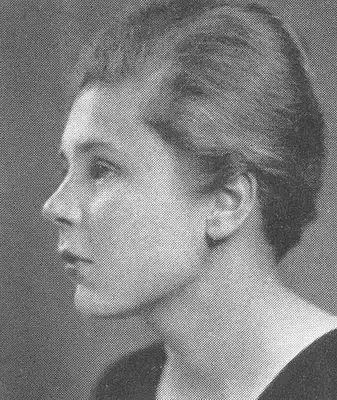
Elizabeth Bishop
Manners
My grandfather said to me
as we sat on the wagon seat,
"Be sure to remember to always
speak to everyone you meet."
We met a stranger on foot.
My grandfather's whip tapped his hat.
"Good day, sir. Good day. A fine day."
And I said it and bowed where I sat.
Then we overtook a boy we knew
with his big pet crow on his shoulder.
"Always offer everyone a ride;
don't forget that when you get older,"
my grandfather said. So Willy
climbed up with us, but the crow
gave a "Caw!" and flew off. I was worried.
How would he know where to go?
But he flew a little way at a time
from fence post to fence post, ahead;
and when Willy whistled he answered.
"A fine bird," my grandfather said,
"and he's well brought up. See, he answers
nicely when he's spoken to.
Man or beast, that's good manners.
Be sure that you both always do."
When automobiles went by,
the dust hid the people's faces,
but we shouted "Good day! Good day!
Fine day!" at the top of our voices.
When we came to Hustler Hill,
he said that the mare was tired,
so we all got down and walked,
as our good manners required.
Hilaire Belloc
The Catholic Sun
There’s always laughter and good red wine.
At least I’ve always found it so.
Benedicamus Domino!

Oscar Wilde
Theoretikos
Of all its ancient chivalry and might
Our little island is forsaken quite:
Some enemy hath stolen its crown of bay,
And from its hills that voice hath passed away
Which spake of Freedom: O come out of it,
Come out of it, my Soul, thou art not fit
For this vile traffic-house, where day by day
Wisdom and reverence are sold at mart,
And the rude people rage with ignorant cries
Against an heritage of centuries.
It mars my calm: wherefore in dreams of Art
And loftiest culture I would stand apart,
Neither for God, nor for his enemies.
Rudyard Kipling
The English Flag
remained fluttering in the flames for some time, but ultimately
when it fell the crowds rent the air with shouts,
and seemed to see significance in the incident. -- DAILY PAPERS.
Winds of the World, give answer! They are whimpering to and fro --
And what should they know of England who only England know? --
The poor little street-bred people that vapour and fume and brag,
They are lifting their heads in the stillness to yelp at the English Flag!
Must we borrow a clout from the Boer -- to plaster anew with dirt?
An Irish liar's bandage, or an English coward's shirt?
We may not speak of England; her Flag's to sell or share.
What is the Flag of England? Winds of the World, declare!
The North Wind blew: -- "From Bergen my steel-shod vanguards go;
I chase your lazy whalers home from the Disko floe;
By the great North Lights above me I work the will of God,
And the liner splits on the ice-field or the Dogger fills with cod.
"I barred my gates with iron, I shuttered my doors with flame,
Because to force my ramparts your nutshell navies came;
I took the sun from their presence, I cut them down with my blast,
And they died, but the Flag of England blew free ere the spirit passed.
"The lean white bear hath seen it in the long, long Arctic night,
The musk-ox knows the standard that flouts the Northern Light:
What is the Flag of England? Ye have but my bergs to dare,
Ye have but my drifts to conquer. Go forth, for it is there!"
The South Wind sighed: -- "From the Virgins my mid-sea course was ta'en
Over a thousand islands lost in an idle main,
Where the sea-egg flames on the coral and the long-backed breakers croon
Their endless ocean legends to the lazy, locked lagoon.
"Strayed amid lonely islets, mazed amid outer keys,
I waked the palms to laughter -- I tossed the scud in the breeze --
Never was isle so little, never was sea so lone,
But over the scud and the palm-trees an English flag was flown.
"I have wrenched it free from the halliard to hang for a wisp on the Horn;
I have chased it north to the Lizard -- ribboned and rolled and torn;
I have spread its fold o'er the dying, adrift in a hopeless sea;
I have hurled it swift on the slaver, and seen the slave set free.
"My basking sunfish know it, and wheeling albatross,
Where the lone wave fills with fire beneath the Southern Cross.
What is the Flag of England? Ye have but my reefs to dare,
Ye have but my seas to furrow. Go forth, for it is there!"
The East Wind roared: -- "From the Kuriles, the Bitter Seas, I come,
And me men call the Home-Wind, for I bring the English home.
Look -- look well to your shipping! By the breath of my mad typhoon
I swept your close-packed Praya and beached your best at Kowloon!
"The reeling junks behind me and the racing seas before,
I raped your richest roadstead -- I plundered Singapore!
I set my hand on the Hoogli; as a hooded snake she rose,
And I flung your stoutest steamers to roost with the startled crows.
"Never the lotus closes, never the wild-fowl wake,
But a soul goes out on the East Wind that died for England's sake --
Man or woman or suckling, mother or bride or maid --
Because on the bones of the English the English Flag is stayed.
"The desert-dust hath dimmed it, the flying wild-ass knows,
The scared white leopard winds it across the taintless snows.
What is the Flag of England? Ye have but my sun to dare,
Ye have but my sands to travel. Go forth, for it is there!"
The West Wind called: -- "In squadrons the thoughtless galleons fly
That bear the wheat and cattle lest street-bred people die.
They make my might their porter, they make my house their path,
Till I loose my neck from their rudder and whelm them all in my wrath.
"I draw the gliding fog-bank as a snake is drawn from the hole,
They bellow one to the other, the frighted ship-bells toll,
For day is a drifting terror till I raise the shroud with my breath,
And they see strange bows above them and the two go locked to death.
"But whether in calm or wrack-wreath, whether by dark or day,
I heave them whole to the conger or rip their plates away,
First of the scattered legions, under a shrieking sky,
Dipping between the rollers, the English Flag goes by.
"The dead dumb fog hath wrapped it -- the frozen dews have kissed --
The naked stars have seen it, a fellow-star in the mist.
What is the Flag of England? Ye have but my breath to dare,
Ye have but my waves to conquer. Go forth, for it is there!"
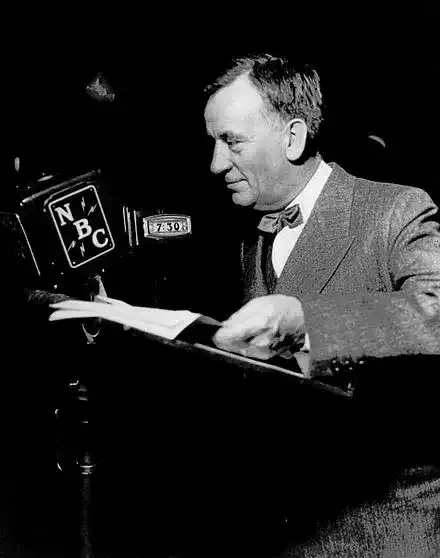
Edgar Albert Guest
The Lamb Skin
There are other things far more useful, yet truly I state,
Though of all my possesions, there's none can compare,
With that white leather apron, which all Masons wear.
As a young lad I wondered just what it all meant,
When Dad hustled around, and so much time was spent
On shaving and dressing and looking just right,
Until Mother would say: 'It's the Masons tonight.'
And some winter nights she said: 'What makes you go,
Way up there tonight thru the sleet and the snow?
You see the same things every month of the year.'
Then Dad would reply: 'Yes, I know it, my dear.'
'Forty years I have seen the same things, it is true.
And though they are old, they always seem new,
For the hands that I clasp, and the friends that I greet,
Seem a little bit closer each time that we meet.'
Years later I stood at that very same door,
With good men and true who had entered before,
I knelt at the alter, and there I was taught
That virtue and honor can never be bought.
That the spotless white lambskin all Masons revere,
If worthily worn grows more precious each year,
That service to others brings blessings untold,
That man may be poor tho surrounded by gold.
I learned that true brotherhood flourishes there,
That enmities fade 'neath the compass and square,
That wealth and position are all thrust aside,
As there on the level men meet and abide.
So, honor the lambskin, may it always remain
Forever unblemished, and free from all stain,
And when we are called to the Great Father's love,
May we all take our place in that Lodge up above.
Rudyard Kipling
The Decline of the West
brown,
For the Christian riles, and the Aryan smiles, and he weareth the
Christian down;
And the end of the fight is a tombstone white with the name of
the late deceased,
And the epitaph drear: "A Fool lies here who tried to hustle the
East."
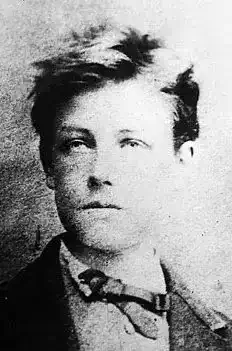
Arthur Rimbaud
Le Forgeron (The Blacksmith)
D'ivresse et de grandeur, le front large, riant
Comme un clairon d'airain, avec toute sa bouche,
Et prenant ce gros-là dans son regard farouche,
Le Forgeron parlait à Louis Seize, un jour
Que le Peuple était là, se tordant tout autour,
Et sur les lambris d'or traînait sa veste sale.
Or le bon roi, debout sur son ventre, était pâle
Pâle comme un vaincu qu'on prend pour le gibet,
Et, soumis comme un chien, jamais ne regimbait,
Car ce maraud de forge aux énormes épaules
Lui disait de vieux mots et des choses si drôles,
Que cela l'empoignait au front, comme cela !
'Donc, Sire, tu sais bien, nous chantions tra la la
Et nous piquions les boeufs vers les sillons des autres :
Le Chanoine au soleil disait ses patenôtres
Sur des chapelets clairs grenés de pièces d'or.
Le Seigneur, à cheval, passait, sonnant du cor,
Et l'un avec la hart, l'autre avec la cravache,
Nous fouaillaient ; Hébétés comme des yeux de vache,
Nos yeux ne pleuraient pas : nous allions ! nous allions !
Et quand nous avions mis le pays en sillons,
Quand nous avions laissé dans cette terre noire
Un peu de notre chair... nous avions un pourboire :
-Nous venions voir flamber nos taudis dans la nuit ;
Nos enfants y faisaient un gâteau fort bien cuit !...
'Oh ! je ne me plains pas. Je te dis mes bêtises :
-C'est entre nous. J'admets que tu me contredises...
Or, n'est-ce pas joyeux de voir, au mois de juin
Dans les granges entrer des voitures de foin
Enormes ? De sentir l'odeur de ce qui pousse,
Des vergers quand il pleut un peu, de l'herbe rousse ?
De voir les champs de blé, les épis pleins de grain,
De penser que cela prépare bien du pain ?...
-Oui, l'on pourrait, plus fort, au fourneau qui s'allume,
Chanter joyeusement en martelant l'enclume,
Si l'on était certain qu'on pourrait prendre un peu,
Étant homme, à la fin !, de ce que donne Dieu !...
-Mais voilà, c'est toujours la même vieille histoire !
'... Oh ! je sais, maintenant ! Moi, je ne peux plus croire,
Quand j'ai deux bonnes mains, mon front et mon marteau,
Qu'un homme vienne là, dague sous le manteau
Et me dise : Maraud, ensemence ma terre ;
Que l'on arrive encor, quand ce serait la guerre,
Me prendre mon garçon comme cela, chez moi !...
-Moi, je serais un homme, et toi tu serais roi,
Tu me dirais : Je veux ! - Tu vois bien, c'est stupide !...
Tu crois que j'aime à voir ta baraque splendide,
Tes officiers dorés, tes mille chenapans,
Tes palsembleu bâtards tournant comme des paons ?
Ils ont rempli ton nid de l'odeur de nos filles,
Et de petits billets pour nous mettre aux Bastilles,
Et nous dirions : C'est bien : les pauvres à genoux !...
Nous dorerions ton Louvre en donnant nos gros sous,
Et tu te soûlerais, tu ferais belle fête,
Et tes Messieurs riraient, les reins sur notre tête !...
'Non ! Ces saletés-là datent de nos papas !
Oh ! Le Peuple n'est plus une putain ! Trois pas,
Et, tous, nous avons mis ta Bastille en poussière !
Cette bête suait du sang à chaque pierre...
Et c'était dégoûtant, la Bastille debout
Avec ses murs lépreux qui nous rappelaient tout
Et, toujours, nous tenaient enfermés dans leur ombre !
-Citoyen ! citoyen ! c'était le passé sombre
Qui croulait, qui râlait, quand nous prîmes la tour !
Nous avions quelque chose au coeur comme l'amour :
Nous avions embrassé nos fils sur nos poitrines,
Et, comme des chevaux, en soufflant des narines,
Nous marchions, nous chantions, et ça nous battait là,
Nous allions au soleil, front haut, comme cela,
Dans Paris accourant devant nos vestes sales !...
Enfin ! Nous nous sentions hommes ! Nous étions pâles,
Sire ; nous étions soûls de terribles espoirs,
Et quand nous fûmes là, devant les donjons noirs,
Agitant nos clairons et nos feuilles de chêne,
Les piques à la main ; nous n'eûmes pas de haine :
-Nous nous sentions si forts ! nous voulions être doux !
'Et depuis ce jour-là, nous sommes comme fous...
Le flot des ouvriers a monté dans la rue
Et ces maudits s'en vont, foule toujours accrue,
Comme des revenants, aux portes des richards !...
Moi, je cours avec eux assommer les mouchards,
Et je vais dans Paris le marteau sur l'épaule,
Farouche, à chaque coin balayant quelque drôle,
Et, si tu me riais au nez, je te tuerais !...
-Puis, tu dois y compter, tu te feras des frais
Avec tes avocats, qui prennent nos requêtes
Pour se les renvoyer comme sur des raquettes,
Et, tout bas, les malins ! Nous traitant de gros sots !
Pour mitonner des lois, ranger des de petits pots
Pleins de menus décrets, de méchantes droguailles,
S'amuser à couper proprement quelques tailles,
Puis se boucher le nez quand nous passons près d'eux,
- Ces chers avocassiers qui nous trouvent crasseux ! -
Pour débiter là-bas des milliers de sornettes
Et ne rien redouter sinon les baïonnettes,
Nous en avons assez, de tous ces cerveaux plats !
Ils embêtent le peuple !... Ah ! ce sont là les plats
Que tu nous sers, bourgeois, quand nous sommes féroces,
Quand nous cassons déjà les sceptres et les crosses !...'
Puis il le prend au bras, arrache le velours
Des rideaux, et lui montre, en bas, les larges cours
Où fourmille, où fourmille, où se lève la foule,
La foule épouvantable avec des bruits de houle,
Hurlant comme une chienne, hurlant comme une mer,
Avec ses bâtons forts et ses piques de fer,
Ses clameurs, ses grands cris de halles et de bouges,
Tas sombre de haillons taché de bonnets rouges !
L'Homme, par la fenêtre ouverte, montre tout
Au Roi pâle, suant qui chancelle debout,
Malade à regarder cela !...
spacespacespacespacespacespacespacespace'C'est la Crapule,
Sire ! ça bave aux murs, ça roule, ça pullule...
-Puisqu'ils ne mangent pas, Sire, ce sont les gueux !
-Je suis un forgeron : ma femme est avec eux :
Folle ! Elle vient chercher du pain aux Tuileries :
-On ne veut pas de nous dans les boulangeries !...
J'ai trois petits ; -Je suis crapule ! - Je connais
Des vieilles qui s'en vont pleurant sous leurs bonnets,
Parce qu'on leur a pris leur garçon ou leur fille :
-C'est la crapule. - Un homme était à la bastille,
D'autres étaient forçats ; c'étaient des citoyens
Honnêtes ; Libérés, ils sont comme des chiens ;
On les insulte ! Alors, ils ont là quelque chose
Qui leur fait mal, allez ! C'est terrible, et c'est cause
Que, se sentant brisés, que, se sentant damnés,
Ils viennent maintenant hurler sous votre nez !...
-Crapules : - Là-dedans sont des filles, infâmes
Parce que -, sachant bien que c'est faible, les femmes,
Messeigneurs de la cour, que ça veut toujours bien, -
Vous leur avez sali leur âme, comme rien !
Vos belles, aujourd'hui, sont là : - C'est la Crapule...
'Oh ! tous les Malheureux, tout ceux dont le dos brûle
Sous le soleil féroce, et qui vont, et qui vont,
Et dans ce travail-là sentent crever leur front,
Chapeau bas, mes bourgeois ! Oh ! ceux-là sont les hommes !
-Nous sommes Ouvriers ! Sire, Ouvriers ! - nous sommes
Pour les grands temps nouveaux où l'on voudra savoir,
Où l'homme forgera du matin jusqu'au soir,
Où, lentement vainqueur, il chassera les choses
Poursuivant les grands buts, cherchant les grandes causes,
Et montera sur Tout comme sur un cheval !
Oh ! nous sommes contents, nous aurons bien du mal !
-Tout ce qu'on ne sait pas, c'est peut-être terrible.
Nous pendrons nos marteaux, nous passerons au crible
Tout ce que nous savons, puis, Frères, en avant !...
-Nous faisons quelquefois ce grand rêve émouvant
De vivre simplement, ardemment, sans rien dire
De mauvais, travaillant sous l'auguste sourire
D'une femme qu'on aime avec un noble amour !
Et l'on travaillerait fièrement tout le jour,
Ecoutant le devoir comme un clairon qui sonne :
Et l'on se trouverait fort heureux, et personne,
Oh ! personne ! surtout, ne vous ferait plier !...
On aurait un fusil au-dessus du foyer....
'Oh ! mais ! l'air est tout plein d'une odeur de bataille !
Que te disais-je donc ? Je suis de la canaille !'
Translation by A. S. Kline
His hand on a gigantic hammer, terrifying
In size and drunkenness, vast-browed, laughing
Like a bronze trumpet, his whole mouth displayed,
Devouring the fat man, now, with his wild gaze,
The Blacksmith spoke with Louis, with the king,
The People there, all around him, cavorting,
Trailing their dirty coats down gilded panels.
But the dear king, belly upright, was pallid,
Pale as the victim led to the guillotine,
Submissive like a dog, cowed by the scene,
Since that wide-shouldered forge-black soul
Spoke of things past and other things so droll,
He had him by the short hairs, just like that!
‘Now, Sir, you know how we’d sing tra-la-la,
And drive the ox down other people’s furrows:
The Canon spun paternosters in the shadows
On rosaries bright with golden coins adorned,
Some Lord, astride, passed blowing on his horn,
One with the noose, another with whip-blows
Lashed us on. – Dazed like the eyes of cows,
Our eyes no longer wept; on and on we went,
And when we’d ploughed a whole continent,
When we had left behind in that black soil
A little of our own flesh…to reward our toil:
They’d set alight our hovels in the night;
Our little ones made burnt cakes alright.
…Oh, I’m not complaining! All my follies,
They’re between us. I’ll let you contradict.
But, isn’t it fine to see, in the month of June,
The enormous hay-wains entering the barns?
To smell the odour of burgeoning things,
The orchards in fine rain, the oats reddening?
To see wheat, wheat, ears filled with grain,
To think it promises us good bread again?...
Oh! You’d go to the forge, be more cheerful,
Sing and hammer joyfully at the anvil,
If you were sure to gain a little in the end –
Being, in fact, a man – of what God intends!
– But there it is, always the same old story!...
But now I know! I don’t credit it any more,
Owning two strong hands, a head, a hammer,
That a man in a cloak, wearing a dagger
Can say: go and sow my land, there, fellow;
Or that another, if maybe war should follow,
Can take my son like that, from where I’m living!
– Suppose I were a man, and you a king,
You’d say: I will it!... – What stupidity.
You think your splendid barn pleases me,
Your gilded servants, your thousand rogues,
Your fancy bastards, peacocks in a row:
Filling your nest with our daughters’ odour,
Warrants to the Bastille for us, moreover
That we should say: fine: make the poor poorer!
We’ll give you our last sous to gild the Louvre!
While you get drunk and enjoy the feast,
– And they all laugh, riding our backs beneath!
No. Those puerilities were our fathers!
The People is no one’s whore now, three steps further
And then, we razed your Bastille to the ground.
That monster sweated blood from every mound,
Was an abomination, that Bastille standing,
With leprous walls its every story yielding,
And, we forever held fast in its shadow!
– Citizen! That was the past, its sorrow,
That broke, and died, when we stormed the tower!
We had something in our hearts like true ardour.
We had clutched our children to our breast.
And like chargers, snorting at the contest,
We went, proud and strong, beating here inside…
We marched in the sun – like this – heads high
Into Paris! They greeted us in our ragged clothes.
At last! We felt ourselves Men! We were sallow,
Sire, drunk, and pallid with terrifying hopes:
And there, in front of those black prison slopes,
Waving our bugles and our sprigs of oak,
Pikes in our fists; did we feel hatred, no!
– We felt such strength we wanted to be gentle! ...
And since that day, we have proved elementals!
A mass of workers sprang up in the street,
And, cursed, are gone, a swelling crowd replete
With ghostly shades, to haunt the rich man’s gate.
I, I run with them, and set informers straight:
I scour Paris, dark-faced, wild, hammer on shoulder,
Sweeping something droll out of every corner,
And, if you smile at me, then I’ll do for you!
– Well, count on it: all this is going to cost you
And your men in black, culling our requests
To bat them about on their racquets all in jest,
And whisper, the rascals, softly: “Oh, what sots!”
To cook up laws, and stick up little pots,
Filled with cute pink decrees, and sugar pills,
Cutting us down to size, to amuse themselves,
Then they hold their noses when we pass by,
– Our kind representatives who hate the sty! –
Fearful of nothing, nothing, but bayonets….
That’s fine. Enough of snuff and lorgnettes!
We’ve had our fill, here, of those dull heads
And bellies of gods. Ah! That’s the bread
You serve us, bourgeoisie, while we rage here,
While we shatter the sceptre and the crozier!...’
He takes his arm, tears back the velvet curtain
And shows the vast courtyards beneath them,
Where the mob swarms, and seethes, where rise,
Out of the frightful mob those storm-filled cries,
Howling as bitches howl, or like the sea,
With their knotted stakes, their pikes of steel,
With the clamour of their market-halls and slums,
A ragged mass of blood-stained caps, and drums:
The Man, through the open window, shows all
To the pale sweating king, reeling, about to fall,
Sick at the sight of it!
‘Those are the Scum, Sire.
Licking the walls, seething, rising higher:
– But then they’ve not eaten, Sire, these beggars!
I’m a blacksmith: my wife, madwoman, is there!
She thinks she’ll get bread at the Tuileries!
– They’ll have none of us in the bakeries.
I’ve three youngsters. I’m scum, too – I know
Old women weeping under their bonnets so
Because they’ve taken a daughter or a son:
One man was in the Bastille – oh, they’re scum –
Another the galleys: both honest citizens.
Freed, they’re treated like dogs, these men:
Insulted! Then, they have something here
That hurts them, see! It’s terrible, it’s clear
They feel broken, feel themselves damned,
There, screaming beneath you where you stand!
Scum. – Down there girls, infamous, shriek,
Because – well, you knew girls were weak –
Gentlemen of the court – gave all you sought –
You’d spit on their souls, as if they were naught!
Now, your pretty ones are there. They’re scum.
Oh, all the Wretched, whose backs, in the fierce sun
Burn, and yet they still work on and on,
Feeling their heads burst with their exertion,
Hats off, you bourgeoisie! Those are Men.
We are the Workers, Sire! Workers! And then
We’re for the great new age, of knowledge, light,
When Man will forge from morning to night,
Pursuing great effects, chasing great causes,
When he will tame things, slowly victorious,
And like a horse, mount the mighty All!
Oh! Splendour of the forges! And no more
Evil, then! – What’s unknown, its terror maybe
We’ll know! – Hammer in hand, let’s sieve freely
All that we know: then, Brothers, we’ll go on!
Sometimes we dream that dream’s vast emotion
Of the simple ardent life, where you revile
All evil, working beneath the august smile,
Of a woman you love with love’s nobility:
And all day long you labour on proudly,
Hearing the clarion call of duty sounding!
And you feel so happy; and nothing, nothing,
Oh, above all, no-one makes you kneel!
Over the fireplace, there, you’d have a rifle…
Oh! But the air is filled with the scent of battle.
What did I say? I too am one of the rascals!
And there are still sharks and informers.
But we are free! With our moments of terror
When we feel we are great, so great! Just now
I was talking of peaceful work, of how…
Look at that sky! – Too small for us, you see,
If we feared the heat, we’d live on our knees!
Look at that sky! – I’ll return to the crowd,
To the vast fearful mob who cry aloud
And roll your cannon through the cobbles’ sty;
– Oh! We will wash them clean when we die!
– And if, against our cries and our vengeance,
The claws of old gilded kings, all over France,
Urge on their regiments in full battle-dress,
Well then, you lot? Shit to those dogs, no less!’
– He shoulders his hammer once more.
The crowd
Feels soul-drunk close to that man, and now
Through the great courtyard, all those rooms,
Where Paris pants and the voices boom,
A shudder shakes the immense populace.
Then, with his broad hand, its grimy grace
Gilded, while the pot-bellied king sweats,
The Blacksmith set his red cap on that head!
Rudyard Kipling
The Song OF The Cities
Royal and Dower-royal, I the Queen
Fronting thy richest sea with richer hands --
A thousand mills roar through me where I glean
All races from all lands.
CALCUTTA
Me the Sea-captain loved, the River built,
Wealth sought and Kings adventured life to hold.
Hail, England! I am Asia -- Power on silt,
Death in my hands, but Gold!
MADRAS
Clive kissed me on the mouth and eyes and brow,
Wonderful kisses, so that I became
Crowned above Queens -- a withered beldame now,
Brooding on ancient fame.
RANGOON
Hail, Mother! Do they call me rich in trade?
Little care I, but hear the shorn priest drone,
And watch my silk-clad lovers, man by maid,
Laugh 'neath my Shwe Dagon.
SINGAPORE
Hail, Mother! East and West must seek my aid
Ere the spent gear may dare the ports afar.
The second doorway of the wide world's trade
Is mine to loose or bar.
HONG-KONG
Hail, Mother! Hold me fast; my Praya sleeps
Under innumerable keels to-day.
Yet guard (and landward), or to-morrow sweeps
Thy war-ships down the bay!
HALIFAX
Into the mist my guardian prows put forth,
Behind the mist my virgin ramparts lie,
The Warden of the Honour of the North,
Sleepless and veiled am I!
QUEBEC AND MONTREAL
Peace is our portion. Yet a whisper rose,
Foolish and causeless, half in jest, half hate.
Now wake we and remember mighty blows,
And, fearing no man, wait!
VICTORIA
From East to West the circling word has passed,
Till West is East beside our land-locked blue;
From East to West the tested chain holds fast,
The well-forged link rings true!
CAPE TOWN
Hail! Snatched and bartered oft from hand to hand,
I dream my dream, by rock and heath and pine,
Of Empire to the northward. Ay, one land
From Lion's Head to Line!
MELBOURNE
Greeting! Nor fear nor favour won us place,
Got between greed of gold and dread of drouth,
Loud-voiced and reckless as the wild tide-race
That whips our harbour-mouth!
SYDNEY
Greeting! My birth-stain have I turned to good;
Forcing strong wills perverse to steadfastness:
The first flush of the tropics in my blood,
And at my feet Success!
BRISBANE
The northern stirp beneath the southern skies --
I build a Nation for an Empire's need,
Suffer a little, and my land shall rise,
Queen over lands indeed!
HOBART
Man's love first found me; man's hate made me Hell;
For my babes' sake I cleansed those infamies.
Earnest for leave to live and labour well,
God flung me peace and ease.
AUCKLAND
Last, loneliest, loveliest, exquisite, apart --
On us, on us the unswerving season smiles,
Who wonder 'mid our fern why men depart
To seek the Happy Isles!
Kazi Nazrul Islam
Come Hither
Let us all worship The Holy Mother together!
Only when all castes and all nations
Assemble at Her feet, side by side without fear;
Only where we are not bound by temple, priest or scriptures
Can we properly worship the Goddess
Only when brothers sit side by side, worshiping together
Will she embrace those who call Her by name
Descending from Her throne in the heavens,
Sitting amongst us on the dusty earthly ground.
The Goddess' altar will become sacred only when
Her holy water is blessed by the touch of us all.
Because we have ignored Her true message,
Brother has turned against brother
Today, upon seeing the Goddess in Her full splendor,
You will realize that we are all children of the same Mother
And heaven, earth and the entire universe will erupt in awe,
Awoken by our invocation to the Holy Mother
Fearlessly chanted by all in unison.
[Translated by: Udayan Chattopadhyay]

William Blake
The Song of Los
I will sing you a song of Los. the Eternal Prophet:
He sung it to four harps at the tables of Eternity.
In heart-formed Africa.
Urizen faded! Ariston shudderd!
And thus the Song began
Adam stood in the garden of Eden:
And Noah on the mountains of Ararat;
They saw Urizen give his Laws to the Nations
By the hands of the children of Los.
Adam shudderd! Noah faded! black grew the sunny African
When Rintrah gave Abstract Philosophy to Brama in the East:
(Night spoke to the Cloud!
Lo these Human form'd spirits in smiling hipocrisy. War
Against one another; so let them War on; slaves to the eternal Elements)
Noah shrunk, beneath the waters;
Abram fled in fires from Chaldea;
Moses beheld upon Mount Sinai forms of dark delusion:
To Trismegistus. Palamabron gave an abstract Law:
To Pythagoras Socrates & Plato.
Times rolled on o'er all the sons of Har, time after time
Orc on Mount Atlas howld, chain'd down with the Chain of Jealousy
Then Oothoon hoverd over Judah & Jerusalem
And Jesus heard her voice (a man of sorrows) he recievd
A Gospel from wretched Theotormon.
The human race began to wither, for the healthy built
Secluded places, fearing the joys of Love
And the disease'd only propagated:
So Antamon call'd up Leutha from her valleys of delight:
And to Mahomet a loose Bible gave.
But in the North, to Odin, Sotha gave a Code of War,
Because of Diralada thinking to reclaim his joy.
These were the Churches: Hospitals: Castles: Palaces:
Like nets & gins & traps to catch the joys of Eternity
And all the rest a desart;
Till like a dream Eternity was obliterated & erased.
Since that dread day when Har and Heva fled.
Because their brethren & sisters liv'd in War & Lust;
And as they fled they shrunk
Into two narrow doleful forms:
Creeping in reptile flesh upon
The bosom of the ground:
And all the vast of Nature shrunk
Before their shrunken eyes.
Thus the terrible race of Los & Enitharmon gave
Laws & Religions to the sons of Har binding them more
And more to Earth: closing and restraining:
Till a Philosophy of Five Senses was complete
Urizen wept & gave it into the hands of Newton & Locke
Clouds roll heavy upon the Alps round Rousseau & Voltaire:
And on the mountains of Lebanon round the deceased Gods
Of Asia; & on the deserts of Africa round the Fallen Angels
The Guardian Prince of Albion burns in his nightly tent
ASIA
The Kings of Asia heard
The howl rise up from Europe!
And each ran out from his Web;
From his ancient woven Den;
For the darkness of Asia was startled
At the thick-flaming, thought-creating fires of Orc.
And the Kings of Asia stood
And cried in bitterness of soul.
Shall not the King call for Famine from the heath?
Nor the Priest, for Pestilence from the fen?
To restrain! to dismay! to thin!
The inhabitants of mountain and plain;
In the day, of full-feeding prosperity;
And the night of delicious songs.
Shall not the Councellor throw his curb
Of Poverty on the laborious?
To fix the price of labour;
To invent allegoric riches:
And the privy admonishers of men
Call for fires in the City
For heaps of smoking ruins,
In the night of prosperity & wantonness
To turn man from his path,
To restrain the child from the womb,
To cut off the bread from the city,
That the remnant may learn to obey.
That the pride of the heart may fail;
That the lust of the eyes may be quench'd:
That the delicate ear in its infancy
May be dull'd; and the nostrils clos'd up;
To teach mortal worms the path
That leads from the gates of the Grave.
Urizen heard them cry!
And his shudd'ring waving wings
Went enormous above the red flames
Drawing clouds of despair thro' the heavens
Of Europe as he went:
And his Books of brass iron & gold
Melted over the land as he flew,
Heavy-waving, howling, weeping.
And he stood over Judea:
And stay'd in his ancient place:
And stretch'd his clouds over Jerusalem;
For Adam, a mouldering skeleton
Lay bleach'd on the garden of Eden;
And Noah as white as snow
On the mountains of Ararat.
Then the thunders of Urizen bellow'd aloud
From his woven darkness above.
Orc raging in European darkness
Arose like a pillar of fire above the Alps
Like a serpent of fiery flame!
The sullen Earth
Shrunk!
Forth from the dead dust rattling bones to bones
Join: shaking convuls'd the shivring clay breathes
And all flesh naked stands: Fathers and Friends;
Mothers & Infants; Kings & Warriors:
The Grave shrieks with delight, & shakes
Her hollow womb, & clasps the solid stem:
Her bosom swells with wild desire:
And milk & blood & glandous wine.
Rudyard Kipling
Quiquern
They beg for coffee and sugar; they go where the white men go.
The People of the Western Ice, they learn to steal and fight;
They sell their furs to the trading-post; they sell their souls to
the white.
The People of the Southern Ice, they trade with the whaler's
crew;
Their women have many ribbons, but their tents are torn and few.
But the People of the Elder Ice, beyond the white man's ken--
Their spears are made of the narwhal-horn, and they are the last
of the Men!
Rudyard Kipling
Banquet Night
Watching his quarrymen drill the stone,
"We will curb our garlic and wine and bread
And banquet together beneath my Throne,
And all Brethren shall come to that mess
As Fellow-Craftsmen-no more and no less."
"Send a swift shallop to Hiram of Tyre,
Felling and floating our beautiful trees,
Say that the Brethren and I desire
Talk with our Brethren who use the seas.
And we shall be happy to meet them at mess
As Fellow-Craftsmen-no more and no less."
"Carry this message to Hiram Abif-
Excellent master of forge and mine :-
I and the Brethren would like it if
He and the Brethren will come to dine
(Garments from Bozrah or morning-dress)
As Fellow-Craftsmen-no more and no less."
"God gave the Cedar their place-
Also the Bramble, the Fig and the Thorn-
But that is no reason to black a man's face
Because he is not what he hasn't been born.
And, as touching the Temple, I hold and profess
We are Fellow-Craftsmen-no more and no less."
So it was ordered and so it was done,
And the hewers of wood and the Masons of Mark,
With foc'sle hands of Sidon run
And Navy Lords from the ROYAL ARK,
Came and sat down and were merry at mess
As Fellow-Craftsmen-no more and no less.
The Quarries are hotter than Hiram's forge,
No one is safe from the dog-whip's reach.
It's mostly snowing up Lebanon gorge,
And it's always blowing off Joppa beach;
But once in so often, the messenger brings
Solomon's mandate : "Forget these things!
Brother to Beggars and Fellow to Kings,
Companion of Princes-forget these things!
Fellow-Craftsmen, forget these things!"

Robert Browning
The Pied Piper Of Hamelin
(_Written for, and inscribed to, W. M. the Younger._)
I.
Hamelin Town's in Brunswick,
By famous Hanover city;
The river Weser, deep and wide,
Washes its wall on the southern side;
A pleasanter spot you never spied;
But, when begins my ditty,
Almost five hundred years ago,
To see the townsfolk suffer so
From vermin, was a pity.
II.
Rats!
They fought the dogs and killed the cats,
And bit the babies in the cradles,
And ate the cheeses out of the vats,
And licked the soup from the cooks' own ladles,
Split open the kegs of salted sprats,
Made nests inside men's Sunday hats,
And even spoiled the women's chats
By drowning their speaking
With shrieking and squeaking
In fifty different sharps and flats.
III.
At last the people in a body
To the Town Hall came flocking:
``'Tis clear,'' cried they, ``our Mayor's a noddy;
``And as for our Corporation---shocking.
``To think we buy gowns lined with ermine
``For dolts that can't or won't determine
``What's best to rid us of our vermin!
``You hope, because you're old and obese,
``To find in the furry civic robe ease?
``Rouse up, sirs! Give your brains a racking
``To find the remedy we're lacking,
``Or, sure as fate, we'll send you packing!''
At this the Mayor and Corporation
Quaked with a mighty consternation.
IV.
An hour they sat in council,
At length the Mayor broke silence:
``For a guilder I'd my ermine gown sell,
``I wish I were a mile hence!
``It's easy to bid one rack one's brain---
``I'm sure my poor head aches again,
``I've scratched it so, and all in vain.
``Oh for a trap, a trap, a trap!''
Just as he said this, what should hap
At the chamber door but a gentle tap?
``Bless us,'' cried the Mayor, ``what's that?''
(With the Corporation as he sat,
Looking little though wondrous fat;
Nor brighter was his eye, nor moister
Than a too-long-opened oyster,
Save when at noon his paunch grew mutinous
For a plate of turtle green and glutinous)
``Only a scraping of shoes on the mat?
``Anything like the sound of a rat
``Makes my heart go pit-a-pat!''
V.
``Come in!''---the Mayor cried, looking bigger:
And in did come the strangest figure!
His queer long coat from heel to head
Was half of yellow and half of red,
And he himself was tall and thin,
With sharp blue eyes, each like a pin,
And light loose hair, yet swarthy skin,
No tuft on cheek nor beard on chin,
But lips where smiles went out and in;
There was no guessing his kith and kin:
And nobody could enough admire
The tall man and his quaint attire.
Quoth one: ``It's as my great-grandsire,
``Starting up at the Trump of Doom's tone,
``Had walked this way from his painted tombstone!''
VI.
He advanced to the council-table
And, ``Please your honours,'' said he, ``I'm able,
``By means of a secret charm, to draw
``All creatures living beneath the sun,
``That creep or swim or fly or run,
``After me so as you never saw!
``And I chiefly use my charm
``On creatures that do people harm,
``The mole and toad and newt and viper;
``And people call me the Pied Piper.''
(And here they noticed round his neck
A scarf of red and yellow stripe,
To match with his coat of the self-same cheque;
And at the scarf's end hung a pipe;
And his fingers, they noticed, were ever straying
As if impatient to be playing
Upon this pipe, as low it dangled
Over his vesture so old-fangled.)
``Yet,'' said he, ``poor piper as I am,
``In Tartary I freed the Cham,
``Last June, from his huge swarms of gnats;
``I eased in Asia the Nizam
``Of a monstrous brood of vampyre-bats:
``And as for what your brain bewilders,
``If I can rid your town of rats
``Will you give me a thousand guilders?''
``One? fifty thousand!''---was the exclamation
Of the astonished Mayor and Corporation.
VII.
Into the street the Piper stept,
Smiling first a little smile,
As if he knew what magic slept
In his quiet pipe the while;
Then, like a musical adept,
To blow the pipe his lips he wrinkled,
And green and blue his sharp eyes twinkled,
Like a candle-flame where salt is sprinkled;
And ere three shrill notes the pipe uttered,
You heard as if an army muttered;
And the muttering grew to a grumbling;
And the grumbling grew to a mighty rumbling;
And out of the houses the rats came tumbling.
Great rats, small rats, lean rats, brawny rats,
Brown rats, black rats, grey rats, tawny rats,
Grave old plodders, gay young friskers,
Fathers, mothers, uncles, cousins,
Cocking tails and pricking whiskers,
Families by tens and dozens,
Brothers, sisters, husbands, wives---
Followed the Piper for their lives.
From street to street he piped advancing,
And step for step they followed dancing,
Until they came to the river Weser,
Wherein all plunged and perished!
---Save one who, stout as Julius C
Swam across and lived to carry
(As he, the manuscript he cherished)
To Rat-land home his commentary:
Which was, ``At the first shrill notes of the pipe,
``I heard a sound as of scraping tripe,
``And putting apples, wondrous ripe,
``Into a cider-press's gripe:
``And a moving away of pickle-tub-boards,
``And a leaving ajar of conserve-cupboards,
``And a drawing the corks of train-oil-flasks,
``And a breaking the hoops of butter-casks:
``And it seemed as if a voice
``(Sweeter far than b
``Is breathed) called out, `Oh rats, rejoice!
`` `The world is grown to one vast drysaltery!
`` `So munch on, crunch on, take your nuncheon,
`` `Breakfast, supper, dinner, luncheon!'
``And just as a bulky sugar-puncheon,
``All ready staved, like a great sun shone
``Glorious scarce an inch before me,
``Just as methought it said, `Come, bore me!'
``---I found the Weser rolling o'er me.''
VIII.
You should have heard the Hamelin people
ringing the bells till they rocked the steeple.
``Go,'' cried the Mayor, ``and get long poles,
``Poke out the nests and block up the holes!
``Consult with carpenters and builders,
``And leave in our town not even a trace
``Of the rats!''---when suddenly, up the face
Of the Piper perked in the market-place,
With a, ``First, if you please, my thousand guilders!''
IX.
A thousand guilders! The Mayor looked blue;
So did the Corporation too.
For council dinners made rare havoc
With Claret, Moselle, Vin-de-Grave, Hock;
And half the money would replenish
Their cellar's biggest butt with Rhenish.
To pay this sum to a wandering fellow
With a gipsy coat of red and yellow!
``Beside,'' quoth the Mayor with a knowing wink,
``Our business was done at the river's brink;
``We saw with our eyes the vermin sink,
``And what's dead can't come to life, I think.
``So, friend, we're not the folks to shrink
``From the duty of giving you something for drink,
``And a matter of money to put in your poke;
``But as for the guilders, what we spoke
``Of them, as you very well know, was in joke.
``Beside, our losses have made us thrifty.
``A thousand guilders! Come, take fifty!''
X.
The Piper's face fell, and he cried
``No trifling! I can't wait, beside!
``I've promised to visit by dinnertime
``Bagdat, and accept the prime
``Of the Head-Cook's pottage, all he's rich in,
``For having left, in the Caliph's kitchen,
``Of a nest of scorpions no survivor:
``With him I proved no bargain-driver,
``With you, don't think I'll bate a stiver!
``And folks who put me in a passion
``May find me pipe after another fashion.''
XI.
``How?'' cried the Mayor, ``d'ye think I brook
``Being worse treated than a Cook?
``Insulted by a lazy ribald
``With idle pipe and vesture piebald?
``You threaten us, fellow? Do your worst,
``Blow your pipe there till you burst!''
XII.
Once more he stept into the street
And to his lips again
Laid his long pipe of smooth straight cane;
And ere he blew three notes (such sweet
Soft notes as yet musician's cunning
Never gave the enraptured air)
There was a rustling that seemed like a bustling
Of merry crowds justling at pitching and hustling,
Small feet were pattering, wooden shoes clattering,
Little hands clapping and little tongues chattering,
And, like fowls in a farm-yard when barley is scattering,
Out came the children running.
All the little boys and girls,
With rosy cheeks and flaxen curls,
And sparkling eyes and teeth like pearls,
Tripping and skipping, ran merrily after
The wonderful music with shouting and laughter.
XIII.
The Mayor was dumb, and the Council stood
As if they were changed into blocks of wood,
Unable to move a step, or cry
To the children merrily skipping by,
---Could only follow with the eye
That joyous crowd at the Piper's back.
But how the Mayor was on the rack,
And the wretched Council's bosoms beat,
As the Piper turned from the High Street
To where the Weser rolled its waters
Right in the way of their sons and daughters!
However be turned from South to West,
And to Koppelberg Hill his steps addressed,
And after him the children pressed;
Great was the joy in every breast.
``He never can cross that mighty top!
``He's forced to let the piping drop,
``And we shall see our children stop!''
When, lo, as they reached the mountain-side,
A wondrous portal opened wide,
As if a cavern was suddenly hollowed;
And the Piper advanced and the children followed,
And when all were in to the very last,
The door in the mountain-side shut fast.
Did I say, all? No! One was lame,
And could not dance the whole of the way;
And in after years, if you would blame
His sadness, he was used to say,---
``It's dull in our town since my playmates left!
``I can't forget that I'm bereft
``Of all the pleasant sights they see,
``Which the Piper also promised me.
``For he led us, he said, to a joyous land,
``Joining the town and just at hand,
``Where waters gushed and fruit-trees grew
``And flowers put forth a fairer hue,
``And everything was strange and new;
``The sparrows were brighter than peacocks here,
``And their dogs outran our fallow deer,
``And honey-bees had lost their stings,
``And horses were born with eagles' wings:
``And just as I became assured
``My lame foot would be speedily cured,
``The music stopped and I stood still,
``And found myself outside the hill,
``Left alone against my will,
``To go now limping as before,
``And never hear of that country more!''
XIV.
Alas, alas for Hamelin!
There came into many a burgher's pate
A text which says that heaven's gate
Opes to the rich at as easy rate
As the needle's eye takes a camel in!
The mayor sent East, West, North and South,
To offer the Piper, by word of mouth,
Wherever it was men's lot to find him,
Silver and gold to his heart's content,
If he'd only return the way he went,
And bring the children behind him.
But when they saw 'twas a lost endeavour,
And Piper and dancers were gone for ever,
They made a decree that lawyers never
Should think their records dated duly
If, after the day of the month and year,
These words did not as well appear,
``And so long after what happened here
``On the Twenty-second of July,
``Thirteen hundred and seventy-six:''
And the better in memory to fix
The place of the children's last retreat,
They called it, the Pied Piper's Street---
Where any one playing on pipe or tabor
Was sure for the future to lose his labour.
Nor suffered they hostelry or tavern
To shock with mirth a street so solemn;
But opposite the place of the cavern
They wrote the story on a column,
And on the great church-window painted
The same, to make the world acquainted
How their children were stolen away,
And there it stands to this very day.
And I must not omit to say
That in Transylvania there's a tribe
Of alien people who ascribe
The outlandish ways and dress
On which their neighbours lay such stress,
To their fathers and mothers having risen
Out of some subterraneous prison
Into which they were trepanned
Long time ago in a mighty band
Out of Hamelin town in Brunswick land,
But how or why, they don't understand.
XV.
So, Willy, let me and you be wipers
Of scores out with all men---especially pipers!
And, whether they pipe us free fr
If we've promised them aught, let us keep our promise!