
Disillusionment and Lost Love
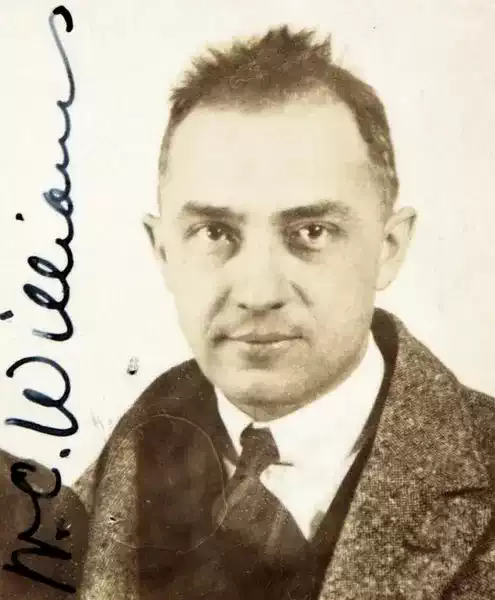
William Carlos Williams
Thursday
I have had my dream--like others--
and it has come to nothing, so that
I remain now carelessly
with feet planted on the ground
and look up at the sky--
feeling my clothes about me,
the weight of my body in my shoes,
the rim of my hat, air passing in and out
at my nose--and decide to dream no more.
and it has come to nothing, so that
I remain now carelessly
with feet planted on the ground
and look up at the sky--
feeling my clothes about me,
the weight of my body in my shoes,
the rim of my hat, air passing in and out
at my nose--and decide to dream no more.
484

Ella Wheeler Wilcox
Through The Valley
(After James Thomson)
As I came through the Valley of Despair,
As I came through the valley, onmy sight,
More awful that the darkness of the night,
Shone glimpses of a Past that had been fair,
And memories of eyes that used to smile,
And wafts of perfume from a vanished isle,
As I came through the valley.
As I came through the valley I could see,
As I came through the valley, fair and far,
As drowning men look up and see a star,
The fading shore of my lost Used-to-be;
And like an arrow in my heart I heard
The last sad notes of Hope’s expiring bird,
As I came through the valley.
As I came through the valley desolate,
As I came through the valley, like a beam
Of lurid lightning I beheld a gleam
Of Love’s great eyes that now were full of hate.
Dear God! dear God! I could bear all but that;
But I fell down soul-stricken, dead, thereat,
As I came through the valley.
484
Ella Wheeler Wilcox
The Farewell to Clarimonde
Adieu, Romauld! But thou canst not forget me.
Although no more I haunt thy dreams at night,
Thy hungering heart forever must regret me,
And starve for those lost moments of delight.
Naught shall avail thy priestly rites and duties,
Nor fears of Hell, nor hopes of Heaven beyond:
Before the Cross shall rise my fair form's beauties—-
The lips, the limbs, the eyes of Clarimonde.
Like gall the wine sipped from the sacred chalice
Shall taste to one who knew my red mouth's bliss,
When Youth and Beauty dwelt in Love's own palace,
And life flowed on in one eternal kiss.
Through what strange ways I come, dear heart, to reach thee,
From viewless lands, by paths no man e'er trod!
I braved all fears, all dangers dared, to teach thee
A love more mighty than thy love of God.
Think not in all His Kingdom to discover
Such joys, Romauld, as ours, when fierce yet fond
I clasped thee—kissed thee—crowned thee my one lover:
Thou canst not find another Clarimonde.
I knew all arts of love: he who possessed me
Possessed all women, and could never tire;
A new life dawned for him who once caressed me;
Satiety itself I set on fire.
Inconstancy I chained: men died to win me;
Kings cast by crowns for one hour on my breast:
And all the passionate tide of love within me
I gave to thee, Romauld. Wert thou not blest?
Yet, for the love of God, thy hand hath riven
Our welded souls. But not in prayer well conned,
Not in thy dearly-purchased peace of Heaven,
Canst thou forget those hours with Clarimonde.
483

William Butler Yeats
King And No King
WOULD it were anything but merely voice!'
The No King cried who after that was King,
Because he had not heard of anything
That balanced with a word is more than noise;
Yet Old Romance being kind, let him prevail
Somewhere or somehow that I have forgot,
Though he'd but cannon -- Whereas we that had thought
To have lit upon as clean and sweet a tale
Have been defeated by that pledge you gave
In momentary anger long ago;
And I that have not your faith, how shall I know
That in the blinding light beyond the grave
We'll find so good a thing as that we have lost?
The hourly kindness, the day's common speech.
The habitual content of each with each
Men neither soul nor body has been crossed.
481

Ezra Pound
Arides
The bashful Arides
Has married an ugly wife,
He was bored with his manner of life,
Indifferent and discouraged he thought he might as
Well do this as anything else.
Saying within his heart,’I am no use to myself,
'Let her, if she wants me, take me.'
He went to his doom.
Has married an ugly wife,
He was bored with his manner of life,
Indifferent and discouraged he thought he might as
Well do this as anything else.
Saying within his heart,’I am no use to myself,
'Let her, if she wants me, take me.'
He went to his doom.
483

Lord Byron
Lines: Written In 'Letters Of An Italian Nun And An English Gentleman'
'Away, away, your fleeting arts
May now betray some simpler hearts;
And you will smile at their believing,
And they shall weep at your deceiving.'
ANSWER TO THE FOREGOING, ADDRESSED TO MISS .
Dear, simple girl, those flattering arts,
From which thou'dst guard frail female hearts,
Exist but in imagination,
Mere
phantoms of thine own creation;
For he who views that witching grace,
That perfect form, that lovely face,
With eyes admiring, oh! believe me,
He never wishes to deceive thee:
Once in thy polish'd mirror glance,
Thou'lt there descry that elegance
Which from our sex demands such praises,
But envy in the other raises:
Then he who tells thee of thy beauty,
Believe me, only does his duty:
Ah! fly not from the candid youth;
It is not flattery,'
tis truth.
July 1804
481

Rudyard Kipling
The Beginner
After He Has Been Extemporising On an Instrument Not Of His Own Invention --
Browning
Lo! What is this that I make -- sudden, supreme, unrehearsed --
This that my clutch in the crowd pressed at a venture has raised?
Forward and onward I sprang when I thought (as I ought) I reversed,
And a cab like martagon opes and I sit in the wreckage dazed.
And someone is taking my name, and the driver is rending the air
With cries for my blood and my gold, and a snickering news-boy brings
My cap, wheel-pashed from the kerb. I must run her home for repair,
Where she leers with her bonnet awry--flat on the nether springs!
478
Rudyard Kipling
Gentleman-rankers
To the legion of the lost ones, to the cohort of the damned,
To my brethren in their sorrow overseas,
Sings a gentleman of England cleanly bred, machinely crammed,
And a trooper of the Empress, if you please.
Yea, a trooper of the forces who has run his own six horses,
And faith he went the pace and went it blind,
And the world was more than kin while he held the ready tin,
But to-day the Sergeant's something less than kind.
We're poor little lambs who've lost our way,
Baa! Baa! Baa!
We're little black sheep who've gone astray,
Baa--aa--aa!
Gentlemen-rankers out on the spree,
Damned from here to Eternity,
God ha' mercy on such as we,
Baa! Yah! Bah!
Oh, it's sweet to sweat through stables, sweet to empty kitchen slops,
And it's sweet to hear the tales the troopers tell,
To dance with blowzy housemaids at the regimental hops
And thrash the cad who says you waltz too well.
Yes, it makes you cock-a-hoop to be "Rider" to your troop,
And branded with a blasted worsted spur,
When you envy, O how keenly, one poor Tommy being cleanly
Who blacks your boots and sometimes calls you "Sir".
If the home we never write to, and the oaths we never keep,
And all we know most distant and most dear,
Across the snoring barrack-room return to break our sleep,
Can you blame us if we soak ourselves in beer?
When the drunken comrade mutters and the great guard-lantern gutters
And the horror of our fall is written plain,
Every secret, self-revealing on the aching white-washed ceiling,
Do you wonder that we drug ourselves from pain?
We have done with Hope and Honour, we are lost to Love and Truth,
We are dropping down the ladder rung by rung,
And the measure of our torment is the measure of our youth.
God help us, for we knew the worst too young!
Our shame is clean repentance for the crime that brought the sentence,
Our pride it is to know no spur of pride,
And the Curse of Reuben holds us till an alien turf enfolds us
And we die, and none can tell Them where we died.
We're poor little lambs who've lost our way,
Baa! Baa! Baa!
We're little black sheep who've gone astray,
Baa--aa--aa!
Gentlemen-rankers out on the spree,
Damned from here to Eternity,
God ha' mercy on such as we,
Baa! Yah! Bah!
477
Rudyard Kipling
The Vampire
A fool there was and he made his prayer
(Even as you and I!)
To a rag and a bone and a hank of hair
(We called her the woman who did not care),
But the fool he called her his lady fair
(Even as you and I!)
Oh the years we waste and the tears we waste
And the work of our head and hand,
Belong to the woman who did not know
(And now we know that she never could know)
And did not understand.
A fool there was and his goods he spent
(Even as you and I!)
Honor and faith and a sure intent
But a fool must follow his natural bent
(And it wasn't the least what the lady meant),
(Even as you and I!)
Oh the toil we lost and the spoil we lost
And the excellent things we planned,
Belong to the woman who didn't know why
(And now we know she never knew why)
And did not understand.
The fool we stripped to his foolish hide
(Even as you and I!)
Which she might have seen when she threw him aside --
(But it isn't on record the lady tried)
So some of him lived but the most of him died --
(Even as you and I!)
And it isn't the shame and it isn't the blame
That stings like a white hot brand.
It's coming to know that she never knew why
(Seeing at last she could never know why)
And never could understand.
(Even as you and I!)
To a rag and a bone and a hank of hair
(We called her the woman who did not care),
But the fool he called her his lady fair
(Even as you and I!)
Oh the years we waste and the tears we waste
And the work of our head and hand,
Belong to the woman who did not know
(And now we know that she never could know)
And did not understand.
A fool there was and his goods he spent
(Even as you and I!)
Honor and faith and a sure intent
But a fool must follow his natural bent
(And it wasn't the least what the lady meant),
(Even as you and I!)
Oh the toil we lost and the spoil we lost
And the excellent things we planned,
Belong to the woman who didn't know why
(And now we know she never knew why)
And did not understand.
The fool we stripped to his foolish hide
(Even as you and I!)
Which she might have seen when she threw him aside --
(But it isn't on record the lady tried)
So some of him lived but the most of him died --
(Even as you and I!)
And it isn't the shame and it isn't the blame
That stings like a white hot brand.
It's coming to know that she never knew why
(Seeing at last she could never know why)
And never could understand.
480

John Keats
Fill For Me A Brimming Bowl
Fill for me a brimming bowl
And in it let me drown my soul:
But put therein some drug, designed
To Banish Women from my mind:
For I want not the stream inspiring
That fills the mind with--fond desiring,
But I want as deep a draught
As e'er from Lethe's wave was quaff'd;
From my despairing heart to charm
The Image of the fairest form
That e'er my reveling eyes beheld,
That e'er my wandering fancy spell'd.
In vain! away I cannot chace
The melting softness of that face,
The beaminess of those bright eyes,
That breast--earth's only Paradise.
My sight will never more be blest;
For all I see has lost its zest:
Nor with delight can I explore,
The Classic page, or Muse's lore.
Had she but known how beat my heart,
And with one smile reliev'd its smart
I should have felt a sweet relief,
I should have felt ``the joy of grief.''
Yet as the Tuscan mid the snow
Of Lapland dreams on sweet Arno,
Even so for ever shall she be
The Halo of my Memory.
477
Rudyard Kipling
Blue Roses
Roses red and roses white
Plucked I for my love's delight.
She would none of all my posies--
Bade me gather her blue roses.
Half the world I wandered through,
Seeking where such flowers grew.
Half the world unto my quest
Answered me with laugh and jest.
Home I came at wintertide,
But my silly love had died
Seeking with her latest breath
Roses from the arms of Death.
It may be beyond the grave
She shall find what she would have.
Mine was but an idle quest--
Roses white and red are best!
476
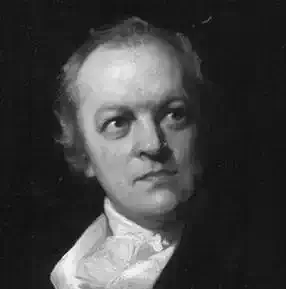
William Blake
Never Seek to Tell thy Love
Never seek to tell thy love
Love that never told can be;
For the gentle wind does move
Silently, invisibly.
I told my love, I told my love,
I told her all my heart,
Trembling, cold, in ghastly fears--
Ah, she doth depart.
Soon as she was gone from me
A traveller came by
Silently, invisibly--
O, was no deny.
Love that never told can be;
For the gentle wind does move
Silently, invisibly.
I told my love, I told my love,
I told her all my heart,
Trembling, cold, in ghastly fears--
Ah, she doth depart.
Soon as she was gone from me
A traveller came by
Silently, invisibly--
O, was no deny.
473
Ella Wheeler Wilcox
Love Will Wane
When your love begins to wane,
Spare me from the cruel pain
Of all speech that tells me so Spare
me words, for I shall know,
By the half-averted eyes,
By the breast that no more sighs
By the rapture I shall miss
From your strangely-altered kiss;
By the arms that still enfold
But have lost their clinging hold,
And, too willing, let me go,
I shall know, love, I shall know.
Bitter will the knowledge be,
Bitterer than death to me.
Yet, 'twill come to me some day,
For it is sad world's way.
Make no vows - vows cannot bind
Changing hearts of wayward mind.
Men grow weary of a bliss
Passionate and fond as this.
Love will wane. But I shall know,
If you do not tell me so.
Know it, tho' you smile and say,
That you love me more each day.
Know it by the inner sight
That forever sees aright.
Words could not but increase my woe,
And without them, I shall know.
471
Rudyard Kipling
Soldier, Soldier
"Soldier, soldier come from the wars,
Why don't you march with my true love?"
"We're fresh from off the ship an' 'e's maybe give the slip,
An' you'd best go look for a new love."
New love! True love!
Best go look for a new love,
The dead they cannot rise, an' you'd better dry your eyes,
An' you'd best go look for a new love.
"Soldier, soldier come from the wars,
What did you see o' my true love?"
"I seed 'im serve the Queen in a suit o' rifle-green,
An' you'd best go look for a new love."
"Soldier, soldier come from the wars,
Did ye see no more o' my true love?"
"I seed 'im runnin' by when the shots begun to fly --
But you'd best go look for a new love."
"Soldier, soldier come from the wars,
Did aught take 'arm to my true love?"
"I couldn't see the fight, for the smoke it lay so white --
An' you'd best go look for a new love."
"Soldier, soldier come from the wars,
I'll up an' tend to my true love!"
"'E's lying on the dead with a bullet through 'is 'ead,
An' you'd best go look for a new love."
"Soldier, soldier come from the wars,
I'll down an' die with my true love!"
"The pit we dug'll 'ide 'im an' the twenty men beside 'im --
An' you'd best go look for a new love."
"Soldier, soldier come from the wars,
Do you bring no sign from my true love?"
"I bring a lock of 'air that 'e allus used to wear,
An' you'd best go look for a new love."
"Soldier, soldier come from the wars,
O then I know it's true I've lost my true love!"
"An' I tell you truth again -- when you've lost the feel o' pain
You'd best take me for your true love."
True love! New love!
Best take 'im for a new love,
The dead they cannot rise, an' you'd better dry your eyes,
An' you'd best take 'im for your true love.
468
William Butler Yeats
The People
'WHAT have I earned for all that work,' I said,
'For all that I have done at my own charge?
The daily spite of this unmannerly town,
Where who has served the most is most defaned,
The reputation of his lifetime lost
Between the night and morning. I might have lived,
And you know well how great the longing has been,
Where every day my footfall Should have lit
In the green shadow of Ferrara wall;
Or climbed among the images of the past --
The unperturbed and courtly images --
Evening and morning, the steep street of Urbino
To where the Duchess and her people talked
The stately midnight through until they stood
In their great window looking at the dawn;
I might have had no friend that could not mix
Courtesy and passion into one like those
That saw the wicks grow yellow in the dawn;
I might have used the one substantial right
My trade allows: chosen my company,
And chosen what scenery had pleased me best.
Thereon my phoenix answered in reproof,
'The drunkards, pilferers of public funds,
All the dishonest crowd I had driven away,
When my luck changed and they dared meet my face,
Crawled from obscurity, and set upon me
Those I had served and some that I had fed;
Yet never have I, now nor any time,
Complained of the people.'
All I could reply
Was: 'You, that have not lived in thought but deed,
Can have the purity of a natural force,
But I, whose virtues are the definitions
Of the analytic mind, can neither close
The eye of the mind nor keep my tongue from speech.'
And yet, because my heart leaped at her words,
I was abashed, and now they come to mind
After nine years, I sink my head abashed.
467

Christina Rossetti
The Prince's Progress (excerpt)
"Too late for love, too late for joy,
Too late, too late!
You loitered on the road too long,
You trifled at the gate:
The enchanted dove upon her branch
Died without a mate.
The enchanted princess in her tower
Slept, died, behind the grate;
Her heart was starving all this while
You made it wait.
"Ten years ago, five years ago,
One year ago,
Even then you had arrived in time,
Though somewhat slow;
Then you had known her living face
Which now you cannot know:
The frozen fountain would have leaped,
The buds gone on to blow,
The warm south wind would have awaked
To melt the snow.
"Is she fair now as she lies?
Once she was fair;
Meet queen for any kingly king,
With gold-dust on her hair.
Now these are poppies in her locks,
White poppies she must wear;
Must wear a veil to shroud her face
And the want graven there:
Or is the hunger fed at length,
Cast off the care?
"We never saw her with a smile
Or with a frown;
Her bed seemed never soft to her,
Though tossed of down;
She little heeded what she wore,
Kirtle, or wreath, or gown;
We think her white brows often ached
Beneath her crown,
Till silvery hairs showed in her locks
That used to be so brown.
"We never heard her speak in haste;
Her tones were sweet,
And modulated just so much
As it was meet:
Her heart sat silent through the noise
And concourse of the street.
There was no hurry in her hands,
No hurry in her feet;
There was no bliss drew nigh to her,
That she might run to greet.
"You should have wept her yesterday,
Wasting upon her bed:
But wherefore should you weep to-day
That she is dead?
Lo we who love weep not to-day,
But crown her royal head.
Let be these poppies that we strew,
Your roses are too red:
Let be these poppies, not for you
Cut down and spread."
464
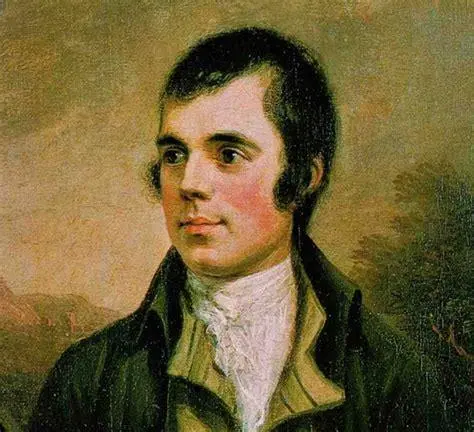
Robert Burns
A Fond Kiss
A fond kiss, and then we sever;
A farewell, and then forever!
Deep in heart-wrung tears I'll pledge thee,
Warring sighs and groans I'll wage thee.
Who shall say that Fortune grieves him,
While the star of hope she leaves him?
Me, nae cheerfu' twinkle lights me;
Dark despair around benights me.
I'll ne'er blame my partial fancy,
Nothing could resist my Nancy;
But to see her was to love her;
Love but her, and love forever.
Had we never lov'd say kindly,
Had we never lov'd say blindly,
Never met--or never parted--
We had ne'er been broken-hearted.
Fare thee well, thou first and fairest!
Fare thee well, thou best and dearest!
Thine be like a joy and treasure,
Peace. enjoyment, love, and pleasure!
A fond kiss, and then we sever;
A farewell, alas, forever!
Deep in heart-wrung tears I'll pledge thee,
Warring sighs and groans I'll wage thee!
462
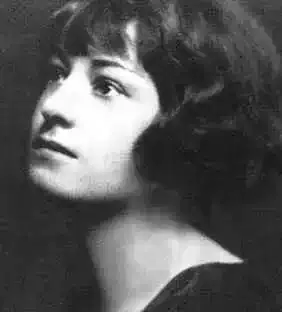
Dorothy Parker
A Certain Lady
Oh, I can smile for you, and tilt my head,
And drink your rushing words with eager lips,
And paint my mouth for you a fragrant red,
And trace your brows with tutored finger-tips.
When you rehearse your list of loves to me,
Oh, I can laugh and marvel, rapturous-eyed.
And you laugh back, nor can you ever see
The thousand little deaths my heart has died.
And you believe, so well I know my part,
That I am gay as morning, light as snow,
And all the straining things within my heart
You'll never know.
Oh, I can laugh and listen, when we meet,
And you bring tales of fresh adventurings, --
Of ladies delicately indiscreet,
Of lingering hands, and gently whispered things.
And you are pleased with me, and strive anew
To sing me sagas of your late delights.
Thus do you want me -- marveling, gay, and true,
Nor do you see my staring eyes of nights.
And when, in search of novelty, you stray,
Oh, I can kiss you blithely as you go ....
And what goes on, my love, while you're away,
You'll never know.
462
William Blake
Why Was Cupid a Boy
Why was Cupid a boy,
And why a boy was he?
He should have been a girl,
For aught that I can see.
For he shoots with his bow,
And the girl shoots with her eye,
And they both are merry and glad,
And laugh when we do cry.
And to make Cupid a boy
Was the Cupid girl's mocking plan;
For a boy can't interpret the thing
Till he is become a man.
And then he's so pierc'd with cares,
And wounded with arrowy smarts,
That the whole business of his life
Is to pick out the heads of the darts.
'Twas the Greeks' love of war
Turn'd Love into a boy,
And woman into a statue of stone--
And away fled every joy.
465
William Carlos Williams
Libertad! Igualdad! Fraternidad!
You sullen pig of a man
you force me into the mud
with your stinking ash-cart!
Brother!
--if we were rich
we'd stick our chests out
and hold our heads high!
It is dreams that have destroyed us.
There is no more pride
in horses or in rein holding.
We sit hunched together brooding
our fate.
Well--
all things turn bitter in the end
whether you choose the right or
the left way
and--
dreams are not a bad thing.
465
Ella Wheeler Wilcox
Isaura
Dost thou not tire, Isaura, of this play?
'What play?' Why, this old play of winning hearts!
Nay, now, lift not thine eyes in that feigned way:
'Tis all in vain—I know thee and thine arts.
Let us be frank, Isaura. I have made
A study of thee; and while I admire
The practised skill with which thy plans are laid,
I can but wonder if thou dost not tire.
Why, I tire even of Hamlet and Macbeth!
When overlong the season runs, I find
Those master-scenes of passion, blood, and death,
After a time do pall upon my mind.
Dost thou not tire of lifting up thine eyes
To read the story thou hast read so oft—
Of ardent glances and deep quivering sighs,
Of haughty faces suddenly grown soft?
Is it not stale, oh, very stale, to thee,
The scene that follows? Hearts are much the same;
The loves of men but vary in degree—
They find no new expressions for the flame.
Thou must know all they utter ere they speak,
As I know Hamlet's part, whoever plays.
Oh, does it not seem sometimes poor and weak?
I think thou must grow weary of their ways.
I pity thee, Isaura! I would be
The humblest maiden with her dream untold
Rather than live a Queen of Hearts, like thee,
And find life's rarest treasures stale and old.
I pity thee; for now, let come what may,
Fame, glory, riches, yet life will lack all.
Wherewith can salt be salted? And what way
Can life be seasoned after love doth pall?
461
Dorothy Parker
Ballade Of A Great Weariness
There's little to have but the things I had,
There's little to bear but the things I bore.
There's nothing to carry and naught to add,
And glory to Heaven, I paid the score.
There's little to do but I did before,
There's little to learn but the things I know;
And this is the sum of a lasting lore:
Scratch a lover, and find a foe.
And couldn't it be I was young and mad
If ever my heart on my sleeve I wore?
There's many to claw at a heart unclad,
And little the wonder it ripped and tore.
There's one that'll join in their push and roar,
With stories to jabber, and stones to throw;
He'll fetch you a lesson that costs you sore:
Scratch a lover, and find a foe.
So little I'll offer to you, my lad;
It's little in loving I set my store.
There's many a maid would be flushed and glad,
And better you'll knock at a kindlier door.
I'll dig at my lettuce, and sweep my floor,
Forever, forever I'm done with woe.
And happen I'll whistle about my chore,
"Scratch a lover, and find a foe."
L'ENVOI
Oh, beggar or prince, no more, no more!
Be off and away with your strut and show.
The sweeter the apple, the blacker the core:
Scratch a lover, and find a foe!
459
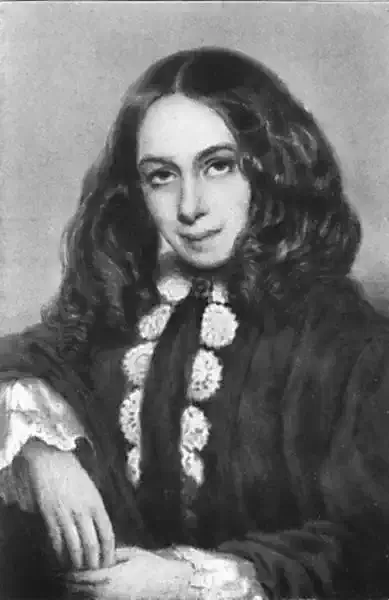
Elizabeth Barrett Browning
Sonnet 28 - My letters! all dead paper, mute and white!
XXVIII
My letters! all dead paper, mute and white!
And yet they seem alive and quivering
Against my tremulous hands which loose the string
And let them drop down on my knee to-night.
This said,-he wished to have me in his sight
Once, as a friend: this fixed a day in spring
To come and touch my hand . . . a simple thing,
Yet I wept for it!-this, . . . the paper's light . . .
Said, Dear, I love thee; and I sank and quailed
As if God's future thundered on my past.
This said, I am thine-and so its ink has paled
With Iying at my heart that beat too fast.
And this . . . O Love, thy words have ill availed
If, what this said, I dared repeat at last!
459

Edna St. Vincent Millay
The Spring And The Fall
In the spring of the year, in the spring of the year,
I walked the road beside my dear.
The trees were black where the bark was wet.
I see them yet, in the spring of the year.
He broke me a bough of the blossoming peach
That was out of the way and hard to reach.
In the fall of the year, in the fall of the year,
I walked the road beside my dear.
The rooks went up with a raucous trill.
I hear them still, in the fall of the year.
He laughed at all I dared to praise,
And broke my heart, in little ways.
Year be springing or year be falling,
The bark will drip and the birds be calling.
There's much that's fine to see and hear
In the spring of a year, in the fall of a year.
'Tis not love's going hurt my days.
But that it went in little ways.
I walked the road beside my dear.
The trees were black where the bark was wet.
I see them yet, in the spring of the year.
He broke me a bough of the blossoming peach
That was out of the way and hard to reach.
In the fall of the year, in the fall of the year,
I walked the road beside my dear.
The rooks went up with a raucous trill.
I hear them still, in the fall of the year.
He laughed at all I dared to praise,
And broke my heart, in little ways.
Year be springing or year be falling,
The bark will drip and the birds be calling.
There's much that's fine to see and hear
In the spring of a year, in the fall of a year.
'Tis not love's going hurt my days.
But that it went in little ways.
460