
Disillusionment and Lost Love

Lord Byron
To Woman
Woman! experience might have told me,
That all must love thee who behold thee:
Surely experience might have taught
Thy firmest promises are nought:
But, placed in all thy charms before me,
All I forget, but to adore thee.
Oh memory! Thou choicest blessing
When join'd with hope, when still possessing;
But how much cursed by every lover
When hope is fled and passion's over.
Woman, that fair and fond deceiver,
How throbs the pulse when first we view
The eye that rolls in glossy blue,
Or sparkles black, or mildly throws
A beam from under hazel brows!
How quick we credit every oath,
And hear her plight the willing troth!
Fondly we hope't will last for aye,
When, lo! she changes in a day.
This record will for ever stand,
'Woman, thy vows are traced in sand.'
524
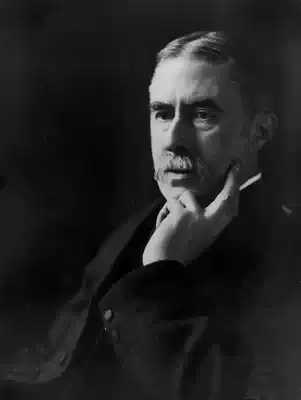
Alfred Edward Housman
Oh, when I was in love with you
Oh, when I was in love with you,
Then I was clean and brave,
And miles around the wonder grew
How well did I behave.
And now the fancy passes by,
And nothing will remain,
And miles around they'll say that I
Am quite myself again.
Then I was clean and brave,
And miles around the wonder grew
How well did I behave.
And now the fancy passes by,
And nothing will remain,
And miles around they'll say that I
Am quite myself again.
518

Ezra Pound
These Fought in Any Case
These fought in any case,
and some believing
pro domo, in any case .....
Died some, pro patria,
walked eye-deep in hell
believing in old men's lies, then unbelieving
came home, home to a lie,
home to many deceits,
home to old lies and new infamy;
usury age-old and age-thick
and liars in public places.
Daring as never before, wastage as never before.
Young blood and high blood,
fair cheeks, and fine bodies;
fortitude as never before
frankness as never before,
disillusions as never told in the old days,
hysterias, trench confessions,
laughter out of dead bellies.
517
Ezra Pound
Hugh Selwyn Mauberly (Part I)
"Vocat aestus in umbram"
Nemesianus Es. IV.
E. P. Ode pour l'élection de son sépulchre
For three years, out of key with his time,
He strove to resuscitate the dead art
Of poetry; to maintain "the sublime"
In the old sense. Wrong from the start --
No, hardly, but, seeing he had been born
In a half savage country, out of date;
Bent resolutely on wringing lilies from the acorn;
Capaneus; trout for factitious bait:
"Idmen gar toi panth, os eni Troie
Caught in the unstopped ear;
Giving the rocks small lee-way
The chopped seas held him, therefore, that year.
His true Penelope was Flaubert,
He fished by obstinate isles;
Observed the elegance of Circe's hair
Rather than the mottoes on sun-dials.
Unaffected by "the march of events",
He passed from men's memory in l'an trentiesme
De son eage; the case presents
No adjunct to the Muses' diadem.
II.
The age demanded an image
Of its accelerated grimace,
Something for the modern stage,
Not, at any rate, an Attic grace;
Not, not certainly, the obscure reveries
Of the inward gaze;
Better mendacities
Than the classics in paraphrase!
The "age demanded" chiefly a mould in plaster,
Made with no loss of time,
A prose kinema, not, not assuredly, alabaster
Or the "sculpture" of rhyme.
III.
The tea-rose, tea-gown, etc.
Supplants the mousseline of Cos,
The pianola "replaces"
Sappho's barbitos.
Christ follows Dionysus,
Phallic and ambrosial
Made way for macerations;
Caliban casts out Ariel.
All things are a flowing,
Sage Heracleitus says;
But a tawdry cheapness
Shall reign throughout our days.
Even the Christian beauty
Defects -- after Samothrace;
We see to kalon
Decreed in the market place.
Faun's flesh is not to us,
Nor the saint's vision.
We have the press for wafer;
Franchise for circumcision.
All men, in law, are equals.
Free of Peisistratus,
We choose a knave or an eunuch
To rule over us.
A bright Apollo,
tin andra, tin eroa, tina theon,
What god, man, or hero
Shall I place a tin wreath upon?
IV.
These fought, in any case,
and some believing, pro domo, in any case ..
Some quick to arm,
some for adventure,
some from fear of weakness,
some from fear of censure,
some for love of slaughter, in imagination,
learning later ...
some in fear, learning love of slaughter;
Died some pro patria, non dulce non et decor" ..
walked eye-deep in hell
believing in old men's lies, then unbelieving
came home, home to a lie,
home to many deceits,
home to old lies and new infamy;
usury age-old and age-thick
and liars in public places.
Daring as never before, wastage as never before.
Young blood and high blood,
Fair cheeks, and fine bodies;
fortitude as never before
frankness as never before,
disillusions as never told in the old days,
hysterias, trench confessions,
laughter out of dead bellies.
V.
There died a myriad,
And of the best, among them,
For an old bitch gone in the teeth,
For a botched civilization.
Charm, smiling at the good mouth,
Quick eyes gone under earth's lid,
For two gross of broken statues,
For a few thousand battered books.
Yeux Glauques
Gladstone was still respected,
When John Ruskin produced
"Kings Treasuries"; Swinburne
And Rossetti still abused.
Foetid Buchanan lifted up his voice
When that faun's head of hers
Became a pastime for
Painters and adulterers.
The Burne-Jones cartons
Have preserved her eyes;
Still, at the Tate, they teach
Cophetua to rhapsodize;
Thin like brook-water,
With a vacant gaze.
The English Rubaiyat was still-born
In those days.
The thin, clear gaze, the same
Still darts out faun-like from the half-ruin'd face,
Questing and passive ....
"Ah, poor Jenny's case" ...
Bewildered that a world
Shows no surprise
At her last maquero's
Adulteries.
"Siena Mi Fe', Disfecemi Maremma"
Among the pickled foetuses and bottled bones,
Engaged in perfecting the catalogue,
I found the last scion of the
Senatorial families of Strasbourg, Monsieur Verog.
For two hours he talked of Gallifet;
Of Dowson; of the Rhymers' Club;
Told me how Johnson (Lionel) died
By falling from a high stool in a pub ...
But showed no trace of alcohol
At the autopsy, privately performed --
Tissue preserved -- the pure mind
Arose toward Newman as the whiskey warmed.
Dowson found harlots cheaper than hotels;
Headlam for uplift; Image impartially imbued
With raptures for Bacchus, Terpsichore and the Church.
So spoke the author of "The Dorian Mood",
M. Verog, out of step with the decade,
Detached from his contemporaries,
Neglected by the young,
Because of these reveries.
Brennbaum.
The sky-like limpid eyes,
The circular infant's face,
The stiffness from spats to collar
Never relaxing into grace;
The heavy memories of Horeb, Sinai and the forty years,
Showed only when the daylight fell
Level across the face
Of Brennbaum "The Impeccable".
Mr. Nixon
In the cream gilded cabin of his steam yacht
Mr. Nixon advised me kindly, to advance with fewer
Dangers of delay. "Consider
Carefully the reviewer.
"I was as poor as you are;
"When I began I got, of course,
"Advance on royalties, fifty at first", said Mr. Nixon,
"Follow me, and take a column,
"Even if you have to work free.
"Butter reviewers. From fifty to three hundred
"I rose in eighteen months;
"The hardest nut I had to crack
"Was Dr. Dundas.
"I never mentioned a man but with the view
"Of selling my own works.
"The tip's a good one, as for literature
"It gives no man a sinecure."
And no one knows, at sight a masterpiece.
And give up verse, my boy,
There's nothing in it."
* * *
Likewise a friend of Bloughram's once advised me:
Don't kick against the pricks,
Accept opinion. The "Nineties" tried your game
And died, there's nothing in it.
X.
Beneath the sagging roof
The stylist has taken shelter,
Unpaid, uncelebrated,
At last from the world's welter
Nature receives him,
With a placid and uneducated mistress
He exercises his talents
And the soil meets his distress.
The haven from sophistications and contentions
Leaks through its thatch;
He offers succulent cooking;
The door has a creaking latch.
XI.
"Conservatrix of Milésien"
Habits of mind and feeling,
Possibly. But in Ealing
With the most bank-clerkly of Englishmen?
No, "Milésian" is an exaggeration.
No instinct has survived in her
Older than those her grandmother
Told her would fit her station.
XII.
"Daphne with her thighs in bark
Stretches toward me her leafy hands", --
Subjectively. In the stuffed-satin drawing-room
I await The Lady Valentine's commands,
Knowing my coat has never been
Of precisely the fashion
To stimulate, in her,
A durable passion;
Doubtful, somewhat, of the value
Of well-gowned approbation
Of literary effort,
But never of The Lady Valentine's vocation:
Poetry, her border of ideas,
The edge, uncertain, but a means of blending
With other strata
Where the lower and higher have ending;
A hook to catch the Lady Jane's attention,
A modulation toward the theatre,
Also, in the case of revolution,
A possible friend and comforter.
* * *
Conduct, on the other hand, the soul
"Which the highest cultures have nourished"
To Fleet St. where
Dr. Johnson flourished;
Beside this thoroughfare
The sale of half-hose has
Long since superseded the cultivation
Of Pierian roses.
518

Anonymous
Waly, Waly
O WALY, waly, up the bank,
And waly, waly, doun the brae,
And waly, waly, yon burn-side,
Where I and my Love wont to gae!
I lean'd my back unto an aik,
I thocht it was a trustie tree;
But first it bow'd and syne it brak--
Sae my true love did lichtlie me.
O waly, waly, gin love be bonnie
A little time while it is new!
But when 'tis auld it waxeth cauld,
And fades awa' like morning dew.
O wherefore should I busk my heid,
Or wherefore should I kame my hair?
For my true Love has me forsook,
And says he'll never lo'e me mair.
Now Arthur's Seat sall be my bed,
The sheets sall ne'er be 'filed by me;
Saint Anton's well sall be my drink;
Since my true Love has forsaken me.
Marti'mas wind, when wilt thou blaw,
And shake the green leaves aff the tree?
O gentle Death, when wilt thou come?
For of my life I am wearìe.
'Tis not the frost, that freezes fell,
Nor blawing snaw's inclemencie,
'Tis not sic cauld that makes me cry;
But my Love's heart grown cauld to me.
When we cam in by Glasgow toun,
We were a comely sicht to see;
My Love was clad in the black velvet,
And I mysel in cramasie.
But had I wist, before I kist,
That love had been sae ill to win,
I had lock'd my heart in a case o' gowd,
And pinn'd it wi' a siller pin.
And O! if my young babe were born,
And set upon the nurse's knee;
And I mysel were dead and gane,
And the green grass growing over me!
516
Lord Byron
Translation Of The Romaic Song
I enter thy garden of roses,
Beloved and fair Haidée,
Each morning where Flora reposes,
For surely I see her in thee.
Oh, Lovely! thus low I implore thee,
Receive this fond truth from my tongue,
Which utters its song to adore thee,
Yet trembles for what it has sung;
As the branch, at the bidding of Nature,
Adds fragrance and fruit to the tree,
Through her eyes, through her every feature,
Shines the soul of the young Haidée.
But the loveliest garden grows hateful
When Love has abandon'd the bowers;
Bring me hemlock since
mine is ungrateful,
That herb is more fragrant than flowers.
The poison, when pour 'd from the chalice,
Will deeply embitter the bowl;
But when drunk to escape from thy malice,
The draught shall be sweet to my soul.
Too cruel! in vain I implore thee
My heart from these horrors to save:
Will nought to my bosom restore thee?
Then open the gates of the grave.
As the chief who to combat advances
Secure of his conquest before,
Thus thou, with those eyes for thy lances,
Halt pierced through my heart to its core.
Ah, tell me, my soul! must I perish
By pangs which a smile would dispel?
Would the hope, which thou once bad'st me cherish,
For torture repay me too well?
Now sad is the garden of roses,
Beloved but false Haidée!
There Flora all wither'd reposes,
And mourns o'er thing absence with me.
512
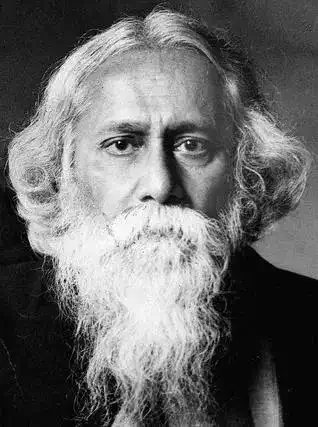
Rabindranath Tagore
The Gardener XLVI: You Left Me
You left me and went on your way.
I thought I should mourn for you
and set your solitary image in my
heart wrought in a golden song.
But ah, my evil fortune, time is
short.
Youth wanes year after year; the
spring days are fugitive; the frail
flowers die for nothing, and the wise
man warns me that life is but a
dewdrop on the lotus leaf.
Should I neglect all this to gaze after
one who has turned her back on me?
That would be rude and foolish,
for time is short.
Then, come, my rainy nights with
pattering feet; smile, my golden
autumn; come, careless April, scattering
your kisses abroad.
You come, and you, and you also!
My loves, you know we are mortals.
Is it wise to break one's heart for the
one who takes her heart away? For
time is short.
It is sweet to sit in a corner to muse
and write in rhymes that you are all
my world.
It is heroic to hug one's sorrow and
determine not to be consoled.
But a fresh face peeps across my
door and raise its eyes to my eyes.
I cannot but wipe away my tears
and change the tune of my song.
For time is short.
515

Kazi Nazrul Islam
Let's Meet Hereafter!
We will meet again in the life Hereafter;
Here, please, forget me with a simple laughter.
Anything that remained unsaid,
I won't say; Let you also keep silence;
If I offer my love, turn me away;
If I persist, hurt me, in pretense.
Dream is broken abruptly here,
The evening's bud sheds in the dawn;
The heart dries up before love is savored;
The ambrosia here has the taste of poison.
In separation here, heart longs in agony;
When together, quickly we go apart;
Where the fountain of love is never dry,
In that everlasting Garden, remember to seek my heart.
[Translation: Mohammad Omar Farooq]
510

William Shakespeare
A Lover's Complaint
FROM off a hill whose concave womb reworded
A plaintful story from a sistering vale,
My spirits to attend this double voice accorded,
And down I laid to list the sad-tuned tale;
Ere long espied a fickle maid full pale,
Tearing of papers, breaking rings a-twain,
Storming her world with sorrow's wind and rain.
Upon her head a platted hive of straw,
Which fortified her visage from the sun,
Whereon the thought might think sometime it saw
The carcass of beauty spent and done:
Time had not scythed all that youth begun,
Nor youth all quit; but, spite of heaven's fell rage,
Some beauty peep'd through lattice of sear'd age.
Oft did she heave her napkin to her eyne,
Which on it had conceited characters,
Laundering the silken figures in the brine
That season'd woe had pelleted in tears,
And often reading what contents it bears;
As often shrieking undistinguish'd woe,
In clamours of all size, both high and low.
Sometimes her levell'd eyes their carriage ride,
As they did battery to the spheres intend;
Sometime diverted their poor balls are tied
To the orbed earth; sometimes they do extend
Their view right on; anon their gazes lend
To every place at once, and, nowhere fix'd,
The mind and sight distractedly commix'd.
Her hair, nor loose nor tied in formal plat,
Proclaim'd in her a careless hand of pride
For some, untuck'd, descended her sheaved hat,
Hanging her pale and pined cheek beside;
Some in her threaden fillet still did bide,
And true to bondage would not break from thence,
Though slackly braided in loose negligence.
A thousand favours from a maund she drew
Of amber, crystal, and of beaded jet,
Which one by one she in a river threw,
Upon whose weeping margent she was set;
Like usury, applying wet to wet,
Or monarch's hands that let not bounty fall
Where want cries some, but where excess begs all.
Of folded schedules had she many a one,
Which she perused, sigh'd, tore, and gave the flood;
Crack'd many a ring of posied gold and bone
Bidding them find their sepulchres in mud;
Found yet moe letters sadly penn'd in blood,
With sleided silk feat and affectedly
Enswathed, and seal'd to curious secrecy.
These often bathed she in her fluxive eyes,
And often kiss'd, and often 'gan to tear:
Cried 'O false blood, thou register of lies,
What unapproved witness dost thou bear!
Ink would have seem'd more black and damned here!'
This said, in top of rage the lines she rents,
Big discontent so breaking their contents.
A reverend man that grazed his cattle nigh-Sometime
a blusterer, that the ruffle knew
Of court, of city, and had let go by
The swiftest hours, observed as they flew-Towards
this afflicted fancy fastly drew,
And, privileged by age, desires to know
In brief the grounds and motives of her woe.
So slides he down upon his grained bat,
And comely-distant sits he by her side;
When he again desires her, being sat,
Her grievance with his hearing to divide:
If that from him there may be aught applied
Which may her suffering ecstasy assuage,
'Tis promised in the charity of age.
'Father,' she says, 'though in me you behold
The injury of many a blasting hour,
Let it not tell your judgment I am old;
Not age, but sorrow, over me hath power:
I might as yet have been a spreading flower,
Fresh to myself, If I had self-applied
Love to myself and to no love beside.
'But, woe is me! too early I attended
A youthful suit--it was to gain my grace-Of
one by nature's outwards so commended,
That maidens' eyes stuck over all his face:
Love lack'd a dwelling, and made him her place;
And when in his fair parts she did abide,
She was new lodged and newly deified.
'His browny locks did hang in crooked curls;
And every light occasion of the wind
Upon his lips their silken parcels hurls.
What's sweet to do, to do will aptly find:
Each eye that saw him did enchant the mind,
For on his visage was in little drawn
What largeness thinks in Paradise was sawn.
'Small show of man was yet upon his chin;
His phoenix down began but to appear
Like unshorn velvet on that termless skin
Whose bare out-bragg'd the web it seem'd to wear:
Yet show'd his visage by that cost more dear;
And nice affections wavering stood in doubt
If best were as it was, or best without.
'His qualities were beauteous as his form,
For maiden-tongued he was, and thereof free;
Yet, if men moved him, was he such a storm
As oft 'twixt May and April is to see,
When winds breathe sweet, untidy though they be.
His rudeness so with his authorized youth
Did livery falseness in a pride of truth.
'Well could he ride, and often men would say
'That horse his mettle from his rider takes:
Proud of subjection, noble by the sway,
What rounds, what bounds, what course, what stop
he makes!'
And controversy hence a question takes,
Whether the horse by him became his deed,
Or he his manage by the well-doing steed.
'But quickly on this side the verdict went:
His real habitude gave life and grace
To appertainings and to ornament,
Accomplish'd in himself, not in his case:
All aids, themselves made fairer by their place,
Came for additions; yet their purposed trim
Pieced not his grace, but were all graced by him.
'So on the tip of his subduing tongue
All kinds of arguments and question deep,
All replication prompt, and reason strong,
For his advantage still did wake and sleep:
To make the weeper laugh, the laugher weep,
He had the dialect and different skill,
Catching all passions in his craft of will:
'That he did in the general bosom reign
Of young, of old; and sexes both enchanted,
To dwell with him in thoughts, or to remain
In personal duty, following where he haunted:
Consents bewitch'd, ere he desire, have granted;
And dialogued for him what he would say,
Ask'd their own wills, and made their wills obey.
'Many there were that did his picture get,
To serve their eyes, and in it put their mind;
Like fools that in th' imagination set
The goodly objects which abroad they find
Of lands and mansions, theirs in thought assign'd;
And labouring in moe pleasures to bestow them
Than the true gouty landlord which doth owe them:
'So many have, that never touch'd his hand,
Sweetly supposed them mistress of his heart.
My woeful self, that did in freedom stand,
And was my own fee-simple, not in part,
What with his art in youth, and youth in art,
Threw my affections in his charmed power,
Reserved the stalk and gave him all my flower.
'Yet did I not, as some my equals did,
Demand of him, nor being desired yielded;
Finding myself in honour so forbid,
With safest distance I mine honour shielded:
Experience for me many bulwarks builded
Of proofs new-bleeding, which remain'd the foil
Of this false jewel, and his amorous spoil.
'But, ah, who ever shunn'd by precedent
The destined ill she must herself assay?
Or forced examples, 'gainst her own content,
To put the by-past perils in her way?
Counsel may stop awhile what will not stay;
For when we rage, advice is often seen
By blunting us to make our wits more keen.
'Nor gives it satisfaction to our blood,
That we must curb it upon others' proof;
To be forbod the sweets that seem so good,
For fear of harms that preach in our behoof.
O appetite, from judgment stand aloof!
The one a palate hath that needs will taste,
Though Reason weep, and cry, 'It is thy last.'
'For further I could say 'This man's untrue,'
And knew the patterns of his foul beguiling;
Heard where his plants in others' orchards grew,
Saw how deceits were gilded in his smiling;
Knew vows were ever brokers to defiling;
Thought characters and words merely but art,
And bastards of his foul adulterate heart.
'And long upon these terms I held my city,
Till thus he gan besiege me: 'Gentle maid,
Have of my suffering youth some feeling pity,
And be not of my holy vows afraid:
That's to ye sworn to none was ever said;
For feasts of love I have been call'd unto,
Till now did ne'er invite, nor never woo.
''All my offences that abroad you see
Are errors of the blood, none of the mind;
Love made them not: with acture they may be,
Where neither party is nor true nor kind:
They sought their shame that so their shame did find;
And so much less of shame in me remains,
By how much of me their reproach contains.
''Among the many that mine eyes have seen,
Not one whose flame my heart so much as warm'd,
Or my affection put to the smallest teen,
Or any of my leisures ever charm'd:
Harm have I done to them, but ne'er was harm'd;
Kept hearts in liveries, but mine own was free,
And reign'd, commanding in his monarchy.
''Look here, what tributes wounded fancies sent me,
Of paled pearls and rubies red as blood;
Figuring that they their passions likewise lent me
Of grief and blushes, aptly understood
In bloodless white and the encrimson'd mood;
Effects of terror and dear modesty,
Encamp'd in hearts, but fighting outwardly.
''And, lo, behold these talents of their hair,
With twisted metal amorously impleach'd,
I have received from many a several fair,
Their kind acceptance weepingly beseech'd,
With the annexions of fair gems enrich'd,
And deep-brain'd sonnets that did amplify
Each stone's dear nature, worth, and quality.
''The diamond,--why, 'twas beautiful and hard,
Whereto his invised properties did tend;
The deep-green emerald, in whose fresh regard
Weak sights their sickly radiance do amend;
The heaven-hued sapphire and the opal blend
With objects manifold: each several stone,
With wit well blazon'd, smiled or made some moan.
''Lo, all these trophies of affections hot,
Of pensived and subdued desires the tender,
Nature hath charged me that I hoard them not,
But yield them up where I myself must render,
That is, to you, my origin and ender;
For these, of force, must your oblations be,
Since I their altar, you enpatron me.
''O, then, advance of yours that phraseless hand,
Whose white weighs down the airy scale of praise;
Take all these similes to your own command,
Hallow'd with sighs that burning lungs did raise;
What me your minister, for you obeys,
Works under you; and to your audit comes
Their distract parcels in combined sums.
''Lo, this device was sent me from a nun,
Or sister sanctified, of holiest note;
Which late her noble suit in court did shun,
Whose rarest havings made the blossoms dote;
For she was sought by spirits of richest coat,
But kept cold distance, and did thence remove,
To spend her living in eternal love.
''But, O my sweet, what labour is't to leave
The thing we have not, mastering what not strives,
Playing the place which did no form receive,
Playing patient sports in unconstrained gyves?
She that her fame so to herself contrives,
The scars of battle 'scapeth by the flight,
And makes her absence valiant, not her might.
''O, pardon me, in that my boast is true:
The accident which brought me to her eye
Upon the moment did her force subdue,
And now she would the caged cloister fly:
Religious love put out Religion's eye:
Not to be tempted, would she be immured,
And now, to tempt, all liberty procured.
''How mighty then you are, O, hear me tell!
The broken bosoms that to me belong
Have emptied all their fountains in my well,
And mine I pour your ocean all among:
I strong o'er them, and you o'er me being strong,
Must for your victory us all congest,
As compound love to physic your cold breast.
''My parts had power to charm a sacred nun,
Who, disciplined, ay, dieted in grace,
Believed her eyes when they to assail begun,
All vows and consecrations giving place:
O most potential love! vow, bond, nor space,
In thee hath neither sting, knot, nor confine,
For thou art all, and all things else are thine.
''When thou impressest, what are precepts worth
Of stale example? When thou wilt inflame,
How coldly those impediments stand forth
Of wealth, of filial fear, law, kindred, fame!
Love's arms are peace, 'gainst rule, 'gainst sense,
'gainst shame,
And sweetens, in the suffering pangs it bears,
The aloes of all forces, shocks, and fears.
''Now all these hearts that do on mine depend,
Feeling it break, with bleeding groans they pine;
And supplicant their sighs to you extend,
To leave the battery that you make 'gainst mine,
Lending soft audience to my sweet design,
And credent soul to that strong-bonded oath
That shall prefer and undertake my troth.'
'This said, his watery eyes he did dismount,
Whose sights till then were levell'd on my face;
Each cheek a river running from a fount
With brinish current downward flow'd apace:
O, how the channel to the stream gave grace!
Who glazed with crystal gate the glowing roses
That flame through water which their hue encloses.
'O father, what a hell of witchcraft lies
In the small orb of one particular tear!
But with the inundation of the eyes
What rocky heart to water will not wear?
What breast so cold that is not warmed here?
O cleft effect! cold modesty, hot wrath,
Both fire from hence and chill extincture hath.
'For, lo, his passion, but an art of craft,
Even there resolved my reason into tears;
There my white stole of chastity I daff'd,
Shook off my sober guards and civil fears;
Appear to him, as he to me appears,
All melting; though our drops this difference bore,
His poison'd me, and mine did him restore.
'In him a plenitude of subtle matter,
Applied to cautels, all strange forms receives,
Of burning blushes, or of weeping water,
Or swooning paleness; and he takes and leaves,
In either's aptness, as it best deceives,
To blush at speeches rank to weep at woes,
Or to turn white and swoon at tragic shows.
'That not a heart which in his level came
Could 'scape the hail of his all-hurting aim,
Showing fair nature is both kind and tame;
And, veil'd in them, did win whom he would maim:
Against the thing he sought he would exclaim;
When he most burn'd in heart-wish'd luxury,
He preach'd pure maid, and praised cold chastity.
'Thus merely with the garment of a Grace
The naked and concealed fiend he cover'd;
That th' unexperient gave the tempter place,
Which like a cherubin above them hover'd.
Who, young and simple, would not be so lover'd?
Ay me! I fell; and yet do question make
What I should do again for such a sake.
'O, that infected moisture of his eye,
O, that false fire which in his cheek so glow'd,
O, that forced thunder from his heart did fly,
O, that sad breath his spongy lungs bestow'd,
O, all that borrow'd motion seeming owed,
Would yet again betray the fore-betray'd,
And new pervert a reconciled maid!'
510

Ella Wheeler Wilcox
Memory's Mansion
In Memory's Mansion are wonderful rooms,
And I wander about them at will;
And I pause at the casements, where boxes of blooms
Are sending sweet scents o'er the sill.
I lean from a window that looks on a lawn;
From a turret that looks on the wave.
But I draw down the shade when I see on some glade
A stone standing guard by a grave.
To Memory's attic I clambered one day
When the roof was resounding with rain,
And there, among relics long hidden away,
I rummaged with heart ache and pain.
A hope long surrendered and covered with dust,
A pastime, out-grown and forgot,
And a fragment of love all corroded with rust,
Were lying heaped up in one spot.
And there on the floor of that garret was tossed
A friendship too fragile to last,
With pieces of dearly bought pleasures that cost
Vast fortunes of pain in the past,
A fabric of passion, once vivid and bright,
As the breast of a robin in Spring,
Was spread out before me-a terrible sight-
A moth-eaten rag of a thing.
Then down the deep stairway I hurriedly went,
And into fair chambers below;
But the mansion seemed filled with the old attic scent
Wherever my footsteps would go.
Though in Memory's House I still wander full oft,
No more to the garret I climb;
And I leave all the rubbish heaped there in the loft
To the hands of the Housekeeper, Time.
508
Ella Wheeler Wilcox
From the Grave
When the first sere leaves of the year were falling,
I heard, with a heart that was strangely thrilled,
Out of the grave of a dead Past calling,
A voice I fancied forever stilled.
All through winter and spring and summer,
Silence hung over that grave like a pall,
But, borne on the breath of the last sad comer,
I listen again to the old-time call.
It is only a love of a by-gone season,
A senseless folly that mocked at me
A reckless passion that lacked all reason,
So I killed it, and hid it where none could see.
I smothered it first to stop its crying,
Then stabbed it through with a good sharp blade,
And cold and pallid I saw it lying,
And deep—ah' deep was the grave I made.
But now I know that there is no killing
A thing like Love, for it laughs at Death.
There is no hushing, there is no stilling
That which is part of your life and breath.
You may bury it deep, and leave behind you
The land, the people, that knew your slain;
It will push the sods from its grave, and find you
On wastes of water or desert plain.
You may hear but tongues of a foreign people,
You may list to sounds that are strange and new;
But, clear as a silver bell in a steeple,
That voice from the grave shall call to you.
You may rouse your pride, you may use your reason.
And seem for a space to slay Love so;
But, all in its own good time and season,
It will rise and follow wherever you go.
You shall sit sometimes, when the leaves are falling,
Alone with your heart, as I sit to-day,
And hear that voice from your dead Past calling
Out of the graves that you hid away.
507

Walt Whitman
As If A Phantom Caress'd Me
AS if a phantom caress'd me,
I thought I was not alone, walking here by the shore;
But the one I thought was with me, as now I walk by the shore--the
one I loved, that caress'd me,
As I lean and look through the glimmering light--that one has utterly
disappear'd,
And those appear that are hateful to me, and mock me.
I thought I was not alone, walking here by the shore;
But the one I thought was with me, as now I walk by the shore--the
one I loved, that caress'd me,
As I lean and look through the glimmering light--that one has utterly
disappear'd,
And those appear that are hateful to me, and mock me.
508
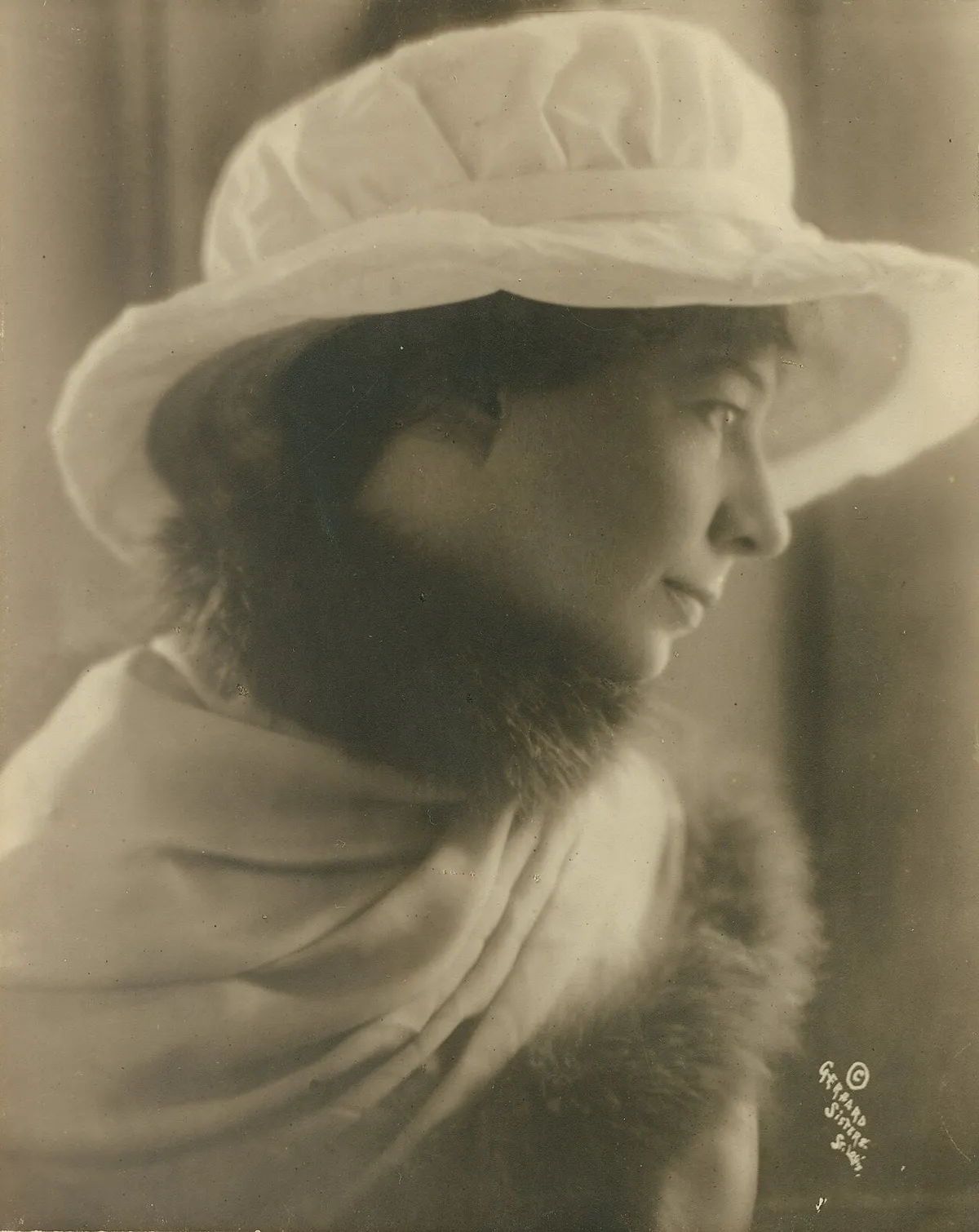
Sara Teasdale
The Wind
A wind is blowing over my soul,
I hear it cry the whole night through --
Is there no peace for me on earth
Except with you?
Alas, the wind has made me wise,
Over my naked soul it blew, --
There is no peace for me on earth
Even with you.
I hear it cry the whole night through --
Is there no peace for me on earth
Except with you?
Alas, the wind has made me wise,
Over my naked soul it blew, --
There is no peace for me on earth
Even with you.
507

Paul Laurence Dunbar
The Made to Order Smile
When a woman looks up at you with a twist about her eyes,
And her brows are half uplifted in a nicely feigned surprise
As you breathe some pretty sentence, though she hates you all the while,
She is very apt to stun you with a made to order smile.
It's a sublte combination of a sneer and a caress,
With a dash of warmth thrown in to relieve its iciness,
And she greets you when she meets you with that look as if a file
Had been used to fix and fashion out the made to order smile.
I confess that I'm eccentric and am not a woman's man,
For they seem to be constructed on the bunko fakir plan,
And it somehow sets me thinking that her heart is full of guile
When a woman looks up at me with a made to order smile.
Now, all maidens, young and aged, hear the lesson I would teach:
Ye who meet us in the ballroom, ye who meet us at the beach,
Pray consent to try and charm us by some other sort of wile
And relieve us from the burden of that made to order smile.
500
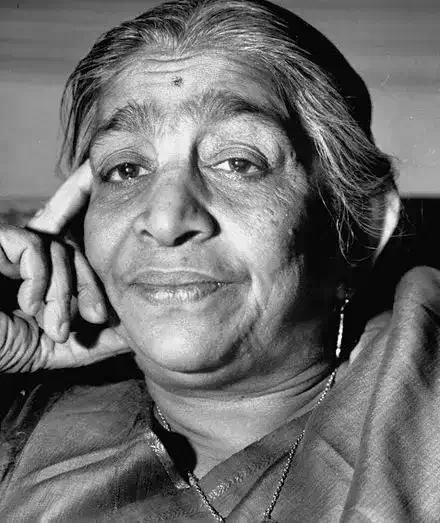
Sarojini Naidu
My Dead Dream
HAVE YOU found me, at last, O my Dream? Seven eons ago
You died and I buried you deep under forests of snow.
Why have you come hither? Who bade you awake from your sleep
And track me beyond the cerulean foam of the deep?
Would you tear from my lintels these sacred green garlands of leaves?
Would you scare the white, nested, wild pigeons of joy from my eaves?
Would you touch and defile with dead fingers the robes of my priest?
Would you weave your dim moan with the chantings of love at my feast?
Go back to your grave, O my Dream, under forests of snow,
Where a heart-riven child hid you once, seven eons ago.
Who bade you arise from your darkness? I bid you depart!
Profane not the shrines I have raised in the clefts of my heart.
500
Rabindranath Tagore
The Gardener LI: Then Finish the Last Song
Then finish the last song and let us
leave.
Forget this night when the night is
no more.
Whom do I try to clasp in my
arms? Dreams can never be made captive.
My eager hands press emptiness to
my heart and it bruises my breast.
leave.
Forget this night when the night is
no more.
Whom do I try to clasp in my
arms? Dreams can never be made captive.
My eager hands press emptiness to
my heart and it bruises my breast.
496
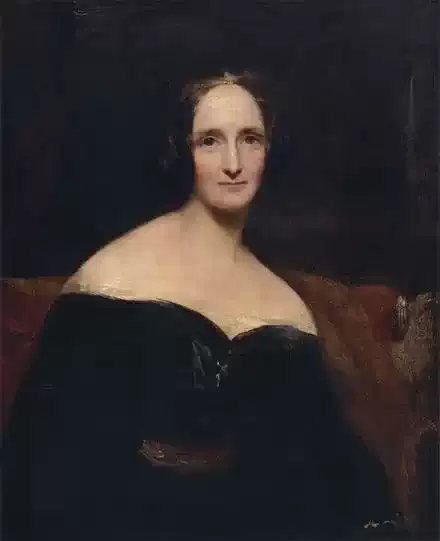
Percy Bysshe Shelley
To Wordsworth
Poet of Nature, thou hast wept to know
That things depart which never may return:
Childhood and youth, friendship and love's first glow,
Have fled like sweet dreams, leaving thee to mourn.
These common woes I feel. One loss is mine
Which thou too feel'st, yet I alone deplore.
Thou wert as a lone star, whose light did shine
On some frail bark in winter's midnight roar:
Thou hast like to a rock-built refuge stood
Above the blind and battling multitude:
In honoured poverty thy voice did weave
Songs consecrate to truth and liberty,--
Deserting these, thou leavest me to grieve,
Thus having been, that thou shouldst cease to be.
497
Sarojini Naidu
A Love Song from the North
Tell me no more of thy love, papeeha,
Wouldst thou recall to my heart, papeeha,
Dreams of delight that are gone,
When swift to my side came the feet of my lover
With stars of the dusk and the dawn?
I see the soft wings of the clouds on the river,
And jewelled with raindrops the mango-leaves quiver,
And tender boughs flower on the plain.....
But what is their beauty to me, papeeha,
Beauty of blossom and shower, papeeha,
That brings not my lover again?
Tell me no more of thy love, papeeha,
Wouldst thou revive in my heart, papeeha
Grief for the joy that is gone?
I hear the bright peacock in glimmering woodlands
Cry to its mate in the dawn;
I hear the black koel's slow, tremulous wooing,
And sweet in the gardens the calling and cooing
Of passionate bulbul and dove....
But what is their music to me, papeeha
Songs of their laughter and love, papeeha,
To me, forsaken of love?
495

Johann Wolfgang von Goethe
The New Amadis
IN my boyhood's days so drear
I was kept confined;
There I sat for many a year,
All alone I pined,
As within the womb.
Yet thou drov'st away my gloom,
Golden phantasy!
I became a hero true,
Like the Prince Pipi,
And the world roam'd through,
Many a crystal palace built,
Crush'd them with like art,
And the Dragon's life-blood spilt
With my glitt'ring dart.
Yes! I was a man!
Next I formed the knightly plan
Princess Fish to free;
She was much too complaisant,
Kindly welcomed me,--
And I was gallant.
Heav'nly bread her kisses proved,
Glowing as the wine;
Almost unto death I loved.
Sun-s appeared to shine
In her dazzling charms.
Who hath torn her from mine arms?
Could no magic band
Make her in her flight delay?
Say, where now her land?
Where, alas, the way?
492

William Butler Yeats
Baile And Aillinn
ARGUMENT. Baile and Aillinn were lovers, but Aengus, the
Master of Love, wishing them to he happy in his own land
among the dead, told to each a story of the other's death, so
that their hearts were broken and they died.
I HARDLY hear the curlew cry,
Nor thegrey rush when the wind is high,
Before my thoughts begin to run
On the heir of Uladh, Buan's son,
Baile, who had the honey mouth;
And that mild woman of the south,
Aillinn, who was King Lugaidh's heir.
Their love was never drowned in care
Of this or that thing, nor grew cold
Because their hodies had grown old.
Being forbid to marry on earth,
They blossomed to immortal mirth.
About the time when Christ was born,
When the long wars for the White Horn
And the Brown Bull had not yet come,
Young Baile Honey Mouth, whom some
Called rather Baile Little-Land,
Rode out of Emain with a band
Of harpers and young men; and they
Imagined, as they struck the way
To many-pastured Muirthemne,
That all things fell out happily,
And there, for all that fools had said,
Baile and Aillinn would be wed.
They found an old man running there:
He had ragged long grass-coloured hair;
He had knees that stuck out of his hose;
He had puddle-water in his shoes;
He had half a cloak to keep him dry,
Although he had a squirrel's eye.
wandering hirds and rushy beds,
You put such folly in our heads
With all this crying in the wind,
No common love is to our mind,
And our poor kate or Nan is less
Than any whose unhappiness
Awoke the harp-strings long ago.
Yet they that know all things hut know
That all this life can give us is
A child's laughter, a woman's kiss.
Who was it put so great a scorn
In thegrey reeds that night and morn
Are trodden and broken hy the herds,
And in the light bodies of birds
The north wind tumbles to and fro
And pinches among hail and snow?
That runner said: 'I am from the south;
I run to Baile Honey-Mouth,
To tell him how the girl Aillinn
Rode from the country of her kin,
And old and young men rode with her:
For all that country had been astir
If anybody half as fair
Had chosen a husband anywhere
But where it could see her every day.
When they had ridden a little way
An old man caught the horse's head
With: ''You must home again, and wed
With somebody in your own land.''
A young man cried and kissed her hand,
''O lady, wed with one of us'';
And when no face grew piteous
For any gentle thing she spake,
She fell and died of the heart-break.'
Because a lover's heart s worn out,
Being tumbled and blown about
By its own blind imagining,
And will believe that anything
That is bad enough to be true, is true,
Baile's heart was broken in two;
And he, being laid upon green boughs,
Was carried to the goodly house
Where the Hound of Uladh sat before
The brazen pillars of his door,
His face bowed low to weep the end
Of the harper's daughter and her friend
For athough years had passed away
He always wept them on that day,
For on that day they had been betrayed;
And now that Honey-Mouth is laid
Under a cairn of sleepy stone
Before his eyes, he has tears for none,
Although he is carrying stone, but two
For whom the cairn's but heaped anew.
We hold, because our memory is
Sofull of that thing and of this,
That out of sight is out of mind.
But the grey rush under the wind
And the grey bird with crooked bill
rave such long memories that they still
Remember Deirdre and her man;
And when we walk with Kate or Nan
About the windy water-side,
Our hearts can Fear the voices chide.
How could we be so soon content,
Who know the way that Naoise went?
And they have news of Deirdre's eyes,
Who being lovely was so wise --
Ah! wise, my heart knows well how wise.
Now had that old gaunt crafty one,
Gathering his cloak about him, mn
Where Aillinn rode with waiting-maids,
Who amid leafy lights and shades
Dreamed of the hands that would unlace
Their bodices in some dim place
When they had come to the matriage-bed,
And harpers, pacing with high head
As though their music were enough
To make the savage heart of love
Grow gentle without sorrowing,
Imagining and pondering
Heaven knows what calamity;
'Another's hurried off,' cried he,
'From heat and cold and wind and wave;
They have heaped the stones above his grave
In Muirthemne, and over it
In changeless Ogham letters writ --
Baile, that was of Rury's seed.
But the gods long ago decreed
No waiting-maid should ever spread
Baile and Aillinn's marriage-bed,
For they should clip and clip again
Where wild bees hive on the Great Plain.
Therefore it is but little news
That put this hurry in my shoes.'
Then seeing that he scarce had spoke
Before her love-worn heart had broke.
He ran and laughed until he came
To that high hill the herdsmen name
The Hill Seat of Laighen, because
Some god or king had made the laws
That held the land together there,
In old times among the clouds of the air.
That old man climbed; the day grew dim;
Two swans came flying up to him,
Linked by a gold chain each to each,
And with low murmuring laughing speech
Alighted on the windy grass.
They knew him: his changed body was
Tall, proud and ruddy, and light wings
Were hovering over the harp-strings
That Edain, Midhir's wife, had wove
In the hid place, being crazed by love.
What shall I call them? fish that swim,
Scale rubbing scale where light is dim
By a broad water-lily leaf;
Or mice in the one wheaten sheaf
Forgotten at the threshing-place;
Or birds lost in the one clear space
Of morning light in a dim sky;
Or, it may be, the eyelids of one eye,
Or the door-pillars of one house,
Or two sweet blossoming apple-boughs
That have one shadow on the ground;
Or the two strings that made one sound
Where that wise harper's finger ran.
For this young girl and this young man
Have happiness without an end,
Because they have made so good a friend.
They know all wonders, for they pass
The towery gates of Gorias,
And Findrias and Falias,
And long-forgotten Murias,
Among the giant kings whose hoard,
Cauldron and spear and stone and sword,
Was robbed before earth gave the wheat;
Wandering from broken street to street
They come where some huge watcher is,
And tremble with their love and kiss.
They know undying things, for they
Wander where earth withers away,
Though nothing troubles the great streams
But light from the pale stars, and gleams
From the holy orchards, where there is none
But fruit that is of precious stone,
Or apples of the sun and moon.
What were our praise to them? They eat
Quiet's wild heart, like daily meat;
Who when night thickens are afloat
On dappled skins in a glass boat,
Far out under a windless sky;
While over them birds of Aengus fly,
And over the tiller and the prow,
And waving white wings to and fro
Awaken wanderings of light air
To stir their coverlet and their hair.
And poets found, old writers say,
A yew tree where his body lay;
But a wild apple hid the grass
With its sweet blossom where hers was,
And being in good heart, because
A better time had come again
After the deaths of many men,
And that long fighting at the ford,
They wrote on tablets of thin board,
Made of the apple and the yew,
All the love stories that they knew.
Let rush and hird cry out their fill
Of the harper's daughter if they will,
Beloved, I am not afraid of her.
She is not wiser nor lovelier,
And you are more high of heart than she,
For all her wanderings over-sea;
But I'd have bird and rush forget
Those other two; for never yet
Has lover lived, but longed to wive
Like them that are no more alive.
496
Ella Wheeler Wilcox
Desolation
I think that the bitterest sorrow or pain
Of love unrequited, or cold death’s woe,
Is sweet, compared to that hour when we know
That some grand passion is on the wane.
When we see that the glory, and glow, and grace
Which lent a splendour to night and day,
Are surely fading, and showing grey
And dull groundwork of the commonplace.
When fond expressions on dull ears fall,
When the hands clasp calmly without one thrill,
When we cannot muster by force of will
The old emotions that came at call.
When the dream has vanished we fain would keep,
When the heart, like a watch, runs out of gear,
And all the savour goes out of the year,
Oh, then is the time – if we could – to weep!
But no tears soften this dull, pale woe;
We must sit and face it with dry, sad eyes.
If we seek to hold it, the swifter joy flies –
We can only be passive, and let it go.
488
Ezra Pound
Au Jardin
O you away high there,
you that lean
From amber lattices upon the cobalt night,
I am below amid the pine trees,
Amid the little pine trees, hear me!
'The jester walked in the garden.'
Did he so?
Well, there's no use your loving me
That way, Lady;
For I've nothing but songs to give you.
I am set wide upon the world's ways
To say that life is, some way, a gay thing,
But you never string two days upon one wire
But there'll come sorrow of it.
And I loved a love once,
Over beyond the moon there,
I loved a love once,
And, may be, more times,
But she danced like a pink moth in the shrubbery.
Oh, I know you women from the 'other folk',
And it'll all come right,
O' Sundays.
'The jester walked in the garden.'
Did he so?
488

Rudyard Kipling
Mary, Pity Women!
You call yourself a man,
For all you used to swear,
An' leave me, as you can,
My certain shame to bear?
I 'ear! You do not care --
You done the worst you know.
I 'ate you, grinnin' there. . . .
Ah, Gawd, I love you so!
Nice while it lasted, an' now it is over --
Tear out your 'eart an' good-bye to your lover!
What's the use o' grievin', when the mother that bore you
(Mary, pity women!) knew it all before you?
It aren't no false alarm,
The finish to your fun;
You -- you 'ave brung the 'arm,
An' I'm the ruined one;
An' now you'll off an' run
With some new fool in tow.
Your 'eart? You 'aven't none. . . .
Ah, Gawd, I love you so!
When a man is tired there is naught will bind 'im;
All 'e solemn promised 'e will shove be'ind 'im.
What's the good o' prayin' for The Wrath to strike 'im
(Mary, pity women!), when the rest are like 'im?
What 'ope for me or -- it?
What's left for us to do?
I've walked with men a bit,
But this -- but this is you.
So 'elp me Christ, it's true!
Where can I 'ide or go?
You coward through and through! . . .
Ah, Gawd, I love you so!
All the more you give 'em the less are they for givin' --
Love lies dead, an' you cannot kiss 'im livin'.
Down the road 'e led you there is no returnin'
(Mary, pity women!), but you're late in learnin'!
You'd like to treat me fair?
You can't, because we're pore?
We'd starve? What do I care!
We might, but this is shore!
I want the name -- no more --
The name, an' lines to show,
An' not to be an 'ore. . . .
Ah, Gawd, I love you so!
What's the good o' pleadin', when the mother that bore you
(Mary, pity women!) knew it all before you?
Sleep on 'is promises an' wake to your sorrow
(Mary, pity women!), for we sail to-morrow!
485
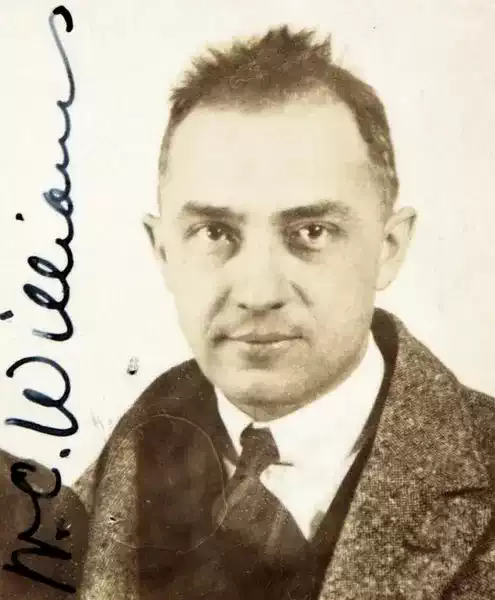
William Carlos Williams
Thursday
I have had my dream--like others--
and it has come to nothing, so that
I remain now carelessly
with feet planted on the ground
and look up at the sky--
feeling my clothes about me,
the weight of my body in my shoes,
the rim of my hat, air passing in and out
at my nose--and decide to dream no more.
and it has come to nothing, so that
I remain now carelessly
with feet planted on the ground
and look up at the sky--
feeling my clothes about me,
the weight of my body in my shoes,
the rim of my hat, air passing in and out
at my nose--and decide to dream no more.
484