
Disillusionment and Lost Love
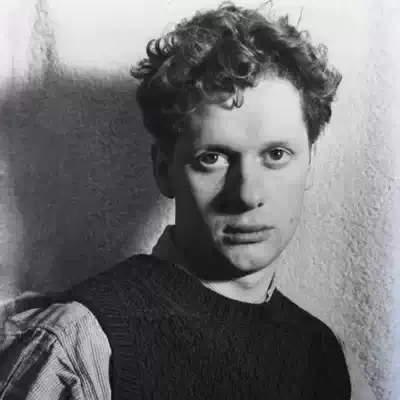
Dylan Thomas
On a Wedding Anniversary
The sky is torn across
This ragged anniversary of two
Who moved for three years in tune
Down the long walks of their vows.
Now their love lies a loss
And Love and his patients roar on a chain;
From every tune or crater
Carrying cloud, Death strikes their house.
Too late in the wrong rain
They come together whom their love parted:
The windows pour into their heart
And the doors burn in their brain.
394
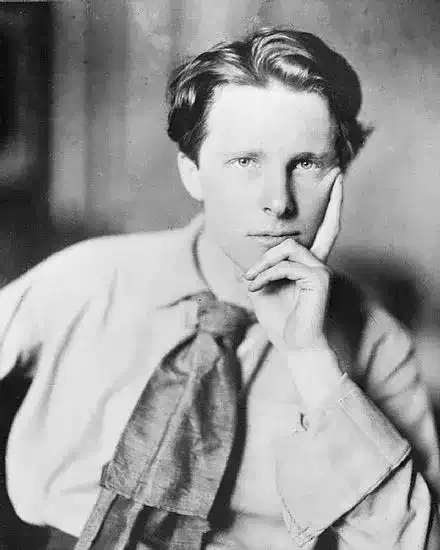
Rupert Brooke
I: Peace
Now, God be thanked Who has watched us with His hour,
And caught our youth, and wakened us from sleeping,
With hand made sure, clear eye, and sharpened power,
To turn, as swimmers into cleanness leaping,
Glad from a world grown old and cold and weary,
Leave the sick hearts that honour could not move,
And half-men, and their dirty songs and dreary,
And all the little emptiness of love!
Oh! we, who have known shame, we have found release there,
Where there's no ill, no grief, but sleep has mending,
Naught broken save this body, lost but breath;
Nothing to shake the laughing heart's long peace there
But only agony, and that has ending;
And the worst friend and enemy is but Death.
392
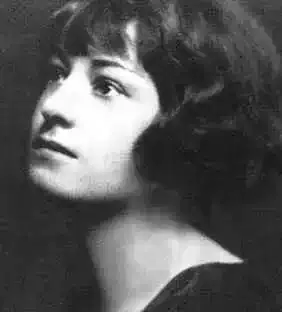
Dorothy Parker
Theory
Into love and out again,
Thus I went, and thus I go.
Spare your voice, and hold your pen
Well
and bitterly I know
All the songs were ever sung,
All the words were ever said;
Could it be, when I was young,
Some one dropped me on my head?
Thus I went, and thus I go.
Spare your voice, and hold your pen
Well
and bitterly I know
All the songs were ever sung,
All the words were ever said;
Could it be, when I was young,
Some one dropped me on my head?
391
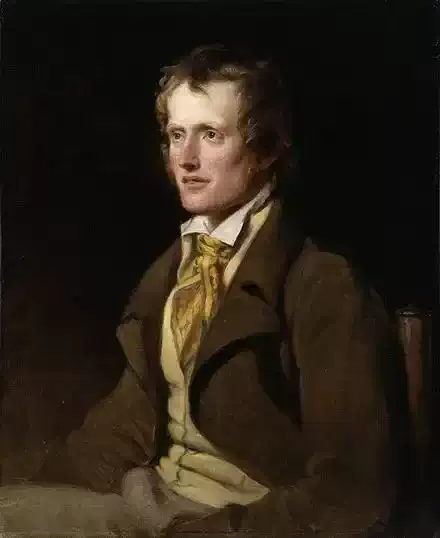
John Clare
Peggy's The Lady Of The Hall
And will she leave the lowly clowns
For silk and satins gay,
Her woollen aprons and drab gowns
For lady's cold array?
And will she leave the wild hedge rose,
The redbreast and the wren,
And will she leave her Sunday beaus
And milk shed in the glen?
And will she leave her kind friends all
To be the Lady of the Hall?
The cowslips bowed their golden drops,
The white thorn white as sheets;
The lamb agen the old ewe stops,
The wren and robin tweets.
And Peggy took her milk pails still,
And sang her evening song,
To milk her cows on Cowslip Hill
For half the summer long.
But silk and satins rich and rare
Are doomed for Peggy still to wear.
But when the May had turned to haws,
The hedge rose swelled to hips,
Peggy was missed without a cause,
And left us in eclipse.
The shepherd in the hovel milks,
Where builds the little wren,
And Peggy's gone, all clad in silks--
Far from the happy glen,
From dog-rose, woodbine, clover, all
To be the Lady of the Hall.
391

Ella Wheeler Wilcox
The Beautiful Blue Danube
They drift down the hall together;
He smiles in her lifted eyes.
Like waves of that mighty river
The strains of the ‘Danube’ rise.
They float on its rhythmic measure,
Like leaves on a summer stream;
And here, in this scene of pleasure,
I bury my sweet dead dream.
Through the cloud of her dusky tresses,
Like a star, shines out her face;
And the form of his strong arm presses
Is sylph-like in its grace.
As a leaf on the bounding river
Is lost in the seething sea,
I know that for ever and ever
My dream is lost to me.
And still the viols are playing
That grand old wordless rhyme;
And still those two are swaying
In perfect tune and time.
If the great bassoons that mutter,
If the clarinets that blow,
Were given the chance to utter
The secret things they know.
Would the lists of the slain who slumber
On the Danube’s battle-plains
The unknown hosts outnumber
Who die ‘neath the ‘Danube’s’ strains?
Those fall where the cannons rattle,
‘Mid the rain of shot and shell;
But these, in a fiercer battle,
Find death in the music’s swell.
With the river’s roar of passion
Is blended the dying groan;
But here, in the halls of fashion,
Hearts break, and make no moan.
And the music, swelling and sweeping,
Like the river, knows it all;
But none are counting or keeping
The lists of those who fall.
386
Dorothy Parker
Pattern
Leave me to my lonely pillow.
Go, and take your silly posies
Who has vowed to wear the willow
Looks a fool, tricked out in roses.
Who are you, my lad, to ease me?
Leave your pretty words unspoken.
Tinkling echoes little please me,
Now my heart is freshly broken.
Over young are you to guide me,
And your blood is slow and sleeping.
If you must, then sit beside me....
Tell me, why have I been weeping?
386
Dorothy Parker
I Shall Come Back
I shall come back without fanfaronade
Of wailing wind and graveyard panoply;
But, trembling, slip from cool Eternity-
A mild and most bewildered little shade.
I shall not make sepulchral midnight raid,
But softly come where I had longed to be
In April twilight's unsung melody,
And I, not you, shall be the one afraid.
Strange, that from lovely dreamings of the dead
I shall come back to you, who hurt me most.
You may not feel my hand upon your head,
I'll be so new and inexpert a ghost.
Perhaps you will not know that I am near-
And that will break my ghostly heart, my dear.
385

Lord Byron
The Spell Is Broke, The Charm Is Flown!
The spell is broke; the charm is flown!
Thus is it with life's fitful fever:
We madly smile when we should groan:
Delirium is our best deceiver.
Each lucid interval of thought
Recalls the woes of Nature's charter;
And he that acts as wise men ought,
But lives, as saints have died, a martyr.
Thus is it with life's fitful fever:
We madly smile when we should groan:
Delirium is our best deceiver.
Each lucid interval of thought
Recalls the woes of Nature's charter;
And he that acts as wise men ought,
But lives, as saints have died, a martyr.
386
Dorothy Parker
The Dramatists
A string of shiny days we had,
A spotless sky, a yellow sun;
And neither you nor I was sad
When that was through and done.
But when, one day, a boy comes by
And pleads me with your happiest vow,
"There was a lad I knew--" I'll sigh,
"I do not know him now."
And when another girl shall pass
And speak a little name I said,
Then you will say, "There was a lass
I
wonder is she dead."
And each of us will sigh, and start
A-talking of a faded year,
And lay a hand above a heart,
And dry a pretty tear.
384
Ella Wheeler Wilcox
The King Of Candyland
Have you heard of the king of Candy land?
Well, listen while I sing,
He has pages on every hand,
For he is a mighty king,
And thousands of children bend the knee,
And bow to this ruler of high degree.
He has a smile, oh! like the sun!
And his face is round and bland,
His bright eyes twinkle and glow with fun,
As the children kiss his hand.
And everything toothsome, melting, sweet,
He scatters freely before their feet.
But wo! for the children who follow him,
With loving praises and laughter,
For he is a monster ugly and grim
That they go running after.
And when they get well into the chase
He lifts his masque and shows his face.
And ah! but that is a gruesome sight
For the followers of the king.
The cheeks grow pale that once were bright,
And they sob instead of sing.
And their teeth drop out and their eyes grow red,
And they cannot sleep when they go to bed.
And after they see the monster's face,
They have no peaceful hour.
And they have aches in every place,
And what was sweet seems sour.
Oh wo! for that sorrowful foolish band
Who follow the king of Candy land.
382
John Donne
Farewell to Love
Whilst yet to prove,
I thought there was some deity in love
So did I reverence, and gave
Worship, as atheists at their dying hour
Call, what they cannot name, an unknown power,
As ignorantly did I crave:
Thus when
Things not yet known are coveted by men,
Our desires give them fashion, and so
As they wax lesser, fall, as they size, grow.
But, from late fair
His highness sitting in a golden chair,
Is not less cared for after three days
By children, than the thing which lovers so
Blindly admire, and with such worship woo;
Being had, enjoying it decays:
And thence,
What before pleased them all, takes but one sense,
And that so lamely, as it leaves behind
A kind of sorrowing dullness to the mind.
Ah cannot we,
As well as cocks and lions jocund be,
After such pleasures ? Unless wise
Nature decreed (since each such act, they say
Diminish the length of life a day)
This; as she would man should despise
The sport,
Because that other curse of being short,
And only for a minute made to be
Eager, desires to raise posterity.
Since so, my mind
Shall not desire what no man else can find,
I`ll no more dote and run
To purse things which had, endamaged me.
And when I come where moving beauties be,
As men do when the summer’s sun
Grows great,
Though I admire their greatness, shun their heat;
Each place can afford shadow. If all fail,
’Tis but applying worm-seed to the tail.
382
William Carlos Williams
The Young Housewife
At ten AM the young housewife
moves about in negligee behind
the wooden walls of her husband’s house.
I pass solitary in my car.
Then again she comes to the curb
to call the ice-man, fish-man, and stands
shy, uncorseted, tucking in
stray ends of hair, and I compare her
to a fallen leaf.
The noiseless wheels of my car
rush with a crackling sound over
dried leaves as I bow and pass smiling.
381
Ella Wheeler Wilcox
Two Loves
The woman he loved, while he dreamed of her,
Danced on till the stars grew dim,
But alone with her heart, from the world apart
Sat the woman who loved him.
The woman he worshipped only smiled
When he poured out his passionate love.
But the other somewhere, kissed her treasure most rare,
A book he had touched with his glove.
The woman he loved betrayed his trust,
And he wore the scars for life;
And he cared not, nor knew, that the other was true;
But no man called her his wife.
The woman he loved trod festal halls,
While they sang his funeral hymn,
But the sad bells tolled, ere the year was old,
For the woman that loved him.
380
Ella Wheeler Wilcox
A Meeting
Quite carelessly I turned the newsy sheet;
A song I sang, full many a year ago,
Smiled up at me, as in a busy street
One meets an old-time friend he used to know.
So full it was, that simple little song,
Of all the hope, the transport, and the truth,
Which to the impetuous morn of life belong,
That once again I seemed to grasp my youth.
So full it was of that sweet, fancied pain
We woo and cherish ere we meet with woe,
I felt as one who hears a plaintive strain
His mother sang him in the long ago.
Up from the grave the years that lay between
That song's birthday and my stern present came
Like phantom forms and swept across the scene,
Bearing their broken dreams of love and fame.
Fair hopes and bright ambitions that I knew
In that old time, with their ideal grace,
Shone for a moment, then were lost to view
Behind the dull clouds of the commonplace.
With trembling hands I put the sheet away;
Ah, little song! the sad and bitter truth
Struck like an arrow when we met that day!
My life has missed the promise of its youth.
378
Dorothy Parker
Autumn Valentine
In May my heart was breaking
Oh,
wide the wound, and deep!
And bitter it beat at waking,
And sore it split in sleep.
And when it came November,
I sought my heart, and sighed,
"Poor thing, do you remember?"
"What heart was that?" it cried.
Oh,
wide the wound, and deep!
And bitter it beat at waking,
And sore it split in sleep.
And when it came November,
I sought my heart, and sighed,
"Poor thing, do you remember?"
"What heart was that?" it cried.
377

Carl Sandburg
Mamie
Mamie beat her head against the bars of a little Indiana town and dreamed of romance
and big things off somewhere the way the railroad trains all ran.
She could see the smoke of the engines get lost down where the streaks of steel
flashed in the sun and when the newspapers came in on the morning mail she knew
there was a big Chicago far off, where all the trains ran.
She got tired of the barber shop boys and the post office chatter and the church gossip
and the old pieces the band played on the Fourth of July and Decoration Day
And sobbed at her fate and beat her head against the bars and was going to kill herself
When the thought came to her that if she was going to die she might as well die
struggling for a clutch of romance among the streets of Chicago.
She has a job now at six dollars a week in the basement of the Boston Store
And even now she beats her head against the bars in the same old way and wonders if
there is a bigger place the railroads run to from Chicago where maybe there is
romance
and big things
and real dreams
that never go smash.
377
Ella Wheeler Wilcox
The Foolish Elm
The bold young Autumn came riding along
One day where an elm-tree grew.
'You are fair,' he said, as she bent down her head,
'Too fair for your robe's dull hue.
You are far too young for a garb so old;
Your beauty needs color and sheen.
Oh, I would clothe you in scarlet and gold
Befitting the grace of a queen.
'For one little kiss on your lips, sweet elm,
For one little kiss, no more,
I would give you, I swear, a robe more fair
Than ever a princess wore.
One little kiss on those lips, my pet,
And lo! you shall stand, I say,
Queen of the forest, and, better yet,
Queen of my heart alway.'
She tossed her head, but he took the kiss'
Tis the way of lovers bold-
And a gorgeous dress for that sweet caress
He gave ere the morning was old.
For a week and a day she ruled a queen
In beauty and splendid attire;
For a week and a day she was loved, I ween,
With the love that is born of desire.
Then bold-eyed Autumn went on his way
In search of a tree more fair;
And mob winds tattered her garments and scattered
Her finery here and there.
Poor and faded and ragged and cold
She rocked in her wild distress,
And longed for the dull green gown she had sold
For her fickle lover's caress.
And the days went by and Winter came,
And his tyrannous tempests beat
On the shivering tree, whose robes of flame
He had trampled under his feet.
I saw her reach up to the mocking skies
Her poor arms, bare and thin;
Ah, well-a-day! it is ever the way
With a woman who trades with sin.
378
Dorothy Parker
Inventory
Four be the things I am wiser to know:
Idleness, sorrow, a friend, and a foe.
Four be the things I’d been better without:
Love, curiosity, freckles, and doubt.
Three be the things I shall never attain:
Envy, content, and sufficient champagne.
Three be the things I shall have till I die:
Laughter and hope and a sock in the eye.
Idleness, sorrow, a friend, and a foe.
Four be the things I’d been better without:
Love, curiosity, freckles, and doubt.
Three be the things I shall never attain:
Envy, content, and sufficient champagne.
Three be the things I shall have till I die:
Laughter and hope and a sock in the eye.
376

Emily Dickinson
Forget! The lady with the Amulet
Forget! The lady with the Amulet
Forget she wore it at her Heart
Because she breathed against
Was Treason twixt?
Deny! Did Rose her Bee-
For Privilege of Play
Or Wile of Butterfly
Or Opportunity-Her Lord away?
The lady with the Amulet-will face-
The Bee-in Mausoleum laid-
Discard his Bride-
But longer than the little Rill-
That cooled the Forehead of the Hill-
While Other-went the Sea to fill-
And Other-went to turn the MillI'll
do thy Will-
376
Carl Sandburg
Broadway
I shall never forget you, Broadway
Your golden and calling lights.
I’ll remember you long,
Tall-walled river of rush and play.
Hearts that know you hate you
And lips that have given you laughter
Have gone to their ashes of life and its roses,
Cursing the dreams that were lost
In the dust of your harsh and trampled stones.
Your golden and calling lights.
I’ll remember you long,
Tall-walled river of rush and play.
Hearts that know you hate you
And lips that have given you laughter
Have gone to their ashes of life and its roses,
Cursing the dreams that were lost
In the dust of your harsh and trampled stones.
375
Edna St. Vincent Millay
Sonnets (1923)
VIII8.
Oh, oh, you will be sorry for that word!
.
Give back my book and take my kiss instead.
.
Was it my enemy or my friend I heard,
.
"What a big book for such a little head!"
.
Come, I will show you now my newest hat,
.
And you may watch me purse my mouth and prink!
.
Oh, I shall love you still, and all of that.
.
I never again shall tell you what I think.
.
I shall be sweet and crafty, soft and sly;
.
You will not catch me reading any more:
.
I shall be called a wife to pattern by;
.
And some day when you knock and push the door,
.
Some sane day, not too bright and not too stormy,
.
I shall be gone, and you may whistle for me. IX9.
Here is a wound that never will heal, I know,
.
Being wrought not of a dearness and a death,
.
But of a love turned ashes and the breath
.
Gone out of beauty; never again will grow
.
The grass on that scarred acre, though I sow
.
Young seed there yearly and the sky bequeath
.
Its friendly weathers down, far underneath
.
Shall be such bitterness of an old woe.
.
That April should be shattered by a gust,
.
That August should be levelled by a rain,
.
I can endure, and that the lifted dust
.
Of man should settle to the earth again;
.
But that a dream can die, will be a thrust
.
Between my ribs forever of hot pain. XVIII18.
I, being born a woman and distressed
.
By all the needs and notions of my kind,
.
Am urged by your propinquity to find
.
Your person fair, and feel a certain zest
.
To bear your body's weight upon my breast:
.
So subtly is the fume of life designed,
.
To clarify the pulse and cloud the mind,
.
And leave me once again undone, possessed.
.
Think not for this, however, the poor treason
.
Of my stout blood against my staggering brain,
.
I shall remember you with love, or season
.
My scorn with pity, -- let me make it plain:
.
I find this frenzy insufficient reason
.
For conversation when we meet again. XIX19.
What lips my lips have kissed, and where, and why,
.
I have forgotten, and what arms have lain
.
Under my head till morning; but the rain
.
Is full of ghosts to-night, that tap and sigh
.
Upon the glass and listen for reply,
.
And in my heart there stirs a quiet pain
.
For unremembered lads that not again
.
Will turn to me at midnight with a cry.
.
Thus in the winter stands the lonely tree,
.
Nor knows what birds have vanished one by one,
.
Yet knows its boughs more silent than before:
.
I cannot say what loves have come and gone,
.
I only know that summer sang in me
.
A little while, that in me sings no more.
372

Elizabeth Barrett Browning
The Lady's Yes
'Yes,' I answered you last night;
'No,' this morning, Sir, I say.
Colours seen by candlelight,
Will not look the same by day.
When the viols played their best,
Lamps above, and laughs below---
Love me sounded like a jest,
Fit for Yes or fit for No.
Call me false, or call me free--Vow,
whatever light may shine,
No man on your face shall see
Any grief for change on mine.
Yet the sin is on us both--Time
to dance is not to woo---
Wooer light makes fickle troth--Scorn
of me recoils on you.
Learn to win a lady's faith
Nobly, as the thing is high;
Bravely, as for life and death--With
a loyal gravity.
Lead her from the festive boards,
Point her to the starry skies,
Guard her, by your truthful words,
Pure from courtship's flatteries.
By your truth she shall be true--Ever
true, as wives of yore---
And her Yes, once said to you,
SHALL be Yes for evermore.
369

Robert Louis Stevenson
On Now, Although The Year Be Done
ON now, although the year be done,
Now, although the love be dead,
Dead and gone;
Hear me, O loved and cherished one,
Give me still the hand that led,
Led me on.
Now, although the love be dead,
Dead and gone;
Hear me, O loved and cherished one,
Give me still the hand that led,
Led me on.
369

William Shakespeare
Sonnet 119: What potions have I drunk of Siren tears
What potions have I drunk of Siren tears,
Distill'd from limbecks foul as hell within,
Applying fears to hopes and hopes to fears,
Still losing when I saw myself to win!
What wretched errors hath my heart committed,
Whilst it hath thought itself so blessed never!
How have mine eyes out of their spheres been fitted
In the distraction of this madding fever!
O benefit of ill! now I find true
That better is by evil still made better;
And ruin'd love, when it is built anew,
Grows fairer than at first, more strong, far greater.
So I return rebuked to my content
And gain by ill thrice more than I have spent.
365