
Disillusionment and Lost Love
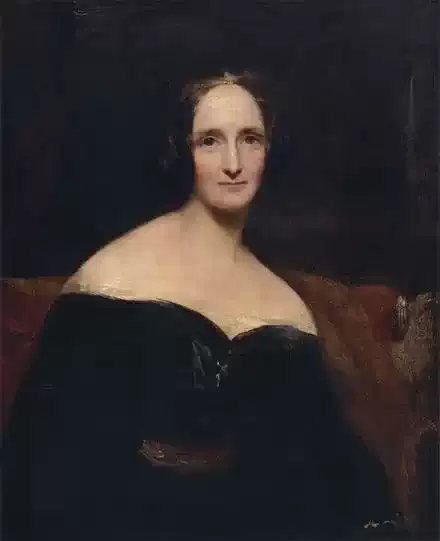
Percy Bysshe Shelley
One sung of thee who left the tale untold
One sung of thee who left the tale untold,
Like the false dawns which perish in the bursting;
Like empty cups of wrought and daedal gold,
Which mock the lips with air, when they are thirsting.
Like the false dawns which perish in the bursting;
Like empty cups of wrought and daedal gold,
Which mock the lips with air, when they are thirsting.
421

William Butler Yeats
To A Shade
IF you have revisited the town, thin Shade,
Whether to look upon your monument
(I wonder if the builder has been paid)
Or happier-thoughted when the day is spent
To drink of that salt breath out of the sea
When grey gulls flit about instead of men,
And the gaunt houses put on majesty:
Let these content you and be gone again;
For they are at their old tricks yet.
A man
Of your own passionate serving kind who had brought
In his full hands what, had they only known,
Had given their children's children loftier thought,
Sweeter emotion, working in their veins
Like gentle blood, has been driven from the place,
And instilt heaped upon him for his pains,
And for his open-handedness, disgrace;
Your enemy, an old fotil mouth, had set
The pack upon him.
Go, unquiet wanderer,
And gather the Glasnevin coverlet
About your head till the dust stops your ear,
The time for you to taste of that Salt breath
And listen at the corners has not come;
You had enough of sorrow before death --
Away, away! You are safer in the tomb.
419

Robert Louis Stevenson
Dedication
MY first gift and my last, to you
I dedicate this fascicle of songs -
The only wealth I have:
Just as they are, to you.
I speak the truth in soberness, and say
I had rather bring a light to your clear eyes,
Had rather hear you praise
This bosomful of songs
Than that the whole, hard world with one consent,
In one continuous chorus of applause
Poured forth for me and mine
The homage of ripe praise.
I write the finis here against my love,
This is my love's last epitaph and tomb.
Here the road forks, and I
Go my way, far from yours.
419

Dorothy Parker
Finis
Now it's over, and now it's done;
Why does everything look the same?
Just as bright, the unheeding sun, -Can't
it see that the parting came?
People hurry and work and swear,
Laugh and grumble and die and wed,
Ponder what they will eat and wear, -Don't
they know that our love is dead?
Just as busy, the crowded street;
Cars and wagons go rolling on,
Children chuckle, and lovers meet, -Don't
they know that our love is gone?
No one pauses to pay a tear;
None walks slow, for the love that's through, --
I might mention, my recent dear,
I've reverted to normal, too.
416

John Clare
Farewell And Defiance To Love
Love and thy vain employs, away
From this too oft deluded breast!
No longer will I court thy stay,
To be my bosom's teazing guest.
Thou treacherous medicine, reckoned pure,
Thou quackery of the harassed heart,
That kills what it pretends to cure,
Life's mountebank thou art.
With nostrums vain of boasted powers,
That, ta'en, a worse disorder leave;
An asp hid in a group of flowers,
That bites and stings when few perceive;
Thou mock-truce to the troubled mind,
Leading it more in sorrow's way,
Freedom, that leaves us more confined,
I bid thee hence away.
Dost taunt, and deem thy power beyond
The resolution reason gave?
Tut! Falsity hath snapt each bond,
That kept me once thy quiet slave,
And made thy snare a spider's thread,
Which een my breath can break in twain;
Nor will I be, like Sampson, led
To trust thy wiles again.
I took thee as my staff to guide
Me on the road I did pursue,
And when my weakness most relied
Upon its strength it broke in two.
I took thee as my friendly host
That counsel might in dangers show,
But when I needed thee the most
I found thou wert my foe.
Tempt me no more with rosy cheeks,
Nor daze my reason with bright eyes;
I'm wearied with thy painted freaks,
And sicken at such vanities:
Be roses fine as eer they will,
They, with the meanest, fade and die,
And eyes, though thronged with darts to kill,
Share like mortality.
Feed the young bard, that madly sips
His nectar-draughts from folly's flowers,
Bright eyes, fair cheeks, and ruby lips,
Till muses melt to honey showers;
Lure him to thrum thy empty lays,
While flattery listens to the chimes,
Till words themselves grow sick with praise
And stop for want of rhymes.
Let such be still thy paramours,
And chaunt love's old and idle tune,
Robbing the spring of all its flowers,
And heaven of all her stars and moon,
To gild with dazzling similes
Blind folly's vain and empty lay:
I'm sobered from such phantasies,
So get thee hence away.
Nor bid me sigh for mine own cost,
Nor count its loss, for mine annoy,
Nor say my stubbornness hath lost
A paradise of dainty joy:
I'll not believe thee, till I know
That sober reason turns an ape,
And acts the harlequin, to show
That cares in every shape,
Heart-achings, sighs, and grief-wrung tears,
Shame-blushes at betrayed distress,
Dissembled smiles, and jealous fears,
Are nought but real happiness:
Then will I mourn what now I brave,
And suffer Celia's quirks to be
(Like a poor fate-bewilder'd slave,)
The rulers of my destiny.
I'll weep and sigh wheneer she wills
To frown, and when she deigns to smile
It shall be cure for all my ills,
And, foolish still, I'll laugh the while;
But till that comes, I'll bless the rules
Experience taught, and deem it wise
To hold thee as the game of fools,
And all thy tricks despise.
417

Ezra Pound
The Bath-Tub
As a bathtub lined with white porcelain,
When the hot water gives out or goes tepid,
So is the slow cooling of our chivalrous passion,
O my much praised but-not-altogether-satisfactory lady.
When the hot water gives out or goes tepid,
So is the slow cooling of our chivalrous passion,
O my much praised but-not-altogether-satisfactory lady.
416
Dorothy Parker
Prologue to a Saga
Maidens, gather not the yew,
Leave the glossy myrtle sleeping;
Any lad was born untrue,
Never a one is fit your weeping.
Pretty dears, your tumult cease;
Love's a fardel, burthening double.
Clear your hearts, and have you peace-
Gangway, girls: I'll show you trouble.
Leave the glossy myrtle sleeping;
Any lad was born untrue,
Never a one is fit your weeping.
Pretty dears, your tumult cease;
Love's a fardel, burthening double.
Clear your hearts, and have you peace-
Gangway, girls: I'll show you trouble.
412

Emily Dickinson
Within my reach!
Within my reach!
I could have touched!
I might have chanced that way!
Soft sauntered thro' the village-
Sauntered as soft away!
So unsuspected Violets
Within the meadows go-
Too late for striving fingers
That passed, an hour ago!
I could have touched!
I might have chanced that way!
Soft sauntered thro' the village-
Sauntered as soft away!
So unsuspected Violets
Within the meadows go-
Too late for striving fingers
That passed, an hour ago!
414

William Blake
My Pretty Rose Tree
A flower was offered to me,
Such a flower as May never bore;
But I said 'I've a pretty rose tree,'
And I passed the sweet flower o'er.
Then I went to my pretty rose tree,
To tend her by day and by night;
But my rose turned away with jealousy,
And her thorns were my only delight.
Such a flower as May never bore;
But I said 'I've a pretty rose tree,'
And I passed the sweet flower o'er.
Then I went to my pretty rose tree,
To tend her by day and by night;
But my rose turned away with jealousy,
And her thorns were my only delight.
412
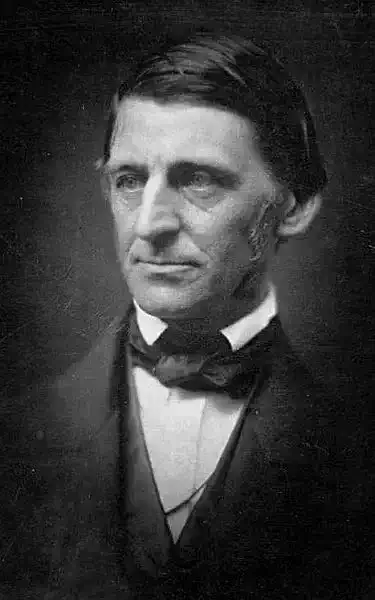
Ralph Waldo Emerson
The Amulet
Your picture smiles as first it smiled,
The ring you gave is still the same,
Your letter tells, O changing child,
No tidings since it came.
Give me an amulet
That keeps intelligence with you,
Red when you love, and rosier red,
And when you love not, pale and blue.
Alas, that neither bonds nor vows
Can certify possession;
Torments me still the fear that love
Died in its last expression.
407

Sara Teasdale
At Midnight
Now at last I have come to see what life is,
Nothing is ever ended, everything only begun,
And the brave victories that seem so splendid
Are never really won.
Even love that I built my spirit's house for,
Comes like a brooding and a baffled guest,
And music and men's praise and even laughter
Are not so good as rest.
Nothing is ever ended, everything only begun,
And the brave victories that seem so splendid
Are never really won.
Even love that I built my spirit's house for,
Comes like a brooding and a baffled guest,
And music and men's praise and even laughter
Are not so good as rest.
408

Lord Byron
Stanzas For Music: There's Not A Joy The World Can Give
There's not a joy the world can give like that it takes away
When the glow of early thought declines in feeling's dull decay;
'Tis not on youth's smooth cheek the blush alone, which fades so fast,
But the tender bloom of heart is gone, ere youth itself be past.
Then the few whose spirits float above the wreck of happiness
Are driven o'er the shoals of guilt, or ocean of excess:
The magnet of their course is gone, or only points in vain
The shore to which their shivered sail shall never stretch again.
Then the mortal coldness of the soul like death itself comes down;
It cannot feel for others' woes, it dare not dream its own;
That heavy chill has frozen o'er the fountain of our tears,
And though the eye may sparkle still, 'tis where the ice appears.
Though wit may flash from fluent lips, and mirth distract the breast,
Through midnight hours that yield no more their former hope of rest,
'Tis but as ivyleaves
around the ruined turret wreath—
All green and wildly fresh without, but worn and grey beneath.
Oh, could I feel as I have felt, or be what I have been,
Or weep as I could once have wept, o'er many a vanished scene;
As springs in deserts found seem sweet, all brackish though they be,
So, midst the withered waste of life, those tears would flow to me.
406
William Butler Yeats
Aedh Tells of a Valley Full of Lovers
I dreamed that I stood in a valley, and amid sighs,
For happy lovers passed two by two where I stood;
And I dreamed my lost love came stealthily out of the wood
With her cloud-pale eyelids falling on dream-dimmed eyes:
I cried in my dream ‘O women bid the young men lay
‘Their heads on your knees, and drown their eyes with your hair,
‘Or remembering hers they will find no other face fair
‘Till all the valleys of the world have been withered away.’
407

Ella Wheeler Wilcox
Her Last Letter
Sitting alone by the window,
Watching the moonlit street,
Bending my head to listen
To the well-known sound of your feet,
I have been wondering, darling,
How I can bear the pain,
When I watch, with sighs and tear-wet eyes;
And wait for your coming in vain.
For I know that a day approaches
When your heart will tire of me;
When by door and gate I may watch and wait
For a form I shall not see.
When the love that is now my heaven,
The kisses that make my life,
You will bestow on another,
And that other will be-your wife.
You will grow weary of sinning
(Though you do not call it so),
You will long for a love that is purer
Than the love that we two know.
God knows I have loved you dearly,
With a passion strong as true;
But you will grow tired and leave me,
Though I gave up all for you.
I was as pure as the morning
When I first looked on your face;
I knew I never could reach you
In your high, exalted place.
But I looked and loved and worshiped
As a flower might worship a star,
And your eyes shone down upon me,
And you seemed so far-so far.
And then? Well, then, you loved me,
Loved me with all your heart;
But we could not stand at the altar,
We were so far apart.
If a star should wed with a flower
The star must drop from the sky,
Or the flower in trying to reach it
Would droop on its stalk and die.
But you said that you loved me, darling,
And swore by the heavens above
That the Lord and all of His angels
Would sanction and bless our love.
And I? I was weak, not wicked.
My love was as pure as true,
And sin itself seemed a virtue
If only shared by you.
We have been happy together,
Though under the cloud of sin,
But I know that the day approaches
When my chastening must begin.
You have been faithful and tender,
But you will not always be,
And I think I had better leave you
While your thoughts are kind of me.
I know my beauty is fading-
Sin furrows the fairest brow-
And I know that your heart will weary
Of the face you smile on now.
You will take a bride to your bosom
After you turn from me;
You will sit with your wife in the moonlight,
And hold her babe on your knee.
Oh, God! I never could bear it;
It would madden my brain, I know;
And so while you love me dearly
I think I had better go.
It is sweeter to feel, my darling-
To know as I fall asleep-
That some one will mourn me and miss me,
That some one is left to weep,
Than to die as I should in the future,
To drop in the street some day,
Unknown, unwept and forgotten
After you cast me away.
Perhaps the blood of the Saviour
Can wash my garments clean;
Perchance I may drink of the waters
That flow through pastures green.
Perchance we may meet in heaven,
And walk in the streets above,
With nothing to grieve us or part us
Since our sinning was all through love.
God says, 'Love one another,'
And down to the depths of hell
Will he send the soul of a women
Because she loved-and fell?
And so in the moonlight he found her,
Or found her beautiful clay,
Lifeless and pallid as marble,
For the spirit had flown away.
The farewell words she had written
She held to her cold, white breast,
And the buried blade of a dagger
Told how she had gone to rest.
405
Dorothy Parker
Story
"And if he's gone away," said she,
"Good riddance, if you're asking me.
I'm not a one to lie awake
And weep for anybody's sake.
There's better lads than him about!
I'll wear my buckled slippers out
A-dancing till the break of day.
I'm better off with him away!
And if he never come," said she,
"Now what on earth is that to me?
I wouldn't have him back!"
I hope
Her mother washed her mouth with soap.
404
Ezra Pound
The Three Poets
Candidia has taken a new lover
And three poets are gone into mourning.
The first has written a long elegy to 'Chloris',
To 'Chloris chaste and cold,' his 'only Chloris'.
The second has written a sonnet
upon the mutability of woman,
And the third writes an epigram to Candidia.
And three poets are gone into mourning.
The first has written a long elegy to 'Chloris',
To 'Chloris chaste and cold,' his 'only Chloris'.
The second has written a sonnet
upon the mutability of woman,
And the third writes an epigram to Candidia.
402
Dorothy Parker
To A Much Too Unfortunate Lady
He will love you presently
If you be the way you be.
Send your heart a-skittering.
He will stoop, and lift the thing.
Be your dreams as thread, to tease
Into patterns he shall please.
Let him see your passion is
Ever tenderer than his....
Go and bless your star above,
Thus are you, and thus is Love.
He will leave you white with woe,
If you go the way you go.
If your dreams were thread to weave
He will pluck them from his sleeve.
If your heart had come to rest,
He will flick it from his breast.
Tender though the love he bore,
You had loved a little more....
Lady, go and curse your star,
Thus Love is, and thus you are.
399
Dorothy Parker
Pour Prendre Conge
I'm sick of embarking in dories
Upon an emotional sea.
I'm wearied of playing Dolores
(A role never written for me).
I'll never again like a cub lick
My wounds while I squeal at the hurt.
No more I'll go walking in public,
My heart hanging out of my shirt.
I'm tired of entwining me garlands
Of weather-worn hemlock and bay.
I'm over my longing for far lands
I
wouldn't give that for Cathay.
I'm through with performing the ballet
Of love unrequited and told.
Euterpe, I tender you vale;
Good-by, and take care of that cold.
I'm done with this burning and giving
And reeling the rhymes of my woes.
And how I'll be making my living,
The Lord in His mystery knows.
399
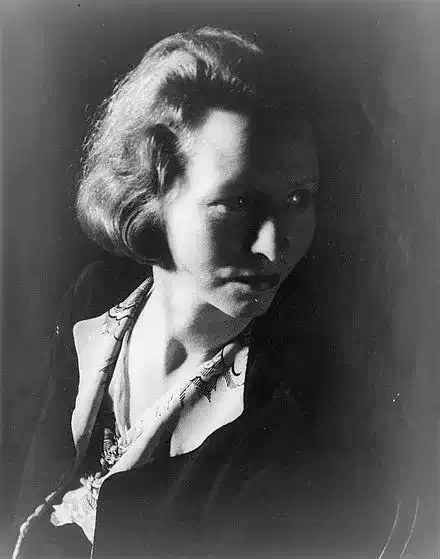
Edna St. Vincent Millay
Passer Mortuus Est
Death devours all lovely things;
Lesbia with her sparrow
Shares the darkness,—presently
Every bed is narrow.
Unremembered as old rain
Dries the sheer libation,
And the little petulant hand
Is an annotation.
After all, my erstwhile dear,
My no longer cherished,
Need we say it was not love,
Now that love is perished?
Lesbia with her sparrow
Shares the darkness,—presently
Every bed is narrow.
Unremembered as old rain
Dries the sheer libation,
And the little petulant hand
Is an annotation.
After all, my erstwhile dear,
My no longer cherished,
Need we say it was not love,
Now that love is perished?
398
Lord Byron
The Chain I Gave: From The Turkish
The chain I gave was fair to view,
The lute I added sweet in sound;
The heart that offer'd both was true,
And ill deserved the fate it found.
These gifts were charm'd by secret spell,
Thy truth in absence to divine;
And they have done their duty well,
Alas! they could not teach the thine.
That chain was firm in every link,
But not to bear a stranger's touch;
That lute was sweet, till thou could'st think
In other hands its notes were such.
Let him who from thy neck unbound
The chain which shiver'd in his grasp,
Who saw that lute refuse to sound,
Restring the chords, renew the clasp.
When thou wert changed, they alter'd too;
The chain is broke, the music mute.
'Tis past, to them and thee adieu
False heart, frail chain, and silent lute.
394

Johann Wolfgang von Goethe
The Farewell
LET mine eye the farewell say,
That my lips can utter ne'er;
Fain I'd be a man to-day,
Yet 'tis hard, oh, hard to bear!
Mournful in an hour like this
Is love's sweetest pledge, I ween;
Cold upon thy mouth the kiss,
Faint thy fingers' pressure e'en.
Oh what rapture to my heart
Used each stolen kiss to bring!
As the violets joy impart,
Gather'd in the early spring.
Now no garlands I entwine,
Now no roses pluck. for thee,
Though 'tis springtime, Fanny mine,
Dreary autumn 'tis to me!
393

Henry Wadsworth Longfellow
Flower-De-Luce: Hawthorne
How beautiful it was, that one bright day
In the long week of rain!
Though all its splendor could not chase away
The omnipresent pain.
The lovely town was white with apple-blooms,
And the great elms o'erhead
Dark shadows wove on their aerial looms
Shot through with golden thread.
Across the meadows, by the gray old manse,
The historic river flowed:
I was as one who wanders in a trance,
Unconscious of his road.
The faces of familiar friends seemed strange;
Their voices I could hear,
And yet the words they uttered seemed to change
Their meaning to my ear.
For the one face I looked for was not there,
The one low voice was mute;
Only an unseen presence filled the air,
And baffled my pursuit.
Now I look back, and meadow, manse, and stream
Dimly my thought defines;
I only see--a dream within a dream--
The hill-top hearsed with pines.
I only hear above his place of rest
Their tender undertone,
The infinite longings of a troubled breast,
The voice so like his own.
There in seclusion and remote from men
The wizard hand lies cold,
Which at its topmost speed let fall the pen,
And left the tale half told.
Ah! who shall lift that wand of magic power,
And the lost clew regain?
The unfinished window in Aladdin's tower
Unfinished must remain!
394
Sara Teasdale
Tides
Love in my heart was a fresh tide flowing
Where the starlike sea gulls soar;
The sun was keen and the foam was blowing
High on the rocky shore.
But now in the dusk the tide is turning,
Lower the sea gulls soar,
And the waves that rose in resistless yearning
Are broken forevermore.
Where the starlike sea gulls soar;
The sun was keen and the foam was blowing
High on the rocky shore.
But now in the dusk the tide is turning,
Lower the sea gulls soar,
And the waves that rose in resistless yearning
Are broken forevermore.
395

James Whitcomb Riley
Farmer Whipple--Bachelor
It's a mystery to see me--a man o' fifty-four,
Who's lived a cross old bachelor fer thirty year' and more-A-
lookin' glad and smilin'! And they's none o' you can say
That you can guess the reason why I feel so good to-day!
I must tell you all about it! But I'll have to deviate
A little in beginnin', so's to set the matter straight
As to how it comes to happen that I never took a wife--
Kindo' 'crawfish' from the Present to the Springtime of my life!
I was brought up in the country: Of a family of five--
Three brothers and a sister--I'm the only one alive,--
Fer they all died little babies; and 'twas one o' Mother's ways,
You know, to want a daughter; so she took a girl to raise.
The sweetest little thing she was, with rosy cheeks, and fat--
We was little chunks o' shavers then about as high as that!
But someway we sort a' SUITED-like! and Mother she'd declare
She never laid her eyes on a more lovin' pair
Than WE was! So we growed up side by side fer thirteen year',
And every hour of it she growed to me more dear!-W'y,
even Father's dyin', as he did, I do believe
Warn't more affectin' to me than it was to see her grieve!
I was then a lad o' twenty; and I felt a flash o' pride
In thinkin' all depended on ME now to pervide
Fer Mother and fer Mary; and I went about the place
With sleeves rolled up--and workin', with a mighty smilin'
face.--
Fer SOMEPIN' ELSE was workin'! but not a word I said
Of a certain sort o' notion that was runnin' through my head,-'
Some day I'd maybe marry, and a BROTHER'S love was one
Thing--a LOVER'S was another!' was the way the notion run!
I remember onc't in harvest, when the 'cradle-in' ' was done,
(When the harvest of my summers mounted up to twenty-one),
I was ridin' home with Mary at the closin' o' the day-A-
chawin' straws and thinkin', in a lover's lazy way!
And Mary's cheeks was burnin' like the sunset down the lane:
I noticed she was thinkin', too, and ast her to explain.
Well--when she turned and KISSED ME, WITH HER ARMS AROUND
ME--LAW!
I'd a bigger load o' Heaven than I had a load o' straw!
I don't p'tend to learnin', but I'll tell you what's a fac',
They's a mighty truthful sayin' somers in a' almanac--
Er SOMERS--'bout 'puore happiness'--perhaps some folks'll laugh
At the idy--'only lastin' jest two seconds and a half.'-
But it's jest as true as preachin'!--fer that was a SISTER'S
kiss,
And a sister's lovin' confidence a-tellin' to me this:-'
SHE was happy, BEIN' PROMISED TO THE SON O' FARMER BROWN.'--
And my feelin's struck a pardnership with sunset and went down!
I don't know HOW I acted, and I don't know WHAT I said,--
Fer my heart seemed jest a-turnin' to an ice-cold lump o' lead;
And the hosses kind o'glimmered before me in the road,
And the lines fell from my fingers--And that was all I knowed-
Fer--well, I don't know HOW long--They's a dim rememberence
Of a sound o' snortin' horses, and a stake-and-ridered fence
A-whizzin' past, and wheat-sheaves a-dancin' in the air,
And Mary screamin' 'Murder!' and a-runnin' up to where
_I_ was layin' by the roadside, and the wagon upside down
A-leanin' on the gate-post, with the wheels a-whirlin' roun'!
And I tried to raise and meet her, but I couldn't, with a vague
Sort o' notion comin' to me that I had a broken leg.
Well, the women nussed me through it; but many a time I'd sigh
As I'd keep a-gittin' better instid o' goin' to die,
And wonder what was left ME worth livin' fer below,
When the girl I loved was married to another, don't you know!
And my thoughts was as rebellious as the folks was good and kind
When Brown and Mary married--Railly must 'a' been my MIND
Was kind o' out o' kilter!--fer I hated Brown, you see,
Worse'n PIZEN--and the feller whittled crutches out fer ME--
And done a thousand little ac's o' kindness and respec'--
And me a-wishin' all the time that I could break his neck!
My relief was like a mourner's when the funeral is done
When they moved to Illinois in the Fall o' Forty-one.
Then I went to work in airnest--I had nothin' much in view
But to drownd out rickollections--and it kep' me busy, too!
But I slowly thrived and prospered, tel Mother used to say
She expected yit to see me a wealthy man some day.
Then I'd think how little MONEY was, compared to happiness--
And who'd be left to use it when I died I couldn't guess!
But I've still kep' speculatin' and a-gainin' year by year,
Tel I'm payin' half the taxes in the county, mighty near!
Well!--A year ago er better, a letter comes to hand
Astin' how I'd like to dicker fer some Illinois land-'
The feller that had owned it,' it went ahead to state,
'Had jest deceased, insolvent, leavin' chance to speculate,'--
And then it closed by sayin' that I'd 'better come and see.'-
I'd never been West, anyhow--a'most too wild fer ME,
I'd allus had a notion; but a lawyer here in town
Said I'd find myself mistakend when I come to look around.
So I bids good-by to Mother, and I jumps aboard the train,
A-thinkin' what I'd bring her when I come back home again--
And ef she'd had an idy what the present was to be,
I think it's more'n likely she'd 'a' went along with me!
Cars is awful tejus ridin', fer all they go so fast!
But finally they called out my stoppin'-place at last:
And that night, at the tavern, I dreamp' I was a train
O' cars, and SKEERED at somepin', runnin' down a country lane!
Well, in the morning airly--after huntin' up the man--
The lawyer who was wantin' to swap the piece o' land--
We started fer the country; and I ast the history
Of the farm--its former owner--and so forth, etcetery!
And--well--it was interESTin'--I su'prised him, I suppose,
By the loud and frequent manner in which I blowed my nose!--
But his su'prise was greater, and it made him wonder more,
When I kissed and hugged the widder when she met us at the
door!--
IT WAS MARY: . . . They's a feelin' a-hidin' down in here--
Of course I can't explain it, ner ever make it clear.--
It was with us in that meetin', I don't want you to fergit!
And it makes me kind o'nervous when I think about it yit!
I BOUGHT that farm, and DEEDED it, afore I left the town
With 'title clear to mansions in the skies,' to Mary Brown!
And fu'thermore, I took her and the CHILDERN--fer you see,
They'd never seed their Grandma--and I fetched 'em home with me.
So NOW you've got an idy why a man o' fifty-four,
Who's lived a cross old bachelor fer thirty year' and more
Is a-lookin' glad and smilin'!--And I've jest come into town
To git a pair o' license fer to MARRY Mary Brown.
393