
Disillusionment and Lost Love
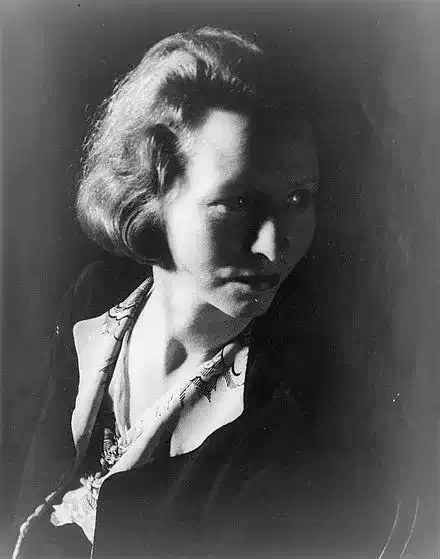
Edna St. Vincent Millay
Humoresque
"Heaven bless the babe!" they said.
"What queer books she must have read!"
(Love, by whom I was beguiled,
Grant I may not bear a child.)
"Little does she guess to-day
What the world may be!" they say.
(Snow, drift deep and cover
Till the spring my murdered lover.)
"What queer books she must have read!"
(Love, by whom I was beguiled,
Grant I may not bear a child.)
"Little does she guess to-day
What the world may be!" they say.
(Snow, drift deep and cover
Till the spring my murdered lover.)
363
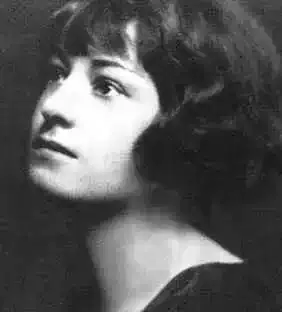
Dorothy Parker
The Trifler
Death's the lover that I'd be taking;
Wild and fickle and fierce is he.
Small's his care if my heart be breaking-
Gay young Death would have none of me.
Hear them clack of my haste to greet him!
No one other my mouth had kissed.
I had dressed me in silk to meet him-
False young Death would not hold the tryst.
Slow's the blood that was quick and stormy,
Smooth and cold is the bridal bed;
I must wait till he whistles for me-
Proud young Death would not turn his head.
I must wait till my breast is wilted.
I must wait till my back is bowed,
I must rock in the corner, jilted-
Death went galloping down the road.
Gone's my heart with a trifling rover.
Fine he was in the game he played-
Kissed, and promised, and threw me over,
And rode away with a prettier maid.
360

Ella Wheeler Wilcox
Two Sunsets
In the fair morning of his life,
When his pure heart lay in his breast,
Panting, with all that wild unrest
To plunge into the great world's strife
That fills young hearts with mad desire,
He saw a sunset. Red and gold
The burning billows surged and rolled,
And upward tossed their caps of fire.
He looked. And as he looked the sight
Sent from his soul through breast and brain
Such intense joy, it hurt like pain.
His heart seemed bursting with delight.
So near the Unknown seemed, so close
He might have grasped it with his hand.
He felt his inmost soul expand,
As sunlight will expand a rose.
One day he heard a singing strain--
A human voice, in bird-like trills.
He paused, and little rapture-rills
Went trickling downward through each vein.
And in his heart the whole day long,
As in a temple veiled and dim,
He kept and bore about with him
The beauty of that singer's song.
And then? But why relate what then?
His smoldering heart flamed into fire--
He had his one supreme desire,
And plunged into the world of men.
For years queen Folly held her sway.
With pleasures of the grosser kind
She fed his flesh and drugged his mind,
Till, shamed, he sated turned away.
He sought his boyhood's home. That hour
Triumphant should have been, in sooth,
Since he went forth an unknown youth,
And came back crowned with wealth and power.
The clouds made day a gorgeous bed;
He saw the splendor of the sky
With unmoved heart and stolid eye;
He knew only West was red.
Then suddenly a fresh young voice
Rose, bird-like, from some hidden place,
He did not even turn his face;
It struck him simply as a noise.
He trod the old paths up and down.
Their ruch-hued leaves by Fall winds whirled--
How dull they were--how dull the world--
Dull even in the pulsing town.
O! worst of punishments, that brings
A blunting of all finer sense,
A loss of feelings keen, intense,
And dulls us to the higher things.
O! penalty most dire, most sure,
Swift following after gross delights,
That we no more see beauteous sights,
Or hear as hear the good and pure.
O! shape more hideous and more dread
Than Vengeance takes in creed-taught minds,
This certain doom that blunts and blinds,
And strikes the holiest feelings dead.
359
Dorothy Parker
Nocturne
Always I knew that it could not last
(Gathering clouds, and the snowflakes flying),
Now it is part of the golden past
(Darkening skies, and the night-wind sighing);
It is but cowardice to pretend.
Cover with ashes our love's cold crater-
Always I've known that it had to end
Sooner or later.
Always I knew it would come like this
(Pattering rain, and the grasses springing),
Sweeter to you is a new love's kiss
(Flickering sunshine, and young birds singing).
Gone are the raptures that once we knew,
Now you are finding a new joy greater-
Well, I'll be doing the same thing, too,
Sooner or later.
361
Dorothy Parker
Sonnet For The End Of A Sequence
So take my vows and scatter them to sea;
Who swears the sweetest is no more than human.
And say no kinder words than these of me:
"Ever she longed for peace, but was a woman!
And thus they are, whose silly female dust
Needs little enough to clutter it and bind it,
Who meet a slanted gaze, and ever must
Go build themselves a soul to dwell behind it."
For now I am my own again, my friend!
This scar but points the whiteness of my breast;
This frenzy, like its betters, spins an end,
And now I am my own. And that is best.
Therefore, I am immeasurably grateful
To you, for proving shallow, false, and hateful.
360
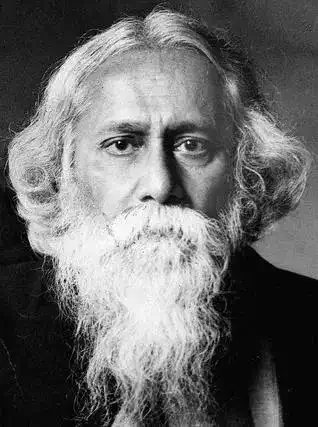
Rabindranath Tagore
Lover's Gifts XLIII: Dying, You Have Left Behind
Dying, you have left behind you the great sadness of the Eternal
in my life. You have painted my thought's horizon with the sunset
colours of your departure, leaving a track of tears across the
earth to love's heaven. Clasped in your dear arms, life and death
united in me in a marriage bond.
I think I can see you watching there in the balcony with your
lamp lighted, where the end and the beginning of all things meet.
My world went hence through the doors that you opened-you holding
the cup of death to my lips, filling it with life from your own.
361
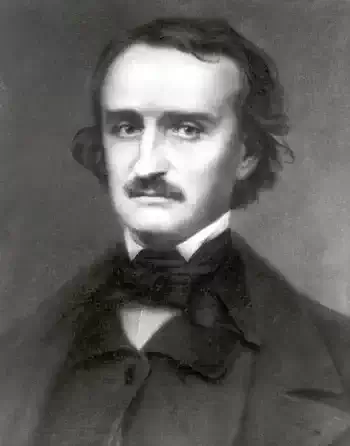
Edgar Allan Poe
Bridal Ballad
The ring is on my hand,
And the wreath is on my brow;
Satin and jewels grand
Are all at my command,
And I am happy now.
And my lord he loves me well;
But, when first he breathed his vow,
I felt my bosom swell
For
the words rang as a knell,
And the voice seemed his who fell
In the battle down the dell,
And who is happy now.
But he spoke to re-assure me,
And he kissed my pallid brow,
While a reverie came o'er me,
And to the church-yard bore me,
And I sighed to him before me,
Thinking him dead D'Elormie,
"Oh, I am happy now!"
And thus the words were spoken,
And this the plighted vow,
And, though my faith be broken,
And, though my heart be broken,
Here is a ring, as token
That I am happy now!
Would God I could awaken!
For I dream I know not how!
And my soul is sorely shaken
Lest an evil step be taken,
Lest the dead who is forsaken
May not be happy now.
356

Henry Lawson
The Lily of St Leonards
’TIS sunrise over Watson,
Where I sailed out to sea,
On that wild run to London
That wrecked and ruined me.
The beauty of the morning
On bluff and point and bay,
But the Lily of St Leonards
Was fairer than the day.
O Lily of St Leonards!
And I was mad to roam—
She died with loving words for me
Three days ere I came home.
As fair as lily whiteness,
As pure as lily gold,
And bright with childlike brightness
And wise as worlds of old.
Her heart for all was beating
And all hearts were her own—
Like sunshine through the Lily
Her purity was shown.
O Lily of St Leonards!
My night is on the track,
’Tis well you never lived to see
The wreck that I came back.
A leaden sky shuts over
A sobbing leaden sea,
For the Lily of St Leonards
Is never more for me.
I seek the wharf of Outward
Where the deck no longer thrills
Where she stood with great tears starting
Like the lights on dark wet hills.
The world was all before me
The laurels on my brow—
’Twas the world-star of the rovers,
’Tis the Star of Exile now.
356
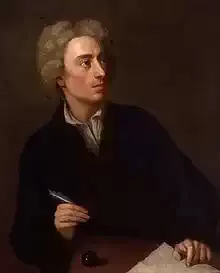
Alexander Pope
Sappho to Phaon (Ovid Heroid XV)
Say, lovely youth, that dost my heart command,
Can Phaon's eyes forget his Sappho's hand?
Must then her name the wretched writer prove,
To thy remembrance lost, as to thy love?
Ask not the cause that I new numbers choose,
The Lute neglected, and the Lyric muse;
Love taught my tears in adder notes to flow,
And tun'd my heart to Elegies of woe,
I burn, I burn, as when thro' ripen'd corn
By driving winds the spreading flames are borne!
Phaon to Aetna's scorching fields retires,
While I consume with more than Aetna's fires!
No more my soul a charm in music finds,
Music has charms alone for peaceful minds.
Soft scenes of solitude no more can please,
Love enters there, and I'm my own disease.
No more the Lesbian dames my passion move,
Once the dear objects of my guilty love;
All other loves are lost in only thine,
Ah youth ungrateful to a flame like mine!
Whom would not all those blooming charms surprize,
Those heav'nly looks, and dear deluding eyes?
The harp and bow would you like Phoebus bear,
A brighter Phoebus Phaon might appear;
Would you with ivy wreath your flowing hair,
Not Bacchus' self with Phaon could compare:
Yet Phoebus lov'd, and Bacchus felt the flame,
One Daphne warm'd, and one the Cretan dame,
Nymphs that in verse no more could rival me,
That ev'n those Gods contend in charms with thee.
The Muses teach me all their softest lays,
And the wide world resounds with Sappho's praise.
Tho' great Alcaeus more sublimely sings,
And strikes with bolder rage the sounding strings,
No less renown attends the moving lyre,
Which Venus tunes, and all her loves inspire;
To me what nature has in charms deny'd,
Is well by wit's more lasting flames supply'd.
Tho' short my stature, yet my name extends
To heav'n itself, and earth's remotest ends.
Brown as I am, an Ethiopian dame
Inspir'd young Perseus with a gen'rous flame;
Turtles and doves of diff'ring hues unite,
And glossy jet is pair'd with shining white.
If to no charms thou wilt thy heart resign,
But such as merit, such as equal thine,
By none, alas! by none thou canst be mov'd,
Phaon alone by Phaon must be lov'd!
Yet once thy Sappho could thy cares employ,
Once in her arms you center'd all your joy:
No time the dear remembrance can remove,
For oh! how vast a memory has love!
My music, then, you could for ever hear,
And all my words were music to your ear;
You stopp'd with kisses my enchanting tongue,
And found my kisses sweeter than my song.
In all I pleas'd, but most in what was best;
And the last joy was dearer than the rest.
Then with each word, each glance, each motion fir'd,
You still enjoy'd, and yet you still desir'd,
'Till all dissolving in the trance we lay,
And in tumultuous raptures died away.
The fair Sicilians now thy soul inflame;
Why was I born, ye Gods, a Lesbian dame?
But ah beware, Sicilian nymphs! nor boast
That wand'ring heart which I so lately lost;
Nor be with all those tempting words abus'd,
Those tempting words were all to Sappho us'd.
And you that rule Sicilia's happy plains,
Have pity, Venus, on your Poet's pains!
Shall fortune still in one sad tenor run,
And still increase the woes so soon begun?
Inur'd to sorrow from my tender years,
My parent's ashes drank my early tears:
My brother next, neglecting wealth and fame,
Ignobly burn'd in a destructive flame:
An infant daughter late my griefs increas'd,
And all a mother's cares distract my breast.
Alas, what more could fate itself impose,
But thee, the last and greatest of my woes?
No more my robes in waving purple flow,
Nor on my hand the sparkling di'monds glow;
No more my locks in ringlets curl'd diffuse
The costly sweetness of Arabian dews,
Nor braids of gold the varied tresses bind,
That fly disorder'd with the wanton wind,
For whom should Sappho use such arts as these?
He's gone, whom only she desir'd to please!
Cupid's light darts my tender bosom move,
Still is there cause for Sappho still to love:
So from my birth the Sisters fix'd my doom,
And gave to Venus all my life to come;
Or while my Muse in melting notes complains,
My yielding heart keeps measure to my strains.
By charms like thine which all my soul have won,
Who might not - ah! who would not be undone?
For those Aurora Cephalus might scorn,
And with fresh blushes paint the conscious morn.
For those might Cynthia lengthen Phaon's sleep,
And bit Endymion nightly tend his sheep.
Venus for those had rapt thee to the skies,
But Mars on thee might look with Venus' eyes.
O scarce a youth, yet scarce a tender boy!
O useful time for lovers to employ!
Pride of thy age, and glory of thy race,
Come to these arms, and melt in this embrace!
The vows you never will return, receive;
And take at least the love you will not give.
See, while I write, my words are lost in tears;
The less my sense, the more my love appears.
Sure 'twas not much to bid one kind adieu,
(At least to feign was never hard to you)
Farewell, my Lesbian love, you might have said,
Or coldly thus, Farewell, oh Lesbian maid!
No tear did you, no parting kiss receive,
Nor knew I then how much I was to grieve.
No lover's gift your Sappho could confer,
And wrongs and woes were all you left with her.
No charge I gave you, and no charge could give,
But this, Be mindful of our loves, and live.
Now by the Nine, those pow'rs ador'd by me,
And Love, the God that ever waits on thee,
When first I heard (from whom I hardly knew)
That you were fled, and all my joys with you,
Like some sad statue, speechless, pale I stood,
Grief chill'd my breast, and stopp'd my freezing blood;
No sigh to rise, no tear had powr to flow,
Fix'd in a stupid lethargy of woe:
But when its way th' impetuous passion found,
I rend my tresses, and my breast I wound,
I rave, then weep, I curse, and then complain,
Now swell to rage, no melt in tears again.
Not fiercer pangs distract the mournful dame,
Whose first-born infant feeds the fun'ral flame.
My scornful brother with a smile appears,
Insults my woes, and triumphs in my tears;
His hated image ever haunts my eyes,
And why this grief? thy daughter lives, he cries.
Stung with my Love, and furious with despair,
All torn my garments, and my bosom bare,
My woes, thy crimes, I to the world proclaim;
Such inconsistent things are love and shame!
'Tis thou art all my care and my delight,
My daily longing, and my dream by night:
Oh night more pleasing than the brightest day,
When fancy gives what absence takes away,
And, dress'd in all its visionary charms,
Restores my fair deserter to my arms!
Then round your neck in wanton wreaths I twine,
Then you, methinks, as fondly circle mine:
A thousand tender words I hear and speak;
A thousand melting kisses give, and take:
Then fiercer joys, I blush to mention these,
Yet while I blush, confess how much they please.
But when, with day, the sweet delusions fly,
And all things wake to life and joy, but I,
As if once more forsaken, I complain,
And close my eyes to dream of you again;
Then frantic rise, and like some Fury rove
Thro' lonely plains, and thro' the silent grove,
As if the silent grove, and lonely plains,
That knew my pleasures, could relieve my pains.
I view the Grotto, once the scene of love,
The rocks around, the hanging roofs above,
That charm'd me more, with native moss o'ergrown,
Than Phyrgian marble, or the Parian stone.
I find the shades that veil'd our joys before;
But, Phaon gone, those shades delight no more.
Here the press'd herbs with bending tops betray
Where oft entwin'd in am'rous folds we lay;
I kiss that earth which once was press'd by you,
And all with tears the with'ring herbs bedew.
For thee the fading trees appear to mourn,
And birds defer their songs till thy return;
Night shades the grove,s and all in silence lie,
All but the mournful Philomel and I:
With mournful Philomel I join my strain,
Of Tereus she, of Phaeon I complain.
A spring there is, whose silver waters show,
Clear as a glass, the shining sands below:
A flow'ry Lotos spreads its arms above,
Shades all the banks, and seems itself a grove;
Eternal greens the mossy margin grace,
Watch'd by the sylvan Genius of the place.
Here as I lay, and swell'd with tears the flood,
Before my sight a wat'ry Virgin stood:
She stood and cry'd, 'O you that love in vain!
'Fly hence, and seek the fair Leucadian main;
'There stands a rock, from whose impending steep
'Apollo's fane surveys the rolling deep;
'There injur'd lovers, leaping from above,
'Their flames extinguish, and forget to love.
'Deucalion once, with hopeless fury burn'd,
'In vain he lov'd, relentless Pyrrha scorn'd;
'But when from hence he plung'd into the main,
'Deucalion scorn'd, and Pyrrha lov'd in vain.
Haste, Sappho, haste, from high Leucadia throw
'Thy wretched weight, nor dread the deeps below!'
She spoke, and vanish'd with the voice - I rise,
And silent tears fall trickling from my eyes.
I go, ye Nymphs! those rocks and seas to prove;
How much I fear, but ah, how much I love!
I go, ye Nymphs! where furious love inspires;
Let female fears submit to female fires.
To rocks and seas I fly from Phaon's hate,
And hope from seas and rocks a milder fate.
Ye gentle gales, beneath my body blow,
And softly lay me on the waves below!
And thou, kind Love, my sinking limbs sustain,
Spread thy soft wings, and waft me o'er the main,
Nor let a Lover's death the guiltless flood profane!
On Phoebus' shrine my harp I'll then bestow,
And this Inscription shall be plac'd below.
'Here she who sung, to him that did inspire,
'Sappho to Phoebus consecrates her Lyre;
'What suits with Sappho, Phoebus, suits with thee;
The Gift, the giver, and the God agree.'
But why, alas, relentless youth, ah why
To distant seas must tender Sappho fly?
Thy charms than those may far more pow'rful be,
And Phoebus' self is less a God to me.
Ah! canst thou doom me to the rocks and sea,
O far more faithless and more hard than they?
Ah! canst thou rather see this tender breast
Dash'd on these rocks than to thy bosom prest?
This breast which once, in vain! you lik'd so well;
Where Loves play'd, and where the Muses dwell.
Alas! the Muses now no more inspire,
Untun'd my lute, and silent is my lyre,
My languid numbers have forgot to flow,
And fancy sinks beneath a weight of woe.
Ye Lesbian virgins, and ye Lesbian dames,
Themes of my verse, and objects of my flames,
No more your groves with my glad songs shall ring,
No more these hands shall touch the trembling string:
My Phaon's fled, and I those arts resign
(Wretch that I am, to call that Phaon mine!)
Return, fair youth, return, and bring along
Joy to my soul, and vigour to my song:
Absent from thee, the Poet's flame expires;
But ah! how fiercely burn the Lover's fires!
Gods! can no pray'rs, no sighs, no numbers move
One savage heart, or teach it how to love?
The winds my pray'rs, my sighs, my numbers bear,
The flying winds have lost them all in air!
Oh when, alas! shall more auspicious gales
To these fond eyes restore thy welcome sails?
If you return - ah why these long delays?
Poor Sappho dies while careless Phaon stays.
O launch thy bark, secure of prosp'rous gales;
Cupid for thee shall spread the swelling gales;
I you will fly - (yet ah! what cause can be,
Too cruel youth, that you should fly from me?)
If not from Phaon I must hope for ease,
Ah let me seek it from the raging seas:
To raging seas unpity'd I'll remove,
And either cease to live or cease to love!
355
Edna St. Vincent Millay
And do you think that love itself
And do you think that love itself,
Living in such an ugly house,
Can prosper long?
We meet and part;
Our talk is all of heres and nows,
Our conduct likewise; in no act
Is any future, any past;
Under our sly, unspoken pact,
I KNOW with whom I saw you last,
But I say nothing; and you know
At six-fifteen to whom I go—
Can even love be treated so?
I KNOW, but I do not insist,
Having stealth and tact, thought not enough,
What hour your eye is on your wrist.
No wild appeal, no mild rebuff
Deflates the hour, leaves the wine flat—
Yet if YOU drop the picked-up book
To intercept my clockward look—
Tell me, can love go on like that?
Even the bored, insulted heart,
That signed so long and tight a lease,
Can BREAK it CONTRACT, slump in peace.
353

Christina Rossetti
Dead Before Death
Ah! changed and cold, how changed and very cold,
With stiffened smiling lips and cold calm eyes:
Changed, yet the same; much knowing, little wise;
This was the promise of the days of old!
Grown hard and stubborn in the ancient mould,
Grown rigid in the sham of lifelong lies:
We hoped for better things as years would rise,
But it is over as a tale once told.
All fallen the blossom that no fruitage bore,
All lost the present and the future time,
All lost, all lost, the lapse that went before:
So lost till death shut-to the opened door,
So lost from chime to everlasting chime,
So cold and lost for ever evermore.
352
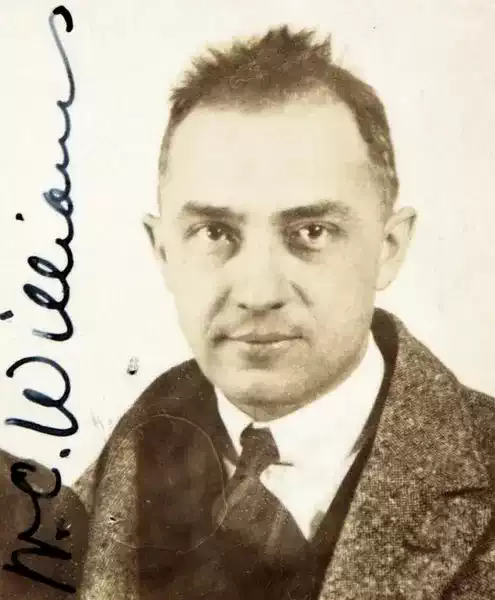
William Carlos Williams
Memory of April
You say love is this, love is that:
Poplar tassels, willow tendrils
the wind and the rain comb,
tinkle and drip, tinkle and drip--
branches drifting apart. Hagh!
Love has not even visited this country.
Poplar tassels, willow tendrils
the wind and the rain comb,
tinkle and drip, tinkle and drip--
branches drifting apart. Hagh!
Love has not even visited this country.
350
Dorothy Parker
Surprise
My heart went fluttering with fear
Lest you should go, and leave me here
To beat my breast and rock my head
And stretch me sleepless on my bed.
Ah, clear they see and true they say
That one shall weep, and one shall stray
For such is Love's unvarying law....
I never thought, I never saw
That I should be the first to go;
How pleasant that it happened so!
347

Johann Wolfgang von Goethe
By The River
FLOW on, ye lays so loved, so fair,
On to Oblivion's ocean flow!
May no rapt boy recall you e'er,
No maiden in her beauty's glow!
My love alone was then your theme,
But now she scorns my passion true.
Ye were but written in the stream;
As it flows on, then, flow ye too!
On to Oblivion's ocean flow!
May no rapt boy recall you e'er,
No maiden in her beauty's glow!
My love alone was then your theme,
But now she scorns my passion true.
Ye were but written in the stream;
As it flows on, then, flow ye too!
345

William Shakespeare
Sonnet 89: Say that thou didst forsake me for some fault
Say that thou didst forsake me for some fault,
And I will comment upon that offence;
Speak of my lameness, and I straight will halt,
Against thy reasons making no defence.
Thou canst not, love, disgrace me half so ill,
To set a form upon desired change,
As I'll myself disgrace: knowing thy will,
I will acquaintance strangle and look strange,
Be absent from thy walks, and in my tongue
Thy sweet beloved name no more shall dwell,
Lest I, too much profane, should do it wrong
And haply of our old acquaintance tell.
For thee against myself I'll vow debate,
For I must ne'er love him whom thou dost hate.
345

Emily Dickinson
It bloomed and dropt, a Single Noon
It bloomed and dropt, a Single Noon-
The Flower-distinct and Red-
I, passing, thought another Noon
Another in its stead
Will equal glow, and thought no More
But came another Day
To find the Species disappeared-
The Same Locality-
The Sun in place-no other fraud
On Nature's perfect Sum-
Had I but lingered Yesterday-
Was my retrieveless blame-
Much Flowers of this and further Zones
Have perished in my Hands
For seeking its Resemblance-
But unapproached it stands-
The single Flower of the Earth
That I, in passing by
Unconscious was-Great Nature's Face
Passed infinite by Me-
341

Robert Louis Stevenson
I Am Like One That For Long Days Had Sate
I AM like one that for long days had sate,
With seaward eyes set keen against the gale,
On some lone foreland, watching sail by sail,
The portbound ships for one ship that was late;
And sail by sail, his heart burned up with joy,
And cruelly was quenched, until at last
One ship, the looked-for pennant at its mast,
Bore gaily, and dropt safely past the buoy;
And lo! the loved one was not there - was dead.
Then would he watch no more; no more the sea
With myriad vessels, sail by sail, perplex
His eyes and mock his longing. Weary head,
Take now thy rest; eyes, close; for no more me
Shall hopes untried elate, or ruined vex.
For thus on love I waited; thus for love
Strained all my senses eagerly and long;
Thus for her coming ever trimmed my song;
Till in the far skies coloured as a dove,
A bird gold-coloured flickered far and fled
Over the pathless waterwaste for me;
And with spread hands I watched the bright bird flee
And waited, till before me she dropped dead.
O golden bird in these dove-coloured skies
How long I sought, how long with wearied eyes
I sought, O bird, the promise of thy flight!
And now the morn has dawned, the morn has died,
The day has come and gone; and once more night
About my lone life settles, wild and wide.
343
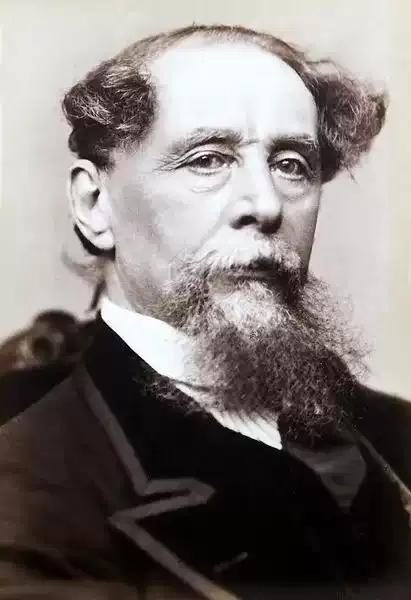
Charles Dickens
George Edmunds' Song
Autumn leaves, autumn leaves, lie strewn around he here;
Autumn leaves, autumn leaves, how sad, how cold, how drear!
How like the hopes of childhood's day,
Thick clust'ring on the bough!
How like those hopes in their decay-
How faded are they now!
Autumn leaves, autumn leaves, lie strewn around me here;
Autumn leaves, autumn leaves, how sad, how cold, how drear!
Wither'd leaves, wither'd leaves, that fly before the gale:
Withered leaves, withered leaves, ye tell a mournful tale,
Of love once true, and friends once kind,
And happy moments fled:
Dispersed by every breath of wind,
Forgotten, changed, or dead!
Autumn leaves, autumn leaves, lie strewn around me here!
Autumn leaves, autumn leaves, how sad, how cold, how drear!
Autumn leaves, autumn leaves, how sad, how cold, how drear!
How like the hopes of childhood's day,
Thick clust'ring on the bough!
How like those hopes in their decay-
How faded are they now!
Autumn leaves, autumn leaves, lie strewn around me here;
Autumn leaves, autumn leaves, how sad, how cold, how drear!
Wither'd leaves, wither'd leaves, that fly before the gale:
Withered leaves, withered leaves, ye tell a mournful tale,
Of love once true, and friends once kind,
And happy moments fled:
Dispersed by every breath of wind,
Forgotten, changed, or dead!
Autumn leaves, autumn leaves, lie strewn around me here!
Autumn leaves, autumn leaves, how sad, how cold, how drear!
341
Ella Wheeler Wilcox
Queries
Well, how has it been with you since we met
That last strange time of a hundred times?
When we met to swear that we could forget—
I your caresses, and you my rhymes—
The rhyme of my lays that rang like a bell,
And the rhyme of my heart with yours, as well?
How has it been since we drank that last kiss,
That was bitter with lees of the wasted wine,
When the tattered remains of a threadbare bliss,
And the worn-out shreds of a joy divine,
With a year's best dreams and hopes, were cast
Into the rag-bag of the Past?
Since Time, the rag-buyer, hurried away,
With a chuckle of glee at a bargain made,
Did you discover, like me, one day,
That, hid in the folds of those garments frayed,
Were priceless jewels and diadems—
The soul's best treasures, the heart's best gems?
Have you, too, found that you could not supply
The place of those jewels so rare and chaste?
Do all that you borrow or beg or buy
Prove to be nothing but skilful paste?
Have you found pleasure, as I found art,
Not all-sufficient to fill your heart?
Do you sometimes sigh for the tattered shreds
Of the old delight that we cast away,
And find no worth in the silken threads
Of newer fabrics we wear to-day?
Have you thought the bitter of that last kiss
Better than sweets of a later bliss?
What idle queries!—or yes or no—
Whatever your answer, I understand
That there is no pathway by which we can go
Back to the dead past's wonderland;
And the gems he purchased from me, from you,
There is no rebuying from Time, the Jew
342
Dorothy Parker
Godspeed
Oh, seek, my love, your newer way;
I'll not be left in sorrow.
So long as I have yesterday,
Go take your damned tomorrow!
I'll not be left in sorrow.
So long as I have yesterday,
Go take your damned tomorrow!
339
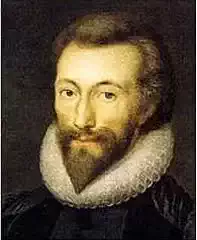
John Donne
The Broken Heart
He is stark mad, who ever says,
That he hath been in love an hour,
Yet not that love so soon decays,
But that it can ten in less space devour;
Who will believe me, if I swear
That I have had the plague a year ?
Who would not laugh at me, if I should say,
I saw a flask of powder burn a day ?
Ah, what trifle is a heart,
If once into Love’s hands it come!
All other griefs allow a part
To other griefs, and ask themselves but some,
They come to us, but us Love draws,
He swallows us, and never chaws:
By him, as by chain-shot, whole ranks do die,
He is the tyrant pike, our hearts the fry.
If`twere not so, what did become
Of my heart, when I first saw thee ?
I brought a heart into the room,
But from the room, I carried non with me;
If it had gone to thee, I know
Mine would have taught thy heart to show
More pity unto me: but Love, alas,
At one first blow did shiver it as glass.
Yet nothing can to nothing fall,
Nor any place be empty quite,
Therefore I think my breast hath all
Those pieces still, though they be not unite;
And now as broken glasses show
A hundred lesser faces, so
My rags of heart can like, wish, and adore,
But after one such love, can love no more.
339
Emily Dickinson
It dropped so low in my regard
It dropped so low in my regard
I heard it hit the ground,
And go to pieces on the stones
At bottom of my mind;
Yet blamed the fate that fractured, less
Than I reviled myself
For entertaining plated wares
Upon my silver shelf.
I heard it hit the ground,
And go to pieces on the stones
At bottom of my mind;
Yet blamed the fate that fractured, less
Than I reviled myself
For entertaining plated wares
Upon my silver shelf.
335
Dorothy Parker
Second Love
"So surely is she mine," you say, and turn
Your quick and steady mind to harder things-
To bills and bonds and talk of what men earn-
And whistle up the stair, of evenings.
And do you see a dream behind my eyes,
Or ask a simple question twice of me"
Thus women are," you say; for men are wise
And tolerant, in their security.
How shall I count the midnights I have known
When calm you turn to me, nor feel me start,
To find my easy lips upon your own
And know my breast beneath your rhythmic heart.
Your god defer the day I tell you this:
My lad, my lad, it is not you I kiss!
337
Johann Wolfgang von Goethe
Happiness And Vision
TOGETHER at the altar we
In vision oft were seen by thee,
Thyself as bride, as bridegroom I.
Oft from thy mouth full many a kiss
In an unguarded hour of bliss
I then would steal, while none were by.
The purest rapture we then knew,
The joy those happy hours gave too,
When tasted, fled, as time fleets on.
What now avails my joy to me?
Like dreams the warmest kisses flee,
Like kisses, soon all joys are gone.
334