
Hope and Optimism

Robert W. Service
Compensation Pete
He used to say: There ain't a doubt
Misfortune is a bitter pill,
But if you only pry it out
You'll find there's good in every ill.
There's comfort in the worst of woe,
There's consolation in defeat . . .
Oh what a solace-seeker! So
We called him Compensation Pete.
He lost his wealth - but was he pipped?
Why no - "That's fine," he used to say.
"I've got the government plumb gypped -
No more damn income tax to pay.
From cares of property set free,
And with no pesky social ties,
Why, even poverty may be
A benediction in disguise."
He lost his health: "Okay," he said;
"I'm getting on, may be the best.
I've always loved to lie abed,
And now I have the right to rest.
Such heaps o' things I want to do,
I'll have no time to fret or brood.
I'll read the dam ol' Bible through:
Guess it'll do me plenty good."
He has that line of sunny shine
That makes a blessing of a curse,
And he would say: "Don't let's repine,
Though things are bad they might be worse."
And so he cherished to the end
Philosophy so sane and sweet
That everybody was his friend . . .
With optimism hard to beat -
God bless old Compensation Pete.
206

John Greenleaf Whittier
The River Path
No bird-song floated down the hill,
The tangled bank below was still;
No rustle from the birchen stem,
No ripple from the water's hem.
The dusk of twilight round us grew,
We felt the falling of the dew;
For, from us, ere the day was done,
The wooded hills shut out the sun.
But on the river's farther side
We saw the hill-tops glorified,-
A tender glow, exceeding fair,
A dream of day without its glare.
With us the damp, the chill, the gloom
With them the sunset's rosy bloom;
While dark, through willowy vistas seen,
The river rolled in shade between.
From out the darkness where we trod,
We gazed upon those bills of God,
Whose light seemed not of moon or sun.
We spake not, but our thought was one.
We paused, as if from that bright shore
Beckoned our dear ones gone before;
And stilled our beating hearts to hear
The voices lost to mortal ear!
Sudden our pathway turned from night;
The hills swung open to the light;
Through their green gates the sunshine showed,
A long, slant splendor downward flowed.
Down glade and glen and bank it rolled;
It bridged the shaded stream with gold;
And, borne on piers of mist, allied
The shadowy with the sunlit side!
'So,' prayed we, 'when our feet draw near
The river dark, with mortal fear,
'And the night cometh chill with dew,
O Father! let Thy light break through!
'So let the hills of doubt divide,
So bridge with faith the sunless tide!
'So let the eyes that fail on earth
On Thy eternal hills look forth;
'And in Thy beckoning angels know
The dear ones whom we loved below!'
203
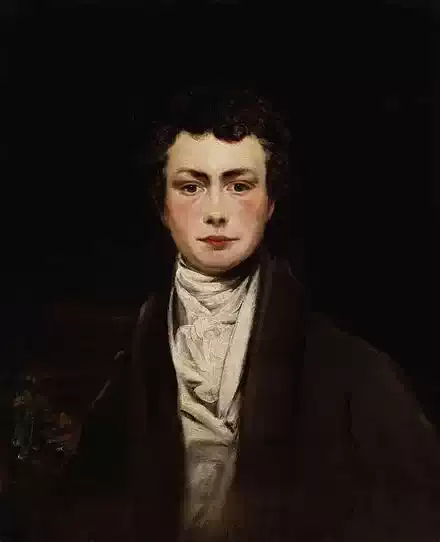
Thomas Moore
Sail On, Sail On
Sail on, sail on, thou fearless bark --
Where'er blows the welcome wind,
It cannot lead to scenes more dark,
More sad than those we leave behind.
Each wave that passes seems to say,
"Though death beneath our smile may be,
Less cold we are, less false than they,
Whose smiling wreck'd thy hopes and thee."
Sail on, sail on -- through endless space --
Through calm -- through tempest -- stop no more:
The stormiest sea's a resting-place
To him who leaves such hearts on shore.
Or -- if some desert land we meet,
Where never yet false-hearted men
Profaned a world, that else were sweet --
Then rest thee, bark, but not till then.
202

Emily Dickinson
Undue Significance a starving man attaches
Undue Significance a starving man attaches
To Food-
Far off-He sighs-and therefore-Hopeless-
And therefore-Good
Partaken-it relieves-indeed-
But proves us
That Spices fly
In the Receipt-It was the Distance-
Was Savory-
To Food-
Far off-He sighs-and therefore-Hopeless-
And therefore-Good
Partaken-it relieves-indeed-
But proves us
That Spices fly
In the Receipt-It was the Distance-
Was Savory-
204

Christina Rossetti
Marvel of Marvels
MARVEL of marvels, if I myself shall behold
With mine own eyes my King in His city of gold;
Where the least of lambs is spotless white in the fold,
Where the least and last of saints in spotless white is stoled,
Where the dimmest head beyond a moon is aureoled.
O saints, my beloved, now mouldering to mould in the mould,
Shall I see you lift your heads, see your cerements unroll'd,
See with these very eyes? who now in darkness and cold
Tremble for the midnight cry, the rapture, the tale untold,--
The Bridegroom cometh, cometh, His Bride to enfold!
Cold it is, my beloved, since your funeral bell was toll'd:
Cold it is, O my King, how cold alone on the wold!
195
Thomas Moore
Erin, Oh Erin
Like the bright lamp, that shone in Kildare's holy fane,
And burn'd through long ages of darkness and storm,
Is the heart that sorrows have frown'd on in vain,
Whose spirit outlives them, unfading and warm.
Erin, oh Erin, thus bright through the tears
Of a long night of bondage, thy spirit appears.
The nations have fallen, and thou still art young,
Thy sun is but rising, when others are set;
And though slavery's cloud o'er thy morning hath hung,
The full noon of freedom shall beam round thee yet.
Erin, oh Erin, though long in the shade,
Thy star will shine out when the proudest shall fade.
Unchill'd by the rain, and unwaked by the wind,
The lily lies sleeping through winter's cold hour,
Till Spring's light touch her fetters unbind,
And daylight and liberty bless the young flower.
Thus Erin, oh Erin, thy winter is past,
And the hope that lived through it shall blossom at last.
190
Christina Rossetti
Hope Is Like A Harebell Trembling From Its Birth
Hope is like a harebell trembling from its birth,
Love is like a rose the joy of all the earth;
Faith is like a lily lifted high and white,
Love is like a lovely rose the world's delight;
Harebells and sweet lilies show a thornless growth,
But the rose with all its thorns excels them both.
Love is like a rose the joy of all the earth;
Faith is like a lily lifted high and white,
Love is like a lovely rose the world's delight;
Harebells and sweet lilies show a thornless growth,
But the rose with all its thorns excels them both.
187
Robert W. Service
Café Comedy
She
I'm waiting for the man I hope to wed.
I've never seen him - that's the funny part.
I promised I would wear a rose of red,
Pinned on my coat above my fluttered heart,
So that he'd know me - a precaution wise,
Because I wrote him I was twenty-three,
And Oh such heaps and heaps of silly lies. . .
So when we meet what will he think of me?
It's funny, but it has its sorry side;
I put an advert. in the evening Press:
"A lonely maiden fain would be a bride."
Oh it was shameless of me, I confess.
But I am thirty-nine and in despair,
Wanting a home and children ere too late,
And I forget I'm no more young and fair I'll
hide my rose and run...No, no, I'll wait.
An hour has passed and I am waiting still.
I ought to feel relieved, but I'm so sad.
I would have liked to see him, just to thrill,
And sigh and say: "There goes my lovely lad!
My one romance!" Ah, Life's malign mishap!
"Garcon, a cafè creme." I'll stay till nine. . .
The cafè's empty, just an oldish chap
Who's sitting at the table next to mine. . .
He
I'm waiting for the girl I mean to wed.
She was to come at eight and now it's nine.
She'd pin upon her coat a rose of red,
And I would wear a marguerite in mine.
No sign of her I see...It's true my eyes
Need stronger glasses than the ones I wear,
But Oh I feel my heart would recognize
Her face without the rose - she is so fair.
Ah! what deceivers are we aging men!
What vanity keeps youthful hope aglow!
Poor girl! I sent a photo taken when
I was a student, twenty years ago.
(Hers is so Springlike, Oh so blossom sweet!)
How she will shudder when she sees me now!
I think I'd better hide that marguerite -
How can I age and ugliness avow?
She does not come. It's after nine o'clock.
What fools we fogeys are! I'll try to laugh;
(Garcon, you might bring me another bock)
Falling in love, just from a photograph.
Well, that's the end. I'll go home and forget,
Then realizing I am over ripe
I'll throw away this silly cigarette
And philosophically light my pipe.
* * * * *
The waiter brought the coffee and the beer,
And there they sat, so woe-begone a pair,
And seemed to think: "Why do we linger here?"
When suddenly they turned, to start and stare.
She spied a marguerite, he glimpsed a rose;
Their eyes were joined and in a flash they knew. . .
The sleepy waiter saw, when time to close,
The sweet romance of those deceiving two,
Whose lips were joined, their hearts, their future too.
180
Christina Rossetti
Christian And Jew
A Dialogue
'Oh happy happy land!
Angels like rushes stand
About the wells of light.'—
'Alas, I have not eyes for this fair sight:
Hold fast my hand.'—
'As in a soft wind, they
Bend all one blessed way,
Each bowed in his own glory, star with star.'—
'I cannot see so far,
Here shadows are.'—
'White-winged the cherubim,
Yet whiter seraphim,
Glow white with intense fire of love.'—
'Mine eyes are dim:
I look in vain above,
And miss their hymn.'—
'Angels, Archangels cry
One to other ceaselessly
(I hear them sing)
One 'Holy, Holy, Holy' to their King.'—
'I do not hear them, I.'—
'At one side Paradise
Is curtained from the rest,
Made green for wearied eyes;
Much softer than the breast
Of mother-dove clad in a rainbow's dyes.
'All precious souls are there
Most safe, elect by grace,
All tears are wiped for ever from their face:
Untired in prayer
They wait and praise
Hidden for a little space.
'Boughs of the Living Vine
They spread in summer shine
Green leaf with leaf:
Sap of the Royal Vine it stirs like wine
In all both less and chief.
'Sing to the Lord,
All spirits of all flesh, sing;
For He hath not abhorred
Our low estate nor scorn'd our offering:
Shout to our King.'—
'But Zion said:
My Lord forgetteth me.
Lo, she hath made her bed
In dust; forsaken weepeth she
Where alien rivers swell the sea.
'She laid her body as the ground,
Her tender body as the ground to those
Who passed; her harpstrings cannot sound
In a strange land; discrowned
She sits, and drunk with woes.'—
'O drunken not with wine,
Whose sins and sorrows have fulfilled the sum,—
Be not afraid, arise, be no more dumb;
Arise, shine,
For thy light is come.'—
'Can these bones live?'—
'God knows:
The prophet saw such clothed with flesh and skin;
A wind blew on them and life entered in;
They shook and rose.
Hasten the time, O Lord, blot out their sin,
Let life begin.'
184

Henry Lawson
The Stranded Ship: (The “Vincennes”)
’Twas the glowing log of a picnic fire where a red light should not be,
Or the curtained glow of a sick room light in a window that faced the sea.
But the Manly lights seemed the Sydney lights, and the bluffs as the “Heads” were
seen;
And the Manly beach was the channel then—and the captain steered between.
The croakers said with a shoulder shrug, and a careless, know-all glance:
“You might pull out her stem, or pull out her stern—but she’ll sail no more for France!”
Her stem was dry when the tide was out, and behind her banked the sand,
Where strong gales come from the Hurricane east and the sun sets on the land.
When the tide was high and the rollers struck she shuddered as if in pain,
She had no hope for the open sea and the fair full breeze again.
She turned her side to the pounding seas and the foam glared over the rails,
It seemed her fate to be sold and stripped, and broken by winter gales.
But they sent strong gear, and they sent the gangs, and they sent her a man who
knew,
And the tugs came nosing round from the Heads to see what a tug could do;
The four-ton anchors they laid to sea in the waves and the wind and rain,
And the great steel hawser they hove aboard made fast to her cable chain.
And then, while the gaping townsfolk stared from the shining beach in doubt,
The crew and the shore-gangs lowered her yards and they hove the ballast out.
(To lie like a strange sea-grave upheaved on the smooth sand by her side)
And they made all ready and clear for the tugs to come on the rising tide.
And so, in the night when the tide was in and a black sky hid the stars,
The shoremen worked at the jumping winch and the crew at the capstan bars.
To seaward the two tugs rose and fell in their own wild stormy glare
And her head came round for a fathom’s length! for a mighty heave was there.
So, tide by tide, and yard by yard, they hove her off the shore
To fit, and load for her ports of call, and to sail for France once more.
Till at last she came with the wild blind rush of a frightened thing set free,
And they towed her round to the Sydney Heads and in from the stormy sea.
And the croakers say, when a man is down, with a shrug and a know-all glance,
Oh, he’ll never get out of the gutter again, he has done with every chance;
But we’ll “haul and heave on the block and sheeve”, wave-beaten and black-rock
hemmed,
And we’ll sail with cargoes that they shall buy, when their ships are all condemned.
179
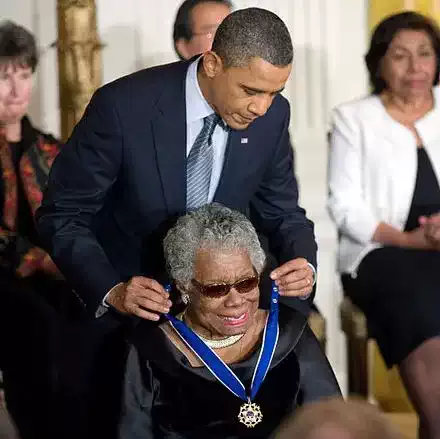
Maya Angelou
These are not the only wonders of the world
When we come to it
We, this people, on this minuscule and kithless globe
Who reach daily for the bomb, the blade and the dagger
Yet who petition in the dark for tokens of peace
We, this people on this mote of matter
In whose mouths abide cankerous words
Which challenge our very existence
Yet out of those same mouths
Come songs of such exquisite sweetness
That the heart falters in its labor
And the body is quieted into awe
We, this people, on this small and drifting planet
Whose hands can strike with such abandon
That in a twinkling, life is sapped from the living
Yet those same hands can touch with such healing, irresistible tenderness
That the haughty neck is happy to bow
And the proud back is glad to bend
Out of such chaos, of such contradiction
We learn that we are neither devils nor divines
When we come to it
We, this people, on this wayward, floating body
Created on this earth, of this earth
Have the power to fashion for this earth
A climate where every man and every woman
Can live freely without sanctimonious piety
Without crippling fear
When we come to it
We must confess that we are the possible
We are the miraculous, the true wonder of this world
That is when, and only when
We come to it.
177
Robert W. Service
The Under-Dogs
What have we done, Oh Lord, that we
Are evil starred?
How have we erred and sinned to be
So scourged and scarred?
Lash us, Oh Lord, with scorpion whips,
We can but run;
But harken to our piteous lips:
What have we done?
How have we sinned to rouse your wrath,
To earn your scorn?
Stony and steep has been our path
Since we were born.
Oh for a sign, a hope, a word,
A heaven glance;
Why is your hand against us, Lord?
Give us a chance.
What shall we do, Oh God, to gain
Your mercy seat?
Shall we live out our lives in pain
And dark defeat?
Shall we in servitude bow low
Unto the end?
How we would hope, could we but know
You are our friend!
We are the disinherited,
The doomed, the lost.
For breath with dust and ashes fed,
We pay the cost.
Dumb mouths! Yet though we bleed, with prayer
We kiss the sword;
Aye, even dying we forbear
To curse Thee, Lord.
167

Joyce Kilmer
Love's Lantern
(For Aline)
Because the road was steep and long
And through a dark and lonely land,
God set upon my lips a song
And put a lantern in my hand.
Through miles on weary miles of night
That stretch relentless in my way
My lantern burns serene and white,
An unexhausted cup of day.
O golden lights and lights like wine,
How dim your boasted splendors are.
Behold this little lamp of mine;
It is more starlike than a star!
129
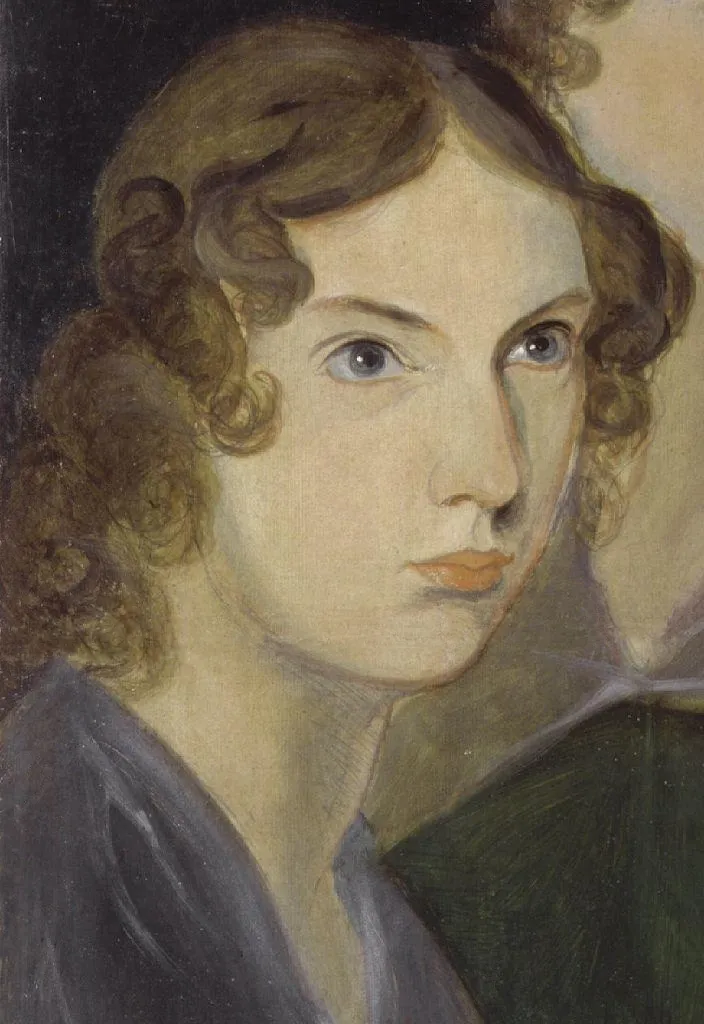
Anne Brontë
Power of Love
Love, indeed thy strength is mighty
Thus, alone, such strife to bear Three
'gainst one, and never ceasing Death,
and Madness, and Despair!
'Tis not my own strength has saved me;
Health, and hope, and fortitude,
But for love, had long since failed me;
Heart and soul had sunk subdued.
Often, in my wild impatience,
I have lost my trust in Heaven,
And my soul has tossed and struggled,
Like a vessel tempestdriven;
But the voice of my beloved
In my ear has seemed to say '
O, be patient if thou lov'st me!'
And the storm has passed away.
When outworn with weary thinking,
Sight and thought were waxing dim,
And my mind began to wander,
And my brain began to swim,
Then those hands outstretched to save me
Seemed to call me back again Those
dark eyes did so implore me
To resume my reason's reign,
That I could not but remember
How her hopes were fixed on me,
And, with one determined effort,
Rose, and shook my spirit free.
When hope leaves my weary spirit All
the power to hold it gone That
loved voice so loudly prays me,
'For my sake, keep hoping on,'
That, at once my strength renewing,
Though Despair had crushed me down,
I can burst his bonds asunder,
And defy his deadliest frown.
When, from nights of restless tossing,
Days of gloom and pining care,
Pain and weakness, still increasing,
Seem to whisper 'Death is near,'
And I almost bid him welcome,
Knowing he would bring release,
Weary of this restless struggle
Longing to repose in peace,
Then a glance of fond reproval
Bids such selfish longings flee
And a voice of matchless music
Murmurs 'Cherish life for me!'
Roused to newborn strength and courage,
Pain and grief, I cast away,
Health and life, I keenly follow,
Mighty Death is held at bay.
Yes, my love, I will be patient!
Firm and bold my heart shall be:
Fear not though
this life is dreary,
I can bear it well for thee.
Let our foes still rain upon me
Cruel wrongs and taunting scorn;
'Tis for thee their hate pursues me,
And for thee, it shall be borne!
A.E.
129

Siegfried Sassoon
Before Day
Come in this hour to set my spirit free
When earth is no more mine though night goes out,
And stretching forth these arms I cannot be
Lord of winged sunrise and dim Arcady:
When fieldward boys far off with clack and shout
From orchards scare the birds in sudden rout,
Come, ere my heart grows cold and full of doubt,
In the still summer dawns that waken me.
When the first lark goes up to look for day
And morning glimmers out of dreams, come then
Out of the songless valleys, over grey
Wide misty lands to bring me on my way:
For I am lone, a dweller among men
Hungered for what my heart shall never say.
113
Siegfried Sassoon
At Daybreak
I listen for him through the rain,
And in the dusk of starless hours
I know that he will come again;
Loth was he ever to forsake me:
He comes with glimmering of flowers
And stir of music to awake me.
Spirit of purity, he stands
As once he lived in charm and grace:
I may not hold him with my hands,
Nor bid him stay to heal my sorrow;
Only his fair, unshadowed face
Abides with me until to-morrow.
98
Siegfried Sassoon
Today
This is To-day, a child in white and blue
Running to meet me out of Night who stilled
The ghost of Yester-eve; this is fair Morn
The mother of To-morrow. And these clouds
That chase the sunshine over gleaming hills
Are thoughts, delighting in the golden change
And the ceremony of their drifting state.
This is To-day. To-morrow might bring death,—
And Life, the gleeful madrigal of birds,
Be drowned in glimmer of sleep. To-day I know
How sweet it is to spend these eyes, and boast
This bubble of vistaed memory and sense
Blown by my joy aloft the glittering airs
Of heavenly peace. Oh take me to yourselves,
Earth, sky, and spirit! Let me stand within
The circle of your transience, that my voice
May thrill the lonely silences with song.
113
Anne Brontë
A Hymn
Eternal power of earth and air,
Unseen, yet seen in all around,
Remote, but dwelling everywhere,
Though silent, heard in every sound.
If e'er thine ear in mercy bent
When wretched mortals cried to thee,
And if indeed thy Son was sent
To save lost sinners such as me.
Then hear me now, while kneeling here;
I lift to thee my heart and eye
And all my soul ascends in prayer;
O give me give
me Faith I cry.
Without some glimmering in my heart,
I could not raise this fervent prayer;
But O a stronger light impart,
And in thy mercy fix it there!
While Faith is with me I am blest;
It turns my darkest night to day;
But while I clasp it to my breast
I often feel it slide away.
Then cold and dark my spirit sinks,
To see my light of life depart,
And every fiend of Hell methinks
Enjoys the anguish of my heart.
What shall I do if all my love,
My hopes, my toil, are cast away,
And if there be no God above
To hear and bless me when I pray?
If this be vain delusion all,
If death be an eternal sleep,
And none can hear my secret call,
Or see the silent tears I weep.
O help me God! for thou alone
Canst my distracted soul relieve;
Forsake it not it
is thine own,
Though weak yet longing to believe.
O drive these cruel doubts away
And make me know that thou art God;
A Faith that shines by night and day
Will lighten every earthly load.
If I believe that Jesus died
And waking rose to reign above,
Then surely Sorrow, Sin and Pride
Must yield to peace and hope and love.
And all the blessed words he said
Will strength and holy joy impart,
A shield of safety o'er my head,
A spring of comfort in my heart.
85
Anne Brontë
The Consolation
Though bleak these woods and damp the ground
With fallen leaves so thickly strewn,
And cold the wind that wanders round
With wild and melancholy moan,
There is a friendly roof I know
Might shield me from the wintry blast;
There is a fire whose ruddy glow
Will cheer me for my wanderings past.
And so, though still where'er I roam
Cold stranger glances meet my eye,
Though when my spirit sinks in woe
Unheeded swells the unbidden sigh,
Though solitude endured too long
Bids youthful joys too soon decay,
Makes mirth a stranger to my tongue
And overclouds my noon of day,
When kindly thoughts that would have way
Flow back discouraged to my breast
I know there is, though far away
A home where heart and soul may rest.
Warm hands are there that clasped in mine
The warmer heart will not belie,
While mirth and truth and friendship shine
In smiling lip and earnest eye.
The ice that gathers round my heart
May there be thawed; and sweetly then
The joys of youth that now depart
Will come to cheer my soul again.
Though far I roam, this thought shall be
My hope, my comfort everywhere;
While such a home remains to me
My heart shall never know despair.
Hespera Caverndel
97
Anne Brontë
Farewell
Farewell to thee! but not farewell
To all my fondest thoughts of thee:
Within my heart they still shall dwell;
And they shall cheer and comfort me.
O, beautiful, and full of grace!
If thou hadst never met mine eye,
I had not dreamed a living face
Could fancied charms so far outvie.
If I may ne'er behold again
That form and face so dear to me,
Nor hear thy voice, still would I fain
Preserve, for aye, their memory.
That voice, the magic of whose tone
Can wake an echo in my breast,
Creating feelings that, alone,
Can make my tranced spirit blest.
That laughing eye, whose sunny beam
My memory would not cherish less; And
oh, that smile! whose joyous gleam
Nor mortal language can express.
Adieu, but let me cherish, still,
The hope with which I cannot part.
Contempt may wound, and coldness chill,
But still it lingers in my heart.
And who can tell but Heaven, at last,
May answer all my thousand prayers,
And bid the future pay the past
With joy for anguish, smiles for tears?
93
Anne Brontë
Song 2
Come to the banquet triumph
in your songs!
Strike up the chords and
sing of Victory!
The oppressed have risen to redress their wrongs;
The Tyrants are o'erthrown; the Land is free!
The Land is free! Aye, shout it forth once more;
Is she not red with her oppressors' gore?
We are her champions shall
we not rejoice?
Are not the tyrants' broad domains our own?
Then wherefore triumph with a faltering voice;
And talk of freedom in a doubtful tone?
Have we not longed through life the reign to see
Of Justice, linked with Glorious Liberty?
Shout you that will, and you that can rejoice
To revel in the riches of your foes.
In praise of deadly vengeance lift you voice,
Gloat o'er your tyrants' blood, you victims' woes.
I'd rather listen to the skylarks' songs,
And think on Gondal's, and my Father's wrongs.
It may be pleasant, to recall the death
Of those beneath whose sheltering roof you lie;
But I would rather press the mountain heath,
With naught to shield me from the starry sky,
And dream of yet untasted victory A
distant hope and
feel that I am free!
O happy life! To range the mountains wild,
The waving woods or
Ocean's heaving breast,
With limbs unfettered, conscience undefiled,
And choosing where to wander, where to rest!
Hunted, oppressed, but ever strong to cope With
toils, and perils ever
full of hope!
'Our flower is budding' When
that word was heard
On desert shore, or breezy mountain's brow,
Wherever said what
glorious thoughts it stirred!
'Twas budding then Say
has it blossomed now?
Is this the end we struggled to obtain?
O for the wandering Outlaw's life again!
91
Anne Brontë
Weep Not Too Much
Weep not too much, my darling;
Sigh not too oft for me;
Say not the face of Nature
Has lost its charm for thee.
I have enough of anguish
In my own breast alone;
Thou canst not ease the burden, Love,
By adding still thine own.
I know the faith and fervour
Of that true heart of thine;
But I would have it hopeful
As thou wouldst render mine.
At night, when I lie waking,
More soothing it will be
To say 'She slumbers calmly now,'
Than say 'She weeps for me.'
When through the prison grating
The holy moonbeams shine,
And I am wildly longing
To see the orb divine
Not crossed, deformed, and sullied
By those relentless bars
That will not show the crescent moon,
And scarce the twinkling stars,
It is my only comfort
To think, that unto thee
The sight is not forbidden The
face of heaven is free.
If I could think Zerona
Is gazing upward now Is
gazing with a tearless eye
A calm unruffled brow;
That moon upon her spirit
Sheds sweet, celestial balm, The
thought, like Angel's whisper,
My misery would calm.
And when, at early morning,
A faint flush comes to me,
Reflected from those glowing skies
I almost weep to see;
Or when I catch the murmur
Of gently swaying trees,
Or hear the louder swelling
Of the soulinspiring
breeze,
And pant to feel its freshness
Upon my burning brow,
Or sigh to see the twinkling leaf,
And watch the waving bough;
If, from these fruitless yearnings
Thou wouldst deliver me,
Say that the charms of Nature
Are lovely still to thee;
While I am thus repining,
O! let me but believe,
'These pleasures are not lost to her,'
And I will cease to grieve.
O, scorn not Nature's bounties!
My soul partakes with thee.
Drink bliss from all her fountains,
Drink for thyself and me!
Say not, 'My soul is buried
In dungeon gloom with thine;'
But say, 'His heart is here with me;
His spirit drinks with mine.'
A.E.
96
Anne Brontë
A Word To The 'Elect'
You may rejoice to think yourselves secure;
You may be grateful for the gift divine That
grace unsought, which made your black hearts pure,
And fits your earthborn
souls in Heaven to shine.
But, is it sweet to look around, and view
Thousands excluded from that happiness,
Which they deserved, at least, as much as you, Their
faults not greater, nor their virtues less?
And, wherefore should you love your God the more,
Because to you alone his smiles are given;
Because he chose to pass the many o'er,
And only bring the favoured few to Heaven?
And, wherefore should your hearts more grateful prove,
Because for ALL the Saviour did not die?
Is yours the God of justice and of love
And are your bosoms warm with charity?
Say, does your heart expand to all mankind?
And, would you ever to your neighbour do The
weak, the strong, the enlightened, and the blind As
you would have your neighbour do to you?
And, when you, looking on your fellowmen,
Behold them doomed to endless misery,
How can you talk of joy and rapture then? May
God withhold such cruel joy from me!
That none deserve eternal bliss I know;
Unmerited the grace in mercy given:
But, none shall sink to everlasting woe,
That have not well deserved the wrath of Heaven.
And, Oh! there lives within my heart
A hope, long nursed by me;
(And, should its cheering ray depart,
How dark my soul would be!)
That as in Adam all have died,
In Christ shall all men live;
And ever round his throne abide,
Eternal praise to give.
That even the wicked shall at last
Be fitted for the skies;
And, when their dreadful doom is past,
To life and light arise.
I ask not, how remote the day,
Nor what the sinner's woe,
Before their dross is purged away;
Enough for me, to know
That when the cup of wrath is drained,
The metal purified,
They'll cling to what they once disdained,
And live by Him that died.
Acton
97
Previous
Page 10