
Hope and Optimism

Christina Rossetti
Advent
This Advent moon shines cold and clear,
These Advent nights are long;
Our lamps have burned year after year
And still their flame is strong.
'Watchman, what of the night?' we cry,
Heart-sick with hope deferred:
'No speaking signs are in the sky,'
Is still the watchman's word.
The Porter watches at the gate,
The servants watch within;
The watch is long betimes and late,
The prize is slow to win.
'Watchman, what of the night?' But still
His answer sounds the same:
'No daybreak tops the utmost hill,
Nor pale our lamps of flame.'
One to another hear them speak
The patient virgins wise:
'Surely He is not far to seek'—
'All night we watch and rise.'
'The days are evil looking back,
The coming days are dim;
Yet count we not His promise slack,
But watch and wait for Him.'
One with another, soul with soul,
They kindle fire from fire:
'Friends watch us who have touched the goal.'
'They urge us, come up higher.'
'With them shall rest our waysore feet,
With them is built our home,
With Christ.'—'They sweet, but He most sweet,
Sweeter than honeycomb.'
There no more parting, no more pain,
The distant ones brought near,
The lost so long are found again,
Long lost but longer dear:
Eye hath not seen, ear hath not heard,
Nor heart conceived that rest,
With them our good things long deferred,
With Jesus Christ our Best.
We weep because the night is long,
We laugh for day shall rise,
We sing a slow contented song
And knock at Paradise.
Weeping we hold Him fast, Who wept
For us, we hold Him fast;
And will not let Him go except
He bless us first or last.
Weeping we hold Him fast to-night;
We will not let Him go
Till daybreak smite our wearied sight
And summer smite the snow:
Then figs shall bud, and dove with dove
Shall coo the livelong day;
Then He shall say, 'Arise, My love,
My fair one, come away.'
241

Horácio
BkIV:V To Augustus
Son of the blessed gods, and greatest defender
of Romulus’ people, you’ve been away too long:
make that swift return you promised, to the sacred
councils of the City Fathers,
Blessed leader, bring light to your country again:
when your face shines on the people, like the shining
springtime, then the day itself is more welcoming,
and the sun beams down more brightly.
As a mother, with vows and omens and prayers,
calls to the son whom a southerly wind’s envious
gales have kept far from his home, for more than a year,
lingering there, beyond the waves
of the Carpathian Sea: she who never turns
her face away from the curving line of the shore:
so, smitten with the deep longing of loyalty,
the country yearns for its Caesar.
Then the ox will wander the pastures in safety,
Ceres, and kindly Increase, will nourish the crops,
our sailors will sail across the waters in peace,
trust will shrink from the mark of shame,
the chaste house will be unstained by debauchery,
law and morality conquer the taint of sin,
mothers win praise for new-born so like their fathers,
and punishment attend on guilt.
Who’ll fear the Parthians, or the cold Scythians,
and who’ll fear the offspring savage Germany breeds,
if Caesar’s unharmed? Who’ll worry about battles
in the wilds of Iberia?
Every man passes the day among his own hills,
as he fastens his vines to the waiting branches:
from there he gladly returns to his wine, calls on
you, as god, at the second course:
He worships you with many a prayer, with wine
poured out, joins your name to those of his household gods,
as the Greeks were accustomed to remembering
Castor and mighty Hercules.
‘O blessed leader, bring Italy endless peace!’
That’s what we say, mouths parched, at the start of the day,
that’s what we say, lips wetted with wine, when the sun
sinks to rest under the Ocean.
241

Phillis Wheatley
To A Gentleman On His Voyage To Great-Britain For The Recovery Of His Health
WHILE others chant of gay Elysian scenes,
Of balmy zephyrs, and of flow'ry plains,
My song more happy speaks a greater name,
Feels higher motives and a nobler flame.
For thee, O R-----, the muse attunes her strings,
And mounts sublime above inferior things.
I sing not now of green embow'ring woods,
I sing not now the daughters of the floods,
I sing not of the storms o'er ocean driv'n,
And how they howl'd along the waste of heav'n.
But I to R----- would paint the British shore,
And vast Atlantic, not untry'd before:
Thy life impair'd commands thee to arise,
Leave these bleak regions and inclement skies,
Where chilling winds return the winter past,
And nature shudders at the furious blast.
O thou stupendous, earth-enclosing main
Exert thy wonders to the world again!
If ere thy pow'r prolong'd the fleeting breath,
Turn'd back the shafts, and mock'd the gates of death,
If ere thine air dispens'd an healing pow'r,
Or snatch'd the victim from the fatal hour,
This equal case demands thine equal care,
And equal wonders may this patient share.
But unavailing, frantic is the dream
To hope thine aid without the aid of him
Who gave thee birth and taught thee where to flow,
And in thy waves his various blessings show.
May R----- return to view his native shore
Replete with vigour not his own before,
Then shall we see with pleasure and surprise,
And own thy work, great Ruler of the skies!
239

Robert Louis Stevenson
Variant Form Of The Preceding Poem
COME to me, all ye that labour; I will give your spirits rest;
Here apart in starry quiet I will give you rest.
Come to me, ye heavy laden, sin defiled and care opprest,
In your father's quiet mansions, soon to prove a welcome guest.
But an hour you bear your trial, sin and suffer, bleed and die;
But an hour you toil and combat here in day's inspiring eye.
See the feet of your deliverer; lo, the hour of freedom nigh.
241

Robert W. Service
The Cat With Wings
You never saw a cat with wings,
I'll bet a dollar -- well, I did;
'Twas one of those fantastic things
One runs across in old Madrid.
A walloping big tom it was,
(Maybe of the Angora line),
With silken ears and velvet paws,
And silver hair, superbly fine.
It sprawled upon a crimson mat,
Yet though crowds came to gaze on it,
It was a supercilious cat,
And didn't seem to mind a bit.
It looked at us with dim disdain,
And indolently seemed to sigh:
"There's not another cat in Spain
One half so marvelous as I."
Its owner gently stroked its head,
And tickled it with fingers light.
"Ah no, it cannot fly," he said;
"But see - it has the wings all right."
Then tenderly from off its back
He raised, despite its feline fears,
Appendages that seemed to lack
Vitality - like rabbit's ears.
And then the vision that I had
Of Tabbie soaring through the night,
Quick vanished, and I felt so sad
For that poor pussy's piteous plight.
For though frustration has it stings,
Its mockeries in Hope's despite,
The hell of hells is to have wings
Yet be denied the bliss of flight.
237

John Greenleaf Whittier
At Port Royal
The tent-lights glimmer on the land,
The ship-lights on the sea;
The night-wind smooths with drifting sand
Our track on lone Tybee.
At last our grating keels outslide,
Our good boats forward swing;
And while we ride the land-locked tide,
Our negroes row and sing.
For dear the bondman holds his gifts
Of music and of song:
The gold that kindly Nature sifts
Among his sands of wrong;
The power to make his toiling days
And poor home-comforts please;
The quaint relief of mirth that plays
With sorrow's minor keys.
Another glow than sunset's fire
Has filled the West with light,
Where field and garner, barn and byre,
Are blazing through the night.
The land is wild with fear and hate,
The rout runs mad and fast;
From hand to hand, from gate to gate,
The flaming brand is passed.
The lurid glow falls strong across
Dark faces broad with smiles;
Not theirs the terror, hate, and loss
That fire yon blazing piles.
With oar-strokes timing to their song,
They weave in simple lays
The pathos of remembered wrong,
The hope of better days,—
The triumph-note that Miriam sung,
The joy of uncaged birds:
Softening with Afric's mellow tongue
Their broken Saxon words.
231
Robert W. Service
Innocence
The height of wisdom seems to me
That of a child;
So let my ageing vision be
Serene and mild.
The depth of folly, I aver,
Is to fish deep
In that dark pool of science where
Truth-demons sleep.
Let me not be a bearded sage
Seeing too clear;
In issues of the atom age
Man-doom I fear.
So long as living's outward show
To me is fair,
What lies behind I do not know,
And do not care.
Of woeful fears of future ill
That earth-folk haunt,
Let me, as radiant meadow rill,
Be ignorant.
Aye, though a sorry dunce I be
In learning's school,
Lord, marvellously make of me
Your Happy Fool!
232
Robert W. Service
The Passing Of The Year
My glass is filled, my pipe is lit,
My den is all a cosy glow;
And snug before the fire I sit,
And wait to feel the old year go.
I dedicate to solemn thought
Amid my too-unthinking days,
This sober moment, sadly fraught
With much of blame, with little praise.
Old Year! upon the Stage of Time
You stand to bow your last adieu;
A moment, and the prompter's chime
Will ring the curtain down on you.
Your mien is sad, your step is slow;
You falter as a Sage in pain;
Yet turn, Old Year, before you go,
And face your audience again.
That sphinx-like face, remote, austere,
Let us all read, whate'er the cost:
O Maiden! why that bitter tear?
Is it for dear one you have lost?
Is it for fond illusion gone?
For trusted lover proved untrue?
O sweet girl-face, so sad, so wan
What hath the Old Year meant to you?
And you, O neighbour on my right
So sleek, so prosperously clad!
What see you in that aged wight
That makes your smile so gay and glad?
What opportunity unmissed?
What golden gain, what pride of place?
What splendid hope? O Optimist!
What read you in that withered face?
And You, deep shrinking in the gloom,
What find you in that filmy gaze?
What menace of a tragic doom?
What dark, condemning yesterdays?
What urge to crime, what evil done?
What cold, confronting shape of fear?
O haggard, haunted, hidden One
What see you in the dying year?
And so from face to face I flit,
The countless eyes that stare and stare;
Some are with approbation lit,
And some are shadowed with despair.
Some show a smile and some a frown;
Some joy and hope, some pain and woe:
Enough! Oh, ring the curtain down!
Old weary year! it's time to go.
My pipe is out, my glass is dry;
My fire is almost ashes too;
But once again, before you go,
And I prepare to meet the New:
Old Year! a parting word that's true,
For we've been comrades, you and I --
I thank God for each day of you;
There! bless you now! Old Year, good-bye!
232
Robert W. Service
My Vineyard
To me at night the stars are vocal.
They say: 'Your planet's oh so local!
A speck of dust in heaven's ceiling;
Your faith divine a foolish feeling.
What odds if you are chaos hurled,
Yours is a silly little world.'
For their derision, haply true,
I hate the stars, as wouldn't you?
But whether earth be great or little,
I do not care a fishwife's spittle;
I do not fret its where or why,-Today's
a day and I am I.
Serene, afar from woe and worry
I tend my vines and do not hurry.
I buss the lass and tip the bottle,
Fill up the glass and rinse my throttle.
Tomorrow though the earth should perish,
The lust of life today I cherish.
Ah no, the stars I will not curse:
Though things are bad they might be worse.
So when vast constellations shine
I drink to them in ruby wine;
For they themselves,--although it odd is,
Somehow give me a sense that God is.
Because we trust and realise
His love he steers us in the skies.
For faith however foolish can
Be mighty helpful to a man:
And as I tend my vines so He
With tenderness looks after me.
233
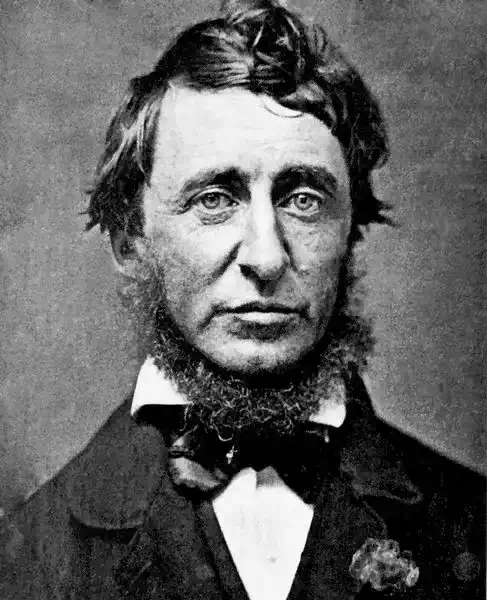
Henry David Thoreau
The Inward Morning
Packed in my mind lie all the clothes
Which outward nature wears,
And in its fashion's hourly change
It all things else repairs.
In vain I look for change abroad,
And can no difference find,
Till some new ray of peace uncalled
Illumes my inmost mind.
What is it gilds the trees and clouds,
And paints the heavens so gay,
But yonder fast-abiding light
With its unchanging ray?
Lo, when the sun streams through the wood,
Upon a winter's morn,
Where'er his silent beams intrude,
The murky night is gone.
How could the patient pine have known
The morning breeze would come,
Or humble flowers anticipate
The insect's noonday hum--
Till the new light with morning cheer
From far streamed through the aisles,
And nimbly told the forest trees
For many stretching miles?
I've heard within my inmost soul
Such cheerful morning news,
In the horizon of my mind
Have seen such orient hues,
As in the twilight of the dawn,
When the first birds awake,
Are heard within some silent wood,
Where they the small twigs break,
Or in the eastern skies are seen,
Before the sun appears,
The harbingers of summer heats
Which from afar he bears.
229
John Greenleaf Whittier
To The Reformers Of England
GOD bless ye, brothers! in the fight
Ye 're waging now, ye cannot fail,
For better is your sense of right
Than king-craft's triple mail.
Than tyrant's law, or bigot's ban,
More mighty is your simplest word;
The free heart of an honest man
Than crosier or the sword.
Go, let your blinded Church rehearse
The lesson it has learned so well;
It moves not with its prayer or curse
The gates of heaven or hell.
Let the State scaffold rise again;
Did Freedom die when Russell died?
Forget ye how the blood of Vane
From earth's green bosom cried?
The great hearts of your olden time
Are beating with you, full and strong;
All holy memories and sublime
And glorious round ye throng.
The bluff, bold men of Runnymede
Are with ye still in times like these;
The shades of England's mighty dead,
Your cloud of witnesses!
The truths ye urge are borne abroad
By every wind and every tide;
The voice of Nature and of God
Speaks out upon your side.
The weapons which your hands have found
Are those which Heaven itself has wrought,
Light, Truth, and Love; your battle-ground
The free, broad field of Thought.
No partial, selfish purpose breaks
The simple beauty of your plan,
Nor lie from throne or altar shakes
Your steady faith in man.
The languid pulse of England starts
And bounds beneath your words of power,
The beating of her million hearts
Is with you at this hour!
O ye who, with undoubting eyes,
Through present cloud and gathering storm,
Behold the span of Freedom's skies,
And sunshine soft and warm;
Press bravely onward! not in vain
Your generous trust in human-kind;
The good which bloodshed could not gain
Your peaceful zeal shall find.
Press on! the triumph shall be won
Of common rights and equal laws,
The glorious dream of Harrington,
And Sidney's good old cause.
Blessing the cotter and the crown,
Sweetening worn Labor's bitter cup;
And, plucking not the highest down,
Lifting the lowest up.
Press on! and we who may not share
The toil or glory of your fight
May ask, at least, in earnest prayer,
God's blessing on the right!
229

William Wordsworth
To a Sky-Lark
Up with me! up with me into the clouds!
For thy song, Lark, is strong;
Up with me, up with me into the clouds!
Singing, singing,
With clouds and sky about thee ringing,
Lift me, guide me till I find
That spot which seems so to thy mind!
I have walked through wildernesses dreary
And to-day my heart is weary;
Had I now the wings of a Faery,
Up to thee would I fly.
There is madness about thee, and joy divine
In that song of thine;
Lift me, guide me high and high
To thy banqueting-place in the sky.
Joyous as morning
Thou art laughing and scorning;
Thou hast a nest for thy love and thy rest,
And, though little troubled with sloth,
Drunken Lark! thou would'st be loth
To be such a traveller as I.
Happy, happy Liver,
With a soul as strong as a mountain river
Pouring out praise to the Almighty Giver,
Joy and jollity be with us both!
Alas! my journey, rugged and uneven,
Through prickly moors or dusty ways must wind;
But hearing thee, or others of thy kind,
As full of gladness and as free of heaven,
I, with my fate contented, will plod on,
And hope for higher raptures, when life's day is done.
230
William Wordsworth
November
. Another year!--another deadly blow!
Another mighty Empire overthrown!
And We are left, or shall be left, alone;
The last that dare to struggle with the Foe.
'Tis well! from this day forward we shall know
That in ourselves our safety must be sought;
That by our own right hands it must be wrought;
That we must stand unpropped, or be laid low.
O dastard whom such foretaste doth not cheer!
We shall exult, if they who rule the land
Be men who hold its many blessings dear,
Wise, upright, valiant; not a servile band,
Who are to judge of danger which they fear,
And honour which they do not understand.
229
Christina Rossetti
Come Unto Me
Oh, for the time gone by, when thought of Christ
Made His Yoke easy and His Burden light;
When my heart stirred within me at the sight
Of Altar spread for awful Eucharist;
When all my hopes His promises sufficed,
When my Soul watched for Him by day, by night,
When my lamp lightened and my robe was white,
And all seemed loss, except the Pearl unpriced.
Yet, since He calls me still with tender Call,
Since He remembers Whom I half forgot,
I even will run my race and bear my lot:
For Faith the walls of Jericho cast down,
And Hope to whoso runs holds forth a Crown,
And Love is Christ, and Christ is All in all.
227

Anonymous
Will He No Come Back Again?
Royal Charlie's now awa,
Safely owre the friendly main;
Mony a heart will break in twa,
Should he ne'er come back again.
Will you no come back again?
Will you no come back again?
Better lo'ed you'll never be,
And will you no come back again?
Mony a traitor 'mang the isles
Brak the band o' nature's law;
Mony a traitor, wi' his wiles,
Sought to wear his life awa.
Will he no come back again?
Will he no come back again?
Better lo'ed he'll never be,
And will he no come back again?
The hills he trode were a' his ain,
And bed beneath the birken tree;
The bush that hid him on the plain,
There's none on earth can claim but he.
Will he no come back again?
Will he no come back again?
Better lo'ed he'll never be,
And will he no come back again?
Whene'er I hear the blackbird sing,
Unto the e'ening sinking down,
Or merl that makes the woods to ring,
To me they hae nae ither soun',
Than, Will he no come back again?
Will he no come back again?
Better lo'ed he'll never be,
And will he no come back again?
Mony a gallant sodger fought,
Mony a gallant chief did fa';
Death itself were dearly bought,
A' for Scotland's king and law.
Will he no come back again?
Will he no come back again?
Better lo'ed he'll never be,
And will he no come back again?
Sweet the lav'rock's note and lang,
Lilting wildly up the glen;
And aye the o'erword o' the sang
Is "Will he no come back again?"
Will he no come back again?
Will he no come back again?
Better lo'ed he'll never be,
And will he no come back again?
226

Emily Jane Brontë
Hope
Hope was but a timid friend;
She sat without the grated den,
Watching how my fate would tend,
Even as selfish-hearted men.
She was cruel in her fear;
Through the bars, one dreary day,
I looked out to see her there,
And she turned her face away!
Like a false guard, false watch keeping,
Still, in strife, she whispered peace;
She would sing while I was weeping;
If I listened, she would cease.
False she was, and unrelenting;
When my last joys strewed the ground,
Even Sorrow saw, repenting,
Those sad relics scattered round;
Hope, whose whisper would have given
Balm to all my frenzied pain,
Stretched her wings, and soared to heaven,
Went, and ne'er returned again!
227

James Whitcomb Riley
Last Night-- And This
Last night-- how deep the darkness was!
And well I knew its depths, because
I waded it from shore to shore,
Thinking to reach the light no more.
She would not even touch my hand---.
The winds rose and the cedars fanned
The moon out, and the stars fled back
In heaven and hid-- and all was black!
But ah! To-night a summons came,
Signed with a tear-drop for a name,
For as I wondering kissed it, lo
A line beneath it told me so.
And now-- the moon hangs over me
A disk of dazzling brilliancy,
And every star-tip stabs my sights
With splintered glitterings of light!
225
Christina Rossetti
I Dug And Dug Amongst The Snow
I dug and dug amongst the snow,
And thought the flowers would never grow;
I dug and dug amongst the sand,
And still no green thing came to hand.
Melt, O snow! the warm winds blow
To thaw the flowers and melt the snow;
But all the winds from every land
Will rear no blossom from the sand.
And thought the flowers would never grow;
I dug and dug amongst the sand,
And still no green thing came to hand.
Melt, O snow! the warm winds blow
To thaw the flowers and melt the snow;
But all the winds from every land
Will rear no blossom from the sand.
219
Christina Rossetti
Endure Hardness
A cold wind stirs the blackthorn
To burgeon and to blow,
Besprinkling half-green hedges
With flakes and sprays of snow.
Through coldness and through keenness,
Dear hearts, take comfort so:
Somewhere or other doubtless
These make the blackthorn blow.
To burgeon and to blow,
Besprinkling half-green hedges
With flakes and sprays of snow.
Through coldness and through keenness,
Dear hearts, take comfort so:
Somewhere or other doubtless
These make the blackthorn blow.
214
John Greenleaf Whittier
The Watchers
BESIDE a stricken field I stood;
On the torn turf, on grass and wood,
Hung heavily the dew of blood.
Still in their fresh mounds lay the slain,
But all the air was quick with pain
And gusty sighs and tearful rain.
Two angels, each with drooping head
And folded wings and noiseless tread,
Watched by that valley of the dead.
The one, with forehead saintly bland
And lips of blessing, not command,
Leaned, weeping, on her olive wand.
The other's brows were scarred and knit,
His restless eyes were watch-fires lit,
His hands for battle-gauntlets fit.
'How long!' — I knew the voice of Peace, —
'Is there no respite? no release?
When shall the hopeless quarrel cease?
'O Lord, how long! One human soul
Is more than any parchment scroll,
Or any flag thy winds unroll.
'What price was Ellsworth's, young and brave?
How weigh the gift that Lyon gave,
Or count the cost of Winthrop's grave?
'O brother! if thine eye can see,
Tell how and when the end shall be,
What hope remains for thee and me.'
Then Freedom sternly said: 'I shun
No strife nor pang beneath the sun,
When human rights are staked and won.
'I knelt with Ziska's hunted flock,
I watched in Toussaint's cell of rock,
I walked with Sidney to the block.
'The moor of Marston felt my tread,
Through Jersey snows the march I led,
My voice Magenta's charges sped.
'But now, through weary day and night,
I watch a vague and aimless fight
For leave to strike one blow aright.
'On either side my foe they own:
One guards through love his ghastly throne,
And one through fear to reverence grown.
'Why wait we longer, mocked, betrayed,
By open foes, or those afraid
To speed thy coming through my aid?
'Why watch to see who win or fall?
I shake the dust against them all,
I leave them to their senseless brawl.'
'Nay,' Peace implored: 'yet longer wait;
The doom is near, the stake is great:
God knoweth if it be too late.
'Still wait and watch; the way prepare
Where I with folded wings of prayer
May follow, weaponless and bare.'
'Too late!' the stern, sad voice replied,
'Too late!' its mournful echo sighed,
In low lament the answer died.
A rustling as of wings in flight,
An upward gleam of lessening white,
So passed the vision, sound and sight.
But round me, like a silver bell
Rung down the listening sky to tell
Of holy help, a sweet voice fell.
'Still hope and trust,' it sang; 'the rod
Must fall, the wine-press must be trod,
But all is possible with God!'
212
Christina Rossetti
If All Were Rain And Never Sun
If all were rain and never sun,
No bow could span the hill;
If all were sun and never rain,
There’d be no rainbow still.
No bow could span the hill;
If all were sun and never rain,
There’d be no rainbow still.
210

Henry Lawson
Till All the Bad Things Came Untrue
BY blacksoil plains burned grey with drought
Where desert shrubs and grasses grow,
Along the Land of Furthest Out
That only Overlanders know.
I dreamed I camped on river grass
In bends where river timber grew—
I dreamed, I dreamed the days to pass
Till all the bad things came untrue.
I dreamed that I was young again,
But was not young as I had been,
My path through life seemed fair and plain,
My sight and hearing clear and keen.
No longer bent nor lined and grey,
I met and loved and worshipped you—
I dreamed, I dreamed the days away
Till all the sad things came untrue.
I dreamed a home of freestone stood
With toned tiled roofs as roofs should be,
By cliff and fall and beach and wood
With wide verandahs to the sea.
I dreamed a hale gudeman and wife,
With sons and daughters well-to-do,
Lived there the glorious old home life
And all the mad things were untrue.
From blacksoil plains burned bare with drought
Where years are sown that never grow—
From dead grey creeks of dreams and drought,
Through black-ridged wastes of weirdest woe,
I tramped and camped with fearsome fare
Until the sea-scape came in view,
And lo! the home lay smiling there
And all the bad things were untrue.
210
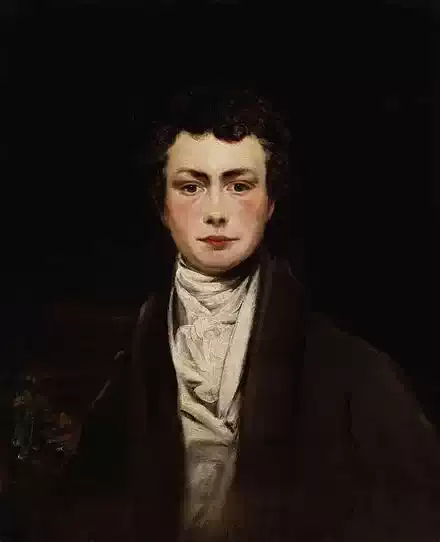
Thomas Moore
No, Not More Welcome
No, not more welcome the fairy numbers
Of music fall on the sleeper's ear,
When half awaking from fearful slumbers,
He thinks the full quire of heaven is near --
Than came that voice, when, all forsaken,
This heart long had sleeping lain,
Nor thought its cold pulse would ever waken
To such benign blessed sounds again.
Sweet voice of comfort! 'twas like the stealing
Of summer wind through some wreathed shell --
Each secret winding, each inmost feeling
Of all my soul echoed to its spell.
'Twas whisper'd balm -- 'twas sunshine spoken! --
I'd live years of grief and pain
To have my long sleep of sorrow broken
By such benign blessed sounds again.
210
Robert W. Service
Suppose?
It's mighty nice at shut of day
With weariness to hit the hey,
To close your eyes, tired through and through,
And just forget that "you are you."
It's mighty sweet to wake again
When sunshine floods the window pain;
I love in cosy couch to lie,
And re-discover "I am I."
It would be grand could we conceive
A heaven in which to believe,
And in a better life to be be,
Find out with joy "we still are we."
Though we assume with lapsing breath
Eternal is the sleep of death,
Would it not be divinely odd
To wake and find that - "God is God."
210