
Hope and Optimism

Emily Dickinson
Adrift! A little boat adrift!
Adrift! A little boat adrift!
And night is coming down!
Will no one guide a little boat
Unto the nearest town?
So Sailors say-on yesterday-
Just as the dusk was brown
One little boat gave up its strife
And gurgled down and down.
So angels say-on yesterday-
Just as the dawn was red
One little boat-o'erspent with gales-
Retrimmed its masts-redecked its sails-
And shot-exultant on!
271

Henry Lawson
The League of Nations
Light on the towns and cities, and peace for evermore!
The Big Five met in the world's light as many had met before,
And the future of man is settled and there shall be no more war.
The lamb shall lie down with the lion, and trust with treachery;
The brave man go with the coward, and the chained mind shackle the free,
And the truthful sit with the liar ever by land and sea.
And there shall be no more passion and no more love nor hate;
No more contempt for the paltry, no more respect for the great;
And the people shall breed like rabbits and mate as animals mate.
For lo! the Big Five have said it, each with a fearsome frown;
Each for his chosen country, State, and city and town;
Each for his lawn and table and the bed where he lies him down.
Cobbler and crank and chandler, magpie and ape disguised;
Each bound to his grocery corner – these are the Five we prized;
Bleating the teaching of others whom they ever despised.
But three shall meet in a cellar, companions of mildew and rats;
And three shall meet in a garret, pungent with stench of the cats,
And three in a cave in the forest where the torchlight maddens the bats –
Bats as blind as the people, streaming into the glare –
And the Nine shall turn the nations back to the plain things there;
Tracing in chalk and charcoal treaties that none can tear:
Truth that goes higher than airships and deeper than submarines,
And a message swifter than wireless – and none shall know what it means –
Till an army is rushed together and ready behind the scenes.
The Big Five sit together in the light of the World and day,
Each tied to his grocery corner though he travel the world for aye,
Each bleating the dreams of dreamers whom he has despised alway.
And intellect shall be tortured, and art destroyed for a span –
The brute shall defile the pictures as he did when the age began;
He shall hawk and spit in the palace to prove that he is a man.
Cobbler and crank and chandler, magpie and ape disguised;
Each bound to his grocery corner – these are the Five we prized;
Bleating the teaching of others whom they ever despised.
Let the nations scatter their armies and level their arsenals well,
Let them blow their airships to Heaven and sink their warships to Hell,
Let them maim the feet of the runner and silence the drum and the bell;
But shapes shall glide from the cellar who never had dared to "strike",
And shapes shall drop from the garret (ghastly and so alike)
To drag from the cave in the forest powder and cannon and pike.
As of old, we are sending a message to Garcia still –
Smoke from the peak by sunlight, beacon by night from the hill;
And the drum shall throb in the distance – the drum that never was still.
272

D.H. Lawrence
Dreams
All people dream, but not equally.
Those who dream by night in the dusty recesses of their mind,
Wake in the morning to find that it was vanity.
But the dreamers of the day are dangerous people,
For they dream their dreams with open eyes,
And make them come true.
Those who dream by night in the dusty recesses of their mind,
Wake in the morning to find that it was vanity.
But the dreamers of the day are dangerous people,
For they dream their dreams with open eyes,
And make them come true.
270

James Whitcomb Riley
Thanksgiving
Let us be thankful--not only because
Since last our universal thanks were told
We have grown greater in the world's applause,
And fortune's newer smiles surpass the old--
But thankful for all things that come as alms
From out the open hand of Providence:--
The winter clouds and storms---the summer calms--
The sleepless dread--the drowse of indolence.
Let us be thankful--thankful for the prayers
Whose gracious answers were long, long delayed,
That they might fall upon us unawares,
And bless us, as in greater need, we prayed.
Let us be thankful for the loyal hand
That love held out in welcome to our own,
When love and only love could understand
The need of touches we had never known.
Let us be thankful for the longing eyes
That gave their secret to us as they wept,
Yet in return found, with a sweet surprise,
Love's touch upon their lids, and, smiling, slept.
And let us, too, be thankful that the tears
Of sorrow have not all been drained away,
That through them still, for all the coming years,
We may look on the dead face of To-day.
269
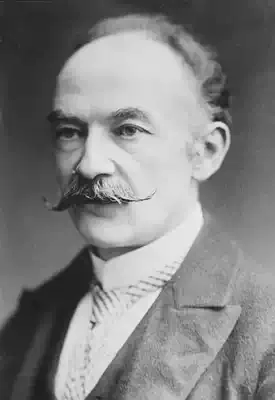
Thomas Hardy
Song of Hope
O sweet To-morrow! -
After to-day
There will away
This sense of sorrow.
Then let us borrow
Hope, for a gleaming
Soon will be streaming,
Dimmed by no gray -
No gray!
While the winds wing us
Sighs from The Gone,
Nearer to dawn
Minute-beats bring us;
When there will sing us
Larks of a glory
Waiting our story
Further anon -
Anon!
Doff the black token,
Don the red shoon,
Right and retune
Viol-strings broken;
Null the words spoken
In speeches of rueing,
The night cloud is hueing,
To-morrow shines soon -
Shines soon!
270

John Greenleaf Whittier
The Vanishers
Sweetest of all childlike dreams
In the simple Indian lore
Still to me the legend seems
Of the shapes who flit before.
Flitting, passing, seen and gone,
Never reached nor found at rest,
Baffling search, but beckoning on
To the Sunset of the Blest.
From the clefts of mountain rocks,
Through the dark of lowland firs,
Flash the eyes and flow the locks
Of the mystic Vanishers!
And the fisher in his skiff,
And the hunter on the moss,
Hear their call from cape and cliff,
See their hands the birch-leaves toss.
Wistful, longing, through the green
Twilight of the clustered pines,
In their faces rarely seen
Beauty more than mortal shines.
Fringed with gold their mantles flow
On the slopes of westering knolls;
In the wind they whisper low
Of the Sunset Land of Souls.
Doubt who may, O friend of mine!
Thou and I have seen them too;
On before with beck and sign
Still they glide, and we pursue.
More than clouds of purple trail
In the gold of setting day;
More than gleams of wing or sail
Beckon from the sea-mist gray.
Glimpses of immortal youth,
Gleams and glories seen and flown,
Far-heard voices sweet with truth,
Airs from viewless Eden blown;
Beauty that eludes our grasp,
Sweetness that transcends our taste,
Loving hands we may not clasp,
Shining feet that mock our haste;
Gentle eyes we closed below,
Tender voices heard once more,
Smile and call us, as they go
On and onward, still before.
Guided thus, O friend of mine
Let us walk our little way,
Knowing by each beckoning sign
That we are not quite astray.
Chase we still, with baffled feet,
Smiling eye and waving hand,
Sought and seeker soon shall meet,
Lost and found, in Sunset Land
269

Robert W. Service
Comfort
Say! You've struck a heap of trouble -Bust
in business, lost your wife;
No one cares a cent about you,
You don't care a cent for life;
Hard luck has of hope bereft you,
Health is failing, wish you'd die --
Why, you've still the sunshine left you
And the big, blue sky.
Sky so blue it makes you wonder
If it's heaven shining through;
Earth so smiling 'way out yonder,
Sun so bright it dazzles you;
Birds a-singing, flowers a-flinging
All their fragrance on the breeze;
Dancing shadows, green, still meadows -Don't
you mope, you've still got these.
These, and none can take them from you;
These, and none can weigh their worth.
What! you're tired and broke and beaten? -Why,
you're rich -- you've got the earth!
Yes, if you're a tramp in tatters,
While the blue sky bends above
You've got nearly all that matters -You've
got God, and God is love.
269

Emily Jane Brontë
To Imagination
When weary with the long day's care,
And earthly change from pain to pain,
And lost and ready to despair,
Thy kind voice calls me back again:
Oh, my true friend! I am not lone,
While thou canst speak with such a tone!
So hopeless is the world without;
The world within I doubly prize;
Thy world, where guile, and hate, and doubt,
And cold suspicion never rise;
Where thou, and I, and Liberty,
Have undisputed sovereignty.
What matters it, that, all around,
Danger, and guilt, and darkness lie,
If but within our bosom's bound
We hold a bright, untroubled sky,
Warm with ten thousand mingled rays
Of suns that know no winter days?
Reason, indeed, may oft complain
For Nature's sad reality,
And tell the suffering heart, how vain
Its cherished dreams must always be;
And Truth may rudely trample down
The flowers of Fancy, newly-blown:
But, thou art ever there, to bring
The hovering vision back, and breathe
New glories o'er the blighted spring,
And call a lovelier Life from Death,
And whisper, with a voice divine,
Of real worlds, as bright as thine.
I trust not to thy phantom bliss,
Yet, still, in evening's quiet hour,
With never-failing thankfulness,
I welcome thee, Benignant Power;
Sure solacer of human cares,
And sweeter hope, when hope despairs!
263
Henry Lawson
The Waving of the Red
It is a sad and cruel fate the country’s coming to,
And there’s no use in striking, ‘so what are we to do?’
“I know what we could do, but then, there might be traitors near,
And things are running in my head that only mates should hear!”
The world cannot go on like this, in spite of all that’s said,
And millions now are waiting for – the Waving of the Red.
“Last night as I lay slipping out a vision came to me;
A girl with face as fair and grand as ever man might see –
Her form was like the statues raised to Liberty in France,
And in her hand a blood-red flag was wrapped around a lance.
She shook the grand old colour loose, she smiled at me and said;
“Go bid your brothers gather for the Waving of the Red.”
263
John Greenleaf Whittier
Italy
ACROSS the sea I heard the groans
Of nations in the intervals
Of wind and wave. Their blood and bones
Cried out in torture, crushed by thrones,
And sucked by priestly cannibals.
I dreamed of Freedom slowly gained
By martyr meekness, patience, faith,
And lo! an athlete grimly stained,
With corded muscles battle-strained,
Shouting it from the fields of death!
I turn me, awe-struck, from the sight,
Among the clamoring thousands mute,
I only know that God is right,
And that the children of the light
Shall tread the darkness under foot.
I know the pent fire heaves its crust,
That sultry skies the bolt will form
To smite them clear; that Nature must
The balance of her powers adjust,
Though with the earthquake and the storm.
God reigns, and let the earth rejoice!
I bow before His sterner plan.
Dumb are the organs of my choice;
He speaks in battle's stormy voice,
His praise is in the wrath of man!
Yet, surely as He lives, the day
Of peace He promised shall be ours,
To fold the flags of war, and lay
Its sword and spear to rust away,
And sow its ghastly fields with flowers!
262
Henry Lawson
Wide Lies Australia
Wide lies Australia! The seas that surround her
Flow for her unity – all states in one.
Never has Custom nor Tyranny bound her –
Never was conquest so peacefully won.
Fair lies Australia! with all things within her
Meet for a Nation, the greatest to be:
Free to the White Man to woo and to win her:
Those who'd be happy and those who'd be free.
Free to live fully and free to live cleanly,
Free to give learning to daughter and son;
Free to act nobly but not to act meanly,
Free to forget what the old lands had done.
Free to be Brothers! Our hymn and our sermon
To keep for the White World the balance of Power,
Welcoming all, be they British or German,
All come to help us – we'll wait for the hour.
Out in the West where the flood-water gathers –
Out in the drought on the sand desert lone –
Went the brave English and brave foreign fathers
Fearlessly facing the fearful unknown.
Gemmed with their names lies the great past behind us.
Dark lie the storm clouds before us today,
Let us so live the future shall find us
Facing the danger as dauntless as they.
261
Henry Lawson
After All
The brooding ghosts of Australian night have gone from the bush and town;
My spirit revives in the morning breeze,
though it died when the sun went down;
The river is high and the stream is strong,
and the grass is green and tall,
And I fain would think that this world of ours is a good world after all.
The light of passion in dreamy eyes, and a page of truth well read,
The glorious thrill in a heart grown cold of the spirit I thought was dead,
A song that goes to a comrade's heart, and a tear of pride let fall --
And my soul is strong! and the world to me is a grand world after all!
Let our enemies go by their old dull tracks,
and theirs be the fault or shame
(The man is bitter against the world who has only himself to blame);
Let the darkest side of the past be dark, and only the good recall;
For I must believe that the world, my dear, is a kind world after all.
It well may be that I saw too plain, and it may be I was blind;
But I'll keep my face to the dawning light,
though the devil may stand behind!
Though the devil may stand behind my back, I'll not see his shadow fall,
But read the signs in the morning stars of a good world after all.
Rest, for your eyes are weary, girl -- you have driven the worst away --
The ghost of the man that I might have been is gone from my heart to-day;
We'll live for life and the best it brings till our twilight shadows fall;
My heart grows brave, and the world, my girl, is a good world after all.
260
Thomas Hardy
The Going of the Battery Wives. (Lament)
I
O it was sad enough, weak enough, mad enough -
Light in their loving as soldiers can be -
First to risk choosing them, leave alone losing them
Now, in far battle, beyond the South Sea! . . .
II
- Rain came down drenchingly; but we unblenchingly
Trudged on beside them through mirk and through mire,
They stepping steadily--only too readily! -
Scarce as if stepping brought parting-time nigher.
III
Great guns were gleaming there, living things seeming there,
Cloaked in their tar-cloths, upmouthed to the night;
Wheels wet and yellow from axle to felloe,
Throats blank of sound, but prophetic to sight.
IV
Gas-glimmers drearily, blearily, eerily
Lit our pale faces outstretched for one kiss,
While we stood prest to them, with a last quest to them
Not to court perils that honour could miss.
V
Sharp were those sighs of ours, blinded these eyes of ours,
When at last moved away under the arch
All we loved. Aid for them each woman prayed for them,
Treading back slowly the track of their march.
VI
Someone said: "Nevermore will they come: evermore
Are they now lost to us." O it was wrong!
Though may be hard their ways, some Hand will guard their ways,
Bear them through safely, in brief time or long.
VII
- Yet, voices haunting us, daunting us, taunting us,
Hint in the night-time when life beats are low
Other and graver things . . . Hold we to braver things,
Wait we, in trust, what Time's fulness shall show.
258
Henry Lawson
When Your Pants Begin to Go
When you wear a cloudy collar and a shirt that isn't white,
And you cannot sleep for thinking how you'll reach to-morrow night,
You may be a man of sorrows, and on speaking terms with Care,
And as yet be unacquainted with the Demon of Despair;
For I rather think that nothing heaps the trouble on your mind
Like the knowledge that your trousers badly need a patch behind.
I have noticed when misfortune strikes the hero of the play,
That his clothes are worn and tattered in a most unlikely way;
And the gods applaud and cheer him while he whines and loafs around,
And they never seem to notice that his pants are mostly sound;
But, of course, he cannot help it, for our mirth would mock his care,
If the ceiling of his trousers showed the patches of repair.
You are none the less a hero if you elevate your chin
When you feel the pavement wearing through the leather, sock, and skin;
You are rather more heroic than are ordinary folk
If you scorn to fish for pity under cover of a joke;
You will face the doubtful glances of the people that you know;
But -- of course, you're bound to face them when your pants begin to go.
If, when flush, you took your pleasures -- failed to make a god of Pelf,
Some will say that for your troubles you can only thank yourself --
Some will swear you'll die a beggar, but you only laugh at that,
While your garments hand together and you wear a decent hat;
You may laugh at their predictions while your soles are wearing low,
But -- a man's an awful coward when his pants begin to go.
Though the present and the future may be anything but bright,
It is best to tell the fellows that you're getting on all right,
And a man prefers to say it -- 'tis a manly lie to tell,
For the folks may be persuaded that you're doing very well;
But it's hard to be a hero, and it's hard to wear a grin,
When your most important garment is in places very thin.
Get some sympathy and comfort from the chum who knows you best,
That your sorrows won't run over in the presence of the rest;
There's a chum that you can go to when you feel inclined to whine,
He'll declare your coat is tidy, and he'll say: `Just look at mine!'
Though you may be patched all over he will say it doesn't show,
And he'll swear it can't be noticed when your pants begin to go.
Brother mine, and of misfortune! times are hard, but do not fret,
Keep your courage up and struggle, and we'll laugh at these things yet,
Though there is no corn in Egypt, surely Africa has some --
Keep your smile in working order for the better days to come!
We shall often laugh together at the hard times that we know,
And get measured by the tailor when our pants begin to go.
......
Now the lady of refinement, in the lap of comfort rocked,
Chancing on these rugged verses, will pretend that she is shocked.
Leave her to her smelling-bottle; 'tis the wealthy who decide
That the world should hide its patches 'neath the cruel look of pride;
And I think there's something noble, and I swear there's nothing low,
In the pride of Human Nature when its pants begin to go.
257
Emily Dickinson
Why-do they shut Me out of Heaven?
Why-do they shut Me out of Heaven?
Did I sing-too loud?
But-I can say a little "Minor"
Timid as a Bird!
Wouldn't the Angels try me
Just-
once-more
Just-
see-if I troubled them-
But don't-shut the door!
Oh, if I-were the Gentleman
In the "White Robe"-
And they-were the little Hand-that knocked
Could-
I-forbid?
Did I sing-too loud?
But-I can say a little "Minor"
Timid as a Bird!
Wouldn't the Angels try me
Just-
once-more
Just-
see-if I troubled them-
But don't-shut the door!
Oh, if I-were the Gentleman
In the "White Robe"-
And they-were the little Hand-that knocked
Could-
I-forbid?
255
Robert W. Service
Drifter
God gave you guts: don't let Him down;
Brace up, be worthy of His giving.
The road's a rut, the sky's a frown;
I know you're plumb fed up with living.
Fate birches you, and wry the rod . . .
Snap out, you fool! Don't let down God.
Oh, yes, you're on misfortune's shift,
And weary is the row your hoeing;
You have no home, you drift and drift,
Seems folks don't care the way you're going . . .
Well, make them care - you're not afraid:
Step on the gas - you'll make the grade.
Believe that God has faith in you,
In you His loving light is shining;
All of you that is fine and true
Is part of Him, so quit your whining . . .
buck up, son, for your Maker's sake:
Don't let Him down - give God a break.
256

William Wordsworth
The Primrose of the Rock
A Rock there is whose homely front
The passing traveller slights;
Yet there the glow-worms hang their lamps,
Like stars, at various heights;
And one coy Primrose to that Rock
The vernal breeze invites.
What hideous warfare hath been waged,
What kingdoms overthrown,
Since first I spied that Primrose-tuft
And marked it for my own;
A lasting link in Nature's chain
From highest heaven let down!
The flowers, still faithful to the stems,
Their fellowship renew;
The stems are faithful to the root,
That worketh out of view;
And to the rock the root adheres
In every fibre true.
Close clings to earth the living rock,
Though threatening still to fall:
The earth is constant to her sphere;
And God upholds them all:
So blooms this lonely Plant, nor dreads
Her annual funeral.
Here closed the meditative strain;
But air breathed soft that day,
The hoary mountain-heights were cheered,
The sunny vale looked gay;
And to the Primrose of the Rock
I gave this after-lay.
I sang-Let myriads of bright flowers,
Like Thee, in field and grove
Revive unenvied;-mightier far,
Than tremblings that reprove
Our vernal tendencies to hope,
Is God's redeeming love;
That love which changed-for wan disease,
For sorrow that had bent
O'er hopeless dust, for withered age-
Their moral element,
And turned the thistles of a curse
To types beneficent.
Sin-blighted though we are, we too,
The reasoning Sons of Men,
From one oblivious winter called
Shall rise, and breathe again;
And in eternal summer lose
Our threescore years and ten.
To humbleness of heart descends
This prescience from on high,
The faith that elevates the just,
Before and when they die;
And makes each soul a separate heaven
A court for Deity.
256

Henry Van Dyke
A Mile With Me
O who will walk a mile with me
Along life's merry way?
A comrade blithe and full of glee,
Who dares to laugh out loud and free,
And let his frolic fancy play,
Like a happy child, through the flowers gay
That fill the field and fringe the way
Where he walks a mile with me.
And who will walk a mile with me
Along life's weary way?
A friend whose heart has eyes to see
The stars shine out o'er the darkening lea,
And the quiet rest at the end o' the day,--
A friend who knows, and dares to say,
The brave, sweet words that cheer the way
Where he walks a mile with me.
With such a comrade, such a friend,
I fain would walk till journeys end,
Through summer sunshine, winter rain,
And then?--Farewell, we shall meet again!
253

Henry Wadsworth Longfellow
Voices Of The Night : The Light Of Stars
The night is come, but not too soon;
And sinking silently,
All silently, the little moon
Drops down behind the sky.
There is no light in earth or heaven
But the cold light of stars;
And the first watch of night is given
To the red planet Mars.
Is it the tender star of love?
The star of love and dreams?
O no! from that blue tent above,
A hero's armor gleams.
And earnest thoughts within me rise,
When I behold afar,
Suspended in the evening skies,
The shield of that red star.
O star of strength! I see thee stand
And smile upon my pain;
Thou beckonest with thy mailed hand,
And I am strong again.
Within my breast there is no light
But the cold light of stars;
I give the first watch of the night
To the red planet Mars.
The star of the unconquered will,
He rises in my breast,
Serene, and resolute, and still,
And calm, and self-possessed.
And thou, too, whosoe'er thou art,
That readest this brief psalm,
As one by one thy hopes depart,
Be resolute and calm.
O fear not in a world like this,
And thou shalt know erelong,
Know how sublime a thing it is
To suffer and be strong.
253
Thomas Hardy
The Darkling Thrush
The Darkling Thrush
I leant upon a coppice gate,
When Frost was spectre-gray,
And Winter's dregs made desolate
The weakening eye of day.
The tangled vine-stems scored the sky
Like strings of broken lyres,
And all mankind that haunted nigh
Had sought their household fires.
The land's sharp features seemed to me
The Century's corpse outleant,
Its crypt the cloudy canopy,
The wind its death-lament.
The ancient pulse of germ and birth
Was shrunken hard and dry,
And every spirit upon earth
Seemed fervorless as I.
At once a voice arose among
The bleak twigs overhead,
In a full-throated evensong
Of joy illimited.
An ancient thrush, frail, gaunt and small,
With blast-beruffled plume,
Had chosen thus to fling his soul
Upon the growing gloom.
So little cause for carolings
Of such ecstatic sound
Was written on terrestrial things
Afar or nigh around,
That I could think there trembled through
His happy good-night air
Some blessed Hope, whereof he knew,
And I was unaware.
254
Robert W. Service
Worms
Worms finer for fishing you couldn't be wishing;
I delved them dismayed from the velvety sod;
The rich loam upturning I gathered them squirming,
big, fat, gleamy earthworms, all ripe for my rod.
Thinks I, without waiting, my hook I'll be baiting,
And flip me a fish from the foam of the pool;
Then Mother beholding, came crying and scolding:
"You're late, ye young devil! Be off to the school."
So grabbing me bait-tin I dropped them fat worms in,
With globs of green turf for their comfort and cheer;
And there, clean forgotten, no doubt dead and rotten;
I left them to languish for nigh on a year.
One day to be cleaning the byre I was meaning,
When seeing that old rusty can on the shelf,
Says I: "To my thinking, them worms must be stinking:
Begorrah! I'd better find out for myself."
So I opened the tin, held my nose and looked in;
And what did I see? Why, most nothing at all.
Just darkness and dank. and . . . a something that stank,
Tucked down in a corner, a greasy grey ball.
My worms -no, not dead, but thin as a thread,
Each seemed to reproach me, protesting its worth:
So softly I took them and tenderly shook them
Back into the bosom of mothering earth.
I'm now in the City; 'tis grand, but I pity
The weariful wretches that crawl in its grime;
The dregs and the scum and the spawn of the slum,
And the poor little children that's cradled in crime.
Sure I see them in terms of my pitiful worms,
surviving despite desperation and doom,
And I wish I was God, with a smile and a nod
To set them all down in a valley of bloom,
Saying: "Let these rejoice with a wonderful voice
For mothering earth and for fathering sea,
And healing of sun, for each weariful one
Of these poor human worms is a wee bit of me. . . .
Let your be the blame and yours be the shame:
What ye do unto them ye do also to ME."
248
Emily Dickinson
I am alive—I guess
I am alive—I guess—
The Branches on my Hand
Are full of Morning Glory—
And at my finger's end—
The Carmine—tingles warm—
And if I hold a Glass
Across my Mouth—it blurs it—
Physician's—proof of Breath—
I am alive—because
I am not in a Room—
The Parlor—Commonly—it is—
So Visitors may come—
And lean—and view it sidewise—
And add "How cold—it grew"—
And "Was it conscious—when it stepped
In Immortality?"
I am alive—because
I do not own a House—
Entitled to myself—precise—
And fitting no one else—
And marked my Girlhood's name—
So Visitors may know
Which Door is mine—and not
243

Christina Rossetti
In The Willow Shade
I sat beneath a willow tree,
Where water falls and calls;
While fancies upon fancies solaced me,
Some true, and some were false.
Who set their heart upon a hope
That never comes to pass,
Droop in the end like fading heliotrope
The sun's wan looking-glass.
Who set their will upon a whim
Clung to through good and ill,
Are wrecked alike whether they sink or swim,
Or hit or miss their will.
All things are vain that wax and wane,
For which we waste our breath;
Love only doth not wane and is not vain,
Love only outlives death.
A singing lark rose toward the sky,
Circling he sang amain;
He sang, a speck scarce visible sky-high,
And then he sank again.
A second like a sunlit spark
Flashed singing up his track;
But never overtook that foremost lark,
And songless fluttered back.
A hovering melody of birds
Haunted the air above;
They clearly sang contentment without words,
And youth and joy and love.
O silvery weeping willow tree
With all leaves shivering,
Have you no purpose but to shadow me
Beside this rippled spring?
On this first fleeting day of Spring,
For Winter is gone by,
And every bird on every quivering wing
Floats in a sunny sky;
On this first Summer-like soft day,
While sunshine steeps the air,
And every cloud has gat itself away,
And birds sing everywhere.
Have you no purpose in the world
But thus to shadow me
With all your tender drooping twigs unfurled,
O weeping willow tree?
With all your tremulous leaves outspread
Betwixt me and the sun,
While here I loiter on a mossy bed
With half my work undone;
My work undone, that should be done
At once with all my might;
For after the long day and lingering sun
Comes the unworking night.
This day is lapsing on its way,
Is lapsing out of sight;
And after all the chances of the day
Comes the resourceless night.
The weeping willow shook its head
And stretched its shadow long;
The west grew crimson, the sun smoldered red,
The birds forbore a song.
Slow wind sighed through the willow leaves,
The ripple made a moan,
The world drooped murmuring like a thing that grieves;
And then I felt alone.
I rose to go, and felt the chill,
And shivered as I went;
Yet shivering wondered, and I wonder still,
What more that willow meant;
That silvery weeping willow tree
With all leaves shivering,
Which spent one long day overshadowing me
Beside a spring in Spring.
244
Robert W. Service
The Christmas Tree
In the dark and damp of the alley cold,
Lay the Christmas tree that hadn't been sold;
By a shopman dourly thrown outside;
With the ruck and rubble of Christmas-tide;
Trodden deep in the muck and mire,
Unworthy even to feed a fire...
So I stopped and salvaged that tarnished tree,
And thus is the story it told to me:
"My Mother was Queen of the forest glade,
And proudly I prospered in her shade;
For she said to me: 'When I am dead,
You will be monarch in my stead,
And reign, as I, for a hundred years,
A tower of triumph amid your peers,
When I crash in storm I will yield you space;
Son, you will worthily take my place.'
"So I grew in grace like a happy child,
In the heart of the forest free and wild;
And the moss and the ferns were all about,
And the craintive mice crept in and out;
And a wood-dove swung on my highest twig,
And a chipmunk chattered: 'So big! So big!'
And a shy fawn nibbled a tender shoot,
And a rabbit nibbled under my root...
Oh, I was happy in rain and shine
As I thought of the destiny that was mine!
Then a man with an axe came cruising by
And I knew that my fate was to fall and die.
"With a hundred others he packed me tight,
And we drove to a magic city of light,
To an avenue lined with Christmas trees,
And I thought: may be I'll be one of these,
Tinselled with silver and tricked with gold,
A lovely sight for a child to behold;
A-glitter with lights of every hue,
Ruby and emerald, orange and blue,
And kiddies dancing, with shrieks of glee -
One might fare worse than a Christmas tree.
"So they stood me up with a hundred more
In the blaze of a big department store;
But I thought of the forest dark and still,
And the dew and the snow and the heat and the chill,
And the soft chinook and the summer breeze,
And the dappled deer and the birds and the bees...
I was so homesick I wanted to cry,
But patient I waited for someone to buy.
And some said 'Too big,' and some 'Too small,'
And some passed on saying nothing at all.
Then a little boy cried: Ma, buy that one,'
But she shook her head: 'Too dear, my son."
So the evening came, when they closed the store,
And I was left on the littered floor,
A tree unwanted, despised, unsold,
Thrown out at last in the alley cold."
Then I said: "Don't sorrow; at least you'll be
A bright and beautiful New Year's tree,
All shimmer and glimmer and glow and gleam,
A radiant sight like a fairy dream.
For there is a little child I know,
Who lives in poverty, want and woe;
Who lies abed from morn to night,
And never has known an hour's delight..."
So I stood the tree at the foot of her bed:
"Santa's a little late," I said.
"Poor old chap! Snowbound on the way,
But he's here at last, so let's be gay."
Then she woke from sleep and she saw you there,
And her eyes were love and her lips were prayer.
And her thin little arms were stretched to you
With a yearning joy that they never knew.
She woke from the darkest dark to see
Like a heavenly vision, that Christmas Tree.
Her mother despaired and feared the end,
But from that day she began to mend,
To play, to sing, to laugh with glee...
Bless you, O little Christmas Tree!
You died, but your life was not in vain:
You helped a child to forget her pain,
And let hope live in our hearts again.
242