
Hope and Optimism

John Greenleaf Whittier
Seed-Time And Harvest
As o'er his furrowed fields which lie
Beneath a coldly dropping sky,
Yet chill with winter's melted snow,
The husbandman goes forth to sow,
Thus, Freedom, on the bitter blast
The ventures of thy seed we cast,
And trust to warmer sun and rain
To swell the germs and fill the grain.
Who calls thy glorious service hard?
Who deems it not its own reward?
Who, for its trials, counts it less
A cause of praise and thankfulness?
It may not be our lot to wield
The sickle in the ripened field;
Nor ours to hear, on summer eves,
The reaper's song among the sheaves.
Yet where our duty's task is wrought
In unison with God's great thought,
The near and future blend in one,
And whatsoe'er is willed, is done!
And ours the grateful service whence
Comes day by day the recompense;
The hope, the trust, the purpose stayed,
The fountain and the noonday shade.
And were this life the utmost span,
The only end and aim of man,
Better the toil of fields like these
Than waking dream and slothful ease.
But life, though falling like our grain,
Like that revives and springs again;
And, early called, how blest are they
Who wait in heaven their harvest-day!
309
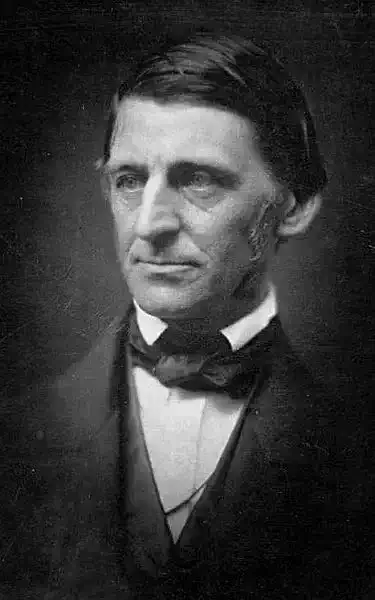
Ralph Waldo Emerson
The Forerunners
Long I followed happy guides,—
I could never reach their sides.
Their step is forth, and, ere the day,
Breaks up their leaguer, and away.
Keen my sense, my heart was young,
Right goodwill my sinews strung,
But no speed of mine avails
To hunt upon their shining trails.
On and away, their hasting feet
Make the morning proud and sweet.
Flowers they strew, I catch the scent,
Or tone of silver instrument
Leaves on the wind melodious trace,
Yet I could never see their face.
On eastern hills I see their smokes
Mixed with mist by distant lochs.
I meet many travellers
Who the road had surely kept,—
They saw not my fine revellers,—
These had crossed them while they slept.
Some had heard their fair report
In the country or the court.
Fleetest couriers alive
Never yet could once arrive,
As they went or they returned,
At the house where these sojourned.
Sometimes their strong speed they slacken,
Though they are not overtaken:
In sleep, their jubilant troop is near,
I tuneful voices overhear,
It may be in wood or waste,—
At unawares 'tis come and passed.
Their near camp my spirit knows
By signs gracious as rainbows.
I thenceforward and long after
Listen for their harplike laughter,
And carry in my heart for days
Peace that hallows rudest ways.—
299

Horácio
BkII:X The Golden Mean
You’ll live more virtuously, my Murena,
by not setting out to sea, while you’re in dread
of the storm, or hugging fatal shores
too closely, either.
Whoever takes delight in the golden mean,
safely avoids the squalor of a shabby house,
and, soberly, avoids the regal palace
that incites envy.
The tall pine’s more often shaken by the wind,
and it’s a high tower that falls with a louder
crash, while the mountainous summits are places
where lightning strikes.
The heart that is well prepared for any fate
hopes in adversity, fears prosperity.
Though Jupiter brings us all the unlovely
winters: he also
takes them away again. If there’s trouble now
it won’t always be so: sometimes Apollo
rouses the sleeping Muse with his lyre, when he’s
not flexing his bow.
Appear brave and resolute in difficult
times: and yet be wise and take in all your sails
when they’re swollen by too powerful
a following wind.
299

William Wordsworth
To The Daisy (third poem)
Bright Flower! whose home is everywhere,
Bold in maternal Nature's care,
And all the long year through the heir
Of joy or sorrow;
Methinks that there abides in thee
Some concord with humanity,
Given to no other flower I see
The forest thorough!
Is it that Man is soon deprest?
A thoughtless Thing! who, once unblest,
Does little on his memory rest,
Or on his reason,
And Thou would'st teach him how to find
A shelter under every wind,
A hope for times that are unkind
And every season?
Thou wander'st the wide world about,
Uncheck'd by pride or scrupulous doubt,
With friend to greet thee, or without,
Yet pleased and willing;
Meek, yielding to the occasion's call,
And all things suffering from all,
Thy function apostolical
In peace fulfilling.
297
John Greenleaf Whittier
Our Country
WE give thy natal day to hope,
O Country of our love and prayer!
Thy way is down no fatal slope,
But up to freer sun and air.
Tried as by furnace-fires, and yet
By God's grace only stronger made,
In future tasks before thee set
Thou shalt not lack the old-time aid.
The fathers sleep, but men remain
As wise, as true, and brave as they;
Why count the loss and not the gain?
The best is that we have to-day.
Whate'er of folly, shame, or crime,
Withhin thy mighty bounds transpires,
With speed defying space and time
Comes to us on the accusing wires;
While of thy wealth of noble deeds,
Thy homes of peace, thy votes unsold,
The love that pleads for human needs,
The wrong redressed, but half is told!
We read each felon's chronicle,
His acts, his words, his gallows-mood;
We know the single sinner well
And not the nine and ninety good.
Yet if, on daily scandals fed,
We seem at times to doubt thy worth,
We know thee still, when all is said,
The best and dearest spot on earth.
From the warm Mexic Gulf, or where
Belted with flowers Los Angeles
Basks in the semi-tropic air,
To where Katahdin's cedar trees
Are dwarfed and bent by Northern winds,
Thy plenty's horn is yearly filled;
Alone, the rounding century finds
Thy liberal soil by free hands tilled.
A refuge for the wronged and poor,
Thy generous heart has borne the blame
That, with them, through thy open door,
The old world's evil outcasts came.
But, with thy just and equal rule,
And labor's need and breadth of lands,
Free press and rostrum, church and school,
Thy sure, if slow, transforming hands
Shall mould even them to thy design,
Making a blessing of the ban;
And Freedom's chemistry combine
The alien elements of man.
The power that broke their prison bar
And set the dusky millions free,
And welded in the flame of war
The Union fast to Liberty,
Shall if not deal with other ills,
Redress the red man's grievance, break
The Circean cup which shames and kills
And Labor full requital make?
Alone to such as fitly bear
Thy civic honors bid them fall?
And call thy daughters forth to share
The rights and duties pledged to all?
Give every child his right of school,
Merge private greed in public good,
And spare a treasury overfull
The tax upon a poor man's food?
No lack was in thy primal stock,
No weakling founders builded here;
Thine were the men of Plymouth Rock,
The Huguenot and Cavalier;
And they whose firm endurance gained
The freedom of the souls of men,
Whose hands, unstained with blood, maintained
The swordless commonwealth of Penn.
And thine shall be the power of all
To do the work which duty bids,
And make the people's council hall
As lasting as the Pyramids!
Well have thy later years made good
Thy brave-said word a century back,
The pledge of human brotherhood,
The equal claim of white and black.
That word still echoes round the world,
And all who hear it turn to thee,
And read upon thy flag unfurled
The prophecies of destiny.
Thy great world-lesson all shall learn,
The nations in thy school shall sit,
Earth's farthest mountain-tops shall burn
With watch-fires from thy own uplit.
Great without seeking to be great
By fraud or conquest, rich in gold,
But richer in the large estate
Of virtue which thy children hold,
With peace that comes of purity
And strength to simple justice due,
So runs our loyal dream of thee;
God of our fathers! make it true.
O Land of lands! to thee we give
Our prayers, our hopes, our service free;
For thee thy sons shall nobly live,
And at thy need shall die for thee!
297
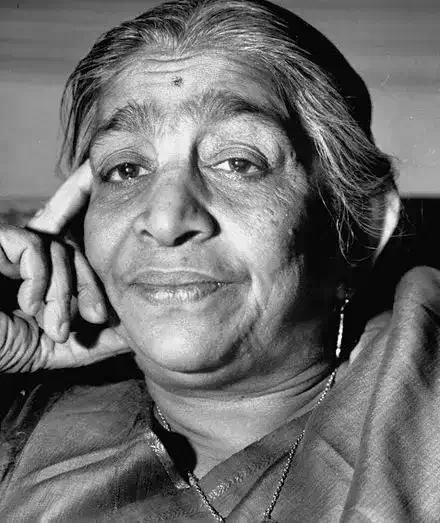
Sarojini Naidu
Transcience
Nay, do not grieve tho' life be full of sadness,
Dawn will not veil her spleandor for your grief,
Nor spring deny their bright, appointed beauty
To lotus blossom and ashoka leaf.
Nay, do not pine, tho' life be dark with trouble,
Time will not pause or tarry on his way;
To-day that seems so long, so strange, so bitter,
Will soon be some forgotten yesterday.
Nay, do not weep; new hopes, new dreams, new faces,
The unspent joy of all the unborn years,
Will prove your heart a traitor to its sorrow,
And make your eyes unfaithful to their tears.
297

James Whitcomb Riley
Song Of The New Year
I heard the bells at midnight
Ring in the dawning year;
And above the clanging chorus
Of the song, I seemed to hear
A choir of mystic voices
Flinging echoes, ringing clear,
From a band of angels winging
Through the haunted atmosphere:
'Ring out the shame and sorrow,
And the misery and sin,
That the dawning of the morrow
May in peace be ushered in.'
And I thought of all the trials
The departed years had cost,
And the blooming hopes and pleasures
That are withered now and lost;
And with joy I drank the music
Stealing o'er the feeling there
As the spirit song came pealing
On the silence everywhere:
'Ring out the shame and sorrow,
And the misery and sin,
That the dawning of the morrow
May in peace be ushered in.'
And I listened as a lover
To an utterance that flows
In syllables like dewdrops
From the red lips of a rose,
Till the anthem, fainter growing,
Climbing higher, chiming on
Up the rounds of happy rhyming,
Slowly vanished in the dawn:
'Ring out the shame and sorrow,
And the misery and sin,
That the dawning of the morrow
May in peace be ushered in.'
Then I raised my eyes to Heaven,
And with trembling lips I pled
For a blessing for the living
And a pardon for the dead;
And like a ghost of music
Slowly whispered--lowly sung--
Came the echo pure and holy
In the happy angel tongue:
'Ring out the shame and sorrow,
And the misery and sin,
And the dawn of every morrow
Will in peace be ushered in.'
295

Henry Lawson
The Ships that Won't Go Down
We hear a great commotion
'Bout the ship that comes to grief,
That founders in mid-ocean,
Or is driven on a reef;
Because it's cheap and brittle
A score of sinners drown.
But we hear but mighty little
Of the ships that won't go down.
Here's honour to the builders –
The builders of the past;
Here's honour to the builders
That builded ships to last;
Here's honour to the captain,
And honour to the crew;
Here's double-column headlines
To the ships that battle through.
They make a great sensation
About famous men that fail,
That sink a world of chances
In the city morgue or gaol,
Who drink, or blow their brains out,
Because of "Fortune's frown".
But we hear far too little
Of the men who won't go down.
The world is full of trouble,
And the world is full of wrong,
But the heart of man is noble,
And the heart of man is strong!
They say the sea sings dirges,
But I would say to you
That the wild wave's song's a paean
For the men that battle through.
292
John Greenleaf Whittier
Greeting
I spread a scanty board too late;
The old-time guests for whom I wait
Come few and slow, methinks, to-day.
Ah! who could hear my messages
Across the dim unsounded seas
On which so many have sailed away!
Come, then, old friends, who linger yet,
And let us meet, as we have met,
Once more beneath this low sunshine;
And grateful for the good we 've known,
The riddles solved, the ills outgrown,
Shake bands upon the border line.
The favor, asked too oft before,
From your indulgent ears, once more
I crave, and, if belated lays
To slower, feebler measures move,
The silent, sympathy of love
To me is dearer now than praise.
And ye, O younger friends, for whom
My hearth and heart keep open room,
Come smiling through the shadows long,
Be with me while the sun goes down,
And with your cheerful voices drown
The minor of my even-song.
For, equal through the day and night,
The wise Eternal oversight
And love and power and righteous will
Remain: the law of destiny
The best for each and all must be,
And life its promise shall fulfil.
292

Emily Dickinson
I many times thought Peace had come
I many times thought Peace had come
When Peace was far away-
As Wrecked Men-deem they sight the Land-
At Centre of the Sea-
And struggle slacker-but to prove
As hopelessly as I-
How many the fictitious Shores-
Before the Harbor be-
When Peace was far away-
As Wrecked Men-deem they sight the Land-
At Centre of the Sea-
And struggle slacker-but to prove
As hopelessly as I-
How many the fictitious Shores-
Before the Harbor be-
293
John Greenleaf Whittier
The Mantle Of St. John De Matha. A Legend Of
A STRONG and mighty Angel,
Calm, terrible, and bright,
The cross in blended red and blue
Upon his mantle white!
Two captives by him kneeling,
Each on his broken chain,
Sang praise to God who raiseth
The dead to life again!
Dropping his cross-wrought mantle,
'Wear this,' the Angel said;
'Take thou, O Freedom's priest, its sign, —
The white, the blue, and red.'
Then rose up John de Matha
In the strength the Lord Christ gave,
And begged through all the land of France
The ransom of the slave.
The gates of tower and castle
Before him open flew,
The drawbridge at his coming fell,
The door-bolt backward drew.
For all men owned his errand,
And paid his righteous tax;
And the hearts of lord and peasant
Were in his hands as wax.
At last, outbound from Tunis,
His bark her anchor weighed,
Freighted with seven-score Christian souls
Whose ransom he had paid.
But, torn by Paynim hatred,
Her sails in tatters hung;
And on the wild waves, rudderless,
A shattered hulk she swung.
'God save us!' cried the captain,
'For naught can man avail;
Oh, woe betide the ship that lacks
Her rudder and her sail!
'Behind us are the Moormen;
At sea we sink or strand:
There's death upon the water,
There's death upon the land!'
Then up spake John de Matha:
'God's errands never fail!
Take thou the mantle which I wear,
And make of it a sail.'
They raised the cross-wrought mantle,
The blue, the white, the red;
And straight before the wind off-shore
The ship of Freedom sped.
'God help us!' cried the seamen,
'For vain is mortal skill:
The good ship on a stormy sea
Is drifting at its will.'
Then up spake John de Matha:
'My mariners, never fear!
The Lord whose breath has filled her sail
May well our vessel steer!'
So on through storm and darkness
They drove for weary hours;
And lo! the third gray morning shone
On Ostia's friendly towers.
And on the walls the watchers
The ship of mercy knew, —
They knew far off its holy cross,
The red, the white, and blue.
And the bells in all the steeples
Rang out in glad accord,
To welcome home to Christian soil
The ransomed of the Lord.
So runs the ancient legend
By bard and painter told;
And lo! the cycle rounds again,
The new is as the old!
With rudder foully broken,
And sails by traitors torn,
Our country on a midnight sea
Is waiting for the morn.
Before her, nameless terror;
Behind, the pirate foe;
The clouds are black above her,
The sea is white below.
The hope of all who suffer,
The dread of all who wrong,
She drifts in darkness and in storm,
How long, O Lord! how long?
But courage, O my mariners!
Ye shall not suffer wreck,
While up to God the freedman's prayers
Are rising from your deck.
Is not your sail the banner
Which God hath blest anew,
The mantle that De Matha wore,
The red, the white, the blue?
Its hues are all of heaven, —
The red of sunset's dye,
The whiteness of the moon-lit cloud,
The blue of morning's sky.
Wait cheerily, then, O mariners,
For daylight and for land;
The breath of God is in your sail,
Your rudder is His hand.
Sail on, sail on, deep-freighted
With blessings and with hopes;
The saints of old with shadowy hands
Are pulling at your ropes.
Behind ye holy martyrs
Uplift the palm and crown;
Before ye unborn ages send
Their benedictions down.
Take heart from John de Matha! —
God's errands never fail!
Sweep on through storm and darkness,
The thunder and the hail!
Sail on! The morning cometh,
The port ye yet shall win;
And all the bells of God shall ring
The good ship bravely in!
290

Robert W. Service
My Inner Life
'Tis true my garments threadbare are,
And sorry poor I seem;
But inly I am richer far
Than any poet's dream.
For I've a hidden life no one
Can ever hope to see;
A sacred sanctuary none
May share with me.
Aloof I stand from out the strife,
Within my heart a song;
By virtue of my inner life
I to myself belong.
Against man-ruling I rebel,
Yet do not fear defeat,
For to my secret citadel
I may retreat.
Oh you who have an inner life
Beyond this dismal day
With wars and evil rumours rife,
Go blessedly your way.
Your refuge hold inviolate;
Unto yourself be true,
And shield serene from sordid fate
The Real You.
287
James Whitcomb Riley
We Must Believe
_'Lord, I believe: help Thou mine unbelief.'_
We must believe--
Being from birth endowed with love and trust--
Born unto loving;--and how simply just
That love--that faith!--even in the blossom-face
The babe drops dreamward in its resting-place,
Intuitively conscious of the sure
Awakening to rapture ever pure
And sweet and saintly as the mother's own,
Or the awed father's, as his arms are thrown
O'er wife and child, to round about them weave
And wind and bind them as one harvest-sheaf
Of love--to cleave to, and _forever_ cleave....
Lord, I believe:
Help Thou mine unbelief.
We must believe--
Impelled since infancy to seek some clear
Fulfillment, still withheld all seekers here;--
For never have we seen perfection nor
The glory we are ever seeking for:
But we _have_ seen--all mortal souls as one--
Have seen its _promise_, in the morning sun--
Its blest assurance, in the stars of night;--
The ever-dawning of the dark to light;--
The tears down-falling from all eyes that grieve--
The eyes uplifting from all deeps of grief,
Yearning for what at last we shall receive....
Lord, I believe:
Help Thou mine unbelief.
We must believe--
For still all unappeased our hunger goes,
From life's first waking, to its last repose:
The briefest life of any babe, or man
Outwearing even the allotted span,
Is each a life unfinished--incomplete:
For these, then, of th' outworn, or unworn feet
Denied one toddling step--O there must be
Some fair, green, flowery pathway endlessly
Winding through lands Elysian! Lord, receive
And lead each as Thine Own Child--even the Chief
Of us who didst Immortal life achieve....
Lord, I believe:
Help Thou mine unbelief.
We must believe--
Being from birth endowed with love and trust--
Born unto loving;--and how simply just
That love--that faith!--even in the blossom-face
The babe drops dreamward in its resting-place,
Intuitively conscious of the sure
Awakening to rapture ever pure
And sweet and saintly as the mother's own,
Or the awed father's, as his arms are thrown
O'er wife and child, to round about them weave
And wind and bind them as one harvest-sheaf
Of love--to cleave to, and _forever_ cleave....
Lord, I believe:
Help Thou mine unbelief.
We must believe--
Impelled since infancy to seek some clear
Fulfillment, still withheld all seekers here;--
For never have we seen perfection nor
The glory we are ever seeking for:
But we _have_ seen--all mortal souls as one--
Have seen its _promise_, in the morning sun--
Its blest assurance, in the stars of night;--
The ever-dawning of the dark to light;--
The tears down-falling from all eyes that grieve--
The eyes uplifting from all deeps of grief,
Yearning for what at last we shall receive....
Lord, I believe:
Help Thou mine unbelief.
We must believe--
For still all unappeased our hunger goes,
From life's first waking, to its last repose:
The briefest life of any babe, or man
Outwearing even the allotted span,
Is each a life unfinished--incomplete:
For these, then, of th' outworn, or unworn feet
Denied one toddling step--O there must be
Some fair, green, flowery pathway endlessly
Winding through lands Elysian! Lord, receive
And lead each as Thine Own Child--even the Chief
Of us who didst Immortal life achieve....
Lord, I believe:
Help Thou mine unbelief.
285
John Greenleaf Whittier
Chicago
Men said at vespers: 'All is well!'
In one wild night the city fell;
Fell shrines of prayer and marts of gain
Before the fiery hurricane.
On threescore spires had sunset shone,
Where ghastly sunrise looked on none.
Men clasped each other's hands, and said
'The City of the West is dead!'
Brave hearts who fought, in slow retreat,
The fiends of fire from street to street,
Turned, powerless, to the blinding glare,
The dumb defiance of despair.
A sudden impulse thrilled each wire
That signalled round that sea of fire;
Swift words of cheer, warm heart-throbs came;
In tears of pity died the flame!
From East, from West, from South and North,
The messages of hope shot forth,
And, underneath the severing wave,
The world, full-handed, reached to save.
Fair seemed the old; but fairer still
The new, the dreary void shall fill
With dearer homes than those o'erthrown,
For love shall lay each corner-stone.
Rise, stricken city! from thee throw
The ashen sackcloth of thy woe;
And build, as to Amphion's strain,
To songs of cheer thy walls again!
How shrivelled in thy hot distress
The primal sin of selfishness!
How instant rose, to take thy part,
The angel in the human heart!
Ah! not in vain the flames that tossed
Above thy dreadful holocaust;
The Christ again has preached through thee
The Gospel of Humanity!
Then lift once more thy towers on high,
And fret with spires the western sky,
To tell that God is yet with us,
And love is still miraculous!
285
Emily Dickinson
Out of sight? What of that?
Out of sight? What of that?
See the Bird-reach it!
Curve by Curve-Sweep by Sweep-
Round the Steep Air-
Danger! What is that to Her?
Better 'tis to fail-there-
Than debate-here-
Blue is Blue-the World through
Amber-
Amber-Dew-DewSeek-
Friend-and see-
Heaven is shy of Earth-that's all-
Bashful Heaven-thy Lovers small
Hide-
too-from thee-
280
James Whitcomb Riley
The Hereafter
Hereafter! O we need not waste
Our smiles or tears, whatever befall:
No happiness but holds a taste
Of something sweeter, after all;--
No depth of agony but feels
Some fragment of abiding trust,--
Whatever death unlocks or seals,
The mute beyond is just.
Our smiles or tears, whatever befall:
No happiness but holds a taste
Of something sweeter, after all;--
No depth of agony but feels
Some fragment of abiding trust,--
Whatever death unlocks or seals,
The mute beyond is just.
282

Emily Jane Brontë
That Wind I Used to Hear it Swelling
That wind I used to hear it swelling
With joy divinely deep
You might have seen my hot tears welling
But rapture made me weep
I used to love on winter nights
To lie and dream alone
Of all the hopes and real delights
My early years had known
And oh above the rest of those
That coming time should [bear]
Like heaven's own glorious stars they rose
Still beaming bright and fair
281

Henry Wadsworth Longfellow
Spring. (From The French Of Charles D'Orleans. XV. Century)
Gentle Spring! in sunshine clad,
Well dost thou thy power display!
For Winter maketh the light heart sad,
And thou, thou makest the sad heart gay,
He sees thee, and calls to his gloomy train,
The sleet, and the snow, and the wind, and the rain;
And they shrink away, and they flee in fear,
When thy merry step draws near.
Winter giveth the fields and the trees, so old,
Their beards of icicles and snow;
And the rain, it raineth so fast and cold,
We must cower over the embers low;
And, snugly housed from the wind and weather,
Mope like birds that are changing feather.
But the storm retires, and the sky grows clear,
When thy merry step draws near.
Winter maketh the sun in the gloomy sky
Wrap him round with a mantle of cloud;
But, Heaven be praised, thy step is nigh;
Thou tearest away the mournful shroud,
And the earth looks bright, and Winter surly,
Who has toiled for nought both late and early,
Is banished afar by the new-born year,
When thy merry step draws near.
280
Robert W. Service
The Land Of Beyond
Have ever you heard of the Land of Beyond,
That dreams at the gates of the day?
Alluring it lies at the skirts of the skies,
And ever so far away;
Alluring it calls: O ye the yoke galls,
And ye of the trail overfond,
With saddle and pack, by paddle and track,
Let's go to the Land of Beyond!
Have ever you stood where the silences brood,
And vast the horizons begin,
At the dawn of the day to behold far away
The goal you would strive for and win?
Yet ah! in the night when you gain to the height,
With the vast pool of heaven star-spawned,
Afar and agleam, like a valley of dream,
Still mocks you a Land of Beyond.
Thank God! there is always a Land of Beyond
For us who are true to the trail;
A vision to seek, a beckoning peak,
A farness that never will fail;
A pride in our soul that mocks at a goal,
A manhood that irks at a bond,
And try how we will, unattainable still,
Behold it, our Land of Beyond!
279
James Whitcomb Riley
Say Something To Me
Say something to me! I've waited so long--
Waited and wondered in vain;
Only a sentence would fall like a song
Over this listening pain--
Over a silence that glowers and frowns,--
Even my pencil to-night
Slips in the dews of my sorrow and wounds
Each tender word that I write.
Say something to me--if only to tell
Me you remember the past;
Let the sweet words, like the notes of a bell,
Ring out my vigil at last.
O it were better, far better than this
Doubt and distrust in the breast,--
For in the wine of a fanciful kiss
I could taste Heaven, and--rest.
Say something to me! I kneel and I plead,
In my wild need, for a word;
If my poor heart from this silence were freed,
I could soar up like a bird
In the glad morning, and twitter and sing,
Carol and warble and cry
Blithe as the lark as he cruises awing
Over the deeps of the sky.
280
Robert W. Service
To Sunnydale
There lies the trail to Sunnydale,
Amid the lure of laughter.
Oh, how can we unhappy be
Beneath its leafy rafter!
Each perfect hour is like a flower,
Each day is like a posy.
How can you say the skies are grey?
You're wrong, my friend, they're rosy.
With right good will let's climb the hill,
And leave behind all sorrow.
Oh, we'll be gay! a bright to-day
Will make a bright to-morrow.
Oh, we'll be strong! the way is long
That never has a turning;
The hill is high, but there's the sky,
And how the West is burning!
And if through chance of circumstance
We have to go bare-foot, sir,
We'll not repine -- a friend of mine
Has got no feet to boot, sir.
This Happiness a habit is,
And Life is what we make it:
See! there's the trail to Sunnydale!
Up, friend! and let us take it.
275
Henry Lawson
The King (II)
And now a son has come again
To keep the peace or strike the blow,
And have a long, great, glorious reign,
Through calm or tempest, weal or woe.
And strange things set me wondering –
As man and youth, we knew him here,
The one the only British King,
To see his Southern Hemisphere.
‘Midst pealing bells and cannons’ din
The countless thousands cheer and strive
To catch one glance of their new King
And queenly Mary, his fair bride;
‘Til on their knees, within the Fane,
The Royal couple meekly kneel,
The Great God’s clemency to claim,
And pray Him for their people’s weal.
And so I see, in vision clear,
The long reign of this noble line,
How on and on, from year to year
The star of peace shall brighter shine,
How men and nations, without fear
Shall hope and labour, strive and sing:
“The day of liberty is here!
The King is Dead! Long Live the King”
276
Henry Lawson
A Bush Girl
She's milking in the rain and dark,
As did her mother in the past.
The wretched shed of poles and bark,
Rent by the wind, is leaking fast.
She sees the “home-roof” black and low,
Where, balefully, the hut-fire gleams—
And, like her mother, long ago,
She has her dreams; she has her dreams.
The daybreak haunts the dreary scene,
The brooding ridge, the blue-grey bush,
The “yard” where all her years have been,
Is ankle-deep in dung and slush;
She shivers as the hour drags on,
Her threadbare dress of sackcloth seems—
But, like her mother, years agone,
She has her dreams; she has her dreams.
The sullen “breakfast” where they cut
The blackened “junk.” The lowering face,
As though a crime were in the hut,
As though a curse was on the place;
The muttered question and reply,
The tread that shakes the rotting beams,
The nagging mother, thin and dry—
God help the girl! She has her dreams.
Then for “th’ separator” start,
Most wretched hour in all her life,
With “horse” and harness, dress and cart,
No Chinaman would give his “wife”;
Her heart is sick for light and love,
Her face is often fair and sweet,
And her intelligence above
The minds of all she’s like to meet.
She reads, by slush-lamp light, may be,
When she has dragged her dreary round,
And dreams of cities by the sea
(Where butter’s up, so much the pound),
Of different men from those she knows,
Of shining tides and broad, bright streams;
Of theatres and city shows,
And her release! She has her dreams.
Could I gain her a little rest,
A little light, if but for one,
I think that it would be the best
Of any good I may have done.
But, after all, the paths we go
Are not so glorious as they seem,
And—if t’will help her heart to know—
I’ve had my dream. ’Twas but a dream.
274
Henry Lawson
The Vanguard [1]
While the crippled cruisers stagger where the blind horizon dips,
And the ocean ooze is rising round the sunken battle-ships,
While the battered wrecks, unnoticed, with their mangled crews drift past—
Let me fire one gun for Russia, though that gun should be the last.
’Tis a struggle of the Ages, and the White Man’s star is dim,
There is little jubilation, for the game has got too grim;
But though Russia’s hope seems shattered, and the Russian star seems set,
It may mean the Dawn for Russia—and my hope’s in IVAN yet!
Let the Jingo in his blindness cant and cackle as he will;
But across the path from Asia run the Russian trenches still!
And the sahib in his rickshaw may loll back and smoke at ease,
While the haggard, ragged heroes man the battered batteries.
’Tis the first round of the struggle of the East against the West,
Of the fearful war of races—for the White Man could not rest.
Hold them, IVAN! staggering bravely underneath your gloomy sky;
Hold them, IVAN! we shall want you pretty badly by-and-bye!
Fighting for the Indian empire, when the British pay their debt;
Never Britain watched for BLUCHER as he’ll watch for IVAN yet!
It means all to young Australia—it means life or death to us,
For the vanguard of the White Man is the vanguard of the Russ!
273