
Platonic Love

Oscar Wilde
Madonna Mia
A lily-girl, not made for this world's pain,
With brown, soft hair close braided by her ears,
And longing eyes half veiled by slumberous tears
Like bluest water seen through mists of rain:
Pale cheeks whereon no love hath left its stain,
Red underlip drawn in for fear of love,
And white throat, whiter than the silvered dove,
Through whose wan marble creeps one purple vein.
Yet, though my lips shall praise her without cease,
Even to kiss her feet I am not bold,
Being o'ershadowed by the wings of awe,
Like Dante, when he stood with Beatrice
Beneath the flaming Lion's breast, and saw
The seventh Crystal, and the Stair of Gold.
800
11

Elizabeth Barrett Browning
Sonnet XIV: If Thou Must Love Me
If thou must love me, let it be for nought
Except for love's sake only. Do not say
"I love her for her smile--her look--her way
Of speaking gently,--for a trick of thought
That falls in well with mine, and certes brought
A sense of pleasant ease on such a day" -
For these things in themselves, Beloved, may
Be changed, or change for thee,--and love, so wrought,
May be unwrought so. Neither love me for
Thine own dear pity's wiping my cheeks dry, -
A creature might forget to weep, who bore
Thy comfort long, and lose thy love thereby!
But love me for love's sake, that evermore
Thou may'st love on, through love's eternity.
1,982
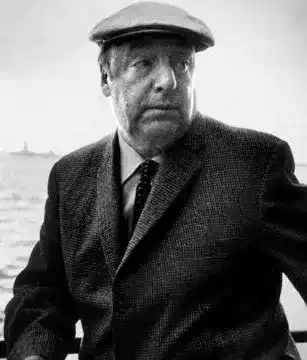
Pablo Neruda
XVII (I do not love you...)
I do not love you as if you were salt-rose, or topaz,
or the arrow of carnations the fire shoots off.
I love you as certain dark things are to be loved,
in secret, between the shadow and the soul.
I love you as the plant that never blooms
but carries in itself the light of hidden flowers;
thanks to your love a certain solid fragrance,
risen from the earth, lives darkly in my body.
I love you without knowing how, or when, or from where.
I love you straightforwardly, without complexities or pride;
so I love you because I know no other way
than this: where I does not exist, nor you,
so close that your hand on my chest is my hand,
so close that your eyes close as I fall asleep.
Translated by Stephen Tapscott
Anonymous Submission
1,620
Elizabeth Barrett Browning
Sonnet III
Unlike are we, unlike, O princely Heart !
Unlike our uses and our destinies.
Our ministering two angels look surprise
On one another, as they strike athwart
Their wings in passing. Thou, bethink thee, art
A guest for queens to social pageantries,
With gages from a hundred brighter eyes
Than tears even can make mine, to play thy part
Of chief musician. What hast thou to do
With looking from the lattice-lights at me,
A poor, tired, wandering singer, singing through
The dark, and leaning up a cypress tree ?
The chrism is on thine head,--on mine, the dew,--
And Death must dig the level where these agree.
1,396

William Shakespeare
Sonnet 29: When in disgrace with fortune and men's eyes
When in disgrace with fortune and men's eyes,
I all alone beweep my outcast state,
And trouble deaf heaven with my bootless cries,
And look upon myself and curse my fate,
wishing me like to one more rich in hope,
Featured like him, like him with friends possessed,
Desiring this man's art, and that man's scope,
With what I most enjoy contented least;
Yet in these thoughts myself almost despising,
Haply I think on thee--and then my state,
Like to the lark at break of day arising
From sullen earth sings hymns at heaven's gate;
For thy sweet love remembered such wealth brings,
That then I scorn to change my state with kings.
1,345

Henry Wadsworth Longfellow
By The Seaside : The Evening Star
Lo! in the paintedoriel of the West,
Whose panes the sunken sun incarnadines,
Like a fair lady at her casement, shines
The evening star, the star of love and rest!
And then anon she doth herself divest
Of all her radiant garments, and reclines
Behind the sombre screen of yonder pines,
With slumber and soft dreams of love oppressed.
O my beloved, my sweet Hesperus!
My morning and my evening star of love!
My best and gentlest lady! even thus,
As that fair planet in the sky above,
Dost thou retire unto thy rest at night,
And from thy darkened window fades the light.
1,238

Lord Byron
Sonnet - to Genevra
Thy cheek is pale with thought, but not from woe,
And yet so lovely, that if Mirth could flush
Its rose of whiteness with the brightest blush,
My heart would wish away that ruder glow:
And dazzle not thy deepblue
eyesbut,
oh!
While gazing on them sterner eyes will gush,
And into mine my mother's weakness rush,
Soft as the last drops round Heaven's airy bow.
For, though thy long dark lashes low depending,
The soul of melancholy Gentleness
Gleams like a Seraph from the sky descending,
Above all pain, yet pitying all distress;
At once such majesty with sweetness blending,
I worship more, but cannot love thee less.
1,189
Oscar Wilde
Canzonet
I have no store
Of gryphon-guarded gold;
Now, as before,
Bare is the shepherd's fold.
Rubies nor pearls
Have I to gem thy throat;
Yet woodland girls
Have loved the shepherd's note.
Then pluck a reed
And bid me sing to thee,
For I would feed
Thine ears with melody,
Who art more fair
Than fairest fleur-de-lys,
More sweet and rare
Than sweetest ambergris.
What dost thou fear?
Young Hyacinth is slain,
Pan is not here,
And will not come again.
No horned Faun
Treads down the yellow leas,
No God at dawn
Steals through the olive trees.
Hylas is dead,
Nor will he e'er divine
Those little red
Rose-petalled lips of thine.
On the high hill
No ivory dryads play,
Silver and still
Sinks the sad autumn day.
958
Oscar Wilde
La Bella Donna Della Mia Mente
MY limbs are wasted with a flame,
My feet are sore with travelling,
For calling on my Lady's name
My lips have now forgot to sing.
O Linnet in the wild-rose brake
Strain for my Love thy melody,
O Lark sing louder for love's sake,
My gentle Lady passeth by.
She is too fair for any man
To see or hold his heart's delight,
Fairer than Queen or courtezan
Or moon-lit water in the night.
Her hair is bound with myrtle leaves,
(Green leaves upon her golden hair!)
Green grasses through the yellow sheaves
Of autumn corn are not more fair.
Her little lips, more made to kiss
Than to cry bitterly for pain,
Are tremulous as brook-water is,
Or roses after evening rain.
Her neck is like white melilote
Flushing for pleasure of the sun,
The throbbing of the linnet's throat
Is not so sweet to look upon.
As a pomegranate, cut in twain,
White-seeded, is her crimson mouth,
Her cheeks are as the fading stain
Where the peach reddens to the south.
O twining hands! O delicate
White body made for love and pain!
O House of love! O desolate
Pale flower beaten by the rain!
949
William Shakespeare
Sonnet 98: From you have I been absent in the spring
From you have I been absent in the spring,
When proud-pied April, dressed in all his trim,
Hath put a spirit of youth in every thing,
That heavy Saturn laughed and leaped with him.
Yet nor the lays of birds, nor the sweet smell
Of different flowers in odour and in hue
Could make me any summer's story tell,
Or from their proud lap pluck them where they grew.
Nor did I wonder at the lily's white,
Nor praise the deep vermilion in the rose;
They were but sweet, but figures of delight
Drawn after you, you pattern of all those.
Yet seemed it winter still, and you away,
As with your shadow I with these did play.
974

John Milton
Sonnet to the Nightingale
O nightingale that on yon blooming spray
Warblest at eve, when all the woods are still,
Thou with fresh hopes the Lover’s heart dost fill,
While the jolly Hours lead on propitious May.
Thy liquid notes that close the eye of Day,
First heard before the shallow cuckoo’s bill,
Portend success in love. O if Jove’s will
Have linked that amorous power to thy soft lay,
Now timely sing, ere the rude bird of hate
Foretell my hopeless doom, in some grove nigh;
As thou from year to year hast sung too late
For my relief, yet had’st no reason why.
Whether the Muse or Love call thee his mate,
Both them I serve, and of their train am I.
958
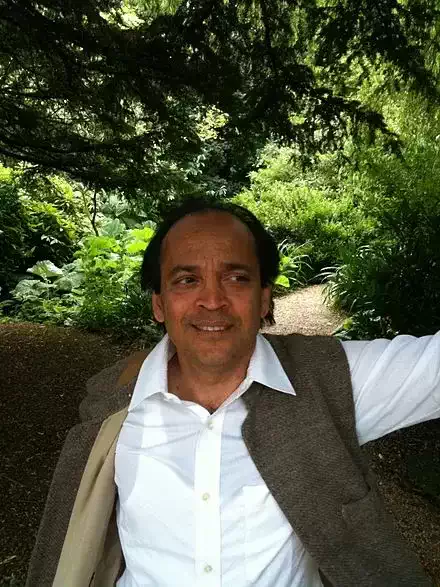
Vikram Seth
A Style Of Loving
Light now restricts itself
To the top half of trees;
The angled sun
Slants honey-coloured rays
That lessen to the ground
As we bike through
The corridor of Palm Drive
We two
Have reached a safety the years
Can claim to have created:
Unconsumated, therefore
Unjaded, unsated.
Picnic, movie, ice-cream;
Talk; to clear my head
Hot buttered rum - coffee for you;
And so not to bed
And so we have set the question
Aside, gently.
Were we to become lovers
Where would our best friends be?
You do not wish, nor I
To risk again
This savoured light for noon's
High joy or pain.
918
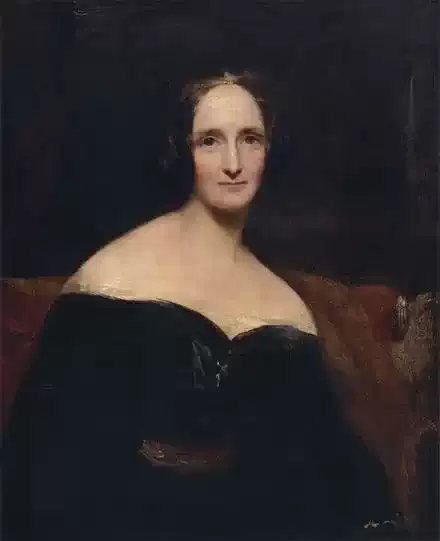
Percy Bysshe Shelley
To ----
ONE word is too often profaned
For me to profane it;
One feeling too falsely disdain'd
For thee to disdain it;
One hope is too like despair
For prudence to smother;
And pity from thee more dear
Than that from another.
I can give not what men call love:
But wilt thou accept not
The worship the heart lifts above
And the heavens reject not,
The desire of the moth for the star,
Of the night for the morrow,
The devotion to something afar
From the sphere of our sorrow?
933
Elizabeth Barrett Browning
Sonnet IX
Can it be right to give what I can give ?
To let thee sit beneath the fall of tears
As salt as mine, and hear the sighing years
Re-sighing on my lips renunciative
Through those infrequent smiles which fail to live
For all thy adjurations ? O my fears,
That this can scarce be right ! We are not peers,
So to be lovers; and I own, and grieve,
That givers of such gifts as mine are, must
Be counted with the ungenerous. Out, alas !
I will not soil thy purple with my dust,
Nor breathe my poison on thy Venice-glass,
Nor give thee any love--which were unjust.
Beloved, I only love thee ! let it pass.
925
Elizabeth Barrett Browning
Sonnet XVII: My Poet, Thou Canst Touch
My poet, thou canst touch on all the notes
God set between his After and Before,
And strike up and strike off the general roar
Of the rushing worlds a melody that floats
In a serene air purely. Antidotes
Of medicated music, answering for
Mankind's forlornest uses, thou canst pour
From thence into their ears. God's will devotes
Thine to such ends, and mine to wait on thine.
How, Dearest, wilt thou have me for most use?
A hope, to sing by gladly? or a fine
Sad memory, with thy songs to interfuse?
A shade, in which to sing--of palm or pine?
A grave, on which to rest from singing? Choose.
911
Oscar Wilde
On the Sale by Auction of Keat's Love-Letters
These are the letters which Endymion wrote
To one he loved in secret and apart,
And now the brawlers of the auction-mart
Bargain and bid for each poor blotted note,
Aye! for each separate pulse of passion quote
The merchant's price! I think they love not art
Who break the crystal of a poet's heart,
That small and sickly eyes may glare or gloat.
Is it not said, that many years ago,
In a far Eastern town some soldiers ran
With torches through the midnight, and began
To wrangle for mean raiment, and to throw
Dice for the garments of a wretched man,
Not knowing the God's wonder, or his woe?
888

Kazi Nazrul Islam
You Are So Handsome
You are so handsome that I can't take my eye off you,
is that my crime?
The bird that cries beholding the moon doesn't bother the moon.
I watch the flower's gradual unfolding, but the flower
doesn't mind
Nor does the cloud when the admiring bird circles round it.
The sun-flower knows it will never get the sun, and yet
undismay'd
It watches its sovereign, it is content just watching
I've got the gift of vision so that I may see you,
you beautiful being
Let this wish of mine be realized, my dearest one.
[Original: Tumi shundor tai cheye thaki; Translation: Abu Rushd]
859

Alfred Lord Tennyson
The Lady of Shalott (1842)
PART I
On either side the river lie
Long fields of barley and of rye,
That clothe the wold and meet the sky;
And thro' the field the road runs by
To many-tower'd Camelot;
And up and down the people go,
Gazing where the lilies blow
Round an island there below,
The island of Shalott.
Willows whiten, aspens quiver,
Little breezes dusk and shiver
Thro' the wave that runs for ever
By the island in the river
Flowing down to Camelot.
Four gray walls, and four gray towers,
Overlook a space of flowers,
And the silent isle imbowers
The Lady of Shalott.
By the margin, willow veil'd,
Slide the heavy barges trail'd
By slow horses; and unhail'd
The shallop flitteth silken-sail'd
Skimming down to Camelot:
But who hath seen her wave her hand?
Or at the casement seen her stand?
Or is she known in all the land,
The Lady of Shalott?
Only reapers, reaping early
In among the bearded barley,
Hear a song that echoes cheerly
From the river winding clearly,
Down to tower'd Camelot:
And by the moon the reaper weary,
Piling sheaves in uplands airy,
Listening, whispers " 'Tis the fairy
Lady of Shalott."PART II
There she weaves by night and day
A magic web with colours gay.
She has heard a whisper say,
A curse is on her if she stay
To look down to Camelot.
She knows not what the curse may be,
And so she weaveth steadily,
And little other care hath she,
The Lady of Shalott.
And moving thro' a mirror clear
That hangs before her all the year,
Shadows of the world appear.
There she sees the highway near
Winding down to Camelot:
There the river eddy whirls,
And there the surly village-churls,
And the red cloaks of market girls,
Pass onward from Shalott.
Sometimes a troop of damsels glad,
An abbot on an ambling pad,
Sometimes a curly shepherd-lad,
Or long-hair'd page in crimson clad,
Goes by to tower'd Camelot;
And sometimes thro' the mirror blue
The knights come riding two and two:
She hath no loyal knight and true,
The Lady of Shalott.
But in her web she still delights
To weave the mirror's magic sights,
For often thro' the silent nights
A funeral, with plumes and lights
And music, went to Camelot:
Or when the moon was overhead,
Came two young lovers lately wed:
"I am half sick of shadows," said
The Lady of Shalott.PART III
A bow-shot from her bower-eaves,
He rode between the barley-sheaves,
The sun came dazzling thro' the leaves,
And flamed upon the brazen greaves
Of bold Sir Lancelot.
A red-cross knight for ever kneel'd
To a lady in his shield,
That sparkled on the yellow field,
Beside remote Shalott.
The gemmy bridle glitter'd free,
Like to some branch of stars we see
Hung in the golden Galaxy.
The bridle bells rang merrily
As he rode down to Camelot:
And from his blazon'd baldric slung
A mighty silver bugle hung,
And as he rode his armour rung,
Beside remote Shalott.
All in the blue unclouded weather
Thick-jewell'd shone the saddle-leather,
The helmet and the helmet-feather
Burn'd like one burning flame together,
As he rode down to Camelot.
As often thro' the purple night,
Below the starry clusters bright,
Some bearded meteor, trailing light,
Moves over still Shalott.
His broad clear brow in sunlight glow'd;
On burnish'd hooves his war-horse trode;
From underneath his helmet flow'd
His coal-black curls as on he rode,
As he rode down to Camelot.
From the bank and from the river
He flash'd into the crystal mirror,
"Tirra lirra," by the river
Sang Sir Lancelot.
She left the web, she left the loom,
She made three paces thro' the room,
She saw the water-lily bloom,
She saw the helmet and the plume,
She look'd down to Camelot.
Out flew the web and floated wide;
The mirror crack'd from side to side;
"The curse is come upon me," cried
The Lady of Shalott.PART IV
In the stormy east-wind straining,
The pale yellow woods were waning,
The broad stream in his banks complaining,
Heavily the low sky raining
Over tower'd Camelot;
Down she came and found a boat
Beneath a willow left afloat,
And round about the prow she wrote
The Lady of Shalott.
And down the river's dim expanse
Like some bold seër in a trance,
Seeing all his own mischance-With
a glassy countenance
Did she look to Camelot.
And at the closing of the day
She loosed the chain, and down she lay;
The broad stream bore her far away,
The Lady of Shalott.
Lying, robed in snowy white
That loosely flew to left and right-The
leaves upon her falling light-Thro'
the noises of the night
She floated down to Camelot:
And as the boat-head wound along
The willowy hills and fields among,
They heard her singing her last song,
The Lady of Shalott.
Heard a carol, mournful, holy,
Chanted loudly, chanted lowly,
Till her blood was frozen slowly,
And her eyes were darken'd wholly,
Turn'd to tower'd Camelot.
For ere she reach'd upon the tide
The first house by the water-side,
Singing in her song she died,
The Lady of Shalott.
Under tower and balcony,
By garden-wall and gallery,
A gleaming shape she floated by,
Dead-pale between the houses high,
Silent into Camelot.
Out upon the wharfs they came,
Knight and burgher, lord and dame,
And round the prow they read her name,
The Lady of Shalott.
Who is this? and what is here?
And in the lighted palace near
Died the sound of royal cheer;
And they cross'd themselves for fear,
All the knights at Camelot:
But Lancelot mused a little space;
He said, "She has a lovely face;
God in his mercy lend her grace,
The Lady of Shalott."
833

William Blake
The Lily
The modest Rose puts forth a thorn,
The humble sheep a threat'ning horn:
While the Lily white shall in love delight,
Nor a thorn nor a threat stain her beauty bright.
The humble sheep a threat'ning horn:
While the Lily white shall in love delight,
Nor a thorn nor a threat stain her beauty bright.
840
Elizabeth Barrett Browning
Sonnet XXVI: I Lived With Visions
I lived with visions for my company
Instead of men and women, years ago,
And found them gentle mates, nor thought to know
A sweeter music than they played to me.
But soon their trailing purple was not free
Of this world's dust, their lutes did silent grow,
And I myself grew faint and blind below
Their vanishing eyes. Then thou didst come--to be,
Belovèd, what they seemed. Their shining fronts,
Their songs, their splendors (better, yet the same,
As river water hallowed into fonts),
Met in thee, and from out thee overcame
My soul with satisfaction of all wants:
Because God's gifts put man's best dreams to shame.
813
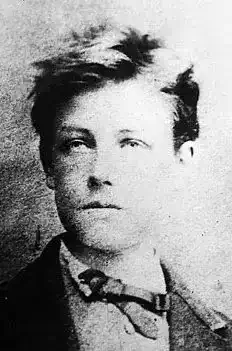
Arthur Rimbaud
L'Idole.. Sonnet Du Trou Du Cul
Obscur et froncé comme un oeillet violet
Il respire, humblement tapi parmi la mousse.
Humide encor d'amour qui suit la fuite douce
Des Fesses blanches jusqu'au coeur de son ourlet.
Des filaments pareils à des larmes de lait
Ont pleuré, sous le vent cruel qui les repousse,
À travers de petits caillots de marne rousse
Pour s'aller perdre où la pente les appelait.
Mon Rêve s'aboucha souvent à sa ventouse ;
Mon âme, du coït matériel jalouse,
En fit son larmier fauve et son nid de sanglots.
C'est l'olive pâmée, et la flûte caline ;
C'est le tube où descend la céleste praline :
Chanaan féminin dans les moiteurs enclos !
Albert Mérat.
The Idol.
Sonnet to an Asshole
Dark and wrinkled like a purple pink
It breathes, nestling humbly among the still-damp
Froth of love that follows the gentle slope
Of the white buttocks to its crater's edge.
Filaments like tears of milk
Have wept in the cruel wind which pushes them back,
Across little clots of reddish marl
To lose themselves where the slope called them.
My dream has often kissed its opening;
My soul, jealous of physical coitus,
Has made this its fawn-coloured tear-bottle and its nest of sobs.
It is the rapturous olive and the wheedling flute,
The tube from which the heavenly burnt almond falls:
Feminine Canaan enclosed among moistures.
Albert Mérat.
P.V.-A.R.
795
Elizabeth Barrett Browning
Sonnet XX: Belovèd, My Belovèd
Belovèd, my Belovèd, when I think
That thou wast in the world a year ago,
What time I sat alone here in the snow
And saw no footprint, heard the silence sink
No moment at thy voice, but, link by link
Went counting all my chains as if that so
They never could fall off at any blow
Struck by thy possible hand,--why, thus I drink
Of life's great cup of wonder! Wonderful,
Never to feel thee thrill the day or night
With personal act or speech,--nor ever cull
Some prescience of thee with the blossoms white
Thou sawest growing! Atheists are as dull
Who cannot guess God's presence out of sight.
757
Oscar Wilde
Ave Maria Gratia Plena
Was this His coming! I had hoped to see
A scene of wondrous glory, as was told
Of some great God who in a rain of gold
Broke open bars and fell on Danae:
Or a dread vision as when Semele
Sickening for love and unappeased desire
Prayed to see God's clear body, and the fire
Caught her brown limbs and slew her utterly:
With such glad dreams I sought this holy place,
And now with wondering eyes and heart I stand
Before this supreme mystery of Love:
Some kneeling girl with passionless pale face,
An angel with a lily in his hand,
And over both the white wings of a Dove.
FLORENCE.
739

Emily Dickinson
Why do I love You, Sir?
"Why do I love" You, Sir?
Because-
The Wind does not require the Grass
To answer-Wherefore when He pass
She cannot keep Her place.
Because He knows-and
Do not You-
And We know not-
Enough for Us
The Wisdom it be so-
The Lightning-never asked an Eye
Wherefore it shut-when He was by-
Because He knows it cannot speak-
And reasons not contained-
Of Talk-
There be-preferred by Daintier Folk-
The Sunrise-Sire-compelleth Me-
Because He's Sunrise-and I see
Therefore-
Then-
I love Thee-
732
Page 1
Next