
Faith, Spirituality and Religion
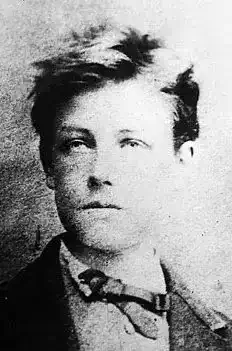
Arthur Rimbaud
Sun And Flesh (Credo In Unam)
Birth of Venus
I
The Sun, the hearth of affection and life,
Pours burning love on the delighted earth,
And when you lie down in the valley, you can smell
How the earth is nubile and very full-blooded;
How its huge breast, heaved up by a soul,
Is, like God, made of love, and, like woman, of flesh,
And that it contains, big with sap and with sunlight,
The vast pullulation of all embryos!
And everything grows, and everything rises!
-O Venus, O Goddess!
I long for the days of antique youth,
Of lascivious satyrs, and animal fauns,
Gods who bit, mad with love, the bark of the boughs,
And among water-lilies kissed the Nymph with fair hair!
I long for the time when the sap of the world,
River water, the rose-coloured blood of green trees
Put into the veins of Pan a whole universe!
When the earth trembled, green,beneath his goat-feet;
When, softly kissing the fair Syrinx, his lips formed
Under heaven the great hymn of love;
When, standing on the plain, he heard round about him
Living Nature answer his call;
When the silent trees cradling the singing bird,
Earth cradling mankind, and the whole blue Ocean,
And all living creatures loved, loved in God!
I long for the time of great Cybele,
Who was said to travel, gigantically lovely,
In a great bronze chariot, through splendid cities;
Her twin breasts poured, through the vast deeps,
The pure streams of infinite life.
Mankind sucked joyfully at her blessed nipple,
Like a small child playing on her knees.
-Because he was strong, Man was gentle and chaste.
Misfortune! Now he says: I understand things,
And goes about with eyes shut and ears closed.
-And again, no more gods! no more gods! Man is King,
Man is God! But the great faith is Love!
Oh! if only man still drew sustenance from your nipple,
Great mother of gods and of men, Cybele;
If only he had not forsaken immortal Astarte
Who long ago, rising in the tremendous brightness
Of blue waters, flower-flesh perfumed by the wave,
Showed her rosy navel, towards which the foam came snowing
And , being a goddess with the great conquering black eyes,
Made the nightingale sing in the woods and love in men's hearts!
The Birth of Venus
II
I believe! I believe in you! divine mother,
Sea-born Aphrodite! - Oh! the path is bitter
Since the other God harnessed us to his cross;
Flesh, Marble, Flower, Venus, in you I believe!
-yes, Man is sad and ugly, sad under the vast sky.
He possesses clothes, because he is no longer chaste,
Because he has defiled his proud, godlike head
And because he has bent, like an idol in the furnace,
His Olympian form towards base slaveries!
Yes, even after death, in the form of pale skeletons
He wishes to live and insult the original beauty!
-And the Idol in whom you placed such maidenhood,
Woman, in whom you rendered our clay divine,
So that Man might bring light into his poor soul
And slowly ascend, in unbounded love,
From the earthly prison to the beauty of day,
Woman no longer knows even how to be a Courtesan!
-It's a fine farce! and the world snickers
At the sweet and sacred name of great Venus!
III
If only the times which have come and gone might come again!
-For Man is finished! Man has played all the parts!
In the broad daylight, wearied with breaking idols
He will revive, free of all his gods,
And, since he is of heaven, he will scan the heavens!
The Ideal, that eternal, invincible thought, which is
All; The living god within his fleshly clay,
Will rise, mount, burn beneath his brow!
An when you see him plumbing the whole horizon,
Despising old yokes, and free from all fear,
You will come and give him holy Redemption!
-Resplendent, radiant, from the bosom of the huge seas
You will rise up and give to the vast Universe
Infinite Love with its eternal smile!
The World will vibrate like an immense lyre
In the trembling of an infinite kiss!
-The World thirsts for love: you will come and slake its thirst.
....................................................
O! Man has raised his free, proud head!
And the sudden blaze of primordial beauty
Makes the god quiver in the altar of the flesh!
Happy in the present good, pale from the ill suffered,
Man wishes to plumb all depths, - and know all things! Thought,
So long a jade, and for so long oppressed,
Springs from his forehead! She will know Why!...
Let her but gallop free, and Man will find Faith!
-Why the blue silence, unfathomable space?
Why the golden stars, teeming like sands?
If one ascended forever, what would one see up there?
Does a sheperd drive this enormous flock
Of worlds on a journey through this horror of space?
And do all these worlds contained in the vast ether,
tremble at the tones of an eternal voice?
-And Man, can he see? can he say: I believe?
Is the langage of thought anymore than a dream?
If man is born so quickly, if life is so short
Whence does he come? Does he sink into the deep Ocean
Of Germs, of Foetuses, of Embryos, to the bottom
of the huge Crucible where Nature the Mother
Will resuscitate him, a living creature,
To love in the rose and to grow in the corn?...
We cannot know! - We are weighed down
With a cloak of ignorance, hemmed in by chimaeras!
Men like apes, dropped from our mothers' wombs,
Our feeble reason hides the infinite from us!
We wish to perceive: - and Doubt punishes us!
Doubt, dismal bird, beat us down with its wing...
-And the horizon rushes away in endless flight!...
.......................................................
The vast heaven is open! the mysteries lie dead
Before erect Man, who folds his strong arms
Among the vast splendour of abundant Nature!
He sings... and the woods sing, the river murmurs
A song full of happiness which rises towards the light!...
-it is Redemption! it is love! it is love!...
IV
O splendour of flesh! O ideal splendour!
O renewal of love, triumphal dawn
When, prostrating the Gods and the Heroes,
White Callipyge and little Eros
Covered with the snow of rose petals, will caress
Women and flowers beneath their lovely outstretched feet!
-O great Ariadne who pour out your tears
On the shore, as you see, out there on the waves,
The sail of Theseus flying white under the sun,
O sweet virgin child whom a night has broken,
Be silent! On his golden chariot studded with black grapes,
Lysios, who has been drawn through Phrygian fields
By lascivious tigers and russet panthers,
Reddens the dark mosses along the blue rivers.
-Zeus, the Bull, cradles on his neck like a child
The nude body of Europa who throws her white arm
Round the God's muscular neck which shivers in the wave.
Slowly he turns his dreamy eye towards her;
She, droops her pale flowerlike cheek
On the brow of Zeus; her eyes are closed; she is dying
In a divine kiss, and the murmuring waters
Strew the flowers of their golden foam on her hair.
-Between the oleander and the gaudy lotus tree
Slips amorously the great dreaming Swan
Enfloding Leda in the whiteness of his wing;
-And while Cypris goes by, strangely beautiful,
And, arching the marvellous curves of her back,
Proudly displays the golden vision of her big breasts
And snowy belly embroidered with black moss,
-Hercules, Tamer of beasts, in his Strength,
Robes his huge body with the lion's skin as with glory
And faces the horizons, his brow terrible and sweet!
Vaguely lit by the summer moon,
Erect, naked, dreaming in her pallor of gold
Streaked by the heavy wave of her long blue hair,
In the shadowy glade whenre stars spring in the moss,
The Dryade gazes up at the silent sky...
-White Selene, timidly, lets her veil float,
Over the feet of beautiful Endymion,
And throws him a kiss in a pale beam...
-The Spring sobs far off in a long ectasy...
Ii is the nymph who dreams with one elbow on her urn,
Of the handsome white stripling her wave has pressed against.
-A soft wind of love has passed in the night,
And in the sacred woods, amid the standing hair of the great trees,
Erect in majesty, the shadowly Marbles,
The Gods, on whose brows the Bullfinch has his nest,
-the Gods listen to Men, and to the infinite World!
Original French
Soleil et Chair
I
Le Soleil, le foyer de tendresse et de vie,
Verse l'amour brûlant à la terre ravie,
Et, quand on est couché sur la vallée, on sent
Que la terre est nubile et déborde de sang ;
Que son immense sein, soulevé par une âme,
Est d'amour comme Dieu, de chair comme la femme,
Et qu'il renferme, gros de sève et de rayons,
Le grand fourmillement de tous les embryons !
Et tout croît, et tout monte !
spacespacespacespacespacespace- O Vénus, ô Déesse !
Je regrette les temps de l'antique jeunesse,
Des satyres lascifs, des faunes animaux,
Dieux qui mordaient d'amour l'écorce des rameaux
Et dans les nénuphars baisaient la Nymphe blonde !
Je regrette les temps où la sève du monde,
L'eau du fleuve, le sang rose des arbres verts
Dans les veines de Pan mettaient un univers !.
Où le sol palpitait, vert, sous ses pieds de chèvre ;
Où, baisant mollement le clair syrinx, sa lèvre
Modulait sous le ciel le grand hymne d'amour ;
Où, debout sur la plaine, il entendait autour
Répondre à son appel la Nature vivante ;
Où les arbres muets, berçant l'oiseau qui chante,
La terre berçant l'homme, et tout l'Océan bleu
Et tous les animaux aimaient, aimaient en Dieu !
Soleil et Chair, Suite
Je regrette les temps de la grande Cybèle
Qu'on disait parcourir, gigantesquement belle,
Sur un grand char d'airain, les splendides cités ;
Son double sein versait dans les immensités
Le pur ruissellement de la vie infinie.
L'Homme suçait, heureux, sa mamelle bénie,
Comme un petit enfant, jouant sur ses genoux.
-Parce qu'il était fort, l'Homme était chaste et doux.
Misère ! Maintenant il dit : Je sais les choses,
Et va, les yeux fermés et les oreille closes.
-Et pourtant, plus de dieux ! plus de dieux ! l'Homme est Roi,
L'Homme est Dieu ! Mais l'Amour, voilà la grande Foi !
Oh ! si l'homme puisait encore à ta mamelle,
Grande mère des dieux et des hommes, Cybèle ;
S'il n'avait pas laissé l'immortelle Astarté
Qui jadis, émergeant dans l'immense clarté
Des flots bleus, fleur de chair que la vague parfume,
Montra son nombril rose où vint neiger l'écume,
Et fit chanter, Déesse aux grands yeux noirs vainqueurs,
Le rossignol aux bois et l'amour dans les coeurs !
II
Je crois en toi ! Je crois en toi ! divine mère,
Aphrodite marine ! - Oh ! la route est amère
Depuis que l'autre Dieu nous attelle à sa croix ;
Chair, Marbre, Fleur, Vénus, c'est en toi que je crois !
-Oui, l'Homme est triste et laid, triste sous le ciel vaste,
Il a des vêtements, parce qu'il n'est plus chaste,
Parce qu'il a sali son fier buste de Dieu,
Et qu'il a rabougri, comme une idole au feu,
Son corps Olympien aux servitudes sales !
Oui, même après la mort, dans les squelettes pâles
Il veut vivre, insultant la première beauté !
-Et l'Idole où tu mis tant de virginité,
Où tu divinisas notre argile, la Femme,
Afin que l'Homme pût éclairer sa pauvre âme
Et monter lentement, dans un immense amour,
De la prison terrestre à la beauté du jour,
La Femme ne sait plus même être Courtisane !
-C'est une bonne farce ! et le monde ricane
Au nom doux et sacré de la grande Vénus !
III
Si les temps revenaient, les temps qui sont venus !
-Car l'Homme a fini ! l'Homme a joué tous les rôles !
Au grand jour, fatigué de briser des idoles
Il ressuscitera, libre de tous ses Dieux,
Et, comme il est du ciel, il scrutera les cieux !
L'idéal, la pensée invincible, éternelle,
Tout ; le dieu qui vit, sous son argile charnelle,
Montera, montera, brûlera sous son front !
Et quand tu le verras sonder tout l'horizon,
Contempteur des vieux jougs, libre de toute crainte,
Tu viendras lui donner la Rédemption sainte !
-Splendide, radieuse, au sein des grandes mers
Tu surgiras, jetant sur le vaste Univers
L'Amour infini dans un infini sourire !
Le Monde vibrera comme une immense lyre
Dans le frémissement d'un immense baiser
-Le Monde a soif d'amour : tu viendras l'apaiser.
IV
O splendeur de la chair ! ô splendeur idéale !
O renouveau d'amour, aurore triomphale
Où, courbant à leurs pieds les Dieux et les Héros,
Kallipyge la blanche et le petit Éros
Effleureront, couverts de la neige des roses,
Les femmes et les fleurs sous leurs beaux pieds écloses !
-O grande Ariadné, qui jette tes sanglots
Sur la rive, en voyant fuir là-bas sur les flots
Blanche sous le soleil, la voile de Thésée,
O douce vierge enfant qu'une nuit a brisée,
Tais-toi ! Sur son char d'or brodé de noirs raisins,
Lysios, promené dans les champs Phrygiens
Par les tigres lascifs et les panthères rousses,
Le long des fleuves bleus rougit les sombres mousses.
-Zeus, Taureau, sur son cou berce comme une enfant
Le corps nu d'Europé, qui jette son bras blanc
Au cou nerveux du Dieu frissonnant dans la vague
Il tourne lentement vers elle son oeil vague ;
Elle, laisse traîner sa pâle joue en fleur
Au front de Zeus ; ses yeux sont fermés ; elle meurt
Dans un divin baiser, et le flot qui murmure
De son écume d'or fleurit sa chevelure.
-Entre le laurier-rose et le lotus jaseur
Glisse amoureusement le grand Cygne rêveur
Embrassant la Léda des blancheurs de son aile ;
-Et tandis que Cypris passe, étrangement belle,
Et, cambrant les rondeurs splendides de ses reins,
Étale fièrement l'or de ses larges seins
Et son ventre neigeux brodé de mousse noire,
-Héraclès, le Dompteur, qui, comme d'une gloire
Fort, ceint son vaste corps de la peau du lion,
S'avance, front terrible et doux, à l'horizon !
Par la lune d'été vaguement éclairée,
Debout, nue, et rêvant dans sa pâleur dorée
Que tache le flot lourd de ses longs cheveux bleus,
Dans la clairière sombre, où la mousse s'étoile,
La Dryade regarde au ciel silencieux....
-La blanche Séléné laisse flotter son voile,
Craintive, sur les pieds du bel Endymion,
Et lui jette un baiser dans un pâle rayon...
-La Source pleure au loin dans une longue extase...
C'est la nymphe qui rêve, un coude sur son vase,
Au beau jeune homme blanc que son onde a pressé.
-Une brise d'amour dans la nuit a passé,
Et, dans les bois sacrés, dans l'horreur des grands arbres,
Majestueusement debout, les sombres Marbres,
Les Dieux, au front desquels le Bouvreuil fait son nid,
-Les Dieux écoutent l'homme et le Monde infini !
I
The Sun, the hearth of affection and life,
Pours burning love on the delighted earth,
And when you lie down in the valley, you can smell
How the earth is nubile and very full-blooded;
How its huge breast, heaved up by a soul,
Is, like God, made of love, and, like woman, of flesh,
And that it contains, big with sap and with sunlight,
The vast pullulation of all embryos!
And everything grows, and everything rises!
-O Venus, O Goddess!
I long for the days of antique youth,
Of lascivious satyrs, and animal fauns,
Gods who bit, mad with love, the bark of the boughs,
And among water-lilies kissed the Nymph with fair hair!
I long for the time when the sap of the world,
River water, the rose-coloured blood of green trees
Put into the veins of Pan a whole universe!
When the earth trembled, green,beneath his goat-feet;
When, softly kissing the fair Syrinx, his lips formed
Under heaven the great hymn of love;
When, standing on the plain, he heard round about him
Living Nature answer his call;
When the silent trees cradling the singing bird,
Earth cradling mankind, and the whole blue Ocean,
And all living creatures loved, loved in God!
I long for the time of great Cybele,
Who was said to travel, gigantically lovely,
In a great bronze chariot, through splendid cities;
Her twin breasts poured, through the vast deeps,
The pure streams of infinite life.
Mankind sucked joyfully at her blessed nipple,
Like a small child playing on her knees.
-Because he was strong, Man was gentle and chaste.
Misfortune! Now he says: I understand things,
And goes about with eyes shut and ears closed.
-And again, no more gods! no more gods! Man is King,
Man is God! But the great faith is Love!
Oh! if only man still drew sustenance from your nipple,
Great mother of gods and of men, Cybele;
If only he had not forsaken immortal Astarte
Who long ago, rising in the tremendous brightness
Of blue waters, flower-flesh perfumed by the wave,
Showed her rosy navel, towards which the foam came snowing
And , being a goddess with the great conquering black eyes,
Made the nightingale sing in the woods and love in men's hearts!
The Birth of Venus
II
I believe! I believe in you! divine mother,
Sea-born Aphrodite! - Oh! the path is bitter
Since the other God harnessed us to his cross;
Flesh, Marble, Flower, Venus, in you I believe!
-yes, Man is sad and ugly, sad under the vast sky.
He possesses clothes, because he is no longer chaste,
Because he has defiled his proud, godlike head
And because he has bent, like an idol in the furnace,
His Olympian form towards base slaveries!
Yes, even after death, in the form of pale skeletons
He wishes to live and insult the original beauty!
-And the Idol in whom you placed such maidenhood,
Woman, in whom you rendered our clay divine,
So that Man might bring light into his poor soul
And slowly ascend, in unbounded love,
From the earthly prison to the beauty of day,
Woman no longer knows even how to be a Courtesan!
-It's a fine farce! and the world snickers
At the sweet and sacred name of great Venus!
III
If only the times which have come and gone might come again!
-For Man is finished! Man has played all the parts!
In the broad daylight, wearied with breaking idols
He will revive, free of all his gods,
And, since he is of heaven, he will scan the heavens!
The Ideal, that eternal, invincible thought, which is
All; The living god within his fleshly clay,
Will rise, mount, burn beneath his brow!
An when you see him plumbing the whole horizon,
Despising old yokes, and free from all fear,
You will come and give him holy Redemption!
-Resplendent, radiant, from the bosom of the huge seas
You will rise up and give to the vast Universe
Infinite Love with its eternal smile!
The World will vibrate like an immense lyre
In the trembling of an infinite kiss!
-The World thirsts for love: you will come and slake its thirst.
....................................................
O! Man has raised his free, proud head!
And the sudden blaze of primordial beauty
Makes the god quiver in the altar of the flesh!
Happy in the present good, pale from the ill suffered,
Man wishes to plumb all depths, - and know all things! Thought,
So long a jade, and for so long oppressed,
Springs from his forehead! She will know Why!...
Let her but gallop free, and Man will find Faith!
-Why the blue silence, unfathomable space?
Why the golden stars, teeming like sands?
If one ascended forever, what would one see up there?
Does a sheperd drive this enormous flock
Of worlds on a journey through this horror of space?
And do all these worlds contained in the vast ether,
tremble at the tones of an eternal voice?
-And Man, can he see? can he say: I believe?
Is the langage of thought anymore than a dream?
If man is born so quickly, if life is so short
Whence does he come? Does he sink into the deep Ocean
Of Germs, of Foetuses, of Embryos, to the bottom
of the huge Crucible where Nature the Mother
Will resuscitate him, a living creature,
To love in the rose and to grow in the corn?...
We cannot know! - We are weighed down
With a cloak of ignorance, hemmed in by chimaeras!
Men like apes, dropped from our mothers' wombs,
Our feeble reason hides the infinite from us!
We wish to perceive: - and Doubt punishes us!
Doubt, dismal bird, beat us down with its wing...
-And the horizon rushes away in endless flight!...
.......................................................
The vast heaven is open! the mysteries lie dead
Before erect Man, who folds his strong arms
Among the vast splendour of abundant Nature!
He sings... and the woods sing, the river murmurs
A song full of happiness which rises towards the light!...
-it is Redemption! it is love! it is love!...
IV
O splendour of flesh! O ideal splendour!
O renewal of love, triumphal dawn
When, prostrating the Gods and the Heroes,
White Callipyge and little Eros
Covered with the snow of rose petals, will caress
Women and flowers beneath their lovely outstretched feet!
-O great Ariadne who pour out your tears
On the shore, as you see, out there on the waves,
The sail of Theseus flying white under the sun,
O sweet virgin child whom a night has broken,
Be silent! On his golden chariot studded with black grapes,
Lysios, who has been drawn through Phrygian fields
By lascivious tigers and russet panthers,
Reddens the dark mosses along the blue rivers.
-Zeus, the Bull, cradles on his neck like a child
The nude body of Europa who throws her white arm
Round the God's muscular neck which shivers in the wave.
Slowly he turns his dreamy eye towards her;
She, droops her pale flowerlike cheek
On the brow of Zeus; her eyes are closed; she is dying
In a divine kiss, and the murmuring waters
Strew the flowers of their golden foam on her hair.
-Between the oleander and the gaudy lotus tree
Slips amorously the great dreaming Swan
Enfloding Leda in the whiteness of his wing;
-And while Cypris goes by, strangely beautiful,
And, arching the marvellous curves of her back,
Proudly displays the golden vision of her big breasts
And snowy belly embroidered with black moss,
-Hercules, Tamer of beasts, in his Strength,
Robes his huge body with the lion's skin as with glory
And faces the horizons, his brow terrible and sweet!
Vaguely lit by the summer moon,
Erect, naked, dreaming in her pallor of gold
Streaked by the heavy wave of her long blue hair,
In the shadowy glade whenre stars spring in the moss,
The Dryade gazes up at the silent sky...
-White Selene, timidly, lets her veil float,
Over the feet of beautiful Endymion,
And throws him a kiss in a pale beam...
-The Spring sobs far off in a long ectasy...
Ii is the nymph who dreams with one elbow on her urn,
Of the handsome white stripling her wave has pressed against.
-A soft wind of love has passed in the night,
And in the sacred woods, amid the standing hair of the great trees,
Erect in majesty, the shadowly Marbles,
The Gods, on whose brows the Bullfinch has his nest,
-the Gods listen to Men, and to the infinite World!
Original French
Soleil et Chair
I
Le Soleil, le foyer de tendresse et de vie,
Verse l'amour brûlant à la terre ravie,
Et, quand on est couché sur la vallée, on sent
Que la terre est nubile et déborde de sang ;
Que son immense sein, soulevé par une âme,
Est d'amour comme Dieu, de chair comme la femme,
Et qu'il renferme, gros de sève et de rayons,
Le grand fourmillement de tous les embryons !
Et tout croît, et tout monte !
spacespacespacespacespacespace- O Vénus, ô Déesse !
Je regrette les temps de l'antique jeunesse,
Des satyres lascifs, des faunes animaux,
Dieux qui mordaient d'amour l'écorce des rameaux
Et dans les nénuphars baisaient la Nymphe blonde !
Je regrette les temps où la sève du monde,
L'eau du fleuve, le sang rose des arbres verts
Dans les veines de Pan mettaient un univers !.
Où le sol palpitait, vert, sous ses pieds de chèvre ;
Où, baisant mollement le clair syrinx, sa lèvre
Modulait sous le ciel le grand hymne d'amour ;
Où, debout sur la plaine, il entendait autour
Répondre à son appel la Nature vivante ;
Où les arbres muets, berçant l'oiseau qui chante,
La terre berçant l'homme, et tout l'Océan bleu
Et tous les animaux aimaient, aimaient en Dieu !
Soleil et Chair, Suite
Je regrette les temps de la grande Cybèle
Qu'on disait parcourir, gigantesquement belle,
Sur un grand char d'airain, les splendides cités ;
Son double sein versait dans les immensités
Le pur ruissellement de la vie infinie.
L'Homme suçait, heureux, sa mamelle bénie,
Comme un petit enfant, jouant sur ses genoux.
-Parce qu'il était fort, l'Homme était chaste et doux.
Misère ! Maintenant il dit : Je sais les choses,
Et va, les yeux fermés et les oreille closes.
-Et pourtant, plus de dieux ! plus de dieux ! l'Homme est Roi,
L'Homme est Dieu ! Mais l'Amour, voilà la grande Foi !
Oh ! si l'homme puisait encore à ta mamelle,
Grande mère des dieux et des hommes, Cybèle ;
S'il n'avait pas laissé l'immortelle Astarté
Qui jadis, émergeant dans l'immense clarté
Des flots bleus, fleur de chair que la vague parfume,
Montra son nombril rose où vint neiger l'écume,
Et fit chanter, Déesse aux grands yeux noirs vainqueurs,
Le rossignol aux bois et l'amour dans les coeurs !
II
Je crois en toi ! Je crois en toi ! divine mère,
Aphrodite marine ! - Oh ! la route est amère
Depuis que l'autre Dieu nous attelle à sa croix ;
Chair, Marbre, Fleur, Vénus, c'est en toi que je crois !
-Oui, l'Homme est triste et laid, triste sous le ciel vaste,
Il a des vêtements, parce qu'il n'est plus chaste,
Parce qu'il a sali son fier buste de Dieu,
Et qu'il a rabougri, comme une idole au feu,
Son corps Olympien aux servitudes sales !
Oui, même après la mort, dans les squelettes pâles
Il veut vivre, insultant la première beauté !
-Et l'Idole où tu mis tant de virginité,
Où tu divinisas notre argile, la Femme,
Afin que l'Homme pût éclairer sa pauvre âme
Et monter lentement, dans un immense amour,
De la prison terrestre à la beauté du jour,
La Femme ne sait plus même être Courtisane !
-C'est une bonne farce ! et le monde ricane
Au nom doux et sacré de la grande Vénus !
III
Si les temps revenaient, les temps qui sont venus !
-Car l'Homme a fini ! l'Homme a joué tous les rôles !
Au grand jour, fatigué de briser des idoles
Il ressuscitera, libre de tous ses Dieux,
Et, comme il est du ciel, il scrutera les cieux !
L'idéal, la pensée invincible, éternelle,
Tout ; le dieu qui vit, sous son argile charnelle,
Montera, montera, brûlera sous son front !
Et quand tu le verras sonder tout l'horizon,
Contempteur des vieux jougs, libre de toute crainte,
Tu viendras lui donner la Rédemption sainte !
-Splendide, radieuse, au sein des grandes mers
Tu surgiras, jetant sur le vaste Univers
L'Amour infini dans un infini sourire !
Le Monde vibrera comme une immense lyre
Dans le frémissement d'un immense baiser
-Le Monde a soif d'amour : tu viendras l'apaiser.
IV
O splendeur de la chair ! ô splendeur idéale !
O renouveau d'amour, aurore triomphale
Où, courbant à leurs pieds les Dieux et les Héros,
Kallipyge la blanche et le petit Éros
Effleureront, couverts de la neige des roses,
Les femmes et les fleurs sous leurs beaux pieds écloses !
-O grande Ariadné, qui jette tes sanglots
Sur la rive, en voyant fuir là-bas sur les flots
Blanche sous le soleil, la voile de Thésée,
O douce vierge enfant qu'une nuit a brisée,
Tais-toi ! Sur son char d'or brodé de noirs raisins,
Lysios, promené dans les champs Phrygiens
Par les tigres lascifs et les panthères rousses,
Le long des fleuves bleus rougit les sombres mousses.
-Zeus, Taureau, sur son cou berce comme une enfant
Le corps nu d'Europé, qui jette son bras blanc
Au cou nerveux du Dieu frissonnant dans la vague
Il tourne lentement vers elle son oeil vague ;
Elle, laisse traîner sa pâle joue en fleur
Au front de Zeus ; ses yeux sont fermés ; elle meurt
Dans un divin baiser, et le flot qui murmure
De son écume d'or fleurit sa chevelure.
-Entre le laurier-rose et le lotus jaseur
Glisse amoureusement le grand Cygne rêveur
Embrassant la Léda des blancheurs de son aile ;
-Et tandis que Cypris passe, étrangement belle,
Et, cambrant les rondeurs splendides de ses reins,
Étale fièrement l'or de ses larges seins
Et son ventre neigeux brodé de mousse noire,
-Héraclès, le Dompteur, qui, comme d'une gloire
Fort, ceint son vaste corps de la peau du lion,
S'avance, front terrible et doux, à l'horizon !
Par la lune d'été vaguement éclairée,
Debout, nue, et rêvant dans sa pâleur dorée
Que tache le flot lourd de ses longs cheveux bleus,
Dans la clairière sombre, où la mousse s'étoile,
La Dryade regarde au ciel silencieux....
-La blanche Séléné laisse flotter son voile,
Craintive, sur les pieds du bel Endymion,
Et lui jette un baiser dans un pâle rayon...
-La Source pleure au loin dans une longue extase...
C'est la nymphe qui rêve, un coude sur son vase,
Au beau jeune homme blanc que son onde a pressé.
-Une brise d'amour dans la nuit a passé,
Et, dans les bois sacrés, dans l'horreur des grands arbres,
Majestueusement debout, les sombres Marbres,
Les Dieux, au front desquels le Bouvreuil fait son nid,
-Les Dieux écoutent l'homme et le Monde infini !
1,104

Lord Byron
The Vision of Judgment
I
Saint Peter sat by the celestial gate:
His keys were rusty, and the lock was dull,
So little trouble had been given of late;
Not that the place by any means was full,
But since the Gallic era 'eighteight'
The devils had ta'en a longer, stronger pull,
And 'a pull altogether,' as they say
At sea — which drew most souls another way.
II
The angels all were singing out of tune,
And hoarse with having little else to do,
Excepting to wind up the sun and moon,
Or curb a runaway young star or two,
Or wild colt of a comet, which too soon
Broke out of bounds o'er th' ethereal blue,
Splitting some planet with its playful tail,
As boats are sometimes by a wanton whale.
III
The guardian seraphs had retired on high,
Finding their charges past all care below;
Terrestrial business fill'd nought in the sky
Save the recording angel's black bureau;
Who found, indeed, the facts to multiply
With such rapidity of vice and woe,
That he had stripp'd off both his wings in quills,
And yet was in arrear of human ills.
IV
His business so augmented of late years,
That he was forced, against his will no doubt,
(Just like those cherubs, earthly ministers,)
For some resource to turn himself about,
And claim the help of his celestial peers,
To aid him ere he should be quite worn out
By the increased demand for his remarks:
Six angels and twelve saints were named his clerks.
V
This was a handsome board — at least for heaven;
And yet they had even then enough to do,
So many conqueror's cars were daily driven,
So many kingdoms fitted up anew;
Each day too slew its thousands six or seven,
Till at the crowning carnage, Waterloo,
They threw their pens down in divine disgust —
The page was so besmear'd with blood and dust.
VI
This by the way: 'tis not mine to record
What angels shrink Wrom: ZAAFXISHJEXXIMQZUIVO
On this occasion his own work abhorr'd,
So surfeited with the infernal revel:
Though he himself had sharpen'd every sword,
It almost quench'd his innate thirst of evil.
(Here Satan's sole good work deserves insertion —
'Tis, that he has both generals in reveration.)
VII
Let's skip a few short years of hollow peace,
Which peopled earth no better, hell as wont,
And heaven none — they form the tyrant's lease,
With nothing but new names subscribed upon't;
'Twill one day finish: meantime they increase,
'With seven heads and ten horns,' and all in front,
Like Saint John's foretold beast; but ours are born
Less formidable in the head than horn.
VIII
In the first year of freedom's second dawn
Died George the Third; although no tyrant, one
Who shielded tyrants, till each sense withdrawn
Left him nor mental nor external sun:
A better farmer ne'er brush'd dew from lawn,
A worse king never left a realm undone!
He died — but left his subjects still behind,
One half as mad — and t'other no less blind.
IX
He died! his death made no great stir on earth:
His burial made some pomp; there was profusion
Of velvet, gilding, brass, and no great dearth
Of aught but tears — save those shed by collusion.
For these things may be bought at their true worth;
Of elegy there was the due infusion —
Bought also; and the torches, cloaks, and banners,
Heralds, and relics of old Gothic manners,
X
Form'd a sepulchral melodrame.
Of all
The fools who flack's to swell or see the show,
Who cared about the corpse? The funeral
Made the attraction, and the black the woe.
There throbbed not there a thought which pierced the pall;
And when the gorgeous coffin was laid low,
It seamed the mockery of hell to fold
The rottenness of eighty years in gold.
XI
So mix his body with the dust! It might
Return to what it must far sooner, were
The natural compound left alone to fight
Its way back into earth, and fire, and air;
But the unnatural balsams merely blight
What nature made him at his birth, as bare
As the mere million's base unmarried clay —
Yet all his spices but prolong decay.
XII
He's dead — and upper earth with him has done;
He's buried; save the undertaker's bill,
Or lapidary scrawl, the world is gone
For him, unless he left a German will:
But where's the proctor who will ask his son?
In whom his qualities are reigning still,
Except that household virtue, most uncommon,
Of constancy to a bad, ugly woman.
XIII
'God save the king!' It is a large economy
In God to save the like; but if he will
Be saving, all the better; for not one am I
Of those who think damnation better still:
I hardly know too if not quite alone am I
In this small hope of bettering future ill
By circumscribing, with some slight restriction,
The eternity of hell's hot jurisdiction.
XIV
I know this is unpopular; I know
'Tis blasphemous; I know one may be damned
For hoping no one else may ever be so;
I know my catechism; I know we're caromed
With the best doctrines till we quite o'erflow;
I know that all save England's church have shamm'd,
And that the other twice two hundred churches
And synagogues have made a damn'd bad purchase.
XV
God help us all! God help me too! I am,
God knows, as helpless as the devil can wish,
And not a whit more difficult to damn,
Than is to bring to land a latehook'd
fish,
Or to the butcher to purvey the lamb;
Not that I'm fit for such a noble dish,
As one day will be that immortal fry
Of almost everybody born to die.
XVI
Saint Peter sat by the celestial gate,
And nodded o'er his keys; when, lo! there came
A wondrous noise he had not heard of late —
A rushing sound of wind, and stream, and flame;
In short, a roar of things extremely great,
Which would have made aught save a saint exclaim;
But he, with first a start and then a wink,
Said, 'There's another star gone out, I think!'
XVII
But ere he could return to his repose,
A cherub flapp'd his right wing o'er his eyes —
At which St. Peter yawn'd, and rubb'd his hose:
'Saint porter,' said the angel, 'prithee rise!'
Waving a goodly wing, which glow'd, as glows
An earthly peacock's tail, with heavenly dyes;
To which the saint replied, 'Well, what's the matter?
'Is Lucifer come back with all this clatter?'
XVIII
'No,' quoth the cherub; 'George the Third is dead.'
'And who is George the Third?' replied the apostle;
'What George? what Third?' 'The king of England,' said
The angel. 'Well, he won't find kings to jostle
Him on his way; but does he wear his head?
Because the last we saw here had a tussle,
And ne'er would have got into heaven's good graces,
Had he not flung his head in all our faces.
XIX
'He was, if I remember, king of France;
That head of his, which could not keep a crown
On earth, yet ventured in my face to advance
A claim to those of martyrs — like my own:
If I had had my sword, as I had once
When I cut ears off, I had cut him down;
But having but my keys, and not my brand,
I only knock'd his head from out his hand.
XX
'And then he set up such a headless howl,
That all the saints came out and took him in;
And there he sits by St. Paul, cheek by jowl;
That fellow Paul— the parvenù! The skin
Of St. Bartholomew, which makes his cowl
In heaven, and upon earth redeem'd his sin,
So as to make a martyr, never sped
Better than did this weak and wooden head.
XXI
'But had it come up here upon its shoulders,
There would have been a different tale to tell;
The fellowfeeling
in the saint's beholders
Seems to have acted on them like a spell,
And so this very foolish head heaven solders
Back on its trunk: it may be very well,
And seems the custom here to overthrow
Whatever has been wisely done below.'
XXII
The angel answer'd, 'Peter! do not pout:
The king who comes has head and all entire,
And never knew much what it was about —
He did as doth the puppet — by its wire,
And will be judged like all the rest, no doubt:
My business and your own is not to inquire
Into such matters, but to mind our cue —
Which is to act as we are bid to do.'
XXIII
While thus they spake, the angelic caravan,
Arriving like a rush of mighty wind,
Cleaving the fields of space, as doth the swan
Some silver stream (say Ganges, Nile, or Inde,
Or Thames, or Tweed), and 'midst them an old man
With an old soul, and both extremely blind,
Halted before the gate, and in his shroud
Seated their fellow traveller on a cloud.
XXIV
But bringing up the rear of this bright host
A Spirit of a different aspect waves
His wings, like thunderclouds
above some coast
Whose barren beach with frequent wrecks is paved;
His brow was like the deep when tempesttoss'd;
Fierce and unfathomable thoughts engraved
Eternal wrath on his immortal face,
And where he gazed a gloom pervaded space.
XXV
As he drew near, he gazed upon the gate
Ne'er to be enter'd more by him or Sin,
With such a glance of supernatural hate,
As made Saint Peter wish himself within;
He potter'd with his keys at a great rate,
And sweated through his apostolic skin:
Of course his perspiration was but ichor,
Or some such other spiritual liquor.
XXIV
The very cherubs huddled all together,
Like birds when soars the falcon; and they felt
A tingling to the top of every feather,
And form'd a circle like Orion's belt
Around their poor old charge; who scarce knew whither
His guards had led him, though they gently dealt
With royal manes (for by many stories,
And true, we learn the angels all are Tories.)
XXVII
As things were in this posture, the gate flew
Asunder, and the flashing of its hinges
Flung over space an universal hue
Of manycolour'd
flame, until its tinges
Reach'd even our speck of earth, and made a new
Aurora borealis spread its fringes
O'er the North Pole; the same seen, when icebound,
By Captain Parry's crew, in 'Melville's Sound.'
XXVIII
And from the gate thrown open issued beaming
A beautiful and mighty Thing of Light,
Radiant with glory, like a banner streaming
Victorious from some worldo'erthrowing
fight:
My poor comparisons must needs be teeming
With earthly likenesses, for here the night
Of clay obscures our best conceptions, saving
Johanna Southcote, or Bob Southey raving.
XXIX
'Twas the archangel Michael; all men know
The make of angels and archangels, since
There's scarce a scribbler has not one to show,
From the fiends' leader to the angels' prince;
There also are some altarpieces,
though
I really can't say that they much evince
One's inner notions of immortal spirits;
But let the connoisseurs explain their merits.
XXX
Michael flew forth in glory and in good;
A goodly work of him from whom all glory
And good arise; the portal past — he stood;
Before him the young cherubs and saints hoary —
(I say young, begging to be understood
By looks, not years; and should be very sorry
To state, they were not older than St. Peter,
But merely that they seem'd a little sweeter.
XXXI
The cherubs and the saints bow'd down before
That archangelic
Hierarch, the first
Of essences angelical, who wore
The aspect of a god; but this ne'er nursed
Pride in his heavenly bosom, in whose core
No thought, save for his Master's service, durst
Intrude, however glorified and high;
He knew him but the viceroy of the sky.
XXXII
He and the sombre, silent Spirit met —
They knew each other both for good and ill;
Such was their power, that neither could forget
His former friend and future foe; but still
There was a high, immortal, proud regret
In either's eye, as if 'twere less their will
Than destiny to make the eternal years
Their date of war, and their 'champ clos' the spheres.
XXXIII
But here they were in neutral space: we know
From Job, that Satan hath the power to pay
A heavenly visit thrice a year or so;
And that the 'sons of God', like those of clay,
Must keep him company; and we might show
From the same book, in how polite a way
The dialogue is held between the Powers
Of Good and Evil — but 'twould take up hours.
XXXIV
And this is not a theologic tract,
To prove with Hebrew and with Arabic,
If Job be allegory or a fact,
But a true narrative; and thus I pick
From out the whole but such and such an act
As sets aside the slightest thought of trick.
'Tis every tittle true, beyond suspicion,
And accurate as any other vision.
XXXV
The spirits were in neutral space, before
The gates of heaven; like eastern thresholds is
The place where Death's grand cause is argued o'er,
And souls despatch'd to that world or to this;
And therefore Michael and the other wore
A civil aspect: though they did not kiss,
Yet still between his Darkness and his Brightness
There pass'd a mutual glance of great politeness.
XXXVI
The Archangel bow'd, not like a modern beau,
But with a graceful Oriental bend,
Pressing one radiant arm just where below
The heart in good men is supposed to tend;
He turn'd as to an equal, not too low,
But kindly; Satan met his ancient friend
With more hauteur, as might an old Castilian
Poor noble meet a mushroom rich civilian.
XXXVII
He merely bent his diabolic brow
An instant; and then raising it, he stood
In act to assert his right or wrong, and show
Cause why King George by no means could or should
Make out a case to be exempt from woe
Eternal, more than other kings, endued
With better sense and hearts, whom history mentions,
Who long have 'paved hell with their good intentions.'
XXXVIII
Michael began: 'What wouldst thou with this man,
Now dead, and brought before the Lord? What ill
Hath he wrought since his mortal race began,
That thou cans't claim him? Speak! and do thy will,
If it be just: if in this earthly span
He hath been greatly failing to fulfil
His duties as a king and mortal, say,
And he is thine; if not, let him have way.'
XXXIX
'Michael!' replied the Prince of Air, 'even here,
Before the Gate of him thou servest, must
I claim my subject: and will make appear
That as he was my worshipper in dust,
So shall he be in spirit, although dear
To thee and thine, because nor wine nor lust
Were of his weaknesses; yet on the throne
He reign'd o'er millions to serve me alone.
XL
'Look to our earth, or rather mine; it was,
Once, more thy master's: but I triumph not
In this poor planet's conquest; nor, alas!
Need he thou servest envy me my lot:
With all the myriads of bright worlds which pass
In worship round him, he may have forgot
Yon weak creation of such paltry things;
I think few worth damnation save their kings, —
XLI
'And these but as a kind of quitrent,
to
Assert my right as lord: and even had
I such an inclination, 'twere (as you
Well know) superfluous; they are grown so bad,
That hell has nothing better left to do
Than leave them to themselves: so much more mad
And evil by their own internal curse,
Heaven cannot make them better, nor I worse.
XLII
'Look to the earth, I said, and say again:
When this old, blind, mad, helpless, weak, poor worm
Began in youth's first bloom and flush to reign,
The world and he both wore a different form,
And must of earth and all the watery plain
Of ocean call'd him king: through many a storm
His isles had floated on the abyss of time;
For the rough virtues chose them for their clime.
XLIII
'He came to his sceptre young: he leaves it old:
Look to the state in which he found his realm,
And left it; and his annals too behold,
How to a minion first he gave the helm;
How grew upon his heart a thirst for gold,
The beggar's vice, which can but overwhelm
The meanest of hearts; and for the rest, but glance
Thine eye along America and France.
XLIV
'Tis true, he was a tool from first to last
(I have the workmen safe); but as a tool
So let him be consumed. From out the past
Of ages, since mankind have known the rule
Of monarchs — from the bloody rolls amass'd
Of sin and slaughter — from the Cæsar's school,
Take the worst pupil; and produce a reign
More drench'd with gore, more cumber'd with the slain.
XLV
'He ever warr'd with freedom and the free:
Nations as men, home subjects, foreign foes,
So that they utter'd the word "Liberty!"
Found George the Third their first opponent. Whose
History was ever stain'd as his will be
With national and individual woes?
I grant his household abstinence; I grant
His neutral virtues, which most monarchs want;
XLVI
'I know he was a constant consort; own
He was a decent sire, and middling lord.
All this is much, and most upon a throne;
As temperance, if at Apicius' board,
Is more than at an anchorite's supper shown.
I grant him all the kindest can accord;
And this was well for him, but not for those
Millions who found him what oppression chose.
XLVII
'The New World shook him off; the Old yet groans
Beneath what he and his prepared, if not
Completed: he leaves heirs on many thrones
To all his vices, without what begot
Compassion for him — his tame virtues; drones
Who sleep, or despots who have not forgot
A lesson which shall be retaught
them, wake
Upon the thrones of earth; but let them quake!
XLVIII
'Five millions of the primitive, who hold
The faith which makes ye great on earth, implored
A part of that vast all they held of old, —
Freedom to worship — not alone your Lord,
Michael, but you, and you, Saint Peter! Cold
Must be your souls, if you have not abhorr'd
The foe to Catholic participation
In all the license of a Christian nation.
XLIX
'True! he allow'd them to pray God; but as
A consequence of prayer, refused the law
Which would have placed them upon the same base
With those who did not hold the saints in awe.'
But here Saint Peter started from his place,
And cried, 'You may the prisoner withdraw:
Ere heaven shall ope her portals to this Guelph,
While I am guard, may I be damn'd myself!
L
'Sooner will I with Cerberus exchange
My office (and his no sinecure)
Than see this royal Bedlam bigot range
The azure fields of heaven, of that be sure!'
'Saint!' replied Satan, 'you do well to avenge
The wrongs he made your satellites endure;
And if to this exchange you should be given,
I'll try to coax our Cerberus up to heaven!'
LI
Here Michael interposed: 'Good saint! and devil!
Pray, not so fast; you both outrun discretion.
Saint Peter! you were wont to be more civil!
Satan! excuse this warmth of his expression,
And condescension to the vulgar's level:
Event saints sometimes forget themselves in session.
Have you got more to say?' — 'No.' — If you please
I'll trouble you to call your witnesses.'
LII
Then Satan turn'd and waved his swarthy hand,
Which stirr'd with its electric qualities
Clouds farther off than we can understand,
Although we find him sometimes in our skies;
Infernal thunder shook both sea and land
In all the planets, and hell's batteries
Let off the artillery, which Milton mentions
As one of Satan's most sublime inventions.
LIII
This was a signal unto such damn'd souls
As have the privilege of their damnation
Extended far beyond the mere controls
Of worlds past, present, or to come; no station
Is theirs particularly in the rolls
Of hell assign'd; but where their inclination
Or business carries them in search of game,
They may range freely — being damn'd the same.
LIV
They're proud of this — as very well they may,
It being a sort of knighthood, or gilt key
Stuck in their loins; or like to an 'entré'
Up the back stairs, or such freemasonry.
I borrow my comparisons from clay,
Being clay myself. Let not those spirits be
Offended with such base low likenesses;
We know their posts are nobler far than these.
LV
When the great signal ran from heaven to hell —
About ten million times the distance reckon'd
From our sun to its earth, as we can tell
How much time it takes up, even to a second,
For every ray that travels to dispel
The fogs of London, through which, dimly beacon'd,
The weathercocks are gilt some thrice a year,
If that the summer is not too severe;
LVI
I say that I can tell — 'twas half a minute;
I know the solar beams take up more time
Ere, pack'd up for their journey, they begin it;
But then their telegraph is less sublime,
And if they ran a race, they would not win it
'Gainst Satan's couriers bound for their own clime.
The sun takes up some years for every ray
To reach its goal — the devil not half a day.
LVII
Upon the verge of space, about the size
Of halfacrown,
a little speck appear'd
(I've seen a something like it in the skies
In the Ægean, ere a squall); it near'd,
And growing bigger, took another guise;
Like an aërial ship it tack'd, and steer'd,
Or was steer'd (I am doubtful of the grammar
Of the last phrase, which makes the stanza stammer; —
LVIII
But take your choice): and then it grew a cloud;
And so it was — a cloud of witnesses.
But such a cloud! No land e'er saw a crowd
Of locusts numerous as the heavens saw these;
They shadow'd with their myriads space; their loud
And varied cries were like those of wild geese
(If nations may be liken'd to a goose),
And realised the phrase of 'hell broke loose.'
LIX
Here crash'd a sturdy oath of stout John Bull,
Who damn'd away his eyes as heretofore:
There Paddy brogued, 'By Jasus!' — 'What's your wull?'
The temperate Scot exclaim'd: the French ghost swore
In certain terms I shan't translate in full,
As the first coachman will; and 'midst the roar,
The voice of Jonathan was heard to express,
'Our president is going to war, I guess.'
LX
Besides there were the Spaniard, Dutch, and Dane;
In short, an universal shoal of shades,
From Otaheite's isle to Salisbury Plain,
Of all climes and professions, years and trades,
Ready to swear against the good king's reign,
Bitter as clubs in cards are against spades:
All summon'd by this grand 'subpoena,' to
Try if kings mayn't be damn'd like me or you.
LXI
When Michael saw this host, he first grew pale,
As angels can; next, like Italian twilight,
He turn'd all colours — as a peacock's tail,
Or sunset streaming through a Gothic skylight
In some old abbey, or a trout not stale,
Or distant lightning on the horizon by night,
Or a fresh rainbow, or a grand review
Of thirty regiments in red, green, and blue.
LXII
Then he address'd himself to Satan: 'Why —
My good old friend, for such I deem you, though
Our different parties make us fight so shy,
I ne'er mistake you for a personal foe;
Our difference is political, and I
Trust that, whatever may occur below,
You know my great respect for you; and this
Makes me regret whate'er you do amiss —
LXIII
'Why, my dear Lucifer, would you abuse
My call for witnesses? I did not mean
That you should half of earth and hell produce;
'Tis even superfluous, since two honest, clean
True testimonies are enough: we lose
Our time, nay, our eternity, between
The accusation and defence: if we
Hear both, 'twill stretch our immortality.'
LXIV
Satan replied, 'To me the matter is
Indifferent, in a personal point of view;
I can have fifty better souls than this
With far less trouble than we have gone through
Already; and I merely argued his
Late majesty of Britain's case with you
Upon a point of form: you may dispose
Of him; I've kings enough below, God knows!'
LXV
Thus spoke the Demon (late call'd 'multifaced'
By multoscribbling
Southey). 'Then we'll call
One or two persons of the myriads placed
Around our congress, and dispense with all
The rest,' quoth Michael: 'Who may be so graced
As to speak first? there's choice enough — who shall
It be?' Then Satan answer'd, 'There are many;
But you may choose Jack Wilkes as well as any.'
LXVI
A merry, cockeyed,
curiouslooking
sprite
Upon the instant started from the throng,
Dress'd in a fashion now forgotten quite;
For all the fashions of the flesh stick long
By people in the next world; where unite
All the costumes since Adam's, right or wrong,
From Eve's figleaf
down to the petticoat,
Almost as scanty, of days less remote.
LXVII
The spirit look'd around upon the crowds
Assembled, and exclaim'd, 'My friends of all
The spheres, we shall catch cold amongst these clouds;
So let's to business: why this general call?
If those are freeholders I see in shrouds,
And 'tis for an election that they bawl,
Behold a candidate with unturn'd coat!
Saint Peter, may I count upon your vote?'
LXVIII
'Sir,' replied Michael, 'you mistake; these things
Are of a former life, and what we do
Above is more august; to judge of kings
Is the tribunal met: so now you know.'
'Then I presume those gentlemen with wings,'
Said Wilkes, 'are cherubs; and that soul below
Looks much like George the Third, but to my mind
A good deal older — Bless me! is he blind?'
LXIX
'He is what you behold him, and his doom
Depends upon his deeds,' the Angel said;
'If you have aught to arraign in him, the tomb
Give licence to the humblest beggar's head
To lift itself against the loftiest.' — 'Some,'
Said Wilkes, 'don't wait to see them laid in lead,
For such a liberty — and I, for one,
Have told them what I though beneath the sun.'
LXX
'Above the sun repeat, then, what thou hast
To urge against him,' said the Archangel. 'Why,'
Replied the spirit, 'since old scores are past,
Must I turn evidence? In faith, not I.
Besides, I beat him hollow at the last,
With all his Lords and Commons: in the sky
I don't like ripping up old stories, since
His conduct was but natural in a prince.
LXXI
'Foolish, no doubt, and wicked, to oppress
A poor unlucky devil without a shilling;
But then I blame the man himself much less
Than Bute and Grafton, and shall be unwilling
To see him punish'd here for their excess,
Since they were both damn'd long ago, and still in
Their place below: for me, I have forgiven,
And vote his "habeas corpus" into heaven.'
LXXII
'Wilkes,' said the Devil, 'I understand all this;
You turn'd to half a courtier ere you died,
And seem to think it would not be amiss
To grow a whole one on the other side
Of Charon's ferry; you forget that his
Reign is concluded; whatso'er betide,
He won't be sovereign more: you've lost your labor,
For at the best he will be but your neighbour.
LXXIII
'However, I knew what to think of it,
When I beheld you in your jesting way,
Flitting and whispering round about the spit
Where Belial, upon duty for the day,
With Fox's lard was basting William Pitt,
His pupil; I knew what to think, I say:
That fellow even in hell breeds farther ills;
I'll have him gagg'd — 'twas one of his own bills.
LXXIV
'Call Junius!' From the crowd a shadow stalk'd,
And at the same there was a general squeeze,
So that the very ghosts no longer walk'd
In comfort, at their own aërial ease,
But were all ramm'd, and jamm'd (but to be balk'd,
As we shall see), and jostled hands and knees,
Like wind compress'd and pent within a bladder,
Or like a human colic, which is sadder.
LXXV
The shadow came — a tall, thin, greyhair'd
figure,
That look'd as it had been a shade on earth;
Quick in it motions, with an air of vigour,
But nought to mar its breeding or its birth;
Now it wax'd little, then again grew bigger,
With now an air of gloom, or savage mirth;
But as you gazed upon its features, they
Changed every instant — to what, none could say.
LXXVI
The more intently the ghosts gazed, the less
Could they distinguish whose the features were;
The Devil himself seem'd puzzled even to guess;
They varied like a dream — now here, now there;
And several people swore from out the press
They knew him perfectly; and one could swear
He was his father: upon which another
Was sure he was his mother's cousin's brother:
LXXVII
Another, that he was a duke, or a knight,
An orator, a lawyer, or a priest,
A nabob, a manmidwife;
but the wight
Mysterious changed his countenance at least
As oft as they their minds; though in full sight
He stood, the puzzle only was increased;
The man was a phantasmagoria in
Himself — he was so volatile and thin.
LXXVIII
The moment that you had pronounce him one,
Presto! his face change'd and he was another;
And when that change was hardly well put on,
It varied, till I don't think his own mother
(If that he had a mother) would her son
Have known, he shifted so from one to t'other;
Till guessing from a pleasure grew a task,
At this epistolary 'Iron Mask.'
LXXIX
For sometimes he like Cerberus would seem —
'Three gentlemen at once' (as sagely says
Good Mrs. Malaprop); then you might deem
That he was not even one; now many rays
Were flashing round him; and now a thick steam
Hid him from sight — like fogs on London days:
Now Burke, now Tooke he grew to people's fancies,
And certes often like Sir Philip Francis.
LXXX
I've an hypothesis — 'tis quite my own;
I never let it out till now, for fear
Of doing people harm about the throne,
And injuring some minister or peer,
On whom the stigma might perhaps be blown;
It is — my gentle public, lend thine ear!
'Tis, that what Junius we are wont to call
Was really, truly, nobody at all.
LXXXI
I don't see wherefore letters should not be
Written without hands, since we daily view
Them written without heads; and books, we see,
Are fill'd as well without the latter too:
And really till we fix on somebody
For certain sure to claim them as his due,
Their author, like the Niger's mouth, will bother
The world to say if there be mouth or author.
LXXXII
'And who and what art thou?' the Archangel said.
'For that you may consult my titlepage,'
Replied this mighty shadow of a shade:
'If I have kept my secret half an age,
I scarce shall tell it now.' — 'Canst thou upbraid,'
Continued Michael, 'George Rex, or allege
Aught further?' Junius answer'd, 'You had better
First ask him for his answer to my letter:
LXXXIII
'My charges upon record will outlast
The brass of both his epitaph and tomb.'
'Repent'st thou not,' said Michael, 'of some past
Exaggeration? something which may doom
Thyself if false, as him if true? Thou wast
Too bitter — is it not so? — in thy gloom
Of passion?' — 'Passion!' cried the phantom dim,
'I loved my country, and I hated him.
LXXXIV
'What I have written, I have written: let
The rest be on his head or mine!' So spoke
Old 'Nominis Umbra'; and while speaking yet,
Away he melted in celestial smoke.
Then Satan said to Michael, 'Don't forget
To call George Washington, and John Horne Tooke,
And Franklin;' — but at this time was heard
A cry for room, though not a phantom stirr'd.
LXXXV
At length with jostling, elbowing, and the aid
Of cherubim appointed to that post,
The devil Asmodeus to the circle made
His way, and look'd as if his journey cost
Some trouble. When his burden down he laid,
'What's this?' cried Michael; 'why, 'tis not a ghost?'
'I know it,' quoth the incubus; 'but he
Shall be one, if you leave the affair to me.
LXXXVI
'Confound the renegado! I have sprain'd
My left wing, he's so heavy; one would think
Some of his works about his neck were chain'd.
But to the point; while hovering o'er the brink
Of Skiddaw (where as usual it still rain'd),
I saw a taper, far below me, wink,
And stooping, caught this fellow at a libel —
No less on history than the Holy Bible.
LXXXVII
'The former is the devil's scripture, and
The latter yours, good Michael: so the affair
Belongs to all of us, you understand.
I snatch'd him up just as you see him there,
And brought him off for sentence out of hand:
I've scarcely been ten minutes in the air —
At least a quarter it can hardly be:
I dare say that his wife is still at tea.'
LXXXVIII
Here Satan said, 'I know this man of old,
And have expected him for some time here;
A sillier fellow you will scarce behold,
Or more conceited in his petty sphere:
But surely it was not worth while to fold
Such trash below your wing, Asmodeus dear:
We had the poor wretch safe (without being bored
With carriage) coming of his own accord.
LXXXIX
'But since he's here, let's see what he has done.'
'Done!' cried Asmodeus, 'he anticipates
The very business you are now upon,
And scribbles as if head clerk to the Fates,
Who knows to what his ribaldry may run,
When such an ass as this, like Balaam's, prates?'
'Let's hear,' quoth Michael, 'what he has to say;
You know we're bound to that in every way.'
XC
Now the bard, glad to get an audience which
By no means oft was his case below,
Began to cough, and hawk, and hem, and pitch
His voice into that awful note of woe
To all unhappy hearers within reach
Of poets when the tide of rhyme's in flow;
But stuck fast with his first hexameter,
Not one of all whose gouty feet would stir.
XCI
But ere the spavin'd dactyls could be spurr'd
Into recitative, in great dismay
Both cherubim and seraphim were heard
To murmur loudly through their long array:
And Michael rose ere he could get a word
Of all his founder'd verses under way.
And cried, 'For God's sake stop, my friend! 'twere best —
Non Di, non homines —you
know the rest.'
XCII
A general bustle spread throughout the throng.
Which seem'd to hold all verse in detestation;
The angels had of course enough of song
When upon service; and the generation
Of ghosts had heard too much in life, not long
Before, to profit by a new occasion;
The monarch, mute till then, exclaim'd, 'What! What!
Pye come again? No more — no more of that!'
XCIII
The tumult grew; an universal cough
Convulsed the skies, as during a debate
When Castlereagh has been up long enough
(Before he was first minister of state,
I mean — the slaves hear now); some cried 'off, off!'
As at a farce; till, grown quite desperate,
The bard Saint Peter pray'd to interpose
(Himself an author) only for his prose.
XCIV
The varlet was not an illfavour'd
knave;
A good deal like a vulture in the face,
With a hook nose and a hawk'd eye, which gave
A smart and sharperlooking
sort of grace
To his whole aspect, which, though rather grave,
Was by no means so ugly as his case;
But that, indeed, was hopeless as can be,
Quite a poetic felony, 'de se.'
XCV
Then Michael blew his trump, and still'd the noise
With one still greater, as is yet the mode
On earth besides; except some grumbling voice,
Which now and then will make a slight inroad
Upon decorous silence, few will twice
Lift up their lungs when fairly overcrow'd;
And now the bard could plead his own bad cause,
With all the attitudes of selfapplause.
XCVI
He said — (I only give the heads) — he said,
He meant no harm in scribbling; 'twas his way
Upon all topics; 'twas, besides, his bread,
Of which he butter'd both sides; 'twould delay
Too long the assembly (he was pleased to dread),
And take up rather more time than a day,
To name his works — he would but cite a few —
'Wat Tyler' — 'Rhymes on Blenheim' — 'Waterloo.'
XCVII
He had written praises of a regicide:
He had written praises of all kings whatever;
He had written for republics far and wide;
And then against them bitterer than ever;
For pantisocracy he once had cried
Aloud, a scheme less moral than 'twas clever;
Then grew a hearty anti
Jacobin
—
Had turn'd his coat — and would have turn'd his skin.
XCVIII
He had sung against all battles, and again
In their high praise and glory; he had call'd
Reviewing (1)'the ungentle craft,' and then
Become as base a critic as e'er crawl'd —
Fed, paid, and pamper'd by the very men
By whom his muse and morals had been maul'd:
He had written much blank verse, and blanker prose,
And more of both than anybody knows.
XCIX
He had written Wesley's life: — here turning round
To Satan, 'Sir, I'm ready to write yours,
In two octavo volumes, nicely bound,
With notes and preface, all that most allures
The pious purchaser; and there's no ground
For fear, for I can choose my own reviews:
So let me have the proper documents,
That I may add you to my other saints.'
C
Satan bow'd, and was silent. 'Well, if you,
With amiable modesty, decline
My offer, what says Michael? There are few
Whose memoirs could be render'd more divine.
Mine is a pen of all work; not so new
As it once was, but I would make you shine
Like your own trumpet. By the way, my own
Has more of brass in it, and is as well blown.
CI
'But talking about trumpets, here's my Vision!
Now you shall judge, all people; yes, you shall
Judge with my judgment, and by my decision
Be guided who shall enter heaven or fall.
I settle all these things by intuition,
Times present, past, to come, heaven, hell, and all,
Like King Alfonso(2). When I thus see double,
I save the Deity some worlds of trouble.'
CII
He ceased, and drew forth an MS.; and no
Persuasion on the part of devils, saints,
Or angels, now could stop the torrent; so
He read the first three lines of the contents;
But at the fourth, the whole spiritual show
Had vanish'd, with variety of scents,
Ambrosial and sulphureous, as they sprang,
Like lightning, off from his 'melodious twang.' (3)
CIII
Those grand heroics acted as a spell:
The angels stopp'd their ears and plied their pinions;
The devils ran howling, deafen'd, down to hell;
The ghosts fled, gibbering, for their own dominions —
(For 'tis not yet decided where they dwell,
And I leave every man to his opinions);
Michael took refuge in his trump — but, lo!
His teeth were set on edge, he could not blow!
CIV
Saint Peter, who has hitherto been known
For an impetuous saint, upraised his keys,
And at the fifth line knock'd the poet down;
Who fell like Phaeton, but more at ease,
Into his lake, for there he did not drown;
A different web being by the Destinies
Woven for the Laureate's final wreath, whene'er
Reform shall happen either here or there.
CV
He first sank to the bottom like
his works,
But soon rose to the surface — like himself;
For all corrupted things are bouy'd like corks,(4)
By their own rottenness, light as an elf,
Or wisp that flits o'er a morass: he lurks,
It may be, still, like dull books on a shelf,
In his own den, to scrawl some 'Life' or 'Vision,'
As Welborn says — 'the devil turn'd precisian.'
CVI
As for the rest, to come to the conclusion
Of this true dream, the telescope is gone
Which kept my optics free from all delusion,
And show'd me what I in my turn have shown;
All I saw farther, in the last confusion,
Was, that King George slipp'd into heaven for one;
And when the tumult dwindled to a calm,
I left him practising the hundredth psalm.
1,065
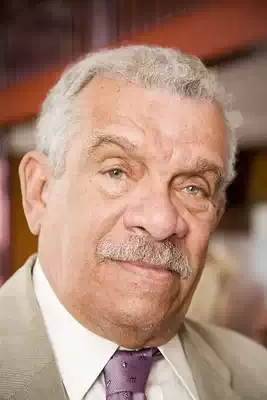
Derek Walcott
Pentecost
Better a jungle in the head
than rootless concrete.
Better to stand bewildered
by the fireflies' crooked street;
winter lamps do not show
where the sidewalk is lost,
nor can these tongues of snow
speak for the Holy Ghost;
the self-increasing silence
of words dropped from a roof
points along iron railings,
direction, in not proof.
But best is this night surf
with slow scriptures of sand,
that sends, not quite a seraph,
but a late cormorant,
whose fading cry propels
through phosphorescent shoal
what, in my childhood gospels,
used to be called the Soul.
1,145

Rudyard Kipling
M'Andrew's Hymn
Lord, Thou hast made this world below the shadow of a dream,
An', taught by time, I tak' it so -- exceptin' always Steam.
From coupler-flange to spindle-guide I see Thy Hand, O God --
Predestination in the stride o' yon connectin'-rod.
John Calvin might ha' forged the same -- enorrmous, certain, slow --
Ay, wrought it in the furnace-flame -- ~my~ "Institutio".
I cannot get my sleep to-night; old bones are hard to please;
I'll stand the middle watch up here -- alone wi' God an' these
My engines, after ninety days o' race an' rack an' strain
Through all the seas of all Thy world, slam-bangin' home again.
Slam-bang too much -- they knock a wee -- the crosshead-gibs are loose;
But thirty thousand mile o' sea has gied them fair excuse. . . .
Fine, clear an' dark -- a full-draught breeze, wi' Ushant out o' sight,
An' Ferguson relievin' Hay. Old girl, ye'll walk to-night!
His wife's at Plymouth. . . . Seventy --
One -- Two -- Three since he began --
Three turns for Mistress Ferguson. . .and who's to blame the man?
There's none at any port for me, by drivin' fast or slow,
Since Elsie Campbell went to Thee, Lord, thirty years ago.
(The year the ~Sarah Sands~ was burned. Oh roads we used to tread,
Fra' Maryhill to Pollokshaws -- fra' Govan to Parkhead!)
Not but they're ceevil on the Board. Ye'll hear Sir Kenneth say:
"Good-morrn, M'Andrew! Back again? An' how's your bilge to-day?"
Miscallin' technicalities but handin' me my chair
To drink Madeira wi' three Earls -- the auld Fleet Engineer,
That started as a boiler-whelp -- when steam and he were low.
I mind the time we used to serve a broken pipe wi' tow.
Ten pound was all the pressure then -- Eh! Eh! -- a man wad drive;
An' here, our workin' gauges give one hunder fifty-five!
We're creepin' on wi' each new rig -- less weight an' larger power:
There'll be the loco-boiler next an' thirty knots an hour!
Thirty an' more. What I ha' seen since ocean-steam began
Leaves me no doot for the machine: but what about the man?
The man that counts, wi' all his runs, one million mile o' sea:
Four time the span from earth to moon. . . . How far, O Lord, from Thee?
That wast beside him night an' day. Ye mind my first typhoon?
It scoughed the skipper on his way to jock wi' the saloon.
Three feet were on the stokehold-floor -- just slappin' to an' fro --
An' cast me on a furnace-door. I have the marks to show.
Marks! I ha' marks o' more than burns -- deep in my soul an' black,
An' times like this, when things go smooth, my wickudness comes back.
The sins o' four and forty years, all up an' down the seas,
Clack an' repeat like valves half-fed. . . . Forgie's our trespasses.
Nights when I'd come on deck to mark, wi' envy in my gaze,
The couples kittlin' in the dark between the funnel stays;
Years when I raked the ports wi' pride to fill my cup o' wrong --
Judge not, O Lord, my steps aside at Gay Street in Hong-Kong!
Blot out the wastrel hours of mine in sin when I abode --
Jane Harrigan's an' Number Nine, The Reddick an' Grant Road!
An' waur than all -- my crownin' sin -- rank blasphemy an' wild.
I was not four and twenty then -- Ye wadna judge a child?
I'd seen the Tropics first that run -- new fruit, new smells, new air --
How could I tell -- blind-fou wi' sun -- the Deil was lurkin' there?
By day like playhouse-scenes the shore slid past our sleepy eyes;
By night those soft, lasceevious stars leered from those velvet skies,
In port (we used no cargo-steam) I'd daunder down the streets --
An ijjit grinnin' in a dream -- for shells an' parrakeets,
An' walkin'-sticks o' carved bamboo an' blowfish stuffed an' dried --
Fillin' my bunk wi' rubbishry the Chief put overside.
Till, off Sambawa Head, Ye mind, I heard a land-breeze ca',
Milk-warm wi' breath o' spice an' bloom: "M'Andrew, come awa'!"
Firm, clear an' low -- no haste, no hate -- the ghostly whisper went,
Just statin' eevidential facts beyon' all argument:
"Your mither's God's a graspin' deil, the shadow o' yoursel',
Got out o' books by meenisters clean daft on Heaven an' Hell.
They mak' Him in the Broomielaw, o' Glasgie cold an' dirt,
A jealous, pridefu' fetich, lad, that's only strong to hurt,
Ye'll not go back to Him again an' kiss His red-hot rod,
But come wi' Us" (Now, who were ~They~?) "an' know the Leevin' God,
That does not kipper souls for sport or break a life in jest,
But swells the ripenin' cocoanuts an' ripes the woman's breast."
An' there it stopped: cut off: no more; that quiet, certain voice --
For me, six months o' twenty-four, to leave or take at choice.
'Twas on me like a thunderclap -- it racked me through an' through --
Temptation past the show o' speech, unnameable an' new --
The Sin against the Holy Ghost? . . . An' under all, our screw.
That storm blew by but left behind her anchor-shiftin' swell,
Thou knowest all my heart an' mind, Thou knowest, Lord, I fell.
Third on the ~Mary Gloster~ then, and first that night in Hell!
Yet was Thy hand beneath my head, about my feet Thy care --
Fra' Deli clear to Torres Strait, the trial o' despair,
But when we touched the Barrier Reef Thy answer to my prayer!
We dared not run that sea by night but lay an' held our fire,
An' I was drowsin' on the hatch -- sick -- sick wi' doubt an' tire:
"~Better the sight of eyes that see than wanderin' o' desire!~"
Ye mind that word? Clear as our gongs -- again, an' once again,
When rippin' down through coral-trash ran out our moorin'-chain;
An' by Thy Grace I had the Light to see my duty plain.
Light on the engine-room -- no more -- bright as our carbons burn.
I've lost it since a thousand times, but never past return.
Obsairve. Per annum we'll have here two thousand souls aboard --
Think not I dare to justify myself before the Lord,
But -- average fifteen hunder souls safe-borne fra' port to port --
I ~am~ o' service to my kind. Ye wadna blame the thought?
Maybe they steam from grace to wrath -- to sin by folly led, --
It isna mine to judge their path -- their lives are on my head.
Mine at the last -- when all is done it all comes back to me,
The fault that leaves six thousand ton a log upon the sea.
We'll tak' one stretch -- three weeks an' odd by any road ye steer --
Fra' Cape Town east to Wellington -- ye need an engineer.
Fail there -- ye've time to weld your shaft -- ay, eat it, ere ye're spoke;
Or make Kerguelen under sail -- three jiggers burned wi' smoke!
An' home again, the Rio run: it's no child's play to go
Steamin' to bell for fourteen days o' snow an' floe an' blow --
The bergs like kelpies overside that girn an' turn an' shift
Whaur, grindin' like the Mills o' God, goes by the big South drift.
(Hail, snow an' ice that praise the Lord: I've met them at their work,
An' wished we had anither route or they anither kirk.)
Yon's strain, hard strain, o' head an' hand, for though Thy Power brings
All skill to naught, Ye'll understand a man must think o' things.
Then, at the last, we'll get to port an' hoist their baggage clear --
The passengers, wi' gloves an' canes -- an' this is what I'll hear:
"Well, thank ye for a pleasant voyage. The tender's comin' now."
While I go testin' follower-bolts an' watch the skipper bow.
They've words for every one but me -- shake hands wi' half the crew,
Except the dour Scots engineer, the man they never knew.
An' yet I like the wark for all we've dam' few pickin's here --
No pension, an' the most we earn's four hunder pound a year.
Better myself abroad? Maybe. ~I'd~ sooner starve than sail
Wi' such as call a snifter-rod ~ross~. . .French for nightingale.
Commeesion on my stores? Some do; but I can not afford
To lie like stewards wi' patty-pans --. I'm older than the Board.
A bonus on the coal I save? Ou ay, the Scots are close,
But when I grudge the strength Ye gave I'll grudge their food to ~those~.
(There's bricks that I might recommend -- an' clink the fire-bars cruel.
No! Welsh -- Wangarti at the worst -- an' damn all patent fuel!)
Inventions? Ye must stay in port to mak' a patent pay.
My Deeferential Valve-Gear taught me how that business lay,
I blame no chaps wi' clearer head for aught they make or sell.
~I~ found that I could not invent an' look to these -- as well.
So, wrestled wi' Apollyon -- Nah! -- fretted like a bairn --
But burned the workin'-plans last run wi' all I hoped to earn.
Ye know how hard an Idol dies, an' what that meant to me --
E'en tak' it for a sacrifice acceptable to Thee. . . .
~Below there! Oiler! What's your wark? Ye find it runnin' hard?
Ye needn't swill the cap wi' oil -- this isn't the Cunard!
Ye thought? Ye are not paid to think. Go, sweat that off again!~
Tck! Tck! It's deeficult to sweer nor tak' The Name in vain!
Men, ay an' women, call me stern. Wi' these to oversee
Ye'll note I've little time to burn on social repartee.
The bairns see what their elders miss; they'll hunt me to an' fro,
Till for the sake of -- well, a kiss -- I tak' 'em down below.
That minds me of our Viscount loon -- Sir Kenneth's kin -- the chap
Wi' Russia leather tennis-shoon an' spar-decked yachtin'-cap.
I showed him round last week, o'er all -- an' at the last says he:
"Mister M'Andrew, don't you think steam spoils romance at sea?"
Damned ijjit! I'd been doon that morn to see what ailed the throws,
Manholin', on my back -- the cranks three inches off my nose.
Romance! Those first-class passengers they like it very well,
Printed an' bound in little books; but why don't poets tell?
I'm sick of all their quirks an' turns -- the loves an' doves they dream --
Lord, send a man like Robbie Burns to sing the Song o' Steam!
To match wi' Scotia's noblest speech yon orchestra sublime
Whaurto -- uplifted like the Just -- the tail-rods mark the time.
The crank-throws give the double-bass, the feed-pump sobs an' heaves,
An' now the main eccentrics start their quarrel on the sheaves:
Her time, her own appointed time, the rocking link-head bides,
Till -- hear that note? -- the rod's return
whings glimmerin' through the guides.
They're all awa'! True beat, full power, the clangin' chorus goes
Clear to the tunnel where they sit, my purrin' dynamos.
Interdependence absolute, foreseen, ordained, decreed,
To work, Ye'll note, at any tilt an' every rate o' speed.
Fra' skylight-lift to furnace-bars, backed, bolted, braced an' stayed,
An' singin' like the Mornin' Stars for joy that they are made;
While, out o' touch o' vanity, the sweatin' thrust-block says:
"Not unto us the praise, or man -- not unto us the praise!"
Now, a' together, hear them lift their lesson -- theirs an' mine:
"Law, Orrder, Duty an' Restraint, Obedience, Discipline!"
Mill, forge an' try-pit taught them that when roarin' they arose,
An' whiles I wonder if a soul was gied them wi' the blows.
Oh for a man to weld it then, in one trip-hammer strain,
Till even first-class passengers could tell the meanin' plain!
But no one cares except mysel' that serve an' understand
My seven thousand horse-power here.
Eh, Lord! They're grand -- they're grand!
Uplift am I? When first in store the new-made beasties stood,
Were Ye cast down that breathed the Word declarin' all things good?
Not so! O' that warld-liftin' joy no after-fall could vex,
Ye've left a glimmer still to cheer the Man -- the Arrtifex!
~That~ holds, in spite o' knock and scale, o' friction, waste an' slip,
An' by that light -- now, mark my word -- we'll build the Perfect Ship.
I'll never last to judge her lines or take her curve -- not I.
But I ha' lived an' I ha' worked. 'Be thanks to Thee, Most High!
An' I ha' done what I ha' done -- judge Thou if ill or well --
Always Thy Grace preventin' me. . . .
Losh! Yon's the "Stand by" bell.
Pilot so soon? His flare it is. The mornin'-watch is set.
Well, God be thanked, as I was sayin', I'm no Pelagian yet.
Now I'll tak' on. . . .
~'Morrn, Ferguson. Man, have ye ever thought
What your good leddy costs in coal? . . . I'll burn 'em down to port.
963
Elizabeth Barrett Browning
Sonnet 02 - But only three in all God's universe
II
But only three in all God's universe
Have heard this word thou hast said,-Himself, beside
Thee speaking, and me listening! and replied
One of us . . . that was God, . . . and laid the curse
So darkly on my eyelids, as to amerce
My sight from seeing thee,-that if I had died,
The deathweights, placed there, would have signified
Less absolute exclusion. 'Nay' is worse
From God than from all others, O my friend!
Men could not part us with their worldly jars,
Nor the seas change us, nor the tempests bend;
Our hands would touch for all the mountain-bars:
And, heaven being rolled between us at the end,
We should but vow the faster for the stars.
949

Emily Dickinson
Arcturus is his other name
"Arcturus" is his other name
I'd
rather call him "Star."
It's very mean of Science
To go and interfere!
I slew a worm the other day-
A "Savant" passing by
Murmured "Resurgam"-"Centipede"!
"Oh Lord-how frail are we"!
I pull a flower from the woods-
A monster with a glass
Computes the stamens in a breath-
And has her in a "class"!
Whereas I took the Butterfly
Aforetime in my hat-
He sits erect in "Cabinets"-
The Clover bells forgot.
What once was "Heaven"
Is "Zenith" now-
Where I proposed to go
When Time's brief masquerade was done
Is mapped and charted too.
What if the poles should frisk about
And stand upon their heads!
I hope I'm ready for "the worst"-
Whatever prank betides!
Perhaps the "Kingdom of Heaven's" changed-
I hope the "Children" there Won't be "new fashioned" when I come-
And laugh at me-and stare-
I hope the Father in the skies
Will lift his little girl-
Old fashioned-naught-everything-
Over the stile of "Pearl."
1,006
Oscar Wilde
At Verona
HOW steep the stairs within Kings' houses are
For exile-wearied feet as mine to tread,
And O how salt and bitter is the bread
Which falls from this Hound's table,--better far
That I had died in the red ways of war,
Or that the gate of Florence bare my head,
Than to live thus, by all things comraded
Which seek the essence of my soul to mar.
'Curse God and die: what better hope than this?
He hath forgotten thee in all the bliss
Of his gold city, and eternal day'--
Nay peace: behind my prison's blinded bars
I do possess what none can take away,
My love, and all the glory of the stars.
974
Oscar Wilde
Soneto: On Tht Massacre of the Christians in Bulgaria
Christ, dost Thou live indeed? or are Thy bones
Still straitened in their rock-hewn sepulchre?
And was Thy Rising only dreamed by her
Whose love of Thee for all her sin atones?
For here the air is horrid with men's groans,
The priests who call upon Thy name are slain,
Dost Thou not hear the bitter wail of pain
From those whose children lie upon the stones?
Come down, O Son of God! incestuous gloom
Curtains the land, and through the starless night
Over Thy Cross a Crescent moon I see!
If Thou in very truth didst burst the tomb
Come down, O Son of Man! and show Thy might
Lest Mahomet be crowned instead of Thee!
951
Oscar Wilde
Soneto: Urbs Sacra Aeterna
Rome! what a scroll of History thine has been;
In the first days thy sword republican
Ruled the whole world for many an age's span:
Then of the peoples wert thou royal Queen,
Till in thy streets the bearded Goth was seen;
And now upon thy walls the breezes fan
(Ah, city crowned by God, discrowned by man!)
The hated flag of red and white and green.
When was thy glory! when in search for power
Thine eagles flew to greet the double sun,
And the wild nations shuddered at thy rod?
Nay, but thy glory tarried for this hour,
When pilgrims kneel before the Holy One,
The prisoned shepherd of the Church of God.
MONTRE MARIO
977

Alfred Lord Tennyson
In Memoriam 131: O Living Will That Shalt Endure
O living will that shalt endure
When all that seems shall suffer shock,
Rise in the spiritual rock,
Flow thro' our deeds and make them pure,
That we may lift from out of dust
A voice as unto him that hears,
A cry above the conquer'd years
To one that with us works, and trust,
With faith that comes of self-control,
The truths that never can be proved
Until we close with all we loved,
And all we flow from, soul in soul.
O true and tried, so well and long,
Demand not thou a marriage lay;
In that it is thy marriage day
Is music more than any song.
Nor have I felt so much of bliss
Since first he told me that he loved
A daughter of our house; nor proved
Since that dark day a day like this;
Tho' I since then have number'd o'er
Some thrice three years: they went and came,
Remade the blood and changed the frame,
And yet is love not less, but more;
No longer caring to embalm
In dying songs a dead regret,
But like a statue solid-set,
And moulded in colossal calm.
Regret is dead, but love is more
Than in the summers that are flown,
For I myself with these have grown
To something greater than before;
Which makes appear the songs I made
As echoes out of weaker times,
As half but idle brawling rhymes,
The sport of random sun and shade.
But where is she, the bridal flower,
That must be made a wife ere noon?
She enters, glowing like the moon
Of Eden on its bridal bower:
On me she bends her blissful eyes
And then on thee; they meet thy look
And brighten like the star that shook
Betwixt the palms of paradise.
O when her life was yet in bud,
He too foretold the perfect rose.
For thee she grew, for thee she grows
For ever, and as fair as good.
And thou art worthy; full of power;
As gentle; liberal-minded, great,
Consistent; wearing all that weight
Of learning lightly like a flower.
But now set out: the noon is near,
And I must give away the bride;
She fears not, or with thee beside
And me behind her, will not fear.
For I that danced her on my knee,
That watch'd her on her nurse's arm,
That shielded all her life from harm
At last must part with her to thee;
Now waiting to be made a wife,
Her feet, my darling, on the dead;
Their pensive tablets round her head,
And the most living words of life
Breathed in her ear. The ring is on,
The "wilt thou" answer'd, and again
The "wilt thou" ask'd, till out of twain
Her sweet "I will" has made you one.
Now sign your names, which shall be read,
Mute symbols of a joyful morn,
By village eyes as yet unborn;
The names are sign'd, and overhead
Begins the clash and clang that tells
The joy to every wandering breeze;
The blind wall rocks, and on the trees
The dead leaf trembles to the bells.
O happy hour, and happier hours
Await them. Many a merry face
Salutes them--maidens of the place,
That pelt us in the porch with flowers.
O happy hour, behold the bride
With him to whom her hand I gave.
They leave the porch, they pass the grave
That has to-day its sunny side.
To-day the grave is bright for me,
For them the light of life increased,
Who stay to share the morning feast,
Who rest to-night beside the sea.
Let all my genial spirits advance
To meet and greet a whiter sun;
My drooping memory will not shun
The foaming grape of eastern France.
It circles round, and fancy plays,
And hearts are warm'd and faces bloom,
As drinking health to bride and groom
We wish them store of happy days.
Nor count me all to blame if I
Conjecture of a stiller guest,
Perchance, perchance, among the rest,
And, tho' in silence, wishing joy.
But they must go, the time draws on,
And those white-favour'd horses wait;
They rise, but linger; it is late;
Farewell, we kiss, and they are gone.
A shade falls on us like the dark
From little cloudlets on the grass,
But sweeps away as out we pass
To range the woods, to roam the park,
Discussing how their courtship grew,
And talk of others that are wed,
And how she look'd, and what he said,
And back we come at fall of dew.
Again the feast, the speech, the glee,
The shade of passing thought, the wealth
Of words and wit, the double health,
The crowning cup, the three-times-three,
And last the dance,--till I retire:
Dumb is that tower which spake so loud,
And high in heaven the streaming cloud,
And on the downs a rising fire:
And rise, O moon, from yonder down,
Till over down and over dale
All night the shining vapour sail
And pass the silent-lighted town,
The white-faced halls, the glancing rills,
And catch at every mountain head,
And o'er the friths that branch and spread
Their sleeping silver thro' the hills;
And touch with shade the bridal doors,
With tender gloom the roof, the wall;
And breaking let the splendour fall
To spangle all the happy shores
By which they rest, and ocean sounds,
And, star and system rolling past,
A soul shall draw from out the vast
And strike his being into bounds,
And, moved thro' life of lower phase,
Result in man, be born and think,
And act and love, a closer link
Betwixt us and the crowning race
Of those that, eye to eye, shall look
On knowledge; under whose command
Is Earth and Earth's, and in their hand
Is Nature like an open book;
No longer half-akin to brute,
For all we thought and loved and did,
And hoped, and suffer'd, is but seed
Of what in them is flower and fruit;
Whereof the man, that with me trod
This planet, was a noble type
Appearing ere the times were ripe,
That friend of mine who lives in God,
That God, which ever lives and loves,
One God, one law, one element,
And one far-off divine event,
To which the whole creation moves.
1,027
Elizabeth Barrett Browning
Sonnet XXXVII: Pardon, Oh, Pardon
Pardon, oh, pardon, that my soul should make,
Of all that strong divineness which I know
For thine and thee, an image only so
Formed of the sand, and fit to shift and break.
It is that distant years which did not take
Thy sovranty, recoiling with a blow,
Have forced my swimming brain to undergo
Their doubt and dread, and blindly to forsake
Thy purity of likeness and distort
Thy worthiest love to a worthless counterfeit:
As if a shipwrecked Pagan, safe in port,
His guardian sea-god to commemorate,
Should set a sculptured porpoise, gills a-snort
And vibrant tail, within the temple gate.
987
Oscar Wilde
Apologia
Is it thy will that I should wax and wane,
Barter my cloth of gold for hodden grey,
And at thy pleasure weave that web of pain
Whose brightest threads are each a wasted day?
Is it thy will - Love that I love so well -
That my Soul's House should be a tortured spot
Wherein, like evil paramours, must dwell
The quenchless flame, the worm that dieth not?
Nay, if it be thy will I shall endure,
And sell ambition at the common mart,
And let dull failure be my vestiture,
And sorrow dig its grave within my heart.
Perchance it may be better so - at least
I have not made my heart a heart of stone,
Nor starved my boyhood of its goodly feast,
Nor walked where Beauty is a thing unknown.
Many a man hath done so; sought to fence
In straitened bonds the soul that should be free,
Trodden the dusty road of common sense,
While all the forest sang of liberty,
Not marking how the spotted hawk in flight
Passed on wide pinion through the lofty air,
To where some steep untrodden mountain height
Caught the last tresses of the Sun God's hair.
Or how the little flower he trod upon,
The daisy, that white-feathered shield of gold,
Followed with wistful eyes the wandering sun
Content if once its leaves were aureoled.
But surely it is something to have been
The best beloved for a little while,
To have walked hand in hand with Love, and seen
His purple wings flit once across thy smile.
Ay! though the gorged asp of passion feed
On my boy's heart, yet have I burst the bars,
Stood face to face with Beauty, known indeed
The Love which moves the Sun and all the stars!
996
Rudyard Kipling
By the Hoof of the Wild Goat
By the Hoof of the Wild Goat uptossed
From the cliff where she lay in the Sun
Fell the Stone
To the Tarn where the daylight is lost,
So she fell from the light of the Sun
And alone!
Now the fall was ordained from the first
With the Goat and the Cliff and the Tarn,
But the Stone
Knows only her life is accursed
As she sinks from the light of the Sun
And alone!
Oh Thou Who hast builded the World,
Oh Thou Who hast lighted the Sun,
Oh Thou Who hast darkened the Tarn,
Judge Thou
The sin of the Stone that was hurled
By the goat from the light of the Sun,
As she sinks in the mire of the Tarn,
Even now--even now--even now!
975

William Blake
The Grey Monk
'I die, I die!' the Mother said,
'My children die for lack of bread.
What more has the merciless Tyrant said?'
The Monk sat down on the stony bed.
The blood red ran from the Grey Monk's side,
His hands and feet were wounded wide,
His body bent, his arms and knees
Like to the roots of ancient trees.
His eye was dry; no tear could flow:
A hollow groan first spoke his woe.
He trembled and shudder'd upon the bed;
At length with a feeble cry he said:
'When God commanded this hand to write
In the studious hours of deep midnight,
He told me the writing I wrote should prove
The bane of all that on Earth I lov'd.
My Brother starv'd between two walls,
His Children's cry my soul appalls;
I mock'd at the rack and griding chain,
My bent body mocks their torturing pain.
Thy father drew his sword in the North,
With his thousands strong he marched forth;
Thy Brother has arm'd himself in steel
To avenge the wrongs thy Children feel.
But vain the Sword and vain the Bow,
They never can work War's overthrow.
The Hermit's prayer and the Widow's tear
Alone can free the World from fear.
For a Tear is an intellectual thing,
And a Sigh is the sword of an Angel King,
And the bitter groan of the Martyr's woe
Is an arrow from the Almighty's bow.
The hand of Vengeance found the bed
To which the Purple Tyrant fled;
The iron hand crush'd the Tyrant's head
And became a Tyrant in his stead.'
1,014
Elizabeth Barrett Browning
Sonnet XII: Indeed This Very Love
Indeed this very love which is my boast,
And which, when rising up from breast to brow,
Doth crown me with ruby large enow
To draw men's eyes and prove the inner cost,--
This love even, all my worth, to the uttermost,
I should not love withal, unless that thou
Hadst set me an example, shown me how,
When first thine earnest eyes with mine were crossed,
And love called love. And thus, I cannot speak
Of love even, as good thing of my own:
Thy soul hath snatched up mine all faint and weak,
And placed it by thee on a golden throne,--
And that I love (O soul, we must be meek--)
Is by thee only, whom I love alone.
917
Oscar Wilde
Soneto: E Tenebris
Come down, O Christ, and help me! reach Thy hand,
For I am drowning in a stormier sea
Than Simon on Thy lake of Galilee:
The wine of life is spilt upon the sand,
My heart is as some famine-murdered land
Whence all good things have perished utterly,
And well I know my soul in Hell must lie
If I this night before God's throne should stand.
'He sleeps perchance, or rideth to the chase,
Like Baal, when his prophets howled that name
From morn to noon on Carmel's smitten height.'
Nay, peace, I shall behold, before the night,
The feet of brass, the robe more white than flame,
The wounded hands, the weary human face.
914
Oscar Wilde
Holy Week at Genoa
I wandered through Scoglietto's far retreat,
The oranges on each o'erhanging spray
Burned as bright lamps of gold to shame the day;
Some startled bird with fluttering wings and fleet
Made snow of all the blossoms; at my feet
Like silver moons the pale narcissi lay:
And the curved waves that streaked the great green bay
Laughed i' the sun, and life seemed very sweet.
Outside the young boy-priest passed singing clear,
'Jesus the son of Mary has been slain,
O come and fill His sepulchre with flowers.'
Ah, God! Ah, God! those dear Hellenic hours
Had drowned all memory of Thy bitter pain,
The Cross, the Crown, the Soldiers and the Spear.
914
John Milton
Psalm 06
Aug. 13. 1653.
Lord in thine anger do not reprehend me
Nor in thy hot displeasure me correct;
Pity me Lord for I am much deject
Am very weak and faint; heal and amend me,
For all my bones, that even with anguish ake,
Are troubled, yea my soul is troubled sore
And thou O Lord how long? turn Lord, restore
My soul, O save me for thy goodness sake
For in death no remembrance is of thee;
Who in the grave can celebrate thy praise?
Wearied I am with sighing out my dayes.
Nightly my Couch I make a kind of Sea;
My Bed I water with my tears; mine Eie
Through grief consumes, is waxen old and dark
Ith' mid'st of all mine enemies that mark.
Depart all ye that work iniquitie.
Depart from me, for the voice of my weeping
The Lord hath heard, the Lord hath heard my prai'r
My supplication with acceptance fair
The Lord will own, and have me in his keeping.
Mine enemies shall all be blank and dash't
With much confusion; then grow red with shame,
They shall return in hast the way they came
And in a moment shall be quite abash't.
940
William Blake
The Little Vagabond
Dear mother, dear mother, the church is cold,
But the ale-house is healthy and pleasant and warm;
Besides I can tell where I am used well,
Such usage in Heaven will never do well.
But if at the church they would give us some ale,
And a pleasant fire our souls to regale,
We'd sing and we'd pray all the live-long day,
Nor ever once wish from the church to stray.
Then the parson might preach, and drink, and sing,
And we'd be as happy as birds in the spring;
And modest Dame Lurch, who is always at church,
Would not have bandy children, nor fasting, nor birch.
And God, like a father rejoicing to see
His children as pleasant and happy as he,
Would have no more quarrel with the Devil or the barrel,
But kiss him, and give him both drink and apparel.
917

Kazi Nazrul Islam
Equality
I sing the song of equality.
I sing of the country
Where fresh joys blossom forth in, the hearts of men
And budding life shimmers in their faces.
Comrade, nobody is king- in this land and none a subject.
There is no man here poor and abject
Nor is there any, full of riches and money.
Here some do not. eat cast off rice-sweepings
And some all the cream and honey.
No one bows down here before the horses feet,
Or in front of the motor-cars wheels.
Hatred does not spring up here
In whitemen's breasts
Whenever they see blackmen close and near.
Comrade, this is a place where all are equal,
Where the black and the white have no separate
graveyards,
Where they have no separate rooms for offering
their prayers.
There are no sentries or peons here,
Nor is there any police-troops fear.
This is the Heaven where there are no distinctions,
Where leaving aside all 'quarrels
Men have clasped other's hands as brothers dear,
Religion does not create differences in this place
Nor do scriptures raise any futile clamour.
The priests and padres, the mollah and the
moulvis
Drink water here from the same container.
Here the house of prayer for the Creator
Lies in the body and the mind.
Here His throne of sorrows
Is amidst the miseries of mankind.
Here He responds to men's calls
By whatever name ,they may choose to appeal
Like the loving and fond mother
Ever ready and alert to respond
To the call of her child,
Whatever name he may call her by.
Here in this abode of equality
Different ways of apparel
Do not give rise to vicious quarrel.
Here clothed in dusty costume
Men are satisfied and happy,
Here in this land peace and equality.
[Original: Shammyo; Translation: Kabir Chowdhury]
901
John Milton
Psalm 85
Thy Land to favour graciously
Thou hast not Lord been slack,
Thou hast from hard Captivity
Returned Jacob back.
Th' iniquity thou didst forgive
That wrought thy people woe,
And all their Sin, that did thee grieve
Hast hid where none shall know.
Thine anger all thou hadst remov'd,
And calmly didst return
From thy *fierce wrath which we had prov'd
Far worse then fire to burn.
God of our saving health and peace,
Turn us, and us restore,
*Heb. The burning
heat of thy
wrath.
Thine indignation cause to cease
Toward us, and chide no more.
Wilt thou be angry without end,
For ever angry thus
Wilt thou thy frowning ire extend
From age to age on us?
Wilt thou not * turn, and hear our voice * Heb. Turn to
And us again * revive ,
That so thy people may rejoyce
By thee preserv'd alive.
Cause us to see thy goodness Lord,
To us thy mercy shew
Thy saving health to us afford
And lift in us renew.
quicken us.
And now what God the Lord will speak
I will go strait and hear,
For to his people he speaks peace
And to his Saints full dear,
To his dear Saints he will speak peace,
But let them never more
Return to folly, but surcease
To trespass as before.
Surely to such as do him fear
Salvation is at hand
And glory shall ere long appear
To dwell within our Land.
Mercy and Truth that long were miss'd
Now joyfully are met
Sweet Peace and Righteousness have kiss'd
And hand in hand are set.
Truth from the earth like to a flowr
Shall bud and blossom then,
And Justice from her heavenly bowr
Look down on mortal men.
The Lord will also then bestow
Whatever thing is good
Our Land shall forth in plenty throw
Her fruits to be our food.
Before him Righteousness shall go
His Royal Harbinger,
Then * will he come, and not be slow *Heb. He will set his
His footsteps cannot err. steps to the way.
934
Oscar Wilde
On Easter Day
The silver trumpets rang across the Dome:
The people knelt upon the ground with awe:
And borne upon the necks of men I saw,
Like some great God, the Holy Lord of Rome.
Priest-like, he wore a robe more white than foam,
And, king-like, swathed himself in royal red,
Three crowns of gold rose high upon his head:
In splendor and in light the Pope passed home.
My heart stole back across wide wastes of years
To One who wandered by a lonely sea,
And sought in vain for any place of rest:
"Foxes have holes, and every bird its nest,
I, only I, must wander wearily,
And bruise My feet, and drink wine salt with tears."
940

Paul Laurence Dunbar
Theology
There is a heaven, for ever, day by day,
The upward longing of my soul doth tell me so.
There is a hell, I'm quite as sure; for pray
If there were not, where would my neighbours go?
The upward longing of my soul doth tell me so.
There is a hell, I'm quite as sure; for pray
If there were not, where would my neighbours go?
897

Ella Wheeler Wilcox
A Servian Legend
Long, long ago, ere yet our race began,
When earth was empty, waiting still for man,
Before the breath of life to him was given
The angels fell into a strife in heaven.
At length one furious demon grasped the sun
And sped away as fast as he could run,
And with a ringing laugh of fiendish mirth,
He leaped the battlements and fell to earth.
Dark was it then in heaven, but light below;
For there the demon wandered to and fro,
Tilting aloft upon a slender pole
The orb of day-the pilfering old soul.
The angels wept and wailed; but through the dark
The Great Creator's voice cried sternly: sternly: 'Hark!
Who will restore to me the orb of Light,
Him will I honor in all heaven's sight.'
Then over the battlements there dropped another.
(A shrewder angel well there could not be.)
Quoth he: 'Behold my love for thee, my brother,
For I have left all heaven to stay with thee.
'Thy loneliness and wanderings I will share,
Thy heavy burden I will help thee bear.'
'Well said,' the demon answered, 'and well done,
But I'll not tax you with this heavy sun.
'Your company will cheer me, it is true,
And I could never think of burdening you.'
Idly they wandered onward, side by side,
Till, by and by, they neared a silvery tide.
'Let's bathe,' the angel suddenly suggested.
'Agreed,' the demon answered. 'I'll go last,
Because I needs must leave quite unmolested
This tiresome sun, which I will now make fast.'
He set the pole well in the sandy turf,
And called a jackdaw near to watch the place.
Meanwhile the angel paddled in the surf,
And playfully dared his brother to a race.
They swam around together for awhile,
The demon always keeping near his prize,
Till presently the angel, with a smile,
Proposed a healthful diving exercise.
The demon hesitated. 'But,' thought he,
'The jackdaw will inform me with a cry
If this good brother tries deceiving me;
I will not be outdone by him-not I!'
Down, down they went. The angel in a trice
Rose up again, and swift to shore he sped.
The jackdaw shrieked, but lo! a mile of ice
The demon found had frozen o'er his head.
He swore an oath, and gathered all his force,
And broke the ice, to see the sun, of course,
Held firmly in the radiant angel's hand,
Who sailed away toward the heavenly land.
He gave pursuit. Wrath lent speed to his chase;
All heaven leaned down to watch the exciting race.
On, on they came, and still the Evil One
Gained on the angel burdened with the sun.
With bated breath and faces white as ghosts,
Over the walls leaned heaven's affrighted hosts.
Up, up, still up, the angel almost spent,
Threw one foot forward o'er the battlement.
The demon seized the other with a shout;
So fierce his clutch he pulled the bottom out,
As the good angel, fainting, laid the sun
Down by the throne of God, who cried: 'Well done!
Thy great misfortune shall be made divine:
Man will I create with a foot like thine!'
846