
Faith, Spirituality and Religion
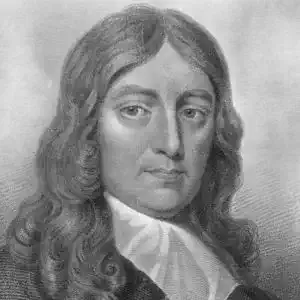
John Milton
On Time
Fly, envious Time, till thou run out thy race,
Call on the lazy leaden-stepping hours,
Whose speed is but the heavy plummet's pace;
And glut thyself with what thy womb devours,
Which is no more than what is false and vain,
And merely mortal dross;
So little is our loss,
So little is thy gain.
For when as each thing bad thou hast intombed,
And last of all thy greedy self consumed,
Then long Eternity shall greet our bliss
With an individual kiss,
And Joy shall overtake us as a flood;
When every thing that is sincerely good
And perfectly divine,
With truth, and peace, and love, shall ever shine
About the supreme throne
Of Him, t' whose happy-making sight alone
When once our heav'nly-guided soul shall climb,
Then, all this earthly grossness quit,
Attired with stars, we shall for ever sit,
Triumphing over Death, and Chance, and thee, O Time.
643

Alfred Lord Tennyson
Crossing the Bar
Sunset and evening star,
And one clear call for me!
And may there be no moaning of the bar,
When I put out to sea,
But such a tide as moving seems asleep,
Too full for sound and foam,
When that which drew from out the boundless deep
Turns again home.
Twilight and evening bell,
And after that the dark!
And may there be no sadness of farewell,
When I embark;
For though from out our bourne of Time and Place
The flood may bear me far,
I hope to see my Pilot face to face
When I have crost the bar.
653

Emily Dickinson
Faith is a fine invention
"Faith" is a fine invention
When Gentlemen can see-
But Microscopes are prudent
In an Emergency.
When Gentlemen can see-
But Microscopes are prudent
In an Emergency.
650

Kazi Nazrul Islam
The War Drum
O come, come along!
There sounds the war-drum
from beyond the vast deep.
O come, come along!
Islam is about to die.
The devils have taken over,
they brag and rejoice,
they crush under their feet
the skulls of martyrs.
O come, come along! Die if you must,
but let not your manhood be disgraced!
Grab the crest of the gale
in the iron fist of a Muslim,
sound the horn and unfurl the flag.
The heroes are eager to fight,
listen not to the soft words of the cowards!
Your honour and life are at stake today!
O come, come along!
There sounds the war-drum
from beyond the vast deep.
O come, come along!
There you can hear the ringing of the weapons!
Alas, how can one stay away
and tolerate this disgrace?
O come, come along!
Your brothers look at you
with pensive eyes.
Oh, how ashamed it makes me feel!
Won't the sword flash out yet
in your hands?
Won't the flood in your veins
dance with joy
as you hear the war-drums beat?
O come, come along!
We are vigorous and full of life,
In our hands alone does the sword
find a fitting place!
Ignoble are they who fall in a faint
and kiss the ground with chains
around their neck. How dare a cur kick at a lion?
Will an elephant be moulded by a jackal?
There you can hear the ringing of the weapons
O come, come along!
There sound the war-drums, t
here sound the battle-cries!
There the lion-hearted heroes roar!
O come, come along!
Give up all sadness of the mind,
abandon your chest of wealth,
take up arms, and let your heart beat
with a noble rage!
O come, come along,
dance with joy, and fight for justice and truth!
come, brother, give up your life today
in the name of Allah!
See how the battle-cry of Faith
resound throughout the earth and the sky!
Hear the roars go up:
'No giving up today
Only taking over! '
Be ready now for the supreme sacrifice! .
Oh, all glory is about to disappear!
O come, come along!
There you can hear the ringing of the arms,
there you can hear the war-drums beat!
O come, come along!
Don your battle dress!
Will you hide your face in shame?
How far is the land
where everyday heroes celebrate
the festival of death
and spill gaily the blood of the foe?
Put on the attire of the brave
and rush to the land of those heroic people.
Today men of a captive land
go to secure the freedom of a free country!
O come, come along!
Say: Long live truth!
Long live the heroic and the noble!
Let the timids die!
As women hear the war-drums beat
they too laugh happily and clap their hands,
they too rush to the battle-field!
We want to fight!
We want to fight!
So beat the drum,
put your helmet on,
hold aloft the sword in your hand
For justice and truth we fight,
clad in crimson clothes are we!
O come, come along!
There sound the war-drums,
there they don the battle-dress!
O come, come along
There the bugler sounds the call for war
at the door of the seige,
there the canons break out in a song!
O come, come along!
There sound the war-drums,
there sound the battle-cries!
Come, raise your voice now
like the great Hazrat Ali's,
there is nothing to fear!
You will surely slay the false giant,
you will surely make truth prevail!
Have no fear as you march along
to kill your foe!
We are bold and fearless,
there is no timidity in our blood.
Holding high the standard of truth and justice
we shall destroy tile tyrants.
We are invincible,
we are full of love;
yet we can bear at ease our chest
before the sword!
The fighters are we,
we he long to the breed of real martyrs,
we gladly embrace death
fighting the tyrants.
Smilingly we receive the thrust
of the sword
On our breast.
We sing the victory of Freedom!
O come, come along!
There sound the war-drums
from beyond the vast deep! !
[Translation: Kabir Chowdhury]
There sounds the war-drum
from beyond the vast deep.
O come, come along!
Islam is about to die.
The devils have taken over,
they brag and rejoice,
they crush under their feet
the skulls of martyrs.
O come, come along! Die if you must,
but let not your manhood be disgraced!
Grab the crest of the gale
in the iron fist of a Muslim,
sound the horn and unfurl the flag.
The heroes are eager to fight,
listen not to the soft words of the cowards!
Your honour and life are at stake today!
O come, come along!
There sounds the war-drum
from beyond the vast deep.
O come, come along!
There you can hear the ringing of the weapons!
Alas, how can one stay away
and tolerate this disgrace?
O come, come along!
Your brothers look at you
with pensive eyes.
Oh, how ashamed it makes me feel!
Won't the sword flash out yet
in your hands?
Won't the flood in your veins
dance with joy
as you hear the war-drums beat?
O come, come along!
We are vigorous and full of life,
In our hands alone does the sword
find a fitting place!
Ignoble are they who fall in a faint
and kiss the ground with chains
around their neck. How dare a cur kick at a lion?
Will an elephant be moulded by a jackal?
There you can hear the ringing of the weapons
O come, come along!
There sound the war-drums, t
here sound the battle-cries!
There the lion-hearted heroes roar!
O come, come along!
Give up all sadness of the mind,
abandon your chest of wealth,
take up arms, and let your heart beat
with a noble rage!
O come, come along,
dance with joy, and fight for justice and truth!
come, brother, give up your life today
in the name of Allah!
See how the battle-cry of Faith
resound throughout the earth and the sky!
Hear the roars go up:
'No giving up today
Only taking over! '
Be ready now for the supreme sacrifice! .
Oh, all glory is about to disappear!
O come, come along!
There you can hear the ringing of the arms,
there you can hear the war-drums beat!
O come, come along!
Don your battle dress!
Will you hide your face in shame?
How far is the land
where everyday heroes celebrate
the festival of death
and spill gaily the blood of the foe?
Put on the attire of the brave
and rush to the land of those heroic people.
Today men of a captive land
go to secure the freedom of a free country!
O come, come along!
Say: Long live truth!
Long live the heroic and the noble!
Let the timids die!
As women hear the war-drums beat
they too laugh happily and clap their hands,
they too rush to the battle-field!
We want to fight!
We want to fight!
So beat the drum,
put your helmet on,
hold aloft the sword in your hand
For justice and truth we fight,
clad in crimson clothes are we!
O come, come along!
There sound the war-drums,
there they don the battle-dress!
O come, come along
There the bugler sounds the call for war
at the door of the seige,
there the canons break out in a song!
O come, come along!
There sound the war-drums,
there sound the battle-cries!
Come, raise your voice now
like the great Hazrat Ali's,
there is nothing to fear!
You will surely slay the false giant,
you will surely make truth prevail!
Have no fear as you march along
to kill your foe!
We are bold and fearless,
there is no timidity in our blood.
Holding high the standard of truth and justice
we shall destroy tile tyrants.
We are invincible,
we are full of love;
yet we can bear at ease our chest
before the sword!
The fighters are we,
we he long to the breed of real martyrs,
we gladly embrace death
fighting the tyrants.
Smilingly we receive the thrust
of the sword
On our breast.
We sing the victory of Freedom!
O come, come along!
There sound the war-drums
from beyond the vast deep! !
[Translation: Kabir Chowdhury]
648
Kazi Nazrul Islam
In Salutation of One God
Let them spread jealousy, prejudice and defamation,
We will offer justice, peace and one God's proclamation.
Let them seek narrowness, pigeon-hole and mud from pond,
We will seek open space, shining light and love's bond.
Let them seek slave's life, we seek martyr's honor,
They fear death; while we search - it's hiding in which corner?
They won't die; if battle starts, they will hide behind a bush,
Nail-less, toothless - still boisterous, busy in giving each other a push.
They are lifeless, yet move by vile selfishness and greed,
They are jinns, ghosts, or mummies, from base desires can't be freed.
We are the new youth of Bengal; to wrestle with death we enjoy,
Due to grace we spare them, thinking them as ant or toy.
They are ever-skeptical about everything, also about human progress in future,
These disbelievers are disciples of Satan; pessimism and wrong vision they nurture.
They say, people will all be atheist, and anarchy is what they will bring,
We say, they will be believers, so that the song of heavenly bond they will sing.
Let them seek unhappiness, we will seek His forgiveness and love,
Let the ghosts seek graveyards, we will cherish the Garden from above.
People can see west's world wars, as punishment inflicted from Him,
And then turn away from more selfishness, singing peace and justice's hymn.
Let the owls stay in their hole, expecting no more sunrise,
Crows won't attack them again, let it be their claw-and-beak's demise.
Believers never say such things, they seek ray of hope and light,
Standing up against oppression and suffering, the believers delight.
The believers say, if we all turned toward Him in unison,
Shower of His mercy will bring on this earth like daily Eid celebration.
From seven heavens these believers want to bring colorful rainbow,
God never withholds His bounties; When does He ever say 'No? '
Those who seek mischief and unhappiness, exactly that they will get,
Let them choose as they wish; on the path of our choice our foot will set.
They seek the kingdom of monsters, we want God's kingdom,
This world then would experience peace, joy and freedom.
Our Lord's treasure is ever full, we won't lack anything anymore,
They want to fight over corpses like vultures or wild boar.
May God save us all, so that we don't tread that path of doom,
One God is our Lord, His everlasting beauty you always see abloom.
All the vices in this world, let it disappear, let it go away,
This world's darkness and hatred, may the ray of His love keep at bay.
From all the narrowness and prejudice may mankind's heart be free,
Let His light shine from every home under every blooming tree.
Those foster riot to loot, they are greedy monsters or gangsters,
Path of goodness and virtue they won't see, they will bring only disasters.
They are ever after vice, they are ever after conflict,
Their life is devoid of rhythm, they are spoiled, corpse-addict.
By God's soldiers, they will surely be overcome, in future that is near
These pirates - plunderer of crops and harvests - are ever so familiar.
They are spiders, creatures of darkness; stay away from their home and den,
In abandoned corners lie their web, they haven't seen life's vibrant garden.
Believe in God, in one and only God, in day as well as night
Heavenly ride will be with you, with God's sword in hand to fight.
Those who want to pass their life in sleep and laziness' fashion,
They don't want moon or sun, they are living dead, bound for humiliation.
Whose dream is everlasting youth, come, come that new generation,
Your sacrifice and work brought progress that are worthy of celebration.
Let them enjoy mud-slinging, their weapons are malice and vilification,
We will throw bouquet at them, and trumpet to one God our salutation.
[Translation: Mohammad Omar Farooq]
638
John Milton
Psalm CXXXVI
Let us with a gladsome mind
Praise the Lord for he is kind;
For his mercies aye endure,
Ever faithful, ever sure.
Let us blaze his Name abroad,
For of gods he is the God;
For his, &c.
O let us his praises tell,
That doth the wrathful tyrants quell;
For his, &c.
That with his miracles doth make
Amazèd Heaven and Earth to shake;
For his, &c.
That by his wisdom did create
The painted heavens so full of state;
For his, &c.
That did the solid Earth ordain
To rise above the watery plain;
For his, &c.
That by his all-commanding might,
Did fill the new-made world with light;
For his, &c.
And caused the golden-tressèd Sun
All the day long his course to run;
For his, &c.
The hornèd Moon to shine by night
Amongst her spangled sisters bright;
For his, &c.
He, with his thunder-clasping hand,
Smote the first-born of Egypt land;
For his, &c.
And, in despite of Pharao fell,
He brought from thence his Israel;
For his, &c.
The ruddy waves he cleft in twain
Of the Erythræan main;
For his, &c.
The floods stood still, like walls of glass,
While the Hebrew bands did pass;
For his, &c.
But full soon they did devour
The tawny King with all his power;
For his, &c.
His chosen people he did bless
In the wasteful Wilderness;
For his, &c.
In bloody battail he brought down
Kings of prowess and renown;
For his, &c.
He foiled bold Seon and his host,
That ruled the Amorrean coast;
For his, &c.
And large-limbed Og he did subdue,
With all his over-hardy crew;
For his, &c.
And to his servant Israel
He gave their land, therein to dwell;
For his, &c.
He hath, with a piteous eye,
Beheld us in our misery;
For his, &c.
And freed us from the slavery
Of the invading enemy;
For his, &c.
All living creatures he doth feed,
And with full hand supplies their need;
For his, &c.
Let us, therefore, warble forth
His mighty majesty and worth;
For his, &c.
That his mansion hath on high,
Above the reach of mortal eye;
For his, &c.
627
Kazi Nazrul Islam
Come Hither
Come hither, the 'fallen', the 'impure', the 'outcastes'!
Let us all worship The Holy Mother together!
Only when all castes and all nations
Assemble at Her feet, side by side without fear;
Only where we are not bound by temple, priest or scriptures
Can we properly worship the Goddess
Only when brothers sit side by side, worshiping together
Will she embrace those who call Her by name
Descending from Her throne in the heavens,
Sitting amongst us on the dusty earthly ground.
The Goddess' altar will become sacred only when
Her holy water is blessed by the touch of us all.
Because we have ignored Her true message,
Brother has turned against brother
Today, upon seeing the Goddess in Her full splendor,
You will realize that we are all children of the same Mother
And heaven, earth and the entire universe will erupt in awe,
Awoken by our invocation to the Holy Mother
Fearlessly chanted by all in unison.
[Translated by: Udayan Chattopadhyay]
632

Paul Laurence Dunbar
Old
I have seen peoples come and go
Alike the Ocean'd ebb and flow;
I have seen kingdoms rise and fall
Like springtime shadows on a wall.
I have seen houses rendered great
That grew from life's debased estate,
And all, all, all is change I see,
So, dearest God, take me, take me.
Alike the Ocean'd ebb and flow;
I have seen kingdoms rise and fall
Like springtime shadows on a wall.
I have seen houses rendered great
That grew from life's debased estate,
And all, all, all is change I see,
So, dearest God, take me, take me.
638
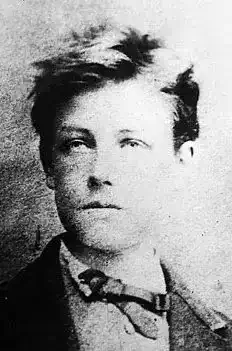
Arthur Rimbaud
People In Church
Penned between oaken pews,
in corners of the church which their breath stinkingly warms,
all their eyes on the chancel dripping with gold,
and the choir with its twenty pairs of jaws bawling pious hymns;
Sniffing the odour of wax if it were the odour of bread,
happy, ad humbled like beaten dogs,
the Poor offer up to God, the Lord and Master,
their ridiculous stubborn oremuses.
For the women it is very pleasant to wear the benches smooth;
after the six black days on which God has made them suffer.
They nurse, swaddled in strange-looking shawls,
creatures like children who weep as if they would die.
Their unwashed breasts hanging out, these eaters of soup,
with a prayer in their eyes, but never praying,
watch a group of hoydens wickedly
showing off with hats all out of shape.
Outside is the cold, and hunger - and a man on the booze.
All right. There's another hour to go; afterwards, nameless ills! -
Meanwhile all around an assortment of old
dewlapped women whimpers, snuffles, and whispers:
These are distracted persons and the epileptics from whom,
yesterday, you turned away at street crossings;
there too are the blind who are led by a dog into courtyards,
poring their noses into old-fashioned missals. -
And all of them, dribbling a stupid groveling faith,
recite their unending complaint to Jesus who is dreaming up there,
yellow from the livid stained glass window,
far above thin rascals and wicked potbellies,
far from the smell of meat and mouldy fabric,
and the exhausted somber farce of repulsive gestures and
as the prayer flowers in choice expressions,
and the mysteries take on more emphatic tones, from the aisles,
where the sun is dying, trite folds of silk and green smiles,
the ladies of the better quarters of the town - oh Jesus! the
sufferers from complaints of the liver,
make their long yellow fingers kiss the holy water in the stoups.
629

Rabindranath Tagore
Innermost One
He it is, the innermost one,
who awakens my being with his deep hidden touches.
He it is who puts his enchantment upon these eyes
and joyfully plays on the chords of my heart
in varied cadence of pleasure and pain.
He it is who weaves the web of this maya
in evanescent hues of gold and silver, blue and green,
and lets peep out through the folds his feet,
at whose touch I forget myself.
Days come and ages pass,
and it is ever he who moves my heart in many a name,
in many a guise, in many a rapture of joy and of sorrow.
638
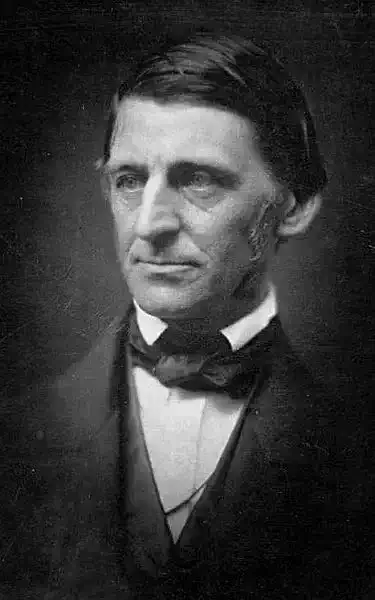
Ralph Waldo Emerson
Uriel.
IT fell in the ancient periods
Which the brooding soul surveys,
Or ever the wild Time coin'd itself
Into calendar months and days.
This was the lapse of Uriel,
Which in Paradise befell.
Once, among the Pleiads walking,
Sayd overheard the young gods talking;
And the treason, too long pent,
To his ears was evident.
The young deities discuss'd
Laws of form, and metre just,
Orb, quintessence, and sunbeams,
What subsisteth, and what seems.
One, with low tones that decide,
And doubt and reverend use defied,
With a look that solved the sphere,
And stirr'd the devils everywhere,
Gave his sentiment divine
Against the being of a line.
'Line in nature is not found;
Unit and universe are round;
In vain produced, all rays return;
Evil will bless, and ice will burn.'
As Uriel spoke with piercing eye,
A shudder ran around the sky;
The stern old war-gods shook their heads;
The seraphs frown'd from myrtle-beds;
Seem'd to the holy festival
The rash word boded ill to all;
The balance-beam of Fate was bent;
The bounds of good and ill were rent;
Strong Hades could not keep his own,
But all slid to confusion.
A sad self-knowledge withering fell
On the beauty of Uriel;
In heaven once eminent, the god
Withdrew that hour into his cloud;
Whether doom'd to long gyration
In the sea of generation,
Or by knowledge grown too bright
To hit the nerve of feebler sight.
Straightway a forgetting wind
Stole over the celestial kind,
And their lips the secret kept,
If in ashes the fire-seed slept.
But, now and then, truth-speaking things
Shamed the angels' veiling wings;
And, shrilling from the solar course,
Or from fruit of chemic force,
Procession of a soul in matter,
Or the speeding change of water,
Or out of the good of evil born,
Came Uriel's voice of cherub scorn,
And a blush tinged the upper sky,
And the gods shook, they knew not why
634

Ella Wheeler Wilcox
Life Is A Privilege
Life is a privilege. Its youthful days
Shine with the radiance of continuous Mays.
To live, to breathe, to wonder and desire,
To feed with dreams the heart’s perpetual fire,
To thrill with virtuous passions, and to glow
With great ambitions – in one hour to know
The depths and heights of feeling – God! in truth,
How beautiful, how beautiful is youth!
Life is a privilege. Like some rare rose
The mysteries of the human mind unclose.
What marvels lie in the earth, and air, and sea!
What stores of knowledge wait our opening key!
What sunny roads of happiness lead out
Beyond the realms of indolence and doubt!
And what large pleasures smile upon and bless
The busy avenues of usefulness!
Life is a privilege. Thought the noontide fades
And shadows fall along the winding glades,
Though joy-blooms wither in the autumn air,
Yet the sweet scent of sympathy is there.
Pale sorrow leads us closer to our kind,
And in the serious hours of life we find
Depths in the souls of men which lend new worth
And majesty to this brief span of earth.
Life is a privilege. If some sad fate
Sends us alone to seek the exit gate,
If men forsake us and as shadows fall,
Still does the supreme privilege of all
Come in that reaching upward of the soul
To find the welcoming Presence at the goal,
And in the Knowledge that our feet have trod
Paths that led from, and must wind back, to God.
624
John Milton
The Passion
I
Erewhile of music, and ethereal mirth,
Wherewith the stage of Air and Earth did ring,
And joyous news of heavenly Infant’s birth,
My muse with Angels did divide to sing;
But headlong joy is ever on the wing,
In wintry solstice like the shortened light
Soon swallowed up in dark and long outliving night.
II
For now to sorrow must I tune my song,
And set my Harp to notes of saddest woe,
Which on our dearest Lord did seize ere long,
Dangers, and snares, and wrongs, and worse than so,
Which he for us did freely undergo:
Most perfect Hero, tried in heaviest plight
Of labours huge and hard, too hard for human wight!
III
He, sovran Priest, stooping his regal head,
That dropt with odorous oil down his fair eyes,
Poor fleshly Tabernacle enterèd,
His starry front low-roofed beneath the skies:
Oh, what a mask was there, what a disguise!
Yet more: the stroke of death he must abide;
Then lies him meekly down fast by his Brethren’s side.
IV
These latest scenes confine my roving verse;
To this horizon is my Phoebus bound.
His godlike acts, and his temptations fierce,
And former sufferings, otherwhere are found;
Loud o’er the rest Cremona’s trump doth sound:
Me softer airs befit, and softer strings
Of lute, or viol still, more apt for mournful things.
V
Befriend me, Night, best Patroness of grief!
Over the pole thy thickest mantle throw,
And work my flattered fancy to belief
That Heaven and Earth are coloured with my woe;
My sorrows are too dark for day to know:
The leaves should all be black whereon I write,
And letters, where my tears have washed, a wannish white.
VI
See, see the chariot, and those rushing wheels,
That whirled the prophet up at Chebar flood;
My spirit some transporting Cherub feels
To bear me where the Towers of Salem stood,
Once glorious towers, now sunk in guiltless blood.
There doth my soul in holy vision sit,
In pensive trance, and anguish, and ecstatic fit.
VII
Mine eye hath found that sad sepulchral rock
That was the casket of Heaven’s richest store,
And here, though grief my feeble hands up-lock,
Yet on the softened quarry would I score
My plaining verse as lively as before;
For sure so well instructed are my tears
That they would fitly fall in ordered characters.
VIII
Or, should I thence, hurried on viewless wing,
Take up a weeping on the mountains wild,
The gentle neighbourhood of grove and spring
Would soon unbosom all their Echoes mild;
And I (for grief is easily beguiled)
Might think the infection of my sorrows loud
Had got a race of mourners on some pregnant cloud.
This Subject the Author finding to be above the years he had when he wrote it, and
nothing satisfied with what was begun, left it unfinished.
620
Rabindranath Tagore
I Am Restless
I am restless. I am athirst for far-away things.
My soul goes out in a longing to touch the skirt of the dim distance.
O Great Beyond, O the keen call of thy flute!
I forget, I ever forget, that I have no wings to fly, that I am bound in this spot
evermore.
I am eager and wakeful, I am a stranger in a strange land.
Thy breath comes to me whispering an impossible hope.
Thy tongue is known to my heart as its very own.
O Far-to-seek, O the keen call of thy flute!
I forget, I ever forget, that I know not the way, that I have not the winged horse.
I am listless, I am a wanderer in my heart.
In the sunny haze of the languid hours, what vast vision of thine takes shape in the
blue of the sky!
O Farthest end, O the keen call of thy flute!
I forget, I ever forget, that the gates are shut everywhere in the house where I dwell
alone!
624
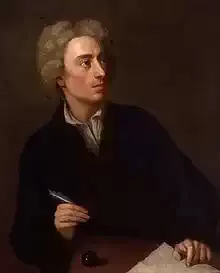
Alexander Pope
Essay on Man
The First Epistle
Awake, my ST. JOHN!(1) leave all meaner things
To low ambition, and the pride of Kings.
Let us (since Life can little more supply
Than just to look about us and to die)
Expatiate(2) free o'er all this scene of Man;
A mighty maze! but not without a plan;
A Wild, where weeds and flow'rs promiscuous shoot,
Or Garden, tempting with forbidden fruit.
Together let us beat this ample field,
Try what the open, what the covert yield;
The latent tracts(3), the giddy heights explore
Of all who blindly creep, or sightless soar;
Eye Nature's walks, shoot Folly as it flies,
And catch the Manners living as they rise;
Laugh where we must, be candid where we can;
But vindicate(4) the ways of God to Man.
1. Say first, of God above, or Man below,
What can we reason, but from what we know?
Of Man what see we, but his station here,
From which to reason, or to which refer?
Thro' worlds unnumber'd tho' the God be known,
'Tis ours to trace him only in our own.
He, who thro' vast immensity can pierce,
See worlds on worlds compose one universe,
Observe how system into system runs,
What other planets circle other suns,
What vary'd being peoples ev'ry star,
May tell why Heav'n has made us as we are.
But of this frame the bearings, and the ties,
The strong connections, nice dependencies,
Gradations just, has thy pervading soul
Look'd thro'? or can a part contain the whole?
Is the great chain, that draws all to agree,
And drawn supports, upheld by God, or thee?
II. Presumptuous Man! the reason wouldst thou find,
Why form'd so weak, so little, and so blind!
First, if thou canst, the harder reason guess,
Why form'd no weaker, blinder, and no less!
Ask of thy mother earth, why oaks are made
Taller or stronger than the weeds they shade?
Or ask of yonder argent fields(5) above,
Why JOVE'S Satellites are less than JOVE?(6)
Of Systems possible, if 'tis confest
That Wisdom infinite must form the best,
Where all must full or not coherent be,
And all that rises, rise in due degree;
Then, in the scale of reas'ning life, 'tis plain
There must be, somewhere, such rank as Man;
And all the question (wrangle e'er so long)
Is only this, if God has plac'd him wrong?
Respecting Man, whatever wrong we call,
Nay, must be right, as relative to all.
In human works, tho' labour'd on with pain,
A thousand movements scarce one purpose gain;
In God's, one single can its end produce;
Yet serves to second too some other use.
So Man, who here seems principal alone,
Perhaps acts second to some sphere unknown,
Touches some wheel, or verges to some goal;
'Tis but a part we see, and not a whole.
When the proud steed shall know why Man restrains
His fiery course, or drives him o'er the plains;
When the dull Ox, why now he breaks the clod,
Is now a victim, and now Egypt's God:(7)
Then shall Man's pride and dullness comprehend
His actions', passions', being's, use and end;
Why doing, suff'ring, check'd, impell'd; and why
This hour a slave, the next a deity.
Then say not Man's imperfect, Heav'n in fault;
Say rather, Man's as perfect as he ought;
His knowledge measur'd to his state and place,
His time a moment, and a point his space.
If to be perfect in a certain sphere,
What matter, soon or late, or here or there?
The blest today is as completely so,
As who began a thousand years ago.
III. Heav'n from all creatures hides the book of Fate,
All but the page prescrib'd, their present state;
From brutes what men, from men what spirits know:
Or who could suffer Being here below?
The lamb thy riot dooms to bleed to-day,
Had he thy Reason, would he skip and play?
Pleas'd to the last, he crops the flow'ry food,
And licks the hand just rais'd to shed his blood.
Oh blindness to the future! kindly giv'n,
That each may fill the circle mark'd by Heav'n;
Who sees with equal eye, as God of all,
A hero perish, or a sparrow fall,
Atoms or systems into ruin hurl'd,
And now a bubble burst, and now a world.
Hope humbly then; with trembling pinions soar;
Wait the great teacher Death, and God adore!
What future bliss, he gives not thee to know,
But gives that Hope to be thy blessing now.
Hope springs eternal in the human breast:
Man never Is, but always To be blest:
The soul, uneasy and confin'd from home,
Rests and expatiates in a life to come.
Lo! the poor Indian, whose untutor'd mind
Sees God in clouds, or hears him in the wind;
His soul proud Science never taught to stray
Far as the solar walk, or milky way;
Yet simple Nature to his hope has giv'n,
Behind the cloud-topt hill, an humbler heav'n;
Some safer world in depth of woods embrac'd,
Some happier island in the watry waste,
Where slaves once more their native land behold,
No fiends torment, no Christians thirst for gold!
To Be, contents his natural desire,
He asks no Angel's wing, no Seraph's(8) fire;
But thinks, admitted to that equal sky,
His faithful dog shall bear him company.
IV. Go, wiser thou! and in thy scale of sense
Weigh thy Opinion against Providence;
Call Imperfection what thou fancy'st such,
Say, here he gives too little, there too much;
Destroy all creatures for thy sport or gust,(9)
Yet cry, If Man's unhappy, God's unjust;
If Man alone ingross not Heav'n's high care,
Alone made perfect here, immortal there:
Snatch from his hand the balance(10) and the rod,
Re-judge his justice, be the GOD of GOD!
In Pride, in reas'ning Pride, our error lies;
All quit their sphere, and rush into the skies.
Pride still is aiming at the blest abodes,
Men would be Angels, Angels would be Gods.
Aspiring to be Gods, if Angels fell,
Aspiring to be Angels, Men rebel;
And who but wishes to invert the laws
Of ORDER, sins against th' Eternal Cause.
V. Ask for what end the heav'nly bodies shine,
Earth for whose use? Pride answers, "Tis for mine:
For me kind Nature wakes her genial pow'r,
Suckles each herb, and spreads out ev'ry flow'r;
Annual for me, the grape, the rose renew
The juice nectareous, and the balmy dew;
For me, the mine a thousand treasures brings;
For me, health gushes from a thousand springs;
Seas roll to waft me, suns to light me rise;
My foot-stool earth, my canopy the skies."
But errs not Nature from this gracious end,
From burning suns when livid deaths descend,
When earthquakes swallow, or when tempests sweep
Towns to one grave, whole nations to the deep?
"No ('tis reply'd) the first Almighty Cause
Acts not by partial, but by gen'ral laws;
Th' exceptions few; some change since all began,
And what created perfect?" -- Why then Man?
If the great end be human Happiness,
Then Nature deviates; and can Man do less?
As much that end a constant course requires
Of show'rs and sun-shine, as of Man's desires;
As much eternal springs and cloudless skies,
As Men for ever temp'rate, calm, and wise.
If plagues or earthquakes break not Heav'n's design,
Why then a Borgia,(11) or a Catiline?(12)
Who knows but he, whose hand the light'ning forms,
Who heaves old Ocean, and who wings the storms,
Pours fierce Ambition in a Caesar's(13) mind,
Or turns young Ammon(14) loose to scourge mankind?
From pride, from pride, our very reas'ning springs;
Account for moral as for nat'ral things:
Why charge we Heav'n in those, in these acquit?
In both, to reason right is to submit.
Better for Us, perhaps, it might appear,
Were there all harmony, all virtue here;
That never air or ocean felt the wind;
That never passion discompos'd the mind:
But ALL subsists by elemental strife;
and Passions are the elements of Life.
The gen'ral ORDER, since the whole began,
Is kept in Nature, and is kept in Man.
VI. What would this Man? Now upward will he soar,
And little less than Angel,(15) would be more;
Now looking downwards, just as griev'd appears
To want the strength of bulls, the fur of bears.
Made for his use all creatures if he call,
Say what their use, had he the pow'rs of all?
Nature to these, without profusion kind,
The proper organs, proper pow'rs assign'd;
Each seeming want compensated of course,
Here with degrees of swiftness, there of force;
All in exact proportion to the state;
Nothing to add, and nothing to abate.
Each beast, each insect, happy in its own;
Is Heav'n unkind to Man, and Man alone?
Shall he alone, whom rational we call,
Be pleas'd with nothing, if not bless'd with all?
The bliss of Man (could Pride that blessing find)
Is not to act or think beyond mankind;
No pow'rs of body or of soul to share,
But what his nature and his state can bear.
Why has not Man a microscopic eye?
For this plain reason, Man is not a Fly.
Say what the use, were finer optics giv'n,
T' inspect a mite,(16) not comprehend the heav'n?
Or touch, if tremblingly alive all o'er,
To smart and agonize at ev'ry pore?
Or quick effluvia(17) darting thro' the brain,
Die of a rose in aromatic pain?
If nature thunder'd in his op'ning ears,
And stunn'd him with the music of the spheres,
How would he wish that Heav'n had left him still
The whisp'ring Zephyr,(18) and the purling rill?(19)
Who finds not Providence all good and wise,
Alike in what it gives, and what denies?
VII. Far as Creation's ample range extends,
The scale of sensual, mental pow'rs ascends:
Mark how it mounts, to Man's imperial race,
From the green myriads in the people grass:
What modes of sight betwixt each wide extreme,
The mole's dim curtain, and the lynx's beam:
Of smell, the headlong lioness between,
And hound sagacious(20) on the tainted(21) green:
Of hearing, from the life that fills the flood,(22)
To that which warbles thro' the vernal(23) wood:
The spider's touch, how exquisitely fine!
Feels at each thread, and lives along the line:
In the nice bee, what sense so subtly true
From pois'nous herbs extracts the healing dew:(24)
How Instinct varies in the grov'ling swine,
Compar'd, half-reas'ning elephant, with thine:
'Twixt that, and Reason, what a nice barrier;
For ever sep'rate, yet for ever near!
Remembrance and Reflection how ally'd;
What thin partitions Sense from Thought divide:
And Middle natures,(25) how they long to join,
Yet never pass th' insuperable line!
Without this just gradation, could they be
Subjected these to those, or all to thee?
The pow'rs of all subdu'd by thee alone,
Is not thy Reason all these pow'rs in one?
VIII. See, thro' this air, this ocean, and this earth,
All matter quick, and bursting into birth.
Above, how high progressive life may go!
Around, how wide! how deep extend below!
Vast chain of being, which from God began,
Natures ethereal,(26) human, angel, man
Beast, bird, fish, insect! what no eye can see,
No glass can reach! from Infinite to thee,
From thee to Nothing! -- On superior pow'rs
Were we to press, inferior might on ours:
Or in the full creation leave a void,
Where, one step broken, the great scale's destoy'd:
From Nature's chain whatever link you strike,
Tenth or ten thousandth, breaks the chain alike.
And if each system in gradation roll,
Alike essential to th' amazing whole;
The least confusion but in one, not all
That system only, but the whole must fall.
Let Earth unbalanc'd from her orbit fly,
Planets and Suns run lawless thro' the sky,
Let ruling Angels from their spheres be hurl'd,
Being on being wreck'd, and world on world,
Heav'n's whole foundations to their centre nod,
And Nature tremble to the throne of God:
All this dread ORDER break -- for whom? for thee?
Vile worm! -- oh, Madness, Pride, Impiety!
IX. What if the foot, ordain'd the dust to tread,
Or hand to toil, aspir'd to be the head?
What if the head, the eye, or ear repin'd(27)
To serve mere engines to the ruling Mind?
Just as absurd, to mourn the tasks or pains
The great directing MIND of ALL ordains.
All are but parts of one stupendous whole,
Whose body, Nature is, and God the soul;
That, chang'd thro' all, and yet in all the same,
Great in the earth, as in th' ethereal frame,
Warms in the sun, refreshes in the breeze,
Glows in the stars, and blossoms in the trees,
Lives thro' all life, extends thro' all extent,
Spreads undivided, operates unspent,
Breathes in our soul, informs our mortal parts,
As full, as perfect, in a hair as heart;
As full, as perfect, in vile Man that mourns,
As the rapt Seraph that adores and burns;
To him no high, no low, no great, no small;
He fills, he bounds, connects, and equals all.
X. Cease then, nor ORDER Imperfection name:
Our proper bliss depends on what we blame.
Know thy own point: This kind, this due degree
Of blindness, weakness, Heav'n bestows on thee.
Submit -- In this, or any other sphere,
Secure to be as blest as thou canst bear:
Safe in the hand of one disposing Pow'r,
Or in the natal, or the mortal hour.
All Nature is but Art, unknown to thee;
All Chance, Direction, which thou canst not see;
All Discord, Harmony, not understood;
All partial Evil, universal Good:
And, spite of Pride, in erring Reason's spite,
One truth is clear, "Whatever IS, is RIGHT."
Argument of the Second Epistle:
Of the Nature and State of Man, with respect to Himself, as an Individual. The business
of Man not to pry into God, but
to study himself.
Know then thyself, presume not God to scan;
The proper study of Mankind is Man.
Plac'd on this isthmus of a middle state,(28)
A being darkly wise, and rudely great:
With too much knowledge for the Sceptic side,
With too much weakness for the Stoic's pride,
He hangs between; in doubt to act, or rest,
In doubt to deem himself a God, or Beast;
In doubt his Mind or Body to prefer,
Born but to die, and reas'ning but to err;
Alike in ignorance, his reason such,
Whether he thinks too little, or too much:
Chaos of Thought and Passion, all confus'd;
Still by himself abus'd, or disabus'd;
Created half to rise, and half to fall;
Great lord of all things, yet a prey to all;
Sole judge of Truth, in endless Error hurl'd:
The glory, jest, and riddle of the world!
ENDNOTES:
1[His friend, Henry St. John, Lord Bolingbroke]
2[to wander]
3[hidden areas]
4[explain or defend]
5[silvery fields, i.e., the heavens]
6[the planet Jupiter]
7[ancient Egyptians sometimes worshipped oxen]
8[the highest level of angels]
9[pleasure]
10[the balance used to weigh justice]
11[Caesar Borgia (1476-1507) who used any cruelty to achieve his ends]
12[Lucious Sergius Catilina (108-62 B.C.) who was a traitor to Rome]
13[Julius Caesar (100-44 B.C.) who was thought to be overly ambitious Roman]
14[Alexander the Great (356-323 B.C.)]
15[Psalm 8:5--"Thou hast made him [man] a little lower than the angels...."]
16[small insect]
17[vapors which were believed to pass odors to the brain]
18[the West Wind]
19[stream]
20[able to pick up a scent]
21[having the odor of an animal]
22[ocean]
23[green]
24[honey was thought to have medicinal properties]
25[Animals slightly below humans on the chain of being]
26[heavenly]
27[complained]
28[i.e., on the chain of being between angels and animals]
617
Kazi Nazrul Islam
The Resurgence (Islamic Lyric)
There sounds the drum!
There on the ruined tower, dark and blank,
Flutters the once-mighty flag.
Raise your head, mussalmans,
Gird your loins and advance
The call of the New Age has come.
With the Kalma on your lips
And the sabre swinging against your hips,
With the fiery enthusiasm of Islam ill your
Shake off your lethargy and start.
With the love of Allah in your soul
Answer the call and take up your role.
There is nothing for you to dread.
You have that glorious amulet,
The Holy Quran, tied round your neck.
A pity that you overslept
And missed the Fazr prayer.
Neither did you awaken
When the Zohr did beckon.
And the Asr prayer you whiled away
In idleness and play.
The call for the Mughrib has also sounded.
You must hurry now to the Esha prayer.
Some room is still available there,
We are not really
Creatures of pomp and luxury.
Our Calipha once ru.led over half the universe
Dressed in clothes no better than beggers.
Once we only desired death
In the cause of our faith,
But now such a people as our's
Are numbed in a drunken stupor
While outside there rages a violent storm.
We had nothing but a dry piece of bread,
But we had a mighty faith and none did we dread,
A noble spirit of sacrifice we possessed.
And we moved from place to place without sleep or rest,
Always as victors great.
Let us bring back to our life
That faith and spirit of sacrifice:
Let the cry of Allah-o-Akbar
Resound in the lips of all.
Let the world tremble again
At the sound of that clarion call.
[Translation: Kabir Chowdhury]
616
John Milton
Paradise Lost: Book 06
All night the dreadless Angel, unpursued,
Through Heaven's wide champain held his way; till Morn,
Waked by the circling Hours, with rosy hand
Unbarred the gates of light. There is a cave
Within the mount of God, fast by his throne,
Where light and darkness in perpetual round
Lodge and dislodge by turns, which makes through Heaven
Grateful vicissitude, like day and night;
Light issues forth, and at the other door
Obsequious darkness enters, till her hour
To veil the Heaven, though darkness there might well
Seem twilight here: And now went forth the Morn
Such as in highest Heaven arrayed in gold
Empyreal; from before her vanished Night,
Shot through with orient beams; when all the plain
Covered with thick embattled squadrons bright,
Chariots, and flaming arms, and fiery steeds,
Reflecting blaze on blaze, first met his view:
War he perceived, war in procinct; and found
Already known what he for news had thought
To have reported: Gladly then he mixed
Among those friendly Powers, who him received
With joy and acclamations loud, that one,
That of so many myriads fallen, yet one
Returned not lost. On to the sacred hill
They led him high applauded, and present
Before the seat supreme; from whence a voice,
From midst a golden cloud, thus mild was heard.
Servant of God. Well done; well hast thou fought
The better fight, who single hast maintained
Against revolted multitudes the cause
Of truth, in word mightier than they in arms;
And for the testimony of truth hast borne
Universal reproach, far worse to bear
Than violence; for this was all thy care
To stand approved in sight of God, though worlds
Judged thee perverse: The easier conquest now
Remains thee, aided by this host of friends,
Back on thy foes more glorious to return,
Than scorned thou didst depart; and to subdue
By force, who reason for their law refuse,
Right reason for their law, and for their King
Messiah, who by right of merit reigns.
Go, Michael, of celestial armies prince,
And thou, in military prowess next,
Gabriel, lead forth to battle these my sons
Invincible; lead forth my armed Saints,
By thousands and by millions, ranged for fight,
Equal in number to that Godless crew
Rebellious: Them with fire and hostile arms
Fearless assault; and, to the brow of Heaven
Pursuing, drive them out from God and bliss,
Into their place of punishment, the gulf
Of Tartarus, which ready opens wide
His fiery Chaos to receive their fall.
So spake the Sovran Voice, and clouds began
To darken all the hill, and smoke to roll
In dusky wreaths, reluctant flames, the sign
Of wrath awaked; nor with less dread the loud
Ethereal trumpet from on high 'gan blow:
At which command the Powers militant,
That stood for Heaven, in mighty quadrate joined
Of union irresistible, moved on
In silence their bright legions, to the sound
Of instrumental harmony, that breathed
Heroick ardour to adventurous deeds
Under their God-like leaders, in the cause
Of God and his Messiah. On they move
Indissolubly firm; nor obvious hill,
Nor straitening vale, nor wood, nor stream, divides
Their perfect ranks; for high above the ground
Their march was, and the passive air upbore
Their nimble tread; as when the total kind
Of birds, in orderly array on wing,
Came summoned over Eden to receive
Their names of thee; so over many a tract
Of Heaven they marched, and many a province wide,
Tenfold the length of this terrene: At last,
Far in the horizon to the north appeared
From skirt to skirt a fiery region, stretched
In battailous aspect, and nearer view
Bristled with upright beams innumerable
Of rigid spears, and helmets thronged, and shields
Various, with boastful argument portrayed,
The banded Powers of Satan hasting on
With furious expedition; for they weened
That self-same day, by fight or by surprise,
To win the mount of God, and on his throne
To set the Envier of his state, the proud
Aspirer; but their thoughts proved fond and vain
In the mid way: Though strange to us it seemed
At first, that Angel should with Angel war,
And in fierce hosting meet, who wont to meet
So oft in festivals of joy and love
Unanimous, as sons of one great Sire,
Hymning the Eternal Father: But the shout
Of battle now began, and rushing sound
Of onset ended soon each milder thought.
High in the midst, exalted as a God,
The Apostate in his sun-bright chariot sat,
Idol of majesty divine, enclosed
With flaming Cherubim, and golden shields;
Then lighted from his gorgeous throne, for now
"twixt host and host but narrow space was left,
A dreadful interval, and front to front
Presented stood in terrible array
Of hideous length: Before the cloudy van,
On the rough edge of battle ere it joined,
Satan, with vast and haughty strides advanced,
Came towering, armed in adamant and gold;
Abdiel that sight endured not, where he stood
Among the mightiest, bent on highest deeds,
And thus his own undaunted heart explores.
O Heaven! that such resemblance of the Highest
Should yet remain, where faith and realty
Remain not: Wherefore should not strength and might
There fail where virtue fails, or weakest prove
Where boldest, though to fight unconquerable?
His puissance, trusting in the Almighty's aid,
I mean to try, whose reason I have tried
Unsound and false; nor is it aught but just,
That he, who in debate of truth hath won,
Should win in arms, in both disputes alike
Victor; though brutish that contest and foul,
When reason hath to deal with force, yet so
Most reason is that reason overcome.
So pondering, and from his armed peers
Forth stepping opposite, half-way he met
His daring foe, at this prevention more
Incensed, and thus securely him defied.
Proud, art thou met? thy hope was to have reached
The highth of thy aspiring unopposed,
The throne of God unguarded, and his side
Abandoned, at the terrour of thy power
Or potent tongue: Fool!not to think how vain
Against the Omnipotent to rise in arms;
Who out of smallest things could, without end,
Have raised incessant armies to defeat
Thy folly; or with solitary hand
Reaching beyond all limit, at one blow,
Unaided, could have finished thee, and whelmed
Thy legions under darkness: But thou seest
All are not of thy train; there be, who faith
Prefer, and piety to God, though then
To thee not visible, when I alone
Seemed in thy world erroneous to dissent
From all: My sect thou seest;now learn too late
How few sometimes may know, when thousands err.
Whom the grand foe, with scornful eye askance,
Thus answered. Ill for thee, but in wished hour
Of my revenge, first sought for, thou returnest
From flight, seditious Angel! to receive
Thy merited reward, the first assay
Of this right hand provoked, since first that tongue,
Inspired with contradiction, durst oppose
A third part of the Gods, in synod met
Their deities to assert; who, while they feel
Vigour divine within them, can allow
Omnipotence to none. But well thou comest
Before thy fellows, ambitious to win
From me some plume, that thy success may show
Destruction to the rest: This pause between,
(Unanswered lest thou boast) to let thee know,
At first I thought that Liberty and Heaven
To heavenly souls had been all one; but now
I see that most through sloth had rather serve,
Ministring Spirits, trained up in feast and song!
Such hast thou armed, the minstrelsy of Heaven,
Servility with freedom to contend,
As both their deeds compared this day shall prove.
To whom in brief thus Abdiel stern replied.
Apostate! still thou errest, nor end wilt find
Of erring, from the path of truth remote:
Unjustly thou depravest it with the name
Of servitude, to serve whom God ordains,
Or Nature: God and Nature bid the same,
When he who rules is worthiest, and excels
Them whom he governs. This is servitude,
To serve the unwise, or him who hath rebelled
Against his worthier, as thine now serve thee,
Thyself not free, but to thyself enthralled;
Yet lewdly darest our ministring upbraid.
Reign thou in Hell, thy kingdom; let me serve
In Heaven God ever blest, and his divine
Behests obey, worthiest to be obeyed;
Yet chains in Hell, not realms, expect: Mean while
From me returned, as erst thou saidst, from flight,
This greeting on thy impious crest receive.
So saying, a noble stroke he lifted high,
Which hung not, but so swift with tempest fell
On the proud crest of Satan, that no sight,
Nor motion of swift thought, less could his shield,
Such ruin intercept: Ten paces huge
He back recoiled; the tenth on bended knee
His massy spear upstaid; as if on earth
Winds under ground, or waters forcing way,
Sidelong had pushed a mountain from his seat,
Half sunk with all his pines. Amazement seised
The rebel Thrones, but greater rage, to see
Thus foiled their mightiest; ours joy filled, and shout,
Presage of victory, and fierce desire
Of battle: Whereat Michael bid sound
The Arch-Angel trumpet; through the vast of Heaven
It sounded, and the faithful armies rung
Hosanna to the Highest: Nor stood at gaze
The adverse legions, nor less hideous joined
The horrid shock. Now storming fury rose,
And clamour such as heard in Heaven till now
Was never; arms on armour clashing brayed
Horrible discord, and the madding wheels
Of brazen chariots raged; dire was the noise
Of conflict; over head the dismal hiss
Of fiery darts in flaming vollies flew,
And flying vaulted either host with fire.
So under fiery cope together rushed
Both battles main, with ruinous assault
And inextinguishable rage. All Heaven
Resounded; and had Earth been then, all Earth
Had to her center shook. What wonder? when
Millions of fierce encountering Angels fought
On either side, the least of whom could wield
These elements, and arm him with the force
Of all their regions: How much more of power
Army against army numberless to raise
Dreadful combustion warring, and disturb,
Though not destroy, their happy native seat;
Had not the Eternal King Omnipotent,
From his strong hold of Heaven, high over-ruled
And limited their might; though numbered such
As each divided legion might have seemed
A numerous host; in strength each armed hand
A legion; led in fight, yet leader seemed
Each warriour single as in chief, expert
When to advance, or stand, or turn the sway
Of battle, open when, and when to close
The ridges of grim war: No thought of flight,
None of retreat, no unbecoming deed
That argued fear; each on himself relied,
As only in his arm the moment lay
Of victory: Deeds of eternal fame
Were done, but infinite; for wide was spread
That war and various; sometimes on firm ground
A standing fight, then, soaring on main wing,
Tormented all the air; all air seemed then
Conflicting fire. Long time in even scale
The battle hung; till Satan, who that day
Prodigious power had shown, and met in arms
No equal, ranging through the dire attack
Of fighting Seraphim confused, at length
Saw where the sword of Michael smote, and felled
Squadrons at once; with huge two-handed sway
Brandished aloft, the horrid edge came down
Wide-wasting; such destruction to withstand
He hasted, and opposed the rocky orb
Of tenfold adamant, his ample shield,
A vast circumference. At his approach
The great Arch-Angel from his warlike toil
Surceased, and glad, as hoping here to end
Intestine war in Heaven, the arch-foe subdued
Or captive dragged in chains, with hostile frown
And visage all inflamed first thus began.
Author of evil, unknown till thy revolt,
Unnamed in Heaven, now plenteous as thou seest
These acts of hateful strife, hateful to all,
Though heaviest by just measure on thyself,
And thy adherents: How hast thou disturbed
Heaven's blessed peace, and into nature brought
Misery, uncreated till the crime
Of thy rebellion! how hast thou instilled
Thy malice into thousands, once upright
And faithful, now proved false! But think not here
To trouble holy rest; Heaven casts thee out
From all her confines. Heaven, the seat of bliss,
Brooks not the works of violence and war.
Hence then, and evil go with thee along,
Thy offspring, to the place of evil, Hell;
Thou and thy wicked crew! there mingle broils,
Ere this avenging sword begin thy doom,
Or some more sudden vengeance, winged from God,
Precipitate thee with augmented pain.
So spake the Prince of Angels; to whom thus
The Adversary. Nor think thou with wind
Of aery threats to awe whom yet with deeds
Thou canst not. Hast thou turned the least of these
To flight, or if to fall, but that they rise
Unvanquished, easier to transact with me
That thou shouldst hope, imperious, and with threats
To chase me hence? err not, that so shall end
The strife which thou callest evil, but we style
The strife of glory; which we mean to win,
Or turn this Heaven itself into the Hell
Thou fablest; here however to dwell free,
If not to reign: Mean while thy utmost force,
And join him named Almighty to thy aid,
I fly not, but have sought thee far and nigh.
They ended parle, and both addressed for fight
Unspeakable; for who, though with the tongue
Of Angels, can relate, or to what things
Liken on earth conspicuous, that may lift
Human imagination to such highth
Of Godlike power? for likest Gods they seemed,
Stood they or moved, in stature, motion, arms,
Fit to decide the empire of great Heaven.
Now waved their fiery swords, and in the air
Made horrid circles; two broad suns their shields
Blazed opposite, while Expectation stood
In horrour: From each hand with speed retired,
Where erst was thickest fight, the angelick throng,
And left large field, unsafe within the wind
Of such commotion; such as, to set forth
Great things by small, if, nature's concord broke,
Among the constellations war were sprung,
Two planets, rushing from aspect malign
Of fiercest opposition, in mid sky
Should combat, and their jarring spheres confound.
Together both with next to almighty arm
Up-lifted imminent, one stroke they aimed
That might determine, and not need repeat,
As not of power at once; nor odds appeared
In might or swift prevention: But the sword
Of Michael from the armoury of God
Was given him tempered so, that neither keen
Nor solid might resist that edge: it met
The sword of Satan, with steep force to smite
Descending, and in half cut sheer; nor staid,
But with swift wheel reverse, deep entering, shared
All his right side: Then Satan first knew pain,
And writhed him to and fro convolved; so sore
The griding sword with discontinuous wound
Passed through him: But the ethereal substance closed,
Not long divisible; and from the gash
A stream of necturous humour issuing flowed
Sanguine, such as celestial Spirits may bleed,
And all his armour stained, ere while so bright.
Forthwith on all sides to his aid was run
By Angels many and strong, who interposed
Defence, while others bore him on their shields
Back to his chariot, where it stood retired
From off the files of war: There they him laid
Gnashing for anguish, and despite, and shame,
To find himself not matchless, and his pride
Humbled by such rebuke, so far beneath
His confidence to equal God in power.
Yet soon he healed; for Spirits that live throughout
Vital in every part, not as frail man
In entrails, heart of head, liver or reins,
Cannot but by annihilating die;
Nor in their liquid texture mortal wound
Receive, no more than can the fluid air:
All heart they live, all head, all eye, all ear,
All intellect, all sense; and, as they please,
They limb themselves, and colour, shape, or size
Assume, as?kikes them best, condense or rare.
Mean while in other parts like deeds deserved
Memorial, where the might of Gabriel fought,
And with fierce ensigns pierced the deep array
Of Moloch, furious king; who him defied,
And at his chariot-wheels to drag him bound
Threatened, nor from the Holy One of Heaven
Refrained his tongue blasphemous; but anon
Down cloven to the waist, with shattered arms
And uncouth pain fled bellowing. On each wing
Uriel, and Raphael, his vaunting foe,
Though huge, and in a rock of diamond armed,
Vanquished Adramelech, and Asmadai,
Two potent Thrones, that to be less than Gods
Disdained, but meaner thoughts learned in their flight,
Mangled with ghastly wounds through plate and mail.
Nor stood unmindful Abdiel to annoy
The atheist crew, but with redoubled blow
Ariel, and Arioch, and the violence
Of Ramiel scorched and blasted, overthrew.
I might relate of thousands, and their names
Eternize here on earth; but those elect
Angels, contented with their fame in Heaven,
Seek not the praise of men: The other sort,
In might though wonderous and in acts of war,
Nor of renown less eager, yet by doom
Cancelled from Heaven and sacred memory,
Nameless in dark oblivion let them dwell.
For strength from truth divided, and from just,
Illaudable, nought merits but dispraise
And ignominy; yet to glory aspires
Vain-glorious, and through infamy seeks fame:
Therefore eternal silence be their doom.
And now, their mightiest quelled, the battle swerved,
With many an inroad gored; deformed rout
Entered, and foul disorder; all the ground
With shivered armour strown, and on a heap
Chariot and charioteer lay overturned,
And fiery-foaming steeds; what stood, recoiled
O'er-wearied, through the faint Satanick host
Defensive scarce, or with pale fear surprised,
Then first with fear surprised, and sense of pain,
Fled ignominious, to such evil brought
By sin of disobedience; till that hour
Not liable to fear, or flight, or pain.
Far otherwise the inviolable Saints,
In cubick phalanx firm, advanced entire,
Invulnerable, impenetrably armed;
Such high advantages their innocence
Gave them above their foes; not to have sinned,
Not to have disobeyed; in fight they stood
Unwearied, unobnoxious to be pained
By wound, though from their place by violence moved,
Now Night her course began, and, over Heaven
Inducing darkness, grateful truce imposed,
And silence on the odious din of war:
Under her cloudy covert both retired,
Victor and vanquished: On the foughten field
Michael and his Angels prevalent
Encamping, placed in guard their watches round,
Cherubick waving fires: On the other part,
Satan with his rebellious disappeared,
Far in the dark dislodged; and, void of rest,
His potentates to council called by night;
And in the midst thus undismayed began.
O now in danger tried, now known in arms
Not to be overpowered, Companions dear,
Found worthy not of liberty alone,
Too mean pretence! but what we more affect,
Honour, dominion, glory, and renown;
Who have sustained one day in doubtful fight,
(And if one day, why not eternal days?)
What Heaven's Lord had powerfullest to send
Against us from about his throne, and judged
Sufficient to subdue us to his will,
But proves not so: Then fallible, it seems,
Of future we may deem him, though till now
Omniscient thought. True is, less firmly armed,
Some disadvantage we endured and pain,
Till now not known, but, known, as soon contemned;
Since now we find this our empyreal form
Incapable of mortal injury,
Imperishable, and, though pierced with wound,
Soon closing, and by native vigour healed.
Of evil then so small as easy think
The remedy; perhaps more valid arms,
Weapons more violent, when next we meet,
May serve to better us, and worse our foes,
Or equal what between us made the odds,
In nature none: If other hidden cause
Left them superiour, while we can preserve
Unhurt our minds, and understanding sound,
Due search and consultation will disclose.
He sat; and in the assembly next upstood
Nisroch, of Principalities the prime;
As one he stood escaped from cruel fight,
Sore toiled, his riven arms to havock hewn,
And cloudy in aspect thus answering spake.
Deliverer from new Lords, leader to free
Enjoyment of our right as Gods; yet hard
For Gods, and too unequal work we find,
Against unequal arms to fight in pain,
Against unpained, impassive; from which evil
Ruin must needs ensue; for what avails
Valour or strength, though matchless, quelled with pain
Which all subdues, and makes remiss the hands
Of mightiest? Sense of pleasure we may well
Spare out of life perhaps, and not repine,
But live content, which is the calmest life:
But pain is perfect misery, the worst
Of evils, and, excessive, overturns
All patience. He, who therefore can invent
With what more forcible we may offend
Our yet unwounded enemies, or arm
Ourselves with like defence, to me deserves
No less than for deliverance what we owe.
Whereto with look composed Satan replied.
Not uninvented that, which thou aright
Believest so main to our success, I bring.
Which of us who beholds the bright surface
Of this ethereous mould whereon we stand,
This continent of spacious Heaven, adorned
With plant, fruit, flower ambrosial, gems, and gold;
Whose eye so superficially surveys
These things, as not to mind from whence they grow
Deep under ground, materials dark and crude,
Of spiritous and fiery spume, till touched
With Heaven's ray, and tempered, they shoot forth
So beauteous, opening to the ambient light?
These in their dark nativity the deep
Shall yield us, pregnant with infernal flame;
Which, into hollow engines, long and round,
Thick rammed, at the other bore with touch of fire
Dilated and infuriate, shall send forth
From far, with thundering noise, among our foes
Such implements of mischief, as shall dash
To pieces, and o'erwhelm whatever stands
Adverse, that they shall fear we have disarmed
The Thunderer of his only dreaded bolt.
Nor long shall be our labour; yet ere dawn,
Effect shall end our wish. Mean while revive;
Abandon fear; to strength and counsel joined
Think nothing hard, much less to be despaired.
He ended, and his words their drooping cheer
Enlightened, and their languished hope revived.
The invention all admired, and each, how he
To be the inventer missed; so easy it seemed
Once found, which yet unfound most would have thought
Impossible: Yet, haply, of thy race
In future days, if malice should abound,
Some one intent on mischief, or inspired
With devilish machination, might devise
Like instrument to plague the sons of men
For sin, on war and mutual slaughter bent.
Forthwith from council to the work they flew;
None arguing stood; innumerable hands
Were ready; in a moment up they turned
Wide the celestial soil, and saw beneath
The originals of nature in their crude
Conception; sulphurous and nitrous foam
They found, they mingled, and, with subtle art,
Concocted and adusted they reduced
To blackest grain, and into store conveyed:
Part hidden veins digged up (nor hath this earth
Entrails unlike) of mineral and stone,
Whereof to found their engines and their balls
Of missive ruin; part incentive reed
Provide, pernicious with one touch to fire.
So all ere day-spring, under conscious night,
Secret they finished, and in order set,
With silent circumspection, unespied.
Now when fair morn orient in Heaven appeared,
Up rose the victor-Angels, and to arms
The matin trumpet sung: In arms they stood
Of golden panoply, refulgent host,
Soon banded; others from the dawning hills
Look round, and scouts each coast light-armed scour,
Each quarter to descry the distant foe,
Where lodged, or whither fled, or if for fight,
In motion or in halt: Him soon they met
Under spread ensigns moving nigh, in slow
But firm battalion; back with speediest sail
Zophiel, of Cherubim the swiftest wing,
Came flying, and in mid air aloud thus cried.
Arm, Warriours, arm for fight; the foe at hand,
Whom fled we thought, will save us long pursuit
This day; fear not his flight;so thick a cloud
He comes, and settled in his face I see
Sad resolution, and secure: Let each
His adamantine coat gird well, and each
Fit well his helm, gripe fast his orbed shield,
Borne even or high; for this day will pour down,
If I conjecture aught, no drizzling shower,
But rattling storm of arrows barbed with fire.
So warned he them, aware themselves, and soon
In order, quit of all impediment;
Instant without disturb they took alarm,
And onward moved embattled: When behold!
Not distant far with heavy pace the foe
Approaching gross and huge, in hollow cube
Training his devilish enginery, impaled
On every side with shadowing squadrons deep,
To hide the fraud. At interview both stood
A while; but suddenly at head appeared
Satan, and thus was heard commanding loud.
Vanguard, to right and left the front unfold;
That all may see who hate us, how we seek
Peace and composure, and with open breast
Stand ready to receive them, if they like
Our overture; and turn not back perverse:
But that I doubt; however witness, Heaven!
Heaven, witness thou anon! while we discharge
Freely our part: ye, who appointed stand
Do as you have in charge, and briefly touch
What we propound, and loud that all may hear!
So scoffing in ambiguous words, he scarce
Had ended; when to right and left the front
Divided, and to either flank retired:
Which to our eyes discovered, new and strange,
A triple mounted row of pillars laid
On wheels (for like to pillars most they seemed,
Or hollowed bodies made of oak or fir,
With branches lopt, in wood or mountain felled,)
Brass, iron, stony mould, had not their mouths
With hideous orifice gaped on us wide,
Portending hollow truce: At each behind
A Seraph stood, and in his hand a reed
Stood waving tipt with fire; while we, suspense,
Collected stood within our thoughts amused,
Not long; for sudden all at once their reeds
Put forth, and to a narrow vent applied
With nicest touch. Immediate in a flame,
But soon obscured with smoke, all Heaven appeared,
From those deep-throated engines belched, whose roar
Embowelled with outrageous noise the air,
And all her entrails tore, disgorging foul
Their devilish glut, chained thunderbolts and hail
Of iron globes; which, on the victor host
Levelled, with such impetuous fury smote,
That, whom they hit, none on their feet might stand,
Though standing else as rocks, but down they fell
By thousands, Angel on Arch-Angel rolled;
The sooner for their arms; unarmed, they might
Have easily, as Spirits, evaded swift
By quick contraction or remove; but now
Foul dissipation followed, and forced rout;
Nor served it to relax their serried files.
What should they do? if on they rushed, repulse
Repeated, and indecent overthrow
Doubled, would render them yet more despised,
And to their foes a laughter; for in view
Stood ranked of Seraphim another row,
In posture to displode their second tire
Of thunder: Back defeated to return
They worse abhorred. Satan beheld their plight,
And to his mates thus in derision called.
O Friends! why come not on these victors proud
Ere while they fierce were coming; and when we,
To entertain them fair with open front
And breast, (what could we more?) propounded terms
Of composition, straight they changed their minds,
Flew off, and into strange vagaries fell,
As they would dance; yet for a dance they seemed
Somewhat extravagant and wild; perhaps
For joy of offered peace: But I suppose,
If our proposals once again were heard,
We should compel them to a quick result.
To whom thus Belial, in like gamesome mood.
Leader! the terms we sent were terms of weight,
Of hard contents, and full of force urged home;
Such as we might perceive amused them all,
And stumbled many: Who receives them right,
Had need from head to foot well understand;
Not understood, this gift they have besides,
They show us when our foes walk not upright.
So they among themselves in pleasant vein
Stood scoffing, hightened in their thoughts beyond
All doubt of victory: Eternal Might
To match with their inventions they presumed
So easy, and of his thunder made a scorn,
And all his host derided, while they stood
A while in trouble: But they stood not long;
Rage prompted them at length, and found them arms
Against such hellish mischief fit to oppose.
Forthwith (behold the excellence, the power,
Which God hath in his mighty Angels placed!)
Their arms away they threw, and to the hills
(For Earth hath this variety from Heaven
Of pleasure situate in hill and dale,)
Light as the lightning glimpse they ran, they flew;
From their foundations loosening to and fro,
They plucked the seated hills, with all their load,
Rocks, waters, woods, and by the shaggy tops
Up-lifting bore them in their hands: Amaze,
Be sure, and terrour, seized the rebel host,
When coming towards them so dread they saw
The bottom of the mountains upward turned;
Till on those cursed engines' triple-row
They saw them whelmed, and all their confidence
Under the weight of mountains buried deep;
Themselves invaded next, and on their heads
Main promontories flung, which in the air
Came shadowing, and oppressed whole legions armed;
Their armour helped their harm, crushed in and bruised
Into their substance pent, which wrought them pain
Implacable, and many a dolorous groan;
Long struggling underneath, ere they could wind
Out of such prison, though Spirits of purest light,
Purest at first, now gross by sinning grown.
The rest, in imitation, to like arms
Betook them, and the neighbouring hills uptore:
So hills amid the air encountered hills,
Hurled to and fro with jaculation dire;
That under ground they fought in dismal shade;
Infernal noise! war seemed a civil game
To this uproar; horrid confusion heaped
Upon confusion rose: And now all Heaven
Had gone to wrack, with ruin overspread;
Had not the Almighty Father, where he sits
Shrined in his sanctuary of Heaven secure,
Consulting on the sum of things, foreseen
This tumult, and permitted all, advised:
That his great purpose he might so fulfil,
To honour his anointed Son avenged
Upon his enemies, and to declare
All power on him transferred: Whence to his Son,
The Assessour of his throne, he thus began.
Effulgence of my glory, Son beloved,
Son, in whose face invisible is beheld
Visibly, what by Deity I am;
And in whose hand what by decree I do,
Second Omnipotence! two days are past,
Two days, as we compute the days of Heaven,
Since Michael and his Powers went forth to tame
These disobedient: Sore hath been their fight,
As likeliest was, when two such foes met armed;
For to themselves I left them; and thou knowest,
Equal in their creation they were formed,
Save what sin hath impaired; which yet hath wrought
Insensibly, for I suspend their doom;
Whence in perpetual fight they needs must last
Endless, and no solution will be found:
War wearied hath performed what war can do,
And to disordered rage let loose the reins
With mountains, as with weapons, armed; which makes
Wild work in Heaven, and dangerous to the main.
Two days are therefore past, the third is thine;
For thee I have ordained it; and thus far
Have suffered, that the glory may be thine
Of ending this great war, since none but Thou
Can end it. Into thee such virtue and grace
Immense I have transfused, that all may know
In Heaven and Hell thy power above compare;
And, this perverse commotion governed thus,
To manifest thee worthiest to be Heir
Of all things; to be Heir, and to be King
By sacred unction, thy deserved right.
Go then, Thou Mightiest, in thy Father's might;
Ascend my chariot, guide the rapid wheels
That shake Heaven's basis, bring forth all my war,
My bow and thunder, my almighty arms
Gird on, and sword upon thy puissant thigh;
Pursue these sons of darkness, drive them out
From all Heaven's bounds into the utter deep:
There let them learn, as likes them, to despise
God, and Messiah his anointed King.
He said, and on his Son with rays direct
Shone full; he all his Father full expressed
Ineffably into his face received;
And thus the Filial Godhead answering spake.
O Father, O Supreme of heavenly Thrones,
First, Highest, Holiest, Best; thou always seek'st
To glorify thy Son, I always thee,
As is most just: This I my glory account,
My exaltation, and my whole delight,
That thou, in me well pleased, declarest thy will
Fulfilled, which to fulfil is all my bliss.
Scepter and power, thy giving, I assume,
And gladlier shall resign, when in the end
Thou shalt be all in all, and I in thee
For ever; and in me all whom thou lovest:
But whom thou hatest, I hate, and can put on
Thy terrours, as I put thy mildness on,
Image of thee in all things; and shall soon,
Armed with thy might, rid Heaven of these rebelled;
To their prepared ill mansion driven down,
To chains of darkness, and the undying worm;
That from thy just obedience could revolt,
Whom to obey is happiness entire.
Then shall thy Saints unmixed, and from the impure
Far separate, circling thy holy mount,
Unfeigned Halleluiahs to thee sing,
Hymns of high praise, and I among them Chief.
So said, he, o'er his scepter bowing, rose
From the right hand of Glory where he sat;
And the third sacred morn began to shine,
Dawning through Heaven. Forth rushed with whirlwind sound
The chariot of Paternal Deity,
Flashing thick flames, wheel within wheel undrawn,
Itself instinct with Spirit, but convoyed
By four Cherubick shapes; four faces each
Had wonderous; as with stars, their bodies all
And wings were set with eyes; with eyes the wheels
Of beryl, and careering fires between;
Over their heads a crystal firmament,
Whereon a sapphire throne, inlaid with pure
Amber, and colours of the showery arch.
He, in celestial panoply all armed
Of radiant Urim, work divinely wrought,
Ascended; at his right hand Victory
Sat eagle-winged; beside him hung his bow
And quiver with three-bolted thunder stored;
And from about him fierce effusion rolled
Of smoke, and bickering flame, and sparkles dire:
Attended with ten thousand thousand Saints,
He onward came; far off his coming shone;
And twenty thousand (I their number heard)
Chariots of God, half on each hand, were seen;
He on the wings of Cherub rode sublime
On the crystalline sky, in sapphire throned,
Illustrious far and wide; but by his own
First seen: Them unexpected joy surprised,
When the great ensign of Messiah blazed
Aloft by Angels borne, his sign in Heaven;
Under whose conduct Michael soon reduced
His army, circumfused on either wing,
Under their Head imbodied all in one.
Before him Power Divine his way prepared;
At his command the uprooted hills retired
Each to his place; they heard his voice, and went
Obsequious; Heaven his wonted face renewed,
And with fresh flowerets hill and valley smiled.
This saw his hapless foes, but stood obdured,
And to rebellious fight rallied their Powers,
Insensate, hope conceiving from despair.
In heavenly Spirits could such perverseness dwell?
But to convince the proud what signs avail,
Or wonders move the obdurate to relent?
They, hardened more by what might most reclaim,
Grieving to see his glory, at the sight
Took envy; and, aspiring to his highth,
Stood re-embattled fierce, by force or fraud
Weening to prosper, and at length prevail
Against God and Messiah, or to fall
In universal ruin last; and now
To final battle drew, disdaining flight,
Or faint retreat; when the great Son of God
To all his host on either hand thus spake.
Stand still in bright array, ye Saints; here stand,
Ye Angels armed; this day from battle rest:
Faithful hath been your warfare, and of God
Accepted, fearless in his righteous cause;
And as ye have received, so have ye done,
Invincibly: But of this cursed crew
The punishment to other hand belongs;
Vengeance is his, or whose he sole appoints:
Number to this day's work is not ordained,
Nor multitude; stand only, and behold
God's indignation on these godless poured
By me; not you, but me, they have despised,
Yet envied; against me is all their rage,
Because the Father, to whom in Heaven s'preme
Kingdom, and power, and glory appertains,
Hath honoured me, according to his will.
Therefore to me their doom he hath assigned;
That they may have their wish, to try with me
In battle which the stronger proves; they all,
Or I alone against them; since by strength
They measure all, of other excellence
Not emulous, nor care who them excels;
Nor other strife with them do I vouchsafe.
So spake the Son, and into terrour changed
His countenance too severe to be beheld,
And full of wrath bent on his enemies.
At once the Four spread out their starry wings
With dreadful shade contiguous, and the orbs
Of his fierce chariot rolled, as with the sound
Of torrent floods, or of a numerous host.
He on his impious foes right onward drove,
Gloomy as night; under his burning wheels
The stedfast empyrean shook throughout,
All but the throne itself of God. Full soon
Among them he arrived; in his right hand
Grasping ten thousand thunders, which he sent
Before him, such as in their souls infixed
Plagues: They, astonished, all resistance lost,
All courage; down their idle weapons dropt:
O'er shields, and helms, and helmed heads he rode
Of Thrones and mighty Seraphim prostrate,
That wished the mountains now might be again
Thrown on them, as a shelter from his ire.
Nor less on either side tempestuous fell
His arrows, from the fourfold-visaged Four
Distinct with eyes, and from the living wheels
Distinct alike with multitude of eyes;
One Spirit in them ruled; and every eye
Glared lightning, and shot forth pernicious fire
Among the accursed, that withered all their strength,
And of their wonted vigour left them drained,
Exhausted, spiritless, afflicted, fallen.
Yet half his strength he put not forth, but checked
His thunder in mid volley; for he meant
Not to destroy, but root them out of Heaven:
The overthrown he raised, and as a herd
Of goats or timorous flock together thronged
Drove them before him thunder-struck, pursued
With terrours, and with furies, to the bounds
And crystal wall of Heaven; which, opening wide,
Rolled inward, and a spacious gap disclosed
Into the wasteful deep: The monstrous sight
Struck them with horrour backward, but far worse
Urged them behind: Headlong themselves they threw
Down from the verge of Heaven; eternal wrath
Burnt after them to the bottomless pit.
Hell heard the unsufferable noise, Hell saw
Heaven ruining from Heaven, and would have fled
Affrighted; but strict Fate had cast too deep
Her dark foundations, and too fast had bound.
Nine days they fell: Confounded Chaos roared,
And felt tenfold confusion in their fall
Through his wild anarchy, so huge a rout
Incumbered him with ruin: Hell at last
Yawning received them whole, and on them closed;
Hell, their fit habitation, fraught with fire
Unquenchable, the house of woe and pain.
Disburdened Heaven rejoiced, and soon repaired
Her mural breach, returning whence it rolled.
Sole victor, from the expulsion of his foes,
Messiah his triumphal chariot turned:
To meet him all his Saints, who silent stood
Eye-witnesses of his almighty acts,
With jubilee advanced; and, as they went,
Shaded with branching palm, each Order bright,
Sung triumph, and him sung victorious King,
Son, Heir, and Lord, to him dominion given,
Worthiest to reign: He, celebrated, rode
Triumphant through mid Heaven, into the courts
And temple of his Mighty Father throned
On high; who into glory him received,
Where now he sits at the right hand of bliss.
Thus, measuring things in Heaven by things on Earth,
At thy request, and that thou mayest beware
By what is past, to thee I have revealed
What might have else to human race been hid;
The discord which befel, and war in Heaven
Among the angelick Powers, and the deep fall
Of those too high aspiring, who rebelled
With Satan; he who envies now thy state,
Who now is plotting how he may seduce
Thee also from obedience, that, with him
Bereaved of happiness, thou mayest partake
His punishment, eternal misery;
Which would be all his solace and revenge,
As a despite done against the Most High,
Thee once to gain companion of his woe.
But listen not to his temptations, warn
Thy weaker; let it profit thee to have heard,
By terrible example, the reward
Of disobedience; firm they might have stood,
Yet fell; remember, and fear to transgress.
621
Kazi Nazrul Islam
God
Who are you, my friend,
searching for God in heaven
and the underworld?
Who are you-searching
through the wilderness
and mountain peaks?
It's a pity-O Rishis and Dervishes,
you go on searching for Him
from country to country
while holding the Jewel of the Heart
in your own heart!
The whole creation looks at you
while your own eyes are shut.
You search for the creator
instead of searching for your self.
O self-inflicted Blind-open your eyes,
look at yourself in the mirror.
You'll see-His shadow falls on your body.
Don't shudder, Hero,
don't be intimidated
by the scholars of the scripturesthey're
not God's 'private secretaries'
We all are His manifestation,
He is present in us all.
Seeing myself, I see the unseen Creator..
The merchants at the seaport trade in gems.
But never ask them where the gems are mined.
They are merely traders of gems,
but they think that they know where the mine is too!
They have never taken a dive
into the fathomless depth of the gem-bearing ocean.
Instead of messing with the scriptures,
my friend, dive right into
the ocean of Truth!
[Translation: Sajed Kamal]
626
Rabindranath Tagore
Roaming Cloud
I am like a remnant of a cloud of autumn
uselessly roaming in the sky, O my sun ever-glorious!
Thy touch has not yet melted my vapor,
making me one with thy light,
and thus I count months and years separated from thee.
If this be thy wish and if this be thy play,
then take this fleeting emptiness of mine,
paint it with colors, gild it with gold,
float it on the wanton wind and spread it in varied wonders.
And again when it shall be thy wish to end this play at night,
I shall melt and vanish away in the dark,
or it may be in a smile of the white morning,
in a coolness of purity transparent.
615

Rudyard Kipling
Recessional
June ,
God of our fathers, known of old—
Lord of our far-flung battle-line—
Beneath whose awful Hand we hold
Dominion over palm and pine—
Lord God of Hosts, be with us yet,
Lest we forget, lest we forget!
The tumult and the shouting dies—
The captains and the kings depart—
Still stands Thine ancient sacrifice,
An humble and a contrite heart.
Lord God of Hosts, be with us yet,
Lest we forget, lest we forget!
Far-call’d our navies melt away—
On dune and headland sinks the fire—
Lo, all our pomp of yesterday
Is one with Nineveh and Tyre!
Judge of the Nations, spare us yet,
Lest we forget, lest we forget!
If, drunk with sight of power, we loose
Wild tongues that have not Thee in awe—
Such boasting as the Gentiles use
Or lesser breeds without the Law—
Lord God of Hosts, be with us yet,
Lest we forget, lest we forget!
For heathen heart that puts her trust
In reeking tube and iron shard—
All valiant dust that builds on dust,
And guarding calls not Thee to guard—
For frantic boast and foolish word,
Thy Mercy on Thy People, Lord!
606

Robert Browning
Prospice
Fear death?---to feel the fog in my throat,
The mist in my face,
When the snows begin, and the blasts denote
I am nearing the place,
The power of the night, the press of the storm,
The post of the foe;
Where he stands, the Arch Fear in a visible form;
Yet the strong man must go:
For the journey is done and the summit attained,
And the barriers fall,
Though a battle's to fight ere the guerdon be gained,
The reward of it all.
I was ever a fighter, so---one fight more,
The best and the last!
I would hate that Death bandaged my eyes, and forbore,
And made me creep past.
No! let me taste the whole of it, fare like my peers,
The heroes of old,
Bear the brunt, in a minute pay glad life's arrears
Of pain, darkness and cold.
For sudden the worst turns the best to the brave.
The black minute's at end,
And the elements' rage, the fiend voices that rave,
Shall dwindle, shall blend,
Shall change, shall become first a peace out of pain.
Then a light, then thy breat,
O thou soul of my soul! I shall clasp thee again,
And with God be the rest!
594
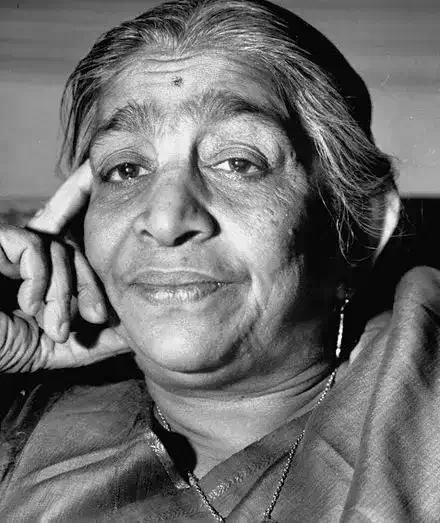
Sarojini Naidu
Ode to H.H. The Nizam Of Hyderabad
DEIGN, Prince, my tribute to receive,
This lyric offering to your name,
Who round your jewelled scepter bind
The lilies of a poet's fame;
Beneath whose sway concordant dwell
The peoples whom your laws embrace,
In brotherhood of diverse creeds,
And harmony of diverse race:
The votaries of the Prophet's faith,
Of whom you are the crown and chief
And they, who bear on Vedic brows
Their mystic symbols of belief;
And they, who worshipping the sun,
Fled o'er the old Iranian sea;
And they, who bow to Him who trod
The midnight waves of Galilee.
Sweet, sumptuous fables of Baghdad
The splendours of your court recall,
The torches of a Thousand Nights
Blaze through a single festival;
And Saki-singers down the streets,
Pour for us, in a stream divine,
From goblets of your love-ghazals
The rapture of your Sufi wine.
Prince, where your radiant cities smile,
Grim hills their sombre vigils keep,
Your ancient forests hoard and hold
The legends of their centuried sleep;
Your birds of peace white-pinioned float
O'er ruined fort and storied plain,
Your faithful stewards sleepless guard
The harvests of your gold and grain.
God give you joy, God give you grace
To shield the truth and smite the wrong,
To honour Virtue, Valour, Worth.
To cherish faith and foster song.
So may the lustre of your days
Outshine the deeds Firdusi sung,
Your name within a nation's prayer,
Your music on a nation's tongue.
597
John Milton
On the Morning of Christ’s Nativity
I
This is the month, and this the happy morn,
Wherein the Son of Heaven’s eternal King,
Of wedded maid and Virgin Mother born,
Our great redemption from above did bring;
For so the holy sages once did sing,
That he our deadly forfeit should release,
And with his Father work us a perpetual peace.
II
That glorious Form, that Light unsufferable,
And that far-beaming blaze of majesty,
Wherewith he wont at Heaven’s high council-table
To sit the midst of Trinal Unity,
He laid aside, and, here with us to be,
Forsook the Courts of everlasting Day,
And chose with us a darksome house of mortal clay.
III
Say, Heavenly Muse, shall not thy sacred vein
Afford a present to the Infant God?
Hast thou no verse, no hymn, or solemn strain,
To welcome him to this his new abode,
Now while the heaven, by the Sun’s team untrod,
Hath took no print of the approaching light,
And all the spangled host keep watch in squadrons bright?
IV
See how from far upon the Eastern road
The star-led Wisards haste with odours sweet!
Oh! run; prevent them with thy humble ode,
And lay it lowly at his blessèd feet;
Have thou the honour first thy Lord to greet,
And join thy voice unto the Angel Quire,
From out his secret altar touched with hallowed fire.
The Hymn
I
It was the winter wild,
While the heaven-born child
All meanly wrapt in the rude manger lies;
Nature, in awe to him,
Had doffed her gaudy trim,
With her great Master so to sympathize:
It was no season then for her
To wanton with the Sun, her lusty Paramour.
II
Only with speeches fair
She woos the gentle air
To hide her guilty front with innocent snow,
And on her naked shame,
Pollute with sinful blame,
The saintly veil of maiden white to throw;
Confounded, that her Maker’s eyes
Should look so near upon her foul deformities.
III
But he, her fears to cease,
Sent down the meek-eyed Peace:
She, crowned with olive green, came softly sliding
Down through the turning sphere,
His ready Harbinger,
With turtle wing the amorous clouds dividing;
And, waving wide her myrtle wand,
She strikes a universal peace through sea and land.
IV
No war, or battail’s sound,
Was heard the world around;
The idle spear and shield were high uphung;
The hookèd chariot stood,
Unstained with hostile blood;
The trumpet spake not to the armèd throng;
And Kings sat still with awful eye,
As if they surely knew their sovran Lord was by.
V
But peaceful was the night
Wherein the Prince of Light
His reign of peace upon the earth began.
The winds, with wonder whist,
Smoothly the waters kissed,
Whispering new joys to the mild Ocean,
Who now hath quite forgot to rave,
While birds of calm sit brooding on the charmed wave.
VI
The stars, with deep amaze,
Stand fixed in steadfast gaze,
Bending one way their precious influence,
And will not take their flight,
For all the morning light,
Or Lucifer that often warned them thence;
But in their glimmering orbs did glow,
Until their Lord himself bespake, and bid them go.
VII
And, though the shady gloom
Had given day her room,
The Sun himself withheld his wonted speed,
And hid his head of shame,
As his inferior flame
The new-enlightened world no more should need:
He saw a greater Sun appear
Than his bright Throne or burning axletree could bear.
VIII
The Shepherds on the lawn,
Or ere the point of dawn,
Sat simply chatting in a rustic row;
Full little thought they than
That the mighty Pan
Was kindly come to live with them below:
Perhaps their loves, or else their sheep,
Was all that did their silly thoughts so busy keep.
IX
When such music sweet
Their hearts and ears did greet
As never was by mortal finger strook,
Divinely-warbled voice
Answering the stringèd noise,
As all their souls in blissful rapture took:
The air, such pleasure loth to lose,
With thousand echoes still prolongs each heavenly close.
X
Nature, that heard such sound
Beneath the hollow round
Of Cynthia’s seat the airy Region thrilling,
Now was almost won
To think her part was done,
And that her reign had here its last fulfilling:
She knew such harmony alone
Could hold all Heaven and Earth in happier union.
XI
At last surrounds their sight
A globe of circular light,
That with long beams the shamefaced Night arrayed;
The helmèd Cherubim
And sworded Seraphim
Are seen in glittering ranks with wings displayed,
Harping in loud and solemn quire,
With unexpressive notes, to Heaven’s newborn Heir.
XII
Such music (as ’tis said)
Before was never made,
But when of old the Sons of Morning sung,
While the Creator great
His constellations set,
And the well-balanced World on hinges hung,
And cast the dark foundations deep,
And bid the weltering waves their oozy channel keep.
XIII
Ring out, ye crystal spheres!
Once bless our human ears,
If ye have power to touch our senses so;
And let your silver chime
Move in melodious time;
And let the bass of heaven’s deep organ blow;
And with your ninefold harmony
Make up full consort of the angelic symphony.
XIV
For, if such holy song
Enwrap our fancy long,
Time will run back and fetch the Age of Gold;
And speckled Vanity
Will sicken soon and die,
And leprous Sin will melt from earthly mould;
And Hell itself will pass away,
And leave her dolorous mansions of the peering day.
XV
Yes, Truth and Justice then
Will down return to men,
The enamelled arras of the rainbow wearing;
And Mercy set between,
Throned in celestial sheen,
With radiant feet the tissued clouds down steering;
And Heaven, as at some festival,
Will open wide the gates of her high palace-hall.
XVI
But wisest Fate says No,
This must not yet be so;
The Babe lies yet in smiling infancy
That on the bitter cross
Must redeem our loss,
So both himself and us to glorify:
Yet first, to those chained in sleep,
The wakeful trump of doom must thunder through the deep,
XVII
With such a horrid clang
As on Mount Sinai rang,
While the red fire and smouldering clouds outbrake:
The aged Earth, aghast
With terror of that blast,
Shall from the surface to the centre shake,
When, at the world’s last sessiön,
The dreadful Judge in middle air shall spread his throne.
XVIII
And then at last our bliss
Full and perfect is,
But now begins; for from this happy day
The Old Dragon under ground,
In straiter limits bound,
Not half so far casts his usurpèd sway,
And, wroth to see his Kingdom fail,
Swindges the scaly horror of his folded tail.
XIX
The Oracles are dumb;
No voice or hideous hum
Runs through the archèd roof in words deceiving.
Apollo from his shrine
Can no more divine,
Will hollow shriek the steep of Delphos leaving.
No nightly trance, or breathèd spell,
Inspires the pale-eyed Priest from the prophetic cell.
XX
The lonely mountains o’er,
And the resounding shore,
A voice of weeping heard and loud lament;
Edgèd with poplar pale,
From haunted spring, and dale
The parting Genius is with sighing sent;
With flower-inwoven tresses torn
The Nymphs in twilight shade of tangled thickets mourn.
XXI
In consecrated earth,
And on the holy hearth,
The Lars and Lemures moan with midnight plaint;
In urns, and altars round,
A drear and dying sound
Affrights the Flamens at their service quaint;
And the chill marble seems to sweat,
While each peculiar power forgoes his wonted seat.
XXII
Peor and Baälim
Forsake their temples dim,
With that twice-battered god of Palestine;
And moonèd Ashtaroth,
Heaven’s Queen and Mother both,
Now sits not girt with tapers’ holy shine:
The Libyc Hammon shrinks his horn;
In vain the Tyrian maids their wounded Thammuz mourn.
XXIII
And sullen Moloch, fled,
Hath left in shadows dread
His burning idol all of blackest hue;
In vain with cymbals’ ring
They call the grisly king,
In dismal dance about the furnace blue;
The brutish gods of Nile as fast,
Isis, and Orus, and the dog Anubis, haste.
XXIV
Nor is Osiris seen
In Memphian grove or green,
Trampling the unshowered grass with lowings loud;
Nor can he be at rest
Within his sacred chest;
Nought but profoundest Hell can be his shroud;
In vain, with timbreled anthems dark,
The sable-stolèd Sorcerers bear his worshiped ark.
XXV
He feels from Juda’s land
The dreaded Infant’s hand;
The rays of Bethlehem blind his dusky eyn;
Nor all the gods beside
Longer dare abide,
Not Typhon huge ending in snaky twine:
Our Babe, to show his Godhead true,
Can in his swaddling bands control the damnèd crew.
XXVI
So, when the Sun in bed,
Curtained with cloudy red,
Pillows his chin upon an orient wave,
The flocking shadows pale
Troop to the infernal jail,
Each fettered ghost slips to his several grave,
And the yellow-skirted Fays
Fly after the night-steeds, leaving their moon-loved maze.
XXVII
But see! the Virgin blest
Hath laid her Babe to rest,
Time is our tedious song should here have ending:
Heaven’s youngest-teemèd star
Hath fixed her polished car,
Her sleeping Lord with handmaid lamp attending;
And all about the courtly stable
Bright-harnessed Angels sit in order serviceable.
591
John Milton
Paradise Regained
THE FIRST BOOK
I, WHO erewhile the happy Garden sung
By one man's disobedience lost, now sing
Recovered Paradise to all mankind,
By one man's firm obedience fully tried
Through all temptation, and the Tempter foiled
In all his wiles, defeated and repulsed,
And Eden raised in the waste Wilderness.
Thou Spirit, who led'st this glorious Eremite
Into the desert, his victorious field
Against the spiritual foe, and brought'st him thence
By proof the undoubted Son of God, inspire,
As thou art wont, my prompted song, else mute,
And bear through highth or depth of Nature's bounds,
With prosperous wing full summed, to tell of deeds
Above heroic, though in secret done,
And unrecorded left through many an age:
Worthy to have not remained so long unsung.
Now had the great Proclaimer, with a voice
More awful than the sound of trumpet, cried
Repentance, and Heaven's kingdom nigh at hand
To all baptized. To his great baptism flocked
With awe the regions round, and with them came
From Nazareth the son of Joseph deemed
To the flood Jordan--came as then obscure,
Unmarked, unknown. But him the Baptist soon
Descried, divinely warned, and witness bore
As to his worthier, and would have resigned
To him his heavenly office. Nor was long
His witness unconfirmed: on him baptized
Heaven opened, and in likeness of a Dove
The Spirit descended, while the Father's voice
From Heaven pronounced him his beloved Son.
That heard the Adversary, who, roving still
About the world, at that assembly famed
Would not be last, and, with the voice divine
Nigh thunder-struck, the exalted man to whom
Such high attest was given a while surveyed
With wonder; then, with envy fraught and rage,
Flies to his place, nor rests, but in mid air
To council summons all his mighty Peers,
Within thick clouds and dark tenfold involved,
A gloomy consistory; and them amidst,
With looks aghast and sad, he thus bespake:-"
O ancient Powers of Air and this wide World
(For much more willingly I mention Air,
This our old conquest, than remember Hell,
Our hated habitation), well ye know
How many ages, as the years of men,
This Universe we have possessed, and ruled
In manner at our will the affairs of Earth,
Since Adam and his facile consort Eve
Lost Paradise, deceived by me, though since
With dread attending when that fatal wound
Shall be inflicted by the seed of Eve
Upon my head. Long the decrees of Heaven
Delay, for longest time to Him is short;
And now, too soon for us, the circling hours
This dreaded time have compassed, wherein we
Must bide the stroke of that long-threatened wound
(At least, if so we can, and by the head
Broken be not intended all our power
To be infringed, our freedom and our being
In this fair empire won of Earth and Air)--
For this ill news I bring: The Woman's Seed,
Destined to this, is late of woman born.
His birth to our just fear gave no small cause;
But his growth now to youth's full flower, displaying
All virtue, grace and wisdom to achieve
Things highest, greatest, multiplies my fear.
Before him a great Prophet, to proclaim
His coming, is sent harbinger, who all
Invites, and in the consecrated stream
Pretends to wash off sin, and fit them so
Purified to receive him pure, or rather
To do him honour as their King. All come,
And he himself among them was baptized--
Not thence to be more pure, but to receive
The testimony of Heaven, that who he is
Thenceforth the nations may not doubt. I saw
The Prophet do him reverence; on him, rising
Out of the water, Heaven above the clouds
Unfold her crystal doors; thence on his head
A perfet Dove descend (whate'er it meant);
And out of Heaven the sovraign voice I heard,
'This is my Son beloved,--in him am pleased.'
His mother, than, is mortal, but his Sire
He who obtains the monarchy of Heaven;
And what will He not do to advance his Son?
His first-begot we know, and sore have felt,
When his fierce thunder drove us to the Deep;
Who this is we must learn, for Man he seems
In all his lineaments, though in his face
The glimpses of his Father's glory shine.
Ye see our danger on the utmost edge
Of hazard, which admits no long debate,
But must with something sudden be opposed
(Not force, but well-couched fraud, well-woven snares),
Ere in the head of nations he appear,
Their king, their leader, and supreme on Earth.
I, when no other durst, sole undertook
The dismal expedition to find out
And ruin Adam, and the exploit performed
Successfully: a calmer voyage now
Will waft me; and the way found prosperous once
Induces best to hope of like success."
He ended, and his words impression left
Of much amazement to the infernal crew,
Distracted and surprised with deep dismay
At these sad tidings. But no time was then
For long indulgence to their fears or grief:
Unanimous they all commit the care
And management of this man enterprise
To him, their great Dictator, whose attempt
At first against mankind so well had thrived
In Adam's overthrow, and led their march
From Hell's deep-vaulted den to dwell in light,
Regents, and potentates, and kings, yea gods,
Of many a pleasant realm and province wide.
So to the coast of Jordan he directs
His easy steps, girded with snaky wiles,
Where he might likeliest find this new-declared,
This man of men, attested Son of God,
Temptation and all guile on him to try--
So to subvert whom he suspected raised
To end his reign on Earth so long enjoyed:
But, contrary, unweeting he fulfilled
The purposed counsel, pre-ordained and fixed,
Of the Most High, who, in full frequence bright
Of Angels, thus to Gabriel smiling spake:-"
Gabriel, this day, by proof, thou shalt behold,
Thou and all Angels conversant on Earth
With Man or men's affairs, how I begin
To verify that solemn message late,
On which I sent thee to the Virgin pure
In Galilee, that she should bear a son,
Great in renown, and called the Son of God.
Then told'st her, doubting how these things could be
To her a virgin, that on her should come
The Holy Ghost, and the power of the Highest
O'ershadow her. This Man, born and now upgrown,
To shew him worthy of his birth divine
And high prediction, henceforth I expose
To Satan; let him tempt, and now assay
His utmost subtlety, because he boasts
And vaunts of his great cunning to the throng
Of his Apostasy. He might have learnt
Less overweening, since he failed in Job,
Whose constant perseverance overcame
Whate'er his cruel malice could invent.
He now shall know I can produce a man,
Of female seed, far abler to resist
All his solicitations, and at length
All his vast force, and drive him back to Hell--
Winning by conquest what the first man lost
By fallacy surprised. But first I mean
To exercise him in the Wilderness;
There he shall first lay down the rudiments
Of his great warfare, ere I send him forth
To conquer Sin and Death, the two grand foes.
By humiliation and strong sufferance
His weakness shall o'ercome Satanic strength,
And all the world, and mass of sinful flesh;
That all the Angels and aethereal Powers--
They now, and men hereafter--may discern
From what consummate virtue I have chose
This perfet man, by merit called my Son,
To earn salvation for the sons of men."
So spake the Eternal Father, and all Heaven
Admiring stood a space; then into hymns
Burst forth, and in celestial measures moved,
Circling the throne and singing, while the hand
Sung with the voice, and this the argument:-
"Victory and triumph to the Son of God,
Now entering his great duel, not of arms,
But to vanquish by wisdom hellish wiles!
The Father knows the Son; therefore secure
Ventures his filial virtue, though untried,
Against whate'er may tempt, whate'er seduce,
Allure, or terrify, or undermine.
Be frustrate, all ye stratagems of Hell,
And, devilish machinations, come to nought!"
So they in Heaven their odes and vigils tuned.
Meanwhile the Son of God, who yet some days
Lodged in Bethabara, where John baptized,
Musing and much revolving in his breast
How best the mighty work he might begin
Of Saviour to mankind, and which way first
Publish his godlike office now mature,
One day forth walked alone, the Spirit leading
And his deep thoughts, the better to converse
With solitude, till, far from track of men,
Thought following thought, and step by step led on,
He entered now the bordering Desert wild,
And, with dark shades and rocks environed round,
His holy meditations thus pursued:-
"O what a multitude of thoughts at once
Awakened in me swarm, while I consider
What from within I feel myself, and hear
What from without comes often to my ears,
Ill sorting with my present state compared!
When I was yet a child, no childish play
To me was pleasing; all my mind was set
Serious to learn and know, and thence to do,
What might be public good; myself I thought
Born to that end, born to promote all truth,
All righteous things. Therefore, above my years,
160
170
180
190
200
The Law of God I read, and found it sweet;
Made it my whole delight, and in it grew
To such perfection that, ere yet my age
Had measured twice six years, at our great Feast
I went into the Temple, there to hear
The teachers of our Law, and to propose
What might improve my knowledge or their own,
And was admired by all. Yet this not all
To which my spirit aspired. Victorious deeds
Flamed in my heart, heroic acts--one while
To rescue Israel from the Roman yoke;
Then to subdue and quell, o'er all the earth,
Brute violence and proud tyrannic power,
Till truth were freed, and equity restored:
Yet held it more humane, more heavenly, first
By winning words to conquer willing hearts,
And make persuasion do the work of fear;
At least to try, and teach the erring soul,
Not wilfully misdoing, but unware
Misled; the stubborn only to subdue.
These growing thoughts my mother soon perceiving,
By words at times cast forth, inly rejoiced,
And said to me apart, 'High are thy thoughts,
O Son! but nourish them, and let them soar
To what highth sacred virtue and true worth
Can raise them, though above example high;
By matchless deeds express thy matchless Sire.
For know, thou art no son of mortal man;
Though men esteem thee low of parentage,
Thy Father is the Eternal King who rules
All Heaven and Earth, Angels and sons of men.
A messenger from God foretold thy birth
Conceived in me a virgin; he foretold
Thou shouldst be great, and sit on David's throne,
And of thy kingdom there should be no end.
At thy nativity a glorious quire
Of Angels, in the fields of Bethlehem, sung
To shepherds, watching at their folds by night,
And told them the Messiah now was born,
Where they might see him; and to thee they came,
Directed to the manger where thou lay'st;
For in the inn was left no better room.
A Star, not seen before, in heaven appearing,
Guided the Wise Men thither from the East,
To honour thee with incense, myrrh, and gold;
By whose bright course led on they found the place,
Affirming it thy star, new-graven in heaven,
By which they knew thee King of Israel born.
Just Simeon and prophetic Anna, warned
By vision, found thee in the Temple, and spake,
Before the altar and the vested priest,
Like things of thee to all that present stood.'
210
220
230
240
250
This having heart, straight I again revolved
The Law and Prophets, searching what was writ
Concerning the Messiah, to our scribes
Known partly, and soon found of whom they spake
I am--this chiefly, that my way must lie
Through many a hard assay, even to the death,
Ere I the promised kingdom can attain,
Or work redemption for mankind, whose sins'
Full weight must be transferred upon my head.
Yet, neither thus disheartened or dismayed,
The time prefixed I waited; when behold
The Baptist (of whose birth I oft had heard,
Not knew by sight) now come, who was to come
Before Messiah, and his way prepare!
I, as all others, to his baptism came,
Which I believed was from above; but he
Straight knew me, and with loudest voice proclaimed
Me him (for it was shewn him so from Heaven)--
Me him whose harbinger he was; and first
Refused on me his baptism to confer,
As much his greater, and was hardly won.
But, as I rose out of the laving stream,
Heaven opened her eternal doors, from whence
The Spirit descended on me like a Dove;
And last, the sum of all, my Father's voice,
Audibly heard from Heaven, pronounced me his,
Me his beloved Son, in whom alone
He was well pleased: by which I knew the time
Now full, that I no more should live obscure,
But openly begin, as best becomes
The authority which I derived from Heaven.
And now by some strong motion I am led
Into this wilderness; to what intent
I learn not yet. Perhaps I need not know;
For what concerns my knowledge God reveals."
So spake our Morning Star, then in his rise,
And, looking round, on every side beheld
A pathless desert, dusk with horrid shades.
The way he came, not having marked return,
Was difficult, by human steps untrod;
And he still on was led, but with such thoughts
Accompanied of things past and to come
Lodged in his breast as well might recommend
Such solitude before choicest society.
Full forty days he passed--whether on hill
Sometimes, anon in shady vale, each night
Under the covert of some ancient oak
Or cedar to defend him from the dew,
Or harboured in one cave, is not revealed;
Nor tasted human food, nor hunger felt,
Till those days ended; hungered then at last
Among wild beasts. They at his sight grew mild,
Nor sleeping him nor waking harmed; his walk
The fiery serpent fled and noxious worm;
The lion and fierce tiger glared aloof.
But now an aged man in rural weeds,
Following, as seemed, the quest of some stray eye,
Or withered sticks to gather, which might serve
Against a winter's day, when winds blow keen,
To warm him wet returned from field at eve,
He saw approach; who first with curious eye
Perused him, then with words thus uttered spake:--320
"Sir, what ill chance hath brought thee to this place,
So far from path or road of men, who pass
In troop or caravan? for single none
Durst ever, who returned, and dropt not here
His carcass, pined with hunger and with droughth.
I ask the rather, and the more admire,
For that to me thou seem'st the man whom late
Our new baptizing Prophet at the ford
Of Jordan honoured so, and called thee Son
Of God. I saw and heard, for we sometimes
Who dwell this wild, constrained by want, come forth
To town or village nigh (nighest is far),
Where aught we hear, and curious are to hear,
What happens new; fame also finds us out."
To whom the Son of God:--"Who brought me hither
Will bring me hence; no other guide I seek."
"By miracle he may," replied the swain;
"What other way I see not; for we here
Live on tough roots and stubs, to thirst inured
More than the camel, and to drink go far--340
Men to much misery and hardship born.
But, if thou be the Son of God, command
That out of these hard stones be made thee bread;
So shalt thou save thyself, and us relieve
With food, whereof we wretched seldom taste."
He ended, and the Son of God replied:-
"Think'st thou such force in bread? Is it not written
(For I discern thee other than thou seem'st),
Man lives not by bread only, but each word
Proceeding from the mouth of God, who fed
Our fathers here with manna? In the Mount
Moses was forty days, nor eat nor drank;
And forty days Eliah without food
Wandered this barren waste; the same I now.
Why dost thou, then, suggest to me distrust
Knowing who I am, as I know who thou art?"
Whom thus answered the Arch-Fiend, now undisguised:-
"'Tis true, I am that Spirit unfortunate
Who, leagued with millions more in rash revolt,
Kept not my happy station, but was driven
With them from bliss to the bottomless Deep--
Yet to that hideous place not so confined
By rigour unconniving but that oft,
Leaving my dolorous prison, I enjoy
Large liberty to round this globe of Earth,
Or range in the Air; nor from the Heaven of Heavens
Hath he excluded my resort sometimes.
I came, among the Sons of God, when he
Gave up into my hands Uzzean Job,
To prove him, and illustrate his high worth;
And, when to all his Angels he proposed
To draw the proud king Ahab into fraud,
That he might fall in Ramoth, they demurring,
I undertook that office, and the tongues
Of all his flattering prophets glibbed with lies
To his destruction, as I had in charge:
For what he bids I do. Though I have lost
Much lustre of my native brightness, lost
To be beloved of God, I have not lost
To love, at least contemplate and admire,
What I see excellent in good, or fair,
Or virtuous; I should so have lost all sense.
What can be then less in me than desire
To see thee and approach thee, whom I know
Declared the Son of God, to hear attent
Thy wisdom, and behold thy godlike deeds?
Men generally think me much a foe
To all mankind. Why should I? they to me
Never did wrong or violence. By them
I lost not what I lost; rather by them
I gained what I have gained, and with them dwell
Copartner in these regions of the World,
If not disposer--lend them oft my aid,
Oft my advice by presages and signs,
And answers, oracles, portents, and dreams,
Whereby they may direct their future life.
Envy, they say, excites me, thus to gain
Companions of my misery and woe!
At first it may be; but, long since with woe
Nearer acquainted, now I feel by proof
That fellowship in pain divides not smart,
Nor lightens aught each man's peculiar load;
Small consolation, then, were Man adjoined.
This wounds me most (what can it less?) that Man,
Man fallen, shall be restored, I never more."
To whom our Saviour sternly thus replied:-
"Deservedly thou griev'st, composed of lies
From the beginning, and in lies wilt end,
Who boast'st release from Hell, and leave to come
Into the Heaven of Heavens. Thou com'st, indeed,
As a poor miserable captive thrall
Comes to the place where he before had sat
Among the prime in splendour, now deposed,
Ejected, emptied, gazed, unpitied, shunned,
A spectacle of ruin, or of scorn,
To all the host of Heaven. The happy place
Imparts to thee no happiness, no joy--
Rather inflames thy torment, representing
Lost bliss, to thee no more communicable;
So never more in Hell than when in Heaven.
But thou art serviceable to Heaven's King!
Wilt thou impute to obedience what thy fear
Extorts, or pleasure to do ill excites?
What but thy malice moved thee to misdeem
Of righteous Job, then cruelly to afflict him
With all inflictions? but his patience won.
The other service was thy chosen task,
To be a liar in four hundred mouths;
For lying is thy sustenance, thy food.
Yet thou pretend'st to truth! all oracles
By thee are given, and what confessed more true
Among the nations? That hath been thy craft,
By mixing somewhat true to vent more lies.
But what have been thy answers? what but dark,
Ambiguous, and with double sense deluding,
Which they who asked have seldom understood,
And, not well understood, as good not known?
Who ever, by consulting at thy shrine,
Returned the wiser, or the more instruct
To fly or follow what concerned him most,
And run not sooner to his fatal snare?
For God hath justly given the nations up
To thy delusions; justly, since they fell
Idolatrous. But, when his purpose is
Among them to declare his providence,
To thee not known, whence hast thou then thy truth,
But from him, or his Angels president
In every province, who, themselves disdaining
To approach thy temples, give thee in command
What, to the smallest tittle, thou shalt say
To thy adorers? Thou, with trembling fear,
Or like a fawning parasite, obey'st;
Then to thyself ascrib'st the truth foretold.
But this thy glory shall be soon retrenched;
No more shalt thou by oracling abuse
The Gentiles; henceforth oracles are ceased,
And thou no more with pomp and sacrifice
Shalt be enquired at Delphos or elsewhere--
At least in vain, for they shall find thee mute.
God hath now sent his living Oracle
Into the world to teach his final will,
And sends his Spirit of Truth henceforth to dwell
In pious hearts, an inward oracle
To all truth requisite for men to know."
So spake our Saviour; but the subtle Fiend,
Though inly stung with anger and disdain,
Dissembled, and this answer smooth returned:-"
Sharply thou hast insisted on rebuke,
And urged me hard with doings which not will,
But misery, hath wrested from me. Where
Easily canst thou find one miserable,
And not inforced oft-times to part from truth,
If it may stand him more in stead to lie,
Say and unsay, feign, flatter, or abjure?
But thou art placed above me; thou art Lord;
From thee I can, and must, submiss, endure
Cheek or reproof, and glad to scape so quit.
Hard are the ways of truth, and rough to walk,
Smooth on the tongue discoursed, pleasing to the ear,
And tunable as sylvan pipe or song;
What wonder, then, if I delight to hear
Her dictates from thy mouth? most men admire
Virtue who follow not her lore. Permit me
To hear thee when I come (since no man comes),
And talk at least, though I despair to attain.
Thy Father, who is holy, wise, and pure,
Suffers the hypocrite or atheous priest
To tread his sacred courts, and minister
About his altar, handling holy things,
Praying or vowing, and voutsafed his voice
To Balaam reprobate, a prophet yet
Inspired: disdain not such access to me."
To whom our Saviour, with unaltered brow:-
"Thy coming hither, though I know thy scope,
I bid not, or forbid. Do as thou find'st
Permission from above; thou canst not more."
He added not; and Satan, bowling low
His gray dissimulation, disappeared,
Into thin air diffused: for now began
Night with her sullen wing to double-shade
The desert; fowls in their clay nests were couched;
And now wild beasts came forth the woods to roam.
THE SECOND BOOK
MEANWHILE the new-baptized, who yet remained
At Jordan with the Baptist, and had seen
Him whom they heard so late expressly called
Jesus Messiah, Son of God, declared,
And on that high authority had believed,
And with him talked, and with him lodged--I mean
Andrew and Simon, famous after known,
With others, though in Holy Writ not named--
Now missing him, their joy so lately found,
So lately found and so abruptly gone,
Began to doubt, and doubted many days,
And, as the days increased, increased their doubt.
Sometimes they thought he might be only shewn,
And for a time caught up to God, as once
Moses was in the Mount and missing long,
And the great Thisbite, who on fiery wheels
Rode up to Heaven, yet once again to come.
Therefore, as those young prophets then with care
Sought lost Eliah, so in each place these
Nigh to Bethabara--in Jericho
The city of palms, AEnon, and Salem old,
Machaerus, and each town or city walled
On this side the broad lake Genezaret,
Or in Peraea--but returned in vain.
Then on the bank of Jordan, by a creek,
Where winds with reeds and osiers whispering play,
Plain fishermen (no greater men them call),
Close in a cottage low together got,
Their unexpected loss and plaints outbreathed:-
"Alas, from what high hope to what relapse
Unlooked for are we fallen! Our eyes beheld
Messiah certainly now come, so long
Expected of our fathers; we have heard
His words, his wisdom full of grace and truth.
'Now, now, for sure, deliverance is at hand;
The kingdom shall to Israel be restored:'
Thus we rejoiced, but soon our joy is turned
Into perplexity and new amaze.
For whither is he gone? what accident
Hath rapt him from us? will he now retire
After appearance, and again prolong
Our expectation? God of Israel,
Send thy Messiah forth; the time is come.
Behold the kings of the earth, how they oppress
Thy Chosen, to what highth their power unjust
They have exalted, and behind them cast
All fear of Thee; arise, and vindicate
Thy glory; free thy people from their yoke!
But let us wait; thus far He hath performed--
Sent his Anointed, and to us revealed him
By his great Prophet pointed at and shown
In public, and with him we have conversed.
Let us be glad of this, and all our fears
Lay on his providence; He will not fail,
Nor will withdraw him now, nor will recall--
Mock us with his blest sight, then snatch him hence:
Soon we shall see our hope, our joy, return."
Thus they out of their plaints new hope resume
To find whom at the first they found unsought.
But to his mother Mary, when she saw
Others returned from baptism, not her Son,
Nor left at Jordan tidings of him none,
Within her breast though calm, her breast though pure,
Motherly cares and fears got head, and raised
Some troubled thoughts, which she in sighs thus clad:-"
Oh, what avails me now that honour high,
To have conceived of God, or that salute,
'Hail, highly favoured, among women blest!'
While I to sorrows am no less advanced,
And fears as eminent above the lot
Of other women, by the birth I bore:
In such a season born, when scarce a shed
Could be obtained to shelter him or me
From the bleak air? A stable was our warmth,
A manger his; yet soon enforced to fly
Thence into Egypt, till the murderous king
Were dead, who sought his life, and, missing, filled
With infant blood the streets of Bethlehem.
From Egypt home returned, in Nazareth
Hath been our dwelling many years; his life
Private, unactive, calm, contemplative,
Little suspicious to any king. But now,
Full grown to man, acknowledged, as I hear,
By John the Baptist, and in public shewn,
Son owned from Heaven by his Father's voice,
I looked for some great change. To honour? no;
But trouble, as old Simeon plain foretold,
That to the fall and rising he should be
Of many in Israel, and to a sign
Spoken against--that through my very soul
A sword shall pierce. This is my favoured lot,
My exaltation to afflictions high!
Afflicted I may be, it seems, and blest!
I will not argue that, nor will repine.
But where delays he now? Some great intent
Conceals him. When twelve years he scarce had seen,
I lost him, but so found as well I saw
He could not lose himself, but went about
His Father's business. What he meant I mused--
Since understand; much more his absence now
Thus long to some great purpose he obscures.
But I to wait with patience am inured;
My heart hath been a storehouse long of things
And sayings laid up, pretending strange events."
Thus Mary, pondering oft, and oft to mind
Recalling what remarkably had passed
Since first her Salutation heard, with thoughts
Meekly composed awaited the fulfilling:
The while her Son, tracing the desert wild,
Sole, but with holiest meditations fed,
Into himself descended, and at once
All his great work to come before him set--
How to begin, how to accomplish best
His end of being on Earth, and mission high.
For Satan, with sly preface to return,
Had left him vacant, and with speed was gone
Up to the middle region of thick air,
Where all his Potentates in council sate.
There, without sign of boast, or sign of joy,
Solicitous and blank, he thus began:--120
"Princes, Heaven's ancient Sons, AEthereal Thrones--
Daemonian Spirits now, from the element
Each of his reign allotted, rightlier called
Powers of Fire, Air, Water, and Earth beneath
(So may we hold our place and these mild seats
Without new trouble!)--such an enemy
Is risen to invade us, who no less
Threatens than our expulsion down to Hell.
I, as I undertook, and with the vote
Consenting in full frequence was impowered,
Have found him, viewed him, tasted him; but find
Far other labour to be undergone
Than when I dealt with Adam, first of men,
Though Adam by his wife's allurement fell,
However to this Man inferior far--
If he be Man by mother's side, at least
With more than human gifts from Heaven adorned,
Perfections absolute, graces divine,
And amplitude of mind to greatest deeds.
Therefore I am returned, lest confidence
Of my success with Eve in Paradise
Deceive ye to persuasion over-sure
Of like succeeding here. I summon all
Rather to be in readiness with hand
Or counsel to assist, lest I, who erst
Thought none my equal, now be overmatched."
So spake the old Serpent, doubting, and from all
With clamour was assured their utmost aid
At his command; when from amidst them rose
Belial, the dissolutest Spirit that fell,
The sensualest, and, after Asmodai,
The fleshliest Incubus, and thus advised:-"
Set women in his eye and in his walk,
Among daughters of men the fairest found.
Many are in each region passing fair
As the noon sky, more like to goddesses
Than mortal creatures, graceful and discreet,
Expert in amorous arts, enchanting tongues
Persuasive, virgin majesty with mild
And sweet allayed, yet terrible to approach,
Skilled to retire, and in retiring draw
Hearts after them tangled in amorous nets.
Such object hath the power to soften and tame
Severest temper, smooth the rugged'st brow,
Enerve, and with voluptuous hope dissolve,
Draw out with credulous desire, and lead
At will the manliest, resolutest breast,
As the magnetic hardest iron draws.
Women, when nothing else, beguiled the heart
Of wisest Solomon, and made him build,
And made him bow, to the gods of his wives."
To whom quick answer Satan thus returned:-"
Belial, in much uneven scale thou weigh'st
All others by thyself. Because of old
Thou thyself doat'st on womankind, admiring
Their shape, their colour, and attractive grace,
None are, thou think'st, but taken with such toys.
Before the Flood, thou, with thy lusty crew,
False titled Sons of God, roaming the Earth,
Cast wanton eyes on the daughters of men,
And coupled with them, and begot a race.
Have we not seen, or by relation heard,
In courts and regal chambers how thou lurk'st,
In wood or grove, by mossy fountain-side,
In valley or green meadow, to waylay
Some beauty rare, Calisto, Clymene,
Daphne, or Semele, Antiopa,
Or Amymone, Syrinx, many more
Too long--then lay'st thy scapes on names adored,
Apollo, Neptune, Jupiter, or Pan,
Satyr, or Faun, or Silvan? But these haunts
Delight not all. Among the sons of men
How many have with a smile made small account
Of beauty and her lures, easily scorned
All her assaults, on worthier things intent!
Remember that Pellean conqueror,
A youth, how all the beauties of the East
He slightly viewed, and slightly overpassed;
How he surnamed of Africa dismissed,
In his prime youth, the fair Iberian maid.
For Solomon, he lived at ease, and, full
Of honour, wealth, high fare, aimed not beyond
Higher design than to enjoy his state;
Thence to the bait of women lay exposed.
But he whom we attempt is wiser far
Than Solomon, of more exalted mind,
Made and set wholly on the accomplishment
Of greatest things. What woman will you find,
Though of this age the wonder and the fame,
On whom his leisure will voutsafe an eye
Of fond desire? Or should she, confident,
As sitting queen adored on Beauty's throne,
Descend with all her winning charms begirt
To enamour, as the zone of Venus once
Wrought that effect on Jove (so fables tell),
How would one look from his majestic brow,
Seated as on the top of Virtue's hill,
Discountenance her despised, and put to rout
All her array, her female pride deject,
Or turn to reverent awe! For Beauty stands
170
180
190
200
210
220
In the admiration only of weak minds
Led captive; cease to admire, and all her plumes
Fall flat, and shrink into a trivial toy,
At every sudden slighting quite abashed.
Therefore with manlier objects we must try
His constancy--with such as have more shew
Of worth, of honour, glory, and popular praise
(Rocks whereon greatest men have oftest wrecked);
Or that which only seems to satisfy
Lawful desires of nature, not beyond.
And now I know he hungers, where no food
Is to be found, in the wide Wilderness:
The rest commit to me; I shall let pass
No advantage, and his strength as oft assay."
He ceased, and heard their grant in loud acclaim;
Then forthwith to him takes a chosen band
Of Spirits likest to himself in guile,
To be at hand and at his beck appear,
If cause were to unfold some active scene
Of various persons, each to know his part;
Then to the desert takes with these his flight,
Where still, from shade to shade, the Son of God,
After forty days' fasting, had remained,
Now hungering first, and to himself thus said:-"
Where will this end? Four times ten days I have passed
Wandering this woody maze, and human food
Nor tasted, nor had appetite. That fast
To virtue I impute not, or count part
Of what I suffer here. If nature need not,
Or God support nature without repast,
Though needing, what praise is it to endure?
But now I feel I hunger; which declares
Nature hath need of what she asks. Yet God
Can satisfy that need some other way,
Though hunger still remain. So it remain
Without this body's wasting, I content me,
And from the sting of famine fear no harm;
Nor mind it, fed with better thoughts, that feed
Me hungering more to do my Father's will."
It was the hour of night, when thus the Son
Communed in silent walk, then laid him down
Under the hospitable covert nigh
Of trees thick interwoven. There he slept,
And dreamed, as appetite is wont to dream,
Of meats and drinks, nature's refreshment sweet.
Him thought he by the brook of Cherith stood,
And saw the ravens with their horny beaks
Food to Elijah bringing even and morn--
Though ravenous, taught to abstain from what they brought;
He saw the Prophet also, how he fled
Into the desert, and how there he slept
Under a juniper--then how, awaked,
He found his supper on the coals prepared,
And by the Angel was bid rise and eat,
And eat the second time after repose,
The strength whereof sufficed him forty days:
Sometimes that with Elijah he partook,
Or as a guest with Daniel at his pulse.
Thus wore out night; and now the harald Lark
Left his ground-nest, high towering to descry
The Morn's approach, and greet her with his song.
As lightly from his grassy couch up rose
Our Saviour, and found all was but a dream;
Fasting he went to sleep, and fasting waked.
Up to a hill anon his steps he reared,
From whose high top to ken the prospect round,
If cottage were in view, sheep-cote, or herd;
But cottage, herd, or sheep-cote, none he saw--
Only in a bottom saw a pleasant grove,
With chaunt of tuneful birds resounding loud.
Thither he bent his way, determined there
To rest at noon, and entered soon the shade
High-roofed, and walks beneath, and alleys brown,
That opened in the midst a woody scene;
Nature's own work it seemed (Nature taught Art),
And, to a superstitious eye, the haunt
Of wood-gods and wood-nymphs. He viewed it round;
When suddenly a man before him stood,
Not rustic as before, but seemlier clad,
As one in city or court or palace bred,
And with fair speech these words to him addressed:-"
With granted leave officious I return,
But much more wonder that the Son of God
In this wild solitude so long should bide,
Of all things destitute, and, well I know,
Not without hunger. Others of some note,
As story tells, have trod this wilderness:
The fugitive Bond-woman, with her son,
Outcast Nebaioth, yet found here relief
By a providing Angel; all the race
Of Israel here had famished, had not God
Rained from heaven manna; and that Prophet bold,
Native of Thebez, wandering here, was fed
Twice by a voice inviting him to eat.
Of thee those forty days none hath regard,
Forty and more deserted here indeed."
To whom thus Jesus:--"What conclud'st thou hence?
They all had need; I, as thou seest, have none."
"How hast thou hunger then?" Satan replied.
"Tell me, if food were now before thee set,
Wouldst thou not eat?" "Thereafter as I like
the giver," answered Jesus. "Why should that
Cause thy refusal?" said the subtle Fiend.
"Hast thou not right to all created things?
Owe not all creatures, by just right, to thee
Duty and service, nor to stay till bid,
But tender all their power? Nor mention I
Meats by the law unclean, or offered first
To idols--those young Daniel could refuse;
Nor proffered by an enemy--though who
Would scruple that, with want oppressed? Behold,
Nature ashamed, or, better to express,
Troubled, that thou shouldst hunger, hath purveyed
From all the elements her choicest store,
To treat thee as beseems, and as her Lord
With honour. Only deign to sit and eat."
He spake no dream; for, as his words had end,
Our Saviour, lifting up his eyes, beheld,
In ample space under the broadest shade,
A table richly spread in regal mode,
With dishes piled and meats of noblest sort
And savour--beasts of chase, or fowl of game,
In pastry built, or from the spit, or boiled,
Grisamber-steamed; all fish, from sea or shore,
Freshet or purling brook, of shell or fin,
And exquisitest name, for which was drained
Pontus, and Lucrine bay, and Afric coast.
Alas! how simple, to these cates compared,
Was that crude Apple that diverted Eve!
And at a stately sideboard, by the wine,
That fragrant smell diffused, in order stood
Tall stripling youths rich-clad, of fairer hue
Than Ganymed or Hylas; distant more,
Under the trees now tripped, now solemn stood,
Nymphs of Diana's train, and Naiades
With fruits and flowers from Amalthea's horn,
And ladies of the Hesperides, that seemed
Fairer than feigned of old, or fabled since
Of faery damsels met in forest wide
By knights of Logres, or of Lyones,
Lancelot, or Pelleas, or Pellenore.
And all the while harmonious airs were heard
Of chiming strings or charming pipes; and winds
Of gentlest gale Arabian odours fanned
From their soft wings, and Flora's earliest smells.
Such was the splendour; and the Tempter now
His invitation earnestly renewed:-
"What doubts the Son of God to sit and eat?
These are not fruits forbidden; no interdict
Defends the touching of these viands pure;
Their taste no knowledge works, at least of evil,
But life preserves, destroys life's enemy,
Hunger, with sweet restorative delight.
All these are Spirits of air, and woods, and springs,
Thy gentle ministers, who come to pay
Thee homage, and acknowledge thee their Lord.
330
340
350
360
370
What doubt'st thou, Son of God? Sit down and eat."
To whom thus Jesus temperately replied:-
"Said'st thou not that to all things I had right?
And who withholds my power that right to use?
Shall I receive by gift what of my own,
When and where likes me best, I can command?
I can at will, doubt not, as soon as thou,
Command a table in this wilderness,
And call swift flights of Angels ministrant,
Arrayed in glory, on my cup to attend:
Why shouldst thou, then, obtrude this diligence
In vain, where no acceptance it can find?
And with my hunger what hast thou to do?
Thy pompous delicacies I contemn,
And count thy specious gifts no gifts, but guiles."
To whom thus answered Satan, male-content:-
"That I have also power to give thou seest;
If of that power I bring thee voluntary
What I might have bestowed on whom I pleased,
And rather opportunely in this place
Chose to impart to thy apparent need,
Why shouldst thou not accept it? But I see
What I can do or offer is suspect.
Of these things others quickly will dispose,
Whose pains have earned the far-fet spoil." With that
Both table and provision vanished quite,
With sound of harpies' wings and talons heard;
Only the importune Tempter still remained,
And with these words his temptation pursued:-"
By hunger, that each other creature tames,
Thou art not to be harmed, therefore not moved;
Thy temperance, invincible besides,
For no allurement yields to appetite;
And all thy heart is set on high designs,
High actions. But wherewith to be achieved?
Great acts require great means of enterprise;
Thou art unknown, unfriended, low of birth,
A carpenter thy father known, thyself
Bred up in poverty and straits at home,
Lost in a desert here and hunger-bit.
Which way, or from what hope, dost thou aspire
To greatness? whence authority deriv'st?
What followers, what retinue canst thou gain,
Or at thy heels the dizzy multitude,
Longer than thou canst feed them on thy cost?
Money brings honour, friends, conquest, and realms.
What raised Antipater the Edomite,
And his son Herod placed on Juda's throne,
Thy throne, but gold, that got him puissant friends?
Therefore, if at great things thou wouldst arrive,
Get riches first, get wealth, and treasure heap--
Not difficult, if thou hearken to me.
Riches are mine, fortune is in my hand;
They whom I favour thrive in wealth amain,
While virtue, valour, wisdom, sit in want."
To whom thus Jesus patiently replied:-
"Yet wealth without these three is impotent
To gain dominion, or to keep it gained--
Witness those ancient empires of the earth,
In highth of all their flowing wealth dissolved;
But men endued with these have oft attained,
In lowest poverty, to highest deeds--
Gideon, and Jephtha, and the shepherd lad
Whose offspring on the throne of Juda sate
So many ages, and shall yet regain
That seat, and reign in Israel without end.
Among the Heathen (for throughout the world
To me is not unknown what hath been done
Worthy of memorial) canst thou not remember
Quintius, Fabricius, Curius, Regulus?
For I esteem those names of men so poor,
Who could do mighty things, and could contemn
Riches, though offered from the hand of kings.
And what in me seems wanting but that I
May also in this poverty as soon
Accomplish what they did, perhaps and more?
Extol not riches, then, the toil of fools,
The wise man's cumbrance, if not snare; more apt
To slacken virtue and abate her edge
Than prompt her to do aught may merit praise.
What if with like aversion I reject
Riches and realms! Yet not for that a crown,
Golden in shew, is but a wreath of thorns,
Brings dangers, troubles, cares, and sleepless nights,
To him who wears the regal diadem,
When on his shoulders each man's burden lies;
For therein stands the office of a king,
His honour, virtue, merit, and chief praise,
That for the public all this weight he bears.
Yet he who reigns within himself, and rules
Passions, desires, and fears, is more a king--
Which every wise and virtuous man attains;
And who attains not, ill aspires to rule
Cities of men, or headstrong multitudes,
Subject himself to anarchy within,
Or lawless passions in him, which he serves.
But to guide nations in the way of truth
By saving doctrine, and from error lead
To know, and, knowing, worship God aright,
Is yet more kingly. This attracts the soul,
Governs the inner man, the nobler part;
That other o'er the body only reigns,
And oft by force--which to a generous mind
So reigning can be no sincere delight.
Besides, to give a kingdom hath been thought
Greater and nobler done, and to lay down
Far more magnanimous, than to assume.
Riches are needless, then, both for themselves,
And for thy reason why they should be sought--
To gain a sceptre, oftest better missed."
THE THIRD BOOK
SO spake the Son of God; and Satan stood
A while as mute, confounded what to say,
What to reply, confuted and convinced
Of his weak arguing and fallacious drift;
At length, collecting all his serpent wiles,
With soothing words renewed, him thus accosts:-
"I see thou know'st what is of use to know,
What best to say canst say, to do canst do;
Thy actions to thy words accord; thy words
To thy large heart give utterance due; thy heart
Contains of good, wise, just, the perfet shape.
Should kings and nations from thy mouth consult,
Thy counsel would be as the oracle
Urim and Thummim, those oraculous gems
On Aaron's breast, or tongue of Seers old
Infallible; or, wert thou sought to deeds
That might require the array of war, thy skill
Of conduct would be such that all the world
Could not sustain thy prowess, or subsist
In battle, though against thy few in arms.
These godlike virtues wherefore dost thou hide?
Affecting private life, or more obscure
In savage wilderness, wherefore deprive
All Earth her wonder at thy acts, thyself
The fame and glory--glory, the reward
That sole excites to high attempts the flame
Of most erected spirits, most tempered pure
AEthereal, who all pleasures else despise,
All treasures and all gain esteem as dross,
And dignities and powers, all but the highest?
Thy years are ripe, and over-ripe. The son
Of Macedonian Philip had ere these
Won Asia, and the throne of Cyrus held
At his dispose; young Scipio had brought down
The Carthaginian pride; young Pompey quelled
The Pontic king, and in triumph had rode.
Yet years, and to ripe years judgment mature,
Quench not the thirst of glory, but augment.
Great Julius, whom now all the world admires,
The more he grew in years, the more inflamed
With glory, wept that he had lived so long
Ingloroious. But thou yet art not too late."
10
20
30
40
To whom our Saviour calmly thus replied:-
"Thou neither dost persuade me to seek wealth
For empire's sake, nor empire to affect
For glory's sake, by all thy argument.
For what is glory but the blaze of fame,
The people's praise, if always praise unmixed?
And what the people but a herd confused,
A miscellaneous rabble, who extol
Things vulgar, and, well weighed, scarce worth the praise?
They praise and they admire they know not what,
And know not whom, but as one leads the other;
And what delight to be by such extolled,
To live upon their tongues, and be their talk?
Of whom to be dispraised were no small praise--
His lot who dares be singularly good.
The intelligent among them and the wise
Are few, and glory scarce of few is raised.
This is true glory and renown--when God,
Looking on the Earth, with approbation marks
The just man, and divulges him through Heaven
To all his Angels, who with true applause
Recount his praises. Thus he did to Job,
When, to extend his fame through Heaven and Earth,
As thou to thy reproach may'st well remember,
He asked thee, 'Hast thou seen my servant Job?'
Famous he was in Heaven; on Earth less known,
Where glory is false glory, attributed
To things not glorious, men not worthy of fame.
They err who count it glorious to subdue
By conquest far and wide, to overrun
Large countries, and in field great battles win,
Great cities by assault. What do these worthies
But rob and spoil, burn, slaughter, and enslave
Peaceable nations, neighbouring or remote,
Made captive, yet deserving freedom more
Than those their conquerors, who leave behind
Nothing but ruin wheresoe'er they rove,
And all the flourishing works of peace destroy;
Then swell with pride, and must be titled Gods,
Great benefactors of mankind, Deliverers,
Worshipped with temple, priest, and sacrifice?
One is the son of Jove, of Mars the other;
Till conqueror Death discover them scarce men,
Rowling in brutish vices, and deformed,
Violent or shameful death their due reward.
But, if there be in glory aught of good;
It may be means far different be attained,
Without ambition, war, or violence--90
By deeds of peace, by wisdom eminent,
By patience, temperance. I mention still
Him whom thy wrongs, with saintly patience borne,
Made famous in a land and times obscure;
Who names not now with honour patient Job?
Poor Socrates, (who next more memorable?)
By what he taught and suffered for so doing,
For truth's sake suffering death unjust, lives now
Equal in fame to proudest conquerors.
Yet, if for fame and glory aught be done,
Aught suffered--if young African for fame
His wasted country freed from Punic rage--
The deed becomes unpraised, the man at least,
And loses, though but verbal, his reward.
Shall I seek glory, then, as vain men seek,
Oft not deserved? I seek not mine, but His
Who sent me, and thereby witness whence I am."
To whom the Tempter, murmuring, thus replied:-"
Think not so slight of glory, therein least
Resembling thy great Father. He seeks glory,
And for his glory all things made, all things
Orders and governs; nor content in Heaven,
By all his Angels glorified, requires
Glory from men, from all men, good or bad,
Wise or unwise, no difference, no exemption.
Above all sacrifice, or hallowed gift,
Glory he requires, and glory he receives,
Promiscuous from all nations, Jew, or Greek,
Or Barbarous, nor exception hath declared;
From us, his foes pronounced, glory he exacts."
To whom our Saviour fervently replied:
"And reason; since his Word all things produced,
Though chiefly not for glory as prime end,
But to shew forth his goodness, and impart
His good communicable to every soul
Freely; of whom what could He less expect
Than glory and benediction--that is, thanks--
The slightest, easiest, readiest recompense
From them who could return him nothing else,
And, not returning that, would likeliest render
Contempt instead, dishonour, obloquy?
Hard recompense, unsuitable return
For so much good, so much beneficience!
But why should man seek glory, who of his own
Hath nothing, and to whom nothing belongs
But condemnation, ignominy, and shame--
Who, for so many benefits received,
Turned recreant to God, ingrate and false,
And so of all true good himself despoiled;
Yet, sacrilegious, to himself would take
That which to God alone of right belongs?
Yet so much bounty is in God, such grace,
That who advances his glory, not their own,
Them he himself to glory will advance."
So spake the Son of God; and here again
Satan had not to answer, but stood struck
100
110
120
130
140
With guilt of his own sin--for he himself,
Insatiable of glory, had lost all;
Yet of another plea bethought him soon:-"
Of glory, as thou wilt," said he, "so deem;
Worth or not worth the seeking, let it pass.
But to a Kingdom thou art born--ordained
To sit upon thy father David's throne,
By mother's side thy father, though thy right
Be now in powerful hands, that will not part
Easily from possession won with arms.
Judaea now and all the Promised Land,
Reduced a province under Roman yoke,
Obeys Tiberius, nor is always ruled
With temperate sway: oft have they violated
The Temple, oft the Law, with foul affronts,
Abominations rather, as did once
Antiochus. And think'st thou to regain
Thy right by sitting still, or thus retiring?
So did not Machabeus. He indeed
Retired unto the Desert, but with arms;
And o'er a mighty king so oft prevailed
That by strong hand his family obtained,
Though priests, the crown, and David's throne usurped,
With Modin and her suburbs once content.
If kingdom move thee not, let move thee zeal
And duty--zeal and duty are not slow,
But on Occasion's forelock watchful wait:
They themselves rather are occasion best--
Zeal of thy Father's house, duty to free
Thy country from her heathen servitude.
So shalt thou best fulfil, best verify,
The Prophets old, who sung thy endless reign--
The happier reign the sooner it begins.
Rein then; what canst thou better do the while?"
To whom our Saviour answer thus returned:-
"All things are best fulfilled in their due time;
And time there is for all things, Truth hath said.
If of my reign Prophetic Writ hath told
That it shall never end, so, when begin
The Father in his purpose hath decreed--
He in whose hand all times and seasons rowl.
What if he hath decreed that I shall first
Be tried in humble state, and things adverse,
By tribulations, injuries, insults,
Contempts, and scorns, and snares, and violence,
Suffering, abstaining, quietly expecting
Without distrust or doubt, that He may know
What I can suffer, how obey? Who best
Can suffer best can do, best reign who first
Well hath obeyed--just trial ere I merit
My exaltation without change or end.
But what concerns it thee when I begin
My everlasting Kingdom? Why art thou
Solicitous? What moves thy inquisition?
Know'st thou not that my rising is thy fall,
And my promotion will be thy destruction?"
To whom the Tempter, inly racked, replied:-
"Let that come when it comes. All hope is lost
Of my reception into grace; what worse?
For where no hope is left is left no fear.
If there be worse, the expectation more
Of worse torments me than the feeling can.
I would be at the worst; worst is my port,
My harbour, and my ultimate repose,
The end I would attain, my final good.
My error was my error, and my crime
My crime; whatever, for itself condemned,
And will alike be punished, whether thou
Reign or reign not--though to that gentle brow
Willingly I could fly, and hope thy reign,
From that placid aspect and meek regard,
Rather than aggravate my evil state,
Would stand between me and thy Father's ire
(Whose ire I dread more than the fire of Hell)
A shelter and a kind of shading cool
Interposition, as a summer's cloud.
If I, then, to the worst that can be haste,
Why move thy feet so slow to what is best?
Happiest, both to thyself and all the world,
That thou, who worthiest art, shouldst be their King!
Perhaps thou linger'st in deep thoughts detained
Of the enterprise so hazardous and high!
No wonder; for, though in thee be united
What of perfection can in Man be found,
Or human nature can receive, consider
Thy life hath yet been private, most part spent
At home, scarce viewed the Galilean towns,
And once a year Jerusalem, few days'
Short sojourn; and what thence couldst thou observe?
The world thou hast not seen, much less her glory,
Empires, and monarchs, and their radiant courts--
Best school of best experience, quickest in sight
In all things that to greatest actions lead.
The wisest, unexperienced, will be ever
Timorous, and loth, with novice modesty
(As he who, seeking asses, found a kingdom)
Irresolute, unhardy, unadventrous.
But I will bring thee where thou soon shalt quit
Those rudiments, and see before thine eyes
The monarchies of the Earth, their pomp and state--
Sufficient introduction to inform
Thee, of thyself so apt, in regal arts,
And regal mysteries; that thou may'st know
How best their opposition to withstand."
With that (such power was given him then), he took
The Son of God up to a mountain high.
It was a mountain at whose verdant feet
A spacious plain outstretched in circuit wide
Lay pleasant; from his side two rivers flowed,
The one winding, the other straight, and left between
Fair champaign, with less rivers interveined,
Then meeting joined their tribute to the sea.
Fertil of corn the glebe, of oil, and wine;
With herds the pasture thronged, with flocks the hills;
Huge cities and high-towered, that well might seem
The seats of mightiest monarchs; and so large
The prospect was that here and there was room
For barren desert, fountainless and dry.
To this high mountain-top the Tempter brought
Our Saviour, and new train of words began:-"
Well have we speeded, and o'er hill and dale,
Forest, and field, and flood, temples and towers,
Cut shorter many a league. Here thou behold'st
Assyria, and her empire's ancient bounds,
Araxes and the Caspian lake; thence on
As far as Indus east, Euphrates west,
And oft beyond; to south the Persian bay,
And, inaccessible, the Arabian drouth:
Here, Nineveh, of length within her wall
Several days' journey, built by Ninus old,
Of that first golden monarchy the seat,
And seat of Salmanassar, whose success
Israel in long captivity still mourns;
There Babylon, the wonder of all tongues,
As ancient, but rebuilt by him who twice
Judah and all thy father David's house
Led captive, and Jerusalem laid waste,
Till Cyrus set them free; Persepolis,
His city, there thou seest, and Bactra there;
Ecbatana her structure vast there shews,
And Hecatompylos her hunderd gates;
There Susa by Choaspes, amber stream,
The drink of none but kings; of later fame,
Built by Emathian or by Parthian hands,
The great Seleucia, Nisibis, and there
Artaxata, Teredon, Ctesiphon,
Turning with easy eye, thou may'st behold.
All these the Parthian (now some ages past
By great Arsaces led, who founded first
That empire) under his dominion holds,
From the luxurious kings of Antioch won.
And just in time thou com'st to have a view
Of his great power; for now the Parthian king
In Ctesiphon hath gathered all his host
Against the Scythian, whose incursions wild
Have wasted Sogdiana; to her aid
He marches now in haste. See, though from far,
His thousands, in what martial equipage
They issue forth, steel bows and shafts their arms,
Of equal dread in flight or in pursuit--
All horsemen, in which fight they most excel;
See how in warlike muster they appear,
In rhombs, and wedges, and half-moons, and wings."
He looked, and saw what numbers numberless
The city gates outpoured, light-armed troops
In coats of mail and military pride.
In mail their horses clad, yet fleet and strong,
Prauncing their riders bore, the flower and choice
Of many provinces from bound to bound--
From Arachosia, from Candaor east,
And Margiana, to the Hyrcanian cliffs
Of Caucasus, and dark Iberian dales;
From Atropatia, and the neighbouring plains
Of Adiabene, Media, and the south
Of Susiana, to Balsara's haven.
He saw them in their forms of battle ranged,
How quick they wheeled, and flying behind them shot
Sharp sleet of arrowy showers against the face
Of their pursuers, and overcame by flight;
The field all iron cast a gleaming brown.
Nor wanted clouds of foot, nor, on each horn,
Cuirassiers all in steel for standing fight,
Chariots, or elephants indorsed with towers
Of archers; nor of labouring pioners
A multitude, with spades and axes armed,
To lay hills plain, fell woods, or valleys fill,
Or where plain was raise hill, or overlay
With bridges rivers proud, as with a yoke:
Mules after these, camels and dromedaries,
And waggons fraught with utensils of war.
Such forces met not, nor so wide a camp,
When Agrican, with all his northern powers,
Besieged Albracea, as romances tell,
The city of Gallaphrone, from thence to win
The fairest of her sex, Angelica,
His daughter, sought by many prowest knights,
Both Paynim and the peers of Charlemane.
Such and so numerous was their chivalry;
At sight whereof the Fiend yet more presumed,
And to our Saviour thus his words renewed:-"
That thou may'st know I seek not to engage
Thy virtue, and not every way secure
On no slight grounds thy safety, hear and mark
To what end I have brought thee hither, and shew
All this fair sight. Thy kingdom, though foretold
By Prophet or by Angel, unless thou
Endeavour, as thy father David did,
Thou never shalt obtain: prediction still
In all things, and all men, supposes means;
Without means used, what it predicts revokes.
But say thou wert possessed of David's throne
By free consent of all, none opposite,
Samaritan or Jew; how couldst thou hope
Long to enjoy it quiet and secure
Between two such enclosing enemies,
Roman and Parthian? Therefore one of these
Thou must make sure thy own: the Parthian first,
By my advice, as nearer, and of late
Found able by invasion to annoy
Thy country, and captive lead away her kings,
Antigonus and old Hyrcanus, bound,
Maugre the Roman. It shall be my task
To render thee the Parthian at dispose,
Choose which thou wilt, by conquest or by league.
By him thou shalt regain, without him not,
That which alone can truly reinstall thee
In David's royal seat, his true successor--
Deliverance of thy brethren, those Ten Tribes
Whose offspring in his territory yet serve
In Habor, and among the Medes dispersed:
The sons of Jacob, two of Joseph, lost
Thus long from Israel, serving, as of old
Their fathers in the land of Egypt served,
This offer sets before thee to deliver.
These if from servitude thou shalt restore
To their inheritance, then, nor till then,
Thou on the throne of David in full glory,
From Egypt to Euphrates and beyond,
Shalt reign, and Rome or Caesar not need fear."
To whom our Saviour answered thus, unmoved:-
"Much ostentation vain of fleshly arm
And fragile arms, much instrument of war,
Long in preparing, soon to nothing brought,
Before mine eyes thou hast set, and in my ear
Vented much policy, and projects deep
Of enemies, of aids, battles, and leagues,
Plausible to the world, to me worth naught.
Means I must use, thou say'st; prediction else
Will unpredict, and fail me of the throne!
My time, I told thee (and that time for thee
Were better farthest off), is not yet come.
When that comes, think not thou to find me slack
On my part aught endeavouring, or to need
Thy politic maxims, or that cumbersome
Luggage of war there shewn me--argument
Of human weakness rather than of strength.
My brethren, as thou call'st them, those Ten Tribes,
I must deliver, if I mean to reign
David's true heir, and his full sceptre sway
To just extent over all Israel's sons!
But whence to thee this zeal? Where was it then
For Israel, or for David, or his throne,
When thou stood'st up his tempter to the pride
Of numbering Israel--which cost the lives
of threescore and ten thousand Israelites
By three days' pestilence? Such was thy zeal
To Israel then, the same that now to me.
As for those captive tribes, themselves were they
Who wrought their own captivity, fell off
From God to worship calves, the deities
Of Egypt, Baal next and Ashtaroth,
And all the idolatries of heathen round,
Besides their other worse than heathenish crimes;
Nor in the land of their captivity
Humbled themselves, or penitent besought
The God of their forefathers, but so died
Impenitent, and left a race behind
Like to themselves, distinguishable scarce
From Gentiles, but by circumcision vain,
And God with idols in their worship joined.
Should I of these the liberty regard,
Who, freed, as to their ancient patrimony,
Unhumbled, unrepentant, unreformed,
Headlong would follow, and to their gods perhaps
Of Bethel and of Dan? No; let them serve
Their enemies who serve idols with God.
Yet He at length, time to himself best known,
Remembering Abraham, by some wondrous call
May bring them back, repentant and sincere,
And at their passing cleave the Assyrian flood,
While to their native land with joy they haste,
As the Red Sea and Jordan once he cleft,
When to the Promised Land their fathers passed.
To his due time and providence I leave them."
So spake Israel's true King, and to the Fiend
Made answer meet, that made void all his wiles.
So fares it when with truth falsehood contends.
THE FOURTH BOOK
Perplexed and troubled at his bad success
The Tempter stood, nor had what to reply,
Discovered in his fraud, thrown from his hope
So oft, and the persuasive rhetoric
That sleeked his tongue, and won so much on Eve,
So little here, nay lost. But Eve was Eve;
This far his over-match, who, self-deceived
And rash, beforehand had no better weighed
The strength he was to cope with, or his own.
But--as a man who had been matchless held
In cunning, over-reached where least he thought,
410
430
440
10
To salve his credit, and for very spite,
Still will be tempting him who foils him still,
And never cease, though to his shame the more;
Or as a swarm of flies in vintage-time,
About the wine-press where sweet must is poured,
Beat off, returns as oft with humming sound;
Or surging waves against a solid rock,
Though all to shivers dashed, the assault renew,
(Vain battery!) and in froth or bubbles end--20
So Satan, whom repulse upon repulse
Met ever, and to shameful silence brought,
Yet gives not o'er, though desperate of success,
And his vain importunity pursues.
He brought our Saviour to the western side
Of that high mountain, whence he might behold
Another plain, long, but in breadth not wide,
Washed by the southern sea, and on the north
To equal length backed with a ridge of hills
That screened the fruits of the earth and seats of men
From cold Septentrion blasts; thence in the midst
Divided by a river, off whose banks
On each side an Imperial City stood,
With towers and temples proudly elevate
On seven small hills, with palaces adorned,
Porches and theatres, baths, aqueducts,
Statues and trophies, and triumphal arcs,
Gardens and groves, presented to his eyes
Above the highth of mountains interposed--
By what strange parallax, or optic skill
Of vision, multiplied through air, or glass
Of telescope, were curious to enquire.
And now the Tempter thus his silence broke:-"
The city which thou seest no other deem
Than great and glorious Rome, Queen of the Earth
So far renowned, and with the spoils enriched
Of nations. There the Capitol thou seest,
Above the rest lifting his stately head
On the Tarpeian rock, her citadel
Impregnable; and there Mount Palatine,
The imperial palace, compass huge, and high
The structure, skill of noblest architects,
With gilded battlements, conspicuous far,
Turrets, and terraces, and glittering spires.
Many a fair edifice besides, more like
Houses of gods--so well I have disposed
My aerie microscope--thou may'st behold,
Outside and inside both, pillars and roofs
Carved work, the hand of famed artificers
In cedar, marble, ivory, or gold.
Thence to the gates cast round thine eye, and see
What conflux issuing forth, or entering in:
Praetors, proconsuls to their provinces
Hasting, or on return, in robes of state;
Lictors and rods, the ensigns of their power;
Legions and cohorts, turms of horse and wings;
Or embassies from regions far remote,
In various habits, on the Appian road,
Or on the AEmilian--some from farthest south,
Syene, and where the shadow both way falls,
Meroe, Nilotic isle, and, more to west,
The realm of Bocchus to the Blackmoor sea;
From the Asian kings (and Parthian among these),
From India and the Golden Chersoness,
And utmost Indian isle Taprobane,
Dusk faces with white silken turbants wreathed;
From Gallia, Gades, and the British west;
Germans, and Scythians, and Sarmatians north
Beyond Danubius to the Tauric pool.
All nations now to Rome obedience pay--
To Rome's great Emperor, whose wide domain,
In ample territory, wealth and power,
Civility of manners, arts and arms,
And long renown, thou justly may'st prefer
Before the Parthian. These two thrones except,
The rest are barbarous, and scarce worth the sight,
Shared among petty kings too far removed;
These having shewn thee, I have shewn thee all
The kingdoms of the world, and all their glory.
This Emperor hath no son, and now is old,
Old and lascivious, and from Rome retired
To Capreae, an island small but strong
On the Campanian shore, with purpose there
His horrid lusts in private to enjoy;
Committing to a wicked favourite
All public cares, and yet of him suspicious;
Hated of all, and hating. With what ease,
Endued with regal virtues as thou art,
Appearing, and beginning noble deeds,
Might'st thou expel this monster from his throne,
Now made a sty, and, in his place ascending,
A victor-people free from servile yoke!
And with my help thou may'st; to me the power
Is given, and by that right I give it thee.
Aim, therefore, at no less than all the world;
Aim at the highest; without the highest attained,
Will be for thee no sitting, or not long,
On David's throne, be prophesied what will."
To whom the Son of God, unmoved, replied:-"
Nor doth this grandeur and majestic shew
Of luxury, though called magnificence,
More than of arms before, allure mine eye,
Much less my mind; though thou should'st add to tell
Their sumptuous gluttonies, and gorgeous feasts
On citron tables or Atlantic stone
70
80
90
100
110
(For I have also heard, perhaps have read),
Their wines of Setia, Cales, and Falerne,
Chios and Crete, and how they quaff in gold,
Crystal, and myrrhine cups, imbossed with gems
And studs of pearl--to me should'st tell, who thirst
And hunger still. Then embassies thou shew'st
From nations far and nigh! What honour that,
But tedious waste of time, to sit and hear
So many hollow compliments and lies,
Outlandish flatteries? Then proceed'st to talk
Of the Emperor, how easily subdued,
How gloriously. I shall, thou say'st, expel
A brutish monster: what if I withal
Expel a Devil who first made him such?
Let his tormentor, Conscience, find him out;
For him I was not sent, nor yet to free
That people, victor once, now vile and base,
Deservedly made vassal--who, once just,
Frugal, and mild, and temperate, conquered well,
But govern ill the nations under yoke,
Peeling their provinces, exhausted all
By lust and rapine; first ambitious grown
Of triumph, that insulting vanity;
Then cruel, by their sports to blood inured
Of fighting beasts, and men to beasts exposed;
Luxurious by their wealth, and greedier still,
And from the daily Scene effeminate.
What wise and valiant man would seek to free
These, thus degenerate, by themselves enslaved,
Or could of inward slaves make outward free?
Know, therefore, when my season comes to sit
On David's throne, it shall be like a tree
Spreading and overshadowing all the earth,
Or as a stone that shall to pieces dash
All monarchies besides throughout the world;
And of my Kingdom there shall be no end.
Means there shall be to this; but what the means
Is not for thee to know, nor me to tell."
To whom the Tempter, impudent, replied:-"
I see all offers made by me how slight
Thou valuest, because offered, and reject'st.
Nothing will please the difficult and nice,
Or nothing more than still to contradict.
On the other side know also thou that I
On what I offer set as high esteem,
Nor what I part with mean to give for naught,
All these, which in a moment thou behold'st,
The kingdoms of the world, to thee I give
(For, given to me, I give to whom I please),
No trifle; yet with this reserve, not else--
On this condition, if thou wilt fall down,
And worship me as thy superior Lord
120
130
140
150
160
(Easily done), and hold them all of me;
For what can less so great a gift deserve?"
Whom thus our Saviour answered with disdain:--
"I never liked thy talk, thy offers less;
Now both abhor, since thou hast dared to utter
The abominable terms, impious condition.
But I endure the time, till which expired
Thou hast permission on me. It is written,
The first of all commandments, 'Thou shalt worship
The Lord thy God, and only Him shalt serve.'
And dar'st thou to the Son of God propound
To worship thee, accursed? now more accursed
For this attempt, bolder than that on Eve,
And more blasphemous; which expect to rue.
The kingdoms of the world to thee were given!
Permitted rather, and by thee usurped;
Other donation none thou canst produce.
If given, by whom but by the King of kings,
God over all supreme? If given to thee,
By thee how fairly is the Giver now
Repaid! But gratitude in thee is lost
Long since. Wert thou so void of fear or shame
As offer them to me, the Son of God--
To me my own, on such abhorred pact,
That I fall down and worship thee as God?
Get thee behind me! Plain thou now appear'st
That Evil One, Satan for ever damned."
To whom the Fiend, with fear abashed, replied:-"
Be not so sore offended, Son of God--
Though Sons of God both Angels are and Men--
If I, to try whether in higher sort
Than these thou bear'st that title, have proposed
What both from Men and Angels I receive,
Tetrarchs of Fire, Air, Flood, and on the Earth
Nations besides from all the quartered winds--
God of this World invoked, and World beneath.
Who then thou art, whose coming is foretold
To me most fatal, me it most concerns.
The trial hath indamaged thee no way,
Rather more honour left and more esteem;
Me naught advantaged, missing what I aimed.
Therefore let pass, as they are transitory,
The kingdoms of this world; I shall no more
Advise thee; gain them as thou canst, or not.
And thou thyself seem'st otherwise inclined
Than to a worldly crown, addicted more
To contemplation and profound dispute;
As by that early action may be judged,
When, slipping from thy mother's eye, thou went'st
Alone into the Temple, there wast found
Among the gravest Rabbies, disputant
On points and questions fitting Moses' chair,
170
180
190
200
210
Teaching, not taught. The childhood shews the man,
As morning shews the day. Be famous, then,
By wisdom; as thy empire must extend,
So let extend thy mind o'er all the world
In knowledge; all things in it comprehend.
All knowledge is not couched in Moses' law,
The Pentateuch, or what the Prophets wrote;
The Gentiles also know, and write, and teach
To admiration, led by Nature's light;
And with the Gentiles much thou must converse,
Ruling them by persuasion, as thou mean'st.
Without their learning, how wilt thou with them,
Or they with thee, hold conversation meet?
How wilt thou reason with them, how refute
Their idolisms, traditions, paradoxes?
Error by his own arms is best evinced.
Look once more, ere we leave this specular mount,
Westward, much nearer by south-west; behold
Where on the AEgean shore a city stands,
Built nobly, pure the air and light the soil--
Athens, the eye of Greece, mother of arts
And Eloquence, native to famous wits
Or hospitable, in her sweet recess,
City or suburban, studious walks and shades.
See there the olive-grove of Academe,
Plato's retirement, where the Attic bird
Trills her thick-warbled notes the summer long;
There, flowery hill, Hymettus, with the sound
Of bees' industrious murmur, oft invites
To studious musing; there Ilissus rowls
His whispering stream. Within the walls then view
The schools of ancient sages--his who bred
Great Alexander to subdue the world,
Lyceum there; and painted Stoa next.
There thou shalt hear and learn the secret power
Of harmony, in tones and numbers hit
By voice or hand, and various-measured verse,
AEolian charms and Dorian lyric odes,
And his who gave them breath, but higher sung,
Blind Melesigenes, thence Homer called,
Whose poem Phoebus challenged for his own.
Thence what the lofty grave Tragedians taught
In chorus or iambic, teachers best
Of moral prudence, with delight received
In brief sententious precepts, while they treat
Of fate, and chance, and change in human life,
High actions and high passions best describing.
Thence to the famous Orators repair,
Those ancient whose resistless eloquence
Wielded at will that fierce democraty,
Shook the Arsenal, and fulmined over Greece
To Macedon and Artaxerxes' throne.
220
230
240
250
260
270
To sage Philosophy next lend thine ear,
From heaven descended to the low-roofed house
Of Socrates--see there his tenement--
Whom, well inspired, the Oracle pronounced
Wisest of men; from whose mouth issued forth
Mellifluous streams, that watered all the schools
Of Academics old and new, with those
Surnamed Peripatetics, and the sect
Epicurean, and the Stoic severe.
These here revolve, or, as thou likest, at home,
Till time mature thee to a kingdom's weight;
These rules will render thee a king complete
Within thyself, much more with empire joined."
To whom our Saviour sagely thus replied:-
"Think not but that I know these things; or, think
I know them not, not therefore am I short
Of knowing what I ought. He who receives
Light from above, from the Fountain of Light,
No other doctrine needs, though granted true;
But these are false, or little else but dreams,
Conjectures, fancies, built on nothing firm.
The first and wisest of them all professed
To know this only, that he nothing knew;
The next to fabling fell and smooth conceits;
A third sort doubted all things, though plain sense;
Others in virtue placed felicity,
But virtue joined with riches and long life;
In corporal pleasure he, and careless ease;
The Stoic last in philosophic pride,
By him called virtue, and his virtuous man,
Wise, perfect in himself, and all possessing,
Equal to God, oft shames not to prefer,
As fearing God nor man, contemning all
Wealth, pleasure, pain or torment, death and life--
Which, when he lists, he leaves, or boasts he can;
For all his tedious talk is but vain boast,
Or subtle shifts conviction to evade.
Alas! what can they teach, and not mislead,
Ignorant of themselves, of God much more,
And how the World began, and how Man fell,
Degraded by himself, on grace depending?
Much of the Soul they talk, but all awry;
And in themselves seek virtue; and to themselves
All glory arrogate, to God give none;
Rather accuse him under usual names,
Fortune and Fate, as one regardless quite
Of mortal things. Who, therefore, seeks in these
True wisdom finds her not, or, by delusion
Far worse, her false resemblance only meets,
An empty cloud. However, many books,
Wise men have said, are wearisome; who reads
Incessantly, and to his reading brings not
A spirit and judgment equal or superior,
(And what he brings what needs he elsewhere seek?)
Uncertain and unsettled still remains,
Deep-versed in books and shallow in himself,
Crude or intoxicate, collecting toys
And trifles for choice matters, worth a sponge,
As children gathering pebbles on the shore.
Or, if I would delight my private hours
With music or with poem, where so soon
As in our native language can I find
That solace? All our Law and Story strewed
With hymns, our Psalms with artful terms inscribed,
Our Hebrew songs and harps, in Babylon
That pleased so well our victor's ear, declare
That rather Greece from us these arts derived--
Ill imitated while they loudest sing
The vices of their deities, and their own,
In fable, hymn, or song, so personating
Their gods ridiculous, and themselves past shame.
Remove their swelling epithetes, thick-laid
As varnish on a harlot's cheek, the rest,
Thin-sown with aught of profit or delight,
Will far be found unworthy to compare
With Sion's songs, to all true tastes excelling,
Where God is praised aright and godlike men,
The Holiest of Holies and his Saints
(Such are from God inspired, not such from thee);
Unless where moral virtue is expressed
By light of Nature, not in all quite lost.
Their orators thou then extoll'st as those
The top of eloquence--statists indeed,
And lovers of their country, as may seem;
But herein to our Prophets far beneath,
As men divinely taught, and better teaching
The solid rules of civil government,
In their majestic, unaffected style,
Than all the oratory of Greece and Rome.
In them is plainest taught, and easiest learnt,
What makes a nation happy, and keeps it so,
What ruins kingdoms, and lays cities flat;
These only, with our Law, best form a king."
So spake the Son of God; but Satan, now
Quite at a loss (for all his darts were spent),
Thus to our Saviour, with stern brow, replied:-"
Since neither wealth nor honour, arms nor arts,
Kingdom nor empire, pleases thee, nor aught
By me proposed in life contemplative
Or active, tended on by glory or fame,
What dost thou in this world? The Wilderness
For thee is fittest place: I found thee there,
And thither will return thee. Yet remember
What I foretell thee; soon thou shalt have cause
To wish thou never hadst rejected, thus
Nicely or cautiously, my offered aid,
Which would have set thee in short time with ease
On David's throne, or throne of all the world,
Now at full age, fulness of time, thy season,
When prophecies of thee are best fulfilled.
Now, contrary--if I read aught in heaven,
Or heaven write aught of fate--by what the stars
Voluminous, or single characters
In their conjunction met, give me to spell,
Sorrows and labours, opposition, hate,
Attends thee; scorns, reproaches, injuries,
Violence and stripes, and, lastly, cruel death.
A kingdom they portend thee, but what kingdom,
Real or allegoric, I discern not;
Nor when: eternal sure--as without end,
Without beginning; for no date prefixed
Directs me in the starry rubric set."
So saying, he took (for still he knew his power
Not yet expired), and to the Wilderness
Brought back, the Son of God, and left him there,
Feigning to disappear. Darkness now rose,
As daylight sunk, and brought in louring Night,
Her shadowy offspring, unsubstantial both,
Privation mere of light and absent day.
Our Saviour, meek, and with untroubled mind
After hisaerie jaunt, though hurried sore,
Hungry and cold, betook him to his rest,
Wherever, under some concourse of shades,
Whose branching arms thick intertwined might shield
From dews and damps of night his sheltered head;
But, sheltered, slept in vain; for at his head
The Tempter watched, and soon with ugly dreams
Disturbed his sleep. And either tropic now
'Gan thunder, and both ends of heaven; the clouds
From many a horrid rift abortive poured
Fierce rain with lightning mixed, water with fire,
In ruin reconciled; nor slept the winds
Within their stony caves, but rushed abroad
From the four hinges of the world, and fell
On the vexed wilderness, whose tallest pines,
Though rooted deep as high, and sturdiest oaks,
Bowed their stiff necks, loaden with stormy blasts,
Or torn up sheer. Ill wast thou shrouded then,
O patient Son of God, yet only stood'st
Unshaken! Nor yet staid the terror there:
Infernal ghosts and hellish furies round
Environed thee; some howled, some yelled, some shrieked,
Some bent at thee their fiery darts, while thou
Sat'st unappalled in calm and sinless peace.
Thus passed the night so foul, till Morning fair
Came forth with pilgrim steps, in amice grey,
Who with her radiant finger stilled the roar
Of thunder, chased the clouds, and laid the winds,
And griesly spectres, which the Fiend had raised
To tempt the Son of God with terrors dire.
And now the sun with more effectual beams
Had cheered the face of earth, and dried the wet
From drooping plant, or dropping tree; the birds,
Who all things now behold more fresh and green,
After a night of storm so ruinous,
Cleared up their choicest notes in bush and spray,
To gratulate the sweet return of morn.
Nor yet, amidst this joy and brightest morn,
Was absent, after all his mischief done,
The Prince of Darkness; glad would also seem
Of this fair change, and to our Saviour came;
Yet with no new device (they all were spent),
Rather by this his last affront resolved,
Desperate of better course, to vent his rage
And mad despite to be so oft repelled.
Him walking on a sunny hill he found,
Backed on the north and west by a thick wood;
Out of the wood he starts in wonted shape,
And in a careless mood thus to him said:--450
"Fair morning yet betides thee, Son of God,
After a dismal night. I heard the wrack,
As earth and sky would mingle; but myself
Was distant; and these flaws, though mortals fear them,
As dangerous to the pillared frame of Heaven,
Or to the Earth's dark basis underneath,
Are to the main as inconsiderable
And harmless, if not wholesome, as a sneeze
To man's less universe, and soon are gone.
Yet, as being ofttimes noxious where they light
On man, beast, plant, wasteful and turbulent,
Like turbulencies in the affairs of men,
Over whose heads they roar, and seem to point,
They oft fore-signify and threaten ill.
This tempest at this desert most was bent;
Of men at thee, for only thou here dwell'st.
Did I not tell thee, if thou didst reject
The perfect season offered with my aid
To win thy destined seat, but wilt prolong
All to the push of fate, pursue thy way
Of gaining David's throne no man knows when
(For both the when and how is nowhere told),
Thou shalt be what thou art ordained, no doubt;
For Angels have proclaimed it, but concealing
The time and means? Each act is rightliest done
Not when it must, but when it may be best.
If thou observe not this, be sure to find
What I foretold thee--many a hard assay
Of dangers, and adversities, and pains,
Ere thou of Israel's sceptre get fast hold;
Whereof this ominous night that closed thee round,
So many terrors, voices, prodigies,
May warn thee, as a sure foregoing sign."
So talked he, while the Son of God went on,
And staid not, but in brief him answered thus:-
"Me worse than wet thou find'st not; other harm
Those terrors which thou speak'st of did me none.
I never feared they could, though noising loud
And threatening nigh: what they can do as signs
Betokening or ill-boding I contemn
As false portents, not sent from God, but thee;
Who, knowing I shall reign past thy preventing,
Obtrud'st thy offered aid, that I, accepting,
At least might seem to hold all power of thee,
Ambitious Spirit! and would'st be thought my God;
And storm'st, refused, thinking to terrify
Me to thy will! Desist (thou art discerned,
And toil'st in vain), nor me in vain molest."
To whom the Fiend, now swoln with rage, replied:-"
Then hear, O Son of David, virgin-born!
For Son of God to me is yet in doubt.
Of the Messiah I have heard foretold
By all the Prophets; of thy birth, at length
Announced by Gabriel, with the first I knew,
And of the angelic song in Bethlehem field,
On thy birth-night, that sung thee Saviour born.
From that time seldom have I ceased to eye
Thy infancy, thy childhood, and thy youth,
Thy manhood last, though yet in private bred;
Till, at the ford of Jordan, whither all
Flocked to the Baptist, I among the rest
(Though not to be baptized), by voice from Heaven
Heard thee pronounced the Son of God beloved.
Thenceforth I thought thee worth my nearer view
And narrower scrutiny, that I might learn
In what degree or meaning thou art called
The Son of God, which bears no single sense.
The Son of God I also am, or was;
And, if I was, I am; relation stands:
All men are Sons of God; yet thee I thought
In some respect far higher so declared.
Therefore I watched thy footsteps from that hour,
And followed thee still on to this waste wild,
Where, by all best conjectures, I collect
Thou art to be my fatal enemy.
Good reason, then, if I beforehand seek
To understand my adversary, who
And what he is; his wisdom, power, intent;
By parle or composition, truce or league,
To win him, or win from him what I can.
And opportunity I here have had
To try thee, sift thee, and confess have found thee
Proof against all temptation, as a rock
Of adamant and as a centre, firm
To the utmost of mere man both wise and good,
Not more; for honours, riches, kingdoms, glory,
Have been before contemned, and may again.
Therefore, to know what more thou art than man,
Worth naming the Son of God by voice from Heaven,
Another method I must now begin."
So saying, he caught him up, and, without wing
Of hippogrif, bore through the air sublime,
Over the wilderness and o'er the plain,
Till underneath them fair Jerusalem,
The Holy City, lifted high her towers,
And higher yet the glorious Temple reared
Her pile, far off appearing like a mount
Of alablaster, topt with golden spires:
There, on the highest pinnacle, he set
The Son of God, and added thus in scorn:--550
"There stand, if thou wilt stand; to stand upright
Will ask thee skill. I to thy Father's house
Have brought thee, and highest placed: highest is best.
Now shew thy progeny; if not to stand,
Cast thyself down. Safely, if Son of God;
For it is written, 'He will give command
Concerning thee to his Angels; in their hands
They shall uplift thee, lest at any time
Thou chance to dash thy foot against a stone.'"
To whom thus Jesus: "Also it is written,
'Tempt not the Lord thy God.'" He said, and stood;
But Satan, smitten with amazement, fell.
As when Earth's son, Antaeus (to compare
Small things with greatest), in Irassa strove
With Jove's Alcides, and, oft foiled, still rose,
Receiving from his mother Earth new strength,
Fresh from his fall, and fiercer grapple joined,
Throttled at length in the air expired and fell,
So, after many a foil, the Tempter proud,
Renewing fresh assaults, amidst his pride
Fell whence he stood to see his victor fall;
And, as that Theban monster that proposed
Her riddle, and him who solved it not devoured,
That once found out and solved, for grief and spite
Cast herself headlong from the Ismenian steep,
So, strook with dread and anguish, fell the Fiend,
And to his crew, that sat consulting, brought
Joyless triumphals of his hoped success,
Ruin, and desperation, and dismay,
Who durst so proudly tempt the Son of God.
So Satan fell; and straight a fiery globe
Of Angels on full sail of wing flew nigh,
Who on their plumy vans received Him soft
From his uneasy station, and upbore,
As on a floating couch, through the blithe air;
Then, in a flowery valley, set him down
On a green bank, and set before him spread
A table of celestial food, divine
Ambrosial fruits fetched from the Tree of Life,
And from the Fount of Life ambrosial drink,
That soon refreshed him wearied, and repaired
What hunger, if aught hunger, had impaired,
Or thirst; and, as he fed, Angelic quires
Sung heavenly anthems of his victory
Over temptation and the Tempter proud:-"
True Image of the Father, whether throned
In the bosom of bliss, and light of light
Conceiving, or, remote from Heaven, enshrined
In fleshly tabernacle and human form,
Wandering the wilderness--whatever place,
Habit, or state, or motion, still expressing
The Son of God, with Godlike force endued
Against the attempter of thy Father's throne
And thief of Paradise! Him long of old
Thou didst debel, and down from Heaven cast
With all his army; now thou hast avenged
Supplanted Adam, and, by vanquishing
Temptation, hast regained lost Paradise,
And frustrated the conquest fraudulent.
He never more henceforth will dare set foot
In paradise to tempt; his snares are broke.
For, though that seat of earthly bliss be failed,
A fairer Paradise is founded now
For Adam and his chosen sons, whom thou,
A Saviour, art come down to reinstall;
Where they shall dwell secure, when time shall be,
Of tempter and temptation without fear.
But thou, Infernal Serpent! shalt not long
Rule in the clouds. Like an autumnal star,
Or lightning, thou shalt fall from Heaven, trod down
Under his feet. For proof, ere this thou feel'st
Thy wound (yet not thy last and deadliest wound)
By this repulse received, and hold'st in Hell
No triumph; in all her gates Abaddon rues
Thy bold attempt. Hereafter learn with awe
To dread the Son of God. He, all unarmed,
Shall chase thee, with the terror of his voice,
From thy demoniac holds, possession foul--
Thee and thy legions; yelling they shall fly,
And beg to hide them in a herd of swine,
Lest he command them down into the Deep,
Bound, and to torment sent before their time.
Hail, Son of the Most High, heir of both Worlds,
Queller of Satan! On thy glorious work
Now enter, and begin to save Mankind."
590
600
610
620
630
Thus they the Son of God, our Saviour meek,
Sung victor, and, from heavenly feast refreshed,
Brought on his way with joy. He, unobserved,
Home to his mother's house private returned.
594