
Happiness and Joy

Robert W. Service
Kail Yard Bard
A very humble pen I ply
Beneath a cottage thatch;
And in the sunny hours I try
To till my cabbage patch;
And in the gloaming glad am I
To lift the latch.
I do not plot to pile up pelf,
With jowl and belly fat;
To simple song I give myself,
And seek no gain at that:
Content if milk is on the shelf
To feed the cat.
I joy that haleness I possess,
Though fame has passed me by;
And see such gold of happiness
A-shining in the sky,
I wonder who has won success,
Proud men or I?
I do not grieve that I am poor,
And by the world unknown;
Free as the wind, serene and sure,
In peace I live alone.
'Tis better to be bard obscure
Than King on Throne.
217
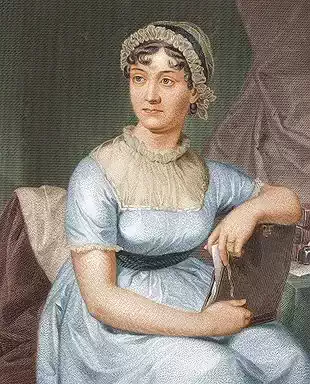
Jane Austen
Happy the Lab'rer
Happy the lab'rer in his Sunday clothes!
In light-drab coat, smart waistcoat, well-darn'd hose,
Andhat upon his head, to church he goes;
As oft, with conscious pride, he downward throws
A glance upon the ample cabbage rose
That, stuck in button-hole, regales his nose,
He envies not the gayest London beaux.
In church he takes his seat among the rows,
Pays to the place the reverence he owes,
Likes best the prayers whose meaning least he knows,
Lists to the sermon in a softening doze,
And rouses joyous at the welcome close.
218

Ogden Nash
Pretty Halcyon Days
How pleasant to sit on the beach,
On the beach, on the sand, in the sun,
With ocean galore within reach,
And nothing at all to be done!
No letters to answer,
No bills to be burned,
No work to be shirked,
No cash to be earned,
It is pleasant to sit on the beach
With nothing at all to be done!
How pleasant to look at the ocean,
Democratic and damp; indiscriminate;
It fills me with noble emotion
To think I am able to swim in it.
To lave in the wave,
Majestic and chilly,
Tomorrow I crave;
But today it is silly.
It is pleasant to look at the ocean;
Tomorrow, perhaps, I shall swim in it.
How pleasant to gaze at the sailors
As their sailboats they manfully sail
With the vigor of vikings and whalers
In the days of the vikings and whale.
They sport on the brink
Of the shad and the shark;
If it’s windy, they sink;
If it isn’t, they park.
It is pleasant to gaze at the sailors,
To gaze without having to sail.
How pleasant the salt anesthetic
Of the air and the sand and the sun;
Leave the earth to the strong and athletic,
And the sea to adventure upon.
But the sun and the sand
No contractor can copy;
We lie in the land
Of the lotus and poppy;
We vegetate, calm and aesthetic,
On the beach, on the sand, in the sun.
215
Robert W. Service
Slugging Saint
'Twas in a pub in Battersea
They call the "Rose and Crown,"
Quite suddenly, it seemed to me,
The Lord was looking down;
The Lord was looking from above,
And shiny was His face,
And I was filled with gush of love
For all the human race.
Anon I saw three ancient men
Who reckoned not of bliss,
And they looked quite astonished when
I gave them each a kiss.
I kissed each on his balding spot
With heart of Heaven grace . . .
And then it seemed there was a lot
Of trouble round the place.
They had me up before the beak,
But though I told my tale,
He sentanced me to spend a week
In Yard of Scotland Gaol.
So when they kindly set me free
Please don't think it amiss,
If Battling Bill of Battersea,
For love of all humanity
Gives you a kiss.
213
Robert W. Service
Beachcomber
When I have come with happy heart to sixty years and ten,
I'll buy a boat and sail away upon a summer sea;
And in a little lonely isle that's far and far from men,
In peace and praise I'll spend the days the Gods allow to me.
For I am weary of a strife so pitiless and vain;
And in a far and fairy isle, bewilderingly bright,
I'll learn to know the leap and glow of rapture once again,
And welcome every living dawn with wonder and delight.
And there I'll build a swan-white house above the singing foam,
With brooding eaves, where joyously rich roses climb and cling;
With crotons in a double row, like wine and honeycomb,
And flame trees dripping golden rain, and palms pavilioning.
And there I'll let the wind and wave do what they will with me;
And I will dwell unto the end with loveliness and joy;
And drink from out the crystal spring, and eat from off the tree,
As simple as a savage is, as careless as a boy.
For I have come to think that Life's a lamentable tale,
And all we break our hearts to win is little worth our while;
For fame and fortune in the end are comfortless and stale,
And it is best to dream and rest upon a radiant isle.
So I'll blot out the bitter years of sufferance and scorn,
And I'll forget the fear and fret, the poverty and pain;
And in a shy and secret isle I'll be a man newborn,
And fashion life to heart's desire, and seek my soul again.
For when I come with happy heart to sixty years and ten,
I fondly hope the best of life will yet remain to me;
And so I'll burn my foolish books and break my futile pen,
And seek a tranced and tranquil isle, that dreams eternally.
I'll turn my back on all the world, I'll bid my friends adieu;
Unto the blink I'll leave behind what gold I have to give;
And in a jewelled solitude I'll mould my life anew,
And nestling close to Nature's heart, I'll learn at last . . . to live.
213
Robert W. Service
The Contented Man
"How good God is to me," he said;
"For have I not a mansion tall,
With trees and lawns of velvet tread,
And happy helpers at my call?
With beauty is my life abrim,
With tranquil hours and dreams apart;
You wonder that I yield to Him
That best of prayers, a grateful heart?"
"How good God is to me," he said;
"For look! though gone is all my wealth,
How sweet it is to earn one's bread
With brawny arms and brimming health.
Oh, now I know the joy of strife!
To sleep so sound, to wake so fit.
Ah yes, how glorious is life!
I thank Him for each day of it."
"How good God is to me," he said;
"Though health and wealth are gone, it's true;
Things might be worse, I might be dead,
And here I'm living, laughing too.
Serene beneath the evening sky
I wait, and every man's my friend;
God's most contented man am I . . .
He keeps me smiling to the End."
210

Christina Rossetti
A Frisky Lamb
A frisky lamb
And a frisky child
Playing their pranks
In a cowslip meadow:
The sky all blue
And the air all mild
And the fields all sun
And the lanes half shadow.
And a frisky child
Playing their pranks
In a cowslip meadow:
The sky all blue
And the air all mild
And the fields all sun
And the lanes half shadow.
208

D.H. Lawrence
A Baby Running Barefoot
When the bare feet of the baby beat across the grass
The little white feet nod like white flowers in the wind,
They poise and run like ripples lapping across the water;
And the sight of their white play among the grass
Is like a little robin’s song, winsome,
Or as two white butterflies settle in the cup of one flower
For a moment, then away with a flutter of wings.
I long for the baby to wander hither to me
Like a wind-shadow wandering over the water,
So that she can stand on my knee
With her little bare feet in my hands,
Cool like syringa buds,
Firm and silken like pink young peony flowers.
208
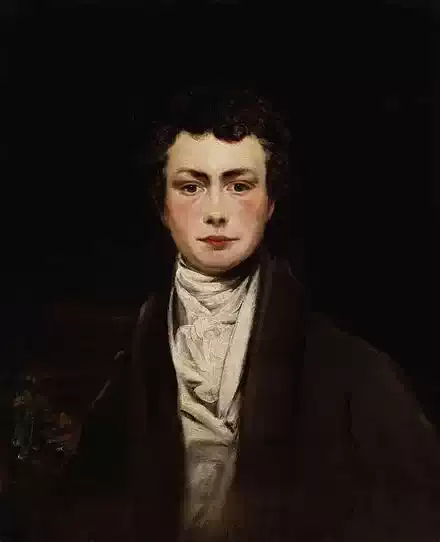
Thomas Moore
No, Not More Welcome
No, not more welcome the fairy numbers
Of music fall on the sleeper's ear,
When half awaking from fearful slumbers,
He thinks the full quire of heaven is near --
Than came that voice, when, all forsaken,
This heart long had sleeping lain,
Nor thought its cold pulse would ever waken
To such benign blessed sounds again.
Sweet voice of comfort! 'twas like the stealing
Of summer wind through some wreathed shell --
Each secret winding, each inmost feeling
Of all my soul echoed to its spell.
'Twas whisper'd balm -- 'twas sunshine spoken! --
I'd live years of grief and pain
To have my long sleep of sorrow broken
By such benign blessed sounds again.
210
Robert W. Service
Each Day A Life
I count each day a little life,
With birth and death complete;
I cloister it from care and strife
And keep it sane and sweet.
With eager eyes I greet the morn,
Exultant as a boy,
Knowing that I am newly born
To wonder and to joy.
And when the sunset splendours wane
And ripe for rest am I,
Knowing that I will live again,
Exultantly I die.
O that all Life were but a Day
Sunny and sweet and sane!
And that at Even I might say:
"I sleep to wake again."
207
Thomas Moore
This Life Is All Chequer'd With Pleasures and Woes
This life is all chequer'd with pleasures and woes,
That chase one another like waves of the deep --
Each brightly or darkly, as onward it flows,
Reflecting our eyes, as they sparkle or weep.
So closely our whims on our miseries tread,
That the laugh is awaked ere the tear can be dried;
And, as fast as the rain-drop of Pity is shed,
The goose-plumage of Folly can turn it aside.
But pledge me the cup -- if existence would cloy,
With hearts ever happy and heads ever wise,
Be ours the light Sorrow, half-sister to Joy,
And the light brilliant Folly that flashes and dies.
When Hylas was sent with his urn to the fount,
Through fields full of light, and with heart full of play,
Light rambled the boy, over meadow and mount,
And neglected his task for the flowers on the way.
Thus many, like me, who in youth should have tasted
The fountain that runs by Philosophy's shrine,
Their time with the flowers on the margin have wasted,
And left their light urns all as empty as mine.
But pledge me the goblet; -- while idleness weaves
These flowerets together, should Wisdom but see
One bright drop or two that has fall'n on the leaves
From her fountain divine, 'tis sufficient for me.
205
Thomas Moore
The Night Dance
Strike the gay harp! see the moon is on high,
And, as true to her beam as the tides of the ocean,
Young hearts, when they feel the soft light of her eye,
Obey the mute call, and heave into motion.
Then, sound notes -- the gayest, the lightest,
That ever took wing, when heaven look'd brightest
Again! Again!
Oh! could such heart-stirring music be heard
In that City of Statues described by romancers,
So wakening its spell, even stone would be stirr'd,
And statues themselves all start into dancers!
Why then delay, with such sounds in our ears,
And the flower of Beauty's own garden before us --
While stars overhead leave the song of their spheres,
And, listening to ours, hang wondering o'er us?
Again, that strain! -- to hear it thus sounding
Might set even Death's cold pulses bounding --
Again! Again!
Oh, what delight when the youthful and gay
Each with eye like a sunbeam and foot like a feather,
Thus dance, like the Hours to the music of May,
And mingle sweet song and sunshine together.
205
Thomas Moore
Wreath the Bowl
Wreath the bowl
With flowers of soul,
The brightest Wit can find us,
We'll take a flight
Towards heaven to-night,
And leave dull earth behind us.
Should Love amid
The wreaths be hid
That Joy, the enchanter, brings us,
No danger fear,
While wine is near --
We'll drown him if he stings us.
Then, wreath the bowl
With flowers of soul,
The brightest Wit can find us.
We'll take a flight
Towards heaven to-night,
And leave dull earth behind us.
'Twas nectar fed
Of old, 'tis said,
Their Junos, Joves, Apollos,
And man may brew
His nectar too,
The rich receipt's as follows:
Take wine like this,
Let looks of bliss
Around it well be blended,
Then bring Wit's beam
To warm the stream,
And there's your nectar, splendid!
So, wreath the bowl,
With flowers of soul,
The brightest Wit can find us,
We'll take a flight
Towards heaven to-night,
And leave dull earth behind us.
Say, why did Time
His glass sublime
Fill up with sands unsightly,
When wine, he knew,
Runs brisker through,
And sparkles far more brightly?
Oh, lend it us,
And, smiling thus,
The glass in two we'll sever,
Make pleasure glide
In double tide,
And fill both ends for ever!
Then, wreath the bowl
With flowers of soul
The brightest Wit can find us;
We'll take a flight
Towards heaven to-night,
And leave dull earth behind us.
With flowers of soul,
The brightest Wit can find us,
We'll take a flight
Towards heaven to-night,
And leave dull earth behind us.
Should Love amid
The wreaths be hid
That Joy, the enchanter, brings us,
No danger fear,
While wine is near --
We'll drown him if he stings us.
Then, wreath the bowl
With flowers of soul,
The brightest Wit can find us.
We'll take a flight
Towards heaven to-night,
And leave dull earth behind us.
'Twas nectar fed
Of old, 'tis said,
Their Junos, Joves, Apollos,
And man may brew
His nectar too,
The rich receipt's as follows:
Take wine like this,
Let looks of bliss
Around it well be blended,
Then bring Wit's beam
To warm the stream,
And there's your nectar, splendid!
So, wreath the bowl,
With flowers of soul,
The brightest Wit can find us,
We'll take a flight
Towards heaven to-night,
And leave dull earth behind us.
Say, why did Time
His glass sublime
Fill up with sands unsightly,
When wine, he knew,
Runs brisker through,
And sparkles far more brightly?
Oh, lend it us,
And, smiling thus,
The glass in two we'll sever,
Make pleasure glide
In double tide,
And fill both ends for ever!
Then, wreath the bowl
With flowers of soul
The brightest Wit can find us;
We'll take a flight
Towards heaven to-night,
And leave dull earth behind us.
205
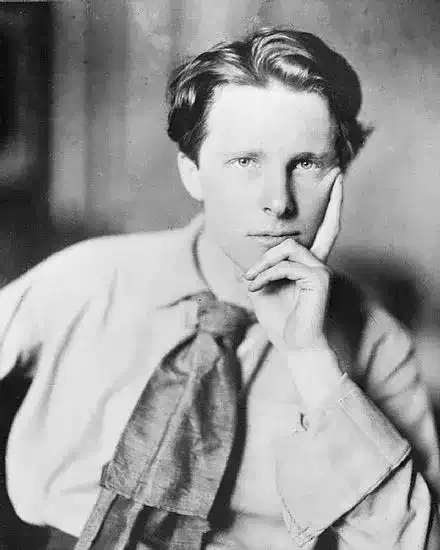
Rupert Brooke
Beauty and Beauty
When Beauty and Beauty meet
All naked, fair to fair,
The earth is crying-sweet,
And scattering-bright the air,
Eddying, dizzying, closing round,
With soft and drunken laughter;
Veiling all that may befall
After -- after --
Where Beauty and Beauty met,
Earth's still a-tremble there,
And winds are scented yet,
And memory-soft the air,
Bosoming, folding glints of light,
And shreds of shadowy laughter;
Not the tears that fill the years
After -- after --
203
Robert W. Service
My Dog's My Boss
Each day when it's anighing three
Old Dick looks at the clock,
Then proudly brings my stick to me
To mind me of our walk.
And in his doggy rapture he
Does everything but talk.
But since I lack his zip and zest
My old bones often tire;
And so I ventured to suggest
Today we hug the fire.
But with what wailing he expressed
The death of his desire!
He gazed at me with eyes of woe
As if to say: 'Old boy,
You mustn't lose your grip, you know,
Let us with laughing joy,
On heath and hill six miles or so
Our legs and lungs employ.'
And then his bark was stilled to a sigh
He flopped upon the floor;
But such a soft old mug am I
I threw awide the door;
So gaily, though the wind was high
We hiked across the moor.
203
Robert W. Service
I Will Not Fight
I will not fight: though proud of pith
I hold no one worth striving with;
And should resentment burn my breast
I deem that silence serves me best:
So having not a word to say,
Contemptuous I turn away.
I will not fret: my rest of life
Free I will keep from hate and strife;
Let lust and sin and anger sleep,
I will not delve the subsoil deep,
But be content with inch of earth,
Where daisies have their birth.
I will not grieve: Till day be done
I will be tranquil in the sun,
With garden glow and quiet nook,
And song of bird and spell of book . . .
God bless you all! I will not fight,
But love and dream until--Goodnight!
203
Robert W. Service
Tim
My brother Tim has children ten,
While I have none.
Maybe that's why he's toiling when
To ease I've won.
But though I would some of his brood
Give hearth and care,
I know that not a one he would
Have heart to spare.
'Tis children that have kept him poor;
He's clad them neat.
They've never wanted, I am sure,
For bite to eat.
And though their future may be dim,
They laugh a lot.
Am I tearful for Brother Tim?
Oh no, I'm not.
I know he goes to work each day
With flagging feet.
'Tis hard, even with decent pay,
To make ends meet.
But when my sterile home I see,
So smugly prim,
Although my banker bows to me,
I envy Tim.
198
Robert W. Service
My Garret
Here is my Garret up five flights of stairs;
Here's where I deal in dreams and ply in fancies,
Here is the wonder-shop of all my wares,
My sounding sonnets and my red romances.
Here's where I challenge Fate and ring my rhymes,
And grope at glory -- aye, and starve at times.
Here is my Stronghold: stout of heart am I,
Greeting each dawn as songful as a linnet;
And when at night on yon poor bed I lie
(Blessing the world and every soul that's in it),
Here's where I thank the Lord no shadow bars
My skylight's vision of the valiant stars.
Here is my Palace tapestried with dreams.
Ah! though to-night ten sous are all my treasure,
While in my gaze immortal beauty gleams,
Am I not dowered with wealth beyond all measure?
Though in my ragged coat my songs I sing,
King of my soul, I envy not the king.
Here is my Haven: it's so quiet here;
Only the scratch of pen, the candle's flutter;
Shabby and bare and small, but O how dear!
Mark you -- my table with my work a-clutter,
My shelf of tattered books along the wall,
My bed, my broken chair -- that's nearly all.
Only four faded walls, yet mine, all mine.
Oh, you fine folks, a pauper scorns your pity.
Look, where above me stars of rapture shine;
See, where below me gleams the siren city . . .
Am I not rich? -- a millionaire no less,
If wealth be told in terms of Happiness.
199
Rupert Brooke
The Busy Heart
Now that we’ve done our best and worst, and parted,
I would fill my mind with thoughts that will not rend.
(O heart, I do not dare go empty-hearted)
I’ll think of Love in books, Love without end;
Women with child, content; and old men sleeping;
And wet strong ploughlands, scarred for certain grain;
And babes that weep, and so forget their weeping;
And the young heavens, forgetful after rain;
And evening hush, broken by homing wings;
And Song’s nobility, and Wisdom holy,
That live, we dead. I would think of a thousand things,
Lovely and durable, and taste them slowly,
One after one, like tasting a sweet food.
I have need to busy my heart with quietude.
200
Christina Rossetti
Dancing On The Hill-Tops
Dancing on the hill-tops,
Singing in the valleys,
Laughing with the echoes,
Merry little Alice.
Playing games with lambkins
In the flowering valleys,
Gathering pretty posies,
Helpful little Alice.
If her father's cottage
Turned into a palace,
And he owned the hill-tops
And the flowering valleys,
She’d be none the happier,
Happy little Alice.
200
Thomas Moore
If Thou'lt Be Mine
If thou'lt be mine, the treasures of air,
Of earth, and sea, shall lie at thy feet;
Whatever in Fancy's eye looks fair,
Or in Hope's sweet music sounds most sweet,
Shall be ours -- if thou wilt be mine, love!
Bright flowers shall bloom wherever we rove,
A voice divine shall talk in each stream;
The stars shall look like world of love,
And this earth be all one beautiful dream
In our eyes -- if thou wilt be mine, love!
And thoughts, whose source is hidden and high,
Like streams that come from heaven-ward hills,
Shall keep our hearts, like meads, that lie
To be bathed by those eternal rills,
Ever green, if thou wilt be mine, love!
All this and more the Spirit of Love
Can breathe o'er them who feel his spells;
That heaven, which forms his home above,
He can make on earth, wherever he dwells,
As thou'lt own, -- if thou wilt be mine, love!
193

Wilfred Owen
Happiness
Ever again to breathe pure happiness,
So happy that we gave away our toy?
We smiled at nothings, needing no caress?
Have we not laughed too often since with Joy?
Have we not stolen too strange and sorrowful wrongs
For her hands' pardoning? The sun may cleanse,
And time, and starlight. Life will sing great songs,
And gods will show us pleasures more than men's.
Yet heaven looks smaller than the old doll's-home,
No nestling place is left in bluebell bloom,
And the wide arms of trees have lost their scope.
The former happiness is unreturning:
Boys' griefs are not so grievous as our yearning,
Boys have no sadness sadder than our hope.
194
Robert W. Service
Ignorance
Oh happy he who cannot see
With scientific eyes;
Who does not know how flowers grow,
And is not planet wise;
Content to find with simple mind
Joys as they are:
To whom a rose is just a rose,
A star--a star.
It is not good, I deem, to brood
On things beyond our ken;
A rustic I would live and die,
Aloof from learned men;
And laugh and sing with zest of Spring
In life's exultant scene,--
For vain my be philosophy,
And what does meaning mean?
I'm talking rot,--I'm really not
As dumb as I pretend;
But happiness, I dimly guess,
Is what counts in the end.
To educate is to dilate
The nerves of pain:
So let us give up books and live
Like hinds again.
The best of wisdom surely is
To be not overwise;
For may not thought be evil fraught,
And truth less kind than lies?
So let me praise the golden days
I played a gay guitar,
And deemed a rose was just a rose,
A star--a star.
191
Jane Austen
When Stretch'd on One's Bed
When stretch'd on one's bed
With a fierce-throbbing head,
Which preculdes alike thought or repose,
How little one cares
For the grandest affairs
That may busy the world as it goes!
How little one feels
For the waltzes and reels
Of our Dance-loving friends at a Ball!
How slight one's concern
To conjecture or learn
What their flounces or hearts may befall.
How little one minds
If a company dines
On the best that the Season affords!
How short is one's muse
O'er the Sauces and Stews,
Or the Guests, be they Beggars or Lords.
How little the Bells,
Ring they Peels, toll they Knells,
Can attract our attention or Ears!
The Bride may be married,
The Corse may be carried
And touch nor our hopes nor our fears.
Our own bodily pains
Ev'ry faculty chains;
We can feel on no subject besides.
Tis in health and in ease
We the power must seize
For our friends and our souls to provide.
185