
Happiness and Joy

Robert Louis Stevenson
De M. Antonio
NOW Antoninus, in a smiling age,
Counts of his life the fifteenth finished stage.
The rounded days and the safe years he sees,
Nor fears death's water mounting round his knees.
To him remembering not one day is sad,
Not one but that its memory makes him glad.
So good men lengthen life; and to recall
The past is to have twice enjoyed it all.
376
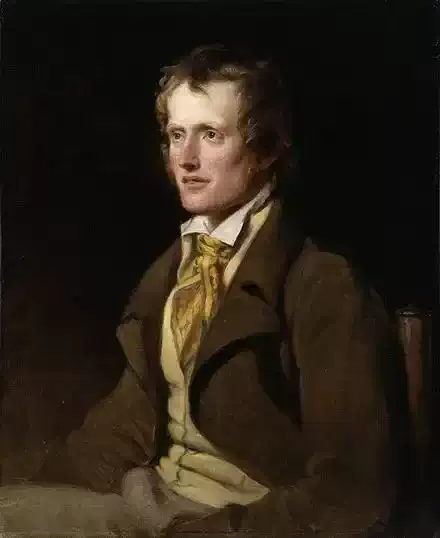
John Clare
To Anna Three Years Old
My Anna, summer laughs in mirth,
And we will of the party be,
And leave the crickets in the hearth
For green fields' merry minstrelsy.
I see thee now with little hand
Catch at each object passing bye,
The happiest thing in all the land
Except the bee and butterfly.
* * * * *
And limpid brook that leaps along,
Gilt with the summer's burnished gleam,
Will stop thy little tale or song
To gaze upon its crimping stream.
Thou'lt leave my hand with eager speed
The new discovered things to see--
The old pond with its water weed
And danger-daring willow tree,
Who leans an ancient invalid
Oer spots where deepest waters be.
In sudden shout and wild surprise
I hear thy simple wonderment,
As new things meet thy childish eyes
And wake some innocent intent;
As bird or bee or butterfly
Bounds through the crowd of merry leaves
And starts the rapture of thine eye
To run for what it neer achieves.
But thou art on the bed of pain,
So tells each poor forsaken toy.
Ah, could I see that happy hour
When these shall be thy heart's employ,
And see thee toddle oer the plain,
And stoop for flowers, and shout for joy.
373
Robert Louis Stevenson
Away With Funeral Music
AWAY with funeral music - set
The pipe to powerful lips -
The cup of life's for him that drinks
And not for him that sips.
The pipe to powerful lips -
The cup of life's for him that drinks
And not for him that sips.
371
Robert Louis Stevenson
Night and Day
When the golden day is done,
Through the closing portal,
Child and garden, Flower and sun,
Vanish all things mortal.
As the blinding shadows fall
As the rays diminish,
Under evening's cloak they all
Roll away and vanish.
Garden darkened, daisy shut,
Child in bed, they slumber--
Glow-worm in the hallway rut,
Mice among the lumber.
In the darkness houses shine,
Parents move the candles;
Till on all the night divine
Turns the bedroom handles.
Till at last the day begins
In the east a-breaking,
In the hedges and the whins
Sleeping birds a-waking.
In the darkness shapes of things,
Houses, trees and hedges,
Clearer grow; and sparrow's wings
Beat on window ledges.
These shall wake the yawning maid;
She the door shall open--
Finding dew on garden glade
And the morning broken.
There my garden grows again
Green and rosy painted,
As at eve behind the pane
From my eyes it fainted.
Just as it was shut away,
Toy-like, in the even,
Here I see it glow with day
Under glowing heaven.
Every path and every plot,
Every blush of roses,
Every blue forget-me-not
Where the dew reposes,
"Up!" they cry, "the day is come
On the smiling valleys:
We have beat the morning drum;
Playmate, join your allies!"
371

Johann Wolfgang von Goethe
Table Song
O'ER me--how I cannot say,-
Heav'nly rapture's growing.
Will it help to guide my way
To yon stars all-glowing?
Yet that here I'd sooner be,
To assert I'm able,
Where, with wine and harmony,
I may thump the table.
Wonder not, my dearest friends,
What 'tis gives me pleasure;
For of all that earth e'er lends,
'Tis the sweetest treasure.
Therefore solemnly I swear,
With no reservation,
That maliciously I'll ne'er
Leave my present station.
Now that here we're gather'd round,
Chasing cares and slumbers,
Let, methought, the goblet sound
To the bard's glad numbers!
Many a hundred mile away,
Go those we love dearly;
Therefore let us here to-day
Make the glass ring clearly!
Here's His health, through Whom we live!
I that faith inherit.
To our king the next toast give,
Honour is his merit,
'Gainst each in-- and outward foe
He's our rock and tower.
Of his maintenance thinks he though,
More that grows his power.
Next to her good health I drink,
Who has stirr'd my passion;
Of his mistress let each think,
Think in knightly fashion.
If the beauteous maid but see
Whom 'tis I now call so,
Let her smiling nod to me:
"Here's my love's health also!"
To those friends,--the two or three,--
Be our next toast given,
In whose presence revel we,
In the silent even,--
Who the gloomy mist so cold
Scatter gently, lightly;
To those friends, then, new or old,
Let the toast ring brightly.
Broader now the stream rolls on,
With its waves more swelling,
While in higher, nobler tone,
Comrades, we are dwelling,--
We who with collected might,
Bravely cling together,
Both in fortune's sunshine bright,
And in stormy weather.
Just as we are gather'd thus,
Others are collected;
On them, therefore, as on us,
Be Fate's smile directed!
From the springhead to the sea,
Many a mill's revolving,
And the world's prosperity
Is the task I'm solving.
371

Henry Wadsworth Longfellow
The Hanging Of The Crane
The lights are out, and gone are all the guests
That thronging came with merriment and jests
To celebrate the Hanging of the Crane
In the new house,--into the night are gone;
But still the fire upon the hearth burns on,
And I alone remain.
O fortunate, O happy day,
When a new household finds its place
Among the myriad homes of earth,
Like a new star just sprung to birth,
And rolled on its harmonious way
Into the boundless realms of space!
So said the guests in speech and song,
As in the chimney, burning bright,
We hung the iron crane to-night,
And merry was the feast and long.
II.
And now I sit and muse on what may be,
And in my vision see, or seem to see,
Through floating vapors interfused with light,
Shapes indeterminate, that gleam and fade,
As shadows passing into deeper shade
Sink and elude the sight.
For two alone, there in the hall,
As spread the table round and small;
Upon the polished silver shine
The evening lamps, but, more divine,
The light of love shines over all;
Of love, that says not mine and thine,
But ours, for ours is thine and mine.
They want no guests, to come between
Their tender glances like a screen,
And tell them tales of land and sea,
And whatsoever may betide
The great, forgotten world outside;
They want no guests; they needs must be
Each other's own best company.
III.
The picture fades; as at a village fair
A showman's views, dissolving into air,
Again appear transfigured on the screen,
So in my fancy this; and now once more,
In part transfigured, through the open door
Appears the selfsame scene.
Seated, I see the two again,
But not alone; they entertain
A little angel unaware,
With face as round as is the moon;
A royal guest with flaxen hair,
Who, throned upon his lofty chair,
Drums on the table with his spoon,
Then drops it careless on the floor,
To grasp at things unseen before.
Are these celestial manners? these
The ways that win, the arts that please?
Ah yes; consider well the guest,
And whatsoe'er he does seems best;
He ruleth by the right divine
Of helplessness, so lately born
In purple chambers of the morn,
As sovereign over thee and thine.
He speaketh not; and yet there lies
A conversation in his eyes;
The golden silence of the Greek,
The gravest wisdom of the wise,
Not spoken in language, but in looks
More legible than printed books,
As if he could but would not speak.
And now, O monarch absolute,
Thy power is put to proof; for, lo!
Resistless, fathomless, and slow,
The nurse comes rustling like the sea,
And pushes back thy chair and thee,
And so good night to King Canute.
IV.
As one who walking in a forest sees
A lovely landscape through the parted frees,
Then sees it not, for boughs that intervene
Or as we see the moon sometimes revealed
Through drifting clouds, and then again concealed,
So I behold the scene.
There are two guests at table now;
The king, deposed and older grown,
No longer occupies the throne,--
The crown is on his sister's brow;
A Princess from the Fairy Isles,
The very pattern girl of girls.
All covered and embowered in curls,
Rose-tinted from the Isle of Flowers,
And sailing with soft, silken sails
From far-off Dreamland into ours.
Above their bowls with rims of blue
Four azure eyes of deeper hue
Are looking, dreamy with delight;
Limpid as planets that emerge
Above the ocean's rounded verge,
Soft-shining through the summer night.
Steadfast they gaze, yet nothing see
Beyond the horizon of their bowls;
Nor care they for the world that rolls
With all its freight of troubled souls
Into the days that are to be.
V.
Again the tossing boughs shut out the scene,
Again the drifting vapors intervene,
And the moon's pallid disk is hidden quite;
And now I see the table wider grown,
As round a pebble into water thrown
Dilates a ring of light.
I see the table wider grown,
I see it garlanded with guests,
As if fair Ariadne's Crown
Out of the sky had fallen down;
Maidens within whose tender breasts
A thousand restless hopes and fears,
Forth reaching to the coming years,
Flutter awhile, then quiet lie
Like timid birds that fain would fly,
But do not dare to leave their nests;--
And youths, who in their strength elate
Challenge the van and front of fate,
Eager as champions to be
In the divine knight-errantry
Of youth, that travels sea and land
Seeking adventures, or pursues,
Through cities, and through solitudes
Frequented by the lyric Muse,
The phantom with the beckoning hand,
That still allures and still eludes.
O sweet illusions of the brain!
O sudden thrills of fire and frost!
The world is bright while ye remain,
And dark and dead when ye are lost!
VI.
The meadow-brook, that seemeth to stand still,
Quickens its current as it nears the mill;
And so the stream of Time that lingereth
In level places, and so dull appears,
Runs with a swifter current as it nears
The gloomy mills of Death.
And now, like the magician's scroll,
That in the owner's keeping shrinks
With every wish he speaks or thinks,
Till the last wish consumes the whole,
The table dwindles, and again
I see the two alone remain.
The crown of stars is broken in parts;
Its jewels, brighter than the day,
Have one by one been stolen away
To shine in other homes and hearts.
One is a wanderer now afar
In Ceylon or in Zanzibar,
Or sunny regions of Cathay;
And one is in the boisterous camp
Mid clink of arms and horses' tramp,
And battle's terrible array.
I see the patient mother read,
With aching heart, of wrecks that float
Disabled on those seas remote,
Or of some great heroic deed
On battle-fie1ds where thousands bleed
To lift one hero into fame.
Anxious she bends her graceful head
Above these chronicles of pain,
And trembles with a secret dread
Lest there among the drowned or slain
She find the one beloved name.
VII.
After a day of cloud and wind and rain
Sometimes the setting sun breaks out again,
And touching all the darksome woods with light,
Smiles on the fields, until they laugh and sing,
Then like a ruby from the horizon's ring
Drops down into the night.
What see I now? The night is fair,
The storm of grief, the clouds of care,
The wind, the rain, have passed away;
The lamps are lit, the fires burn bright,
The house is full of life and light:
It is the Golden Wedding day.
The guests come thronging in once more,
Quick footsteps sound along the floor,
The trooping children crowd the stair,
And in and out and everywhere
Flashes along the corridor
The sunshine of their golden hair.
On the round table in the hall
Another Ariadne's Crown
Out of the sky hath fallen down;
More than one Monarch of the Moon
Is drumming with his silver spoon;
The light of love shines over all.
O fortunate, O happy day!
The people sing, the people say.
The ancient bridegroom and the bride,
Smiling contented and serene
Upon the blithe, bewildering scene,
Behold, well pleased, on every side
Their forms and features multiplied,
As the reflection of a light
Between two burnished mirrors gleams,
Or lamps upon a bridge at night
Stretch on and on before the sight,
Till the long vista endless seems.
364
Johann Wolfgang von Goethe
Joy
A DRAGON-FLY with beauteous wing
Is hov'ring o'er a silv'ry spring;
I watch its motions with delight,--
Now dark its colours seem, now bright;
Chameleon-like appear, now blue,
Now red, and now of greenish hue.
Would it would come still nearer me,
That I its tints might better see
It hovers, flutters, resting ne'er!
But hush! it settles on the mead.
I have it safe now, I declare!
And when its form I closely view,
'Tis of a sad and dingy blue--
Such, Joy-Dissector, is thy case indeed
364
Johann Wolfgang von Goethe
It Is Good
IN Paradise while moonbeams play'd,
Jehovah found, in slumber deep,
Adam fast sunk; He gently laid
Eve near him,--she, too, fell asleep.
There lay they now, on earth's fair shrine,
God's two most beauteous thoughts divine.--
When this He saw, He cried:--'Tis Good!!!
And scarce could move from where He stood.
No wonder, that our joy's complete
While eye and eye responsive meet,
When this blest thought of rapture moves us--
That we're with Him who truly loves us,
And if He cries:--Good, let it be!
'Tis so for both, it seems to me.
Thou'rt clasp'd within these arms of mine,
Dearest of all God's thoughts divine!
365
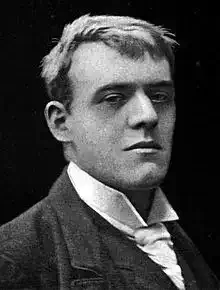
Hilaire Belloc
Cuckoo!
In woods so long time bare
Cuckoo!
Up and in the wood, I know not where
Two notes fall.
Yet I do not envy him at all
His phantasy.
Cuckoo!
I too,
Somewhere,
I have sung as merrily as he
Who can dare,
Small and careless love, so to laugh at care,
And who
Can call
Cuckoo!
In woods of winter weary,
In scented woods, of winter weary, call
Cuckoo!
In woods so long time bare.
Cuckoo!
Up and in the wood, I know not where
Two notes fall.
Yet I do not envy him at all
His phantasy.
Cuckoo!
I too,
Somewhere,
I have sung as merrily as he
Who can dare,
Small and careless love, so to laugh at care,
And who
Can call
Cuckoo!
In woods of winter weary,
In scented woods, of winter weary, call
Cuckoo!
In woods so long time bare.
364

Claude Mckay
Winter in the Country
Sweet life! how lovely to be here
And feel the soft sea-laden breeze
Strike my flushed face, the spruce's fair
Free limbs to see, the lesser trees'
Bare hands to touch, the sparrow's cheep
To heed, and watch his nimble flight
Above the short brown grass asleep.
Love glorious in his friendly might,
Music that every heart could bless,
And thoughts of life serene, divine,
Beyond my power to express,
Crowd round this lifted heart of mine!
But oh! to leave this paradise
For the city's dirty basement room,
Where, beauty hidden from the eyes,
A table, bed, bureau, and broom
In corner set, two crippled chairs
All covered up with dust and grim
With hideousness and scars of years,
And gaslight burning weird and dim,
Will welcome me . . . And yet, and yet
This very wind, the winter birds
The glory of the soft sunset,
Come there to me in words.
365

James Whitcomb Riley
A Diverted Tragedy
Gracie wuz allus a _careless_ tot;
But Gracie dearly loved her doll,
An' played wiv it on the winder-sill
'Way up-stairs, when she ought to _not_,
An' her muvver _telled_ her so an' all;
But she won't _mind_ what _she_ say--till,
First thing she know, her dolly fall
Clean spang out o' the winder plumb
Into the street! An' here Grace come
Down-stairs, two at a time, ist wild
An' a-screamin', 'Oh, my child! my child!'
Jule wuz a-bringin' their basket o' clo'es
Ist then into their hall down there,--
An' she ist stop' when Gracie bawl,
An' Jule she say 'She ist declare
She's ist in time!' An' what you s'pose?
She sets her basket down in the hall,
An' wite on top o' the snowy clo'es
Wuz Gracie's dolly a-layin' there
An' ist ain't bu'st ner hurt a-tall!
Nen Gracie smiled--ist _sobbed_ an' smiled--
An' cried, 'My child! my precious child!'
362

Ezra Pound
Post Mortem Conspectu
A brown, fat babe sitting in the lotus,
And you were glad and laughing
With a laughter not of this world.
It is good to splash in the water
And laughter is the end of all things.
And you were glad and laughing
With a laughter not of this world.
It is good to splash in the water
And laughter is the end of all things.
358
Henry Wadsworth Longfellow
The Happiest Land. (From The German)
There sat one day in quiet,
By an alehouse on the Rhine,
Four hale and hearty fellows,
And drank the precious wine.
The landlord's daughter filled their cups
Around the rustic board;
Then sat they all so calm and still,
And spake not one rude word.
But, when the maid departed,
A Swabian raised his hand,
And cried, all hot and flushed with wine,
'Long live the Swabian land!
'The greatest kingdom upon earth
Cannot with that compare;
With all the stout and hardy men
And the nut-brown maidens there.'
Ha! cried a Saxon, laughing,--
And dashed his beard with wine;
' I had rather live in Lapland,
Than that Swabian land of thine!
The goodliest land on all this earth,
It is the Saxon land!
There have I as many maidens
As fingers on this hand!
Hold your tongues! both Swabian and Saxon!
A bold Bohemian cries;
'If there's a heaven upon this earth,
In Bohemia it lies.
There the tailor blows the flute,
And the cobbler blows the horn,
And the miner blows the bugle,
Over mountain gorge and bourn.
****
And then the landlord's daughter
Up to heaven raised her hand,
And said, Ye may no more contend,--
There lies the happiest land!
356

Carl Sandburg
Fellow Citizens
I drank musty ale at the Illinois Athletic Club with
the millionaire manufacturer of Green River butter
one night
And his face had the shining light of an old-time Quaker,
he spoke of a beautiful daughter, and I knew he had
a peace and a happiness up his sleeve somewhere.
Then I heard Jim Kirch make a speech to the Advertising
Association on the trade resources of South America.
And the way he lighted a three-for-a-nickel stogie and
cocked it at an angle regardless of the manners of
our best people,
I knew he had a clutch on a real happiness even though
some of the reporters on his newspaper say he is
the living double of Jack London's Sea Wolf.
In the mayor's office the mayor himself told me he was
happy though it is a hard job to satisfy all the officeseekers
and eat all the dinners he is asked to eat.
Down in Gilpin Place, near Hull House, was a man with
his jaw wrapped for a bad toothache,
And he had it all over the butter millionaire, Jim Kirch
and the mayor when it came to happiness.
He is a maker of accordions and guitars and not only
makes them from start to finish, but plays them
after he makes them.
And he had a guitar of mahogany with a walnut bottom
he offered for seven dollars and a half if I wanted it,
And another just like it, only smaller, for six dollars,
though he never mentioned the price till I asked him,
And he stated the price in a sorry way, as though the
music and the make of an instrument count for a
million times more than the price in money.
I thought he had a real soul and knew a lot about God.
There was light in his eyes of one who has conquered
sorrow in so far as sorrow is conquerable or worth
conquering.
Anyway he is the only Chicago citizen I was jealous of
that day.
He played a dance they play in some parts of Italy
when the harvest of grapes is over and the wine
presses are ready for work.
358
John Clare
Ploughman Singing
Here morning in the ploughman's songs is met
Ere yet one footstep shows in all the sky,
And twilight in the east, a doubt as yet,
Shows not her sleeve of grey to know her bye.
Woke early, I arose and thought that first
In winter time of all the world was I.
The old owls might have hallooed if they durst,
But joy just then was up and whistled bye
A merry tune which I had known full long,
But could not to my memory wake it back,
Until the ploughman changed it to the song.
O happiness, how simple is thy track.
--Tinged like the willow shoots, the east's young brow
Glows red and finds thee singing at the plough.
352
James Whitcomb Riley
Ike Walton's Prayer
I crave, dear Lord,
No boundless hoard
Of gold and gear,
Nor jewels fine,
Nor lands, nor kine,
Nor treasure-heaps of anything.-
Let but a little hut be mine
Where at the hearthstore I may hear
The cricket sing,
And have the shine
Of one glad woman's eyes to make,
For my poor sake,
Our simple home a place divine;-
Just the wee cot-the cricket's chirr-
Love, and the smiling face of her.
I pray not for
Great riches, nor
For vast estates, and castle-halls,-
Give me to hear the bare footfalls
Of children o’er
An oaken floor,
New-risen with sunshine, or bespread
With but the tiny coverlet
And pillow for the baby’s head;
And pray Thou, may
The door stand open and the day
Send ever in a gentle breeze,
With fragrance from the locust-trees,
And drowsy moan of doves, and blur
Of robin-chirps, and drove of bees,
With afterhushes of the stir
Of intermingling sounds, and then
The good-wife and the smile of her
Filling the silences again-
The cricket’s call,
And the wee cot,
Dear Lord of all,
Deny me not!
I pray not that
Men tremble at
My power of place
And lordly sway, -
I only pray for simple grace
To look my neighbor in the face
Full honestly from day to day-
Yield me this horny palm to hold,
And I’ll not pray
For gold;-
The tanned face, garlanded with mirth,
It hath the kingliest smile on earth
The swart brow, diamonded with sweat,
Hath never need of coronet.
And so I reach,
Dear Lord, to Thee,
And do beseech
Thou givest me
The wee cot, and the cricket’s chirr,
Love, and the glad sweet face of her.
353
James Whitcomb Riley
A Canary At The Farm
Folks has be'n to town, and Sahry
Fetched 'er home a pet canary--,
And of all the blame', contrary,
Aggervatin' things alive!
I love music-- that I love it
When it's free-- and plenty of it--;
But I kindo' git above it,
At a dollar-eighty-five!
Reason's plain as I'm a-sayin'--,
Jes' the idy, now, o' layin'
Out yer money, and a-payin'
Fer a willer-cage and bird,
When the medder-larks is wingin'
Round you, and the woods is ringin'
With the beautifullest singin'
That a mortal ever heard!
Sahry's sot, tho'--. So I tell her
He's a purty little feller,
With his wings o' creamy-yeller,
And his eyes keen as a cat;
And the twitter o' the critter
'Pears to absolutely glitter!
Guess I'll haf to go and git her
A high-priceter cage 'n that!
353
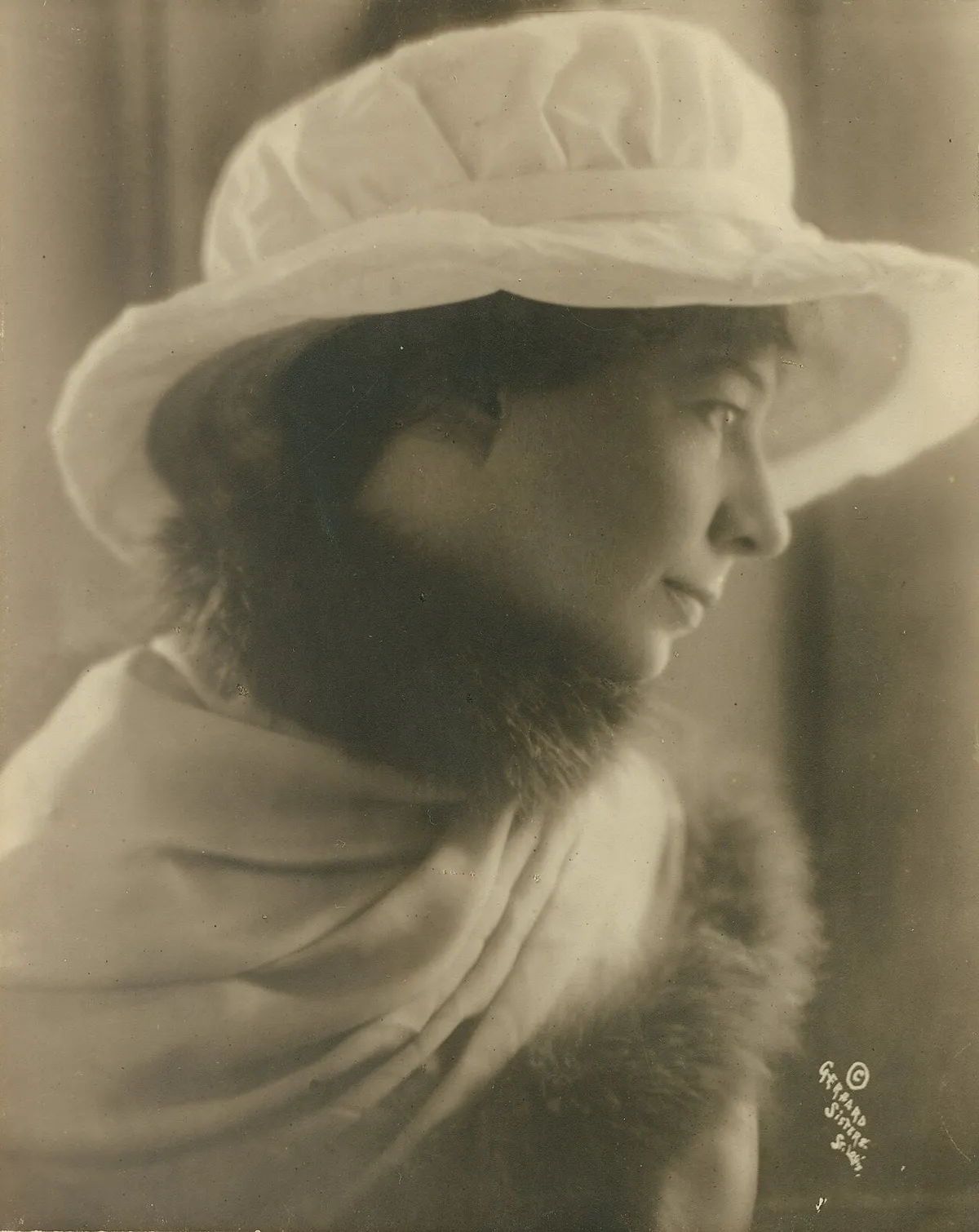
Sara Teasdale
The Return
He has come, he is here,
My love has come home,
The minutes are lighter
Than flying foam,
The hours are like dancers
On gold-slippered feet,
The days are young runners
Naked and fleet --
For my love has returned,
He is home, he is here,
In the whole world no other
Is dear as my dear!
My love has come home,
The minutes are lighter
Than flying foam,
The hours are like dancers
On gold-slippered feet,
The days are young runners
Naked and fleet --
For my love has returned,
He is home, he is here,
In the whole world no other
Is dear as my dear!
352

Ella Wheeler Wilcox
Bohemia
Bohemia, o'er thy unatlassed borders
How many cross, with half-reluctant feet,
And unformed fears of dangers and disorders,
To find delights, more wholesome and more sweet
Than ever yet were known to the "elite."
Herein can dwell no pretence and no seeming;
No stilted pride thrives in this atmosphere,
Which stimulates a tendency to dreaming.
The shores of the ideal world, from here,
Seem sometimes to be tangible and near.
We have no use for formal codes of fashion;
No "Etiquette f Courts" we emulate;
We know it needs sincerity and passion
To carry out the plans of God, or fate;
We do not strive to seem inanimate.
We call no time lost that we give to pleasure;
Life's hurrying river speeds to Death's great sea;
We cast out no vain plummet-line to measure
Imagined depths of that unknown To-Be,
But grasp the Now, and fill it full of glee.
All creeds have room here, and we all together
Devoutly worship at Art's sacred shrine;
But he who dwells once in thy golden weather,
Bohemia--sweet, lovely land of mine--
Can find no joy outside thy border-line.
350
Robert Louis Stevenson
The Swing
How do you like to go up in a swing,
Up in the air so blue?
Oh, I do think it the pleasantest thing
Ever a child can do!
Up in the air and over the wall,
Till I can see so wide,
River and trees and cattle and all
Over the countryside--
Till I look down on the garden green,
Down on the roof so brown--
Up in the air I go flying again,
Up in the air and down!
348
Henry Van Dyke
Work
Let me but do my work from day to day,
In field or forest, at the desk or loom,
In roaring market-place or tranquil room;
Let me but find it in my heart to say,
When vagrant wishes beckon me astray,
"This is my work; my blessing, not my doom;
"Of all who live, I am the one by whom
"This work can best be done in the right way."
Then shall I see it not too great, nor small,
To suit my spirit and to prove my powers;
Then shall I cheerful greet the labouring hours,
And cheerful turn, when the long shadows fall
At eventide, to play and love and rest,
Because I know for me my work is best.
345
Henry Wadsworth Longfellow
A Day Of Sunshine. (Birds Of Passage. Flight The Second)
O gift of God! O perfect day:
Whereon shall no man work, but play;
Whereon it is enough for me,
Not to be doing, but to be!
Through every fibre of my brain,
Through every nerve, through every vein,
I feel the electric thrill, the touch
Of life, that seems almost too much.
I hear the wind among the trees
Playing celestial symphonies;
I see the branches downward bent,
Like keys of some great instrument.
And over me unrolls on high
The splendid scenery of the sky,
Where though a sapphire sea the sun
Sails like a golden galleon,
Towards yonder cloud-land in the West,
Towards yonder Islands of the Blest,
Whose steep sierra far uplifts
Its craggy summits white with drifts.
Blow, winds! and waft through all the rooms
The snow-flakes of the cherry-blooms!
Blow, winds! and bend within my reach
The fiery blossoms of the peach!
O Life and Love! O happy throng
Of thoughts, whose only speech is song!
O heart of man! canst thou not be
Blithe as the air is, and as free?
344
Henry Van Dyke
Hide and Seek
All the trees are sleeping, all the winds are still,
All the flocks of fleecy clouds have wandered past the hill;
Through the noonday silence, down the woods of June,
Hark, a little hunter's voice comes running with a tune.
"Hide and seek!
"When I speak,
"You must answer me:
"Call again,
"Merry men,
"Coo-ee, coo-ee, coo-ee!"
Now I hear his footsteps, rustling through the grass:
Hidden in my leafy nook, shall I let him pass?
Just a low, soft whistle,--quick the hunter turns,
Leaps upon me laughing, rolls me in the ferns.
"Hold him fast,
"Caught at last!
"Now you're it, you see.
"Hide your eye,
"Till I cry,
"Coo-ee, coo-ee, coo-ee!"
II
Long ago he left me, long and long ago:
Now I wander through the world and seek him high and low;
Hidden safe and happy, in some pleasant place,--
Ah, if I could hear his voice, I soon should find his face.
Far away,
Many a day,
Where can Barney be?
Answer, dear,
Don't you hear?
Coo-ee, coo-ee, coo-ee!
Birds that in the spring-time thrilled his heart with joy,
Flowers he loved to pick for me, mind me of my boy.
Surely he is waiting till my steps come nigh;
Love may hide itself awhile, but love can never die.
Heart, be glad,
The little lad
Will call some day to thee:
"Father dear,
"Heaven is here,
"Coo-ee, coo-ee, coo-ee!"
335
Johann Wolfgang von Goethe
Happiness And Vision
TOGETHER at the altar we
In vision oft were seen by thee,
Thyself as bride, as bridegroom I.
Oft from thy mouth full many a kiss
In an unguarded hour of bliss
I then would steal, while none were by.
The purest rapture we then knew,
The joy those happy hours gave too,
When tasted, fled, as time fleets on.
What now avails my joy to me?
Like dreams the warmest kisses flee,
Like kisses, soon all joys are gone.
334