
Happiness and Joy

James Whitcomb Riley
When Early March Seems Middle May
When country roads begin to thaw
In mottled spots of damp and dust,
And fences by the margin draw
Along the frosty crust
Their graphic silhouettes, I say,
The Spring is coming round this way.
When morning-time is bright with sun
And keen with wind, and both confuse
The dancing, glancing eyes of one
With tears that ooze and ooze--
And nose-tips weep as well as they,
The Spring is coming round this way.
When suddenly some shadow-bird
Goes wavering beneath the gaze,
And through the hedge the moan is heard
Of kine that fain would graze
In grasses new, I smile and say,
The Spring is coming round this way.
When knotted horse-tails are untied,
And teamsters whistle here and there.
And clumsy mitts are laid aside
And choppers' hands are bare,
And chips are thick where children play,
The Spring is coming round this way.
When through the twigs the farmer tramps,
And troughs are chunked beneath the trees,
And fragrant hints of sugar-camps
Astray in every breeze,--
When early March seems middle May,
The Spring is coming round this way.
When coughs are changed to laughs, and when
Our frowns melt into smiles of glee,
And all our blood thaws out again
In streams of ecstasy,
And poets wreak their roundelay,
The Spring is coming round this way.
277

George Herbert
Peace
Sweet Peace, where dost thou dwell? I humbly crave,
Let me once know.
I sought thee in a secret cave,
And ask'd, if Peace were there,
A hollow wind did seem to answer, No:
Go seek elsewhere.
I did; and going did a rainbow note:
Surely, thought I,
This is the lace of Peace's coat:
I will search out the matter.
But while I looked the clouds immediately
Did break and scatter.
Then went I to a garden and did spy
A gallant flower,
The crown-imperial: Sure, said I,
Peace at the root must dwell.
But when I digged, I saw a worm devour
What showed so well.
At length I met a rev'rend good old man;
Whom when for Peace
I did demand, he thus began:
There was a Prince of old
At Salem dwelt, who lived with good increase
Of flock and fold.
He sweetly lived; yet sweetness did not save
His life from foes.
But after death out of his grave
There sprang twelve stalks of wheat;
Which many wond'ring at, got some of those
To plant and set.
It prospered strangely, and did soon disperse
Through all the earth:
For they that taste it do rehearse
That virtue lies therein;
A secret virtue, bringing peace and mirth
By flight of sin.
Take of this grain, which in my garden grows,
And grows for you;
Make bread of it: and that repose
And peace, which ev'ry where
With so much earnestness you do pursue,
Is only there.
277

Robert W. Service
Birthdays
Let us have birthdays every day,
(I had the thought while I was shaving)
Because a birthday should be gay,
And full of grace and good behaving.
We can't have cakes and candles bright,
And presents are beyond our giving,
But let lt us cherish with delight
The birthday way of lovely living.
For I have passed three-score and ten
And I can count upon my fingers
The years I hope to bide with men,
(Though by God's grace one often lingers.)
So in the summers left to me,
Because I'm blest beyond my merit,
I hope with gratitude and glee
To sparkle with the birthday spirit.
Let me inform myself each day
Who's proudmost on the natal roster;
If Washington or Henry Clay,
Or Eugene Field or Stephen Foster.
oh lots of famous folks I'll find
Who more than measure to my rating,
And so thanksgivingly inclined
Their birthdays I'll be celebrating.
For Oh I know the cheery glow|
Of Anniversary rejoicing;
Let me reflect its radiance so
My daily gladness I'll be voicing.
And though I'm stooped and silver-haired,
Let me with laughter make the hearth gay,
So by the gods I may be spared
Each year to hear: "Pop, Happy Birthday."
278

Christina Rossetti
Fata Morgana
A blue-eyed phantom far before
Is laughing, leaping toward the sun:
Like lead I chase it evermore,
I pant and run.
It breaks the sunlight bound on bound:
Goes singing as it leaps along
To sheep-bells with a dreamy sound
A dreamy song.
I laugh, it is so brisk and gay;
It is so far before, I weep:
I hope I shall lie down some day,
Lie down and sleep.
276
Robert W. Service
Lucindy Jane
When I was young I was too proud
To wheel my daughter in her pram.
"It's infra dig," I said aloud,-Bot
now I'm old, behold I am
Perambulating up and down
Grand-daughter through the town.
And when I come into the Square,
Beside the fountain I will stop;
And as to rest I linger there,
The dames will say: "How do, Grand-pop!
Lucindy Jane with eyes so blue
Looks more and more like you."
And sure it's pleased as Punch I get,
And take Lucindy on my knee;
Aye, at the risk of getting wet,
I blether to the girls a wee:
Then as we have a bottle date
Home we perambulate.
Gosh! That's the joy of all my day;
And as I play the part of nurse:
"She's got your nose," I hear them say.
Thinks I: "Well now, she might have worse."
And how I dream I'll live to see
A great-grandchild upon my knee,
Whom folks say looks like me!
274
James Whitcomb Riley
The Days Gone By
O the days gone by! O the days gone by!
The apples in the orchard, and the pathway through the rye;
The chirrup of the robin, and the whistle of the quail
As he piped across the meadows sweet as any nightingale;
When the bloom was on the clover, and the blue was in the sky,
And my happy heart brimmed over in the days gone by.
In the days gone by, when my naked feet were tripped
By the honey-suckle's tangles where the water-lilies dipped,
And the ripples of the river lipped the moss along the brink
Where the placid-eyed and lazy-footed cattle came to drink,
And the tilting snipe stood fearless of the truant's wayward cry
And the splashing of the swimmer, in the days gone by.
O the days gone by! O the days gone by!
The music of the laughing lip, the luster of the eye;
The childish faith in fairies, and Aladdin's magic ring--
The simple, soul-reposing, glad belief in everything,--
When life was like a story, holding neither sob nor sigh,
In the golden olden glory of the days gone by.
270

Emily Dickinson
God permit industrious angels
God permit industrious angels
Afternoons to play.
I met one, -- forgot my school-mates,
All, for him, straightaway.
God calls home the angels promptly
At the setting sun;
I missed mine. How dreary marbles,
After playing the Crown!
Afternoons to play.
I met one, -- forgot my school-mates,
All, for him, straightaway.
God calls home the angels promptly
At the setting sun;
I missed mine. How dreary marbles,
After playing the Crown!
270

Henry Lawson
Laughing and Sneering
WHAT tho' the world does me ill turns
And cares my life environ;
I’d sooner laugh with Bobbie Burns
Than sneer with titl'd Byron.
The smile has always been the best;
’Tis stronger than the frown, sirs:
And Venus smiled the waves to rest;
She didn’t sneer them down, sirs.
And cares my life environ;
I’d sooner laugh with Bobbie Burns
Than sneer with titl'd Byron.
The smile has always been the best;
’Tis stronger than the frown, sirs:
And Venus smiled the waves to rest;
She didn’t sneer them down, sirs.
269
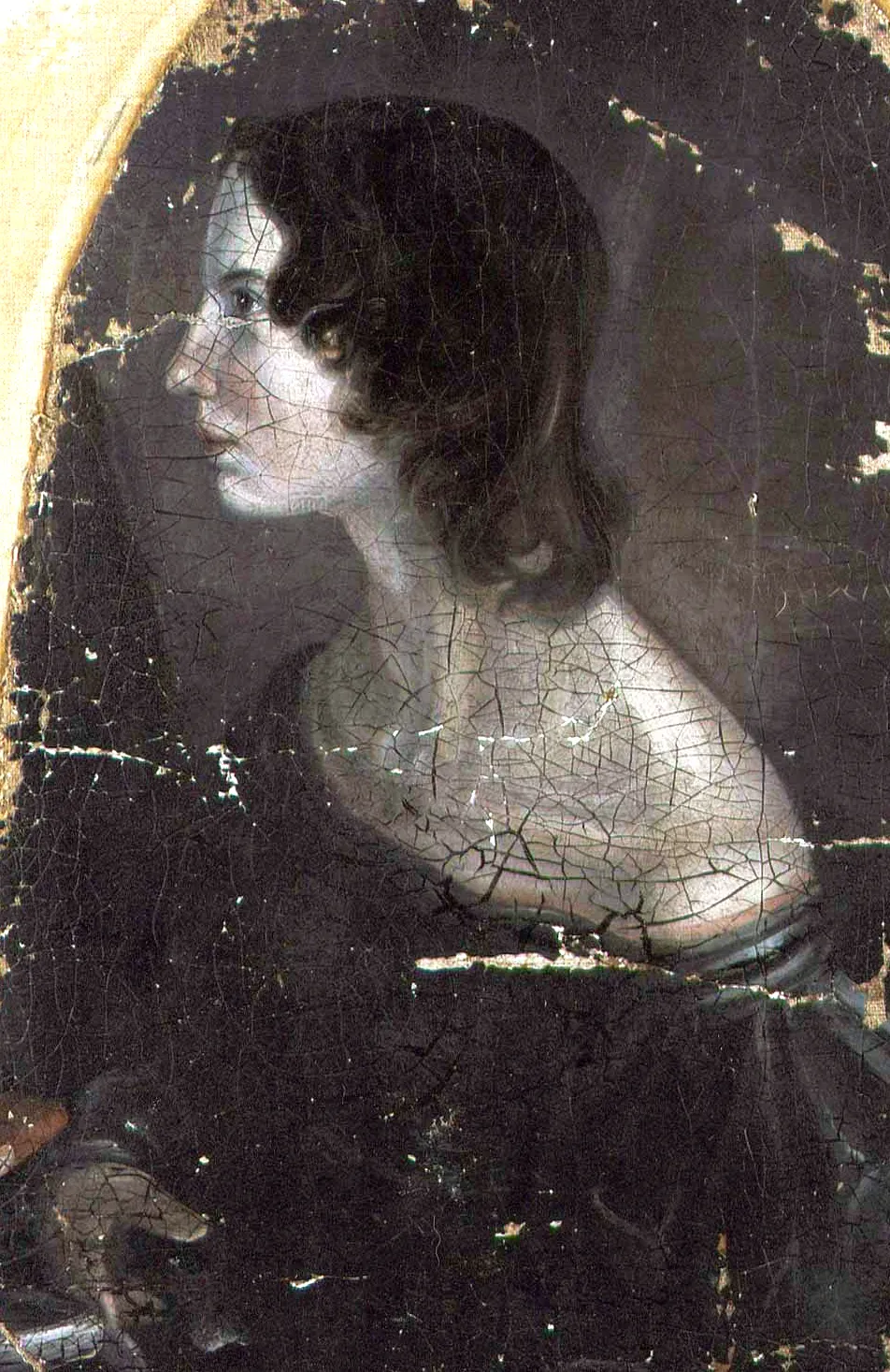
Emily Jane Brontë
A Day Dream
On a sunny brae, alone I lay
One summer afternoon;
It was the marriage-time of May
With her young lover, June.
From her mother's heart, seemed loath to part
That queen of bridal charms,
But her father smiled on the fairest child
He ever held in his arms.
The trees did wave their plumy crests,
The glad birds caroled clear;
And I, of all the wedding guests,
Was only sullen there!
There was not one, but wished to shun
My aspect void of cheer;
The very grey rocks, looking on,
Asked, "What do you here?"
And I could utter no reply;
In sooth, I did not know
Why I had brought a clouded eye
To greet the general glow.
So, resting on a heathy bank,
I took my heart to me;
And we together sadly sank
Into a reverie.
We thought, "When winter comes again,
Where will these bright things be?
All vanished, like a vision vain,
An unreal mockery!
The birds that now so blithely sing,
Through deserts, frozen dry,
Poor spectres of the perished spring,
In famished troops, will fly.
And why should we be glad at all?
The leaf is hardly green,
Before a token of its fall
Is on the surface seen!"
Now, whether it were really so,
I never could be sure;
But as in fit of peevish woe,
I stretched me on the moor.
A thousand thousand gleaming fires
Seemed kindling in the air;
A thousand thousand silvery lyres
Resounded far and near:
Methought, the very breath I breathed
Was full of sparks divine,
And all my heather-couch was wreathed
By that celestial shine!
And, while the wide earth echoing rung
To their strange minstrelsy,
The little glittering spirits sung,
Or seemed to sing, to me.
"O mortal! mortal! let them die;
Let time and tears destroy,
That we may overflow the sky
With universal joy!
Let grief distract the sufferer's breast,
And night obscure his way;
They hasten him to endless rest,
And everlasting day.
To thee the world is like a tomb,
A desert's naked shore;
To us, in unimagined bloom,
It brightens more and more!
And could we lift the veil, and give
One brief glimpse to thine eye,
Thou wouldst rejoice for those that live,
Because they live to die."
The music ceased; the noonday dream,
Like dream of night, withdrew;
But Fancy, still, will sometimes deem
Her fond creation true.
270
Emily Dickinson
They ask but our Delight
They ask but our Delight-
The Darlings of the Soil
And grant us all their Countenance
For a penurious smile.
The Darlings of the Soil
And grant us all their Countenance
For a penurious smile.
268
James Whitcomb Riley
The Little Fat Doctor
He seemed so strange to me, every way--
In manner, and form, and size,
From the boy I knew but yesterday,--
I could hardly believe my eyes!
To hear his name called over there,
My memory thrilled with glee
And leaped to picture him young and fair
In youth, as he used to be.
But looking, only as glad eyes can,
For the boy I knew of yore,
I smiled on a portly little man
I had never seen before!--
Grave as a judge in courtliness-Professor-
like and bland--
A little fat doctor and nothing less,
With his hat in his kimboed hand.
But how we talked old times, and 'chaffed'
Each other with 'Minnie' and 'Jim'---
And how the little fat doctor laughed,
And how I laughed with him!
'And it's pleasant,' I thought, 'though I yearn to see
The face of the youth that was,
To know no boy could smile on me
As the little fat doctor does!'
267
Robert W. Service
The Joy Of Being Poor
I
Let others sing of gold and gear, the joy of being rich;
But oh, the days when I was poor, a vagrant in a ditch!
When every dawn was like a gem, so radiant and rare,
And I had but a single coat, and not a single care;
When I would feast right royally on bacon, bread and beer,
And dig into a stack of hay and doze like any peer;
When I would wash beside a brook my solitary shirt,
And though it dried upon my back I never took a hurt;
When I went romping down the road contemptuous of care,
And slapped Adventure on the back -- by Gad! we were a pair;
When, though my pockets lacked a coin, and though my coat was old,
The largess of the stars was mine, and all the sunset gold;
When time was only made for fools, and free as air was I,
And hard I hit and hard I lived beneath the open sky;
When all the roads were one to me, and each had its allure . . .
Ye Gods! these were the happy days, the days when I was poor.
II
Or else, again, old pal of mine, do you recall the times
You struggled with your storyettes, I wrestled with my rhymes;
Oh, we were happy, were we not? -- we used to live so "high"
(A little bit of broken roof between us and the sky);
Upon the forge of art we toiled with hammer and with tongs;
You told me all your rippling yarns, I sang to you my songs.
Our hats were frayed, our jackets patched, our boots were down at heel,
But oh, the happy men were we, although we lacked a meal.
And if I sold a bit of rhyme, or if you placed a tale,
What feasts we had of tenderloins and apple-tarts and ale!
And yet how often we would dine as cheerful as you please,
Beside our little friendly fire on coffee, bread and cheese.
We lived upon the ragged edge, and grub was never sure,
But oh, these were the happy days, the days when we were poor.
III
Alas! old man, we're wealthy now, it's sad beyond a doubt;
We cannot dodge prosperity, success has found us out.
Your eye is very dull and drear, my brow is creased with care,
We realize how hard it is to be a millionaire.
The burden's heavy on our backs -- you're thinking of your rents,
I'm worrying if I'll invest in five or six per cents.
We've limousines, and marble halls, and flunkeys by the score,
We play the part . . . but say, old chap, oh, isn't it a bore?
We work like slaves, we eat too much, we put on evening dress;
We've everything a man can want, I think . . . but happiness.
Come, let us sneak away, old chum; forget that we are rich,
And earn an honest appetite, and scratch an honest itch.
Let's be two jolly garreteers, up seven flights of stairs,
And wear old clothes and just pretend we aren't millionaires;
And wonder how we'll pay the rent, and scribble ream on ream,
And sup on sausages and tea, and laugh and loaf and dream.
And when we're tired of that, my friend, oh, you will come with me;
And we will seek the sunlit roads that lie beside the sea.
We'll know the joy the gipsy knows, the freedom nothing mars,
The golden treasure-gates of dawn, the mintage of the stars.
We'll smoke our pipes and watch the pot, and feed the crackling fire,
And sing like two old jolly boys, and dance to heart's desire;
We'll climb the hill and ford the brook and camp upon the moor . . .
Old chap, let's haste, I'm mad to taste the Joy of Being Poor.
269
Emily Dickinson
Snow flakes
Snow flakes.
I counted till they danced so
Their slippers leaped the town,
And then I took a pencil
To note the rebels down.
And then they grew so jolly
I did resign the prig,
And ten of my once stately toes
Are marshalled for a jig!
I counted till they danced so
Their slippers leaped the town,
And then I took a pencil
To note the rebels down.
And then they grew so jolly
I did resign the prig,
And ten of my once stately toes
Are marshalled for a jig!
267
James Whitcomb Riley
Some Scattering Remarks Of Bub's
Wunst I looked our pepper-box lid
An' cut little pie-dough biscuits, I did,
And cooked 'em on our stove one day
When our hired girl she said I may.
_Honey's_ the goodest thing--Oo-_ooh_!
And blackberry-pies is goodest, too!
But wite hot biscuits, ist soakin'-wet
Wiv tree-mullasus, is goodest yet!
Miss Maimie she's my Ma's friend,--an'
She's purtiest girl in all the lan'!--
An' sweetest smile an' voice an' face--
An' eyes ist looks like p'serves tas'e'!
I _ruther_ go to the Circus-show;
But, 'cause my _parunts_ told me so,
I ruther go to the Sund'y School,
'Cause there I learn the goldun rule.
Say, Pa,--what _is_ the goldun rule
'At's allus at the Sund'y School?
267
Christina Rossetti
A Birthday
My heart is like a singing bird
Whose nest is in a water'd shoot;
My heart is like an apple-tree
Whose boughs are bent with thickset fruit;
My heart is like a rainbow shell
That paddles in a halcyon sea;
My heart is gladder than all these
Because my love is come to me.
Raise me a dais of silk and down;
Hang it with vair and purple dyes;
Carve it in doves and pomegranates,
And peacocks with a hundred eyes;
Work it in gold and silver grapes,
In leaves and silver fleurs-de-lys;
Because the birthday of my life
Is come, my love is come to me.
268

Spike Milligan
Halved
The essence of true beauty
Lingers in all-encompassing rainbows
Of your joy and laughter
You hold my hand and smile
As we ensconce ourselves in our world of fire
Our love is all there is
I touch your face
Your gentleness astounds me
I'm held in the honour of your love
Then overnight, the wrold truns suor
mInnIts past the ELevenTHH HouRR
I'M A L N E
268
James Whitcomb Riley
The Jaybird
The Jaybird he's my _favorite_
Of all the birds they is!
I think he's quite a stylish sight
In that blue suit of his:
An' when he' lights an' shuts his wings,
His coat's a 'cutaway'--
I guess it's only when he sings
You'd know he wuz a jay.
I like to watch him when he's lit
In top of any tree,
'Cause all birds git wite out of it
When _he_ 'lights, an' they see
How proud he act', an' swell an' spread
His chest out more an' more,
An' raise the feathers on his head
Like it's cut pompadore!
266

Ogden Nash
Come On In, The Senility Is Fine
People live forever in Jacksonville and St. Petersburg and Tampa,
But you don't have to live forever to become a grampa.
The entrance requirements for grampahood are comparatively mild,
You only have to live until your child has a child.
From that point on you start looking both ways over your shoulder,
Because sometimes you feel thirty years younger and sometimes
thirty years older.
Now you begin to realize who it was that reached the height of
imbecility,
It was whoever said that grandparents have all the fun and none of
the responsibility.
This is the most enticing spiderwebs of a tarradiddle ever spun,
Because everybody would love to have a baby around who was no
responsibility and lots of fun,
But I can think of no one but a mooncalf or a gaby
Who would trust their own child to raise a baby.
So you have to personally superintend your grandchild from diapers
to pants and from bottle to spoon,
Because you know that your own child hasn't sense enough to come
in out of a typhoon.
You don't have to live forever to become a grampa, but if you do
want to live forever,
Don't try to be clever;
If you wish to reach the end of the trail with an uncut throat,
Don't go around saying Quote I don't mind being a grampa but I
hate being married to a gramma Unquote.
266
Henry Lawson
The Good Old Concertina
’Twas merry when the hut was full
Of jolly girls and fellows.
We danced and sang until we burst
The concertina’s bellows.
From distant Darling to the sea,
From the Downs to Riverina,
Has e’er a gum in all the west
Not heard the concertina?
’Twas peaceful round the campfire blaze,
The long white branches o’er us;
We’d play the tunes of bygone days,
To some good old bush chorus.
Old Erin’s harp may sweeter be,
The Scottish pipes blow keener;
But sing an old bush song for me
To the good old concertina.
’Twas cosy by the hut-fire bright
When the pint pot passed between us;
We drowned the voice of the stormy night
With the good old concertina’s.
Though trouble drifts along the years,
And the pangs of care grow keener,
My heart is gladdened when it hears
That good old concertina.
265
Emily Dickinson
Is Bliss then, such Abyss
Is Bliss then, such Abyss,
I must not put my foot amiss
For fear I spoil my shoe?
I'd rather suit my foot
Than save my Boot-
For yet to buy another Pair
Is possible,
At any store-
But Bliss, is sold just once.
The Patent lost
None buy it any more-
Say, Foot, decide the point-
The Lady cross, or not?
Verdict for Boot!
I must not put my foot amiss
For fear I spoil my shoe?
I'd rather suit my foot
Than save my Boot-
For yet to buy another Pair
Is possible,
At any store-
But Bliss, is sold just once.
The Patent lost
None buy it any more-
Say, Foot, decide the point-
The Lady cross, or not?
Verdict for Boot!
265
Robert W. Service
A Rolling Stone
There's sunshine in the heart of me,
My blood sings in the breeze;
The mountains are a part of me,
I'm fellow to the trees.
My golden youth I'm squandering,
Sun-libertine am I;
A-wandering, a-wandering,
Until the day I die.
I was once, I declare, a Stone-Age man,
And I roomed in the cool of a cave;
I have known, I will swear, in a new life-span,
The fret and the sweat of a slave:
For far over all that folks hold worth,
There lives and there leaps in me
A love of the lowly things of earth,
And a passion to be free.
To pitch my tent with no prosy plan,
To range and to change at will;
To mock at the mastership of man,
To seek Adventure's thrill.
Carefree to be, as a bird that sings;
To go my own sweet way;
To reck not at all what may befall,
But to live and to love each day.
To make my body a temple pure
Wherein I dwell serene;
To care for the things that shall endure,
The simple, sweet and clean.
To oust out envy and hate and rage,
To breathe with no alarm;
For Nature shall be my anchorage,
And none shall do me harm.
To shun all lures that debauch the soul,
The orgied rites of the rich;
To eat my crust as a rover must
With the rough-neck down in the ditch.
To trudge by his side whate'er betide;
To share his fire at night;
To call him friend to the long trail-end,
And to read his heart aright.
To scorn all strife, and to view all life
With the curious eyes of a child;
From the plangent sea to the prairie,
From the slum to the heart of the Wild.
From the red-rimmed star to the speck of sand,
From the vast to the greatly small;
For I know that the whole for good is planned,
And I want to see it all.
To see it all, the wide world-way,
From the fig-leaf belt to the Pole;
With never a one to say me nay,
And none to cramp my soul.
In belly-pinch I will pay the price,
But God! let me be free;
For once I know in the long ago,
They made a slave of me.
In a flannel shirt from earth's clean dirt,
Here, pal, is my calloused hand!
Oh, I love each day as a rover may,
Nor seek to understand.
To enjoy is good enough for me;
The gipsy of God am I;
Then here's a hail to each flaring dawn!
And here's a cheer to the night that's gone!
And may I go a-roaming on
Until the day I die!
Then every star shall sing to me
Its song of liberty;
And every morn shall bring to me
Its mandate to be free.
In every throbbing vein of me
I'll feel the vast Earth-call;
O body, heart and brain of me
Praise Him who made it all!
263
Emily Dickinson
'Tis so much joy! 'Tis so much joy!
'Tis so much joy! 'Tis so much joy!
If I should fail, what poverty!
And yet, as poor as I,
Have ventured all upon a throw!
Have gained! Yes! Hesitated so-
This side the Victory!
Life is but Life! And Death, but Death!
Bliss is, but Bliss, and Breath but Breath!
And if indeed I fail,
At least, to know the worst, is sweet!
Defeat means nothing but Defeat,
No drearier, can befall!
And if I gain! Oh Gun at Sea!
Oh Bells, that in the Steeples be!
At first, repeat it slow!
For Heaven is a different thing,
Conjectured, and waked sudden in-
And might extinguish me!
263
Robert W. Service
The Learner
I've learned--Of all the friends I've won
Dame Nature is the best,
And to her like a child I run
Craving her mother breast
To comfort me in soul distress,
And in green glade to find
Far from the world's unloveliness
Pure peace of mind.
I've learned--the worth of simple ways,
And though I've loved to roam,
I know the glow of hearth ablaze,
The bliss of coming home.
I'd rather wear old clothes than new,
I'd rather walk than drive,
And as my wants are oh so few
I joy to be alive.
I've learned--that happiness is all,
A sweetness of the mind;
And would you purge your heart of gall,-Try
being kind.
Then when some weaker one you aid,
Believe it true
'Tis God Himself will make the grade
Less hard for you.
263
Robert W. Service
My Husky Team
I met an ancient man who mushed
With Peary to the Pole.
Said I, "In all that land so hushed
What most inspired your soul?"
He looked at me with bleary eye,
He scratched a hoary head:
"You know that Sourdoughs jest cain't lie
So here's the dope," he said.
"That hike was like a devil's dream,
Just blizzards, gales and fogs,
But I was leadin' wi' my team
O' seven husky dogs.
Day after day I steered my sleigh,
Yet spry o' heart was I,
And every night the Northern Light
Danced ballys in the sky.
"Them dogs o' mine seemed to divine
Their mighty destiny.
They howled with joy, and like a boy
I jined them in their glee.
While like a spark from out the dark
Fame spurred us to our goal,
On, on we sped, the winnin' sled
To gain the Pole, the POLE.
"I saw it clear, I raised a cheer,
I knowed the prize was won:
The huskies too, like wind they flew -
Them critters sure could run.
The light was dim, the site was grim,
But sunshine swept my soul,
To see - each husky lift a limb
And...irrigate the Pole."
262