
Gratitude

Kazi Nazrul Islam
Eid Mobarak
After the lapse of a year
you have come, Eid,
having crossed many a desert
of hundreds of miles,
having caused many a tear to
be shed on many a sand-field.
You have brought from one of the seven
heavens a present to the door of the hungry,
the bliss of the flower-garden
to the forest of thorns.
And have asked the cup-bearer
to hurry up with the cup of wine.
The hawk-cuckoo sings on all sides,
the bride keeps awake without a
wink in the bridal chamber of midnight!
Flowers weep but where's the
flower vase?
There's no sleep for lover
in the distant land away from home.
He remembers only the smell, akin
to the dry land wetted by rain,
of the loose coiffure of his beloved,
the distracted braid of her hair
being at sixes and sevens!!
Tidings of joy came last evening at
signal from the second day of the moon,
the budding mind is boiling up
with happiness!
The shanai sings unto tune Ashabari.
The stone-hard mind has softened
in the smell of perfume,
minds are mortgaged to each other
today in debt without any document,
without any debt to bother about
Yazid, Hasan and Hussain are
bosom friends today.
Hell and heaven, flowers and fire
all fall for one another,
Shirin and Farhad are in each
other's embrace!
Leili has snake-like embroiled
Qayes in herself.
The lover in the arms of his
beloved closes his eyes in pleasure,
kisses around on cheeks,
the hell of revelry is ablaze,
Satan distributes cups of wine in heaven,
friends and enemies from the same assembly.
The field of Arafat is spread out
Today from village to village,
emperors and fakirs embrace
one another like brothers.
The two figures Lat-Manat hold on to
the Kaaba and dance.
The trumpet of Islam resounds today
through out the world,
there are no high and low - all men are equal,
nobody is another's king or subject.
Who are you, Oh noble man, a
Nawab or Badsha in the upper mansion?
You are a blot on all time; you
have been responsible for raising
doubts about Islam.
Says Islam, we are all for one another,
we are all brothers and shall
share joy and sorrow equally,
none of us has the right to hold.
Is it ordained for some people
to shed tears and for others to
light up the chandeliers!
And just two people to have princely
luck, millions to suffer from bad luck?
That is not the prescription of Islam.
So has Idul-Fitr ushered in the new dispensation,
you who are hoarding up, you should
give away all surplus,
you must have food to satisfy your hunger!
The cup of enjoyment boils over in your hands,
but those who are thirsty have a
share in the cup,
you must, a my hero, give them
and then enjoy profusely.
You must empty your heart and
make a gift of yourself;
you who are very calculating,
do not sit down to calculate!
Rather let your calculation
go wrong for once.
Today the wayward play the
teasing games in their hearts,
today even the ascetic is
reddened by kiss from Sayel and Laila!
Jamshed lives and demands
wine to drink.
Today I shall go about on the
streets crying: Eid-Mobarak,
a my friends, Assalam!
Today I shall distribute from
lip to lip the message of
flowers as sweetmeat for the day.
This is Eid, an occasion
for giving oneself away.
The Eidgah is red with the ardour of my gift!
Not the body but the
heart will give of itself to
everybody and make a martyr of itself.
[(Original: Eid mobarak; Translation: Basudha Chakravarty]
843
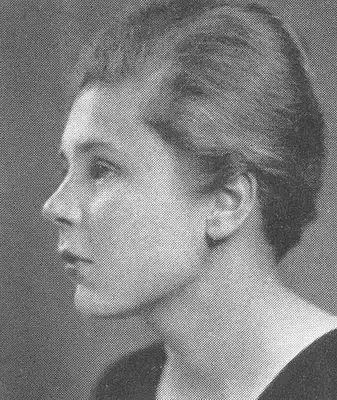
Elizabeth Bishop
The Fish
I caught a tremendous fish
and held him beside the boat
half out of water, with my hook
fast in a corner of his mouth.
He didn't fight.
He hadn't fought at all.
He hung a grunting weight,
battered and venerable
and homely. Here and there
his brown skin hung in strips
like ancient wallpaper,
and its pattern of darker brown
was like wallpaper:
shapes like full-blown roses
stained and lost through age.
He was speckled and barnacles,
fine rosettes of lime,
and infested
with tiny white sea-lice,
and underneath two or three
rags of green weed hung down.
While his gills were breathing in
the terrible oxygen
--the frightening gills,
fresh and crisp with blood,
that can cut so badly--
I thought of the coarse white flesh
packed in like feathers,
the big bones and the little bones,
the dramatic reds and blacks
of his shiny entrails,
and the pink swim-bladder
like a big peony.
I looked into his eyes
which were far larger than mine
but shallower, and yellowed,
the irises backed and packed
with tarnished tinfoil
seen through the lenses
of old scratched isinglass.
They shifted a little, but not
to return my stare.
--It was more like the tipping
of an object toward the light.
I admired his sullen face,
the mechanism of his jaw,
and then I saw
that from his lower lip
--if you could call it a lip
grim, wet, and weaponlike,
hung five old pieces of fish-line,
or four and a wire leader
with the swivel still attached,
with all their five big hooks
grown firmly in his mouth.
A green line, frayed at the end
where he broke it, two heavier lines,
and a fine black thread
still crimped from the strain and snap
when it broke and he got away.
Like medals with their ribbons
frayed and wavering,
a five-haired beard of wisdom
trailing from his aching jaw.
I stared and stared
and victory filled up
the little rented boat,
from the pool of bilge
where oil had spread a rainbow
around the rusted engine
to the bailer rusted orange,
the sun-cracked thwarts,
the oarlocks on their strings,
the gunnels--until everything
was rainbow, rainbow, rainbow!
And I let the fish go.
825

William Wordsworth
To A Butterfly ()
I'VE watched you now a full half-hour,
Self-poised upon that yellow flower;
And, little Butterfly! indeed
I know not if you sleep or feed.
How motionless!---not frozen seas
More motionless! and then
What joy awaits you, when the breeze
Hath found you out among the trees,
And calls you forth again !
This plot of orchard-ground is ours;
My trees they are, my Sister's flowers;
Here rest your wing when they are weary;
Here lodge as in a sanctuary!
Come often to us, fear no wrong;
Sit near us on the bough!
We'll talk of sunshine and of song,
And summer days, when we were young;
Sweet childish days, that were as long
As twenty days are now.
837
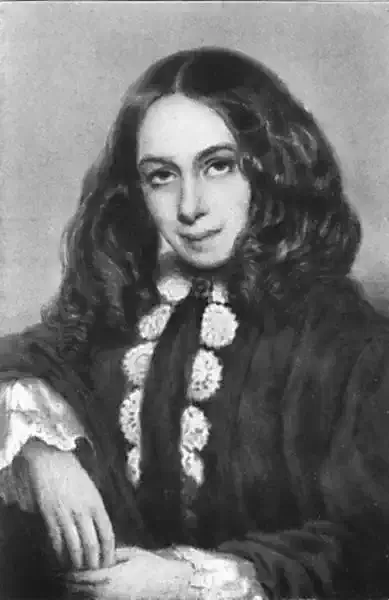
Elizabeth Barrett Browning
Sonnet XXVI: I Lived With Visions
I lived with visions for my company
Instead of men and women, years ago,
And found them gentle mates, nor thought to know
A sweeter music than they played to me.
But soon their trailing purple was not free
Of this world's dust, their lutes did silent grow,
And I myself grew faint and blind below
Their vanishing eyes. Then thou didst come--to be,
Belovèd, what they seemed. Their shining fronts,
Their songs, their splendors (better, yet the same,
As river water hallowed into fonts),
Met in thee, and from out thee overcame
My soul with satisfaction of all wants:
Because God's gifts put man's best dreams to shame.
813

Henry Wadsworth Longfellow
The Song Of Hiawatha XXII: Hiawatha's Departure
By the shore of Gitche Gumee,
By the shining Big-Sea-Water,
At the doorway of his wigwam,
In the pleasant Summer morning,
Hiawatha stood and waited.
All the air was full of freshness,
All the earth was bright and joyous,
And before him, through the sunshine,
Westward toward the neighboring forest
Passed in golden swarms the Ahmo,
Passed the bees, the honey-makers,
Burning, singing In the sunshine.
Bright above him shone the heavens,
Level spread the lake before him;
From its bosom leaped the sturgeon,
Sparkling, flashing in the sunshine;
On its margin the great forest
Stood reflected in the water,
Every tree-top had its shadow,
Motionless beneath the water.
From the brow of Hiawatha
Gone was every trace of sorrow,
As the fog from off the water,
As the mist from off the meadow.
With a smile of joy and triumph,
With a look of exultation,
As of one who in a vision
Sees what is to be, but is not,
Stood and waited Hiawatha.
Toward the sun his hands were lifted,
Both the palms spread out against it,
And between the parted fingers
Fell the sunshine on his features,
Flecked with light his naked shoulders,
As it falls and flecks an oak-tree
Through the rifted leaves and branches.
O'er the water floating, flying,
Something in the hazy distance,
Something in the mists of morning,
Loomed and lifted from the water,
Now seemed floating, now seemed flying,
Coming nearer, nearer, nearer.
Was it Shingebis the diver?
Or the pelican, the Shada?
Or the heron, the Shuh-shuh-gah?
Or the white goose, Waw-be-wawa,
With the water dripping, flashing,
From its glossy neck and feathers?
It was neither goose nor diver,
Neither pelican nor heron,
O'er the water floating, flying,
Through the shining mist of morning,
But a birch canoe with paddles,
Rising, sinking on the water,
Dripping, flashing in the sunshine;
And within it came a people
From the distant land of Wabun,
From the farthest realms of morning
Came the Black-Robe chief, the Prophet,
He the Priest of Prayer, the Pale-face,
With his guides and his companions.
And the noble Hiawatha,
With his hands aloft extended,
Held aloft in sign of welcome,
Waited, full of exultation,
Till the birch canoe with paddles
Grated on the shining pebbles,
Stranded on the sandy margin,
Till the Black-Robe chief, the Pale-face,
With the cross upon his bosom,
Landed on the sandy margin.
Then the joyous Hiawatha
Cried aloud and spake in this wise:
'Beautiful is the sun, O strangers,
When you come so far to see us!
All our town in peace awaits you,
All our doors stand open for you;
You shall enter all our wigwams,
For the heart's right hand we give you.
'Never bloomed the earth so gayly,
Never shone the sun so brightly,
As to-day they shine and blossom
When you come so far to see us!
Never was our lake so tranquil,
Nor so free from rocks, and sand-bars;
For your birch canoe in passing
Has removed both rock and sand-bar.
'Never before had our tobacco
Such a sweet and pleasant flavor,
Never the broad leaves of our cornfields
Were so beautiful to look on,
As they seem to us this morning,
When you come so far to see us!'
And the Black-Robe chief made answer,
Stammered In his speech a little,
Speaking words yet unfamiliar:
'Peace be with you, Hiawatha,
Peace be with you and your people,
Peace of prayer, and peace of pardon,
Peace of Christ, and joy of Mary!'
Then the generous Hiawatha
Led the strangers to his wigwam,
Seated them on skins of bison,
Seated them on skins of ermine,
And the careful old Nokomis
Brought them food in bowls of basswood,
Water brought in birchen dippers,
And the calumet, the peace-pipe,
Filled and lighted for their smoking.
All the old men of the village,
All the warriors of the nation,
All the Jossakeeds, the Prophets,
The magicians, the Wabenos,
And the Medicine-men, the Medas,
Came to bid the strangers welcome;
'It is well', they said, 'O brothers,
That you come so far to see us!'
In a circle round the doorway,
With their pipes they sat In silence,
Waiting to behold the strangers,
Waiting to receive their message;
Till the Black-Robe chief, the Pale-face,
From the wigwam came to greet them,
Stammering in his speech a little,
Speaking words yet unfamiliar;
'It Is well,' they said, 'O brother,
That you come so far to see us!'
Then the Black-Robe chief, the Prophet,
Told his message to the people,
Told the purport of his mission,
Told them of the Virgin Mary,
And her blessed Son, the Saviour,
How in distant lands and ages
He had lived on earth as we do;
How he fasted, prayed, and labored;
How the Jews, the tribe accursed,
Mocked him, scourged him, crucified him;
How he rose from where they laid him,
Walked again with his disciples,
And ascended into heaven.
And the chiefs made answer, saying:
'We have listened to your message,
We have heard your words of wisdom,
We will think on what you tell us.
It is well for us, O brothers,
That you come so far to see us!'
Then they rose up and departed
Each one homeward to his wigwam,
To the young men and the women
Told the story of the strangers
Whom the Master of Life had sent them
From the shining land of Wabun.
Heavy with the heat and silence
Grew the afternoon of Summer;
With a drowsy sound the forest
Whispered round the sultry wigwam,
With a sound of sleep the water
Rippled on the beach below it;
From the cornfields shrill and ceaseless
Sang the grasshopper, Pah-puk-keena;
And the guests of Hiawatha,
Weary with the heat of Summer,
Slumbered in the sultry wigwam.
Slowly o'er the simmering landscape
Fell the evening's dusk and coolness,
And the long and level sunbeams
Shot their spears into the forest,
Breaking through its shields of shadow,
Rushed into each secret ambush,
Searched each thicket, dingle, hollow;
Still the guests of Hiawatha
Slumbered In the silent wigwam.
From his place rose Hiawatha,
Bade farewell to old Nokomis,
Spake in whispers, spake in this wise,
Did not wake the guests, that slumbered.
'I am going, O Nokomis,
On a long and distant journey,
To the portals of the Sunset.
To the regions of the home-wind,
Of the Northwest-Wind, Keewaydin.
But these guests I leave behind me,
In your watch and ward I leave them;
See that never harm comes near them,
See that never fear molests them,
Never danger nor suspicion,
Never want of food or shelter,
In the lodge of Hiawatha!'
Forth into the village went he,
Bade farewell to all the warriors,
Bade farewell to all the young men,
Spake persuading, spake in this wise:
I am going, O my people,
On a long and distant journey;
Many moons and many winters
Will have come, and will have vanished,
Ere I come again to see you.
But my guests I leave behind me;
Listen to their words of wisdom,
Listen to the truth they tell you,
For the Master of Life has sent them
From the land of light and morning!'
On the shore stood Hiawatha,
Turned and waved his hand at parting;
On the clear and luminous water
Launched his birch canoe for sailing,
From the pebbles of the margin
Shoved it forth into the water;
Whispered to it, 'Westward! westward!'
And with speed it darted forward.
And the evening sun descending
Set the clouds on fire with redness,
Burned the broad sky, like a prairie,
Left upon the level water
One long track and trail of splendor,
Down whose stream, as down a river,
Westward, westward Hiawatha
Sailed into the fiery sunset,
Sailed into the purple vapors,
Sailed into the dusk of evening:
And the people from the margin
Watched him floating, rising, sinking,
Till the birch canoe seemed lifted
High into that sea of splendor,
Till it sank into the vapors
Like the new moon slowly, slowly
Sinking in the purple distance.
And they said, 'Farewell forever!'
Said, 'Farewell, O Hiawatha!'
And the forests, dark and lonely,
Moved through all their depths of darkness,
Sighed, 'Farewell, O Hiawatha!'
And the waves upon the margin
Rising, rippling on the pebbles,
Sobbed, 'Farewell, O Hiawatha!'
And the heron, the Shuh-shuh-gah,
From her haunts among the fen-lands,
Screamed, 'Farewell, O Hiawatha!'
Thus departed Hiawatha,
Hiawatha the Beloved,
In the glory of the sunset,.
In the purple mists of evening,
To the regions of the home-wind,
Of the Northwest-Wind, Keewaydin,
To the Islands of the Blessed,
To the Kingdom of Ponemah,
To the Land of the Hereafter!
832
Kazi Nazrul Islam
Eid, at the end of fasting of Ramadan
O heart, Ramadan has come to an end,
and the happy Eid knocks at the door for all,
Come, today give yourself away wholeheartedly,
heed the divine call.
.
Offer all your wealth and treasure
for the sake of your Benevolent Lord,
Pay zakat to awaken the dying Muslims,
from the slumber that they can't afford.
Come, O heart, offer your Eid prayer
in that sacred plain,
where valiant Muslims sacrificed their lives
and became martyrs, not in vain.
Let's forget today who is friend or foe,
and hold each other in caring embrace.
Let your love be the magnet
to bring the humanity to Allah's grace.
Remember those in perennial fast,
constantly in hunger and deprivation,
Share with the poor, orphans and the destitutes,
to make inclusive your celebration.
Pour into the bowl of your heart
the ambrosia of tawheed.
The Prophet himself might accept the invitation,
and come to join your feast, indeed.
O heart, with the very stones or bricks
that some people hurled at you all along,
build a wonderful mosque of love
with foundation, solid and strong.
[Translation: Mohammad Omar Farooq]
805

William Shakespeare
Sonnet 78: So oft have I invoked thee for my Muse
So oft have I invoked thee for my Muse,
And found such fair assistance in my verse
As every alien pen hath got my use,
And under thee their poesy disperse.
Thine eyes, that taught the dumb on high to sing,
And heavy ignorance aloft to fly,
Have added feathers to the learnèd's wing
And given grace a double majesty.
Yet be most proud of that which I compile,
Whose influence is thine, and born of thee.
In others' works thou dost but mend the style,
And arts with thy sweet graces gracèd be.
But thou art all my art, and dost advance
As high as learning my rude ignorance.
790
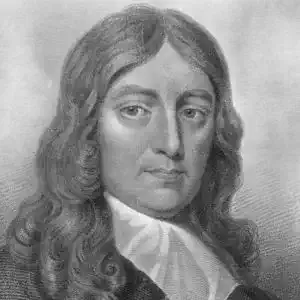
John Milton
Sonnet 14
XIV
When Faith and Love which parted from thee never,
Had ripen'd thy just soul to dwell with God,
Meekly thou didst resign this earthy load
Of Death, call'd Life; which us from Life doth sever
Thy Works and Alms and all thy good Endeavour
Staid not behind, nor in the grave were trod;
But as Faith pointed with her golden rod,
Follow'd thee up to joy and bliss for ever.
Love led them on, and Faith who knew them best
Thy hand-maids, clad them o're with purple beams
And azure wings, that up they flew so drest,
And speak the truth of thee on glorious Theams
Before the Judge, who thenceforth bid thee rest
And drink thy fill of pure immortal streams.
Note: Camb. Autograph supplies title, On the Religious
Memory of Catherine Thomson, my Christian Friend, deceased
16 Decemb., 1646.
763

Rudyard Kipling
Gunga Din
You may talk o' gin and beer
When you're quartered safe out 'ere,
An' you're sent to penny-fights an' Aldershot it;
But when it comes to slaughter
You will do your work on water,
An' you'll lick the bloomin' boots of 'im that's got it.
Now in Injia's sunny clime,
Where I used to spend my time
A-servin' of 'Er Majesty the Queen,
Of all them blackfaced crew
The finest man I knew
Was our regimental bhisti, Gunga Din.
He was "Din! Din! Din!
You limpin' lump o' brick-dust, Gunga Din!
Hi! slippery hitherao!
Water, get it! Panee lao! [Bring water swiftly.]
You squidgy-nosed old idol, Gunga Din."
The uniform 'e wore
Was nothin' much before,
An' rather less than 'arf o' that be'ind,
For a piece o' twisty rag
An' a goatskin water-bag
Was all the field-equipment 'e could find.
When the sweatin' troop-train lay
In a sidin' through the day,
Where the 'eat would make your bloomin' eyebrows crawl,
We shouted "Harry By!" [Mr. Atkins's equivalent for "O brother."]
Till our throats were bricky-dry,
Then we wopped 'im 'cause 'e couldn't serve us all.
It was "Din! Din! Din!
You 'eathen, where the mischief 'ave you been?
You put some juldee in it [Be quick.]
Or I'll marrow you this minute [Hit you.]
If you don't fill up my helmet, Gunga Din!"
'E would dot an' carry one
Till the longest day was done;
An' 'e didn't seem to know the use o' fear.
If we charged or broke or cut,
You could bet your bloomin' nut,
'E'd be waitin' fifty paces right flank rear.
With 'is mussick on 'is back, [Water-skin.]
'E would skip with our attack,
An' watch us till the bugles made "Retire",
An' for all 'is dirty 'ide
'E was white, clear white, inside
When 'e went to tend the wounded under fire!
It was "Din! Din! Din!"
With the bullets kickin' dust-spots on the green.
When the cartridges ran out,
You could hear the front-files shout,
"Hi! ammunition-mules an' Gunga Din!"
I shan't forgit the night
When I dropped be'ind the fight
With a bullet where my belt-plate should 'a' been.
I was chokin' mad with thirst,
An' the man that spied me first
Was our good old grinnin', gruntin' Gunga Din.
'E lifted up my 'ead,
An' he plugged me where I bled,
An' 'e guv me 'arf-a-pint o' water-green:
It was crawlin' and it stunk,
But of all the drinks I've drunk,
I'm gratefullest to one from Gunga Din.
It was "Din! Din! Din!
'Ere's a beggar with a bullet through 'is spleen;
'E's chawin' up the ground,
An' 'e's kickin' all around:
For Gawd's sake git the water, Gunga Din!"
'E carried me away
To where a dooli lay,
An' a bullet come an' drilled the beggar clean.
'E put me safe inside,
An' just before 'e died,
"I 'ope you liked your drink", sez Gunga Din.
So I'll meet 'im later on
At the place where 'e is gone --
Where it's always double drill and no canteen;
'E'll be squattin' on the coals
Givin' drink to poor damned souls,
An' I'll get a swig in hell from Gunga Din!
Yes, Din! Din! Din!
You Lazarushian-leather Gunga Din!
Though I've belted you and flayed you,
By the livin' Gawd that made you,
You're a better man than I am, Gunga Din!
739
Henry Wadsworth Longfellow
The Village Blacksmith
Under a spreading chestnut tree
The village smithy stands;
The Smith, a mighty man is he,
With large and sinewy hands;
And the muscles of his brawny arms
Are strong as iron bands.
His hair is crisp, and black, and long,
His face is like the tan;
His brow is wet with honest sweat,
He earns whate'er he can
And looks the whole world in the face
For he owes not any man.
Week in, week out, from morn till night,
You can hear his bellows blow;
You can hear him swing his heavy sledge,
With measured beat and slow,
Like a sexton ringing the village bell,
When the evening sun is low.
And children coming home from school
Look in at the open door;
They love to see the flaming furge,
And hear the bellows roar,
And catch the burning sparks that fly
Like chaff from a threshing floor.
He goes on Sunday to the church
and sits among his boys;
He hears the parson pray and preach.
He hears his daughter's voice
singing in the village choir,
And it makes his heart rejoice.
It sounds to him like her mother's voice,
Singing in Paradise!
He needs must think of her once more,
How in the grave she lies;
And with his hard, rough hand he wipes
A tear out of his eyes.
Toiling, rejoicing,-sorrowing,
Onward through life he goes;
Each morning sees some task begin,
Each evening sees it close;
Something attempted, something done,
Has earned a night's repose.
Thanks, thanks to thee, my worthy friend
For the lesson thou hast taught!
Thus at the flaming forge of life
Our fortunes must be wrought;
Thus on its sounding anvil shaped
Each burning deed and thought!
735
Elizabeth Bishop
A Miracle for Breakfast
At six o'clock we were waiting for coffee,
waiting for coffee and the charitable crumb
that was going to be served from a certain balcony
--like kings of old, or like a miracle.
It was still dark. One foot of the sun
steadied itself on a long ripple in the river.
The first ferry of the day had just crossed the river.
It was so cold we hoped that the coffee
would be very hot, seeing that the sun
was not going to warm us; and that the crumb
would be a loaf each, buttered, by a miracle.
At seven a man stepped out on the balcony.
He stood for a minute alone on the balcony
looking over our heads toward the river.
A servant handed him the makings of a miracle,
consisting of one lone cup of coffee
and one roll, which he proceeded to crumb,
his head, so to speak, in the clouds--along with the sun.
Was the man crazy? What under the sun
was he trying to do, up there on his balcony!
Each man received one rather hard crumb,
which some flicked scornfully into the river,
and, in a cup, one drop of the coffee.
Some of us stood around, waiting for the miracle.
I can tell what I saw next; it was not a miracle.
A beautiful villa stood in the sun
and from its doors came the smell of hot coffee.
In front, a baroque white plaster balcony
added by birds, who nest along the river,
--I saw it with one eye close to the crumb-
and galleries and marble chambers. My crumb
my mansion, made for me by a miracle,
through ages, by insects, birds, and the river
working the stone. Every day, in the sun,
at breakfast time I sit on my balcony
with my feet up, and drink gallons of coffee.
We licked up the crumb and swallowed the coffee.
A window across the river caught the sun
as if the miracle were working, on the wrong balcony.
753

Walt Whitman
Miracles
WHY! who makes much of a miracle?
As to me, I know of nothing else but miracles,
Whether I walk the streets of Manhattan,
Or dart my sight over the roofs of houses toward the sky,
Or wade with naked feet along the beach, just in the edge of the
water,
Or stand under trees in the woods,
Or talk by day with any one I love--or sleep in the bed at night with
any one I love,
Or sit at table at dinner with my mother,
Or look at strangers opposite me riding in the car,
Or watch honey-bees busy around the hive, of a summer forenoon,
Or animals feeding in the fields,
Or birds--or the wonderfulness of insects in the air,
Or the wonderfulness of the sun-down--or of stars shining so quiet
and bright,
Or the exquisite, delicate, thin curve of the new moon in spring;
Or whether I go among those I like best, and that like me best-
mechanics, boatmen, farmers,
Or among the savans--or to the soiree--or to the opera,
Or stand a long while looking at the movements of machinery,
Or behold children at their sports,
Or the admirable sight of the perfect old man, or the perfect old
woman,
Or the sick in hospitals, or the dead carried to burial,
Or my own eyes and figure in the glass;
These, with the rest, one and all, are to me miracles,
The whole referring--yet each distinct, and in its place.
To me, every hour of the light and dark is a miracle,
Every cubic inch of space is a miracle,
Every square yard of the surface of the earth is spread with the
same,
Every foot of the interior swarms with the same;
Every spear of grass--the frames, limbs, organs, of men and women,
and all that concerns them,
All these to me are unspeakably perfect miracles.
To me the sea is a continual miracle;
The fishes that swim--the rocks--the motion of the waves--the ships,
with men in them,
What stranger miracles are there?
741

Emily Dickinson
Why do I love You, Sir?
"Why do I love" You, Sir?
Because-
The Wind does not require the Grass
To answer-Wherefore when He pass
She cannot keep Her place.
Because He knows-and
Do not You-
And We know not-
Enough for Us
The Wisdom it be so-
The Lightning-never asked an Eye
Wherefore it shut-when He was by-
Because He knows it cannot speak-
And reasons not contained-
Of Talk-
There be-preferred by Daintier Folk-
The Sunrise-Sire-compelleth Me-
Because He's Sunrise-and I see
Therefore-
Then-
I love Thee-
732

Henry Lawson
Talbragar
Jack Denver died on Talbragar when Christmas Eve began,
And there was sorrow round the place, for Denver was a man;
Jack Denver’s wife bowed down her head—her daughter’s grief was wild,
And big Ben Duggan by the bed stood sobbing like a child.
But big Ben Duggan saddled up, and galloped fast and far,
To raise the biggest funeral ever seen on Talbragar.
By station home
And shearing shed
Ben Duggan cried, “Jack Denver’s dead!
Roll up at Talbragar!”
He borrowed horses here and there, and rode all Christmas Eve,
And scarcely paused a moment’s time the mournful news to leave;
He rode by lonely huts and farms, until the day was done
And then he turned his horse’s head and made for Ross’s Run.
No Bushman in a single day had ridden half so far
Since Johnson brought the doctor to his wife at Talbragar.
By diggers’ camps
Ben Duggan sped—
At each he cried, “Jack Denver’s dead!
Roll up at Talbragar!”
That night he passed the humpies of the splitters on the ridge,
And roused the bullock-drivers camped at Belinfante’s Bridge;
And as he climbed the ridge again the moon shone on the rise;
The soft white moonbeams glistened in the tears that filled his eyes;
He dashed the rebel drops away—for blinding things they are—
But ’twas his best and truest friend who died on Talbragar.
At Blackman’s Run
Before the dawn,
Ben Duggan cried, “Jack Denver’s gone!
Roll up at Talbragar!”
At all the shanties round the place they‘d beard his horse’s tramp,
He took the track to Wilson’s Luck, and told the diggers’ camp;
But in the gorge by Deadman’s Gap the mountain shades were black,
And there a newly-fallen tree was lying on the track—
He saw too late, and then he heard the swift hoof ’s sudden jar,
And big Ben Duggan ne’er again rode home to Talbragar.
“The wretch is drunk,
And Denver’s dead—
A burning shame!” the people said
Next day at Talbragar.
For thirty miles round Talbragar the boys rolled up in strength,
And Denver had a funeral a good long mile in length;
Round Denver’s grave that Christmas day rough Bushmen’s eyes were dim—
The Western Bushmen knew the way to bury dead like him;
But some returning homeward found, by light of moon and star,
Ben Duggan dying in the rocks, ten miles from Talbragar.
They knelt around.
He raised his head
And faintly gasped, “Jack Denver’s dead,
Roll up at Talbragar!”
But one short hour before he died he woke and understood;
They told him, when he asked them, that the funeral was good;
And then there came into his eyes a sad and softened light.
He said. “Poor Denver’s wife and kids—you’ll see that they’re all right?”
And still the careless Bushmen tell by tent and shanty bar
How Duggan raised a funeral years back on Talbragar.
And far and wide
When Duggan died.
The bushmen of the western side
Rode in to Talbragar.
707

Lord Byron
Stanzas To Augusta (II.)
I.
Though the day of my destiny's over,
And the star of my fate hath declined,
Thy soft heart refused to discover
The faults which so many could find;
Though thy soul with my grief was acquainted,
It shrunk not to share it with me,
And the love which my spirit hath painted
It never hath found but in thee.
II.
Then when nature around me is smiling,
The last smile which answers to mine,
I do not believe it beguiling,
Because it reminds me of thine;
And when winds are at war with the ocean.
As the breasts I believed in with me,
If their billows excite an emotion,
It is that they bear me from thee.
III.
Though the rock of my last hope is shiver'd,
And its fragments are sunk in the wave,
Though I feel that my soul is deliver'd
To pain it
shall not be its slave.
There is many a pang to pursue me:
They may crush, but they shall not contemn;
They may torture, but shall not subdue me
'Tis of thee that I think not
of them.
IV.
Though human, thou didst not deceive me,
Though woman, thou didst not forsake,
Though loved, thou forborest to grieve me,
Though slander'd, thou never couldst shake;
Though trusted, thou didst not disclaim me,
Though parted, it was not to fly,
Though watchful, 'twas not to defame me,
Nor, mute, that the world might belie.
V.
Yet I blame not the world, nor despise it,
Nor the war of the many with one;
If my soul was not fitted to prize it,
'Twas folly not sooner to shun:
And if dearly that error hath cost me,
And more than I once could foresee,
I have found that, whatever it lost me,
It could not deprive me of thee.
VI.
From the wreck of the past, which hath perish'd
Thus much I at least may recall
It hath taught me that what I most cherish'd
Deserved to be dearest of all:
In the desert a fountain is springing,
In the wide waste there still is a tree,
And a bird in the solitude singing,
Which speaks to my spirit of thee.
718
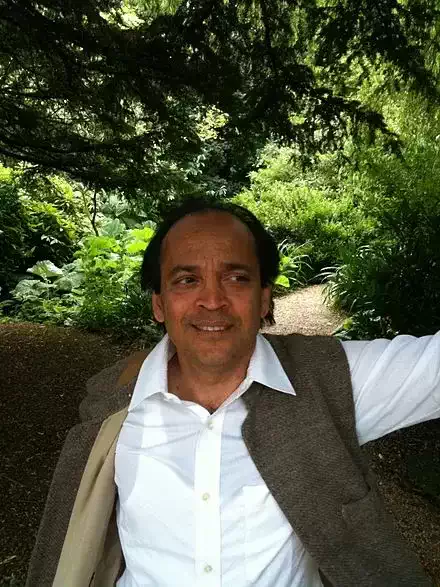
Vikram Seth
Across
Across these miles I wish you well.
May nothing haunt your heart but sleep.
May you not sense what I don't tell.
May you not dream, or doubt, or weep.
May what my pen this peaceless day
Writes on this page not reach your view
Till its deferred print lets you say
It speaks to someone else than you.
May nothing haunt your heart but sleep.
May you not sense what I don't tell.
May you not dream, or doubt, or weep.
May what my pen this peaceless day
Writes on this page not reach your view
Till its deferred print lets you say
It speaks to someone else than you.
700
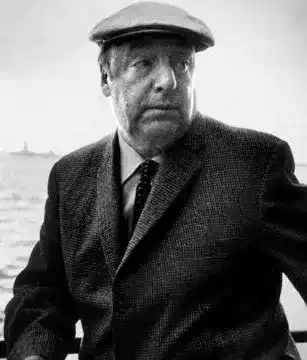
Pablo Neruda
Ode to Salt
This salt
in the salt cellar
I once saw in the salt mines.
I know
you won't
believe me
but
it sings
salt sings, the skin
of the salt mines
sings
with a mouth smothered
by the earth.
I shivered in those
solitudes
when I heard
the voice
of
the salt
in the desert.
Near Antofagasta
the nitrous
pampa
resounds:
a
broken
voice,
a mournful
song.
In its caves
the salt moans, mountain
of buried light,
translucent cathedral,
crystal of the sea, oblivion
of the waves.
And then on every table
in the world,
salt,
we see your piquant
powder
sprinkling
vital light
upon
our food.
Preserver
of the ancient
holds of ships,
discoverer
on
the high seas,
earliest
sailor
of the unknown, shifting
byways of the foam.
Dust of the sea, in you
the tongue receives a kiss
from ocean night:
taste imparts to every seasoned
dish your ocean essence;
the smallest,
miniature
wave from the saltcellar
reveals to us
more than domestic whiteness;
in it, we taste finitude.
700
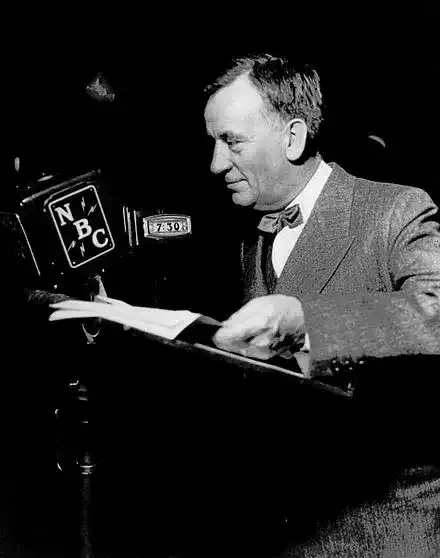
Edgar Albert Guest
Reflection
You have given me riches and ease,
You have given me joys through the years,
I have sat in the shade of your trees,
With the song of your birds in my ears.
I have drunk of your bountiful wine
And done as I've chosen to do,
But, oh wonderful country of mine,
'How little have I done for you!
You have given me safe harbor from harm,
Untroubled I've slept through the nights
And have waked to the new morning's charm
And claimed as my own its delights.
I have taken the finest of fine
From your orchards and fields where it grew,
But, oh wonderful country of mine,
How little I've given to you!
You have given me a home and a place
Where in safety my babies may play;
Health blooms on each bright dimpled face
And laughter is theirs every day.
You have guarded from danger the shrine
Where I worship when toiling is through,
But, oh wonderful country of mine,
How little have I done for you!
I have taken your gifts without thought,
I have revelled in joys that you gave,
That I see now with blood had been bought,
The blood of your earlier braves.
I have lived without making one sign
That the source of my riches I knew,
Now, oh wonderful country of mine,
I'm here to do something for you!
690
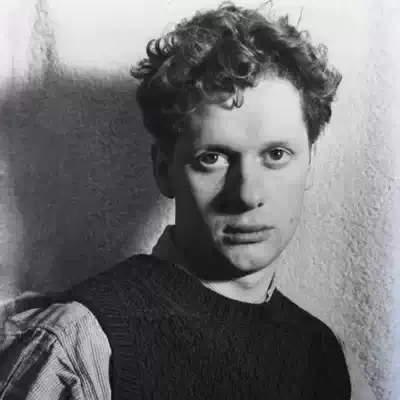
Dylan Thomas
Author's Prologue
This day winding down now
At God speeded summer's end
In the torrent salmon sun,
In my seashaken house
On a breakneck of rocks
Tangled with chirrup and fruit,
Froth, flute, fin, and quill
At a wood's dancing hoof,
By scummed, starfish sands
With their fishwife cross
Gulls, pipers, cockles, and snails,
Out there, crow black, men
Tackled with clouds, who kneel
To the sunset nets,
Geese nearly in heaven, boys
Stabbing, and herons, and shells
That speak seven seas,
Eternal waters away
From the cities of nine
Days' night whose towers will catch
In the religious wind
Like stalks of tall, dry straw,
At poor peace I sing
To you strangers (though song
Is a burning and crested act,
The fire of birds in
The world's turning wood,
For my swan, splay sounds),
Out of these seathumbed leaves
That will fly and fall
Like leaves of trees and as soon
Crumble and undie
Into the dogdayed night.
Seaward the salmon, sucked sun slips,
And the dumb swans drub blue
My dabbed bay's dusk, as I hack
This rumpus of shapes
For you to know
How I, a spining man,
Glory also this star, bird
Roared, sea born, man torn, blood blest.
Hark: I trumpet the place,
From fish to jumping hill! Look:
I build my bellowing ark
To the best of my love
As the flood begins,
Out of the fountainhead
Of fear, rage read, manalive,
Molten and mountainous to stream
Over the wound asleep
Sheep white hollow farms
To Wales in my arms.
Hoo, there, in castle keep,
You king singsong owls, who moonbeam
The flickering runs and dive
The dingle furred deer dead!
Huloo, on plumbed bryns,
O my ruffled ring dove
in the hooting, nearly dark
With Welsh and reverent rook,
Coo rooning the woods' praise,
who moons her blue notes from her nest
Down to the curlew herd!
Ho, hullaballoing clan
Agape, with woe
In your beaks, on the gabbing capes!
Heigh, on horseback hill, jack
Whisking hare! who
Hears, there, this fox light, my flood ship's
Clangour as I hew and smite
(A clash of anvils for my
Hubbub and fiddle, this tune
On atounged puffball)
But animals thick as theives
On God's rough tumbling grounds
(Hail to His beasthood!).
Beasts who sleep good and thin,
Hist, in hogback woods! The haystacked
Hollow farms ina throng
Of waters cluck and cling,
And barnroofs cockcrow war!
O kingdom of neighbors finned
Felled and quilled, flash to my patch
Work ark and the moonshine
Drinking Noah of the bay,
With pelt, and scale, and fleece:
Only the drowned deep bells
Of sheep and churches noise
Poor peace as the sun sets
And dark shoals every holy field.
We will ride out alone then,
Under the stars of Wales,
Cry, Multiudes of arks! Across
The water lidded lands,
Manned with their loves they'll move
Like wooden islands, hill to hill.
Huloo, my prowed dove with a flute!
Ahoy, old, sea-legged fox,
Tom tit and Dai mouse!
My ark sings in the sun
At God speeded summer's end
And the flood flowers now.
At God speeded summer's end
In the torrent salmon sun,
In my seashaken house
On a breakneck of rocks
Tangled with chirrup and fruit,
Froth, flute, fin, and quill
At a wood's dancing hoof,
By scummed, starfish sands
With their fishwife cross
Gulls, pipers, cockles, and snails,
Out there, crow black, men
Tackled with clouds, who kneel
To the sunset nets,
Geese nearly in heaven, boys
Stabbing, and herons, and shells
That speak seven seas,
Eternal waters away
From the cities of nine
Days' night whose towers will catch
In the religious wind
Like stalks of tall, dry straw,
At poor peace I sing
To you strangers (though song
Is a burning and crested act,
The fire of birds in
The world's turning wood,
For my swan, splay sounds),
Out of these seathumbed leaves
That will fly and fall
Like leaves of trees and as soon
Crumble and undie
Into the dogdayed night.
Seaward the salmon, sucked sun slips,
And the dumb swans drub blue
My dabbed bay's dusk, as I hack
This rumpus of shapes
For you to know
How I, a spining man,
Glory also this star, bird
Roared, sea born, man torn, blood blest.
Hark: I trumpet the place,
From fish to jumping hill! Look:
I build my bellowing ark
To the best of my love
As the flood begins,
Out of the fountainhead
Of fear, rage read, manalive,
Molten and mountainous to stream
Over the wound asleep
Sheep white hollow farms
To Wales in my arms.
Hoo, there, in castle keep,
You king singsong owls, who moonbeam
The flickering runs and dive
The dingle furred deer dead!
Huloo, on plumbed bryns,
O my ruffled ring dove
in the hooting, nearly dark
With Welsh and reverent rook,
Coo rooning the woods' praise,
who moons her blue notes from her nest
Down to the curlew herd!
Ho, hullaballoing clan
Agape, with woe
In your beaks, on the gabbing capes!
Heigh, on horseback hill, jack
Whisking hare! who
Hears, there, this fox light, my flood ship's
Clangour as I hew and smite
(A clash of anvils for my
Hubbub and fiddle, this tune
On atounged puffball)
But animals thick as theives
On God's rough tumbling grounds
(Hail to His beasthood!).
Beasts who sleep good and thin,
Hist, in hogback woods! The haystacked
Hollow farms ina throng
Of waters cluck and cling,
And barnroofs cockcrow war!
O kingdom of neighbors finned
Felled and quilled, flash to my patch
Work ark and the moonshine
Drinking Noah of the bay,
With pelt, and scale, and fleece:
Only the drowned deep bells
Of sheep and churches noise
Poor peace as the sun sets
And dark shoals every holy field.
We will ride out alone then,
Under the stars of Wales,
Cry, Multiudes of arks! Across
The water lidded lands,
Manned with their loves they'll move
Like wooden islands, hill to hill.
Huloo, my prowed dove with a flute!
Ahoy, old, sea-legged fox,
Tom tit and Dai mouse!
My ark sings in the sun
At God speeded summer's end
And the flood flowers now.
688
Edgar Albert Guest
Compensation
I'd like to think when life is done
That I had filled a needed post.
That here and there I'd paid my fare
With more than idle talk and boast;
That I had taken gifts divine.
The breath of life and manhood fine,
And tried to use them now and then
In service for my fellow men.
I'd hate to think when life is through
That I had lived my round of years
A useless kind, that leaves behind
No record in this vale of tears;
That I had wasted all my days
By treading only selfish ways,
And that this world would be the same
If it had never known my name.
I'd like to think that here and there,
When I am gone, there shall remain
A happier spot that might have not
Existed had I toiled for gain;
That someone's cheery voice and smile
Shall prove that I had been worth while;
That I had paid with something fine
My debt to God for life divine.
688
Kazi Nazrul Islam
Baby Sparrow
From its nest behind the termite-eaten
wooden beams of the huge building
a baby sparrow cried out for its mother.
The mother, catching dragonflies
in the nearby field heard the cry.
'Must be that some mischievous child is trying to
take away my baby,' she thought
and, with her heart overcome with anxiety,
desperately headed back for the nest.
The fledgling saw its mother coming
and thought, 'Why don't I fly to her chest?'
and tried to do just that.
Alas, it hadn't learn to fly yet
and therefore fell all the way down to the floor. T
he mother, with tearful eyes saw this
and without any thoughts for her own life
flew down to her baby, trying
to protect her under her wings.
But soon some children came running,
chasing after them and finally catching the baby.
They showed no concern for
how precious the baby was to its mother.
They kept putting it inside an umbrella,
inside pockets, etc.
They all were laughing, except for one boyhis
eyes were overcome with tears.
His mother had passed away long ago,
he'd even forgotten what it was like
to be loved by his mother,
Yet, he felt a cry of pain deep within his heart.
With a ladder, he put the baby sparrow back in its
The tearful eyes of the baby sparrow
held heartfelt blessings for him.
The mother kept looking at the boy with great surprise,
her eyes too expressing her heartfelt gratitude for him.
These silent blessings that
the mother bird bestowed upon him,
the entire world cannot equal by a single speck.
[Original: Chorui Pakhir Chhana; Translation: Sajed Kamal]
668
Vikram Seth
From California
Sunday night in the house.
The blinds drawn, the phone dead.
The sound of the kettle, the rain.
Supper: cheese, celery, bread.
For company, old letters
In the same disjointed script.
Old love wells up again,
All that I thought had slipped
Through the sieve of long absence
Is here with me again:
The long stone walls, the green
Hillsides renewed with rain.
The way you would lick your finger
And touch your forehead, the way
You hummed a phrase from the flute
Sonatas, or turned to say,
"Larches--the only conifers
That honestly blend with Wales."
I walk with you again
Along these settled trails.
It seems I started this poem
So many years ago
I cannt follow its ending
And must begin anew.
Blame, some bitterness,
I recall there were these.
Yet what survives is Bach
And a few blackberries
Something of the "falling starlight",
In the phrase of Wang Wei,
Falls on my shadowed self.
I thank you that today
His words are open to me.
How much you have inspired
You cannot know. The end
Left much to be desired.
"There is a comfort in
The strength of love." I quote
Another favourite
You vouchsafed me. Please note
The lack of hope or faith:
Neither is justified.
I have closed out the night.
The random rain outside
Rejuvenates the parched
Foothills along the Bay.
Anaesthetised by years
I think of you today
Not with impassionedness
So much as half a smile
To see the weathered past
Still worth my present while.
668
Edgar Albert Guest
A Christmas Greeting
Here's to you, little mother,
With your boy so far away;
May the joy of service smother
All your grief this Christmas day;
May the magic of his splendor
Thrill your spirit through and through
And may all that's fine and tender
Make a smiling day for you.
May you never know the sadness
That from day to day you dread;
May you never find but gladness
In the Flag that's overhead;
May the good God watch above him
As he stands to duty stern,
And at last to all who love him
May he have a safe return.
Little mother, take the blessing
Of a grateful nation's heart;
May the news that is distressing
Never cause your tears to start;
May there be no fears to haunt you,
And no lonely hours and sad;
May your trials never daunt you,
But may every day be glad.
Little Mother, could I do it,
This my Christmas gift would be:
That he'd safely battle through it,
This to you I'd guarantee.
And I'd pledge to you this morning
Joys to banish all your cares,
Gifts of gold and silver scorning,
I would answer all your prayers.
671
Pablo Neruda
Ode To Bird Watching
Now
Let's look for birds!
The tall iron branches
in the forest,
The dense
fertility on the ground.
The world
is wet.
A dewdrop or raindrop
shines,
a diminutive star
among the leaves.
The morning time
mother earth
is cool.
The air
is like a river
which shakes
the silence.
It smells of rosemary,
of space
and roots.
Overhead,
a crazy song.
It's a bird.
How
out of its throat
smaller than a finger
can there fall the waters
of its song?
Luminous ease!
Invisible
power
torrent
of music
in the leaves.
Sacred conversations!
Clean and fresh washed
is this
day resounding
like a green dulcimer.
I bury
my shoes
in the mud,
jump over rivulets.
A thorn
bites me and a gust
of air like a crystal
wave
splits up inside my chest.
Where
are the birds?
Maybe it was
that
rustling in the foliage
or that fleeting pellet
of brown velvet
or that displaced
perfume? That
leaf that let loose cinnamon smell
-was that a bird? That dust
from an irritated magnolia
or that fruit
which fell with a thump was
that a flight?
Oh, invisible little
critters
birds of the devil
with their ringing
with their useless feathers.
I only want
to caress them,
to see them resplendent.
I don't want
to see under glass
the embalmed lightning.
I want to see them living.
I want to touch their gloves
of real hide,
which they never forget in
the branches
and to converse with
them
sitting on my shoulders
although they may leave
me like certain statues
undeservedly whitewashed.
Impossible.
You can't touch them.
You can hear them
like a heavenly
rustle or movement.
They converse
with precision.
They repeat
their observations.
They brag
of how much they do.
They comment
on everything that exists.
They learn
certain sciences
like hydrography.
and by a sure science
they know
where there are harvests
of grain
661