
Gratitude

Rudyard Kipling
The Dead King
EDWARD VII.
Who in the Realm to-day lays down dear life for the sake of a land more dear?
And, unconcerned for his own estate, toils till the last grudged sands have run?
Let him approach. It is proven here
Our King asks nothing of any man more than Our King himself, has done.
For to him above all was Life good, above all he commanded
Her abundance full-handed.
The peculiar treasure of Kings was his for the taking:
All that men come to in dreams he inherited waking: --
His marvel of world-gathered armies -- one heart and all races;
His seas 'neath his keels when his war-castles foamed to their places;
The thundering foreshores that answered his heralded landing;
The huge lighted cities adoring, the assemblies upstanding;
The Councils of Kings called in haste to learn how he was minded --
The kingdoms, the Powers, and the Glories he dealt with unblinded.
To him came all captains of men, all achievers of glory
Hot from the press of their battles they told him their story.
They revealed him their lives in an hour and, saluting departed,
Joyful to labour afresh -- he had made them new-hearted.
And, since he weighed men from his youth, and no lie long deceived him,
He spoke and exacted the truth, and the basest believed him.
And God poured him an exquisite wine, that was daily renewed to him,
In the clear-welling love of his peoples that daily accrued to him.
Honour and service we gave him, rejoicingly fearless;
Faith absolute, trust beyond speech and a friendship as peerless.
And since he was Master and Servant in all that we asked him,
We leaned hard on his wisdom in all things, knowing not how we tasked him.
For on him each new day laid command, every tyrannous hour,
To confront, or confirm, or make smooth some dread issue of power;
To deliver true, judgment aright at the instant, unaided,
In the strict, level, ultimate phrase that allowed or dissuaded;
To foresee, to allay, to avert from us perils unnumbered,
To stand guard on our gates when he guessed that the watchmen had slumbered;
To win time, to turn hate, to woo folly to service and, mightily schooling
His strength to the use of his Nations, to rule as not ruling.
These were the works of our King; Earth's peace was the proof of them.
God gave him great works to fulfil, and to us the behoof of them.
We accepted his toil as our right -- none spared, none excused him.
When he was bowed by his burden his rest was refused him.
We troubled his age with our weakness -- the blacker our shame to us!
Hearing his People had need of him, straightway he came to us.
As he received so he gave -- nothing grudged, naught denying,
Not even the last gasp of his breath when he strove for us, dying.
For our sakes, without question, he put from him all that he cherished.
Simply as any that serve him he served and he perished.
All that Kings covet was his, and he flung it aside for us.
Simply as any that die in his service he died for us!
Who in the Realm to-day has choice of the easy road or the hard to tread?
And, much concerned for his own estate, would sell his soul to remain in the
sun?
Let him depart nor look on Our dead.
Our King asks nothing of any man more than Our King himself has done.
487
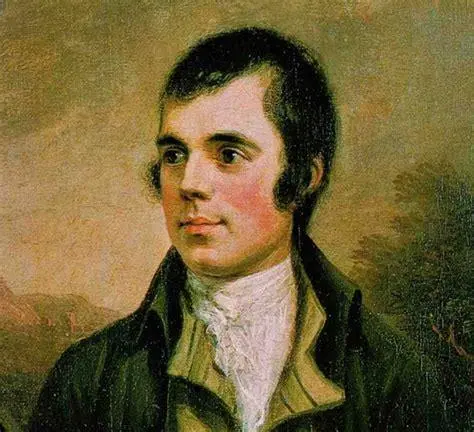
Robert Burns
My Nannie, O
Behind yon hills, where Lugar flows,
'Mang moors an' mosses many, O,
The wintry sun the day has clos'd,
And I'll awa to Nannie, O.
The westlin wind blaws loud and shill;
The night's baith mirk an' rainy, O;
But I'll get my plaid, an' out I'll steal,
An' owre the hills to Nannie, O.
My Nannie's charming, sweet, an' young:
Nae artfu' wiles to Will ye, O:
May ill befa' the flattering tongue
That wad beguile my Nannie, O.
Her face is fair, her heart is true,
She's spotless as she's bonnie, O:
The op'ning gowan, wet wi' dew,
Nae purer is than Nannie, O.
A country lad is my degree,
And few there be that ken me, O;
But what care I how few they be
I'm welcome aye to Nannie, O.
My riches a' 's my penny-fee,
An' I maun guide it cannie, O;
But warl's gear ne'er troubles me,
My thoughts are a' my Nannie, O.
Our auld guidman delights to view
His sheep and kye thrive bonnie, O;
But I'm as blythe that hauds his pleugh,
An' has nae care but Nannie, O.
Come weel, come woe, I care na by,
I'll tak' what Heav'n will sen' me, O;
Nae ither care in life have I,
But live, an' love my Nannie, O.
486

Walt Whitman
Song At Sunset
SPLENDOR of ended day, floating and filling me!
Hour prophetic--hour resuming the past!
Inflating my throat--you, divine average!
You, Earth and Life, till the last ray gleams, I sing.
Open mouth of my Soul, uttering gladness,
Eyes of my Soul, seeing perfection,
Natural life of me, faithfully praising things;
Corroborating forever the triumph of things.
Illustrious every one!
Illustrious what we name space--sphere of unnumber'd spirits;
Illustrious the mystery of motion, in all beings, even the tiniest
insect;
Illustrious the attribute of speech--the senses--the body;
Illustrious the passing light! Illustrious the pale reflection on the
new moon in the western sky!
Illustrious whatever I see, or hear, or touch, to the last.
Good in all,
In the satisfaction and aplomb of animals,
In the annual return of the seasons,
In the hilarity of youth,
In the strength and flush of manhood,
In the grandeur and exquisiteness of old age,
In the superb vistas of Death.
Wonderful to depart;
Wonderful to be here!
The heart, to jet the all-alike and innocent blood!
To breathe the air, how delicious!
To speak! to walk! to seize something by the hand!
To prepare for sleep, for bed--to look on my rose-color'd flesh;
To be conscious of my body, so satisfied, so large;
To be this incredible God I am;
To have gone forth among other Gods--these men and women I love.
Wonderful how I celebrate you and myself!
How my thoughts play subtly at the spectacles around!
How the clouds pass silently overhead!
How the earth darts on and on! and how the sun, moon, stars, dart on
and on!
How the water sports and sings! (Surely it is alive!)
How the trees rise and stand up--with strong trunks--with branches
and leaves!
(Surely there is something more in each of the tree--some living
Soul.)
O amazement of things! even the least particle!
O spirituality of things!
O strain musical, flowing through ages and continents--now reaching
me and America!
I take your strong chords--I intersperse them, and cheerfully pass
them forward.
I too carol the sun, usher'd, or at noon, or, as now, setting,
I too throb to the brain and beauty of the earth, and of all the
growths of the earth,
I too have felt the resistless call of myself.
As I sail'd down the Mississippi,
As I wander'd over the prairies,
As I have lived--As I have look'd through my windows, my eyes,
As I went forth in the morning--As I beheld the light breaking in the
east;
As I bathed on the beach of the Eastern Sea, and again on the beach
of the Western Sea;
As I roam'd the streets of inland Chicago--whatever streets I have
roam'd;
Or cities, or silent woods, or peace, or even amid the sights of war;
Wherever I have been, I have charged myself with contentment and
triumph.
I sing the Equalities, modern or old,
I sing the endless finales of things;
I say Nature continues--Glory continues;
I praise with electric voice;
For I do not see one imperfection in the universe;
And I do not see one cause or result lamentable at last in the
universe.
O setting sun! though the time has come,
I still warble under you, if none else does, unmitigated
adoration.
484
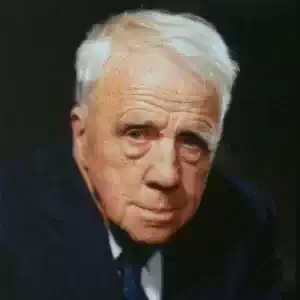
Robert Frost
The Death of the Hired Man
Mary sat musing on the lamp-flame at the table
Waiting for Warren. When she heard his step,
She ran on tip-toe down the darkened passage
To meet him in the doorway with the news
And put him on his guard. "Silas is back."
She pushed him outward with her through the door
And shut it after her. "Be kind," she said.
She took the market things from Warren's arms
And set them on the porch, then drew him down
To sit beside her on the wooden steps.
"When was I ever anything but kind to him?
But I'll not have the fellow back," he said.
"I told him so last haying, didn't I?
'If he left then,' I said, 'that ended it.'
What good is he? Who else will harbour him
At his age for the little he can do?
What help he is there's no depending on.
Off he goes always when I need him most.
'He thinks he ought to earn a little pay,
Enough at least to buy tobacco with,
So he won't have to beg and be beholden.'
'All right,' I say, 'I can't afford to pay
Any fixed wages, though I wish I could.'
'Someone else can.' 'Then someone else will have to.'
I shouldn't mind his bettering himself
If that was what it was. You can be certain,
When he begins like that, there's someone at him
Trying to coax him off with pocket-money,--
In haying time, when any help is scarce.
In winter he comes back to us. I'm done."
"Sh! not so loud: he'll hear you," Mary said.
"I want him to: he'll have to soon or late."
"He's worn out. He's asleep beside the stove.
When I came up from Rowe's I found him here,
Huddled against the barn-door fast asleep,
A miserable sight, and frightening, too--
You needn't smile--I didn't recognise him--
I wasn't looking for him--and he's changed.
Wait till you see."
"Where did you say he'd been?"
"He didn't say. I dragged him to the house,
And gave him tea and tried to make him smoke.
I tried to make him talk about his travels.
Nothing would do: he just kept nodding off."
"What did he say? Did he say anything?"
"But little."
"Anything? Mary, confess
He said he'd come to ditch the meadow for me."
"Warren!"
"But did he? I just want to know."
"Of course he did. What would you have him say?
Surely you wouldn't grudge the poor old man
Some humble way to save his self-respect.
He added, if you really care to know,
He meant to clear the upper pasture, too.
That sounds like something you have heard before?
Warren, I wish you could have heard the way
He jumbled everything. I stopped to look
Two or three times--he made me feel so queer--
To see if he was talking in his sleep.
He ran on Harold Wilson--you remember--
The boy you had in haying four years since.
He's finished school, and teaching in his college.
Silas declares you'll have to get him back.
He says they two will make a team for work:
Between them they will lay this farm as smooth!
The way he mixed that in with other things.
He thinks young Wilson a likely lad, though daft
On education--you know how they fought
All through July under the blazing sun,
Silas up on the cart to build the load,
Harold along beside to pitch it on."
"Yes, I took care to keep well out of earshot."
"Well, those days trouble Silas like a dream.
You wouldn't think they would. How some things linger!
Harold's young college boy's assurance piqued him.
After so many years he still keeps finding
Good arguments he sees he might have used.
I sympathise. I know just how it feels
To think of the right thing to say too late.
Harold's associated in his mind with Latin.
He asked me what I thought of Harold's saying
He studied Latin like the violin
Because he liked it--that an argument!
He said he couldn't make the boy believe
He could find water with a hazel prong--
Which showed how much good school had ever done him.
He wanted to go over that. But most of all
He thinks if he could have another chance
To teach him how to build a load of hay----"
"I know, that's Silas' one accomplishment.
He bundles every forkful in its place,
And tags and numbers it for future reference,
So he can find and easily dislodge it
In the unloading. Silas does that well.
He takes it out in bunches like big birds' nests.
You never see him standing on the hay
He's trying to lift, straining to lift himself."
"He thinks if he could teach him that, he'd be
Some good perhaps to someone in the world.
He hates to see a boy the fool of books.
Poor Silas, so concerned for other folk,
And nothing to look backward to with pride,
And nothing to look forward to with hope,
So now and never any different."
Part of a moon was falling down the west,
Dragging the whole sky with it to the hills.
Its light poured softly in her lap. She saw
And spread her apron to it. She put out her hand
Among the harp-like morning-glory strings,
Taut with the dew from garden bed to eaves,
As if she played unheard the tenderness
That wrought on him beside her in the night.
"Warren," she said, "he has come home to die:
You needn't be afraid he'll leave you this time."
"Home," he mocked gently.
"Yes, what else but home?
It all depends on what you mean by home.
Of course he's nothing to us, any more
Than was the hound that came a stranger to us
Out of the woods, worn out upon the trail."
"Home is the place where, when you have to go there,
They have to take you in."
"I should have called it
Something you somehow haven't to deserve."
Warren leaned out and took a step or two,
Picked up a little stick, and brought it back
And broke it in his hand and tossed it by.
"Silas has better claim on us you think
Than on his brother? Thirteen little miles
As the road winds would bring him to his door.
Silas has walked that far no doubt to-day.
Why didn't he go there? His brother's rich,
A somebody--director in the bank."
"He never told us that."
"We know it though."
"I think his brother ought to help, of course.
I'll see to that if there is need. He ought of right
To take him in, and might be willing to--
He may be better than appearances.
But have some pity on Silas. Do you think
If he'd had any pride in claiming kin
Or anything he looked for from his brother,
He'd keep so still about him all this time?"
"I wonder what's between them."
"I can tell you.
Silas is what he is--we wouldn't mind him--
But just the kind that kinsfolk can't abide.
He never did a thing so very bad.
He don't know why he isn't quite as good
As anyone. He won't be made ashamed
To please his brother, worthless though he is."
"I can't think Si ever hurt anyone."
"No, but he hurt my heart the way he lay
And rolled his old head on that sharp-edged chair-back.
He wouldn't let me put him on the lounge.
You must go in and see what you can do.
I made the bed up for him there to-night.
You'll be surprised at him--how much he's broken.
His working days are done; I'm sure of it."
"I'd not be in a hurry to say that."
"I haven't been. Go, look, see for yourself.
But, Warren, please remember how it is:
He's come to help you ditch the meadow.
He has a plan. You mustn't laugh at him.
He may not speak of it, and then he may.
I'll sit and see if that small sailing cloud
Will hit or miss the moon."
It hit the moon.
Then there were three there, making a dim row,
The moon, the little silver cloud, and she.
Warren returned--too soon, it seemed to her,
Slipped to her side, caught up her hand and waited.
"Warren," she questioned.
"Dead," was all he answered.
486

Ella Wheeler Wilcox
American Boys, Hello!
Oh! we love all the French, and we speak in French
As along through France we go.
But the moments to us that are keen and sweet
Are the ones when our khaki boys we meet,
Stalwart and handsome and trim and neat;
And we call to them-'Boys, hello!'
'Hello, American boys,
Luck to you, and life's best joys!
American boys, hello!'
We couldn't do that if we were at home-
It never would do you know!
For there you must wait till you're told who's who,
And to meet in the way that nice folks do.
Though you knew his name, and your name he knew-
You never would say 'Hello, hello, American boy!'
But here it's just a joy,
As we pass along in the stranger throng,
To call out, 'Boys, hello!'
For each is a brother away from home;
And this we are sure is so,
There's a lonesome spot in his heart somewhere,
And we want him to feel there are friends
right there
In this foreign land, and so we dare
To call out 'Boys, hello!'
'Hello, American boys,
Luck to you, and life's best joys!
American boys, hello!'
485

Lord Byron
From The Last Hill That Looks On Thy Once Holy Dome
I.
From the last hill that looks on thy once holy dome,
I beheld thee, Oh Sion! when rendered to Rome:
'Twas thy last sun went down, and the flames of thy fall
Flash'd back on the last glance I gave to thy wall.
II.
I look'd for thy temple, I look'd for my home,
And forgot for a moment my bondage to come;
I beheld but the deathfire
that fed on thy fane,
And the fastfetter'd
hands that made vengeance in vain.
III.
Oh many an eve, the high spot whence I gazed
Had reflected the last beam of day as it blazed;
While I stood on the height, and beheld the decline
Of the rays from the mountain that shone on thy shrine.
IV.
And now on that mountain I stood on that day,
But I marked not the twilight beam melting away;
Oh! would that the lightning had glared in its stead,
And the thunderbolt burst on the conqueror's head!
V.
But the Gods of the Pagan shall never profane
The shrine where Jehovah disdain'd not to reign;
And scattered and scorn'd as thy people may be,
Our worship, oh Father! is only for thee.
483
Walt Whitman
Drum-Taps
Aroused and angry,
I thought to beat the alarum, and urge relentless war;
But soon my fingers fail'd me, my face droop'd, and I resign'd
myself,
To sit by the wounded and soothe them, or silently watch the dead.
Drum-Taps
FIRST, O songs, for a prelude,
Lightly strike on the stretch'd tympanum, pride and joy in my city,
How she led the rest to arms--how she gave the cue,
How at once with lithe limbs, unwaiting a moment, she sprang;
(O superb! O Manhattan, my own, my peerless!
O strongest you in the hour of danger, in crisis! O truer than
steel!)
How you sprang! how you threw off the costumes of peace with
indifferent hand;
How your soft opera-music changed, and the drum and fife were heard
in their stead;
How you led to the war, (that shall serve for our prelude, songs of
soldiers,)
How Manhattan drum-taps led.
Forty years had I in my city seen soldiers parading;
Forty years as a pageant--till unawares, the Lady of this teeming and
turbulent city,
Sleepless amid her ships, her houses, her incalculable wealth,
With her million children around her--suddenly,
At dead of night, at news from the south,
Incens'd, struck with clench'd hand the pavement.
A shock electric--the night sustain'd it;
Till with ominous hum, our hive at day-break pour'd out its myriads.
From the houses then, and the workshops, and through all the
doorways,
Leapt they tumultuous--and lo! Manhattan arming.
To the drum-taps prompt,
The young men falling in and arming;
The mechanics arming, (the trowel, the jack-plane, the blacksmith's
hammer, tost aside with precipitation;)
The lawyer leaving his office, and arming--the judge leaving the
court;
The driver deserting his wagon in the street, jumping down, throwing
the reins abruptly down on the horses' backs;
The salesman leaving the store--the boss, book-keeper, porter, all
leaving;
Squads gather everywhere by common consent, and arm;
The new recruits, even boys--the old men show them how to wear their
accoutrements--they buckle the straps carefully;
Outdoors arming--indoors arming--the flash of the musket-barrels;
The white tents cluster in camps--the arm'd sentries around--the
sunrise cannon, and again at sunset;
Arm'd regiments arrive every day, pass through the city, and embark
from the wharves;
(How good they look, as they tramp down to the river, sweaty, with
their guns on their shoulders!
How I love them! how I could hug them, with their brown faces, and
their clothes and knapsacks cover'd with dust!)
The blood of the city up--arm'd! arm'd! the cry everywhere;
The flags flung out from the steeples of churches, and from all the
public buildings and stores;
The tearful parting--the mother kisses her son--the son kisses his
mother;
(Loth is the mother to part--yet not a word does she speak to detain
him;)
The tumultuous escort--the ranks of policemen preceding, clearing the
way;
The unpent enthusiasm--the wild cheers of the crowd for their
favorites;
The artillery--the silent cannons, bright as gold, drawn along,
rumble lightly over the stones;
(Silent cannons--soon to cease your silence!
Soon, unlimber'd, to begin the red business;)
All the mutter of preparation--all the determin'd arming;
The hospital service--the lint, bandages, and medicines;
The women volunteering for nurses--the work begun for, in earnest--no
mere parade now;
War! an arm'd race is advancing!--the welcome for battle--no turning
away;
War! be it weeks, months, or years--an arm'd race is advancing to
welcome it.
Mannahatta a-march!--and it's O to sing it well!
It's O for a manly life in the camp!
And the sturdy artillery!
The guns, bright as gold--the work for giants--to serve well the
guns:
Unlimber them! no more, as the past forty years, for salutes for
courtesies merely;
Put in something else now besides powder and wadding.
And you, Lady of Ships! you Mannahatta!
Old matron of this proud, friendly, turbulent city!
Often in peace and wealth you were pensive, or covertly frown'd amid
all your children;
But now you smile with joy, exulting old Mannahatta!
482
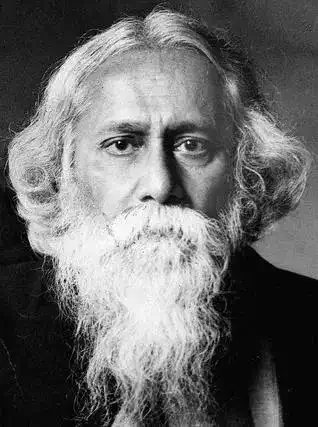
Rabindranath Tagore
I Found A Few Old Letters
XIV
I found a few old letters of mine carefully hidden in thy box—a few small toys for thy
memory to play with. With a timorous heart thou didst try to steal these trifles from
the turbulent stream of time which washes away planets and stars, and didst say,
“These are only mine!” Alas, there is no one now who can claim them—who is able to
pay their price; yet they are still here. Is there no love in this world to rescue thee
from utter loss, even like this love of thine that saved these letters with such fond
care?
O woman, thou camest for a moment to my side and touched me with the great
mystery of the woman that there is in the heart of creation—she who ever gives back
to God his own outflow of sweetness; who is the eternal love and beauty and youth;
who dances in bubbling streams and sings in the morning light; who with heaving
waves suckles the thirsty earth and whose mercy melts in rain; in whom the eternal
one breaks in two in joy that can contain itself no more and overflows in the pain of
love.
477
Ella Wheeler Wilcox
Begin The Day
Begin each morning with a talk to God,
And ask for your divine inheritance
Of usefulness, contentment, and success.
Resign all fear, all doubt, and all despair.
The stars doubt not, and they are undismayed,
Though whirled through space for countless centuries,
And told not why or wherefore: and the sea
With everlasting ebb and flow obeys,
And leaves the purpose with the unseen Cause.
The star sheds its radiance on a million worlds,
The sea is prodigal with waves, and yet
No lustre from the star is lost, and not
One dropp missing from the ocean tides.
Oh! brother to the star and sea, know all
God’s opulence is held in trust for those
Who wait serenely and who work in faith.
480
Walt Whitman
The Ox tamer
IN a faraway northern county, in the placid, pastoral region,
Lives my farmer friend, the theme of my recitative, a famous Tamer of
Oxen:
There they bring him the three-year-olds and the four-year-olds, to
break them;
He will take the wildest steer in the world, and break him and tame
him;
He will go, fearless, without any whip, where the young bullock
chafes up and down the yard;
The bullock's head tosses restless high in the air, with raging eyes;
Yet, see you! how soon his rage subsides--how soon this Tamer tames
him:
See you! on the farms hereabout, a hundred oxen, young and old--and
he is the man who has tamed them;
They all know him--all are affectionate to him;
See you! some are such beautiful animals--so lofty looking!
Some are buff color'd--some mottled--one has a white line running
along his back--some are brindled,
Some have wide flaring horns (a good sign)--See you! the bright
hides;
See, the two with stars on their foreheads--See, the round bodies and
broad backs;
See, how straight and square they stand on their legs--See, what
fine, sagacious eyes;
See, how they watch their Tamer--they wish him near them--how they
turn to look after him!
What yearning expression! how uneasy they are when he moves away from
them:
--Now I marvel what it can be he appears to them, (books, politics,
poems depart--all else departs;)
I confess I envy only his fascination--my silent, illiterate friend,
Whom a hundred oxen love, there in his life on farms,
In the northern county far, in the placid, pastoral region.
477

Ezra Pound
In Tempore Senectutis
When I am old
I will not have you look apart
From me, into the cold,
Friend of my heart,
Nor be sad in your remembrance
Of the careless, mad-heart semblance
That the wind hath blown away
When I am old.
When I am old
And the white hot wonder-fire
Unto the world seem cold,
My soul's desire
Know you then that all life's shower,
The rain of the years, that hour
Shall make blow for us one flower,
Including all, when we are old.
When I am old
If you remember
Any love save what is then
Hearth light unto life's December
Be your joy of past sweet chalices
To know then naught but this
"How many wonders are less sweet
Than love I bear to thee
When I am old."
480
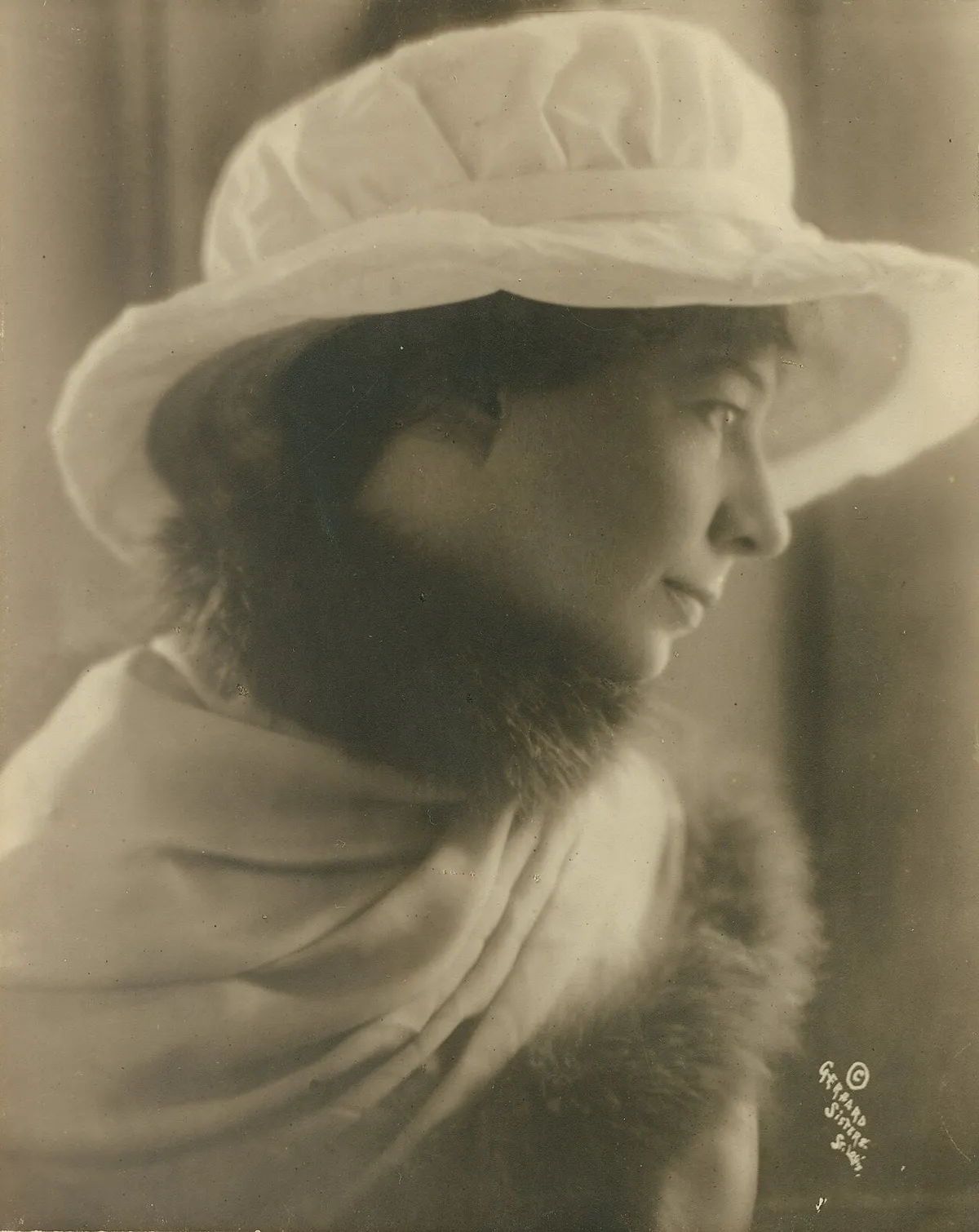
Sara Teasdale
Spring Night
The park is filled with night and fog,
The veils are drawn about the world,
The drowsy lights along the paths
Are dim and pearled.
Gold and gleaming the empty streets,
Gold and gleaming the misty lake,
The mirrored lights like sunken swords,
Glimmer and shake.
Oh, is it not enough to be
Here with this beauty over me?
My throat should ache with praise, and I
Should kneel in joy beneath the sky.
O, beauty, are you not enough?
Why am I crying after love,
With youth, a singing voice, and eyes
To take earth's wonder with surprise?
Why have I put off my pride,
Why am I unsatisfied, --
I, for whom the pensive night
Binds her cloudy hair with light, --
I, for whom all beauty burns
Like incense in a million urns?
O beauty, are you not enough?
Why am I crying after love?
479
Rabindranath Tagore
The Gardener XIII: I Asked Nothing
I asked nothing, only stood at the
edge of the wood behind the tree.
Languor was still upon the eyes
of the dawn, and the dew in the air.
The lazy smell of the damp grass
hung in the thin mist above the earth.
Under the banyan tree you were
milking the cow with your hands,
tender and fresh as butter.
And I was standing still.
I did not say a word. It was the
bird that sang unseen from the thicket.
The mango tree was shedding its
flowers upon the village road, and the
bees came humming one by one.
On the side of the pond the gate of
Shiva's temple was opened and the
worshipper had begun his chants.
With the vessel on your lap you
were milking the cow.
I stood with my empty can.
I did not come near you.
The sky woke with the sound of
the gong at the temple.
The dust was raised in the road
from the hoofs of the driven cattle.
With the gurgling pitchers at their
hips, women came from the river.
Your bracelets were jingling, and
foam brimming over the jar.
The morning wore on and I did not
come near you.
480
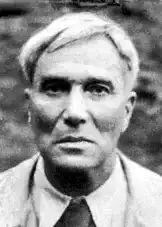
Boris Pasternak
Out of Superstition
A box of glazed sour fruit compact,
My narrow room.
And oh the grime of lodging rooms
This side the tomb!
This cubbyhole, out of superstition,
I chose once more.
The walls seem dappled oaks; the door,
A singing door.
You strove to leave; my hand was steady
Upon the latch.
My forelock touched a wondrous forehead;
My lips felt violets.
O Sweet! Your dress as on a day
Not long ago
To April, like a snowdrop, chirps
A gay 'Hello!'
No vestal-you, I know: You came
With a chair today,
Took down my life as from a shelf,
And blew the dust away.
474
Ella Wheeler Wilcox
Sorrow's Uses
The uses of sorrow I comprehend
Better and better at each year’s end.
Deeper and deeper I seem to see
Why and wherefore it has to be
Only after the dark, wet days
Do we fully rejoice in the sun’s bright rays.
Sweeter the crust tastes after the fast
Than the sated gourmand’s finest repast.
The faintest cheer sounds never amiss
To the actor who once has heard a hiss.
To one who the sadness of freedom knows,
Light seem the fetters love may impose.
And he who has dwelt with his heart alone,
Hears all the music in friendship’s tone.
So better and better I comprehend,
How sorrow ever would be our friend.
475
Robert Frost
Asking for Roses
A house that lacks, seemingly, mistress and master,
With doors that none but the wind ever closes,
Its floor all littered with glass and with plaster;
It stands in a garden of old-fashioned roses.
I pass by that way in the gloaming with Mary;
'I wonder,' I say, 'who the owner of those is.'
'Oh, no one you know,' she answers me airy,
'But one we must ask if we want any roses.'
So we must join hands in the dew coming coldly
There in the hush of the wood that reposes,
And turn and go up to the open door boldly,
And knock to the echoes as beggars for roses.
'Pray, are you within there, Mistress Who-were-you?'
'Tis Mary that speaks and our errand discloses.
'Pray, are you within there? Bestir you, bestir you!
'Tis summer again; there's two come for roses.
'A word with you, that of the singer recalling--
Old Herrick: a saying that every maid knows is
A flower unplucked is but left to the falling,
And nothing is gained by not gathering roses.'
We do not loosen our hands' intertwining
(Not caring so very much what she supposes),
There when she comes on us mistily shining
And grants us by silence the boon of her roses.
476
Sara Teasdale
The Giver
You bound strong sandals on my feet,
You gave me bread and wine,
And sent me under sun and stars,
For all the world was mine.
Oh, take the sandals off my feet,
You know not what you do;
For all my world is in your arms,
My sun and stars are you.
You gave me bread and wine,
And sent me under sun and stars,
For all the world was mine.
Oh, take the sandals off my feet,
You know not what you do;
For all my world is in your arms,
My sun and stars are you.
476
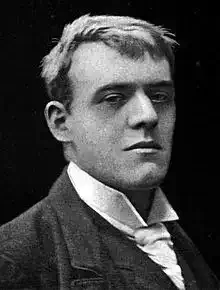
Hilaire Belloc
Courtesy
Of Courtesy, it is much less
Than Courage of Heart or Holiness,
Yet in my Walks it seems to me
That the Grace of God is in Courtesy.
On Monks I did in Storrington fall,
They took me straight into their Hall;
I saw Three Pictures on a wall,
And Courtesy was in them all.
The first the Annunciation;
The second the Visitation;
The third the Consolation,
Of God that was Our Lady's Son.
The first was of St. Gabriel;
On Wings a-flame from Heaven he fell;
And as he went upon one knee
He shone with Heavenly Courtesy.
Our Lady out of Nazareth rode -
It was Her month of heavy load;
Yet was her face both great and kind,
For Courtesy was in Her Mind.
The third it was our Little Lord,
Whom all the Kings in arms adored;
He was so small you could not see
His large intent of Courtesy.
Our Lord, that was Our Lady's Son,
Go bless you, People, one by one;
My Rhyme is written, my work is done.
471
Rudyard Kipling
L'envoi To Life's Handicap
My new-cut ashlar takes the light
Where crimson-blank the windows flare;
By my own work, before the night,
Great Overseer I make my prayer.
If there be good in that I wrought,
Thy hand compelled it, Master, Thine;
Where I have failed to meet Thy thought
I know, through Thee, the blame is mine.
One instant's toil to Thee denied
Stands all Eternity's offence,
Of that I did with Thee to guide
To Thee, through Thee, be excellence.
Who, lest all thought of Eden fade,
Bring'st Eden to the craftsman's brain,
Godlike to muse o'er his own trade
And Manlike stand with God again.
The depth and dream of my desire,
The bitter paths wherein I stray,
Thou knowest Who hast made the Fire,
Thou knowest Who hast made the Clay!
One stone the more swings to her place
In that dread Temple of Thy Worth --
It is enough that through Thy grace
I saw naught common on Thy earth.
Take not that vision from my ken;
Oh whatsoe'er may spoil or speed,
Help me to need no aid from men
That I may help such men as need!
470
Lord Byron
Stanzas Written On The Road Between Florence And Pisa
Oh, talk not to me of a name great in story;
The days of our youth are the days of our glory;
And the myrtle and ivy of sweet twoandtwenty
Are worth all your laurels, though ever so plenty.
What are garlands and crowns to the brow that is wrinkled?
'Tis but as a dead flower with Maydew
besprinkled:
Then away with all such from the head that is hoary!
What care I for the wreaths that can only give glory?
O Fame!—if I e'er took delight in thy praises,
'Twas less for the sake of thy highsounding
phrases,
Than to see the bright eyes of the dear one discover
She thought that I was not unworthy to love her.
There chiefly I sought thee, there only I found thee;
Her glance was the best of the rays that surround thee;
When it sparkled o'er aught that was bright in my story,
I knew it was love, and I felt it was glory.
468
Ella Wheeler Wilcox
Sunshine And Shadow
Life has its shadows, as well as its sun;
Its lights and its shades, all twined together.
I tried to single them out, one by one,
Single and count them, determining whether
There was less blue than there was grey,
And more of the deep night than of the day.
But dear me, dear me, my task’s but begun,
And I am not half way into the sun.
For the longer I look on the bright side of earth,
The more of the beautiful do I discover;
And really, I never knew what life was worth
Till I searched the wide storehouse of happiness over.
It is filled from the cellar well up to the skies,
With things meant to gladden the heart and the eyes.
The doors are unlocked, you can enter each room,
That lies like a beautiful garden in bloom.
Yet life has its shadow, as well as its sun;
Earth has its storehouse of joy and sorrow.
But the first is so wide – and my task’s but begun –
That the last must be left for a far-distant morrow.
I will count up the blessings God gave in a row,
But dear me! When I get through them, I know
I shall have little tine left for the rest,
For life is a swift-flowing river at best.
466
Walt Whitman
Hush'd Be the Camps Today
Hush'd be the camps today,
And soldiers let us drape our war-worn weapons,
And each with musing soul retire to celebrate,
Our dear commander's death.
No more for him life's stormy conflicts,
Nor victory, nor defeat--no more time's dark events,
Charging like ceaseless clouds across the sky.
But sing poet in our name,
Sing of the love we bore him--because you, dweller in camps, know it truly.
As they invault the coffin there,
Sing--as they close the doors of earth upon him--one verse,
For the heavy hearts of soldiers.
468
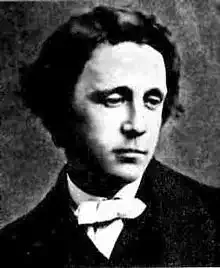
Lewis Carroll
Another Acrostic ( In the style of Father William )
"Are you deaf, Father William!" the young man said,
"Did you hear what I told you just now?
"Excuse me for shouting! Don't waggle your head
"Like a blundering, sleepy old cow!
"A little maid dwelling in Wallington Town,
"Is my friend, so I beg to remark:
"Do you think she'd be pleased if a book were sent down
"Entitled 'The Hunt of the Snark?'"
"Pack it up in brown paper!" the old man cried,
"And seal it with oliveanddove.
"I command you to do it!" he added with pride,
"Nor forget, my good fellow to send her beside
"Easter Greetings, and give her my love."
468
Rudyard Kipling
My Boy Jack
-
'Have you news of my boy Jack?'
Not this tide.
'When d'you think that he'll come back?'
Not with this wind blowing, and this tide.
'Has anyone else had word of him?'
Not this tide.
For what is sunk will hardly swim,
Not with this wind blowing and this tide.
'Oh, dear, what comfort can I find?'
None this tide,
Nor any tide,
Except he did not shame his kind-
Not even with that wind blowing, and that tide.
Then hold your head up all the more,
This tide,
And every tide;
Because he was the son you bore,
And gave to that wind blowing and that tide!
469