
Gratitude

Paul Laurence Dunbar
Signs of the Times
Air a-gittin' cool an' coolah,
Frost a-comin' in de night,
Hicka' nuts an' wa'nuts fallin',
Possum keepin' out o' sight.
Tu'key struttin' in de ba'nya'd,
Nary a step so proud ez his;
Keep on struttin', Mistah Tu'key,
Yo' do' know whut time it is.
Cidah press commence a-squeakin'
Eatin' apples sto'ed away,
Chillun swa'min' 'roun' lak ho'nets,
Huntin' aigs ermung de hay.
Mistah Tu'key keep on gobblin'
At de geese a-flyin' souf,
Oomph! dat bird do' know whut's comin';
Ef he did he'd shet his mouf.
Pumpkin gittin' good an' yallah
Mek me open up my eyes;
Seems lak it's a-lookin' at me
Jes' a-la'in' dah sayin' "Pies."
Tu'key gobbler gwine 'roun' blowin',
Gwine 'roun' gibbin' sass an' slack;
Keep on talkin', Mistah Tu'key,
You ain't seed no almanac.
Fa'mer walkin' th'oo de ba'nya'd
Seein' how things is comin' on,
Sees ef all de fowls is fatt'nin' --
Good times comin' sho's you bo'n.
Hyeahs dat tu'key gobbler braggin',
Den his face break in a smile --
Nebbah min', you sassy rascal,
He's gwine nab you atter while.
Choppin' suet in de kitchen,
Stonin' raisins in de hall,
Beef a-cookin' fu' de mince meat,
Spices groun' -- I smell 'em all.
Look hyeah, Tu'key, stop dat gobblin',
You ain' luned de sense ob feah,
You ol' fool, yo' naik's in dangah,
Do' you know Thanksgibbin's hyeah?
514

Rabindranath Tagore
The Gardener LXXVI: The Fair Was On
The fair was on before the temple.
It had rained from the early morning
and the day came to its end.
Brighter than all the gladness of
the crowd was the bright smile of
a girl who bought for a farthing a
whistle of palm leaf.
The shrill joy of that whistle floated
above all laughter and noise.
An endless throng of people came
and jostled together. The road was
muddy, the river in flood, the field
under water in ceaseless rain.
Greater than all the troubles of
the crowd was a little boy's trouble-he
had not a farthing to buy a painted
stick.
His wistful eyes gazing at the shop
made this whole meeting of men so
pitiful.
507
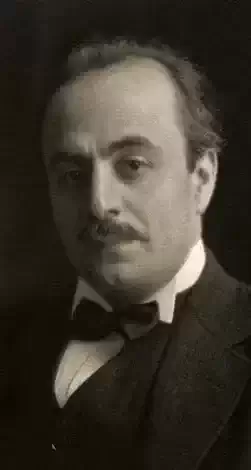
Khalil Gibran
The Beauty of Death XIV
Part One - The Calling
Let me sleep, for my soul is intoxicated with love and
Let me rest, for my spirit has had its bounty of days and nights;
Light the candles and burn the incense around my bed, and
Scatter leaves of jasmine and roses over my body;
Embalm my hair with frankincense and sprinkle my feet with perfume,
And read what the hand of Death has written on my forehead.
Let me rest in the arms of Slumber, for my open eyes are tired;
Let the silver-stringed lyre quiver and soothe my spirit;
Weave from the harp and lute a veil around my withering heart.
Sing of the past as you behold the dawn of hope in my eyes, for
It's magic meaning is a soft bed upon which my heart rests.
Dry your tears, my friends, and raise your heads as the flowers
Raise their crowns to greet the dawn.
Look at the bride of Death standing like a column of light
Between my bed and the infinite;
Hold your breath and listen with me to the beckoning rustle of
Her white wings.
Come close and bid me farewell; touch my eyes with smiling lips.
Let the children grasp my hands with soft and rosy fingers;
Let the ages place their veined hands upon my head and bless me;
Let the virgins come close and see the shadow of God in my eyes,
And hear the echo of His will racing with my breath.
Part Two - The Ascending
I have passed a mountain peak and my soul is soaring in the
Firmament of complete and unbound freedom;
I am far, far away, my companions, and the clouds are
Hiding the hills from my eyes.
The valleys are becoming flooded with an ocean of silence, and the
Hands of oblivion are engulfing the roads and the houses;
The prairies and fields are disappearing behind a white specter
That looks like the spring cloud, yellow as the candlelight
And red as the twilight.
The songs of the waves and the hymns of the streams
Are scattered, and the voices of the throngs reduced to silence;
And I can hear naught but the music of Eternity
In exact harmony with the spirit's desires.
I am cloaked in full whiteness;
I am in comfort; I am in peace.
Part Three - The Remains
Unwrap me from this white linen shroud and clothe me
With leaves of jasmine and lilies;
Take my body from the ivory casket and let it rest
Upon pillows of orange blossoms.
Lament me not, but sing songs of youth and joy;
Shed not tears upon me, but sing of harvest and the winepress;
Utter no sigh of agony, but draw upon my face with your
Finger the symbol of Love and Joy.
Disturb not the air's tranquility with chanting and requiems,
But let your hearts sing with me the song of Eternal Life;
Mourn me not with apparel of black,
But dress in color and rejoice with me;
Talk not of my departure with sighs in your hearts; close
Your eyes and you will see me with you forevermore.
Place me upon clusters of leaves and
Carry my upon your friendly shoulders and
Walk slowly to the deserted forest.
Take me not to the crowded burying ground lest my slumber
Be disrupted by the rattling of bones and skulls.
Carry me to the cypress woods and dig my grave where violets
And poppies grow not in the other's shadow;
Let my grave be deep so that the flood will not
Carry my bones to the open valley;
Let my grace be wide, so that the twilight shadows
Will come and sit by me.
Take from me all earthly raiment and place me deep in my
Mother Earth; and place me with care upon my mother's breast.
Cover me with soft earth, and let each handful be mixed
With seeds of jasmine, lilies and myrtle; and when they
Grow above me, and thrive on my body's element they will
Breathe the fragrance of my heart into space;
And reveal even to the sun the secret of my peace;
And sail with the breeze and comfort the wayfarer.
Leave me then, friends - leave me and depart on mute feet,
As the silence walks in the deserted valley;
Leave me to God and disperse yourselves slowly, as the almond
And apple blossoms disperse under the vibration of Nisan's breeze.
Go back to the joy of your dwellings and you will find there
That which Death cannot remove from you and me.
Leave with place, for what you see here is far away in meaning
From the earthly world. Leave me.
505

Ella Wheeler Wilcox
Vanity Fair
In Vanity Fair, as we bow and smile,
As we talk of the opera after the weather,
As we chat of fashion and fad and style,
We know we are playing a part together.
You know that the mirth she wears, she borrows;
She knows you laugh but to hide your sorrows;
We know that under the silks and laces,
And back of beautiful, beaming faces,
Lie secret trouble and grim despair,
In Vanity Fair.
In Vanity Fair, on dress parade,
Our colors look bright and our swords are gleaming;
But many a uniform's worn and frayed,
And most of the weapons, despite their seeming.
Are dull and blunted and badly battered,
And close inspection will show how tattered
And stained are the banners that float above us.
Our comrades hate, while they swear to love us;
And robed like Pleasure walks gaunt-eyed Care,
In Vanity Fair.
In Vanity Fair, as we strive for place,
As we rush and jostle and crowd and hurry,
We know the goal is not worth the race-
We know the prize is not worth the worry;
That all our gain means loss for another;
That in fighting for self we wound each other;
That the crown of success weighs hard and presse
The brow of the victor with thorns-not caresses;
That honors are empty and worthless to wear,
In Vanity Fair.
But in Vanity Fair, as we pass along,
We meet strong hearts that are worth the knowing;
'Mong poor paste jewels that deck the throng,
We see a solitaire sometimes glowing.
We find grand souls under robes of fashion,
'Neath light demeanors hide strength and passion;
And fair fine honor and Godlike resistance.
In halls of pleasure may have existence;
And we find pure altars and shrines of prayer,
In Vanity Fair.
500

Lord Byron
To A Lady, Who Presented The Author With The Velvet Band Which Bound Her Tresses
This Band, which bound thy yellow hair,
Is mine, sweet girl! Thy pledge of love;
It claims my warmest, dearest care,
Like relics left of saints above.
Oh! I will wear it next my heart;
'Twill blind my soul in bonds to thee;
From me again 't will ne'er depart,
But mingle in the grave with me.
The dew I gather from thy lip
Is not so dear to me as this;
That I but for a moment sip,
And banquet on a transient bliss:
This will recall each youthful scene,
E'en when our lives are on the wane;
The leaves of Love will still be green
When Memory bids them bud again.
Oh! little lock of golden hue,
In gently waving ringlet curl'd
By the dear head on which you grow,
I would not lose you for a world.
Not though a thousand more adorn
The polish'd brow where once you shone,
Like rays which gild a cloudless morn,
Beneath Columbia's fervid zone.
500
Ella Wheeler Wilcox
The Boys' And Girls' Thanksgiving of 1892
Never since the race was started,
Had a boy in any clime,
Cause to be so thankful-hearted,
As the boys of present time.
Not a girl in old times living-
Let the world talk as it may-
Found such reasons for Thanksgiving,
As the girls who live to-day!
Grandmas, in their corners sitting,
Toiling till the day grew late,
What knew they with endless knitting,
Of the jolly roller-skate?
Grandpas sitting by the fender,
Reading by the faggots' blaze,
What knew they of modern splendor
Found in incandescent rays?
Where they toiled in bitter weather,
Braving rain and snow and sleet,
Gathering sticks of wood together,
We have radiators' heat.
But these fruits of modern science
They first planted seed by seed,
In their strength and self-reliance
We may find a noble creed.
With the dawn of great inventions,
Came the anti-warring days.
Men are sick of armed contentions,
God be thanked with heart-felt praise.
Once a boy was trained for fighting,
Now the world is better taught,
'Tis an age when wrongs are righting
By the force of common thought.
Once a girl was trained for sewing,
Spinning, knitting, nothing more.
She must never think of knowing
Aught of things outside her door.
If she soared above her spinning,
If she sought a life more broad,
She was looked upon as sinning
'Gainst the laws of man and God.
Now a girl is taught she's human,
Brain and body, soul and heart
All are needed by the woman
Who to-day would play her part.
Swift and sure the world advances,
Let the critic carp who may.
God be praised for all the chances
Boys and girls enjoy to-day.
502

Rudyard Kipling
Darzee's Chaunt
Singer and tailor am I--
Doubled the joys that I know--
Proud of my lilt to the sky,
Proud of the house that I sew--
Over and under, so weave I my music--so weave I the house that
I sew.
Sing to your fledglings again,
Mother, O lift up your head!
Evil that plagued us is slain,
Death in the garden lies dead.
Terror that hid in the roses is impotent--flung on the dung-hill
and dead!
Who hath delivered us, who?
Tell me his nest and his name.
Rikki, the valiant, the true,
Tikki, with eyeballs of flame,
Rik-tikki-tikki, the ivory-fanged, the Hunter with eyeballs of
flame.
Give him the Thanks of the Birds,
Bowing with tail-feathers spread!
Praise him in nightingale-words--
Nay, I will praise him instead.
I will sing you the praise of the bottle-tailed Rikki with
eyeballs of red!
503
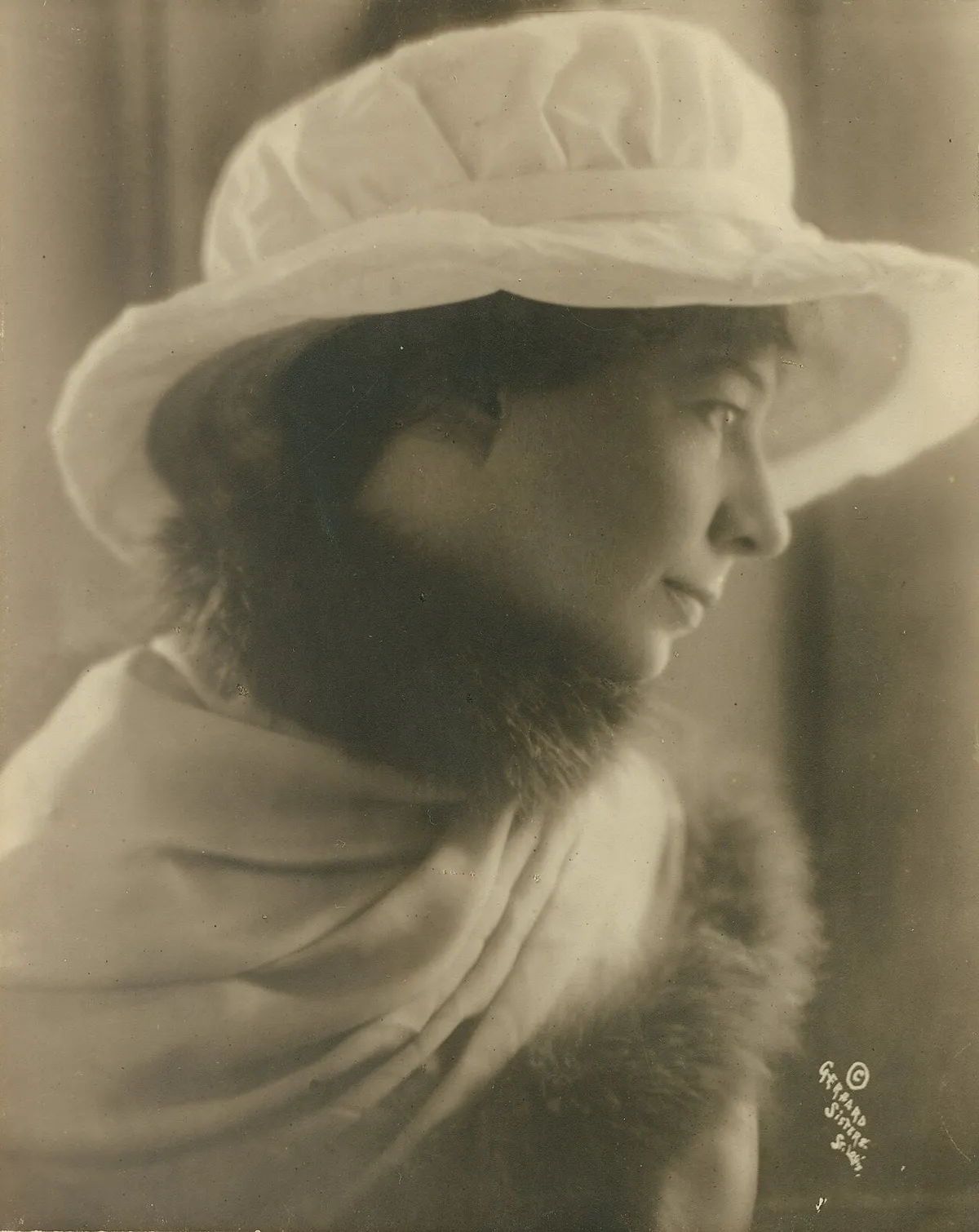
Sara Teasdale
Open Windows
Out of the window a sea of green trees
Lift their soft boughs like the arms of a dancer,
They beckon and call me, "Come out in the sun!"
But I cannot answer.
I am alone with Weakness and Pain,
Sick abed and June is going,
I cannot keep her, she hurries by
With the silver-green of her garments blowing.
Men and women pass in the street
Glad of the shining sapphire weather,
But we know more of it than they,
Pain and I together.
They are the runners in the sun,
Breathless and blinded by the race,
But we are watchers in the shade
Who speak with Wonder face to face.
498
Rabindranath Tagore
Salutation
In one salutation to thee, my God,
let all my senses spread out and touch this world at thy feet.
Like a rain-cloud of July
hung low with its burden of unshed showers
let all my mind bend down at thy door in one salutation to thee.
Let all my songs gather together their diverse strains into a single current
and flow to a sea of silence in one salutation to thee.
Like a flock of homesick cranes flying night and day
back to their mountain nests
let all my life take its voyage to its eternal home
in one salutation to thee.
497

Henry Wadsworth Longfellow
The Broken Oar
Once upon Iceland's solitary strand
A poet wandered with his book and pen,
Seeking some final word, some sweet Amen,
Wherewith to close the volume in his hand.
The billows rolled and plunged upon the sand,
The circling sea-gulls swept beyond his ken,
And from the parting cloud-rack now and then
Flashed the red sunset over sea and land.
Then by the billows at his feet was tossed
A broken oar; and carved thereon he read,
'Oft was I weary, when I toiled at thee';
And like a man, who findeth what was lost,
He wrote the words, then lifted up his head,
And flung his useless pen into the sea.
499
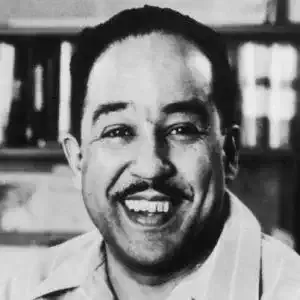
Langston Hughes
Helen Keller
She,
In the dark,
Found light
Brighter than many ever see.
She,
Within herself,
Found loveliness,
Through the soul's own mastery.
And now the world receives
From her dower:
The message of the strength
Of inner power.
In the dark,
Found light
Brighter than many ever see.
She,
Within herself,
Found loveliness,
Through the soul's own mastery.
And now the world receives
From her dower:
The message of the strength
Of inner power.
499
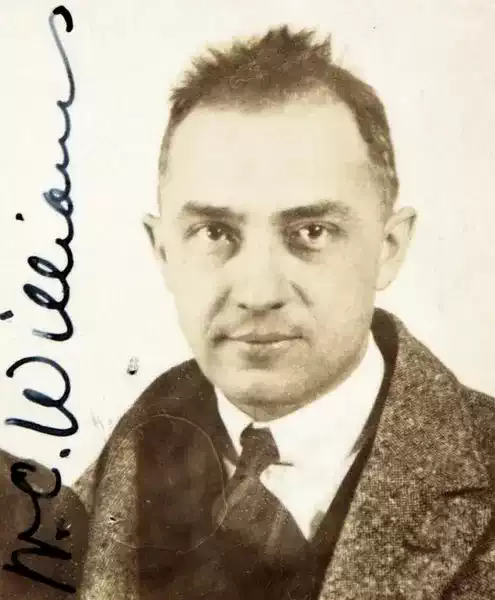
William Carlos Williams
January Morning
I
I have discovered that most of
the beauties of travel are due to
the strange hours we keep to see them:
the domes of the Church of
the Paulist Fathers in Weehawken
against a smoky dawn -- the heart stirred --
are beautiful as Saint Peters
approached after years of anticipation.
II
Though the operation was postponed
I saw the tall probationers
in their tan uniforms
hurrying to breakfast!
III
-- and from basement entries
neatly coiffed, middle aged gentlemen
with orderly moustaches and
well-brushed coats
IV
-- and the sun, dipping into the avenues
streaking the tops of
the irregular red houselets,
and
the gay shadows drooping and drooping.
V
-- and a young horse with a green bed-quilt
on his withers shaking his head:
bared teeth and nozzle high in the air!
VI
--and a semicircle of dirt-colored men
about a fire bursting from an old
ash can,
VII
-- and the worn,
blue car rails (like the sky!)
gleaming among the cobbles!
VIII
-- and the rickety ferry-boat "Arden"!
What an object to be called "Arden"
among the great piers, -- on the
ever new river!
"Put me a Touchstone
at the wheel, white gulls, and we'll
follow the ghost of the Half Moon
to the North West Passage -- and through!
(at Albany!) for all that!"
IX
Exquisite brown waves -- long
circlets of silver moving over you!
enough with crumbling ice crusts among you!
The sky has come down to you,
lighter than tiny bubbles, face to
face with you!
His spirit is
a white gull with delicate pink feet
and a snowy breast for you to
hold to your lips delicately!
X
The young doctor is dancing with happiness
in the sparkling wind, alone
at the prow of the ferry! He notices
the curdy barnacles and broken ice crusts
left at the slip's base by the low tide
and thinks of summer and green
shell-crusted ledges among
the emerald eel-grass!
XI
Who knows the Palisades as I do
knows the river breaks east from them
above the city -- but they continue south
-- under the sky -- to bear a crest of
little peering houses that brighten
with dawn behind the moody
water-loving giants of Manhattan.
XII
Long yellow rushes bending
above the white snow patches;
purple and gold ribbon
of the distant wood:
what an angle
you make with each other as
you lie there in contemplation.
XIII
Work hard all your young days
and they'll find you too, some morning
staring up under
your chiffonier at its warped
bass-wood bottom and your soul --
out!
-- among the little sparrows
behind the shutter.
XIV
-- and the flapping flags are at
half-mast for the dead admiral.
XV
All this --
was for you, old woman.
I wanted to write a poem
that you would understand.
For what good is it to me
if you can't understand it?
But you got to try hard --
But --
Well, you know how
the young girls run giggling
on Park Avenue after dark
when they ought to be home in bed?
Well,
that's the way it is with me somehow.
499

Phillis Wheatley
On The Death Of Rev. Mr. George Whitefield
HAIL, happy saint, on thine immortal throne,
Possest of glory, life, and bliss unknown;
We hear no more the music of thy tongue,
Thy wonted auditories cease to throng.
Thy sermons in unequall'd accents flow'd,
And ev'ry bosom with devotion glow'd;
Thou didst in strains of eloquence refin'd
Inflame the heart, and captivate the mind.
Unhappy we the setting sun deplore,
So glorious once, but ah! it shines no more.
Behold the prophet in his tow'ring flight!
He leaves the earth for heav'n's unmeasur'd height,
And worlds unknown receive him from our sight.
There Whitefield wings with rapid course his way,
And sails to Zion through vast seas of day.
Thy pray'rs, great saint, and thine incessant cries
Have pierc'd the bosom of thy native skies.
Thou moon hast seen, and all the stars of light,
How he has wrestled with his God by night.
He pray'd that grace in ev'ry heart might dwell,
He long'd to see America excell;
He charg'd its youth that ev'ry grace divine
Should with full lustre in their conduct shine;
That Saviour, which his soul did first receive,
The greatest gift that ev'n a God can give,
He freely offer'd to the num'rous throng,
That on his lips with list'ning pleasure hung.
"Take him, ye wretched, for your only good,
"Take him ye starving sinners, for your food;
"Ye thirsty, come to this life-giving stream,
"Ye preachers, take him for your joyful theme;
"Take him my dear Americans, he said,
"Be your complaints on his kind bosom laid:
"Take him, ye Africans, he longs for you,
"Impartial Saviour is his title due:
"Wash'd in the fountain of redeeming blood,
"You shall be sons, and kings, and priests to God."
Great Countess,* we Americans revere
Thy name, and mingle in thy grief sincere;
New England deeply feels, the Orphans mourn,
Their more than father will no more return.
But, though arrested by the hand of death,
Whitefield no more exerts his lab'ring breath,
Yet let us view him in th' eternal skies,
Let ev'ry heart to this bright vision rise;
While the tomb safe retains its sacred trust,
Till life divine re-animates his dust.
*The Countess of Huntingdon, to whom Mr. Whitefield was
Chaplain.
487
Sara Teasdale
June Night
Oh Earth, you are too dear to-night,
How can I sleep while all around
Floats rainy fragrance and the far
Deep voice of the ocean that talks to the ground?
Oh Earth, you gave me all I have,
I love you, I love you, -- oh what have I
That I can give you in return --
Except my body after I die?
How can I sleep while all around
Floats rainy fragrance and the far
Deep voice of the ocean that talks to the ground?
Oh Earth, you gave me all I have,
I love you, I love you, -- oh what have I
That I can give you in return --
Except my body after I die?
490

Robert Frost
The Exposed Nest
You were forever finding some new play.
So when I saw you down on hands and knees
I the meadow, busy with the new-cut hay,
Trying, I thought, to set it up on end,
I went to show you how to make it stay,
If that was your idea, against the breeze,
And, if you asked me, even help pretend
To make it root again and grow afresh.
But 'twas no make-believe with you today,
Nor was the grass itself your real concern,
Though I found your hand full of wilted fern,
Steel-bright June-grass, and blackening heads of clovers.
'Twas a nest full of young birds on the ground
The cutter-bar had just gone champing over
(Miraculously without tasking flesh)
And left defenseless to the heat and light.
You wanted to restore them to their right
Of something interposed between their sight
And too much world at once--could means be found.
The way the nest-full every time we stirred
Stood up to us as to a mother-bird
Whose coming home has been too long deferred,
Made me ask would the mother-bird return
And care for them in such a change of scene
And might out meddling make her more afraid.
That was a thing we could not wait to learn.
We saw the risk we took in doing good,
But dared not spare to do the best we could
Though harm should come of it; so built the screen
You had begun, and gave them back their shade.
All this to prove we cared. Why is there then
No more to tell? We turned to other things.
I haven't any memory--have you?--
Of ever coming to the place again
To see if the birds lived the first night through,
And so at last to learn to use their wings.
487
Rudyard Kipling
The Merchantmen
King Solomon drew merchantmen,
Because of his desire
For peacocks, apes, and ivory,
From Tarshish unto Tyre:
With cedars out of Lebanon
Which Hiram rafted down,
But we be only sailormen
That use in London Town.
Coastwise -- cross-seas -- round the world and back again --
Where the flaw shall head us or the full Trade suits --
Plain-sail -- storm-sail -- lay your board and tack again --
And that's the way we'll pay Paddy Doyle for his boots!
We bring no store of ingots,
Of spice or precious stones,
But that we have we gathered
With sweat and aching bones:
In flame beneath the tropics,
In frost upon the floe,
And jeopardy of every wind
That does between them go.
And some we got by purchase,
And some we had by trade,
And some we found by courtesy
Of pike and carronade --
At midnight, 'mid-sea meetings,
For charity to keep,
And light the rolling homeward-bound
That rode a foot too deep.
By sport of bitter weather
We're walty, strained, and scarred
From the kentledge on the kelson
To the slings upon the yard.
Six oceans had their will of us
To carry all away --
Our galley's in the Baltic,
And our boom's in Mossel Bay!
We've floundered off the Texel,
Awash with sodden deals,
We've slipped from Valparaiso
With the Norther at our heels:
We've ratched beyond the Crossets
That tusk the Southern Pole,
And dipped our gunnels under
To the dread Agulhas roll.
Beyond all outer charting
We sailed where none have sailed,
And saw the land-lights burning
On islands none have hailed;
Our hair stood up for wonder,
But, when the night was done,
There danced the deep to windward
Blue-empty 'neath the sun!
Strange consorts rode beside us
And brought us evil luck;
The witch-fire climbed our channels,
And flared on vane and truck:
Till, through the red tornado,
That lashed us nigh to blind,
We saw The Dutchman plunging,
Full canvas, head to wind!
We've heard the Midnight Leadsman
That calls the black deep down --
Ay, thrice we've heard The Swimmer,
The Thing that may not drown.
On frozen bunt and gasket
The sleet-cloud drave her hosts,
When, manned by more than signed with us,
We passed the Isle o' Ghosts!
And north, amid the hummocks,
A biscuit-toss below,
We met the silent shallop
That frighted whalers know;
For, down a cruel ice-lane,
That opened as he sped,
We saw dead Henry Hudson
Steer, North by West, his dead.
So dealt God's waters with us
Beneath the roaring skies,
So walked His signs and marvels
All naked to our eyes:
But we were heading homeward
With trade to lose or make --
Good Lord, they slipped behind us
In the tailing of our wake!
Let go, let go the anchors;
Now shamed at heart are we
To bring so poor a cargo home
That had for gift the sea!
Let go the great bow-anchors --
Ah, fools were we and blind --
The worst we stored with utter toil,
The best we left behind!
Coastwise -- cross-seas -- round the world and back again,
Whither flaw shall fail us or the Trades drive down:
Plain-sail -- storm-sail -- lay your board and tack again --
And all to bring a cargo up to London Town!
491
Rabindranath Tagore
The Gardener LXI: Peace, My Heart
Peace, my heart, let the time for
the parting be sweet.
Let it not be a death but completeness.
Let love melt into memory and pain
into songs.
Let the flight through the sky end
in the folding of the wings over the
nest.
Let the last touch of your hands be
gentle like the flower of the night.
Stand still, O Beautiful End, for a
moment, and say your last words in
silence.
I bow to you and hold up my lamp
to light you on your way.
487

Elizabeth Barrett Browning
Adequacy
NOW, by the verdure on thy thousand hills,
Beloved England, doth the earth appear
Quite good enough for men to overbear
The will of God in, with rebellious wills !
We cannot say the morning-sun fulfils
Ingloriously its course, nor that the clear
Strong stars without significance insphere
Our habitation: we, meantime, our ills
Heap up against this good and lift a cry
Against this work-day world, this ill-spread feast,
As if ourselves were better certainly
Than what we come to. Maker and High Priest,
I ask thee not my joys to multiply,--
Only to make me worthier of the least.
487
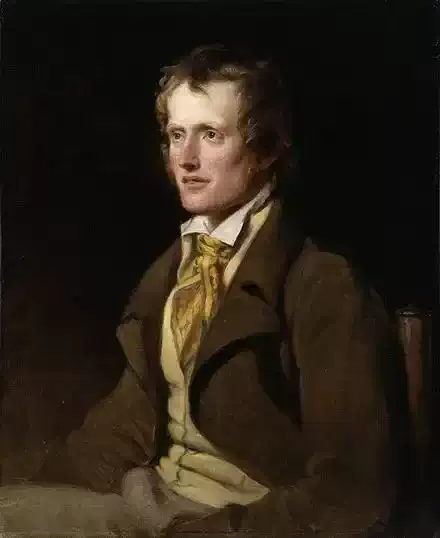
John Clare
The Thrush's Nest
Within a thick and spreading hawthorn bush
That overhung a molehill large and round,
I heard from morn to morn a merry thrush
Sing hymns to sunrise, and I drank the sound
With joy; and often, an intruding guest,
I watched her secret toil from day to day -
How true she warped the moss to form a nest,
And modelled it within with wood and clay;
And by and by, like heath-bells gilt with dew,
There lay her shining eggs, as bright as flowers,
Ink-spotted over shells of greeny blue;
And there I witnessed, in the sunny hours,
A brood of nature's minstrels chirp and fly,
Glad as the sunshine and the laughing sky.
488
Rudyard Kipling
The Consolations of Memory
Circa -- Done out of Boethius by Geoffrey Chaucer
Blessed was our first age and morning-time. Then were no
waies tarren, ne no cars numberen, but each followed his owne
playing-busyness to go about singly or by large interspaces,
for to leden his viage after his luste and layen under clene hedge.
Jungling there was not, nor the overtaking wheele, and all those
now cruel clarions were full-hushed and full-still. Then nobile
horses, lest they should make the chariots moveable to run by
cause of this new feare, we did not press, and were apayed by
sweete thankes of him that drave. There was not cursings ne
adventure of death blinded bankes betweene, but good-fellowship
of yoke-mates at ignorance equal, and a one pillar of dust covered
all exodus.... But, see now how the blacke road hath
strippen herself of hearte and beauty where the dumbe lampe of
Tartarus winketh red, etc.
488

Walt Whitman
Excelsior
WHO has gone farthest? For lo! have not I gone farther?
And who has been just? For I would be the most just person of the
earth;
And who most cautious? For I would be more cautious;
And who has been happiest? O I think it is I! I think no one was ever
happier than I;
And who has lavish'd all? For I lavish constantly the best I have;
And who has been firmest? For I would be firmer;
And who proudest? For I think I have reason to be the proudest son
alive--for I am the son of the brawny and tall-topt city;
And who has been bold and true? For I would be the boldest and truest
being of the universe;
And who benevolent? For I would show more benevolence than all the
rest;
And who has projected beautiful words through the longest time? Have
I not outvied him? have I not said the words that shall stretch
through longer time?
And who has receiv'd the love of the most friends? For I know what it
is to receive the passionate love of many friends;
And who possesses a perfect and enamour'd body? For I do not believe
any one possesses a more perfect or enamour'd body than mine;
And who thinks the amplest thoughts? For I will surround those
thoughts;
And who has made hymns fit for the earth? For I am mad with devouring
extasy to make joyous hymns for the whole earth!
489
Khalil Gibran
Friendship IXX
And a youth said, "Speak to us of Friendship."
Your friend is your needs answered.
He is your field which you sow with love and reap with thanksgiving.
And he is your board and your fireside.
For you come to him with your hunger, and you seek him for peace.
When your friend speaks his mind you fear not the "nay" in your own mind, nor do you
withhold the "ay."
And when he is silent your heart ceases not to listen to his heart;
For without words, in friendship, all thoughts, all desires, all expectations are born and
shared, with joy that is unacclaimed.
When you part from your friend, you grieve not;
For that which you love most in him may be clearer in his absence, as the mountain to
the climber is clearer from the plain.
And let there be no purpose in friendship save the deepening of the spirit.
For love that seeks aught but the disclosure of its own mystery is not love but a net
cast forth: and only the unprofitable is caught.
And let your best be for your friend.
If he must know the ebb of your tide, let him know its flood also.
For what is your friend that you should seek him with hours to kill?
Seek him always with hours to live.
For it is his to fill your need, but not your emptiness.
And in the sweetness of friendship let there be laughter, and sharing of pleasures.
For in the dew of little things the heart finds its morning and is refreshed.
487
Ella Wheeler Wilcox
Christ Crucified
Now ere I slept, my prayer had been that I might see my way
To do the will of Christ, our Lord and Master, day by day;
And with this prayer upon my lips, I knew not that I dreamed,
But suddenly the world of night a pandemonium seemed.
From forest, and from slaughter house, from bull ring, and from stall,
There rose an anguished cry of pain, a loud, appealing call;
As man – the dumb beast’s next of kin – with gun, and whip, and knife,
Went pleasure-seeking through the earth, blood-bent on taking life.
From trap, and cage, and house, and zoo, and street, that awful strain
Of tortured creatures rose and swelled the orchestra of pain.
And then methought the gentle Christ appeared to me and spoke:
‘I called you, but ye answered not’ – and in my fear I woke.
Then next I heard the roar of mills; and moving through the noise,
Like phantoms in an underworld, were little girls and boys.
Their backs were bent, their brows were pale, their eyes were sad and old;
But by the labour of their hands greed added gold to gold.
Again the Presence and the Voice: ‘Behold the crimes I see,
As ye have done it unto these, so have ye done to me.’
Again I slept. I seemed to climb a hard, ascending track;
And just behind me laboured one whose patient face was black.
I pitied him; but hour by hour he gained upon the path;
He stood beside me, stood upright – and then I turned in wrath.
‘Go back! ’ I cried. ‘What right have you to walk beside me here?
For you are black, and I am white.’ I paused struck dumb with fear.
For lo! the black man was not there, but Christ stood in his place;
And oh! the pain, the pain, the pain that looked from his dear face.
Now when I woke, the air was rife with that sweet, rhythmic din
Which tells the world that Christ has come to save mankind from sin.
And through the open door of church and temple passed a throng,
To worship Him, with bended knee with sermon, and with song.
But over all I heard the cry of hunted, mangled things;
Those creatures which are part of God, though they have hoofs and wings.
I saw the mill, the mine, and shop, the little slaves of greed;
I heard the strife of race with race, all sprung from one God-seed.
And then I bowed my head in shame, and in contrition cried –
‘Lo, after nineteen hundred years, Christ still is crucified.’
484

Ezra Pound
Alf’s Twelfth Bit
BALLAD FOR THE TIMES' SPECIAL SILVER NUMBER
Sez the Times a silver lining
Is what has set us pining,
Montague, Montague!
In the season sad and weary
When our minds are very bleary,
Montague, Montague!
There is Sir Hen. Deterding
His phrases interlarding,
Montague, Montague!
With the this and that and what
For putting silver on the spot,
Montague, Montague!
Just drop it in the slot
And it will surely boil the pot,
Montague, Montague!
Gold, of course, is solid too,
But some silver set to stew
Might do, too. Montague!
With a lively wood-pulp ‘ad’.
To cheer the bad and sad,
Montague, Montague!
485