
Gratitude
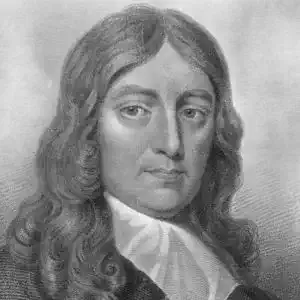
John Milton
Sonnet 18
XVIII
Cyriack, whose Grandsire on the Royal Bench
Of Brittish Themis, with no mean applause
Pronounc't and in his volumes taught our Lawes,
Which others at their Barr so often wrench:
To day deep thoughts resolve with me to drench
In mirth, that after no repenting drawes;
Let Euclid rest and Archimedes pause,
And what the Swede intend, and what the French.
To measure life, learn thou betimes, and know
Toward solid good what leads the nearest way;
For other things mild Heav'n a time ordains,
And disapproves that care, though wise in show,
That with superfluous burden loads the day,
And when God sends a cheerful hour, refrains.
542

Paul Laurence Dunbar
Common Things
I like to hear of wealth and gold,
And El Doradoes in their glory;
I like for silks and satins bold
To sweep and rustle through a story.
The nightingale is sweet of song;
The rare exotic smells divinely;
And knightly men who stride along,
The role heroic carry finely.
But then, upon the other hand,
Our minds have got a way of running
To things that aren't quite so grand,
Which, maybe, we are best in shunning.
For some of us still like to see
The poor man in his dwelling narrow,
The hollyhock, the bumblebee,
The meadow lark, and chirping sparrow.
We like the man who soars and sings
With high and lofty inspiration;
But he who sings of common things
Shall always share our admiration.
536

Ezra Pound
Night Litany
O Dieu, purifiez nos cceurs!
Purifiez nos coeurs !
Yea the lines hast thou laid unto me
in pleasant places,
And the beauty of this thy Venice
hast thou shown unto me
Until is its loveliness become unto me
a thing of tears.
O God, what great kindness
have we done in times past
and forgotten it,
That thou givest this wonder unto us,
O God of waters?
O God of the night,
What great sorrow
Cometh unto us,
That thou thus repayest us
Before the time of its coming?
O God of silence,
Purifiez nos coeurs,
Purifiez nos coeurs,
For we have seen
The glory of the shadow of the
likeness of thine handmaid,
Yea, the glory of the shadow
of thy Beauty hath walked
Upon the shadow of the waters
In this thy Venice.
And before the holiness
Of the shadow of thy handmaid
Have I hidden mine eyes,
O God of waters.
O God of silence,
Purifiez nos coeurs,
Purifiez nos coeurs,
O God of waters,
make clean our hearts within us,
For I have seen the
Shadow of this thy Venice
Floating upon the waters,
And thy stars
Have seen this thing, out of their far courses
Have they seen this thing,
O God of waters,
Even as are thy stars
Silent unto us in their far-coursing,
Even so is mine heart
become silent within me.
Purifiez nos coeurs,
O God of the silence,
Purifiez nos coeurs,
O God of waters.
534

Rabindranath Tagore
Lover's Gifts XIII: Last Night in the Garden
Last night in the garden I offered you my youth's foaming wine. You
lifted the cup to your lips, you shut your eyes and smiled while
I raised your veil, unbound your tresses, drawing down upon my
breast your face sweet with its silence, last night when the moon's
dream overflowed the world of slumber.
To-day in the dew-cooled calm of the dawn you are walking to
God's temple, bathed and robed in white, with a basketful of
flowers in your hand. I stand aside in the shade under the tree,
with my head bent, in the calm of the dawn by the lonely road to
the temple.
536

William Wordsworth
The Sparrow's Nest
BEHOLD, within the leafy shade,
Those bright blue eggs together laid!
On me the chance-discovered sight
Gleamed like a vision of delight.
I started---seeming to espy
The home and sheltered bed,
The Sparrow's dwelling, which, hard by
My Father' house, in wet or dry
My sister Emmeline and I
Together visited.
She looked at it and seemed to fear it;
Dreading, tho' wishing, to be near it:
Such heart was in her, being then
A little Prattler among men.
The Blessing of my later year
Was with me when a boy:
She gave me eyes, she gave me ears;
And humble care, and delicate fears;
A heart, the fountain of sweet tears;
And love, and thought, and joy.
540

Kazi Nazrul Islam
Save Me From All Pettiness
Save me from all smallness
O my Lord, the Graciousness!
Teach me, O Lord, no sin is worse
than the sin of pettiness.
Even if I am a sinner over hundred births,
even if for eons I sojourn in hell,
Even then, I know Lord, there is forgiveness from you.
But is there forgiveness for pettiness? My Lord, Pray tell!
Please, my Lord, in my heart
don't constrict the space.
Friends, foes or strangers alike
Let my heart be able to embrace.
Let me not speak ill of others, nor harbor envy;
At others' joy, let be lustrous my soul,
Let me weep for that wretched-hapless
whose heart is like a wormhole!
[Original: Bengali, Translator: Dr. Mohammad Omar Farooq ]
537

Rudyard Kipling
Mother o' Mine
If I were hanged on the highest hill,
Mother o' mine, O mother o' mine!
I know whose love would follow me still,
Mother o' mine, O mother o' mine!
If I were drowned in the deepest sea,
Mother o' mine, O mother o' mine!
I know whose tears would come down to me,
Mother o' mine, O mother o' mine!
If I were damned of body and soul,
I know whose prayers would make me whole,
Mother o' mine, O mother o' mine!
Mother o' mine, O mother o' mine!
I know whose love would follow me still,
Mother o' mine, O mother o' mine!
If I were drowned in the deepest sea,
Mother o' mine, O mother o' mine!
I know whose tears would come down to me,
Mother o' mine, O mother o' mine!
If I were damned of body and soul,
I know whose prayers would make me whole,
Mother o' mine, O mother o' mine!
528

Emily Dickinson
If she had been the Mistletoe
If she had been the Mistletoe
And I had been the Rose-
How gay upon your table
My velvet life to close-
Since I am of the Druid,
And she is of the dew
I'll
deck Tradition's buttonhole-
And send the Rose to you.
And I had been the Rose-
How gay upon your table
My velvet life to close-
Since I am of the Druid,
And she is of the dew
I'll
deck Tradition's buttonhole-
And send the Rose to you.
528
Rudyard Kipling
To James Whitcomb Riley
Your trail runs to the westward,
And mine to my own place;
There is water between our lodges,
And I have not seen your face.
But since I have read your verses
'Tis easy to guess the rest,--
Because in the hearts of the children
There is neither East nor West.
Born to a thousand fortunes
Of good or evil hap,
Once they were kings together,
Throned in a mother's lap.
Surely they know that secret--
Yellow and black and white--
When they meet as kings together
In innocent dreams at night.
By a moon they all can play with--
Grubby and grimed and unshod,
Very happy together,
And very near to God.
Your trail runs to the westward,
And mine to my own place:
There is water between our lodges,
And you cannot see my face.--
And that is well--for crying
Should neither be written nor seen,
But if I call you Smoke-in-the-Eyes,
I know you will know what I mean.
530
Rabindranath Tagore
My Dependence
I like to be dependent, and so for ever
with warmth and care of my mother
my father , to love, kiss and embrace
wear life happily in all their grace.
I like to be dependent, and so for ever
on my kith and kin, for they all shower
harsh and warm advices, complaints
full wondering ,true and info giants.
I like to be dependent, and so for ever
for my friends, chat and want me near
with domestic,family and romantic tips
colleagues as well , guide me work at risks.
I like to be dependent, and so for ever
for my neighbours too, envy at times
when at my rise of fortune like to hear
my daily steps , easy and odd things too.
532

Lord Byron
Address, Spoken At The Opening Of Drury-Lane Theatre. Saturday, October
10, 1812
In one dread night our city saw, and sigh'd,
Bow'd to the dust, the Drama's tower of pride
In one short hour beheld the blazing fane,
Apollo sink, and Shakspeare cease to reign.
Ye who beheld, (oh! sight admired and mourn'd,
Whose radiance mock'd the ruin it adorn'd!)
Through clouds of fire the massy fragments riven,
Like Israel's pillar, chase the night from heaven;
Saw the long column of revolving flames
Shake its red shadow o'er the startled Thames, While thousands, throng'd around the
burning dome,
Shrank back appall'd, and trembled for their home,
As glared the volumed blaze, and ghastly shone
The skies, with lightnings awful as their own,
Till blackening ashes and the lonely wall
Usurp 'd the Muse's realm, and mark'd her fall;
Say shall
this new, nor less aspiring pile,
Rear'd where once rose the mightiest in our isle,
Know the same favour which the former knew,
A shrine for Shakspeareworthy
him and you?
Yesit
shall bethe
magic of that name
Defies the scythe of time, the torch of flame;
On the same spot still consecrates the scene,
And bids the Drama be where she hath been:
This fabric's birth attests the potent spell
Indulge
our honest pride, and say, How well!
As soars this fare to emulate the last,
Oh! might we draw our omens from the past,
Some hour propitious to our prayers may boast
Names such as hallow still the dome we lost.
On Drury first your Siddons' thrilling art
O'erwhelm'd the gentlest, storm'd the sternest heart.
On Drury, Garrick's latest laurels grew;
Here your last tears retiring Roscius drew,
Sigh'd his last thanks, and wept his last adieu:
But still for living wit the wreaths may bloom,
That only waste their odours o'er the tomb.
Such Drury claim'd and claimsnor
you refuse
One tribute to revive his slumbering muse;
With garlands deck your own Menander's head,
Nor hoard your honours idly for the dead.
Dear are the days which made our annals bright,
Ere Garrick fled, or Brinsley ceased to write.
Heirs to their labours, like all highborn
heirs,
Vain of our ancestry as they of theirs;
While thus Remembrance borrows Banquo's glass
To claim the sceptred shadows as they pass,
And we the mirror hold, where imaged shine
Immortal names, emblazon'd on our line,
Pauseere
their feebler offspring you condemn,
Reflect how hard the task to rival them!
Friends of the stage! to whom both Players and Plays
Must sue alike for pardon or for praise.
Whose judging voice and eye alone direct
The boundless power to cherish or reject;
If e'er frivolity has led to fame,
And made us blush that you forbore to blame;
If e'er the sinking stage could condescend
To soothe the sickly taste it dare not mend,
All past reproach may present scenes refute,
And censure, wisely loud, be justly mute!
Oh! since your fiat stamps the Drama's laws,
Forbear to mock us with misplaced applause;
So pride shall doubly nerve the actor's powers,
And reason's voice be echo'd back by ours!
This greeting o'er, the ancient rule obey'd
The Drama's homage by her herald paid,
Receive our welcome too, whose every tone
Springs from our hearts, and fair would win your own.
The curtain risesmay
our stage unfold
Scenes not unworthy Drury's days of old!
Britons our judges, Nature for our guide,
Still may we pleaselong,
long may you preside.
528
Kazi Nazrul Islam
You Burn Me in the Sorrow's Fire
However intensely you burn me in sorrow's fire.
If l am constantly burnt my heart will get purified and I will get closer to you.
After the drought shall I come the rain and
my heart will get touched by your kindness.
The drought will not remain and the dry tree
will again smile with flowers.
Once I've got your forehead's fire,
you beautiful one
I am sure to get the caressing Ganges' touch
the cool moon's feel.
Oh beneficent one! You remind me time and again
with the shock of a blow
You have thought of me again after all these days.
[Original: Tumi jotoi doho na; Translation: Abu Rushd]
522
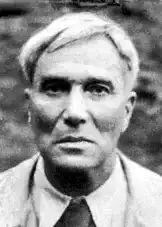
Boris Pasternak
Beloved, with the spent and sickly fumes...
Beloved, with the spent and sickly fumes
Of rumour's cinders all the air is filled,
But you are the engrossing lexicon
Of fame mysterious and unrevealed,
And fame it is the soil's strong pull.
Would that I more erect were sprung!
But even so I shall be called
The native son of my own native tongue.
The poets' age no longer sets their rhyme,
Now, in the sweep of country plots and roads,
Lermontov is rhymed with summertime,
And Pushkin rhymes with geese and snow.
And my wish is that when we die,
Our circle closed, and hence depart,
We shall be set in closer rhyme
Than binds the auricle and the heart.
And may our harmony unified
Some listener's muffled ear caress
With all that we do now imbibe,
And shall draw in through mouths of grass.
526
John Milton
Sonnet X: Daughter to that good Earl
To the Lady Margaret Ley
Daughter to that good Earl, once President
Of England's Council, and her Treasury,
Who lived in both, unstained with gold or fee,
And left them both, more in himself content,
Till sad the breaking of that Parliament
Broke him, as that dishonest victory
At Chaeronea, fatal to liberty,
Killed with report that old man eloquent.
Though later born than to have known the days
Wherein your father flourished, yet by you,
Madam, methinks I see him living yet;
So well your words his noble virtues praise,
That all both judge you to relate them true,
And to possess them, honoured Margaret.
518

Emily Jane Brontë
My Comforter
Well hast thou spoken, and yet, not taught
A feeling strange or new;
Thou hast but roused a latent thought,
A cloud-closed beam of sunshine, brought
To gleam in open view.
Deep down, concealed within my soul,
That light lies hid from men;
Yet, glows unquenched - though shadows roll,
Its gentle ray cannot control,
About the sullen den.
Was I not vexed, in these gloomy ways
To walk alone so long?
Around me, wretches uttering praise,
Or howling o'er their hopeless days,
And each with Frenzy's tongue; -
A brotherhood of misery,
Their smiles as sad as sighs;
Whose madness daily maddened me,
Distorting into agony
The bliss before my eyes!
So stood I, in Heaven's glorious sun,
And in the glare of Hell;
My spirit drank a mingled tone,
Of seraph's song, and demon's moan;
What my soul bore, my soul alone
Within itself may tell!
Like a soft air, above a sea,
Tossed by the tempest's stir;
A thaw-wind, melting quietly
The snow-drift, on some wintry lea;
No: what sweet thing resembles thee,
My thoughtful Comforter?
And yet a little longer speak,
Calm this resentful mood;
And while the savage heart grows meek,
For other token do not seek,
But let the tear upon my cheek
Evince my gratitude!
519

Elizabeth Barrett Browning
To Flush, My Dog
Loving friend, the gift of one
Who her own true faith has run
Through thy lower nature,
Be my benediction said
With my hand upon thy head,
Gentle fellow-creature!
Like a lady's ringlets brown,
Flow thy silken ears adown
Either side demurely
Of thy silver-suited breast
Shining out from all the rest
Of thy body purely.
Darkly brown thy body is,
Till the sunshine striking this
Alchemise its dullness,
When the sleek curls manifold
Flash all over into gold
With a burnished fulness.
Underneath my stroking hand,
Startled eyes of hazel bland
Kindling, growing larger,
Up thou leapest with a spring,
Full of prank and curveting,
Leaping like a charger.
Leap! thy broad tail waves a light,
Leap! thy slender feet are bright,
Canopied in fringes;
Leap! those tasselled ears of thine
Flicker strangely, fair and fine
Down their golden inches
Yet, my pretty, sportive friend,
Little is't to such an end
That I praise thy rareness;
Other dogs may be thy peers
Haply in these drooping ears
And this glossy fairness.
But of thee it shall be said,
This dog watched beside a bed
Day and night unweary,
Watched within a curtained room
Where no sunbeam brake the gloom
Round the sick and dreary.
Roses, gathered for a vase,
In that chamber died apace,
Beam and breeze resigning;
This dog only, waited on,
Knowing that when light is gone
Love remains for shining.
Other dogs in thymy dew
Tracked the hares and followed through
Sunny moor or meadow;
This dog only, crept and crept
Next a languid cheek that slept,
Sharing in the shadow.
Other dogs of loyal cheer
Bounded at the whistle clear,
Up the woodside hieing;
This dog only, watched in reach
Of a faintly uttered speech
Or a louder sighing.
And if one or two quick tears
Dropped upon his glossy ears
Or a sigh came double,
Up he sprang in eager haste,
Fawning, fondling, breathing fast,
In a tender trouble.
And this dog was satisfied
If a pale thin hand would glide
Down his dewlaps sloping, --
Which he pushed his nose within,
After, -- platforming his chin
On the palm left open.
This dog, if a friendly voice
Call him now to blither choice
Than such chamber-keeping,
'Come out!' praying from the door, --
Presseth backward as before,
Up against me leaping.
Therefore to this dog will I,
Tenderly not scornfully,
Render praise and favor:
With my hand upon his head,
Is my benediction said
Therefore and for ever.
And because he loves me so,
Better than his kind will do
Often man or woman,
Give I back more love again
Than dogs often take of men,
Leaning from my Human.
Blessings on thee, dog of mine,
Pretty collars make thee fine,
Sugared milk make fat thee!
Pleasures wag on in thy tail,
Hands of gentle motion fail
Nevermore, to pat thee
Downy pillow take thy head,
Silken coverlid bestead,
Sunshine help thy sleeping!
No fly's buzzing wake thee up,
No man break thy purple cup
Set for drinking deep in.
Whiskered cats arointed flee,
Sturdy stoppers keep from thee
Cologne distillations;
Nuts lie in thy path for stones,
And thy feast-day macaroons
Turn to daily rations!
Mock I thee, in wishing weal? --
Tears are in my eyes to feel
Thou art made so straitly,
Blessing needs must straiten too, --
Little canst thou joy or do,
Thou who lovest greatly.
Yet be blessed to the height
Of all good and all delight
Pervious to thy nature;
Only loved beyond that line,
With a love that answers thine,
Loving fellow-creature!
520
Rabindranath Tagore
Passing Breeze
Yes, I know, this is nothing but thy love,
O beloved of my heart---this golden light that dances upon the leaves,
these idle clouds sailing across the sky,
this passing breeze leaving its coolness upon my forehead.
The morning light has flooded my eyes---this is thy message to my heart.
Thy face is bent from above, thy eyes look down on my eyes,
and my heart has touched thy feet.
519
John Milton
Sonnet 10
X
Daughter to that good Earl, once President
Of Englands Counsel, and her Treasury,
Who liv'd in both, unstain'd with gold or fee,
And left them both, more in himself content,
Till the sad breaking of that Parlament
Broke him, as that dishonest victory
At Chaeronea, fatal to liberty
Kil'd with report that Old man eloquent,
Though later born, then to have known the dayes
Wherin your Father flourisht, yet by you
Madam, me thinks I see him living yet;
So well your words his noble vertues praise,
That all both judge you to relate them true,
And to possess them, Honour'd Margaret.
Note: Camb. autograph supplies title, To the Lady Margaret
Ley.
519
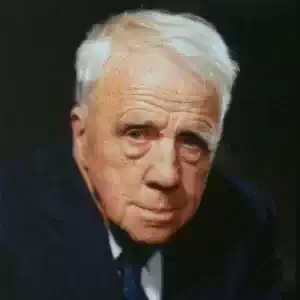
Robert Frost
Rose Pogonias
A saturated meadow,
Sun-shaped and jewel-small,
A circle scarcely wider
Than the trees around were tall;
Where winds were quite excluded,
And the air was stifling sweet
With the breath of many flowers, --
A temple of the heat.
There we bowed us in the burning,
As the sun's right worship is,
To pick where none could miss them
A thousand orchises;
For though the grass was scattered,
yet every second spear
Seemed tipped with wings of color,
That tinged the atmosphere.
We raised a simple prayer
Before we left the spot,
That in the general mowing
That place might be forgot;
Or if not all so favored,
Obtain such grace of hours,
that none should mow the grass there
While so confused with flowers.
519
Rudyard Kipling
Prelude
I have eaten your bread and salt.
I have drunk your water and wine.
In deaths ye died I have watched beside,
And the lives ye led were mine.
Was there aught that I did not share
In vigil or toil or ease, --
One joy or woe that I did not know,
Dear hearts across the seas?
I have written the tale of our life
For a sheltered people's mirth,
In jesting guise -- but ye are wise,
And ye know what the jest is worth.
521

Walt Whitman
Savantism
THITHER, as I look, I see each result and glory retracing itself and
nestling close, always obligated;
Thither hours, months, years--thither trades, compacts,
establishments, even the most minute;
Thither every-day life, speech, utensils, politics, persons, estates;
Thither we also, I with my leaves and songs, trustful, admirant,
As a father, to his father going, takes his children along with him.
521
William Wordsworth
Nutting
---------------------It seems a day
(I speak of one from many singled out)
One of those heavenly days that cannot die;
When, in the eagerness of boyish hope,
I left our cottage-threshold, sallying forth
With a huge wallet o'er my shoulders slung,
A nutting-crook in hand; and turned my steps
Tow'rd some far-distant wood, a Figure quaint,
Tricked out in proud disguise of cast-off weeds
Which for that service had been husbanded,
By exhortation of my frugal Dame--
Motley accoutrement, of power to smile
At thorns, and brakes, and brambles,--and, in truth,
More ragged than need was! O'er pathless rocks,
Through beds of matted fern, and tangled thickets,
Forcing my way, I came to one dear nook
Unvisited, where not a broken bough
Drooped with its withered leaves, ungracious sign
Of devastation; but the hazels rose
Tall and erect, with tempting clusters hung,
A virgin scene!--A little while I stood,
Breathing with such suppression of the heart
As joy delights in; and, with wise restraint
Voluptuous, fearless of a rival, eyed
The banquet;--or beneath the trees I sate
Among the flowers, and with the flowers I played;
A temper known to those, who, after long
And weary expectation, have been blest
With sudden happiness beyond all hope.
Perhaps it was a bower beneath whose leaves
The violets of five seasons re-appear
And fade, unseen by any human eye;
Where fairy water-breaks do murmur on
For ever; and I saw the sparkling foam,
And--with my cheek on one of those green stones
That, fleeced with moss, under the shady trees,
Lay round me, scattered like a flock of sheep--
I heard the murmur and the murmuring sound,
In that sweet mood when pleasure loves to pay
Tribute to ease; and, of its joy secure,
The heart luxuriates with indifferent things,
Wasting its kindliness on stocks and stones,
And on the vacant air. Then up I rose,
And dragged to earth both branch and bough, with crash
And merciless ravage: and the shady nook
Of hazels, and the green and mossy bower,
Deformed and sullied, patiently gave up
Their quiet being: and, unless I now
Confound my present feelings with the past;
Ere from the mutilated bower I turned
Exulting, rich beyond the wealth of kings,
I felt a sense of pain when I beheld
The silent trees, and saw the intruding sky--
Then, dearest Maiden, move along these shades
In gentleness of heart; with gentle hand
Touch--for there is a spirit in the woods.
519
Rabindranath Tagore
The Gardener IV: Ah Me
Ah me, why did they build my
house by the road to the market
town?
They moor their laden boats near
my trees.
They come and go and wander at
their will.
I sit and watch them; my time
wears on.
Turn them away I cannot. And
thus my days pass by.
Night and day their steps sound
by my door.
Vainly I cry, "I do not know
you."
Some of them are known to my
fingers, some to my nostrils, the
blood in my veins seems to know
them, and some are known to my
dreams.
Turn them away I cannot. I call
them and say, "Come to my house
whoever chooses. Yes, come."
In the morning the bell rings in the
temple.
They come with their baskets in
their hands.
Their feet are rosy red. The early
light of dawn is on their faces.
Turn them away I cannot. I call
them and I say, "Come to my garden
to gather flowers. Come hither."
In the mid-day the gong sounds
at the palace gate.
I know not why they leave their
work and linger near my hedge.
The flowers in their hair are pale
and faded; the notes are languid in
their flutes.
Turn them away I cannot. I call
them and say, "The shade is cool
under my trees. Come, friends."
At night the crickets chirp in the
woods.
Who is it that comes slowly to my
door and gently knocks?
I vaguely see the face, not a word
is spoken, the stillness of the sky is
all around.
Turn away my silent guest I
cannot. I look at the face through the
dark, and hours of dreams pass by.
512

Ella Wheeler Wilcox
Go Plant a Tree
God, what a joy it is to plant a tree,
And from the sallow earth to watch it rise,
Lifting its emerald branches to the skies
In silent adoration; and to see
Its strength and glory waxing with each spring.
Yes, 'tis a goodly, and a gladsome thing
To plant a tree.
Nature has many marvels; but a tree
Seems more than marvellous. It is divine.
So generous, so tender, so benign.
Not garrulous like the rivers; and yet free
In pleasant converse with the winds and birds;
Oh! privilege beyond explaining words,
To plant a tree.
Rocks are majestic; but, unlike a tree,
They stand aloof, and silent. In the roar
Of ocean billows breaking on the shore
There sounds the voice of turmoil. But a tree
Speaks ever of companionship and rest.
Yea, of all righteous acts, this, this is best,
To plant a tree.
There is an oak (oh! how I love that tree)
Which has been thriving for a hundred years;
Each day I send my blessing through the spheres
To one who gave this triple boon to me,
Of growing beauty, singing birds, and shade.
Wouldst thou win laurels that shall never fade?
512