
War and Peace

Rudyard Kipling
The Last of the Light Brigade
There were thirty million English who talked of England's might,
There were twenty broken troopers who lacked a bed for the night.
They had neither food nor money, they had neither service nor trade;
They were only shiftless soldiers, the last of the Light Brigade.
They felt that life was fleeting; they knew not that art was long,
That though they were dying of famine, they lived in deathless song.
They asked for a little money to keep the wolf from the door;
And the thirty million English sent twenty pounds and four!
They laid their heads together that were scarred and lined and grey;
Keen were the Russian sabres, but want was keener than they;
And an old Troop-Sergeant muttered, "Let us go to the man who writes
The things on Balaclava the kiddies at school recites."
They went without bands or colours, a regiment ten-file strong,
To look for the Master-singer who had crowned them all in his song;
And, waiting his servant's order, by the garden gate they stayed,
A desolate little cluster, the last of the Light Brigade.
They strove to stand to attention, to straighten the toil-bowed back;
They drilled on an empty stomach, the loose-knit files fell slack;
With stooping of weary shoulders, in garments tattered and frayed,
They shambled into his presence, the last of the Light Brigade.
The old Troop-Sergeant was spokesman, and "Beggin' your pardon," he said,
"You wrote o' the Light Brigade, sir. Here's all that isn't dead.
An' it's all come true what you wrote, sir, regardin' the mouth of hell;
For we're all of us nigh to the workhouse, an, we thought we'd call an' tell.
"No, thank you, we don't want food, sir; but couldn't you take an' write
A sort of 'to be continued' and 'see next page' o' the fight?
We think that someone has blundered, an' couldn't you tell 'em how?
You wrote we were heroes once, sir. Please, write we are starving now."
The poor little army departed, limping and lean and forlorn.
And the heart of the Master-singer grew hot with "the scorn of scorn."
And he wrote for them wonderful verses that swept the land like flame,
Till the fatted souls of the English were scourged with the thing called Shame.
O thirty million English that babble of England's might,
Behold there are twenty heroes who lack their food to-night;
Our children's children are lisping to "honour the charge they made-"
And we leave to the streets and the workhouse the charge of the Light Brigade!
552

Lord Byron
Ode To Napoleon Buonaparte
'Expends Annibalem:quot
libras in duce summo
Invenies? — JUVENAL., Sat. X.
I.
Tis donebut
yesterday a King!
And arm'd with Kings to strive
And
now thou art a nameless thing:
So abjectyet
alive!
Is this the man of thousand thrones,
Who strew'd our earth with hostile bones,
And can he thus survive?
Since he, miscall'd the Morning Star,
Nor man nor fiend bath fallen so far.
II.
Illminded
man! why scourge thy kind
Who bow'd so low the knee?
By gazing on thyself grown blind,
Thou taught'st the rest to see.
With might unquestion'd,power
to save,
Thine
only gift hath been the grave
To those that worshipp'd thee;
Nor till thy fall could mortals guess
Ambition's less than littleness!
III.
Thanks for that lesson
It
will teach
To afterwarriors
more
Than high Philosophy can preach,
And vainly preach 'd before.
That spell upon the minds of men
Breaks never to unite again,
That led them to adore
Those Pagod things of sabre sway
With fronts of brass, and feet of clay.
IV.
The triumph and the vanity,
The rapture of the strife
The
earthquake voice of Victory,
To thee the breath of life;
The sword, the sceptre, and that sway
Which man seem'd made but to obey,
Wherewith renown was rife
All
quell'd!Dark
Spirit! what must be
The madness of thy memory!
V.
The Desolator desolate!
The Victor overthrown!
The Arbiter of others' fate
A Suppliant for his own!
Is it some yet imperial hope
That with such change can calmly cope?
Or dread of death alone?
To die a princeor
live a slave
Thy
choice is most ignobly brave!
VI.
He who of old would rend the oak,
Dream'd not of the rebound:
Chain'd by the trunk he vainly broke
Alonehow
look'd he round?
Thou, in the sternness of thy strength,
An equal deed halt done at length,
And darker fate hast found:
He fell, the forest prowlers' prey;
But thou must eat thy heart away!
VII.
The Roman, when his burning heart
Was slaked with blood of Rome,
Threw down the daggerdared
depart,
In savage grandeur, home
He
dared depart in utter scorn
Of men that such a yoke had borne,
Yet left him such a doom!
His only glory was that hour
Of selfupheld
abandon'd power.
VIII.
The Spaniard, when the lust of sway
Had lost its quickening spell,
Cast crowns for rosaries away,
An empire for a cell;
A strict accountant of his beads,
A subtle disputant on creeds,
His dotage trifled well:
Yet better had he neither known
A bigot's shrine, nor despot's throne.
IX.
But thoufrom
thy reluctant hand
The thunderbolt is wrung
Too
late thou leav'st the high command
To which thy weakness clung;
All Evil Spirit as thou art,
It is enough to grieve the heart
To see thine own unstrung;
To think that God's fair world hath been
The footstool of a thing so mean;
X.
And Earth hath spilt her blood for him,
Who thus can hoard his own!
And Monarchs bow'd the trembling limb,
And thank'd him for a throne!
Fair Freedom! we may hold thee dear,
When thus thy mightiest foes their fear
In humblest guise have shown.
Oh! ne'er may tyrant leave behind
A brighter name to lure mankind!
XI.
Thine evil deeds are writ in gore,
Nor written thus in vain
Thy
triumphs tell of fame no more,
Or deepen every stain:
If thou hadst died as honour dies,
Some new Napoleon might arise,
To shame the world again
But
who would soar the solar height,
To set in such a starless night?
XII.
Weigh'd in the balance, hero dust
Is vile as vulgar clay;
Thy scales, Mortality! are just
To all that pass away:
But yet methought the living great
Some higher sparks should animate,
To dazzle and dismay:
Nor deem'd Contempt could thus make mirth
Of these, the Conquerors of the earth.
XIII.
And she, proud Austria's mournful flower,
Thy still imperial bride;
How bears her breast the torturing hour?
Still clings she to thy side?
Must she too bend, must she too share
Thy late repentance, long despair,
Thou throneless Homicide?
If still she loves thee, hoard that gem,'
Tisworth thy vanish'd diadem!
XIV.
Then haste thee to thy sullen Isle,
And gaze upon the sea;
That element may meet thy smile
It
ne'er was ruled by thee!
Or trace with thine all idle hand
In loitering mood upon the sand
That Earth is now as free!
That Corinth's pedagogue hath now
Transferr'd his byword
to thy brow.
XV.
Thou Timour! in his captive's cage
What thoughts will there be thine,
While brooding in thy prison'd rage?
But one'
The world was mine!'
Unless, like he of Babylon,
All sense is with thy sceptre gone,
Life will not long confine
That spirit pour'd so widely forth
So
long obey'dso
little worth!
XVI.
Or, like the thief of fire from heaven,
Wilt thou withstand the shock?
And share with him the unforgiven,
His vulture and his rock!
Foredoom'd by Godby
man accurst,
And that last act, though not thy worst,
The very Fiend's arch mock
He in his fall preserved his pride,
And, if a mortal, had as proudly died!
XVII.
There was a daythere
was an hour,
While earth was Gaul'sGaul
thine
When
that immeasurable power
Unsated to resign
Had been an act of purer fame
Than gathers round Marengo's name,
And gilded thy decline,
Through the long twilight of all time,
Despite some passing clouds of crime.
XVIII.
But thou forsooth must be a king,
And don the purple vest,
As !f that foolish robe could wring
Remembrance from thy breast.
Where is that faded garment? where
The gewgaws thou Overt fond to wear,
The star, the string the crest?
Vain froward child of empire! say,
Are all thy playthings snatched away?
XIX.
Where may the wearied eye repose
When gazing on the Great;
Where neither guilty glory glows,
Nor despicable state?
Yesonethe
firstthe
lastthe
best
The
Cincinnatus of the West,
Whom envy dared not hate,
Bequeath'd the name of Washington,
To make man blush there was but one!
543

William Blake
The French Revolution (excerpt)
Thee the ancientest peer, Duke of Burgundy, rose from the monarch's right hand, red
as wines
From his mountains; an odor of war, like a ripe vineyard, rose from his garments,
And the chamber became as a clouded sky; o'er the council he stretch'd his red limbs,
Cloth'd in flames of crimson; as a ripe vineyard stretches over sheaves of corn,
The fierce Duke hung over the council; around him crowd, weeping in his burning robe,
A bright cloud of infant souls; his words fall like purple autumn on the sheaves:
'Shall this marble built heaven become a clay cottage, this earth an oak stool and
these mowers
From the Atlantic mountains mow down all this great starry harvest of six thousand
years?
And shall Necker, the hind of Geneva, stretch out his crook'd sickle o'er fertile
France
Till our purple and crimson is faded to russet, and the kingdoms of earth bound in
sheaves,
And the ancient forests of chivalry hewn, and the joys of the combat burnt for
fuel;
Till the power and dominion is rent from the pole, sword and sceptre from sun and
moon,
The law and gospel from fire and air, and eternal reason and science
From the deep and the solid, and man lay his faded head down on the rock
Of eternity, where the eternal lion and eagle remain to devour?
This to prevent--urg'd by cries in day, and prophetic dreams hovering in night,
To enrich the lean earth that craves, furrow'd with plows, whose seed is
departing from her--
Thy nobles have gather'd thy starry hosts round this rebellious city,
To rouze up the ancient forests of Europe, with clarions of cloud breathing war,
To hear the horse neigh to the drum and trumpet, and the trumpet and war
shout reply.
Stretch the hand that beckons the eagles of heaven; they cry over Paris, and
wait
Till Fayette point his finger to Versailles; the eagles of heaven must have their
prey!'
He ceas'd, and burn'd silent; red clouds roll round Necker; a weeping is heard
o'er the palace.
Like a dark cloud Necker paus'd, and like thunder on the just man's burial day he
paus'd;
Silent sit the winds, silent the meadows, while the husbandman and woman of
weakness
And bright children look after him into the grave, and water his clay with love,
Then turn towards pensive fields; so Necker paus'd, and his visage was covered
with clouds.
The King lean'd on his mountains, then lifted his head and look'd on his armies,
that shone
Through heaven, tinging morning with beams of blood; then turning to Burgundy,
troubled:
'Burgundy, thou wast born a lion! My soul is o'ergrown with distress.
For the nobles of France, and dark mists roll round me and blot the writing of
God
Written in my bosom. Necker rise! leave the kingdom, thy life is surrounded with
snares.
We have call'd an Assembly, but not to destroy; we have given gifts, not to the
weak;
I hear rushing of muskets, and bright'ning of swords, and visages redd'ning with
war,
Frowning and looking up from brooding villages and every dark'ning city.
Ancient wonders frown over the kingdom, and cries of women and babes are
heard,
And tempests of doubt roll around me, and fierce sorrows, because of the nobles
of France.
Depart! answer not! for the tempest must fall, as in years that are passed away.'
541

Alfred Lord Tennyson
The Princess (part 5)
Now, scarce three paces measured from the mound,
We stumbled on a stationary voice,
And 'Stand, who goes?' 'Two from the palace' I.
'The second two: they wait,' he said, 'pass on;
His Highness wakes:' and one, that clashed in arms,
By glimmering lanes and walls of canvas led
Threading the soldier-city, till we heard
The drowsy folds of our great ensign shake
From blazoned lions o'er the imperial tent
Whispers of war.
Entering, the sudden light
Dazed me half-blind: I stood and seemed to hear,
As in a poplar grove when a light wind wakes
A lisping of the innumerous leaf and dies,
Each hissing in his neighbour's ear; and then
A strangled titter, out of which there brake
On all sides, clamouring etiquette to death,
Unmeasured mirth; while now the two old kings
Began to wag their baldness up and down,
The fresh young captains flashed their glittering teeth,
The huge bush-bearded Barons heaved and blew,
And slain with laughter rolled the gilded Squire.
At length my Sire, his rough cheek wet with tears,
Panted from weary sides 'King, you are free!
We did but keep you surety for our son,
If this be he,--or a dragged mawkin, thou,
That tends to her bristled grunters in the sludge:'
For I was drenched with ooze, and torn with briers,
More crumpled than a poppy from the sheath,
And all one rag, disprinced from head to heel.
Then some one sent beneath his vaulted palm
A whispered jest to some one near him, 'Look,
He has been among his shadows.' 'Satan take
The old women and their shadows! (thus the King
Roared) make yourself a man to fight with men.
Go: Cyril told us all.'
As boys that slink
From ferule and the trespass-chiding eye,
Away we stole, and transient in a trice
From what was left of faded woman-slough
To sheathing splendours and the golden scale
Of harness, issued in the sun, that now
Leapt from the dewy shoulders of the Earth,
And hit the Northern hills. Here Cyril met us.
A little shy at first, but by and by
We twain, with mutual pardon asked and given
For stroke and song, resoldered peace, whereon
Followed his tale. Amazed he fled away
Through the dark land, and later in the night
Had come on Psyche weeping: 'then we fell
Into your father's hand, and there she lies,
But will not speak, or stir.'
He showed a tent
A stone-shot off: we entered in, and there
Among piled arms and rough accoutrements,
Pitiful sight, wrapped in a soldier's cloak,
Like some sweet sculpture draped from head to foot,
And pushed by rude hands from its pedestal,
All her fair length upon the ground she lay:
And at her head a follower of the camp,
A charred and wrinkled piece of womanhood,
Sat watching like the watcher by the dead.
Then Florian knelt, and 'Come' he whispered to her,
'Lift up your head, sweet sister: lie not thus.
What have you done but right? you could not slay
Me, nor your prince: look up: be comforted:
Sweet is it to have done the thing one ought,
When fallen in darker ways.' And likewise I:
'Be comforted: have I not lost her too,
In whose least act abides the nameless charm
That none has else for me?' She heard, she moved,
She moaned, a folded voice; and up she sat,
And raised the cloak from brows as pale and smooth
As those that mourn half-shrouded over death
In deathless marble. 'Her,' she said, 'my friend--
Parted from her--betrayed her cause and mine--
Where shall I breathe? why kept ye not your faith?
O base and bad! what comfort? none for me!'
To whom remorseful Cyril, 'Yet I pray
Take comfort: live, dear lady, for your child!'
At which she lifted up her voice and cried.
'Ah me, my babe, my blossom, ah, my child,
My one sweet child, whom I shall see no more!
For now will cruel Ida keep her back;
And either she will die from want of care,
Or sicken with ill-usage, when they say
The child is hers--for every little fault,
The child is hers; and they will beat my girl
Remembering her mother: O my flower!
Or they will take her, they will make her hard,
And she will pass me by in after-life
With some cold reverence worse than were she dead.
Ill mother that I was to leave her there,
To lag behind, scared by the cry they made,
The horror of the shame among them all:
But I will go and sit beside the doors,
And make a wild petition night and day,
Until they hate to hear me like a wind
Wailing for ever, till they open to me,
And lay my little blossom at my feet,
My babe, my sweet Aglaïa, my one child:
And I will take her up and go my way,
And satisfy my soul with kissing her:
Ah! what might that man not deserve of me
Who gave me back my child?' 'Be comforted,'
Said Cyril, 'you shall have it:' but again
She veiled her brows, and prone she sank, and so
Like tender things that being caught feign death,
Spoke not, nor stirred.
By this a murmur ran
Through all the camp and inward raced the scouts
With rumour of Prince Arab hard at hand.
We left her by the woman, and without
Found the gray kings at parle: and 'Look you' cried
My father 'that our compact be fulfilled:
You have spoilt this child; she laughs at you and man:
She wrongs herself, her sex, and me, and him:
But red-faced war has rods of steel and fire;
She yields, or war.'
Then Gama turned to me:
'We fear, indeed, you spent a stormy time
With our strange girl: and yet they say that still
You love her. Give us, then, your mind at large:
How say you, war or not?'
'Not war, if possible,
O king,' I said, 'lest from the abuse of war,
The desecrated shrine, the trampled year,
The smouldering homestead, and the household flower
Torn from the lintel--all the common wrong--
A smoke go up through which I loom to her
Three times a monster: now she lightens scorn
At him that mars her plan, but then would hate
(And every voice she talked with ratify it,
And every face she looked on justify it)
The general foe. More soluble is this knot,
By gentleness than war. I want her love.
What were I nigher this although we dashed
Your cities into shards with catapults,
She would not love;--or brought her chained, a slave,
The lifting of whose eyelash is my lord,
Not ever would she love; but brooding turn
The book of scorn, till all my flitting chance
Were caught within the record of her wrongs,
And crushed to death: and rather, Sire, than this
I would the old God of war himself were dead,
Forgotten, rusting on his iron hills,
Rotting on some wild shore with ribs of wreck,
Or like an old-world mammoth bulked in ice,
Not to be molten out.'
And roughly spake
My father, 'Tut, you know them not, the girls.
Boy, when I hear you prate I almost think
That idiot legend credible. Look you, Sir!
Man is the hunter; woman is his game:
The sleek and shining creatures of the chase,
We hunt them for the beauty of their skins;
They love us for it, and we ride them down.
Wheedling and siding with them! Out! for shame!
Boy, there's no rose that's half so dear to them
As he that does the thing they dare not do,
Breathing and sounding beauteous battle, comes
With the air of the trumpet round him, and leaps in
Among the women, snares them by the score
Flattered and flustered, wins, though dashed with death
He reddens what he kisses: thus I won
You mother, a good mother, a good wife,
Worth winning; but this firebrand--gentleness
To such as her! if Cyril spake her true,
To catch a dragon in a cherry net,
To trip a tigress with a gossamer
Were wisdom to it.'
'Yea but Sire,' I cried,
'Wild natures need wise curbs. The soldier? No:
What dares not Ida do that she should prize
The soldier? I beheld her, when she rose
The yesternight, and storming in extremes,
Stood for her cause, and flung defiance down
Gagelike to man, and had not shunned the death,
No, not the soldier's: yet I hold her, king,
True woman: you clash them all in one,
That have as many differences as we.
The violet varies from the lily as far
As oak from elm: one loves the soldier, one
The silken priest of peace, one this, one that,
And some unworthily; their sinless faith,
A maiden moon that sparkles on a sty,
Glorifying clown and satyr; whence they need
More breadth of culture: is not Ida right?
They worth it? truer to the law within?
Severer in the logic of a life?
Twice as magnetic to sweet influences
Of earth and heaven? and she of whom you speak,
My mother, looks as whole as some serene
Creation minted in the golden moods
Of sovereign artists; not a thought, a touch,
But pure as lines of green that streak the white
Of the first snowdrop's inner leaves; I say,
Not like the piebald miscellany, man,
Bursts of great heart and slips in sensual mire,
But whole and one: and take them all-in-all,
Were we ourselves but half as good, as kind,
As truthful, much that Ida claims as right
Had ne'er been mooted, but as frankly theirs
As dues of Nature. To our point: not war:
Lest I lose all.'
'Nay, nay, you spake but sense'
Said Gama. 'We remember love ourself
In our sweet youth; we did not rate him then
This red-hot iron to be shaped with blows.
You talk almost like Ida: she can talk;
And there is something in it as you say:
But you talk kindlier: we esteem you for it.--
He seems a gracious and a gallant Prince,
I would he had our daughter: for the rest,
Our own detention, why, the causes weighed,
Fatherly fears--you used us courteously--
We would do much to gratify your Prince--
We pardon it; and for your ingress here
Upon the skirt and fringe of our fair land,
you did but come as goblins in the night,
Nor in the furrow broke the ploughman's head,
Nor burnt the grange, nor bussed the milking-maid,
Nor robbed the farmer of his bowl of cream:
But let your Prince (our royal word upon it,
He comes back safe) ride with us to our lines,
And speak with Arac: Arac's word is thrice
As ours with Ida: something may be done--
I know not what--and ours shall see us friends.
You, likewise, our late guests, if so you will,
Follow us: who knows? we four may build some plan
Foursquare to opposition.'
Here he reached
White hands of farewell to my sire, who growled
An answer which, half-muffled in his beard,
Let so much out as gave us leave to go.
Then rode we with the old king across the lawns
Beneath huge trees, a thousand rings of Spring
In every bole, a song on every spray
Of birds that piped their Valentines, and woke
Desire in me to infuse my tale of love
In the old king's ears, who promised help, and oozed
All o'er with honeyed answer as we rode
And blossom-fragrant slipt the heavy dews
Gathered by night and peace, with each light air
On our mailed heads: but other thoughts than Peace
Burnt in us, when we saw the embattled squares,
And squadrons of the Prince, trampling the flowers
With clamour: for among them rose a cry
As if to greet the king; they made a halt;
The horses yelled; they clashed their arms; the drum
Beat; merrily-blowing shrilled the martial fife;
And in the blast and bray of the long horn
And serpent-throated bugle, undulated
The banner: anon to meet us lightly pranced
Three captains out; nor ever had I seen
Such thews of men: the midmost and the highest
Was Arac: all about his motion clung
The shadow of his sister, as the beam
Of the East, that played upon them, made them glance
Like those three stars of the airy Giant's zone,
That glitter burnished by the frosty dark;
And as the fiery Sirius alters hue,
And bickers into red and emerald, shone
Their morions, washed with morning, as they came.
And I that prated peace, when first I heard
War-music, felt the blind wildbeast of force,
Whose home is in the sinews of a man,
Stir in me as to strike: then took the king
His three broad sons; with now a wandering hand
And now a pointed finger, told them all:
A common light of smiles at our disguise
Broke from their lips, and, ere the windy jest
Had laboured down within his ample lungs,
The genial giant, Arac, rolled himself
Thrice in the saddle, then burst out in words.
'Our land invaded, 'sdeath! and he himself
Your captive, yet my father wills not war:
And, 'sdeath! myself, what care I, war or no?
but then this question of your troth remains:
And there's a downright honest meaning in her;
She flies too high, she flies too high! and yet
She asked but space and fairplay for her scheme;
She prest and prest it on me--I myself,
What know I of these things? but, life and soul!
I thought her half-right talking of her wrongs;
I say she flies too high, 'sdeath! what of that?
I take her for the flower of womankind,
And so I often told her, right or wrong,
And, Prince, she can be sweet to those she loves,
And, right or wrong, I care not: this is all,
I stand upon her side: she made me swear it-'
Sdeath--and with solemn rites by candle-light--
Swear by St something--I forget her name--
Her that talked down the fifty wisest men;
She was a princess too; and so I swore.
Come, this is all; she will not: waive your claim:
If not, the foughten field, what else, at once
Decides it, 'sdeath! against my father's will.'
I lagged in answer loth to render up
My precontract, and loth by brainless war
To cleave the rift of difference deeper yet;
Till one of those two brothers, half aside
And fingering at the hair about his lip,
To prick us on to combat 'Like to like!
The woman's garment hid the woman's heart.'
A taunt that clenched his purpose like a blow!
For fiery-short was Cyril's counter-scoff,
And sharp I answered, touched upon the point
Where idle boys are cowards to their shame,
'Decide it here: why not? we are three to three.'
Then spake the third 'But three to three? no more?
No more, and in our noble sister's cause?
More, more, for honour: every captain waits
Hungry for honour, angry for his king.
More, more some fifty on a side, that each
May breathe himself, and quick! by overthrow
Of these or those, the question settled die.'
'Yea,' answered I, 'for this wreath of air,
This flake of rainbow flying on the highest
Foam of men's deeds--this honour, if ye will.
It needs must be for honour if at all:
Since, what decision? if we fail, we fail,
And if we win, we fail: she would not keep
Her compact.' ''Sdeath! but we will send to her,'
Said Arac, 'worthy reasons why she should
Bide by this issue: let our missive through,
And you shall have her answer by the word.'
'Boys!' shrieked the old king, but vainlier than a hen
To her false daughters in the pool; for none
Regarded; neither seemed there more to say:
Back rode we to my father's camp, and found
He thrice had sent a herald to the gates,
To learn if Ida yet would cede our claim,
Or by denial flush her babbling wells
With her own people's life: three times he went:
The first, he blew and blew, but none appeared:
He battered at the doors; none came: the next,
An awful voice within had warned him thence:
The third, and those eight daughters of the plough
Came sallying through the gates, and caught his hair,
And so belaboured him on rib and cheek
They made him wild: not less one glance he caught
Through open doors of Ida stationed there
Unshaken, clinging to her purpose, firm
Though compassed by two armies and the noise
Of arms; and standing like a stately Pine
Set in a cataract on an island-crag,
When storm is on the heights, and right and left
Sucked from the dark heart of the long hills roll
The torrents, dashed to the vale: and yet her will
Bred will in me to overcome it or fall.
But when I told the king that I was pledged
To fight in tourney for my bride, he clashed
His iron palms together with a cry;
Himself would tilt it out among the lads:
But overborne by all his bearded lords
With reasons drawn from age and state, perforce
He yielded, wroth and red, with fierce demur:
And many a bold knight started up in heat,
And sware to combat for my claim till death.
All on this side the palace ran the field
Flat to the garden-wall: and likewise here,
Above the garden's glowing blossom-belts,
A columned entry shone and marble stairs,
And great bronze valves, embossed with Tomyris
And what she did to Cyrus after fight,
But now fast barred: so here upon the flat
All that long morn the lists were hammered up,
And all that morn the heralds to and fro,
With message and defiance, went and came;
Last, Ida's answer, in a royal hand,
But shaken here and there, and rolling words
Oration-like. I kissed it and I read.
'O brother, you have known the pangs we felt,
What heats of indignation when we heard
Of those that iron-cramped their women's feet;
Of lands in which at the altar the poor bride
Gives her harsh groom for bridal-gift a scourge;
Of living hearts that crack within the fire
Where smoulder their dead despots; and of those,-Mothers,--
that, with all prophetic pity, fling
Their pretty maids in the running flood, and swoops
The vulture, beak and talon, at the heart
Made for all noble motion: and I saw
That equal baseness lived in sleeker times
With smoother men: the old leaven leavened all:
Millions of throats would bawl for civil rights,
No woman named: therefore I set my face
Against all men, and lived but for mine own.
Far off from men I built a fold for them:
I stored it full of rich memorial:
I fenced it round with gallant institutes,
And biting laws to scare the beasts of prey
And prospered; till a rout of saucy boys
Brake on us at our books, and marred our peace,
Masked like our maids, blustering I know not what
Of insolence and love, some pretext held
Of baby troth, invalid, since my will
Sealed not the bond--the striplings! for their sport!--
I tamed my leopards: shall I not tame these?
Or you? or I? for since you think me touched
In honour--what, I would not aught of false--
Is not our case pure? and whereas I know
Your prowess, Arac, and what mother's blood
You draw from, fight; you failing, I abide
What end soever: fail you will not. Still
Take not his life: he risked it for my own;
His mother lives: yet whatsoe'er you do,
Fight and fight well; strike and strike him. O dear
Brothers, the woman's Angel guards you, you
The sole men to be mingled with our cause,
The sole men we shall prize in the after-time,
Your very armour hallowed, and your statues
Reared, sung to, when, this gad-fly brushed aside,
We plant a solid foot into the Time,
And mould a generation strong to move
With claim on claim from right to right, till she
Whose name is yoked with children's, know herself;
And Knowledge in our own land make her free,
And, ever following those two crownèd twins,
Commerce and conquest, shower the fiery grain
Of freedom broadcast over all the orbs
Between the Northern and the Southern morn.'
Then came a postscript dashed across the rest.
See that there be no traitors in your camp:
We seem a nest of traitors--none to trust
Since our arms failed--this Egypt-plague of men!
Almost our maids were better at their homes,
Than thus man-girdled here: indeed I think
Our chiefest comfort is the little child
Of one unworthy mother; which she left:
She shall not have it back: the child shall grow
To prize the authentic mother of her mind.
I took it for an hour in mine own bed
This morning: there the tender orphan hands
Felt at my heart, and seemed to charm from thence
The wrath I nursed against the world: farewell.'
I ceased; he said, 'Stubborn, but she may sit
Upon a king's right hand in thunder-storms,
And breed up warriors! See now, though yourself
Be dazzled by the wildfire Love to sloughs
That swallow common sense, the spindling king,
This Gama swamped in lazy tolerance.
When the man wants weight, the woman takes it up,
And topples down the scales; but this is fixt
As are the roots of earth and base of all;
Man for the field and woman for the hearth:
Man for the sword and for the needle she:
Man with the head and woman with the heart:
Man to command and woman to obey;
All else confusion. Look you! the gray mare
Is ill to live with, when her whinny shrills
From tile to scullery, and her small goodman
Shrinks in his arm-chair while the fires of Hell
Mix with his hearth: but you--she's yet a colt--
Take, break her: strongly groomed and straitly curbed
She might not rank with those detestable
That let the bantling scald at home, and brawl
Their rights and wrongs like potherbs in the street.
They say she's comely; there's the fairer chance:
I like her none the less for rating at her!
Besides, the woman wed is not as we,
But suffers change of frame. A lusty brace
Of twins may weed her of her folly. Boy,
The bearing and the training of a child
Is woman's wisdom.'
Thus the hard old king:
I took my leave, for it was nearly noon:
I pored upon her letter which I held,
And on the little clause 'take not his life:'
I mused on that wild morning in the woods,
And on the 'Follow, follow, thou shalt win:'
I thought on all the wrathful king had said,
And how the strange betrothment was to end:
Then I remembered that burnt sorcerer's curse
That one should fight with shadows and should fall;
And like a flash the weird affection came:
King, camp and college turned to hollow shows;
I seemed to move in old memorial tilts,
And doing battle with forgotten ghosts,
To dream myself the shadow of a dream:
And ere I woke it was the point of noon,
The lists were ready. Empanoplied and plumed
We entered in, and waited, fifty there
Opposed to fifty, till the trumpet blared
At the barrier like a wild horn in a land
Of echoes, and a moment, and once more
The trumpet, and again: at which the storm
Of galloping hoofs bare on the ridge of spears
And riders front to front, until they closed
In conflict with the crash of shivering points,
And thunder. Yet it seemed a dream, I dreamed
Of fighting. On his haunches rose the steed,
And into fiery splinters leapt the lance,
And out of stricken helmets sprang the fire.
Part sat like rocks: part reeled but kept their seats:
Part rolled on the earth and rose again and drew:
Part stumbled mixt with floundering horses. Down
From those two bulks at Arac's side, and down
From Arac's arm, as from a giant's flail,
The large blows rained, as here and everywhere
He rode the mellay, lord of the ringing lists,
And all the plain,--brand, mace, and shaft, and shield--
Shocked, like an iron-clanging anvil banged
With hammers; till I thought, can this be he
From Gama's dwarfish loins? if this be so,
The mother makes us most--and in my dream
I glanced aside, and saw the palace-front
Alive with fluttering scarfs and ladies' eyes,
And highest, among the statues, statuelike,
Between a cymballed Miriam and a Jael,
With Psyche's babe, was Ida watching us,
A single band of gold about her hair,
Like a Saint's glory up in heaven: but she
No saint--inexorable--no tenderness--
Too hard, too cruel: yet she sees me fight,
Yea, let her see me fall! and with that I drave
Among the thickest and bore down a Prince,
And Cyril, one. Yea, let me make my dream
All that I would. But that large-moulded man,
His visage all agrin as at a wake,
Made at me through the press, and, staggering back
With stroke on stroke the horse and horseman, came
As comes a pillar of electric cloud,
Flaying the roofs and sucking up the drains,
And shadowing down the champaign till it strikes
On a wood, and takes, and breaks, and cracks, and splits,
And twists the grain with such a roar that Earth
Reels, and the herdsmen cry; for everything
Game way before him: only Florian, he
That loved me closer than his own right eye,
Thrust in between; but Arac rode him down:
And Cyril seeing it, pushed against the Prince,
With Psyche's colour round his helmet, tough,
Strong, supple, sinew-corded, apt at arms;
But tougher, heavier, stronger, he that smote
And threw him: last I spurred; I felt my veins
Stretch with fierce heat; a moment hand to hand,
And sword to sword, and horse to horse we hung,
Till I struck out and shouted; the blade glanced,
I did but shear a feather, and dream and truth
Flowed from me; darkness closed me; and I fell.
Home they brought her warrior dead:
She nor swooned, nor uttered cry:
All her maidens, watching, said,
'She must weep or she will die.'
Then they praised him, soft and low,
Called him worthy to be loved,
Truest friend and noblest foe;
Yet she neither spoke nor moved.
Stole a maiden from her place,
Lightly to the warrior stept,
Took the face-cloth from the face;
Yet she neither moved nor wept.
Rose a nurse of ninety years,
Set his child upon her knee--
Like summer tempest came her tears-'
Sweet my child, I live for thee.'
546
Rudyard Kipling
The Anvil
England's on the anvil--hear the hammers ring--
Clanging from the Severn to the Tyne!
Never was a blacksmith like our Norman King--
England's being hammered, hammered, hammered into line!
England's on the anvil! Heavy are the blows!
(But the work will be a marvel when it's done.)
Little bits of Kingdoms cannot stand against their foes.
England's being hammered hammered, hammered into one!
There shall be one people--it shall serve one Lord--
(Neither Prist nor Baron shall escape!)
It shall have one speech and law, soul and strength and sword.
England's being hammered, hammered, hammered into
shape!
544
Alfred Lord Tennyson
The Defence of Lucknow
I
BANNER of England, not for a season, O banner of Britain, hast thou
Floated in conquering battle or flapt to the battle-cry!
Never with mightier glory than when we had rear’d thee on high
Flying at top of the roofs in the ghastly siege of Lucknow—
Shot thro’ the staff or the halyard, but ever we raised thee anew,
And ever upon the topmost roof our banner of England blew.
II.
Frail were the works that defended the hold that we held with our lives—
Women and children among us, God help them, our children and wives!
Hold it we might—and for fifteen days or for twenty at most.
‘Never surrender, I charge you, but every man die at his post!’
Voice of the dead whom we loved, our Lawrence the best of the brave:
Cold were his brows when we kiss’d him—we laid him that night in his grave.
‘Every man die at his post!’ and there hail’d on our houses and halls
Death from their rifle-bullets, and death from their cannon-balls,
Death in our innermost chamber, and death at our slight barricade,
Death while we stood with the musket, and death while we stoopt to the spade,
Death to the dying, and wounds to the wounded, for often there fell,
Striking the hospital wall, crashing thro’ it, their shot and their shell,
Death—for their spies were among us, their marksmen were told of our best,
So that the brute bullet broke thro’ the brain that could think for the rest;
Bullets would sing by our foreheads, and bullets would rain at our feet—
Fire from ten thousand at once of the rebels that girdled us round—
Death at the glimpse of a finger from over the breadth of a street,
Death from the heights of the mosque and the palace, and death in the ground!
Mine? yes, a mine! Countermine! down, down! and creep thro’ the hole!
Keep the revolver in hand! you can hear him—the murderous mole!
Quiet, ah! quiet—wait till the point of the pickaxe be thro’!
Click with the pick, coming nearer and nearer again than before—
Now let it speak, and you fire, and the dark pioneer is no more;
And ever upon the topmost roof our banner of England blew!
III.
Ay, but the foe sprung his mine many times, and it chanced on a day
Soon as the blast of that underground thunderclap echo ‘d away,
Dark thro’ the smoke and the sulphur like so many fiends in their hell—
Cannon-shot, musket-shot, volley on volley, and yell upon yell—
Fiercely on all the defences our myriad enemy fell.
What have they done? where is it? Out yonder. Guard the Redan!
Storm at the Water-gate! storm at the Bailey-gate! storm, and it ran
Surging and swaying all round us, as ocean on every side
Plunges and heaves at a bank that is daily devour’d by the tide—
So many thousands that if they be bold enough, who shall escape?
Kill or be kill’d, live or die, they shall know we are soldiers and men
Ready! take aim at their leaders—their masses are gapp’d with our grape—
Backward they reel like the wave, like the wave flinging forward again,
Flying and foil’d at the last by the handful they could not subdue;
And ever upon the topmost roof our banner of England blew.
IV.
Handful of men as we were, we were English in heart and in limb,
Strong with the strength of the race to command, to obey, to endure,
Each of us fought as if hope for the garrison hung but on him;
Still—could we watch at all points? we were every day fewer and fewer.
There was a whisper among us, but only a whisper that past
‘Children and wives—if the tigers leap into the fold unawares—
Every man die at his post—and the foe may outlive us at last—
Better to fall by the hands that they love, than to fall into theirs!’
Roar upon roar in a moment two mines by the enemy sprung
Clove into perilous chasms our walls and our poor palisades.
Rifleman, true is your heart, but be sure that your hand be as true!
Sharp is the fire of assault, better aimed are your flank fusillades—
Twice do we hurl them to earth from the ladders to which they had clung,
Twice from the ditch where they shelter we drive them with hand-grenades;
And ever upon the topmost roof our banner of England blew.
V.
Then on another wild morning another wild earthquake out-tore
Clean from our lines of defence ten or twelve good paces or more.
Rifleman, high on the roof, hidden there from the light of the sun—
One has leapt up on the breach, crying out: ‘Follow me, follow me!’—
Mark him—he falls! then another, and him too, and down goes he.
Had they been bold enough then, who can tell but the traitors had won?
Boardings and rafters and doors—an embrasure I make way for the gun!
Now double-charge it with grape! It is charged and we fire, and they run.
Praise to our Indian brothers, and let the dark face have his due!
Thanks to the kindly dark faces who fought with us, faithful and few,
Fought with the bravest among us, and drove them, and smote them, and slew,
That ever upon the topmost roof our banner in India blew.
VI.
Men will forget what we suffer and not what we do. We can fight!
But to be soldier all day and be sentinel all thro’ the night—
Ever the mine and assault, our sallies, their lying alarms,
Bugles and drums in the darkness, and shoutings and soundings to arms,
Ever the labour of fifty that had to be done by five,
Ever the marvel among us that one should be left alive,
Ever the day with its traitorous death from the loopholes around,
Ever the night with its coffinless corpse to be laid in the ground,
Heat like the mouth of a hell, or a deluge of cataract skies,
Stench of old offal decaying, and infinite torment of flies.
Thoughts of the breezes of May blowing over an English field,
Cholera, scurvy, and fever, the wound that would not be heal’d,
Lopping away of the limb by the pitiful-pitiless knife,—
Torture and trouble in vain,—for it never could save us a life.
Valour of delicate women who tended the hospital bed,
Horror of women in travail among the dying and dead,
Grief for our perishing children, and never a moment for grief,
Toil and ineffable weariness, faltering hopes of relief,
Havelock baffled, or beaten, or butcher’d for all that we knew—
Then day and night, day and night, coming down on the still-shatter’d walls
Millions of musket-bullets, and thousands of cannon-balls—
But ever upon the topmost roof our banner of England blew.
VII.
Hark cannonade, fusillade! is it true what was told by the scout,
Outram and Havelock breaking their way through the fell mutineers?
Surely the pibroch of Europe is ringing again in our ears!
All on a sudden the garrison utter a jubilant shout,
Havelock’s glorious Highlanders answer with conquering cheers,
Sick from the hospital echo them, women and children come out,
Blessing the wholesome white faces of Havelock’s good fusileers,
Kissing the war-harden’d hand of the Highlander wet with their tears!
Dance to the pibroch!—saved! we are saved!—is it you? is it you?
Saved by the valour of Havelock, saved by the blessing of Heaven!
‘Hold it for fifteen days!’ we have held it for eighty-seven!
And ever aloft on the palace roof the old banner of England blew.
543

Walt Whitman
Proud Music Of The Storm
PROUD music of the storm!
Blast that careers so free, whistling across the prairies!
Strong hum of forest tree-tops! Wind of the mountains!
Personified dim shapes! you hidden orchestras!
You serenades of phantoms, with instruments alert,
Blending, with Nature's rhythmus, all the tongues of nations;
You chords left us by vast composers! you choruses!
You formless, free, religious dances! you from the Orient!
You undertone of rivers, roar of pouring cataracts;
You sounds from distant guns, with galloping cavalry!
Echoes of camps, with all the different bugle-calls!
Trooping tumultuous, filling the midnight late, bending me powerless,
Entering my lonesome slumber-chamber--Why have you seiz'd me?
Come forward, O my Soul, and let the rest retire;
Listen--lose not--it is toward thee they tend;
Parting the midnight, entering my slumber-chamber,
For thee they sing and dance, O Soul.
A festival song!
The duet of the bridegroom and the bride--a marriage-march,
With lips of love, and hearts of lovers, fill'd to the brim with
love;
The red-flush'd cheeks, and perfumes--the cortege swarming, full of
friendly faces, young and old,
To flutes' clear notes, and sounding harps' cantabile.
Now loud approaching drums!
Victoria! see'st thou in powder-smoke the banners torn but flying?
the rout of the baffled?
Hearest those shouts of a conquering army?
(Ah, Soul, the sobs of women--the wounded groaning in agony,
The hiss and crackle of flames--the blacken'd ruins--the embers of
cities,
The dirge and desolation of mankind.)
Now airs antique and medieval fill me!
I see and hear old harpers with their harps, at Welsh festivals:
I hear the minnesingers, singing their lays of love,
I hear the minstrels, gleemen, troubadours, of the feudal ages.
Now the great organ sounds,
Tremulous--while underneath, (as the hid footholds of the earth,
On which arising, rest, and leaping forth, depend,
All shapes of beauty, grace and strength--all hues we know,
Green blades of grass, and warbling birds--children that gambol and
play--the clouds of heaven above,)
The strong base stands, and its pulsations intermits not,
Bathing, supporting, merging all the rest--maternity of all the rest;
And with it every instrument in multitudes,
The players playing--all the world's musicians,
The solemn hymns and masses, rousing adoration,
All passionate heart-chants, sorrowful appeals,
The measureless sweet vocalists of ages,
And for their solvent setting, Earth's own diapason,
Of winds and woods and mighty ocean waves;
A new composite orchestra--binder of years and climes--ten-fold
renewer,
As of the far-back days the poets tell--the Paradiso,
The straying thence, the separation long, but now the wandering done,
The journey done, the Journeyman come home,
And Man and Art, with Nature fused again.
Tutti! for Earth and Heaven!
The Almighty Leader now for me, for once has signal'd with his wand.
The manly strophe of the husbands of the world,
And all the wives responding.
The tongues of violins!
(I think, O tongues, ye tell this heart, that cannot tell itself;
This brooding, yearning heart, that cannot tell itself.)
Ah, from a little child,
Thou knowest, Soul, how to me all sounds became music;
My mother's voice, in lullaby or hymn;
(The voice--O tender voices--memory's loving voices!
Last miracle of all--O dearest mother's, sister's, voices;)
The rain, the growing corn, the breeze among the long-leav'd corn,
The measur'd sea-surf, beating on the sand,
The twittering bird, the hawk's sharp scream,
The wild-fowl's notes at night, as flying low, migrating north or
south,
The psalm in the country church, or mid the clustering trees, the
open air camp-meeting,
The fiddler in the tavern--the glee, the long-strung sailor-song,
The lowing cattle, bleating sheep--the crowing cock at dawn.
All songs of current lands come sounding 'round me,
The German airs of friendship, wine and love,
Irish ballads, merry jigs and dances--English warbles,
Chansons of France, Scotch tunes--and o'er the rest,
Italia's peerless compositions.
Across the stage, with pallor on her face, yet lurid passion,
Stalks Norma, brandishing the dagger in her hand.
I see poor crazed Lucia's eyes' unnatural gleam;
Her hair down her back falls loose and dishevell'd.
I see where Ernani, walking the bridal garden,
Amid the scent of night-roses, radiant, holding his bride by the
hand,
Hears the infernal call, the death-pledge of the horn.
To crossing swords, and grey hairs bared to heaven,
The clear, electric base and baritone of the world,
The trombone duo--Libertad forever!
From Spanish chestnut trees' dense shade,
By old and heavy convent walls, a wailing song,
Song of lost love--the torch of youth and life quench'd in despair,
Song of the dying swan--Fernando's heart is breaking.
Awaking from her woes at last, retriev'd Amina sings;
Copious as stars, and glad as morning light, the torrents of her joy.
(The teeming lady comes!
The lustrious orb--Venus contralto--the blooming mother,
Sister of loftiest gods--Alboni's self I hear.)
I hear those odes, symphonies, operas;
I hear in the William Tell, the music of an arous'd and angry people;
I hear Meyerbeer's Huguenots, the Prophet, or Robert;
Gounod's Faust, or Mozart's Don Juan.
I hear the dance-music of all nations,
The waltz, (some delicious measure, lapsing, bathing me in
bliss;)
The bolero, to tinkling guitars and clattering castanets.
I see religious dances old and new,
I hear the sound of the Hebrew lyre,
I see the Crusaders marching, bearing the cross on high, to the
martial clang of cymbals;
I hear dervishes monotonously chanting, interspers'd with frantic
shouts, as they spin around, turning always towards Mecca;
I see the rapt religious dances of the Persians and the Arabs;
Again, at Eleusis, home of Ceres, I see the modern Greeks dancing,
I hear them clapping their hands, as they bend their bodies,
I hear the metrical shuffling of their feet.
I see again the wild old Corybantian dance, the performers wounding
each other;
I see the Roman youth, to the shrill sound of flageolets, throwing
and catching their weapons,
As they fall on their knees, and rise again.
I hear from the Mussulman mosque the muezzin calling;
I see the worshippers within, (nor form, nor sermon, argument, nor
word,
But silent, strange, devout--rais'd, glowing heads--extatic faces.)
I hear the Egyptian harp of many strings,
The primitive chants of the Nile boatmen;
The sacred imperial hymns of China,
To the delicate sounds of the king, (the stricken wood and stone;)
Or to Hindu flutes, and the fretting twang of the vina,
A band of bayaderes.
Now Asia, Africa leave me--Europe, seizing, inflates me;
To organs huge, and bands, I hear as from vast concourses of voices,
Luther's strong hymn, Eine feste Burg ist unser Gott;
Rossini's Stabat Mater dolorosa;
Or, floating in some high cathedral dim, with gorgeous color'd
windows,
The passionate Agnus Dei, or Gloria in Excelsis.
Composers! mighty maestros!
And you, sweet singers of old lands--Soprani! Tenori! Bassi!
To you a new bard, carolling free in the west,
Obeisant, sends his love.
(Such led to thee, O Soul!
All senses, shows and objects, lead to thee,
But now, it seems to me, sound leads o'er all the rest.)
I hear the annual singing of the children in St. Paul's Cathedral;
Or, under the high roof of some colossal hall, the symphonies,
oratorios of Beethoven, Handel, or Haydn;
The Creation, in billows of godhood laves me.
Give me to hold all sounds, (I, madly struggling, cry,)
Fill me with all the voices of the universe,
Endow me with their throbbings--Nature's also,
The tempests, waters, winds--operas and chants--marches and
dances,
Utter--pour in--for I would take them all.
Then I woke softly,
And pausing, questioning awhile the music of my dream,
And questioning all those reminiscences--the tempest in its fury,
And all the songs of sopranos and tenors,
And those rapt oriental dances, of religious fervor,
And the sweet varied instruments, and the diapason of organs,
And all the artless plaints of love, and grief and death,
I said to my silent, curious Soul, out of the bed of the slumber
chamber,
Come, for I have found the clue I sought so long,
Let us go forth refresh'd amid the day,
Cheerfully tallying life, walking the world, the real,
Nourish'd henceforth by our celestial dream.
And I said, moreover,
Haply, what thou hast heard, O Soul, was not the sound of winds,
Nor dream of raging storm, nor sea-hawk's flapping wings, nor harsh
scream,
Nor vocalism of sun-bright Italy,
Nor German organ majestic--nor vast concourse of voices--nor layers
of harmonies;
Nor strophes of husbands and wives--nor sound of marching soldiers,
Nor flutes, nor harps, nor the bugle-calls of camps;
But, to a new rhythmus fitted for thee,
Poems, bridging the way from Life to Death, vaguely wafted in night
air, uncaught, unwritten,
Which, let us go forth in the bold day, and write.
537

John Greenleaf Whittier
Lexington
1775.
No Berserk thirst of blood had they,
No battle-joy was theirs, who set
Against the alien bayonet
Their homespun breasts in that old day.
Their feet had trodden peaceful, ways;
They loved not strife, they dreaded pain;
They saw not, what to us is plain,
That God would make man's wrath his praise.
No seers were they, but simple men;
Its vast results the future hid
The meaning of the work they did
Was strange and dark and doubtful then.
Swift as their summons came they left
The plough mid-furrow standing still,
The half-ground corn grist in the mill,
The spade in earth, the axe in cleft.
They went where duty seemed to call,
They scarcely asked the reason why;
They only knew they could but die,
And death was not the worst of all!
Of man for man the sacrifice,
All that was theirs to give, they gave.
The flowers that blossomed from their grave
Have sown themselves beneath all skies.
Their death-shot shook the feudal tower,
And shattered slavery's chain as well;
On the sky's dome, as on a bell,
Its echo struck the world's great hour.
That fateful echo is not dumb
The nations listening to its sound
Wait, from a century's vantage-ground,
The holier triumphs yet to come,-
The bridal time of Law and Love,
The gladness of the world's release,
When, war-sick, at the feet of Peace
The hawk shall nestle with the dove!-
The golden age of brotherhood
Unknown to other rivalries
Than of the mild humanities,
And gracious interchange of good,
When closer strand shall lean to strand,
Till meet, beneath saluting flags,
The eagle of our mountain-crags,
The lion of our Motherland!
540
Lord Byron
Jeptha's Daughter
Since our Country, our God Oh,
my Sire!
Demand that thy Daughter expire;
Since thy triumph was brought by thy vow
Strike
the bosom that's bared for thee now!
And the voice of my mourning is o'er,
And the mountains behold me no more:
If the hand that I love lay me low,
There cannot be pain in the blow!
And of this, oh, my Father! be sure
That
the blood of thy child is as pure
As the blessing I beg ere it flow,
And the last thought that soothes me below.
Though the virgins of Salem lament,
Be the judge and the hero unbent!
I have won the great battle for thee,
And my Father and Country are free!
When this blood of thy giving hath gush'd,
When the voice that thou lovest is hush'd,
Let my memory still be thy pride,
And forget not I smiled as I died!
535
Rudyard Kipling
Ulster
("Their webs shall not become garments, neither shall they
cover themselves with their works: their works are works
of inquity and the act of violence is in their hands." --
Isaiah lix. .)
The dark eleventh hour
Draws on and sees us sold
To every evil power
We fought against of old.
Rebellion, rapine hate
Oppression, wrong and greed
Are loosed to rule our fate,
By England's act and deed.
The Faith in which we stand,
The laws we made and guard,
Our honour, lives, and land
Are given for reward
To Murder done by night,
To Treason taught by day,
To folly, sloth, and spite,
And we are thrust away.
The blood our fathers spilt,
Our love, our toils, our pains,
Are counted us for guilt,
And only bind our chains.
Before an Empire's eyes
The traitor claims his price.
What need of further lies?
We are the sacrifice.
We asked no more than leave
To reap where we had sown,
Through good and ill to cleave
To our own flag and throne.
Now England's shot and steel
Beneath that flag must show
How loyal hearts should kneel
To England's oldest foe.
We know the war prepared
On every peaceful home,
We know the hells declared
For such as serve not Rome --
The terror, threats, and dread
In market, hearth, and field --
We know, when all is said,
We perish if we yield.
Believe, we dare not boast,
Believe, we do not fear --
We stand to pay the cost
In all that men hold dear.
What answer from the North?
One Law, one Land, one Throne.
If England drive us forth
We shall not fall alone!
527
Rudyard Kipling
Fuzzy-Wuzzy
(Soudan Expeditionary Force)
We've fought with many men acrost the seas,
An' some of 'em was brave an' some was not:
The Paythan an' the Zulu an' Burmese;
But the Fuzzy was the finest o' the lot.
We never got a ha'porth's change of 'im:
'E squatted in the scrub an' 'ocked our 'orses,
'E cut our sentries up at Suakim,
An' 'e played the cat an' banjo with our forces.
So 'ere's to you, Fuzzy-Wuzzy, at your 'ome in the Soudan;
You're a pore benighted 'eathen but a first-class fightin' man;
We gives you your certificate, an' if you want it signed
We'll come an' 'ave a romp with you whenever you're inclined.
We took our chanst among the Khyber 'ills,
The Boers knocked us silly at a mile,
The Burman give us Irriwaddy chills,
An' a Zulu impi dished us up in style:
But all we ever got from such as they
Was pop to what the Fuzzy made us swaller;
We 'eld our bloomin' own, the papers say,
But man for man the Fuzzy knocked us 'oller.
Then 'ere's to you, Fuzzy-Wuzzy, an' the missis and the kid;
Our orders was to break you, an' of course we went an' did.
We sloshed you with Martinis, an' it wasn't 'ardly fair;
But for all the odds agin' you, Fuzzy-Wuz, you broke the square.
'E 'asn't got no papers of 'is own,
'E 'asn't got no medals nor rewards,
So we must certify the skill 'e's shown
In usin' of 'is long two-'anded swords:
When 'e's 'oppin' in an' out among the bush
With 'is coffin-'eaded shield an' shovel-spear,
An 'appy day with Fuzzy on the rush
Will last an 'ealthy Tommy for a year.
So 'ere's to you, Fuzzy-Wuzzy, an' your friends which are no more,
If we 'adn't lost some messmates we would 'elp you to deplore;
But give an' take's the gospel, an' we'll call the bargain fair,
For if you 'ave lost more than us, you crumpled up the square!
'E rushes at the smoke when we let drive,
An', before we know, 'e's 'ackin' at our 'ead;
'E's all 'ot sand an' ginger when alive,
An' 'e's generally shammin' when 'e's dead.
'E's a daisy, 'e's a ducky, 'e's a lamb!
'E's a injia-rubber idiot on the spree,
'E's the on'y thing that doesn't give a damn
For a Regiment o' British Infantree!
So 'ere's to you, Fuzzy-Wuzzy, at your 'ome in the Soudan;
You're a pore benighted 'eathen but a first-class fightin' man;
An' 'ere's to you, Fuzzy-Wuzzy, with your 'ayrick 'ead of 'air --
You big black boundin' beggar -- for you broke a British square!
531
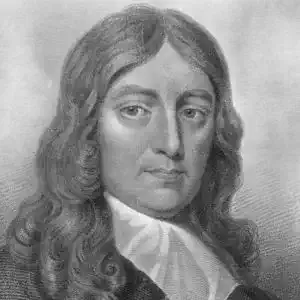
John Milton
Psalm 83
Be not thou silent now at length
O God hold not thy peace,
Sit not thou still O God of strength
We cry and do not cease.
For lo thy furious foes now *swell
And *storm outrageously, *Jehemajun.
And they that hate thee proud and fill
Exalt their heads full hie.
Against thy people they *contrive *Jagnarimu.
*Their Plots and Counsels deep, *Sod.
*Them to ensnare they chiefly strive *Jithjagnatsu gnal.
*Whom thou dost hide and keep. *Tsephuneca.
Come let us cut them off say they,
Till they no Nation be
That Israels name for ever may
Be lost in memory.
For they consult *with all their might, *Lev jachdau.
And all as one in mind
Themselves against thee they unite
And in firm union bind.
The tents of Edom, and the brood
Of scornful Ishmael,
Moab, with them of Hagars blood
That in the Desart dwell,
Gebal and Ammon there conspire,
And hateful Amalec,
The Philistims, and they of Tyre
Whose bounds the sea doth check.
With them great Asshur also bands
And doth confirm the knot,
All these have lent their armed hands
To aid the Sons of Lot.
Do to them as to Midian bold
That wasted all the Coast.
To Sisera, and as is told
Thou didst to Jabins hoast,
When at the brook of Kishon old
They were repulst and slain,
At Endor quite cut off, and rowl'd
As dung upon the plain.
As Zeb and Oreb evil sped
So let their Princes speed
As Zeba, and Zalmunna bled
So let their Princes bleed.
For they amidst their pride have said
By right now shall we seize
Gods houses, and will now invade
*Their stately Palaces. *Neoth Elohim bears both.
My God, oh make them as a wheel
No quiet let them find,
Giddy and restless let them reel
Like stubble from the wind.
As when an aged wood takes fire
Which on a sudden straies,
The greedy flame runs hier and hier
Till all the mountains blaze,
So with thy whirlwind them pursue,
And with thy tempest chase;
*And till they *yield thee honour due,
Lord fill with shame their face.
*They seek thy
Name. Heb.
Asham'd and troubl'd let them be,
Troubl'd and sham'd for ever,
Ever confounded, and so die
With shame, and scape it never.
Then shall they know that thou whose name
Jehova is alone,
Art the most high, and thou the same
O're all the earth art one.
531
Lord Byron
To-- : From The French
Must thou go, my glorious Chief,
Sever'd from thy faithful few?
Who can tell thy warrior's grief,
Maddening o'er that long adieu?
Woman's love, and friendship's zeal,
Dear as both have been to me
What
are they to all I feel,
With a soldier's faith for thee?
Idol of the soldier's soul!
First in fight, but mightiest now;
Many could a world control;
Thee alone no doom can bow.
By thy side for years I dared
Death; and envied those who fell,
When their dying shout was heard,
Blessing him they served so well.
Would that I were cold with those,
Since this hour I live to see;
When the doubts of coward foes
Scarce dare trust a man with thee,
Dreading each should set thee free!
Oh! although in dungeons pent,
All their chains were light to me,
Gazing on thy soul unbent.
Would the sycophants of him
Now so deaf to duty's prayer,
Were his borrow'd glories dim,
In his native darkness share?
Were that world this hour his own,
All thou calmly dost resign,
Could he purchase with that throne
Hearts like those which still are thine?
My chief, my king, my friend, adieu!
Never did I droop before;
Never to my sovereign sue,
As his foes I now implore:
All I ask is to divide
Every peril he must brave;
Sharing by the hero's side
His fall, his exile, and his grave.
527

Robert Frost
To E.T.
I slumbered with your poems on my breast
Spread open as I dropped them half-read through
Like dove wings on a figure on a tomb
To see, if in a dream they brought of you,
I might not have the chance I missed in life
Through some delay, and call you to your face
First soldier, and then poet, and then both,
Who died a soldier-poet of your race.
I meant, you meant, that nothing should remain
Unsaid between us, brother, and this remained--
And one thing more that was not then to say:
The Victory for what it lost and gained.
You went to meet the shell's embrace of fire
On Vimy Ridge; and when you fell that day
The war seemed over more for you than me,
But now for me than you--the other way.
How over, though, for even me who knew
The foe thrust back unsafe beyond the Rhine,
If I was not to speak of it to you
And see you pleased once more with words of mine?
530
Alfred Lord Tennyson
The Coming Of Arthur
Leodogran, the King of Cameliard,
Had one fair daughter, and none other child;
And she was the fairest of all flesh on earth,
Guinevere, and in her his one delight.
For many a petty king ere Arthur came
Ruled in this isle, and ever waging war
Each upon other, wasted all the land;
And still from time to time the heathen host
Swarmed overseas, and harried what was left.
And so there grew great tracts of wilderness,
Wherein the beast was ever more and more,
But man was less and less, till Arthur came.
For first Aurelius lived and fought and died,
And after him King Uther fought and died,
But either failed to make the kingdom one.
And after these King Arthur for a space,
And through the puissance of his Table Round,
Drew all their petty princedoms under him.
Their king and head, and made a realm, and reigned.
And thus the land of Cameliard was waste,
Thick with wet woods, and many a beast therein,
And none or few to scare or chase the beast;
So that wild dog, and wolf and boar and bear
Came night and day, and rooted in the fields,
And wallowed in the gardens of the King.
And ever and anon the wolf would steal
The children and devour, but now and then,
Her own brood lost or dead, lent her fierce teat
To human sucklings; and the children, housed
In her foul den, there at their meat would growl,
And mock their foster mother on four feet,
Till, straightened, they grew up to wolf-like men,
Worse than the wolves. And King Leodogran
Groaned for the Roman legions here again,
And Csar's eagle: then his brother king,
Urien, assailed him: last a heathen horde,
Reddening the sun with smoke and earth with blood,
And on the spike that split the mother's heart
Spitting the child, brake on him, till, amazed,
He knew not whither he should turn for aid.
But--for he heard of Arthur newly crowned,
Though not without an uproar made by those
Who cried, `He is not Uther's son'--the King
Sent to him, saying, `Arise, and help us thou!
For here between the man and beast we die.'
And Arthur yet had done no deed of arms,
But heard the call, and came: and Guinevere
Stood by the castle walls to watch him pass;
But since he neither wore on helm or shield
The golden symbol of his kinglihood,
But rode a simple knight among his knights,
And many of these in richer arms than he,
She saw him not, or marked not, if she saw,
One among many, though his face was bare.
But Arthur, looking downward as he past,
Felt the light of her eyes into his life
Smite on the sudden, yet rode on, and pitched
His tents beside the forest. Then he drave
The heathen; after, slew the beast, and felled
The forest, letting in the sun, and made
Broad pathways for the hunter and the knight
And so returned.
For while he lingered there,
A doubt that ever smouldered in the hearts
Of those great Lords and Barons of his realm
Flashed forth and into war: for most of these,
Colleaguing with a score of petty kings,
Made head against him, crying, `Who is he
That he should rule us? who hath proven him
King Uther's son? for lo! we look at him,
And find nor face nor bearing, limbs nor voice,
Are like to those of Uther whom we knew.
This is the son of Gorlos, not the King;
This is the son of Anton, not the King.'
And Arthur, passing thence to battle, felt
Travail, and throes and agonies of the life,
Desiring to be joined with Guinevere;
And thinking as he rode, `Her father said
That there between the man and beast they die.
Shall I not lift her from this land of beasts
Up to my throne, and side by side with me?
What happiness to reign a lonely king,
Vext--O ye stars that shudder over me,
O earth that soundest hollow under me,
Vext with waste dreams? for saving I be joined
To her that is the fairest under heaven,
I seem as nothing in the mighty world,
And cannot will my will, nor work my work
Wholly, nor make myself in mine own realm
Victor and lord. But were I joined with her,
Then might we live together as one life,
And reigning with one will in everything
Have power on this dark land to lighten it,
And power on this dead world to make it live.'
Thereafter--as he speaks who tells the tale--
When Arthur reached a field-of-battle bright
With pitched pavilions of his foe, the world
Was all so clear about him, that he saw
The smallest rock far on the faintest hill,
And even in high day the morning star.
So when the King had set his banner broad,
At once from either side, with trumpet-blast,
And shouts, and clarions shrilling unto blood,
The long-lanced battle let their horses run.
And now the Barons and the kings prevailed,
And now the King, as here and there that war
Went swaying; but the Powers who walk the world
Made lightnings and great thunders over him,
And dazed all eyes, till Arthur by main might,
And mightier of his hands with every blow,
And leading all his knighthood threw the kings
Cardos, Urien, Cradlemont of Wales,
Claudias, and Clariance of Northumberland,
The King Brandagoras of Latangor,
With Anguisant of Erin, Morganore,
And Lot of Orkney. Then, before a voice
As dreadful as the shout of one who sees
To one who sins, and deems himself alone
And all the world asleep, they swerved and brake
Flying, and Arthur called to stay the brands
That hacked among the flyers, `Ho! they yield!'
So like a painted battle the war stood
Silenced, the living quiet as the dead,
And in the heart of Arthur joy was lord.
He laughed upon his warrior whom he loved
And honoured most. `Thou dost not doubt me King,
So well thine arm hath wrought for me today.'
`Sir and my liege,' he cried, `the fire of God
Descends upon thee in the battle-field:
I know thee for my King!' Whereat the two,
For each had warded either in the fight,
Sware on the field of death a deathless love.
And Arthur said, `Man's word is God in man:
Let chance what will, I trust thee to the death.'
Then quickly from the foughten field he sent
Ulfius, and Brastias, and Bedivere,
His new-made knights, to King Leodogran,
Saying, `If I in aught have served thee well,
Give me thy daughter Guinevere to wife.'
Whom when he heard, Leodogran in heart
Debating--`How should I that am a king,
However much he holp me at my need,
Give my one daughter saving to a king,
And a king's son?'--lifted his voice, and called
A hoary man, his chamberlain, to whom
He trusted all things, and of him required
His counsel: `Knowest thou aught of Arthur's birth?'
Then spake the hoary chamberlain and said,
`Sir King, there be but two old men that know:
And each is twice as old as I; and one
Is Merlin, the wise man that ever served
King Uther through his magic art; and one
Is Merlin's master (so they call him) Bleys,
Who taught him magic, but the scholar ran
Before the master, and so far, that Bleys,
Laid magic by, and sat him down, and wrote
All things and whatsoever Merlin did
In one great annal-book, where after-years
Will learn the secret of our Arthur's birth.'
To whom the King Leodogran replied,
`O friend, had I been holpen half as well
By this King Arthur as by thee today,
Then beast and man had had their share of me:
But summon here before us yet once more
Ulfius, and Brastias, and Bedivere.'
Then, when they came before him, the King said,
`I have seen the cuckoo chased by lesser fowl,
And reason in the chase: but wherefore now
Do these your lords stir up the heat of war,
Some calling Arthur born of Gorlos,
Others of Anton? Tell me, ye yourselves,
Hold ye this Arthur for King Uther's son?'
And Ulfius and Brastias answered, `Ay.'
Then Bedivere, the first of all his knights
Knighted by Arthur at his crowning, spake--
For bold in heart and act and word was he,
Whenever slander breathed against the King-
`Sir, there be many rumours on this head:
For there be those who hate him in their hearts,
Call him baseborn, and since his ways are sweet,
And theirs are bestial, hold him less than man:
And there be those who deem him more than man,
And dream he dropt from heaven: but my belief
In all this matter--so ye care to learn--
Sir, for ye know that in King Uther's time
The prince and warrior Gorlos, he that held
Tintagil castle by the Cornish sea,
Was wedded with a winsome wife, Ygerne:
And daughters had she borne him,--one whereof,
Lot's wife, the Queen of Orkney, Bellicent,
Hath ever like a loyal sister cleaved
To Arthur,--but a son she had not borne.
And Uther cast upon her eyes of love:
But she, a stainless wife to Gorlos,
So loathed the bright dishonour of his love,
That Gorlos and King Uther went to war:
And overthrown was Gorlos and slain.
Then Uther in his wrath and heat besieged
Ygerne within Tintagil, where her men,
Seeing the mighty swarm about their walls,
Left her and fled, and Uther entered in,
And there was none to call to but himself.
So, compassed by the power of the King,
Enforced was she to wed him in her tears,
And with a shameful swiftness: afterward,
Not many moons, King Uther died himself,
Moaning and wailing for an heir to rule
After him, lest the realm should go to wrack.
And that same night, the night of the new year,
By reason of the bitterness and grief
That vext his mother, all before his time
Was Arthur born, and all as soon as born
Delivered at a secret postern-gate
To Merlin, to be holden far apart
Until his hour should come; because the lords
Of that fierce day were as the lords of this,
Wild beasts, and surely would have torn the child
Piecemeal among them, had they known; for each
But sought to rule for his own self and hand,
And many hated Uther for the sake
Of Gorlos. Wherefore Merlin took the child,
And gave him to Sir Anton, an old knight
And ancient friend of Uther; and his wife
Nursed the young prince, and reared him with her own;
And no man knew. And ever since the lords
Have foughten like wild beasts among themselves,
So that the realm has gone to wrack: but now,
This year, when Merlin (for his hour had come)
Brought Arthur forth, and set him in the hall,
Proclaiming, "Here is Uther's heir, your king,"
A hundred voices cried, "Away with him!
No king of ours! a son of Gorlos he,
Or else the child of Anton, and no king,
Or else baseborn." Yet Merlin through his craft,
And while the people clamoured for a king,
Had Arthur crowned; but after, the great lords
Banded, and so brake out in open war.'
Then while the King debated with himself
If Arthur were the child of shamefulness,
Or born the son of Gorlos, after death,
Or Uther's son, and born before his time,
Or whether there were truth in anything
Said by these three, there came to Cameliard,
With Gawain and young Modred, her two sons,
Lot's wife, the Queen of Orkney, Bellicent;
Whom as he could, not as he would, the King
Made feast for, saying, as they sat at meat,
`A doubtful throne is ice on summer seas.
Ye come from Arthur's court. Victor his men
Report him! Yea, but ye--think ye this king--
So many those that hate him, and so strong,
So few his knights, however brave they be--
Hath body enow to hold his foemen down?'
`O King,' she cried, `and I will tell thee: few,
Few, but all brave, all of one mind with him;
For I was near him when the savage yells
Of Uther's peerage died, and Arthur sat
Crowned on the das, and his warriors cried,
"Be thou the king, and we will work thy will
Who love thee." Then the King in low deep tones,
And simple words of great authority,
Bound them by so strait vows to his own self,
That when they rose, knighted from kneeling, some
Were pale as at the passing of a ghost,
Some flushed, and others dazed, as one who wakes
Half-blinded at the coming of a light.
`But when he spake and cheered his Table Round
With large, divine, and comfortable words,
Beyond my tongue to tell thee--I beheld
From eye to eye through all their Order flash
A momentary likeness of the King:
And ere it left their faces, through the cross
And those around it and the Crucified,
Down from the casement over Arthur, smote
Flame-colour, vert and azure, in three rays,
One falling upon each of three fair queens,
Who stood in silence near his throne, the friends
Of Arthur, gazing on him, tall, with bright
Sweet faces, who will help him at his need.
`And there I saw mage Merlin, whose vast wit
And hundred winters are but as the hands
Of loyal vassals toiling for their liege.
`And near him stood the Lady of the Lake,
Who knows a subtler magic than his own--
Clothed in white samite, mystic, wonderful.
She gave the King his huge cross-hilted sword,
Whereby to drive the heathen out: a mist
Of incense curled about her, and her face
Wellnigh was hidden in the minster gloom;
But there was heard among the holy hymns
A voice as of the waters, for she dwells
Down in a deep; calm, whatsoever storms
May shake the world, and when the surface rolls,
Hath power to walk the waters like our Lord.
`There likewise I beheld Excalibur
Before him at his crowning borne, the sword
That rose from out the bosom of the lake,
And Arthur rowed across and took it--rich
With jewels, elfin Urim, on the hilt,
Bewildering heart and eye--the blade so bright
That men are blinded by it--on one side,
Graven in the oldest tongue of all this world,
"Take me," but turn the blade and ye shall see,
And written in the speech ye speak yourself,
"Cast me away!" And sad was Arthur's face
Taking it, but old Merlin counselled him,
"Take thou and strike! the time to cast away
Is yet far-off." So this great brand the king
Took, and by this will beat his foemen down.'
Thereat Leodogran rejoiced, but thought
To sift his doubtings to the last, and asked,
Fixing full eyes of question on her face,
`The swallow and the swift are near akin,
But thou art closer to this noble prince,
Being his own dear sister;' and she said,
`Daughter of Gorlos and Ygerne am I;'
`And therefore Arthur's sister?' asked the King.
She answered, `These be secret things,' and signed
To those two sons to pass, and let them be.
And Gawain went, and breaking into song
Sprang out, and followed by his flying hair
Ran like a colt, and leapt at all he saw:
But Modred laid his ear beside the doors,
And there half-heard; the same that afterward
Struck for the throne, and striking found his doom.
And then the Queen made answer, `What know I?
For dark my mother was in eyes and hair,
And dark in hair and eyes am I; and dark
Was Gorlos, yea and dark was Uther too,
Wellnigh to blackness; but this King is fair
Beyond the race of Britons and of men.
Moreover, always in my mind I hear
A cry from out the dawning of my life,
A mother weeping, and I hear her say,
"O that ye had some brother, pretty one,
To guard thee on the rough ways of the world."'
`Ay,' said the King, `and hear ye such a cry?
But when did Arthur chance upon thee first?'
`O King!' she cried, `and I will tell thee true:
He found me first when yet a little maid:
Beaten I had been for a little fault
Whereof I was not guilty; and out I ran
And flung myself down on a bank of heath,
And hated this fair world and all therein,
And wept, and wished that I were dead; and he--
I know not whether of himself he came,
Or brought by Merlin, who, they say, can walk
Unseen at pleasure--he was at my side,
And spake sweet words, and comforted my heart,
And dried my tears, being a child with me.
And many a time he came, and evermore
As I grew greater grew with me; and sad
At times he seemed, and sad with him was I,
Stern too at times, and then I loved him not,
But sweet again, and then I loved him well.
And now of late I see him less and less,
But those first days had golden hours for me,
For then I surely thought he would be king.
`But let me tell thee now another tale:
For Bleys, our Merlin's master, as they say,
Died but of late, and sent his cry to me,
To hear him speak before he left his life.
Shrunk like a fairy changeling lay the mage;
And when I entered told me that himself
And Merlin ever served about the King,
Uther, before he died; and on the night
When Uther in Tintagil past away
Moaning and wailing for an heir, the two
Left the still King, and passing forth to breathe,
Then from the castle gateway by the chasm
Descending through the dismal night--a night
In which the bounds of heaven and earth were lost--
Beheld, so high upon the dreary deeps
It seemed in heaven, a ship, the shape thereof
A dragon winged, and all from stern to stern
Bright with a shining people on the decks,
And gone as soon as seen. And then the two
Dropt to the cove, and watched the great sea fall,
Wave after wave, each mightier than the last,
Till last, a ninth one, gathering half the deep
And full of voices, slowly rose and plunged
Roaring, and all the wave was in a flame:
And down the wave and in the flame was borne
A naked babe, and rode to Merlin's feet,
Who stoopt and caught the babe, and cried "The King!
Here is an heir for Uther!" And the fringe
Of that great breaker, sweeping up the strand,
Lashed at the wizard as he spake the word,
And all at once all round him rose in fire,
So that the child and he were clothed in fire.
And presently thereafter followed calm,
Free sky and stars: "And this the same child," he said,
"Is he who reigns; nor could I part in peace
Till this were told." And saying this the seer
Went through the strait and dreadful pass of death,
Not ever to be questioned any more
Save on the further side; but when I met
Merlin, and asked him if these things were truth--
The shining dragon and the naked child
Descending in the glory of the seas--
He laughed as is his wont, and answered me
In riddling triplets of old time, and said:
`"Rain, rain, and sun! a rainbow in the sky!
A young man will be wiser by and by;
An old man's wit may wander ere he die.
Rain, rain, and sun! a rainbow on the lea!
And truth is this to me, and that to thee;
And truth or clothed or naked let it be.
Rain, sun, and rain! and the free blossom blows:
Sun, rain, and sun! and where is he who knows?
From the great deep to the great deep he goes."
`So Merlin riddling angered me; but thou
Fear not to give this King thy only child,
Guinevere: so great bards of him will sing
Hereafter; and dark sayings from of old
Ranging and ringing through the minds of men,
And echoed by old folk beside their fires
For comfort after their wage-work is done,
Speak of the King; and Merlin in our time
Hath spoken also, not in jest, and sworn
Though men may wound him that he will not die,
But pass, again to come; and then or now
Utterly smite the heathen underfoot,
Till these and all men hail him for their king.'
She spake and King Leodogran rejoiced,
But musing, `Shall I answer yea or nay?'
Doubted, and drowsed, nodded and slept, and saw,
Dreaming, a slope of land that ever grew,
Field after field, up to a height, the peak
Haze-hidden, and thereon a phantom king,
Now looming, and now lost; and on the slope
The sword rose, the hind fell, the herd was driven,
Fire glimpsed; and all the land from roof and rick,
In drifts of smoke before a rolling wind,
Streamed to the peak, and mingled with the haze
And made it thicker; while the phantom king
Sent out at times a voice; and here or there
Stood one who pointed toward the voice, the rest
Slew on and burnt, crying, `No king of ours,
No son of Uther, and no king of ours;'
Till with a wink his dream was changed, the haze
Descended, and the solid earth became
As nothing, but the King stood out in heaven,
Crowned. And Leodogran awoke, and sent
Ulfius, and Brastias and Bedivere,
Back to the court of Arthur answering yea.
Then Arthur charged his warrior whom he loved
And honoured most, Sir Lancelot, to ride forth
And bring the Queen;--and watched him from the gates:
And Lancelot past away among the flowers,
(For then was latter April) and returned
Among the flowers, in May, with Guinevere.
To whom arrived, by Dubric the high saint,
Chief of the church in Britain, and before
The stateliest of her altar-shrines, the King
That morn was married, while in stainless white,
The fair beginners of a nobler time,
And glorying in their vows and him, his knights
Stood around him, and rejoicing in his joy.
Far shone the fields of May through open door,
The sacred altar blossomed white with May,
The Sun of May descended on their King,
They gazed on all earth's beauty in their Queen,
Rolled incense, and there past along the hymns
A voice as of the waters, while the two
Sware at the shrine of Christ a deathless love:
And Arthur said, `Behold, thy doom is mine.
Let chance what will, I love thee to the death!'
To whom the Queen replied with drooping eyes,
`King and my lord, I love thee to the death!'
And holy Dubric spread his hands and spake,
`Reign ye, and live and love, and make the world
Other, and may thy Queen be one with thee,
And all this Order of thy Table Round
Fulfil the boundless purpose of their King!'
So Dubric said; but when they left the shrine
Great Lords from Rome before the portal stood,
In scornful stillness gazing as they past;
Then while they paced a city all on fire
With sun and cloth of gold, the trumpets blew,
And Arthur's knighthood sang before the King:-
`Blow, trumpet, for the world is white with May;
Blow trumpet, the long night hath rolled away!
Blow through the living world--"Let the King reign."
`Shall Rome or Heathen rule in Arthur's realm?
Flash brand and lance, fall battleaxe upon helm,
Fall battleaxe, and flash brand! Let the King reign.
`Strike for the King and live! his knights have heard
That God hath told the King a secret word.
Fall battleaxe, and flash brand! Let the King reign.
`Blow trumpet! he will lift us from the dust.
Blow trumpet! live the strength and die the lust!
Clang battleaxe, and clash brand! Let the King reign.
`Strike for the King and die! and if thou diest,
The King is King, and ever wills the highest.
Clang battleaxe, and clash brand! Let the King reign.
`Blow, for our Sun is mighty in his May!
Blow, for our Sun is mightier day by day!
Clang battleaxe, and clash brand! Let the King reign.
`The King will follow Christ, and we the King
In whom high God hath breathed a secret thing.
Fall battleaxe, and flash brand! Let the King reign.'
So sang the knighthood, moving to their hall.
There at the banquet those great Lords from Rome,
The slowly-fading mistress of the world,
Strode in, and claimed their tribute as of yore.
But Arthur spake, `Behold, for these have sworn
To wage my wars, and worship me their King;
The old order changeth, yielding place to new;
And we that fight for our fair father Christ,
Seeing that ye be grown too weak and old
To drive the heathen from your Roman wall,
No tribute will we pay:' so those great lords
Drew back in wrath, and Arthur strove with Rome.
And Arthur and his knighthood for a space
Were all one will, and through that strength the King
Drew in the petty princedoms under him,
Fought, and in twelve great battles overcame
The heathen hordes, and made a realm and reigned.
525

Ezra Pound
These Fought in Any Case
These fought in any case,
and some believing
pro domo, in any case .....
Died some, pro patria,
walked eye-deep in hell
believing in old men's lies, then unbelieving
came home, home to a lie,
home to many deceits,
home to old lies and new infamy;
usury age-old and age-thick
and liars in public places.
Daring as never before, wastage as never before.
Young blood and high blood,
fair cheeks, and fine bodies;
fortitude as never before
frankness as never before,
disillusions as never told in the old days,
hysterias, trench confessions,
laughter out of dead bellies.
517
Rudyard Kipling
Arithmetic on the Frontier
A great and glorious thing it is
To learn, for seven years or so,
The Lord knows what of that and this,
Ere reckoned fit to face the foe --
The flying bullet down the Pass,
That whistles clear: "All flesh is grass."
Three hundred pounds per annum spent
On making brain and body meeter
For all the murderous intent
Comprised in "villanous saltpetre!"
And after -- ask the Yusufzaies
What comes of all our 'ologies.
A scrimmage in a Border Station --
A canter down some dark defile --
Two thousand pounds of education
Drops to a ten-rupee jezail --
The Crammer's boast, the Squadron's pride,
Shot like a rabbit in a ride!
No proposition Euclid wrote,
No formulae the text-books know,
Will turn the bullet from your coat,
Or ward the tulwar's downward blow
Strike hard who cares -- shoot straight who can --
The odds are on the cheaper man.
One sword-knot stolen from the camp
Will pay for all the school expenses
Of any Kurrum Valley scamp
Who knows no word of moods and tenses,
But, being blessed with perfect sight,
Picks off our messmates left and right.
With home-bred hordes the hillsides teem,
The troop-ships bring us one by one,
At vast expense of time and steam,
To slay Afridis where they run.
The "captives of our bow and spear"
Are cheap -- alas! as we are dear.
519

Henry Wadsworth Longfellow
The Emperor's Bird's-Nest. (Birds Of Passage. Flight The First)
Once the Emperor Charles of Spain,
With his swarthy, grave commanders,
I forget in what campaign,
Long besieged, in mud and rain,
Some old frontier town of Flanders.
Up and down the dreary camp,
In great boots of Spanish leather,
Striding with a measured tramp,
These Hidalgos, dull and damp,
Cursed the Frenchmen, cursed the weather.
Thus as to and fro they went,
Over upland and through hollow,
Giving their impatience vent,
Perched upon the Emperor's tent,
In her nest, they spied a swallow.
Yes, it was a swallow's nest,
Built of clay and hair of horses,
Mane, or tail, or dragoon's crest,
Found on hedge-rows east and west,
After skirmish of the forces.
Then an old Hidalgo said,
As he twirled his gray mustachio,
'Sure this swallow overhead
Thinks the Emperor's tent a shed,
And the Emperor but a Macho!'
Hearing his imperial name
Coupled with those words of malice,
Half in anger, half in shame,
Forth the great campaigner came
Slowly from his canvas palace.
'Let no hand the bird molest,'
Said he solemnly, 'nor hurt her!'
Adding then, by way of jest,
'Golondrina is my guest,
'T is the wife of some deserter!'
Swift as bowstring speeds a shaft,
Through the camp was spread the rumor,
And the soldiers, as they quaffed
Flemish beer at dinner, laughed
At the Emperor's pleasant humor.
So unharmed and unafraid
Sat the swallow still and brooded,
Till the constant cannonade
Through the walls a breach had made,
And the siege was thus concluded.
Then the army, elsewhere bent,
Struck its tents as if disbanding,
Only not the Emperor's tent,
For he ordered, ere he went,
Very curtly, 'Leave it standing!'
So it stood there all alone,
Loosely flapping, torn and tattered,
Till the brood was fledged and flown,
Singing o'er those walls of stone
Which the cannon-shot had shattered.
519
Rudyard Kipling
Macdonough's Song
Whether the State can loose and bind
In Heaven as well as on Earth:
If it be wiser to kill mankind
Before or after the birth--
These are matters of high concern
Where State-kept schoolmen are;
But Holy State (we have lived to learn)
Endeth in Holy War.
Whether The People be led by The Lord,
Or lured by the loudest throat:
If it be quicker to die by the sword
Or cheaper to die by vote--
These are things we have dealt with once,
(And they will not rise from their grave)
For Holy People, however it runs,
Endeth in wholly Slave.
Whatsoever, for any cause,
Seeketh to take or give
Power above or beyond the Laws,
Suffer it not to live!
Holy State or Holy King--
Or Holy People's Will--
Have no truck with the senseless thing.
Order the guns and kill!
Saying --after--me:--
Once there was The People--Terror gave it birth;
Once there was The People and it made a Hell of Earth.
Earth arose and crushed it. Listen, O ye slain!
Once there was The People--it shall never be again!
517
Percy Bysshe Shelley
Feelings Of A Republican On The Fall Of Bonaparte
I hated thee, fallen tyrant! I did groan
To think that a most unambitious slave,
Like thou, shouldst dance and revel on the grave
Of Liberty. Thou mightst have built thy throne
Where it had stood even now: thou didst prefer
A frail and bloody pomp which Time has swept
In fragments towards Oblivion. Massacre,
For this I prayed, would on thy sleep have crept,
Treason and Slavery, Rapine, Fear, and Lust,
And stifled thee, their minister. I know
Too late, since thou and France are in the dust,
That Virtue owns a more eternal foe
Than Force or Fraud: old Custom, legal Crime,
And bloody Faith the foulest birth of Time.
511
Ezra Pound
Sestina: Altaforte
Loquitur: En Bertrans de Born.
Dante Alighieri put this man in hell for that he was a
stirrer-up of strife.
Eccovi!
Judge ye!
Have I dug him up again?
The scene in at his castle, Altaforte. "Papiols" is his jongleur.
"The Leopard," the device of Richard (Cúur de Lion).
I
Damn it all! all this our South stinks peace.
You whoreson dog, Papiols, come! Let's to music!
I have no life save when the swords clash.
But ah! when I see the standards gold, vair, purple, opposing
And the broad fields beneath them turn crimson,
Then howl I my heart nigh mad with rejoicing.
II
In hot summer have I great rejoicing
When the tempests kill the earth's foul peace,
And the lightnings from black heav'n flash crimson,
And the fierce thunders roar me their music
And the winds shriek through the clouds mad, opposing,
And through all the riven skies God's swords clash.
III
Hell grant soon we hear again the swords clash!
And the shrill neighs of destriers in battle rejoicing,
Spiked breast to spiked breast opposing!
Better one hour's stour than a year's peace
With fat boards, bawds, wine and frail music!
Bah! there's no wine like the blood's crimson!
IV
And I love to see the sun rise blood-crimson.
And I watch his spears through the dark clash
And it fills all my heart with rejoicing
And pries wide my mouth with fast music
When I see him so scorn and defy peace,
His lone might 'gainst all darkness opposing.
V
The man who fears war and squats opposing
My words for stour, hath no blood of crimson
But is fit only to rot in womanish peace
Far from where worth's won and the swords clash
For the death of such sluts I go rejoicing;
Yea, I fill all the air with my music.
VI
Papiols, Papiols, to the music!
There's no sound like to swords swords opposing,
No cry like the battle's rejoicing
When our elbows and swords drip the crimson
And our charges 'gainst "The Leopard's" rush clash.
May God damn for ever all who cry "Peace!"
VII
And let the music of the swords make them crimson!
Hell grant soon we hear again the swords clash!
Hell blot black for always the thought "Peace!"
508
Rudyard Kipling
Dane-Geld
A.D. -
It is always a temptation to an armed and agile nation
To call upon a neighbour and to say:--
"We invaded you last night--we are quite prepared to fight,
Unless you pay us cash to go away."
And that is called asking for Dane-geld,
And the people who ask it explain
That you've only to pay 'em the Dane-geld
And then you'll get rid of the Dane!
It is always a temptation for a reach and lazy nation,
To puff and look important and to say:--
"Though we know we should defeat you, we have not the
time to meet you.
We will therefore pay you cash to go away."
And that is called paying the Dane-geld;
But we've proved it again and again,
That if once you have paid him the Dane-geld
You never get rid of the Dane.
It is wrong to put temptation in the path of any nation,
For fear they should succumb and go astray;
So when you are requested to pay up or be molested,
You will find it better policy to say:--
"We never pay any-one Dane-geld,
No matter how trifling the cost;
For the end of that game is oppression and shame,
And the nation that plays it is lost!"
506
Bertolt Brecht
On Reading a Recent Greek Poet
After the wailing had already begun
along the walls, their ruin certain,
the Trojans fidgeted with bits of wood
in the three-ply doors, itsy-bitsy
pieces of wood, fussing with them.
And began to get their nerve back and feel hopeful.
along the walls, their ruin certain,
the Trojans fidgeted with bits of wood
in the three-ply doors, itsy-bitsy
pieces of wood, fussing with them.
And began to get their nerve back and feel hopeful.
502
Rudyard Kipling
The Jacket
Through the Plagues of Egyp' we was chasin' Arabi,
Gettin' down an' shovin' in the sun;
An' you might 'ave called us dirty, an' you might ha' called us dry,
An' you might 'ave 'eard us talkin' at the gun.
But the Captain 'ad 'is jacket, an' the jacket it was new --
('Orse Gunners, listen to my song!)
An' the wettin' of the jacket is the proper thing to do,
Nor we didn't keep 'im waitin' very long.
One day they gave us orders for to shell a sand redoubt,
Loadin' down the axle-arms with case;
But the Captain knew 'is dooty, an' he took the crackers out
An' he put some proper liquor in its place.
An' the Captain saw the shrapnel, which is six-an'-thirty clear.
('Orse Gunners, listen to my song!)
"Will you draw the weight," sez 'e, "or will you draw the beer?"
An' we didn't keep 'im waitin' very long.
For the Captain, etc.
Then we trotted gentle, not to break the bloomin' glass,
Though the Arabites 'ad all their ranges marked;
But we dursn't 'ardly gallop, for the most was bottled Bass,
An' we'd dreamed of it since we was disembarked:
So we fired economic with the shells we 'ad in 'and,
('Orse Gunners, listen to my song!)
But the beggars under cover 'ad the impidence to stand,
An' we couldn't keep 'em waitin' very long.
And the Captain, etc.
So we finished 'arf the liquor (an' the Captain took champagne),
An' the Arabites was shootin' all the while;
An' we left our wounded 'appy with the empties on the plain,
An' we used the bloomin' guns for pro-jec-tile!
We limbered up an' galloped -- there were nothin' else to do --
('Orse Gunners, listen to my song!)
An' the Battery came a-boundin' like a boundin' kangaroo,
But they didn't watch us comin' very long.
As the Captain, etc.
We was goin' most extended -- we was drivin' very fine,
An' the Arabites were loosin' 'igh an' wide,
Till the Captain took the glassy with a rattlin' right incline,
An' we dropped upon their 'eads the other side.
Then we give 'em quarter -- such as 'adn't up and cut,
('Orse Gunners, listen to my song!)
An' the Captain stood a limberful of fizzy -- somethin' Brutt,
But we didn't leave it fizzing very long.
For the Captain, etc.
We might ha' been court-martialled, but it all come out all right
When they signalled us to join the main command.
There was every round expended, there was every gunner tight,
An' the Captain waved a corkscrew in 'is 'and.
But the Captain 'ad 'is jacket, etc.
503