

Poems in this topic
War and Peace
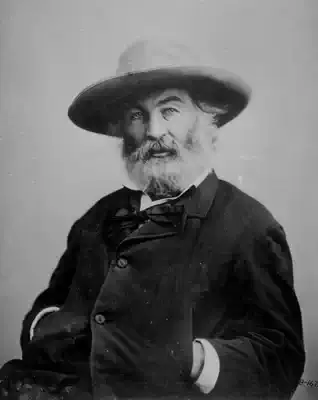
Walt Whitman
The Centerarian's Story
The Centerarian's Story
GIVE me your hand, old Revolutionary;
The hill-top is nigh--but a few steps, (make room, gentlemen;)
Up the path you have follow'd me well, spite of your hundred and
extra years;
You can walk, old man, though your eyes are almost done;
Your faculties serve you, and presently I must have them serve me.
Rest, while I tell what the crowd around us means;
On the plain below, recruits are drilling and exercising;
There is the camp--one regiment departs to-morrow;
Do you hear the officers giving the orders?
Do you hear the clank of the muskets? 10
Why, what comes over you now, old man?
Why do you tremble, and clutch my hand so convulsively?
The troops are but drilling--they are yet surrounded with smiles;
Around them, at hand, the well-drest friends, and the women;
While splendid and warm the afternoon sun shines down;
Green the midsummer verdure, and fresh blows the dallying breeze,
O'er proud and peaceful cities, and arm of the sea between.
But drill and parade are over--they march back to quarters;
Only hear that approval of hands! hear what a clapping!
As wending, the crowds now part and disperse--but we, old man, 20
Not for nothing have I brought you hither--we must remain;
You to speak in your turn, and I to listen and tell.
THE CENTENARIAN.
When I clutch'd your hand, it was not with terror;
But suddenly, pouring about me here, on every side,
And below there where the boys were drilling, and up the slopes they
ran,
And where tents are pitch'd, and wherever you see, south and south
east and south-west,
Over hills, across lowlands, and in the skirts of woods,
And along the shores, in mire (now fill'd over), came again, and
suddenly raged,
As eighty-five years agone, no mere parade receiv'd with applause of
friends,
But a battle, which I took part in myself--aye, long ago as it is, I
took part in it, 30
Walking then this hill-top, this same ground.
Aye, this is the ground;
My blind eyes, even as I speak, behold it re-peopled from graves;
The years recede, pavements and stately houses disappear;
Rude forts appear again, the old hoop'd guns are mounted;
I see the lines of rais'd earth stretching from river to bay;
I mark the vista of waters, I mark the uplands and slopes:
Here we lay encamp'd--it was this time in summer also.
As I talk, I remember all--I remember the Declaration;
It was read here--the whole army paraded--it was read to us here; 40
By his staff surrounded, the General stood in the middle--he held up
his unsheath'd sword,
It glitter'd in the sun in full sight of the army.
'Twas a bold act then;
The English war-ships had just arrived--the king had sent them from
over the sea;
We could watch down the lower bay where they lay at anchor,
And the transports, swarming with soldiers.
A few days more, and they landed--and then the battle.
Twenty thousand were brought against us,
A veteran force, furnish'd with good artillery.
I tell not now the whole of the battle; 50
But one brigade, early in the forenoon, order'd forward to engage the
red-coats;
Of that brigade I tell, and how steadily it march'd,
And how long and how well it stood, confronting death.
Who do you think that was, marching steadily, sternly confronting
death?
It was the brigade of the youngest men, two thousand strong,
Rais'd in Virginia and Maryland, and many of them known personally to
the General.
Jauntily forward they went with quick step toward Gowanus' waters;
Till of a sudden, unlook'd for, by defiles through the woods, gain'd
at night,
The British advancing, wedging in from the east, fiercely playing
their guns,
That brigade of the youngest was cut off, and at the enemy's
mercy. 60
The General watch'd them from this hill;
They made repeated desperate attempts to burst their environment;
Then drew close together, very compact, their flag flying in the
middle;
But O from the hills how the cannon were thinning and thinning them!
It sickens me yet, that slaughter!
I saw the moisture gather in drops on the face of the General;
I saw how he wrung his hands in anguish.
Meanwhile the British maneuver'd to draw us out for a pitch'd battle;
But we dared not trust the chances of a pitch'd battle.
We fought the fight in detachments; 70
Sallying forth, we fought at several points--but in each the luck was
against us;
Our foe advancing, steadily getting the best of it, push'd us back to
the works on this hill;
Till we turn'd, menacing, here, and then he left us.
That was the going out of the brigade of the youngest men, two
thousand strong;
Few return'd--nearly all remain in Brooklyn.
That, and here, my General's first battle;
No women looking on, nor sunshine to bask in--it did not conclude
with applause;
Nobody clapp'd hands here then.
But in darkness, in mist, on the ground, under a chill rain,
Wearied that night we lay, foil'd and sullen; 80
While scornfully laugh'd many an arrogant lord, off against us
encamp'd,
Quite within hearing, feasting, klinking wine-glasses together over
their victory.
So, dull and damp, and another day;
But the night of that, mist lifting, rain ceasing,
Silent as a ghost, while they thought they were sure of him, my
General retreated.
I saw him at the river-side,
Down by the ferry, lit by torches, hastening the embarcation;
My General waited till the soldiers and wounded were all pass'd over;
And then, (it was just ere sunrise,) these eyes rested on him for the
last time.
Every one else seem'd fill'd with gloom; 90
Many no doubt thought of capitulation.
But when my General pass'd me,
As he stood in his boat, and look'd toward the coming sun,
I saw something different from capitulation.
TERMINUS.
Enough--the Centenarian's story ends;
The two, the past and present, have interchanged;
I myself, as connecter, as chansonnier of a great future, am now
speaking.
And is this the ground Washington trod?
And these waters I listlessly daily cross, are these the waters he
cross'd,
As resolute in defeat, as other generals in their proudest
triumphs? 100
It is well--a lesson like that, always comes good;
I must copy the story, and send it eastward and westward;
I must preserve that look, as it beam'd on you, rivers of Brooklyn.
See! as the annual round returns, the phantoms return;
It is the 27th of August, and the British have landed;
The battle begins, and goes against us--behold! through the smoke,
Washington's face;
The brigade of Virginia and Maryland have march'd forth to intercept
the enemy;
They are cut off--murderous artillery from the hills plays upon them;
Rank after rank falls, while over them silently droops the flag,
Baptized that day in many a young man's bloody wounds, 110
In death, defeat, and sisters', mothers' tears.
Ah, hills and slopes of Brooklyn! I perceive you are more valuable
than your owners supposed;
Ah, river! henceforth you will be illumin'd to me at sunrise with
something besides the sun.
Encampments new! in the midst of you stands an encampment very old;
Stands forever the camp of the dead brigade.
GIVE me your hand, old Revolutionary;
The hill-top is nigh--but a few steps, (make room, gentlemen;)
Up the path you have follow'd me well, spite of your hundred and
extra years;
You can walk, old man, though your eyes are almost done;
Your faculties serve you, and presently I must have them serve me.
Rest, while I tell what the crowd around us means;
On the plain below, recruits are drilling and exercising;
There is the camp--one regiment departs to-morrow;
Do you hear the officers giving the orders?
Do you hear the clank of the muskets? 10
Why, what comes over you now, old man?
Why do you tremble, and clutch my hand so convulsively?
The troops are but drilling--they are yet surrounded with smiles;
Around them, at hand, the well-drest friends, and the women;
While splendid and warm the afternoon sun shines down;
Green the midsummer verdure, and fresh blows the dallying breeze,
O'er proud and peaceful cities, and arm of the sea between.
But drill and parade are over--they march back to quarters;
Only hear that approval of hands! hear what a clapping!
As wending, the crowds now part and disperse--but we, old man, 20
Not for nothing have I brought you hither--we must remain;
You to speak in your turn, and I to listen and tell.
THE CENTENARIAN.
When I clutch'd your hand, it was not with terror;
But suddenly, pouring about me here, on every side,
And below there where the boys were drilling, and up the slopes they
ran,
And where tents are pitch'd, and wherever you see, south and south
east and south-west,
Over hills, across lowlands, and in the skirts of woods,
And along the shores, in mire (now fill'd over), came again, and
suddenly raged,
As eighty-five years agone, no mere parade receiv'd with applause of
friends,
But a battle, which I took part in myself--aye, long ago as it is, I
took part in it, 30
Walking then this hill-top, this same ground.
Aye, this is the ground;
My blind eyes, even as I speak, behold it re-peopled from graves;
The years recede, pavements and stately houses disappear;
Rude forts appear again, the old hoop'd guns are mounted;
I see the lines of rais'd earth stretching from river to bay;
I mark the vista of waters, I mark the uplands and slopes:
Here we lay encamp'd--it was this time in summer also.
As I talk, I remember all--I remember the Declaration;
It was read here--the whole army paraded--it was read to us here; 40
By his staff surrounded, the General stood in the middle--he held up
his unsheath'd sword,
It glitter'd in the sun in full sight of the army.
'Twas a bold act then;
The English war-ships had just arrived--the king had sent them from
over the sea;
We could watch down the lower bay where they lay at anchor,
And the transports, swarming with soldiers.
A few days more, and they landed--and then the battle.
Twenty thousand were brought against us,
A veteran force, furnish'd with good artillery.
I tell not now the whole of the battle; 50
But one brigade, early in the forenoon, order'd forward to engage the
red-coats;
Of that brigade I tell, and how steadily it march'd,
And how long and how well it stood, confronting death.
Who do you think that was, marching steadily, sternly confronting
death?
It was the brigade of the youngest men, two thousand strong,
Rais'd in Virginia and Maryland, and many of them known personally to
the General.
Jauntily forward they went with quick step toward Gowanus' waters;
Till of a sudden, unlook'd for, by defiles through the woods, gain'd
at night,
The British advancing, wedging in from the east, fiercely playing
their guns,
That brigade of the youngest was cut off, and at the enemy's
mercy. 60
The General watch'd them from this hill;
They made repeated desperate attempts to burst their environment;
Then drew close together, very compact, their flag flying in the
middle;
But O from the hills how the cannon were thinning and thinning them!
It sickens me yet, that slaughter!
I saw the moisture gather in drops on the face of the General;
I saw how he wrung his hands in anguish.
Meanwhile the British maneuver'd to draw us out for a pitch'd battle;
But we dared not trust the chances of a pitch'd battle.
We fought the fight in detachments; 70
Sallying forth, we fought at several points--but in each the luck was
against us;
Our foe advancing, steadily getting the best of it, push'd us back to
the works on this hill;
Till we turn'd, menacing, here, and then he left us.
That was the going out of the brigade of the youngest men, two
thousand strong;
Few return'd--nearly all remain in Brooklyn.
That, and here, my General's first battle;
No women looking on, nor sunshine to bask in--it did not conclude
with applause;
Nobody clapp'd hands here then.
But in darkness, in mist, on the ground, under a chill rain,
Wearied that night we lay, foil'd and sullen; 80
While scornfully laugh'd many an arrogant lord, off against us
encamp'd,
Quite within hearing, feasting, klinking wine-glasses together over
their victory.
So, dull and damp, and another day;
But the night of that, mist lifting, rain ceasing,
Silent as a ghost, while they thought they were sure of him, my
General retreated.
I saw him at the river-side,
Down by the ferry, lit by torches, hastening the embarcation;
My General waited till the soldiers and wounded were all pass'd over;
And then, (it was just ere sunrise,) these eyes rested on him for the
last time.
Every one else seem'd fill'd with gloom; 90
Many no doubt thought of capitulation.
But when my General pass'd me,
As he stood in his boat, and look'd toward the coming sun,
I saw something different from capitulation.
TERMINUS.
Enough--the Centenarian's story ends;
The two, the past and present, have interchanged;
I myself, as connecter, as chansonnier of a great future, am now
speaking.
And is this the ground Washington trod?
And these waters I listlessly daily cross, are these the waters he
cross'd,
As resolute in defeat, as other generals in their proudest
triumphs? 100
It is well--a lesson like that, always comes good;
I must copy the story, and send it eastward and westward;
I must preserve that look, as it beam'd on you, rivers of Brooklyn.
See! as the annual round returns, the phantoms return;
It is the 27th of August, and the British have landed;
The battle begins, and goes against us--behold! through the smoke,
Washington's face;
The brigade of Virginia and Maryland have march'd forth to intercept
the enemy;
They are cut off--murderous artillery from the hills plays upon them;
Rank after rank falls, while over them silently droops the flag,
Baptized that day in many a young man's bloody wounds, 110
In death, defeat, and sisters', mothers' tears.
Ah, hills and slopes of Brooklyn! I perceive you are more valuable
than your owners supposed;
Ah, river! henceforth you will be illumin'd to me at sunrise with
something besides the sun.
Encampments new! in the midst of you stands an encampment very old;
Stands forever the camp of the dead brigade.
480
Walt Whitman
Spirit Whose Work Is Done
Spirit Whose Work Is Done
SPIRIT whose work is done! spirit of dreadful hours!
Ere, departing, fade from my eyes your forests of bayonets;
Spirit of gloomiest fears and doubts, (yet onward ever unfaltering
pressing;)
Spirit of many a solemn day, and many a savage scene! Electric
spirit!
That with muttering voice, through the war now closed, like a
tireless phantom flitted,
Rousing the land with breath of flame, while you beat and beat the
drum;
--Now, as the sound of the drum, hollow and harsh to the last,
reverberates round me;
As your ranks, your immortal ranks, return, return from the battles;
While the muskets of the young men yet lean over their shoulders; 10
While I look on the bayonets bristling over their shoulders;
While those slanted bayonets, whole forests of them, appearing in the
distance, approach and pass on, returning homeward,
Moving with steady motion, swaying to and fro, to the right and left,
Evenly, lightly rising and falling, as the steps keep time;
--Spirit of hours I knew, all hectic red one day, but pale as death
next day;
Touch my mouth, ere you depart--press my lips close!
Leave me your pulses of rage! bequeath them to me! fill me with
currents convulsive!
Let them scorch and blister out of my chants, when you are gone;
Let them identify you to the future, in these songs.
SPIRIT whose work is done! spirit of dreadful hours!
Ere, departing, fade from my eyes your forests of bayonets;
Spirit of gloomiest fears and doubts, (yet onward ever unfaltering
pressing;)
Spirit of many a solemn day, and many a savage scene! Electric
spirit!
That with muttering voice, through the war now closed, like a
tireless phantom flitted,
Rousing the land with breath of flame, while you beat and beat the
drum;
--Now, as the sound of the drum, hollow and harsh to the last,
reverberates round me;
As your ranks, your immortal ranks, return, return from the battles;
While the muskets of the young men yet lean over their shoulders; 10
While I look on the bayonets bristling over their shoulders;
While those slanted bayonets, whole forests of them, appearing in the
distance, approach and pass on, returning homeward,
Moving with steady motion, swaying to and fro, to the right and left,
Evenly, lightly rising and falling, as the steps keep time;
--Spirit of hours I knew, all hectic red one day, but pale as death
next day;
Touch my mouth, ere you depart--press my lips close!
Leave me your pulses of rage! bequeath them to me! fill me with
currents convulsive!
Let them scorch and blister out of my chants, when you are gone;
Let them identify you to the future, in these songs.
459
Walt Whitman
Proud Music Of The Storm
Proud Music Of The Storm
PROUD music of the storm!
Blast that careers so free, whistling across the prairies!
Strong hum of forest tree-tops! Wind of the mountains!
Personified dim shapes! you hidden orchestras!
You serenades of phantoms, with instruments alert,
Blending, with Nature's rhythmus, all the tongues of nations;
You chords left us by vast composers! you choruses!
You formless, free, religious dances! you from the Orient!
You undertone of rivers, roar of pouring cataracts;
You sounds from distant guns, with galloping cavalry! 10
Echoes of camps, with all the different bugle-calls!
Trooping tumultuous, filling the midnight late, bending me powerless,
Entering my lonesome slumber-chamber--Why have you seiz'd me?
Come forward, O my Soul, and let the rest retire;
Listen--lose not--it is toward thee they tend;
Parting the midnight, entering my slumber-chamber,
For thee they sing and dance, O Soul.
A festival song!
The duet of the bridegroom and the bride--a marriage-march,
With lips of love, and hearts of lovers, fill'd to the brim with
love; 20
The red-flush'd cheeks, and perfumes--the cortege swarming, full of
friendly faces, young and old,
To flutes' clear notes, and sounding harps' cantabile.
Now loud approaching drums!
Victoria! see'st thou in powder-smoke the banners torn but flying?
the rout of the baffled?
Hearest those shouts of a conquering army?
(Ah, Soul, the sobs of women--the wounded groaning in agony,
The hiss and crackle of flames--the blacken'd ruins--the embers of
cities,
The dirge and desolation of mankind.)
Now airs antique and medieval fill me!
I see and hear old harpers with their harps, at Welsh festivals: 30
I hear the minnesingers, singing their lays of love,
I hear the minstrels, gleemen, troubadours, of the feudal ages.
Now the great organ sounds,
Tremulous--while underneath, (as the hid footholds of the earth,
On which arising, rest, and leaping forth, depend,
All shapes of beauty, grace and strength--all hues we know,
Green blades of grass, and warbling birds--children that gambol and
play--the clouds of heaven above,)
The strong base stands, and its pulsations intermits not,
Bathing, supporting, merging all the rest--maternity of all the rest;
And with it every instrument in multitudes, 40
The players playing--all the world's musicians,
The solemn hymns and masses, rousing adoration,
All passionate heart-chants, sorrowful appeals,
The measureless sweet vocalists of ages,
And for their solvent setting, Earth's own diapason,
Of winds and woods and mighty ocean waves;
A new composite orchestra--binder of years and climes--ten-fold
renewer,
As of the far-back days the poets tell--the Paradiso,
The straying thence, the separation long, but now the wandering done,
The journey done, the Journeyman come home, 50
And Man and Art, with Nature fused again.
Tutti! for Earth and Heaven!
The Almighty Leader now for me, for once has signal'd with his wand.
The manly strophe of the husbands of the world,
And all the wives responding.
The tongues of violins!
(I think, O tongues, ye tell this heart, that cannot tell itself;
This brooding, yearning heart, that cannot tell itself.)
Ah, from a little child,
Thou knowest, Soul, how to me all sounds became music; 60
My mother's voice, in lullaby or hymn;
(The voice--O tender voices--memory's loving voices!
Last miracle of all--O dearest mother's, sister's, voices;)
The rain, the growing corn, the breeze among the long-leav'd corn,
The measur'd sea-surf, beating on the sand,
The twittering bird, the hawk's sharp scream,
The wild-fowl's notes at night, as flying low, migrating north or
south,
The psalm in the country church, or mid the clustering trees, the
open air camp-meeting,
The fiddler in the tavern--the glee, the long-strung sailor-song,
The lowing cattle, bleating sheep--the crowing cock at dawn. 70
All songs of current lands come sounding 'round me,
The German airs of friendship, wine and love,
Irish ballads, merry jigs and dances--English warbles,
Chansons of France, Scotch tunes--and o'er the rest,
Italia's peerless compositions.
Across the stage, with pallor on her face, yet lurid passion,
Stalks Norma, brandishing the dagger in her hand.
I see poor crazed Lucia's eyes' unnatural gleam;
Her hair down her back falls loose and dishevell'd.
I see where Ernani, walking the bridal garden, 80
Amid the scent of night-roses, radiant, holding his bride by the
hand,
Hears the infernal call, the death-pledge of the horn.
To crossing swords, and grey hairs bared to heaven,
The clear, electric base and baritone of the world,
The trombone duo--Libertad forever!
From Spanish chestnut trees' dense shade,
By old and heavy convent walls, a wailing song,
Song of lost love--the torch of youth and life quench'd in despair,
Song of the dying swan--Fernando's heart is breaking.
Awaking from her woes at last, retriev'd Amina sings; 90
Copious as stars, and glad as morning light, the torrents of her joy.
(The teeming lady comes!
The lustrious orb--Venus contralto--the blooming mother,
Sister of loftiest gods--Alboni's self I hear.)
I hear those odes, symphonies, operas;
I hear in the William Tell, the music of an arous'd and angry people;
I hear Meyerbeer's Huguenots, the Prophet, or Robert;
Gounod's Faust, or Mozart's Don Juan.
I hear the dance-music of all nations,
The waltz, (some delicious measure, lapsing, bathing me in
bliss;) 100
The bolero, to tinkling guitars and clattering castanets.
I see religious dances old and new,
I hear the sound of the Hebrew lyre,
I see the Crusaders marching, bearing the cross on high, to the
martial clang of cymbals;
I hear dervishes monotonously chanting, interspers'd with frantic
shouts, as they spin around, turning always towards Mecca;
I see the rapt religious dances of the Persians and the Arabs;
Again, at Eleusis, home of Ceres, I see the modern Greeks dancing,
I hear them clapping their hands, as they bend their bodies,
I hear the metrical shuffling of their feet.
I see again the wild old Corybantian dance, the performers wounding
each other; 110
I see the Roman youth, to the shrill sound of flageolets, throwing
and catching their weapons,
As they fall on their knees, and rise again.
I hear from the Mussulman mosque the muezzin calling;
I see the worshippers within, (nor form, nor sermon, argument, nor
word,
But silent, strange, devout--rais'd, glowing heads--extatic faces.)
I hear the Egyptian harp of many strings,
The primitive chants of the Nile boatmen;
The sacred imperial hymns of China,
To the delicate sounds of the king, (the stricken wood and stone;)
Or to Hindu flutes, and the fretting twang of the vina, 120
A band of bayaderes.
Now Asia, Africa leave me--Europe, seizing, inflates me;
To organs huge, and bands, I hear as from vast concourses of voices,
Luther's strong hymn, Eine feste Burg ist unser Gott;
Rossini's Stabat Mater dolorosa;
Or, floating in some high cathedral dim, with gorgeous color'd
windows,
The passionate Agnus Dei, or Gloria in Excelsis.
Composers! mighty maestros!
And you, sweet singers of old lands--Soprani! Tenori! Bassi!
To you a new bard, carolling free in the west,
Obeisant, sends his love. 130
(Such led to thee, O Soul!
All senses, shows and objects, lead to thee,
But now, it seems to me, sound leads o'er all the rest.)
I hear the annual singing of the children in St. Paul's Cathedral;
Or, under the high roof of some colossal hall, the symphonies,
oratorios of Beethoven, Handel, or Haydn;
The Creation, in billows of godhood laves me.
Give me to hold all sounds, (I, madly struggling, cry,)
Fill me with all the voices of the universe,
Endow me with their throbbings--Nature's also,
The tempests, waters, winds--operas and chants--marches and
dances, 140
Utter--pour in--for I would take them all.
Then I woke softly,
And pausing, questioning awhile the music of my dream,
And questioning all those reminiscences--the tempest in its fury,
And all the songs of sopranos and tenors,
And those rapt oriental dances, of religious fervor,
And the sweet varied instruments, and the diapason of organs,
And all the artless plaints of love, and grief and death,
I said to my silent, curious Soul, out of the bed of the slumber
chamber,
Come, for I have found the clue I sought so long, 150
Let us go forth refresh'd amid the day,
Cheerfully tallying life, walking the world, the real,
Nourish'd henceforth by our celestial dream.
And I said, moreover,
Haply, what thou hast heard, O Soul, was not the sound of winds,
Nor dream of raging storm, nor sea-hawk's flapping wings, nor harsh
scream,
Nor vocalism of sun-bright Italy,
Nor German organ majestic--nor vast concourse of voices--nor layers
of harmonies;
Nor strophes of husbands and wives--nor sound of marching soldiers,
Nor flutes, nor harps, nor the bugle-calls of camps; 160
But, to a new rhythmus fitted for thee,
Poems, bridging the way from Life to Death, vaguely wafted in night
air, uncaught, unwritten,
Which, let us go forth in the bold day, and write.
PROUD music of the storm!
Blast that careers so free, whistling across the prairies!
Strong hum of forest tree-tops! Wind of the mountains!
Personified dim shapes! you hidden orchestras!
You serenades of phantoms, with instruments alert,
Blending, with Nature's rhythmus, all the tongues of nations;
You chords left us by vast composers! you choruses!
You formless, free, religious dances! you from the Orient!
You undertone of rivers, roar of pouring cataracts;
You sounds from distant guns, with galloping cavalry! 10
Echoes of camps, with all the different bugle-calls!
Trooping tumultuous, filling the midnight late, bending me powerless,
Entering my lonesome slumber-chamber--Why have you seiz'd me?
Come forward, O my Soul, and let the rest retire;
Listen--lose not--it is toward thee they tend;
Parting the midnight, entering my slumber-chamber,
For thee they sing and dance, O Soul.
A festival song!
The duet of the bridegroom and the bride--a marriage-march,
With lips of love, and hearts of lovers, fill'd to the brim with
love; 20
The red-flush'd cheeks, and perfumes--the cortege swarming, full of
friendly faces, young and old,
To flutes' clear notes, and sounding harps' cantabile.
Now loud approaching drums!
Victoria! see'st thou in powder-smoke the banners torn but flying?
the rout of the baffled?
Hearest those shouts of a conquering army?
(Ah, Soul, the sobs of women--the wounded groaning in agony,
The hiss and crackle of flames--the blacken'd ruins--the embers of
cities,
The dirge and desolation of mankind.)
Now airs antique and medieval fill me!
I see and hear old harpers with their harps, at Welsh festivals: 30
I hear the minnesingers, singing their lays of love,
I hear the minstrels, gleemen, troubadours, of the feudal ages.
Now the great organ sounds,
Tremulous--while underneath, (as the hid footholds of the earth,
On which arising, rest, and leaping forth, depend,
All shapes of beauty, grace and strength--all hues we know,
Green blades of grass, and warbling birds--children that gambol and
play--the clouds of heaven above,)
The strong base stands, and its pulsations intermits not,
Bathing, supporting, merging all the rest--maternity of all the rest;
And with it every instrument in multitudes, 40
The players playing--all the world's musicians,
The solemn hymns and masses, rousing adoration,
All passionate heart-chants, sorrowful appeals,
The measureless sweet vocalists of ages,
And for their solvent setting, Earth's own diapason,
Of winds and woods and mighty ocean waves;
A new composite orchestra--binder of years and climes--ten-fold
renewer,
As of the far-back days the poets tell--the Paradiso,
The straying thence, the separation long, but now the wandering done,
The journey done, the Journeyman come home, 50
And Man and Art, with Nature fused again.
Tutti! for Earth and Heaven!
The Almighty Leader now for me, for once has signal'd with his wand.
The manly strophe of the husbands of the world,
And all the wives responding.
The tongues of violins!
(I think, O tongues, ye tell this heart, that cannot tell itself;
This brooding, yearning heart, that cannot tell itself.)
Ah, from a little child,
Thou knowest, Soul, how to me all sounds became music; 60
My mother's voice, in lullaby or hymn;
(The voice--O tender voices--memory's loving voices!
Last miracle of all--O dearest mother's, sister's, voices;)
The rain, the growing corn, the breeze among the long-leav'd corn,
The measur'd sea-surf, beating on the sand,
The twittering bird, the hawk's sharp scream,
The wild-fowl's notes at night, as flying low, migrating north or
south,
The psalm in the country church, or mid the clustering trees, the
open air camp-meeting,
The fiddler in the tavern--the glee, the long-strung sailor-song,
The lowing cattle, bleating sheep--the crowing cock at dawn. 70
All songs of current lands come sounding 'round me,
The German airs of friendship, wine and love,
Irish ballads, merry jigs and dances--English warbles,
Chansons of France, Scotch tunes--and o'er the rest,
Italia's peerless compositions.
Across the stage, with pallor on her face, yet lurid passion,
Stalks Norma, brandishing the dagger in her hand.
I see poor crazed Lucia's eyes' unnatural gleam;
Her hair down her back falls loose and dishevell'd.
I see where Ernani, walking the bridal garden, 80
Amid the scent of night-roses, radiant, holding his bride by the
hand,
Hears the infernal call, the death-pledge of the horn.
To crossing swords, and grey hairs bared to heaven,
The clear, electric base and baritone of the world,
The trombone duo--Libertad forever!
From Spanish chestnut trees' dense shade,
By old and heavy convent walls, a wailing song,
Song of lost love--the torch of youth and life quench'd in despair,
Song of the dying swan--Fernando's heart is breaking.
Awaking from her woes at last, retriev'd Amina sings; 90
Copious as stars, and glad as morning light, the torrents of her joy.
(The teeming lady comes!
The lustrious orb--Venus contralto--the blooming mother,
Sister of loftiest gods--Alboni's self I hear.)
I hear those odes, symphonies, operas;
I hear in the William Tell, the music of an arous'd and angry people;
I hear Meyerbeer's Huguenots, the Prophet, or Robert;
Gounod's Faust, or Mozart's Don Juan.
I hear the dance-music of all nations,
The waltz, (some delicious measure, lapsing, bathing me in
bliss;) 100
The bolero, to tinkling guitars and clattering castanets.
I see religious dances old and new,
I hear the sound of the Hebrew lyre,
I see the Crusaders marching, bearing the cross on high, to the
martial clang of cymbals;
I hear dervishes monotonously chanting, interspers'd with frantic
shouts, as they spin around, turning always towards Mecca;
I see the rapt religious dances of the Persians and the Arabs;
Again, at Eleusis, home of Ceres, I see the modern Greeks dancing,
I hear them clapping their hands, as they bend their bodies,
I hear the metrical shuffling of their feet.
I see again the wild old Corybantian dance, the performers wounding
each other; 110
I see the Roman youth, to the shrill sound of flageolets, throwing
and catching their weapons,
As they fall on their knees, and rise again.
I hear from the Mussulman mosque the muezzin calling;
I see the worshippers within, (nor form, nor sermon, argument, nor
word,
But silent, strange, devout--rais'd, glowing heads--extatic faces.)
I hear the Egyptian harp of many strings,
The primitive chants of the Nile boatmen;
The sacred imperial hymns of China,
To the delicate sounds of the king, (the stricken wood and stone;)
Or to Hindu flutes, and the fretting twang of the vina, 120
A band of bayaderes.
Now Asia, Africa leave me--Europe, seizing, inflates me;
To organs huge, and bands, I hear as from vast concourses of voices,
Luther's strong hymn, Eine feste Burg ist unser Gott;
Rossini's Stabat Mater dolorosa;
Or, floating in some high cathedral dim, with gorgeous color'd
windows,
The passionate Agnus Dei, or Gloria in Excelsis.
Composers! mighty maestros!
And you, sweet singers of old lands--Soprani! Tenori! Bassi!
To you a new bard, carolling free in the west,
Obeisant, sends his love. 130
(Such led to thee, O Soul!
All senses, shows and objects, lead to thee,
But now, it seems to me, sound leads o'er all the rest.)
I hear the annual singing of the children in St. Paul's Cathedral;
Or, under the high roof of some colossal hall, the symphonies,
oratorios of Beethoven, Handel, or Haydn;
The Creation, in billows of godhood laves me.
Give me to hold all sounds, (I, madly struggling, cry,)
Fill me with all the voices of the universe,
Endow me with their throbbings--Nature's also,
The tempests, waters, winds--operas and chants--marches and
dances, 140
Utter--pour in--for I would take them all.
Then I woke softly,
And pausing, questioning awhile the music of my dream,
And questioning all those reminiscences--the tempest in its fury,
And all the songs of sopranos and tenors,
And those rapt oriental dances, of religious fervor,
And the sweet varied instruments, and the diapason of organs,
And all the artless plaints of love, and grief and death,
I said to my silent, curious Soul, out of the bed of the slumber
chamber,
Come, for I have found the clue I sought so long, 150
Let us go forth refresh'd amid the day,
Cheerfully tallying life, walking the world, the real,
Nourish'd henceforth by our celestial dream.
And I said, moreover,
Haply, what thou hast heard, O Soul, was not the sound of winds,
Nor dream of raging storm, nor sea-hawk's flapping wings, nor harsh
scream,
Nor vocalism of sun-bright Italy,
Nor German organ majestic--nor vast concourse of voices--nor layers
of harmonies;
Nor strophes of husbands and wives--nor sound of marching soldiers,
Nor flutes, nor harps, nor the bugle-calls of camps; 160
But, to a new rhythmus fitted for thee,
Poems, bridging the way from Life to Death, vaguely wafted in night
air, uncaught, unwritten,
Which, let us go forth in the bold day, and write.
535
Walt Whitman
Pensive On Her Dead Gazing, I Heard The Mother Of All
Pensive On Her Dead Gazing, I Heard The Mother Of All
PENSIVE, on her dead gazing, I heard the Mother of All,
Desperate, on the torn bodies, on the forms covering the battle
fields gazing;
(As the last gun ceased--but the scent of the powder-smoke linger'd;)
As she call'd to her earth with mournful voice while she stalk'd:
Absorb them well, O my earth, she cried--I charge you, lose not my
sons! lose not an atom;
And you streams, absorb them well, taking their dear blood;
And you local spots, and you airs that swim above lightly,
And all you essences of soil and growth--and you, my rivers' depths;
And you, mountain sides--and the woods where my dear children's
blood, trickling, redden'd;
And you trees, down in your roots, to bequeath to all future
trees, 10
My dead absorb--my young men's beautiful bodies absorb--and their
precious, precious, precious blood;
Which holding in trust for me, faithfully back again give me, many a
year hence,
In unseen essence and odor of surface and grass, centuries hence;
In blowing airs from the fields, back again give me my darlings--give
my immortal heroes;
Exhale me them centuries hence--breathe me their breath--let not an
atom be lost;
O years and graves! O air and soil! O my dead, an aroma sweet!
Exhale them perennial, sweet death, years, centuries hence.
PENSIVE, on her dead gazing, I heard the Mother of All,
Desperate, on the torn bodies, on the forms covering the battle
fields gazing;
(As the last gun ceased--but the scent of the powder-smoke linger'd;)
As she call'd to her earth with mournful voice while she stalk'd:
Absorb them well, O my earth, she cried--I charge you, lose not my
sons! lose not an atom;
And you streams, absorb them well, taking their dear blood;
And you local spots, and you airs that swim above lightly,
And all you essences of soil and growth--and you, my rivers' depths;
And you, mountain sides--and the woods where my dear children's
blood, trickling, redden'd;
And you trees, down in your roots, to bequeath to all future
trees, 10
My dead absorb--my young men's beautiful bodies absorb--and their
precious, precious, precious blood;
Which holding in trust for me, faithfully back again give me, many a
year hence,
In unseen essence and odor of surface and grass, centuries hence;
In blowing airs from the fields, back again give me my darlings--give
my immortal heroes;
Exhale me them centuries hence--breathe me their breath--let not an
atom be lost;
O years and graves! O air and soil! O my dead, an aroma sweet!
Exhale them perennial, sweet death, years, centuries hence.
401
Walt Whitman
In Midnight Sleep
In Midnight Sleep
IN midnight sleep, of many a face of anguish,
Of the look at first of the mortally wounded--of that indescribable
look;
Of the dead on their backs, with arms extended wide,
I dream, I dream, I dream.
Of scenes of nature, fields and mountains;
Of skies, so beauteous after a storm--and at night the moon so
unearthly bright,
Shining sweetly, shining down, where we dig the trenches and gather
the heaps,
I dream, I dream, I dream.
Long, long have they pass'd--faces and trenches and fields;
Where through the carnage I moved with a callous composure--or away
from the fallen,
Onward I sped at the time--But now of their forms at night,
I dream, I dream, I dream. 10
IN midnight sleep, of many a face of anguish,
Of the look at first of the mortally wounded--of that indescribable
look;
Of the dead on their backs, with arms extended wide,
I dream, I dream, I dream.
Of scenes of nature, fields and mountains;
Of skies, so beauteous after a storm--and at night the moon so
unearthly bright,
Shining sweetly, shining down, where we dig the trenches and gather
the heaps,
I dream, I dream, I dream.
Long, long have they pass'd--faces and trenches and fields;
Where through the carnage I moved with a callous composure--or away
from the fallen,
Onward I sped at the time--But now of their forms at night,
I dream, I dream, I dream. 10
452
Walt Whitman
I Saw Old General At Bay
I Saw Old General At Bay
I SAW old General at bay;
(Old as he was, his grey eyes yet shone out in battle like stars;)
His small force was now completely hemm'd in, in his works;
He call'd for volunteers to run the enemy's lines--a desperate
emergency;
I saw a hundred and more step forth from the ranks--but two or three
were selected;
I saw them receive their orders aside--they listen'd with care--the
adjutant was very grave;
I saw them depart with cheerfulness, freely risking their lives.
I SAW old General at bay;
(Old as he was, his grey eyes yet shone out in battle like stars;)
His small force was now completely hemm'd in, in his works;
He call'd for volunteers to run the enemy's lines--a desperate
emergency;
I saw a hundred and more step forth from the ranks--but two or three
were selected;
I saw them receive their orders aside--they listen'd with care--the
adjutant was very grave;
I saw them depart with cheerfulness, freely risking their lives.
413
Walt Whitman
Hush'd Be the Camps Today
Hush'd Be the Camps Today
Hush'd be the camps today,
And soldiers let us drape our war-worn weapons,
And each with musing soul retire to celebrate,
Our dear commander's death.
No more for him life's stormy conflicts,
Nor victory, nor defeat--no more time's dark events,
Charging like ceaseless clouds across the sky.
But sing poet in our name,
Sing of the love we bore him--because you, dweller in camps, know it truly.
As they invault the coffin there,
Sing--as they close the doors of earth upon him--one verse,
For the heavy hearts of soldiers.
Hush'd be the camps today,
And soldiers let us drape our war-worn weapons,
And each with musing soul retire to celebrate,
Our dear commander's death.
No more for him life's stormy conflicts,
Nor victory, nor defeat--no more time's dark events,
Charging like ceaseless clouds across the sky.
But sing poet in our name,
Sing of the love we bore him--because you, dweller in camps, know it truly.
As they invault the coffin there,
Sing--as they close the doors of earth upon him--one verse,
For the heavy hearts of soldiers.
463
Walt Whitman
Give Me The Splendid, Silent Sun
Give Me The Splendid, Silent Sun
GIVE me the splendid silent sun, with all his beams full-dazzling;
Give me juicy autumnal fruit, ripe and red from the orchard;
Give me a field where the unmow'd grass grows;
Give me an arbor, give me the trellis'd grape;
Give me fresh corn and wheat--give me serene-moving animals, teaching
content;
Give me nights perfectly quiet, as on high plateaus west of the
Mississippi, and I looking up at the stars;
Give me odorous at sunrise a garden of beautiful flowers, where I can
walk undisturb'd;
Give me for marriage a sweet-breath'd woman, of whom I should never
tire;
Give me a perfect child--give me, away, aside from the noise of the
world, a rural, domestic life;
Give me to warble spontaneous songs, reliev'd, recluse by myself, for
my own ears only; 10
Give me solitude--give me Nature--give me again, O Nature, your
primal sanities!
--These, demanding to have them, (tired with ceaseless excitement,
and rack'd by the war-strife;)
These to procure, incessantly asking, rising in cries from my heart,
While yet incessantly asking, still I adhere to my city;
Day upon day, and year upon year, O city, walking your streets,
Where you hold me enchain'd a certain time, refusing to give me up;
Yet giving to make me glutted, enrich'd of soul--you give me forever
faces;
(O I see what I sought to escape, confronting, reversing my cries;
I see my own soul trampling down what it ask'd for.)
Keep your splendid, silent sun; 20
Keep your woods, O Nature, and the quiet places by the woods;
Keep your fields of clover and timothy, and your corn-fields and
orchards;
Keep the blossoming buckwheat fields, where the Ninth-month bees hum;
Give me faces and streets! give me these phantoms incessant and
endless along the trottoirs!
Give me interminable eyes! give me women! give me comrades and lovers
by the thousand!
Let me see new ones every day! let me hold new ones by the hand every
day!
Give me such shows! give me the streets of Manhattan!
Give me Broadway, with the soldiers marching--give me the sound of
the trumpets and drums!
(The soldiers in companies or regiments--some, starting away, flush'd
and reckless;
Some, their time up, returning, with thinn'd ranks--young, yet very
old, worn, marching, noticing nothing;) 30
--Give me the shores and the wharves heavy-fringed with the black
ships!
O such for me! O an intense life! O full to repletion, and varied!
The life of the theatre, bar-room, huge hotel, for me!
The saloon of the steamer! the crowded excursion for me! the torchlight
procession!
The dense brigade, bound for the war, with high piled military wagons
following;
People, endless, streaming, with strong voices, passions, pageants;
Manhattan streets, with their powerful throbs, with the beating
drums, as now;
The endless and noisy chorus, the rustle and clank of muskets, (even
the sight of the wounded;)
Manhattan crowds, with their turbulent musical chorus--with varied
chorus, and light of the sparkling eyes;
Manhattan faces and eyes forever for me. 40
GIVE me the splendid silent sun, with all his beams full-dazzling;
Give me juicy autumnal fruit, ripe and red from the orchard;
Give me a field where the unmow'd grass grows;
Give me an arbor, give me the trellis'd grape;
Give me fresh corn and wheat--give me serene-moving animals, teaching
content;
Give me nights perfectly quiet, as on high plateaus west of the
Mississippi, and I looking up at the stars;
Give me odorous at sunrise a garden of beautiful flowers, where I can
walk undisturb'd;
Give me for marriage a sweet-breath'd woman, of whom I should never
tire;
Give me a perfect child--give me, away, aside from the noise of the
world, a rural, domestic life;
Give me to warble spontaneous songs, reliev'd, recluse by myself, for
my own ears only; 10
Give me solitude--give me Nature--give me again, O Nature, your
primal sanities!
--These, demanding to have them, (tired with ceaseless excitement,
and rack'd by the war-strife;)
These to procure, incessantly asking, rising in cries from my heart,
While yet incessantly asking, still I adhere to my city;
Day upon day, and year upon year, O city, walking your streets,
Where you hold me enchain'd a certain time, refusing to give me up;
Yet giving to make me glutted, enrich'd of soul--you give me forever
faces;
(O I see what I sought to escape, confronting, reversing my cries;
I see my own soul trampling down what it ask'd for.)
Keep your splendid, silent sun; 20
Keep your woods, O Nature, and the quiet places by the woods;
Keep your fields of clover and timothy, and your corn-fields and
orchards;
Keep the blossoming buckwheat fields, where the Ninth-month bees hum;
Give me faces and streets! give me these phantoms incessant and
endless along the trottoirs!
Give me interminable eyes! give me women! give me comrades and lovers
by the thousand!
Let me see new ones every day! let me hold new ones by the hand every
day!
Give me such shows! give me the streets of Manhattan!
Give me Broadway, with the soldiers marching--give me the sound of
the trumpets and drums!
(The soldiers in companies or regiments--some, starting away, flush'd
and reckless;
Some, their time up, returning, with thinn'd ranks--young, yet very
old, worn, marching, noticing nothing;) 30
--Give me the shores and the wharves heavy-fringed with the black
ships!
O such for me! O an intense life! O full to repletion, and varied!
The life of the theatre, bar-room, huge hotel, for me!
The saloon of the steamer! the crowded excursion for me! the torchlight
procession!
The dense brigade, bound for the war, with high piled military wagons
following;
People, endless, streaming, with strong voices, passions, pageants;
Manhattan streets, with their powerful throbs, with the beating
drums, as now;
The endless and noisy chorus, the rustle and clank of muskets, (even
the sight of the wounded;)
Manhattan crowds, with their turbulent musical chorus--with varied
chorus, and light of the sparkling eyes;
Manhattan faces and eyes forever for me. 40
428
Walt Whitman
From Far Dakota's Canons
From Far Dakota's Canons
FROM far Dakota's cañons,
Lands of the wild ravine, the dusky Sioux, the lonesome stretch, the
silence,
Haply to-day a mournful wail, haply a trumpet-note for heroes.
The battle-bulletin,
The Indian ambuscade, the craft, the fatal environment,
The cavalry companies fighting to the last in sternest heroism,
In the midst of their little circle, with their slaughter'd horses
for breastworks,
The fall of Custer and all his officers and men.
Continues yet the old, old legend of our race,
The loftiest of life upheld by death, 10
The ancient banner perfectly maintain'd,
O lesson opportune, O how I welcome thee!
As sitting in dark days,
Lone, sulky, through the time's thick murk looking in vain for light,
for hope,
From unsuspected parts a fierce and momentary proof,
(The sun there at the centre though conceal'd,
Electric life forever at the centre,)
Breaks forth a lightning flash.
Thou of the tawny flowing hair in battle,
I erewhile saw, with erect head, pressing ever in front, bearing a
bright sword in thy hand, 20
Now ending well in death the splendid fever of thy deeds,
(I bring no dirge for it or thee, I bring a glad triumphal sonnet,)
Desperate and glorious, aye in defeat most desperate, most glorious,
After thy many battles in which never yielding up a gun or a color
Leaving behind thee a memory sweet to soldiers,
Thou yieldest up thyself.
FROM far Dakota's cañons,
Lands of the wild ravine, the dusky Sioux, the lonesome stretch, the
silence,
Haply to-day a mournful wail, haply a trumpet-note for heroes.
The battle-bulletin,
The Indian ambuscade, the craft, the fatal environment,
The cavalry companies fighting to the last in sternest heroism,
In the midst of their little circle, with their slaughter'd horses
for breastworks,
The fall of Custer and all his officers and men.
Continues yet the old, old legend of our race,
The loftiest of life upheld by death, 10
The ancient banner perfectly maintain'd,
O lesson opportune, O how I welcome thee!
As sitting in dark days,
Lone, sulky, through the time's thick murk looking in vain for light,
for hope,
From unsuspected parts a fierce and momentary proof,
(The sun there at the centre though conceal'd,
Electric life forever at the centre,)
Breaks forth a lightning flash.
Thou of the tawny flowing hair in battle,
I erewhile saw, with erect head, pressing ever in front, bearing a
bright sword in thy hand, 20
Now ending well in death the splendid fever of thy deeds,
(I bring no dirge for it or thee, I bring a glad triumphal sonnet,)
Desperate and glorious, aye in defeat most desperate, most glorious,
After thy many battles in which never yielding up a gun or a color
Leaving behind thee a memory sweet to soldiers,
Thou yieldest up thyself.
444
Walt Whitman
Drum-Taps
Drum-Taps
Aroused and angry,
I thought to beat the alarum, and urge relentless war;
But soon my fingers fail'd me, my face droop'd, and I resign'd
myself,
To sit by the wounded and soothe them, or silently watch the dead.
Drum-Taps
FIRST, O songs, for a prelude,
Lightly strike on the stretch'd tympanum, pride and joy in my city,
How she led the rest to arms--how she gave the cue,
How at once with lithe limbs, unwaiting a moment, she sprang;
(O superb! O Manhattan, my own, my peerless!
O strongest you in the hour of danger, in crisis! O truer than
steel!)
How you sprang! how you threw off the costumes of peace with
indifferent hand;
How your soft opera-music changed, and the drum and fife were heard
in their stead;
How you led to the war, (that shall serve for our prelude, songs of
soldiers,)
How Manhattan drum-taps led. 10
Forty years had I in my city seen soldiers parading;
Forty years as a pageant--till unawares, the Lady of this teeming and
turbulent city,
Sleepless amid her ships, her houses, her incalculable wealth,
With her million children around her--suddenly,
At dead of night, at news from the south,
Incens'd, struck with clench'd hand the pavement.
A shock electric--the night sustain'd it;
Till with ominous hum, our hive at day-break pour'd out its myriads.
From the houses then, and the workshops, and through all the
doorways,
Leapt they tumultuous--and lo! Manhattan arming. 20
To the drum-taps prompt,
The young men falling in and arming;
The mechanics arming, (the trowel, the jack-plane, the blacksmith's
hammer, tost aside with precipitation;)
The lawyer leaving his office, and arming--the judge leaving the
court;
The driver deserting his wagon in the street, jumping down, throwing
the reins abruptly down on the horses' backs;
The salesman leaving the store--the boss, book-keeper, porter, all
leaving;
Squads gather everywhere by common consent, and arm;
The new recruits, even boys--the old men show them how to wear their
accoutrements--they buckle the straps carefully;
Outdoors arming--indoors arming--the flash of the musket-barrels;
The white tents cluster in camps--the arm'd sentries around--the
sunrise cannon, and again at sunset; 30
Arm'd regiments arrive every day, pass through the city, and embark
from the wharves;
(How good they look, as they tramp down to the river, sweaty, with
their guns on their shoulders!
How I love them! how I could hug them, with their brown faces, and
their clothes and knapsacks cover'd with dust!)
The blood of the city up--arm'd! arm'd! the cry everywhere;
The flags flung out from the steeples of churches, and from all the
public buildings and stores;
The tearful parting--the mother kisses her son--the son kisses his
mother;
(Loth is the mother to part--yet not a word does she speak to detain
him;)
The tumultuous escort--the ranks of policemen preceding, clearing the
way;
The unpent enthusiasm--the wild cheers of the crowd for their
favorites;
The artillery--the silent cannons, bright as gold, drawn along,
rumble lightly over the stones; 40
(Silent cannons--soon to cease your silence!
Soon, unlimber'd, to begin the red business;)
All the mutter of preparation--all the determin'd arming;
The hospital service--the lint, bandages, and medicines;
The women volunteering for nurses--the work begun for, in earnest--no
mere parade now;
War! an arm'd race is advancing!--the welcome for battle--no turning
away;
War! be it weeks, months, or years--an arm'd race is advancing to
welcome it.
Mannahatta a-march!--and it's O to sing it well!
It's O for a manly life in the camp!
And the sturdy artillery! 50
The guns, bright as gold--the work for giants--to serve well the
guns:
Unlimber them! no more, as the past forty years, for salutes for
courtesies merely;
Put in something else now besides powder and wadding.
And you, Lady of Ships! you Mannahatta!
Old matron of this proud, friendly, turbulent city!
Often in peace and wealth you were pensive, or covertly frown'd amid
all your children;
But now you smile with joy, exulting old Mannahatta!
Aroused and angry,
I thought to beat the alarum, and urge relentless war;
But soon my fingers fail'd me, my face droop'd, and I resign'd
myself,
To sit by the wounded and soothe them, or silently watch the dead.
Drum-Taps
FIRST, O songs, for a prelude,
Lightly strike on the stretch'd tympanum, pride and joy in my city,
How she led the rest to arms--how she gave the cue,
How at once with lithe limbs, unwaiting a moment, she sprang;
(O superb! O Manhattan, my own, my peerless!
O strongest you in the hour of danger, in crisis! O truer than
steel!)
How you sprang! how you threw off the costumes of peace with
indifferent hand;
How your soft opera-music changed, and the drum and fife were heard
in their stead;
How you led to the war, (that shall serve for our prelude, songs of
soldiers,)
How Manhattan drum-taps led. 10
Forty years had I in my city seen soldiers parading;
Forty years as a pageant--till unawares, the Lady of this teeming and
turbulent city,
Sleepless amid her ships, her houses, her incalculable wealth,
With her million children around her--suddenly,
At dead of night, at news from the south,
Incens'd, struck with clench'd hand the pavement.
A shock electric--the night sustain'd it;
Till with ominous hum, our hive at day-break pour'd out its myriads.
From the houses then, and the workshops, and through all the
doorways,
Leapt they tumultuous--and lo! Manhattan arming. 20
To the drum-taps prompt,
The young men falling in and arming;
The mechanics arming, (the trowel, the jack-plane, the blacksmith's
hammer, tost aside with precipitation;)
The lawyer leaving his office, and arming--the judge leaving the
court;
The driver deserting his wagon in the street, jumping down, throwing
the reins abruptly down on the horses' backs;
The salesman leaving the store--the boss, book-keeper, porter, all
leaving;
Squads gather everywhere by common consent, and arm;
The new recruits, even boys--the old men show them how to wear their
accoutrements--they buckle the straps carefully;
Outdoors arming--indoors arming--the flash of the musket-barrels;
The white tents cluster in camps--the arm'd sentries around--the
sunrise cannon, and again at sunset; 30
Arm'd regiments arrive every day, pass through the city, and embark
from the wharves;
(How good they look, as they tramp down to the river, sweaty, with
their guns on their shoulders!
How I love them! how I could hug them, with their brown faces, and
their clothes and knapsacks cover'd with dust!)
The blood of the city up--arm'd! arm'd! the cry everywhere;
The flags flung out from the steeples of churches, and from all the
public buildings and stores;
The tearful parting--the mother kisses her son--the son kisses his
mother;
(Loth is the mother to part--yet not a word does she speak to detain
him;)
The tumultuous escort--the ranks of policemen preceding, clearing the
way;
The unpent enthusiasm--the wild cheers of the crowd for their
favorites;
The artillery--the silent cannons, bright as gold, drawn along,
rumble lightly over the stones; 40
(Silent cannons--soon to cease your silence!
Soon, unlimber'd, to begin the red business;)
All the mutter of preparation--all the determin'd arming;
The hospital service--the lint, bandages, and medicines;
The women volunteering for nurses--the work begun for, in earnest--no
mere parade now;
War! an arm'd race is advancing!--the welcome for battle--no turning
away;
War! be it weeks, months, or years--an arm'd race is advancing to
welcome it.
Mannahatta a-march!--and it's O to sing it well!
It's O for a manly life in the camp!
And the sturdy artillery! 50
The guns, bright as gold--the work for giants--to serve well the
guns:
Unlimber them! no more, as the past forty years, for salutes for
courtesies merely;
Put in something else now besides powder and wadding.
And you, Lady of Ships! you Mannahatta!
Old matron of this proud, friendly, turbulent city!
Often in peace and wealth you were pensive, or covertly frown'd amid
all your children;
But now you smile with joy, exulting old Mannahatta!
474
Walt Whitman
Come Up From The Fields, Father
Come Up From The Fields, Father
Come up from the fields, father, here's a letter from our Pete;
And come to the front door, mother-here's a letter from thy dear
son.
Lo, 'tis autumn;
Lo, where the trees, deeper green, yellower and redder,
Cool and sweeten Ohio's villages, with leaves fluttering in the
moderate wind;
Where apples ripe in the orchards hang, and grapes on the trellis'd
vines;
(Smell you the smell of the grapes on the vines?
Smell you the buckwheat, where the bees were lately buzzing?)
Above all, lo, the sky, so calm, so transparent after the rain, and
with wondrous clouds;
Below, too, all calm, all vital and beautiful-and the farm prospers
well. 10
Down in the fields all prospers well;
But now from the fields come, father-come at the daughter's call;
And come to the entry, mother-to the front door come, right away.
Fast as she can she hurries-something ominous-her steps trembling;
She does not tarry to smoothe her hair, nor adjust her cap.
Open the envelope quickly;
O this is not our son's writing, yet his name is sign'd;
O a strange hand writes for our dear son-O stricken mother's soul!
All swims before her eyes-flashes with black-she catches the main
words only;
Sentences broken-gun-shot wound in the breast, cavalry skirmish,
taken to hospital, 20
At present low, but will soon be better.
Ah, now, the single figure to me,
Amid all teeming and wealthy Ohio, with all its cities and farms,
Sickly white in the face, and dull in the head, very faint,
By the jamb of a door leans.
Grieve not so, dear mother, (the just-grown daughter speaks through
her sobs;
The little sisters huddle around, speechless and dismay'd ;)
See, dearest mother, the letter says Pete will soon be better.
Alas, poor boy, he will never be better, (nor may-be needs to be
better, that brave and simple soul ;)
While they stand at home at the door, he is dead already; 30
The only son is dead.
But the mother needs to be better;
She, with thin form, presently drest in black;
By day her meals untouch'd-then at night fitfully sleeping, often
waking,
In the midnight waking, weeping, longing with one deep longing,
O that she might withdraw unnoticed-silent from life, escape and
withdraw,
To follow, to seek, to be with her dear dead son.
Come up from the fields, father, here's a letter from our Pete;
And come to the front door, mother-here's a letter from thy dear
son.
Lo, 'tis autumn;
Lo, where the trees, deeper green, yellower and redder,
Cool and sweeten Ohio's villages, with leaves fluttering in the
moderate wind;
Where apples ripe in the orchards hang, and grapes on the trellis'd
vines;
(Smell you the smell of the grapes on the vines?
Smell you the buckwheat, where the bees were lately buzzing?)
Above all, lo, the sky, so calm, so transparent after the rain, and
with wondrous clouds;
Below, too, all calm, all vital and beautiful-and the farm prospers
well. 10
Down in the fields all prospers well;
But now from the fields come, father-come at the daughter's call;
And come to the entry, mother-to the front door come, right away.
Fast as she can she hurries-something ominous-her steps trembling;
She does not tarry to smoothe her hair, nor adjust her cap.
Open the envelope quickly;
O this is not our son's writing, yet his name is sign'd;
O a strange hand writes for our dear son-O stricken mother's soul!
All swims before her eyes-flashes with black-she catches the main
words only;
Sentences broken-gun-shot wound in the breast, cavalry skirmish,
taken to hospital, 20
At present low, but will soon be better.
Ah, now, the single figure to me,
Amid all teeming and wealthy Ohio, with all its cities and farms,
Sickly white in the face, and dull in the head, very faint,
By the jamb of a door leans.
Grieve not so, dear mother, (the just-grown daughter speaks through
her sobs;
The little sisters huddle around, speechless and dismay'd ;)
See, dearest mother, the letter says Pete will soon be better.
Alas, poor boy, he will never be better, (nor may-be needs to be
better, that brave and simple soul ;)
While they stand at home at the door, he is dead already; 30
The only son is dead.
But the mother needs to be better;
She, with thin form, presently drest in black;
By day her meals untouch'd-then at night fitfully sleeping, often
waking,
In the midnight waking, weeping, longing with one deep longing,
O that she might withdraw unnoticed-silent from life, escape and
withdraw,
To follow, to seek, to be with her dear dead son.
452
Walt Whitman
Cavalry Crossing A Ford
Cavalry Crossing A Ford
A LINE in long array, where they wind betwixt green islands;
They take a serpentine course--their arms flash in the sun--Hark to
the musical clank;
Behold the silvery river--in it the splashing horses, loitering, stop
to drink;
Behold the brown-faced men--each group, each person, a picture--the
negligent rest on the saddles;
Some emerge on the opposite bank--others are just entering the ford-
while,
Scarlet, and blue, and snowy white,
The guidon flags flutter gaily in the wind.
A LINE in long array, where they wind betwixt green islands;
They take a serpentine course--their arms flash in the sun--Hark to
the musical clank;
Behold the silvery river--in it the splashing horses, loitering, stop
to drink;
Behold the brown-faced men--each group, each person, a picture--the
negligent rest on the saddles;
Some emerge on the opposite bank--others are just entering the ford-
while,
Scarlet, and blue, and snowy white,
The guidon flags flutter gaily in the wind.
495
Walt Whitman
By The Bivouac's Fitful Flame
By The Bivouac's Fitful Flame
BY the bivouac's fitful flame,
A procession winding around me, solemn and sweet and slow;--but first
I note,
The tents of the sleeping army, the fields' and woods' dim outline,
The darkness, lit by spots of kindled fire--the silence;
Like a phantom far or near an occasional figure moving;
The shrubs and trees, (as I lift my eyes they seem to be stealthily
watching me;)
While wind in procession thoughts, O tender and wondrous thoughts,
Of life and death--of home and the past and loved, and of those that
are far away;
A solemn and slow procession there as I sit on the ground,
By the bivouac's fitful flame. 10
BY the bivouac's fitful flame,
A procession winding around me, solemn and sweet and slow;--but first
I note,
The tents of the sleeping army, the fields' and woods' dim outline,
The darkness, lit by spots of kindled fire--the silence;
Like a phantom far or near an occasional figure moving;
The shrubs and trees, (as I lift my eyes they seem to be stealthily
watching me;)
While wind in procession thoughts, O tender and wondrous thoughts,
Of life and death--of home and the past and loved, and of those that
are far away;
A solemn and slow procession there as I sit on the ground,
By the bivouac's fitful flame. 10
460
Walt Whitman
Ashes Of Soldiers
Ashes Of Soldiers
Again a verse for sake of you,
You soldiers in the ranks--you Volunteers,
Who bravely fighting, silent fell,
To fill unmention'd graves.
ASHES of soldiers!
As I muse, retrospective, murmuring a chant in thought,
Lo! the war resumes--again to my sense your shapes,
And again the advance of armies.
Noiseless as mists and vapors,
From their graves in the trenches ascending,
From the cemeteries all through Virginia and Tennessee,
From every point of the compass, out of the countless unnamed graves,
In wafted clouds, in myraids large, or squads of twos or threes, or
single ones, they come,
And silently gather round me. 10
Now sound no note, O trumpeters!
Not at the head of my cavalry, parading on spirited horses,
With sabres drawn and glist'ning, and carbines by their thighs--(ah,
my brave horsemen!
My handsome, tan-faced horsemen! what life, what joy and pride,
With all the perils, were yours!)
Nor you drummers--neither at reveille, at dawn,
Nor the long roll alarming the camp--nor even the muffled beat for a
burial;
Nothing from you, this time, O drummers, bearing my warlike drums.
But aside from these, and the marts of wealth, and the crowded
promenade,
Admitting around me comrades close, unseen by the rest, and
voiceless, 20
The slain elate and alive again--the dust and debris alive,
I chant this chant of my silent soul, in the name of all dead
soldiers.
Faces so pale, with wondrous eyes, very dear, gather closer yet;
Draw close, but speak not.
Phantoms of countless lost!
Invisible to the rest, henceforth become my companions!
Follow me ever! desert me not, while I live.
Sweet are the blooming cheeks of the living! sweet are the musical
voices sounding!
But sweet, ah sweet, are the dead, with their silent eyes.
Dearest comrades! all is over and long gone; 30
But love is not over--and what love, O comrades!
Perfume from battle-fields rising--up from foetor arising.
Perfume therefore my chant, O love! immortal Love!
Give me to bathe the memories of all dead soldiers,
Shroud them, embalm them, cover them all over with tender pride!
Perfume all! make all wholesome!
Make these ashes to nourish and blossom,
O love! O chant! solve all, fructify all with the last chemistry.
Give me exhaustless--make me a fountain,
That I exhale love from me wherever I go, like a moist perennial dew,
For the ashes of all dead soldiers.
Again a verse for sake of you,
You soldiers in the ranks--you Volunteers,
Who bravely fighting, silent fell,
To fill unmention'd graves.
ASHES of soldiers!
As I muse, retrospective, murmuring a chant in thought,
Lo! the war resumes--again to my sense your shapes,
And again the advance of armies.
Noiseless as mists and vapors,
From their graves in the trenches ascending,
From the cemeteries all through Virginia and Tennessee,
From every point of the compass, out of the countless unnamed graves,
In wafted clouds, in myraids large, or squads of twos or threes, or
single ones, they come,
And silently gather round me. 10
Now sound no note, O trumpeters!
Not at the head of my cavalry, parading on spirited horses,
With sabres drawn and glist'ning, and carbines by their thighs--(ah,
my brave horsemen!
My handsome, tan-faced horsemen! what life, what joy and pride,
With all the perils, were yours!)
Nor you drummers--neither at reveille, at dawn,
Nor the long roll alarming the camp--nor even the muffled beat for a
burial;
Nothing from you, this time, O drummers, bearing my warlike drums.
But aside from these, and the marts of wealth, and the crowded
promenade,
Admitting around me comrades close, unseen by the rest, and
voiceless, 20
The slain elate and alive again--the dust and debris alive,
I chant this chant of my silent soul, in the name of all dead
soldiers.
Faces so pale, with wondrous eyes, very dear, gather closer yet;
Draw close, but speak not.
Phantoms of countless lost!
Invisible to the rest, henceforth become my companions!
Follow me ever! desert me not, while I live.
Sweet are the blooming cheeks of the living! sweet are the musical
voices sounding!
But sweet, ah sweet, are the dead, with their silent eyes.
Dearest comrades! all is over and long gone; 30
But love is not over--and what love, O comrades!
Perfume from battle-fields rising--up from foetor arising.
Perfume therefore my chant, O love! immortal Love!
Give me to bathe the memories of all dead soldiers,
Shroud them, embalm them, cover them all over with tender pride!
Perfume all! make all wholesome!
Make these ashes to nourish and blossom,
O love! O chant! solve all, fructify all with the last chemistry.
Give me exhaustless--make me a fountain,
That I exhale love from me wherever I go, like a moist perennial dew,
For the ashes of all dead soldiers.
452
Walt Whitman
Bathed In War's Perfume
Bathed In War's Perfume
BATHED in war's perfume--delicate flag!
(Should the days needing armies, needing fleets, come again,)
O to hear you call the sailors and the soldiers! flag like a
beautiful woman!
O to hear the tramp, tramp, of a million answering men! O the ships
they arm with joy!
O to see you leap and beckon from the tall masts of ships!
O to see you peering down on the sailors on the decks!
Flag like the eyes of women.
BATHED in war's perfume--delicate flag!
(Should the days needing armies, needing fleets, come again,)
O to hear you call the sailors and the soldiers! flag like a
beautiful woman!
O to hear the tramp, tramp, of a million answering men! O the ships
they arm with joy!
O to see you leap and beckon from the tall masts of ships!
O to see you peering down on the sailors on the decks!
Flag like the eyes of women.
366
Walt Whitman
As Toilsome I Wander'd
As Toilsome I Wander'd
AS TOILSOME I wander'd Virginia's woods,
To the music of rustling leaves, kick'd by my feet, (for 'twas
autumn,)
I mark'd at the foot of a tree the grave of a soldier,
Mortally wounded he, and buried on the retreat, (easily all could I
understand;)
The halt of a mid-day hour, when up! no time to lose--yet this sign
left,
On a tablet scrawl'd and nail'd on the tree by the grave,
Bold, cautious, true, and my loving comrade.
Long, long I muse, then on my way go wandering;
Many a changeful season to follow, and many a scene of life;
Yet at times through changeful season and scene, abrupt, alone, or in
the crowded street, 10
Comes before me the unknown soldier's grave--comes the inscription
rude in Virginia's woods,
Bold, cautious, true, and my loving comrade.
AS TOILSOME I wander'd Virginia's woods,
To the music of rustling leaves, kick'd by my feet, (for 'twas
autumn,)
I mark'd at the foot of a tree the grave of a soldier,
Mortally wounded he, and buried on the retreat, (easily all could I
understand;)
The halt of a mid-day hour, when up! no time to lose--yet this sign
left,
On a tablet scrawl'd and nail'd on the tree by the grave,
Bold, cautious, true, and my loving comrade.
Long, long I muse, then on my way go wandering;
Many a changeful season to follow, and many a scene of life;
Yet at times through changeful season and scene, abrupt, alone, or in
the crowded street, 10
Comes before me the unknown soldier's grave--comes the inscription
rude in Virginia's woods,
Bold, cautious, true, and my loving comrade.
449
Walt Whitman
As I Ponder'd In Silence
As I Ponder'd In Silence
AS I ponder'd in silence,
Returning upon my poems, considering, lingering long,
A Phantom arose before me, with distrustful aspect,
Terrible in beauty, age, and power,
The genius of poets of old lands,
As to me directing like flame its eyes,
With finger pointing to many immortal songs,
And menacing voice, What singest thou? it said;
Know'st thou not, there is but one theme for ever-enduring bards?
And that is the theme of War, the fortune of battles, 10
The making of perfect soldiers?
Be it so, then I answer'd,
I too, haughty Shade, also sing war--and a longer and greater one
than any,
Waged in my book with varying fortune--with flight, advance, and
retreat--Victory deferr'd and wavering,
(Yet, methinks, certain, or as good as certain, at the last,)--The
field the world;
For life and death--for the Body, and for the eternal Soul,
Lo! too am come, chanting the chant of battles,
I, above all, promote brave soldiers.
AS I ponder'd in silence,
Returning upon my poems, considering, lingering long,
A Phantom arose before me, with distrustful aspect,
Terrible in beauty, age, and power,
The genius of poets of old lands,
As to me directing like flame its eyes,
With finger pointing to many immortal songs,
And menacing voice, What singest thou? it said;
Know'st thou not, there is but one theme for ever-enduring bards?
And that is the theme of War, the fortune of battles, 10
The making of perfect soldiers?
Be it so, then I answer'd,
I too, haughty Shade, also sing war--and a longer and greater one
than any,
Waged in my book with varying fortune--with flight, advance, and
retreat--Victory deferr'd and wavering,
(Yet, methinks, certain, or as good as certain, at the last,)--The
field the world;
For life and death--for the Body, and for the eternal Soul,
Lo! too am come, chanting the chant of battles,
I, above all, promote brave soldiers.
579
Walt Whitman
Adieu To A Solider
Adieu To A Solider
ADIEU, O soldier!
You of the rude campaigning, (which we shared,)
The rapid march, the life of the camp,
The hot contention of opposing fronts--the long manoeuver,
Red battles with their slaughter,--the stimulus--the strong, terrific
game,
Spell of all brave and manly hearts--the trains of Time through you,
and like of you, all fill'd,
With war, and war's expression.
Adieu, dear comrade!
Your mission is fulfill'd--but I, more warlike,
Myself, and this contentious soul of mine, 10
Still on our own campaigning bound,
Through untried roads, with ambushes, opponents lined,
Through many a sharp defeat and many a crisis--often baffled,
Here marching, ever marching on, a war fight out--aye here,
To fiercer, weightier battles give expression.
ADIEU, O soldier!
You of the rude campaigning, (which we shared,)
The rapid march, the life of the camp,
The hot contention of opposing fronts--the long manoeuver,
Red battles with their slaughter,--the stimulus--the strong, terrific
game,
Spell of all brave and manly hearts--the trains of Time through you,
and like of you, all fill'd,
With war, and war's expression.
Adieu, dear comrade!
Your mission is fulfill'd--but I, more warlike,
Myself, and this contentious soul of mine, 10
Still on our own campaigning bound,
Through untried roads, with ambushes, opponents lined,
Through many a sharp defeat and many a crisis--often baffled,
Here marching, ever marching on, a war fight out--aye here,
To fiercer, weightier battles give expression.
439
Walt Whitman
A Sight In Camp
A Sight In Camp
A SIGHT in camp in the day-break grey and dim,
As from my tent I emerge so early, sleepless,
As slow I walk in the cool fresh air, the path near by the hospital
tent,
Three forms I see on stretchers lying, brought out there, untended
lying,
Over each the blanket spread, ample brownish woollen blanket,
Grey and heavy blanket, folding, covering all.
Curious, I halt, and silent stand;
Then with light fingers I from the face of the nearest, the first,
just lift the blanket:
Who are you, elderly man so gaunt and grim, with well-grey'd hair,
and flesh all sunken about the eyes?
Who are you, my dear comrade? 10
Then to the second I step--And who are you, my child and darling?
Who are you, sweet boy, with cheeks yet blooming?
Then to the third--a face nor child, nor old, very calm, as of
beautiful yellow-white ivory;
Young man, I think I know you--I think this face of yours is the face
of the Christ himself;
Dead and divine, and brother of all, and here again he lies.
A SIGHT in camp in the day-break grey and dim,
As from my tent I emerge so early, sleepless,
As slow I walk in the cool fresh air, the path near by the hospital
tent,
Three forms I see on stretchers lying, brought out there, untended
lying,
Over each the blanket spread, ample brownish woollen blanket,
Grey and heavy blanket, folding, covering all.
Curious, I halt, and silent stand;
Then with light fingers I from the face of the nearest, the first,
just lift the blanket:
Who are you, elderly man so gaunt and grim, with well-grey'd hair,
and flesh all sunken about the eyes?
Who are you, my dear comrade? 10
Then to the second I step--And who are you, my child and darling?
Who are you, sweet boy, with cheeks yet blooming?
Then to the third--a face nor child, nor old, very calm, as of
beautiful yellow-white ivory;
Young man, I think I know you--I think this face of yours is the face
of the Christ himself;
Dead and divine, and brother of all, and here again he lies.
489
Walt Whitman
A March In The Ranks, Hard-prest
A March In The Ranks, Hard-prest
A MARCH in the ranks hard-prest, and the road unknown;
A route through a heavy wood, with muffled steps in the darkness;
Our army foil'd with loss severe, and the sullen remnant retreating;
Till after midnight glimmer upon us, the lights of a dim-lighted
building;
We come to an open space in the woods, and halt by the dim-lighted
building;
'Tis a large old church at the crossing roads--'tis now an impromptu
hospital;
--Entering but for a minute, I see a sight beyond all the pictures
and poems ever made:
Shadows of deepest, deepest black, just lit by moving candles and
lamps,
And by one great pitchy torch, stationary, with wild red flame, and
clouds of smoke;
By these, crowds, groups of forms, vaguely I see, on the floor, some
in the pews laid down; 10
At my feet more distinctly, a soldier, a mere lad, in danger of
bleeding to death, (he is shot in the abdomen;)
I staunch the blood temporarily, (the youngster's face is white as a
lily;)
Then before I depart I sweep my eyes o'er the scene, fain to absorb
it all;
Faces, varieties, postures beyond description, most in obscurity,
some of them dead;
Surgeons operating, attendants holding lights, the smell of ether,
the odor of blood;
The crowd, O the crowd of the bloody forms of soldiers--the yard
outside also fill'd;
Some on the bare ground, some on planks or stretchers, some in the
death-spasm sweating;
An occasional scream or cry, the doctor's shouted orders or calls;
The glisten of the little steel instruments catching the glint of the
torches;
These I resume as I chant--I see again the forms, I smell the
odor; 20
Then hear outside the orders given, Fall in, my men, Fall in;
But first I bend to the dying lad--his eyes open--a half-smile gives
he me;
Then the eyes close, calmly close, and I speed forth to the darkness,
Resuming, marching, ever in darkness marching, on in the ranks,
The unknown road still marching.
A MARCH in the ranks hard-prest, and the road unknown;
A route through a heavy wood, with muffled steps in the darkness;
Our army foil'd with loss severe, and the sullen remnant retreating;
Till after midnight glimmer upon us, the lights of a dim-lighted
building;
We come to an open space in the woods, and halt by the dim-lighted
building;
'Tis a large old church at the crossing roads--'tis now an impromptu
hospital;
--Entering but for a minute, I see a sight beyond all the pictures
and poems ever made:
Shadows of deepest, deepest black, just lit by moving candles and
lamps,
And by one great pitchy torch, stationary, with wild red flame, and
clouds of smoke;
By these, crowds, groups of forms, vaguely I see, on the floor, some
in the pews laid down; 10
At my feet more distinctly, a soldier, a mere lad, in danger of
bleeding to death, (he is shot in the abdomen;)
I staunch the blood temporarily, (the youngster's face is white as a
lily;)
Then before I depart I sweep my eyes o'er the scene, fain to absorb
it all;
Faces, varieties, postures beyond description, most in obscurity,
some of them dead;
Surgeons operating, attendants holding lights, the smell of ether,
the odor of blood;
The crowd, O the crowd of the bloody forms of soldiers--the yard
outside also fill'd;
Some on the bare ground, some on planks or stretchers, some in the
death-spasm sweating;
An occasional scream or cry, the doctor's shouted orders or calls;
The glisten of the little steel instruments catching the glint of the
torches;
These I resume as I chant--I see again the forms, I smell the
odor; 20
Then hear outside the orders given, Fall in, my men, Fall in;
But first I bend to the dying lad--his eyes open--a half-smile gives
he me;
Then the eyes close, calmly close, and I speed forth to the darkness,
Resuming, marching, ever in darkness marching, on in the ranks,
The unknown road still marching.
480
Walt Whitman
ARM’D year! year of the struggle!
ARM’D year! year of the struggle!
No dainty rhymes or sentimental love verses for you, terrible year!
Not you as some pale poetling, seated at a desk, lisping cadenzas
piano;
But as a strong man, erect, clothed in blue clothes, advancing,
carrying a rifle on your shoulder,
With well-gristled body and sunburnt face and hands–with a knife in
the belt at your side,
As I heard you shouting loud–your sonorous voice ringing across the
continent;
Your masculine voice, O year, as rising amid the great cities,
Amid the men of Manhattan I saw you, as one of the workmen, the
dwellers in Manhattan;
Or with large steps crossing the prairies out of Illinois and
Indiana,
Rapidly crossing the West with springy gait, and descending the
Alleghanies;
Or down from the great lakes, or in Pennsylvania, or on deck along
the Ohio river;
Or southward along the Tennessee or Cumberland rivers, or at
Chattanooga on the mountain top,
Saw I your gait and saw I your sinewy limbs, clothed in blue, bearing
weapons, robust year;
Heard your determin’d voice, launch’d forth again and again;
Year that suddenly sang by the mouths of the round-lipp’d cannon,
I repeat you, hurrying, crashing, sad, distracted year.
No dainty rhymes or sentimental love verses for you, terrible year!
Not you as some pale poetling, seated at a desk, lisping cadenzas
piano;
But as a strong man, erect, clothed in blue clothes, advancing,
carrying a rifle on your shoulder,
With well-gristled body and sunburnt face and hands–with a knife in
the belt at your side,
As I heard you shouting loud–your sonorous voice ringing across the
continent;
Your masculine voice, O year, as rising amid the great cities,
Amid the men of Manhattan I saw you, as one of the workmen, the
dwellers in Manhattan;
Or with large steps crossing the prairies out of Illinois and
Indiana,
Rapidly crossing the West with springy gait, and descending the
Alleghanies;
Or down from the great lakes, or in Pennsylvania, or on deck along
the Ohio river;
Or southward along the Tennessee or Cumberland rivers, or at
Chattanooga on the mountain top,
Saw I your gait and saw I your sinewy limbs, clothed in blue, bearing
weapons, robust year;
Heard your determin’d voice, launch’d forth again and again;
Year that suddenly sang by the mouths of the round-lipp’d cannon,
I repeat you, hurrying, crashing, sad, distracted year.
459
Thomas Moore
The Wine-Cup is Circling
The Wine-Cup is Circling
The wine-cup is circling in Almhin's hall,
And its Chief, 'mid his heroes reclining,
Looks up, with a sigh to the trophied wall,
Where his sword hangs idly shining.
When, hark, that shout
From the vale without --
"Arm ye quick, the Dane, the Dane is nigh!"
Every Chief starts up
From his foaming cup,
And "To battle, to battle!" is the Finian's cry.
The minstrels have seized their harps of gold,
And they sing such thrilling numbers --
'Tis like the voice of the Brave, of old,
Breaking forth from their place of slumber!
Spear to buckler rang,
As the minstrels sang,
And the Sun-burst o'er them floated wide;
While remembering the yoke
Which their fathers broke,
"On for liberty, for liberty!" the Finians cried.
Like clouds of the night the Northmen came,
O'er the valley of Almhin lowering;
While onward moved, in the light of its fame,
That banner of Erin, towering.
With the mingling shock
Rung cliff and rock,
While, rank on rank, the invaders die:
And the shout, that last
O'er the dying pass'd,
Was "victory! victory!" -- the Finian's cry.
The wine-cup is circling in Almhin's hall,
And its Chief, 'mid his heroes reclining,
Looks up, with a sigh to the trophied wall,
Where his sword hangs idly shining.
When, hark, that shout
From the vale without --
"Arm ye quick, the Dane, the Dane is nigh!"
Every Chief starts up
From his foaming cup,
And "To battle, to battle!" is the Finian's cry.
The minstrels have seized their harps of gold,
And they sing such thrilling numbers --
'Tis like the voice of the Brave, of old,
Breaking forth from their place of slumber!
Spear to buckler rang,
As the minstrels sang,
And the Sun-burst o'er them floated wide;
While remembering the yoke
Which their fathers broke,
"On for liberty, for liberty!" the Finians cried.
Like clouds of the night the Northmen came,
O'er the valley of Almhin lowering;
While onward moved, in the light of its fame,
That banner of Erin, towering.
With the mingling shock
Rung cliff and rock,
While, rank on rank, the invaders die:
And the shout, that last
O'er the dying pass'd,
Was "victory! victory!" -- the Finian's cry.
197
Thomas Moore
The Song of O'Ruark, Prince of Breffni
The Song of O'Ruark, Prince of Breffni
The valley lay smiling before me,
Where lately I left her behind;
Yet I trembled, and something hung o'er me,
That sadden'd the joy of my mind.
I look'd for the lamp which, she told me,
Should shine when her Pilgrim return'd;
But, though darkness began to infold me,
No lamp from the battlements burn'd!
I flew to her chamber -- 'twas lonely,
As if the loved tenant lay dead; --
Ah, would it were death, and death only!
But no, the young false one had fled.
And there hung the lute that could soften
My very worst pains into bliss;
While the hand that had waked it so often
Now throbb'd to a proud rival's kiss.
There was a time, falsest of women,
When Breffni's good sword would have sought
That man, through a million of foemen,
Who dared but to wrong thee in thought!
While now -- oh degenerate daughter
Of Erin, how fallen is thy fame!
And through ages of bondage and slaughter,
Our country shall bleed for thy shame.
Already the curse is upon her,
And strangers her valleys profane;
They come to divide, to dishonour,
And tyrants they long will remain.
But onward! --- the green banner rearing,
Go, flesh every sword to the hilt;
On our side is Virtue and Erin,
On theirs is the Saxon and Guilt.
The valley lay smiling before me,
Where lately I left her behind;
Yet I trembled, and something hung o'er me,
That sadden'd the joy of my mind.
I look'd for the lamp which, she told me,
Should shine when her Pilgrim return'd;
But, though darkness began to infold me,
No lamp from the battlements burn'd!
I flew to her chamber -- 'twas lonely,
As if the loved tenant lay dead; --
Ah, would it were death, and death only!
But no, the young false one had fled.
And there hung the lute that could soften
My very worst pains into bliss;
While the hand that had waked it so often
Now throbb'd to a proud rival's kiss.
There was a time, falsest of women,
When Breffni's good sword would have sought
That man, through a million of foemen,
Who dared but to wrong thee in thought!
While now -- oh degenerate daughter
Of Erin, how fallen is thy fame!
And through ages of bondage and slaughter,
Our country shall bleed for thy shame.
Already the curse is upon her,
And strangers her valleys profane;
They come to divide, to dishonour,
And tyrants they long will remain.
But onward! --- the green banner rearing,
Go, flesh every sword to the hilt;
On our side is Virtue and Erin,
On theirs is the Saxon and Guilt.
202
Thomas Moore
The Parallel
The Parallel
Yes, sad one of Sion, if closely resembling,
In shame and in sorrow, thy wither'd-up heart --
If drinking deep, deep, of the same "cup of trembling"
Could make us thy children, our parent thou art.
Like thee doth our nation lie conquer'd and broken,
And fall'n from her head is the once royal crown;
In her streets, in her halls, Desolation hath spoken,
And "while it is day yet, her sun hath gone down."
Like thine doth her exile, 'mid dreams of returning,
Die far from the home it were life to behold;
Like thine do her sons, in the day of their mourning
Remember the bright things that bless'd them of old.
Ah, well may we call her, like thee, "the Forsaken,"
Her boldest are vanquish'd, her proudest are slaves;
And the harps of her minstrels, when gayest they waken,
Have tones 'mid their mirth like the wind over graves!
Yet hadst thou thy vengeance -- yet came there the morrow,
That shines out, at last, on the longest dark night,
When the sceptre, that smote thee with slavery and sorrow,
Was shiver'd at once, like a reed, in thy sight.
When that cup, which for others the proud Golden City
Had brimm'd full of bitterness, drench'd her own lips;
And the world she had trampled on heard, without pity,
The howl in her halls, and the cry from her ships.
When the curse Heaven keeps for the haughty came over,
Her merchants rapacious, her rulers unjust,
And a ruin at last for the earthworm to cover,
The Lady of Kingdoms lay low in the dust.
Yes, sad one of Sion, if closely resembling,
In shame and in sorrow, thy wither'd-up heart --
If drinking deep, deep, of the same "cup of trembling"
Could make us thy children, our parent thou art.
Like thee doth our nation lie conquer'd and broken,
And fall'n from her head is the once royal crown;
In her streets, in her halls, Desolation hath spoken,
And "while it is day yet, her sun hath gone down."
Like thine doth her exile, 'mid dreams of returning,
Die far from the home it were life to behold;
Like thine do her sons, in the day of their mourning
Remember the bright things that bless'd them of old.
Ah, well may we call her, like thee, "the Forsaken,"
Her boldest are vanquish'd, her proudest are slaves;
And the harps of her minstrels, when gayest they waken,
Have tones 'mid their mirth like the wind over graves!
Yet hadst thou thy vengeance -- yet came there the morrow,
That shines out, at last, on the longest dark night,
When the sceptre, that smote thee with slavery and sorrow,
Was shiver'd at once, like a reed, in thy sight.
When that cup, which for others the proud Golden City
Had brimm'd full of bitterness, drench'd her own lips;
And the world she had trampled on heard, without pity,
The howl in her halls, and the cry from her ships.
When the curse Heaven keeps for the haughty came over,
Her merchants rapacious, her rulers unjust,
And a ruin at last for the earthworm to cover,
The Lady of Kingdoms lay low in the dust.
254