
War and Peace

Ella Wheeler Wilcox
They Shall Not Win
Whatever the strength of our foes is now,
Whatever it may have been,
This is our slogan, and this our vow-
They shall not win, they shall not win.
Though out of the darkness they call the aid
Of the evil forces of Sin,
We utter our slogan unafraid-
They shall not win, they shall not win.
We know we are right, and know they are wrong.
So to God above and within-
We make our vow and we sing our song
They shall not win, they shall not win.
It rises over the shriek of shell,
And over the cannons' din:
Our slogan shall scatter the hosts of Hell-
They shall not win, they shall not win.
425

Rudyard Kipling
The Outlaws
Through learned and laborious years
They set themselves to find
Fresh terrors and undreamed-of fears
To heap upon mankind.
ALl that they drew from Heaven above
Or digged from earth beneath,
They laid into their treasure-trove
And arsenals of death:
While, for well-weighed advantage sake,
Ruler and ruled alike
Built up the faith they meant to break
When the fit hour should strike.
They traded with the careless earth,
And good return it gave:
They plotted by their neighbour's hearth
The means to make him slave.
When all was ready to their hand
They loosed their hidden sword,
And utterly laid waste a land
Their oath was pledged to guard.
Coldly they went about to raise
To life and make more dread
Abominations of old days,
That men believed were dead.
They paid the price to reach their goal
Across a world in flame;
But their own hate slew their own soul
Before that victory came.
426
Ella Wheeler Wilcox
The Voice
I dreamed a Voice, of one God-authorised,
Cried loudly thro’ the world, ‘Disarm! Disarm! ’
And there was consernation in the camps;
And men who strutted under braid and lace
Beat on their medalled breasts, and wailed,
‘Undone! ’
The word was echoed from a thousand hills,
And shop and mill, and factory and forge,
Where throve the awful industries of death,
Hushed into silence. Scrawled upon the doors,
The passer read, ‘Peace bids her children
Starve.’
But foolish women clasped their little sons
And wept for joy, not reasoning like men.
Again the Voice commanded: ‘Now go forth
And build a world for Progress and for Peace.
This world had waited since the earth was
Shaped;
But men were fighting, and they could not
Toil.
The needs of life outnumbered needs of death.
Leave death with God. Go forth, I say, and
Build.’
And then a sudden comprehensive joy
Shone in the eyes of men; and one who thought
Only of conquests and of victories
Woke from his gloomy reverie and cried,
‘Ay, come and build! I challenge all to try.
And I will make a world more beautiful
Then Eden was before the serpent came.’
And like a running flame on western wilds,
Ambition spread from mind to listening mind,
And lo! the looms were busy once again,
And all the earth resounded with men’s toil.
Vast palaces of Science graced the world;
Their banquet tables spread with feasts of truth
For all who hungered. Music kissed the air,
Once rent with boom of cannons. Statues gleamed
From wooded ways, where ambushed armies hid
In times of old. The sea and air were gay
With shining sails that soared from land to land.
A universal language of the world
Made nations kin, and poverty was known
But as a word marked ‘obsolete, ’ like war.
The arts were kindled with celestial fire;
New poets sang so Homer’s fame grew dim;
And brush and chisel gave the wondering race
Sublimer treasures than old Greece displayed.
Men differed still; fierce argument arose,
For men are human in this human sphere;
But unarmed Arbitration stood between
And Reason settled in a hundred hours
What War disputed for a hundred years.
Oh, that a Voice, of one God-authorised
Might cry to all mankind, Disarm! Disarm!
Remembered
His art was loving; Eres set his sign
Upon that youthful forehead, and he drew
The hearts of women, as the sun draws dew.
Love feeds love’s thirst as wine feeds love of wine;
Nor is there any potion from the vine
Which makes men drunken like the subtle brew
Of kisses crushed by kisses; and he grew
Inebriated with that draught divine.
Yet in his sober moments, when the sun
Of radiant summer paled to lonely fall,
And passion’s sea had grown an ebbing tide,
From out the many, Memory singled one
Full cup that seemed the sweetest of them all –
The warm red mouth that mocked him and denied.
422
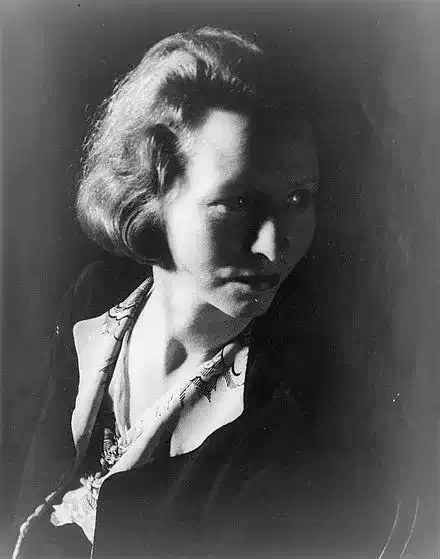
Edna St. Vincent Millay
Apostrophe To Man
(On reflecting that the world
is ready to go to war again)
Detestable race, continue to expunge yourself, die out.
Breed faster, crowd, encroach, sing hymns, build
bombing airplanes;
Make speeches, unveil statues, issue bonds, parade;
Convert again into explosives the bewildered ammonia
and the distracted cellulose;
Convert again into putrescent matter drawing flies
The hopeful bodies of the young; exhort,
Pray, pull long faces, be earnest,
be all but overcome, be photographed;
Confer, perfect your formulae, commercialize
Bacateria harmful to human tissue,
Put death on the market;
Breed, crowd, encroach,
expand, expunge yourself, die out,
Homo called sapiens.
418
Ella Wheeler Wilcox
The Swan Of Dijon
I was in Dijon when the war's wild blast
Was at its loudest; when there was no sound
From dawn to dawn, save soldiers marching past,
Or rattle of their wagons in the street.
When every engine whistle would repeat
Persistently, with meaning tense, profound,
'We carry men to slaughter' or 'we bring
Remnants of men back as war's offering.'
And there in Dijon, the out-gazing eye
Grew weary of the strife-suggesting scene;
But, searching, found one quiet spot hard by
Where war was not; a little lake whereon
Moved leisurely a stately, tranquil swan,
Majestic and imposing, yet serene.
I was in Dijon, when no sound or sight
Woke thoughts of peace, save this one speck of white,
Sailing 'neath skies of menace, unafraid
While silver fountains for his pleasure played.
Dear Swan of Dijon, it was your good part
To rest a tired heart.
419

Carl Sandburg
Statistics
Napoleon shifted,
Restless in the old sarcophagus
And murmured to a watchguard:
"Who goes there?"
"Twenty-one million men,
Soldiers, armies, guns,
Twenty-one million
Afoot, horseback,
In the air,
Under the sea."
And Napoleon turned to his sleep:
"It is not my world answering;
It is some dreamer who knows not
The world I marched in
From Calais to Moscow."
And he slept on
In the old sarcophagus
While the aeroplanes
Droned their motors
Between Napoleon's mausoleum
And the cool night stars.
416

Emily Dickinson
To fight aloud, is very brave
To fight aloud, is very brave-
But gallanter, I know
Who charge within the bosom
The Cavalry of Woe-
Who win, and nations do not see-
Who fall-and none observe-
Whose dying eyes, no Country
Regards with patriot love-
We trust, in plumed procession
For such, the Angels go-
Rank after Rank, with even feet-
And Uniforms of Snow.
But gallanter, I know
Who charge within the bosom
The Cavalry of Woe-
Who win, and nations do not see-
Who fall-and none observe-
Whose dying eyes, no Country
Regards with patriot love-
We trust, in plumed procession
For such, the Angels go-
Rank after Rank, with even feet-
And Uniforms of Snow.
417

Walt Whitman
To Thee, Old Cause!
TO thee, old Cause!
Thou peerless, passionate, good cause!
Thou stern, remorseless, sweet Idea!
Deathless throughout the ages, races, lands!
After a strange, sad war--great war for thee,
(I think all war through time was really fought, and ever will be
really fought, for thee;)
These chants for thee--the eternal march of thee.
Thou orb of many orbs!
Thou seething principle! Thou well-kept, latent germ! Thou centre!
Around the idea of thee the strange sad war revolving,
With all its angry and vehement play of causes,
(With yet unknown results to come, for thrice a thousand years,)
These recitatives for thee--my Book and the War are one,
Merged in its spirit I and mine--as the contest hinged on thee,
As a wheel on its axis turns, this Book, unwitting to itself,
Around the Idea of thee.
415
Walt Whitman
I Saw Old General At Bay
I SAW old General at bay;
(Old as he was, his grey eyes yet shone out in battle like stars;)
His small force was now completely hemm'd in, in his works;
He call'd for volunteers to run the enemy's lines--a desperate
emergency;
I saw a hundred and more step forth from the ranks--but two or three
were selected;
I saw them receive their orders aside--they listen'd with care--the
adjutant was very grave;
I saw them depart with cheerfulness, freely risking their lives.
414
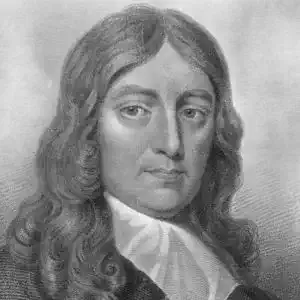
John Milton
To My Lord Fairfax
Fairfax, whose Name in Arms through Europe rings,
And fills all Mouths with Envy or with Praise,
And all her Jealous Monarchs with Amaze.
And Rumours loud which daunt remotest Kings,
Thy firm unshaken Valour ever brings
Victory home, while new Rebellions raise
Their Hydra-heads, and the false North displays
Her broken League to Imp her Serpent Wings:
O yet! a Nobler task awaits thy Hand,
For what can War, but Acts of War still breed
Till injur'd Truth from Violence be freed;
And publick Faith be rescu'd from the Brand
Of publick Fraud; in vain doth Valour bleed,
While Avarice and Rapine shares the Land.
414

Henry Wadsworth Longfellow
The Siege Of Kazan. (Tartar Song, From The Prose Version Of Chodzko)
Black are the moors before Kazan,
And their stagnant waters smell of blood:
I said in my heart, with horse and man,
I will swim across this shallow flood.
Under the feet of Argamack,
Like new moons were the shoes he bare,
Silken trappings hung on his back,
In a talisman on his neck, a prayer.
My warriors, thought I, are following me;
But when I looked behind, alas!
Not one of all the band could I see,
All had sunk in the black morass!
Where are our shallow fords? and where
The power of Kazan with its fourfold gates?
From the prison windows our maidens fair
Talk of us still through the iron grates.
We cannot hear them; for horse and man
Lie buried deep in the dark abyss!
Ah! the black day hath come down on Kazan!
Ah! was ever a grief like this?
411
Henry Wadsworth Longfellow
The Sea Diver
My way is on the bright blue sea,
My sleep upon its rocking tide;
And many an eye has followed me
Where billows clasp the worn seaside.
My plumage bears the crimson blush,
When ocean by the sun is kissed!
When fades the evening's purple flush,
My dark wing cleaves the silver mist.
Full many a fathom down beneath
The bright arch of the splendid deep
My ear has heard the sea-shell breathe
O'er living myriads in their sleep.
They rested by the coral throne,
And by the pearly diadem;
Where the pale sea-grape had o'ergrown
The glorious dwellings made for them.
At night upon my storm-drench'd wing,
I poised above a helmless bark,
And soon I saw the shattered thing
Had passed away and left no mark.
And when the wind and storm were done,
a ship, that had rode out the gale,
Sunk down, without a signal-gun,
And none was left to tell the tale.
I saw the pomp of day depart--
The cloud resign its golden crown,
When to the ocean's beating heart
The sailor's wasted corse went down.
Peace be to those whose graves are made
Beneath the bright and silver sea!
Peace - that their relics there were laid
With no vain pride and pageantry.
410
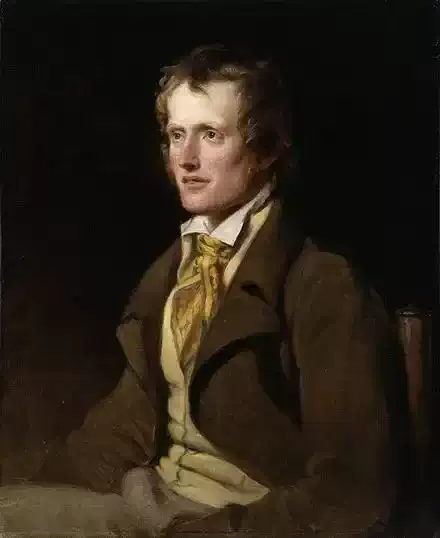
John Clare
Bantry Bay
On the eighteenth of October we lay in Bantry Bay,
All ready to set sail, with a fresh and steady gale:
A fortnight and nine days we in the harbour lay,
And no breeze ever reached us or strained a single sail.
Three ships of war had we, and the great guns loaded all;
But our ships were dead and beaten that had never feared a foe.
The winds becalmed around us cared for no cannon ball;
They locked us in the harbour and would not let us go.
On the nineteenth of October, by eleven of the clock,
The sky turned black as midnight and a sudden storm came on--
Awful and sudden--and the cables felt the shock;
Our anchors they all broke away and every sheet was gone.
The guns fired off amid the strife, but little hope had we;
The billows broke above the ship and left us all below.
The crew with one consent cried 'Bear further out to sea,'
But the waves obeyed no sailor's call, and we knew not where to go.
She foundered on a rock, while we clambered up the shrouds,
And staggered like a mountain drunk, wedged in the waves almost.
The red hot boiling billows foamed in the stooping clouds,
And in that fatal tempest the whole ship's crew were lost.
Have pity for poor mariners, ye landsmen, in a storm.
O think what they endure at sea while safe at home you stay.
All ye that sleep on beds at night in houses dry and warm,
O think upon the whole ship's crew, all lost at Bantry Bay.
410
Rudyard Kipling
Old Fighting-Men
All the world over, nursing their scars,
Sit the old fighting-men broke in the wars--
Sit the old fighting-men, surly and grim
Mocking the lilt of the conquerors' hymn.
Dust of the battle o'erwhelmed them and hid.
Fame never found them for aught that they did.
Wounded and spent to the lazar they drew,
Lining the road where the Legions roll through.
Sons of the Laurel who press to your meed,
(Worthy God's pity most--you who succeed!)
Ere you go triumphing, crowned, to the stars,
Pity poor fighting-men, broke in the wars!
408
Walt Whitman
Pensive On Her Dead Gazing, I Heard The Mother Of All
PENSIVE, on her dead gazing, I heard the Mother of All,
Desperate, on the torn bodies, on the forms covering the battle
fields gazing;
(As the last gun ceased--but the scent of the powder-smoke linger'd;)
As she call'd to her earth with mournful voice while she stalk'd:
Absorb them well, O my earth, she cried--I charge you, lose not my
sons! lose not an atom;
And you streams, absorb them well, taking their dear blood;
And you local spots, and you airs that swim above lightly,
And all you essences of soil and growth--and you, my rivers' depths;
And you, mountain sides--and the woods where my dear children's
blood, trickling, redden'd;
And you trees, down in your roots, to bequeath to all future
trees,
My dead absorb--my young men's beautiful bodies absorb--and their
precious, precious, precious blood;
Which holding in trust for me, faithfully back again give me, many a
year hence,
In unseen essence and odor of surface and grass, centuries hence;
In blowing airs from the fields, back again give me my darlings--give
my immortal heroes;
Exhale me them centuries hence--breathe me their breath--let not an
atom be lost;
O years and graves! O air and soil! O my dead, an aroma sweet!
Exhale them perennial, sweet death, years, centuries hence.
405
Carl Sandburg
Ashurnatsirpal III
Three walls around the town of Tela when I came.
They expected everything of those walls;
Nobody in the town came out to kiss my feet.
I knocked the walls down, killed three thousand soldiers,
Took away cattle and sheep, took all the loot in sight,
And burned special captives.
Some of the soldiers—I cut off hands and feet.
Others—I cut off ears and fingers.
Some—I put out the eyes.
I made a pyramid of heads.
I strung heads on trees circling the town.
When I got through with it
There wasn’t much left of the town of Tela.
405
Carl Sandburg
A Million Young Work Men
A million young workmen straight and strong lay stiff on the grass and roads,
And the million are now under soil and their rottening flesh will in the years feed roots
of blood-red roses.
Yes, this million of young workmen slaughtered one another and never saw their red
hands.
And oh, it would have been a great job of killing and a new and beautiful thing under
the sun if the million knew why they hacked and tore each other to death.
The kings are grinning, the Kaiser and the czar—they are alive riding in leather-seated
motor cars, and they have their women and roses for ease, and they eat fresh-poached
eggs for breakfast, new butter on toast, sitting in tall water-tight houses reading the
news of war.
I dreamed a million ghosts of the young workmen rose in their shirts all soaked in
crimson … and yelled:
God damn the grinning kings, God damn the kaiser and the czar.
399
Carl Sandburg
Salvage
Guns on the battle lines have pounded now a year
between Brussels and Paris.
And, William Morris, when I read your old chapter on
the great arches and naves and little whimsical
corners of the Churches of Northern France--Brr-rr!
I'm glad you're a dead man, William Morris, I'm glad
you're down in the damp and mouldy, only a memory
instead of a living man--I'm glad you're gone.
You never lied to us, William Morris, you loved the
shape of those stones piled and carved for you to
dream over and wonder because workmen got joy
of life into them,
Workmen in aprons singing while they hammered, and
praying, and putting their songs and prayers into
the walls and roofs, the bastions and cornerstones
and gargoyles--all their children and kisses of
women and wheat and roses growing.
I say, William Morris, I'm glad you're gone, I'm glad
you're a dead man.
Guns on the battle lines have pounded a year now between
Brussels and Paris.
402
Carl Sandburg
Ready to Kill
Ten minutes now I have been looking at this.
I have gone by here before and wondered about it.
This is a bronze memorial of a famous general
Riding horseback with a flag and a sword and a revolver
on him.
I want to smash the whole thing into a pile of junk to be
hauled away to the scrap yard.
I put it straight to you,
After the farmer, the miner, the shop man, the factory
hand, the fireman and the teamster,
Have all been remembered with bronze memorials,
Shaping them on the job of getting all of us
Something to eat and something to wear,
When they stack a few silhouettes
Against the sky
Here in the park,
And show the real huskies that are doing the work of
the world, and feeding people instead of butchering them,
Then maybe I will stand here
And look easy at this general of the army holding a flag
in the air,
And riding like hell on horseback
Ready to kill anybody that gets in his way,
Ready to run the red blood and slush the bowels of men
all over the sweet new grass of the prairie.
396

William Butler Yeats
Blood And The Moon
BLESSED be this place,
More blessed still this tower;
A bloody, arrogant power
Rose out of the race
Uttering, mastering it,
Rose like these walls from these
Storm-beaten cottages --
In mockery I have set
A powerful emblem up,
And sing it rhyme upon rhyme
In mockery of a time
HaIf dead at the top.
Alexandria's was a beacon tower, and Babylon's
An image of the moving heavens, a log-book of the
sun's journey and the moon's;
And Shelley had his towers, thought's crowned powers
he called them once.
I declare this tower is my symbol; I declare
This winding, gyring, spiring treadmill of a stair is my
ancestral stair;
That Goldsmith and the Dean, Berkeley and Burke
have travelled there.
Swift beating on his breast in sibylline frenzy blind
Because the heart in his blood-sodden breast had
dragged him down into mankind,
Goldsmith deliberately sipping at the honey-pot of his
mind,
And haughtier-headed Burke that proved the State a
tree,
That this unconquerable labyrinth of the birds, century
after century,
Cast but dead leaves to mathematical equality;
And God-appointed Berkeley that proved all things a
dream,
That this pragmatical, preposterous pig of a world, its
farrow that so solid seem,
Must vanish on the instant if the mind but change its
theme;
Saeva Indignatio and the labourer's hire,
The strength that gives our blood and state magnanimity
of its own desire;
Everything that is not God consumed with intellectual
fire.
III
The purity of the unclouded moon
Has flung its atrowy shaft upon the floor.
Seven centuries have passed and it is pure,
The blood of innocence has left no stain.
There, on blood-saturated ground, have stood
Soldier, assassin, executioner.
Whether for daily pittance or in blind fear
Or out of abstract hatred, and shed blood,
But could not cast a single jet thereon.
Odour of blood on the ancestral stair!
And we that have shed none must gather there
And clamour in drunken frenzy for the moon.
IV
Upon the dusty, glittering windows cling,
And seem to cling upon the moonlit skies,
Tortoiseshell butterflies, peacock butterflies,
A couple of night-moths are on the wing.
Is every modern nation like the tower,
Half dead at the top? No matter what I said,
For wisdom is the property of the dead,
A something incompatible with life; and power,
Like everything that has the stain of blood,
A property of the living; but no stain
Can come upon the visage of the moon
When it has looked in glory from a cloud.
396
Ella Wheeler Wilcox
The Messenger
She rose up in the early dawn,
And white and silently she moved
About the house. Four men had gone
To battle for the land they loved,
And she, the mother and the wife,
Waited for tidings from the strife.
How still the house seemed! and her tread
Was like the footsteps of the dead.
The long day passed; the dark night came.
She had not seen a human face.
Some voice spoke suddenly her name.
How loud it echoed in that place,
Where, day on day, no sound was heard
But her own footsteps. 'Bring you word,'
She cried to whom she could not see,
'Word from the battle-plain to me?'
A soldier entered at the door,
And stood within the dim firelight;
'I bring you tidings of the four,'
He said, 'who left you for the fight.'
'God bless you, friend,' she cried, 'speak on!
For I can bear it. One is gone?'
'Ay, one is gone!' he said. 'Which one?'
'Dear lady, he, your eldest son.'
A deathly pallor shot across
Her withered face; she did not weep.
She said: 'It is a grievous loss,
But God gives His belovèd sleep.
What of the living-of the three?
And when can they come back to me?'
The soldier turned away his head:
'Lady, your husband, too, is dead.'
She put her hand upon her brow;
A wild, sharp pain was in her eyes.
'My husband! Oh, God, help me now!'
The soldier heard her shuddering sighs.
The task was harder than he thought.
'Your youngest son, dear madam, fought
Close at his father's side; both fell
Dead, by the bursting of a shell.'
She moved her lips and seemed to moan.
Her face had paled to ashen gray:
'Then one is left me-one alone,'
She said, 'of four who marched away.
Oh, overruling, All-wise God,
How can I pass beneath Thy rod!'
The soldier walked across the floor,
Paused at the window, at the door,
Wiped the cold dew-drops from his cheek
And sought the mourner's side again.
'Once more, dear lady, I must speak:
Your last remaining son was slain
Just at the closing of the fight,
'Twas he who sent me here to-night.'
'God knows,' the man said afterward,
'The fight itself was not so hard.'
390
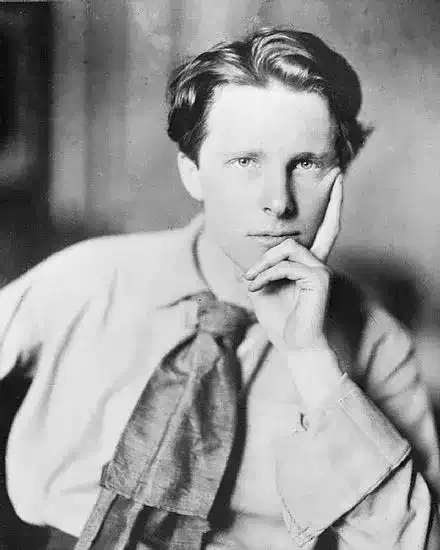
Rupert Brooke
I: Peace
Now, God be thanked Who has watched us with His hour,
And caught our youth, and wakened us from sleeping,
With hand made sure, clear eye, and sharpened power,
To turn, as swimmers into cleanness leaping,
Glad from a world grown old and cold and weary,
Leave the sick hearts that honour could not move,
And half-men, and their dirty songs and dreary,
And all the little emptiness of love!
Oh! we, who have known shame, we have found release there,
Where there's no ill, no grief, but sleep has mending,
Naught broken save this body, lost but breath;
Nothing to shake the laughing heart's long peace there
But only agony, and that has ending;
And the worst friend and enemy is but Death.
392
Ella Wheeler Wilcox
The Spirit Of Great Joan
Back of each soldier who fights for France,
Aye, back of each woman and man
Who toils and prays through these long tense days.
Is the spirit of Great Joan.
For the love she gave, and the life she gave,
In the eyes of God sufficed
To crown her with light, and power, and might,
That made her second to Christ.
And so in that hour at the Marne she came,
To the seeing eyes of men;
And the blind of view still felt and knew
That her spirit had come again.
And she will come in each crucial hour
And joy shall follow despair,
For Joan sees her France on its knees
And she hears the voice of its prayer.
There is no hate in the heart of France,
But a mighty moral force
That takes its stand for her worshipped land,
And cannot be swerved from its course.
For this is the way with France to-day,
Her courage comes from faith,
And she bends her knee ere she straightens her arm;
In her forward rush toward death.
A jungle of beasts in the heart of the Hun-
War to the world laid bare.
And war has revealed, that France concealed,
Only the lion's lair.
A lioness fighting to save her own,
She fights as a lioness can,
And strength to the end shall the Unseen send,
In the spirit of Great Joan.
392

Jack Kerouac
Bus East
Society has good intentions Bureaucracy is like a friend
5 years ago - other furies other losses
America's
trying to control the uncontrollable Forest fires, Vice
The essential smile In the essential sleep Of the children Of the essential mind
I'm
all thru playing the American
Now I'm going to live a good quiet life
The
world should be built for foot walkers
Oily
rivers Of spiney Nevady
I
am Jake Cake
Rake
Write like Blake
The
horse is not pleased Sight of his
gorgeous finery
in the dust Its silken
nostrils
did disgust
Cats
arent kind Kiddies anent sweet
April
in Nevada - Investigating Dismal Cheyenne Where the war parties
In fields
of straw
Aimed over oxen At Indian Chiefs
In wild headdress Pouring thru
the gap
In Wyoming plain
To make the settlers
Eat more dust than dust
was eaten In the States From East at Seacoast Where wagons made up To dreadful
Plains
Of clazer vup
Saltry
settlers
Anxious to masturbate The Mongol Sea (I'm too tired in Cheyenne -
No sleep in 4 nights now, & 2 to go)
392