War and Peace

Ella Wheeler Wilcox
War
I
There is no picturesqueness and no glory,
No halo of romance, in war to-day.
It is a hideous thing; Time would turn grey
With horror, were he not already hoary
At sight of this vile monster, foul and gory.
Yet while sweet women perish as they pray,
And new-born babes are slaughtered, who dare say
'Halt!' till Right pens its 'Finis' to the story!
There is no pathway, but the path through blood,
Out of the horrors of this holocaust.
Hell has let loose its scalding crimson flood,
And he who stops to argue now is lost.
Not brooms of creeds, not Pacifistic words
Can stem the tide, but swords-uplifted swords!
II
Yet, after Peace has turned the clean white page
There shall be sorrow on the earth for years;
Abysmal grief, that has no eyes for tears,
And youth that hobbles through the earth like age.
But better to play this part upon life's stage
Than to aid structures that a tyrant rears,
To live a stalwart hireling torn with fears,
And shamed by feeding on a conqueror's wage.
Death, yea, a thousand deaths, were sweet in truth
Rather than such ignoble life. God gave
Being, and breath, and high resolve to youth
That it might be Wrong's master, not its slave.
Our road to Freedom is the road to guns!
Go, arm your sons! I say, Go, arm your sons!
III
Arm! arm! that mandate on each wind is whirled.
Let no man hesitate or look askance,
For from the devastated homes of France
And ruined Belgium the cry is hurled.
Why, Christ Himself would keep peace banners furled
Were He among us, till, with lifted lance,
He saw the hosts of Righteousness advance
To purify the Temples of the world.
There is no safety on the earth to-day
For any sacred thing, or clean, or fair;
Nor can there be, until men rise and slay
The hydra-headed monster in his lair.
War! horrid War! now Virtue's only friend;
Clasp hands with War, and battle to the end!
389

Carl Sandburg
Bronzes
I
The bronze General Grant riding a bronze horse in Lincoln
Park
Shrivels in the sun by day when the motor cars whirr
by in long processions going somewhere to keep appointment
for dinner and matineés and buying and
selling
Though in the dusk and nightfall when high waves are
piling
On the slabs of the promenade along the lake shore near
by
I have seen the general dare the combers come closer
And make to ride his bronze horse out into the hoofs
and guns of the storm.
II
I cross Lincoln Park on a winter night when the snow
is falling.
Lincoln in bronze stands among the white lines of snow,
his bronze forehead meeting soft echoes of the newsies
crying forty thousand men are dead along the
Yser, his bronze ears listening to the mumbled roar
of the city at his bronze feet.
A lithe Indian on a bronze pony, Shakespeare seated with
long legs in bronze, Garibaldi in a bronze cape, they
hold places in the cold, lonely snow to-night on their
pedestals and so they will hold them past midnight
and into the dawn.
388

William Butler Yeats
Shepherd And Goatherd
Shepherd. That cry's from the first cuckoo of the year.
I wished before it ceased.
Goatherd. Nor bird nor beast
Could make me wish for anything this day,
Being old, but that the old alone might die,
And that would be against God's providence.
Let the young wish. But what has brought you here?
Never until this moment have we met
Where my goats browse on the scarce grass or leap
From stone to Stone.
Shepherd. I am looking for strayed sheep;
Something has troubled me and in my rrouble
I let them stray. I thought of rhyme alone,
For rhme can beat a measure out of trouble
And make the daylight sweet once more; but when
I had driven every rhyme into its Place
The sheep had gone from theirs.
Goatherd. I know right well
What turned so good a shepherd from his charge.
Shepherd. He that was best in every country sport
And every country craft, and of us all
Most courteous to slow age and hasty youth,
Is dead.
Goatherd. The boy that brings my griddle-cake
Brought the bare news.
Shepherd. He had thrown the crook away
And died in the great war beyond the sea.
Goatherd. He had often played his pipes among my hills,
And when he played it was their loneliness,
The exultation of their stone, that died
Under his fingers.
Shepherd. I had it from his mother,
And his own flock was browsing at the door.
Goatherd. How does she bear her grief? There is not a
shepherd
But grows more gentle when he speaks her name,
Remembering kindness done, and how can I,
That found when I had neither goat nor grazing
New welcome and old wisdom at her fire
Till winter blasts were gone, but speak of her
Even before his children and his wife?
Shepherd. She goes about her house erect and calm
Between the pantry and the linen-chest,
Or else at meadow or at grazing overlooks
Her labouring men, as though her darling lived,
But for her grandson now; there is no change
But such as I have Seen upon her face
Watching our shepherd sports at harvest-time
When her son's turn was over.
Goatherd. Sing your song.
I too have rhymed my reveries, but youth
Is hot to show whatever it has found,
And till that's done can neither work nor wait.
Old goatherds and old goats, if in all else
Youth can excel them in accomplishment,
Are learned in waiting.
Shepherd. You cannot but have seen
That he alone had gathered up no gear,
Set carpenters to work on no wide table,
On no long bench nor lofty milking-shed
As others will, when first they take possession,
But left the house as in his father's time
As though he knew himself, as it were, a cuckoo,
No settled man. And now that he is gone
There's nothing of him left but half a score
Of sorrowful, austere, sweet, lofty pipe tunes.
Goatherd. You have put the thought in rhyme.
Shepherd. I worked all day,
And when 'twas done so little had I done
That maybe "I am sorry' in plain prose
Had Sounded better to your mountain fancy.
[He sings.]
"Like the speckled bird that steers
Thousands of leagues oversea,
And runs or a while half-flies
On his yellow legs through our meadows.
He stayed for a while; and we
Had scarcely accustomed our ears
To his speech at the break of day,
Had scarcely accustomed our eyes
To his shape at the rinsing-pool
Among the evening shadows,
When he vanished from ears and eyes.
I might have wished on the day
He came, but man is a fool.'
Goatherd. You sing as always of the natural life,
And I that made like music in my youth
Hearing it now have sighed for that young man
And certain lost companions of my own.
Shepherd. They say that on your barren mountain ridge
You have measured out the road that the soul treads
When it has vanished from our natural eyes;
That you have talked with apparitions.
Goatherd. Indeed
My daily thoughts since the first stupor of youth
Have found the path my goats' feet cannot find.
Shepherd. Sing, for it may be that your thoughts have
plucked
Some medicable herb to make our grief
Less bitter.
Goatherd. They have brought me from that ridge
Seed-pods and flowers that are not all wild poppy.
[Sings.]
"He grows younger every second
That were all his birthdays reckoned
Much too solemn seemed;
Because of what he had dreamed,
Or the ambitions that he served,
Much too solemn and reserved.
Jaunting, journeying
To his own dayspring,
He unpacks the loaded pern
Of all 'twas pain or joy to learn,
Of all that he had made.
The outrageous war shall fade;
At some old winding whitethorn root
He'll practise on the shepherd's flute,
Or on the close-cropped grass
Court his shepherd lass,
Or put his heart into some game
Till daytime, playtime seem the same;
Knowledge he shall unwind
Through victories of the mind,
Till, clambering at the cradle-side,
He dreams himself hsi mother's pride,
All knowledge lost in trance
Of sweeter ignorance.'
Shepherd. When I have shut these ewes and this old ram
Into the fold, we'll to the woods and there
Cut out our rhymes on strips of new-torn bark
But put no name and leave them at her door.
To know the mountain and the valley have grieved
May be a quiet thought to wife and mother,
And children when they spring up shoulder-high.
389
Carl Sandburg
Always The Mob
Jesus emptied the devils of one man into forty hogs and the hogs took the edge of a
high rock and dropped off and down into the sea: a mob.
The sheep on the hills of Australia, blundering fourfooted in the sunset mist to the
dark, they go one way, they hunt one sleep, they find one pocket of grass for all.
Karnak? Pyramids? Sphinx paws tall as a coolie? Tombs kept for kings and sacred
cows? A mob.
Young roast pigs and naked dancing girls of Belshazzar, the room where a thousand sat
guzzling when a hand wrote: Mene, mene, tekel, upharsin? A mob.
The honeycomb of green that won the sun as the Hanging Gardens of Nineveh, flew to
its shape at the hands of a mob that followed the fingers of Nebuchadnezzar: a mob of
one hand and one plan.
Stones of a circle of hills at Athens, staircases of a mountain in Peru, scattered clans of
marble dragons in China: each a mob on the rim of a sunrise: hammers and wagons
have them now.
Locks and gates of Panama? The Union Pacific crossing deserts and tunneling
mountains? The Woolworth on land and the Titanic at sea? Lighthouses blinking a coast
line from Labrador to Key West? Pig iron bars piled on a barge whistling in a fog off
Sheboygan? A mob: hammers and wagons have them to-morrow.
The mob? A typhoon tearing loose an island from thousand-year moorings and
bastions, shooting a volcanic ash with a fire tongue that licks up cities and peoples.
Layers of worms eating rocks and forming loam and valley floors for potatoes, wheat,
watermelons.
The mob? A jag of lightning, a geyser, a gravel mass loosening…
The mob … kills or builds … the mob is Attila or Ghengis Khan, the mob is Napoleon,
Lincoln.
I am born in the mob—I die in the mob—the same goes for you—I don’t care who you
are.
I cross the sheets of fire in No Man’s land for you, my brother—I slip a steel tooth into
your throat, you my brother—I die for you and I kill you—It is a twisted and gnarled
thing, a crimson wool:
One more arch of stars,
In the night of our mist,
In the night of our tears.
389
Ella Wheeler Wilcox
The Beautiful Blue Danube
They drift down the hall together;
He smiles in her lifted eyes.
Like waves of that mighty river
The strains of the ‘Danube’ rise.
They float on its rhythmic measure,
Like leaves on a summer stream;
And here, in this scene of pleasure,
I bury my sweet dead dream.
Through the cloud of her dusky tresses,
Like a star, shines out her face;
And the form of his strong arm presses
Is sylph-like in its grace.
As a leaf on the bounding river
Is lost in the seething sea,
I know that for ever and ever
My dream is lost to me.
And still the viols are playing
That grand old wordless rhyme;
And still those two are swaying
In perfect tune and time.
If the great bassoons that mutter,
If the clarinets that blow,
Were given the chance to utter
The secret things they know.
Would the lists of the slain who slumber
On the Danube’s battle-plains
The unknown hosts outnumber
Who die ‘neath the ‘Danube’s’ strains?
Those fall where the cannons rattle,
‘Mid the rain of shot and shell;
But these, in a fiercer battle,
Find death in the music’s swell.
With the river’s roar of passion
Is blended the dying groan;
But here, in the halls of fashion,
Hearts break, and make no moan.
And the music, swelling and sweeping,
Like the river, knows it all;
But none are counting or keeping
The lists of those who fall.
386

John Greenleaf Whittier
The Angels of Buena Vista
Speak and tell us, our Ximena, looking northward far away,
O'er the camp of the invaders, o'er the Mexican array,
Who is losing? who is winning? are they far or come they near?
Look abroad, and tell us, sister, whither rolls the storm we hear.
Down the hills of Angostura still the storm of battle rolls;
Blood is flowing, men are dying; God have mercy on their souls!
'Who is losing? who is winning?' Over hill and over plain,
I see but smoke of cannon clouding through the mountain rain.'
Holy Mother! keep our brothers! Look, Ximena, look once more.
'Still I see the fearful whirlwind rolling darkly as before,
Bearing on, in strange confusion, friend and foeman, foot and horse,
Like some wild and troubled torrent sweeping down its mountain course.'
Look forth once more, Ximena! 'Ah! the smoke has rolled away;
And I see the Northern rifles gleaming down the ranks of gray.
Hark! that sudden blast of bugles! there the troop of Minon wheels;
There the Northern horses thunder, with the cannon at their heels.
'Jesu, pity I how it thickens I now retreat and now advance!
Bight against the blazing cannon shivers Puebla's charging lance!
Down they go, the brave young riders; horse and foot together fall;
Like a ploughshare in the fallow, through them ploughs the Northern ball.'
Nearer came the storm and nearer, rolling fast and frightful on!
Speak, Ximena, speak and tell us, who has lost, and who has won?
Alas! alas! I know not; friend and foe together fall,
O'er the dying rush the living: pray, my sisters, for them all!
'Lo! the wind the smoke is lifting. Blessed Mother, save my brain!
I can see the wounded crawling slowly out from heaps of slain.
Now they stagger, blind and bleeding; now they fall, and strive to rise;
Hasten, sisters, haste and save them, lest they die before our eyes!
'O my hearts love! O my dear one! lay thy poor head on my knee;
Dost thou know the lips that kiss thee? Canst thou hear me? canst thou see?
O my husband, brave and gentle! O my Bernal, look once more
On the blessed cross before thee! Mercy! all is o'er!'
Dry thy tears, my poor Ximena; lay thy dear one down to rest;
Let his hands be meekly folded, lay the cross upon his breast;
Let his dirge be sung hereafter, and his funeral masses said;
To-day, thou poor bereaved one, the living ask thy aid.
Close beside her, faintly moaning, fair and young, a soldier lay,
Torn with shot and pierced with lances, bleeding slow his life away;
But, as tenderly before him the lorn Ximena knelt,
She saw the Northern eagle shining on his pistol-belt.
With a stifled cry of horror straight she turned away her head;
With a sad and bitter feeling looked she back upon her dead;
But she heard the youth's low moaning, and his struggling breath of pain,
And she raised the cooling water to his parching lips again.
Whispered low the dying soldier, pressed her hand and faintly smiled;
Was that pitying face his mother's? did she watch beside her child?
All his stranger words with meaning her woman's heart supplied;
With her kiss upon his forehead, 'Mother!' murmured he, and died!
'A bitter curse upon them, poor boy, who led thee forth,
From some gentle, sad-eyed mother, weeping, lonely, in the North!'
Spake the mournful Mexic woman, as she laid him with her dead,
And turned to soothe the living, and bind the wounds which bled.
'Look forth once more, Ximena!' Like a cloud before the wind
Rolls the battle down the mountains, leaving blood and death behind;
Ah! they plead in vain for mercy; in the dust the wounded strive;
'Hide your faces, holy angels! O thou Christ of God, forgive!'
Sink, O Night, among thy mountains! let the cool, gray shadows fall;
Dying brothers, fighting demons, drop thy curtain over all!
Through the thickening winter twilight, wide apart the battle rolled,
In its sheath the sabre rested, and the cannon's lips grew cold.
But the noble Mexic women still their holy task pursued,
Through that long, dark night of sorrow, worn and faint and lacking food.
Over weak and suffering brothers, with a tender care they hung,
And the dying foeman blessed them in a strange and Northern tongue.
Not wholly lost, O Father! is this evil world of ours;
Upward, through its blood and ashes, spring afresh the Eden flowers;
From its smoking hell of battle, Love and Pity send their prayer,
And still thy white-winged angels hover dimly in our air!
383

Henry Wadsworth Longfellow
The Song Of Hiawatha I: The Peace-Pipe
On the Mountains of the Prairie,
On the great Red Pipe-stone Quarry,
Gitche Manito, the mighty,
He the Master of Life, descending,
On the red crags of the quarry
Stood erect, and called the nations,
Called the tribes of men together.
From his footprints flowed a river,
Leaped into the light of morning,
O'er the precipice plunging downward
Gleamed like Ishkoodah, the comet.
And the Spirit, stooping earthward,
With his finger on the meadow
Traced a winding pathway for it,
Saying to it, 'Run in this way!'
From the red stone of the quarry
With his hand he broke a fragment,
Moulded it into a pipe-head,
Shaped and fashioned it with figures;
From the margin of the river
Took a long reed for a pipe-stem,
With its dark green leaves upon it;
Filled the pipe with bark of willow,
With the bark of the red willow;
Breathed upon the neighboring forest,
Made its great boughs chafe together,
Till in flame they burst and kindled;
And erect upon the mountains,
Gitche Manito, the mighty,
Smoked the calumet, the Peace-Pipe,
As a signal to the nations.
And the smoke rose slowly, slowly,
Through the tranquil air of morning,
First a single line of darkness,
Then a denser, bluer vapor,
Then a snow-white cloud unfolding,
Like the tree-tops of the forest,
Ever rising, rising, rising,
Till it touched the top of heaven,
Till it broke against the heaven,
And rolled outward all around it.
From the Vale of Tawasentha,
From the Valley of Wyoming,
From the groves of Tuscaloosa,
From the far-off Rocky Mountains,
From the Northern lakes and rivers
All the tribes beheld the signal,
Saw the distant smoke ascending,
The Pukwana of the Peace-Pipe.
And the Prophets of the nations
Said: 'Behold it, the Pukwana!
By the signal of the Peace-Pipe,
Bending like a wand of willow,
Waving like a hand that beckons,
Gitche Manito, the mighty,
Calls the tribes of men together,
Calls the warriors to his council!'
Down the rivers, o'er the prairies,
Came the warriors of the nations,
Came the Delawares and Mohawks,
Came the Choctaws and Camanches,
Came the Shoshonies and Blackfeet,
Came the Pawnees and Omahas,
Came the Mandans and Dacotahs,
Came the Hurons and Ojibways,
All the warriors drawn together
By the signal of the Peace-Pipe,
To the Mountains of the Prairie,
To the great Red Pipe-stone Quarry,
And they stood there on the meadow,
With their weapons and their war-gear,
Painted like the leaves of Autumn,
Painted like the sky of morning,
Wildly glaring at each other;
In their faces stem defiance,
In their hearts the feuds of ages,
The hereditary hatred,
The ancestral thirst of vengeance.
Gitche Manito, the mighty,
The creator of the nations,
Looked upon them with compassion,
With paternal love and pity;
Looked upon their wrath and wrangling
But as quarrels among children,
But as feuds and fights of children!
Over them he stretched his right hand,
To subdue their stubborn natures,
To allay their thirst and fever,
By the shadow of his right hand;
Spake to them with voice majestic
As the sound of far-off waters,
Falling into deep abysses,
Warning, chiding, spake in this wise :
'O my children! my poor children!
Listen to the words of wisdom,
Listen to the words of warning,
From the lips of the Great Spirit,
From the Master of Life, who made you!
'I have given you lands to hunt in,
I have given you streams to fish in,
I have given you bear and bison,
I have given you roe and reindeer,
I have given you brant and beaver,
Filled the marshes full of wild-fowl,
Filled the rivers full of fishes:
Why then are you not contented?
Why then will you hunt each other?
'I am weary of your quarrels,
Weary of your wars and bloodshed,
Weary of your prayers for vengeance,
Of your wranglings and dissensions;
All your strength is in your union,
All your danger is in discord;
Therefore be at peace henceforward,
And as brothers live together.
'I will send a Prophet to you,
A Deliverer of the nations,
Who shall guide you and shall teach you,
Who shall toil and suffer with you.
If you listen to his counsels,
You will multiply and prosper;
If his warnings pass unheeded,
You will fade away and perish!
'Bathe now in the stream before you,
Wash the war-paint from your faces,
Wash the blood-stains from your fingers,
Bury your war-clubs and your weapons,
Break the red stone from this quarry,
Mould and make it into Peace-Pipes,
Take the reeds that grow beside you,
Deck them with your brightest feathers,
Smoke the calumet together,
And as brothers live henceforward!'
Then upon the ground the warriors
Threw their cloaks and shirts of deer-skin,
Threw their weapons and their war-gear,
Leaped into the rushing river,
Washed the war-paint from their faces.
Clear above them flowed the water,
Clear and limpid from the footprints
Of the Master of Life descending;
Dark below them flowed the water,
Soiled and stained with streaks of crimson,
As if blood were mingled with it!
From the river came the warriors,
Clean and washed from all their war-paint;
On the banks their clubs they buried,
Buried all their warlike weapons.
Gitche Manito, the mighty,
The Great Spirit, the creator,
Smiled upon his helpless children!
And in silence all the warriors
Broke the red stone of the quarry,
Smoothed and formed it into Peace-Pipes,
Broke the long reeds by the river,
Decked them with their brightest feathers,
And departed each one homeward,
While the Master of Life, ascending,
Through the opening of cloud-curtains,
Through the doorways of the heaven,
Vanished from before their faces,
In the smoke that rolled around him,
The Pukwana of the Peace-Pipe!
383
Henry Wadsworth Longfellow
The Luck of Edenhall. From The German Of Uhland
Of Edenhall, the youthful Lord
Bids sound the festal trumpet's call.
He rises at the banquet board,
And cries, 'mid the drunken revellers all,
'Now bring me the Luck of Edenhall!'
The butler hears the words with pain,
The house's oldest seneschal,
Takes slow from its silken cloth again
The drinking glass of crystal tall;
They call it The Luck of Edenhall.
Then said the Lord, 'This glass to praise,
Fill with red wine from Portugal!'
The graybeard with trembling hand obeys;
A purple light shines over all,
It beams from the Luck of Edenhall.
Then speaks the Lord, and waves it light:
'This glass of flashing crystal tall
Gave to my sires the Fountain-Sprite;
She wrote in it,
If this glass doth fall,
Farewell then, O Luck of Edenhall!
''Twas right a goblet the Fate should be
Of the joyous race of Edenhall!
Deep draughts drink we right willingly:
And willingly ring, with merry call,
Kling! klang! to the Luck of Edenhall!'
First rings it deep, and full, and mild,
Like to the song of a nightingale
Then like the roar of a torrent wild;
Then mutters at last like the thunder's fall,
The glorious Luck of Edenhall.
'For its keeper takes a race of might,
The fragile goblet of crystal tall;
It has lasted longer than is right;
King! klang!--with a harder blow than all
Will I try the Luck of Edenhall!'
As the goblet ringing flies apart,
Suddenly cracks the vaulted hall;
And through the rift, the wild flames start;
The guests in dust are scattered all,
With the breaking Luck of Edenhall!
In storms the foe, with fire and sword;
He in the night had scaled the wall,
Slain by the sword lies the youthful Lord,
But holds in his hand the crystal tall,
The shattered Luck of Edenhall.
On the morrow the butler gropes alone,
The graybeard in the desert hall,
He seeks his Lord's burnt skeleton,
He seeks in the dismal ruin's fall
The shards of the Luck of Edenhall.
'The stone wall,' saith he, 'doth fall aside,
Down must the stately columns fall;
Glass is this earth's Luck and Pride;
In atoms shall fall this earthly ball
One day like the Luck of Edenhall!'
380

Claude Mckay
The Lynching
His Spirit in smoke ascended to high heaven.
His father, by the cruelest way of pain,
Had bidden him to his bosom once again;
The awful sin remained still unforgiven.
All night a bright and solitary star
(Perchance the one that ever guided him,
Yet gave him up at last to Fate's wild whim)
Hung pitifully o'er the swinging char.
Day dawned, and soon the mixed crowds came to view
The ghastly body swaying in the sun
The women thronged to look, but never a one
Showed sorrow in her eyes of steely blue;
And little lads, lynchers that were to be,
Danced round the dreadful thing in fiendish glee.
377
Henry Wadsworth Longfellow
The Revenge of Rain-in-the-Face
In that desolate land and lone,
Where the Big Horn and Yellowstone
Roar down their mountain path,
By their fires the Sioux Chiefs
Muttered their woes and griefs
And the menace of their wrath.
"Revenge!" cried Rain-in-the-Face,
"Revenue upon all the race
Of the White Chief with yellow hair!"
And the mountains dark and high
From their crags re-echoed the cry
Of his anger and despair.
In the meadow, spreading wide
By woodland and riverside
The Indian village stood;
All was silent as a dream,
Save the rushing a of the stream
And the blue-jay in the wood.
In his war paint and his beads,
Like a bison among the reeds,
In ambush the Sitting Bull
Lay with three thousand braves
Crouched in the clefts and caves,
Savage, unmerciful!
Into the fatal snare
The White Chief with yellow hair
And his three hundred men
Dashed headlong, sword in hand;
But of that gallant band
Not one returned again.
The sudden darkness of death
Overwhelmed them like the breath
And smoke of a furnace fire:
By the river's bank, and between
The rocks of the ravine,
They lay in their bloody attire.
But the foemen fled in the night,
And Rain-in-the-Face, in his flight
Uplifted high in air
As a ghastly trophy, bore
The brave heart, that beat no more,
Of the White Chief with yellow hair.
Whose was the right and the wrong?
Sing it, O funeral song,
With a voice that is full of tears,
And say that our broken faith
Wrought all this ruin and scathe,
In the Year of a Hundred Years.
378

Walt Whitman
Bathed In War's Perfume
BATHED in war's perfume--delicate flag!
(Should the days needing armies, needing fleets, come again,)
O to hear you call the sailors and the soldiers! flag like a
beautiful woman!
O to hear the tramp, tramp, of a million answering men! O the ships
they arm with joy!
O to see you leap and beckon from the tall masts of ships!
O to see you peering down on the sailors on the decks!
Flag like the eyes of women.
373
William Butler Yeats
The O'Rahilly
SING of the O'Rahilly,
Do not deny his right;
Sing a 'the' before his name;
Allow that he, despite
All those learned historians,
Established it for good;
He wrote out that word himself,
He christened himself with blood.
How goes the weather?
Sing of the O'Rahilly
That had such little sense
He told Pearse and Connolly
He'd gone to great expense
Keeping all the Kerry men
Out of that crazy fight;
That he might be there himself
Had travelled half the night.
How goes the weather?
'Am I such a craven that
I should not get the word
But for what some travelling man
Had heard I had not heard?'
Then on pearse and Connolly
He fixed a bitter look:
'Because I helped to wind the clock
I come to hear it strike.'
How goes the weather?
What remains to sing about
But of the death he met
Stretched under a doorway
Somewhere off Henry Street;
They that found him found upon
The door above his head
'Here died the O'Rahilly.
R.I.P.' writ in blood.
How goes the weather.?
372

William Shakespeare
St. Crispin’s Day Speech: from Henry V
WESTMORELAND. O that we now had here
But one ten thousand of those men in England
That do no work to-day!
KING. What’s he that wishes so?
My cousin Westmoreland? No, my fair cousin;
If we are mark’d to die, we are enow
To do our country loss; and if to live,
The fewer men, the greater share of honour.
God’s will! I pray thee, wish not one man more.
By Jove, I am not covetous for gold,
Nor care I who doth feed upon my cost;
It yearns me not if men my garments wear;
Such outward things dwell not in my desires.
But if it be a sin to covet honour,
I am the most offending soul alive.
No, faith, my coz, wish not a man from England.
God’s peace! I would not lose so great an honour
As one man more methinks would share from me
For the best hope I have. O, do not wish one more!
Rather proclaim it, Westmoreland, through my host,
That he which hath no stomach to this fight,
Let him depart; his passport shall be made,
And crowns for convoy put into his purse;
We would not die in that man’s company
That fears his fellowship to die with us.
This day is call’d the feast of Crispian.
He that outlives this day, and comes safe home,
Will stand a tip-toe when this day is nam’d,
And rouse him at the name of Crispian.
He that shall live this day, and see old age,
Will yearly on the vigil feast his neighbours,
And say “To-morrow is Saint Crispian.”
Then will he strip his sleeve and show his scars,
And say “These wounds I had on Crispian’s day.”
Old men forget; yet all shall be forgot,
But he’ll remember, with advantages,
What feats he did that day. Then shall our names,
Familiar in his mouth as household words-
Harry the King, Bedford and Exeter,
Warwick and Talbot, Salisbury and Gloucester-
Be in their flowing cups freshly rememb’red.
This story shall the good man teach his son;
And Crispin Crispian shall ne’er go by,
From this day to the ending of the world,
But we in it shall be remembered-
We few, we happy few, we band of brothers;
For he to-day that sheds his blood with me
Shall be my brother; be he ne’er so vile,
This day shall gentle his condition;
And gentlemen in England now-a-bed
Shall think themselves accurs’d they were not here,
And hold their manhoods cheap whiles any speaks
That fought with us upon Saint Crispin’s day.
370
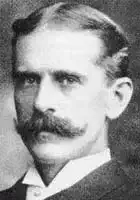
Henry Van Dyke
A Scrap of Paper
"Will you go to war just for a scrap of paper?" -- Question
of the German Chancellor to the British Ambassador,
August 5, 1914.
A mocking question! Britain's answer came
Swift as the light and searching as the flame.
"Yes, for a scrap of paper we will fight
Till our last breath, and God defend the right!
"A scrap of paper where a name is set
Is strong as duty's pledge and honor's debt.
"A scrap of paper holds for man and wife
The sacrament of love, the bond of life.
"A scrap of paper may be Holy Writ
With God's eternal word to hallow it.
"A scrap of paper binds us both to stand
Defenders of a neutral neighbor land.
"By God, by faith, by honor, yes! We fight
To keep our name upon that paper white."
371

Emily Dickinson
My friend attacks my friend!
My friend attacks my friend!
Oh Battle picturesque!
Then I turn Soldier too,
And he turns Satirist!
How martial is this place!
Had I a mighty gun
I think I'd shoot the human race
And then to glory run!
Oh Battle picturesque!
Then I turn Soldier too,
And he turns Satirist!
How martial is this place!
Had I a mighty gun
I think I'd shoot the human race
And then to glory run!
370
John Greenleaf Whittier
A Word for the Hour
The firmament breaks up. In black eclipse
Light after light goes out. One evil star,
Luridly glaring through the smoke of war,
As in the dream of the Apocalypse,
Drags others down. Let us not weakly weep
Nor rashly threaten. Give us grace to keep
Our faith and patience; wherefore should we leap
On one hand into fratricidal fight,
Or, on the other, yield eternal right,
Frame lies of laws, and good and ill confound?
What fear we? Safe on freedom's vantage ground
Our feet are planted; let us there remain
In unrevengeful calm, no means untried
Which truth can sanction, no just claim denied,
The sad spectators of a suicide!
They break the lines of Union: shall we light
The fires of hell to weld anew the chain
On that red anvil where each blow is pain?
Draw we not even now a freer breath,
As from our shoulders falls a load of death
Loathsome as that the Tuscan's victim bore
When keen with life to a dead horror bound?
Why take we up the accursed thing again?
Pity, forgive, but urge them back no more
Who, drunk with passion, flaunt disunion's rag
With its vile reptile blazon. Let us press
The golden cluster on our brave old flag
In closer union, and, if numbering less,
Brighter shall shine the stars which still remain.
369

Ezra Pound
The Coming Of War: Actaeon
An image of Lethe,
and the fields
Full of faint light
but golden,
Gray cliffs,
and beneath them
A sea
Harsher than granite,
unstill, never ceasing;
High forms
with the movement of gods,
Perilous aspect;
And one said:
'This is Actaeon.'
Actaeon of golden greaves!
Over fair meadows,
Over the cool face of that field,
Unstill, ever moving
Hosts of an ancient people,
The silent cortège.
367
Henry Wadsworth Longfellow
The Saga of King Olaf: XVIII. King Olaf And Earl Sigvald
On the gray sea-sands
King Olaf stands,
Northward and seaward
He points with his hands.
With eddy and whirl
The sea-tides curl,
Washing the sandals
Of Sigvald the Earl.
The mariners shout,
The ships swing about,
The yards are all hoisted,
The sails flutter out.
The war-horns are played,
The anchors are weighed,
Like moths in the distance
The sails flit and fade.
The sea is like lead
The harbor lies dead,
As a corse on the sea-shore,
Whose spirit has fled!
On that fatal day,
The histories say,
Seventy vessels
Sailed out of the bay.
But soon scattered wide
O'er the billows they ride,
While Sigvald and Olaf
Sail side by side.
Cried the Earl: 'Follow me!
I your pilot will be,
For I know all the channels
Where flows the deep sea!'
So into the strait
Where his foes lie in wait,
Gallant King Olaf
Sails to his fate!
Then the sea-fog veils
The ships and their sails;
Queen Sigrid the Haughty,
Thy vengeance prevails!
363

Anonymous
Beowulf (Episode )
UNFERTH spake, the son of Ecglaf,
who sat at the feet of the Scyldings' lord,
unbound the battle-runes. -- Beowulf's quest,
sturdy seafarer's, sorely galled him;
ever he envied that other men
should more achieve in middle-earth
of fame under heaven than he himself. --
"Art thou that Beowulf, Breca's rival,
who emulous swam on the open sea,
when for pride the pair of you proved the floods,
and wantonly dared in waters deep
to risk your lives? No living man,
or lief or loath, from your labor dire
could you dissuade, from swimming the main.
Ocean-tides with your arms ye covered,
with strenuous hands the sea-streets measured,
swam o'er the waters. Winter's storm
rolled the rough waves. In realm of sea
a sennight strove ye. In swimming he topped thee,
had more of main! Him at morning-tide
billows bore to the Battling Reamas,
whence he hied to his home so dear
beloved of his liegemen, to land of Brondings,
fastness fair, where his folk he ruled,
town and treasure. In triumph o'er thee
Beanstan's bairn his boast achieved.
So ween I for thee a worse adventure
-- though in buffet of battle thou brave hast been,
in struggle grim, -- if Grendel's approach
thou darst await through the watch of night!"
Beowulf spake, bairn of Ecgtheow: --
"What a deal hast uttered, dear my Unferth,
drunken with beer, of Breca now,
told of his triumph! Truth I claim it,
that I had more of might in the sea
than any man else, more ocean-endurance.
We twain had talked, in time of youth,
and made our boast, -- we were merely boys,
striplings still, -- to stake our lives
far at sea: and so we performed it.
Naked swords, as we swam along,
we held in hand, with hope to guard us
against the whales. Not a whit from me
could he float afar o'er the flood of waves,
haste o'er the billows; nor him I abandoned.
Together we twain on the tides abode
five nights full till the flood divided us,
churning waves and chillest weather,
darkling night, and the northern wind
ruthless rushed on us: rough was the surge.
Now the wrath of the sea-fish rose apace;
yet me 'gainst the monsters my mailed coat,
hard and hand-linked, help afforded, --
battle-sark braided my breast to ward,
garnished with gold. There grasped me firm
and haled me to bottom the hated foe,
with grimmest gripe. 'Twas granted me, though,
to pierce the monster with point of sword,
with blade of battle: huge beast of the sea
was whelmed by the hurly through hand of mine.
"Began the fight." Breca.
360
Henry Wadsworth Longfellow
The Saga of King Olaf: XIII. The Building Of The Long Serpent
Thorberg Skafting, master-builder,
In his ship-yard by the sea,
Whistling, said, 'It would bewilder
Any man but Thorberg Skafting,
Any man but me!'
Near him lay the Dragon stranded,
Built of old by Raud the Strong,
And King Olaf had commanded
He should build another Dragon,
Twice as large and long.
Therefore whistled Thorberg Skafting,
As he sat with half-closed eyes,
And his head turned sideways, drafting
That new vessel for King Olaf
Twice the Dragon's size.
Round him busily hewed and hammered
Mallet huge and heavy axe;
Workmen laughed and sang and clamored;
Whirred the wheels, that into rigging
Spun the shining flax!
All this tumult heard the master,--
It was music to his ear;
Fancy whispered all the faster,
'Men shall hear of Thorberg Skafting
For a hundred year!'
Workmen sweating at the forges
Fashioned iron bolt and bar,
Like a warlock's midnight orgies
Smoked and bubbled the black caldron
With the boiling tar.
Did the warlocks mingle in it,
Thorberg Skafting, any curse?
Could you not be gone a minute
But some mischief must be doing,
Turning bad to worse?
'T was an ill wind that came wafting,
From his homestead words of woe;
To his farm went Thorberg Skafting,
Oft repeating to his workmen,
Build ye thus and so.
After long delays returning
Came the master back by night;
To his ship-yard longing, yearning,
Hurried he, and did not leave it
Till the morning's light.
'Come and see my ship, my darling!?
On the morrow said the King;
'Finished now from keel to carling;
Never yet was seen in Norway
Such a wondrous thing!'
In the ship-yard, idly talking,
At the ship the workmen stared:
Some one, all their labor balking,
Down her sides had cut deep gashes,
Not a plank was spared!
'Death be to the evil-doer!'
With an oath King Olaf spoke;
'But rewards to his pursuer!?
And with wrath his face grew redder
Than his scarlet cloak.
Straight the master-builder, smiling,
Answered thus the angry King:
'Cease blaspheming and reviling,
Olaf, it was Thorberg Skafting
Who has done this thing!'
Then he chipped and smoothed the planking,
Till the King, delighted, swore,
With much lauding and much thanking,
'Handsomer is now my Dragon
Than she was before!'
Seventy ells and four extended
On the grass the vessel's keel;
High above it, gilt and splendid,
Rose the figure-head ferocious
With its crest of steel.
Then they launched her from the tressels,
In the ship-yard by the sea;
She was the grandest of all vessels,
Never ship was built in Norway
Half so fine as she!
The Long Serpent was she christened,
'Mid the roar of cheer on cheer!
They who to the Saga listened
Heard the name of Thorberg Skafting
For a hundred year!
361
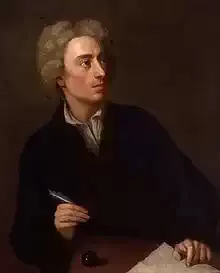
Alexander Pope
Chorus of Athenians
Strophe I.
Ye shades, where sacred truth is sought;
Groves, where immortal Sages taught;
Where heav'nly visions of Plato fir'd,
And Epicurus lay inspir'd!
In vain your guiltless laurels stood
Unspotted long with human blood.
War, horrid war, your thoughtful walks invades,
And steel now glitters in the Muses' shades.
Antistrophe I.
Oh heav'n-born sisters! source of art!
Who charm the sense, or mend the heart;
Who lead fair Virtue's train along,
Moral Truth, and mystic Song!
To what new clime, what distant sky,
Forsaken, friendless, shall ye fly?
Say, will you bless the bleak Atlantic shore?
Or bid the furious Gaul be rude no more?
Strophe II.
When Athens sinks by fates unjust,
When wild Barbarians spurn her dust;
Perhaps ev'n Britain's utmost shore,
Shall cease to blush with strager's gore.
See Arts her savage sons control,
And Athens rising near the pole!
'Till some new Tyrant lifts his purple hand,
And civil madness tears them from this land.
Antistrophe II.
Ye Gods! what justice rules the ball?
Freedom and Arts together fall;
Fools grant whate'er Ambition craves,
And men, once ignorant, are slaves.
Oh curs'd effects of civil hate,
In ev'ry age, in ev'ry state!
Still, when the lust of tyrant power succeeds,
Some Athens perishes, some Tully bleeds.
361
William Butler Yeats
A Meditation In Time Of War
FOR one throb of the artery,
While on that old grey stone I Sat
Under the old wind-broken tree,
I knew that One is animate,
Mankind inanimate fantasy'.
While on that old grey stone I Sat
Under the old wind-broken tree,
I knew that One is animate,
Mankind inanimate fantasy'.
358
William Butler Yeats
The Valley of the Black Pig
The dews drop slowly and dreams gather: unknown spears
Suddenly hurtle before my dream-awakened eyes,
And then the clash of fallen horsemen and the cries
Of unknown perishing armies beat about my ears.
We who still labour by the cromlech on the shore,
The grey caim on the hill, when day sinks drowned in dew,
Being weary of the world's empires, bow down to you.
Master of the still stars and of the flaming door.
355