
War and Peace
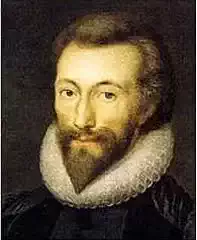
John Donne
A Burnt Ship
Out of a fired ship, which by no way
But drowning could be rescued from the flame,
Some men leap'd forth, and ever as they came
Near the foes' ships, did by their shot decay;
So all were lost, which in the ship were found,
They in the sea being burnt, they in the burnt ship drown'd.
But drowning could be rescued from the flame,
Some men leap'd forth, and ever as they came
Near the foes' ships, did by their shot decay;
So all were lost, which in the ship were found,
They in the sea being burnt, they in the burnt ship drown'd.
355
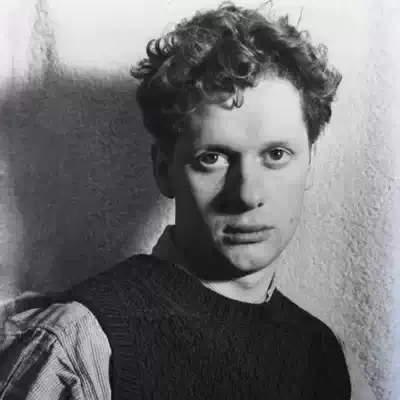
Dylan Thomas
Holy Spring
O
Out of a bed of love
When that immortal hospital made one more moove to soothe
The curless counted body,
And ruin and his causes
Over the barbed and shooting sea assumed an army
And swept into our wounds and houses,
I climb to greet the war in which I have no heart but only
That one dark I owe my light,
Call for confessor and wiser mirror but there is none
To glow after the god stoning night
And I am struck as lonely as a holy marker by the sun
No
Praise that the spring time is all
Gabriel and radiant shrubbery as the morning grows joyful
Out of the woebegone pyre
And the multitude's sultry tear turns cool on the weeping wall,
My arising prodgidal
Sun the father his quiver full of the infants of pure fire,
But blessed be hail and upheaval
That uncalm still it is sure alone to stand and sing
Alone in the husk of man's home
And the mother and toppling house of the holy spring,
If only for a last time.
354

Carl Sandburg
Our Prayer of Thanks
For the gladness here where the sun is shining at evening on the weeds at the river,
Our prayer of thanks.
For the laughter of children who tumble barefooted and bareheaded in the summer
grass,
Our prayer of thanks.
For the sunset and the stars, the women and the white arms that hold us,
Our prayer of thanks.
God,
If you are deaf and blind, if this is all lost to you,
God, if the dead in their coffins amid the silver handles on the edge of town, or the
reckless dead of war days thrown unknown in pits, if these dead are forever deaf and
blind and lost,
Our prayer of thanks.
God,
The game is all your way, the secrets and the signals and the system; and so for the
break of the game and the first play and the last.
Our prayer of thanks.
Our prayer of thanks.
For the laughter of children who tumble barefooted and bareheaded in the summer
grass,
Our prayer of thanks.
For the sunset and the stars, the women and the white arms that hold us,
Our prayer of thanks.
God,
If you are deaf and blind, if this is all lost to you,
God, if the dead in their coffins amid the silver handles on the edge of town, or the
reckless dead of war days thrown unknown in pits, if these dead are forever deaf and
blind and lost,
Our prayer of thanks.
God,
The game is all your way, the secrets and the signals and the system; and so for the
break of the game and the first play and the last.
Our prayer of thanks.
353
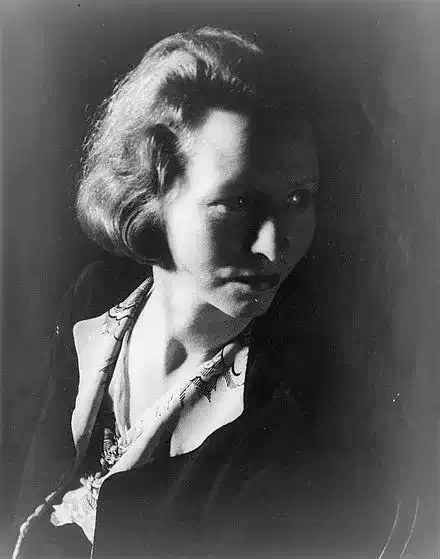
Edna St. Vincent Millay
Make Bright The Arrows
Make bright the arrows
Gather the shields:
Conquest narrows
The peaceful fields.
Stock well the quiver
With arrows bright:
The bowman feared
Need never fight.
Make bright the arrows,
O peaceful and wise!
Gather the shields
Against surprise.
Gather the shields:
Conquest narrows
The peaceful fields.
Stock well the quiver
With arrows bright:
The bowman feared
Need never fight.
Make bright the arrows,
O peaceful and wise!
Gather the shields
Against surprise.
350

Henry Wadsworth Longfellow
The Warden Of The Cinque Ports. (Birds Of Passage. Flight The First)
A mist was driving down the British Channel,
The day was just begun,
And through the window-panes, on floor and panel,
Streamed the red autumn sun.
It glanced on flowing flag and rippling pennon,
And the white sails of ships;
And, from the frowning rampart, the black cannon
Hailed it with feverish lips.
Sandwich and Romney, Hastings, Hithe, and Dover
Were all alert that day,
To see the French war-steamers speeding over,
When the fog cleared away.
Sullen and silent, and like couchant lions,
Their cannon, through the night,
Holding their breath, had watched, in grim defiance,
The sea-coast opposite.
And now they roared at drum-beat from their stations
On every citadel;
Each answering each, with morning salutations,
That all was well.
And down the coast, all taking up the burden,
Replied the distant forts,
As if to summon from his sleep the Warden
And Lord of the Cinque Ports.
Him shall no sunshine from the fields of azure,
No drum-beat from the wall,
No morning gun from the black fort's embrasure,
Awaken with its call!
No more, surveying with an eye impartial
The long line of the coast,
Shall the gaunt figure of the old Field Marshal
Be seen upon his post!
For in the night, unseen, a single warrior,
In sombre harness mailed,
Dreaded of man, and surnamed the Destroyer,
The rampart wall has scaled.
He passed into the chamber of the sleeper,
The dark and silent room,
And as he entered, darker grew, and deeper,
The silence and the gloom.
He did not pause to parley or dissemble,
But smote the Warden hoar;
Ah! what a blow! that made all England tremble
And groan from shore to shore.
Meanwhile, without, the surly cannon waited,
The sun rose bright o'erhead;
Nothing in Nature's aspect intimated
That a great man was dead.
346

Robert W. Service
A Casualty
That boy I took in the car last night,
With the body that awfully sagged away,
And the lips blood-crisped, and the eyes flame-bright,
And the poor hands folded and cold as clay --
Oh, I've thought and I've thought of him all the day.
For the weary old doctor says to me:
"He'll only last for an hour or so.
Both of his legs below the knee
Blown off by a bomb. . . . So, lad, go slow,
And please remember, he doesn't know."
So I tried to drive with never a jar;
And there was I cursing the road like mad,
When I hears a ghost of a voice from the car:
"Tell me, old chap, have I `copped it' bad?"
So I answers "No," and he says, "I'm glad."
"Glad," says he, "for at twenty-two
Life's so splendid, I hate to go.
There's so much good that a chap might do,
And I've fought from the start and I've suffered so.
'Twould be hard to get knocked out now, you know."
"Forget it," says I; then I drove awhile,
And I passed him a cheery word or two;
But he didn't answer for many a mile,
So just as the hospital hove in view,
Says I: "Is there nothing that I can do?"
Then he opens his eyes and he smiles at me;
And he takes my hand in his trembling hold;
"Thank you -- you're far too kind," says he:
"I'm awfully comfy -- stay . . . let's see:
I fancy my blanket's come unrolled --
My feet, please wrap 'em -- they're cold . . . they're cold."
344

Mao Tsé-Tung
The People's Liberation Army Captures Nanking
Over Chungshan swept a storm, headlong,
Our mighty army, a million strong, has crossed the Great River.
The City, a tiger crouching, a dragon curling, outshines its ancient glories;
In heroic triumph heaven and earth have been overturned.
With power and to spare we must pursue the tottering foe
And not ape Hsiang Yu the conqueror seeking idle fame.
Were Nature sentient, she too would pass from youth to age,
But Man's world is mutable, seas become mulberry fields.
345
Henry Wadsworth Longfellow
Christmas Bells
"I heard the bells on Christmas Day
Their old familiar carols play,
And wild and sweet
The words repeat
Of peace on earth, good-will to men!
And thought how, as the day had come,
The belfries of all Christendom
Had rolled along
The unbroken song
Of peace on earth, good-will to men!
Till, ringing, singing on its way,
The world revolved from night to day,
A voice, a chime
A chant sublime
Of peace on earth, good-will to men!
Then from each black accursed mouth
The cannon thundered in the South,
And with the sound
The carols drowned
Of peace on earth, good-will to men!
It was as if an earthquake rent
The hearth-stones of a continent,
And made forlorn
The households born
Of peace on earth, good-will to men!
And in despair I bowed my head;
"There is no peace on earth," I said;
"For hate is strong,
And mocks the song
Of peace on earth, good-will to men!"
Then pealed the bells more loud and deep:
"God is not dead; nor doth he sleep!
The Wrong shall fail,
The Right prevail,
With peace on earth, good-will to men!"
342

Ella Wheeler Wilcox
The Camp Fire
When night hung low and dew fell damp,
There fell athwart the shadows
The gleaming watchfires of the camp,
Like glow-worms on the meadows.
The sentinel his measured beat
With measured tread was keeping,
While like bronze statues at his feet
Lay tired soldiers, sleeping.
On some worn faces of the men
There crept a homesick yearning,
Which made it almost seem again,
The child-look was returning.
While on full many a youthful brow,
Till now to care a stranger,
The premature grave lines told how
They had grown old through danger.
One, in his slumber, laughed with joy,
The laughing echoes mocked him,
He thought beside his baby boy
He sat and gaily rocked him.
O pitying angels! Thou wert kind
To end this brief elysian,
He found what he no more could find
Save in a dreamer's vision.
The clear note of a mocking bird-
That star of sound-came falling
Down thro' the night; one, wakeful, heard
And answered to the calling,
And then upon the ear there broke
That sweet, pathetic measure,
That song that wakes-as then it woke,
Such mingled pain and pleasure.
One voice at first, and then the sound
Pulsed like a great bell's swinging,
'Tenting to-night on the old camp ground,'
The whole roused camp was singing.
The sense of warfare's discontent
Gave place to warfare's glory;
Right merrily the swift hours went
With song, and jest, and story.
They sang the song of Old John Brown,
Whose march goes on forever;
It made them thirsty for renown,
It fired them with endeavor.
So much of that great heart lives still,
So much of that great spirit-
His very name shoots like a thrill
Through all men when they hear it.
They found in tales of march and fight
New courage as they listened,
And while they watched the weird camp-light,
And while the still stars glistened,
Like some stern comrade's voice, there broke
And swept from hill to valley
'Til all the sleeping echoes woke,-
The bugle's call to rally!
'To arms! to arms! the foe is near!'
Ah, brave hearts were ye equal
To hearing through without one fear
The whole tale's bloody sequel?
The laurel wreath, the victor's cry,
These are not all of glory;
The gaping wound, the glazing eye,
They, too, are in the story.
And when again their tents were spread,
And by campfires they slumbered,
The missing faces of the dead
The living ones outnumbered.
And yet, their memories animate
The hearts that still survive them,
And holy seems the task, and great,
For one hour to revive them.
339
Edna St. Vincent Millay
Conscientious Objector
I shall die, but
that is all that I shall do for Death.
I hear him leading his horse out of the stall;
I hear the clatter on the barn-floor.
He is in haste; he has business in Cuba,
business in the Balkans, many calls to make this morning.
But I will not hold the bridle
while he clinches the girth.
And he may mount by himself:
I will not give him a leg up.
Though he flick my shoulders with his whip,
I will not tell him which way the fox ran.
With his hoof on my breast, I will not tell him where
the black boy hides in the swamp.
I shall die, but that is all that I shall do for Death;
I am not on his pay-roll.
I will not tell him the whereabout of my friends
nor of my enemies either.
Though he promise me much,
I will not map him the route to any man's door.
Am I a spy in the land of the living,
that I should deliver men to Death?
Brother, the password and the plans of our city
are safe with me; never through me Shall you be overcome.
338

Robert Browning
Boot and Saddle
Boot, saddle, to horse, and away!
Rescue my Castle, before the hot day
Brightens the blue from its silvery grey,
(Chorus) "Boot, saddle, to horse, and away!"
Ride past the suburbs, asleep as you'd say;
Many's the friend there, will listen and pray
"God's luck to gallants that strike up the lay,
(Chorus) "Boot, saddle, to horse, and away!"
Forty miles off, like a roebuck at bay,
Flouts Castle Brancepeth the Roundheads array:
Who laughs, Good fellows ere this, by my fay,
(Chorus) "Boot, saddle, to horse, and away!"
Who? My wife Gertrude; that, honest and gay,
Laughs when you talk of surrendering, "Nay!
I've better counsellors; what counsel they?"
(Chorus) "Boot, saddle, to horse, and away!"
337

Henry Van Dyke
The Oxford Thrushes
FEBRUARY, 1917
I never thought again to hear
The Oxford thrushes singing clear,
Amid the February rain,
Their sweet, indomitable strain.
A wintry vapor lightly spreads
Among the trees, and round the beds
Where daffodil and jonquil sleep,
Only the snowdrop wakes to weep.
It is not springtime yet. Alas,
What dark, tempestuous days must pass,
Till England's trial by battle cease,
And summer comes again with peace.
The lofty halls, the tranquil towers,
Where Learning in untroubled hours
Held her high court, serene in fame,
Are lovely still, yet not the same.
The novices in fluttering gown
No longer fill the ancient town,
But fighting men in khaki drest--
And in the Schools the wounded rest.
Ah, far away, 'neath stranger skies
Full many a son of Oxford lies,
And whispers from his warrior grave,
"I died to keep the faith you gave."
The mother mourns, but does not fail,
Her courage and her love prevail
O'er sorrow, and her spirit hears
The promise of triumphant years.
Then sing, ye thrushes, in the rain
Your sweet indomitable strain.
Ye bring a word from God on high
And voices in our hearts reply.
336
Henry Van Dyke
Ameria's Welcome Home
Oh, gallantly they fared forth in khaki and in blue,
America's crusading host of warriors bold and true;
They battled for the rights of man beside our brave Allies,
And now they're coming home to us with glory in their eyes.
Oh, it's home again, and home again, America for me!
Our hearts are turning home again and there we long to be,
In our beautiful big country beyond the ocean bars,
Where the air is full of sunlight and the flag is full of stars.
Our boys have seen the Old World as none have seen before.
They know the grisly horror of the German gods of war:
The noble faith of Britain and the hero-heart of France,
The soul of Belgium's fortitude and Italy's romance.
They bore our country's great word across the rolling sea,
'America swears brotherhood with all the just and free.'
They wrote that word victorious on fields of mortal strife,
And many a valiant lad was proud to seal it with his life.
Oh, welcome home in Heaven's peace, dear spirits of the dead!
And welcome home ye living sons America hath bred!
The lords of war are beaten down, your glorious task is done;
You fought to make the whole world free, and the victory is won.
Now it's home again, and home again, our hearts are turning west,
Of all the lands beneath the sun America is best.
We're going home to our own folks, beyond the ocean bars,
Where the air is full of sunlight and the flag is full of stars.
335
Henry Wadsworth Longfellow
The Cumberland
At anchor in Hampton Roads we lay,
On board of the Cumberland sloop-of-war;
And at times from the fortress across the bay
The alarum of drums swept past,
Or a bugle blast
From the camp on the shore.
Then far away to the south uprose
A little feather of snow-white smoke,
And we knew that the iron ship of our foes
Was steadily steering its course
To try the force
Of our ribs of oak.
Down upon us heavily runs,
Silent and sullen, the floating fort;
Then comes a puff of smoke from her guns,
And leaps the terrible death,
With fiery breath,
From each open port.
We are not idle, but send her straight
Defiance back in a full broadside!
As hail rebounds from a roof of slate,
Rebounds our heavier hail
From each iron scale
Of the monster's hide.
'Strike your flag!' the rebel cries,
In his arrogant old plantation strain.
'Never!' our gallant Morris replies:
'It is better to sink than to yield!'
And the whole air is pealed
With the cheers of our men.
Then like a kraken huge and black,
She crushed our ribs in her iron grasp!
Down went the Cumberland all awrack,
With a sudden shudder of death,
And the cannon's breath
For her dying gasp.
Next morn, as the sun rose over the bay,
Still floated our flag at the mainmast-head.
Lord, how beautiful was thy day!
Every waft of the air
Was a whisper of prayer,
Or a dirge for the dead.
Ho! brave hearts that went down in the seas!
Ye are at peace in the troubled stream.
Ho! brave land! with hearts like these,
Thy flag, that is rent in twain,
Shall be one again,
And without a seam.
336

John Greenleaf Whittier
Yorktown
YORKTOWN.
FROM Yorktown's ruins, ranked and still,
Two lines stretch far o'er vale and hill:
Who curbs his steed at head of one?
Hark! the low murmur: Washington!
Who bends his keen, approving glance,
Where down the gorgeous line of France
Shine knightly star and plume of snow?
Thou too art victor, Rochambeau!
The earth which bears this calm array
Shook with the war-charge yesterday,
Ploughed deep with hurrying hoof and wheel,
Shot-sown and bladed thick with steel;
October's clear and noonday sun
Paled in the breath-smoke of the gun,
And down night's double blackness fell,
Like a dropped star, the blazing shell.
Now all is hushed: the gleaming lines
Stand moveless as the neighboring pines;
While through them, sullen, grim, and slow,
The conquered hosts of England go:
O'Hara's brow belies his dress,
Gay Tarleton's troop rides bannerless:
Shout, from thy fired and wasted homes,
Thy scourge, Virginia, captive comes!
Nor thou alone: with one glad voice
Let all thy sister States rejoice;
Let Freedom, in whatever clime
She waits with sleepless eye her time,
Shouting from cave and mountain wood
Make glad her desert solitude,
While they who hunt her quail with fear;
The New World's chain lies broken here!
But who are they, who, cowering, wait
Within the shattered fortress gate?
Dark tillers of Virginia's soil,
Classed with the battle's common spoil,
With household stuffs, and fowl, and swine,
With Indian weed and planters' wine,
With stolen beeves, and foraged corn, —
Are they not men, Virginian born?
Oh, veil your faces, young and brave!
Sleep, Scammel, in thy soldier grave!
Sons of the Northland, ye who set
Stout hearts against the bayonet,
And pressed with steady footfall near
The moated battery's blazing tier,
Turn your scarred faces from the sight,
Let shame do homage to the right!
Lo! fourscore years have passed; and where
The Gallic bugles stirred the air,
And, through breached batteries, side by side,
To victory stormed the hosts allied,
And brave foes grounded, pale with pain,
The arms they might not lift again,
As abject as in that old day
The slave still toils his life away.
Oh, fields still green and fresh in story,
Old days of pride, old names of glory,
Old marvels of the tongue and pen,
Old thoughts which stirred the hearts of men,
Ye spared the wrong; and over all
Behold the avenging shadow fall!
Your world-wide honor stained with shame, —
Your freedom's self a hollow name!
Where's now the flag of that old war?
Where flows its stripe? Where burns its star?
Bear witness, Palo Alto's day,
Dark Vale of Palms, red Monterey,
Where Mexic Freedom, young and weak,
Fleshes the Northern eagle's beak;
Symbol of terror and despair,
Of chains and slaves, go seek it there!
Laugh, Prussia, midst thy iron ranks!
Laugh, Russia, from thy Neva's banks!
Brave sport to see the fledgling born
Of freedom by its parent torn!
Safe now is Speilberg's dungeon cell,
Safe drear Siberia's frozen hell:
With Slavery's flag o'er both unrolled,
What of the New World fears the Old?
330

James Whitcomb Riley
Grant At Rest-- August 8, 1885
Sir Launcelot rode overthwart and endlong in a wide forest, and held no
path but as wild adventure led him... And he returned and came again to his
horse, and took off his saddle and his bridle, and let him pasture; and
unlaced his helm, and ungirdled his sword, and laid him down to sleep upon
his shield before the cross. --Age of Chivalary
_Grant_
What shall we say of the soldier. Grant,
His sword put by and his great soul free?
How shall we cheer him now or chant
His requiem befittingly?
The fields of his conquest now are seen
Ranged no more with his armed men--
But the rank and file of the gold and green
Of the waving grain is there again.
Though his valiant life is a nation's pride,
And his death heroic and half divine,
And our grief as great as the world is wide,
There breaks in speech but a single line--:
We loved him living, revere him dead--!
A silence then on our lips is laid:
We can say no thing that has not been said,
Nor pray one prayer that has not been prayed.
But a spirit within us speaks: and lo,
We lean and listen to wondrous words
That have a sound as of winds that blow,
And the voice of waters and low of herds;
And we hear, as the song flows on serene,
The neigh of horses, and then the beat
Of hooves that skurry o'er pastures green,
And the patter and pad of a boy's bare feet.
A brave lad, wearing a manly brow,
Knit as with problems of grave dispute,
And a face, like the bloom of the orchard bough,
Pink and pallid, but resolute;
And flushed it grows as the clover-bloom,
And fresh it gleams as the morning dew,
As he reins his steed where the quick quails boom
Up from the grasses he races through.
And ho! As he rides what dreams are his?
And what have the breezes to suggest--?
Do they whisper to him of shells that whiz
O'er fields made ruddy with wrongs redressed?
Does the hawk above him an Eagle float?
Does he thrill and his boyish heart beat high,
Hearing the ribbon about his throat
Flap as a Flag as the winds go by?
And does he dream of the Warrior's fame--
This Western boy in his rustic dress?
For in miniature, this is the man that came
Riding out of the Wilderness--!
The selfsame figure-- the knitted brow--
The eyes full steady-- the lips full mute--
And the face, like the bloom of the orchard bough,
Pink and pallid, but resolute.
Ay, this is the man, with features grim
And stoical as the Sphinx's own,
That heard the harsh guns calling him,
As musical as the bugle blown,
When the sweet spring heavens were clouded o'er
With a tempest, glowering and wild,
And our country's flag bowed down before
Its bursting wrath as a stricken child.
Thus, ready mounted and booted and spurred,
He loosed his bridle and dashed away--!
Like a roll of drums were his hoof-beats heard,
Like the shriek of the fife his charger's neigh!
And over his shoulder and backward blown,
We heard his voice, and we saw the sod
Reel, as our wild steeds chased his own
As though hurled on by the hand of God!
And still, in fancy, we see him ride
In the blood-red front of a hundred frays,
His face set stolid, but glorified
As a knight's of the old Arthurian days:
And victor ever as courtly too,
Gently lifting the vanquished foe,
And staying him with a hand as true
As dealt the deadly avenging blow.
So brighter than all of the cluster of stars
Of the flag enshrouding his form to-day,
His face shines forth from the grime of wars
With a glory that shall not pass away:
He rests at last: he has borne his part
Of salutes and salvos and cheers on cheers--
But O the sobs of his country's heart,
And the driving rain of a nations tears!
330
Robert W. Service
A Song Of Winter Weather
It isn't the foe that we fear;
It isn't the bullets that whine;
It isn't the business career
Of a shell, or the bust of a mine;
It isn't the snipers who seek
To nip our young hopes in the bud:
No, it isn't the guns,
And it isn't the Huns -
It's the MUD,
MUD,
MUD.
It isn't the melee we mind.
That often is rather good fun.
It isn't the shrapnel we find
Obtrusive when rained by the ton;
It isn't the bounce of the bombs
That gives us a positive pain:
It's the strafing we get
When the weather is wet -It's
the RAIN,
RAIN,
RAIN.
It isn't because we lack grit
We shrink from the horrors of war.
We don't mind the battle a bit;
In fact that is what we are for;
It isn't the rum-jars and things
Make us wish we were back in the fold:
It's the fingers that freeze
In the boreal breeze -
It's the COLD,
COLD,
COLD.
Oh, the rain, the mud, and the cold,
The cold, the mud, and the rain;
With weather at zero it's hard for a hero
From language that's rude to refrain.
With porridgy muck to the knees,
With sky that's a-pouring a flood,
Sure the worst of our foes
Are the pains and the woes
Of the RAIN,
THE COLD,
AND THE MUD.
328
Mao Tsé-Tung
Tapoti
Red, orange, yellow, green,
blue, violet, indigo:
Who is dancing with these
rainbow colours in the sky?
Air after rain, slanting sun:
mountains and passes turning blue
in each changing moment.
Fierce battles that year:
bullet holes in village walls.
These mountains so decorated,
look even more beautiful today.
blue, violet, indigo:
Who is dancing with these
rainbow colours in the sky?
Air after rain, slanting sun:
mountains and passes turning blue
in each changing moment.
Fierce battles that year:
bullet holes in village walls.
These mountains so decorated,
look even more beautiful today.
329
James Whitcomb Riley
Away
I cannot say, and I will not say
That he is dead--. He is just away!
With a cheery smile, and a wave of the hand
He has wandered into an unknown land,
And left us dreaming how very fair
It needs must be, since he lingers there.
And you-- O you, who the wildest yearn
For the old-time step and the glad return--,
Think of him faring on, as dear
In the love of There as the love of Here;
And loyal still, as he gave the blows
Of his warrior-strength to his country's foes--.
Mild and gentle, as he was brave--,
When the sweetest love of his life he gave
To simple things--: Where the violets grew
Blue as the eyes they were likened to,
The touches of his hands have strayed
As reverently as his lips have prayed:
When the little brown thrush that harshly chirred
Was dear to him as the mocking-bird;
And he pitied as much as a man in pain
A writhing honey-bee wet with rain--.
Think of him still as the same, I say:
He is not dead-- he is just away!
328
Henry Van Dyke
Liberty Enlightening the World
Thou warden of the western gate, above Manhatten Bay,
The fogs of doubt that hid thy face are driven clean away:
Thine eyes at last look far and clear, thou liftest high thy hand
To spread the light of liberty world-wide for every land.
No more thou dreamest of a peace reserved alone for thee,
While friends are fighting for thy cause beyond the guardian sea:
The battle that they wage is thine; thou fallest if they fall;
The swollen flood of Prussian pride will sweep unchecked o'er all.
O cruel is the conquer-lust in Hohenzollern brains;
The paths they plot to gain their goal are dark with shameful stains:
No faith they keep, no law revere, no god but naked Might; --
They are the foemen of mankind. Up, Liberty, and smite!
Britain, and France, and Italy, and Russia newly born,
Have waited for thee in the night. Oh, come as comes the morn.
Serene and strong and full of faith, America, arise,
With steady hope and mighty help to join th brave Allies.
O dearest country of my heart, home of the high desire,
Make clean thy soul for sacrifice on Freedom's altar-fire:
For thou must suffer, thou must fight, until the warlords cease,
And all the peoples lift their heads in liberty and peace.
324

Robert Louis Stevenson
Strange Are The Ways Of Men
STRANGE are the ways of men,
And strange the ways of God!
We tread the mazy paths
That all our fathers trod.
We tread them undismayed,
And undismayed behold
The portents of the sky,
The things that were of old.
The fiery stars pursue
Their course in heav'n on high;
And round the 'leaguered town,
Crest-tossing heroes cry.
Crest-tossing heroes cry;
And martial fifes declare
How small, to mortal minds,
Is merely mortal care.
And to the clang of steel
And cry of piercing flute
Upon the azure peaks
A God shall plant his foot:
A God in arms shall stand,
And seeing wide and far
The green and golden earth,
The killing tide of war,
He, with uplifted arm,
Shall to the skies proclaim
The gleeful fate of man,
The noble road to fame!
322
John Donne
Elegy XX (Alternate) Love's War
Till I have peace with thee, warr other Men,
And when I have peace, can I leave thee then?
All other Warrs are scrupulous; Only thou
0 fayr free Citty, maist thyselfe allow
To any one: In Flanders, who can tell
Whether the Master presse; or men rebell?
Only we know, that which all Ideots say,
They beare most blows which come to part the fray.
France in her lunatique giddines did hate
Ever our men, yea and our God of late;
Yet she relyes upon our Angels well,
Which nere returne; no more than they which fell.
Sick Ireland is with a strange warr possest
Like to an Ague; now raging, now at rest;
Which time will cure: yet it must doe her good
If she were purg'd, and her head vayne let blood.
And Midas joyes our Spanish journeys give,
We touch all gold, but find no food to live.
And I should be in the hott parching clime,
To dust and ashes turn'd before my time.
To mew me in a Ship, is to inthrall
Mee in a prison, that weare like to fall;
Or in a Cloyster; save that there men dwell
In a calme heaven, here in a swaggering hell.
Long voyages are long consumptions,
And ships are carts for executions.
Yea they are Deaths; Is't not all one to flye
Into an other World, as t'is to dye?
Here lett mee warr; in these armes lett mee lye;
Here lett mee parle, batter, bleede, and dye.
Thyne armes imprison me, and myne armes thee,
Thy hart thy ransome is, take myne for mee.
Other men war that they their rest may gayne;
But wee will rest that wee may fight agayne.
Those warrs the ignorant, these th'experienc'd love,
There wee are alwayes under, here above.
There Engins farr off breed a just true feare,
Neere thrusts, pikes, stabs, yea bullets hurt not here.
There lyes are wrongs; here safe uprightly ly;
Tltere men kill men, we'will make one by and by,
Thou nothing; I not halfe so much shall do
In these Warrs, as they may which from us two
Shall spring. Thousands wee see which travaile not
To warrs; But stay swords, armes, and shott
To make at home; And shall not I do then
More glorious service, staying to make men?
319
John Greenleaf Whittier
The Battle Autumn of 1862
The flags of war like storm birds fly,
The charging trumpets blow;
Yet rolls no thunder in the sky,
No earthquake strives below.
And, calm and patient, Nature keeps
Her ancient promises well,
Though o'er her bloom and greenness sweeps,
The battle's breath of hell.
And still she walks in golden hours,
Through harvest-happy farms,
And still she wears her fruits and flowers
Like jewels on her arms.
What means the gladness of the plain,
This joy of eve and morn,
The mirth that shakes the bread of grain
And yellow locks of corn?
Ah! eyes may well be full of tears,
And hearts with hate are hot;
But even-paced come round the years,
And nature changes not.
She meets with smiles our bitter grief,
With songs our groans of pain;
She mocks with tints of flowers and leaf,
The war-field's crimson stain.
Still, in the cannon's pause, we hear
Her sweet thanksgiving psalm;
Too near to God for doubt or fear,
She shares the eternal calm.
She knows the seed lies safe below
The fires that blast and burn;
For all the tears of blood we sow
She waits the rich return.
She sees with clearer eye than ours
The good of suffering born,
The hearts that blossom like her flowers
And ripen like her corn.
Oh, give to us, in times like these,
The vision of her eyes;
And make her fields and fruited trees
Our golden prophecies.
Oh, give to us her finer ear;
Above this stormy din,
We, too, would hear the bells of cheer
Ring peace and freedom in.
319
John Greenleaf Whittier
What the Birds Said
The birds against the April wind
Flew northward, singing as they flew;
They sang, "The land we leave behind
Has swords for corn-blades, blood for dew."
"O wild-birds, flying from the South,
What saw and heard ye, gazing down?"
"We saw the mortar's upturned mouth,
The sickened camp, the blazing town!
"Beneath the bivouac's starry lamps,
We saw your march-worn children die;
In shrouds of moss, in cypress swamps,
We saw your dead uncoffined lie.
"We heard the starving prisoner's sighs
And saw, from line and trench, your sons
Follow our flight with home-sick eyes
Beyond the battery's smoking guns."
"And heard and saw ye only wrong
And pain," I cried, "O wing-worn flocks?"
"We heard," they sang, "the freedman's song,
The crash of Slavery's broken locks!
"We saw from new, uprising States
The treason-nursing mischief spurned,
As, crowding Freedom's ample gates,
The long-estranged and lost returned.
"O'er dusky faces, seamed and old,
And hands horn-hard with unpaid toil,
With hope in every rustling fold,
We saw your star-dropt flag uncoil.
"And struggling up through sounds accursed,
A grateful murmur clomb the air;
A whisper scarcely heard at first,
It filled the listening heavens with prayer.
"And sweet and far, as from a star,
Replied a voice which shall not cease,
Till, drowning all the noise of war,
It sings the blessed song of peace!"
So to me, in a doubtful day
Of chill and slowly greening spring,
Low stooping from the cloudy gray,
The wild-birds sang or seemed to sing.
They vanished in the misty air,
The song went with them in their flight;
But lo! they left the sunset fair,
And in the evening there was light.
319