
War and Peace

John Greenleaf Whittier
Pentucket
How sweetly on the wood-girt town
The mellow light of sunset shone!
Each small, bright lake, whose waters still
Mirror the forest and the hill,
Reflected from its waveless breast
The beauty of a cloudless west,
Glorious as if a glimpse were given
Within the western gates of heaven,
Left, by the spirit of the star
Of sunset's holy hour, ajar!
Beside the river's tranquil flood
The dark and low-walled dwellings stood,
Where many a rood of open land
Stretched up and down on either hand,
With corn-leaves waving freshly green
The thick and blackened stumps between.
Behind, unbroken, deep and dread,
The wild, untravelled forest spread,
Back to those mountains, white and cold,
Of which the Indian trapper told,
Upon whose summits never yet
Was mortal foot in safety set.
Quiet and calm without a fear,
Of danger darkly lurking near,
The weary laborer left his plough,
The milkmaid carolled by her cow;
From cottage door and household hearth
Rose songs of praise, or tones of mirth.
At length the murmur died away,
And silence on that village lay.
-So slept Pompeii, tower and hall,
Ere the quick earthquake swallowed all,
Undreaming of the fiery fate
Which made its dwellings desolate.
Hours passed away. By moonlight sped
The Merrimac along his bed.
Bathed in the pallid lustre, stood
Dark cottage-wall and rock and wood,
Silent, beneath that tranquil beam,
As the hushed grouping of a dream.
Yet on the still air crept a sound,
No bark of fox, nor rabbit's bound,
Nor stir of wings, nor waters flowing,
Nor leaves in midnight breezes blowing.
Was that the tread of many feet,
Which downward from the hillside beat?
What forms were those which darkly stood
Just on the margin of the wood?
Charred
tree-stumps in the moonlight dim,
Or paling rude, or leafless limb?
No,-through the trees fierce eyeballs glowed,
Dark human forms in moonshine showed,
Wild from their native wilderness,
With painted limbs and battle-dress.
A yell the dead might wake to hear
Swelled on the night air, far and clear;
Then smote the Indian tomahawk
On crashing door and shattering lock;
Then rang the rifle-shot, and then
The shrill death-scream of stricken men,
Sank
the red axe in woman's brain,
And childhood's cry arose in vain.
Bursting through roof and window came,
Red, fast, and fierce, the kindled flame,
And blended fire and moonlight glared
On still dead men and scalp-knives bared.
The morning sun looked brightly through
The river willows, wet with dew.
No sound of combat filled the air,
No shout was heard, nor gunshot there;
Yet still the thick and sullen smoke
From smouldering ruins slowly broke;
And on the greensward many a stain,
And, here and there, the mangled slain,
Told how that midnight bolt had sped
Pentucket, on thy fated head.
Even now the villager can tell
Where Rolfe beside his hearthstone fell,
Still show the door of wasting oak,
Through which the fatal death-shot broke,
And point the curious stranger where
De Rouville's corse lay grim and bare;
Whose hideous head, in death still feared,
Bore not a trace of hair or beard;
And still, within the churchyard ground,
Heaves darkly up the ancient mound,
Whose grass-grown surface overlies
The victims of that sacrifice.
315

Robert W. Service
Priscilla
Jerry MacMullen, the millionaire,
Driving a red-meat bus out there --
How did he win his Croix de Guerre?
Bless you, that's all old stuff:
Beast of a night on the Verdun road,
Jerry stuck with a woeful load,
Stalled in the mud where the red lights glowed,
Prospect devilish tough.
"Little Priscilla" he called his car,
Best of our battered bunch by far,
Branded with many a bullet scar,
Yet running so sweet and true.
Jerry he loved her, knew her tricks;
Swore: "She's the beat of the best big six,
And if ever I get in a deuce of a fix
Priscilla will pull me through."
"Looks pretty rotten right now," says he;
"Hanged if the devil himself could see.
Priscilla, it's up to you and me
To show 'em what we can do."
Seemed that Priscilla just took the word;
Up with a leap like a horse that's spurred,
On with the joy of a homing bird,
Swift as the wind she flew.
Shell-holes shoot at them out of the night;
A lurch to the left, a wrench to the right,
Hands grim-gripping and teeth clenched tight,
Eyes that glare through the dark.
"Priscilla, you're doing me proud this day;
Hospital's only a league away,
And, honey, I'm longing to hit the hay,
So hurry, old girl. . . . But hark!"
Howl of a shell, harsh, sudden, dread;
Another . . . another. . . . "Strike me dead
If the Huns ain't strafing the road ahead
So the convoy can't get through!
A barrage of shrap, and us alone;
Four rush-cases -- you hear 'em moan?
Fierce old messes of blood and bone. . . .
Priscilla, what shall we do?"
Again it seems that Priscilla hears.
With a rush and a roar her way she clears,
Straight at the hell of flame she steers,
Full at its heart of wrath.
Fury of death and dust and din!
Havoc and horror! She's in, she's in;
She's almost over, she'll win, she'll win!
Woof! Crump! right in the path.
Little Priscilla skids and stops,
Jerry MacMullen sways and flops;
Bang in his map the crash he cops;
Shriek from the car: "Mon Dieu!"
One of the blessés hears him say,
Just at the moment he faints away:
"Reckon this isn't my lucky day,
Priscilla, it's up to you."
Sergeant raps on the doctor's door;
"Car in the court with couchés four;
Driver dead on the dashboard floor;
Strange how the bunch got here."
"No," says the Doc, "this chap's alive;
But tell me, how could a man contrive
With both arms broken, a car to drive?
Thunder of God! it's queer."
Same little blessé makes a spiel;
Says he: "When I saw our driver reel,
A Strange Shape leapt to the driving wheel
And sped us safe through the night."
But Jerry, he says in his drawling tone:
"Rats! Why, Priscilla came in on her own.
Bless her, she did it alone, alone. . . ."
Hanged if I know who's right.
317
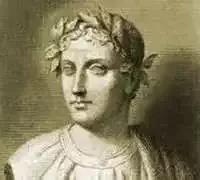
Horácio
BkIII:V No Surrender
We believe thunderous Jupiter rules the sky:
Augustus is considered a god on earth,
for adding the Britons, and likewise
the weight of the Persians to our empire.
Didn’t Crassus’ soldiers live in vile marriage
with barbarian wives, and (because of our
Senate and its perverse ways!) grow old,
in the service of their hostile fathers.
Marsians, Apulians ruled by a Mede,
forgetting their shields, Roman names, and togas,
and eternal Vesta, though Jove’s shrines
and the city of Rome remained unharmed?
Regulus’s far-seeing mind warned of this,
when he objected to shameful surrender,
and considered from its example
harm would come to the following age,
unless captured men were killed without pity.
‘I’ve seen standards and weapons,’ he said,
‘taken bloodlessly from our soldiers,
hung there in the Carthaginian shrines,
I’ve seen the arms of our freemen twisted
behind their backs, enemy gates wide open,
and the fields that our warfare ravaged
being freely cultivated again.
Do you think that our soldiers ransomed for gold,
will fight more fiercely next time! You’ll add
harm to shame: the wool that’s dyed purple
never regains the colour that vanished,
and true courage, when once departed, never
cares to return to an inferior heart.
When a doe that’s set free, from the thick
hunting nets, turns to fight, then he’ll be brave
who trusts himself to treacherous enemies
and he’ll crush Carthage, in a second battle,
who’s felt the chains on his fettered wrists,
without a struggle, afraid of dying.
He’s one who, not knowing how life should be lived,
confuses war with peace. O, shame! O mighty
Carthage, made mightier now because
of Italy’s disgraceful decadence.’
It’s said he set aside his wife’s chaste kisses,
and his little ones, as of less importance,
and, grimly, he set his manly face
to the soil, until he might be able
to strengthen the Senate’s wavering purpose,
by making of himself an example no
other man had made, and hurrying,
among grieving friends, to noble exile.
Yet he knew what the barbarous torturer
was preparing for him. Still he pushed aside
the kinsmen who were blocking his way,
and the people who delayed his going,
as if, with some case decided, and leaving
all that tedious business of his clients,
he headed for Venafrum’s meadows,
or Lacedaemonian Tarentum.
313
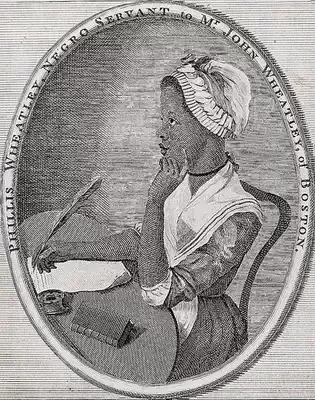
Phillis Wheatley
Goliath Of Gath
SAMUEL, Chap. xvii.
YE martial pow'rs, and all ye tuneful nine,
Inspire my song, and aid my high design.
The dreadful scenes and toils of war I write,
The ardent warriors, and the fields of fight:
You best remember, and you best can sing
The acts of heroes to the vocal string:
Resume the lays with which your sacred lyre,
Did then the poet and the sage inspire.
Now front to front the armies were display'd,
Here Israel rang'd, and there the foes array'd;
The hosts on two opposing mountains stood,
Thick as the foliage of the waving wood;
Between them an extensive valley lay,
O'er which the gleaming armour pour'd the day,
When from the camp of the Philistine foes,
Dreadful to view, a mighty warrior rose;
In the dire deeds of bleeding battle skill'd,
The monster stalks the terror of the field.
From Gath he sprung, Goliath was his name,
Of fierce deportment, and gigantic frame:
A brazen helmet on his head was plac'd,
A coat of mail his form terrific grac'd,
The greaves his legs, the targe his shoulders prest:
Dreadful in arms high-tow'ring o'er the rest
A spear he proudly wav'd, whose iron head,
Strange to relate, six hundred shekels weigh'd;
He strode along, and shook the ample field,
While Phoebus blaz'd refulgent on his shield:
Through Jacob's race a chilling horror ran,
When thus the huge, enormous chief began:
"Say, what the cause that in this proud array
"You set your battle in the face of day?
"One hero find in all your vaunting train,
"Then see who loses, and who wins the plain;
"For he who wins, in triumph may demand
"Perpetual service from the vanquish'd land:
"Your armies I defy, your force despise,
"By far inferior in Philistia's eyes:
"Produce a man, and let us try the fight,
"Decide the contest, and the victor's right."
Thus challeng'd he: all Israel stood amaz'd,
And ev'ry chief in consternation gaz'd;
But Jesse's son in youthful bloom appears,
And warlike courage far beyond his years:
He left the folds, he left the flow'ry meads,
And soft recesses of the sylvan shades.
Now Israel's monarch, and his troops arise,
With peals of shouts ascending to the skies;
In Elah's vale the scene of combat lies.
When the fair morning blush'd with orient red,
What David's fire enjoin'd the son obey'd,
And swift of foot towards the trench he came,
Where glow'd each bosom with the martial flame.
He leaves his carriage to another's care,
And runs to greet his brethren of the war.
While yet they spake the giant-chief arose,
Repeats the challenge, and insults his foes:
Struck with the sound, and trembling at the view,
Affrighted Israel from its post withdrew.
"Observe ye this tremendous foe, they cry'd,
"Who in proud vaunts our armies hath defy'd:
"Whoever lays him prostrate on the plain,
"Freedom in Israel for his house shall gain;
"And on him wealth unknown the king will pour,
"And give his royal daughter for his dow'r."
Then Jesse's youngest hope: "My brethren say,
"What shall be done for him who takes away
"Reproach from Jacob, who destroys the chief.
"And puts a period to his country's grief.
"He vaunts the honours of his arms abroad,
"And scorns the armies of the living God."
Thus spoke the youth, th' attentive people ey'd
The wond'rous hero, and again reply'd:
"Such the rewards our monarch will bestow,
"On him who conquers, and destroys his foe."
Eliab heard, and kindled into ire
To hear his shepherd brother thus inquire,
And thus begun: "What errand brought thee? say
"Who keeps thy flock? or does it go astray?
"I know the base ambition of thine heart,
"But back in safety from the field depart."
Eliab thus to Jesse's youngest heir,
Express'd his wrath in accents most severe.
When to his brother mildly he reply'd.
"What have I done? or what the cause to chide?
The words were told before the king, who sent
For the young hero to his royal tent:
Before the monarch dauntless he began,
"For this Philistine fail no heart of man:
"I'll take the vale, and with the giant fight:
"I dread not all his boasts, nor all his might."
When thus the king: "Dar'st thou a stripling go,
"And venture combat with so great a foe?
"Who all his days has been inur'd to fight,
"And made its deeds his study and delight:
"Battles and bloodshed brought the monster forth,
"And clouds and whirlwinds usher'd in his birth."
When David thus: "I kept the fleecy care,
"And out there rush'd a lion and a bear;
"A tender lamb the hungry lion took,
"And with no other weapon than my crook
"Bold I pursu'd, and chas d him o'er the field,
"The prey deliver'd, and the felon kill'd:
"As thus the lion and the bear I slew,
"So shall Goliath fall, and all his crew:
"The God, who sav'd me from these beasts of prey,
"By me this monster in the dust shall lay."
So David spoke. The wond'ring king reply'd;
"Go thou with heav'n and victory on thy side:
"This coat of mail, this sword gird on," he said,
And plac'd a mighty helmet on his head:
The coat, the sword, the helm he laid aside,
Nor chose to venture with those arms untry'd,
Then took his staff, and to the neighb'ring brook
Instant he ran, and thence five pebbles took.
Mean time descended to Philistia's son
A radiant cherub, and he thus begun:
"Goliath, well thou know'st thou hast defy'd
"Yon Hebrew armies, and their God deny'd:
"Rebellious wretch! audacious worm! forbear,
"Nor tempt the vengeance of their God too far:
"Them, who with his Omnipotence contend,
"No eye shall pity, and no arm defend:
"Proud as thou art, in short liv'd glory great,
"I come to tell thee thine approaching fate.
"Regard my words. The Judge of all the gods,
"Beneath whose steps the tow'ring mountain nods,
"Will give thine armies to the savage brood,
"That cut the liquid air, or range the wood.
"Thee too a well-aim'd pebble shall destroy,
"And thou shalt perish by a beardless boy:
"Such is the mandate from the realms above,
"And should I try the vengeance to remove,
"Myself a rebel to my king would prove.
"Goliath say, shall grace to him be shown,
"Who dares heav'ns Monarch, and insults his throne?"
"Your words are lost on me," the giant cries,
While fear and wrath contended in his eyes,
When thus the messenger from heav'n replies:
"Provoke no more Jehovah's awful hand
"To hurl its vengeance on thy guilty land:
"He grasps the thunder, and, he wings the storm,
"Servants their sov'reign's orders to perform."
The angel spoke, and turn'd his eyes away,
Adding new radiance to the rising day.
Now David comes: the fatal stones demand
His left, the staff engag'd his better hand:
The giant mov'd, and from his tow'ring height
Survey'd the stripling, and disdain'd the fight,
And thus began: "Am I a dog with thee?
"Bring'st thou no armour, but a staff to me?
"The gods on thee their vollied curses pour,
"And beasts and birds of prey thy flesh devour."
David undaunted thus, "Thy spear and shield
"Shall no protection to thy body yield:
"Jehovah's name------no other arms I bear,
"I ask no other in this glorious war.
"To-day the Lord of Hosts to me will give
"Vict'ry, to-day thy doom thou shalt receive;
"The fate you threaten shall your own become,
"And beasts shall be your animated tomb,
"That all the earth's inhabitants may know
"That there's a God, who governs all below:
"This great assembly too shall witness stand,
"That needs nor sword, nor spear, th' Almighty's
hand:
"The battle his, the conquest he bestows,
"And to our pow'r consigns our hated foes."
Thus David spoke; Goliath heard and came
To meet the hero in the field of fame.
Ah! fatal meeting to thy troops and thee,
But thou wast deaf to the divine decree;
Young David meets thee, meets thee not in vain;
'Tis thine to perish on th' ensanguin'd plain.
And now the youth the forceful pebble slung
Philistia trembled as it whizz'd along:
In his dread forehead, where the helmet ends,
Just o'er the brows the well-aim'd stone descends,
It pierc'd the skull, and shatter'd all the brain,
Prone on his face he tumbled to the plain:
Goliath's fall no smaller terror yields
Than riving thunders in aerial fields:
The soul still ling'red in its lov'd abode,
Till conq'ring David o'er the giant strode:
Goliath's sword then laid its master dead,
And from the body hew'd the ghastly head;
The blood in gushing torrents drench'd the plains,
The soul found passage through the spouting veins.
And now aloud th' illustrious victor said,
"Where are your boastings now your champion's
"dead?"
Scarce had he spoke, when the Philistines fled:
But fled in vain; the conqu'ror swift pursu'd:
What scenes of slaughter! and what seas of blood!
There Saul thy thousands grasp'd th' impurpled sand
In pangs of death the conquest of thine hand;
And David there were thy ten thousands laid:
Thus Israel's damsels musically play'd.
Near Gath and Edron many an hero lay,
Breath'd out their souls, and curs'd the light of day:
Their fury, quench'd by death, no longer burns,
And David with Goliath's head returns,
To Salem brought, but in his tent he plac'd
The load of armour which the giant grac'd.
His monarch saw him coming from the war,
And thus demanded of the son of Ner.
"Say, who is this amazing youth?" he cry'd,
When thus the leader of the host reply'd;
"As lives thy soul I know not whence he sprung,
"So great in prowess though in years so young:"
"Inquire whose son is he," the sov'reign said,
"Before whose conq'ring arm Philistia fled."
Before the king behold the stripling stand,
Goliath's head depending from his hand:
To him the king: "Say of what martial line
"Art thou, young hero, and what sire was thine?"
He humbly thus; "The son of Jesse I:
"I came the glories of the field to try.
"Small is my tribe, but valiant in the fight;
"Small is my city, but thy royal right."
"Then take the promis'd gifts," the monarch cry'd,
Conferring riches and the royal bride:
"Knit to my soul for ever thou remain
"With me, nor quit my regal roof again."
314

Henry Wadsworth Longfellow
To Italy. (From Filicaja)
Italy! Italy! thou who'rt doomed to wear
The fatal gift of beauty and possess
The dower funest of infinite wretchedness
Written upon thy forehead by despair;
Ah! would that thou wert stronger or less fair,
That they might fear thee more or love thee less,
Who in the splendour of thy loveliness
Seem wasting, yet to mortal combat dare!
Then from the Alps I should not see descending
Such torrents of armed men, nor Gallic horde
Drinking the wave of Po, distained with gore,
Nor should I see thee girded with a sword
Not thine, and with the stranger's arm contending,
Victor or vanquished, slave for evermore.
313

Robert Browning
Cavalier Tunes: Give a Rouse
King Charles, and who'll do him right now?
King Charles, and who's ripe for fight now?
Give a rouse: here's, in Hell's despite now,
King Charles!
Who gave me the goods that went since?
Who raised me the house that sank once?
Who helped me to gold I spent since?
Who found me in wine you drank once?
(Chorus)
King Charles, and who'll do him right now?
King Charles, and who's ripe for fight now?
Give a rouse: here's, in Hell's despite now,
King Charles!
To whom used my boy George quaff else,
By the old fool's side that begot him?
For whom did he cheer and laugh else,
While Noll's damned troopers shot him?
(Chorus)
King Charles, and who'll do him right now?
King Charles, and who's ripe for fight now?
Give a rouse: here's, in Hell's despite now,
King Charles!
King Charles, and who's ripe for fight now?
Give a rouse: here's, in Hell's despite now,
King Charles!
Who gave me the goods that went since?
Who raised me the house that sank once?
Who helped me to gold I spent since?
Who found me in wine you drank once?
(Chorus)
King Charles, and who'll do him right now?
King Charles, and who's ripe for fight now?
Give a rouse: here's, in Hell's despite now,
King Charles!
To whom used my boy George quaff else,
By the old fool's side that begot him?
For whom did he cheer and laugh else,
While Noll's damned troopers shot him?
(Chorus)
King Charles, and who'll do him right now?
King Charles, and who's ripe for fight now?
Give a rouse: here's, in Hell's despite now,
King Charles!
311
Henry Wadsworth Longfellow
The Saga of King Olaf: III. Thora Of Rimol
'Thora of Rimol! hide me! hide me!
Danger and shame and death betide me!
For Olaf the King is hunting me down
Through field and forest, through thorp and town!'
Thus cried Jarl Hakon
To Thora, the fairest of women.
?Hakon Jarl! for the love I bear thee
Neither shall shame nor death come near thee!
But the hiding-place wherein thou must lie
Is the cave underneath the swine in the sty.'
Thus to Jarl Hakon
Said Thora, the fairest of women.
So Hakon Jarl and his base thrall Karker
Crouched in the cave, than a dungeon darker,
As Olaf came riding, with men in mail,
Through the forest roads into Orkadale,
Demanding Jarl Hakon
Of Thorn, the fairest of women.
'Rich and honored shall be whoever
The head of Hakon Jarl shall dissever!'
Hakon heard him, and Karker the slave,
Through the breathing-holes of the darksome cave.
Alone in her chamber
Wept Thora, the fairest of women.
Said Karker, the crafty, 'I will not slay thee!
For all the king's gold I will never betray thee!'
'Then why dost thou turn so pale, O churl,
And then again black as the earth?' said the Earl.
More pale and more faithful
Was Thora, the fairest of women.
From a dream in the night the thrall started, saying,
'Round my neck a gold ring King Olaf was laying!'
And Hakon answered, 'Beware of the king!
He will lay round thy neck a blood-red ring.'
At the ring on her finger
Gazed Thora, the fairest of women.
At daybreak slept Hakon, with sorrows encumbered,
But screamed and drew up his feet as he slumbered;
The thrall in the darkness plunged with his knife,
And the Earl awakened no more in this life.
But wakeful and weeping
Sat Thora, the fairest of women.
At Nidarholm the priests are all singing,
Two ghastly heads on the gibbet are swinging;
One is Jarl Hakon's and one is his thrall's,
And the people are shouting from windows and walls;
While alone in her chamber
Swoons Thora, the fairest of women.
308
Robert W. Service
Munition Maker
I am the Cannon King, behold!
I perish on a throne of gold.
With forest far and turret high,
Renowned and rajah-rich am I.
My father was, and his before,
With wealth we owe to war on war;
But let no potentate be proud . . .
There are no pockets in a shroud.
By nature I am mild and kind,
To gentleness and ruth inclined;
And though the pheasants over-run
My woods I will not touch a gun.
Yet while each monster that I forge
Thunders destruction form its gorge.
Death's whisper is, I vow, more loud . . .
There are no pockets in a shroud.
My time is short, my ships at sea
Already seem like ghosts to me;
My millions mock me I am poor
As any beggar at my door.
My vast dominion I resign,
Six feet of earth to claim is mine,
Brooding with shoulders bitter-bowed . . .
There are no pockets in a shroud.
Dear God, let me purge my heart,
And be of heaven's hope a part!
Flinging my fortune's foul increase
To fight for pity, love and peace.
Oh that I could with healing fare,
And pledged to poverty and prayer
Cry high above the cringing crowd:
"Ye fools! Be not Mammon cowed . . .
There are no pockets in a shroud."
308
Henry Wadsworth Longfellow
The Black Knight. (From The German Of Uhland)
'Twas Pentecost, the Feast of Gladness,
When woods and fields put off all sadness,
Thus began the King and spake:
So from the halls
Of ancient Hofburgh's walls,
A luxuriant Spring shall break.
Drums and trumpets echo loudly,
Wave the crimson banners proudly,
From balcony the King looked on;
In the play of spears,
Fell all the cavaliers,
Before the monarch's stalwart son.
To the barrier of the fight
Rode at last a sable Knight.
Sir Knight! your name and scutcheon say!
Should I speak it here,
Ye would stand aghast with fear;
I am a Prince of mighty sway!
When he rode into the lists,
The arch of heaven grew black with mists,
And the castle 'gan to rock.
At the first blow,
Fell the youth from saddle-bow,
Hardly rises from the shock.
Pipe and viol call the dances,
Torch-light through the high hall glances;
Waves a mighty shadow in;
With manner bland
Doth ask the maiden's hand,
Doth with her the dance begin;
Danced in sable iron sark,
Danced a measure weird and dark,
Coldly clasped her limbs around.
From breast and hair
Down fall from her the fair
Flowerets, faded, to the ground.
To the sumptuous banquet came
Every Knight and every Dame.
'Twixt son and daughter all distraught,
With mournful mind
The ancient King reclined,
Gazed at them in silent thought.
Pale the children both did look,
But the guest a beaker took;
Golden wine will make you whole!
The children drank,
Gave many a courteous thank;
Oh, that draught was very cool!
Each the father's breast embraces,
Son and daughter; and their faces
Colourless grow utterly.
Whichever way
Looks the fear-struck father grey,
He beholds his children die.
Woe! the blessed children both
Takest thou in the joy of youth;
Take me, too, the joyless father!
Spake the grim Guest,
From his hollow, cavernous breast,
Roses in the spring I gather!
309
John Greenleaf Whittier
Hymn of The Dunkers
KLOSTER KEDAR, EPHRATA, PENNSYLVANIA (1738)
SISTER MARIA CHRISTINA sings
Wake, sisters, wake! the day-star shines;
Above Ephrata's eastern pines
The dawn is breaking, cool and calm.
Wake, sisters, wake to prayer and psalm!
Praised be the Lord for shade and light,
For toil by day, for rest by night!
Praised be His name who deigns to bless
Our Kedar of the wilderness!
Our refuge when the spoiler's hand
Was heavy on our native land;
And freedom, to her children due,
The wolf and vulture only knew.
We praised Him when to prison led,
We owned Him when the stake blazed red;
We knew, whatever might befall,
His love and power were over all.
He heard our prayers; with outstretched arm
He led us forth from cruel harm;
Still, wheresoe'er our steps were bent,
His cloud and fire before us went!
The watch of faith and prayer He set,
We kept it then, we keep it yet.
At midnight, crow of cock, or noon,
He cometh sure, He cometh soon.
He comes to chasten, not destroy,
To purge the earth from sin's alloy.
At last, at last shall all confess
His mercy as His righteousness.
The dead shall live, the sick be whole,
The scarlet sin be white as wool;
No discord mar below, above,
The music of eternal love!
Sound, welcome trump, the last alarm!
Lord God of hosts, make bare thine arm,
Fulfil this day our long desire,
Make sweet and clean the world with fire!
Sweep, flaming besom, sweep from sight
The lies of time; be swift to smite,
Sharp sword of God, all idols down,
Genevan creed and Roman crown.
Quake, earth, through all thy zones, till all
The fanes of pride and priesteraft fall;
And lift thou up in place of them
Thy gates of pearl, Jerusalem!
Lo! rising from baptismal flame,
Transfigured, glorious, yet the same,
Within the heavenly city's bound
Our Kloster Kedar shall be found.
He cometh soon! at dawn or noon
Or set of sun, He cometh soon.
Our prayers shall meet Him on His way;
Wake, sisters, wake! arise and pray!
306
John Greenleaf Whittier
The Peace Convention At Brussels
STILL in thy streets, O Paris! doth the stain
Of blood defy the cleansing autumn rain;
Still breaks the smoke Messina's ruins through,
And Naples mourns that new Bartholomew,
When squalid beggary, for a dole of bread,
At a crowned murderer's beck of license, fed
The yawning trenches with her noble dead;
Still, doomed Vienna, through thy stately halls
The shell goes crashing and the red shot falls,
And, leagued to crush thee, on the Danube's side,
The bearded Croat and Bosniak spearman ride;
Still in that vale where Himalaya's snow
Melts round the cornfields and the vines below,
The Sikh's hot cannon, answering ball for ball,
Flames in the breach of Moultan's shattered wall;
On Chenab's side the vulture seeks the slain,
And Sutlej paints with blood its banks again.
'What folly, then,' the faithless critic cries,
With sneering lip, and wise world-knowing eyes,
'While fort to fort, and post to post, repeat
The ceaseless challenge of the war-drum's beat,
And round the green earth, to the church-bell's chime,
The morning drum-roll of the camp keeps time,
To dream of peace amidst a world in arms,
Of swords to ploughshares changed by Scriptural charms,
Of nations, drunken with the wine of blood,
Staggering to take the Pledge of Brotherhood,
Like tipplers answering Father Mathew's call;
The sullen Spaniard, and the mad-cap Gaul,
The bull-dog Briton, yielding but with life,
The Yankee swaggering with his bowie-knife,
The Russ, from banquets with the vulture shared,
The blood still dripping from his amber beard,
Quitting their mad Berserker dance to hear
The dull, meek droning of a drab-coat seer;
Leaving the sport of Presidents and Kings,
Where men for dice each titled gambler flings,
To meet alternate on the Seine and Thames,
For tea and gossip, like old country dames!
No! let the cravens plead the weakling's cant,
Let Cobden cipher, and let Vincent rant,
Let Sturge preach peace to democratic throngs,
And Burritt, stammering through his hundred tongues,
Repeat, in all, his ghostly lessons o'er,
Timed to the pauses of the battery's roar;
Check Ban or Kaiser with the barricade
Of 'Olive-leaves' and Resolutions made,
Spike guns with pointed Scripture-texts, and hope
To capsize navies with a windy trope;
Still shall the glory and the pomp of War
Along their train the shouting millions draw;
Still dusty Labor to the passing Brave
His cap shall doff, and Beauty's kerchief wave;
Still shall the bard to Valor tune his song,
Still Hero-worship kneel before the Strong;
Rosy and sleek, the sable-gowned divine,
O'er his third bottle of suggestive wine,
To plumed and sworded auditors, shall prove
Their trade accordant with the Law of Love;
And Church for State, and State for Church, shall fight,
And both agree, that 'Might alone is Right!'
Despite of sneers like these, O faithful few,
Who dare to hold God's word and witness true,
Whose clear-eyed faith transcends our evil time,
And o'er the present wilderness of crime
Sees the calm future, with its robes of green,
Its fleece-flecked mountains, and soft streams between,—
Still keep the path which duty bids ye tread,
Though worldly wisdom shake the cautious head;
No truth from Heaven descends upon our sphere,
Without the greeting of the skeptic's sneer;
Denied and mocked at, till its blessings fall,
Common as dew and sunshine, over all.
'Then, o'er Earth's war-field, till the strife shall cease,
Like Morven's harpers, sing your song of peace;
As in old fable rang the Thracian's lyre,
Midst howl of fiends and roar of penal fire,
Till the fierce din to pleasing murmurs fell,
And love subdued the maddened heart of hell.
Lend, once again, that holy song a tongue,
Which the glad angels of the Advent sung,
Their cradle-anthem for the Saviour's birth,
Glory to God, and peace unto the earth!
Through the mad discord send that calming word
Which wind and wave on wild Genesareth heard,
Lift in Christ's name his Cross against the Sword!
Not vain the vision which the prophets saw,
Skirting with green the fiery waste of war,
Through the hot sand-gleam, looming soft and calm
On the sky's rim, the fountain-shading palm.
Still lives for Earth, which fiends so long have trod,
The great hope resting on the truth of God, —
Evil shall cease and Violence pass away,
And the tired world breathe free through a long Sabbath day.
307

Henry Lawson
A Song of Brave Men
Man, is the Sea your master? Sea, and is man your slave? –
This is the song of brave men who never know they are brave:
Ceaselessly watching to save you, stranger from foreign lands,
Soundly asleep in your state room, full sail for the Goodwin Sands!
Life is a dream, they tell us, but life seems very real,
When the lifeboat puts out from Ramsgate, and the buggers put out from Deal!
A gun from the lightship! – a rocket! – a cry of, "Turn out, me lad!"
"Ship on the Sands!" they're shouting, and a rush of the oilskin-clad.
The lifeboat leaping and swooping, in the wake of the fighting tug,
And the luggers afloat in Hell's water – Oh, "tourist", with cushion and rug! –
Think of the freezing fury, without one minute's relief,
When they stood all night in the blackness by the wreck of the Indian Chief!
Lashed to their seats, and crouching, to the spray that froze as it flew,
Twenty-six hours in midwinter! That was the lifeboat's crew.
Twice she was swamped, and she righted, in the rush of the heavy seas,
And her tug was mostly buried; but these were common things, these.
And the luggers go out whenever there's a hope to get them afloat,
And these things they do for nothing, and those fishermen say, "Oh! it's nowt!"
(Enemy, Friend or Stranger! In every sea or land,
And across the lives of most men run stretches of Goodwin Sand;
And across the life of a nation, as across the track of a ship,
Lies the hidden rock, or the iceberg, within the horizon dip.
And wise men know them, and warn us, with lightship, or voice, or pen;
But we strike, and the fool survivors sail on to strike again.)
But this is a song of brave men, wherever is aught to save,
Christian or Jew or Wowser – and I knew one who was brave;
British or French or German, Dane or Latin or Dutch:
"Scandies" that ignorant British reckon with "Dagoes and such" –
(Where'er, on a wreck titanic, in a scene of wild despair,
The officers call for assistance, a Swede or a Norse is there.)
Tale of a wreck titanic, with the last boat over the side,
And a brave young husband fighting his clinging, hysterical bride;
He strikes her fair on the temple, while the decks are scarce afloat,
And he kisses her once on the forehead, and he drops her into the boat.
So he goes to his death to save her; and she lives to remember and lie –
Or be true to his love and courage. But that's how brave men die.
(I hate the slander: "Be British" – and I don't believe it, that's flat:
No British sailor and captain would stoop to such cant as that.
What – in the rush of cowards – of the help from before the mast –
Of the two big Swedes and the Norse, who stood by the mate to the last? –
In every mining disaster, in a New-World mining town,
In one of the rescue parties an Olsen or Hans goes down.)
Men who fought for their village, away on their country's edge:
The priest with his cross – and a musket, and the blacksmith with his sledge;
The butcher with cleaver and pistols, and the notary with his pike.
And the clerk with what he laid hands on; but all were ready to strike.
And – Tennyson notwithstanding – when the hour of danger was come,
The shopman has struck full often with his "cheating yard-wand" home!
This is a song of brave men, ever, the wide world o'er –
Starved and crippled and murdered by the land they are fighting for.
Left to freeze in the trenches, sent to drown by the Cape,
Throttled by army contractors, and strangled bv old red-tape.
Fighting for "Home" and "Country", or "Glory", or what you choose –
Sacrificed for the Syndicates, and a monarch "in" with the Jews.
Australia! your trial is coming! Down with the party strife:
Send Your cackling, lying women back to the old Home Life.
Brush trom your Parliament benches the legal chaff and dust:
Make Federation perfect, as sooner or later you must.
Scatter your crowded cities, cut up your States – and so
Give your brave sons of the future the ghost of a White Man's show.
304
Robert W. Service
The Bulls
Six bulls I saw as black as jet,
With crimsoned horns and amber eyes
That chewed their cud without a fret,
And swished to brush away the flies,
Unwitting their soon sacrifice.
It is the Corpus Christi fête;
Processions crowd the bannered ways;
Before the alters women wait,
While men unite in hymns of praise,
And children look with angel gaze.
The bulls know naught of holiness,
To pious pomp their eyes are blind;
Their brutish brains will never guess
The sordid passions of mankind:
Poor innocents, they wait resigned.
Till in a black room each is penned,
While from above with cruel aim
Two torturers with lances bend
To goad their fieriness to flame,
To devil them to play the game.
The red with rage and mad with fear
They charge into the roaring ring;
Against the mockery most near
Of human might their hate they fling,
In futile, blind blood-boltering.
And so the day of unction ends;
Six bulls are dragged across the sand.
Ferocity and worship blends,
Religion and red thirst hold hands . . .
Dear Christ! 'Tis hard to understand!
304

Walter de la Mare
How Sleep the Brave
Nay, nay, sweet England, do not grieve!
Not one of these poor men who died
But did within his soul believe
That death for thee was glorified.
Ever they watched it hovering near
That mystery 'yond thought to plumb,
Perchance sometimes in loathèd fear
They heard cold Danger whisper, Come! --
Heard and obeyed. O, if thou weep
Such courage and honour, beauty, care,
Be it for joy that those who sleep
Only thy joy could share.
302
Robert W. Service
The Blood-Red Fourragere
What was the blackest sight to me
Of all that campaign?
A naked woman tied to a tree
With jagged holes where her breasts should be,
Rotting there in the rain.
On we pressed to the battle fray,
Dogged and dour and spent.
Sudden I heard my Captain say:
"Voilà! Kultur has passed this way,
And left us a monument."
So I looked and I saw our Colonel there,
And his grand head, snowed with the years,
Unto the beat of the rain was bare;
And, oh, there was grief in his frozen stare,
And his cheeks were stung with tears!
Then at last he turned from the woeful tree,
And his face like stone was set;
"Go, march the Regiment past," said he,
"That every father and son may see,
And none may ever forget."
Oh, the crimson strands of her hair downpoured
Over her breasts of woe;
And our grim old Colonel leaned on his sword,
And the men filed past with their rifles lowered,
Solemn and sad and slow.
But I'll never forget till the day I die,
As I stood in the driving rain,
And the jaded columns of men slouched by,
How amazement leapt into every eye,
Then fury and grief and pain.
And some would like madmen stand aghast,
With their hands upclenched to the sky;
And some would cross themselves as they passed,
And some would curse in a scalding blast,
And some like children cry.
Yea, some would be sobbing, and some would pray,
And some hurl hateful names;
But the best had never a word to say;
They turned their twitching faces away,
And their eyes were like hot flames.
They passed; then down on his bended knee
The Colonel dropped to the Dead:
"Poor martyred daughter of France!" said he,
"O dearly, dearly avenged you'll be
Or ever a day be sped!"
Now they hold that we are the best of the best,
And each of our men may wear,
Like a gash of crimson across his chest,
As one fierce-proved in the battle-test,
The blood-red Fourragere.
For each as he leaps to the top can see,
Like an etching of blood on his brain,
A wife or a mother lashed to a tree,
With two black holes where her breasts should be,
Left to rot in the rain.
So we fight like fiends, and of us they say
That we neither yield nor spare.
Oh, we have the bitterest debt to pay. . . .
Have we paid it? -- Look -- how we wear to-day
Like a trophy, gallant and proud and gay,
Our blood-red Fourragere.
299
Robert W. Service
A Plea
Why need we newer arms invent,
Poor peoples to destroy?
With what we have let's be content
And perfect their employ.
With weapons that may millions kill,
Why should we seek for more,
A brighter spate of blood to spill,
A deeper sea of gore?
The lurid blaze of atom light
Vast continents will blind,
And steep in centuries of night
Despairing humankind.
So let's be glad for gun and blade,
To fight with honest stuff:
Are tank, block-buster, hand-grenade
And napalm not enough?
Oh to go back a thousand years
When arrows winged their way,
When foemen fell upon the spears
And swords were swung to slay!
Behold! Belching in Heaven black
Mushrooms obscene!
Dear God, the brave days give us back,
When wars were clean!
299

Anonymous
God and the Soldier
God and the soldier
All men adore
In time of trouble,
And no more;
For when war is over
And all things righted,
God is neglected -
The old soldier slighted.
All men adore
In time of trouble,
And no more;
For when war is over
And all things righted,
God is neglected -
The old soldier slighted.
300
Henry Wadsworth Longfellow
Tales Of A Wayside Inn : Part 1. Interlude V.
A strain of music closed the tale,
A low, monotonous, funeral wail,
That with its cadence, wild and sweet,
Made the long Saga more complete.
'Thank God,' the Theologian said,
'The reign of violence is dead,
Or dying surely from the world;
While Love triumphant reigns instead,
And in a brighter sky o'erhead
His blessed banners are unfurled.
And most of all thank God for this:
The war and waste of clashing creeds
Now end in words, and not in deeds,
And no one suffers loss, or bleeds,
For thoughts that men call heresies.
'I stand without here in the porch,
I hear the bell's melodious din,
I hear the organ peal within,
I hear the prayer, with words that scorch
Like sparks from an inverted torch,
I hear the sermon upon sin,
With threatenings of the last account.
And all, translated in the air,
Reach me but as our dear Lord's Prayer,
And as the Sermon on the Mount.
'Must it be Calvin, and not Christ?
Must it be Athanasian creeds,
Or holy water, books, and beads?
Must struggling souls remain content
With councils and decrees of Trent?
And can it be enough for these
The Christian Church the year embalms
With evergreens and boughs of palms,
And fills the air with litanies?
'I know that yonder Pharisee
Thanks God that he is not like me;
In my humiliation dressed,
I only stand and beat my breast,
And pray for human charity.
'Not to one church alone, but seven,
The voice prophetic spake from heaven;
And unto each the promise came,
Diversified, but still the same;
For him that overcometh are
The new name written on the stone,
The raiment white, the crown, the throne,
And I will give him the Morning Star!
'Ah! to how many Faith has been
No evidence of things unseen,
But a dim shadow, that recasts
The creed of the Phantasiasts,
For whom no Man of Sorrows died,
For whom the Tragedy Divine
Was but a symbol and a sign,
And Christ a phantom crucified!
'For others a diviner creed
Is living in the life they lead.
The passing of their beautiful feet
Blesses the pavement of the street
And all their looks and words repeat
Old Fuller's saying, wise and sweet,
Not as a vulture, but a dove,
The Holy Ghost came from above.
'And this brings back to me a tale
So sad the hearer well may quail,
And question if such things can be;
Yet in the chronicles of Spain
Down the dark pages runs this stain,
And naught can wash them white again,
So fearful is the tragedy.'
296

William Butler Yeats
From The 'Antigone'
Overcome -- O bitter sweetness,
Inhabitant of the soft cheek of a girl --
The rich man and his affairs,
The fat flocks and the fields' fatness,
Mariners, rough harvesters;
Overcome Gods upon Parnassus;
Overcome the Empyrean; hurl
Heaven and Earth out of their places,
That in the Same calamity
Brother and brother, friend and friend,
Family and family,
City and city may contend,
By that great glory driven wild.
Pray I will and sing I must,
And yet I weep -- Oedipus' child
Descends into the loveless dust.
295
Henry Lawson
Dawgs of War
Comes the British bulldog first—solid as a log—
He’s so ugly in repose that he’s a handsome dog;
Full of mild benevolence as his years increase;
Silent as a china dog on the mantelpiece.
Rub his sides and point his nose,
Click your tongue and in he goes,
To the thick of Britain’s foes—
Enemies behind him close—
(
Silence for a while
).
Comes a very different dog—tell him at a glance.
Clipped and trimmed and frilled all round. Dandy dog of France.
(Always was a dandy dog, no matter what his age)
Now his every hair and frill is stiff as wire with rage.
Rub his sides and point his nose,
Click your tongue and in he goes,
While behind him France’s foes
Reel and surge and pack and close.
(
Silence for a while
.)
Next comes Belgium’s market dog—hard to realise.
Go-cart dog and barrow dog—he’s a great surprise.
Dog that never hurt a cat, did no person harm;
Friendly, kindly, round and fat as a “Johnny Darm.”
Rub his sides and point his nose,
Click your tongue and in he goes,
At the flank of Belgium’s foes
Who could not behind him close—
(
Silence for a while
).
Next comes Servia’s mongrel pup—mongrel dawgs can fight;
Up or down, or down or up, whether wrong or right.
He was mad the other day—he is mad today,
Hustling round and raising dust in his backyard way.
Rub his sides and point his nose,
Click your tongue and in he goes,
’Twixt the legs of Servia’s foes,
Biting tails and rearmost toes—
(
Silence for a while
.)
There are various terrier dawgs mixed up in the scrap,
Much too small for us to see, and too mad to yap.
Each one, on his frantic own—heard the row commence—
Tore with tooth and claw a hole in the backyard fence.
No one called, but in they go,
Dogs with many a nameless woe,
Tripping up their common foe—
(
Silence for a while
).
From the snows of Canada, dragging box and bale,
Comes the sledge-dog toiling on, sore-foot from the trail.
He’ll be useful in the trench, when the nose is blue—
Winter dog that knows the French and the English too.
Rub his sides and point his nose,
Click your tongue and in he goes,
At his father’s country’s foes,
And his mother’s country’s foes.
(
Silence for a while
.)
See, in sunny Southern France a dog that runs by sight,
Lean and yellow, sharp of nose, long of leg and light,
Silent and bloodthirsty, too; Distance in his eyes,
Leaping high to gain his view, the Kangaroo Dog flies!
Rub his sides and point his nose,
Click your tongue and up he goes,
Lands amongst his country’s foes—
And his country’s country’s foes;
While they sway and while they close—
(
Silence for a while
).
See across the early snow, far across the plain,
Where the clouds are grey and low and winter comes again;
By the sand-dune and the marsh—and forest black and dumb—
As dusky white as their winter’s night, the Russian wolf-hounds come!
(
Silence for a while
.)
295
Robert W. Service
Afternoon Tea
As I was saying . . . (No, thank you; I never take cream with my tea;
Cows weren't allowed in the trenches -- got out of the habit, y'see.)
As I was saying, our Colonel leaped up like a youngster of ten:
"Come on, lads!" he shouts, "and we'll show 'em," and he sprang to the head of the
men.
Then some bally thing seemed to trip him, and he fell on his face with a slam. . . .
Oh, he died like a true British soldier, and the last word he uttered was "Damn!"
And hang it! I loved the old fellow, and something just burst in my brain,
And I cared no more for the bullets than I would for a shower of rain.
'Twas an awf'ly funny sensation (I say, this is jolly nice tea);
I felt as if something had broken; by gad! I was suddenly free.
Free for a glorified moment, beyond regulations and laws,
Free just to wallow in slaughter, as the chap of the Stone Age was.
So on I went joyously nursing a Berserker rage of my own,
And though all my chaps were behind me, feeling most frightf'ly alone;
With the bullets and shells ding-donging, and the "krock" and the swish of the shrap;
And I found myself humming "Ben Bolt" . . . (Will you pass me the sugar, old chap?
Two lumps, please). . . . What was I saying? Oh yes, the jolly old dash;
We simply ripped through the barrage, and on with a roar and a crash.
My fellows -- Old Nick couldn't stop 'em. On, on they went with a yell,
Till they tripped on the Boches' sand-bags, -- nothing much left to tell:
A trench so tattered and battered that even a rat couldn't live;
Some corpses tangled and mangled, wire you could pass through a sieve.
The jolly old guns had bilked us, cheated us out of our show,
And my fellows were simply yearning for a red mix-up with the foe.
So I shouted to them to follow, and on we went roaring again,
Battle-tuned and exultant, on in the leaden rain.
Then all at once a machine gun barks from a bit of a bank,
And our Major roars in a fury: "We've got to take it on flank."
He was running like fire to lead us, when down like a stone he comes,
As full of "typewriter" bullets as a pudding is full of plums.
So I took his job and we got 'em. . . . By gad! we got 'em like rats;
Down in a deep shell-crater we fought like Kilkenny cats.
'Twas pleasant just for a moment to be sheltered and out of range,
With someone you saw to go for -- it made an agreeable change.
And the Boches that missed my bullets, my chaps gave a bayonet jolt,
And all the time, I remember, I whistled and hummed "Ben Bolt".
Well, that little job was over, so hell for leather we ran,
On to the second line trenches, -- that's where the fun began.
For though we had strafed 'em like fury, there still were some Boches about,
And my fellows, teeth set and eyes glaring, like terriers routed 'em out.
Then I stumbled on one of their dug-outs, and I shouted: "Is anyone there?"
And a voice, "Yes, one; but I'm wounded," came faint up the narrow stair;
And my man was descending before me, when sudden a cry! a shot!
(I say, this cake is delicious. You make it yourself, do you not?)
My man? Oh, they killed the poor devil; for if there was one there was ten;
So after I'd bombed 'em sufficient I went down at the head of my men,
And four tried to sneak from a bunk-hole, but we cornered the rotters all right;
I'd rather not go into details, 'twas messy that bit of the fight.
But all of it's beastly messy; let's talk of pleasanter things:
The skirts that the girls are wearing, ridiculous fluffy things,
So short that they show. . . . Oh, hang it! Well, if I must, I must.
We cleaned out the second trench line, bomb and bayonet thrust;
And on we went to the third one, quite calloused to crumping by now;
And some of our fellows who'd passed us were making a deuce of a row;
And my chaps -- well, I just couldn't hold 'em; (It's strange how it is with gore;
In some ways it's just like whiskey: if you taste it you must have more.)
Their eyes were like beacons of battle; by gad, sir! they COULDN'T be calmed,
So I headed 'em bang for the bomb-belt, racing like billy-be-damned.
Oh, it didn't take long to arrive there, those who arrived at all;
The machine guns were certainly chronic, the shindy enough to appal.
Oh yes, I omitted to tell you, I'd wounds on the chest and the head,
And my shirt was torn to a gun-rag, and my face blood-gummy and red.
I'm thinking I looked like a madman; I fancy I felt one too,
Half naked and swinging a rifle. . . . God! what a glorious "do".
As I sit here in old Piccadilly, sipping my afternoon tea,
I see a blind, bullet-chipped devil, and it's hard to believe that it's me;
I see a wild, war-damaged demon, smashing out left and right,
And humming "Ben Bolt" rather loudly, and hugely enjoying the fight.
And as for my men, may God bless 'em! I've loved 'em ever since then:
They fought like the shining angels; they're the pick o' the land, my men.
And the trench was a reeking shambles, not a Boche to be seen alive --
So I thought; but on rounding a traverse I came on a covey of five;
And four of 'em threw up their flippers, but the fifth chap, a sergeant, was game,
And though I'd a bomb and revolver he came at me just the same.
A sporty thing that, I tell you; I just couldn't blow him to hell,
So I swung to the point of his jaw-bone, and down like a ninepin he fell.
And then when I'd brought him to reason, he wasn't half bad, that Hun;
He bandaged my head and my short-rib as well as the Doc could have done.
So back I went with my Boches, as gay as a two-year-old colt,
And it suddenly struck me as rummy, I still was a-humming "Ben Bolt".
And now, by Jove! how I've bored you. You've just let me babble away;
Let's talk of the things that matter -- your car or the newest play. . . .
294
Robert W. Service
Young Fellow My Lad
"Where are you going, Young Fellow My Lad,
On this glittering morn of May?"
"I'm going to join the Colours, Dad;
They're looking for men, they say."
"But you're only a boy, Young Fellow My Lad;
You aren't obliged to go."
"I'm seventeen and a quarter, Dad,
And ever so strong, you know."
* * * *
"So you're off to France, Young Fellow My Lad,
And you're looking so fit and bright."
"I'm terribly sorry to leave you, Dad,
But I feel that I'm doing right."
"God bless you and keep you, Young Fellow My Lad,
You're all of my life, you know."
"Don't worry. I'll soon be back, dear Dad,
And I'm awfully proud to go."
* * * *
"Why don't you write, Young Fellow My Lad?
I watch for the post each day;
And I miss you so, and I'm awfully sad,
And it's months since you went away.
And I've had the fire in the parlour lit,
And I'm keeping it burning bright
Till my boy comes home; and here I sit
Into the quiet night.
* * * *
"What is the matter, Young Fellow My Lad?
No letter again to-day.
Why did the postman look so sad,
And sigh as he turned away?
I hear them tell that we've gained new ground,
But a terrible price we've paid:
God grant, my boy, that you're safe and sound;
But oh I'm afraid, afraid."
* * * *
"They've told me the truth, Young Fellow My Lad:
You'll never come back again:
(Oh God! the dreams and the dreams I've had,
and the hopes I've nursed in vain!)
For you passed in the night, Young Fellow My Lad,
And you proved in the cruel test
Of the screaming shell and the battle hell
That my boy was one of the best.
"So you'll live, you'll live, Young Fellow My Lad,
In the gleam of the evening star,
In the wood-note wild and the laugh of the child,
In all sweet things that are.
And you'll never die, my wonderful boy,
While life is noble and true;
For all our beauty and hope and joy
We will owe to our lads like you."
294
Henry Lawson
Stand by the Engines
On the moonlighted decks there are children at play,
While smoothly the steamer is holding her way;
And the old folks are chatting on deck-seats and chairs,
And the lads and the lassies go strolling in pairs.
Some gaze half-entranced on the beautiful sea,
And wonder perhaps if a vision it be:
And surely their journeys no sorrow nor care,
For wealth, love, and beauty are passengers there.
But down underneath, ’mid the coal dust that smears
The face and the hands, work the ship’s engineers.
Whate’er be the duty of others, ’tis theirs
To stand by their engines whatever occurs.
The sailor may gaze on the sea and the sky;
The sailor may tell when the danger is nigh;
But when Death his black head o’er the waters uprears,
Unseen he is met by the ship’s engineers.
They are thrown from their feet by the force of a shock;
They know that their vessel has struck on a rock.
Now stand by your engines when danger appears,
For all may depend on the ship’s engineers!
No thought of their danger! No mad rush on deck!
They stand at their posts in the hull of a wreck,
Firm hands on the valves; and the white steam appears;
And down with their ship go the brave engineers!
292

Jonathan Swift
On A Cannon
Begotten, and born, and dying with noise,
The terror of women, and pleasure of boys,
Like the fiction of poets concerning the wind,
I'm chiefly unruly when strongest confined.
For silver and gold I don't trouble my head,
But all I delight in is pieces of lead;
Except when I trade with a ship or a town,
Why then I make pieces of iron go down.
One property more I would have you remark,
No lady was ever more fond of a spark;
The moment I get one, my soul's all a-fire,
And I roar out my joy, and in transport expire.
292